Tayrona

Where Mountains, Jungle, and Sea Meet

Andrew and I had a sort of early flight to Santa Marta from Medellin. There were cheaper cash options available, but they were hard to book for foreigners. Ultimately, I booked an Avianca flight at 9:00 a.m., because I could do that with points. It may not have been the most economical use of points, but it saved paying cash for the ticket, the 9 o’clock departure seemed convenient, and although Avianca is essentially the equivalent of a discount carrier, at least they were a known quantity. The initial obstacle I discovered was that we passed the airport on the way back from Guatape about an hour and a half before we reached the plaza near our hostel in Medellin! I suppose it was a good thing we didn’t book an earlier flight. Even if we planned to arrive two hours ahead of the domestic departure, a trip of an hour and a half from the airport would require us to leave at 5:30.

It turned out that the morning outbound traffic was not nearly so bad as the evening stream heading into Medellin. We left at 6:25 and arrived with time to spare. The international airport is quite a ways from town, but it isn’t easily accessible by Medellin’s otherwise pretty good public transportation system. It would have taken at least an extra hour to get there on the metros and public buses, so we just Ubered. That made the trip much easier. As it was, we were through security in time to give Andrew his first taste of airport lounges. The breakfast was light, but it was a nice place to sit and wait for our departure.

We were on the ground in just over an hour. The Santa Marta airport is also some distance from the city center. Fortunately, a well-marked city bus comes to a stop just outside the terminal making for an easy transfer that takes about 45 minutes. We hopped off the bus at Santa Marta’s central market square with plenty of time to do some errands, grab some food, and take care of some other small items before catching another public bus out to our hostel near the entrance to Tayrona National Park – the main reason we came to Santa Marta.

Santa Marta isn’t really a tourist destination in its own right. You have a much greater sense that you are in “real Colombia” there, than you feel in the Getsemani neighborhood of Cartagena. Some people don’t feel all that safe there, though I never felt that way. It’s just not a tourist center or a place with a booming economy. We walked around the market and found a store where we could buy a few food products, some insect repellent, and laundry detergent. We had been told that repellent was imperative, and I always like to be able to do my own laundry. Sadly, I never once found a hostel in the entire rest of the trip which actually allowed you to do your own laundry. All of them would do it for you for a fee, but forbade use of their machines. I ended up taking an entire package of Colombian laundry detergent back to the United States.

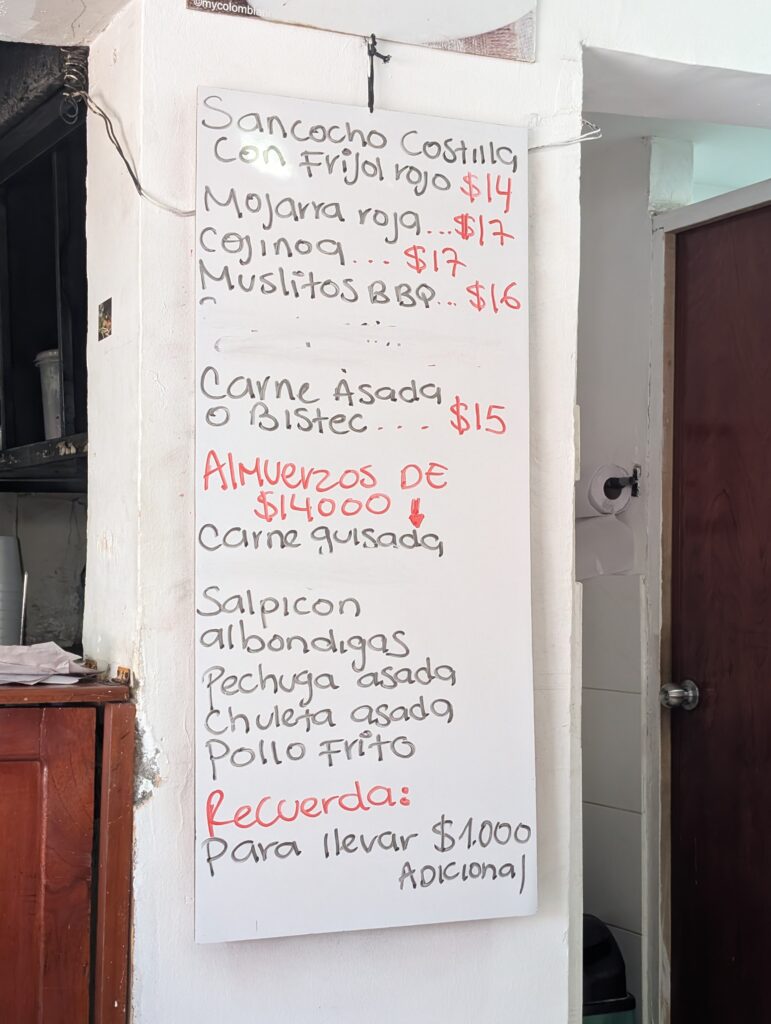
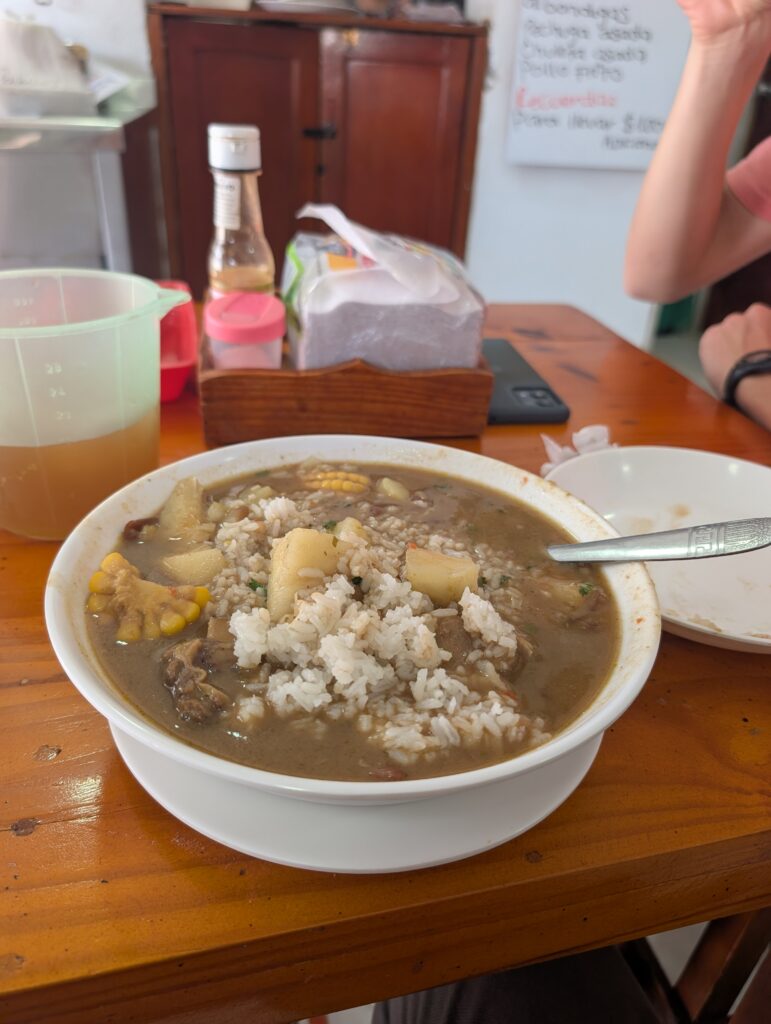
It took me a couple of attempts, but I did find an open barber shop in Santa Marta. I got a badly needed crop for about 20,000 pesos ($5) while Andrew waited at a local bakery. I was not starving, but I didn’t know how long it would take to get out to our hostel. I decided to give a local eatery a try. I found a place where most of the lunch plates were between 10,000 and 20,000 pesos. I ordered sancocho, which was a soup with a great big rib on the bone in it. There were potatoes, too, of course, and you could dump your rice in the soup if you wanted. It was a pretty good meal for which I paid 14,000 pesos. It was an open air place where clearly the clientele were local folks rather than tourists. I like to try places like this, and often find better food. I always find cheaper prices.

We had to ask for guidance a couple of times, but eventually, we found a bus headed in the direction of our hostel. When we told them where we needed to stop, they dropped us off right in front of the building where we were going. This was quite unexpected and convenient, and seems to be the norm in more rural parts of Colombia. The trip took another 45 minutes or so, putting us at our hostel in the middle of the afternoon.

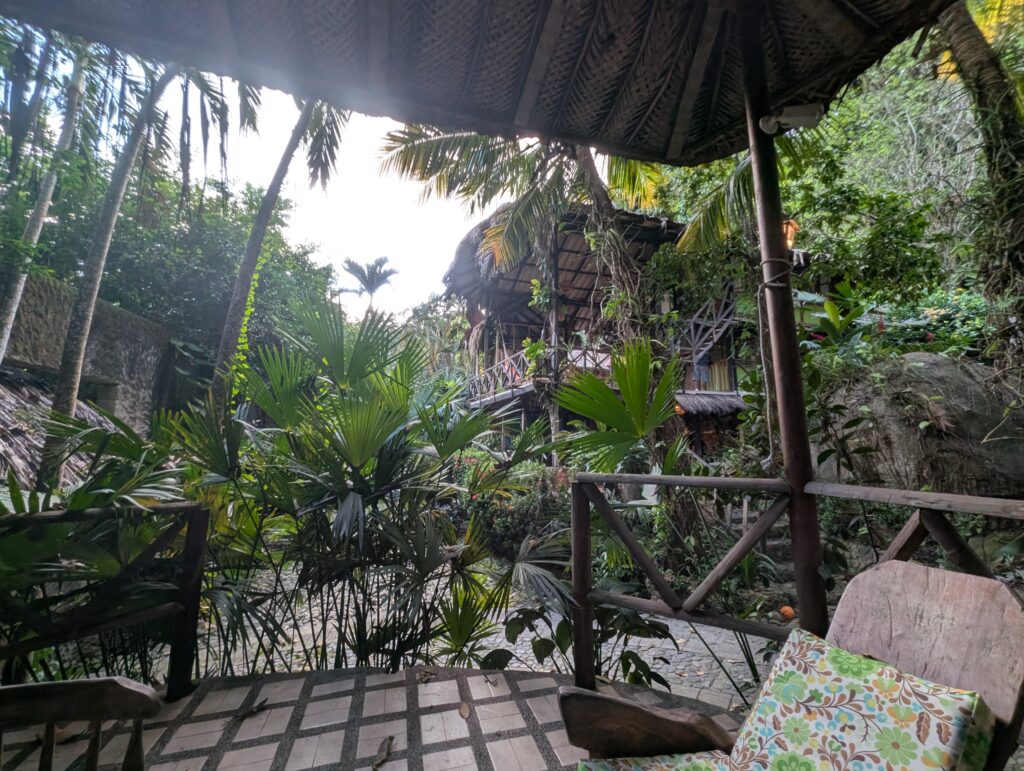
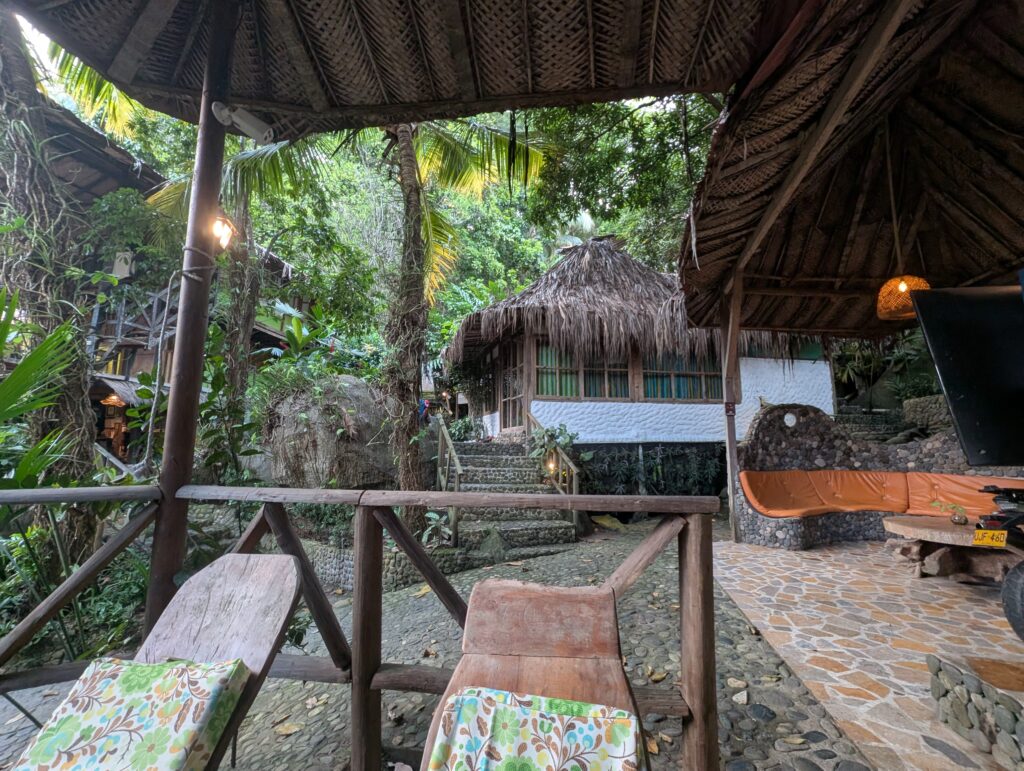
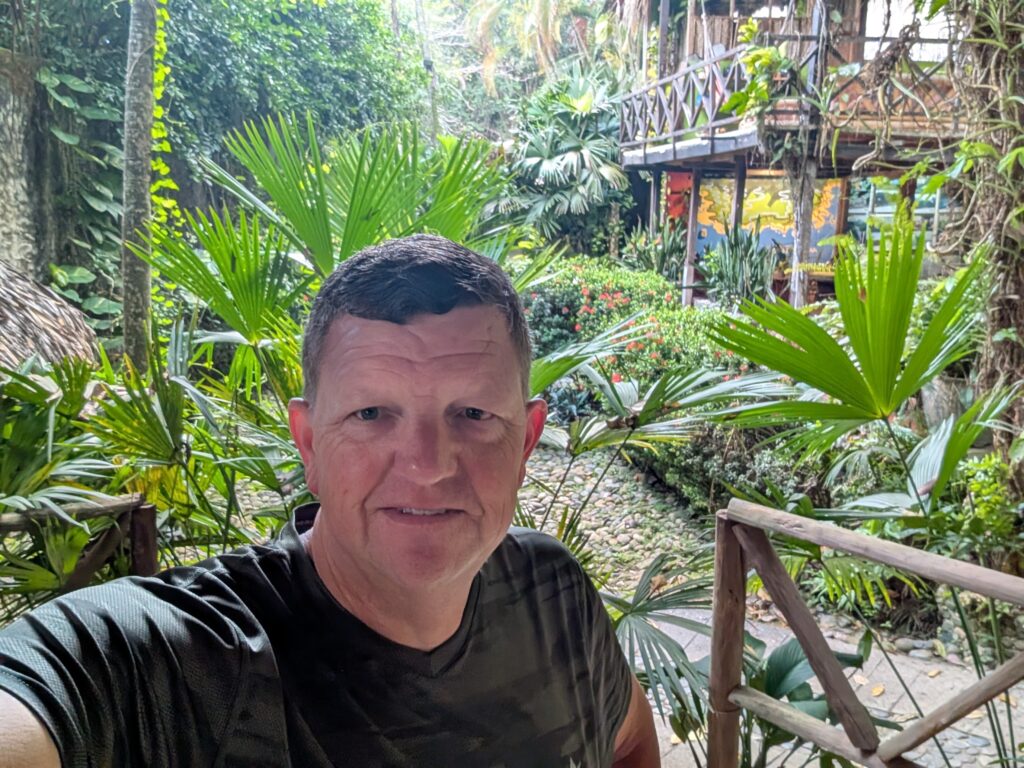
The Yukula Eco Hostel was designed to look like a sort of Swiss Family Robinson abode with thatched roofs and bamboo sides. These were just facades, of course. The real building had air conditioning and wifi. The lockers in the shared room were built onto a rock, though, so that you could see granite at the back of your locker compartment. The shower did not come with hot water, but to be honest, there was no need for it even in the morning. We took a swim in the pool. It was being constantly fed with fresh water and despite the warmth of the tropical afternoon was so cool that Andrew could not stay in indefinitely. I plunged down the slide a few times, trying not to splash the ladies laying on the lounges under the thatched poolside veranda.

Eventually, we made some plans for the next couple of days, and then walked down the road in search of food for the evening and snacks for the following day. The area was pretty rural, and the options sparse. I did find a local food stand with at least enough plastic tables that we could come in, order, and sit down. Between scenes on a blaring telenovela, the owner took my order for arroz cubano. Andrew asked for marisco pasta. He didn’t feel all that great about his food, and didn’t eat it all. This was also the first place where were were told it was unsafe to drink the tap water. Some places in Bogota and Medellin wouldn’t serve us tap water, but along the Caribbean coast the general consensus is you shouldn’t drink it. We ordered bottles here. We spent the remainder of the evening visiting with other travelers in our hostel, then called it a relatively early night.

(Continued)

Cafe Menu
Sancocho
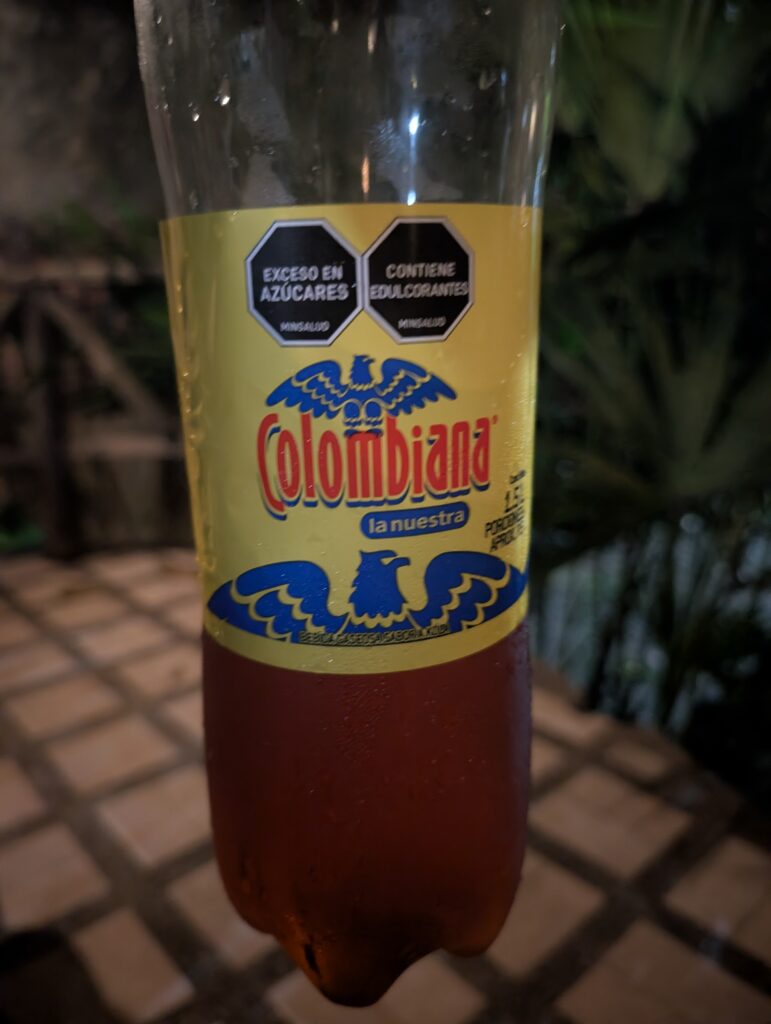
Colombia Specific Soft Drink
Ecohostel

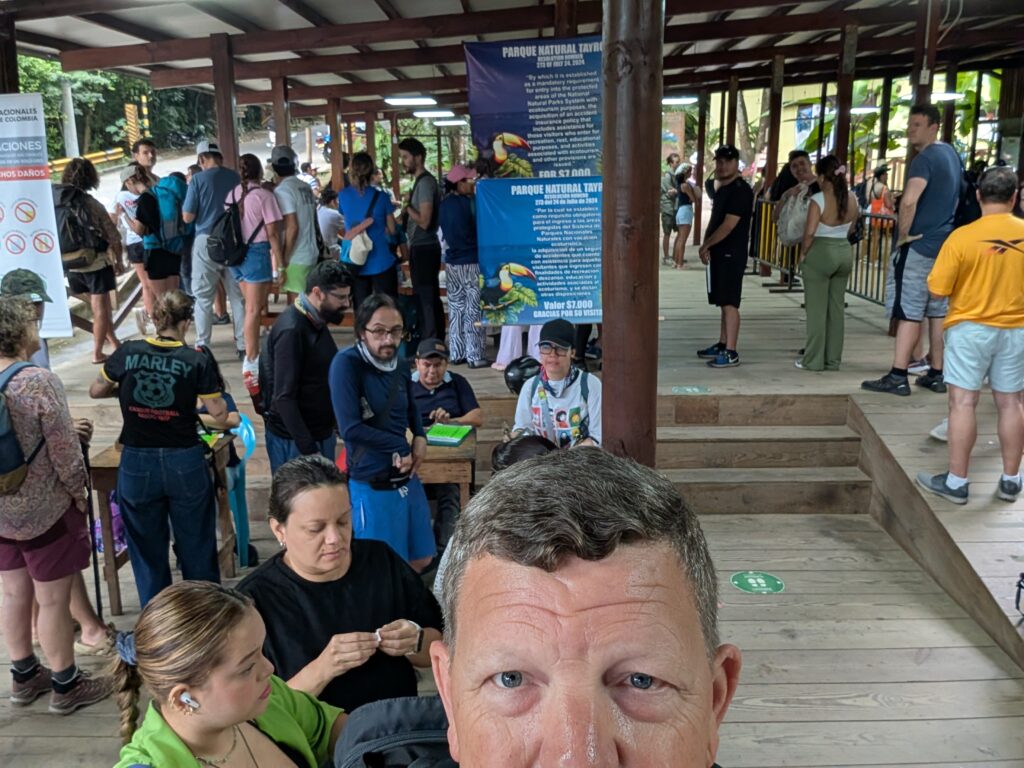
There was no time to run on Thursday morning. I wouldn’t have wanted to, anyway. I knew the day would be chock full of physical exercise. Our hostel provided a free shuttle to the Tayrona Park entrance. The admission seemed a bit steep by Colombian standards. As foreigners, with the ticket and a silly mandatory insurance charge, it cost over 100,000 pesos (about $27). Our shuttle dropped us off at 8:00, and it took another hour or so to navigate the ticket counters before we began the hike into the park.

We had chosen to simply hike the most popular trail in Tayrona, which leads to Cabo San Juan, by way of several other beaches. There is another shuttle available that leads to the trail head, which is about 3 miles from the park entry. The lines were pretty significant to catch one of those shuttles, and we had already considered just walking that additional three miles. Once we got to the trail head, there would be another five or so miles to walk to Cabo San Juan. The deciding factor that ultimately pushed us to just walk the extra three miles was that the shuttle drivers were clearly hand picking passengers for their vans based on not just femininity, but also youth and hotness. During the couple of minutes we tried to negotiate entry to one of the buses, we saw countless men, boys and older people sent to the back of the queues in favor of attractive blondes. We were directed that way in what I would call less than polite fashion. I immediately set out on the hour hike to the trail head. I don’t think it cost us much time over what we would have spent waiting for a shuttle to take a pair of Gringos, one of whom was an old ugly guy.

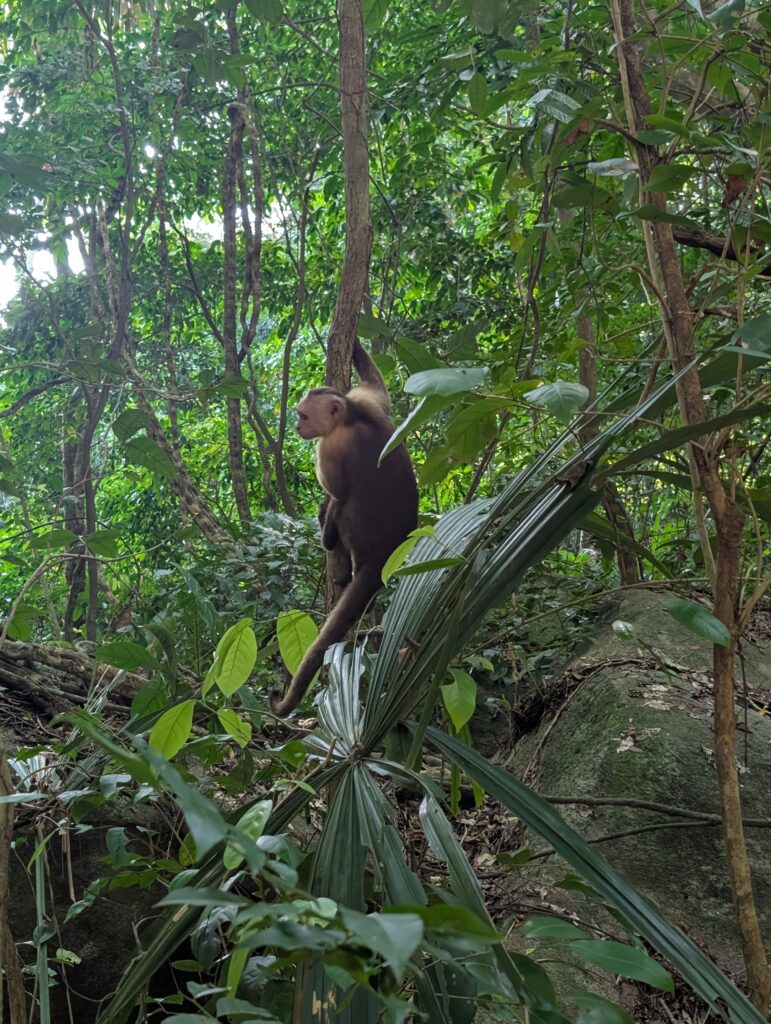
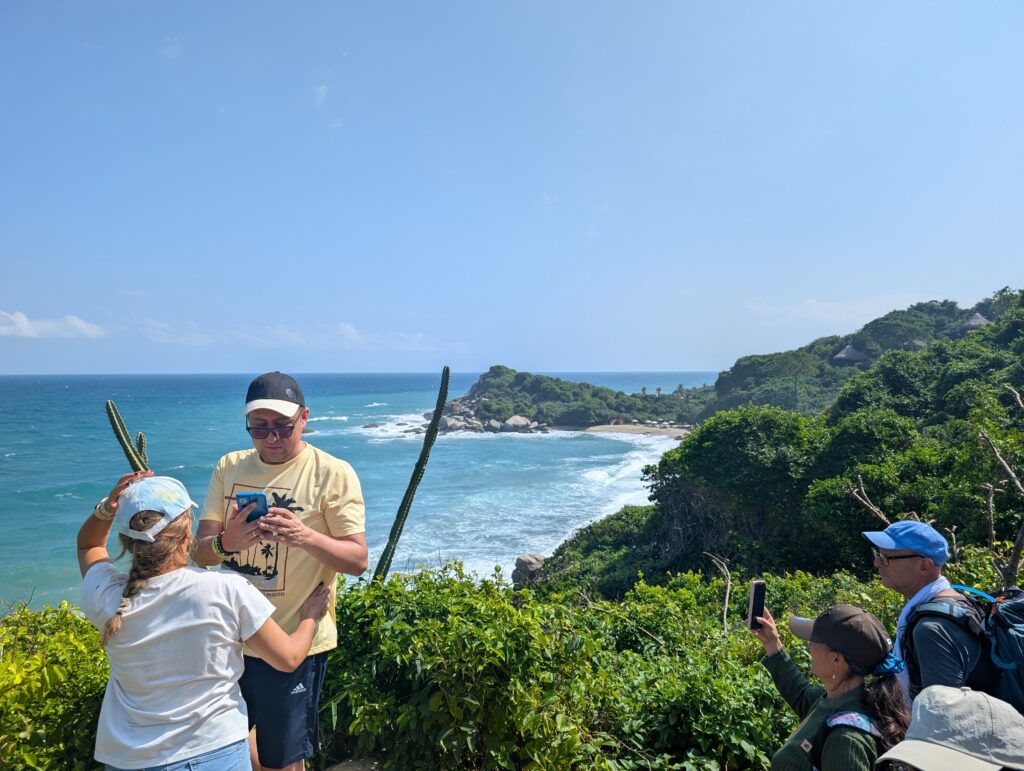
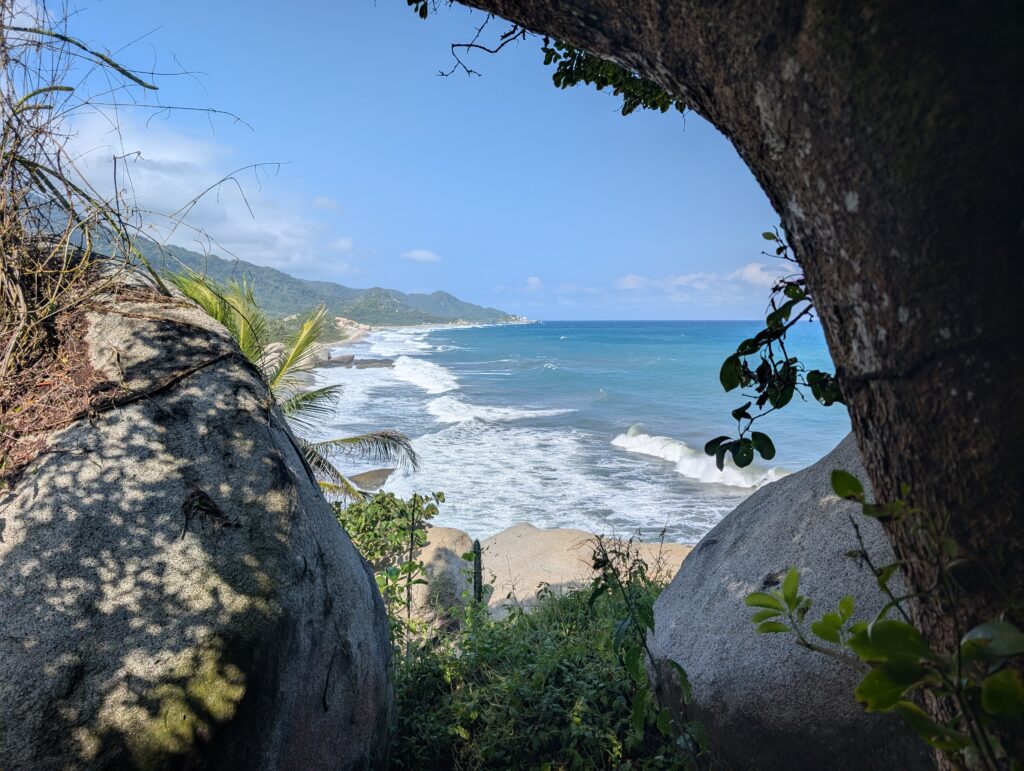
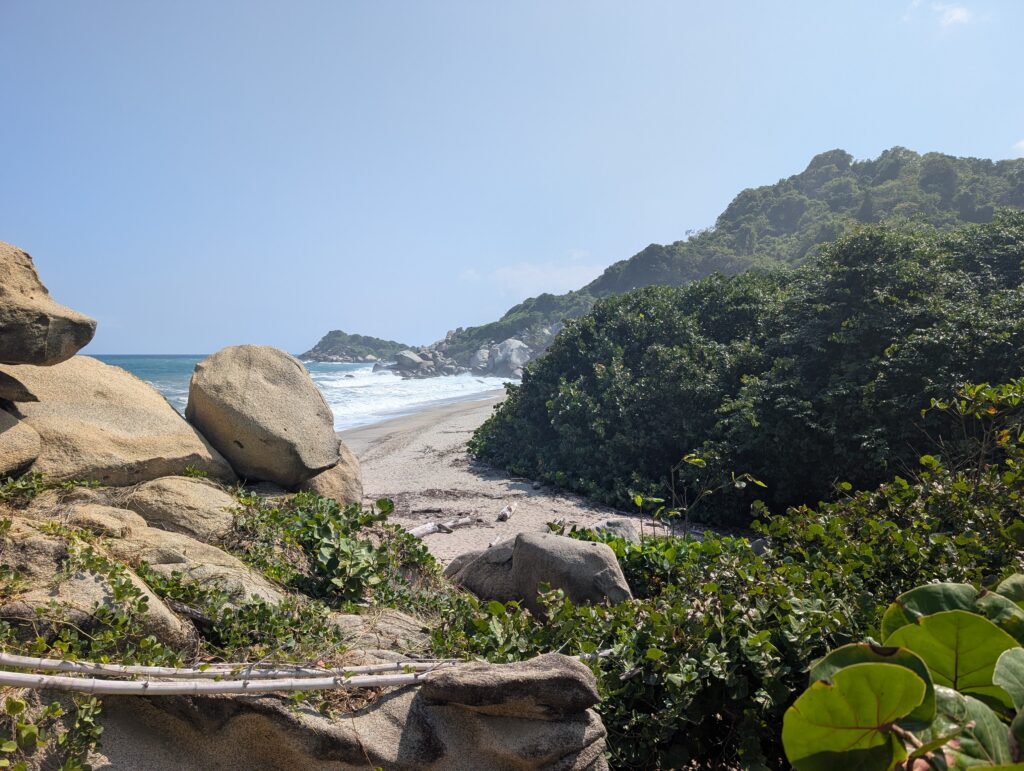
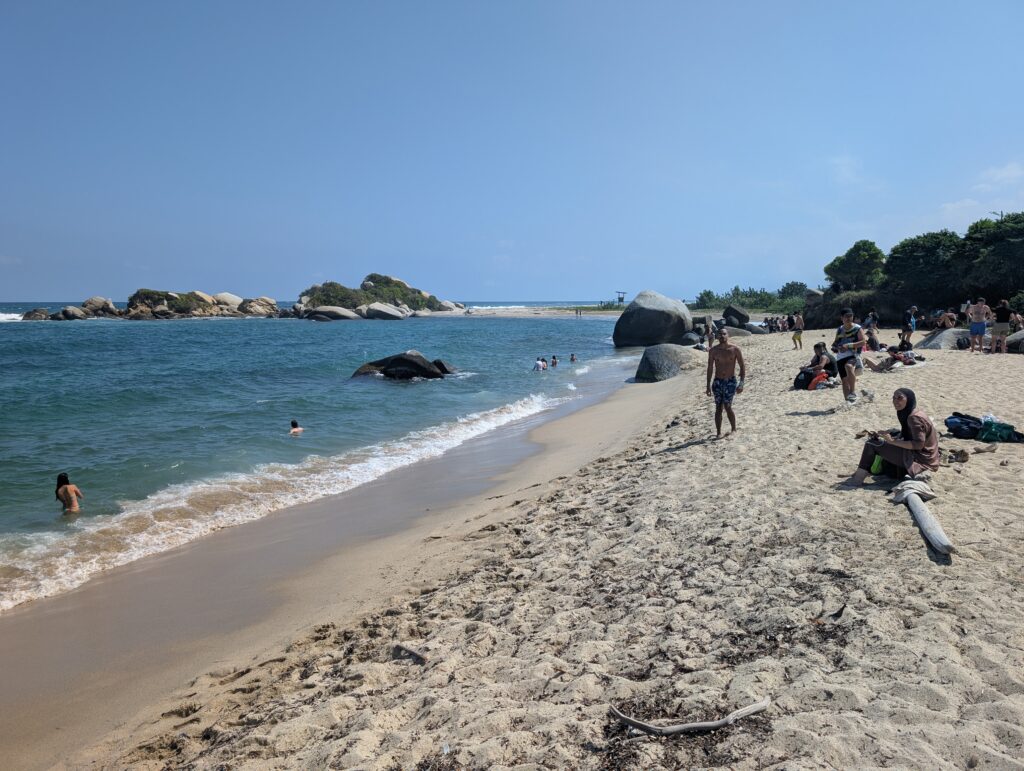
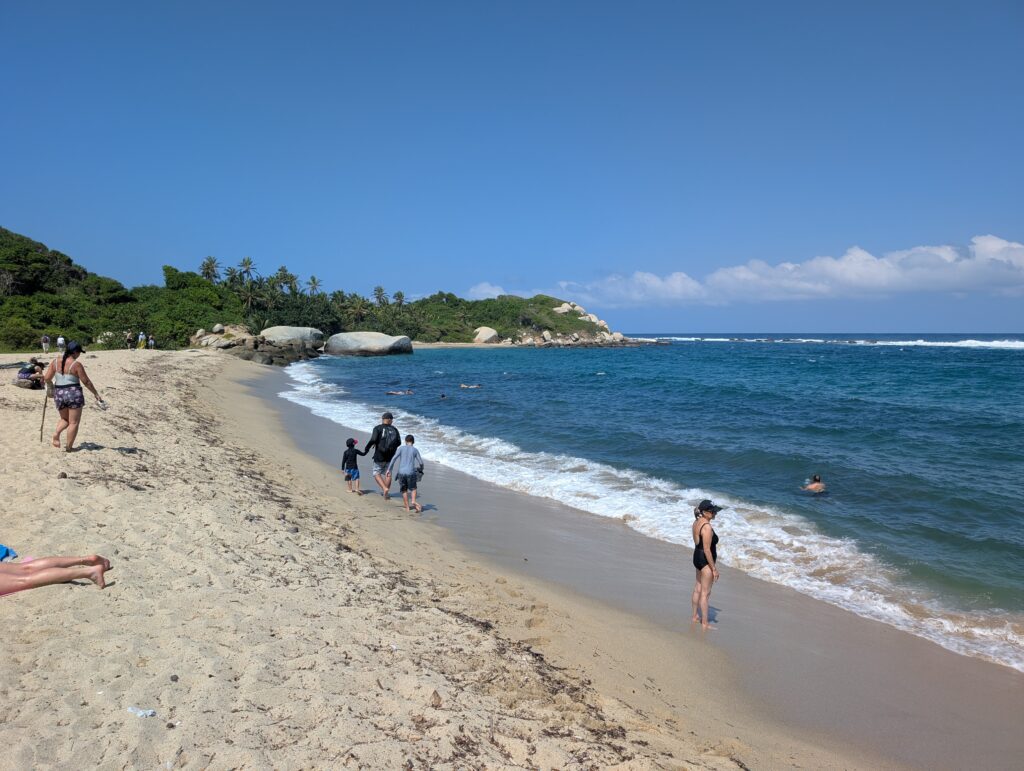
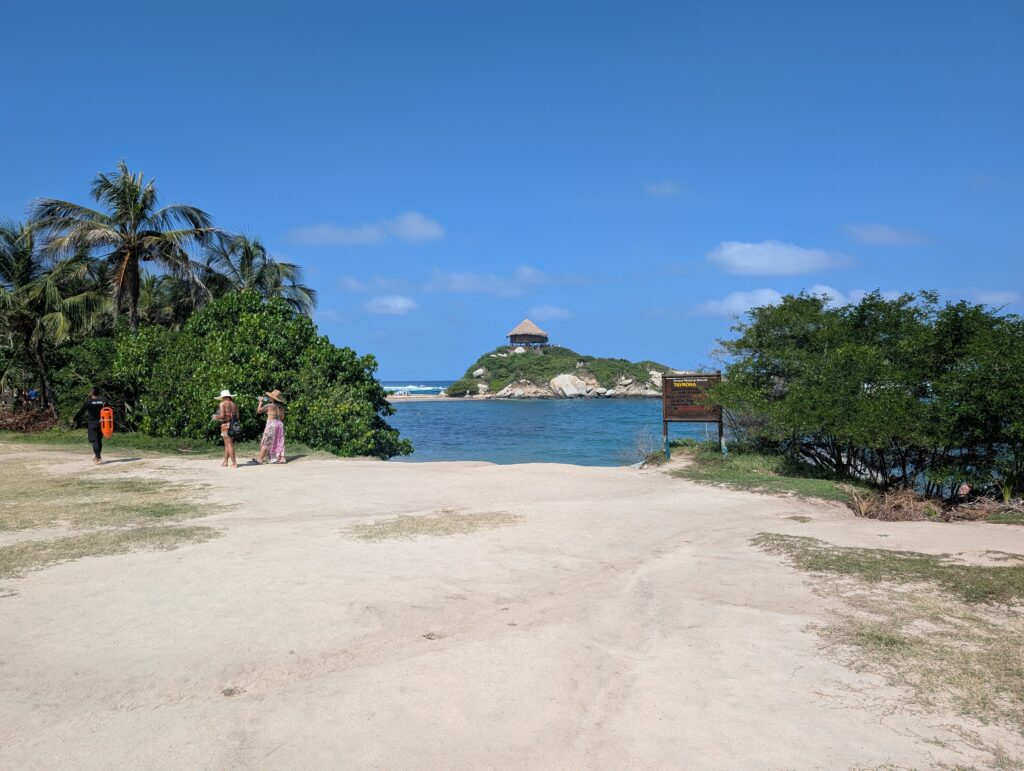
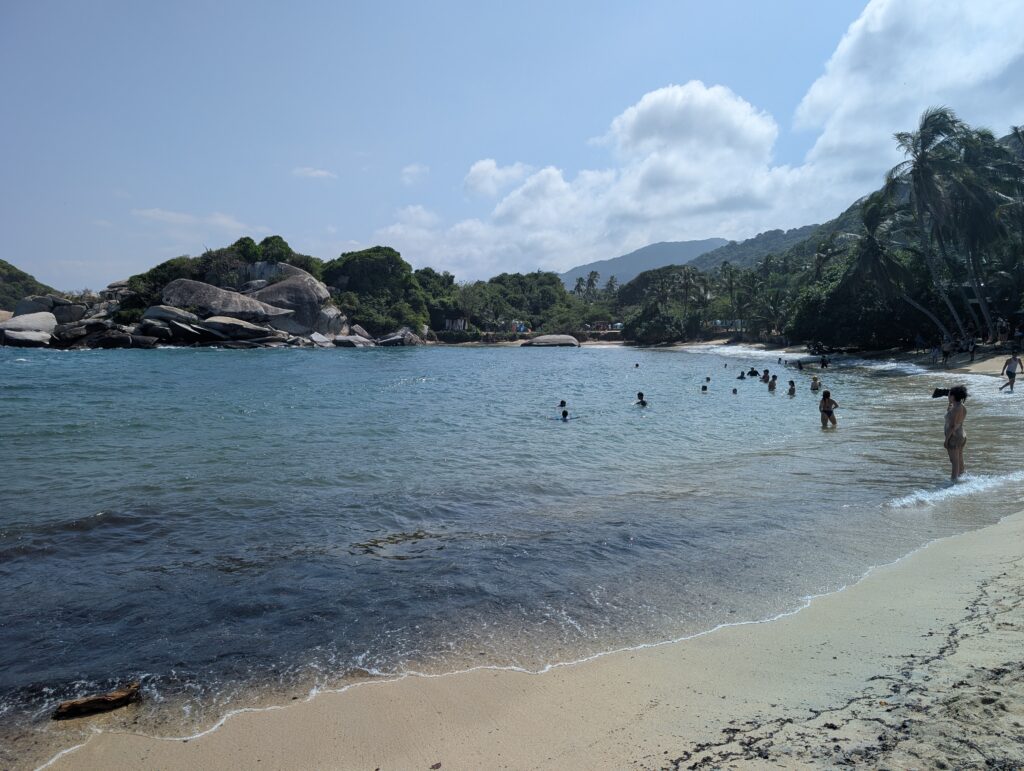
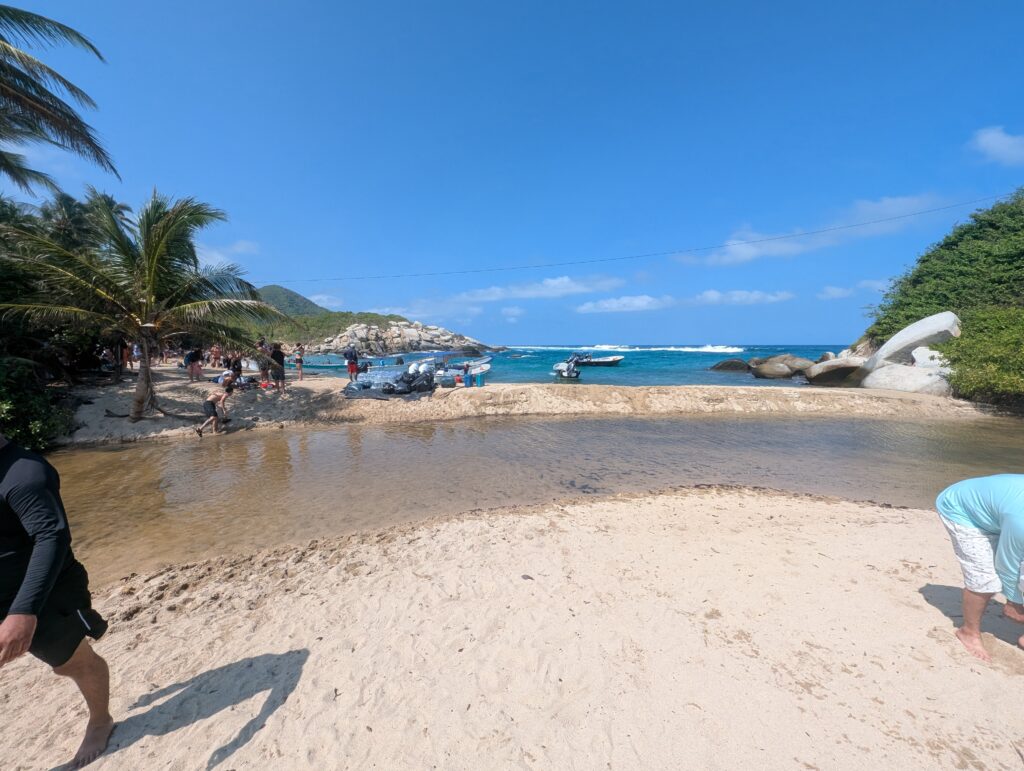
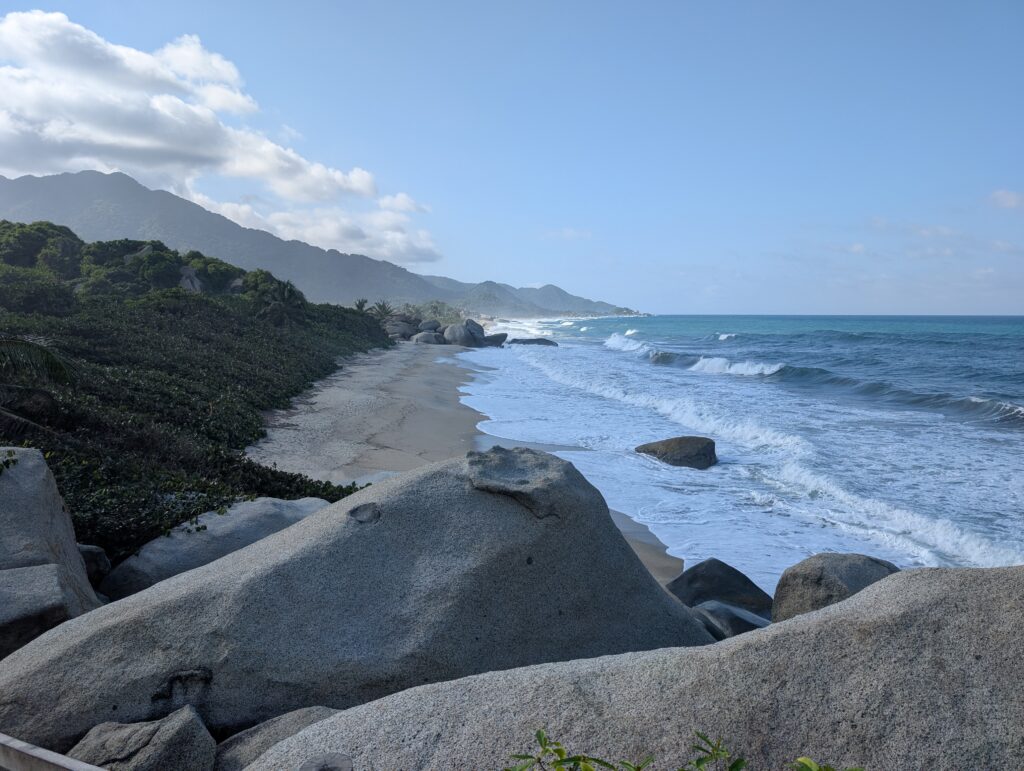
We walked along through a jungle landscape with a well prepared and traveled trail. There was some up-and-down, but the primary obstacle was just the traffic. It was not a complete traffic jam, but often we were slowed a bit on the trail by gluts of people stopping on choke points to take photos, or just to rest without awareness of others on the trail. We also stopped to absorb the nice views of jungle hills tumbling down toward beaches surrounded by granite boulders. It as all very nice. It certainly is not an isolated hidden paradise, though. Our American sense is that national parks will be carefully protected and preserved with some pretty sharp limits on business and commercialization. Tayrona, on the other hand, has hostels and places you can sleep or “glamp” throughout. There are horse riding options, coffee shops, and all sorts of vendors at many of the beaches and overlook points. I don’t say this derogatorily. It doesn’t really detract from the experience. In many cases, visitors will likely think it’s pretty special that they can sleep in the park. It might be a bit of a surprise to some American tourists, however. It’s just different from the American national park experience. It’s probably more similar to how the rest of the world sees national parks.

(Continued)
Waiting in One of the Lines to Enter Tayrona NP

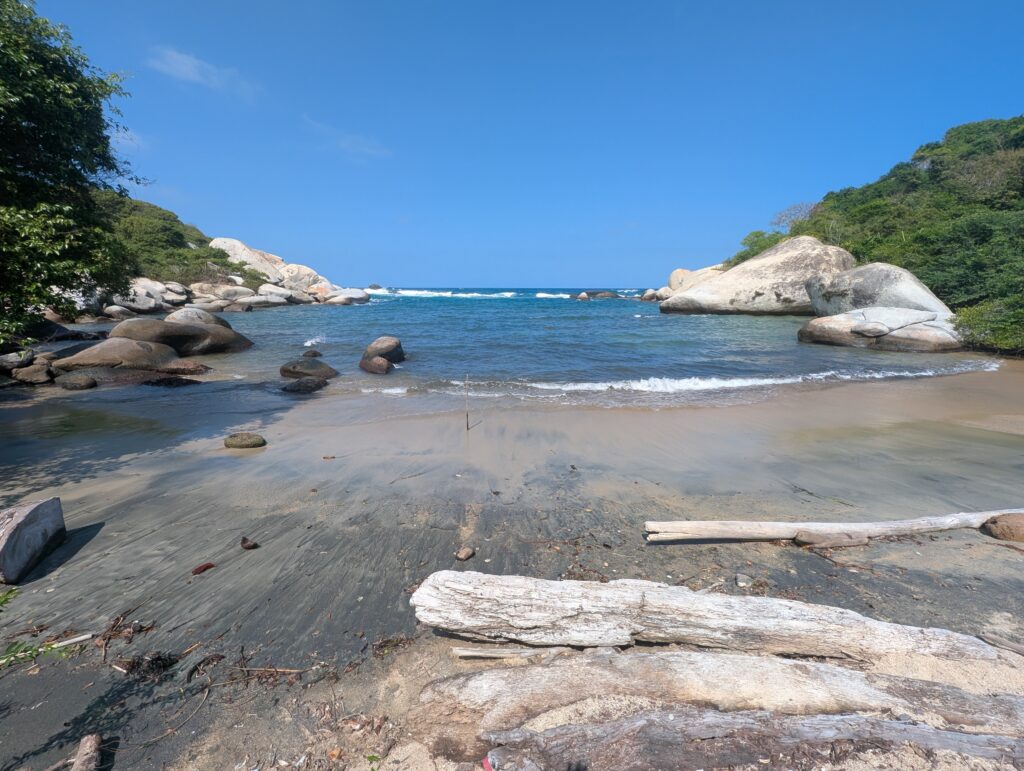
We made some small stops along the way, and visited with other tourists, but spent the bulk of our stopped time on the beach at Cabo San Juan. There are two different beach areas. The lesser used one has a lot of sediment in it. Andrew preferred this one. I swam there a bit, but then went over to the more popular beach to swim in the crystal clear water, and to people watch. The beaches were busy. They dropped off quickly into deeper water and had some fairly strong tides. I let them bob me up and down, while trying to avoid other tourists as well as boulders and obstacles. This wasn’t all that hard. I enjoyed cooling down and just soaking in the experience.

Eventually, Andrew came back over to where I was swimming, and we decided we would backtrack toward the trail head where we came in, since the other route involved a steep climb out. If the shuttle was easily available, we’d avoid that three miles this time. Our plan was to try to get all the way to Cartagena that night! That was a tall order, but Friday the 9th would be Andrew’s only day to see Cartagena, so we thought it would be worth the effort.

We retraced the trail and did catch the shuttle to the park gate. We didn’t readily find a bus back toward the hostel where our bags were stored, however. We ended up walking that stretch, bringing our total for the day over 14 miles. I was glad I hadn’t run earlier. We did find a bus back to Santa Marta. We had gotten bad advice from the hostel staff, however, on how we could catch a bus from Santa Marta to Cartagena. We floundered and dealt with obnoxious cab drivers for a while before walking to a local grocery to regroup.

It was already approaching 7 o’clock. Our chances of finding other bus service to Cartagena seemed pretty slim, and I felt like it was a fool’s errand to attempt to track this down so late in the day. We could just stay in Santa Marta, eat one day’s accomodation fee in Cartagena, and find a bus in the morning. That would incur additional expense, and eat at least half of Friday. Andrew and I decided to go halvers on a four hour Uber ride all the way to Cartagena! This cost $180 for the cab, and another 60,000 pesos or so in tolls, but it was so worth it to have the most rapid transport to Cartagena, and to be dropped off right at our door as it was 11:30 p.m. by the time we arrived. It had been a long day, but we had checked a huge item off of our Colombian itinerary. Andrew was happy, and I was happy. I think we both found the money spent on the Uber to have been well worth it.

Although not travel related, I would be remiss if I didn’t include that Levi David Smith, my second grandchild, and first grandson was born on this day as we made our travels. Special congratulations to Zach Smith and Kirsten Pafford Smith!

Trip Overview
Colombia
Bogota
Medellin
Cartagena
Panama