Medellin
City in the Valley
Andrew and I got up early Saturday morning to catch a bus from Bogota to Medellin. We decided that in order to save a bit of money, we would take this option, even though it would take quite a bit longer than flying. The journey is slated to take 10 hours, 50 minutes. Most people who take the bus, begin at night and plan to sleep en route. We opted for the daylight option. We wanted to see the scenery between Bogota and Medellin, which was supposed to be very nice. Further, we didn’t think we’d get any sleep on a bus anyway, considering our height.
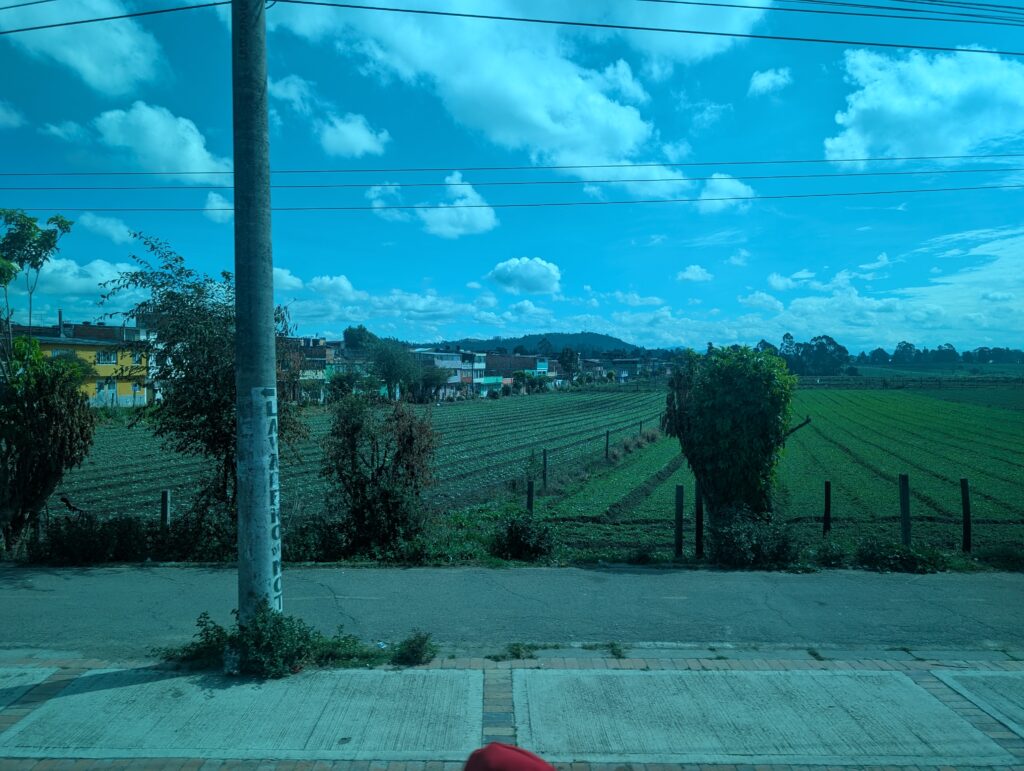
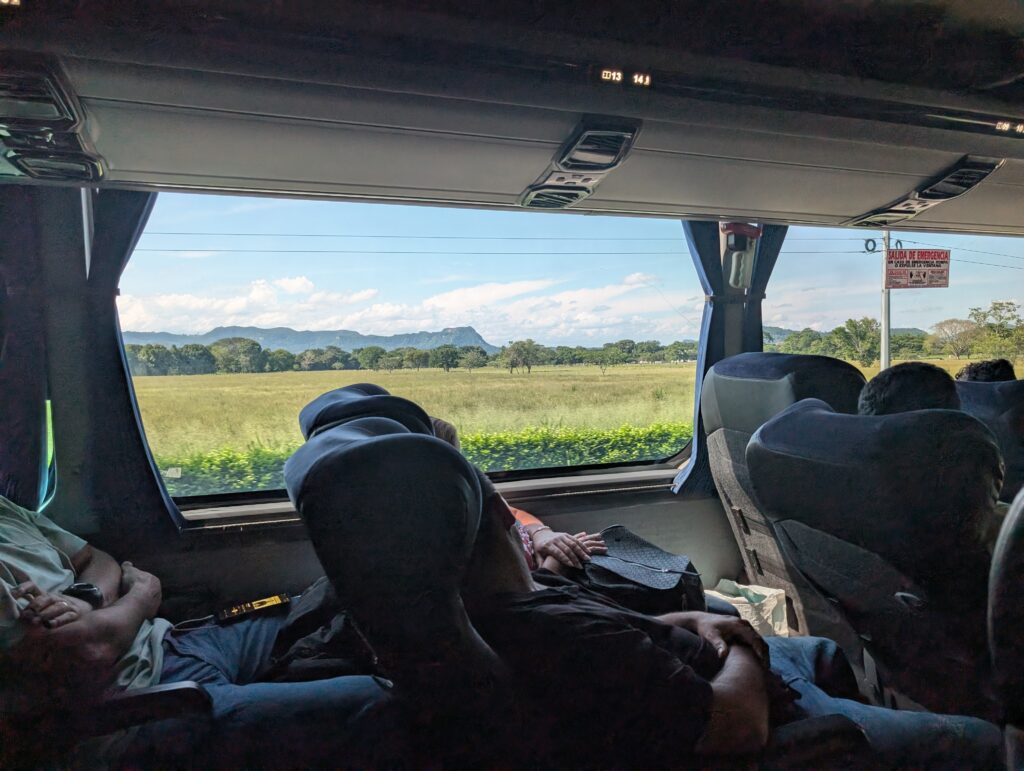
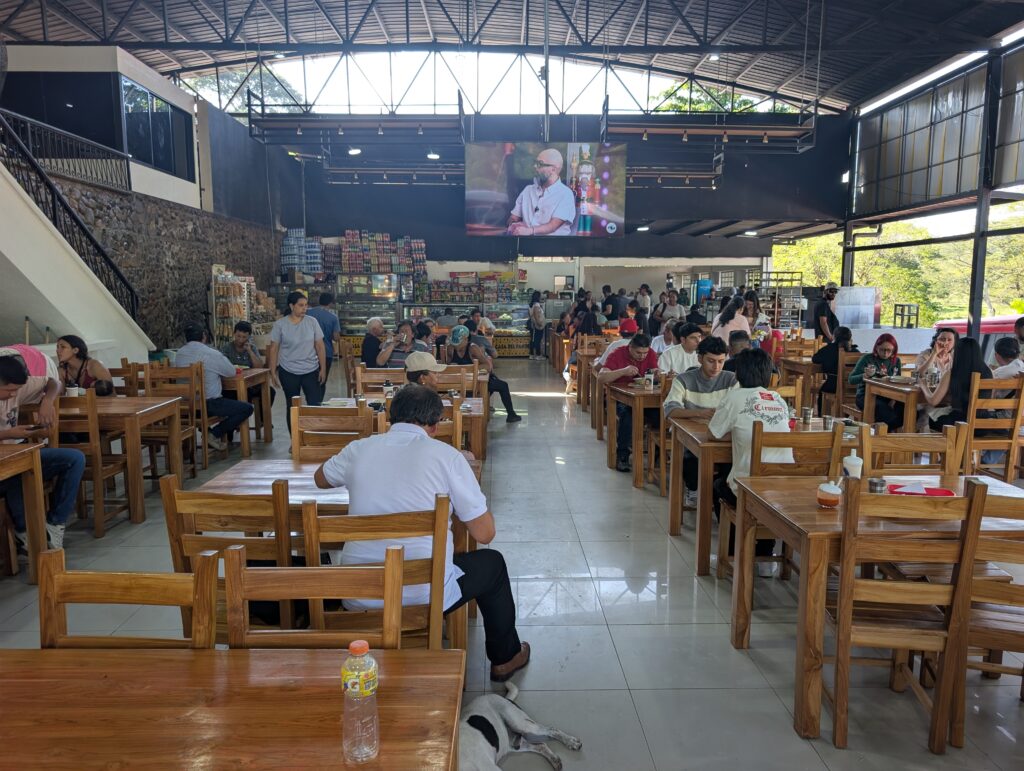
We used the local bus system to reach the Bogota Salitre bus station. This was pretty easy, though we did have to walk about half a mile to connect between the local bus stop and the inter-city terminal. Our bus departed nearly an hour late. It did traverse some very nice scenery, but I would say it was not worth the 13 hours confined to the bus. We were only allowed out one time for a bit less than an hour to eat at a bus stop near the town of Honda. We had packed a few snacks and about a quart of water each. We did not eat much on the road, however. The trip from Bogota to Medellin covers 535km (332 miles). On West Texas roads, this would take between four and five hours. On the winding, two lane mountain roads of Colombia, it is a much longer trip. Although neither of us were ever fully motion sick, I was almost constantly shifting weight as the bus whipped around sharp curves or attempted to pass other vehicles. I may not have gotten sick, but I never felt like eating much, either.
When we finally arrived in Medellin, it was nearly 10:00 p.m. Fortunately, the Medellin public transportation system is modern and easy to figure out. We just bought cards, loaded some money on them, then hopped the metro to within about half a mile of our hostel. The system is a bit more expensive than the Bogota buses, but has a metro, cable cars, and numerous bus lines. We stayed a Masaya Medellin, a hostel in the Poblado neighborhood. It was clean and the bathrooms were roomy, but it was quite the party place. The rooms contained no place to sit, and the common area on the roof had constant music playing at a noise level that precluded talking. There was, however, a rooftop pool and bar.
After a hilly 5k on Sunday morning, I had some oatmeal and showered off for church. I visited with a couple of Dutch girls while eating my oatmeal. Andrew and I had quite an adventure finding church. It appeared that there was a sizable church about half an hour away called Iglesia de Cristo Prado Central. I found two addresses for it, but the clearly newer one was on Carrera 40. We connected from the metro to a bus and made our way to a building that precisely matched the photo on GoogleMaps, other than that it no longer had an Iglesia de Cristo sign. We knocked on the door. I called the number listed, and even sent a text, trying to figure out where the church had moved. We never received a response until I had a missed call sometime after lunch.
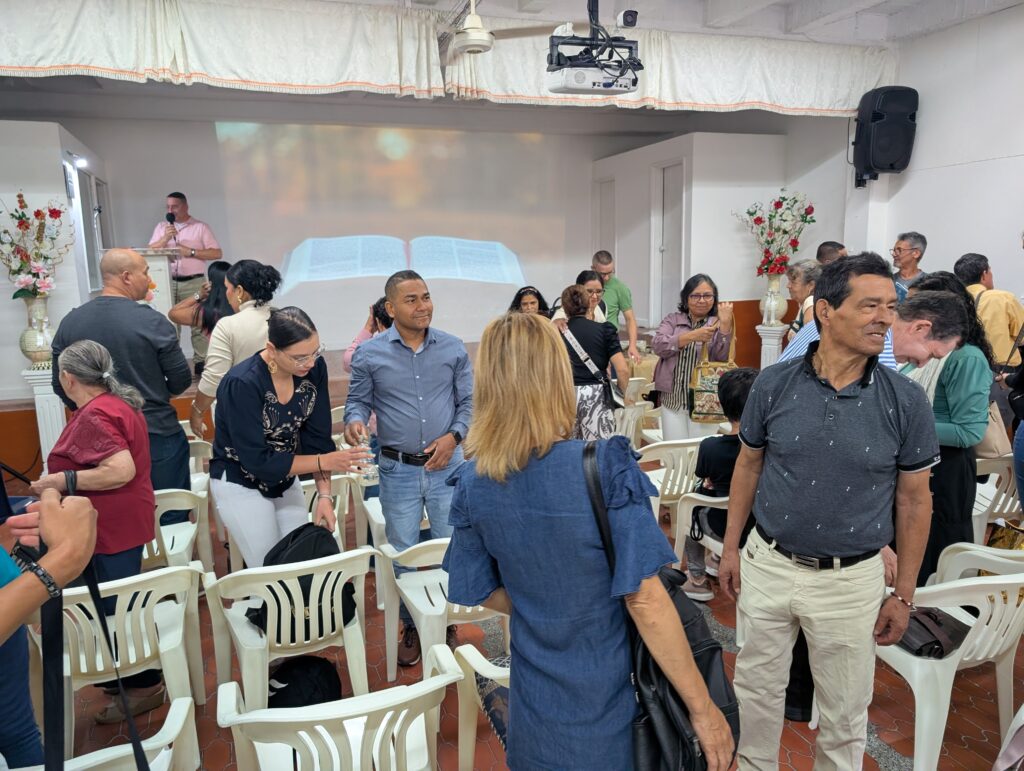
Once it was clear we weren’t finding Prado Central, I whipped out the phone and checked to see if there might be anything else labeled “Iglesia de Cristo” in the area. I found one lead, but it was well over a mile away. We set off in that direction, not sure we were even headed for the right kind of place, and having no idea as to the service times. We rounded the corner at about quarter after 10, and walked through a large open air entry right into a nice, big church of about 80 people. The cost of the church hunting fiasco was that we missed Bible Class. What we found, however, was Iglesia de Cristo Barranquilla, a friendly, enthusiastic congregation that apparently had not moved as often as Prado Central.
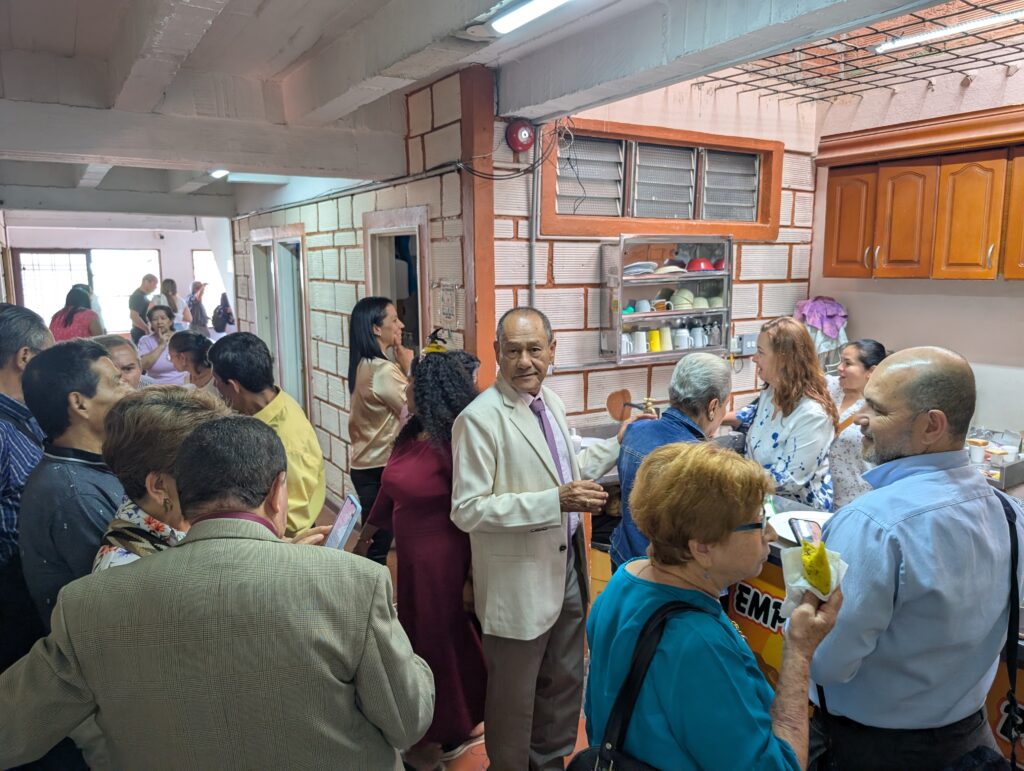
We heard a message entitled, “What Will You Do With the Word of God?” I was able to understand most of it, and of course, to participate in the singing and the Lord’s Supper. We were welcomed warmly, and also noticed that the congregation was celebrating the birthday of a former preacher who had served the Barranquilla congregation for over 50 years. He turned 84. We met many nice friends there and enjoyed coffee and an empanada with the brothers upstairs. We joined the Marin extended family for lunch at El Rancherito, a restaurant serving many local specialties. Andrew had another crack at Bandeja Paisa, and I tried a Cazuela. Cazuela is named after the ceramic bowl used in cooking, and can have various components based on locale. Aelen told me this was a very common dish, and I had already had Bandeja Paisa, so I decided to give it a shot. It was kind of like a stew made from beans, meat floss, chicharron, avocado, rice, potatoes, and arepa. I liked it. I tried some morcilla from Andrew’s plate. That was a blood sausage that was pretty good. Aelen also suggested we try some mondongo, a soup made from diced beef tripe. The texture was a bit unfamiliar, but the flavor may have been the best of all the foods we tried that day.
Our new friends the Malin’s kindly offered to pick us up on the way to their finca – a small farmstead – the next morning. This is a family property in the mountains near Santa Rosa del Osos. In my view, personal experiences I have with people I meet on my trips always supersede any places or things we might see. Andrew was of the same opinion, so we scrapped the plans we had for one of our days to see a new place with new friends on Monday. We would still head to Guatape on Tuesday, but Monday’s trip would turn out to be one of those personal interactions I value most.
The Malin’s dropped us off back at the metro after our meal. We hiked back up the hill to the hostel, and spent the remainder of the afternoon restfully updating our travel journals and doing some other housekeeping.
(Continued)

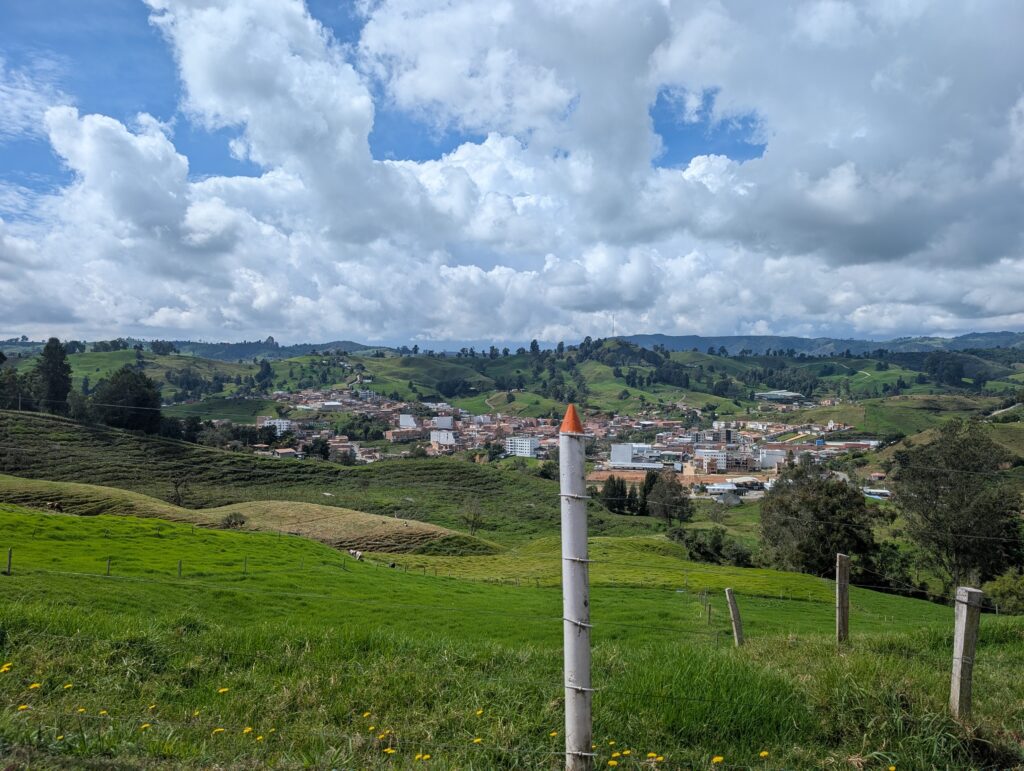
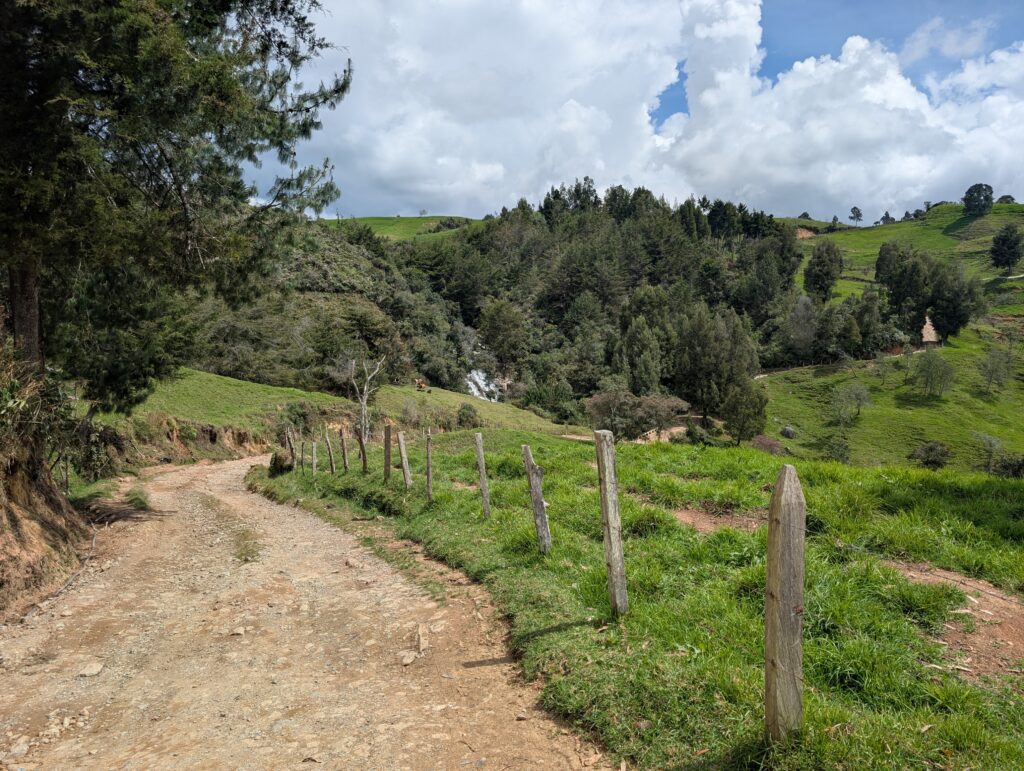
We met the extended Malin family at the metro station near their apartment Monday morning and crept up the winding road toward Entrerrios. We had some spectacular views on the winding two lane highway that climbs out of some poor neighborhoods on the edge of Medellin toward the high country.
One of Medellin’s secondary nicknames (after the “Land of Eternal Spring”) is Copa de Plata, or cup of silver. Medellin is surrounded by mountains, and is thus the treasure in the cup created by mountains. As we ascended the switchbacks, steep green mountains shrouded in clouds surrounded the city below.
We stopped at Entrerrios and munched on some Pasteles de Pollo before the Malin’s did some shopping. Pasteles de Pollo are a common street food in Colombia consisting of a fried ball of chicken salad. Without the salsa rosada (pink sauce that seemed to be a 50/50 mix of ketchup and mayonnaise as is sometimes used on french fries in the Pacific Northwest), it would have been fairly bland. The sauce was a nice touch and made for a tasty breakfast. The Malin’s had been away from their mountain house for about three months, and thus needed to stock up on foods and cleaning products. We spent a little over an hour working on this project. Andrew and I decided to search for a post office in the meantime.
The post office search proved an unprofitable venture. I walked to four different businesses, each coming at the recommendation of the previous one. Each, in turn, told me that while they didn’t send international mail, this other nearby place did. We walked progressively further from the grocery store the Malin’s were shopping in. Finally, in the fourth Rapidissimo, the clerk informed us that no one in Entrerrios actually shipped international postage, and that I would have to get this task done in another town. At least that put an end to the fruitless search. We walked back to the car near the park and continued to the Malin property.
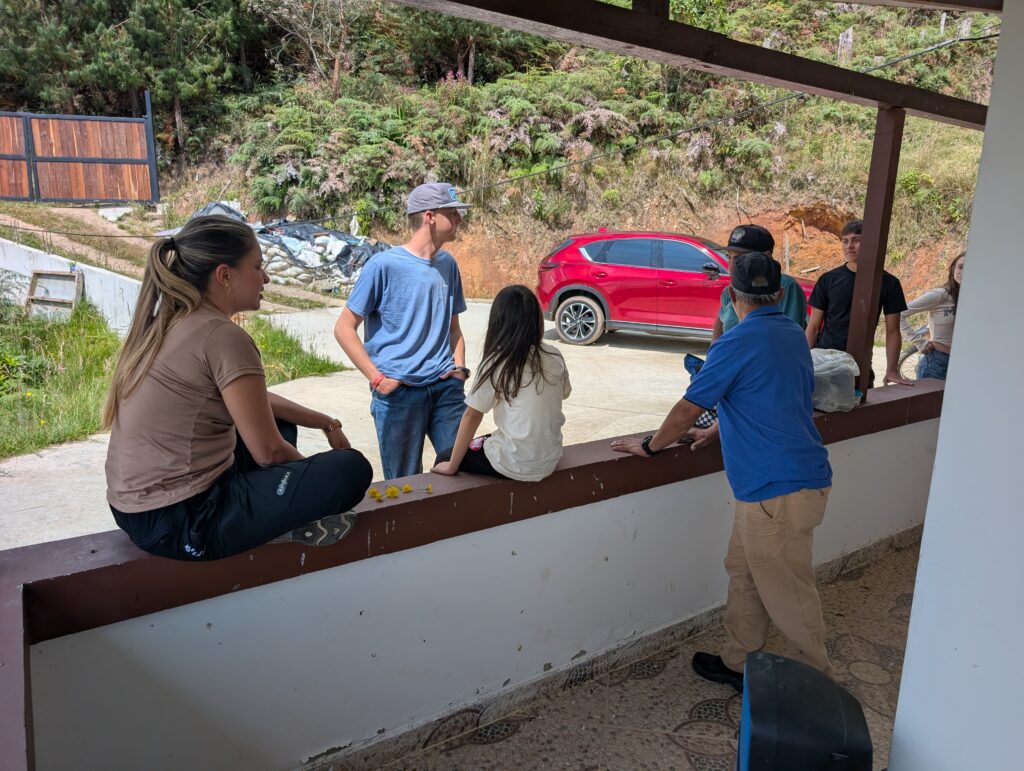
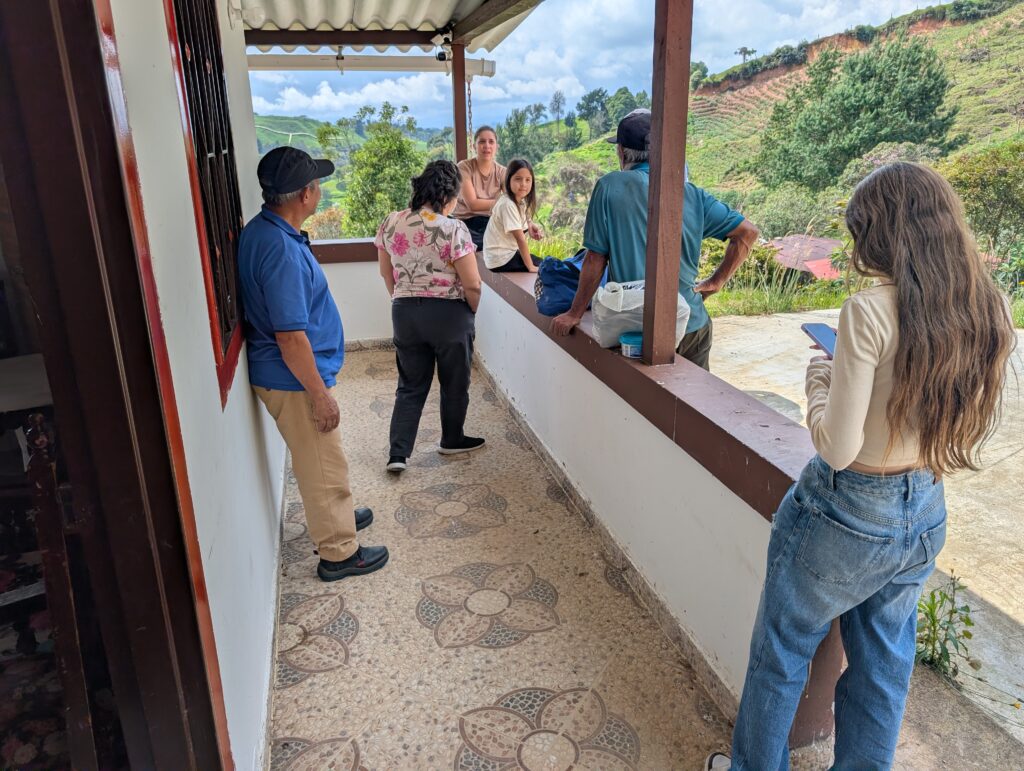
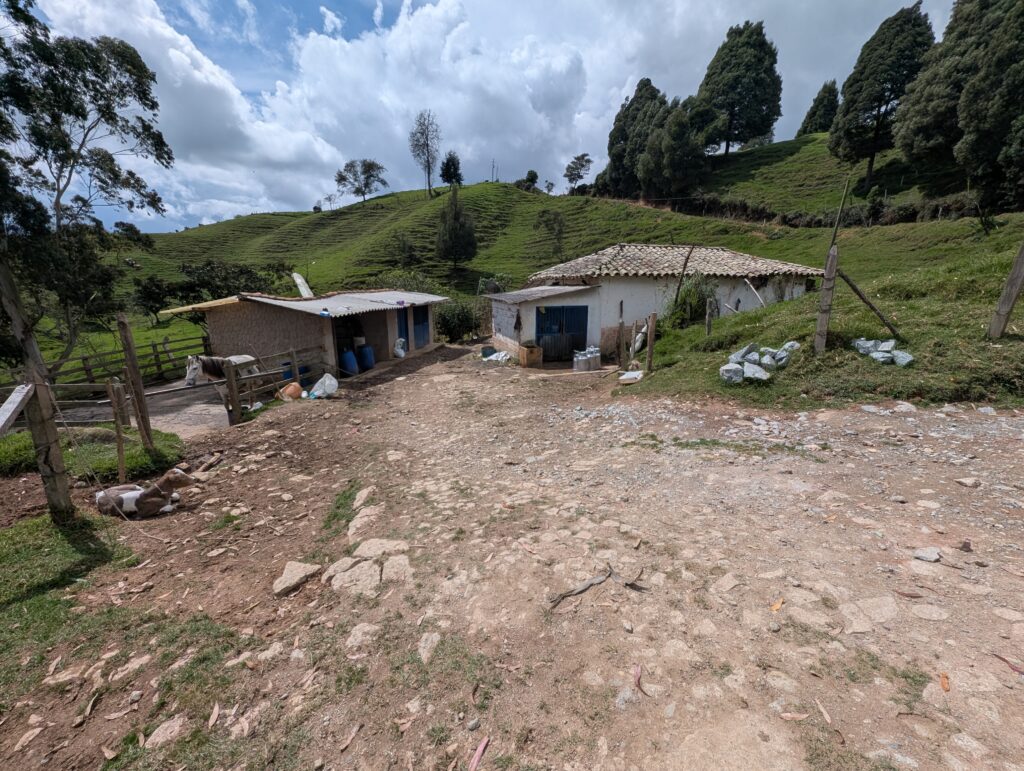
The Malin’s cabin was a newly constructed, somewhat rustic cement house on a hillside. It seemed to have been part of a larger ranch that had been carved up for rural getaways. I thought the roof was interesting. It was built with some kind of corrugated pressed cement covering. It almost looked like fiberglass. Rain gutters lined the edge, with periodic holes from which descended plastic chains rather than square tubes to guide the water down to tiles which distributed the descending water.
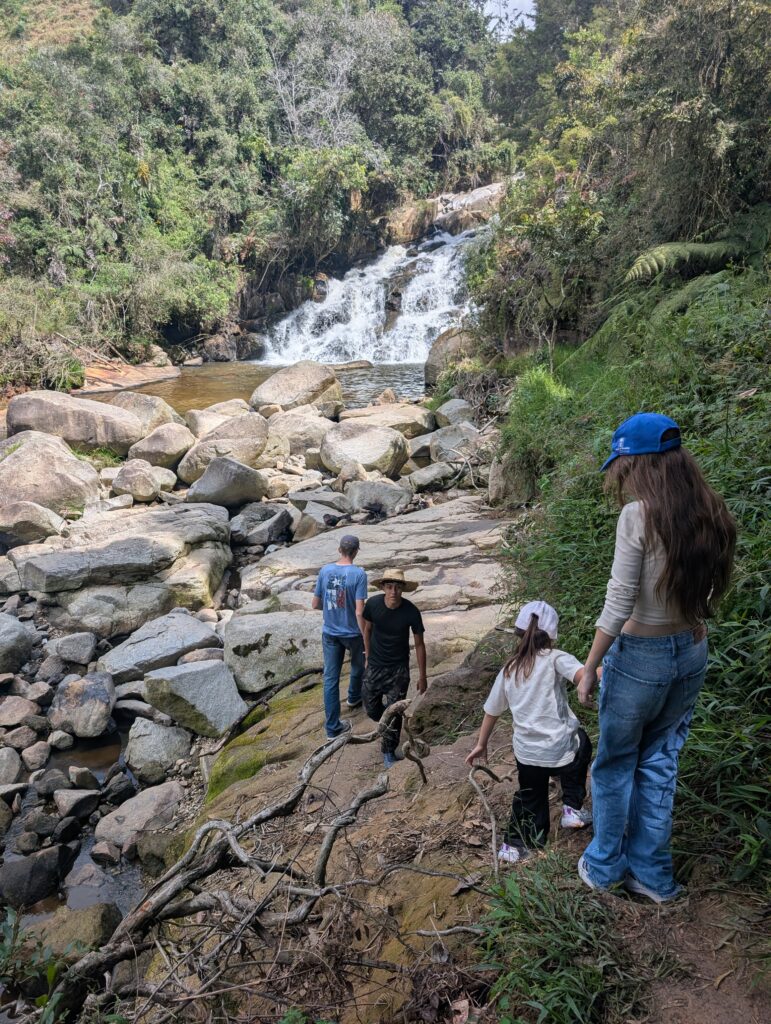
When we first arrived, there was no descending water. It was a bright, sunny day with a few clouds. Sebastiano, his girlfriend, Violeta, Andrew, and I walked down to a waterfall. The boys skipped rocks, and I gave Violeta a ride on my shoulders. We could have brought swim trunks down, but I didn’t bother, and was reluctant to climb back up to the house just to get them. We tossed a few more rocks in the water, then I began the hike back up. The rest of the crew arrived shortly behind me. We had a nice lunch together before a light rain began to fall.
Aelen decided it would be best to take us to Santa Rosa de Osos sooner rather than later, so as to get back in the daylight and have assistance in case she got stuck driving one way or another. Before long, we were back in town and waiting for a bus to take us back to the southbound line of the metro. An accident delayed our departure somewhat, and it was a longish trip back into town. We did finally make it, though. Andrew grabbed an ice cream at a local heladeria and we were back at the Masaya Medellin for the evening.
(Continued)
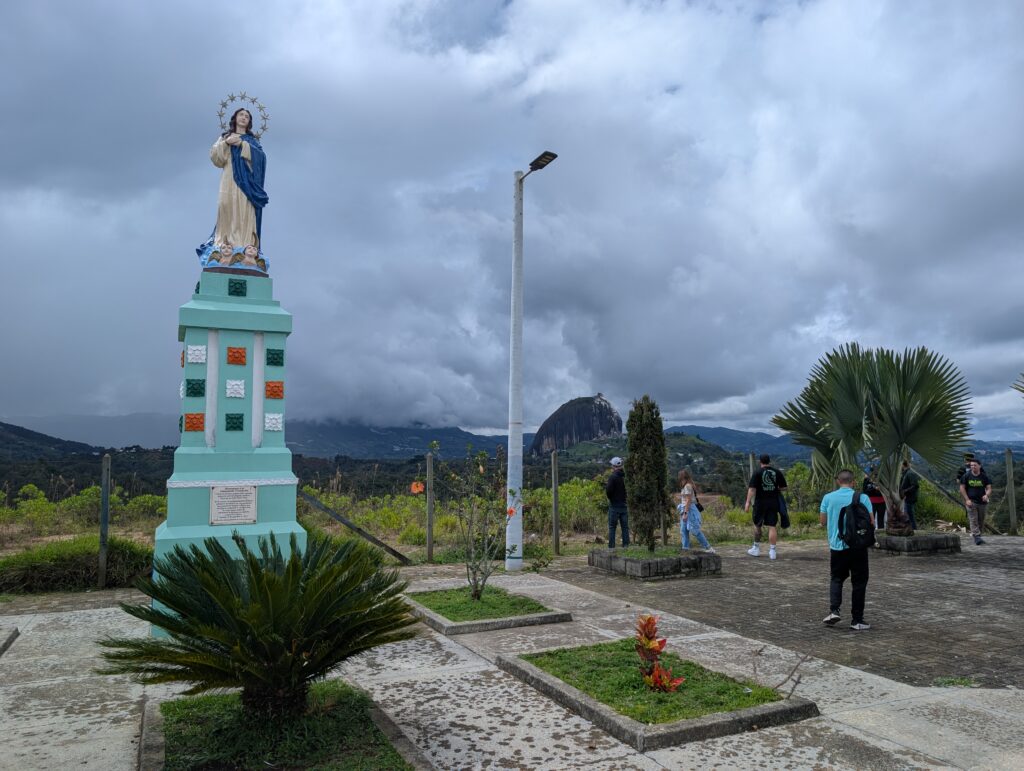
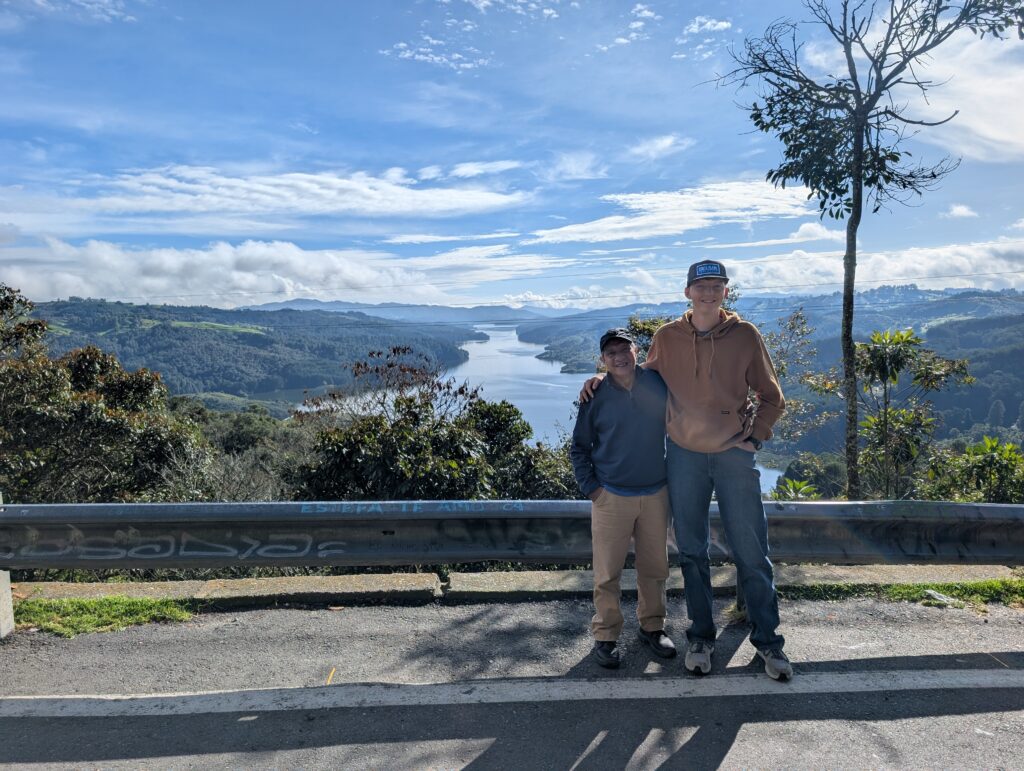
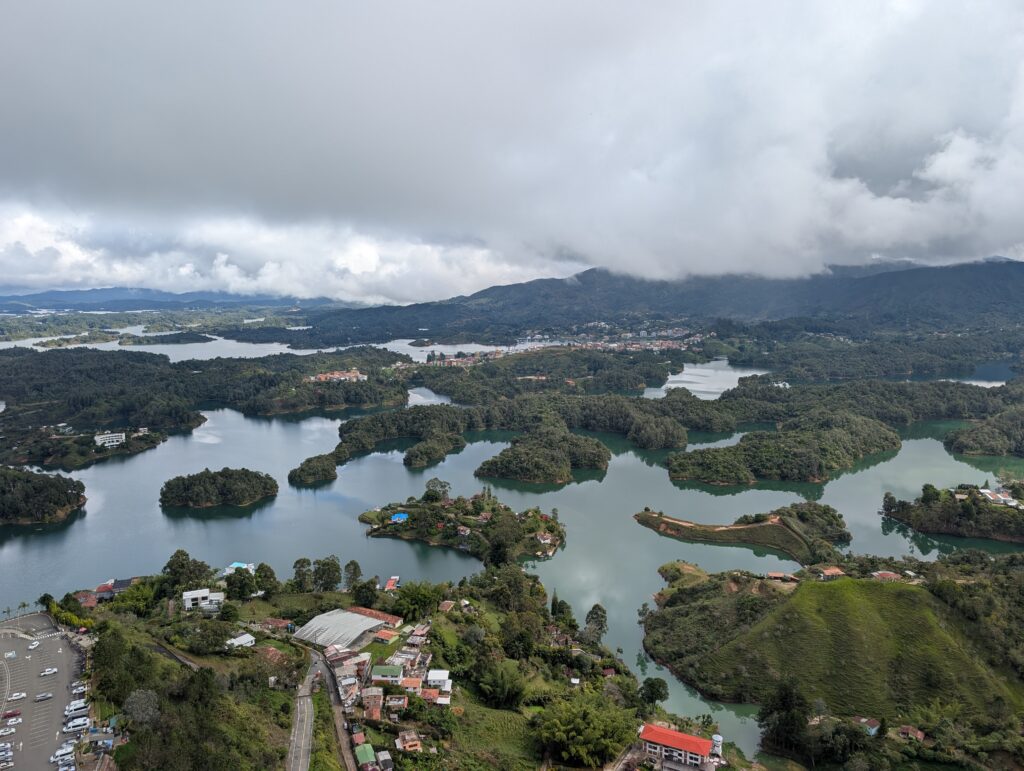
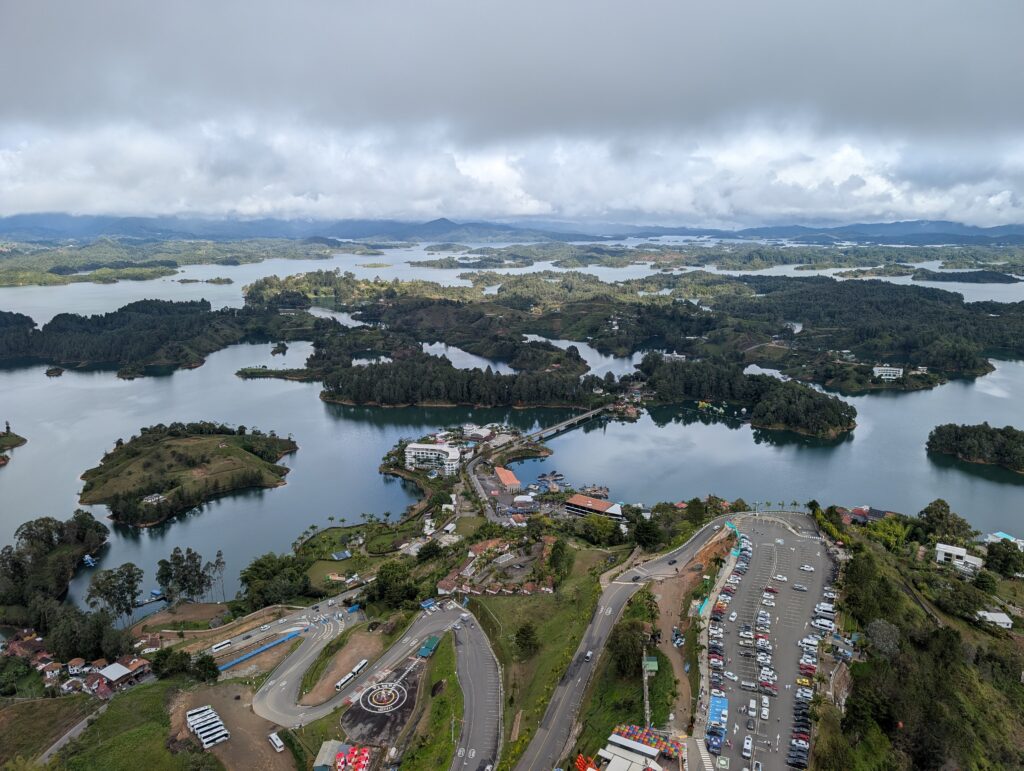
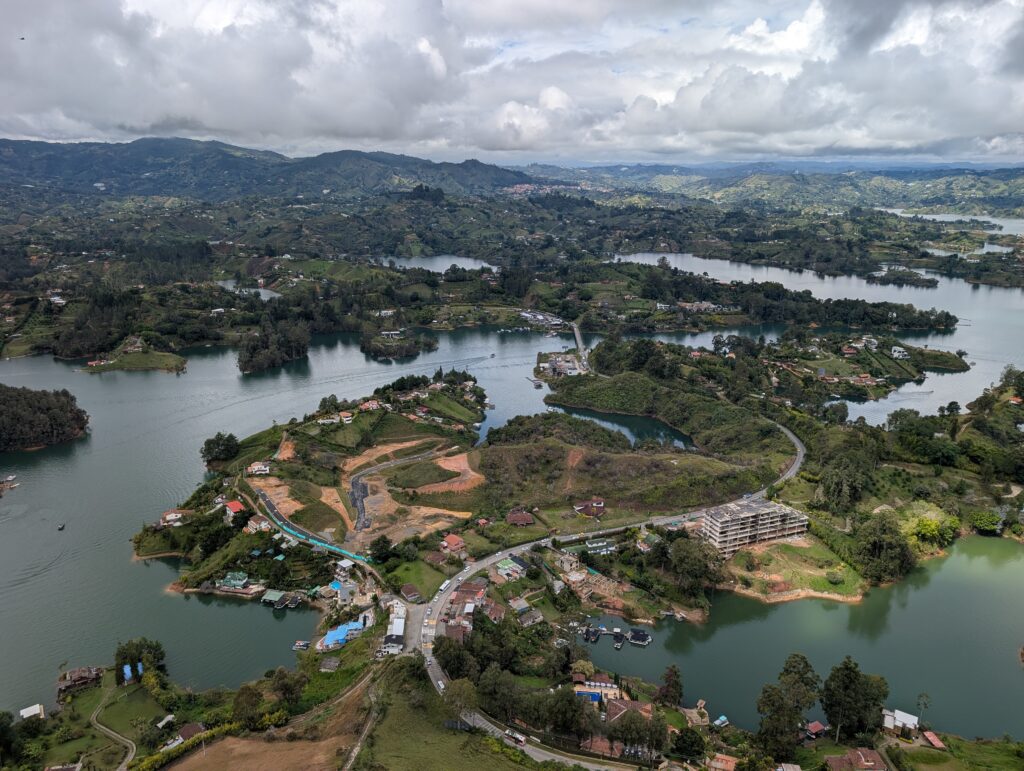
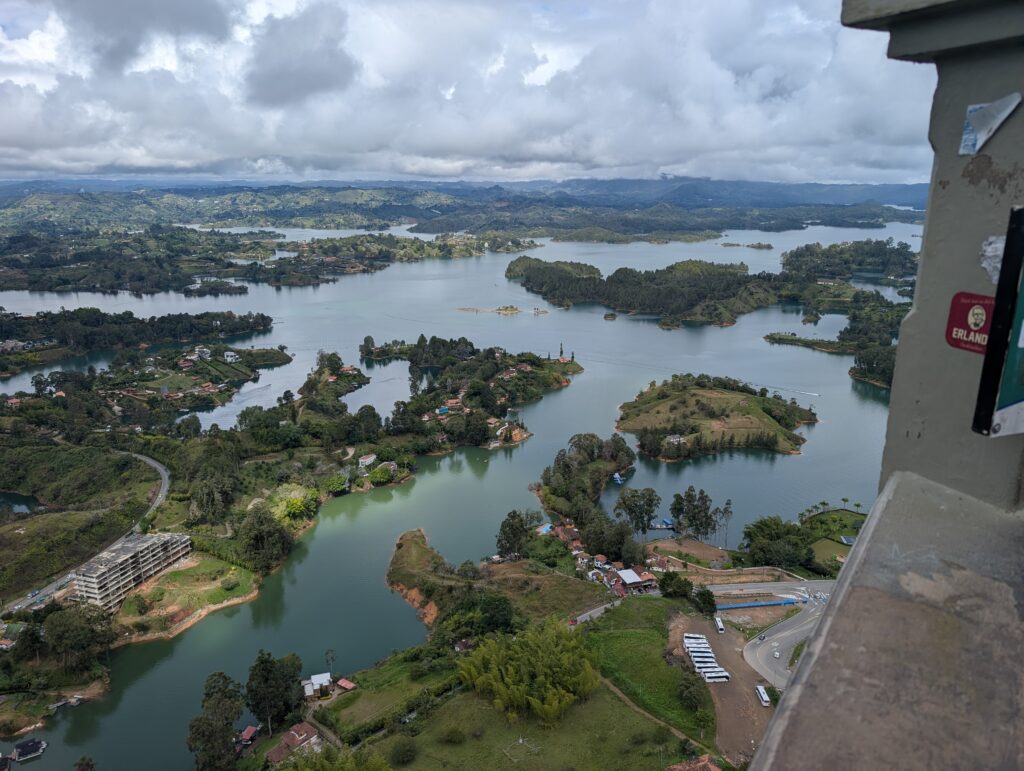
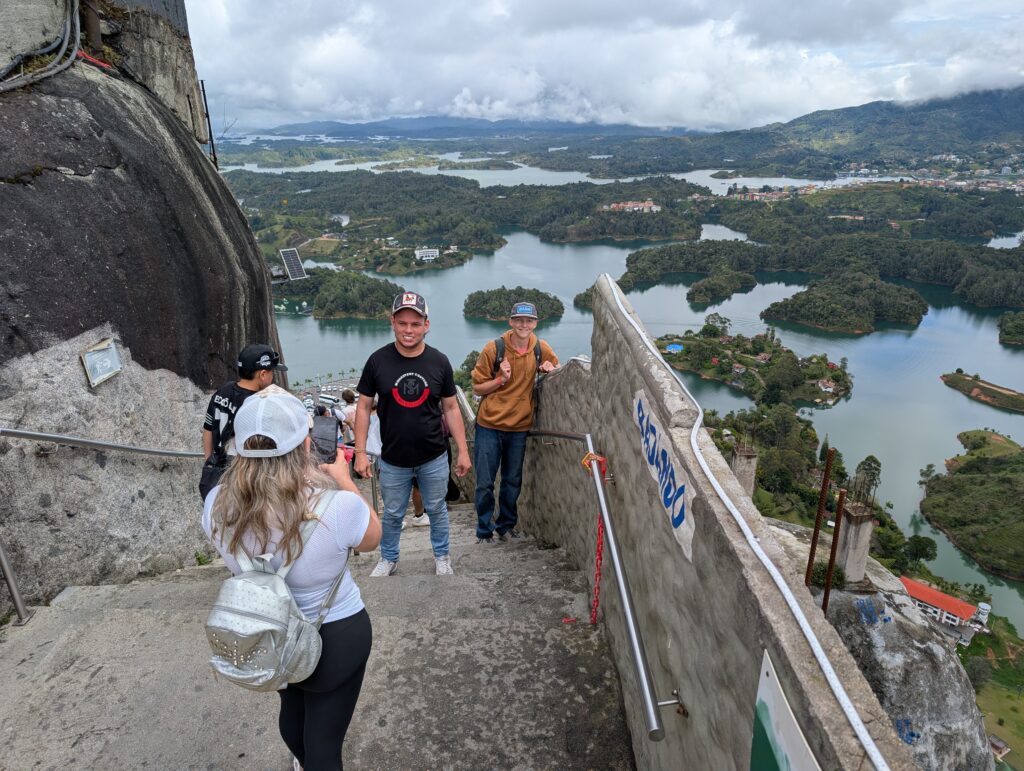
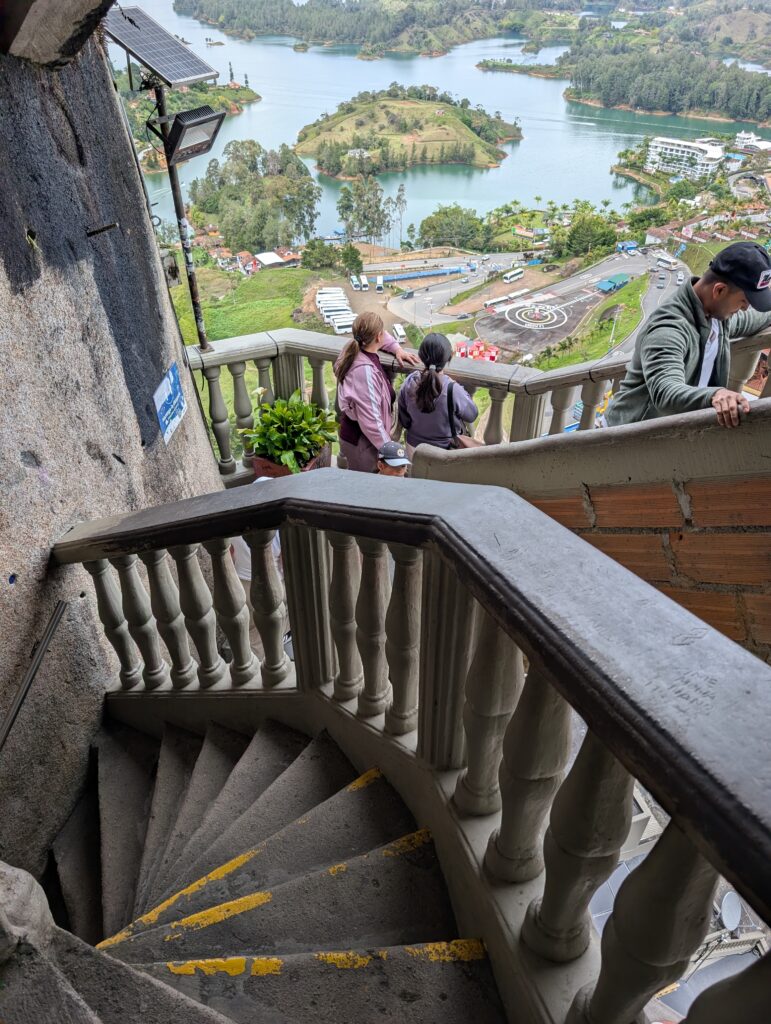
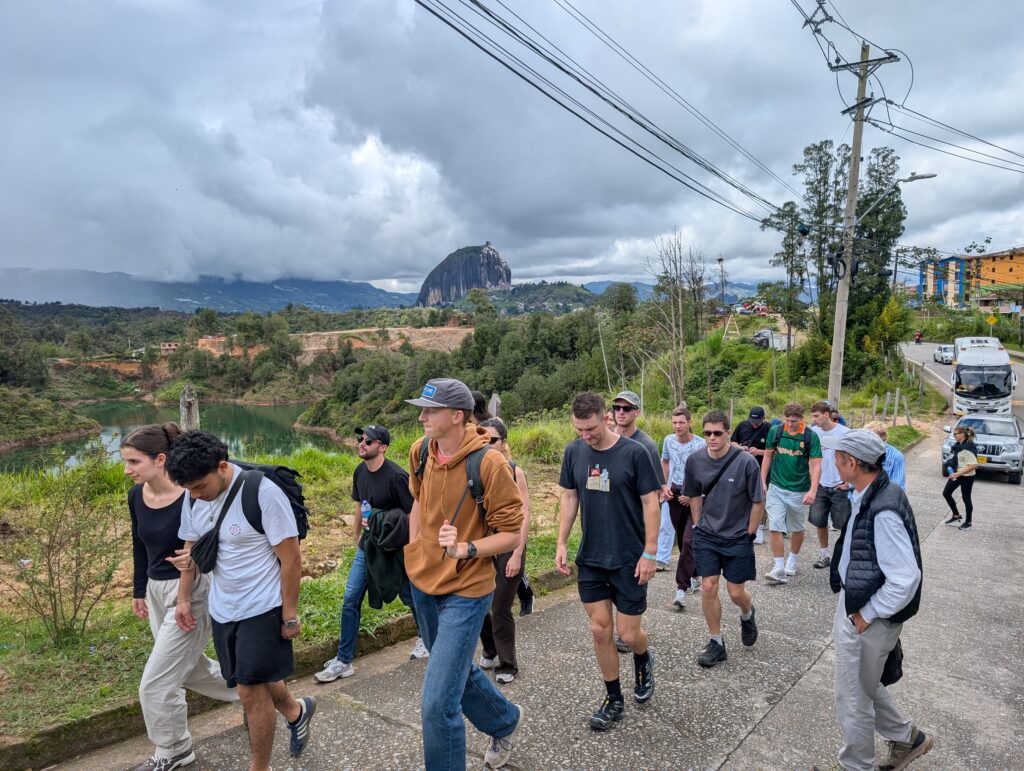
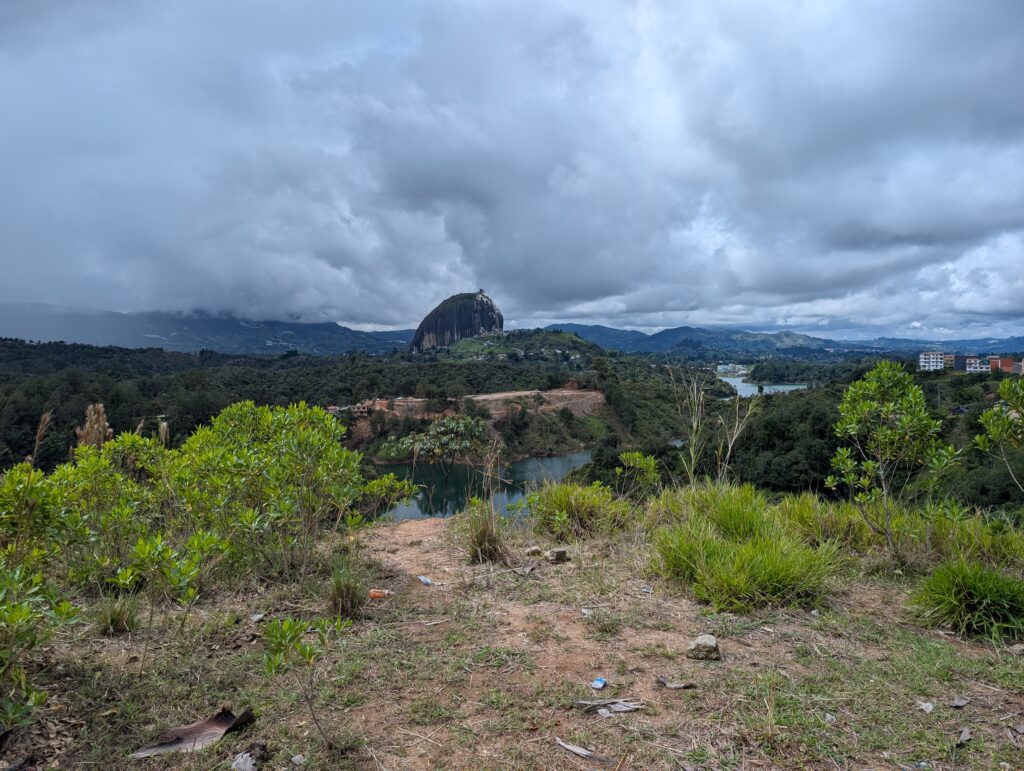
I did not run on Tuesday the sixth, because we had a big day planned with a relatively early start. This marked the beginning of a gap of about a week in my run schedule. I normally do not like to take guided tours. When I do, it is usually because the logistics and costs of transportation are about equal, making the tour essentially free. In this case, we probably saved money by taking the guided tour over the compendium of buses, rickshaws, and meals we would have had to buy in place of the tour. Our tour took us to Guatape, with the highlight being the Piedra de Penol, a huge igneous boulder with stairs carved into the side that overlooks a massive reservoir.
Before arriving at the Piedra, however, we ate a light, included breakfast. As always, Andrew enjoyed visiting with our travel companions. In this case, we spent a long time talking with a group of Danish fellows out seeing the world together. He got some more advice about visiting Scandinavia while we munched on eggs, mango, and an arepa. This was enough fuel to get us up the boulder. Andrew was nervous about not having enough time on top of the rock, so I obliged him by scampering up the 730-some steps at a brisk enough pace to put me in a good sweat. This did allow us more than enough time to get all of the pictures we wanted, and to enjoy the view. It is a spectacular view. We drank in the scenery, did a bit of people watching, and ultimately bypassed the souvenir and trinket shops.
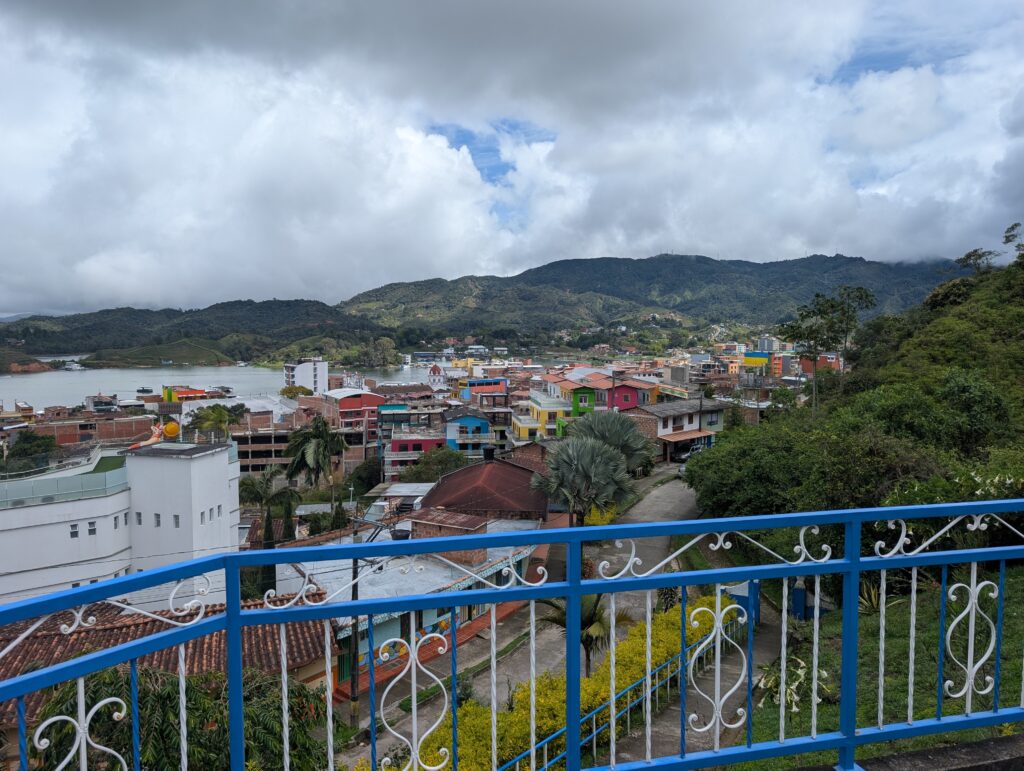
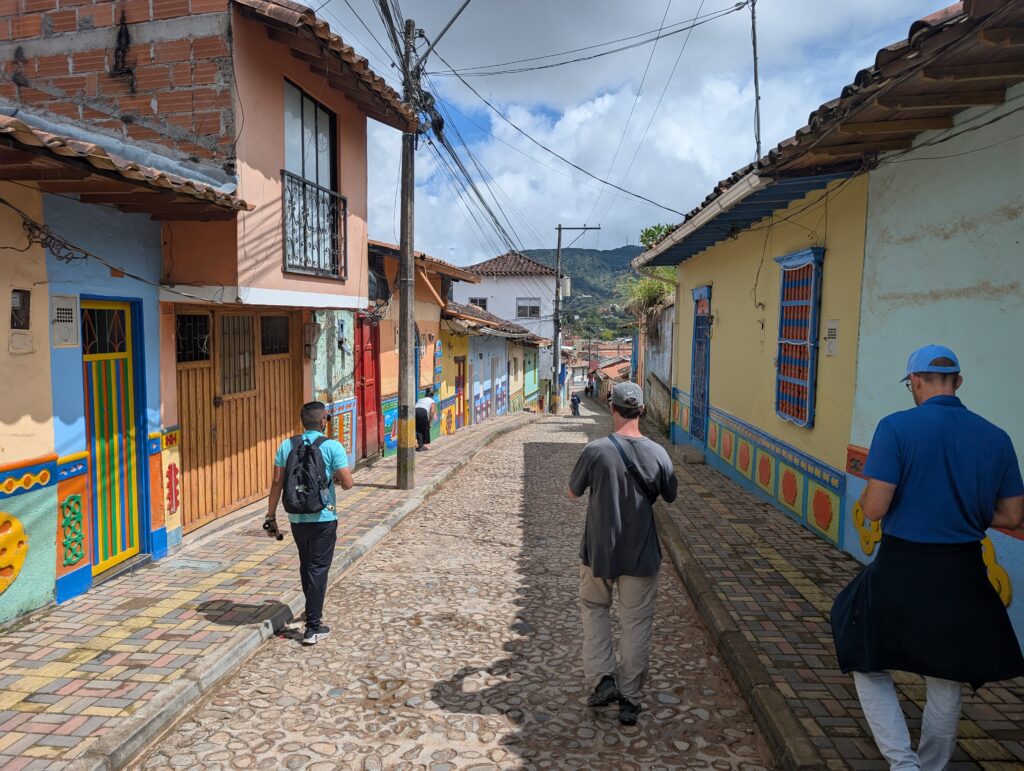
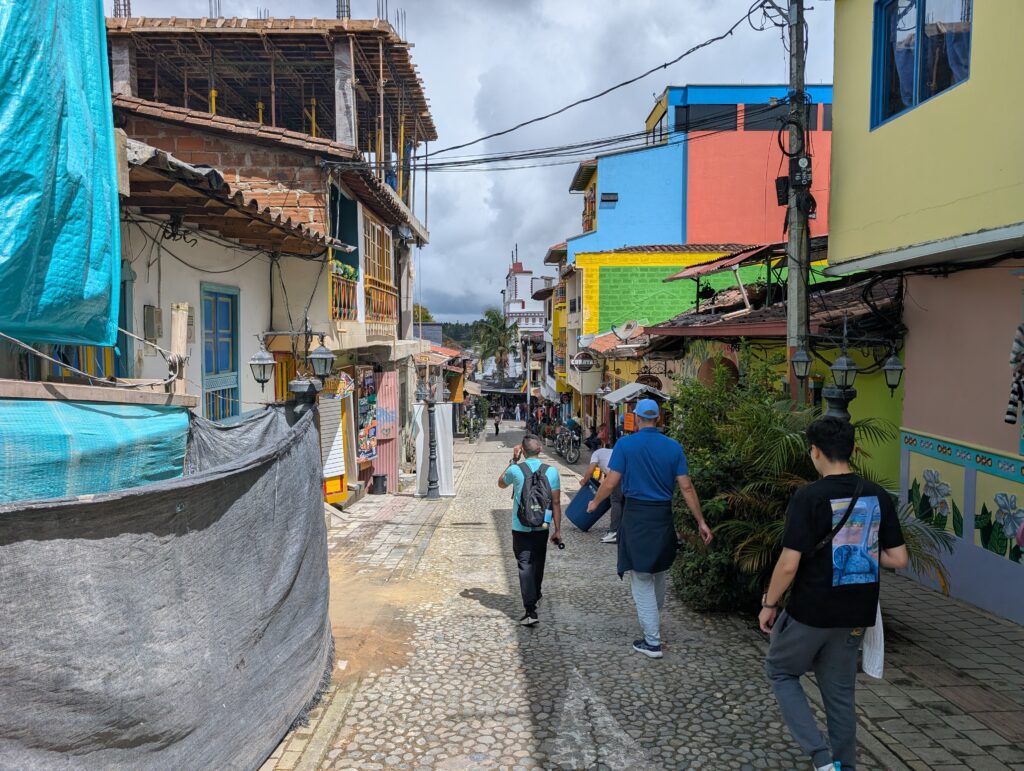
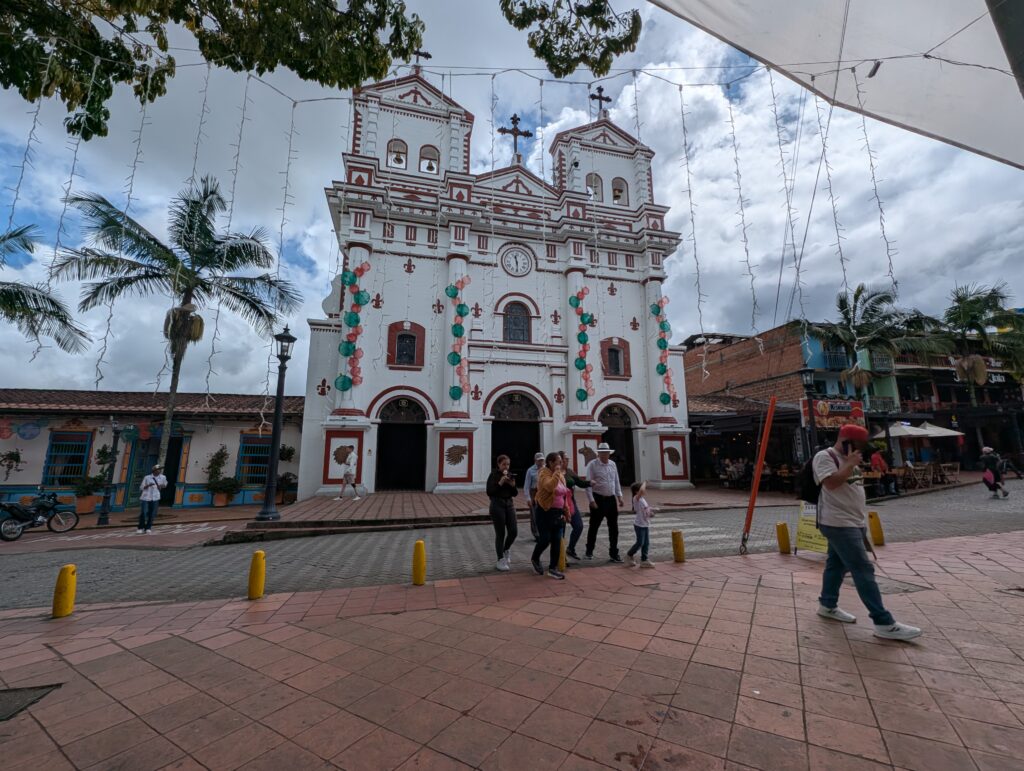
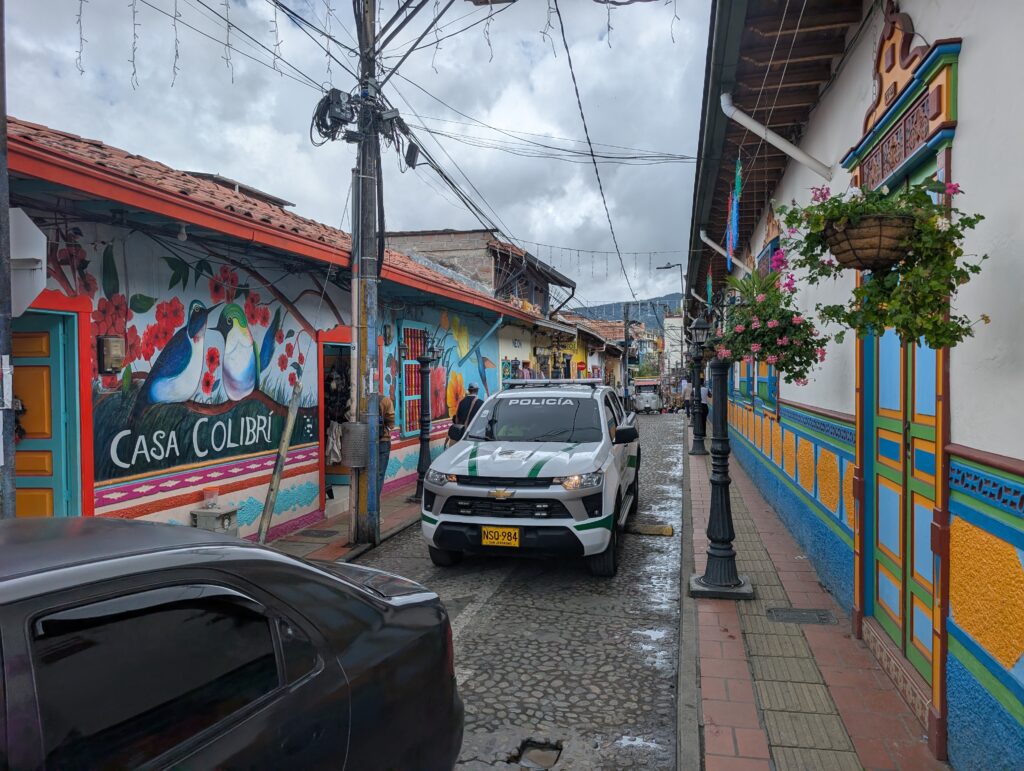
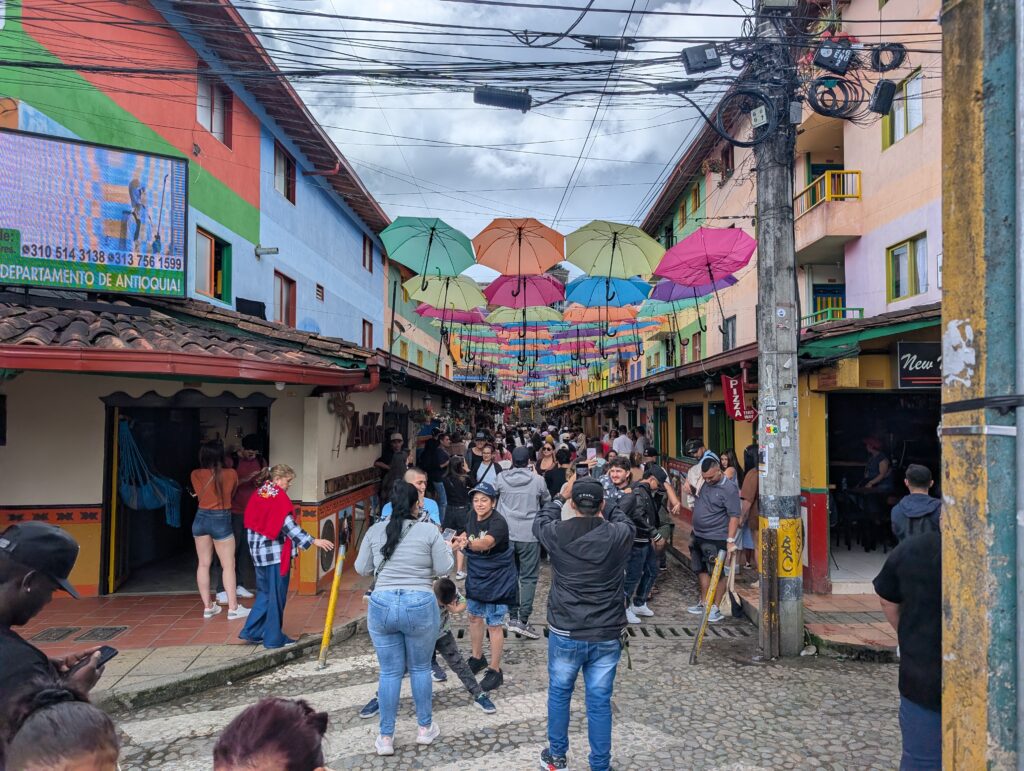
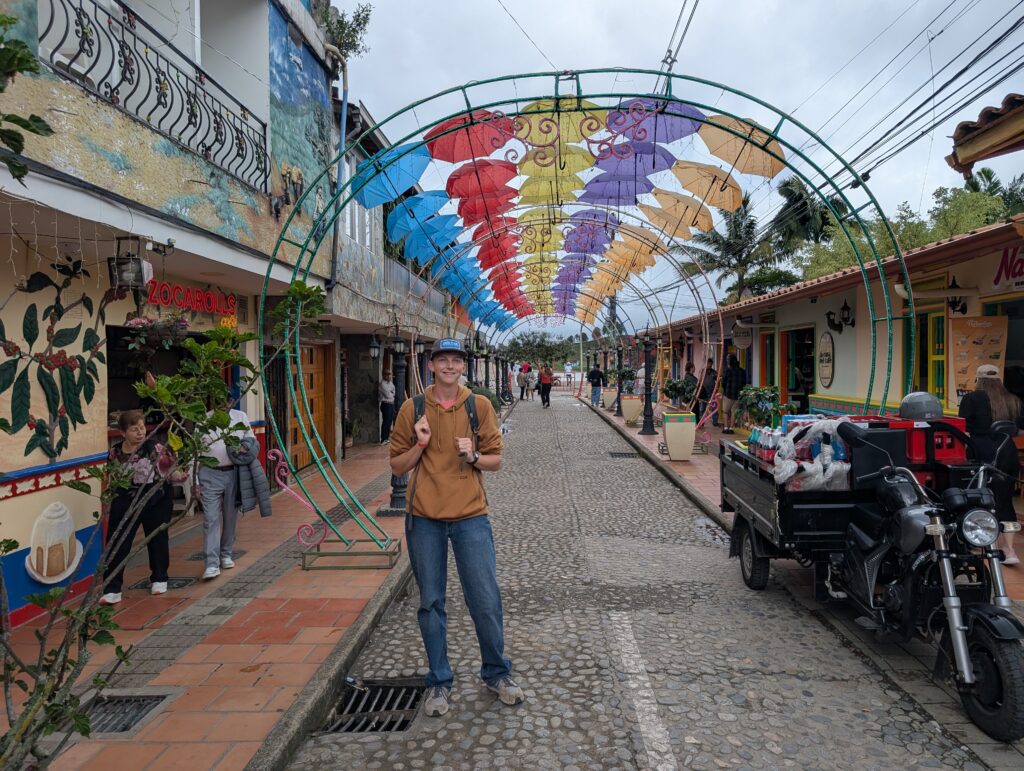
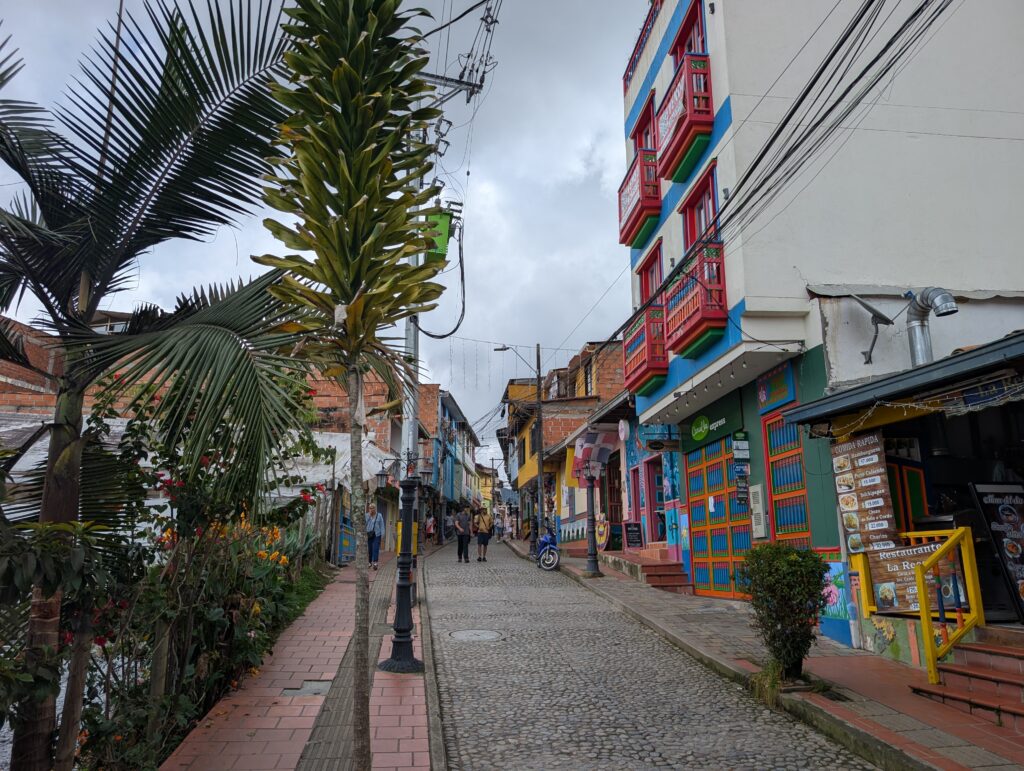
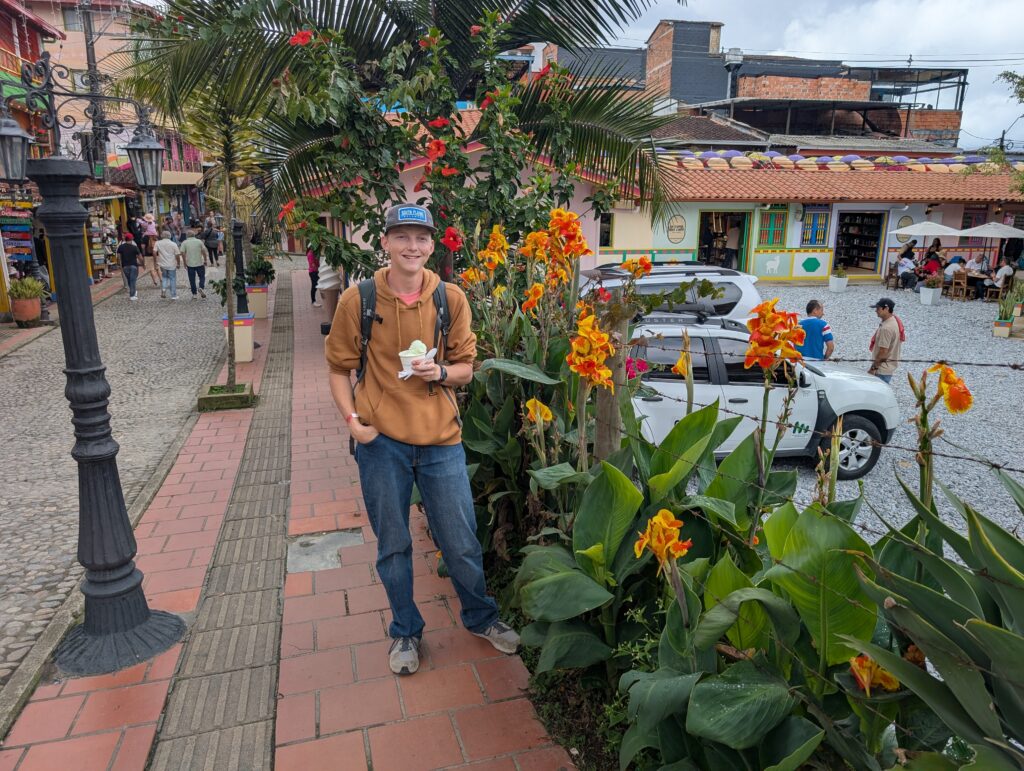
The next stop on our tour brought us into the town of Guatape. It is a very colorful town, with all the buildings supposedly composed of a mixture of mud and cow manure. They are all brightly painted with designs that are apparently mandated by the city. Guatape is definitely constructed to be a tourist trap. The shops are completely trendy and not suited to the everyday Colombian economy. I suppose that’s part of what people go to Guatape for, though, an escape from reality.
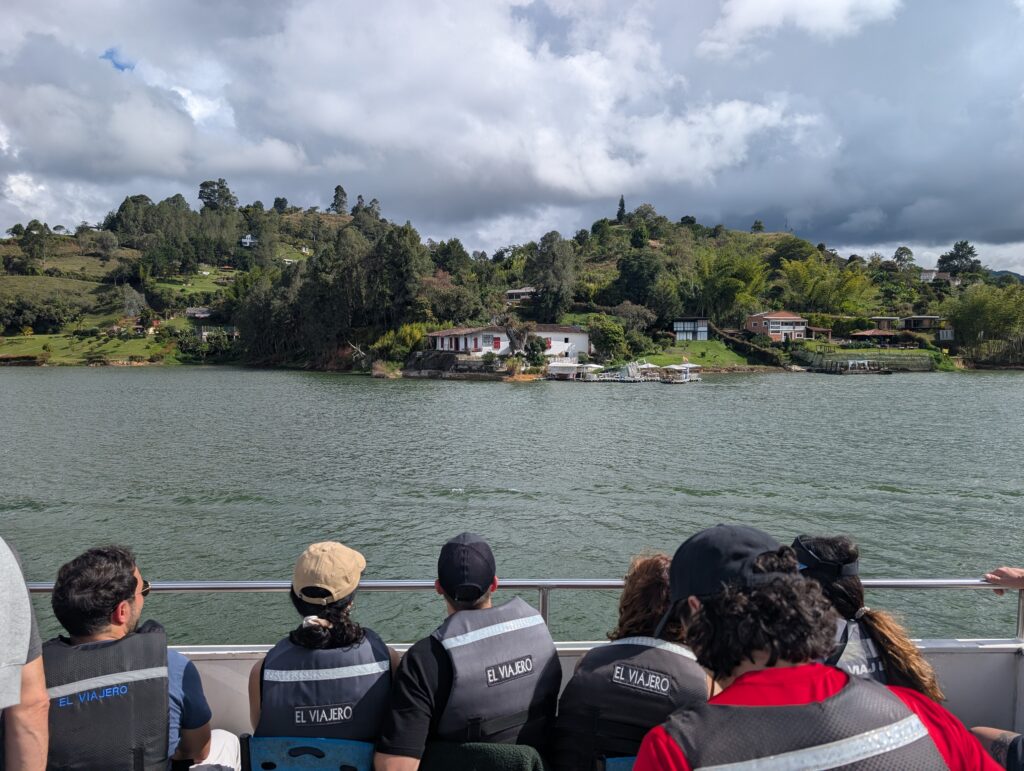
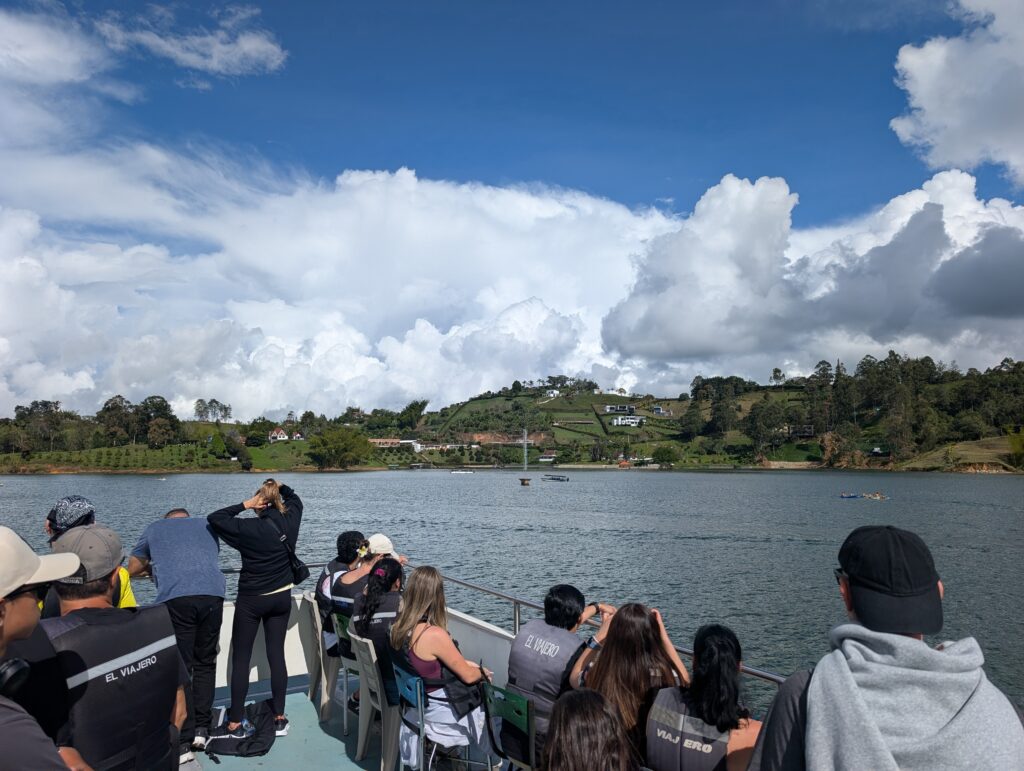
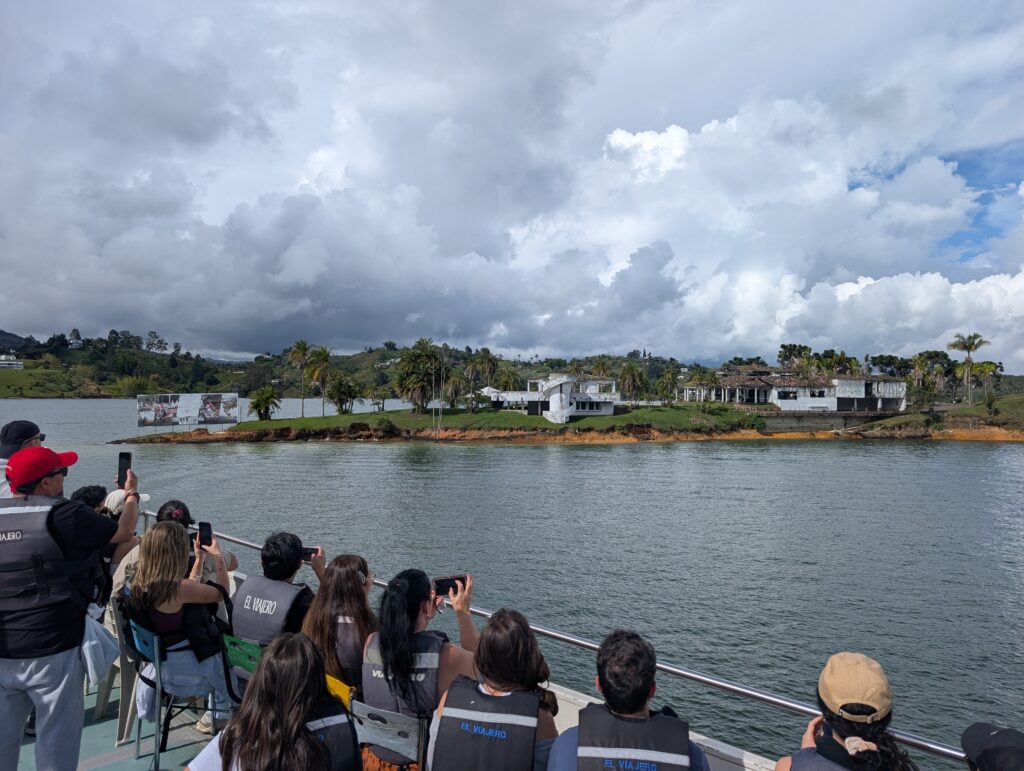
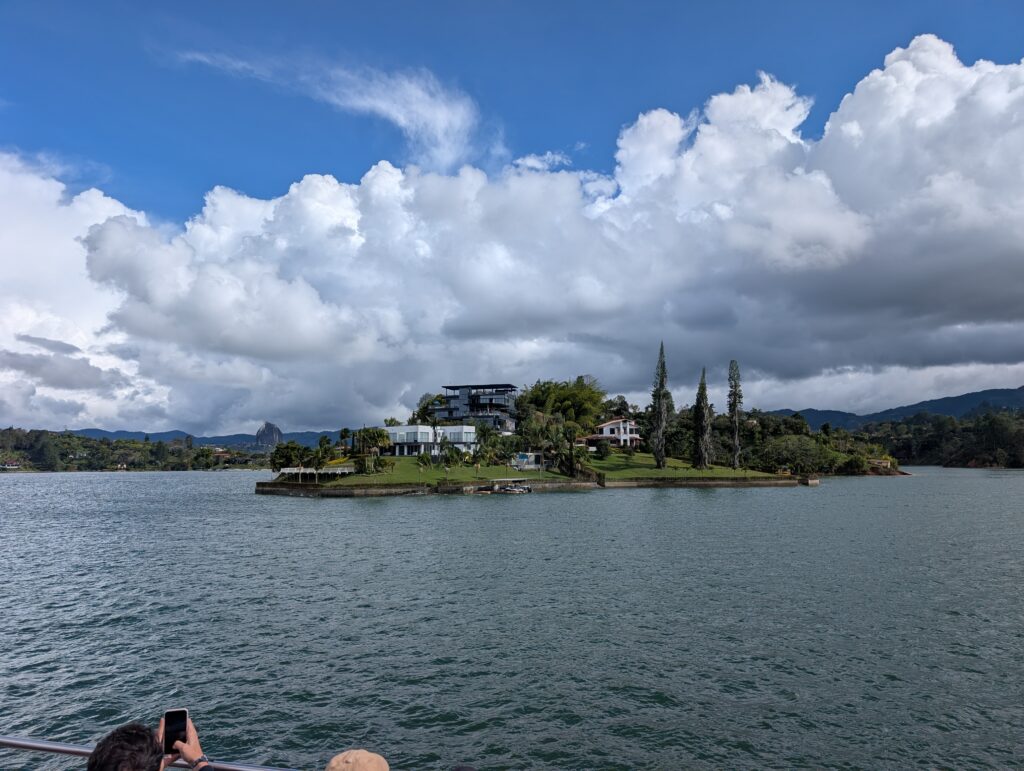
We stopped for lunch before taking a boat ride that lasted about half an hour. Our boat ride took us over the remains of a church that had been in a town now buried by the artificial lake. We passed the homes of a couple of famous Colombian footballers, a nineteenth century hospital with an interesting story about a bachelor doctor who fathered over 30 children, and ultimately led us by a large compound that had once been one of the retreats of Pablo Escobar. There are some aims now toward making this some kind of public retreat or museum, though nothing has become of any of these yet.
Last, and probably least, we stopped at Altos de Cocho, one final mega-tourist strip mall, with a llama farm out front to give the place a very lightly credible sheen of authenticity. Other than receiving a bit of rain, Andrew and I didn’t pick up anything from Altos de Cocho. We rolled back into town and decided to just head down to the cafe below our hostel (about two doors down) to grab a Colombian supper.
As we rode back toward Medellin on the bus, I couldn’t help but notice that the main international airport we would be flying out of was well over an hour outside of town in the direction of Guatape. It would have been more efficient to just stay out there and catch our flight the next morning. Having not yet used that airport, we had no idea it would be so far out. With some difficulty, it may have been possible to get there via public transportation, but we needed to arrive before 7:00 to allow enough time to safely make our flight. I ended up scheduling an Uber for the next morning. The Uber transition was effortless, and by midday, we were on the ground in Santa Marta.
Medellin had been a nice place, and we had met some wonderful church friends there. The mountains are beautiful, and it does look like a huge cup with the prize below. In the time we had, we weren’t able to see everything there was to see in Medellin. We saw nothing of Pablo Escobar’s place, the high parks, the municipal cable cars, or anything like that. We spent the bulk of two days going to church and joining our wonderful hosts to see their country estate. Guatape was easily worth the trip alone. But there is more to see in Medellin than we saw. On the whole, I think we liked the climate in Bogota better, but both are nice mountain cities to visit.