Bogota

High in the Andes

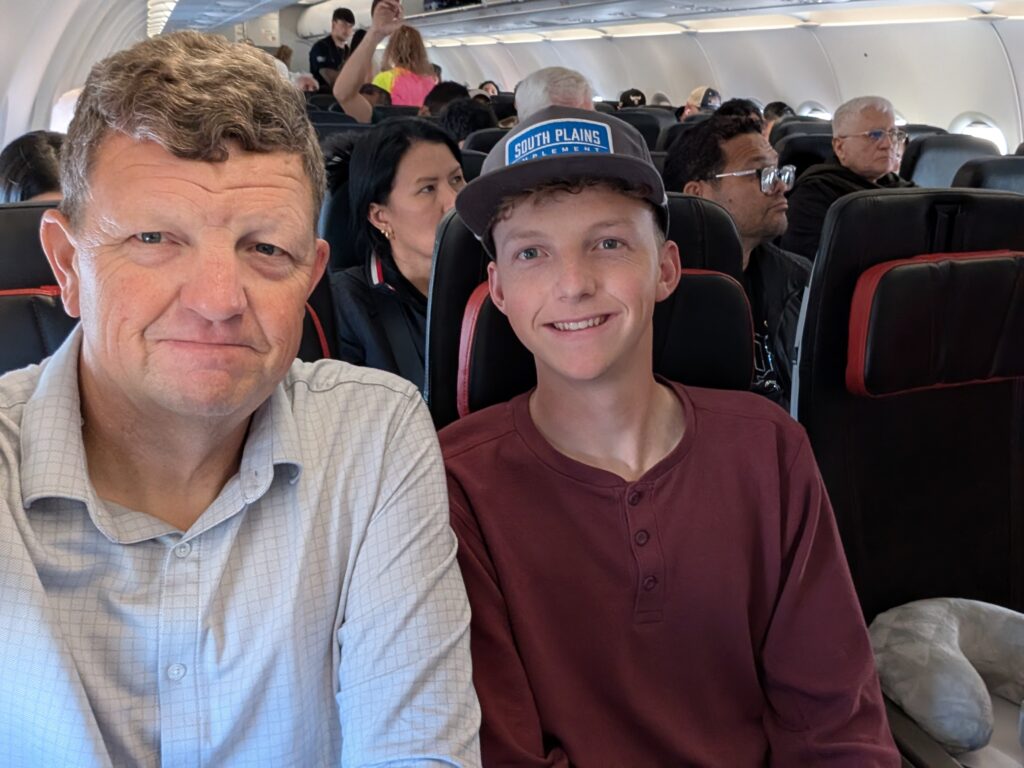
Andrew and I set out very early on Sunday morning the 28th of December for DFW. We had an Avianca flight departing at 2:00 p.m. for Bogota. The airlines recommend arriving three hours before departure for international flights. Most times, this is overly cautious. It was true, on the other hand, that we were departing at the end of a weekend just after Christmas from a major airline hub. Since our flight was scheduled to arrive at about 8:30 p.m. in Colombia, we knew we would have no opportunity to attend worship if we didn’t do it before we left. So we drove away from the house at 5:40 a.m. in order to give ourselves time to drive to Dallas, attend worship, and get to the airport as close to 11:00 as we could.

We attended a lively service at the Airport Freeway Church of Christ. The worship began at 10:00, and wasn’t quite over when we left at 11:15. I think all we missed out on, though, were the announcements and closing prayer. We had a minor problem at the Avianca desk. Since I was planning to take a sailboat trip from Cartagena to Panama, I did not have an onward ticket. Avianca made me buy one in order to receive my outbound boarding pass. I did then, and requested a refund that evening after clearing immigration in Bogota, so all was well that ended well. This did cost us an extra half an hour.

Additional airport traffic didn’t cause us a long wait at security, but the Avianca check in line was long. There were big backups at the lounges as well. I ended up mostly eating snacks I had stuffed into my backpack the night before. It was a good thing we found something to eat. Avianca runs essentially as a discount carrier. Anything other than a plastic cup of water comes with an extra charge if you’re flying on an economy ticket. Five and a half hours later, we were on the ground in Bogota, Colombia for the beginning of an adventure exploring a new country.

We had encountered some difficulty contacting Servas members in Colombia prior to our departure. The day before we left, though, our new friend Leandro offered to meet us at the airport and drive us to our hostel, as it was on his way home. This kind gesture saved us quite a bit of time and the challenge of figuring out how to operate a new public transportation system at the end of a long day. After checking into the hostel, we dropped off our bags, then wandered back out into the Candelaria neighborhood in search of food. By that late hour, only bars were still open, so we got the Colombian equivalent of bar food, then called it a night.

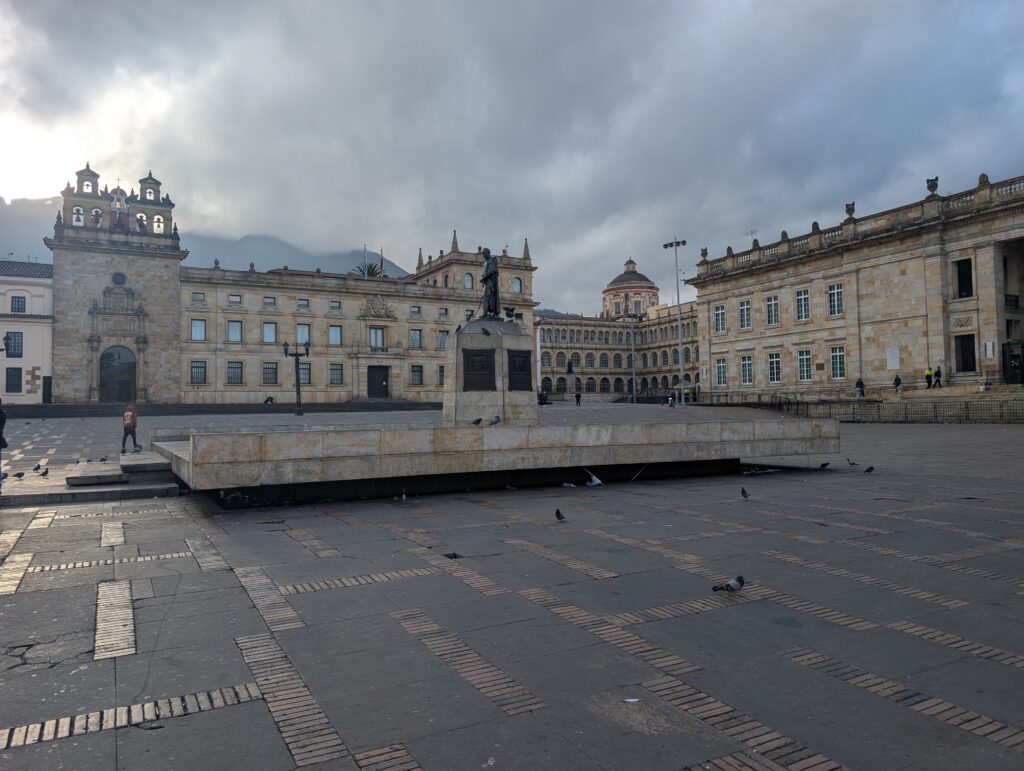
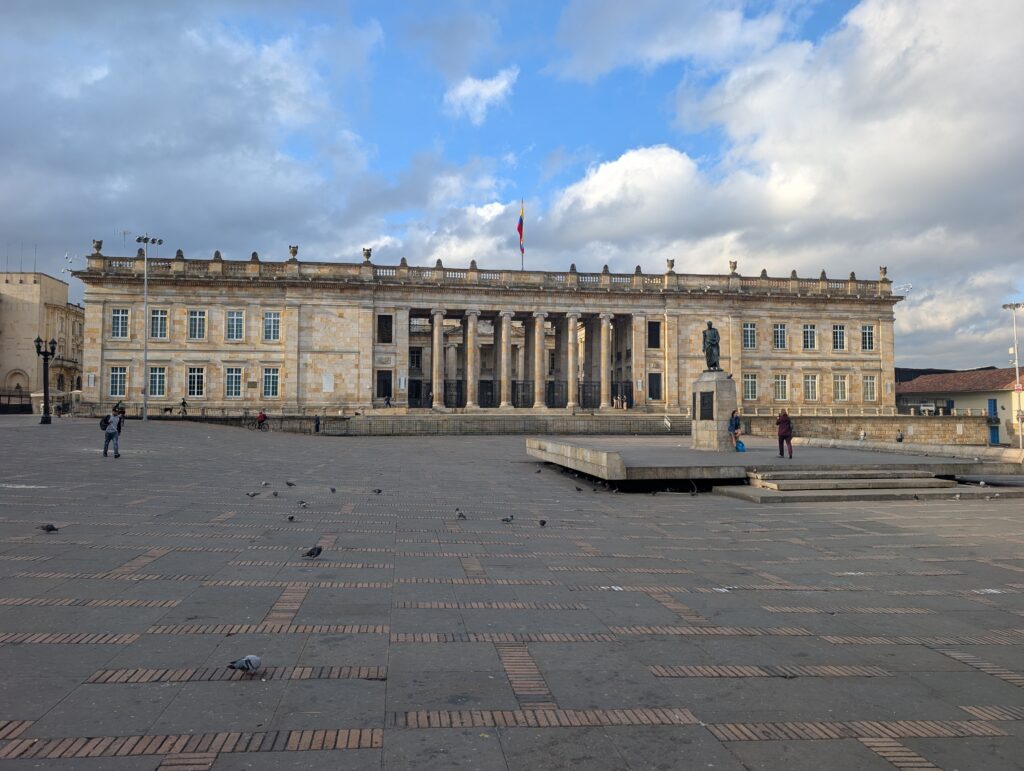
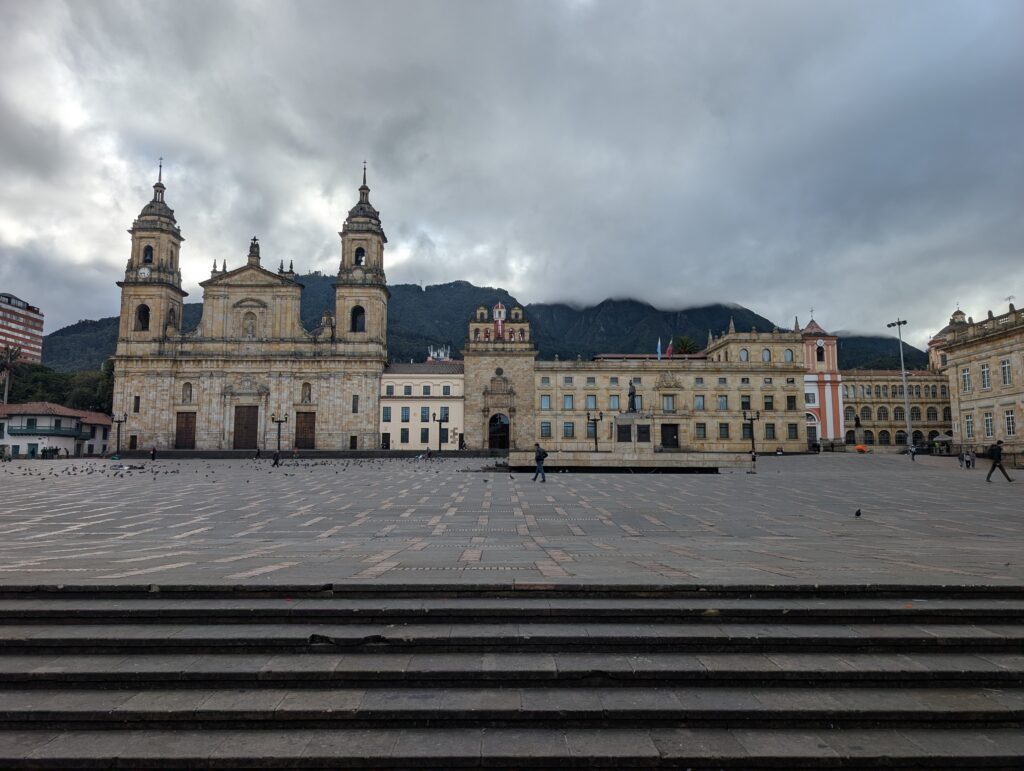
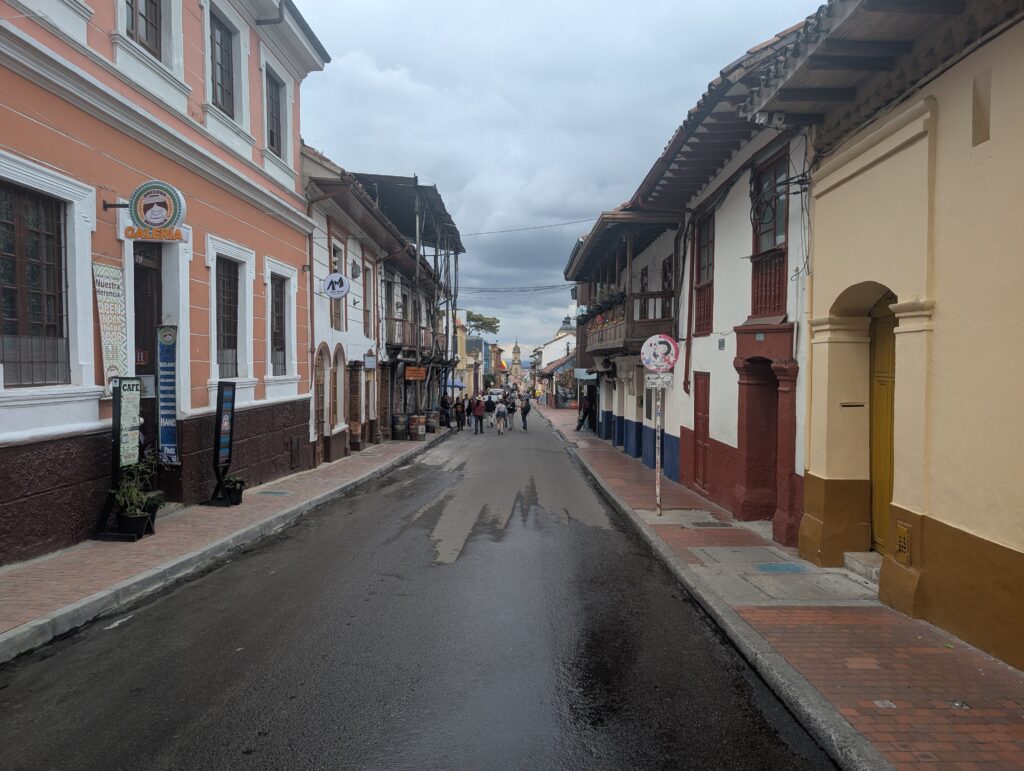
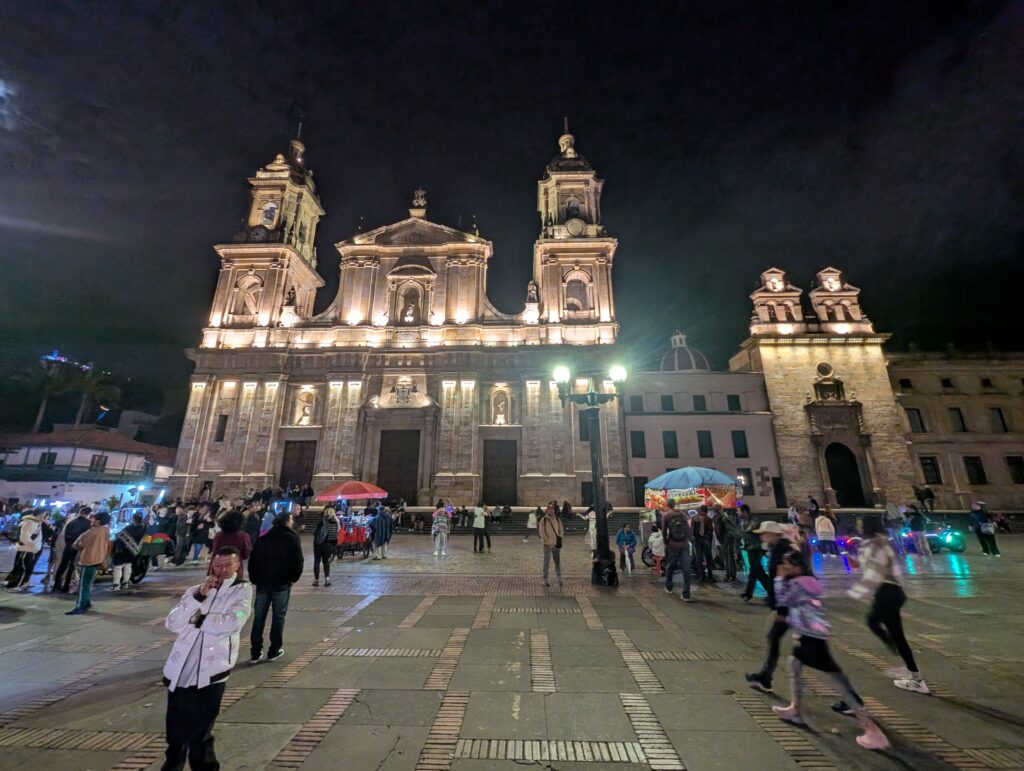
Leandro invited us to his house for coffee in the morning so he could share with us some ideas of what to see while visiting his country. I ran my 5k, then showered before Andrew and I hopped the local buses over to his house. On my run, I passed many museums, and enjoyed Candelaria’s colonial architecture. I made a pass through Bolivar Square, and saw how many active street vendors there were on the main avenues at that early hour.

Leandro kindly explained the best things to see in every major area of Colombia, invited us to explore a local ecological preserve with him, and asked us to their extended family’s New Year’s Eve party. These are the kinds of things, specifically, that I hope to experience as a member of Servas.

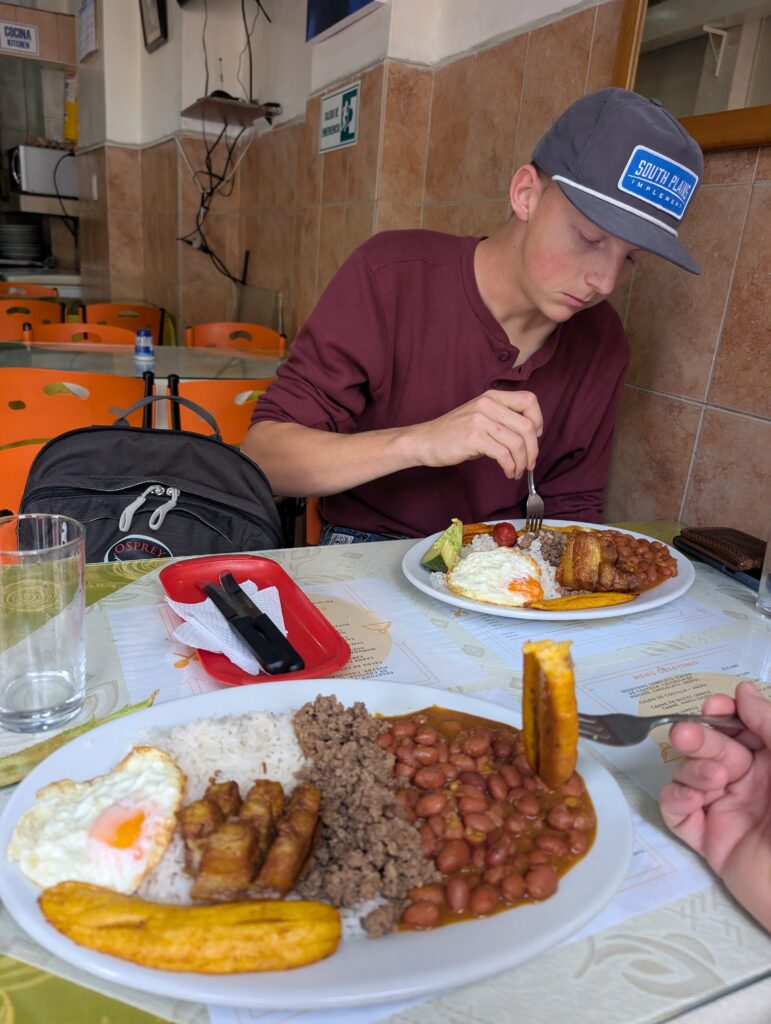
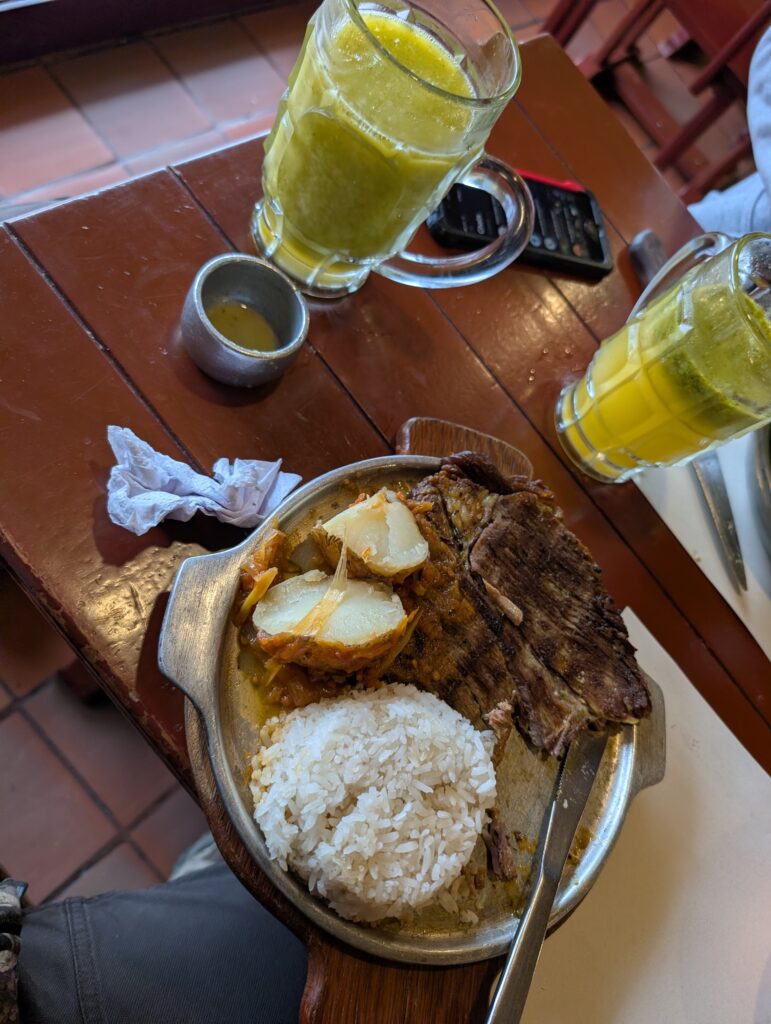
We left Leandro’s flat via the express bus back to Candelaria. We found a nice little cafe to stop at for lunch. We both ordered the Bandeja Paisa. This is a large plate of beans, rice, ground beef, fried bananas, chicharron, and a few other bits, most of which is meant to be eaten together. This was quite filling. We enjoyed visiting with each other, and the waitress who also appeared to be the owner. From there, we headed back to the hostel so Andrew could try to solve some issues he was having with his ATM card and phone service.

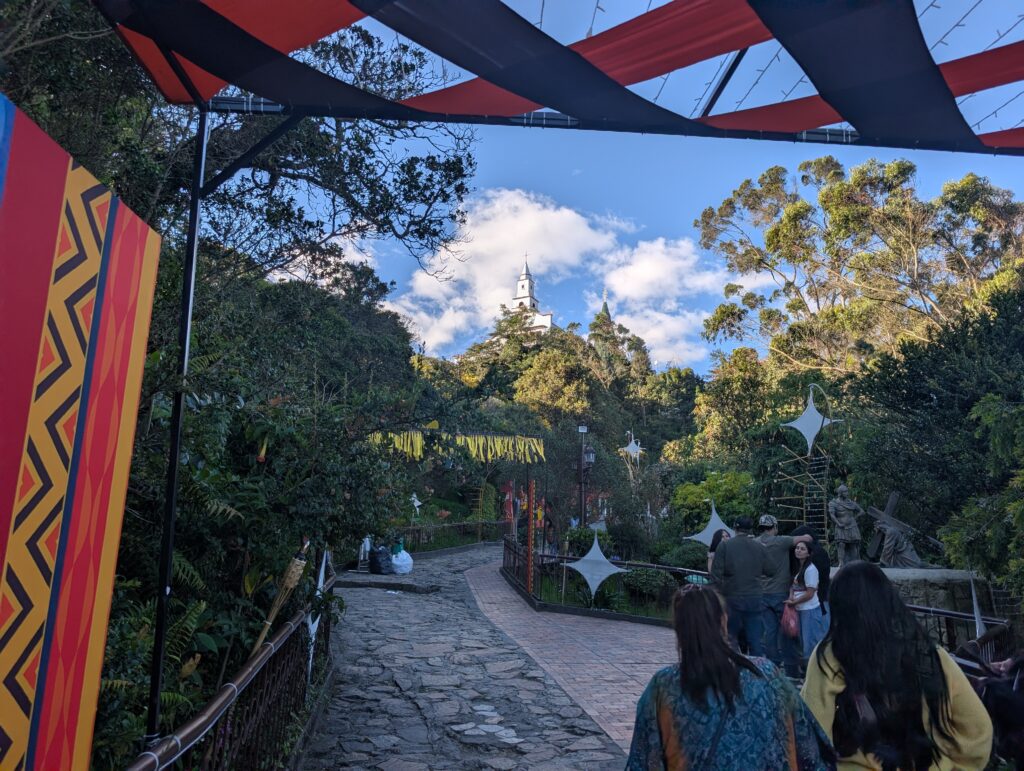
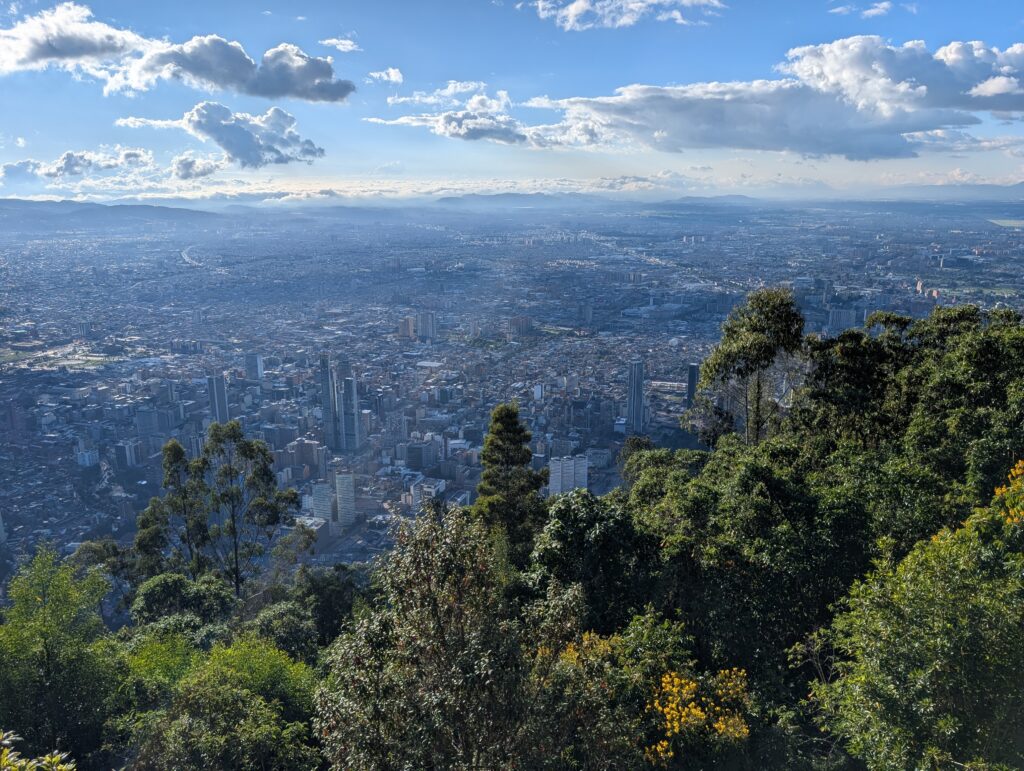
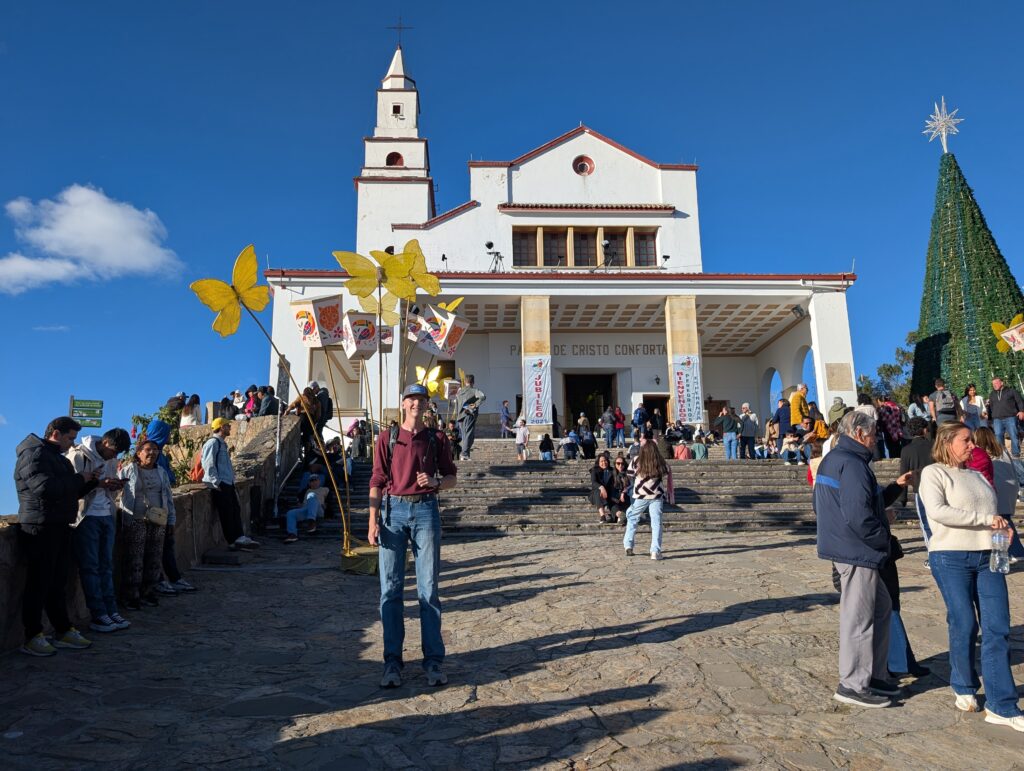
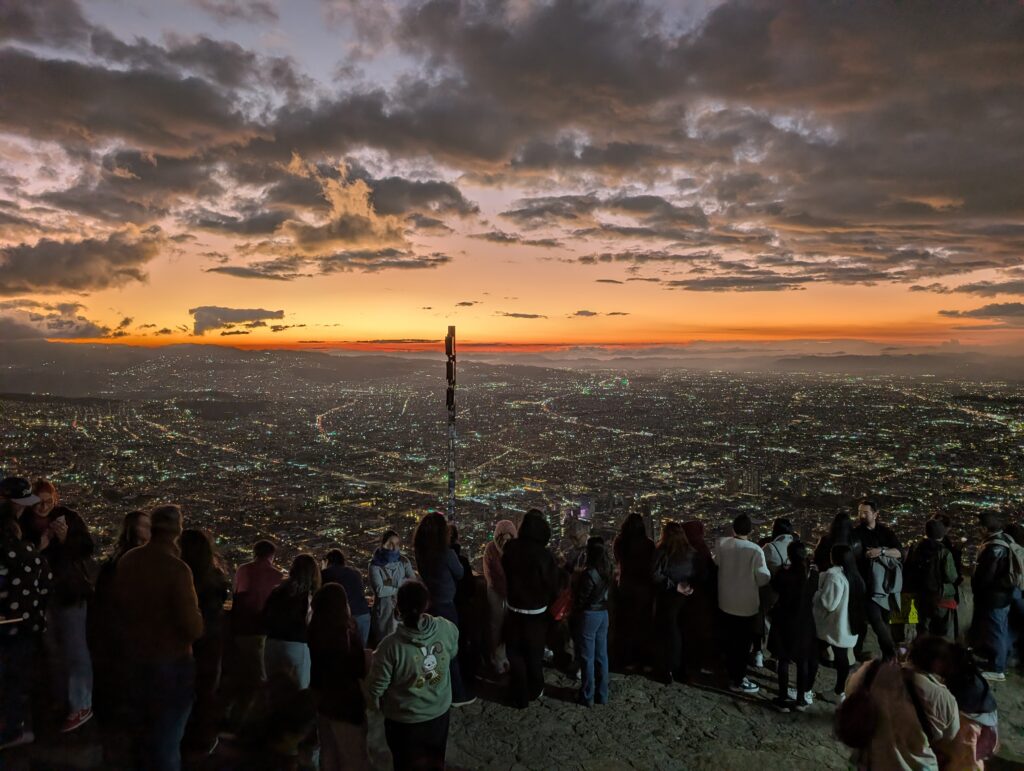
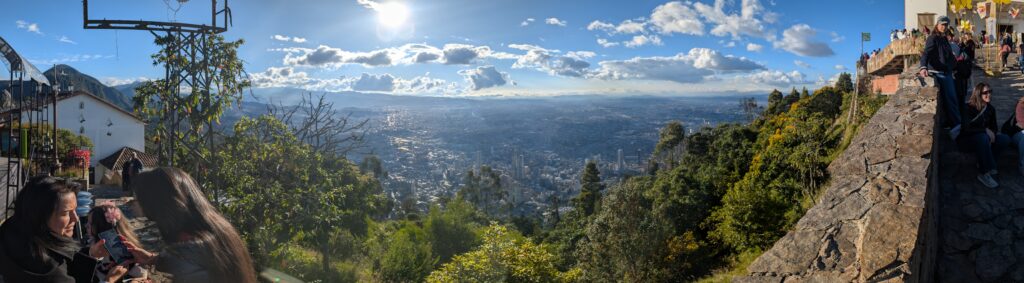
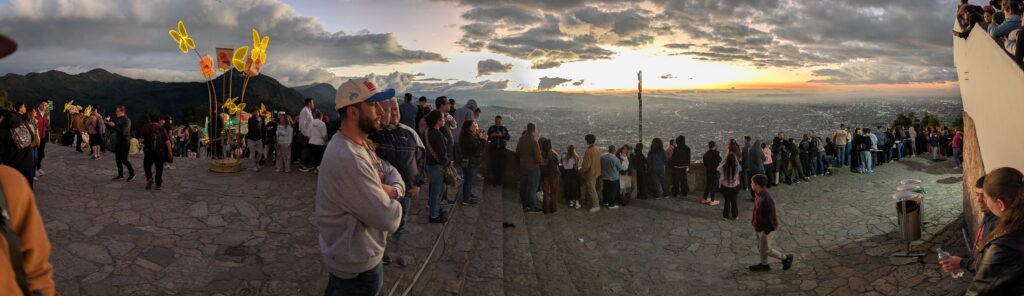
It is nearly unanimously agreed that one of the highlights of visiting Bogota is the ascent to Monserrate. Monserrate is a church atop a very high, steep mountain that overlooks all of Bogota’s 8 million people. At Andrew’s behest, we set out to hike the mountain. It has a hikeable trail. Upon arriving at about 4:00 p.m., we learned that one cannot begin the trial up the mountain after 1 p.m., and can’t start the trail downward after 4:00. Our plan was to reach the peak in daylight, then stay to watch the sunset and onset of the city lights at nightfall. So even if we had known about the trail closures, we likely would have been stuck using mechanical means to make our ascent.

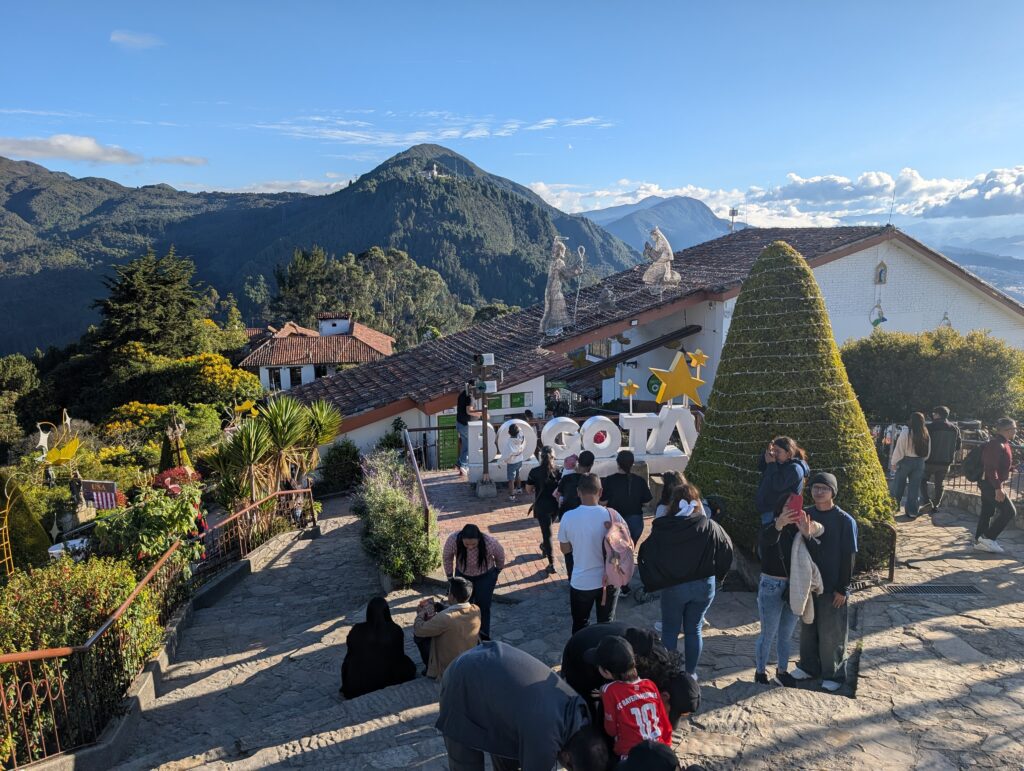
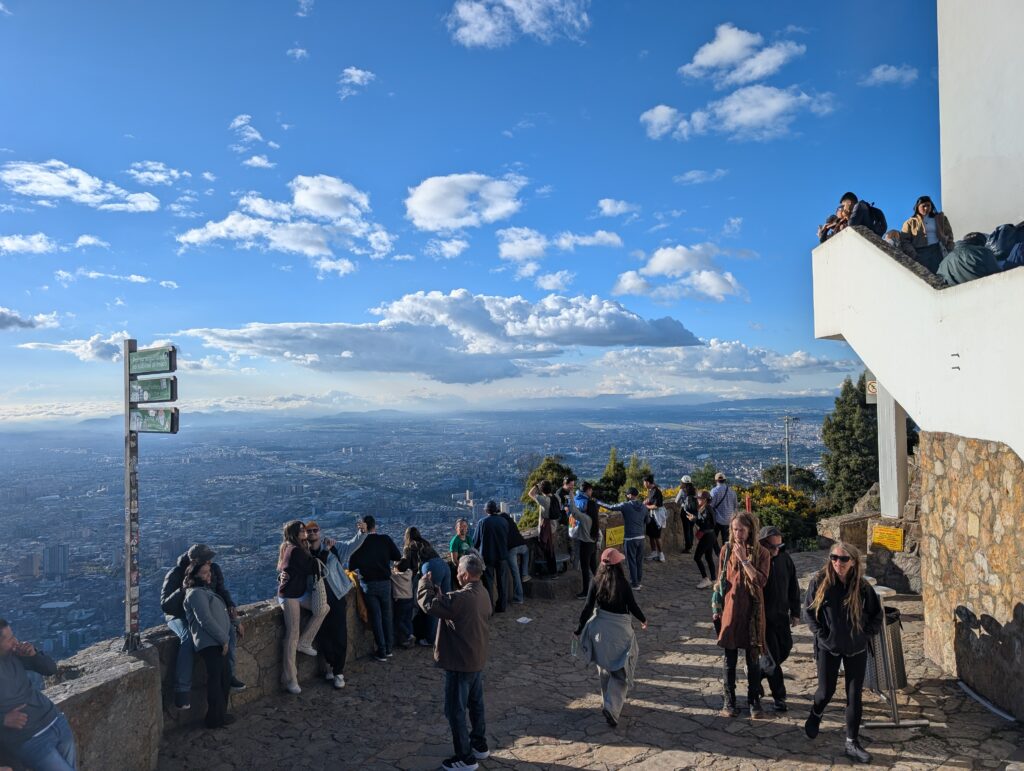
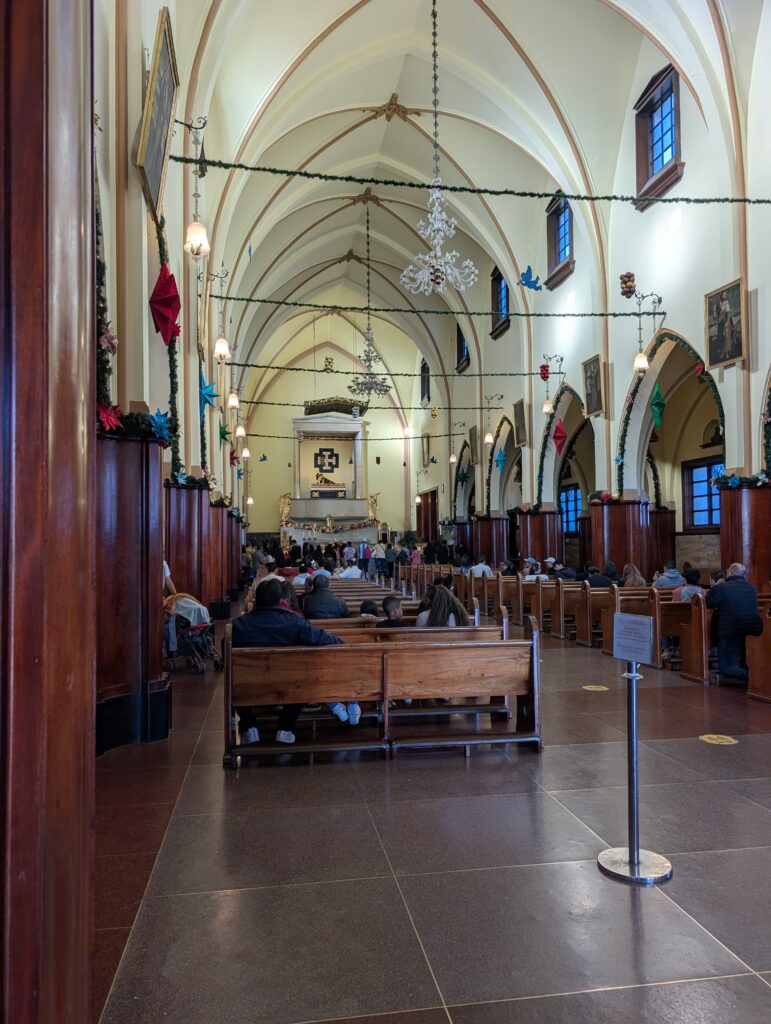
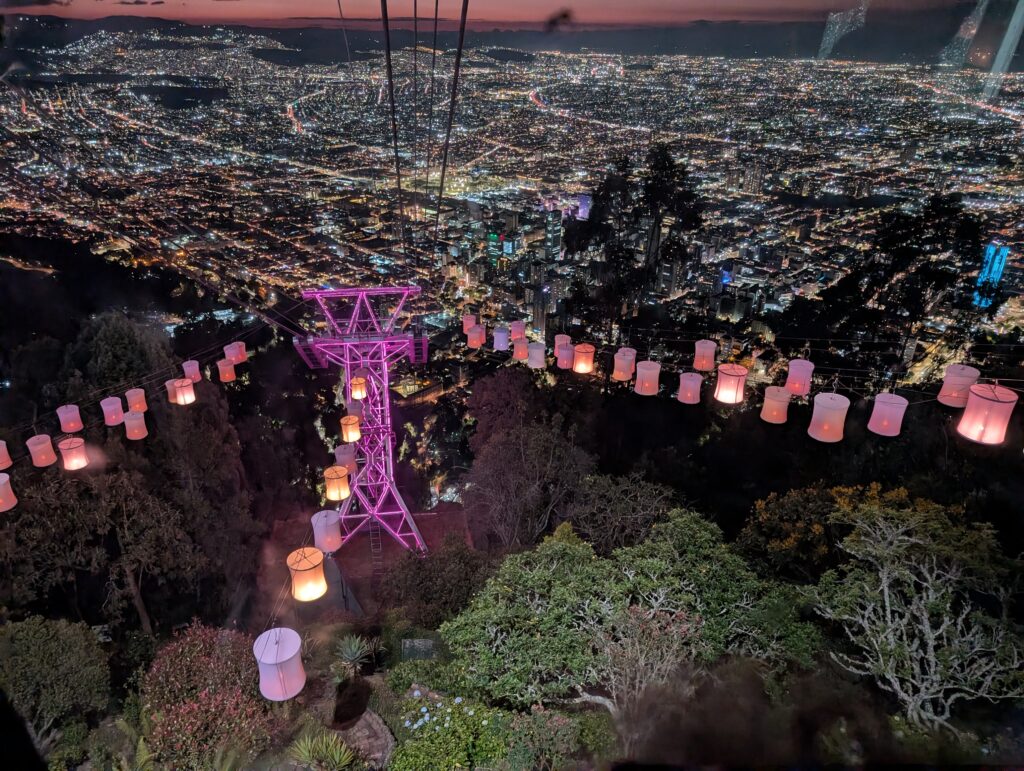
It turns out there is a cable car (teleferico) and also a funicular to transport tourists to the church on the heights. As of this writing, just 32,000 pesos ($8) buys a round trip ticket that can be used on either mechanical track. We got to the peak in time to see everything we wanted to see well before sunset. We spent somewhere between 30 minutes and an hour exploring the church. It isn’t old, but it’s an attractive building. There are some typical tourist souvenir stands and a couple of overpriced mediocre restaurants at the top. There’s nothing to keep anyone occupied up there, really, other than the views in the day and night, and the church. We saw all of those, and were back down by just after 8:00. Surprisingly, the ticket line was longer at 8:00 than it had been at 4:00. We grabbed some street food in along carretera 7, and called it a night.

(Continued)

Flying Avianca
Plaza Bolivar
Bandeja Paisa
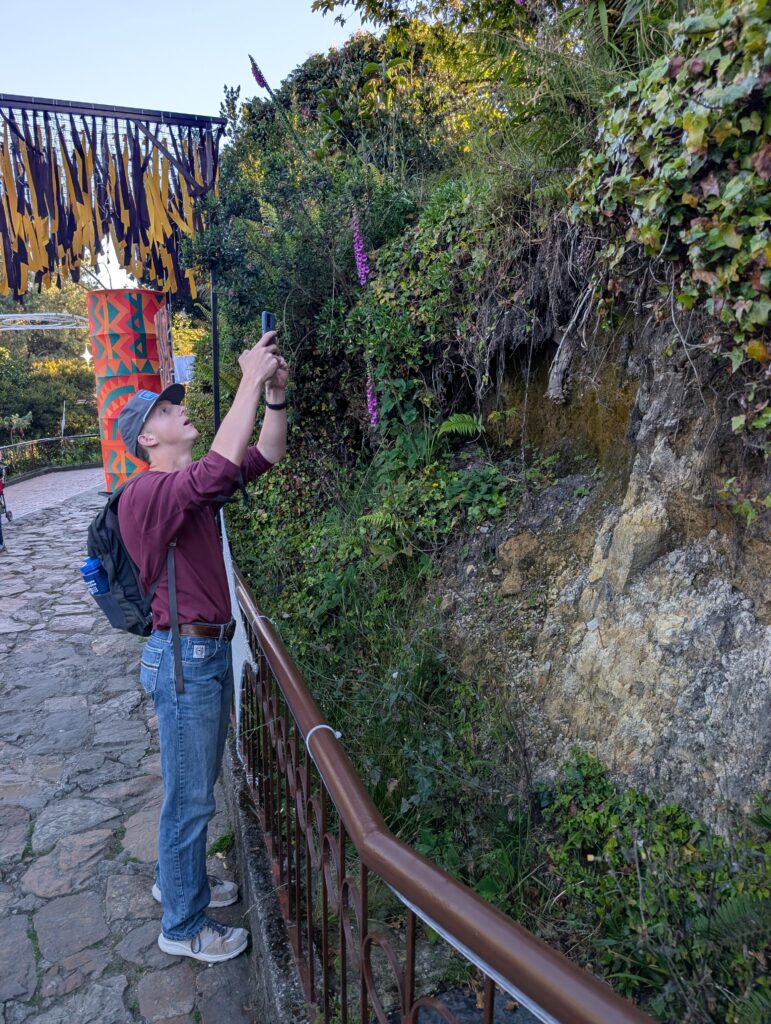
Andrew in his Element
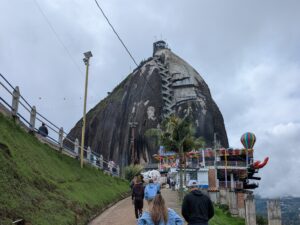
Approaching the Church at Monserrate
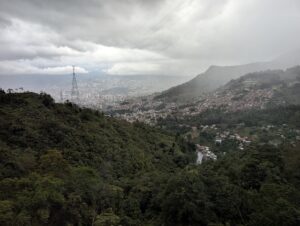
View From Monserrate
Inside the Church, Not Old
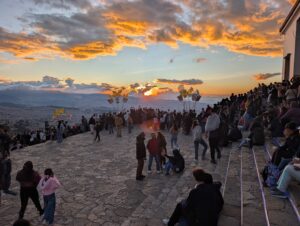
Lights Coming On
Looking Down the Teleferico

Leandro picked us up for a trip out to Matarredondo, a private ecological preserve with a hiking trail. We opted for this rather than a visit to Chingasa National Park, as the latter requires several days’ advance notice for a reservation. We drove some distance up the mountains east of town. We passed the road leading up to another mountain top church called Guadalupe. This has a giant Jesus statue on top. The road was cluttered with many hikers making the ascent, apparently without restrictions on hours.

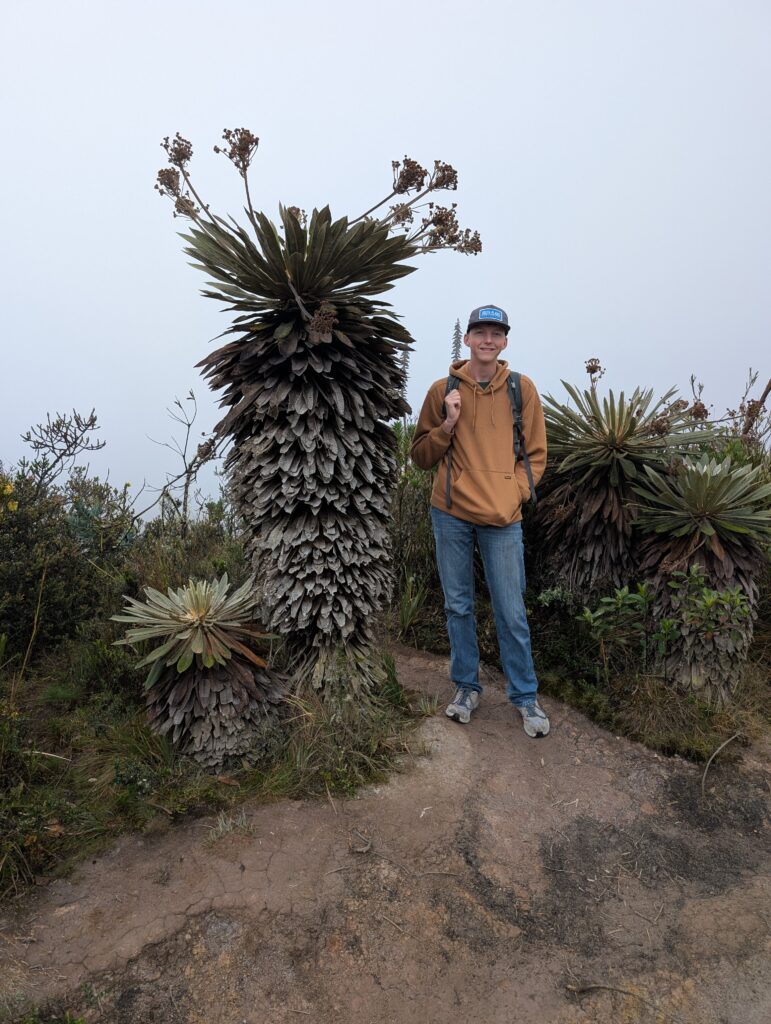
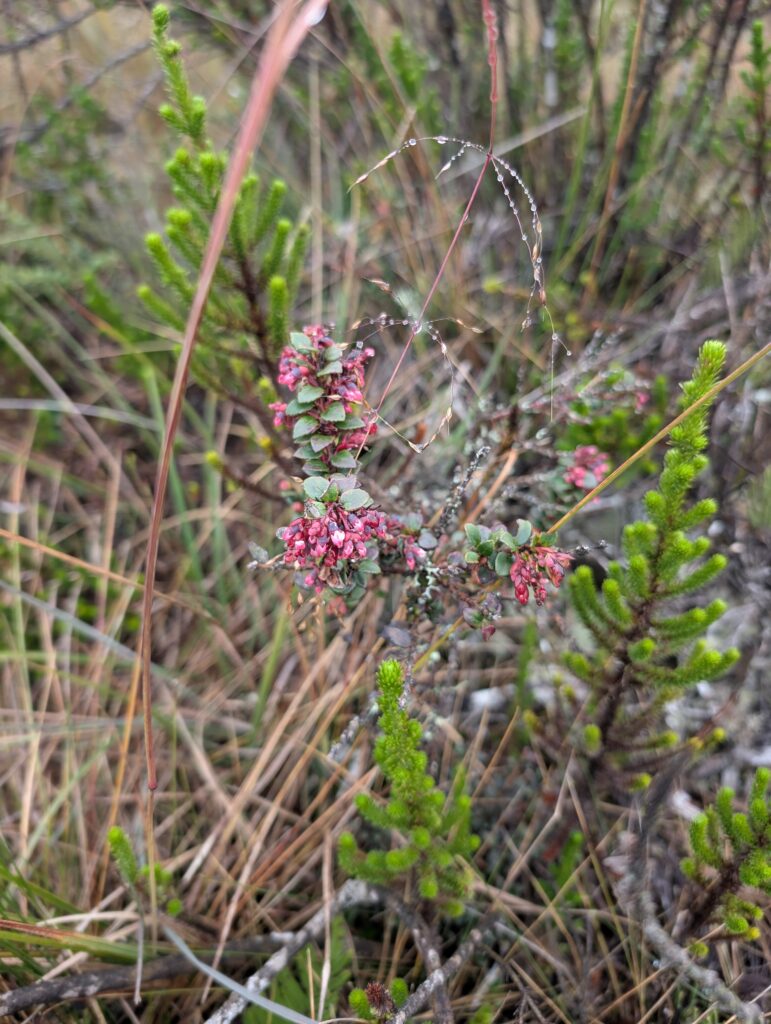
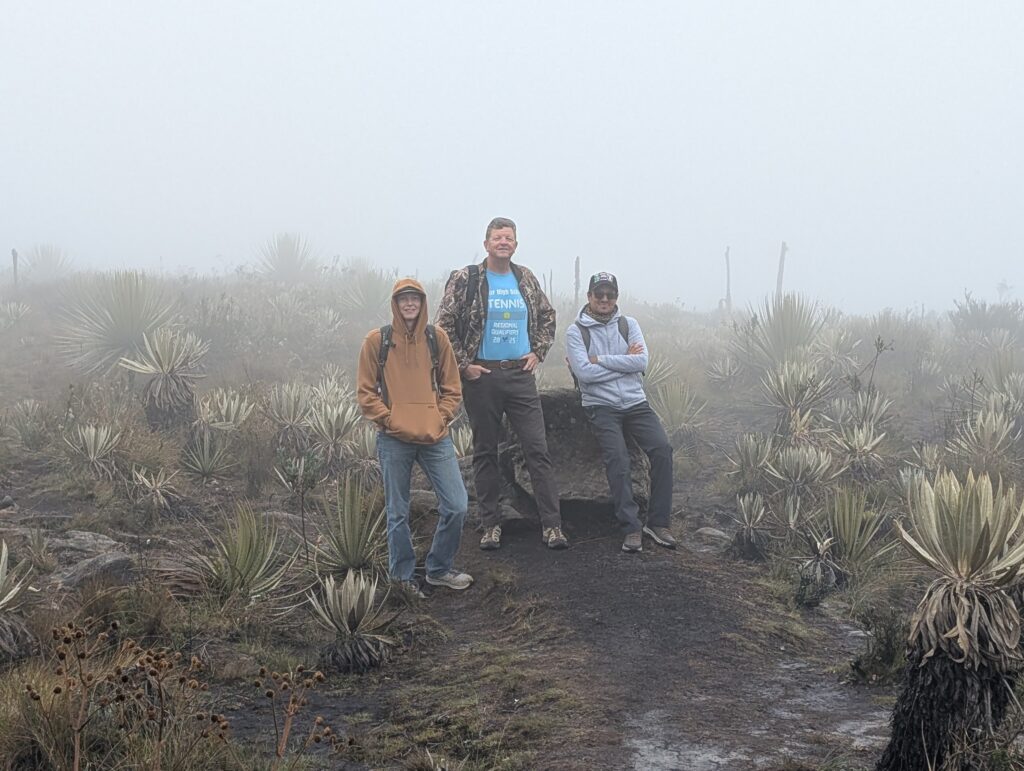
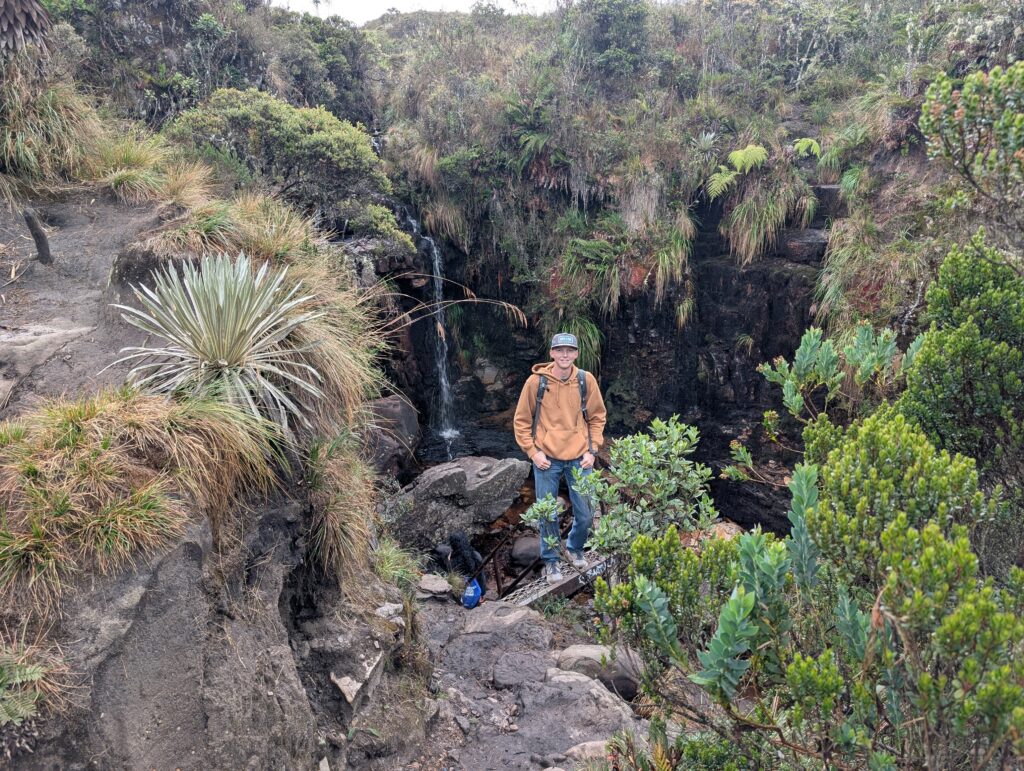
The hike at Mattaredondo lasted a few miles. We took an option that led to a small waterfall. The walk highlights a terrain known as “paramo.” Paramo is a water collection zone, though it is covered by grass and small shrubbery looking mostly like desert plants. There are yucca varieties and things that look somewhat like Joshua trees. The weather was cool and cloudy when we were there making this greenery resembling desert plants look quite out of place.

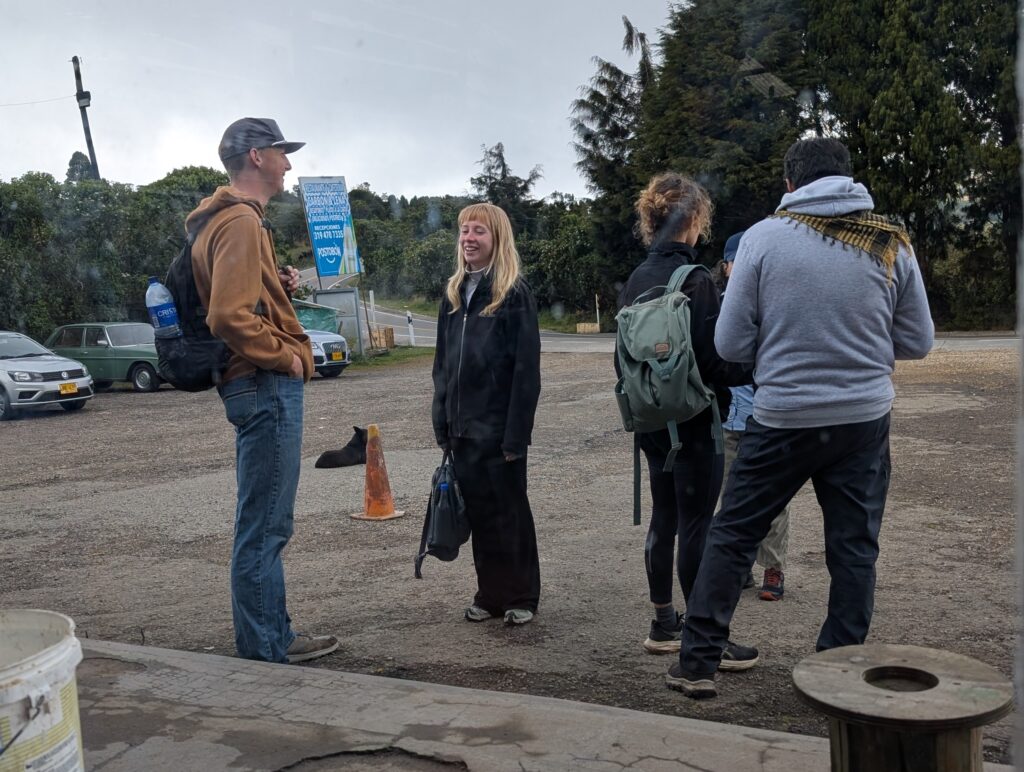
We had a good hike while we walked along. Eventually, we split up. Andrew mingled with some Swedish girls about his age, while I worked on my Spanish with Leandro. We discussed politics, economy, and all sorts of different complex subjects that really tested my language skill. Often, I had to punt and resort to English because the conversation just included too much unfamiliar vocabulary.

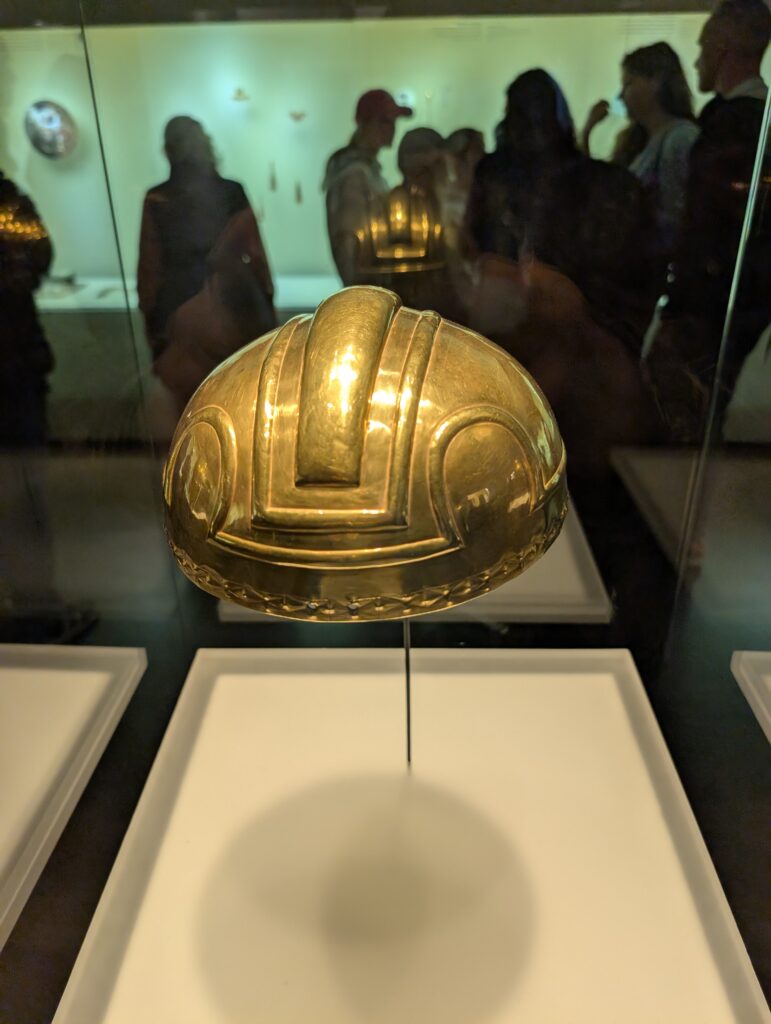
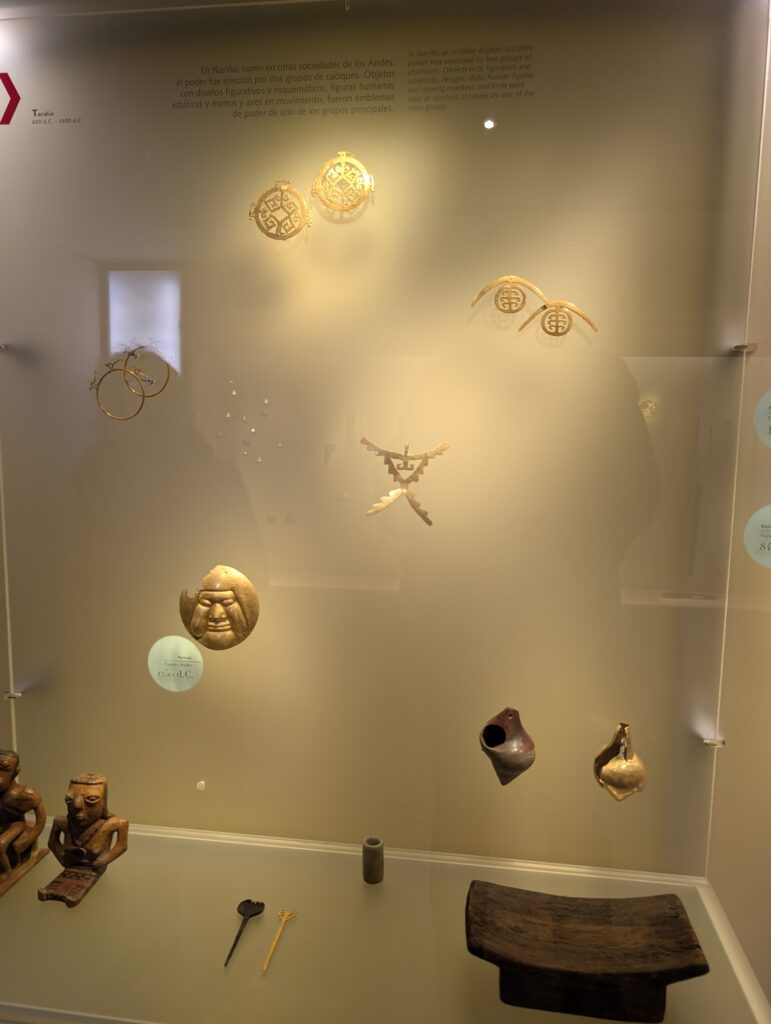
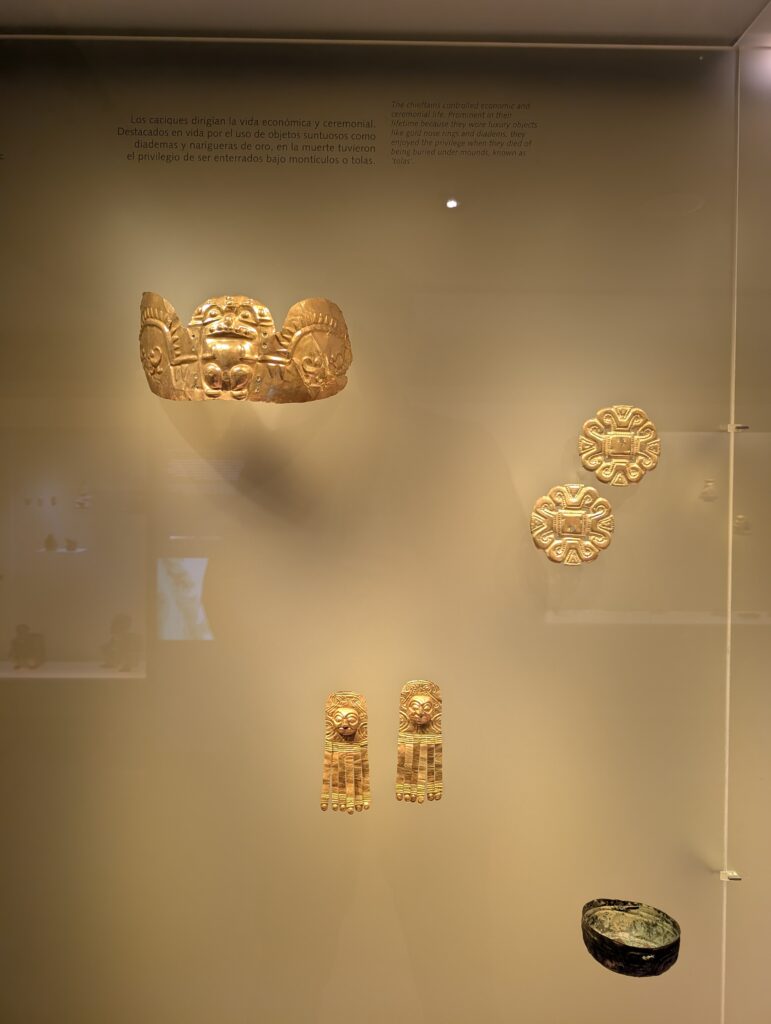
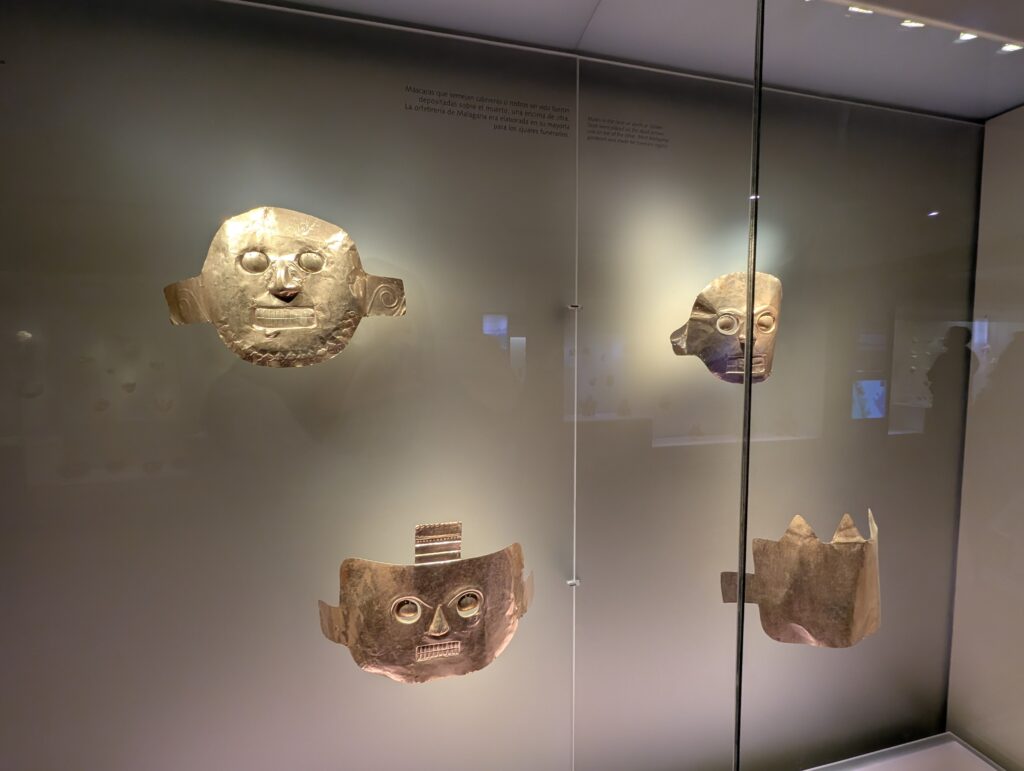
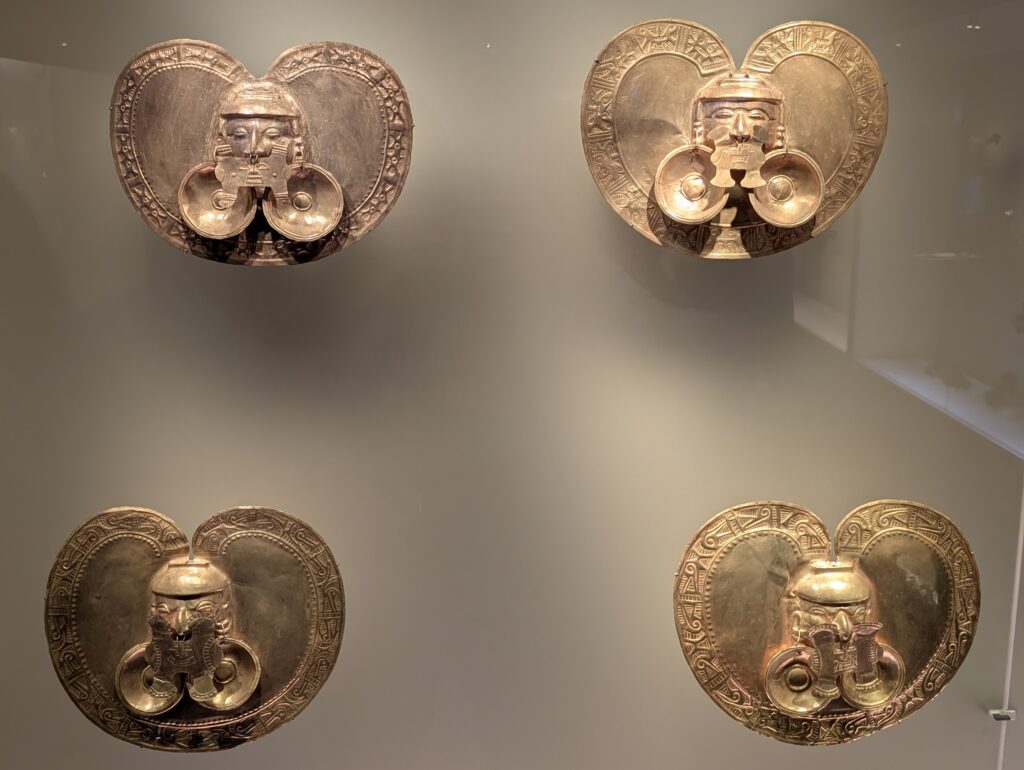
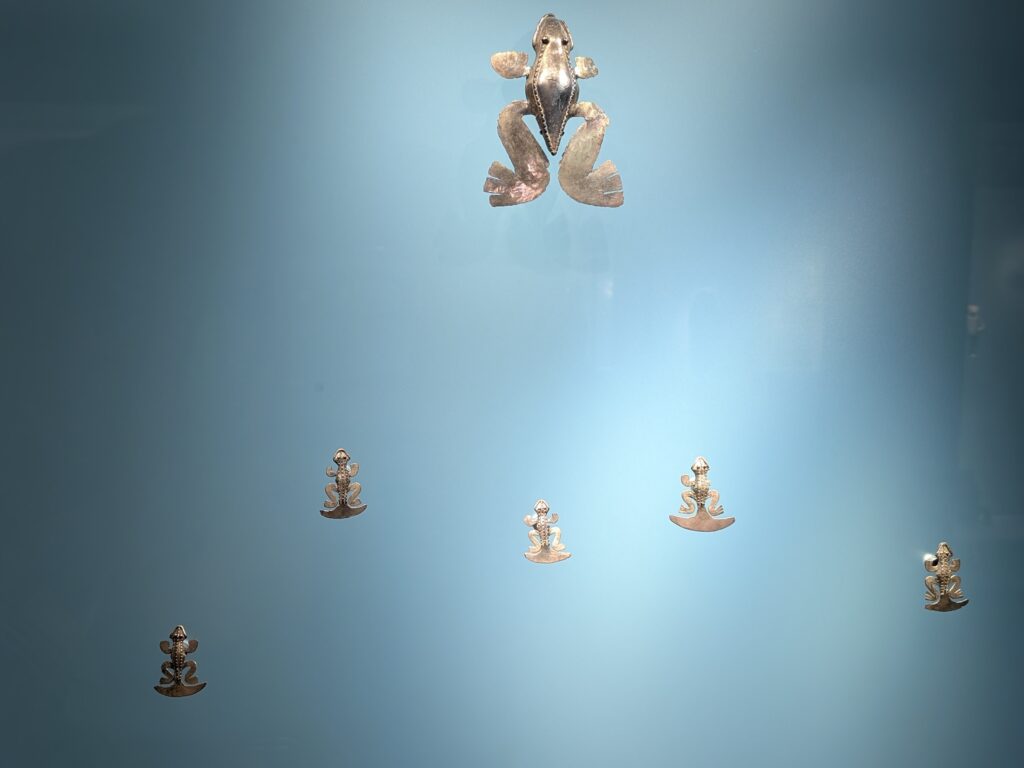
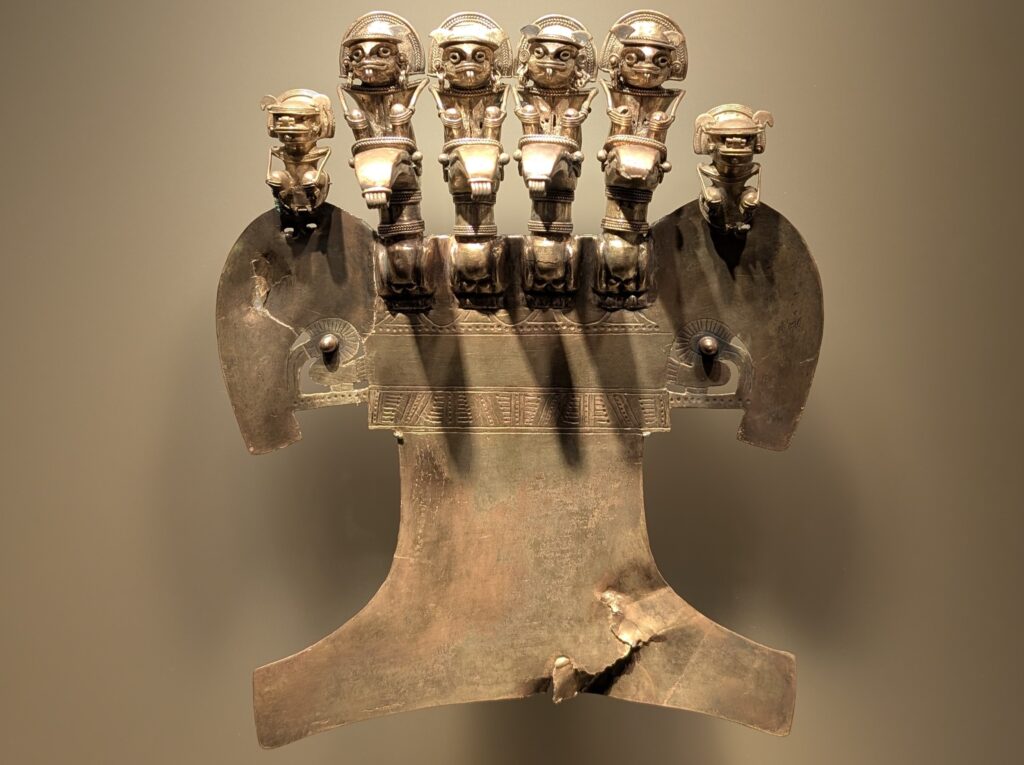
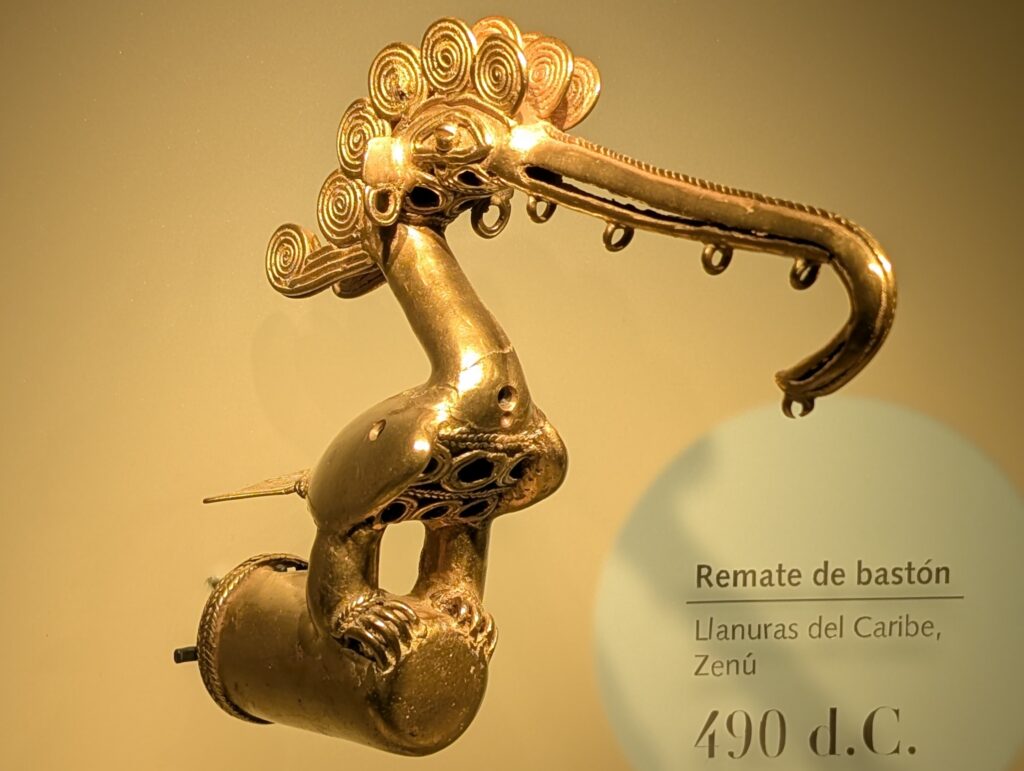
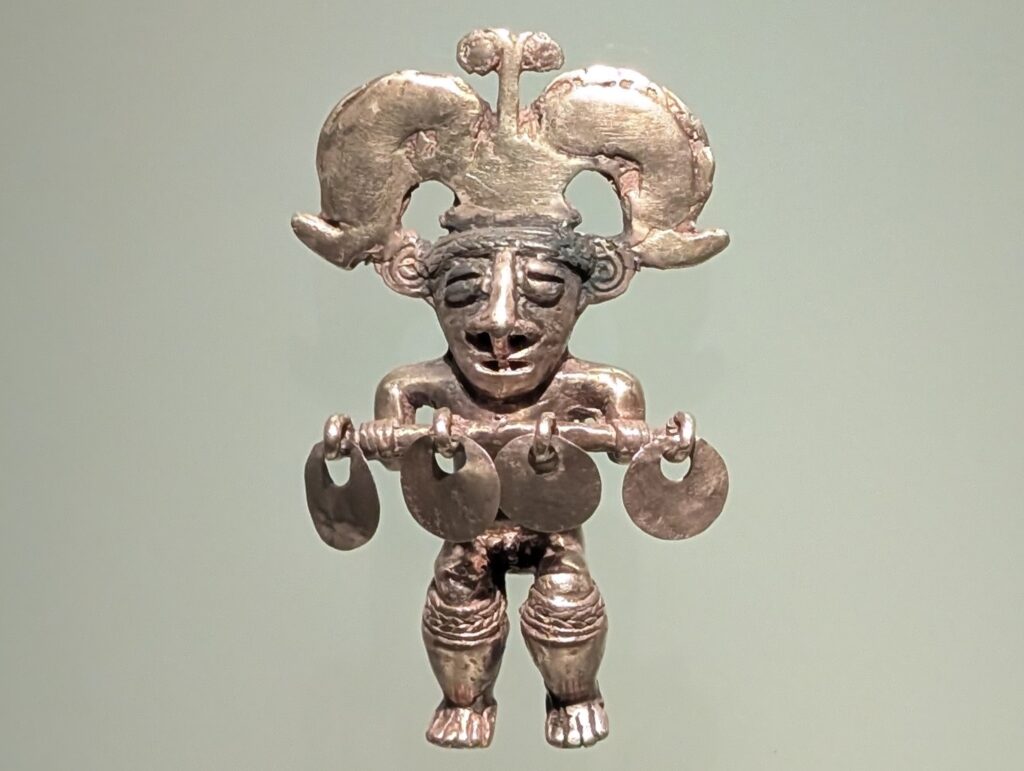
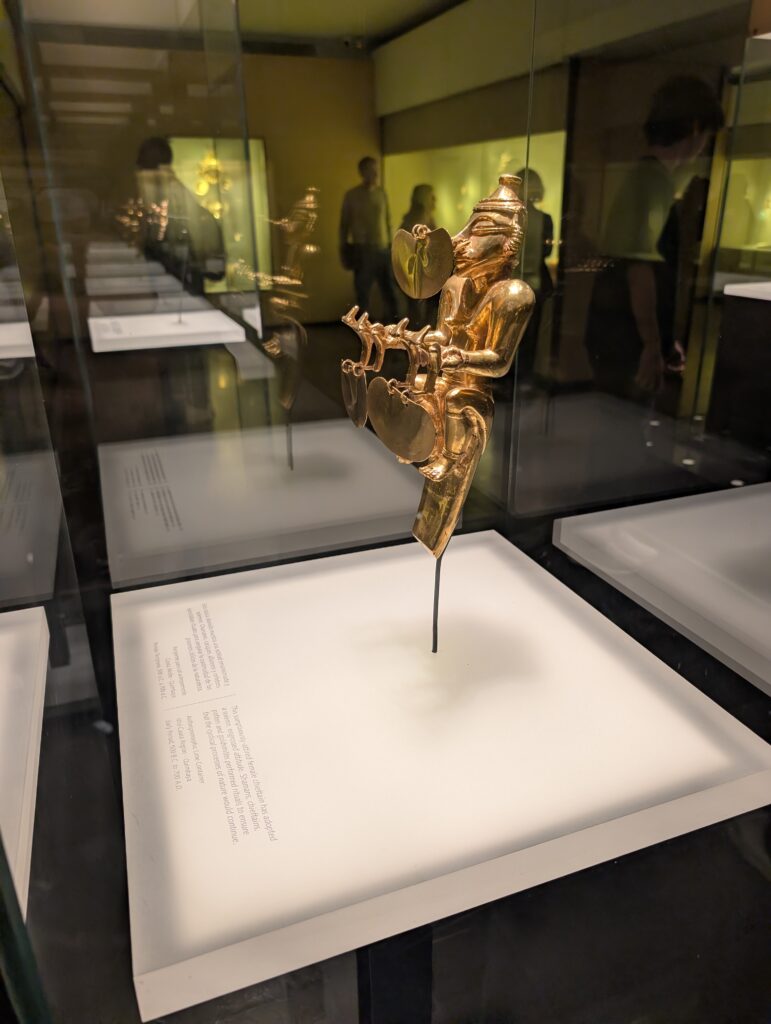
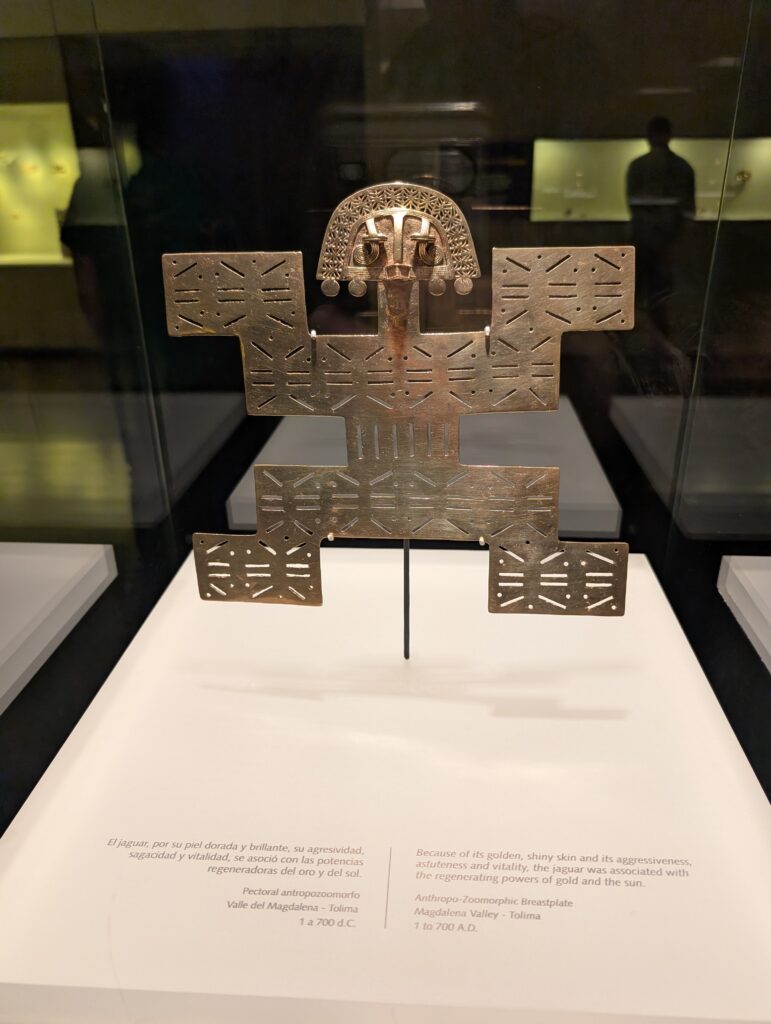
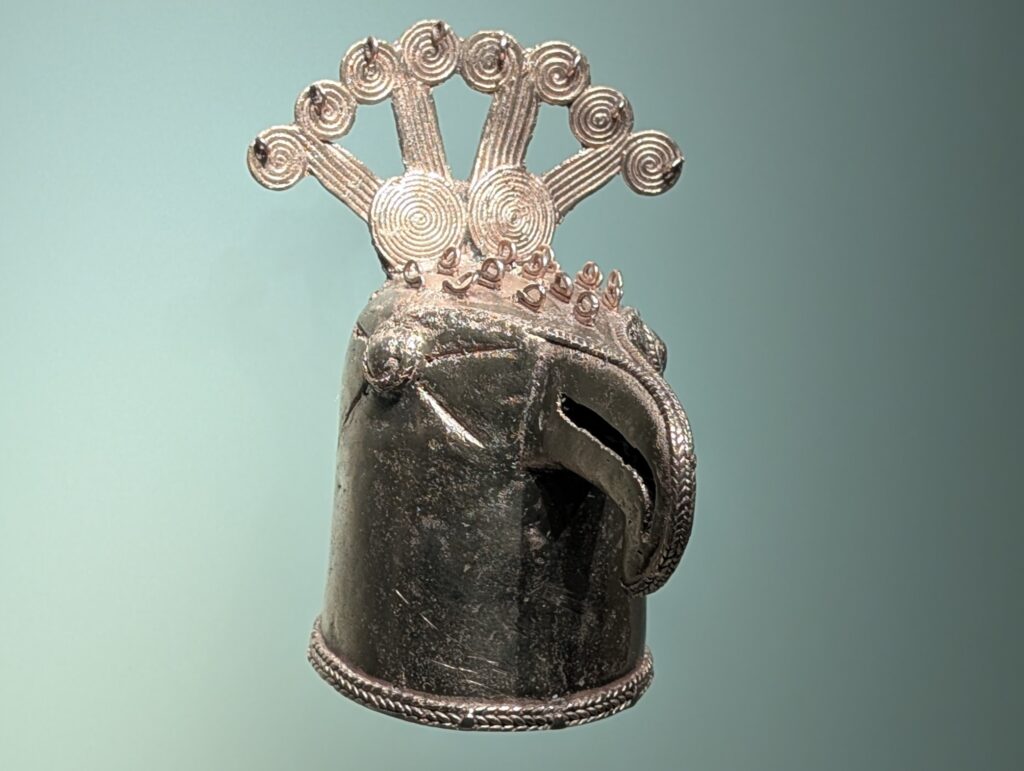
We bought lunch for Leandro to show our appreciation, and then went our separate ways. Leandro dropped us off at the Gold Museum. Andrew opted not to visit, but I spent about three hours walking what is purported to be the largest collection of gold artifacts in the world. The highlight of this museum is the accumulation of pre-Columbian pieces. The vast majority of the collection comes from geographically Colombian indigenous communities, less well known than those of Mexico and Peru. The museum does a nice job of explaining how all of these items fit into the broader scope of indigenous cosmology. The figures and general framework share many similarities with Inca and Mayan traditions. There were even displays showing how pieces were made and sometimes even repaired.

I rejoined Andrew after this museum visit. We walked the streets looking for a small supper. Thus ended our Tuesday, December 30.

(Continued)

Andrew at Matarrendonda
Andrew and I With Leandro
Waterfall in Matarrredondo
Andrew's New Found Interest in Sweden
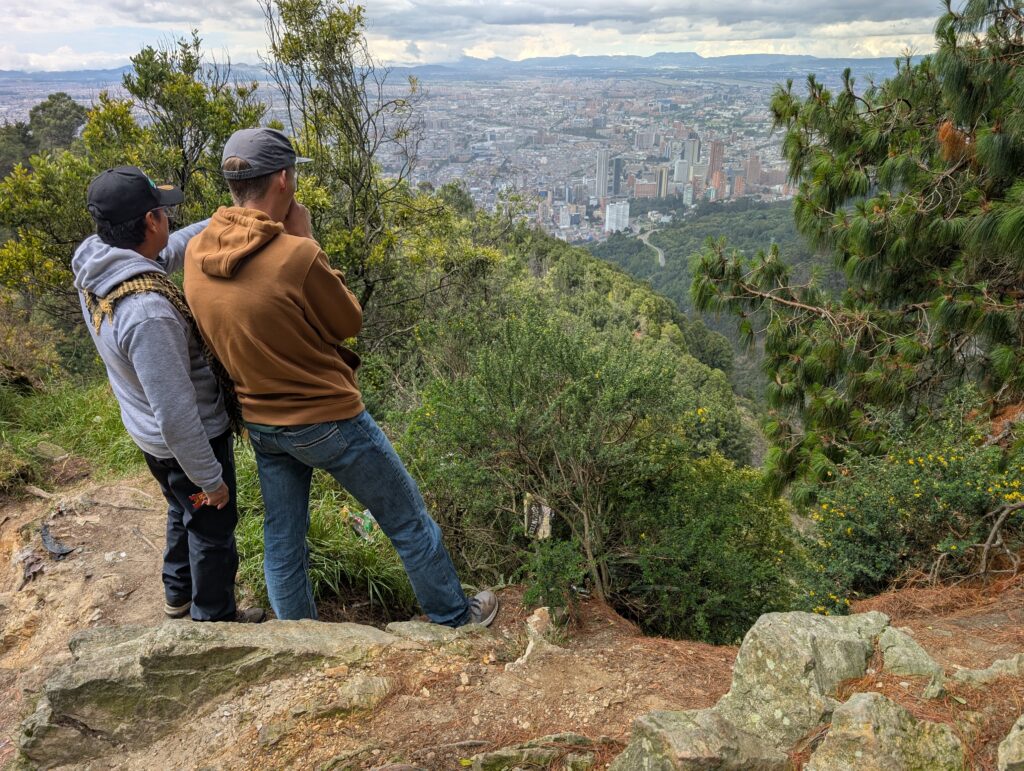
Leandro Points Bogota Sights out to Andrew
Leandro Suggested This Drink to Go With My Churrasco
Items From the Museo de Oro
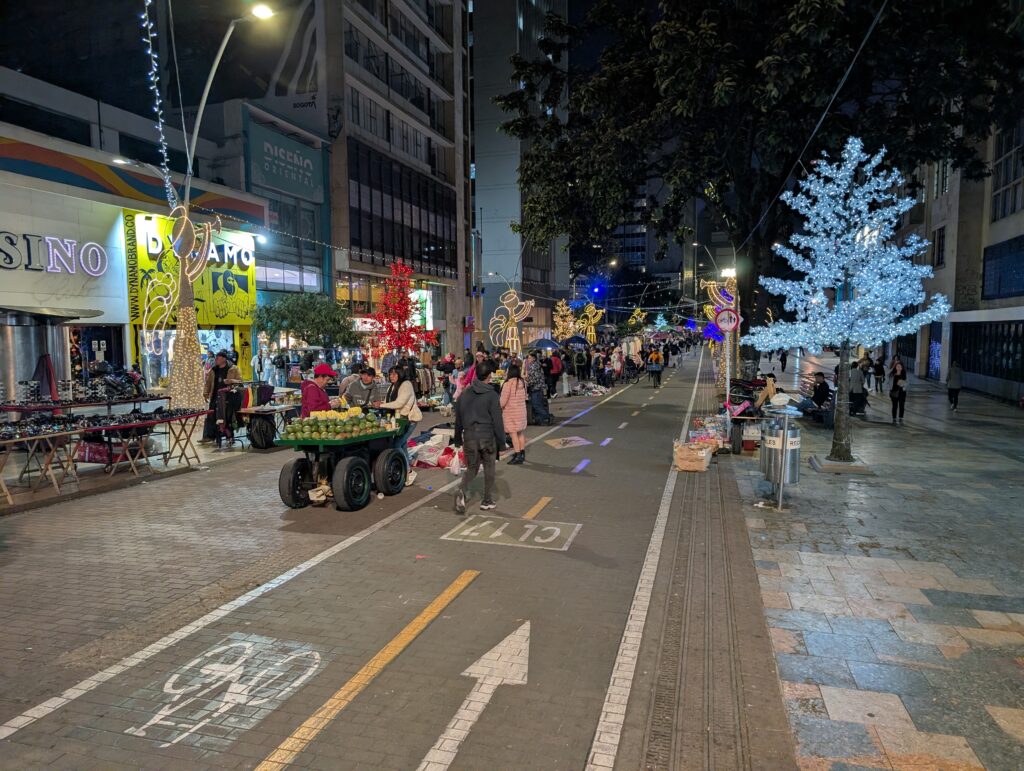
Street Market On Carretera 7

I was looking forward to joining Leandro’s family for a big, extended family New Year’s Eve party on the evening of the 31st. That would end up being the highlight of our time in Bogota. But before going over to Leandro’s house, we had an entire day to use. We didn’t start particularly early. I had plenty of time to go for my run. For me, that was even begun late. I didn’t run until 7:00 a.m. It is plenty light enough in Bogota in December to run at 6:00. I had my shower, and made some oats, then waited for Andrew to wake.

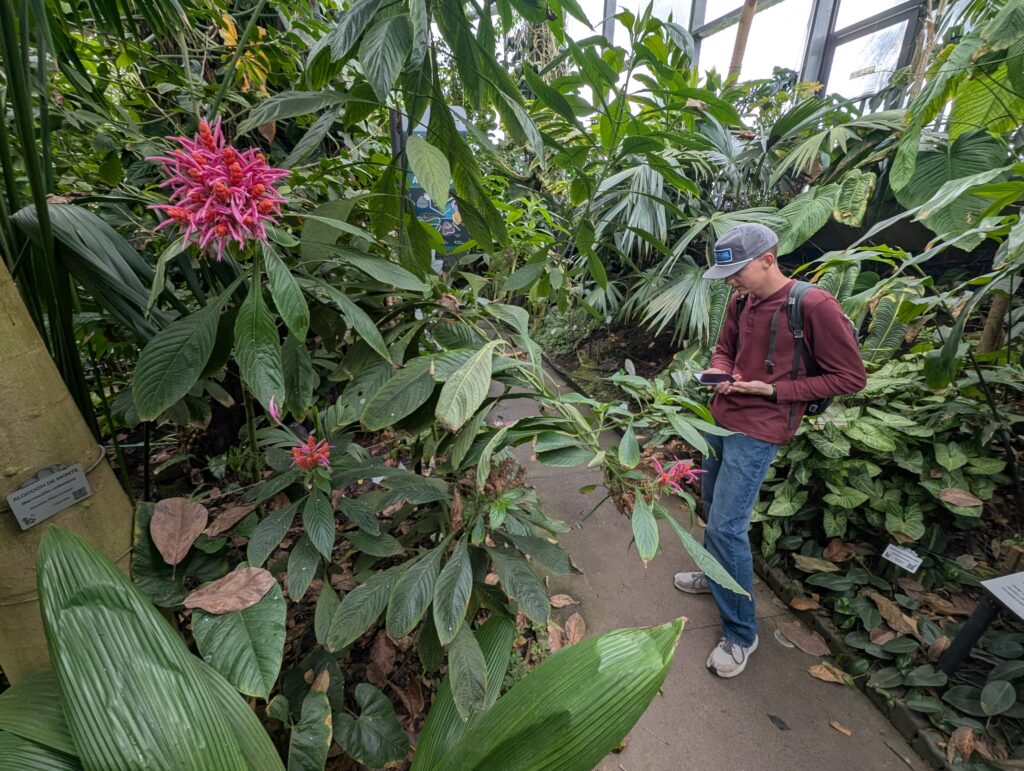
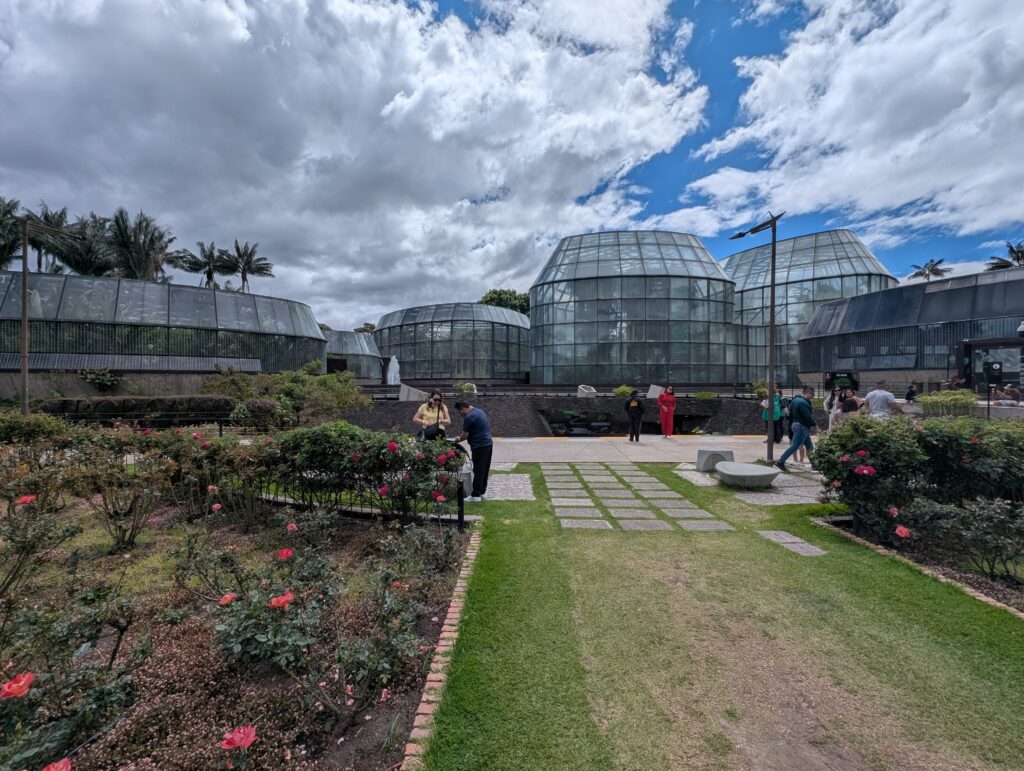
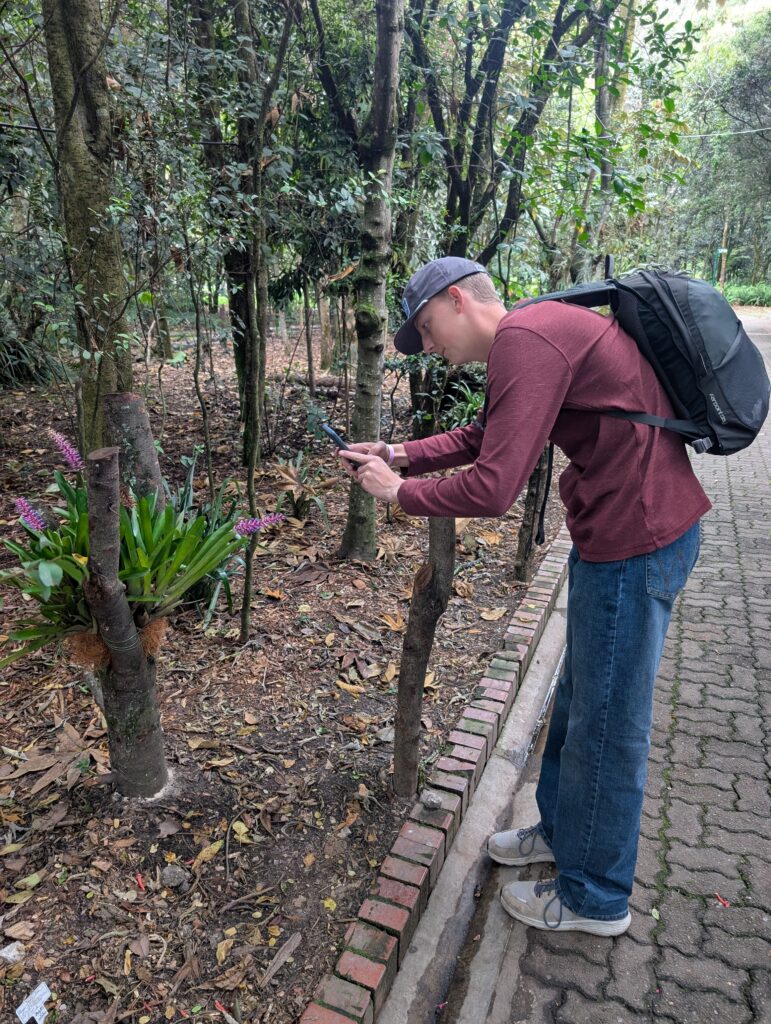
Since Andrew loves plants, flowers, and things that grow, it was no surprise that he wanted to visit Bogota’s Botanical Garden. We hopped on the bus and headed in that direction. We arrived just before noon, and it was a good thing we did. You must buy two separate tickets to see everything there is at the Bogota Botanical Gardens, one for biospheric domes, and the other for the general grounds of the garden. No further entries to the domes were allowed after 12:00 p.m., so we hustled over to the entry point. Although they supposedly didn’t close until 1:00, as happens so often in many Latin American countries, at about half past twelve, security staff began following us around, shepherding us toward the exits.

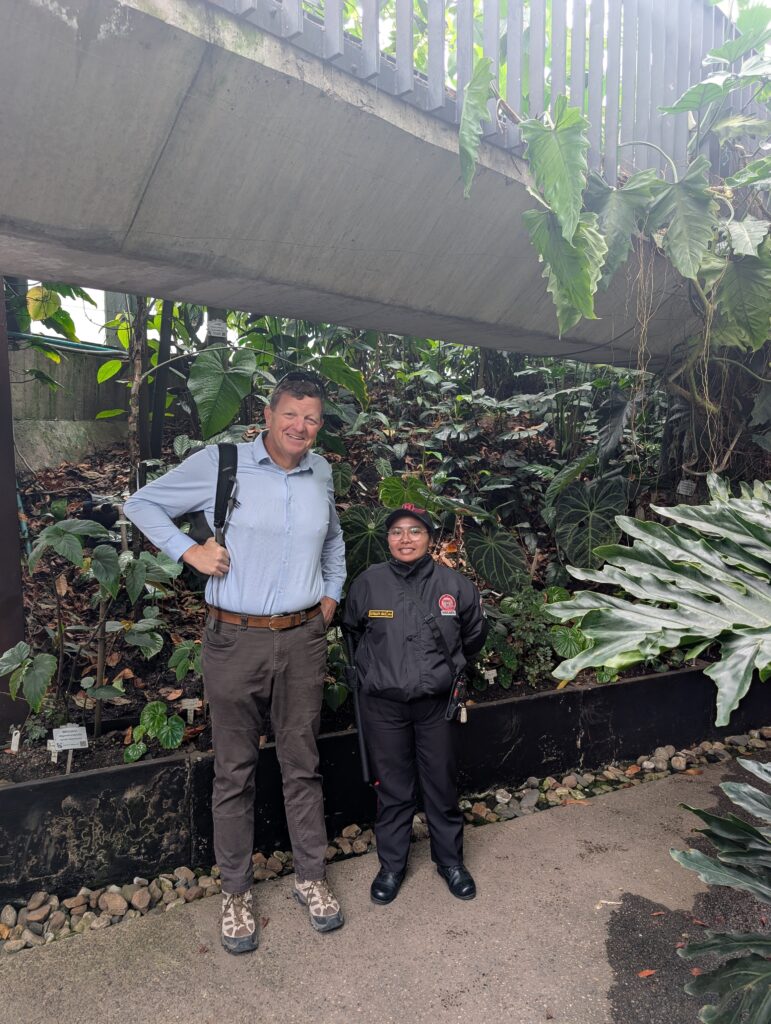
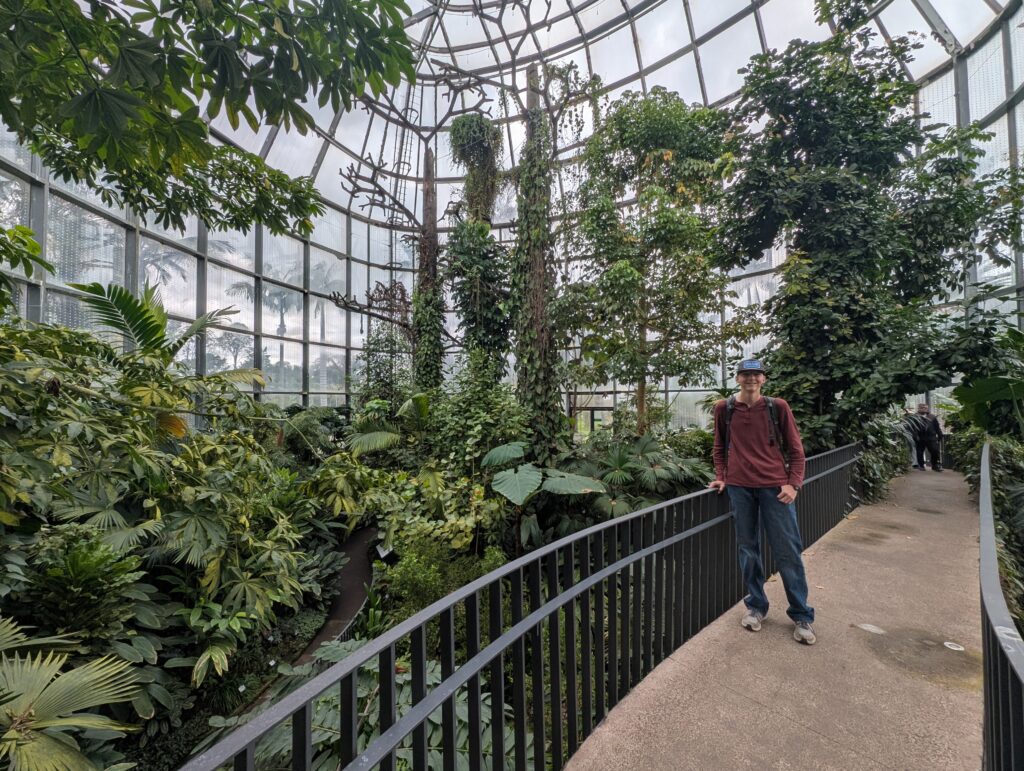
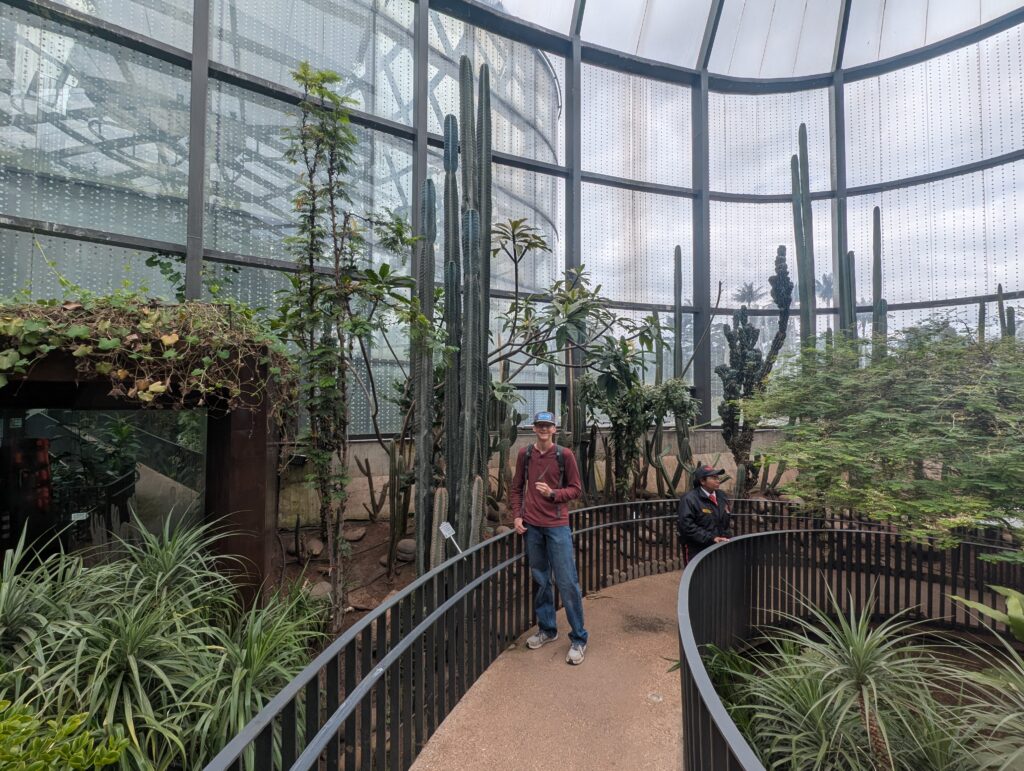
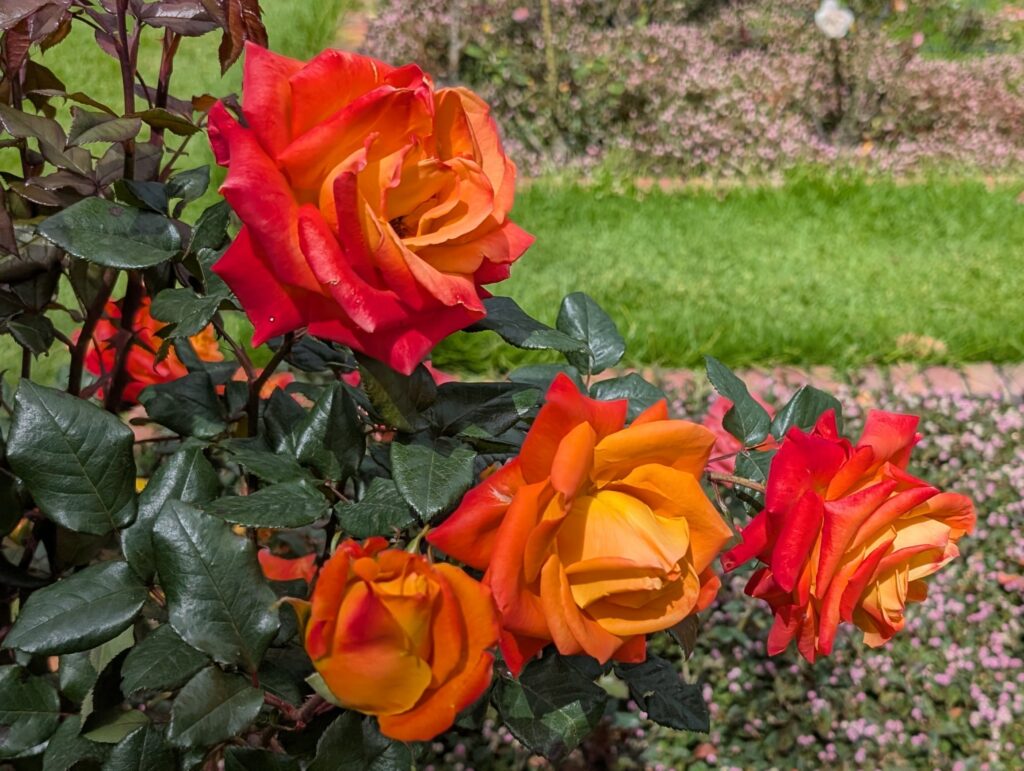
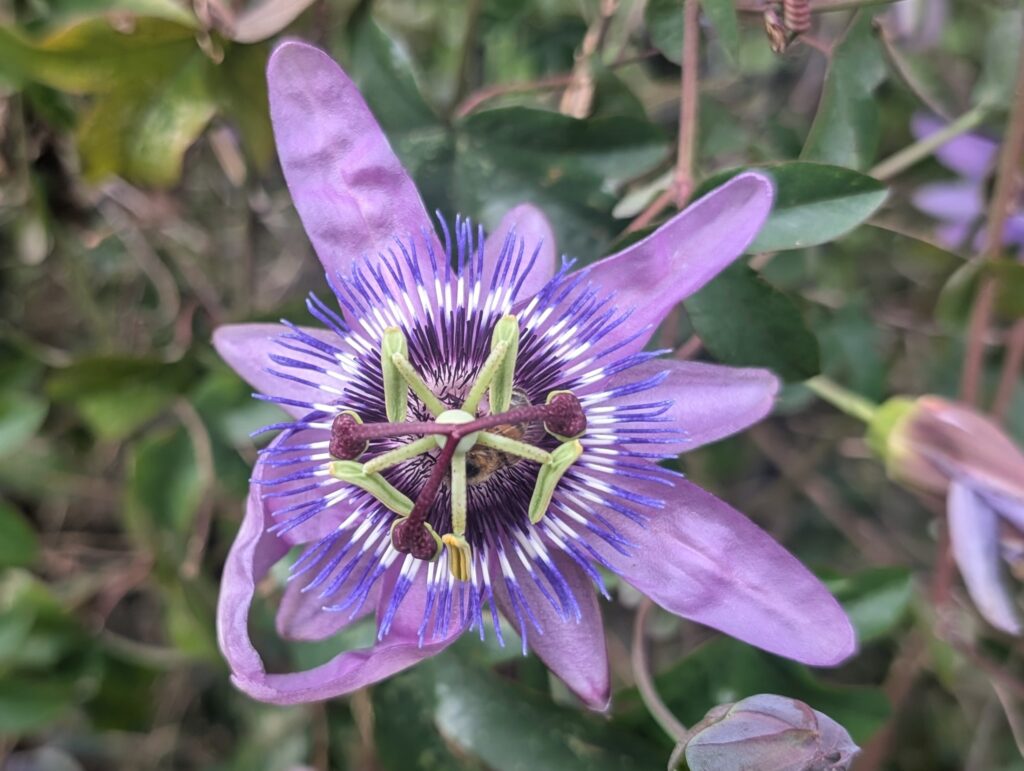
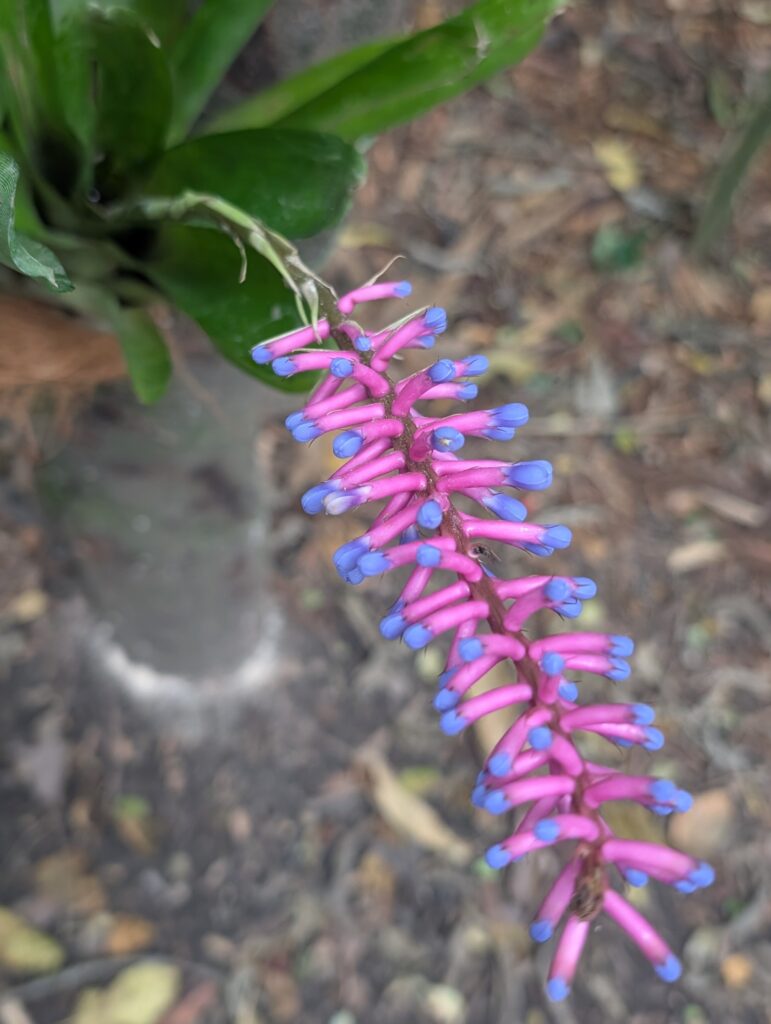
Nevertheless, we saw a remarkable variety of plants and flowers. It was quite a bit warmer and more humid in the domes than it was outside. They were designed in a way that reminded me of the much larger domes in the Singapore gardens. Andrew enjoyed seeing the orchids and all of the different plants represented. He identified many of them for me. He was also able to quickly identify when tropical plants were suffering from some sort of disease or insect infestation, which some were. I also found the experience enjoyable. My enjoyment was enhanced by having a horticulture expert along on the trip. I also joked with our shepherds a bit, and posed for a picture.

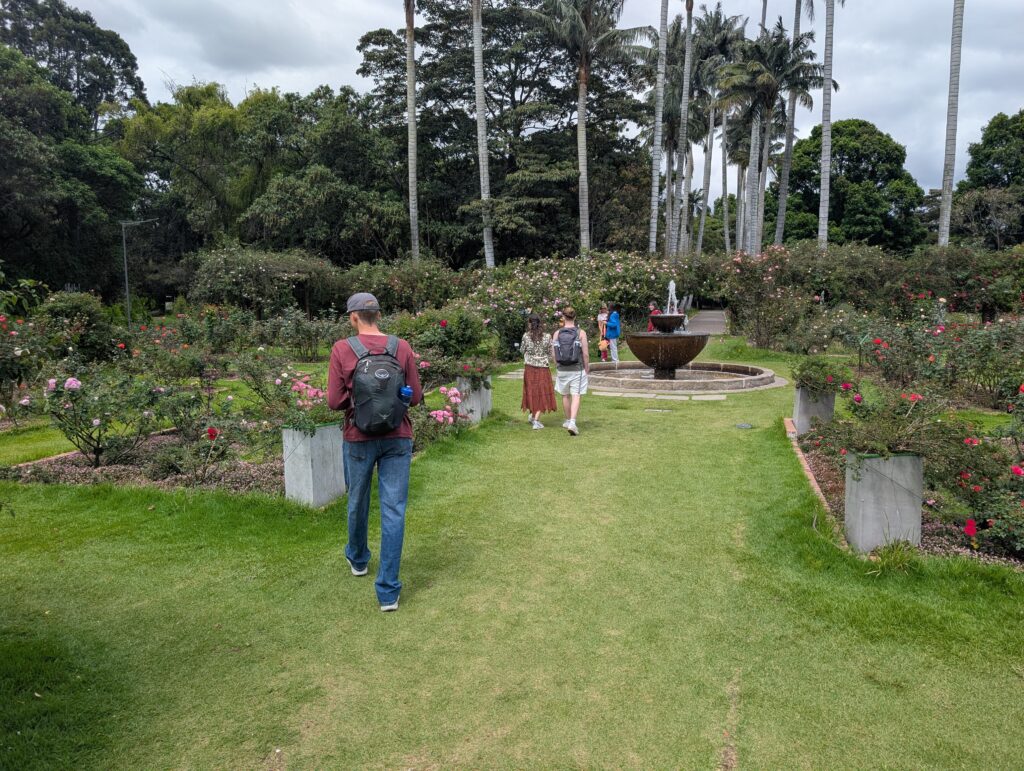
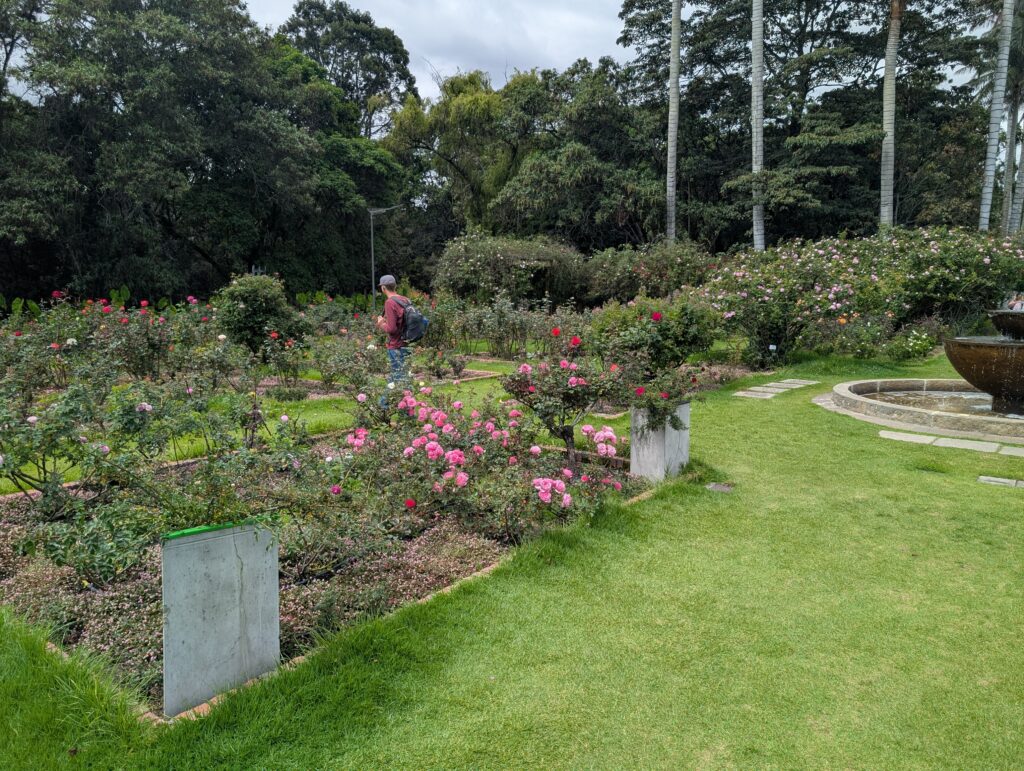
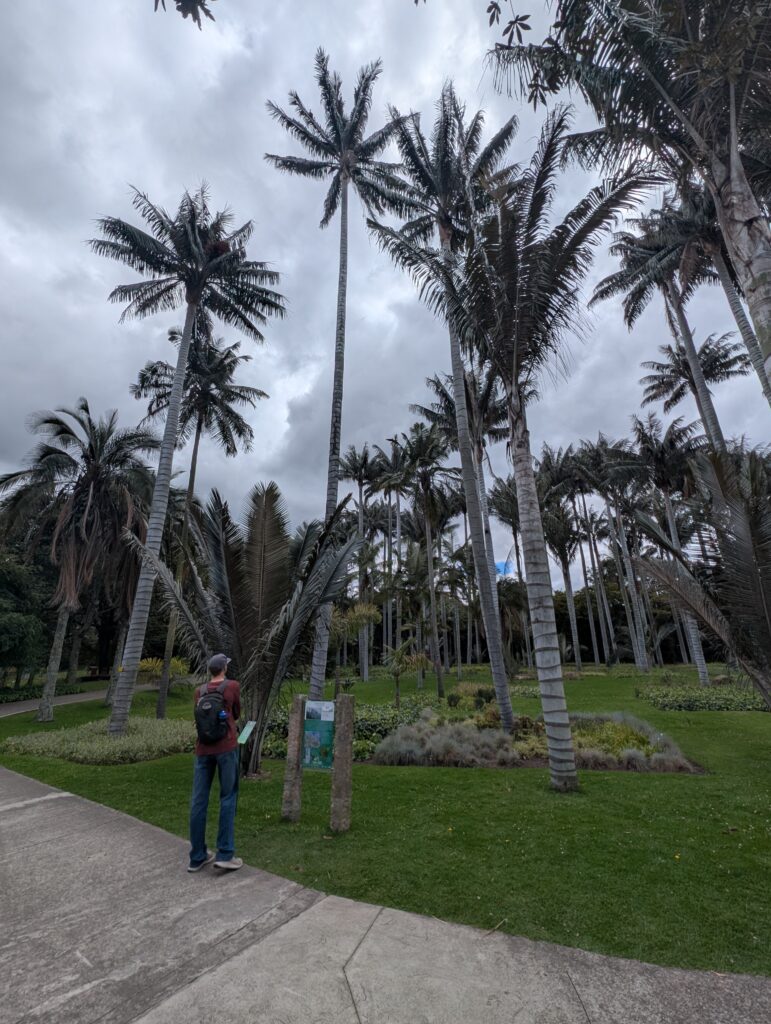
Once outside, we walked every path in the gardens, which are in fact fairly large. The walk was manageable, though. We saw it all and were done within a couple of hours. We hopped back on the bus, made a quick stop at the room, then rolled down to the grocery store to buy our contributions for the New Year’s Eve party. I also intended to get a haircut, and mail our postcards. The postcards would not be mailed for nearly two weeks – a couple of days after Andrew returned to Texas! The post office happened to be closed for the entire week around the new year, and all of the barber shops were at least closed that day. We settled for making a couple of wine purchases and buying some Coke Zero, all of which we carried to Leandro’s later that evening.

We had a bit of a miscommunication about the time of our arrival at the party. While returning form the trip to the biological preserve on the 30th, Leandro had mentioned that the party would likely start at 5:00 or 6:00, but that we were welcome as early as three or so to help prepare arepas and other foods for the party. That sounded like fun, but we didn’t want to just take up all of their time. Sometime on the 31st, he sent another message saying that the party would start at 8:00. Not wanting to completely miss out on the food prep, and also just enjoying the family’s company, I thought that perhaps arriving between 6:00 and 6:30 might be a perfect compromise. Well, apparently, Leandro meant that we should just show up for the start of the party at 8:00, because when we arrived a bit after 6:00, no one was home, and Leandro seemed mildly irritated that we had shown up so early. We went around the corner to wait at a coffee shop until his arrival.

Not all that long before 8:00, everyone got home, and we walked over to the apartment. Most of the other guests arrived fairly promptly after that. I found that a tad surprising, knowing how time generally works in Spain and Latin America. I wasn’t sure about a meal, so I hadn’t eaten much that afternoon, saving space for a big shindig. There were plenty of appetizers, but the main meal was set up more to correspond with the actual coming of the New Year. There was actually quite a bit of food, but it came out late. I didn’t really know how all that would work.

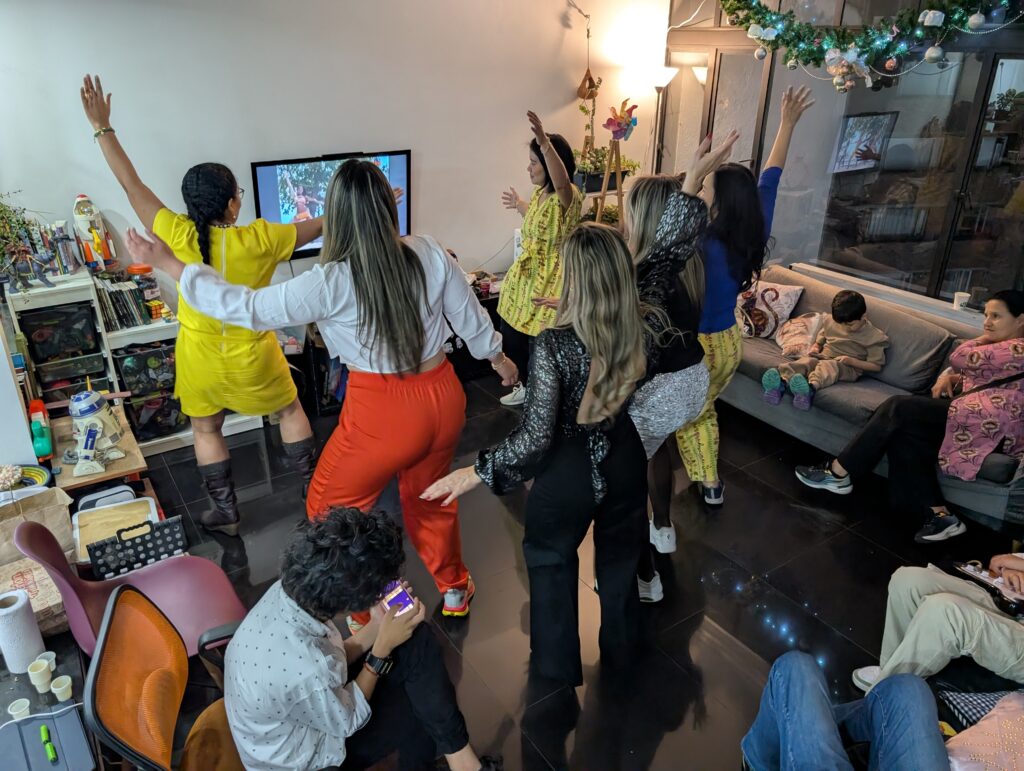
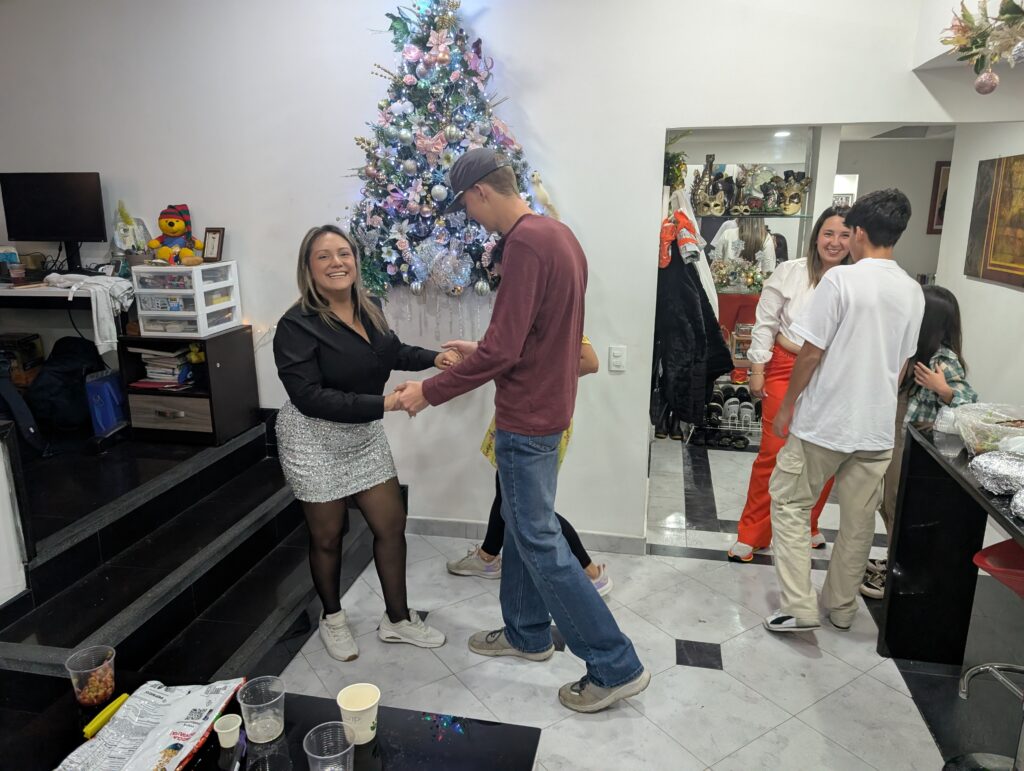
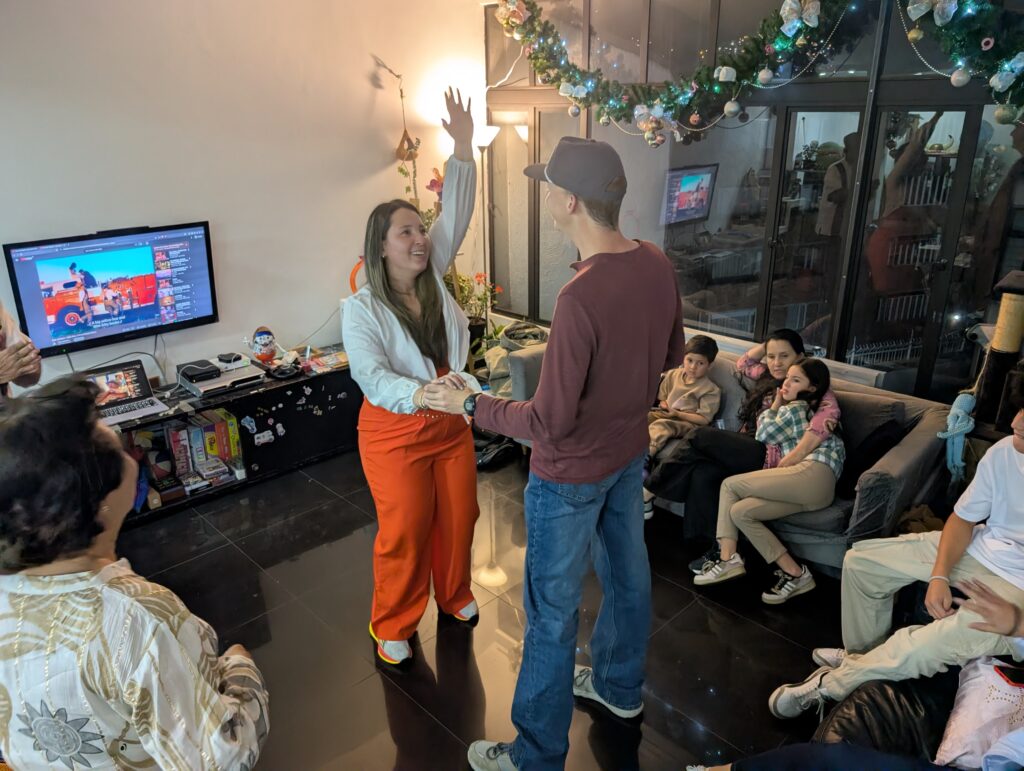
There was a lot of socializing, story and experience sharing, and especially dancing. Nearly everyone there jumped into the video game “Let’s Dance,” loaded of course with Colombian music. Eventually, some of the ladies coaxed Andrew into dancing. The dance they did had a lot of the loops and twirls you might associate with Texas Two Step. We convinced Leandro’s son, Liam, to add an Alan Jackson song to the repertoire. Andrew proceeded to teach everyone Texas Two Step. This was quite a hit, and I was proud of Andrew for taking that step. I visited with Leandro’s parents, friends, and two sisters-in-law. Both sisters-in-law were highly educated ladies in the 40s who we working in biological fields in Brazil. 

For a good part of the early evening, I visited with Leandro’s sister-in-law, Angelica. I learned a lot about her work in Brazil. Later on, I had the opportunity to learn a lot more about what her younger sister, Maria Fernanda was doing. She was studying in Brazil, and would likely do a fellowship of some kind in California in the coming months. As she seemed quite interested in flying, I offered her a ride in the plane on one of my bi-monthly California visits. For this reason, I have her contact information. A lot of the discussion with these educated ladies happened because after Leandro, they were the most likely to talk to us in English. Andrew and I also spent quite a bit of time visiting with Alfonso, Leandro’s father-in-law. He was quite patient with us, but spoke only Spanish. So this was good practice for both of us, especially Andrew.

We learned a lot of other interesting traditions. Most of the ladies had on some kind of yellow dress, or at least something bright yellow. Apparently, this represents gold, and it has something to do with drawing an auspicious coming year. We also learned that around midnight, you eat twelve grapes in Colombia. With each one, you make a wish for the twelve months of the new year. Finally, when the clock strikes twelve, you go outside and run around the block with your passport. Some people even run with a packed suitcase, signifying that you’ll make some very cool trips in the coming year. We participated in all of these things, and had fun watching others do them, too.

A good while after midnight, but before 1:00, the party subsided. We said our goodbyes and thank yous, and walked out to the parking lot to call an Uber. The Ubers were quite busy at that hour, and I couldn’t roust one. I tried backup programs like InDrive, but even so, the delays were quite long. I didn’t mind this, but after we had waited for 15 minutes or so, Leandro insisted on driving us home. We thanked him profusely, and crashed into our beds for the latest night we would spend on the entire trip.

(Continued)

Another Shot of Bolivar Square
Andrew Doing His Thing
Security at Botanical Gardens
Domes a Bit Smaller Than Those in Singapore
Surprising Number of Cacti
Outdoor Section
New Year's Eve Party at Leandro's, Lots of Dancing and New Traditions
Andrew Giving Two Step Lessons
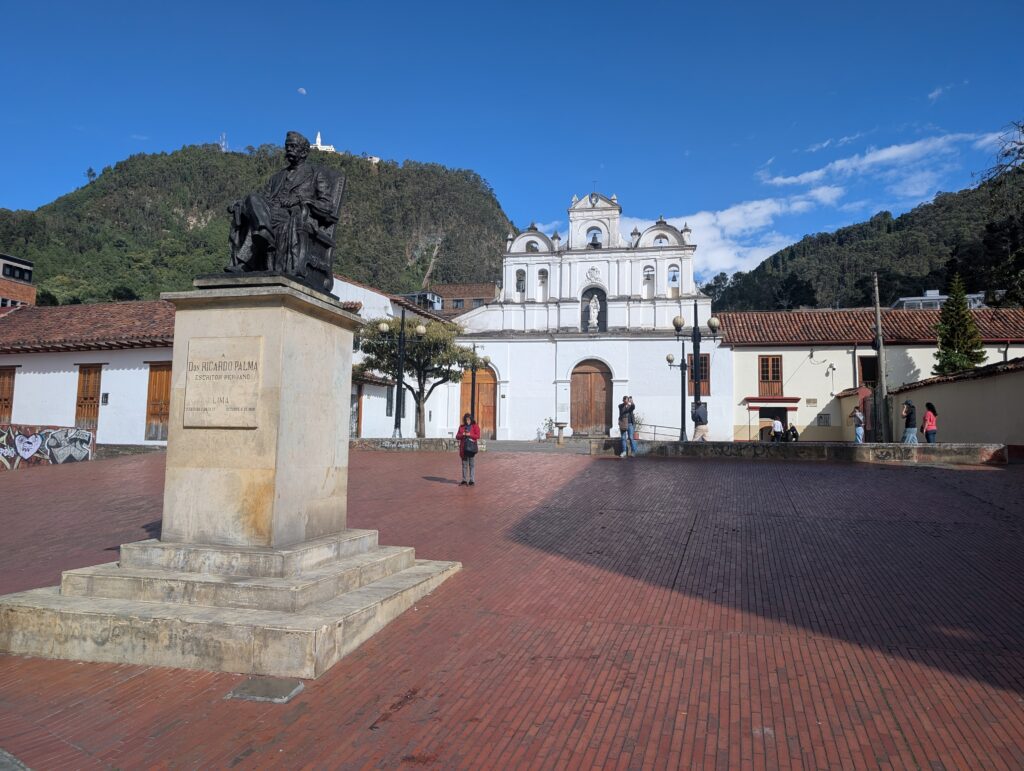
Looking Down a Candelaria Street Toward Bolivar Square

For obvious reasons, none of us were up early on New Year’s Day. I went running, but it was after 8:00 before I left. I let Andrew sleep as long as he wanted to, which was quite a while. I went downstairs. I did some logistical work. I did some farm accounting. I made and ate my oatmeal. I talked to other travelers in the hostel. I also learned that my time would be expiring that day, with no future availability. We had decided to take the bus to Medellin on the 3rd. I then had to find another place to stay for the final two days in Bogota.

We had been staying in the Granada hostel, which was fine. Our new hostel was just a couple of blocks away. It was a chain operation called Masaya. It was actually a good bit nicer, and booked at the same price as Granada, so that worked out well. We even used that lead to book Masaya’s Medellin hostel. That one wasn’t quite as good, but in general, their standard is pretty high. I went and checked out Masaya and made that reservation before we did much else on the 1st.

I decided I wanted to head down to a large local market to get a flavor for a more typical Colombian experience than what you see in our original neighborhood, Candelaria. Candelaria is an “old town,” and a popular tourist destination. We walked through some seedy-looking territory on the way. We were always quite safe, though. There as just a lot more litter and some homeless people sleeping on the median. We never left a large, multi-lane divided street though, giving me plenty of confidence that we were unlikely to suffer any major problems in such plain sight.

We ended up walking over two miles to get to the market. All indications online showed that it would be open, but when we arrived, it quite clearly was not. Even the parking lot was fenced and locked, with no cars in it. Andrew was not quite as confident in the neighborhood as I was. I didn’t want to make him nervous. I asked if he wanted to find something to eat there (he was now hungry) or just head back to Candelaria. Back to Candelaria we went – on the bus this time – for an evening meal, followed by another jaunt around the neighborhood night markets in carretera 7.
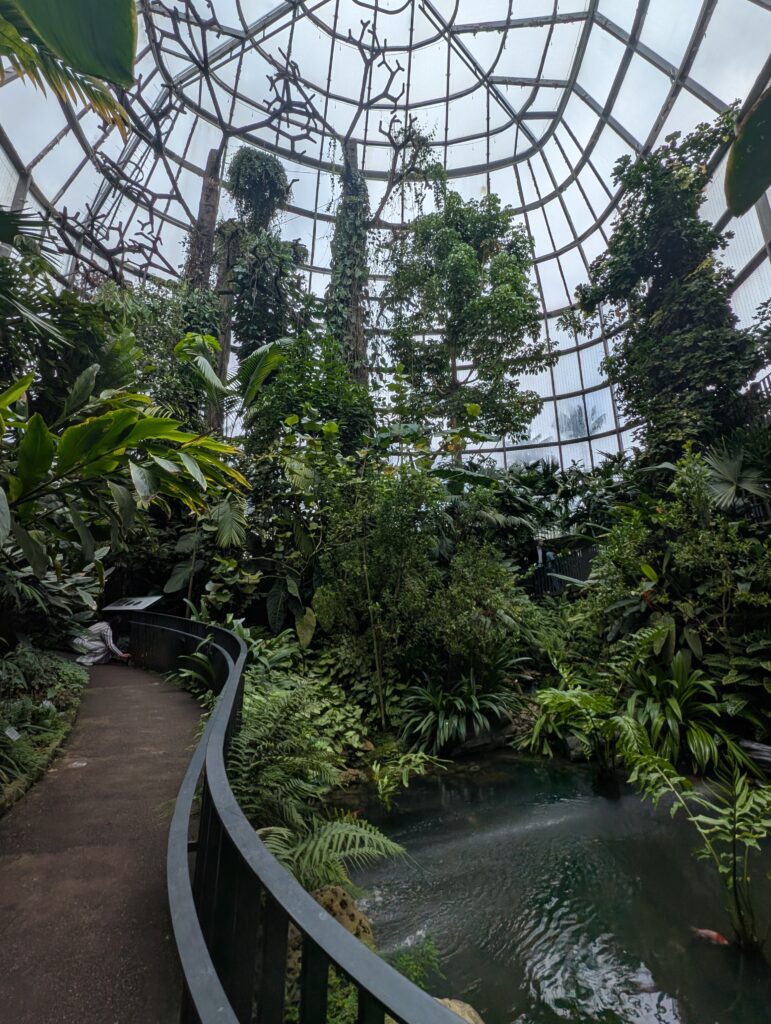
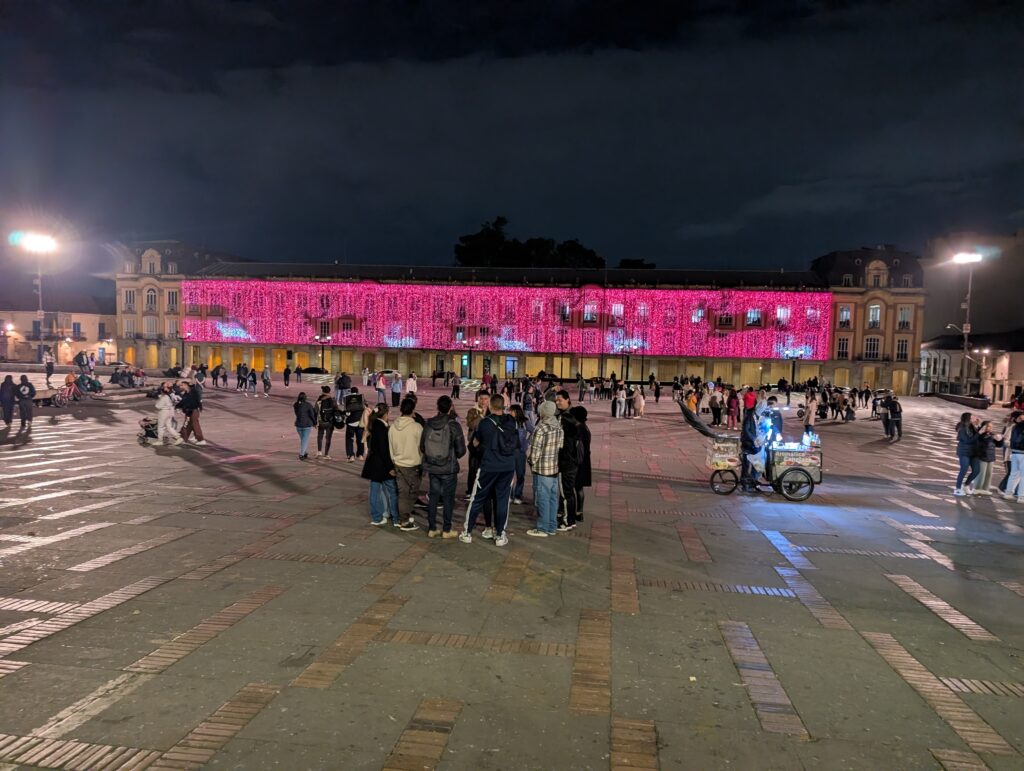
We ended up back at Bolivar Square, which is brightly lit at night, and makes a pretty sight. I enjoyed people watching and bought a churro. I’m not sure that’s what they call them in Colombia, but that’s exactly what it was. It tasted great! I also ate some meat on a stick and a few other things from street vendors. In fact, the only arepa I had in Colombia that was any good came from a street vendor. It was stuffed with mozzarella cheese and came wrapped around a great big chorizo link. It was great, if a bit greasy. In general, the street food I tried was good. The main disappointment was the corn. Lots of vendors sold a local variety of corn on the cob mounted on a stick. The huge kernels had been rubbed with butter and looked like they should be tasty, but they were starchy and took some effort to chew up after you knocked them off the cob. The only flavor they had was whatever was rubbed or sprinkled on them. I tried them twice, just to verify, but both were equally bad. Good thing the arepas and churros overrode that experience. We ended up hitting the street market for food vendors several times in Bogota.

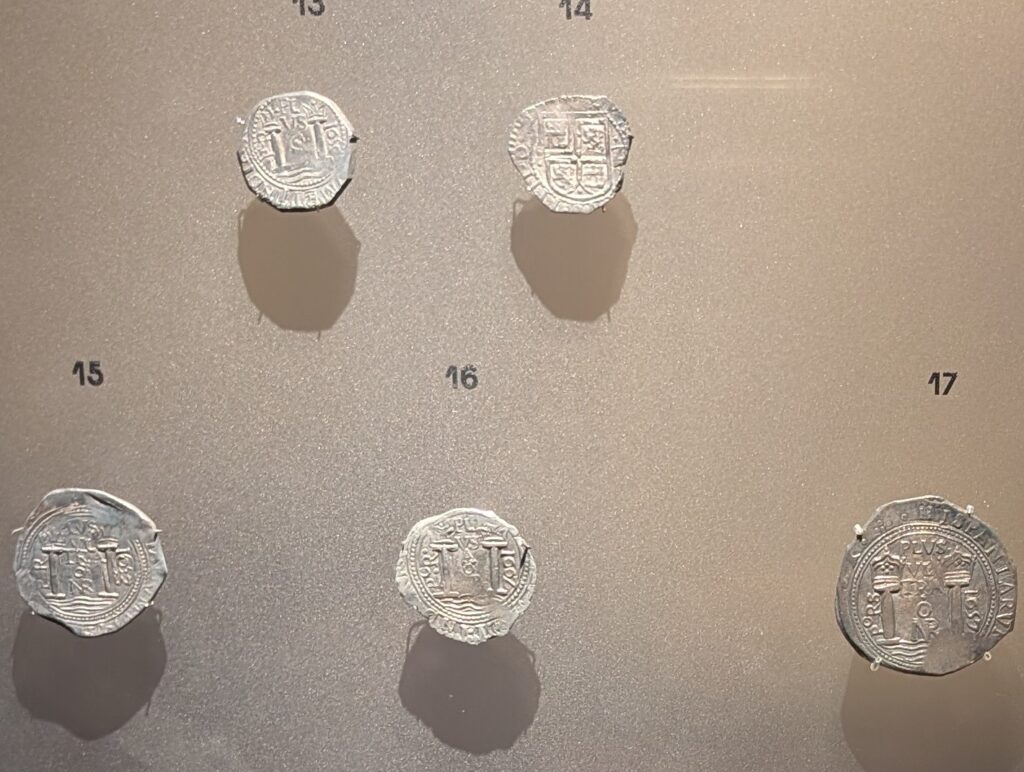
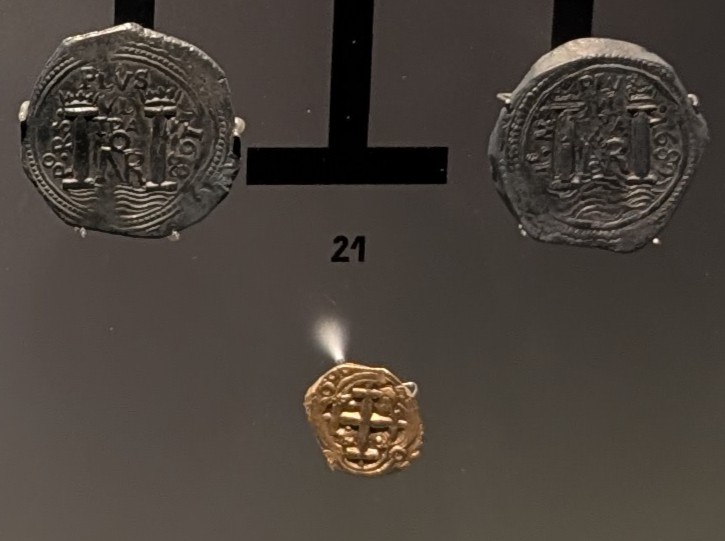
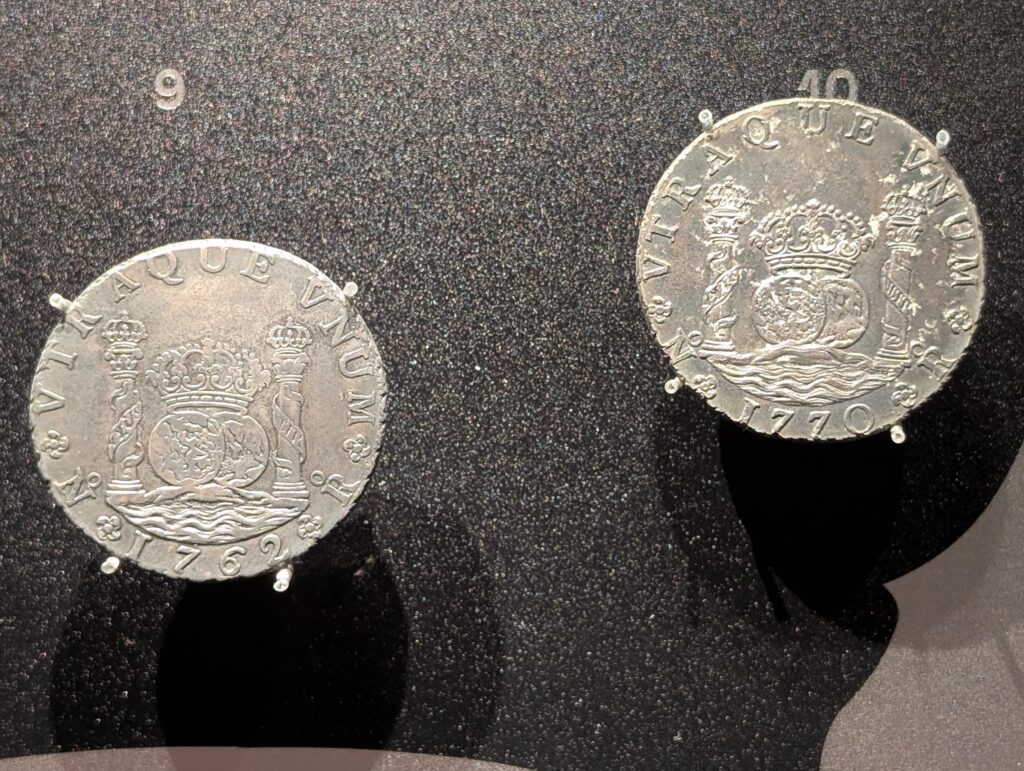
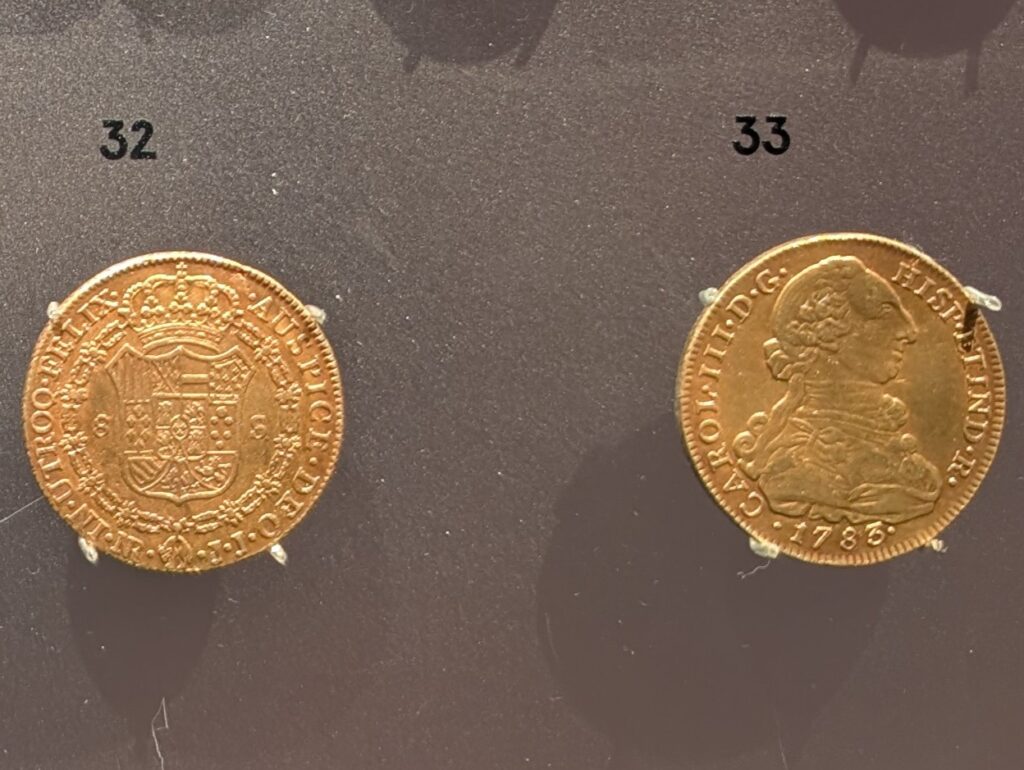
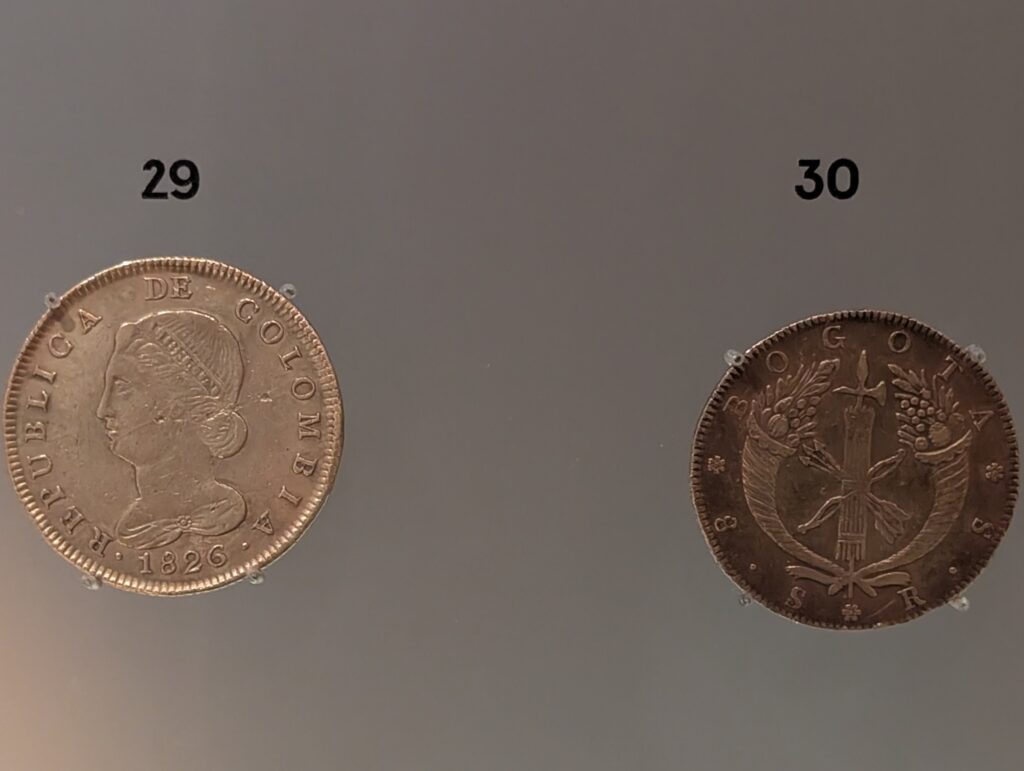
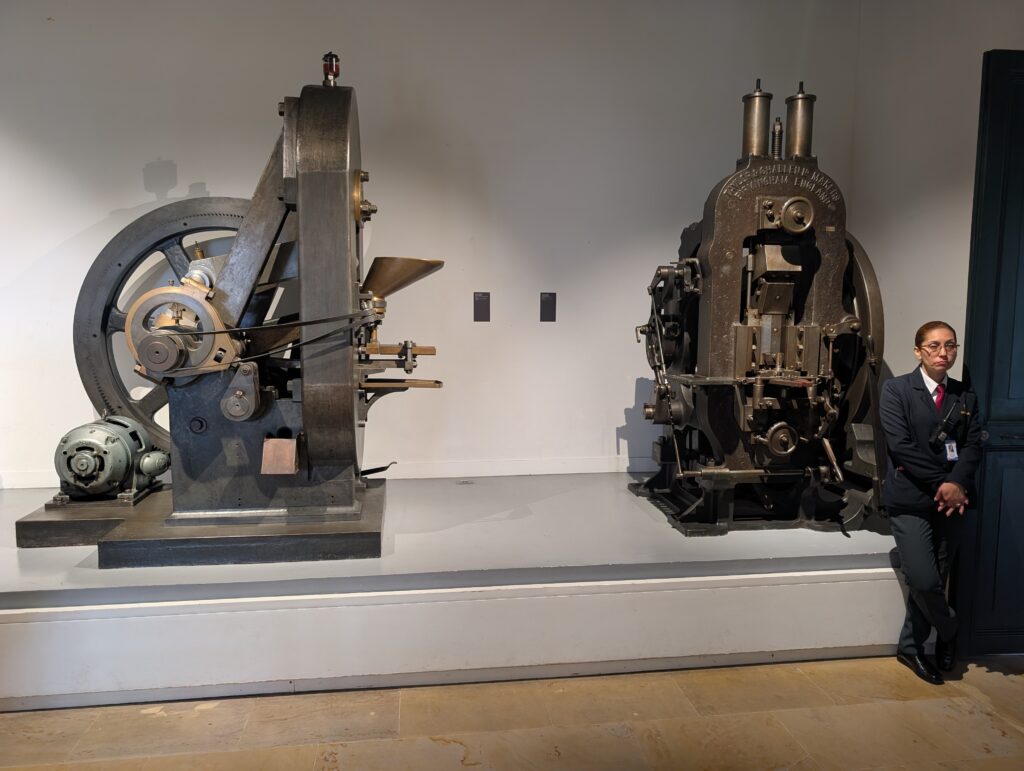
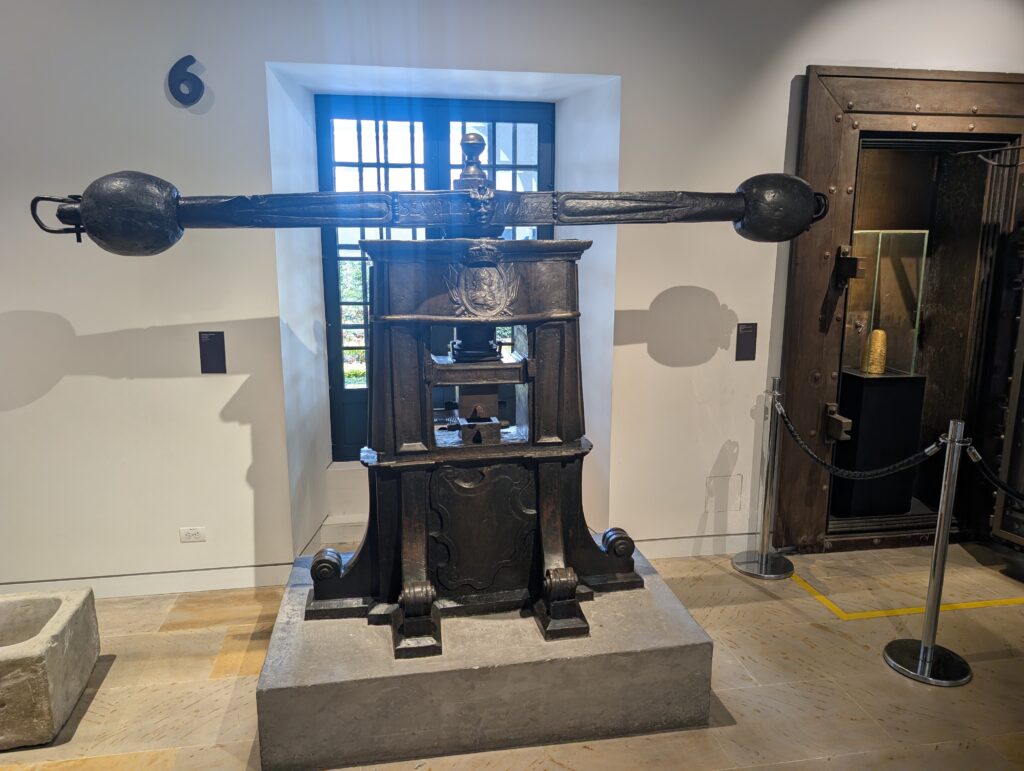
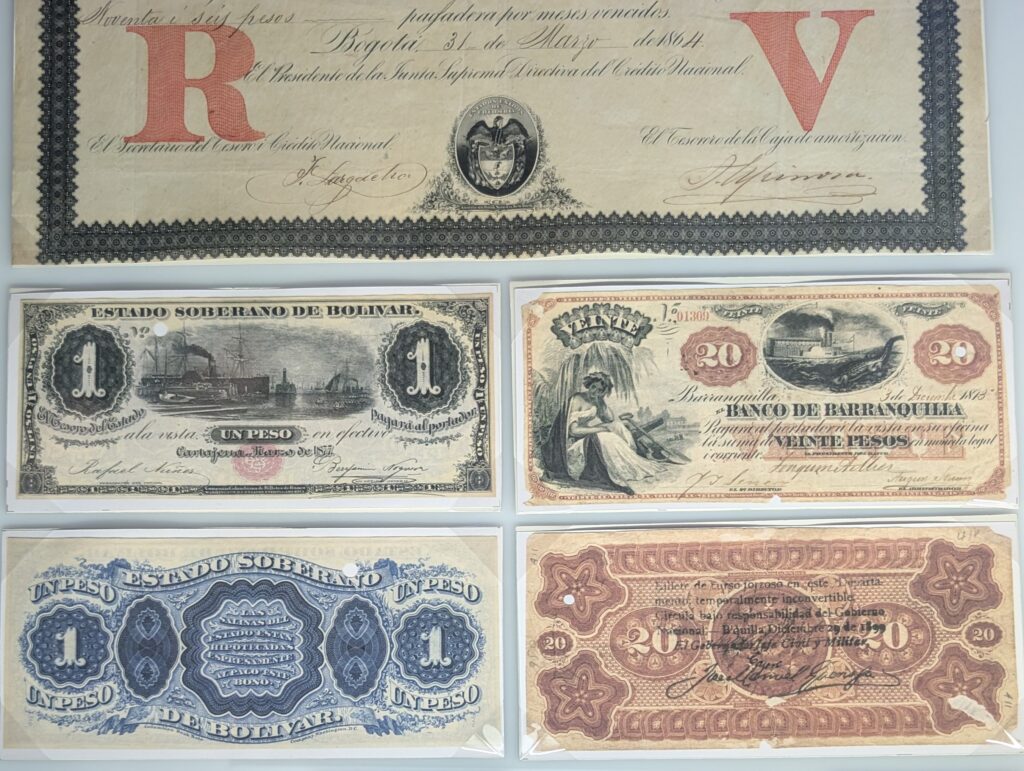
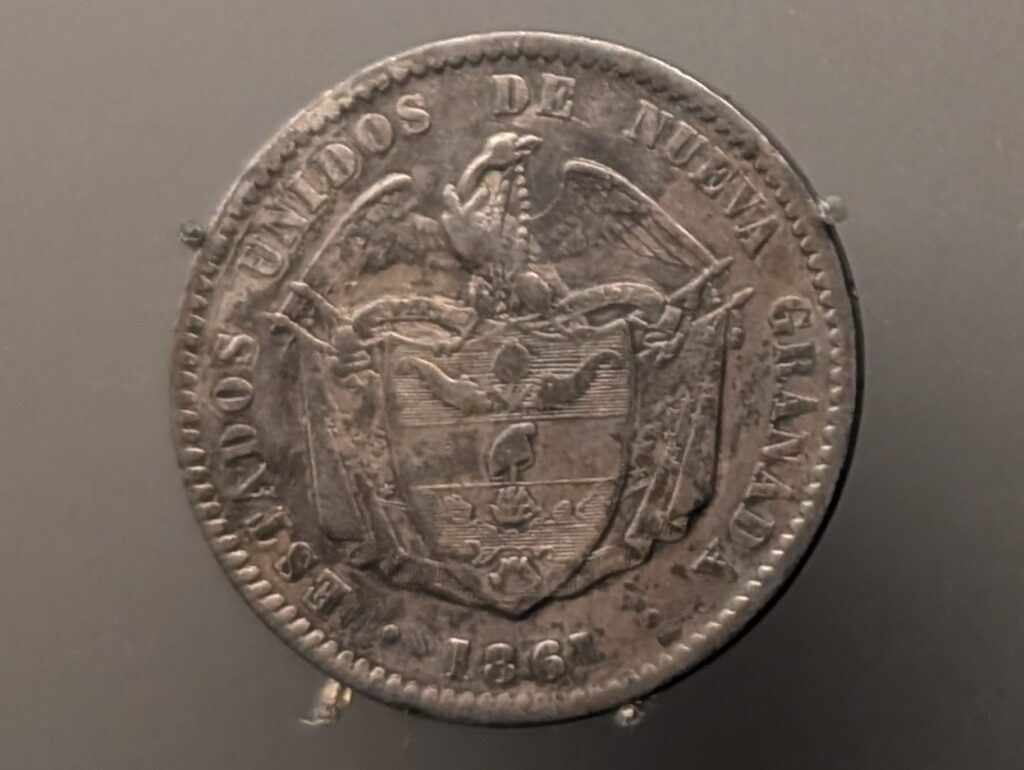
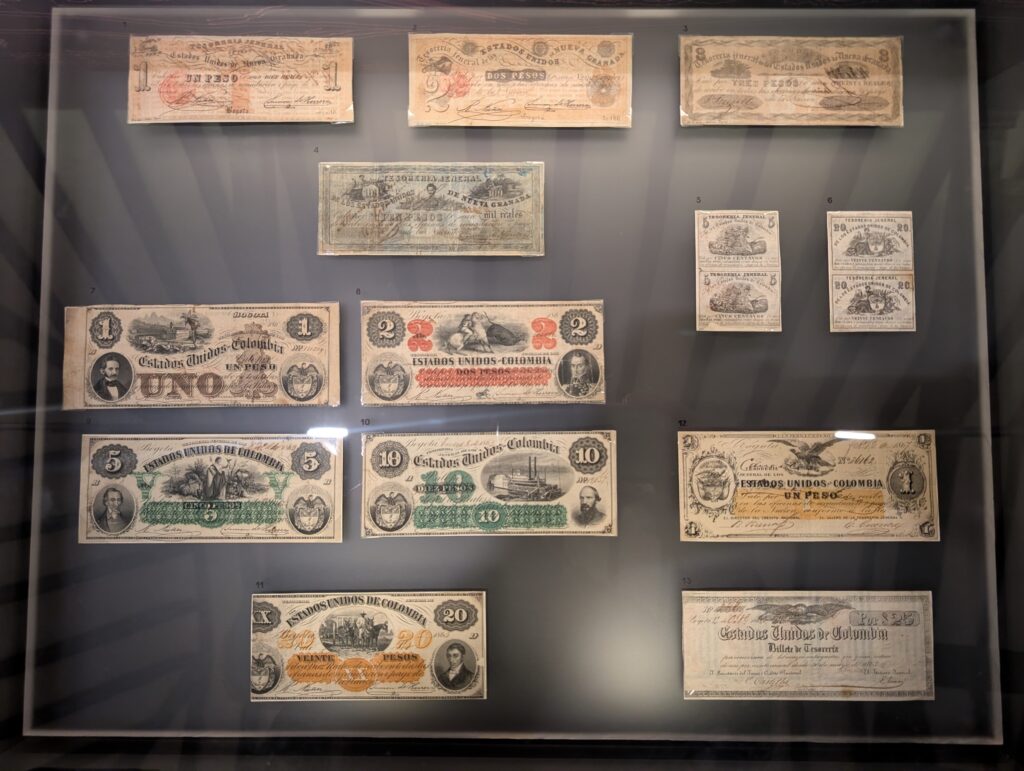
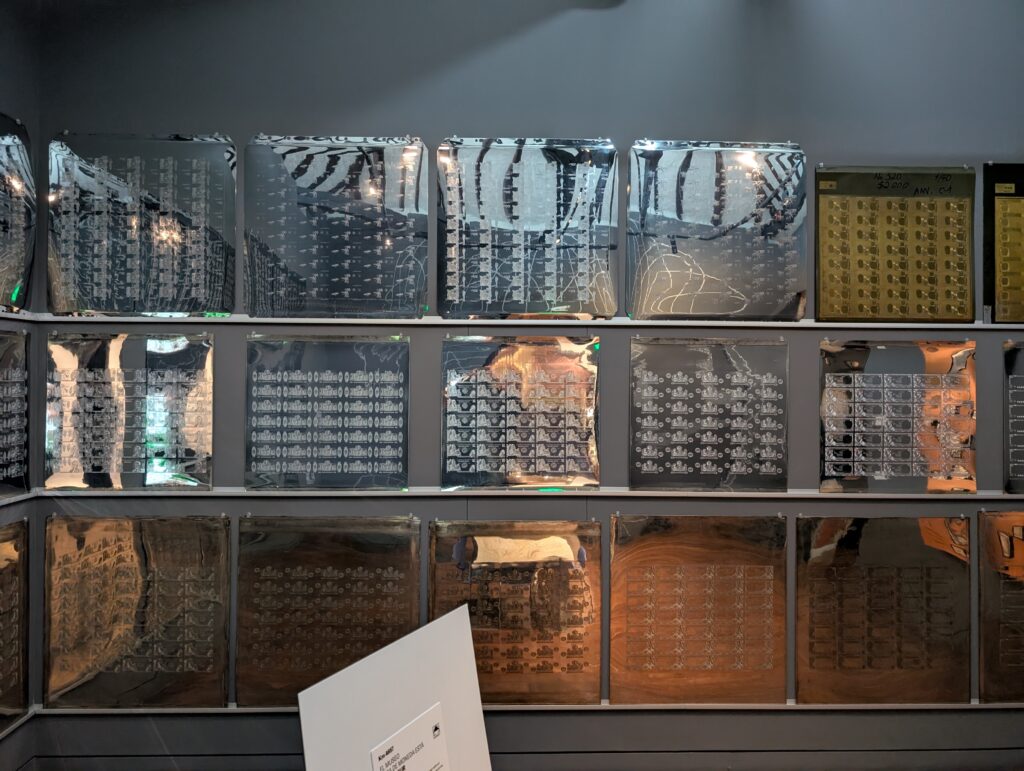
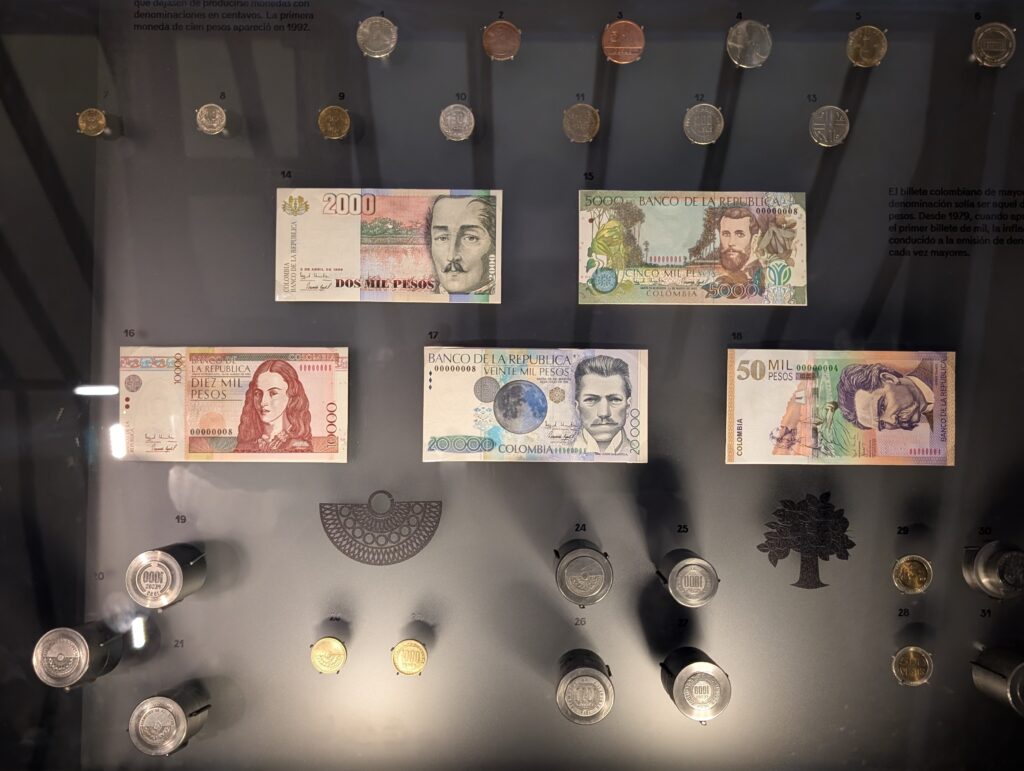
Part of the reason I wanted to stay in Bogota through the second was that many of the museums were closed until then. There are so many museums in and around Candelaria that you couldn’t really visit them all. Even if you had the time, you wouldn’t want to. Even history buffs like me have to be selective. I wanted to see the Museo Casa de las Monedas – the mint museum. If you’ve read my other articles, you know this is a common stop for me. This museum in Bogota is free, and it’s actually a pretty good one. There is plenty of information on the history of money and coinage in Colombia, an explanation of how that has changed over time, and the representations of cultural and social values reflected in modern Colombian currency. The number and variety of Colombian coins was particularly nice.

Andrew does not really enjoy museums. In fact, he never went to a single one on the trip. He opted instead to join two walking tours. I think he wasn’t really all that interested in the subjects of the walking tours. He just wanted to walk around with other kids staying at the hostels. In the morning, he joined a graffiti tour. In the afternoon, it was a food tour. I got done with the coin museum just in time to dash over and join the food tour.

The food tour unfortunately was a bit of a disappointment. Andrew didn’t mind about the content, for the aforementioned reason. I did want to try several of the foods mentioned in the guide’s introduction. About half of the suggested foods – including all of the ones I hadn’t already tried – were all out at the restaurants we visited. This seemed strange, since they knew we were scheduled to come. In any case, we walked around to several overpriced restaurants which no doubt were on some sort of kickback from the guide’s company. The guide was friendly, but really, the highlight in terms of what was actually available was a coffee school. But I don’t really drink coffee. I did learn from our guide, however, that my experience with the corn is actually quite typical. Colombian corn is apparently all very starchy, dry, and flavorless. It was odd that he admitted this, as it was one of the sample items available. Seeing as I had already tried two ears of bad corn, I took the guide’s recommendation and did not order a third.

The walking tour was in general fun, though. As Andrew realized long before me, the highlight was the people. We met several interesting travelers, including a Chinese student studying at Penn who was originally from Xi’an. She had quite an inspiring travel story. She had been in a long, difficult relationship with a boyfriend. She had been planning to make the trip with him, but the relationship crumbled just before their departure. Ruoxi (Rosie) decided to make the trip solo, as a sort of statement of independence, and also to try something new that was out of her comfort zone. She was embracing the newness. She was a tad more cautious than me, but that makes sense, given her situation and experience. I thought it was very cool that she opted to continue with the trip, solo, and I told her so.

Andrew and I went out later in the evening to walk the street market in search of postcards. I also grabbed various pieces of street food for supper. Two of our roommates – ladies from the Czech Republic – joined us as we walked. We were successful in finding both food and postcards. Andrew was the first to tire, and so we walked back to the hostel, leaving our Czech friends to wander the streets in search of less greasy cuisine.

Eva was a woodworker, about 40 years old. I thought she was younger. She apparently had to work and lift a lot of things. She was ripped and had some real arm cannons. She said most of her friend group was in their twenties, and she was often the “old person” traveling. I suppose I can relate to that. They had a similar itinerary to us, though they did not end up in Cartagena. I think their trip after Colombia would be longer than ours, but I have forgotten the details. I may hear more, because Eva contacted us once after we left to give us a trip report. I enjoy maintaining contact with some of the people I meet on these trips. It’s a fun way to continue the memory of some really cool trips. After all, people are the most interesting part of places.

We would have a very early morning on the third. I wouldn’t be running. We had to grab a city bus and head down to an inter-city bus terminal with which we were unfamiliar. Andrew seemed unconcerned about this, but I always feel like I have to be on my game for moving day. All turned out fine, and we made it. I was happy to know, though, that we could fall back on a Uber to get us to the station if for some reason the municipal bus system didn’t work out for us. Ultimately, it wouldn’t have mattered if we had been late. The bus to Medellin departed nearly an hour late, anyway.

Coin Museum Shots
Some of These Look Familiar
From Independent Colombia
Old Mint Equipment
They Have Paper as Well
A Wall of Plates
Nighttime Lightshow
Daytime Panorama From Monserrate
Sunset Monserrate Panorama
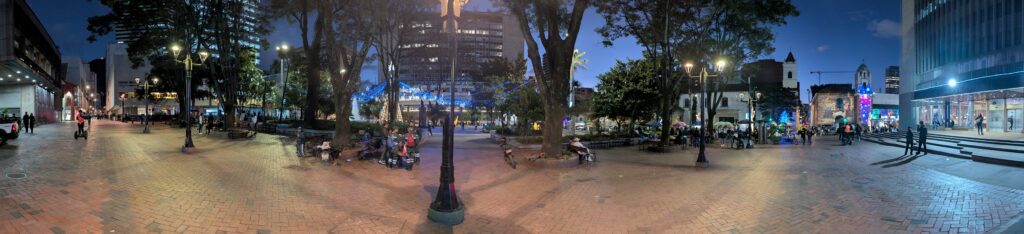
A Square at Night in Bogota
Trip Overview
Colombia
Medellin
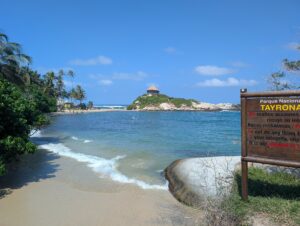
Tayrona
Cartagena
Panama