Colombia is a large and diverse country. Countries like Peru and Guatemala have large indigenous populations. Colombia has a small indigenous population, but the majority are Spanish mestizos. The area near Cartagena and Santa Marta has a much greater Caribbean influence in culture and population. In terms of culture, physical geography, climate, and in so many other ways, Colombia’s regions vary greatly. This only makes it a more interesting place.
Colombia has an Amazon region, but we never reached it. We did see the northern ridges of the Andes. The Andes range splits into three arms once in Colombia, like a chicken’s foot. These ranges are labeled east, west, and central. The country has a coastal region with exposure on the Caribbean and Pacific bodies of water. Colombia also shares a long border with Venezuela.
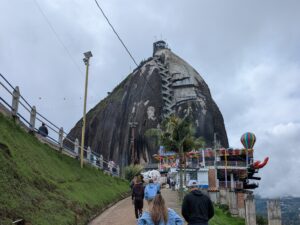
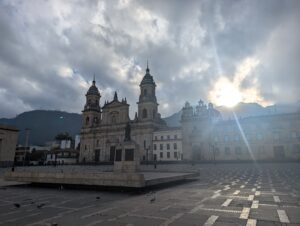
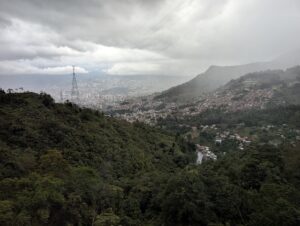
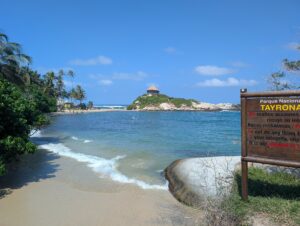
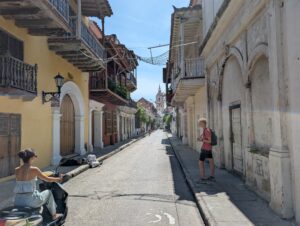
Our Colombian adventure began in Bogota. While we did not have a hard and fast itinerary, we planned to visit Bogota, the area around Medellin, Tayrona National Park, and Cartagena. That seemed like a pretty aggressive program for the time we had, and it was. We spent plenty of time in Bogota. We saw just a couple of things in Medellin and Guatape, spent one day hiking in Tayrona, and a day exploring Cartagena before Andrew left. The rest was transit time. I was able to explore Cartagena for a few more days after Andrew departed.
Colombia is a bit different than I expected. It is definitely a more prosperous country than Peru or Guatemala. In fact, Colombia has a resulting immigration problem. In the United States, we wrestle with illegal immigration from places like Mexico and Central America. This is almost solely based in America’s stronger economy. People come to the United States from these other places in search of more opportunity and better lives. Neighboring Venezuela is so troubled that thousands of Venezuelans flood across into Colombia in search of economic opportunity. Nearly every street vendor, prostitute, or other person working a menial or entry-level job in Colombia is from Venezuela. This was especially apparent in Cartagena.
Further, Colombia has decent development and infrastructure. No one would confuse Bogota with Boston, but it has an efficient bus system, and even a small metro. Many other Colombian cities do as well. It can be a little more difficult to get from one city to the next, but the cities themselves are not difficult to navigate. Using public transportation to get around Bogota or Medellin is easier than doing so in Bangkok or Kuala Lumpur.
In hindsight, seeing even Colombia in two weeks made for a somewhat rushed tour. It was certainly worth the effort, and we saw a lot of the highlights. A return trip is an attractive possibility, though. There are many other parks and scenic areas left to explore. It was a fun and friendly place I definitely would not mind visiting again.