Rome
The Eternal City
Stephanie and I arrived at the Fiumicino Airport outside of Rome at about noon on the 6th of July. The EU had recently automated all of their entry procedures so that theoretically, visitors would not have to interact with a human immigration officer at all. The idea was just to scan your passport, have them fingerprint you, and do a facial scan all at the same machine. They’d only send you to the immigration officers if something went awry. The system was apparently not functional when we arrived. This led to much confusion as people (including us) still went to the machines, which seemed to be completely operational. Furthermore, once you passed this step, the signage to direct visitors to the correct visa line were contradictory and officers would periodically just grab people out of one line and direct them to another, with no explanation. A lady immediately behind me in line from Kerala, India commented that even India had their system running a lot more efficiently.
After an hour in the immigration line, we emerged from the terminals and grabbed a ticket for the Terravision bus. Nine Euros and 45 minutes later, we were at the Termini train station in downtown Rome, just a short walk from our hotel, the Champagne Palace. Our room was small and dated, but it had air conditioning and functional wifi. Those are really my only two requirements. Since the trip was planned around our 30th anniversary, I had blocked out six days at the brand new Hyatt Regency Rome Central using points from Chase. Unfortunately, this Hyatt was so new, it wasn’t even open by the time we arrived. Hyatt canceled my reservation about a month ahead of our trip, and sent us off to find our new accommodations just a few short weeks before our stay. The pickings were slim by then. I considered myself fortunate to have found a room at all. One we were checked in, it was still not much after 3:00 p.m. I looked to see if there was anything interesting to do within a short hike of the Champagne Palace.
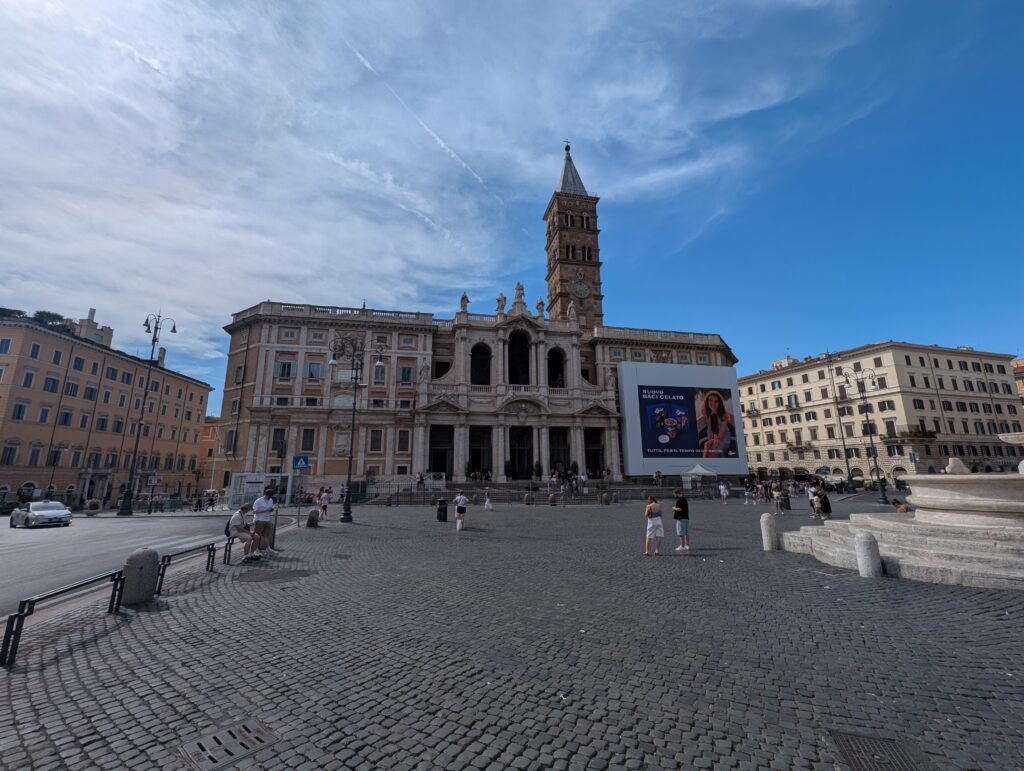
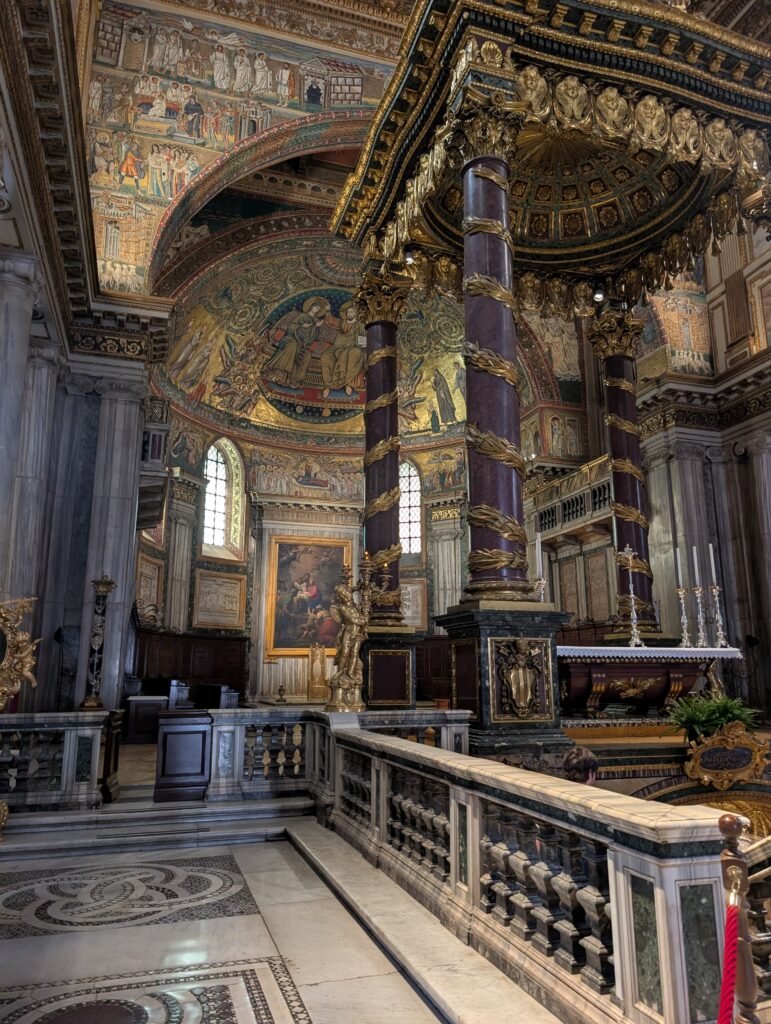
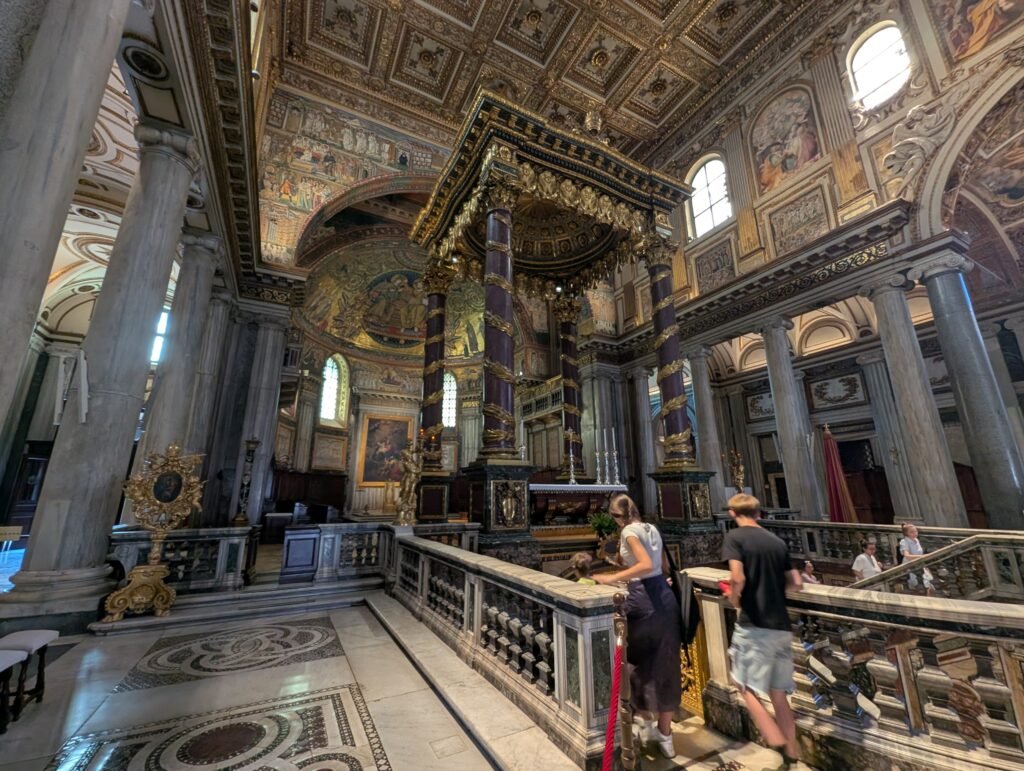
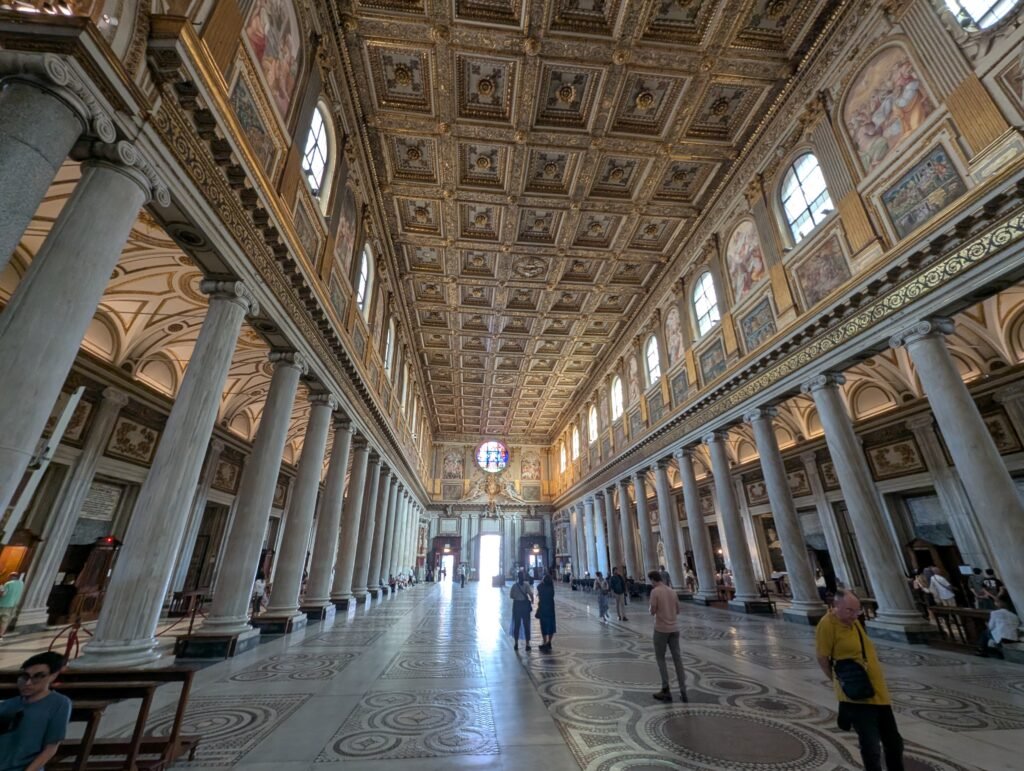
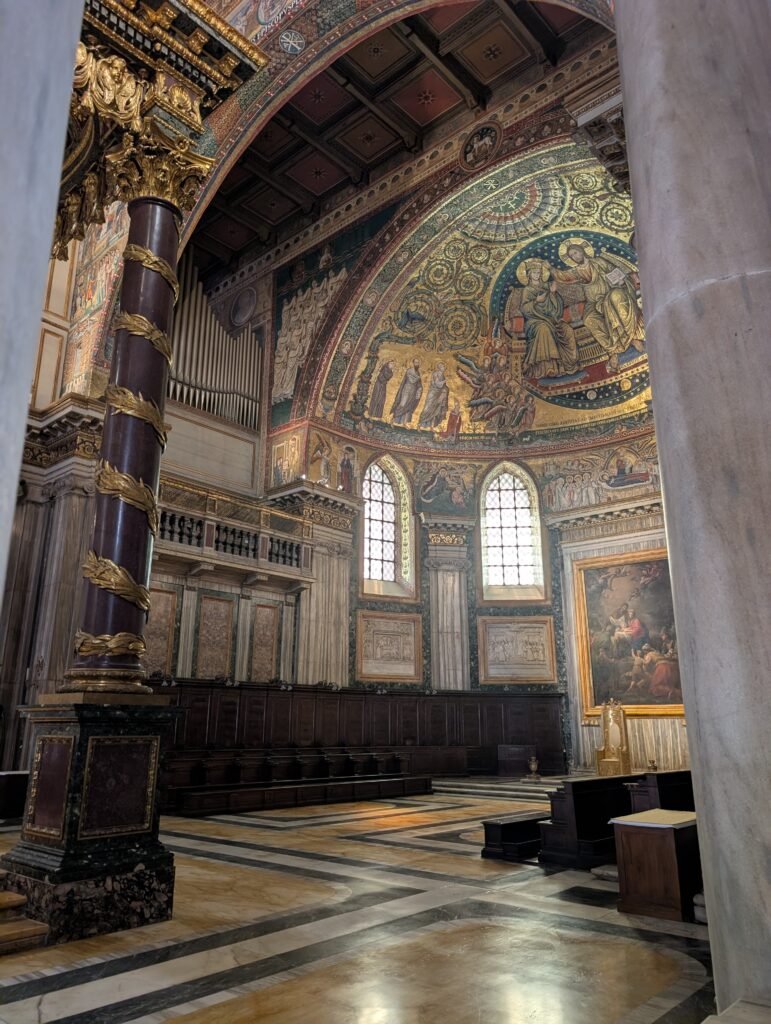
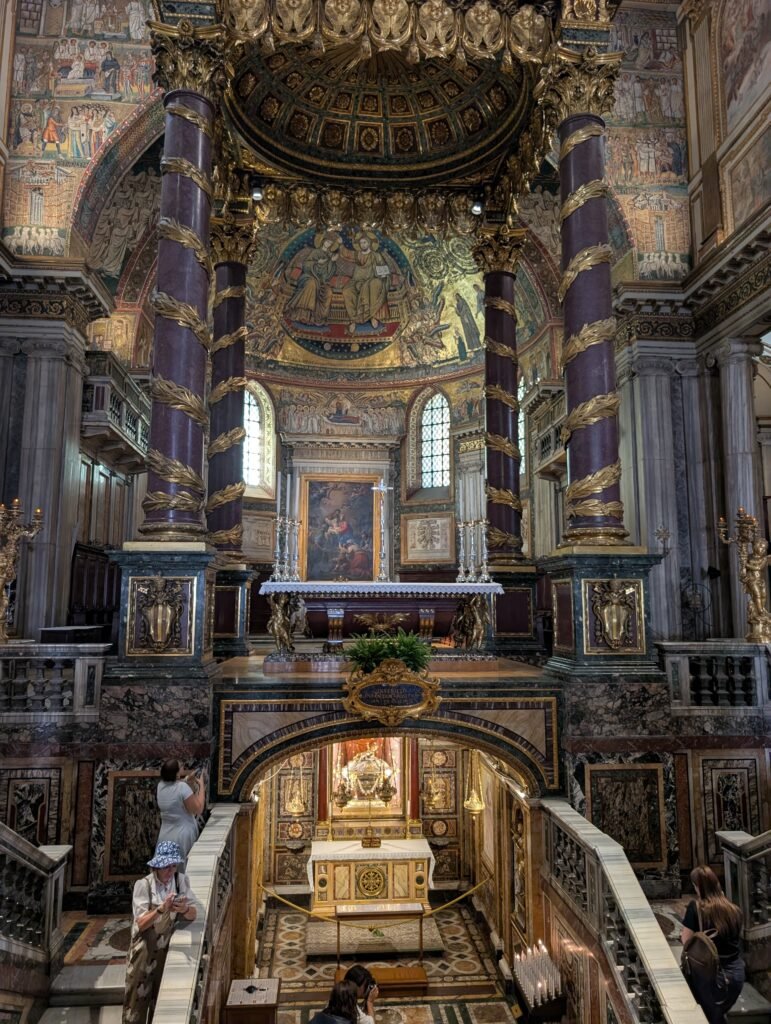
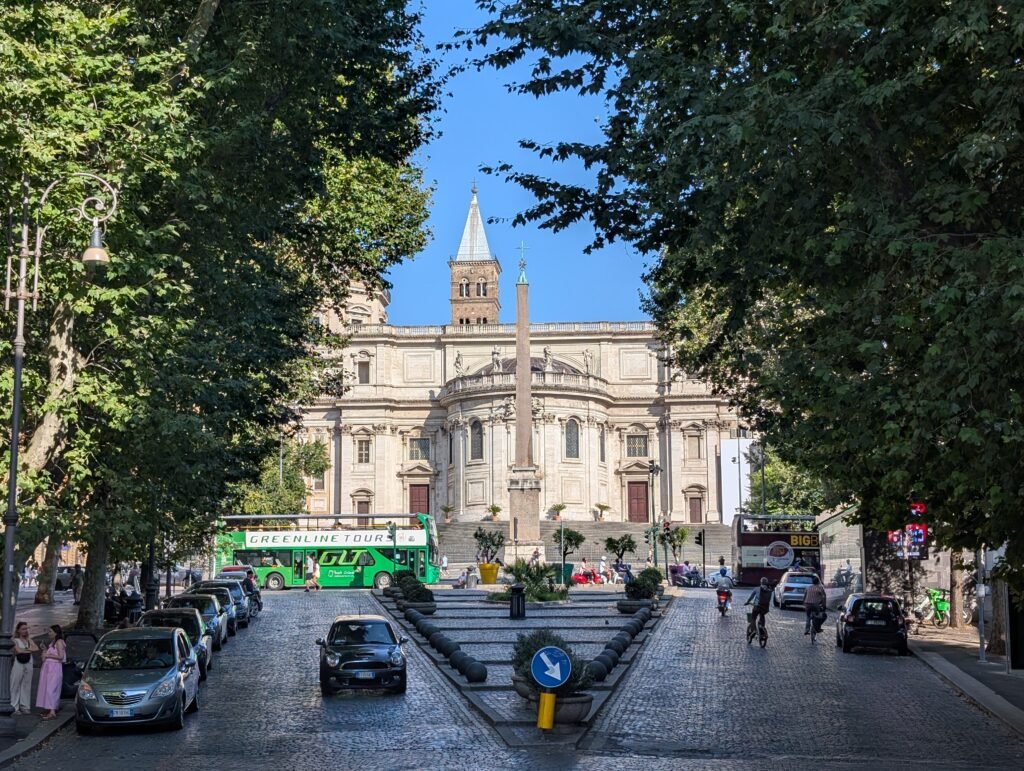
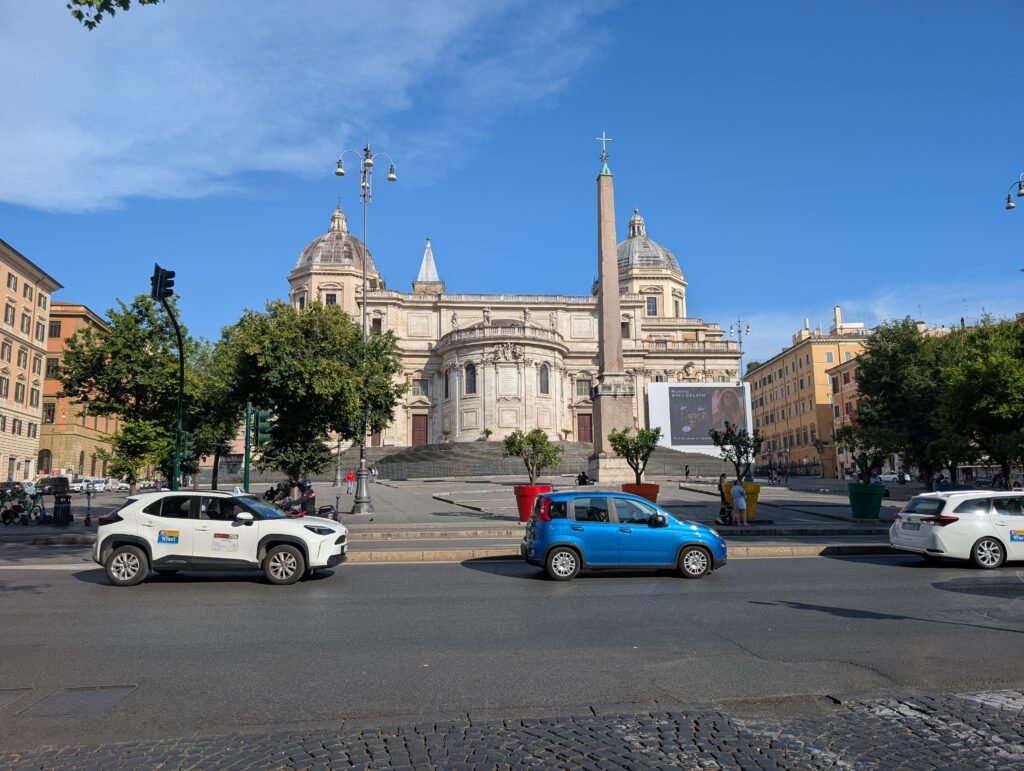
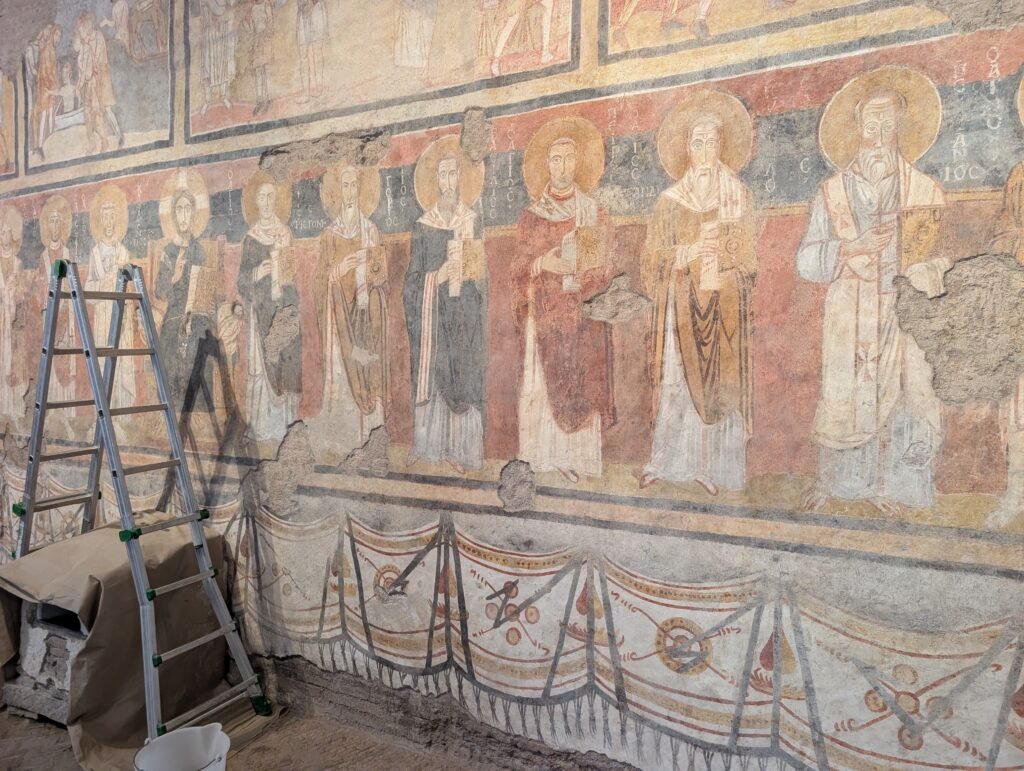
Rome is home to four Papal basilicas, St. Mary Major, St. John’s Lateran, St. Peter’s in the Vatican, and St. Paul’s Outside the Wall. St. Mary’s was just a couple hundred meters from our motel. We walked over and strolled through looking at the art. For a small fee, you can look in some archaeological areas. We just walked the free part. There is a lot of old art on the walls. Some of the mosaics date to the fourth century. St. Mary’s looks every bit the Papal basilica. It was beautiful, and it fit perfectly into the remnant of the day, and what remained of our energy. This stop didn’t take much more than an hour, and the walk was short. We found a nearby place to eat, and were done for the night. Neither of us, after all, had gotten a full night’s sleep on the plane.
(Continued)
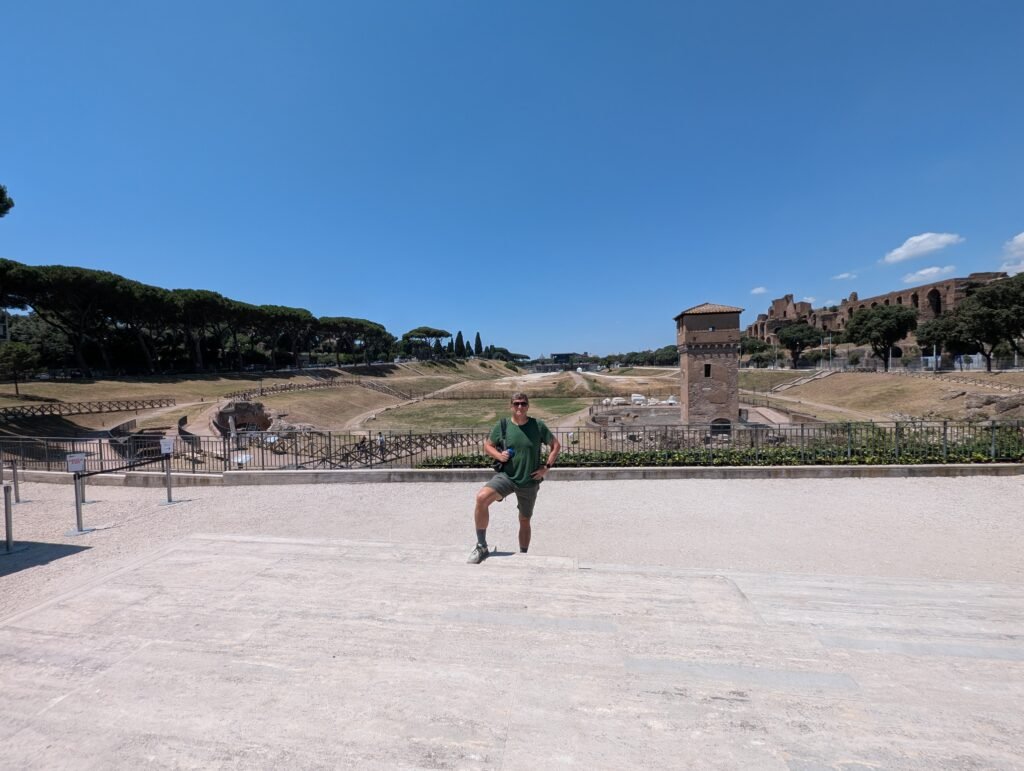
Since I was unable to get a Colosseum tour Monday, we made Tuesday our “historical highlights of ancient Rome” day. It was extremely difficult to find tickets for an English official guided tour of the underground portions of the Colosseum, but I had gotten them. Unfortunately, they were at 1:15 in the afternoon. The tickets included the Roman Forum and the Palatine Hill which could be done on your own time, but they were single entry tickets. I did not realize that the Forum and Palatine Hill were in the same complex, and thus could only be visited once. I figured we could visit either the Forum or Palatine hill before the Colosseum, and pick up what we had missed in the afternoon when the Colosseum tour was done. Since we had to exit the area containing both the Forum and Palatine Hill to go to the Colosseum tour, we were not allowed back in.
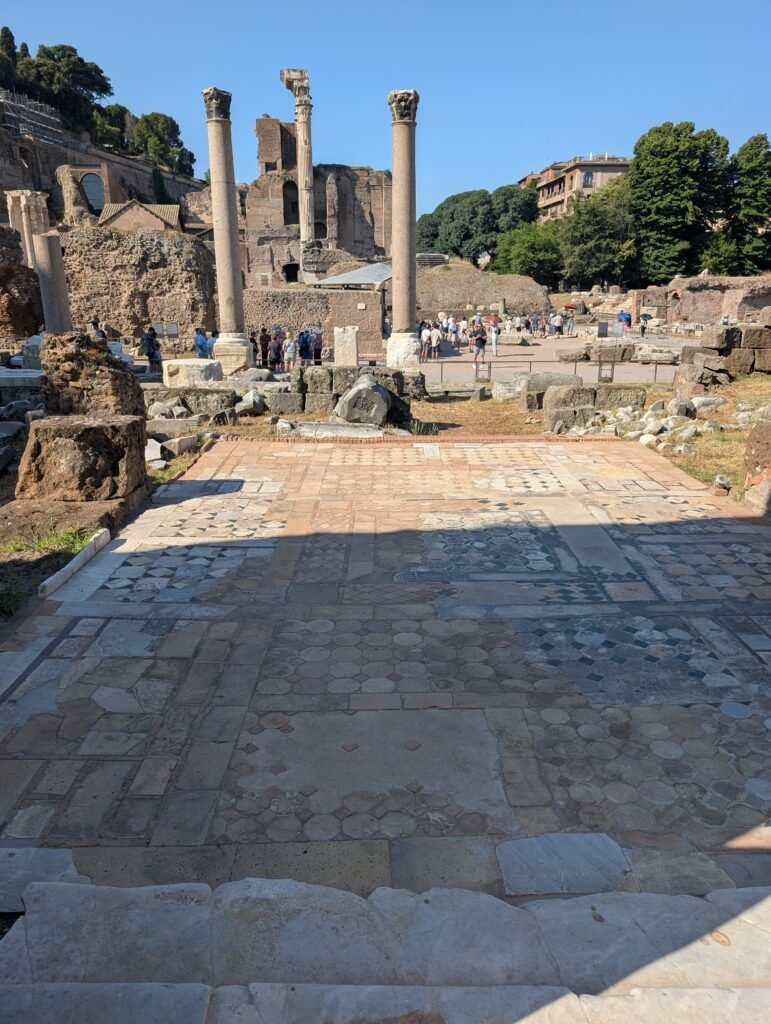
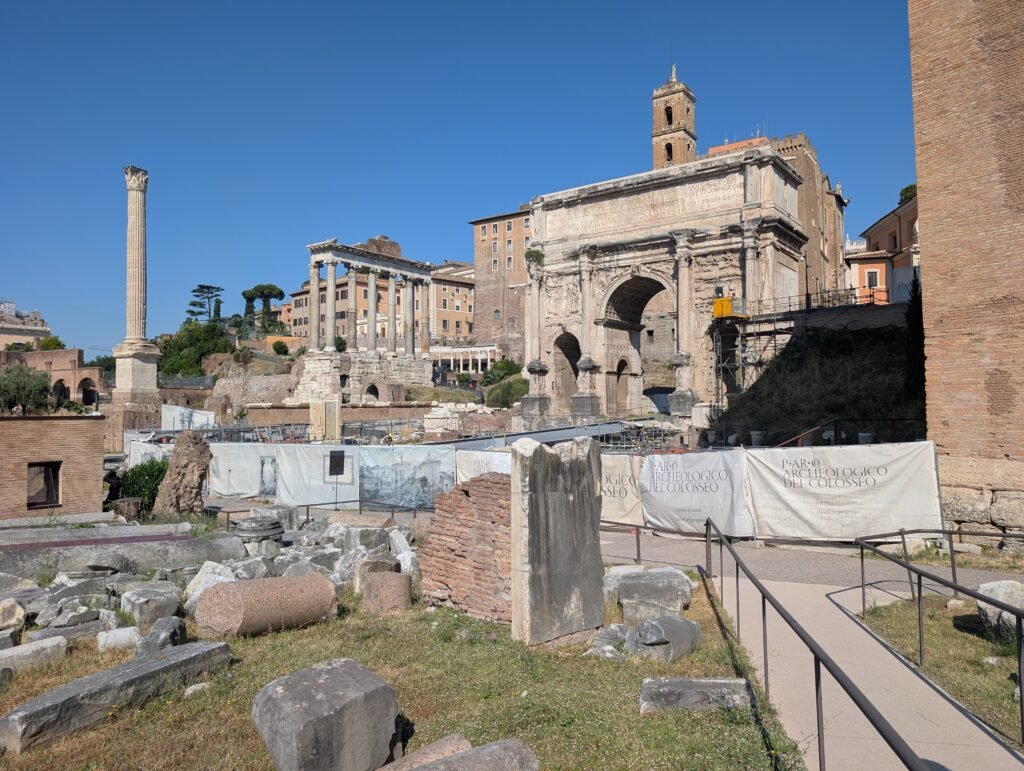
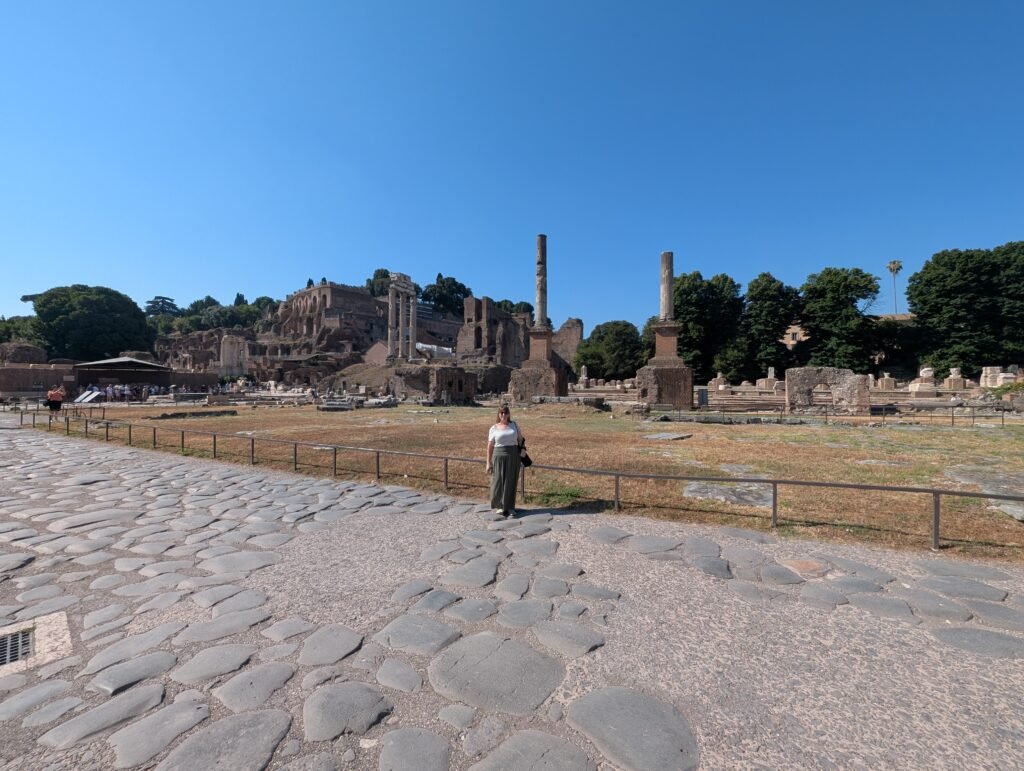
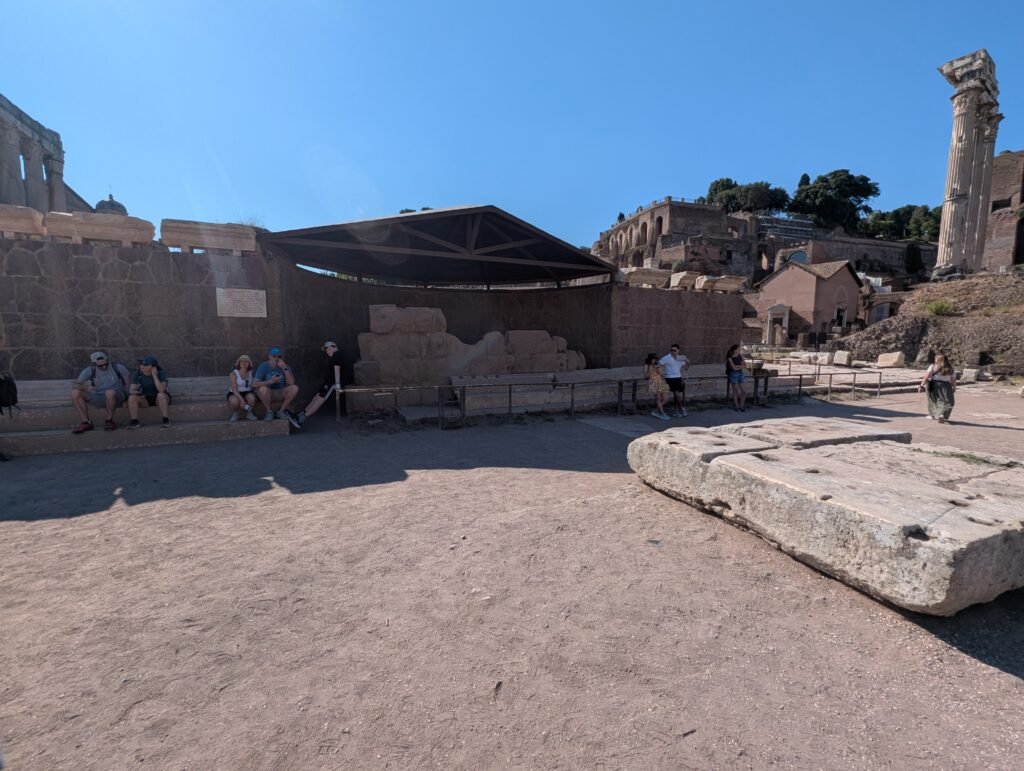
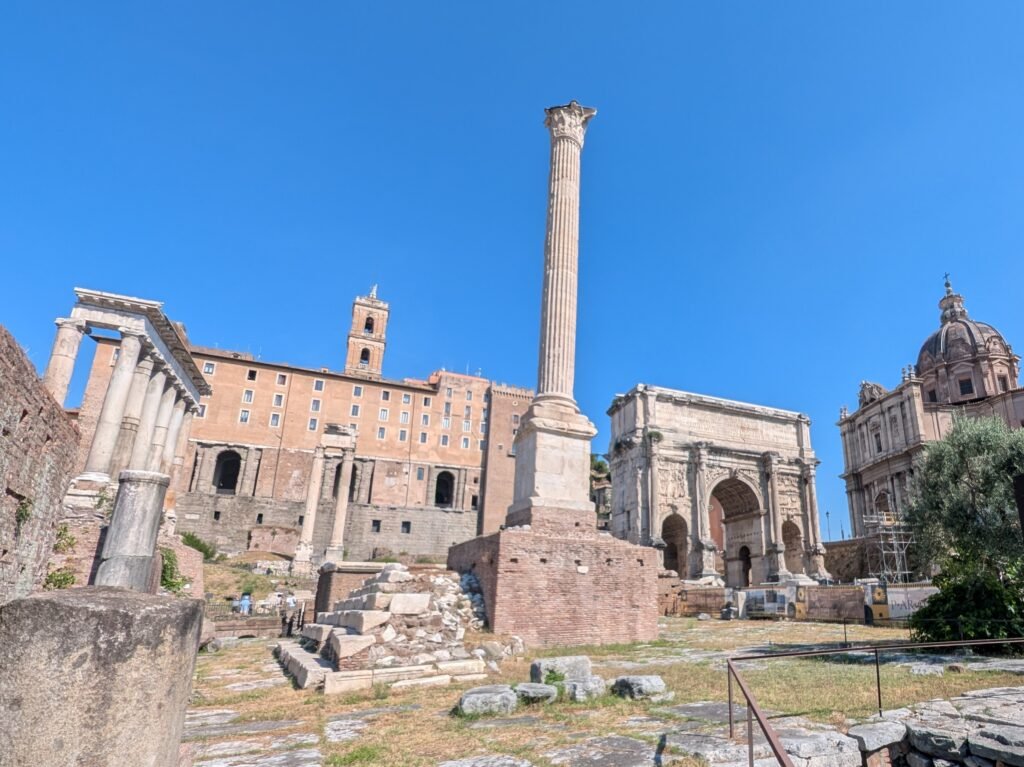
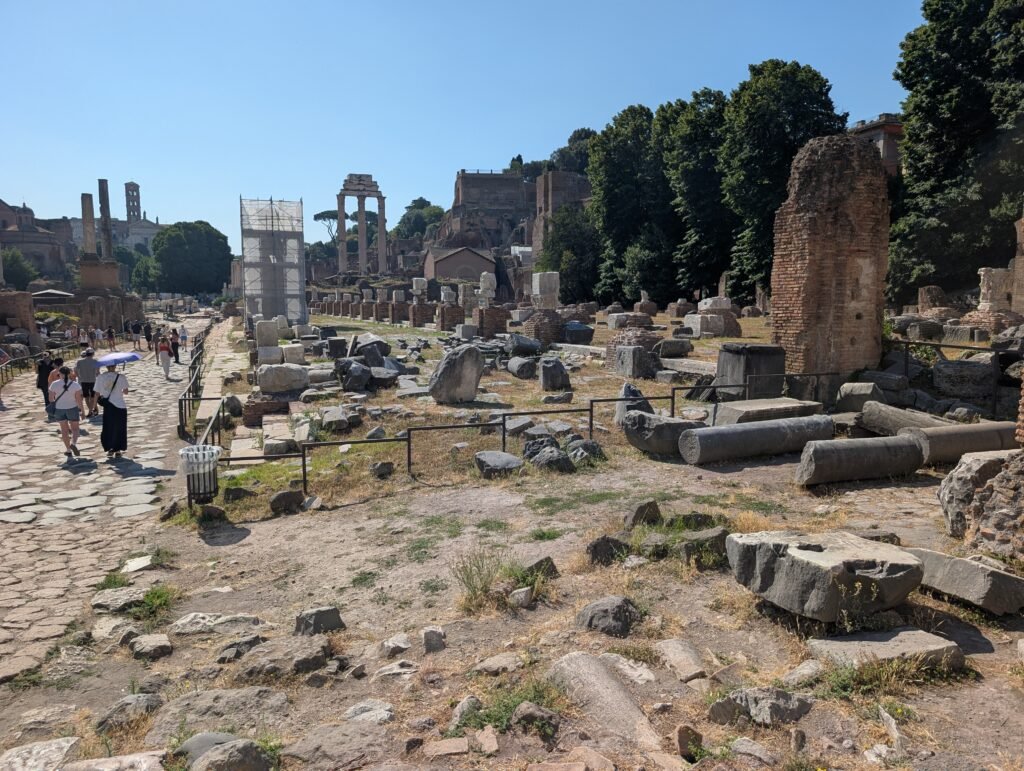
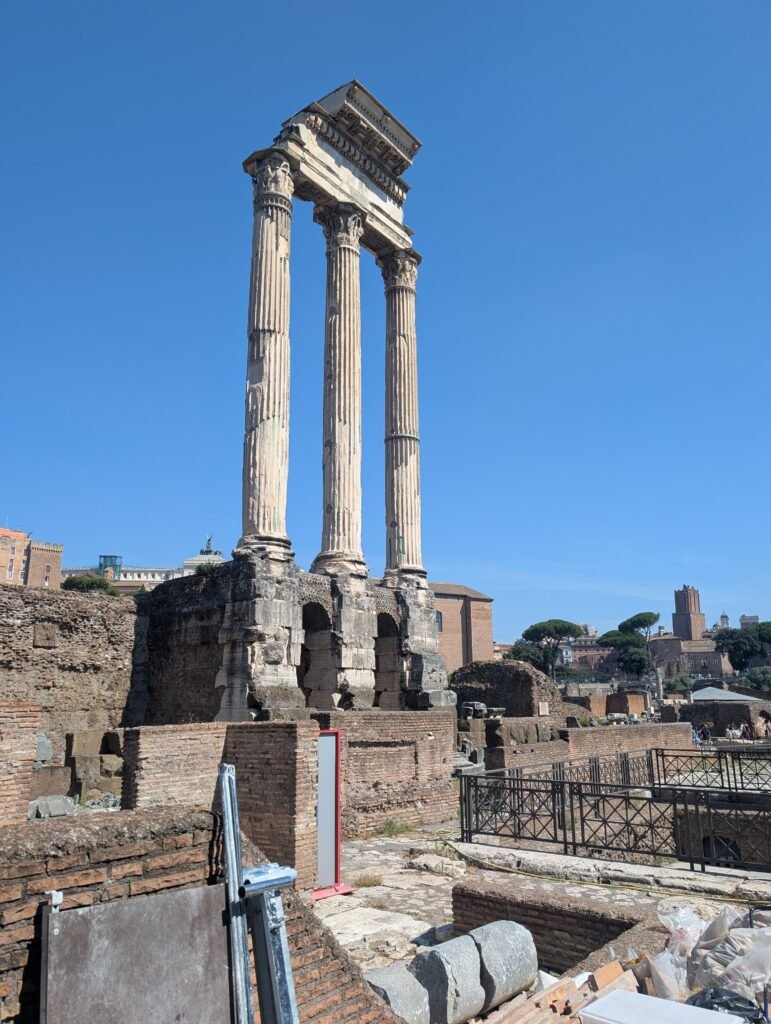
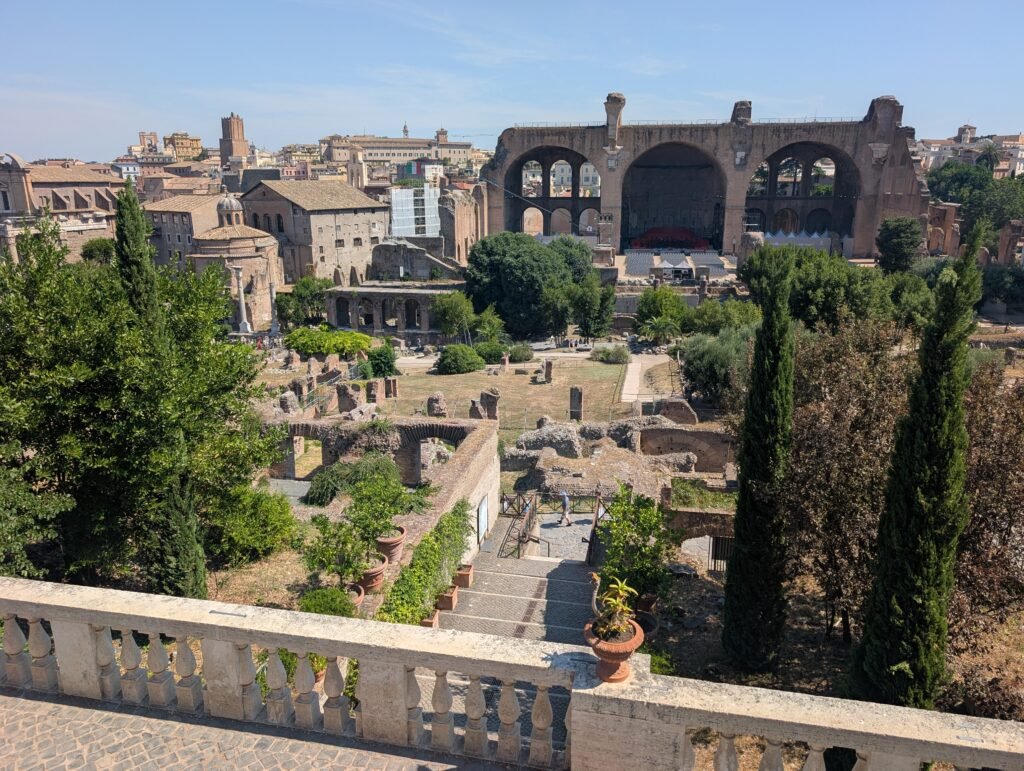
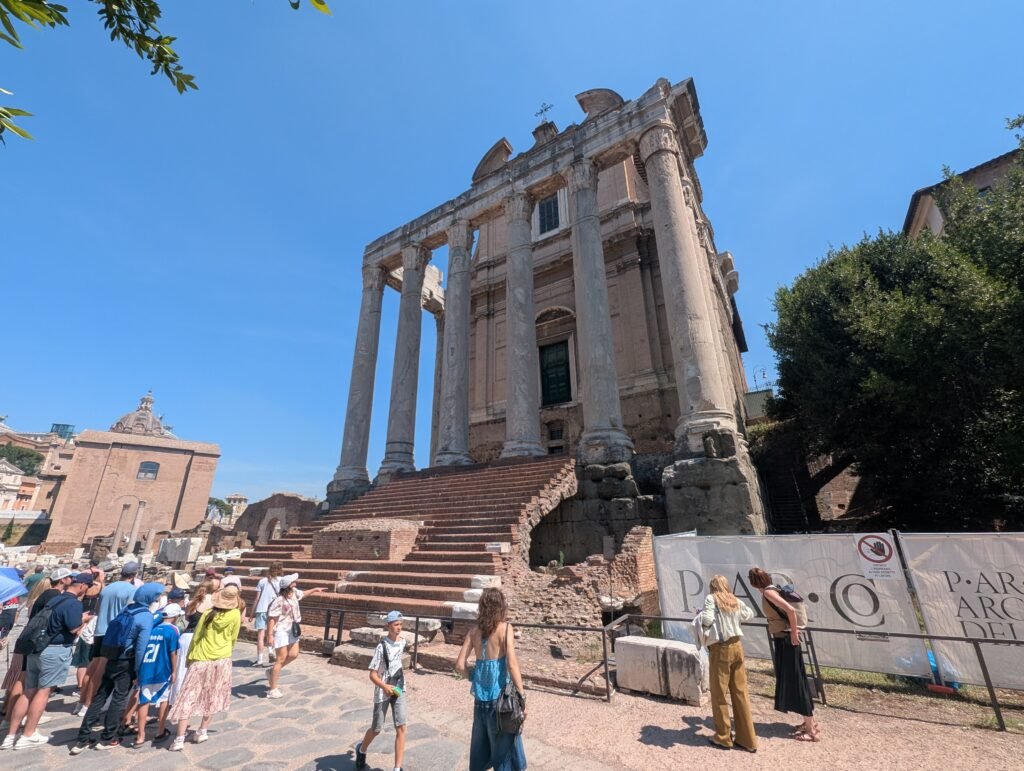
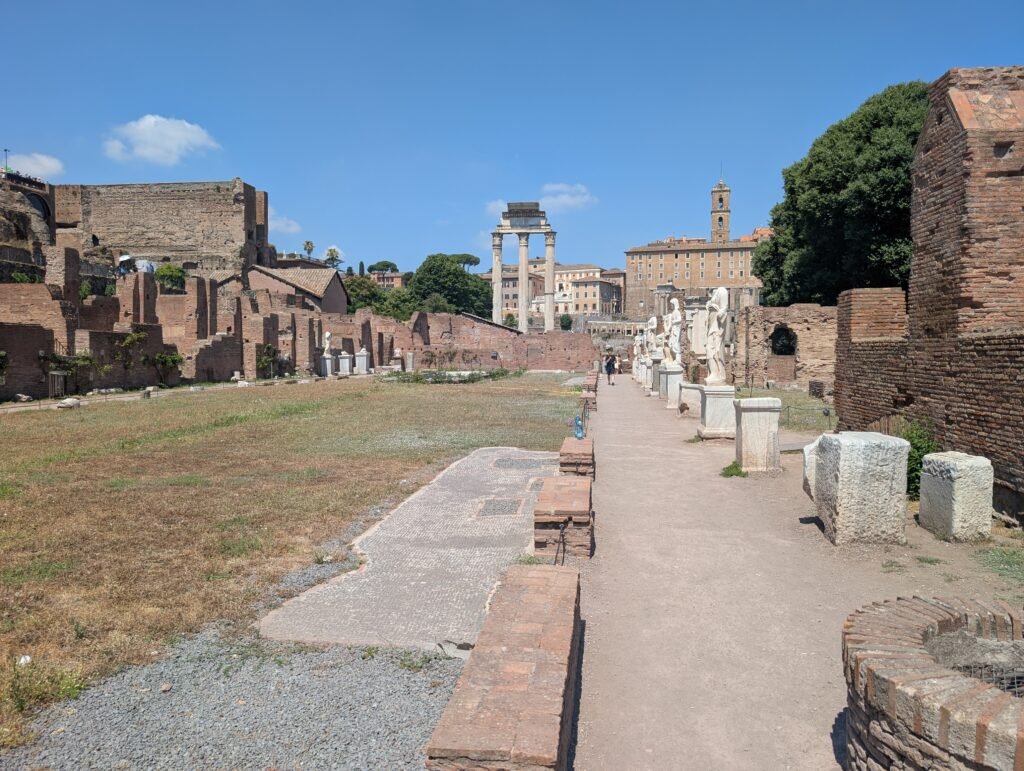
That probably would have been fine had we entered the Forum area right when it opened. As it was, we arrived sometime in the 9 o’clock hour. This left us plenty of time to explore the forum, but we never made it to the Palatine Hill – the area containing most of the in-city palaces of the Roman emperors. We were, however, able to see all of the remaining major Roman public buildings and monuments in the Forum area. I suppose it would have been possible to just buy an extra ticket to the forum and walk back in. As it was, we were hot and tired after walking the Forum and the Colosseum anyway. We decided to just punt after those two major, very busy stops and head back to the room to recuperate an hour or so before supper.
The Forum was an area dedicated to public service. People came there to discuss politics, transact business, and hold public gatherings. Government buildings and official temples were built there, as were important monuments. When Rome scored a great military victory, a triumph celebration would be held. This was a major parade where plunder, slaves, leaders, and other loot from the conquered territory would be carted back and shown off to the people of Rome. These large processions would end by marching through the Forum before culminating in a sacrifice at the Temple of Jupiter on the Capitoline Hill.
Today’s Forum is surrounded by the modern city, of course. In an effort to appeal to Italy’s glorious past, Benito Mussolini’s fascist government invested heavily in excavating and exploring the remains of this center of ancient Roman power. After the fall of the Western Roman empire in the 5th century, Rome lost much of its population but continued to be an active city. As such, many of the buildings and monuments were cannibalized for materials. Most of the marble was stripped away, and most of the metal anchors connecting the marble slabs to the underlying brick structures were also removed. Families sometimes moved into older structures. Other buildings were turned into fortifications. Some ancient buildings were even used as stables. The area never completely ceased being used. During the Republican and Imperial eras, the city was constantly being rebuilt, added to, and reimagined. It was in a perpetual state of flux.
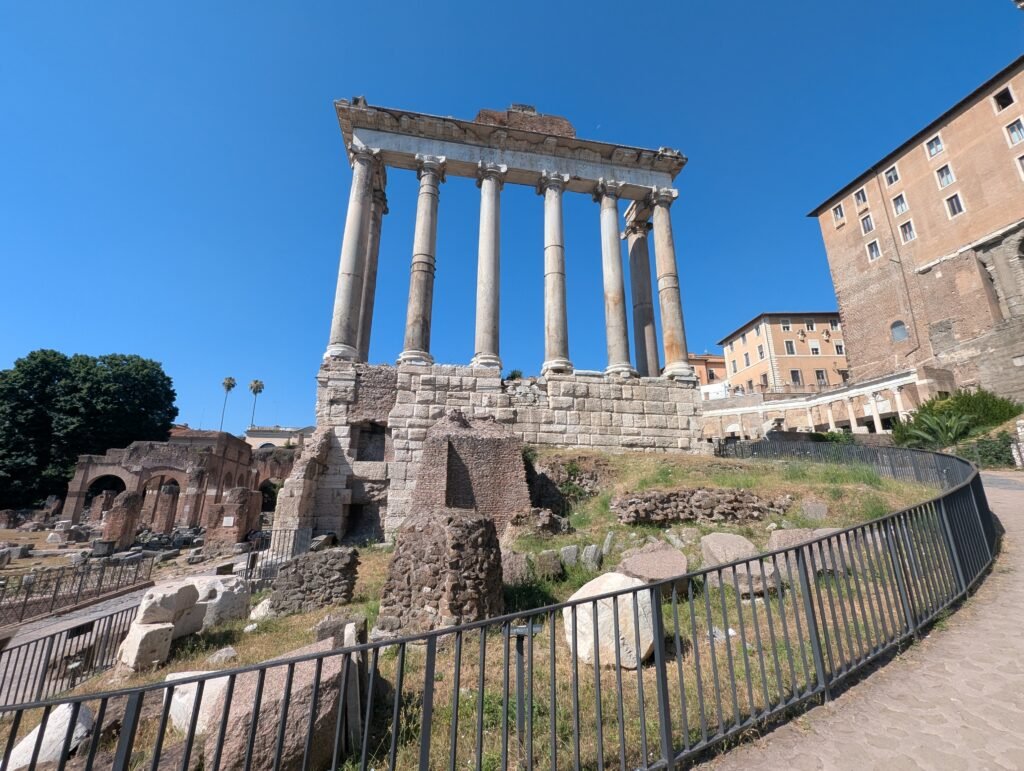
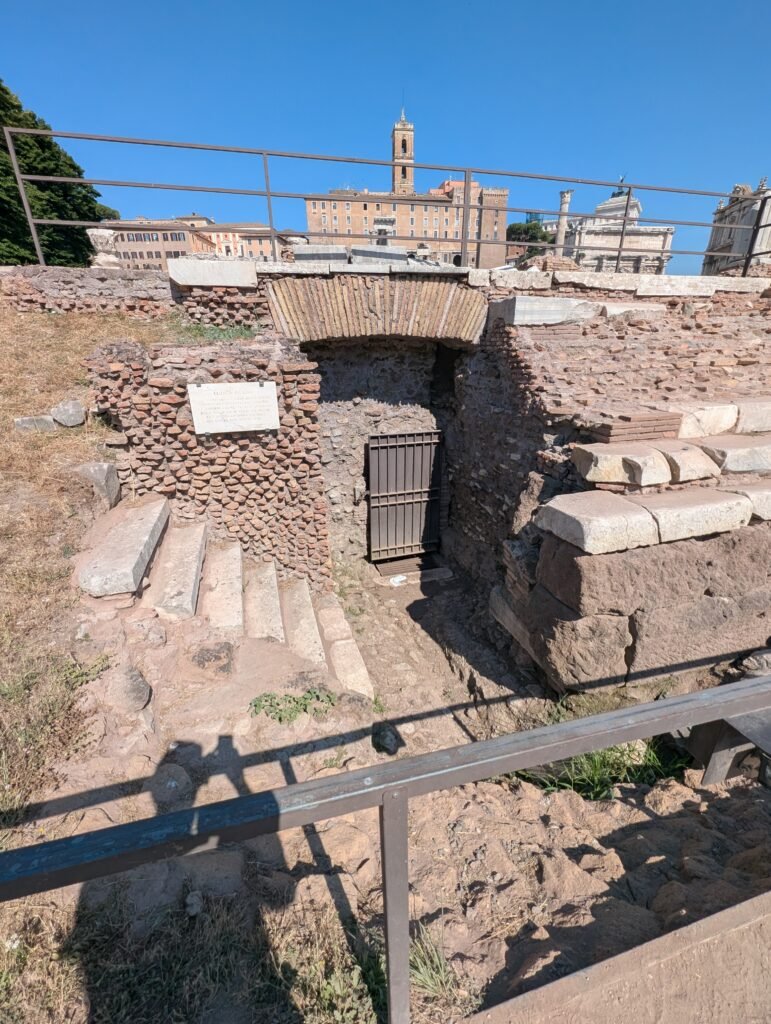
Nearly all ancient structures in the Forum have been replaced or very heavily modified over time. The area was being used as early as the 8th or 7th century B.C. during the old Kingdom of Rome for royal buildings. The Temple of the Vestal Virgins has some origins back that far. The Mamertine Prison and Temple of Saturn have parts that are very old. A few ruins of a temple dedicated to Julius Caesar and the Julian Senate building are still visible from his era. What you see today are largely the uncovered remains of what was in place at the end of the Western Empire.
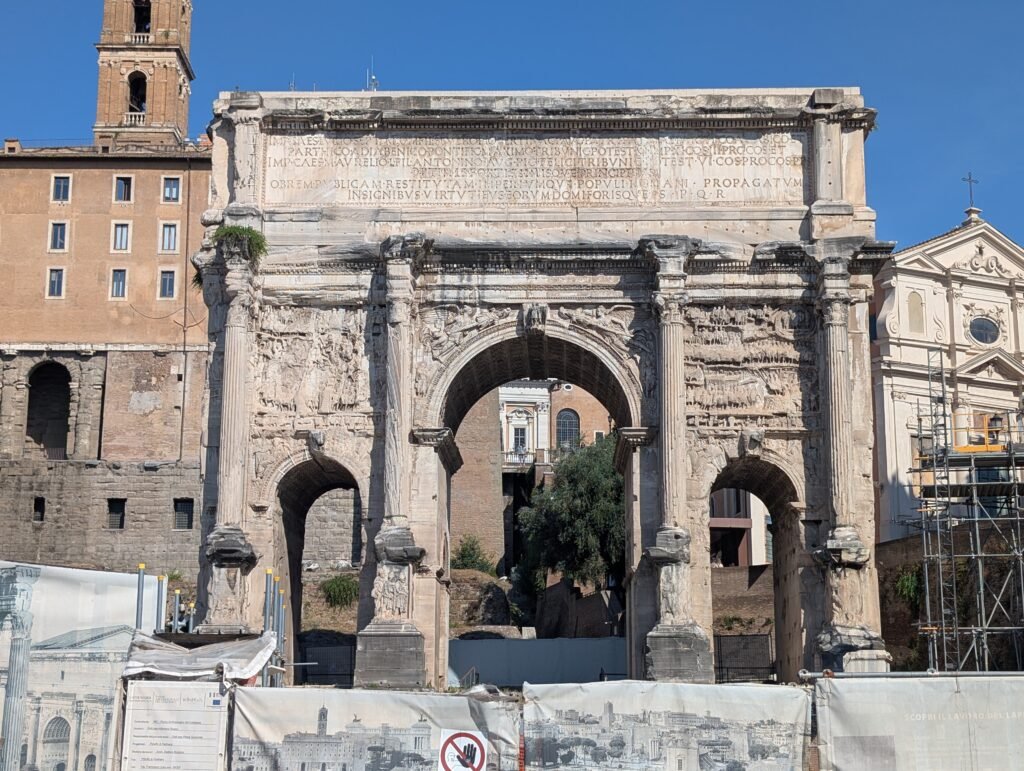
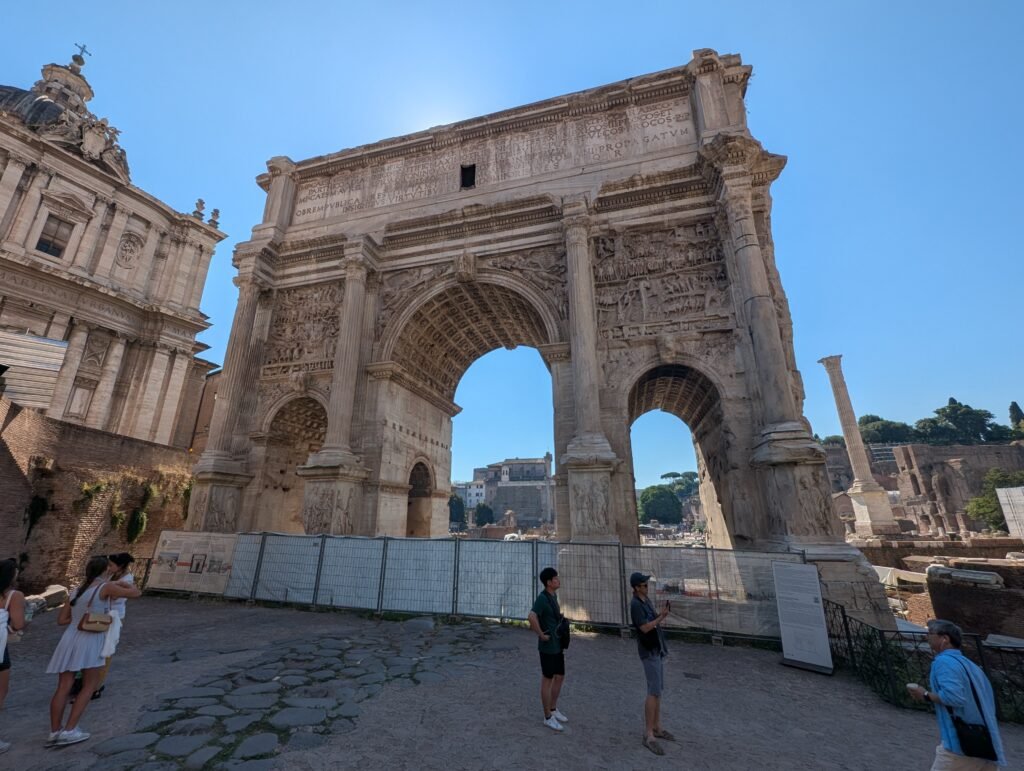
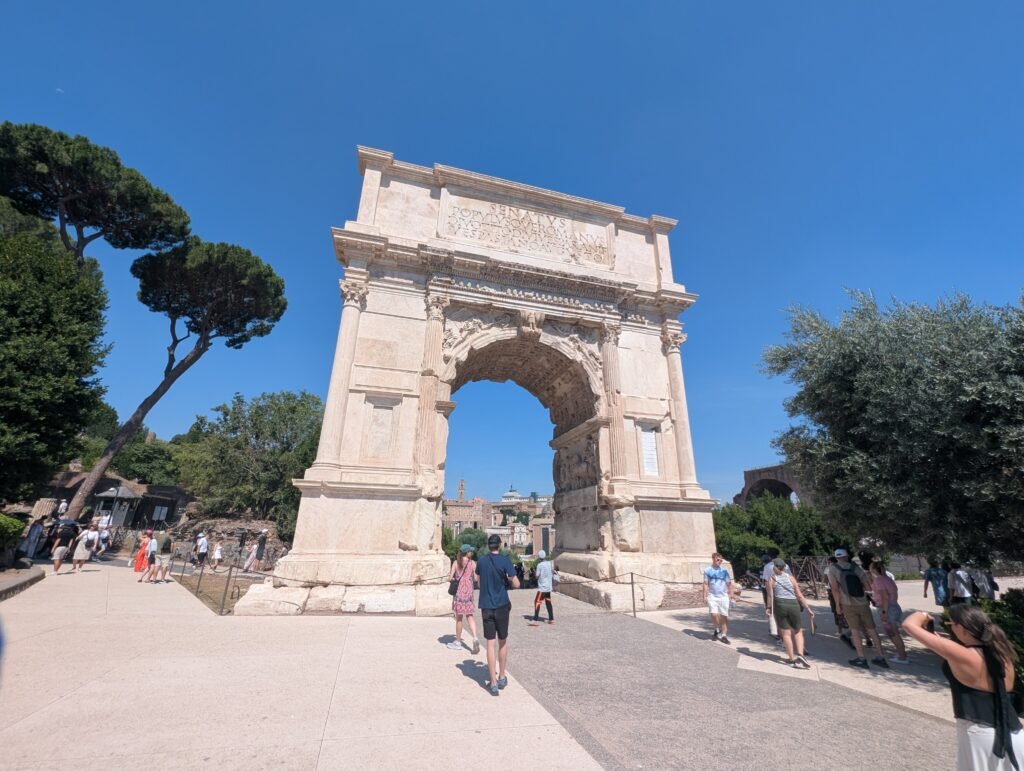
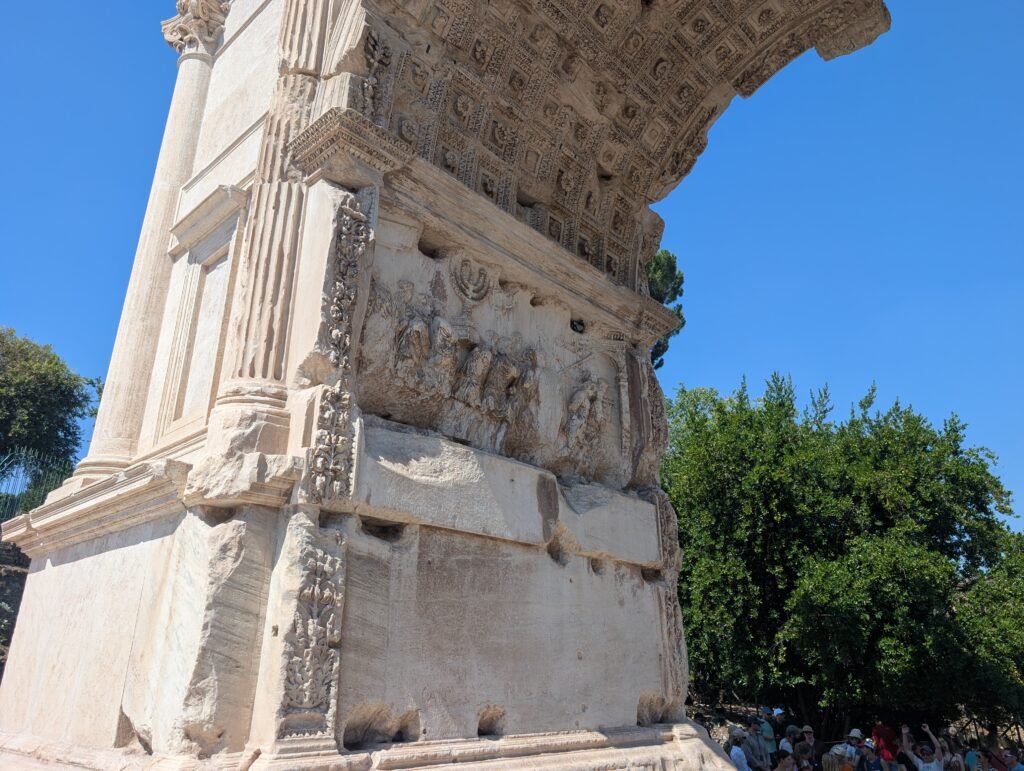
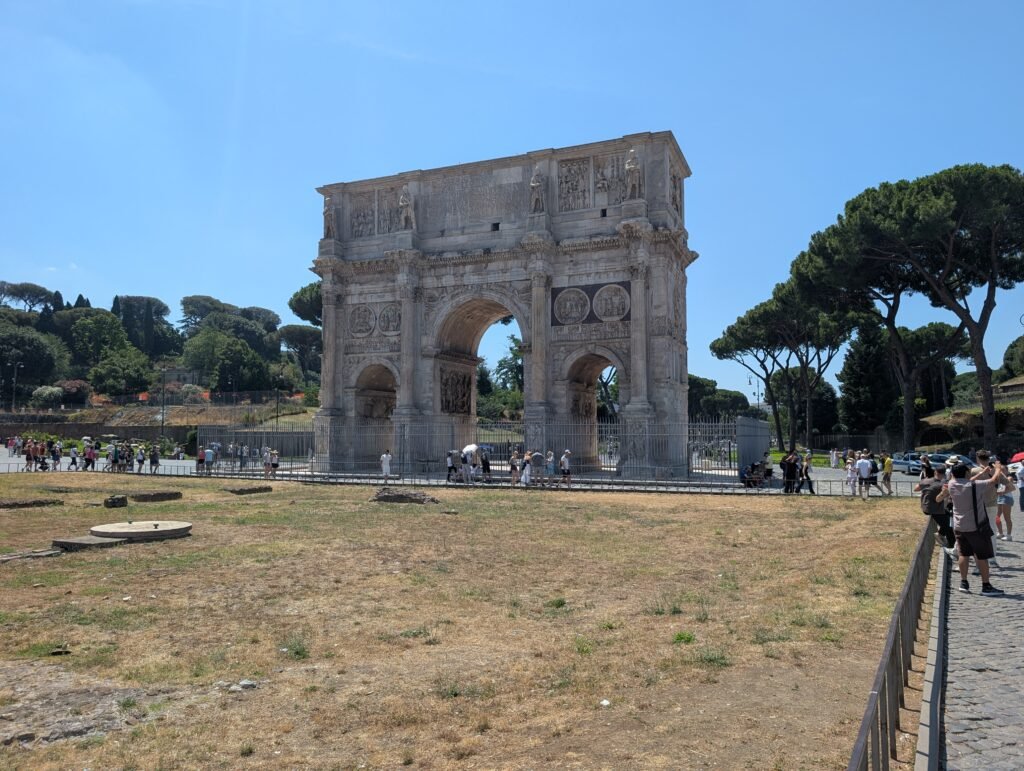
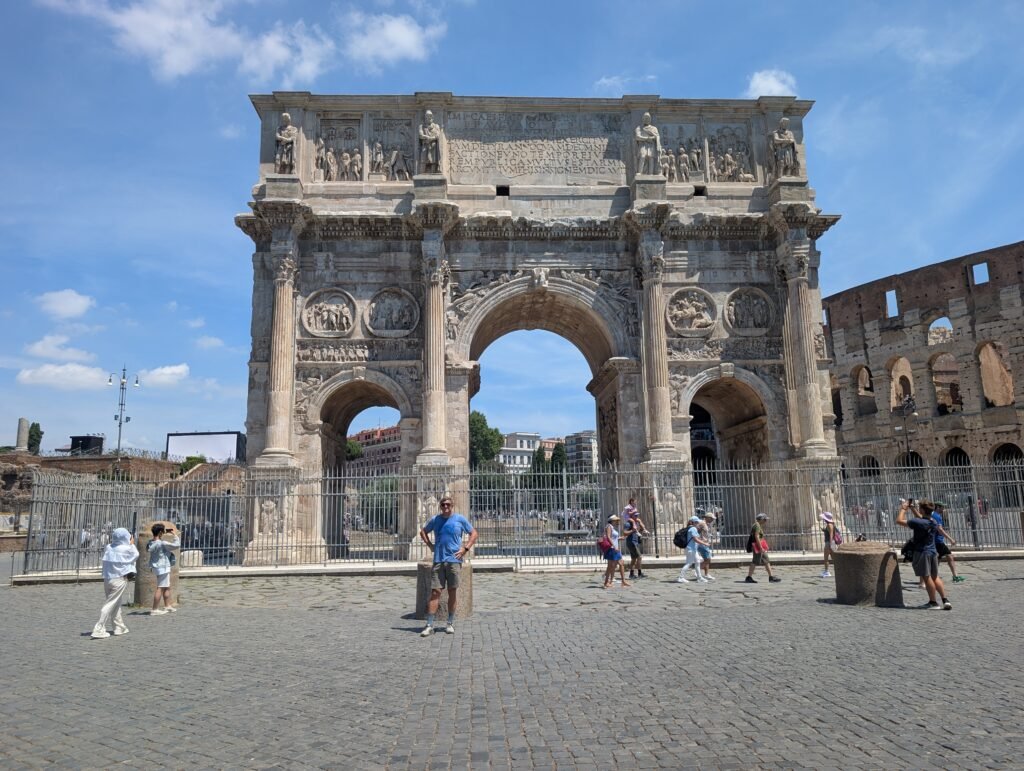
There are three major triumphal arches. The Arch of Titus commemorates the empire’s victory of Judea after the revolt of 70 A.D. The Arch of Septimus Severus celebrates the late 2nd century Roman victory of the Parthians, who had been particularly difficult enemies. The largest arch is right near the Colosseum. The Arch of Constantine pays homage to Constantine’s victory over Maxentius at the Battle of the Milvian Bridge. The Arch of Titus has an image of a menorah on it, and shows scenes from the pillaging of the temple as well as the subsequent triumphal procession.
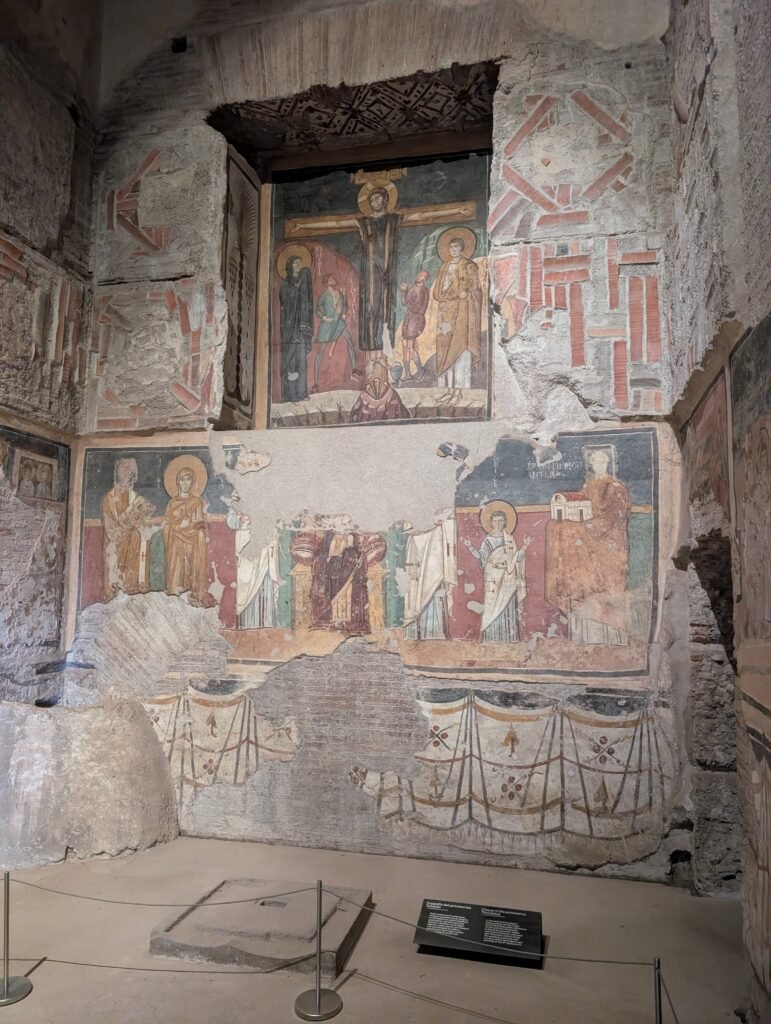
The most imposing looking structure is the Basilica of Maxentius. This was the last basilica built in the Forum area. In ancient Rome, a basilica was not a religious building, but a government building with a judicial purpose. The style was incorporated later by Christians in churches, and sometimes the ancient basilicas themselves were converted into churches. In fact, most of the buildings that survived, or survived with minimal mining of their construction materials only did so because they were, in fact, turned into medieval churches. The interiors of several buildings in the forum show medieval Christian iconography and stand as testimony to their guardianship over these ancient secular structures.
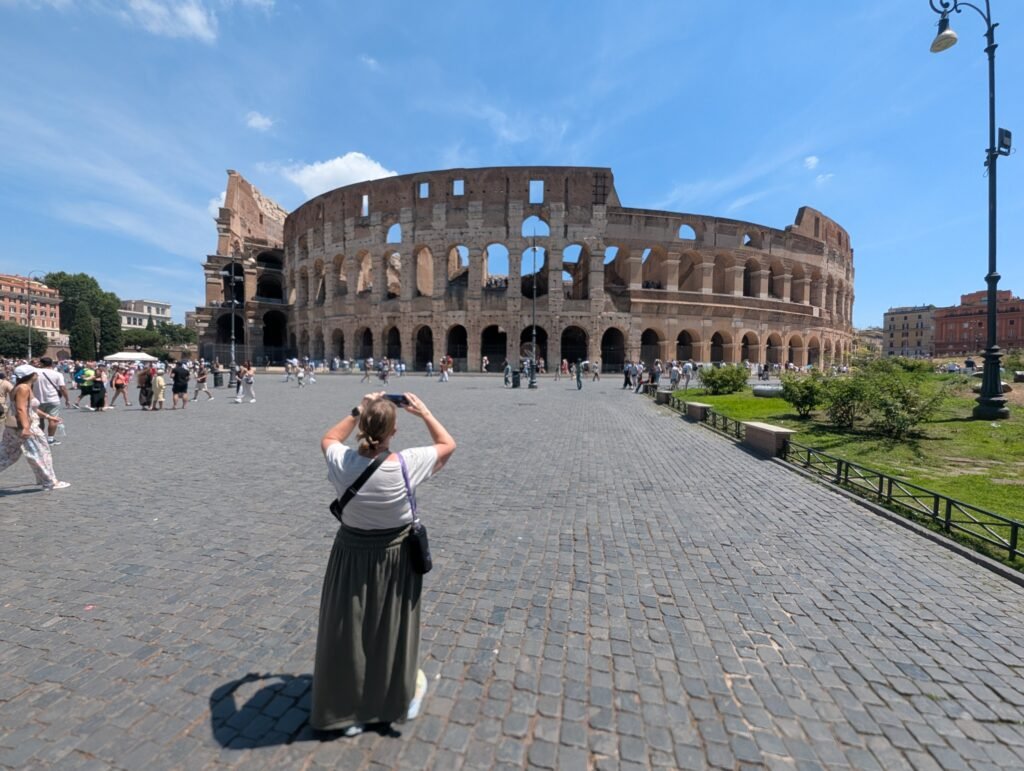
Although we did not make it to the Palatine Hill, we were able to thoroughly explore the main sites in the Forum before our time drew near to join our guided underground tour of the Colosseum. The Colosseum, of course, is one of the most popular and recognizable tourist sites in the world. Grabbing tickets to the official English language guided tour is pretty difficult. We were happy to get one in any time slot. Even though we could not reenter the area of the Palatine Hill after we finished, it was late enough in the day, and we were so hot and tired that we would not have wanted to do anything further, anyway.
(Continued)
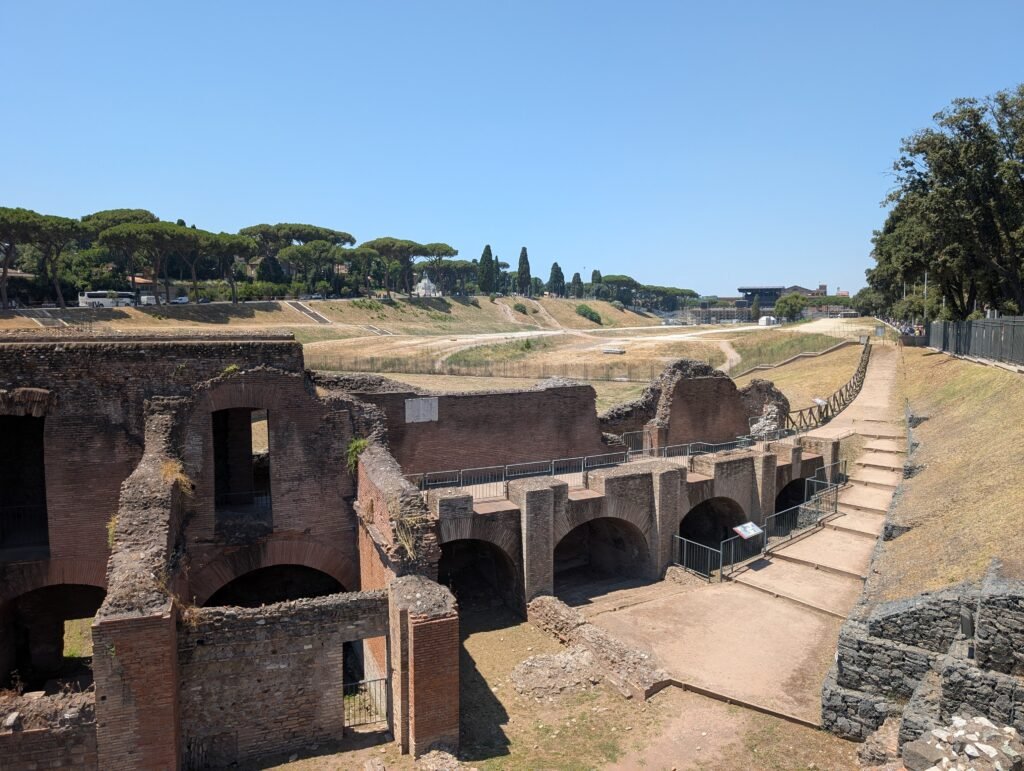
It is interesting that many major sports and event venues today bear the name, “Colosseum.” The original Colosseum was so named because it was near the location of one of the largest statues in the ancient world – a colossus. The emperor Nero had a colossal statue of himself built just outside the location of this venue for massive spectacles. Soon after Nero’s demise, the Senate condemned him to damnatio memoriae. This meant he was to be erased from memory. His name would be removed from all inscriptions, and his face from all statuary. The colossus was so big that it was better to just lop the head off of the statue and replace it with a god’s. So the colossus remained in place, and the Colosseum retained its name. It was only Nero who suffered, though he certainly wasn’t completely stricken from memory or the public record.
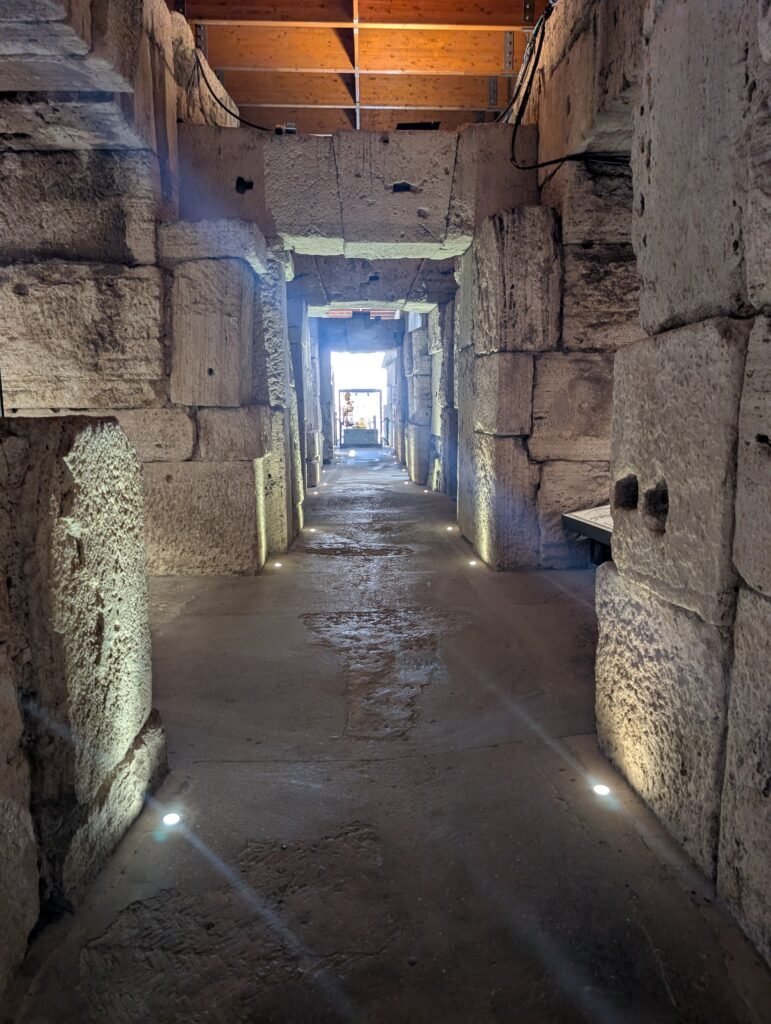
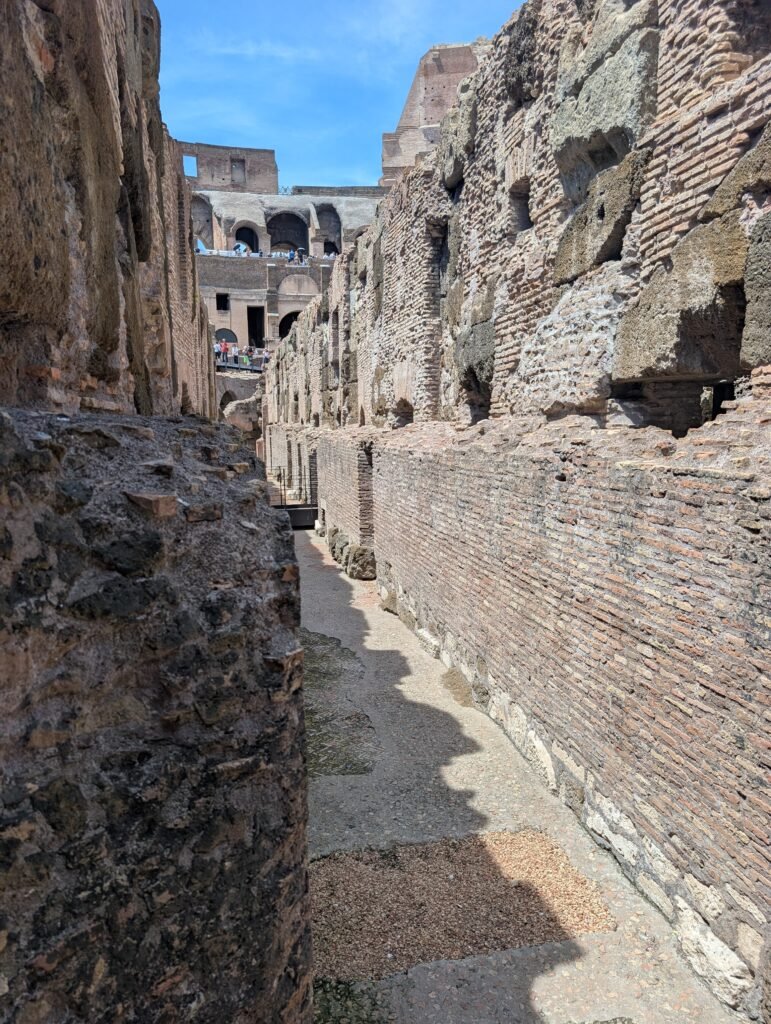
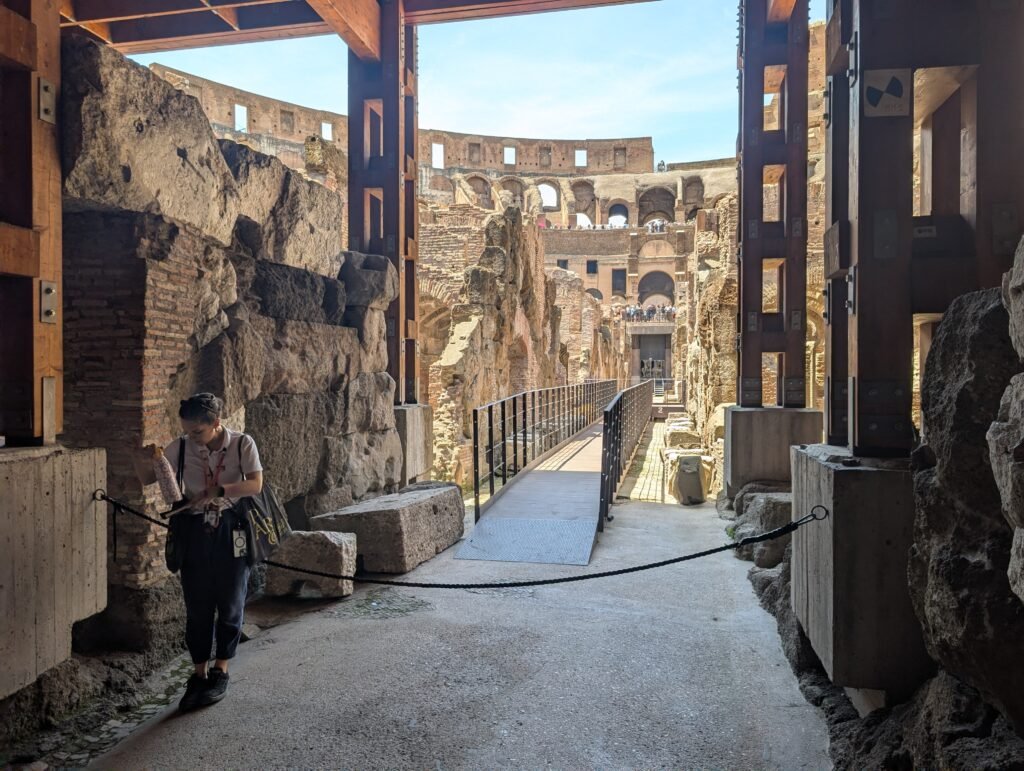
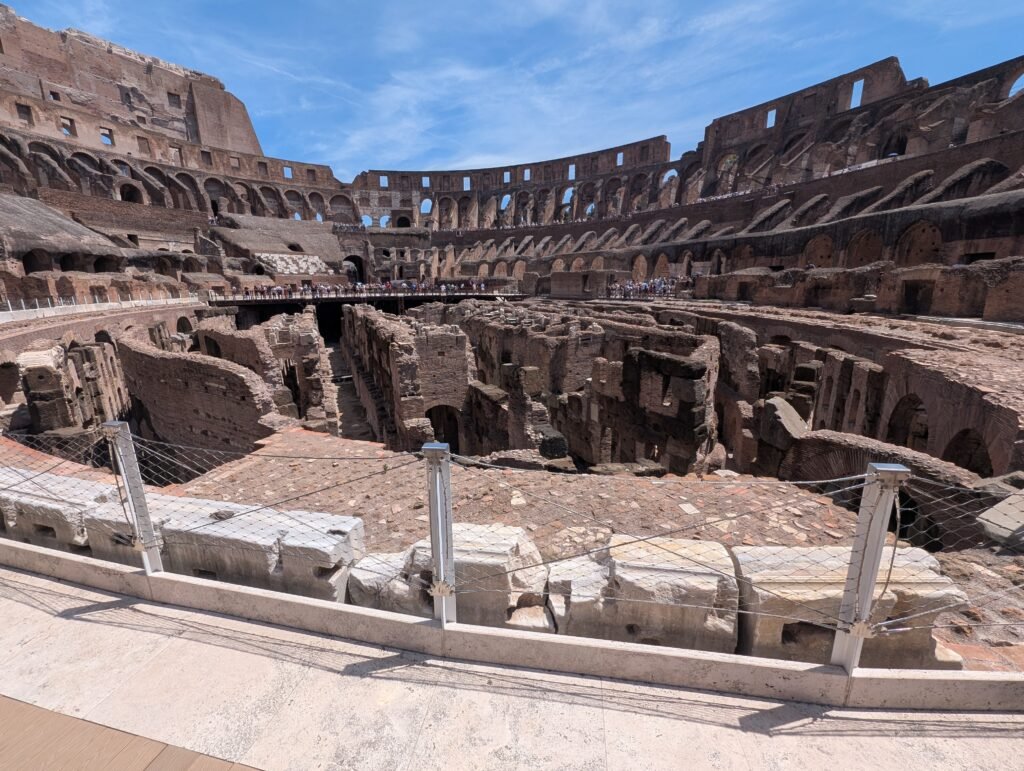
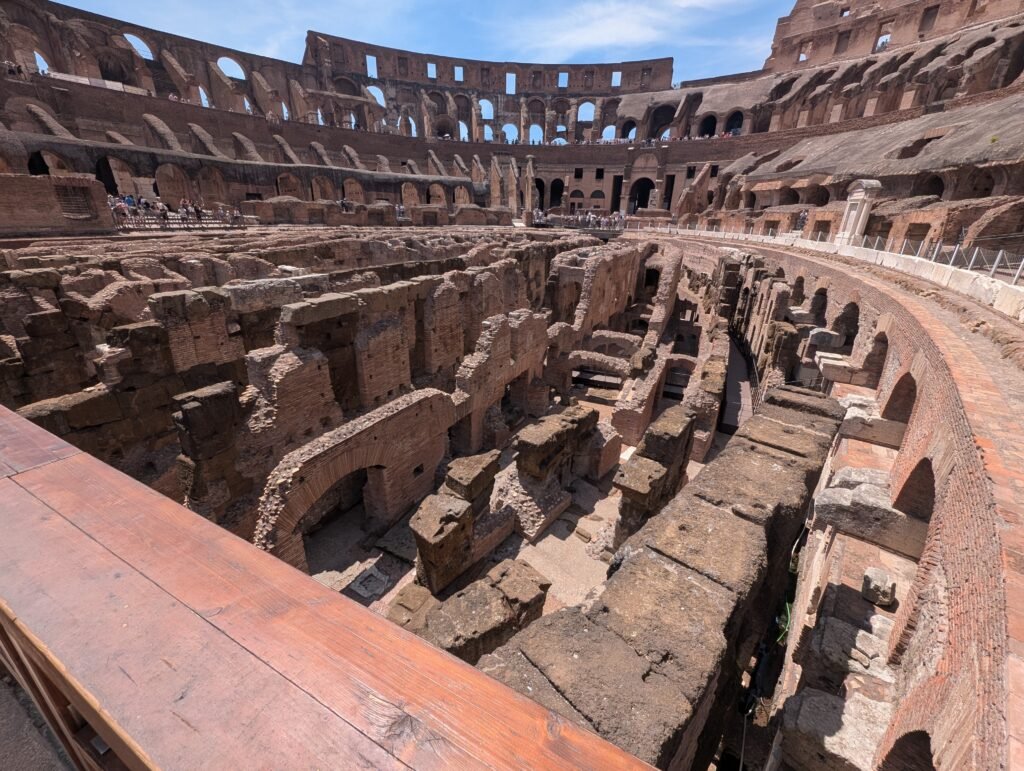
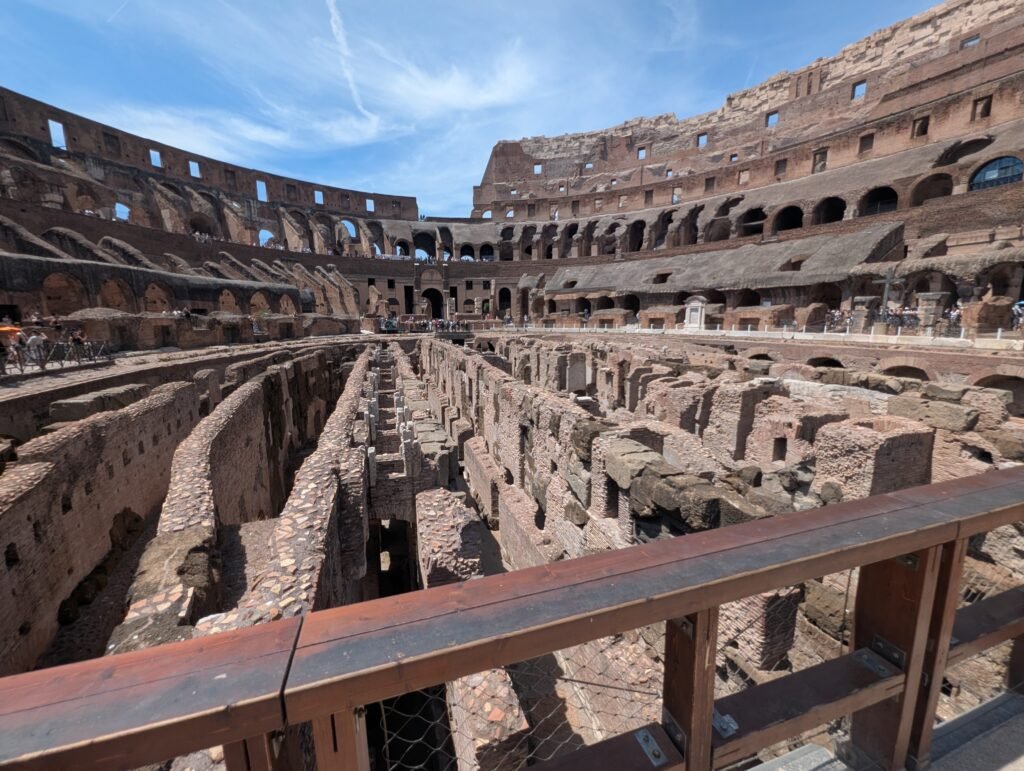
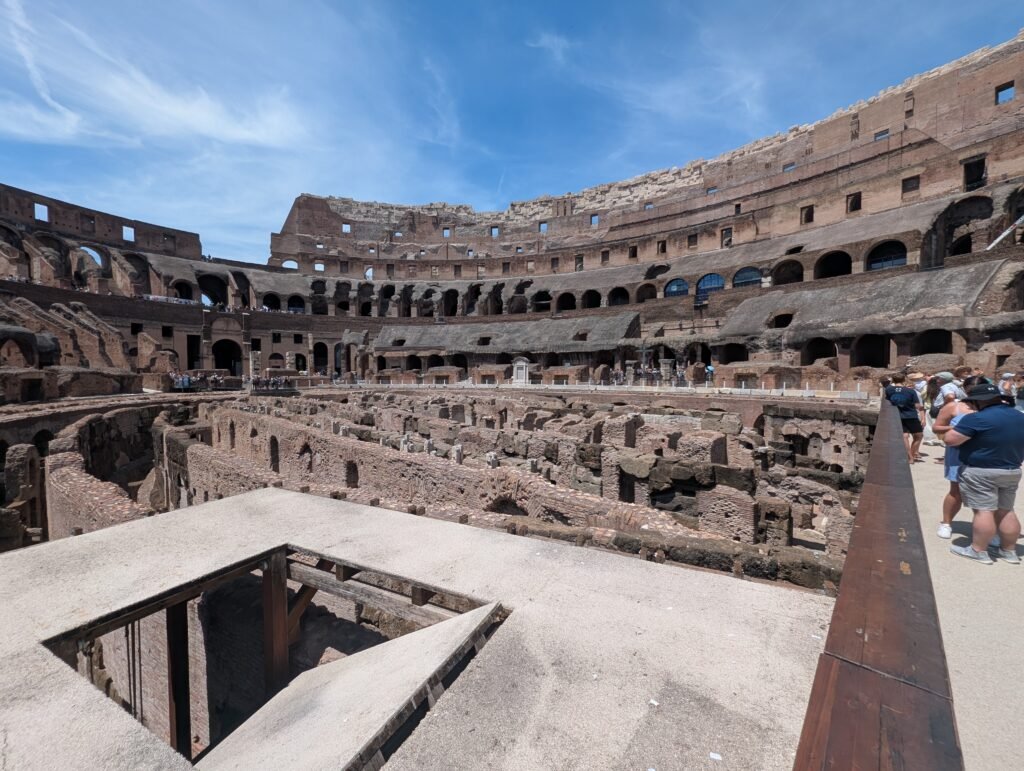
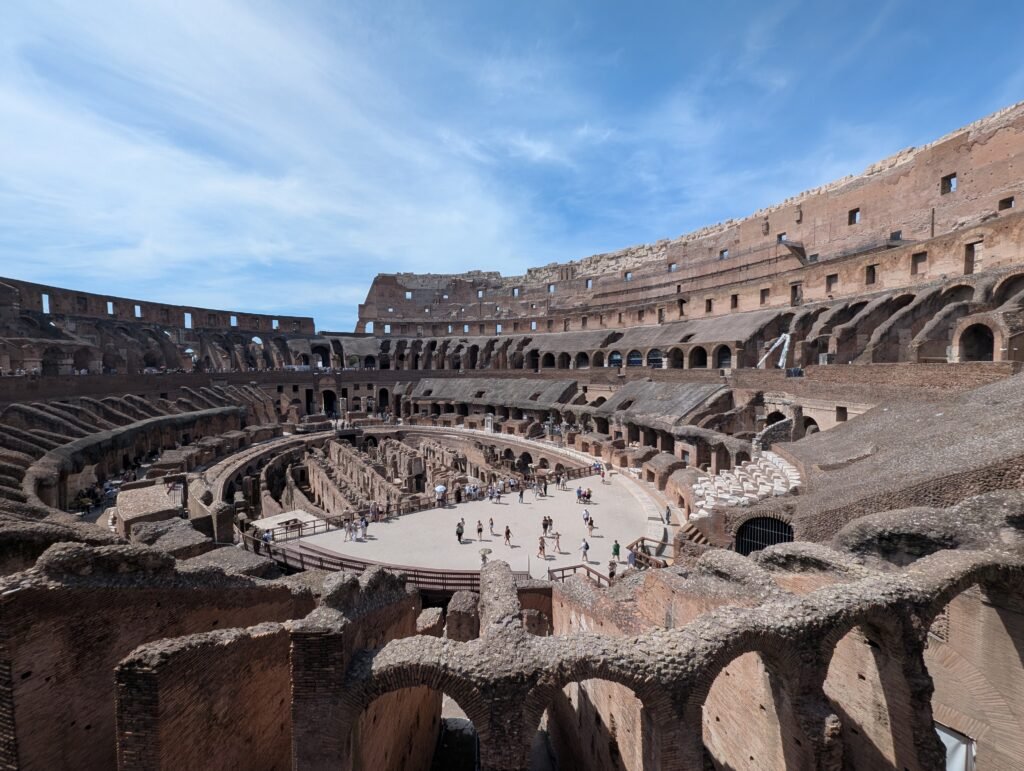
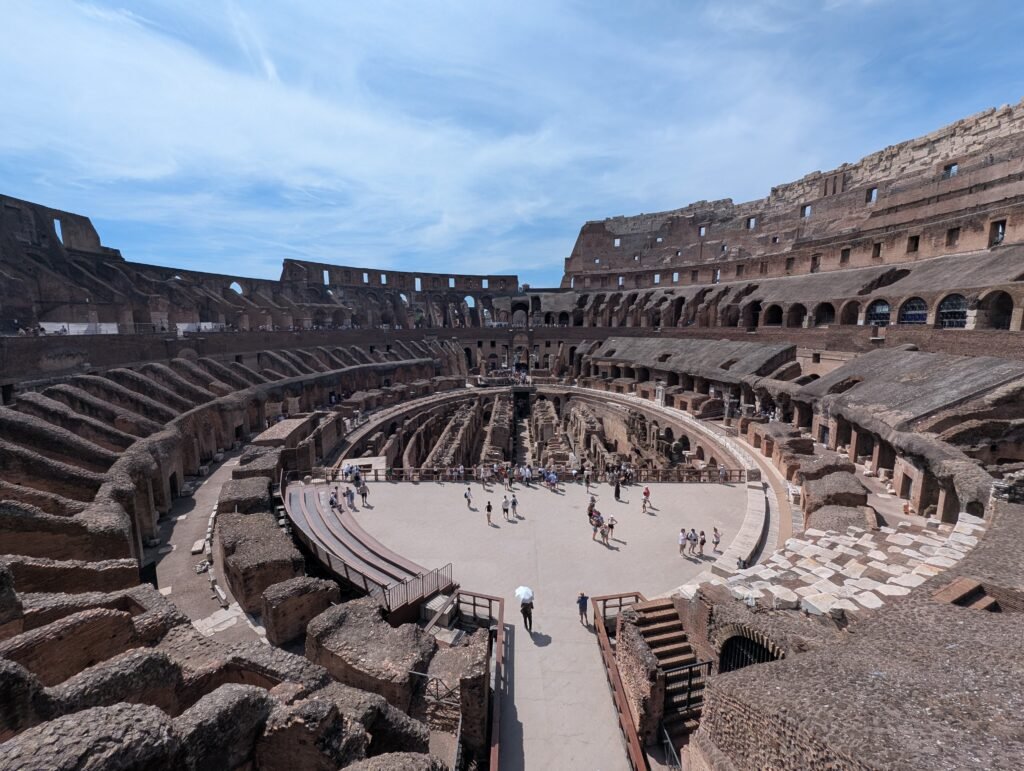
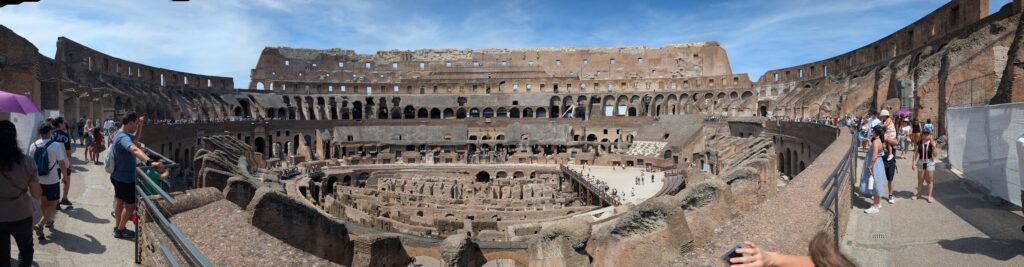
The lower areas of the Colosseum were interesting, though not completely mind blowing. You can see down into them from the decks above, where the general admission crowd is milling around. You do see a recreated mechanism for raising animals and fighters who could be introduced from below. The Colosseum is an amphitheater by definition. Spectacles could be viewed in it from all sides. While some amphitheaters do not form a complete circle or oval, this one does. There is no back stage from which to send participants. Backstage in the Colosseum means below ground level. A lot of extra engineering went in to making this arrangement work. There were tunnels and winches below the deck of the main level that we were able to walk through.
The lower area also includes several educational displays. There were examples of the different styles of gladiators, an explanation of the operation and location of the gladiatorial school. There were skeletons of animals used in the spectacles. There was also a detailed explanation of how people came to be gladiators, why some people chose the profession, and how expensive it was to train and equip them. All of this was interesting, but it didn’t really take all that long.
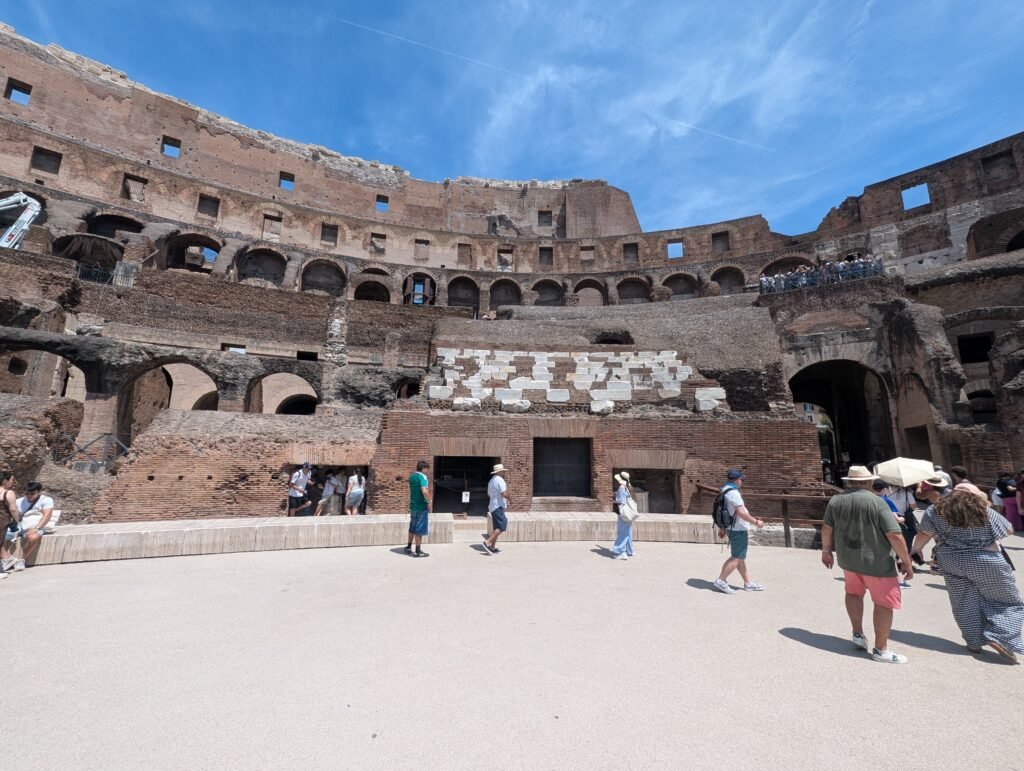
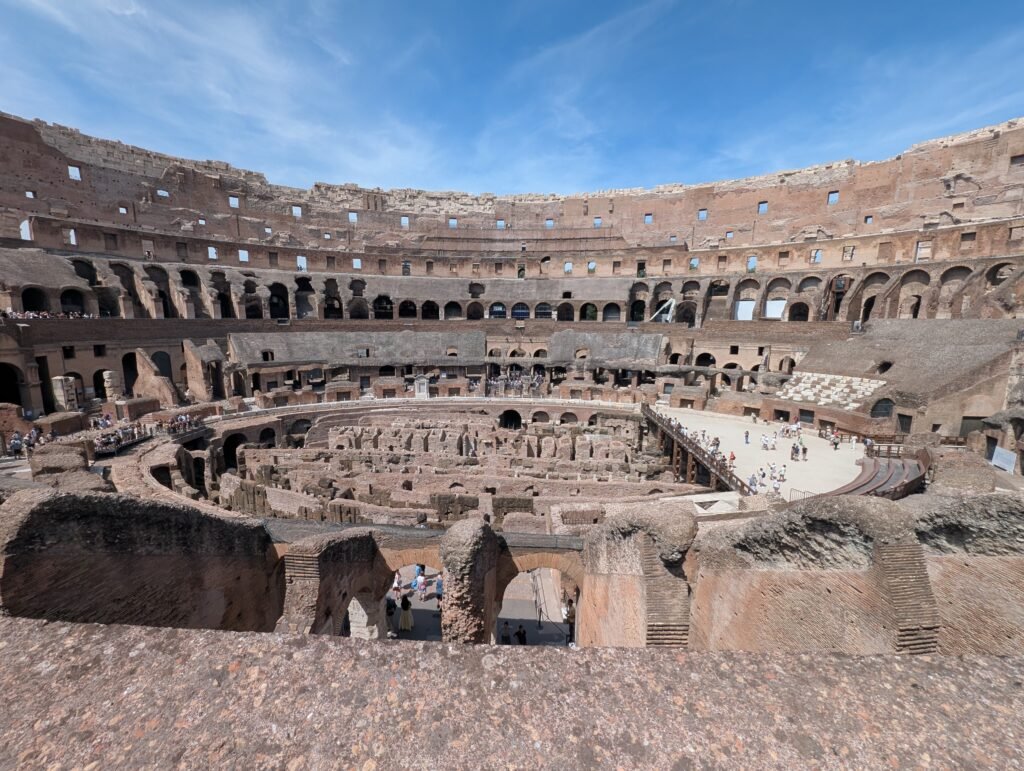
We were eventually released to the main level of the Colosseum where we were free to take pictures. We got some explanation of the seating plan and the way people entered and exited. Much of this was done by aristocratic status or lack thereof, as well as gender. There were a few inscriptions on the facing of the seating areas. Apparently, at some point in the past, there was a shade mechanism that could be extended above.
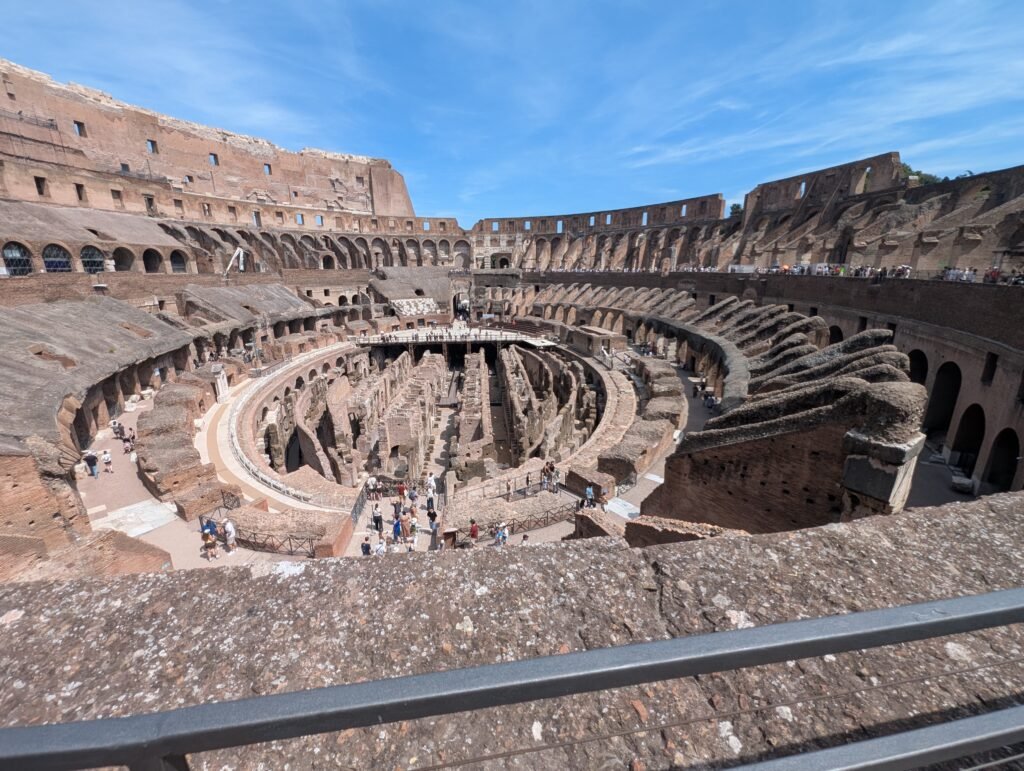
After the tour was completely over, we were left free to explore the upper level. The masses were free to walk this area as well. There was a series of displays, as well as a gift shop on this upper concourse. From there, we had a better perspective on the lower levels. There were plenty of opportunities for good pictures. There is another guided tour that allows access to the attic, which is said to offer nice views, and a deeper explanation of levels three through five of the Colosseum. We could not make that level without tickets to this additional guided tour, and so ended our visit to the Colosseum.
By this time, it was getting late in the afternoon. We made our way back to the room and rested for a bit. We decided to walk back to the oldest part of the city to eat at Ristorante Pancrazio. This restaurant is noted for being built on top of the ruins of Pompey’s Theater. This was the site of the assassination of Julius Caesar. Part of the ruins of this theater are in the basement of Pancrazio. We were given the option of eating upstairs in the restaurant, or down in the “ruins” (really just a cool basement area where bricks that are part of the ruins can be seen. It was a nice environment, had some historical significance, and the temperature was great. The menu even came with a brief description of the building’s historical importance.
My meal was surprisingly good for being in a tourist attraction. I don’t remember what I ate, but Stephanie had a pasta with red sauce and cream on it, which she says was delicious. Stephanie had tiramisu at the restaurant and I ate a bit of the store bought ice cream. It was a pretty long walk, though, and we were tired once we got back. We accomplished most of what we set out to see in the old city. I missed out on only the Palatine Hill. That would have to be saved for another day.
(Continued)
We spent the next two days at the Vatican and Tivoli, respectively. Follow the links at the bottom of the page if you would like to skip to those articles now. Saturday would be our last full day in Rome. Stephanie and I decided to make that our Rome “cleanup” day. By this point, we knew that despite allowing six days for Rome, we never could have seen everything of interest in the city in the allotted time. We decided to aim for three major sites. I had an 11:00 a.m. guided tour of the Domus Aurea. My competition from the bots was so hard to get the tickets that I had to resort to buying a Spanish language guided tour. I figured this would be better than trying one in Italian or French, and it was. Since that would be a middle of the day event, we decided to try to squeeze in the Pantheon before Domus Aurea. Stephanie really wanted to check out the Baths of Caracalla, and we hadn’t done a tour of any dedicated Roman baths yet. That was relatively near the Domus Aurea, so we thought we would hit that afterward, then make our way home.
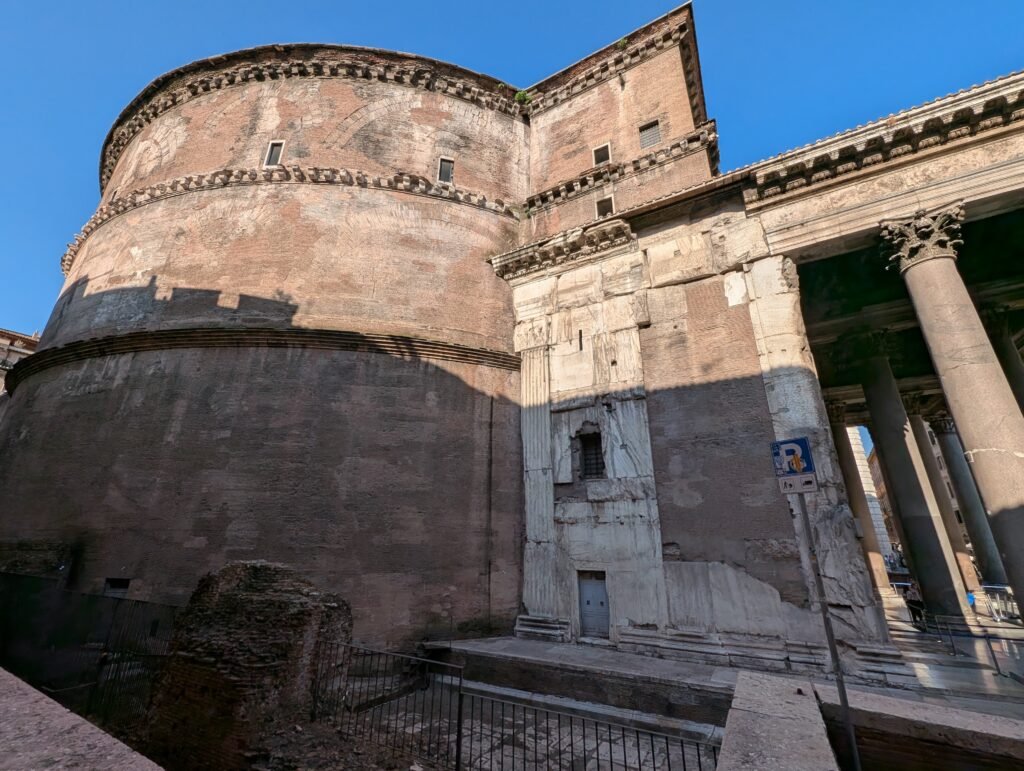
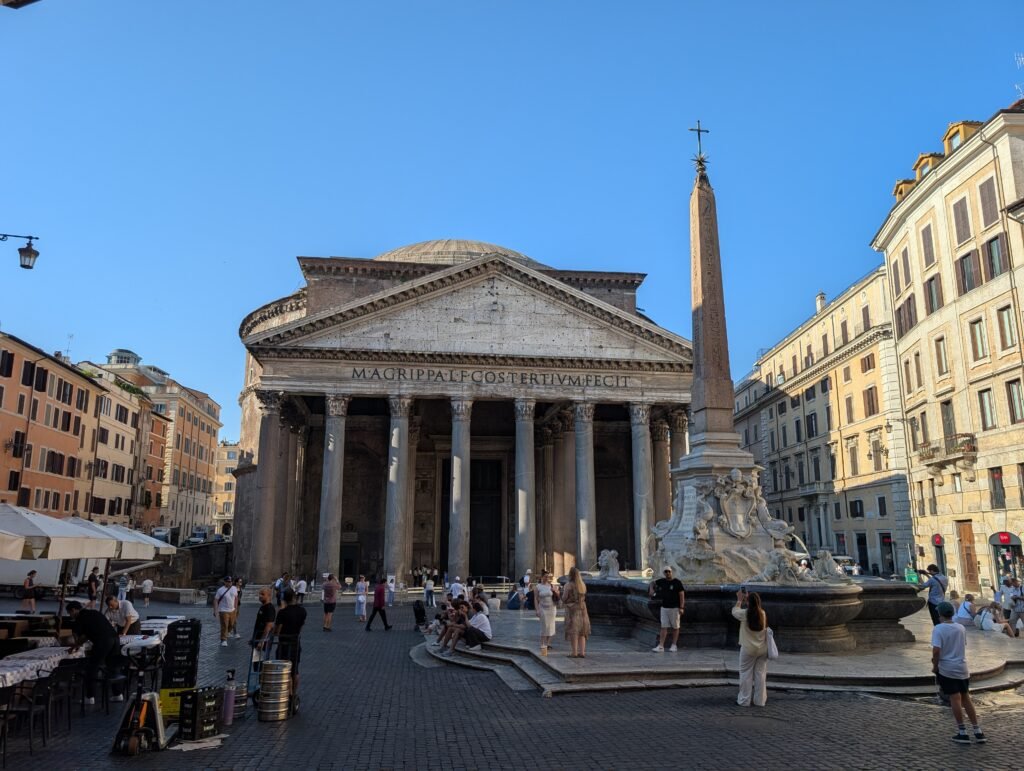
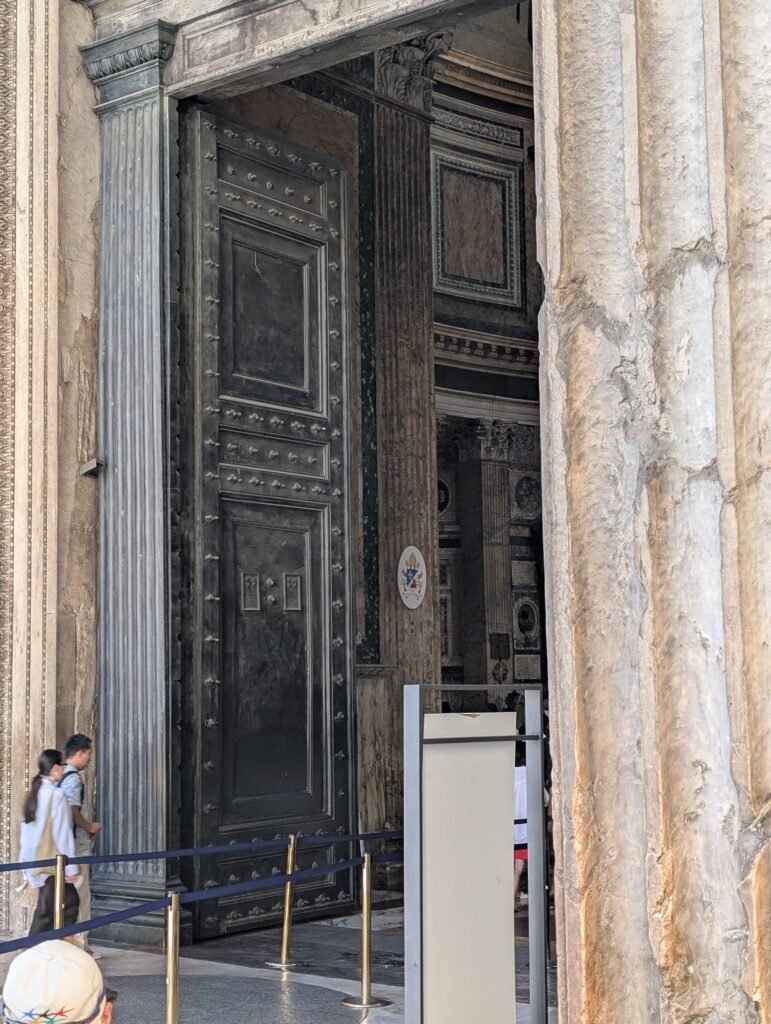
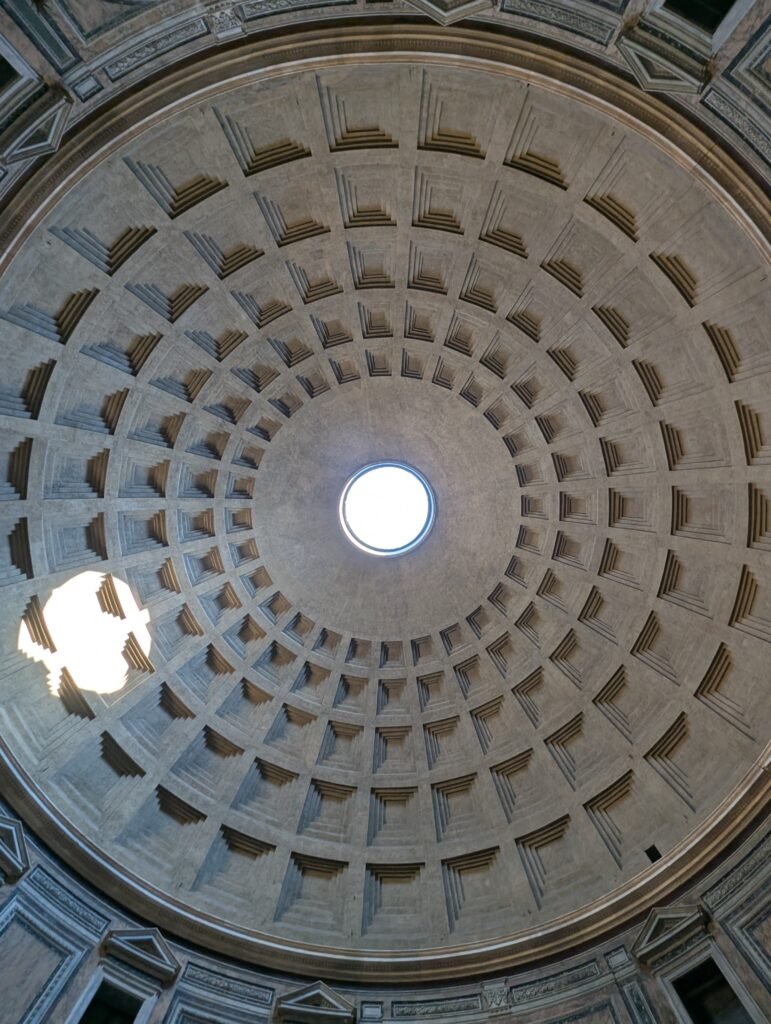
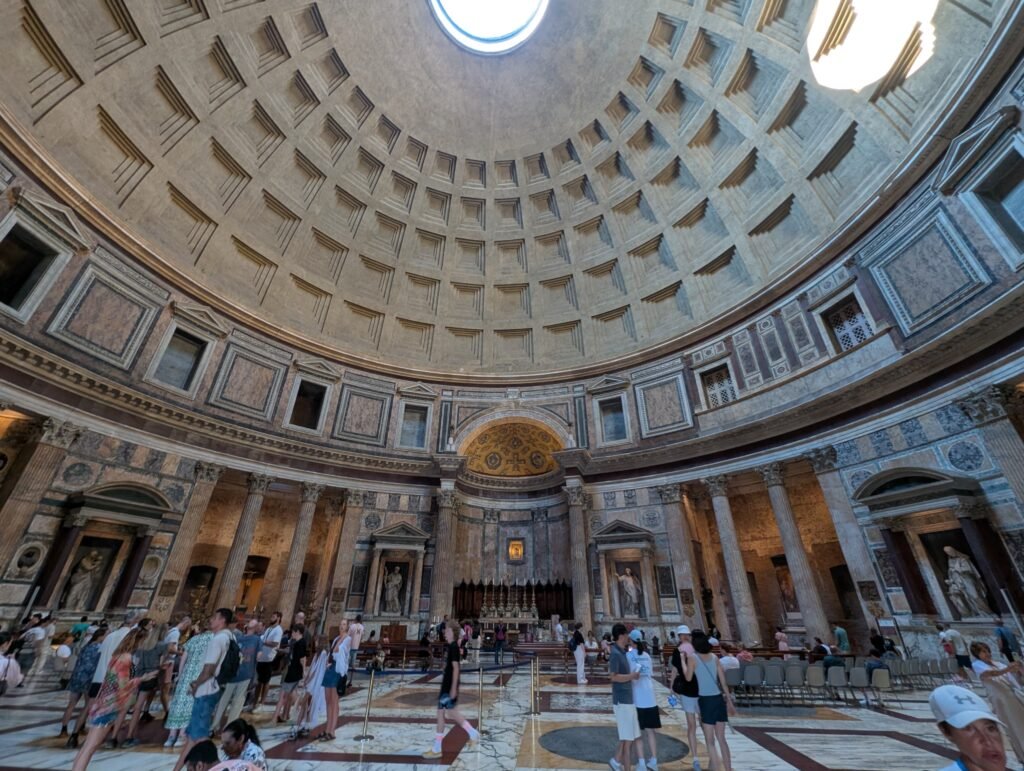
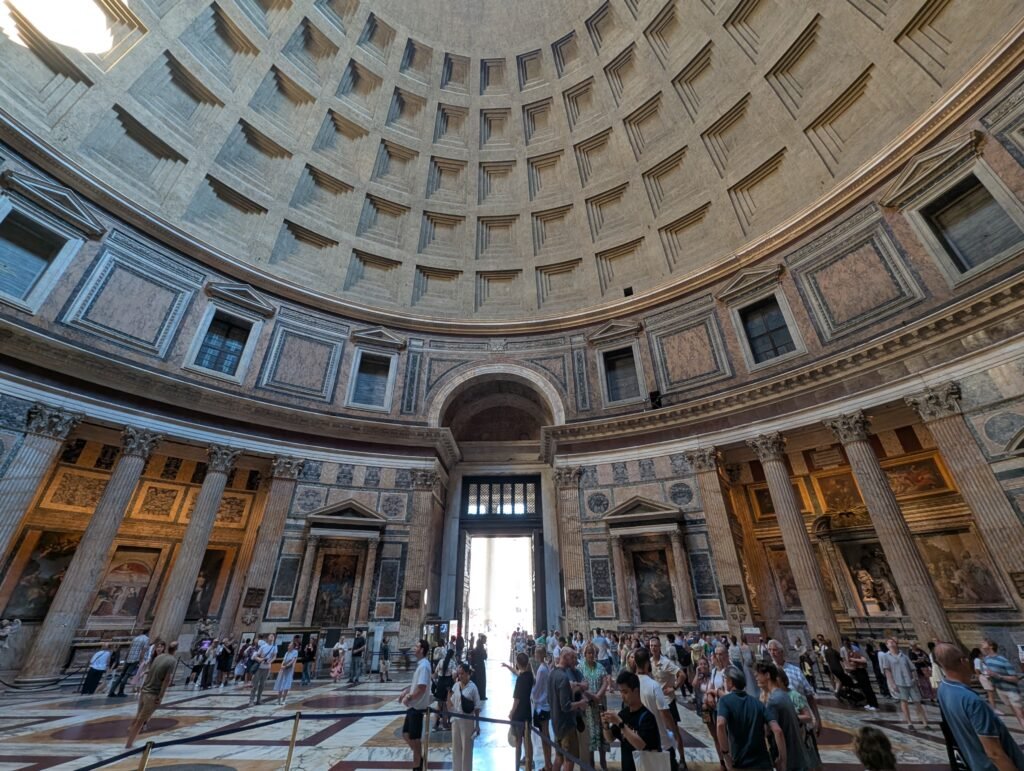
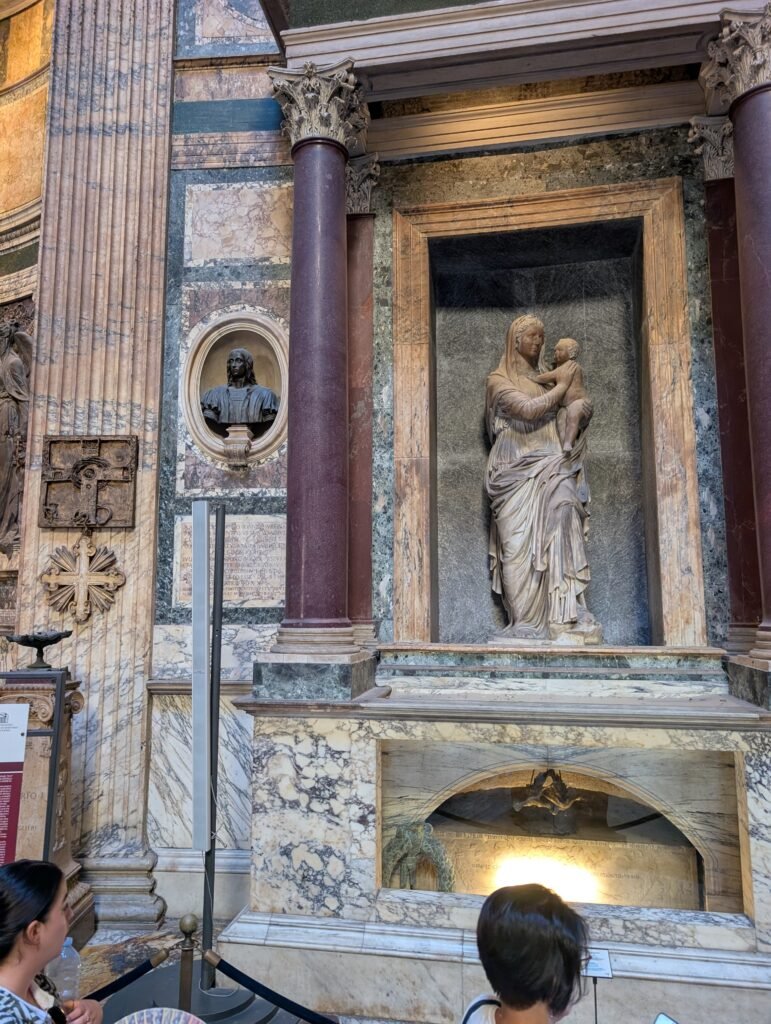
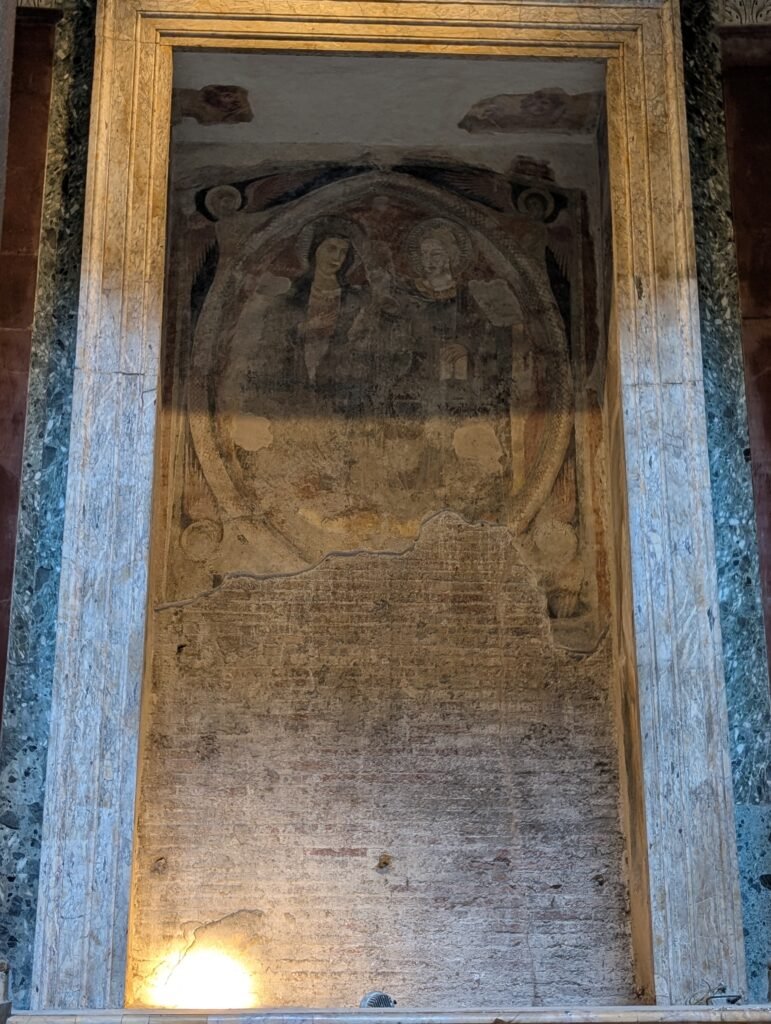
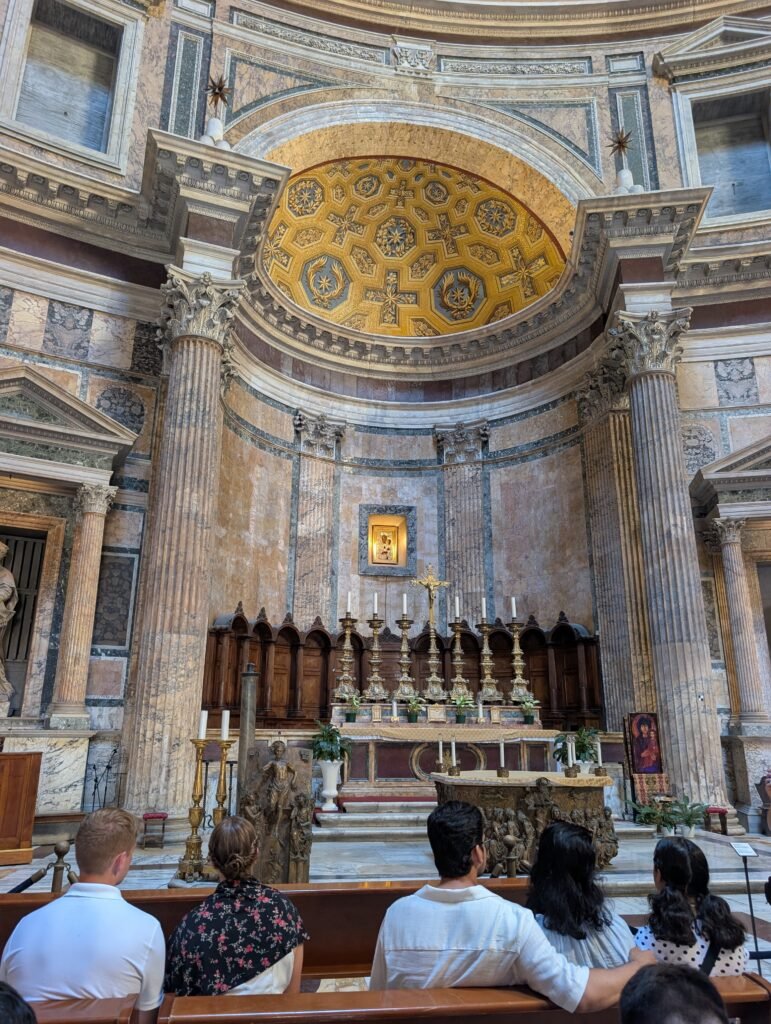
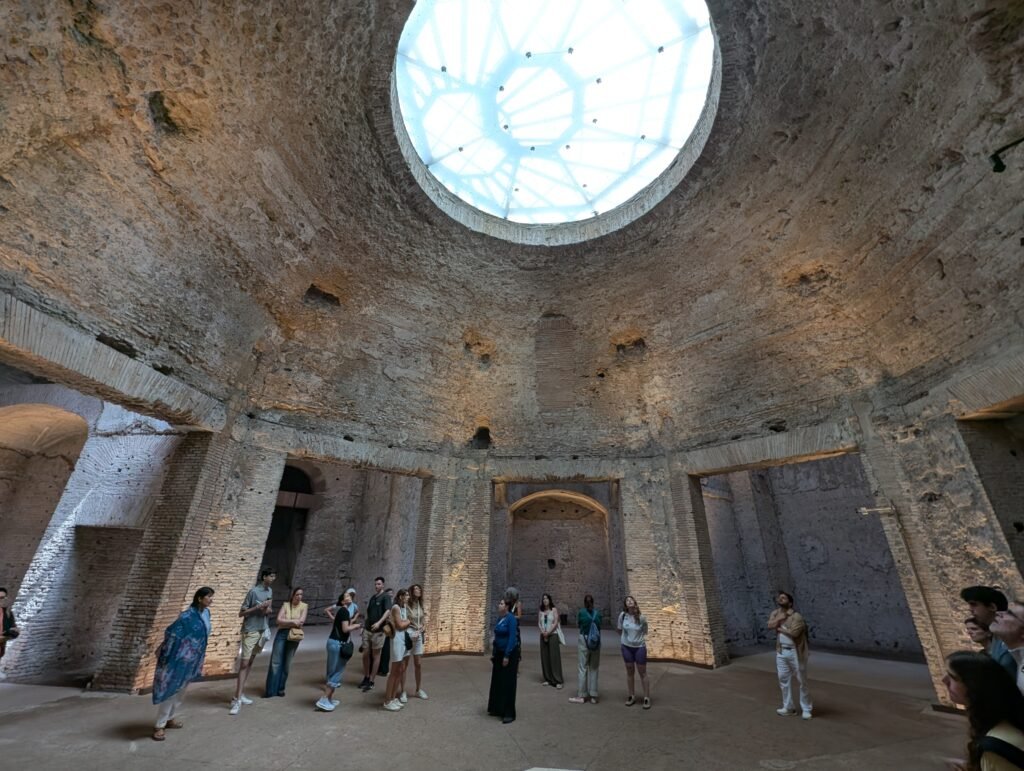
I correctly figured that the Pantheon wouldn’t take all that long to explore, as it is a single building. It is an ancient Roman pagan temple that was converted into a church. There are several interesting curiosities about the Pantheon. It is the final resting place of the Renaissance artist Raphael, who I really came to appreciate during my visit to the Prado (link). It is also home to a massive oculus – a sort of indoor sundial. It is a huge building, and was the largest cement dome in antiquity. The builders included recessed square patterns in the dome to reduce weight. I suppose the oculus also serves that purpose. There is an impluvium beneath the oculus to collect water, as is the case in many villas and other buildings with an open air part of the ceiling.
We were approached by a guide putting together a tour, and paid a bit of extra money for a spot on an English guided tour that lasted about 45 minutes. We ended up spending just over an hour as we stayed after the tour to explore a bit more and just absorb the atmosphere before walking back toward the Domus Aurea. I was glad to have taken the guided tour, and the timing was about as perfect as it could have been. We entered right as it opened.
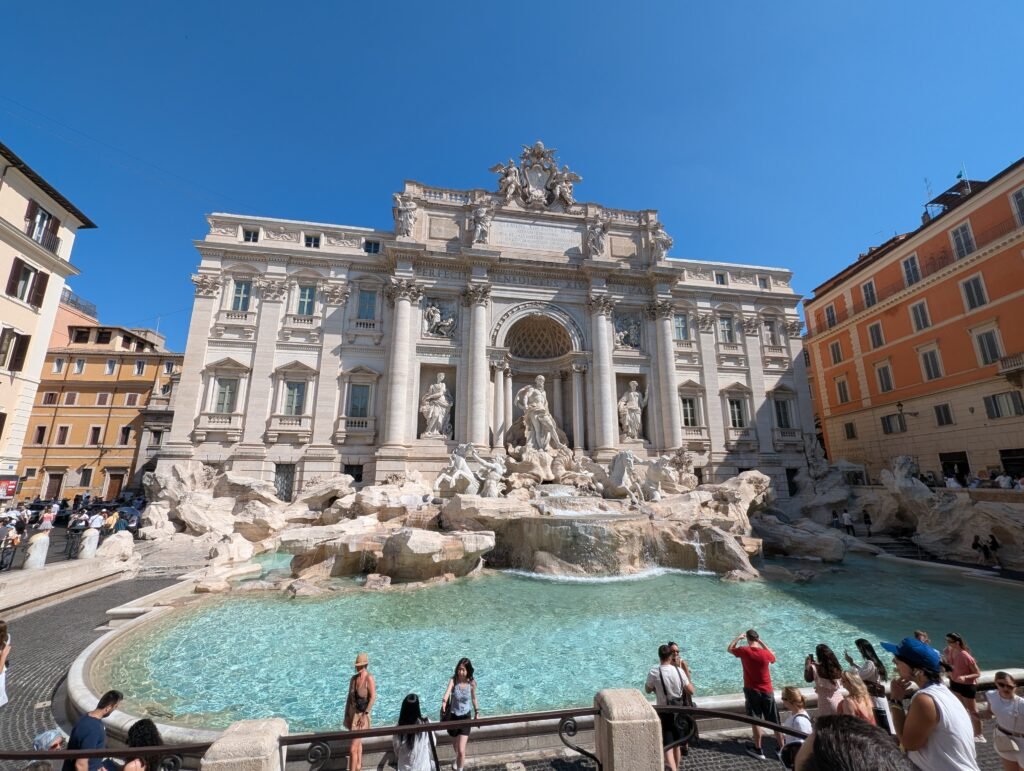
When visiting Rome, everyone says you must visit the Trevi Fountain and the Spanish Steps. These seemed less interesting to us, so we hadn’t sought them out. Tacking on an additional 2-3 minutes of walking en route to the Domus Aurea would take us right by the Trevi Fountain, so we decided to do this. By mid-morning, you had to nearly push and shove your way through just to get down the street near the famous fountain. We did see it, though. I must say that I did NOT get any coveted tourist free pictures. I am not sure that is possible at the Trevi Fountain at any point during the 24 hour day.
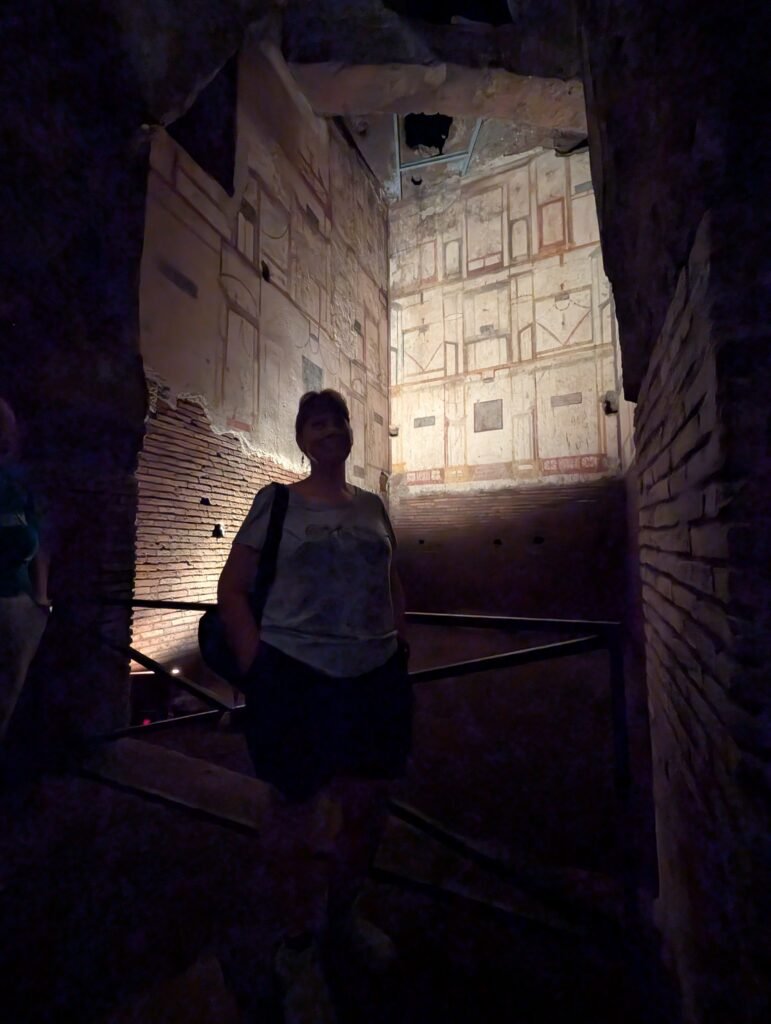
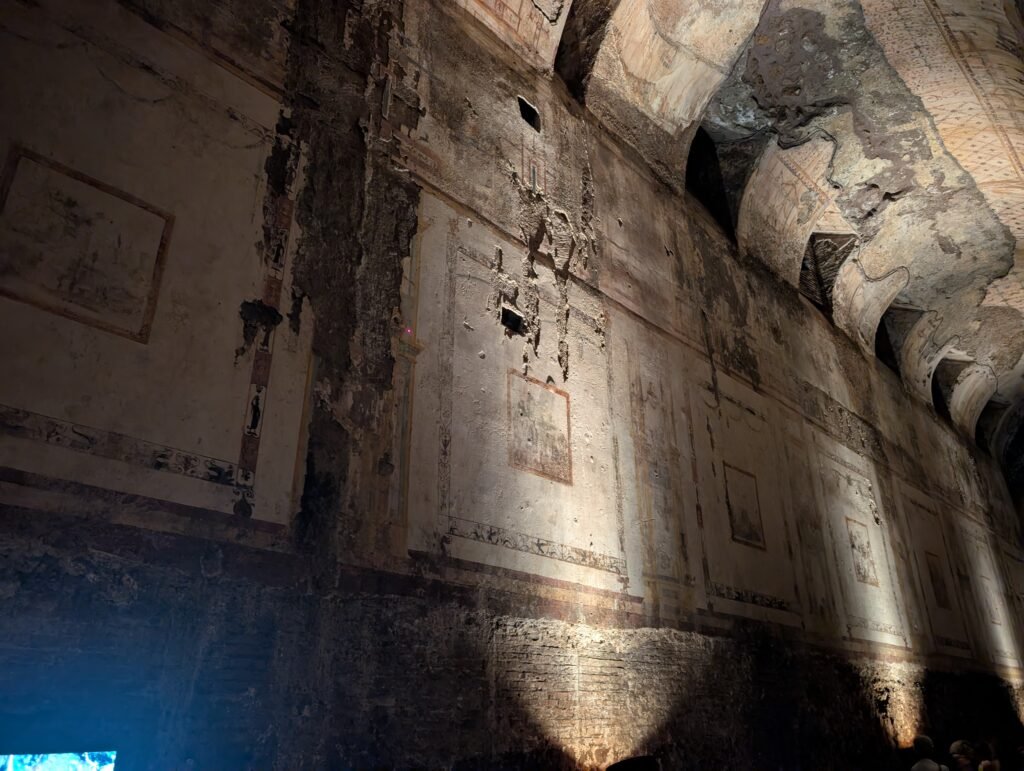
We made it through the crowd near the Trevi Fountain in time to catch our Spanish language Domus Aurea tour. The Domus Aurea was Nero’s brainchild. Nero is an interesting character. His name has become synonymous with narcissism. He was so hated that after his death, the senate sentenced him to be purged from memory. Contemporary accounts, historians, and the ancient chroniclers of Rome are monolithic in condemning him. He is known to have committed suicide in the year 68 A.D. He almost certainly seems to have been suffering from some kind of mental illness. One wonders sometimes if, after the his passing the army of those with means of expression became too overwhelming to tolerate any defense, particularly in the case of a dead emperor.
On the other hand, such universal criticism cannot be completely ignored. There is clearly plenty of evidence, both direct and circumstantial, that Nero was delusional, narcissistic beyond measure, and completely irrational about his own capabilities, the wealth of the empire he ruled, and even the humanly possible. It was only the synthesis of such monumental character flaws – not to mention massive resources and unchecked power – that gave birth to a project like the Domus Aurea.
Domus Aurea translated literally from Latin means Golden House. Nero initially had a palace built that stretched from the Palatine Hill where most of the imperial palaces were constructed to the Esquiline Hill, over half a mile distant. Not content with the audacity of this initial project, it is widely believed that Nero had something to do with Rome’s great fire of 64 A.D. The massive destruction from this fire allowed for the redevelopment of large swaths of land right where Nero wanted to expand his estate. This convenient clearing of older parts of the city no doubt contributed to the rumors of Nero’s involvement in the fire, or at least in suppressing the effort to extinguish it. Nero called this older palace Domus Transitoria, because he never found it sufficient as his personal residence. He did, however, have components of this earlier grandiose project reused in the construction of Domus Aurea.
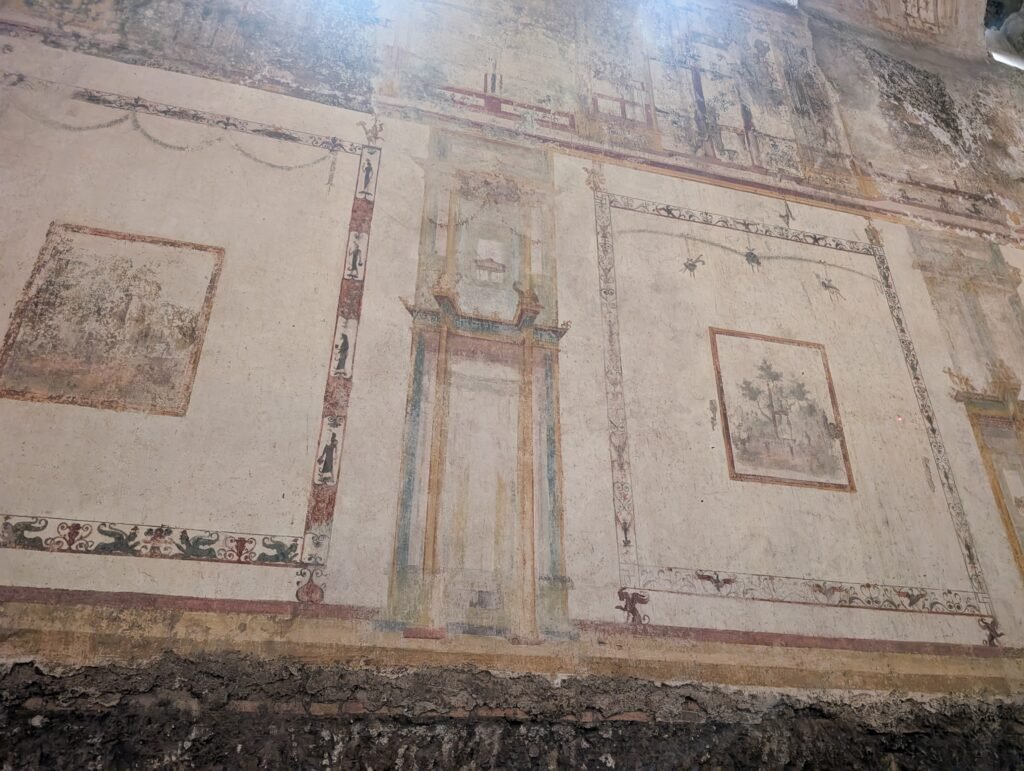
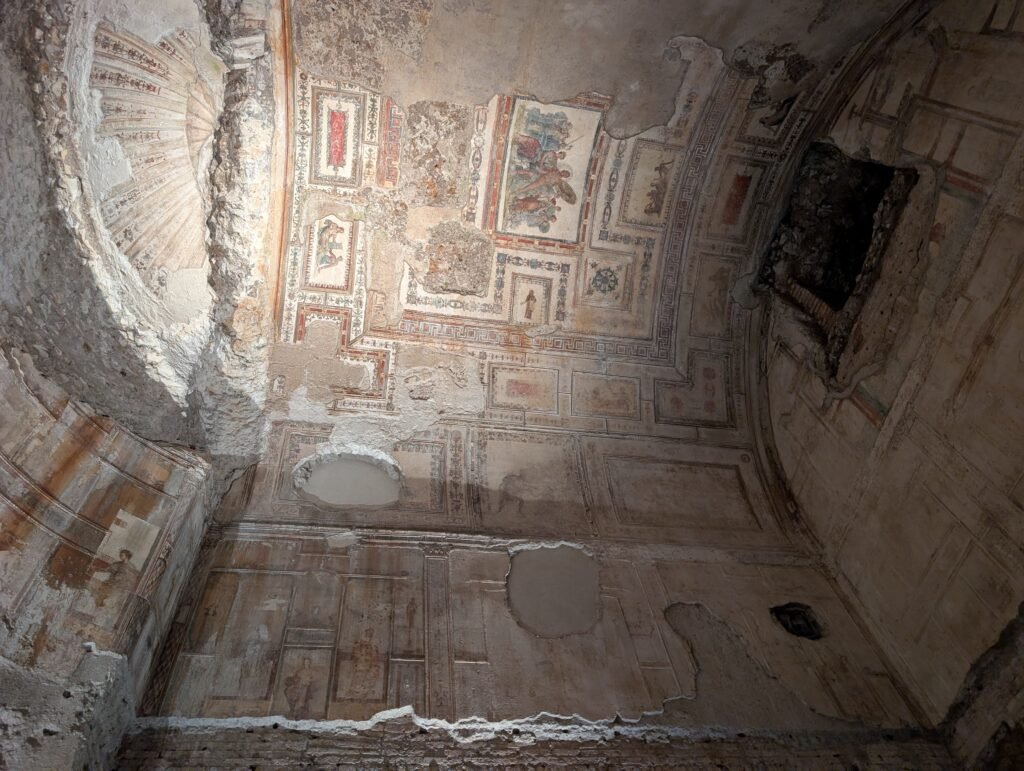
Domus Aurea was more of an estate than a mansion. Its grounds covered about a modern section – about one square mile. There were gardens and a forest. It even had a lake lined with small “cities” that was big enough to accommodate ships for mock battles. The house was covered in gold. It featured porticoes, was decorated throughout with frescoes, and was used for lavish parties and entertaining dignitaries and Rome’s inner circle. There were private baths. In the gardens there was a 120 foot tall statue of Nero, which became the Colossus for which the Colosseum was named. The whole facility was so outlandish that even subsequent emperors found it a bit embarrassing. Despite a monumental effort, the palace was not finished in Nero’s lifetime, lacking some final details when he killed himself in 68 A.D. He is reported to have quipped that he at last would be able to live like a human being.
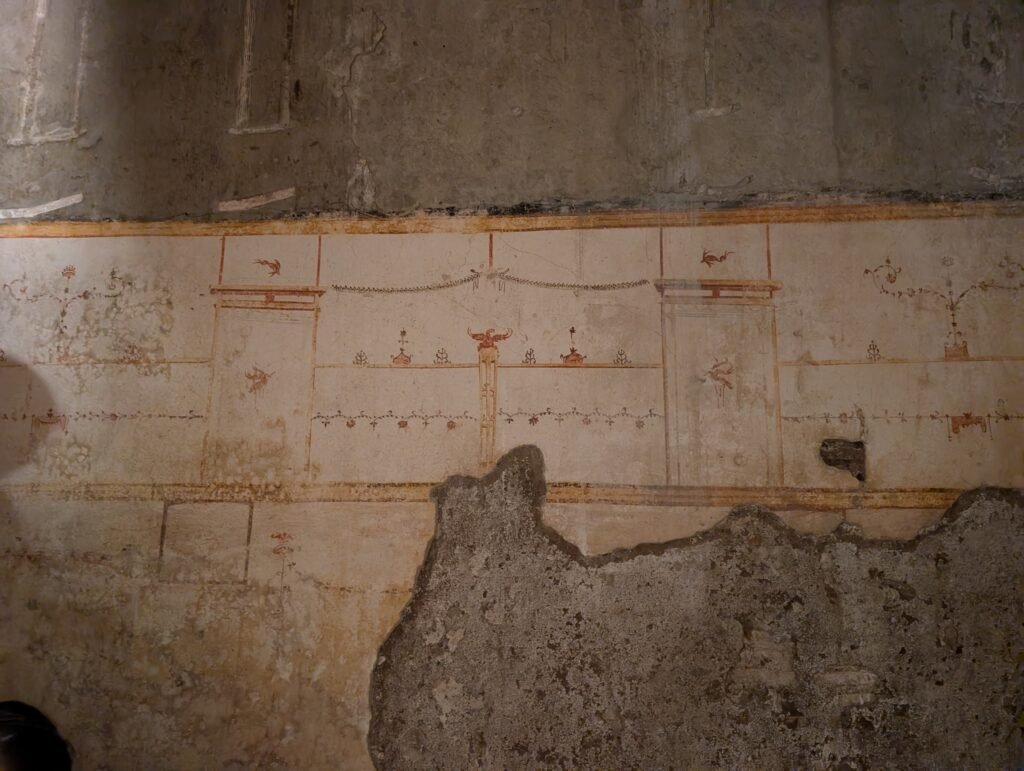
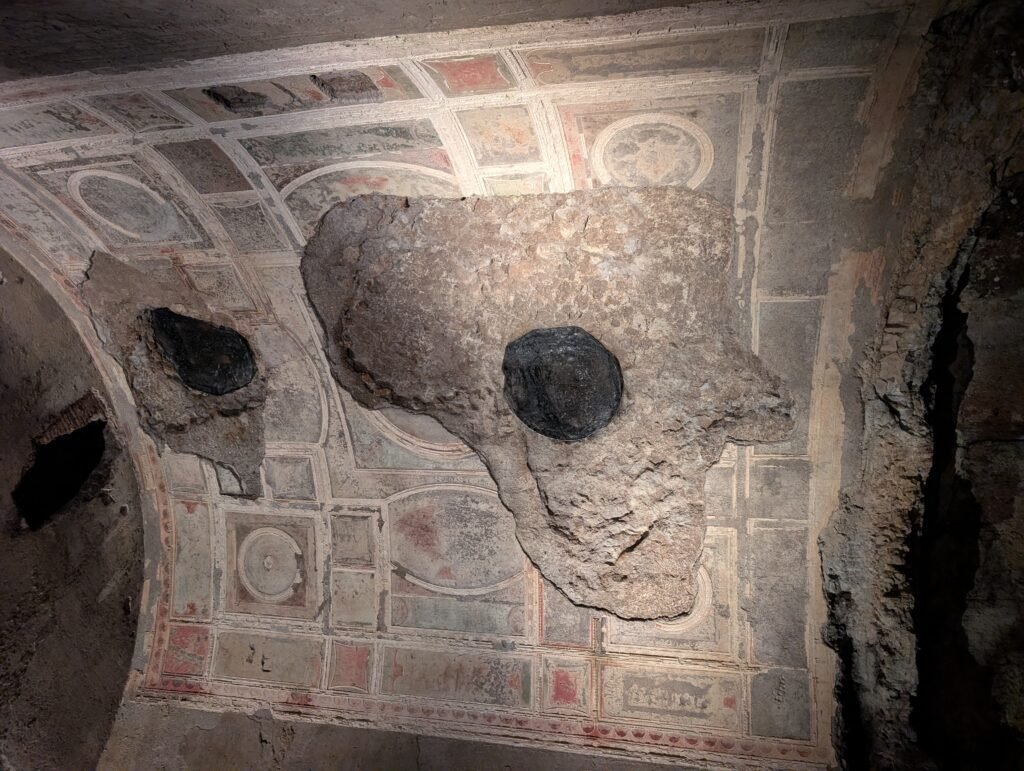
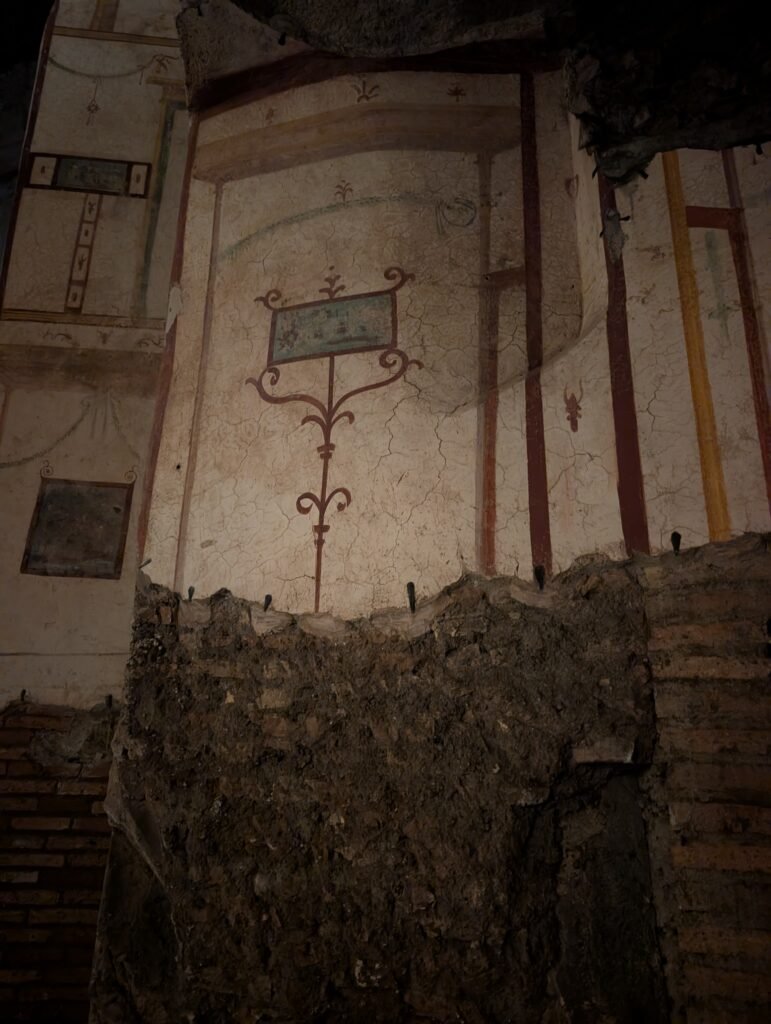
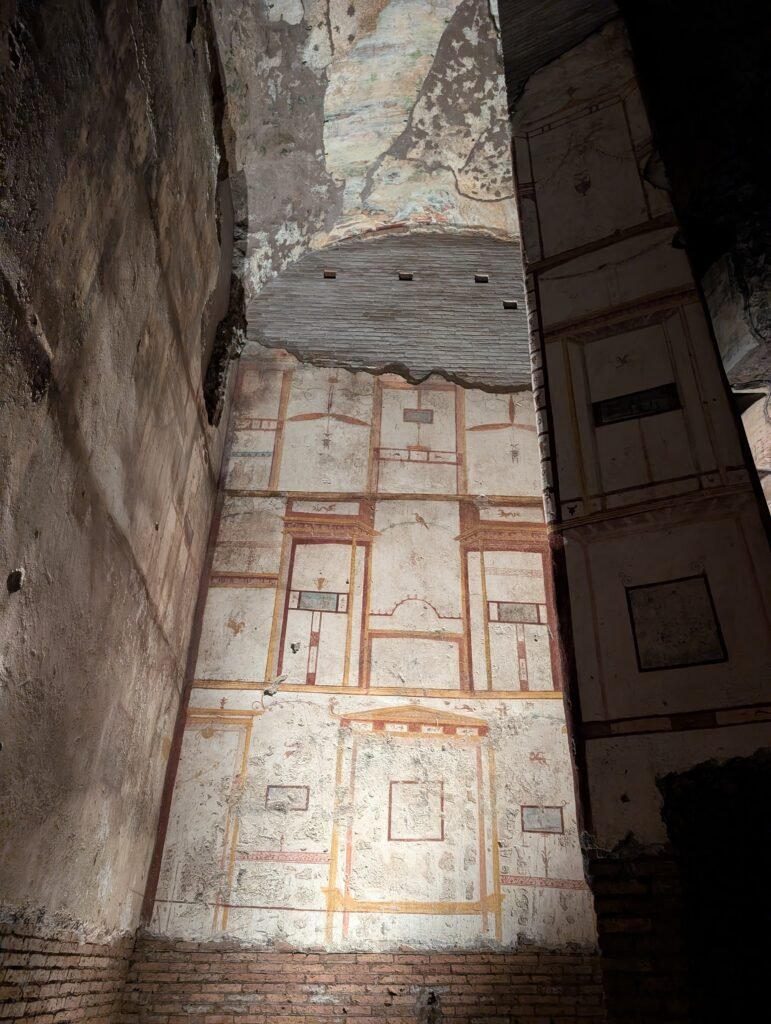
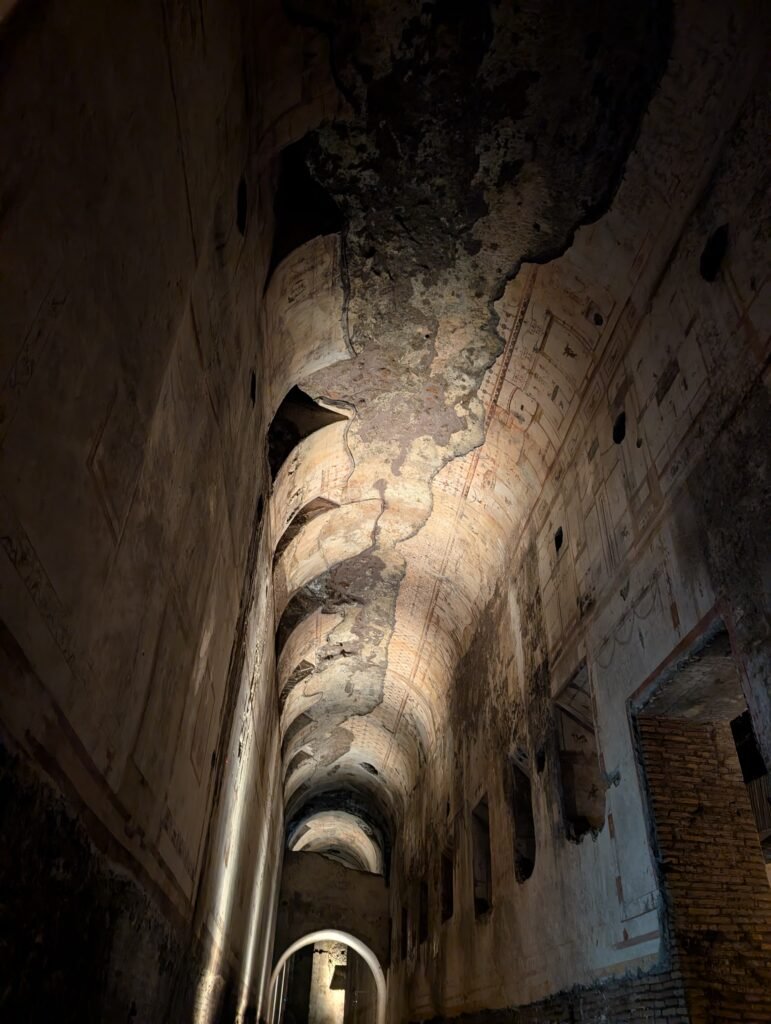
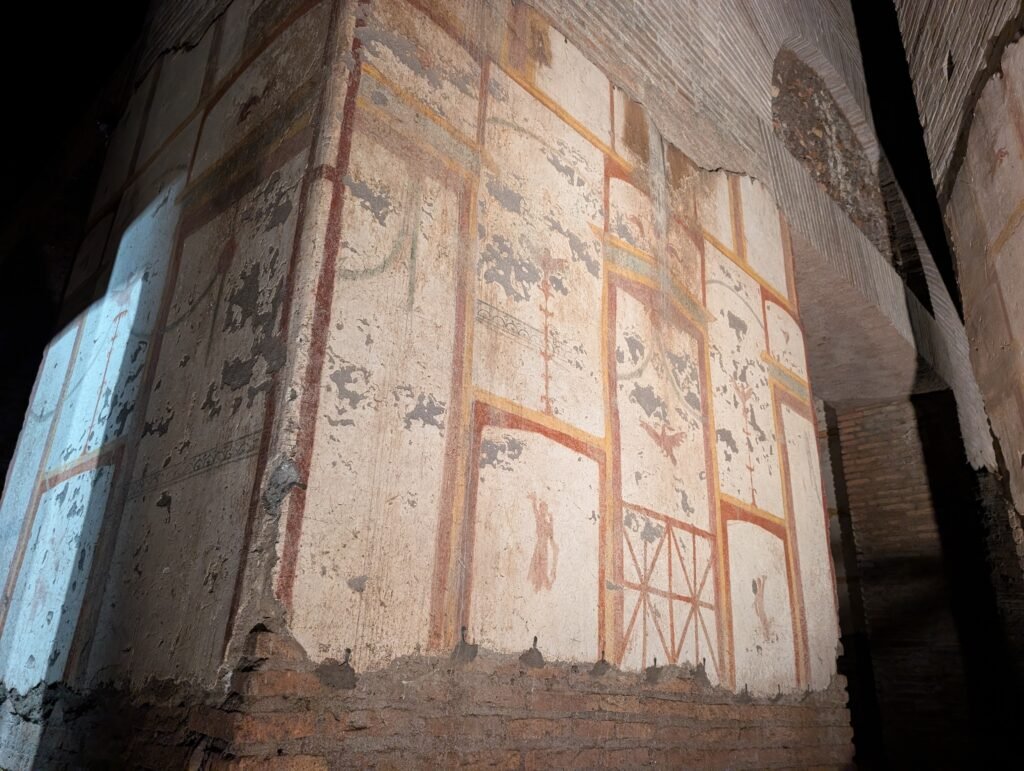
Because the building was unpopular and mortifying to Nero’s successors, within a couple of decades, it was covered with dirt and built over. This process sealed out moisture and preserved many of the frescoes. During the 15th century, a Roman teenager fell through a crack in the side of the Esquiline hill and accidentally rediscovered the Domus Aurea. Renaissance artists like Michaelangelo and Raphael flocked to the place to get a glimpse at the art of antiquity. They brought with them smoke from their light sources and reintroduced moisture. These factors, together with the growth of trees in the park above all contributed to the slow deterioration of the art and the structure itself.
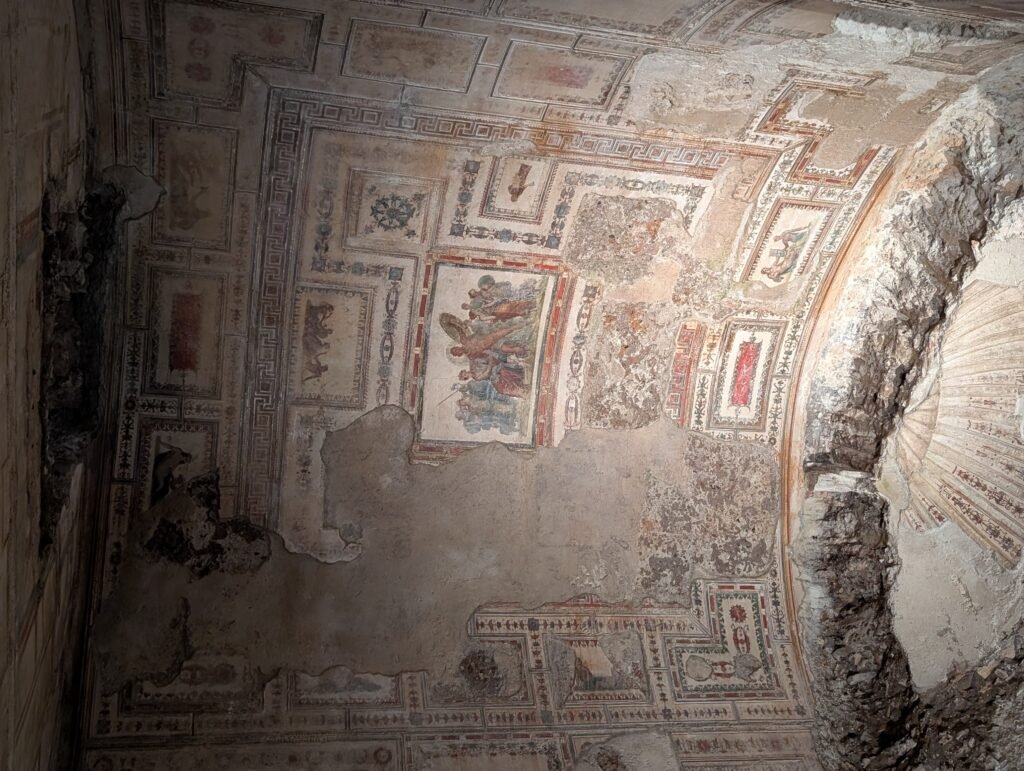
About 150 rooms have been discovered and excavated, of which roughly one third are accessible to the public. Although the paintings and frescoes have significantly faded, it is still an amazing experience to see how lavishly the palace had been decorated. Consider the awe inspired in Michaelangelo and Raphael as they experienced first hand the grotesques and other ancient art forms that inspired so much of the art they later incorporated into their work at the Vatican.
I was able to understand a good part of the Spanish tour of Domus Aurea. My understanding was impeded, though, by the fact that art and history are not subjects I often discuss in Spanish. My vocabulary in those areas is quite a bit weaker than when discussing agriculture or daily tourist activities. The tour was useful and interesting, and we did get to see great swaths of the ancient building. I only wish it had somehow been preserved in a state closer to that encountered by the Renaissance painters.
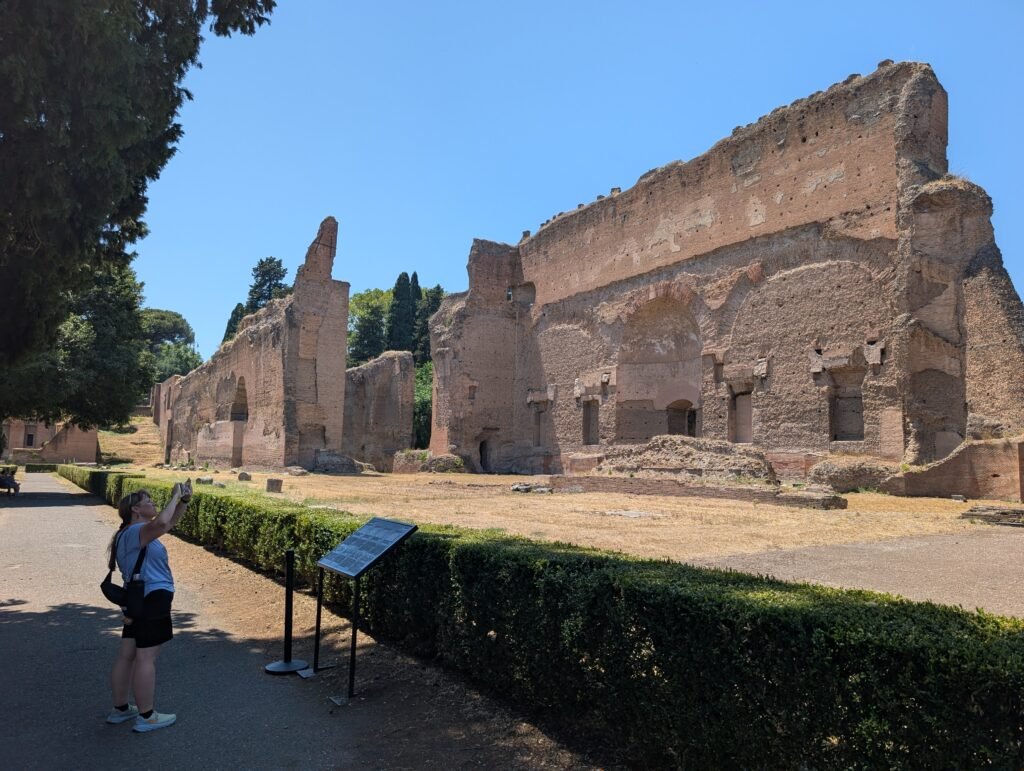
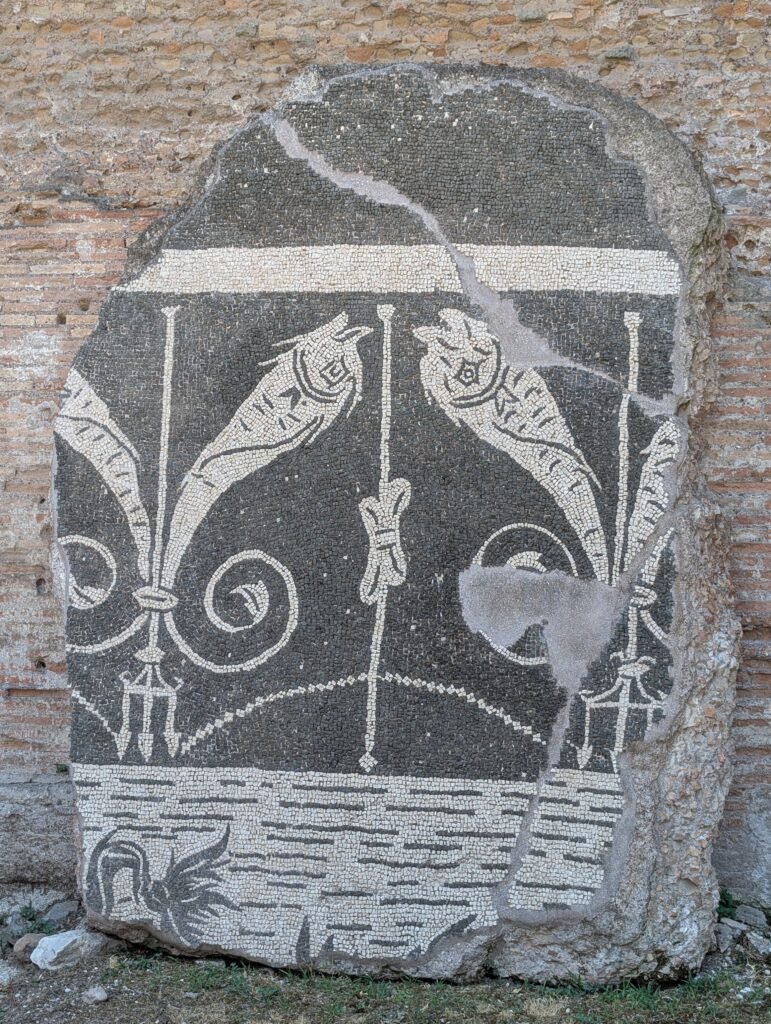
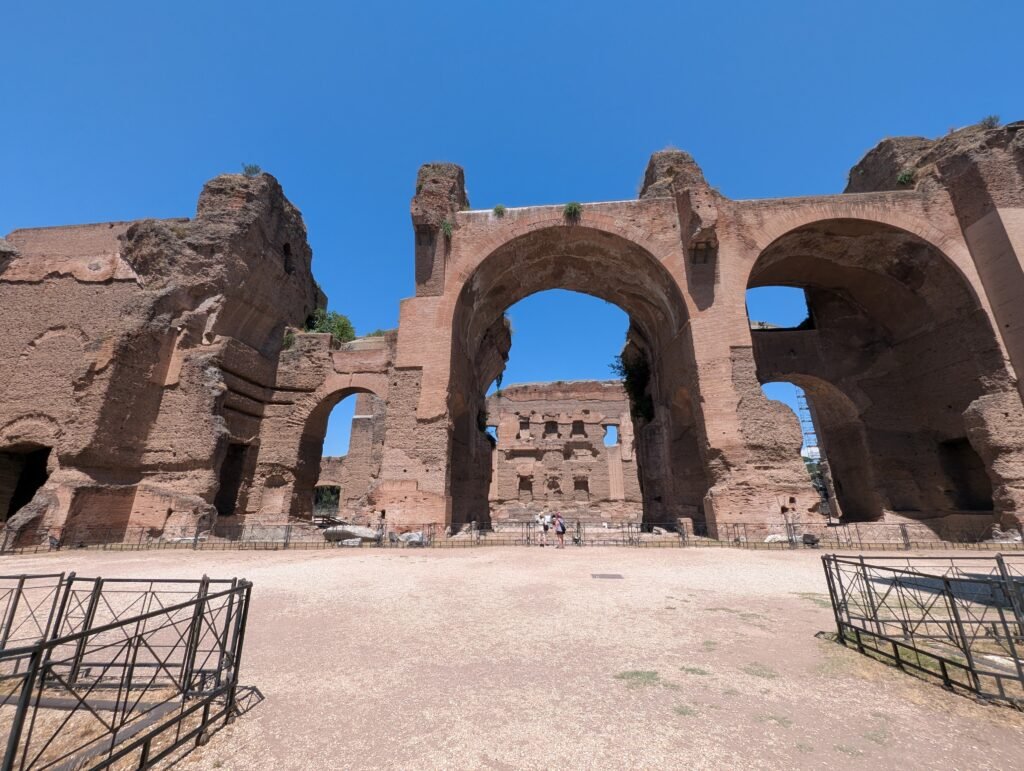
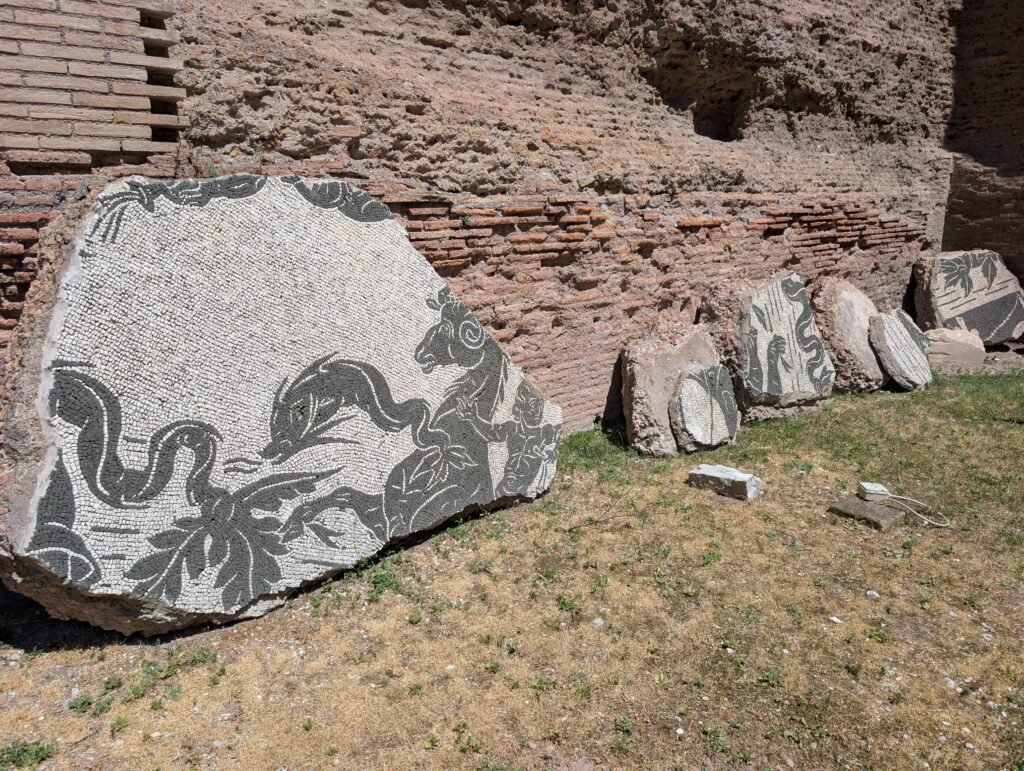
It wasn’t far from the Domus to the Baths of Caracalla. Stephanie had selected these specifically. She wanted to tour some Roman public baths. There are several you can visit, but the Baths of Caracalla are some of the largest and best preserved. There was some signage there to inform our visit. For the most part, though, we just walked through the different levels of heated baths and looked at the remnants of mosaics placed here and there as the afternoon grew warmer and warmer. We sat and rested in the shade when we needed to, visiting with other tourists as the opportunity presented itself.
Roman baths had a very traditional structure based on health and wellness assumptions of the day. They generally had an area to exercise and sweat, and three pools that were progressively hotter, each room and pool named according to heat level. There were separate areas for men and women. The baths we saw were all nicely decorated. Even if the original mosaics were not intact, the remaining art had been preserved and displayed for visitors to appreciate. Public baths were made to be free or very inexpensive, as there were seen to be vital to a city’s health, morale, and productivity. Business might be transacted there. They were certainly also the setting for countless social interactions. Cities large and small had baths, often quite a few of them, and the wealthiest individuals had their own private facilities.
By the time we left Italy, we had seen several other baths. They were there in Ostia Antica, Hadrian’s Palace, Pompeii, and Herculaneum. I had also seen several in each Roman city I visited in North Africa during May. Stephanie wondered aloud why someone had not commercialized this for the modern tourism industry. Surely visitors to Rome would pay to experience something like a traditional Roman bath. You can go to a hammam in many Middle Eastern and even Balkan countries, so why not Roman baths? I suppose some consideration would have to be given as to whether the attraction would focus more on modern luxury and comfort, or the authentic ancient experience. If the ancient experience was not pleasurable, though, it doesn’t seem as if baths would have been as ubiquitous as they were or to have had the staying power they did. People would pay to do this today, even if it was free in antiquity.
That evening, we picked up fast food in the neighborhood while we washed all of the clothes we sweated up walking around Rome in July. Stephanie picked up a shawarma. I found an eatery run by Pakistani Punjabis. They had a cheap biriani plate which was, in my opinion, better than any Italian food I ate the whole time I was in that country. We really felt like we had made excellent use of our time in Rome. There is so much to see. You just can’t see in all. You probably couldn’t see it all no matter how long you had. We saw as much as we could have.
(Continued)

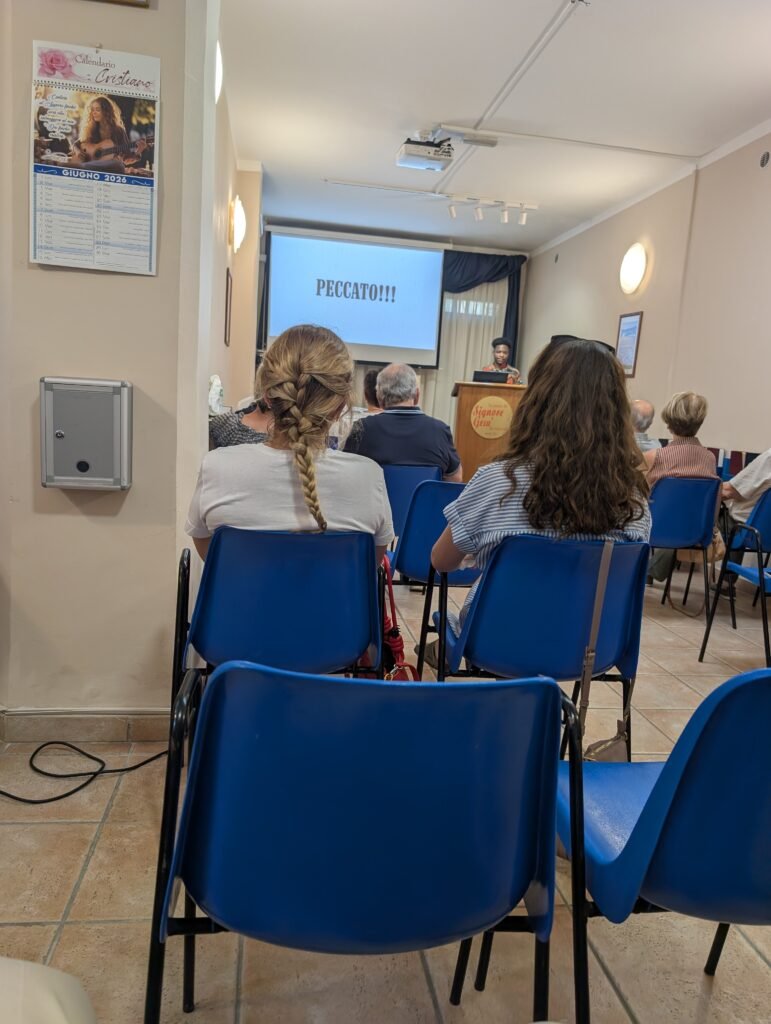
I got up and went for a run on Sunday, knowing much of the day would be spent sitting either in church or on a train. I was pleased with my run time, and finished in plenty of time to pack up and make it to church by 10:00. We took a short metro ride to the end of the Jonio line, then walked about ¼ of a mile to the Chiesa di Cristo. We joined a lively group of about 40 or so members in the small building. They have a web presence, and meet Wednesday for Bible Class and Sunday for worship. More than half of the congregation was Italian, though most of the people who spoke English and therefore visited freely with us were expatriates or travelers.
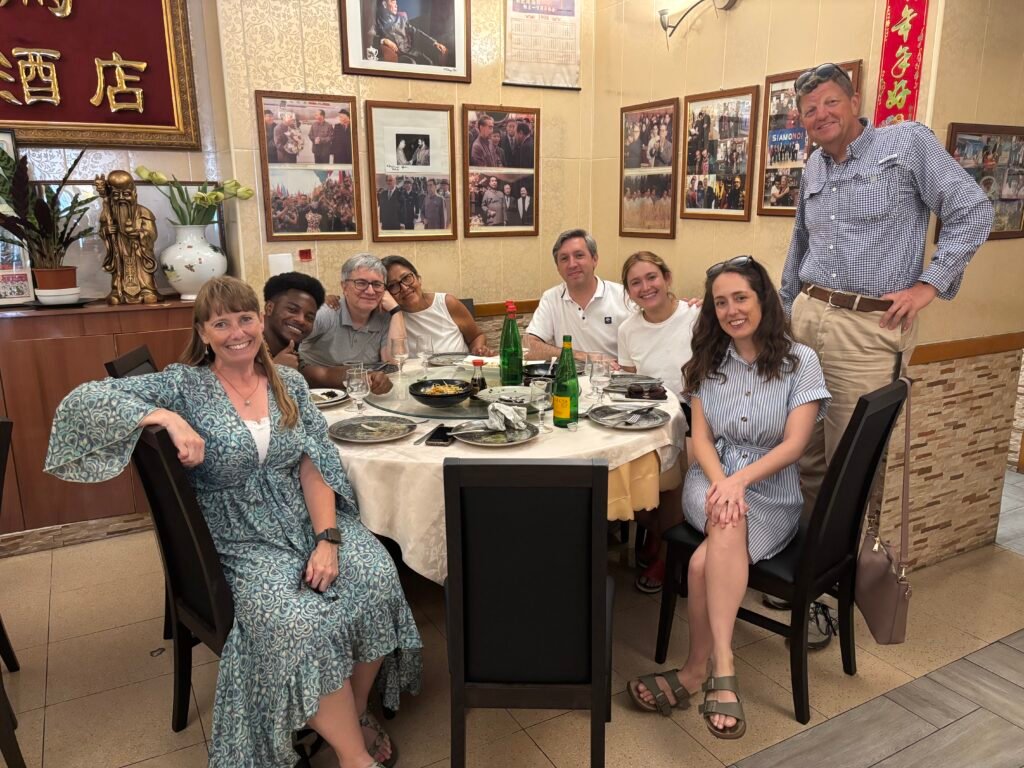
We met a couple from Argentina, a lady from Florida who had lived several years in Italy, a Ghanaian in his mid twenties, and a married couple of which the wife was from Peru and the husband, Italy. These were the folks we had lunch with after the service. We also met a fellow traveler form the U.S., but she headed out before lunch plans were made. In this group, Spanish often worked better than English, though most of our new friends spoke better English than my Spanish.
Our Ghanaian friend Lloyd gave the sermon the day we visited. The service was in Italian, of course, but the church had foreign visitors often enough that they had an automated translator set up on a repeater screen to try to make the service accessible to English speakers. I recognized the tunes to all of the songs, and they were being led slowly enough that I was able to sing bass in Italian by reading the slides. I did this well enough that some of the ladies complimented me on my singing, assuming I spoke Italian.
When the service was complete, we invited anyone who would join to eat with us. For lack of knowledge, we deferred to the locals to choose the restaurant. Knowing we needed to leave from Termini Station, they selected a reasonably priced Chinese eatery near the train depot. The food was a bit different from what we were used to, but it tasted good, and eight of us ate there family style for about €95. I ordered Szechuan Chicken and Stephanie got Kung Pao Chicken. I also ordered a plate of Curry Rice, which was the best item, in my opinion. It was a different taste than I had encountered previously.
Our friends from church dropped us off straight at Termini Station, where our train was to depart. There were trains leaving throughout the day for Napoli from Termini. Generally speaking, we could get a train that took just an hour for about €50, one that took two hours for about €27, or one that took three hours for €13.50. We opted for the latter, as we were in no hurry, and thought the trip might be relaxing, anyway. It turned out we did not have assigned seats, and the train was warmer than was comfortable. It wasn’t terrible, though, and we were in Naples before long.