We got up early on Wednesday, even Stephanie! Wednesday was our Vatican day. I figured we would beat the crowds if we arrived early, and this was true to some extent. The Vatican is broken up into two distinct areas that require separate visits. St. Peter’s Square and Basilica are on one side. These are free, but require you to pass through security. If you want to see the “scavi” (archaeological dig) or climb the Basilica dome, these require additional tickets with a cost, as does getting a guided tour. Visiting the Sistine Chapel and Vatican Museums require their own admission ticket and to reach them, you have to exit Vatican City and pass through security again.
I had secured tickets to climb the dome of St. Peter’s Basilica at 8:00 a.m. I figured we could arrive and explore the basilica some prior to scaling the dome, and then clean up anything we hadn’t seen afterward. My dome ticket also entitled us to an audio guide to the basilica. We were a tad late to catch the initial St. Peter’s opening and there was a big security line already, so we opted to just go straight to the dome climb.
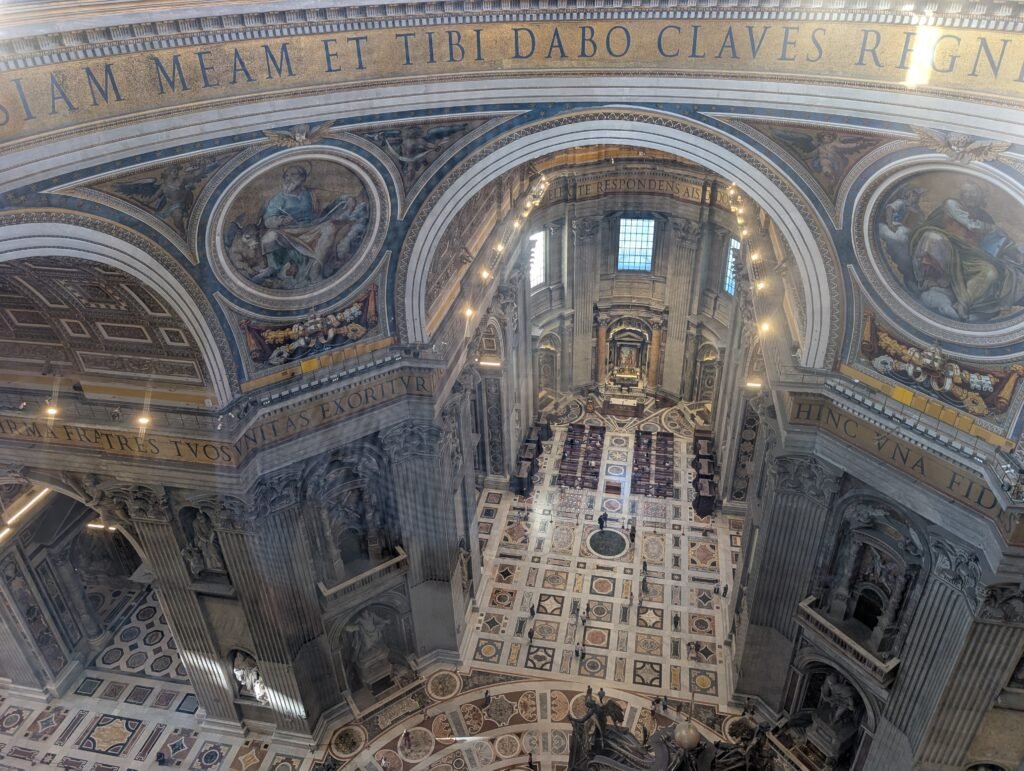
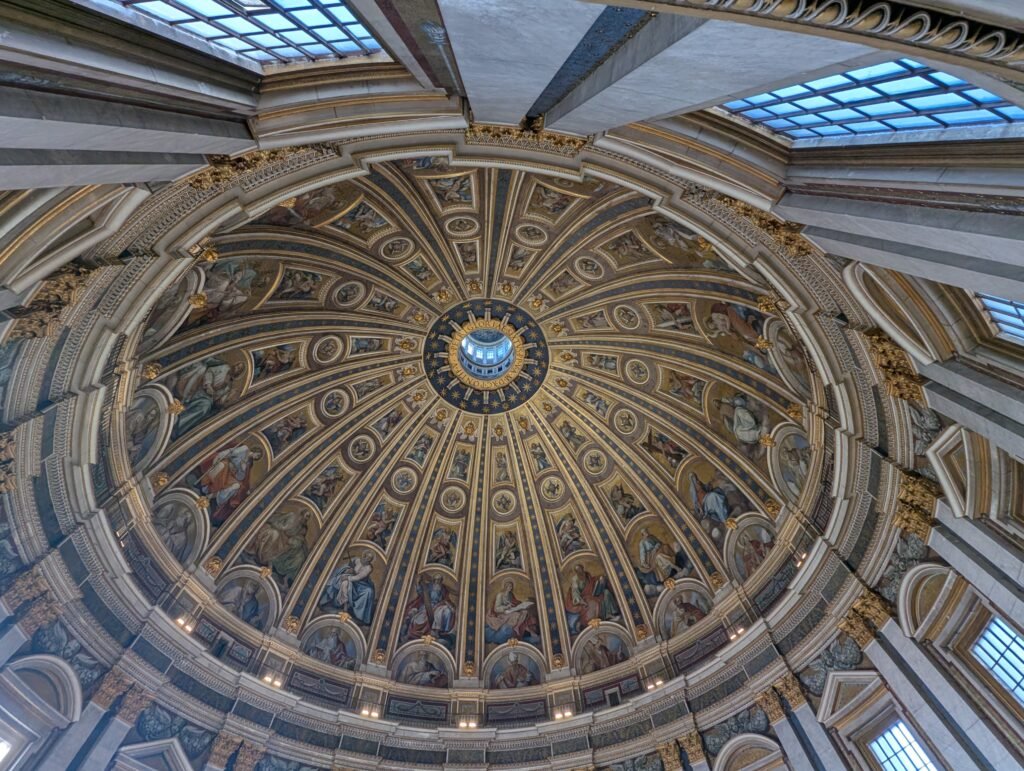
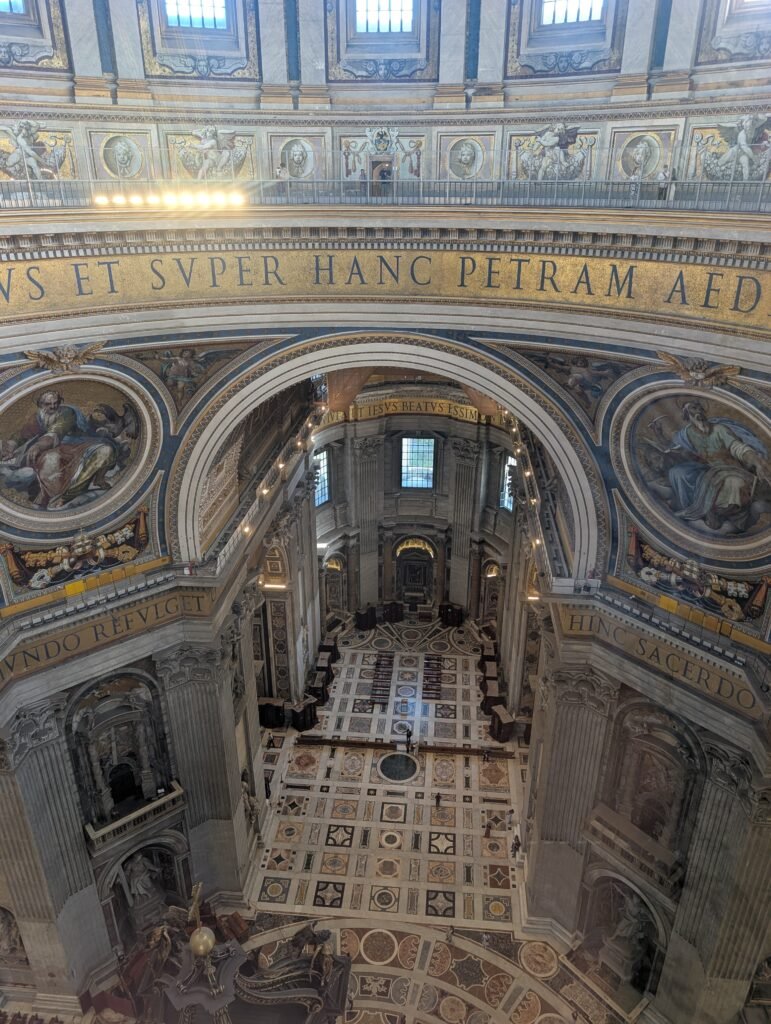
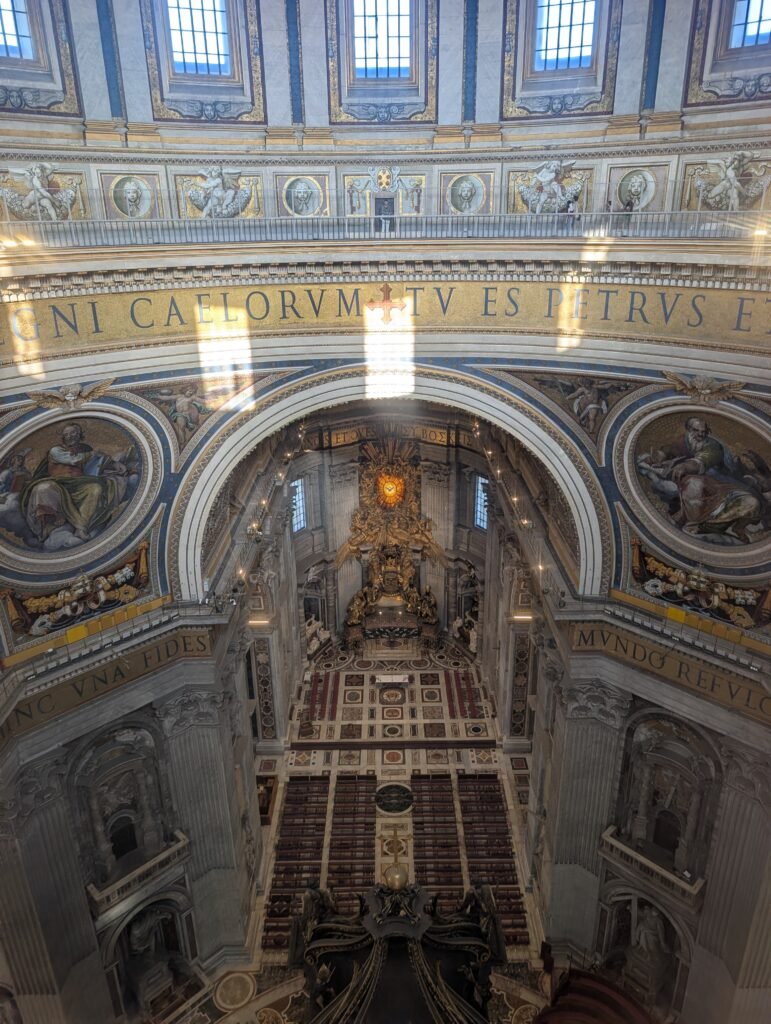
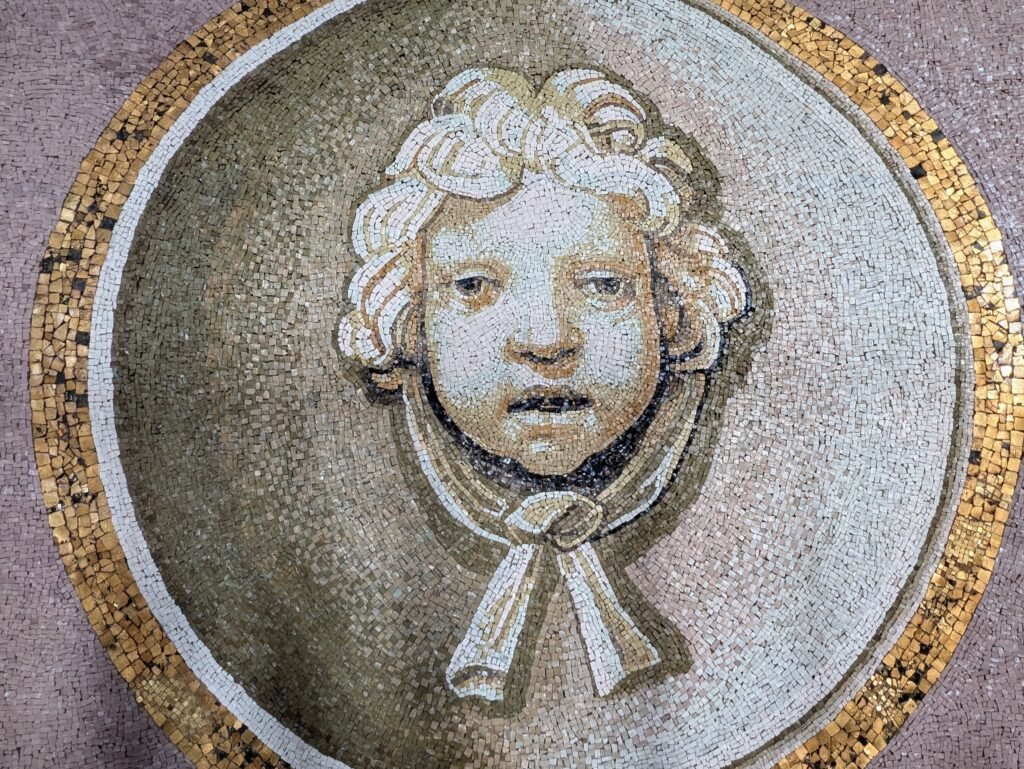
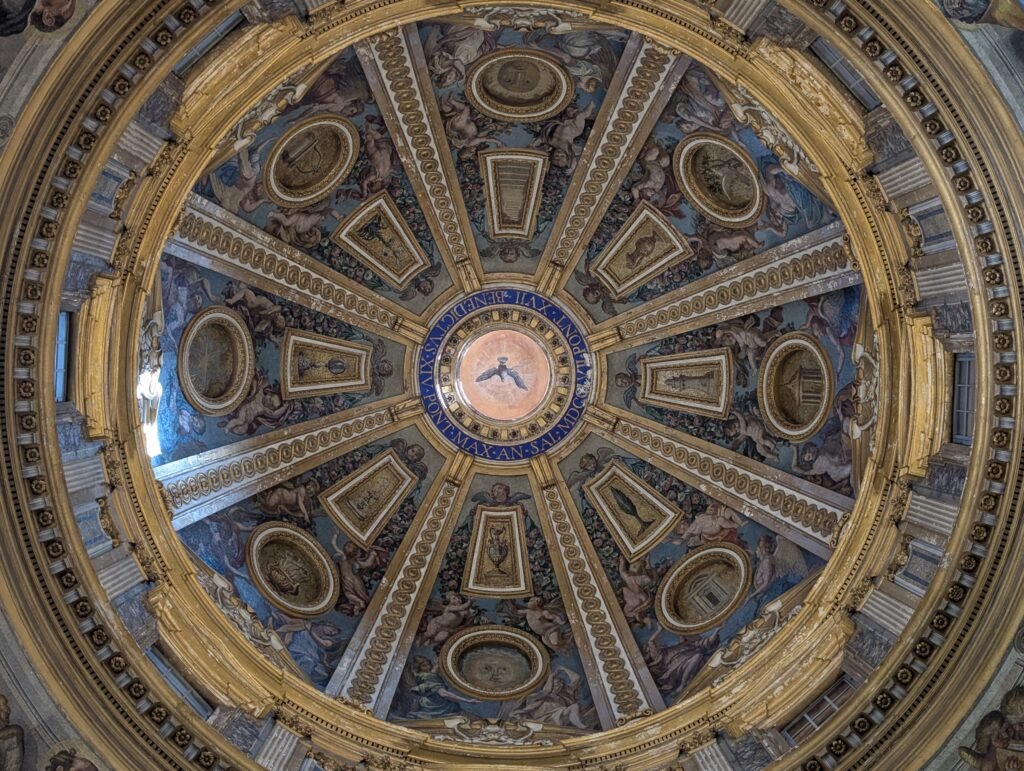
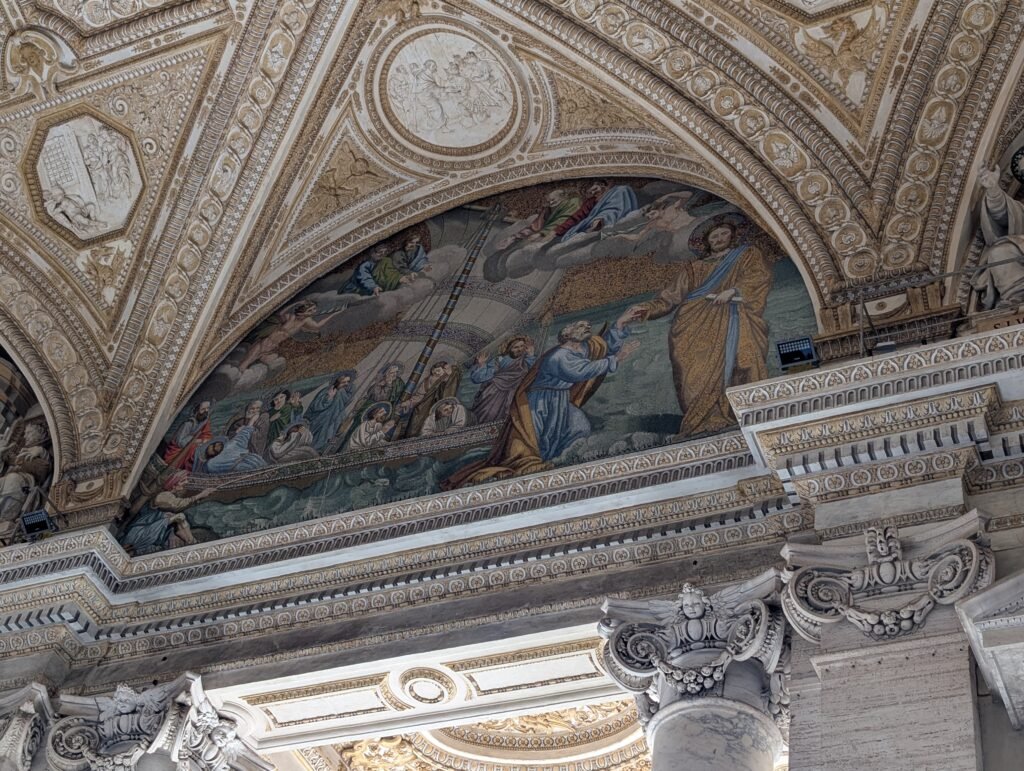
There are a lot of stairs, and some of them require scaling slanted stairwells, or very narrow, spiraling steps. An additional fee allows you to use an elevator, but this only covers about half of the stairs. The most difficult portion must still be scaled on foot. After the first flights of stairs, you are allowed to walk a sort of catwalk around lower inside portion of the dome, looking down inside the basilica at the visitors below. You get an up-close view of the mosaics inside the dome. This is all very nice, and allows a rest before scaling the rest of the steps. None of the Vatican buildings are air conditioned, however, so if it’s a warm day, you don’t really cool off much.
(Continued)
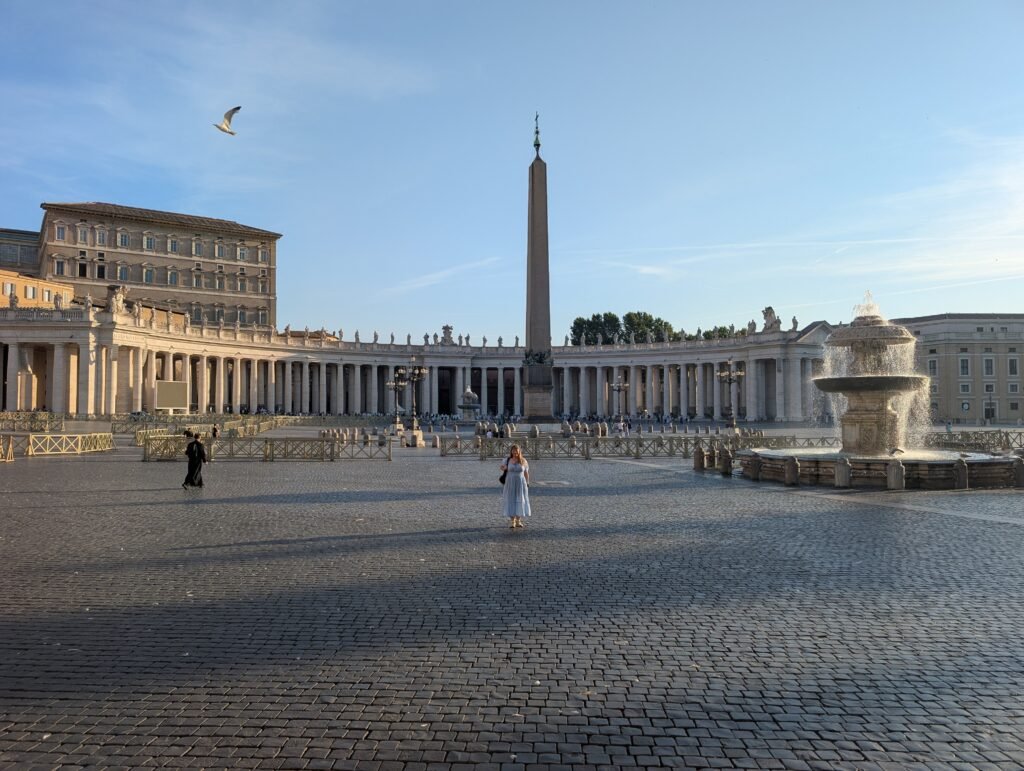
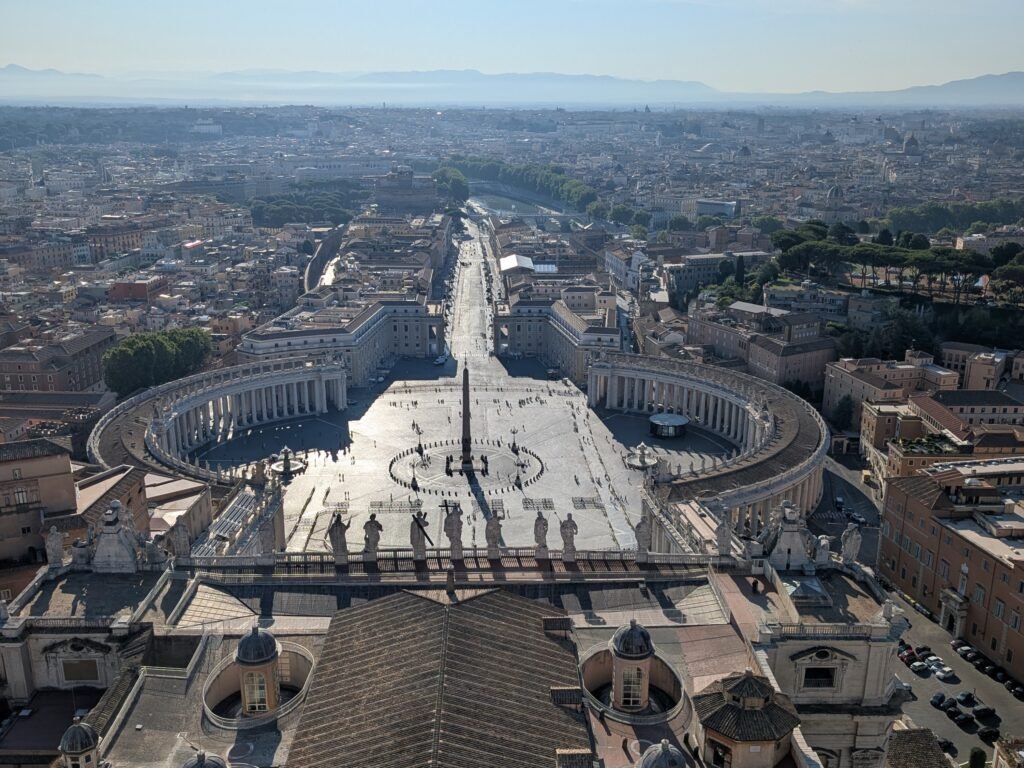
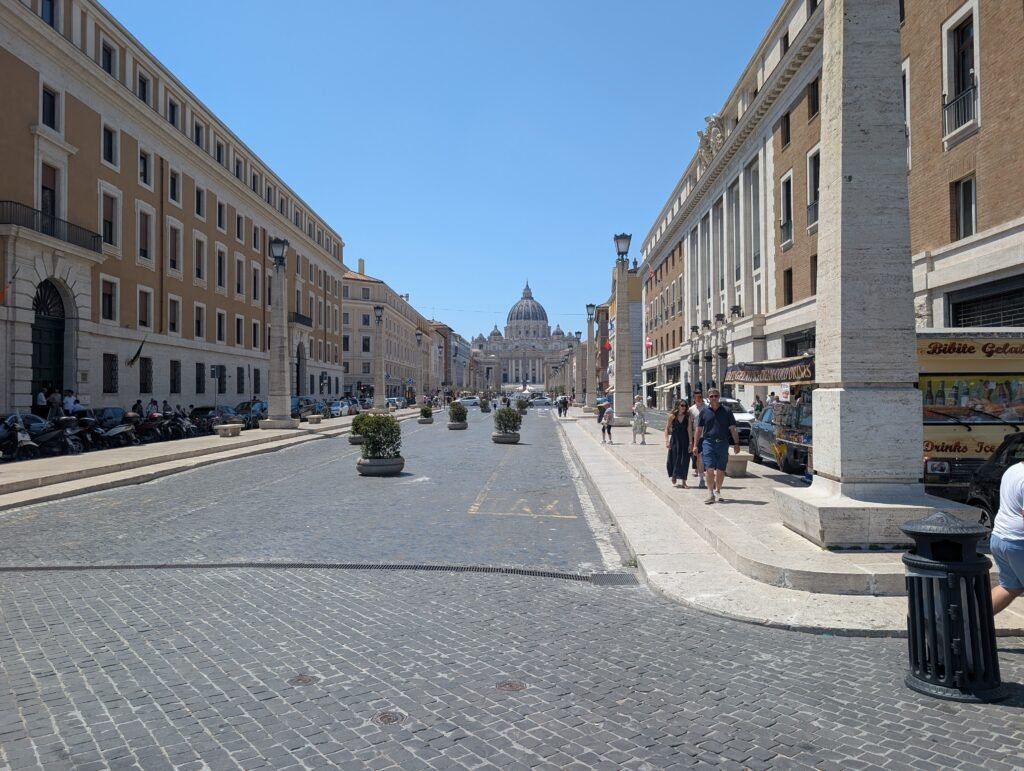
St. Peter's Square. The obelisk in the square has its own interesting provenance. Erected in Heliopolis, Egypt about 4,000 years ago, it was moved first to the Forum in Alexandria Egypt, then to the Circus of Nero in AD 37. Peter was said to have been martyred there, along with many other Christians. In 1586, Pope Sixtus V had the 326 ton hunk of stone moved again, this time to its current location in St. Peter's Square where a cross was placed at its peak.
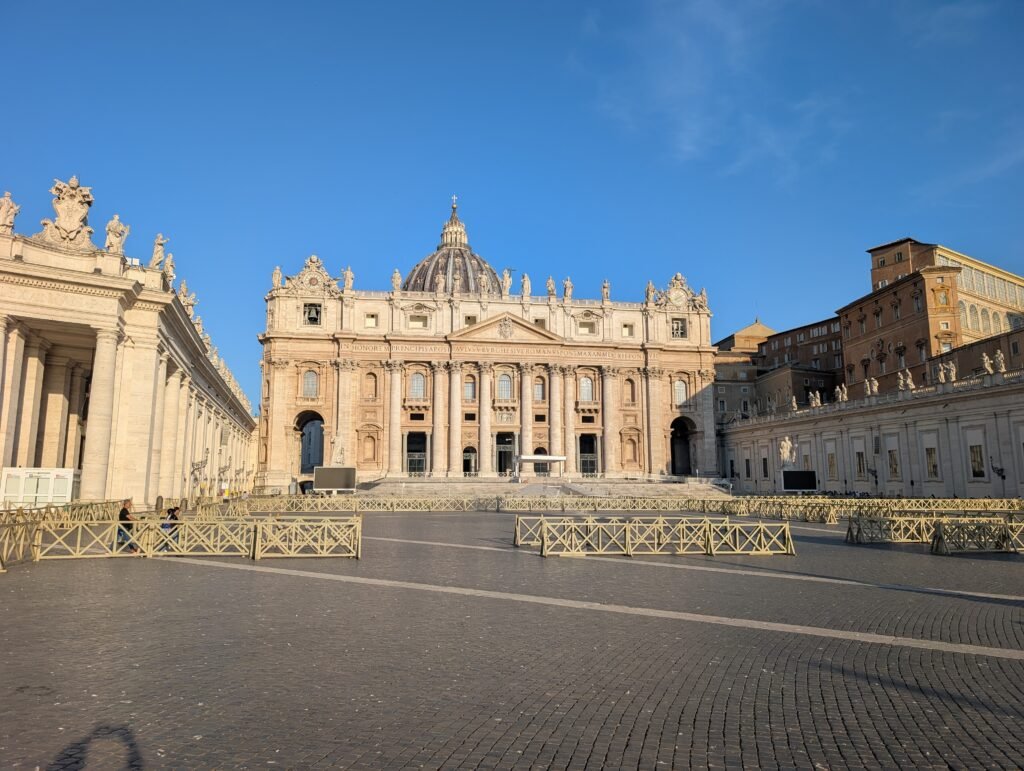
St. Peter's Basilica
From the Catwalk Inside the Main Dome
Close-up of Mosaic Inside Dome
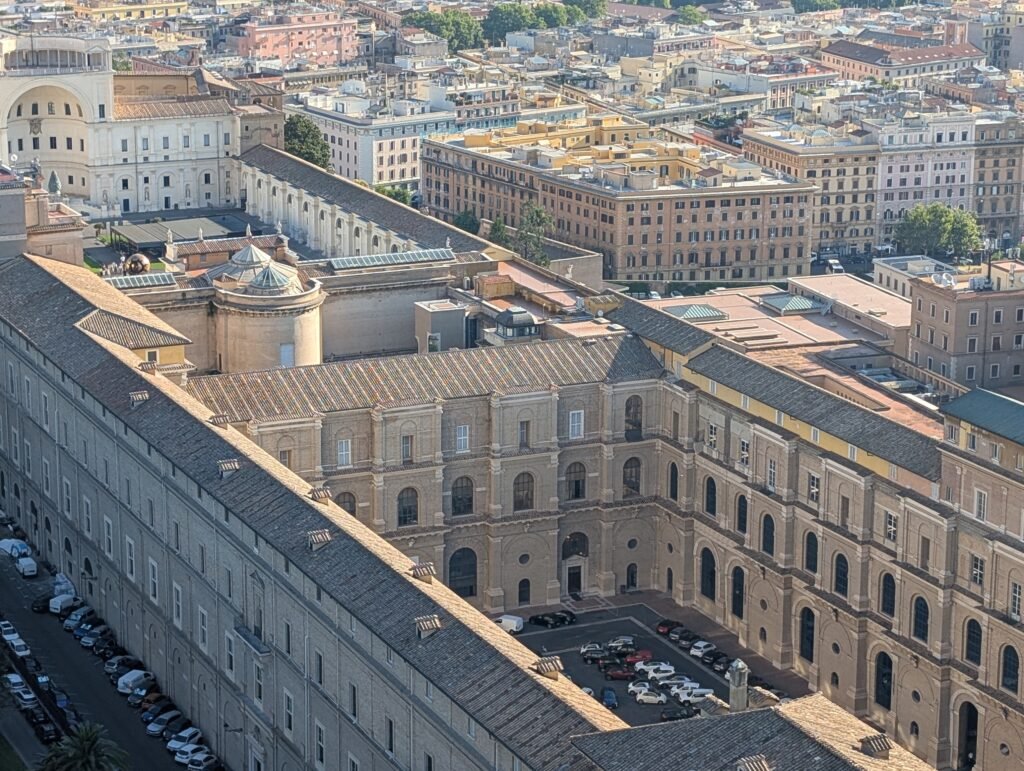
Overlooking St. Peter's Square From the Basilica Dome
Looking Across at Sistine Chapel
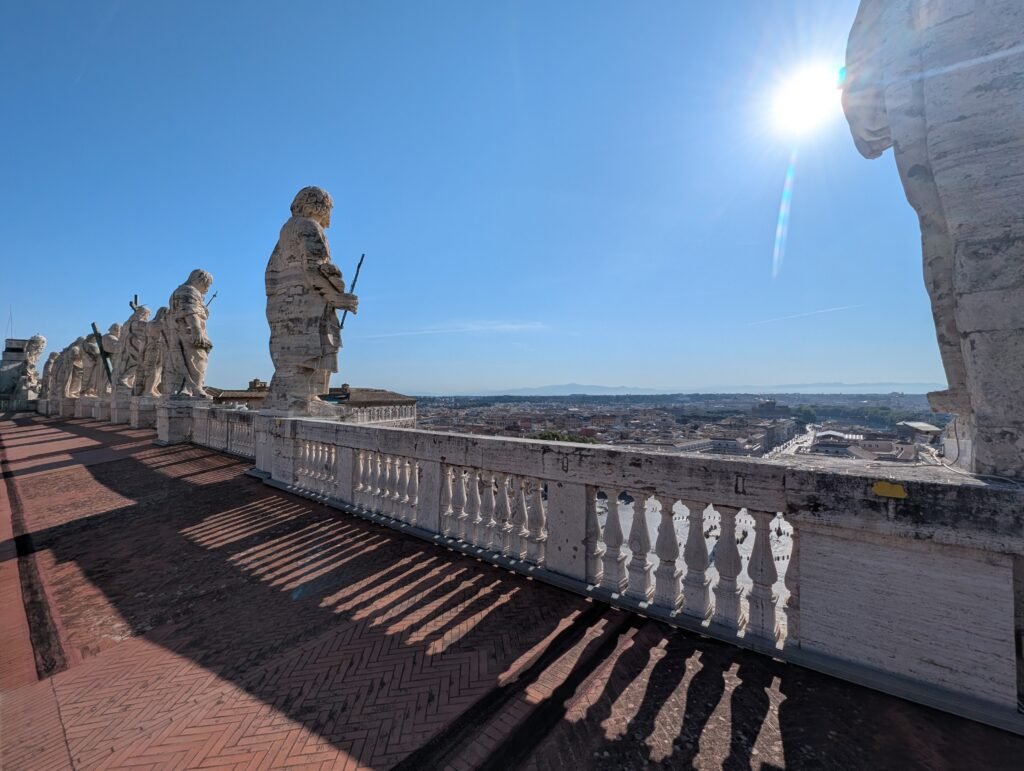
Figures on Front of St. Peter's Basilica
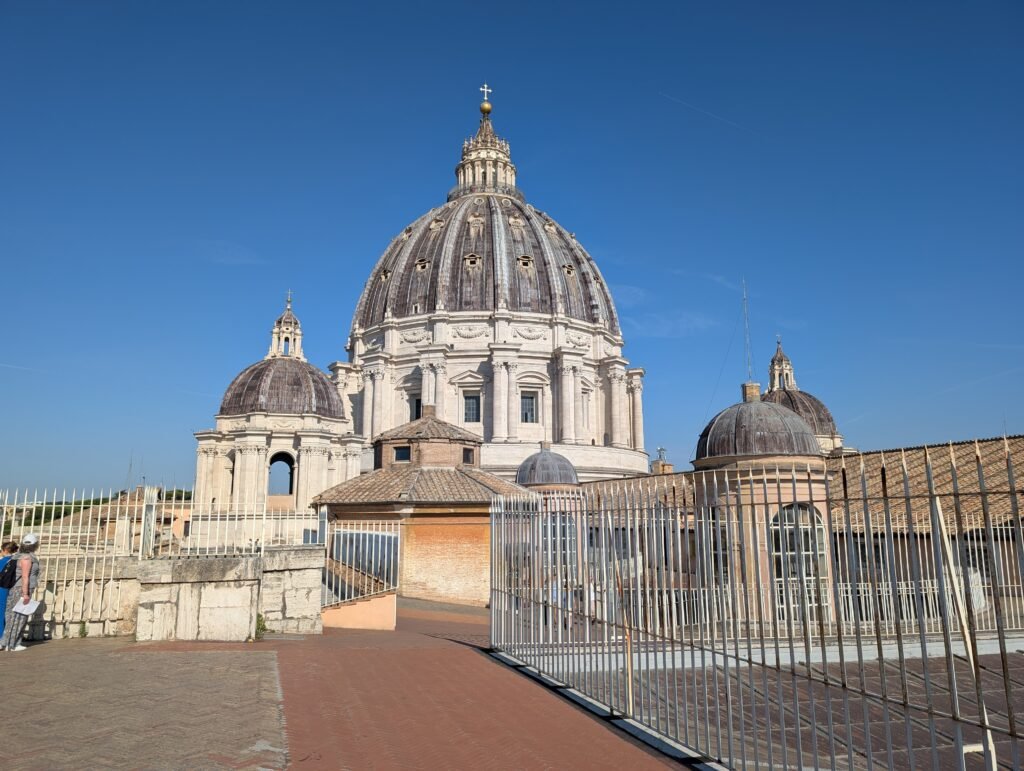
Looking Back at the Dome
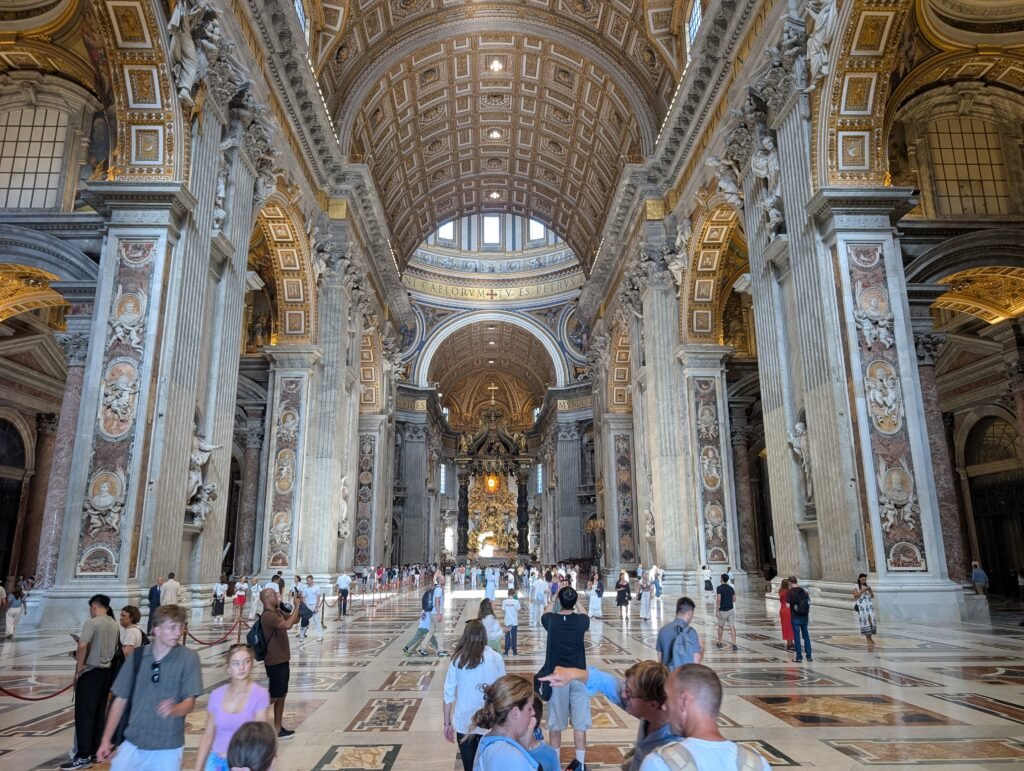
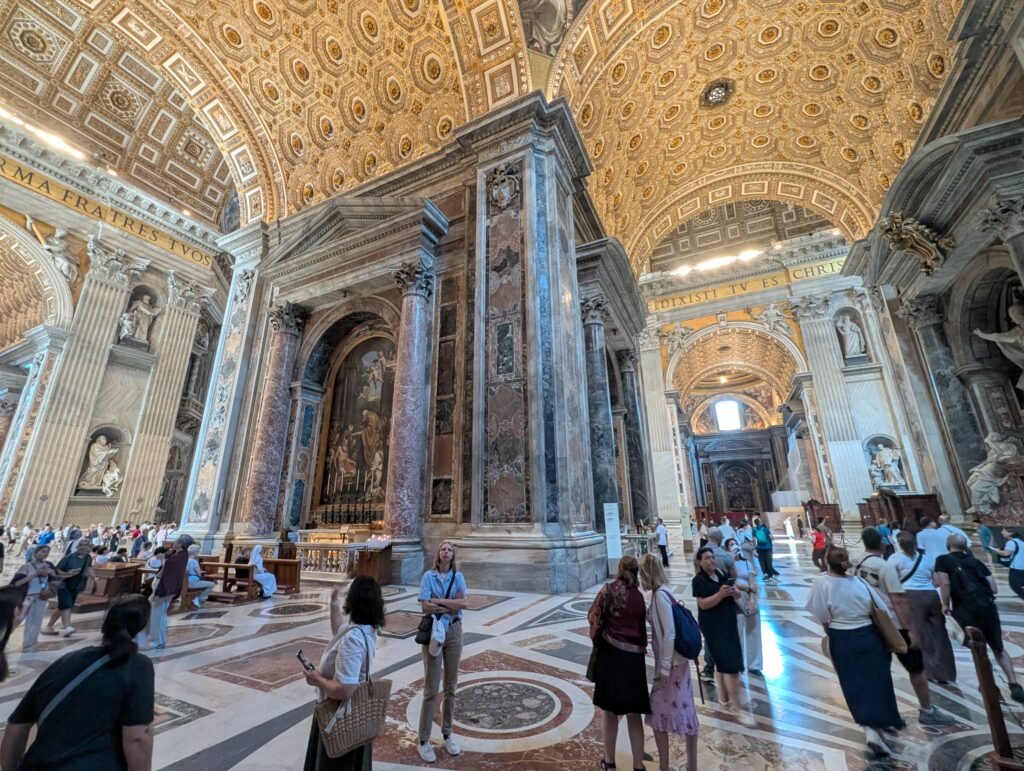
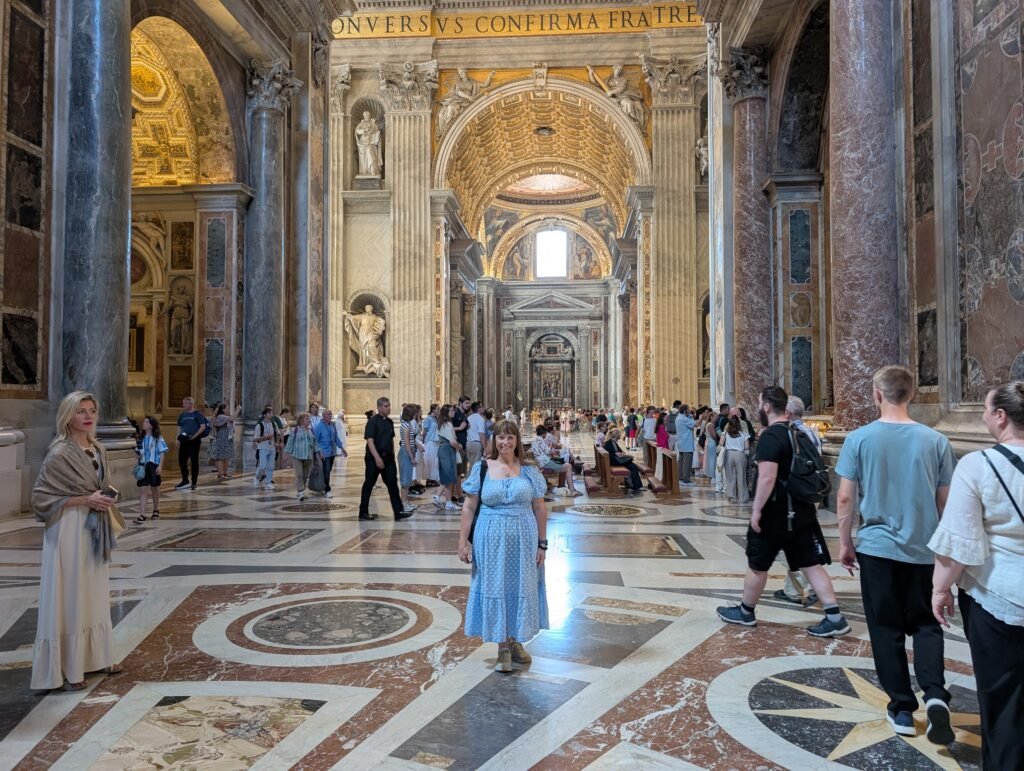
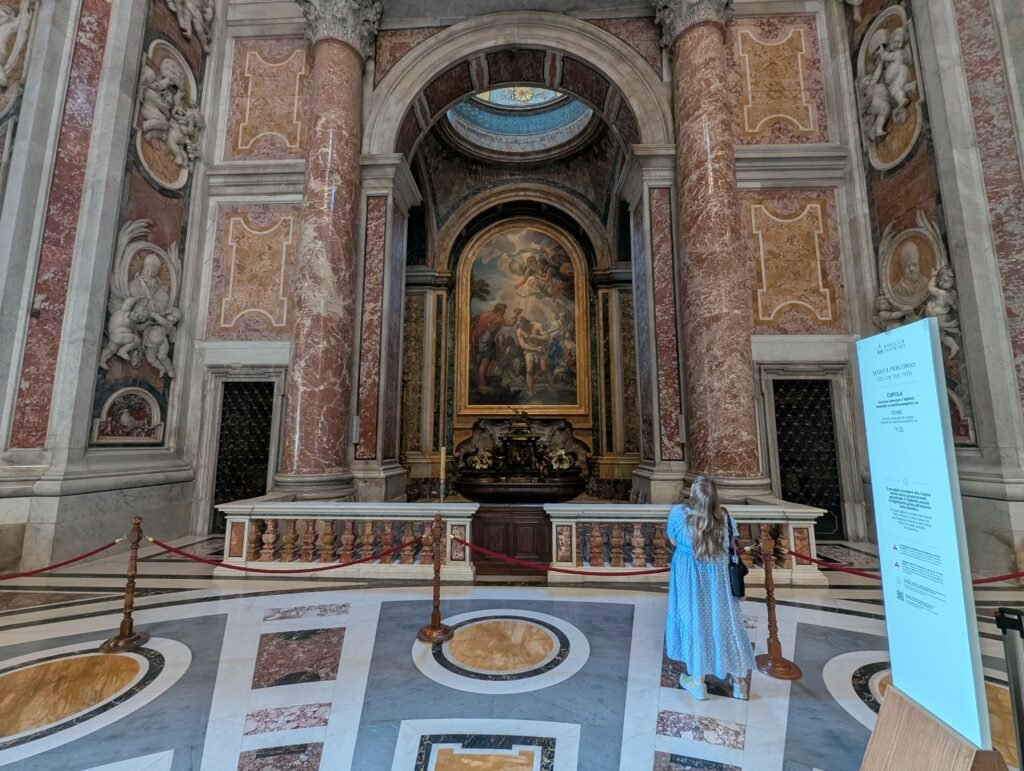
Inside the Basilica
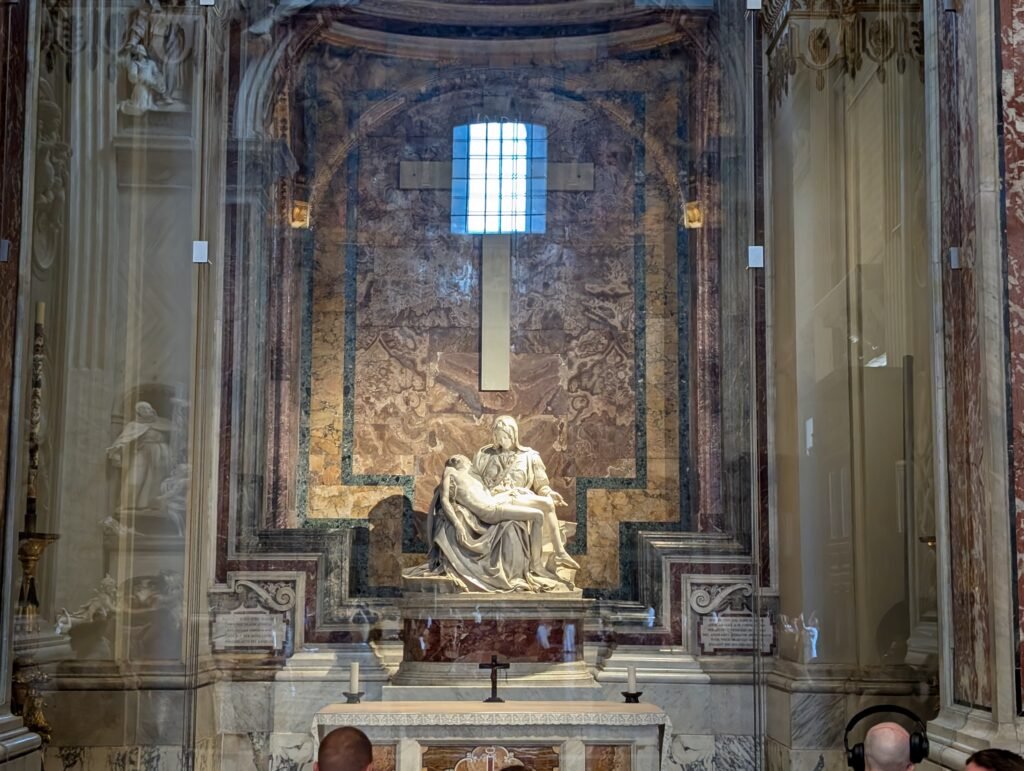
Michelangelo's Pieta
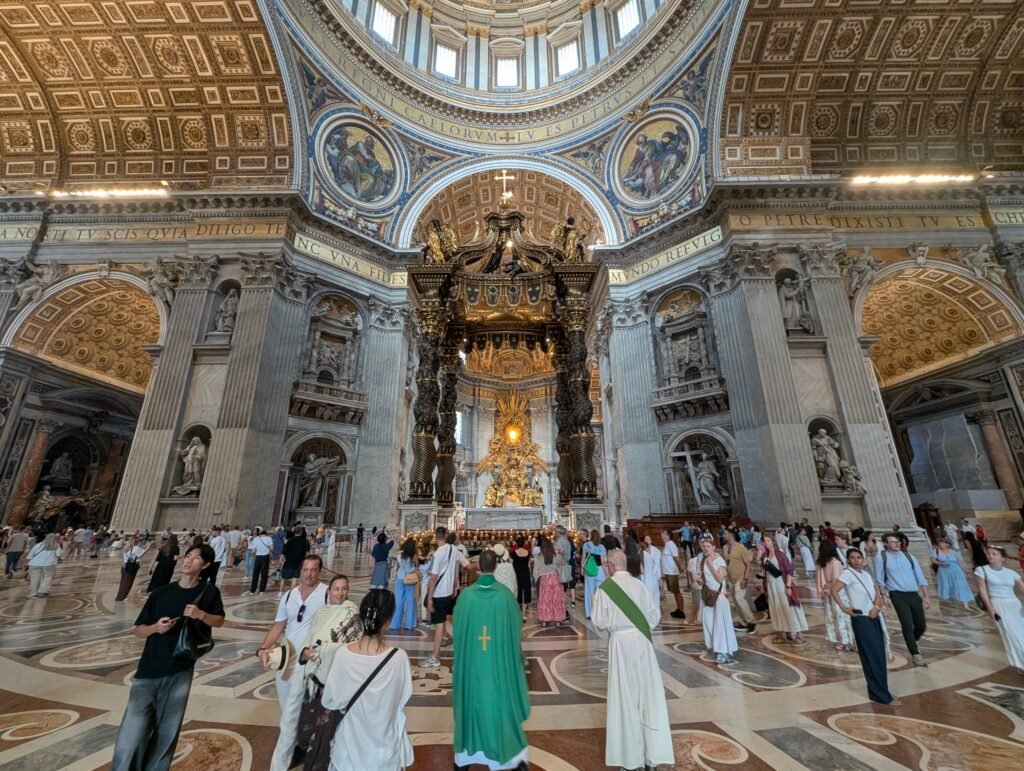
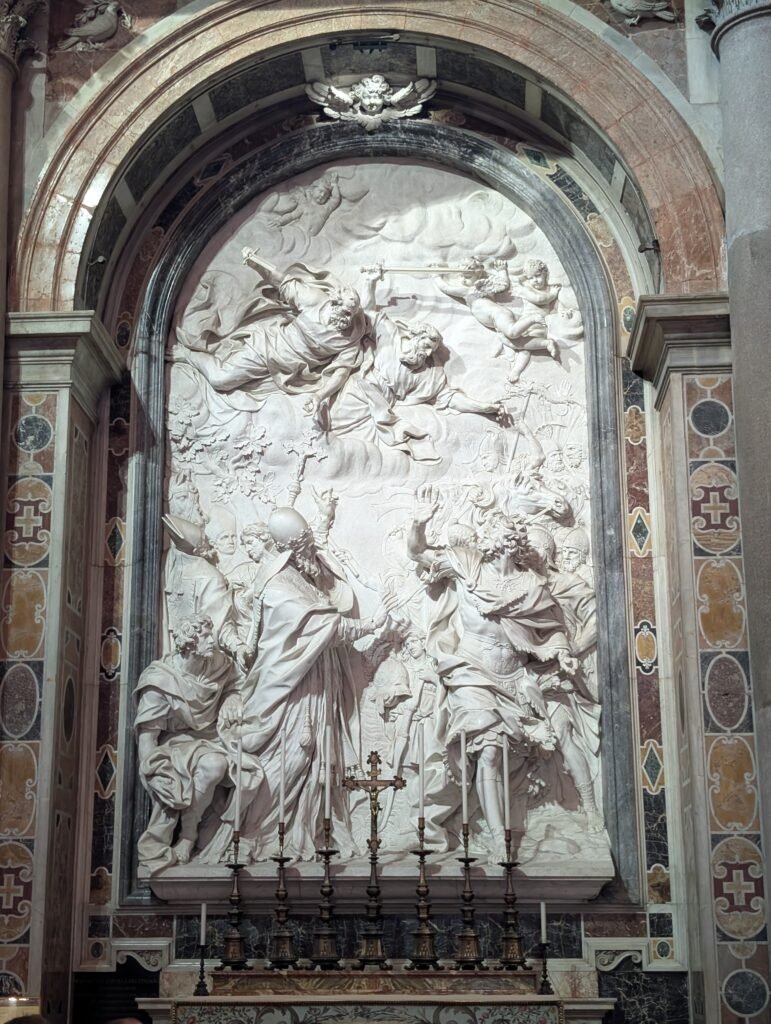
Altar
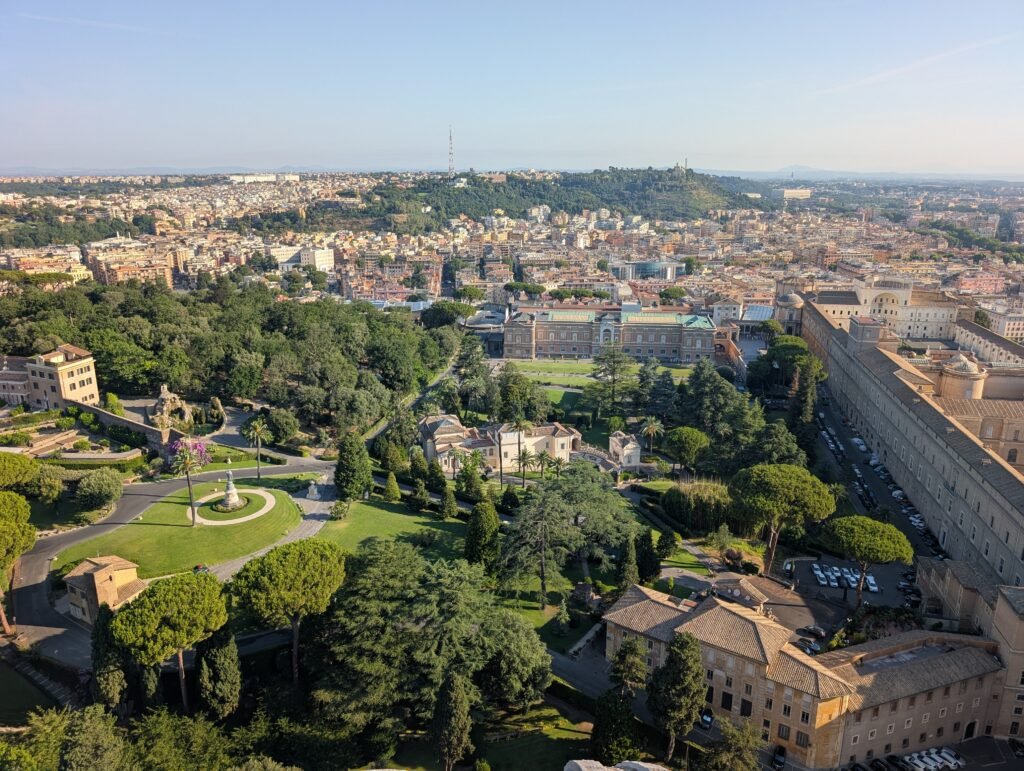
From the catwalk, you exit onto the roof of the main basilica. There are some places where you can walk around, but people generally do that after they have been up to the top of the dome. A very narrow, leaning stairway leads up to some even narrower steps to get visitors up to the platform atop the dome. The views of Rome really are spectacular, and it’s worth the ticket and the climb to get to the top. We spent a good half an hour or more soaking in the views and visiting with other travelers. We met one family from Tennessee who lived only about twenty minutes from my Aunt Beckie’s house in Farragut.
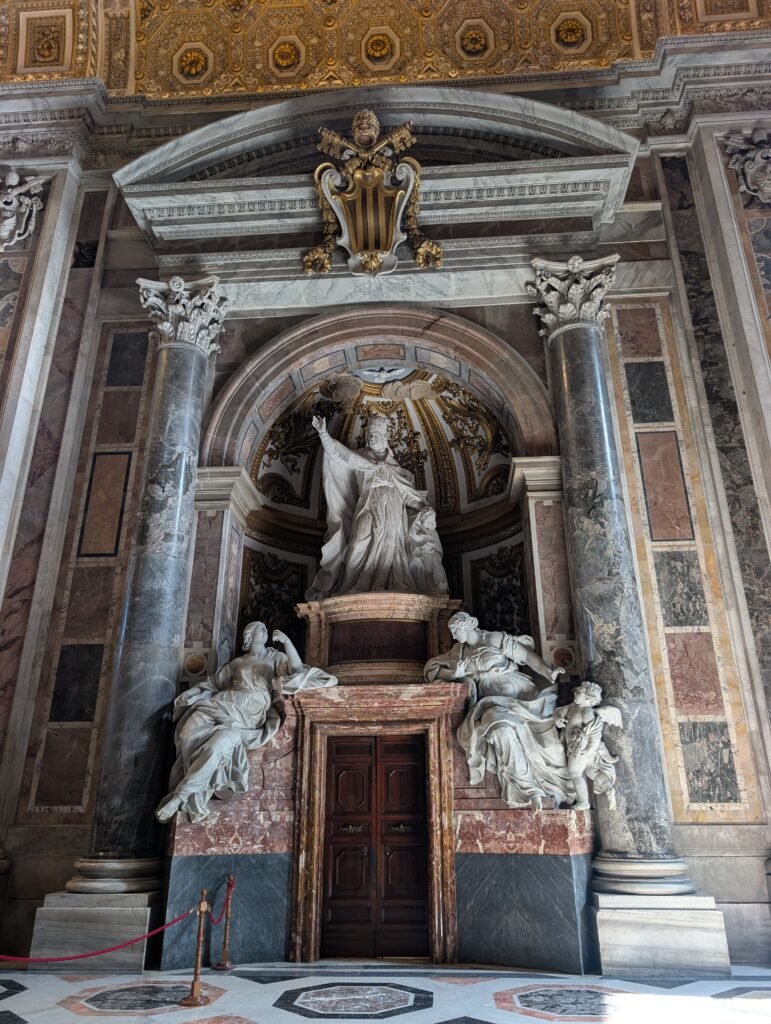
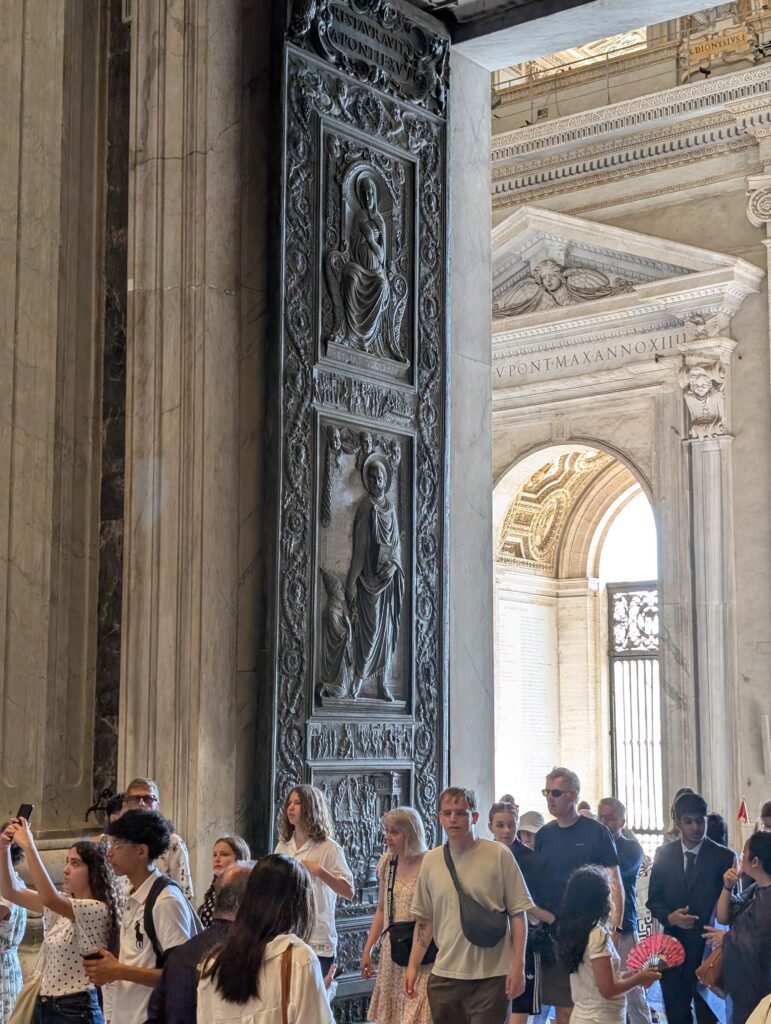
After coming back to the main basilica roof, I walked over toward the front and took a few more pictures. There was some physical effort even in making our way down the steps. Once down, we still needed to tour the inside of St. Peter’s. For this, we used an audio guide. This was OK. There are official tours available, but the audio guide is adequate. The basilica is supposed to be placed right atop the grave of Peter himself. Everything about the Vatican is based on this assumption. The Vatican flag and coat of arms has keys, reflecting the Catholic belief that Peter’s confession reported in all three synoptic gospels should be interpreted to mean that Jesus was appointing Peter as the first pope.
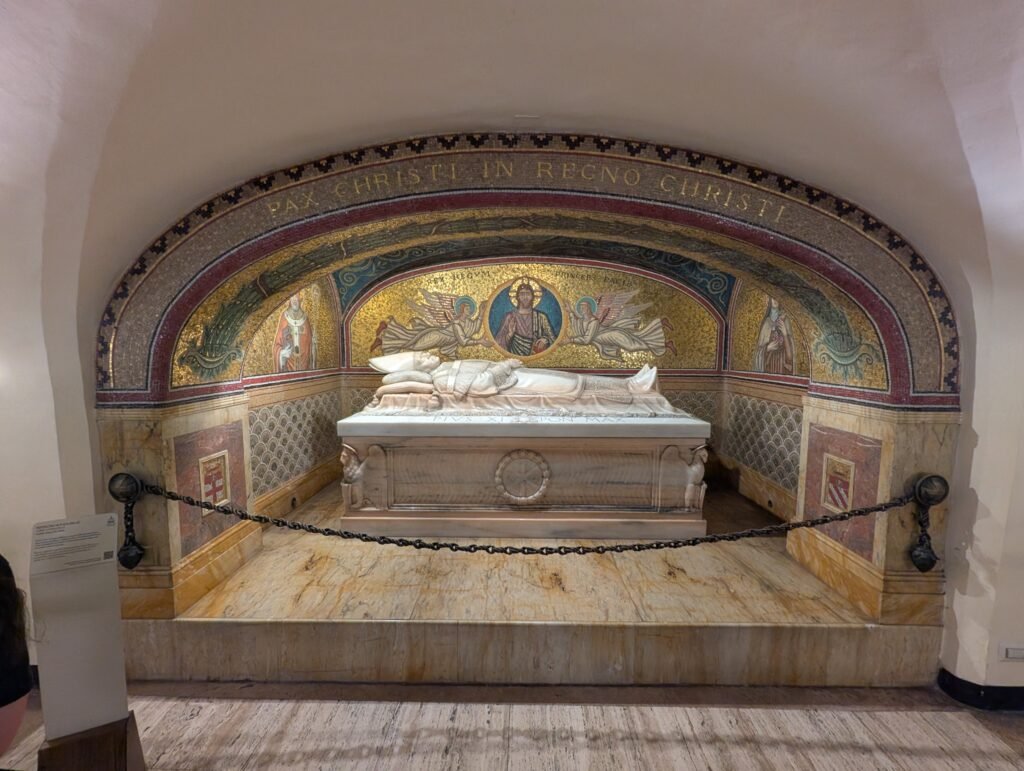
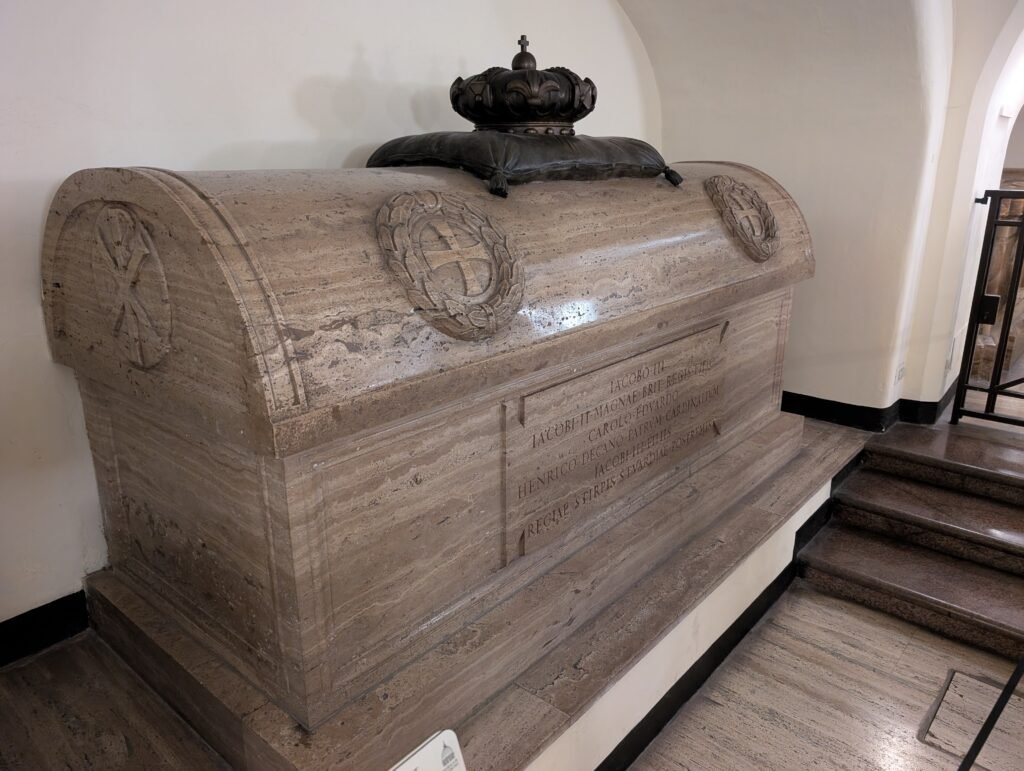
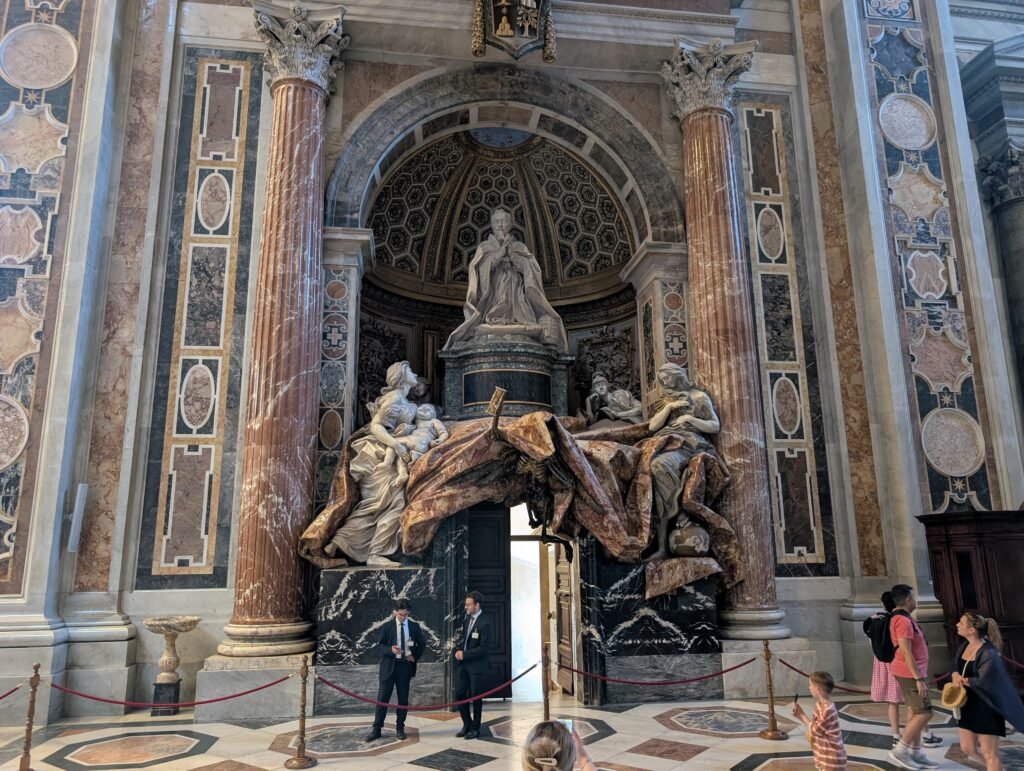
Several popes, high officials, and members of disenfranchised Catholic royal families are buried in the crypt beneath the alter at St. Peter’s. Most of these sarcophagi are sitting out in a subterranean area that can be easily included in your tour. The path even marches past a window into an ornate area they claim houses Peter’s remains. I found it interesting that several Stuart family members (Catholic descendants of the Scottish royal family that came to the English throne after the absence of Tudor heirs) are entombed there, including the man who would have been James III, Bonnie Prince Charlie, and Henry Benedict Stuart – Bonnie Prince Charlie’s younger brother.
(Continued)
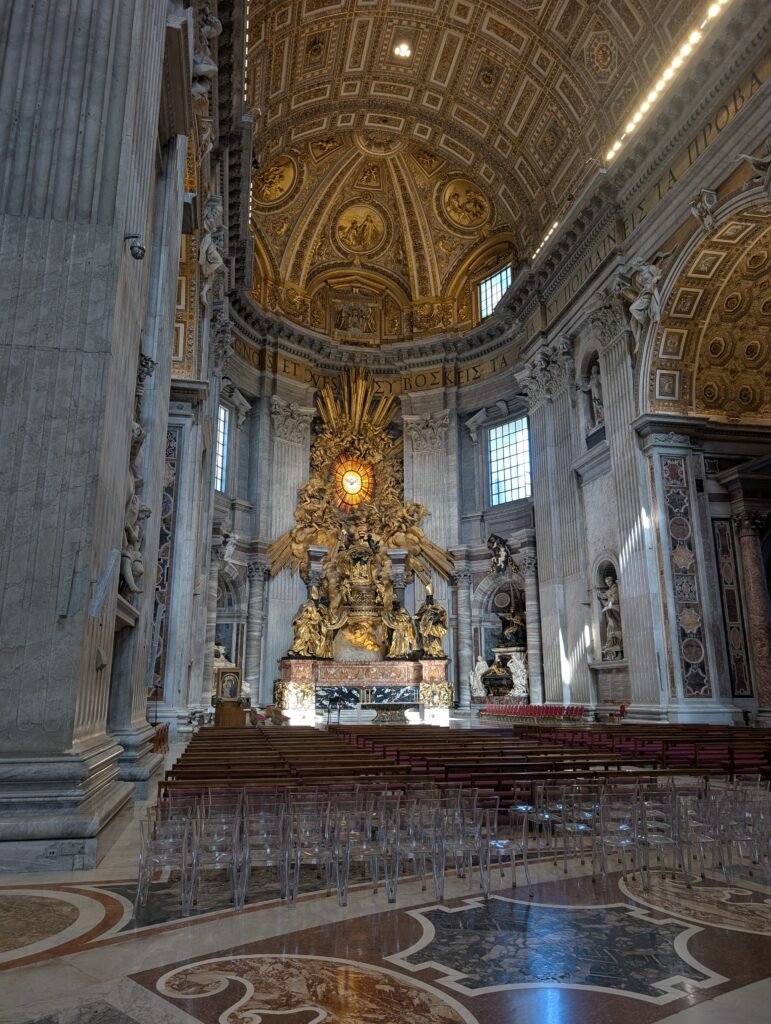
The Chair
A Papal Sarcophagus
Stuart Sarcophagus
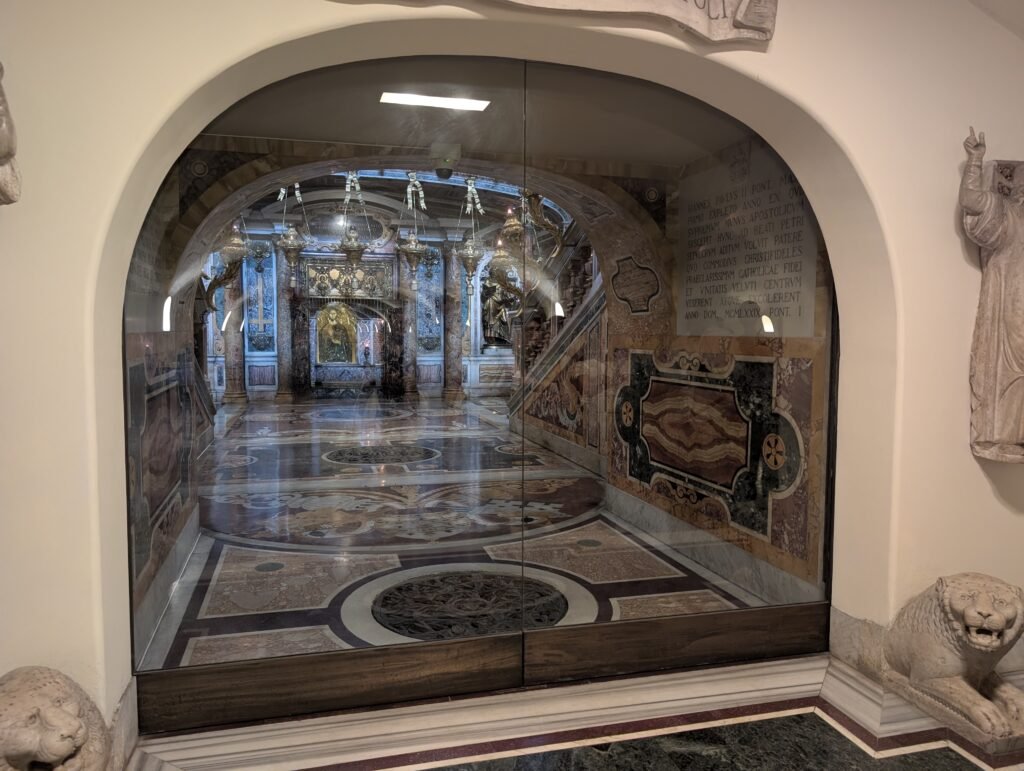
Peter's Tomb
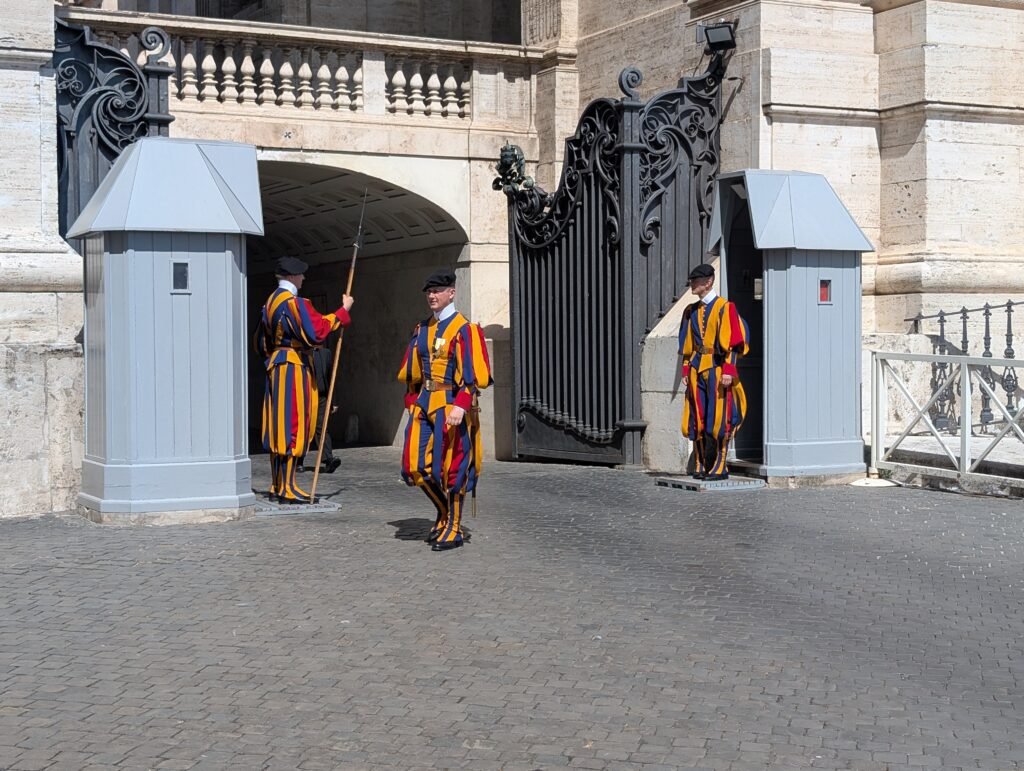
The Famous Swiss Guards
You can see back into an area through a window that is supposedly the tomb of the apostle Peter himself, but you cannot go back in there. With a special tour you must request in advance, there is a scavi below where you can see the tombs of some of the earliest bishops of Rome, as well as some inscriptions that claim to be the resting place of Peter. How these do or do not relate to the one you can see in the publicly accessible sarcophagi, I cannot say. My request was not honored, and we weren’t able to see the scavi, unfortunately. I will put that on my list for a future visit.
St. Peter’s is also home to Michelangelo’s Pieta sculpture, and an ancient wooden throne encased in a massive bronze structure representing the Vatican as the seat of church power on earth. It is a massive and beautiful basilica, one of the four papal basilicas of Rome. We visited St. Mary Major our fist day in town. The other two, St. John’s Lateran and St. Paul’s Outside the Wall, we were not able to see on this trip. The audio guide was a bit propagandistic as one might expect from a Catholic interpretation of their most important site, but not obnoxiously so. It tried to be reflective or didactic at times, but also contained useful information and conveyed the intent of important pieces of artwork around the basilica.
Even with all of that interesting stuff to look at, we were done with St. Peter’s sometime during the 10 o’clock hour, and weren’t slated to start our tour of the Vatican Museums and Sistine Chapel until 3:00 p.m. It was too early for lunch, so I searched about for something to do. We had to leave the country of the Vatican anyway to get from St. Peter’s to the Vatican Museum. I noticed that Castel Sant’Angelo was nearby, along the West bank of the Tiber. It was within walking distance, and I had seen its imposing structure on the bus as we drove by on our way into town on the 6th of July.
(Continued)
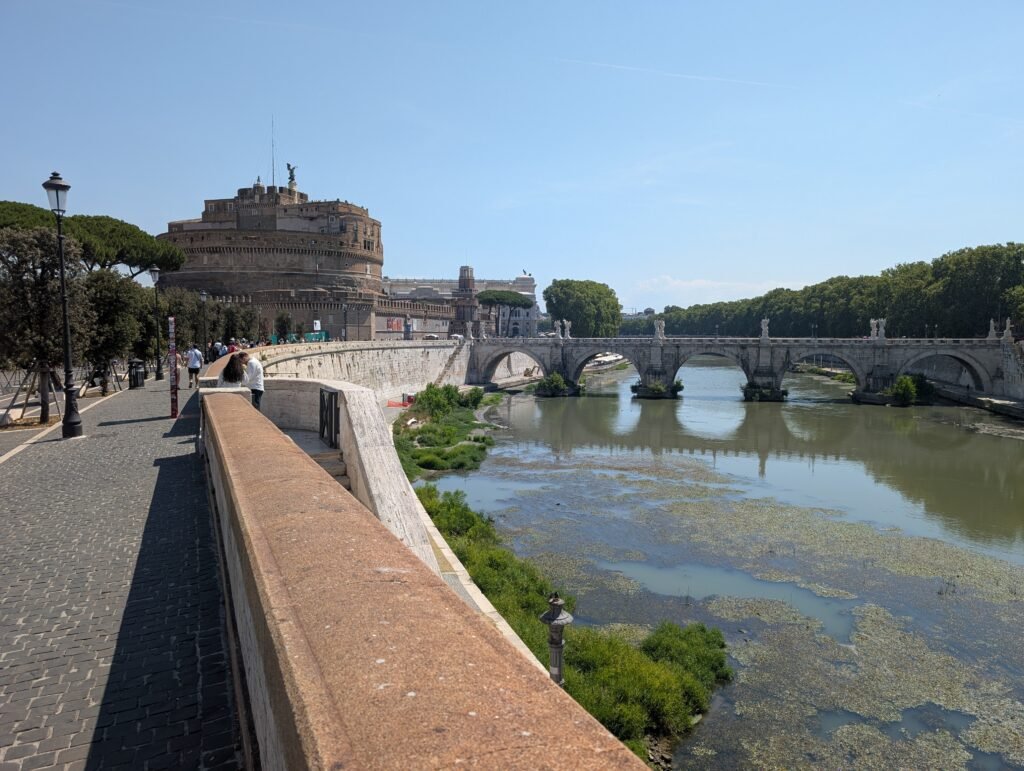
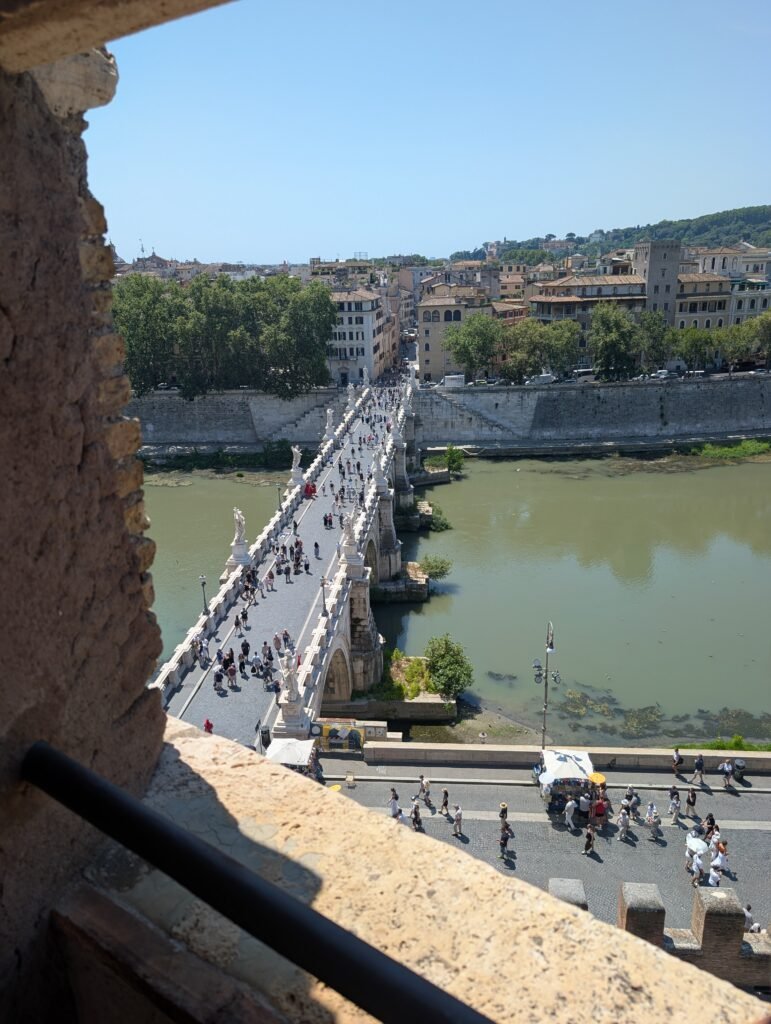
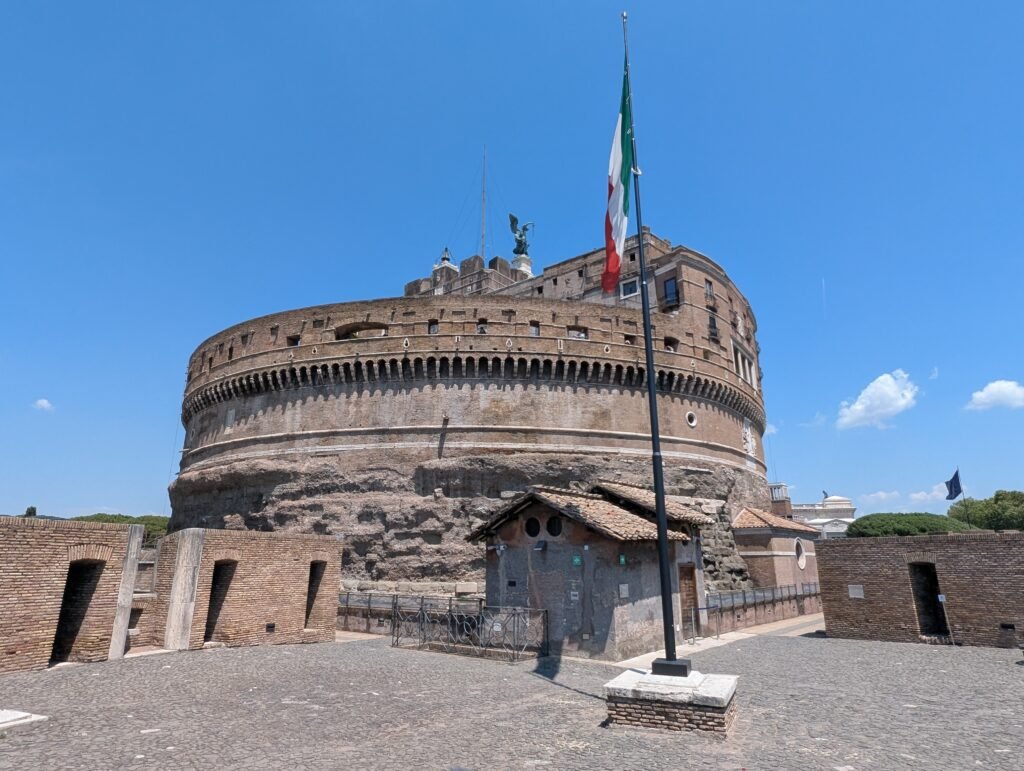
Approaching Castel Sant'Angelo
Originally Built as a Tomb for Hadrian
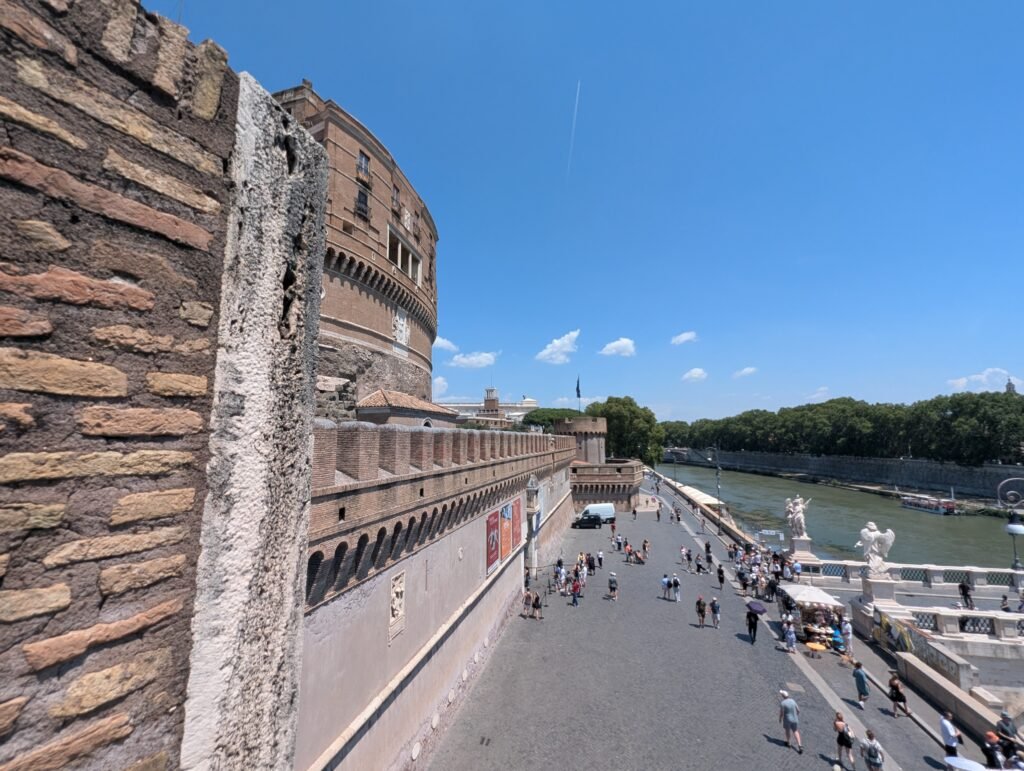
Bridge Just Outside Castel Sant'Angelo
Wall With Escape Route to Sant'Angelo
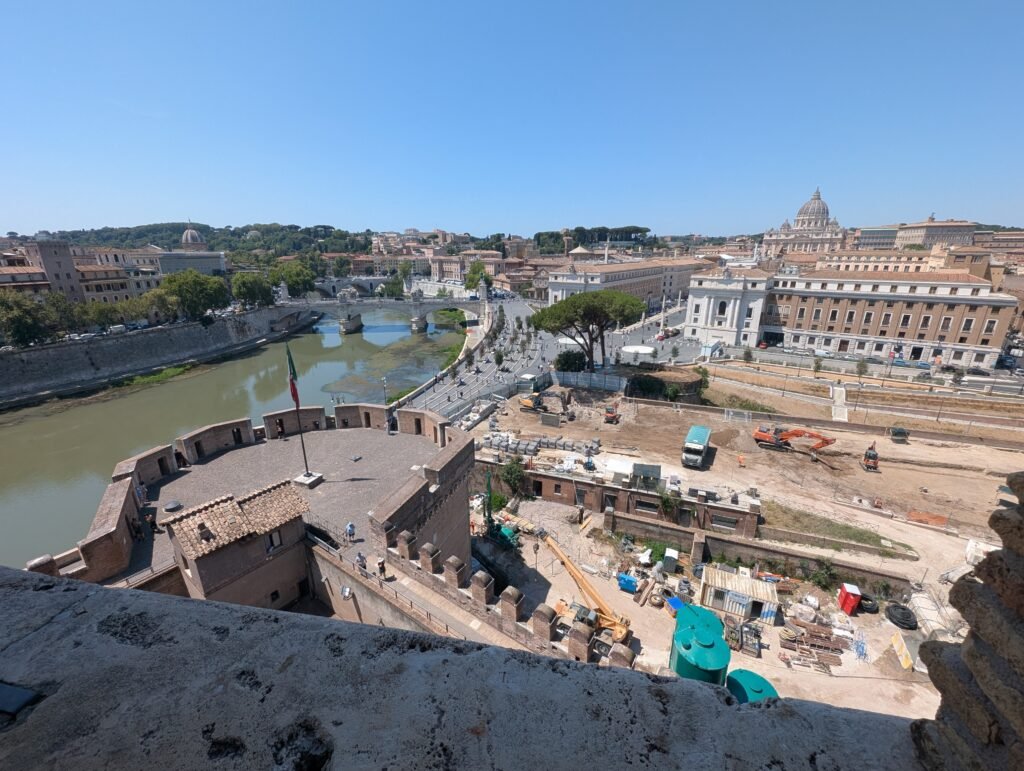
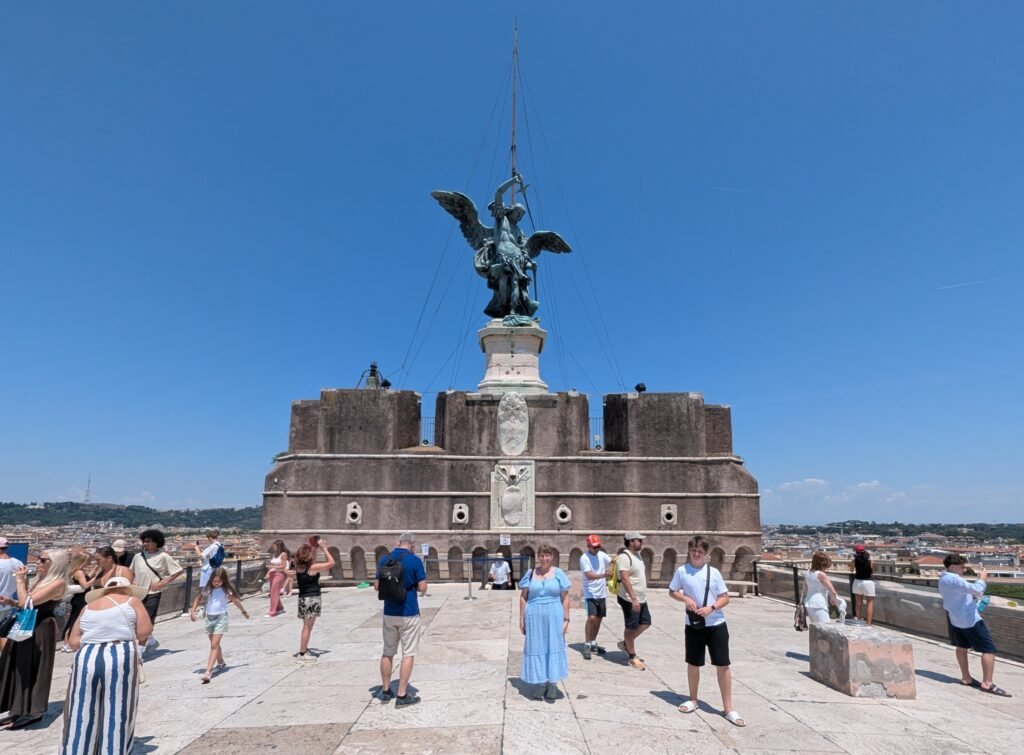
Sant'Angelo Roof
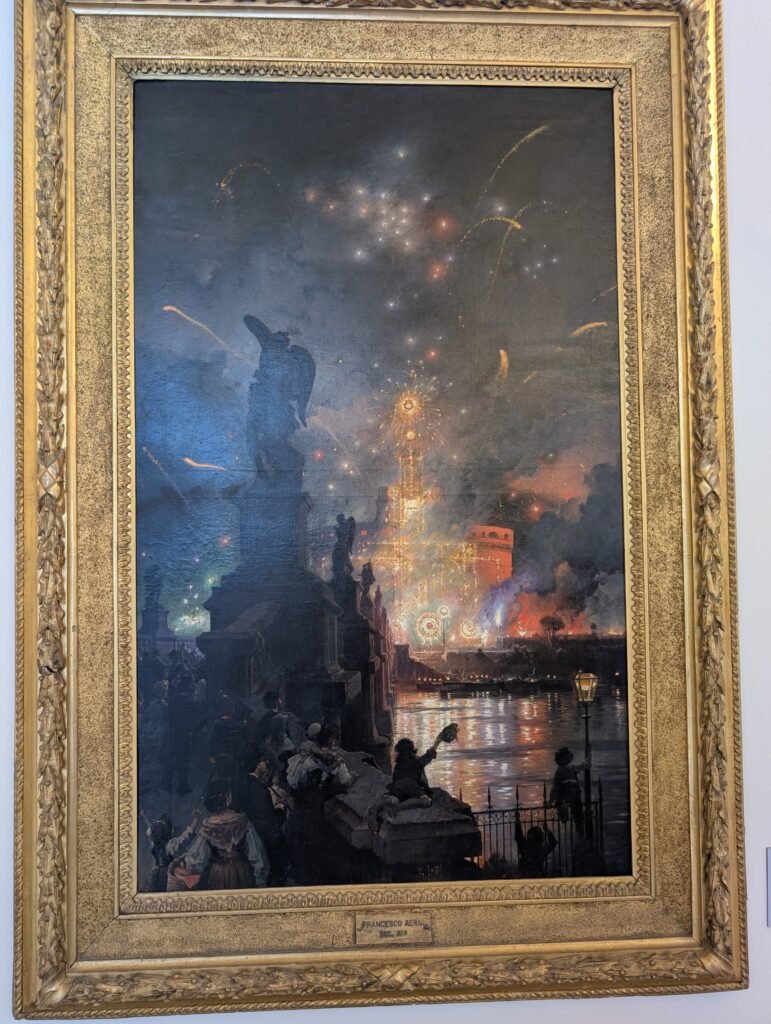
Art Depicting Fireworks
Walking Back to the Vatican Museums
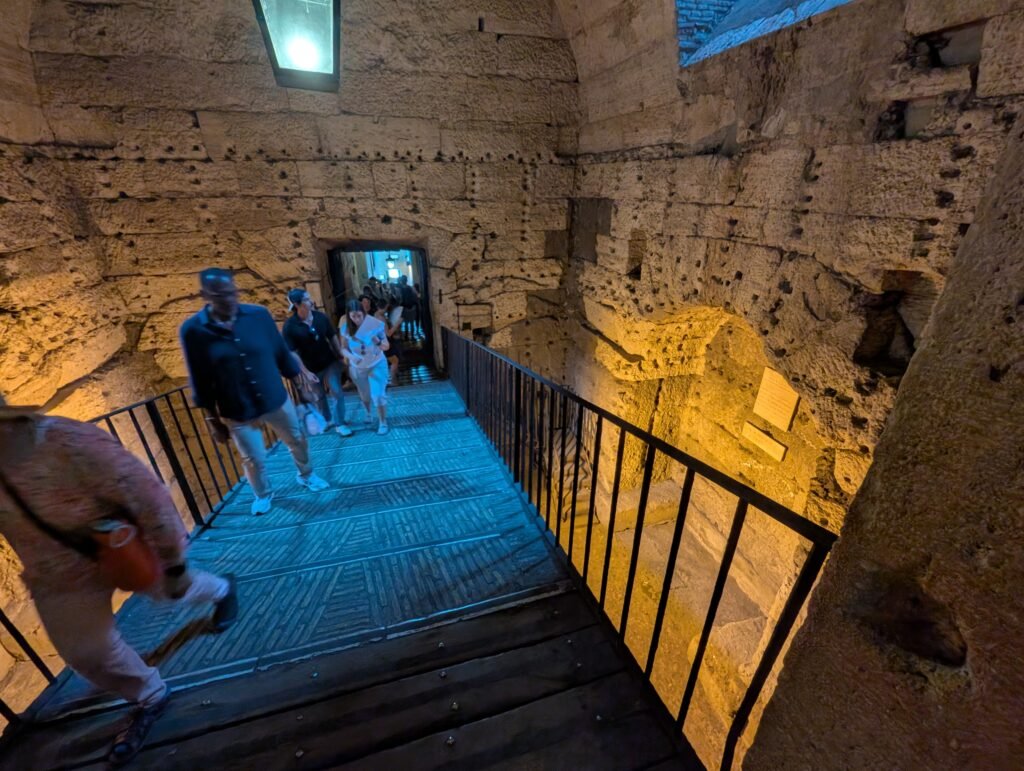
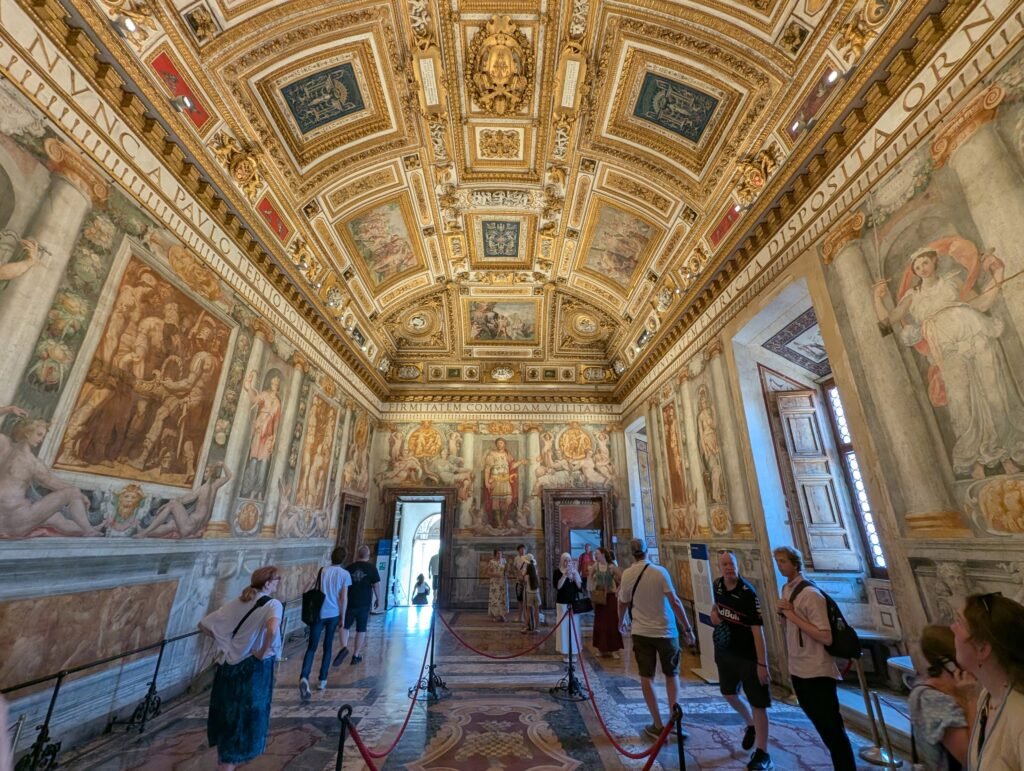
We walked to the Castel. The cost was small, so we grabbed an audio guide and made our way through the building. Even more than most ancient structures, the appearance and layout of Castel Sant’Angelo has varied massively over the years. The building was first constructed in the 2nd century as a mausoleum for the Emperor Hadrian and his family. The original purpose can be seen in the innards of the building as you make your way up the spiraling entry. During the 5th century, it was incorporated into the Aurelian defensive walls around the city of Rome. It thus became more of a fortress or defensive structure than a mausoleum at that point. It successfully protected the Vatican area from the Vandal and Visigoth raids of the 5th century. During the early medieval period, it was used as a home and stronghold for some noble Roman families. Once the Catholic Church headquarters moved from St. John’s Lateran to St. Peter’s, a walkway was built so the pope could use the castel as a refuge and stronghold in times of growing uncertainty. Rome got so chaotic that for most of the 14th century, the papacy actually moved to Avignon, France.
Upon the pope’s return to Rome, the castel was further fortified, and from that point on, improvements were being made to the fortifications and the papal apartments at the behest of subsequent pontiffs. The castel successfully protected the papacy from the notorious sack of Rome by German mercenaries working for the Holy Roman Emperor on May 6, 1527.
By the 19th century, it had been in use as a prison for some time, then it was converted into a museum after the unification of Italy, a process that occurred mostly during the 1860s. There are models throughout the building illustrating what the castel may have looked like as it evolved over time. Sometime during the Renaissance era, popes began authorizing massive fireworks displays from the upper levels of the castel. These are illustrated with greater or lesser levels of skill in art that remains on display in different parts of the building.
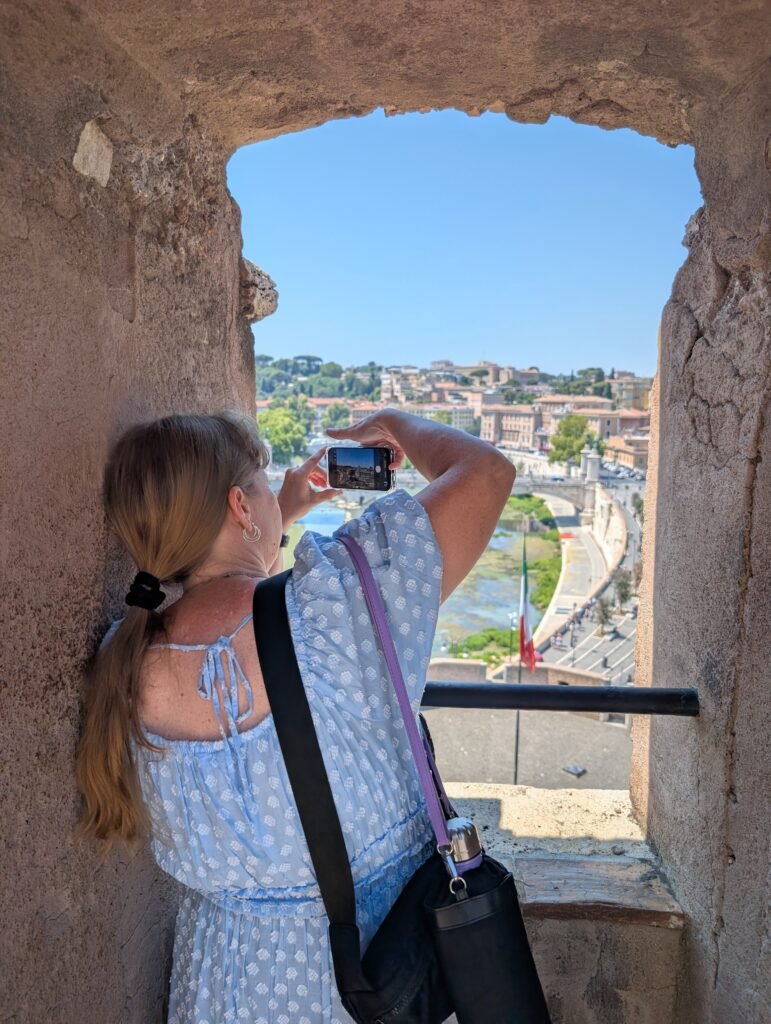
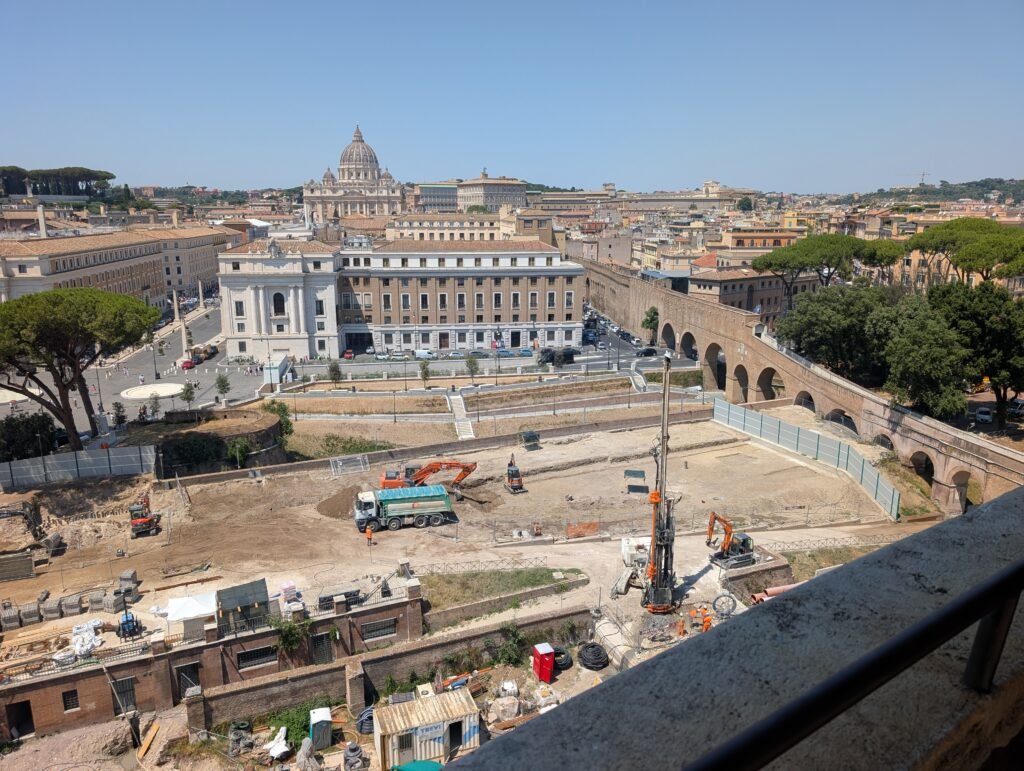
The views from the castel turrets are very nice, and there is a little cafe on the top level. We grabbed a bite to eat after we had seen most of what there was to see. The price was surprisingly reasonable and the panini I got was pretty good. The portions were very large, much bigger than I had expected.
(Continued)
Statue Art in Vatican Museums
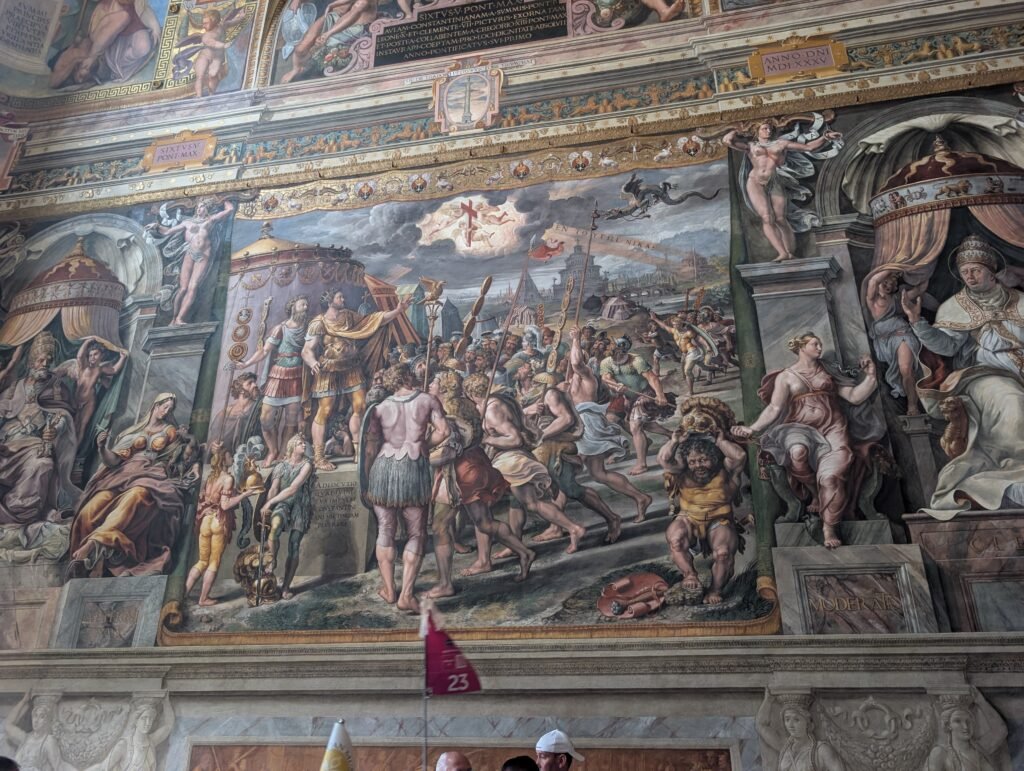
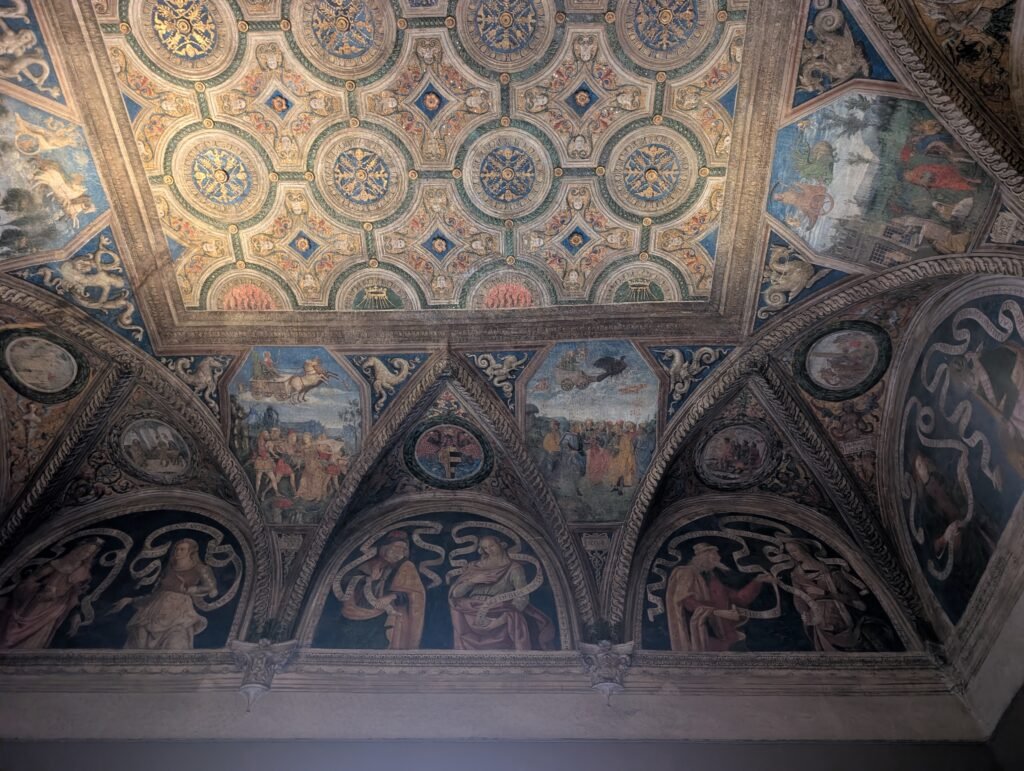
Art From the Vatican Museums
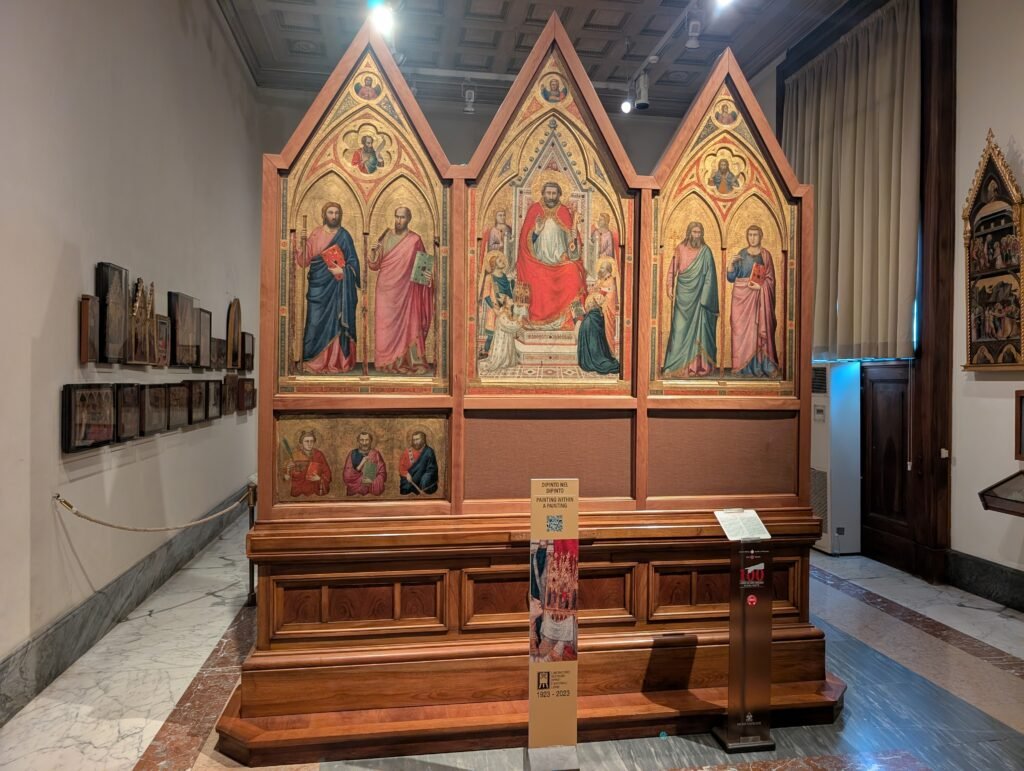
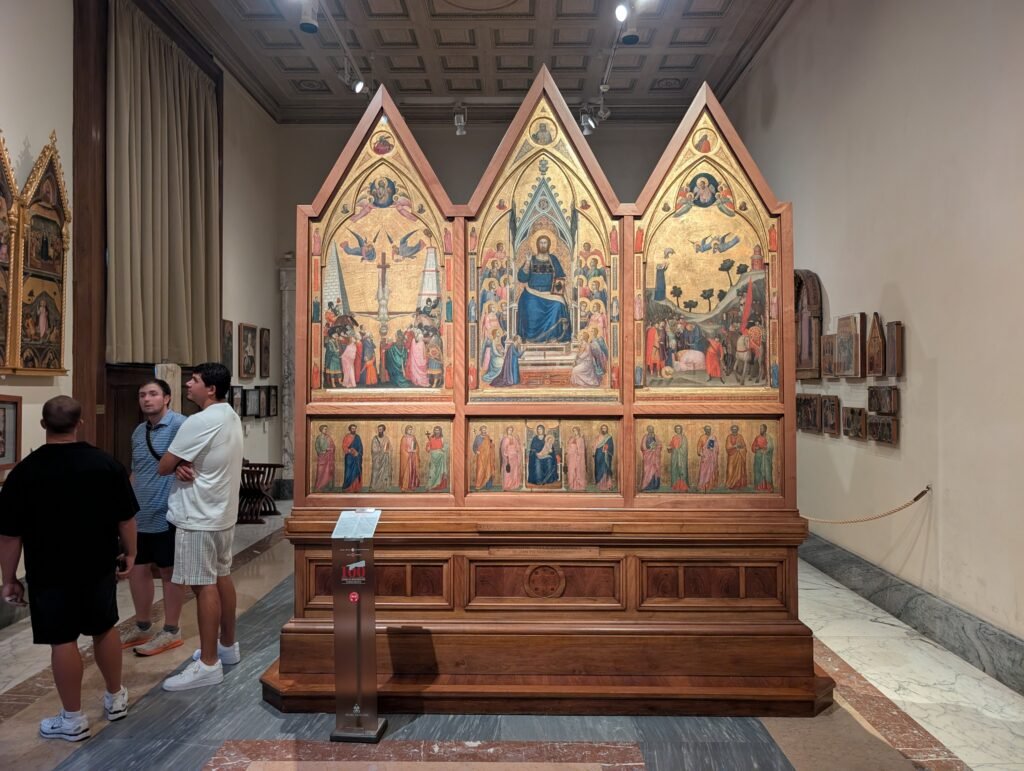
Altar Piece From the Art Collection
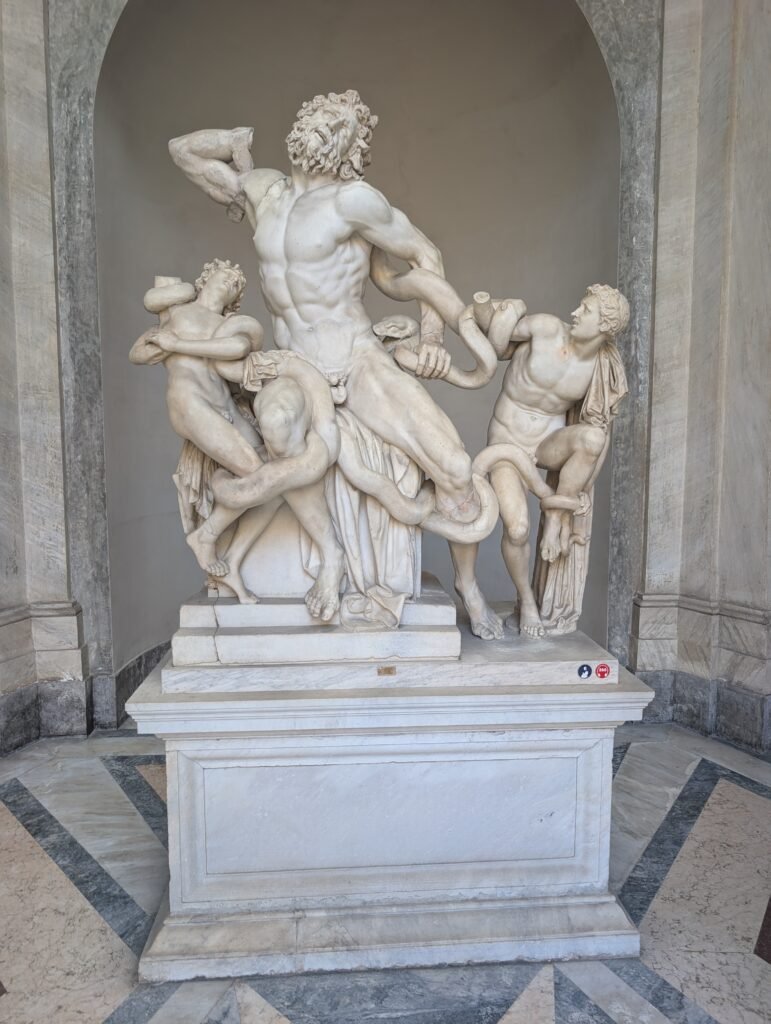
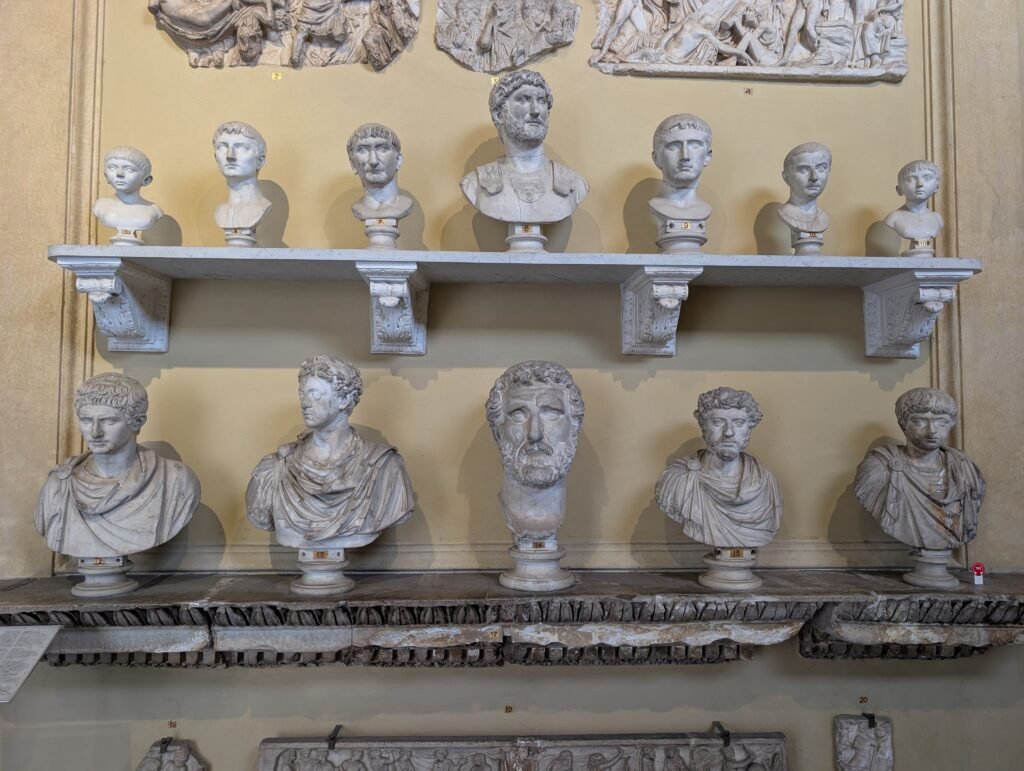
From the Sculpture Area of Vatican Museums
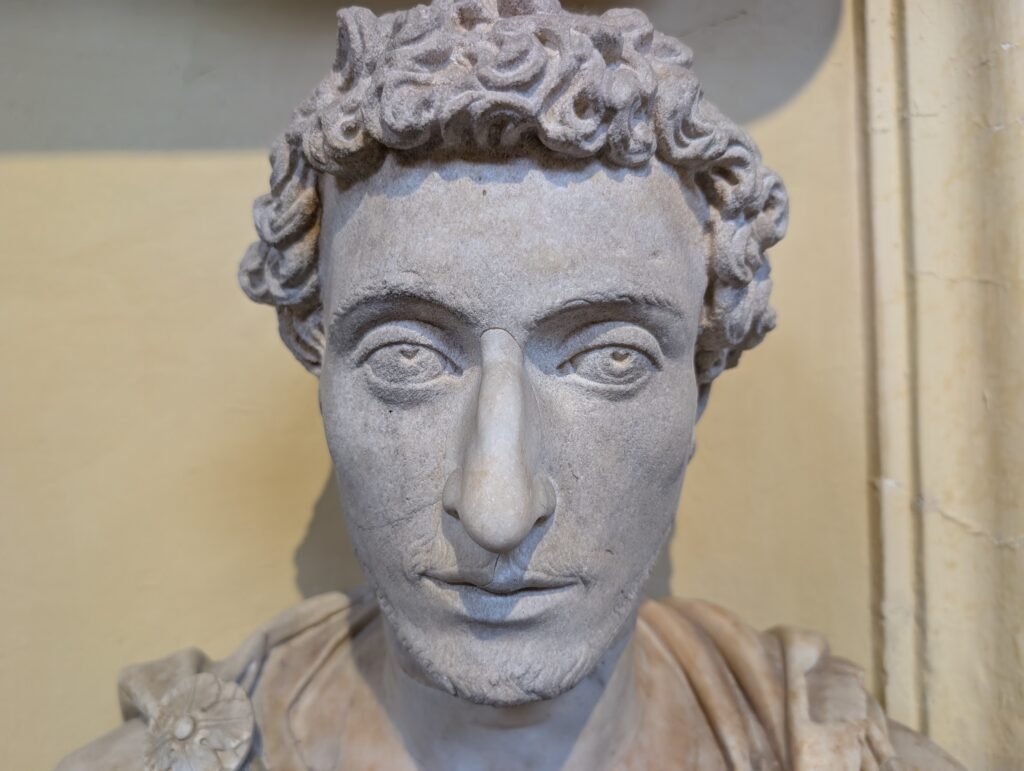
Mr. Heart Eyes
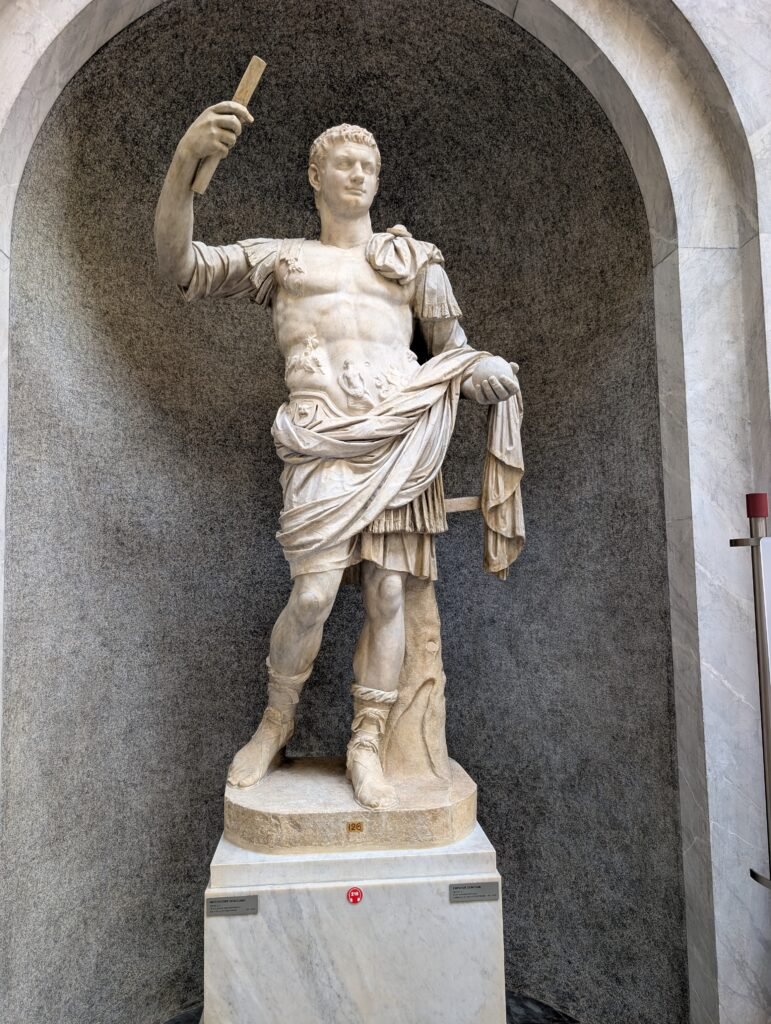
Sculpture of Dometian
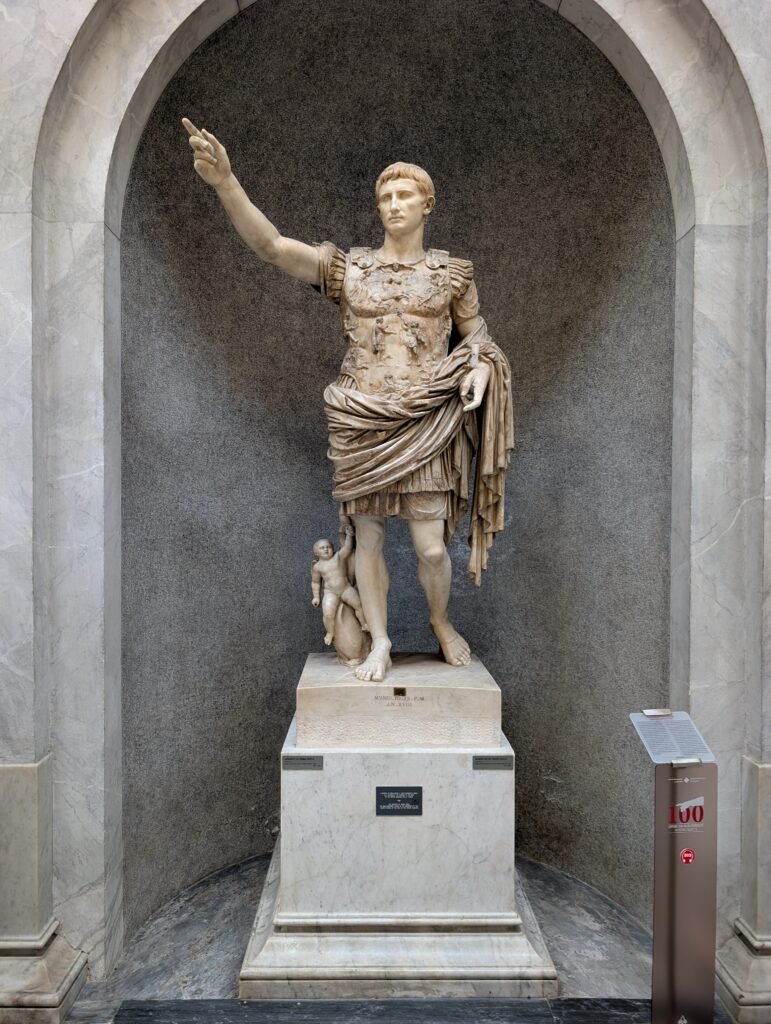
Sculpture of Augustus
We got started in plenty of time to make our guided tour of the Vatican Museums. At first, I was a bit disappointed in this tour, as our guide introduced a few of the major pieces of artwork and showed us where the entrances to most of the museum sections were, before setting us adrift in the Sistine Chapel, where the tour ended. In retrospect, this was about the best that could be expected. Most tourists probably would not have been as interested in seeing as much of the museum as I was, anyway. But the real issue is that the Vatican Museums are as diverse as the Smithsonian. Just like a one and a half hour guided tour of the Smithsonian Museums couldn’t do much more than to give you an overview, no tour guide could thoroughly cover the Vatican collections in that time.
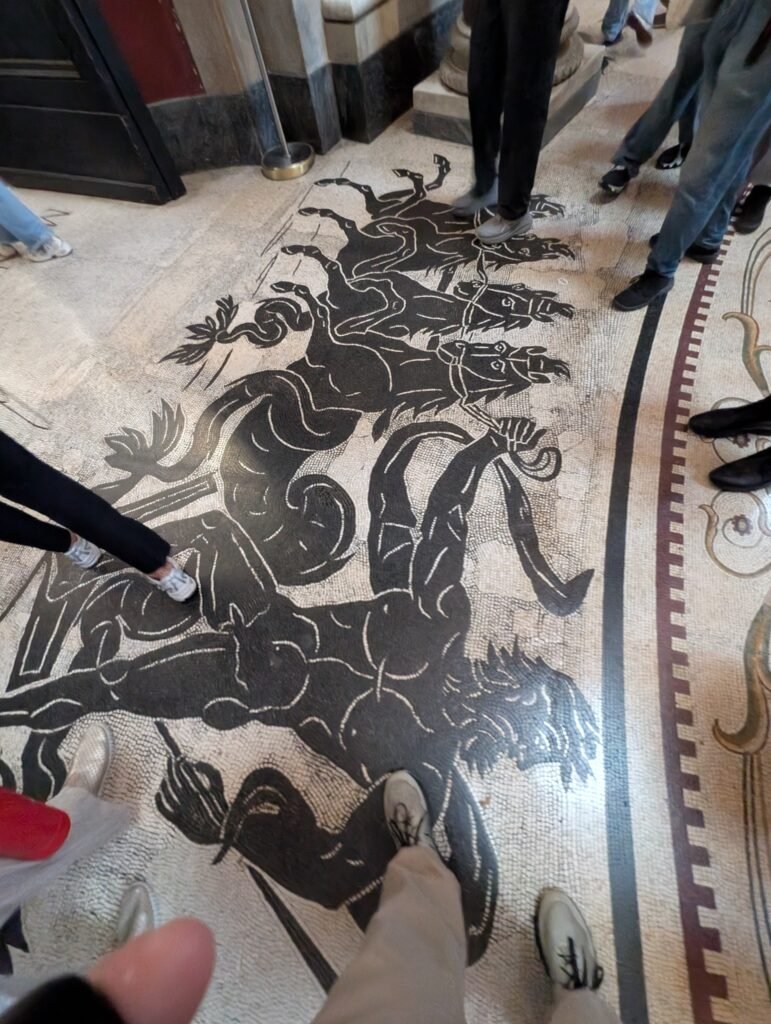
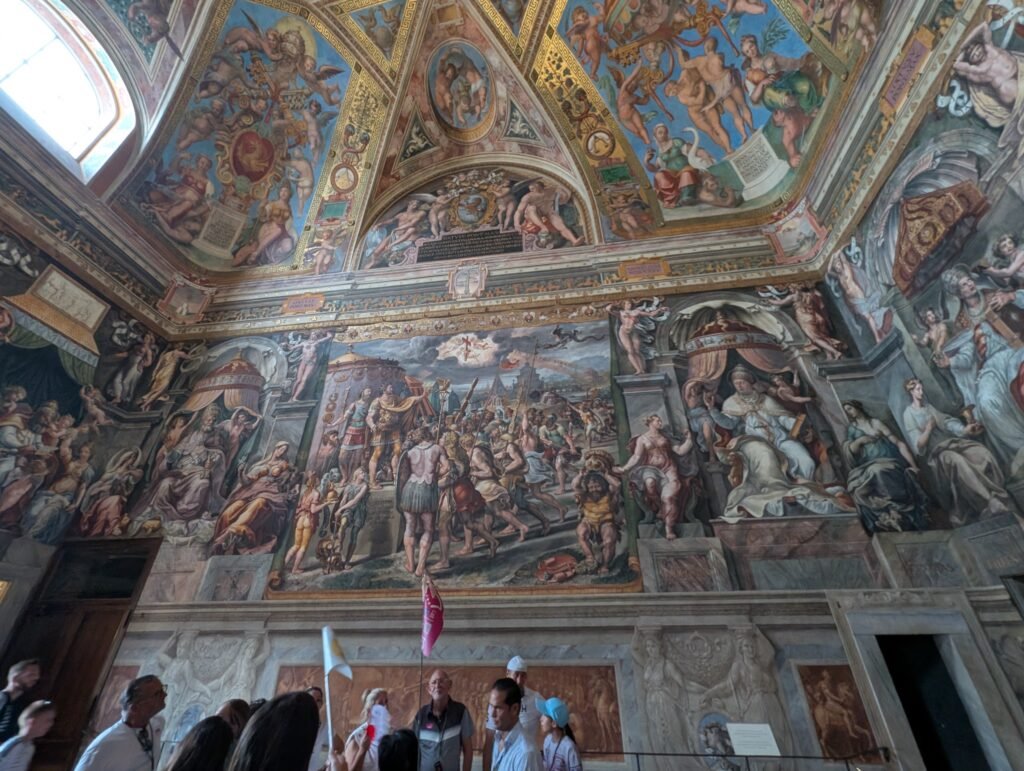
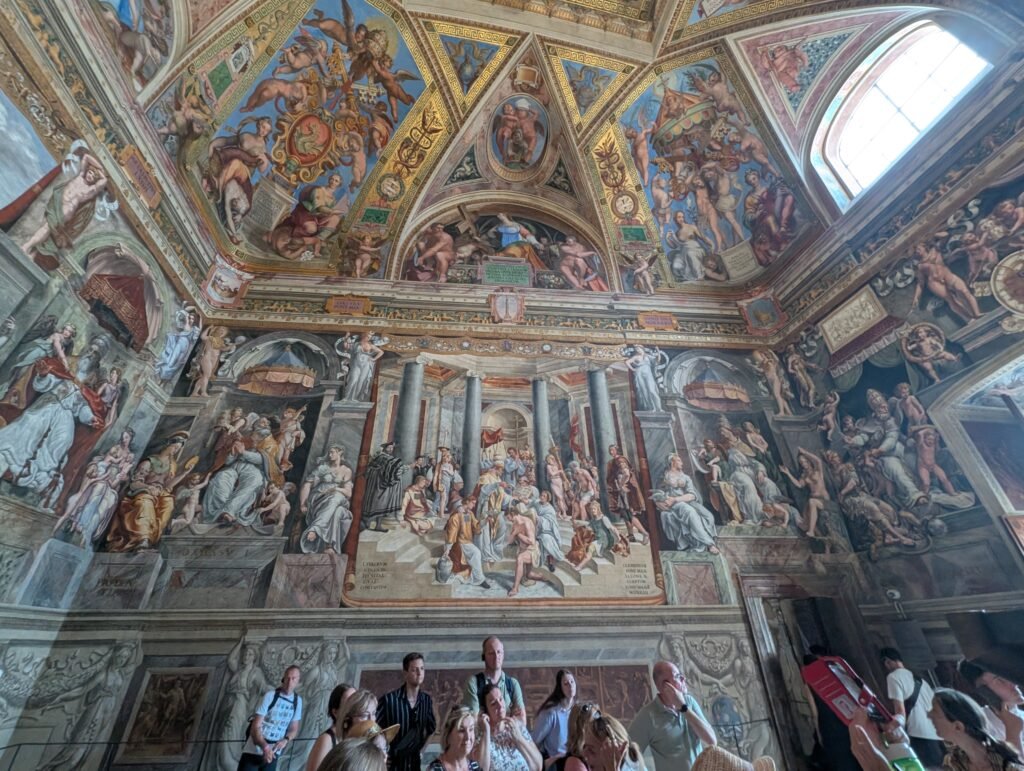
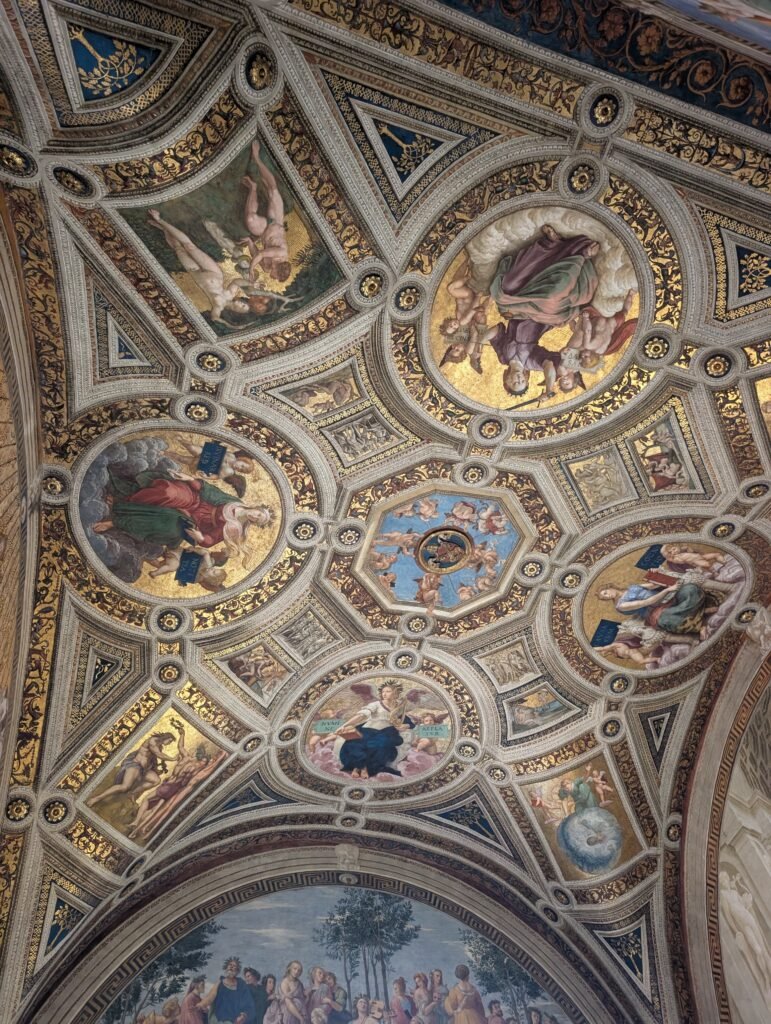
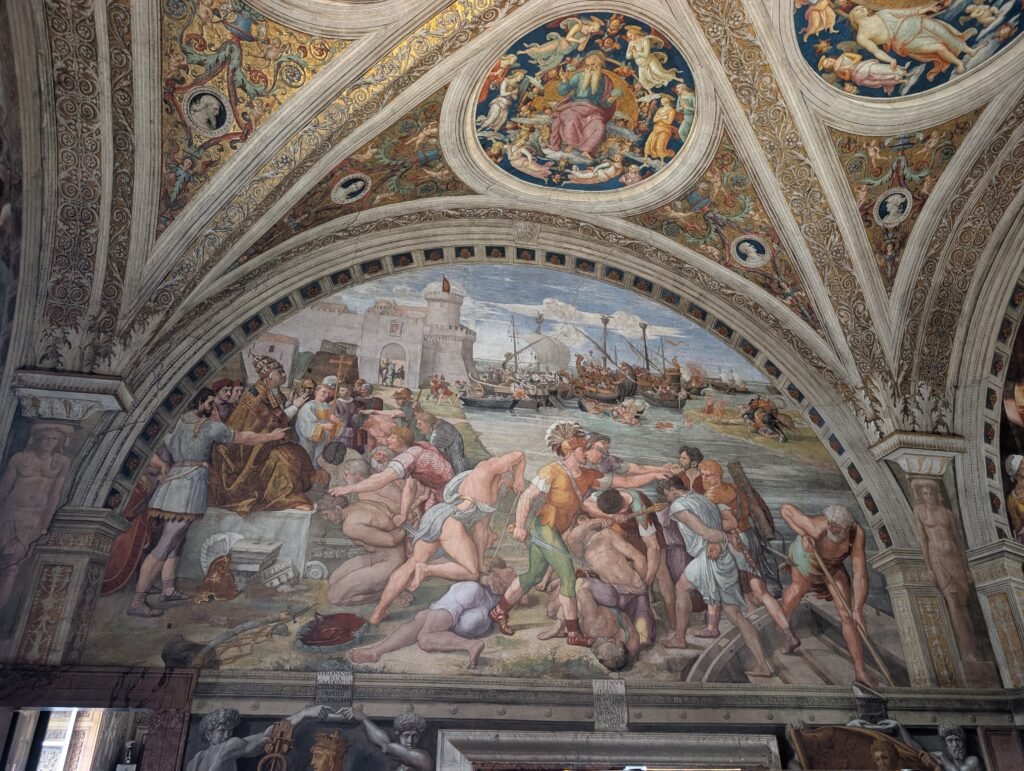
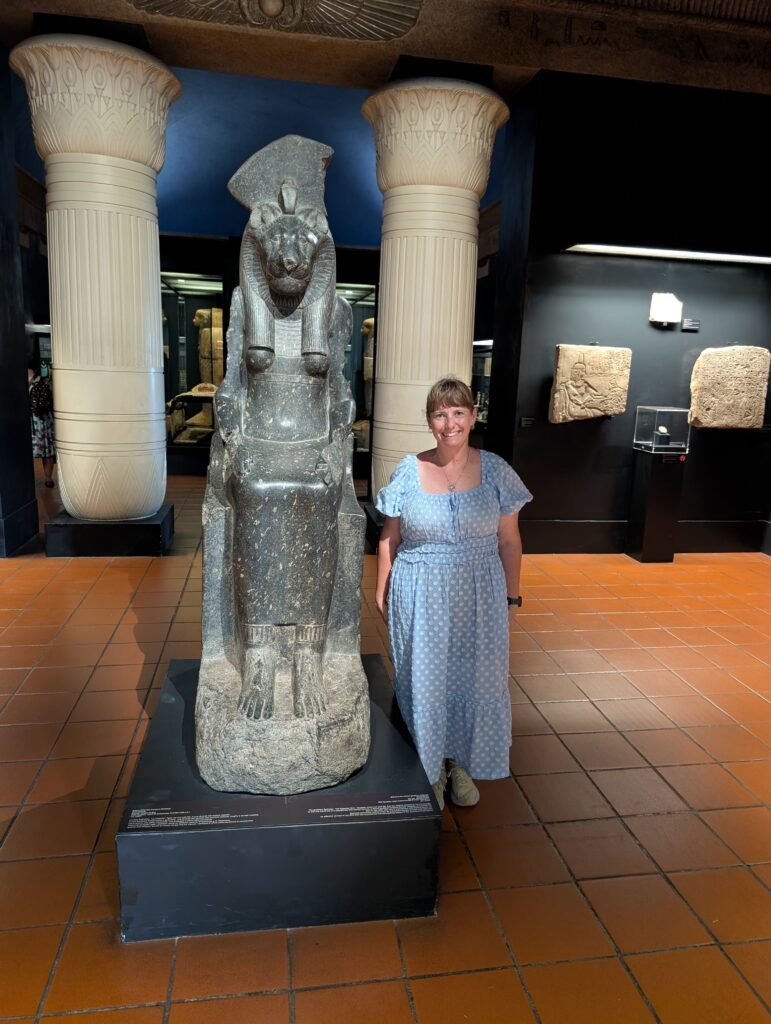
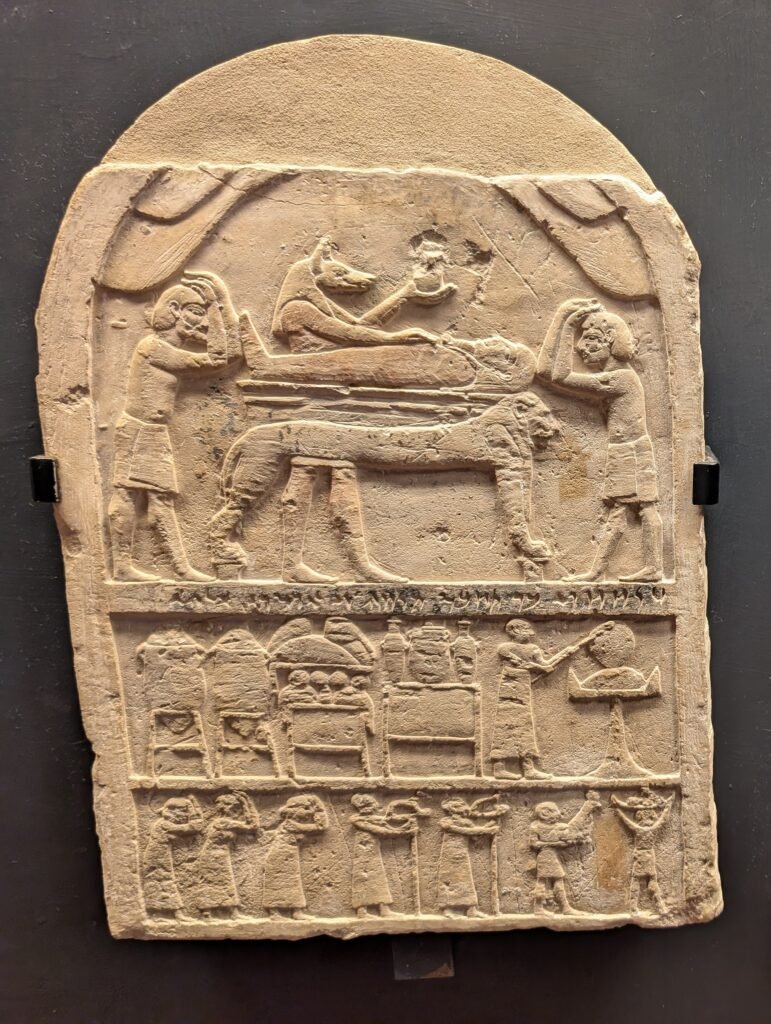
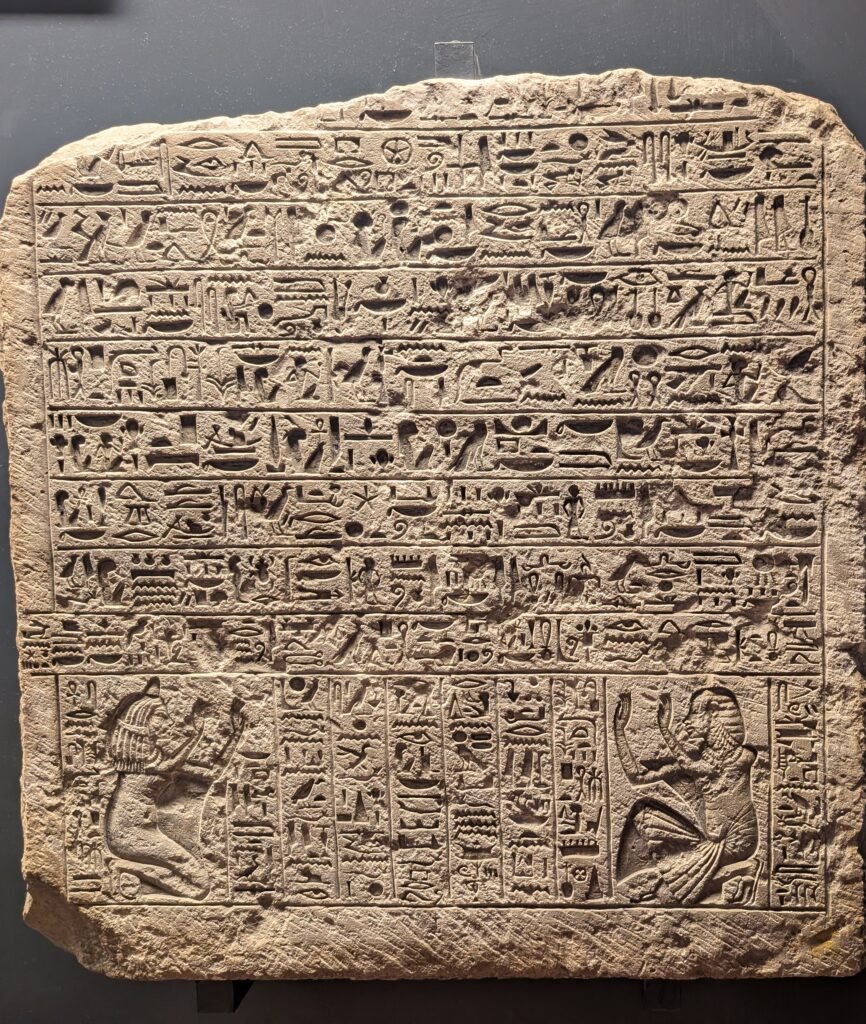
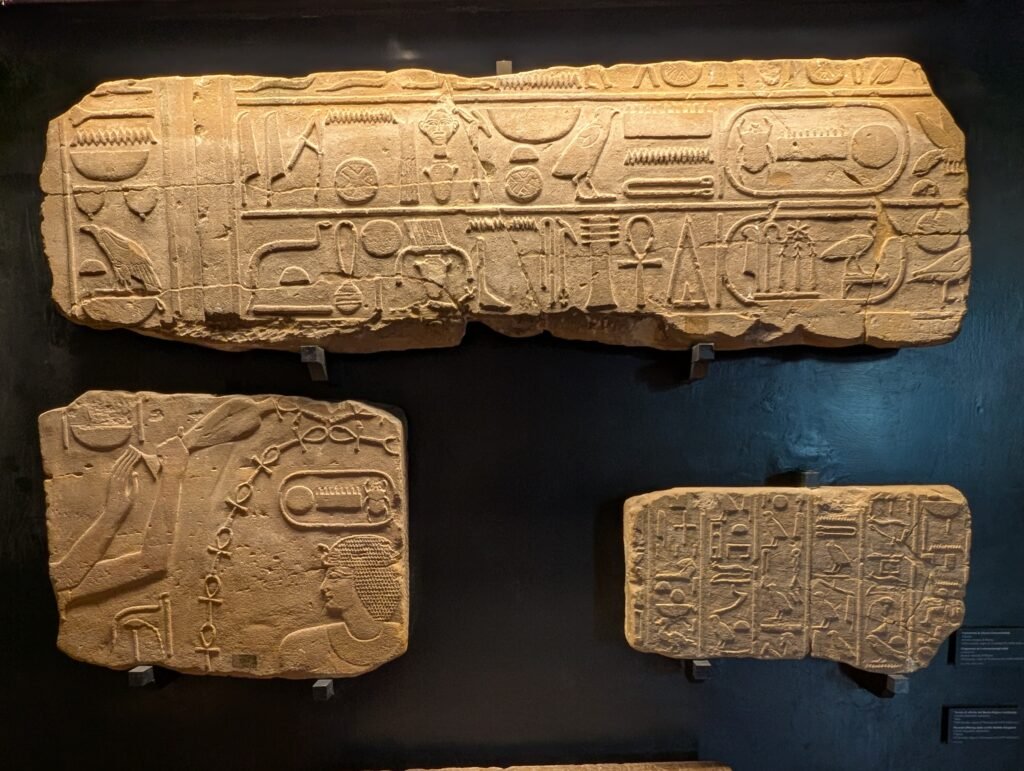
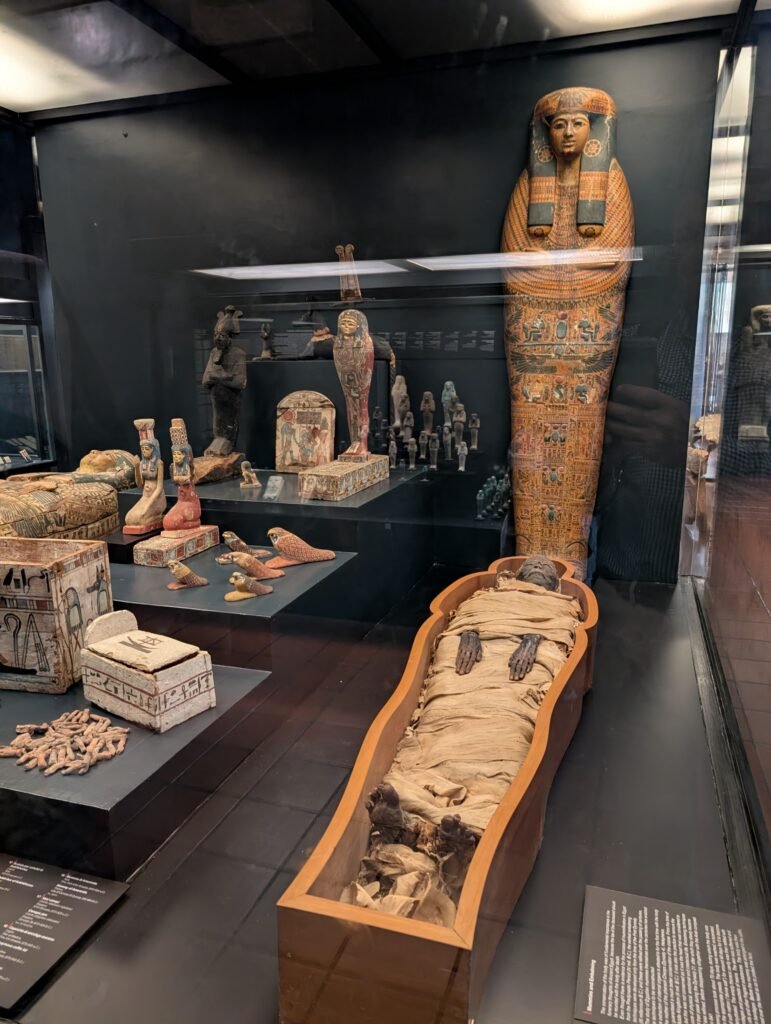
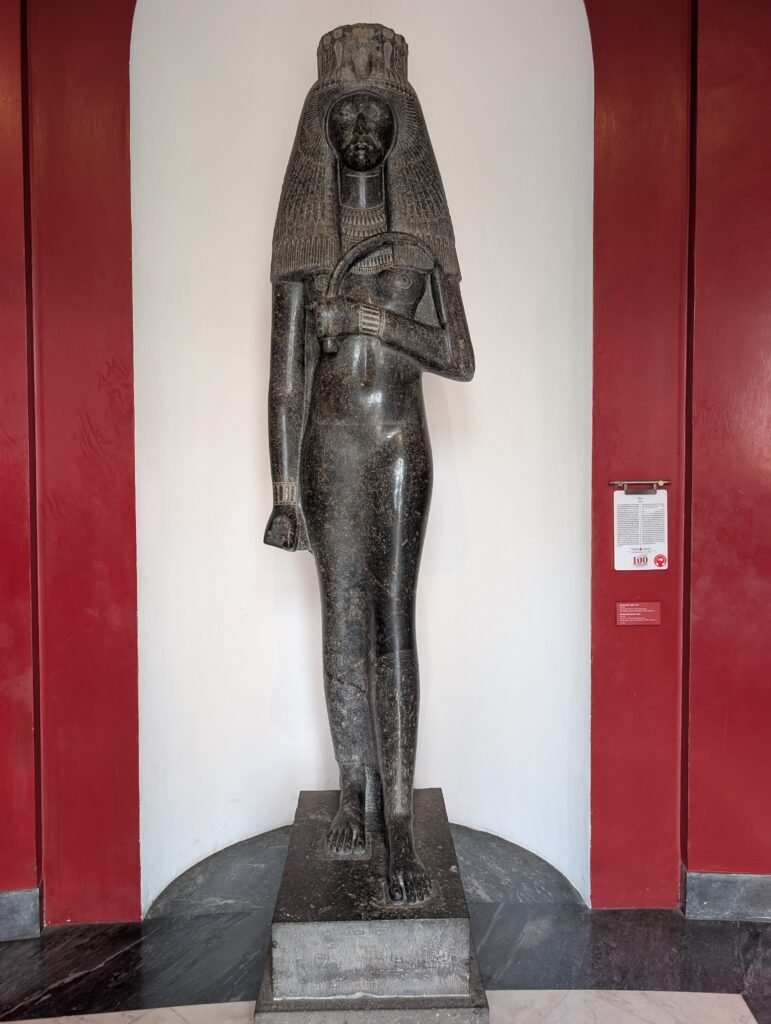
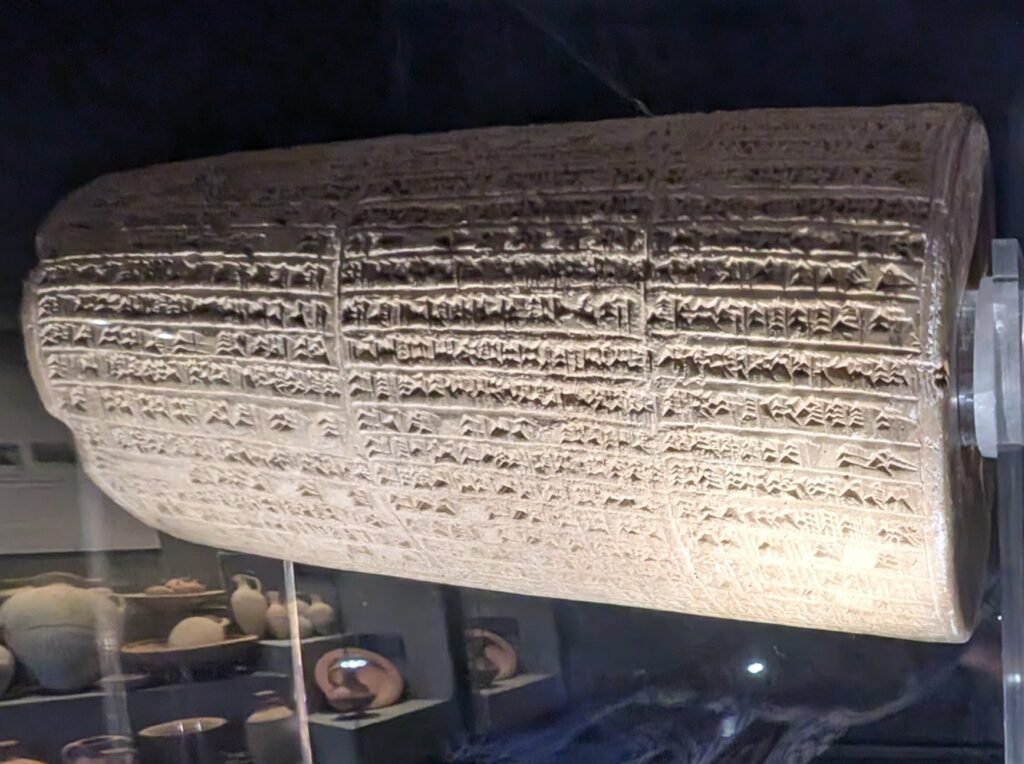
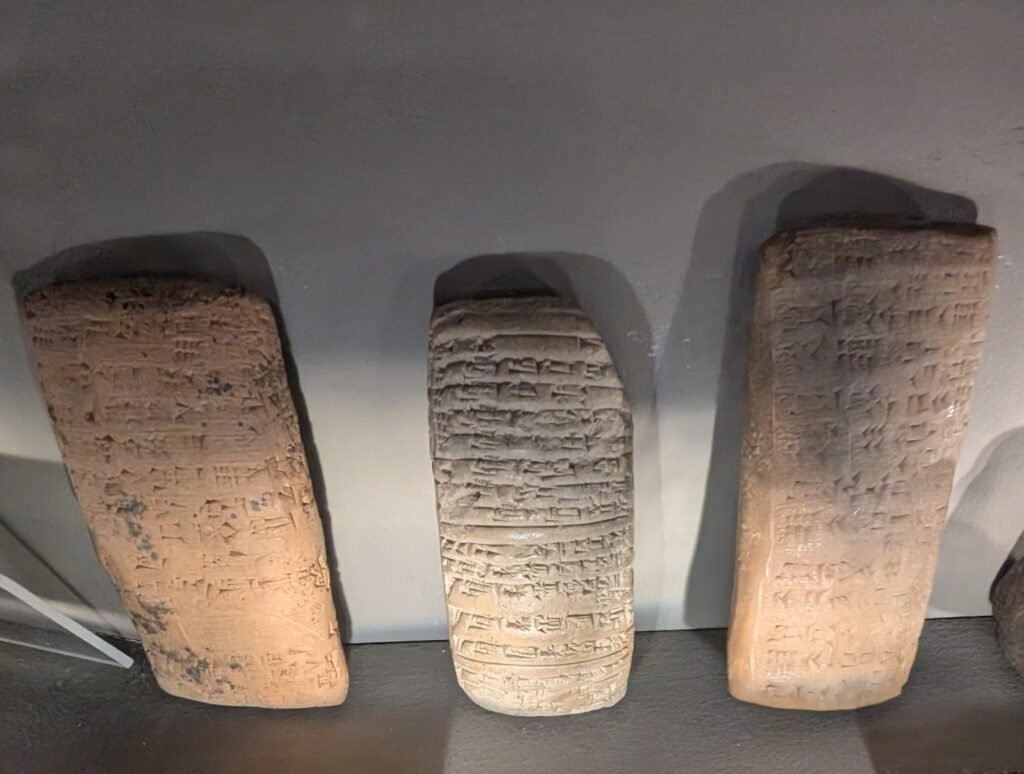
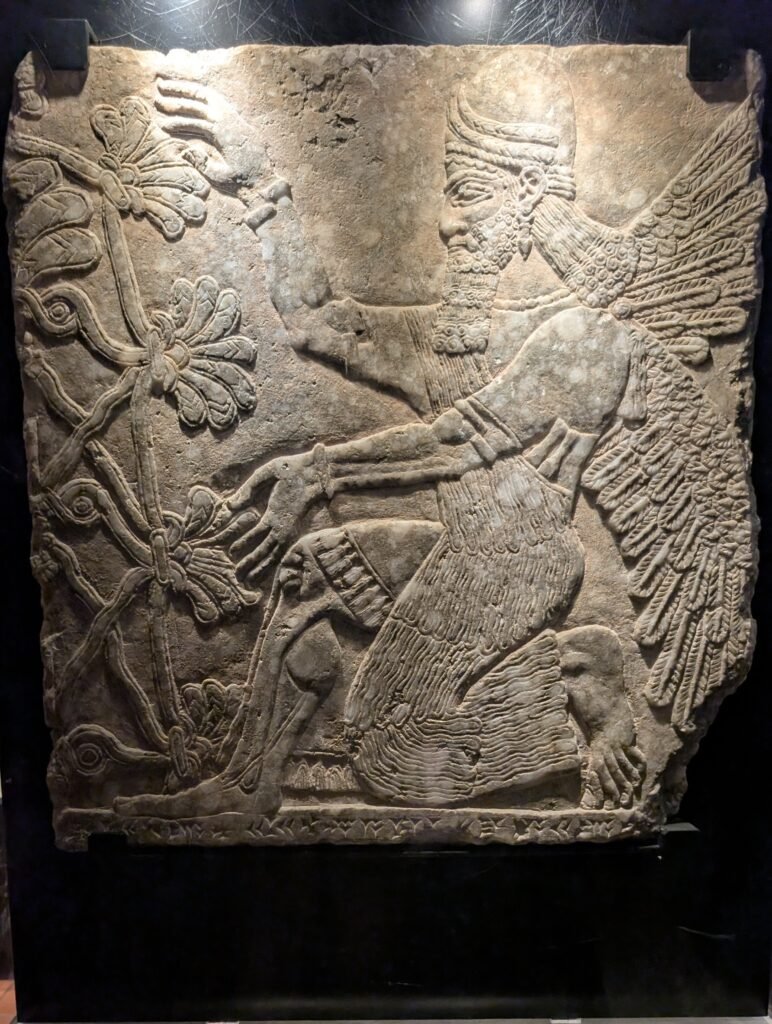
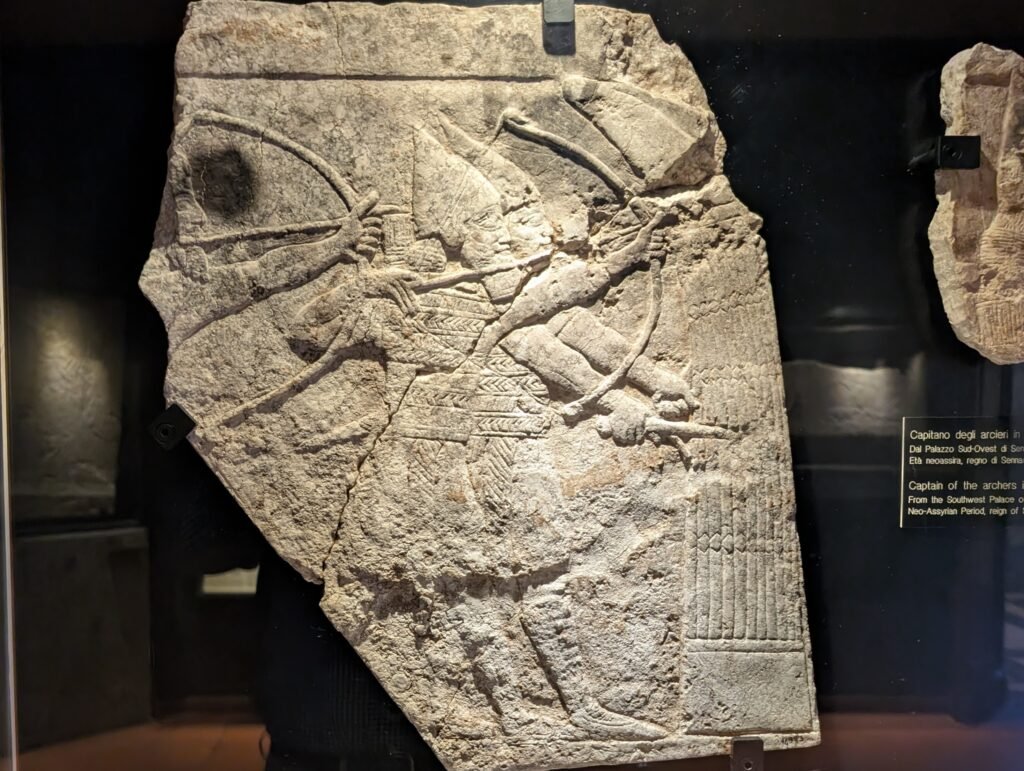
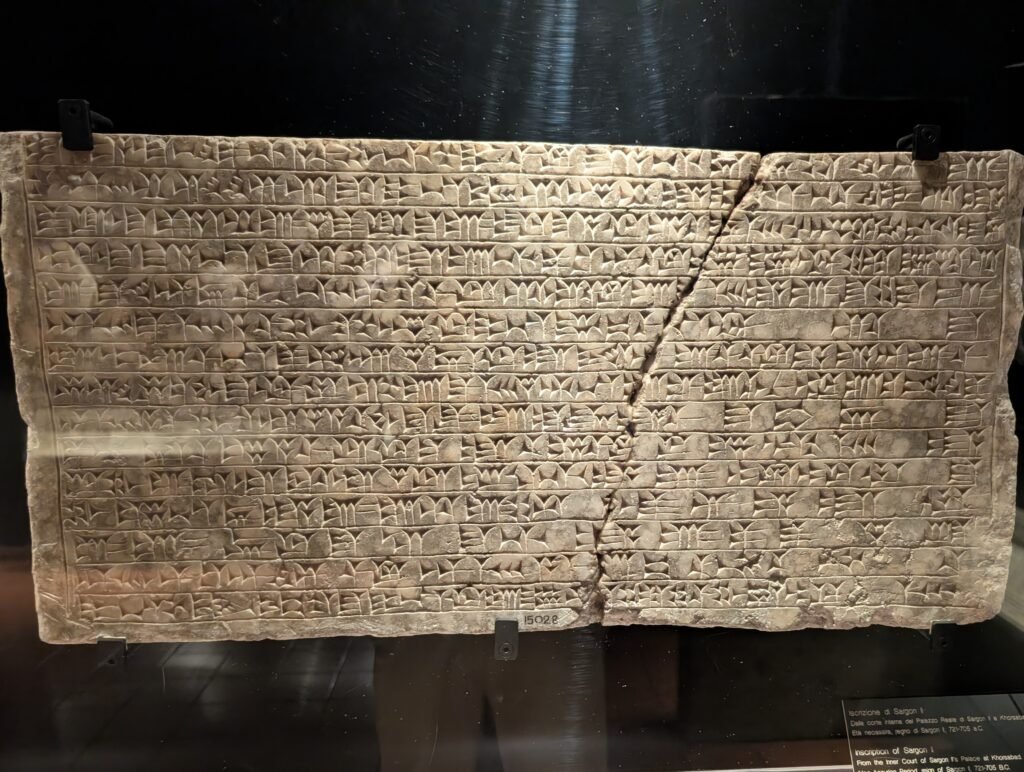
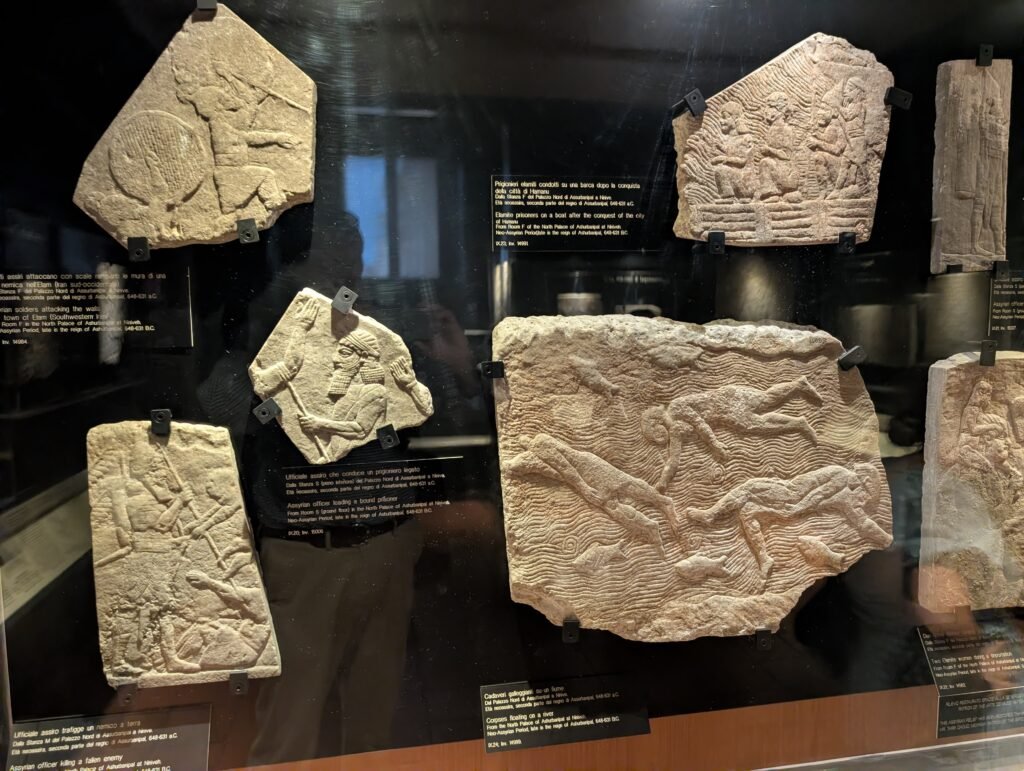
There are over 50 museums and collections. There are multiple sections of marble portraits and pieces of statues from antiquity. They have an Egyptology section that also includes some very nice Assyrian and Babylonian artifacts. There is a huge garden outside, the Pinacoteca Art Museum, a Hall of Maps, a Raphael room, and of course the Sistine Chapel. I think a person could spend a week in there and not see it all. It really was quite spectacular. I strolled through the ancient marble statues and the Pinacoteca. I was also able to walk the Egyptology section before we were chased out as the museum began, piece by piece, to close.
We grabbed a small bite to eat on the way back to the room, and called it a night. It was another long day, and we had had another lesson in just how much there is to see in Rome. Even just there in the Vatican, one could spend days. The museum collections are just remarkable.