San Marino
Mountain Top Microstate
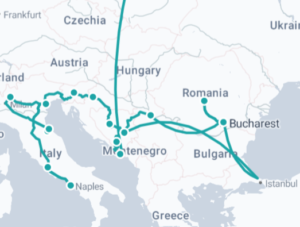
I arrived in Rimini, Italy, about mid-afternoon Tuesday, July 21st. I walked to the hostel I had booked – Sunflower City – and checked in. They were gracious enough to honor my booking even though I arrived a day later than expected due to Stephanie’s flight being canceled. I requested this via email, but the emailed response refused my request. For some reason, when I checked in, they didn’t seem to penalize me. As usually happens, I met friendly people at my hostel. Most of them were about Andrew’s age. A German boy a bit taller than me wanted to talk basketball. An Australian girl had just been in Houston for the World Cup. A German Girl between Audrey’s and Preston’s ages had just driven to Rimini for a few days before starting a motorcycle trip on Friday. She drove back to Germany at 2:00 a.m. the morning I left for Ljubljana. Like me, the Australian girl had plans to see San Marino the next day.
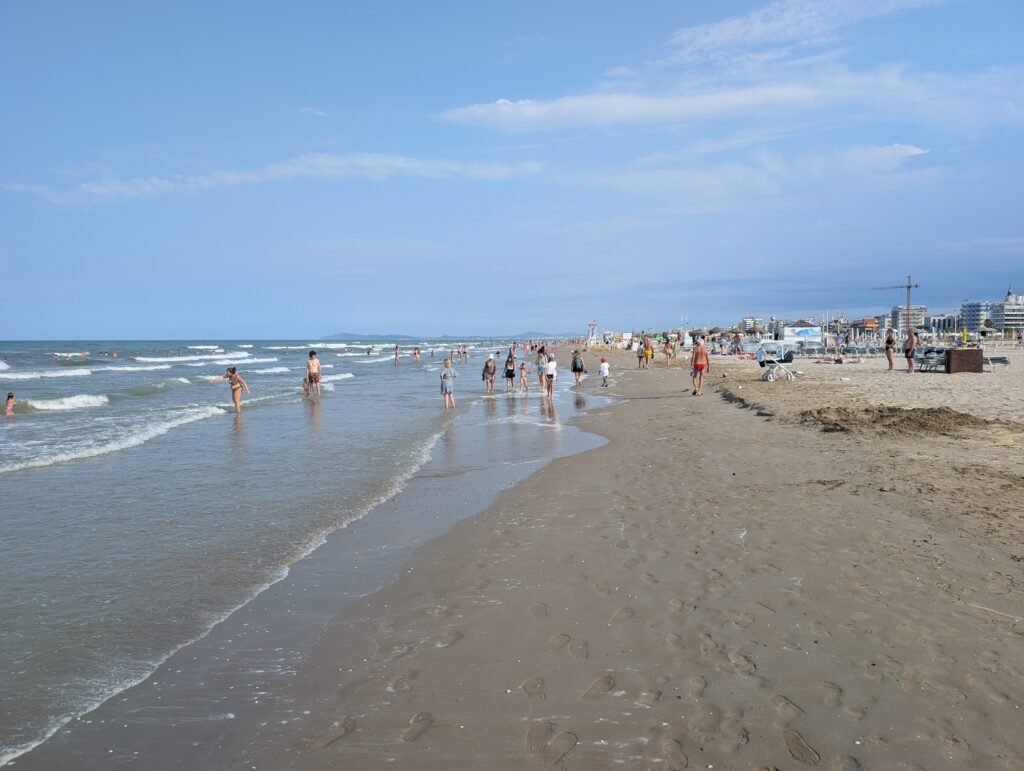
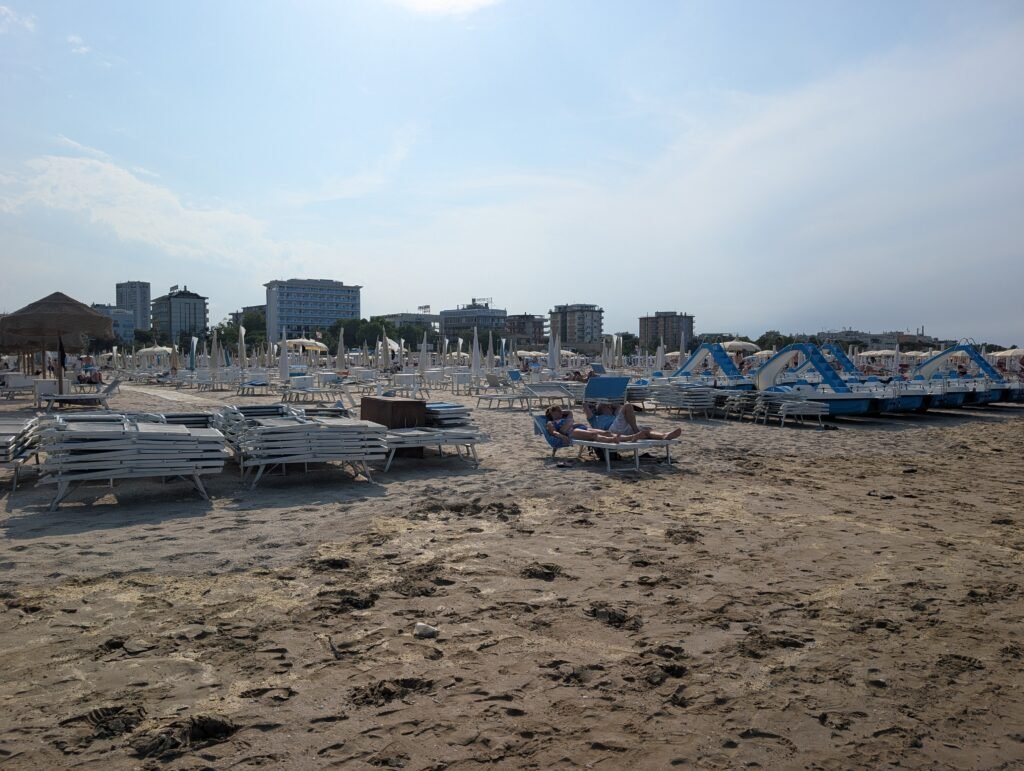
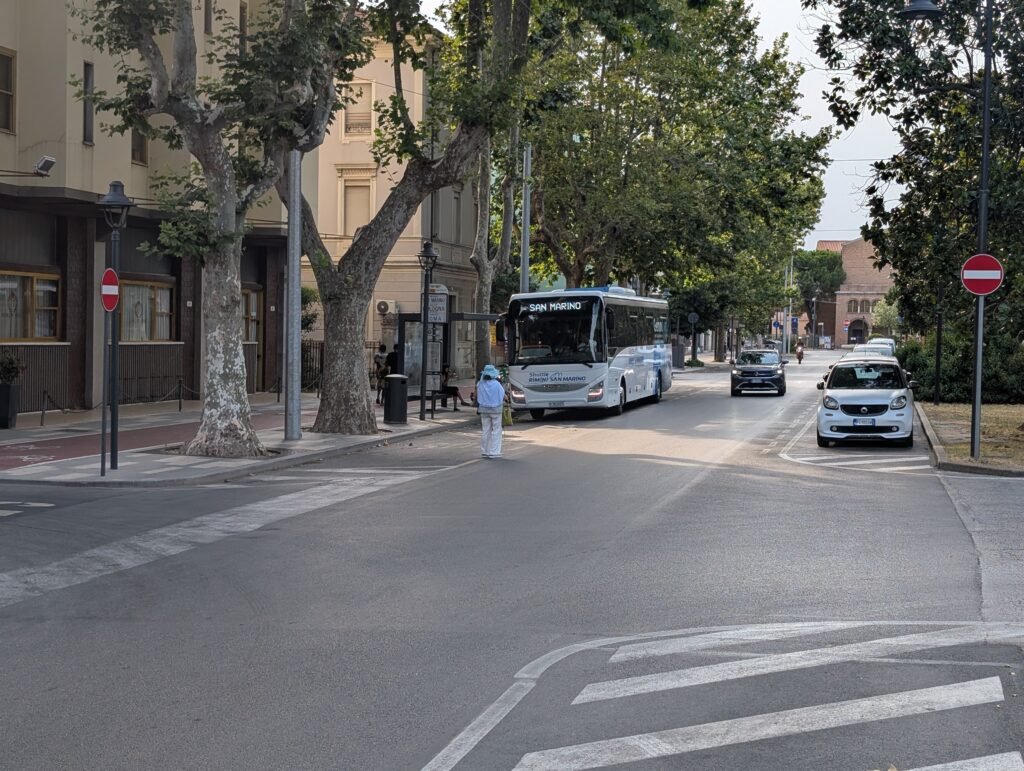
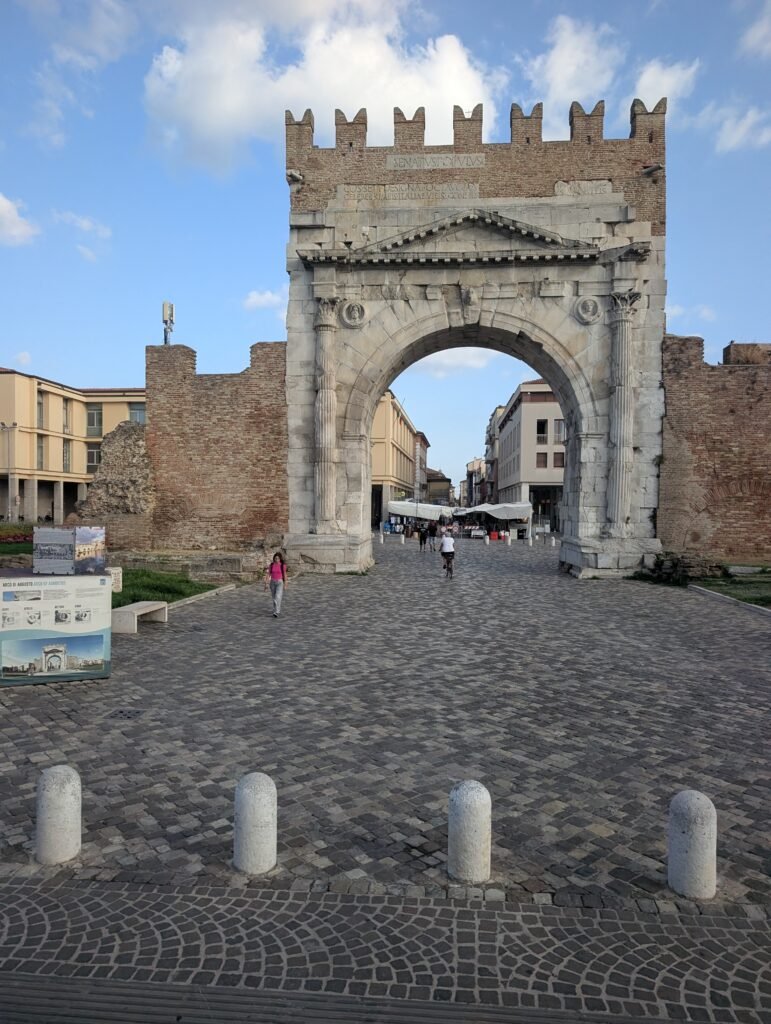
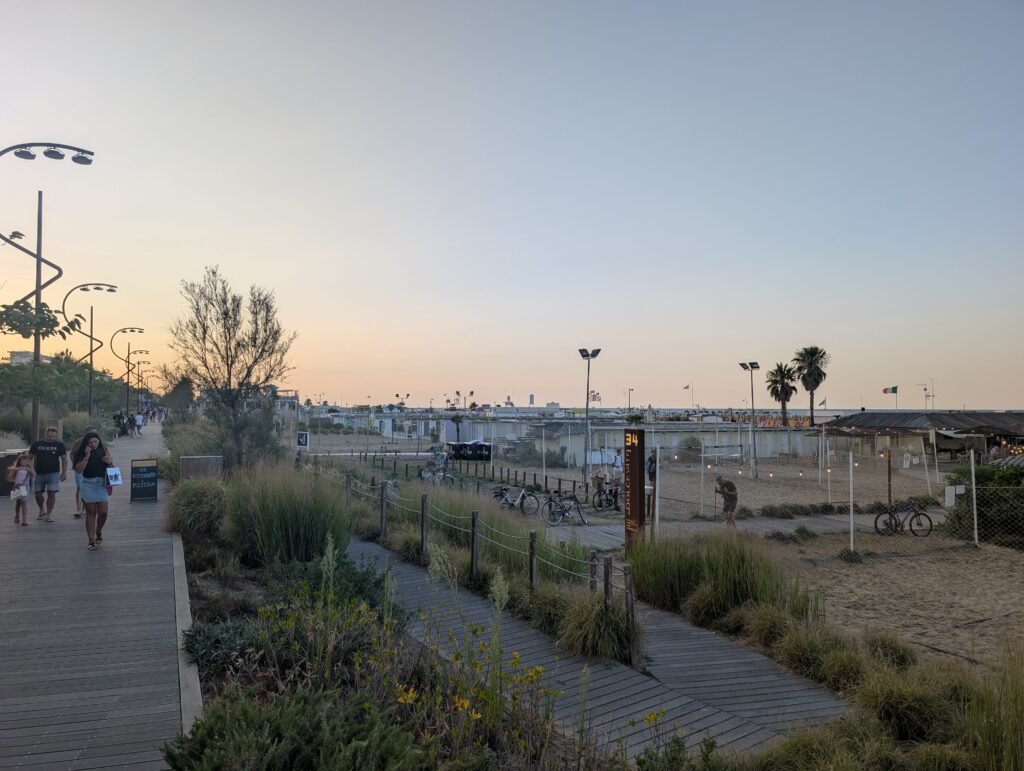
I was in Rimini early enough to go out and walk the city a bit, at least the area between my hostel and the beach. I walked the beach a bit. It is covered wall to wall by volleyball courts, umbrellas, chairs, and all sorts of tourist oriented equipment. Rimini is apparently a fairly popular beach destination. I also walked over to find where my bus would leave for San Marino in the morning, and to verify the time schedule and how to buy the tickets. The first bus was scheduled to depart at 7:30, so I decided to try for that one. Turns out, that was the best plan. I grabbed a few snacks, though I was limited in what I could cook. On the good side, my hostel offered a free pasta dinner at 8:00 p.m., so I didn’t have to spend anything for supper. On the bad side, when I got up in the morning, I found all the access to kitchen items – even the refrigerator – locked up until at least 8:00 a.m. In the summer, it gets light at about 5:00 on Italy’s Adriatic coast. It’s also true that most days, it’s pretty hot. Not starting on breakfast until after 8:00 probably works well for most hostelers, but not us old folks. I was never once able to cook oatmeal for breakfast. Given Italy’s sketchy public transportation scheduling, I needed to leave as early as possible to reach Slovenia on the 23rd. I had to catch an early train to Venice, then make an off-itinerary switch to a bus in Venice. I couldn’t chance buying that ahead of time. I would just have to get to Venice early, then buy the next available bus ticket to Ljubljana. That worked out fine, but it probably would not have if I would have waited to leave during the 9:00 hour. I had to leave so early, I couldn’t even keep my food in the refrigerator overnight since it was locked until 8:00.
I wasn’t able to get breakfast either day.
I think most people don’t know there is a country called San Marino. As a young boy, I knew it existed and where it was. I had an odd fascination with the world’s microstates, though I had never heard the term, “microstate.” San Marino is a tiny enclave near the Adriatic coast, entirely surrounded by Italy. It is one of just three landlocked countries in the world entirely surrounded by one other country. Lesotho is surrounded by South Africa. The other one, the Vatican, is also entirely located within Italy’s boundaries.
(Continued)
San Marino was founded when Saint Marinus, a stone mason from the Island of Rab (modern Croatia) fled his homeland during Diocletian’s persecutions. On September 3, AD 301, he reached Mount Titano and established a stronghold in order to try and live his Christian life in peace. San Marino has always been tiny, but it has expanded slightly during the medieval period. Today, at its largest extent, the country is still less than 24 square miles, with a population less than 35,000. From the time of its founding over 1,700 years ago, San Marino has been a republic. It is governed by a small assembly. That makes San Marino the oldest surviving republic in the world, and the longest lived by quite a distance.
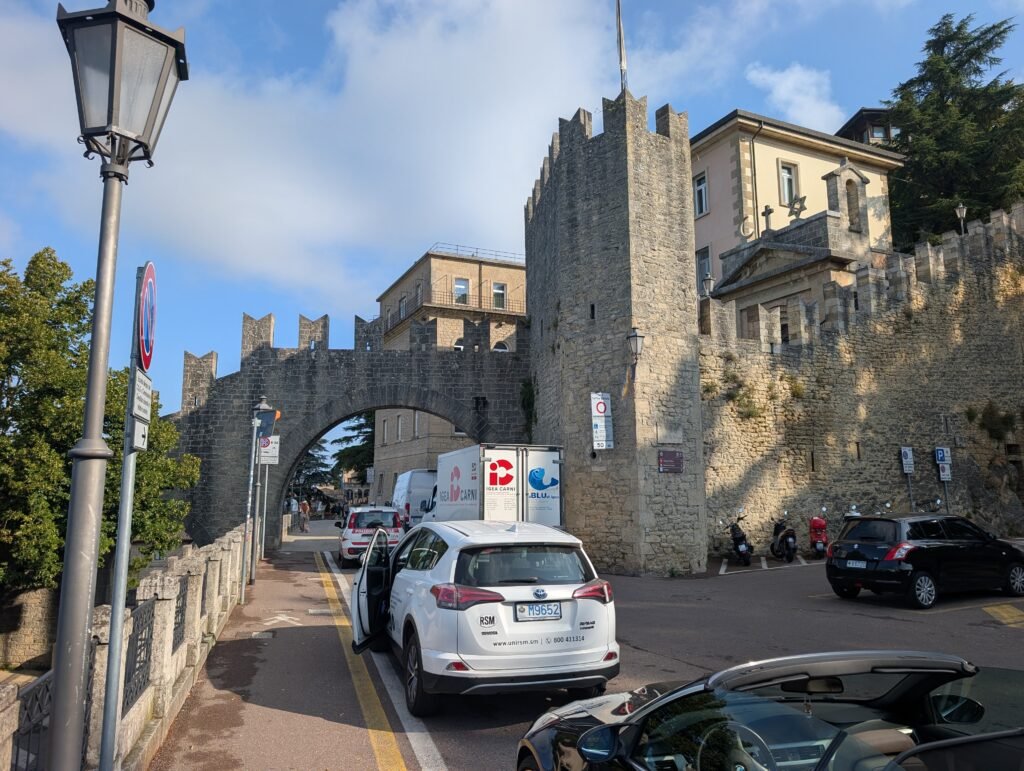
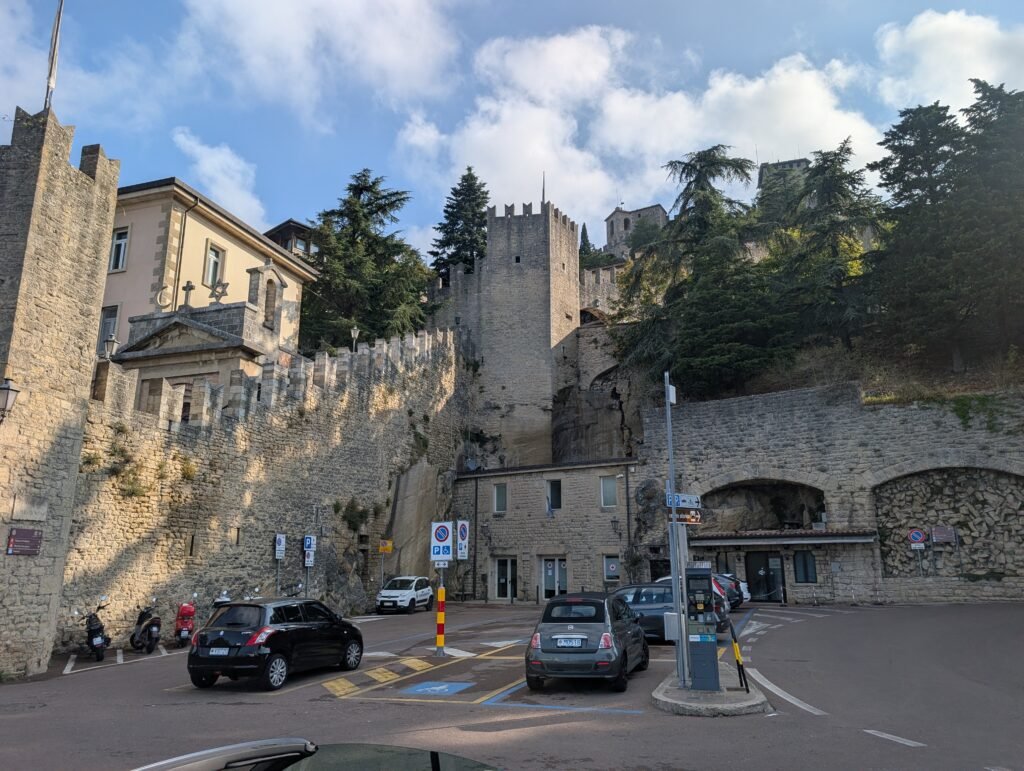
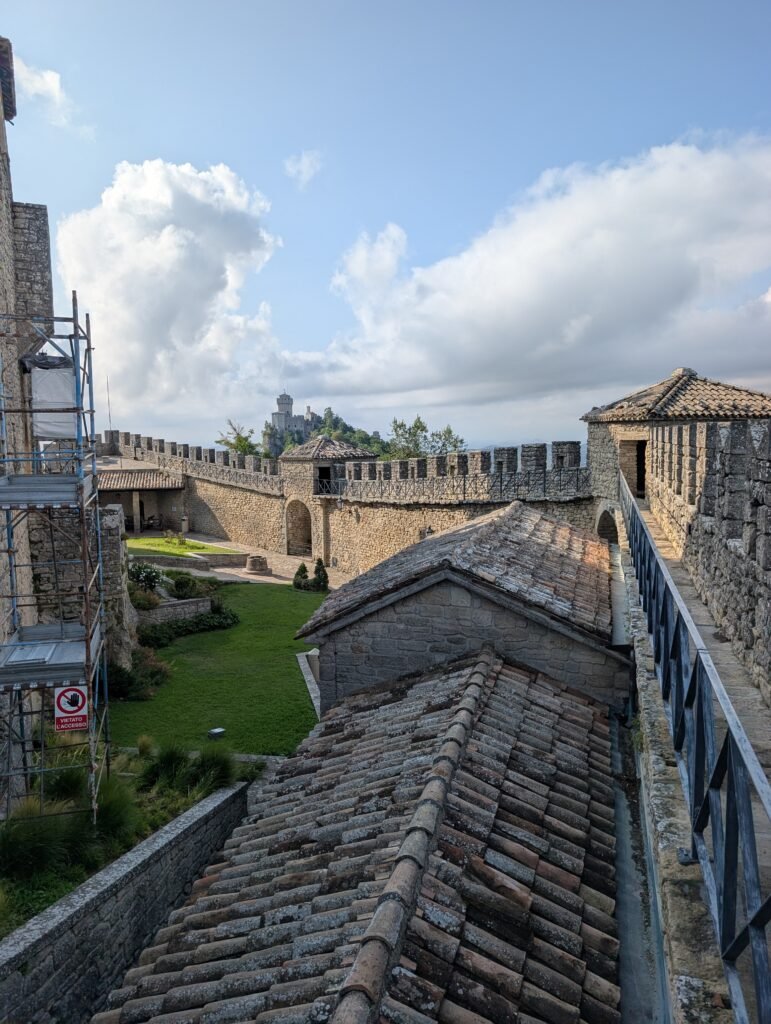
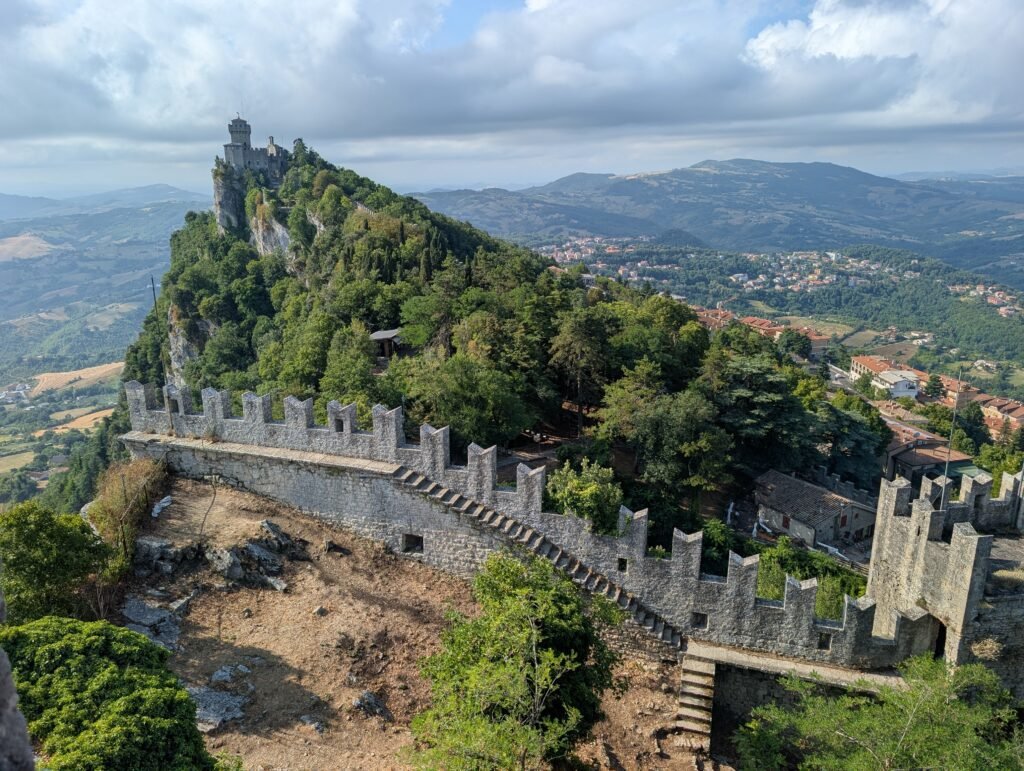
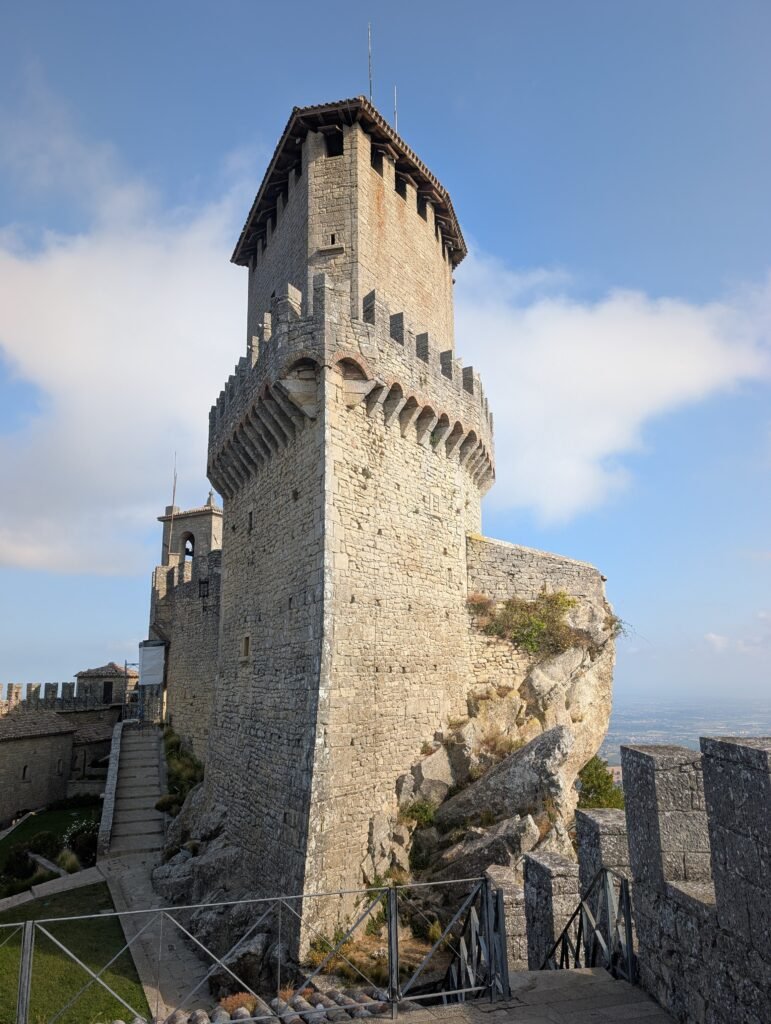
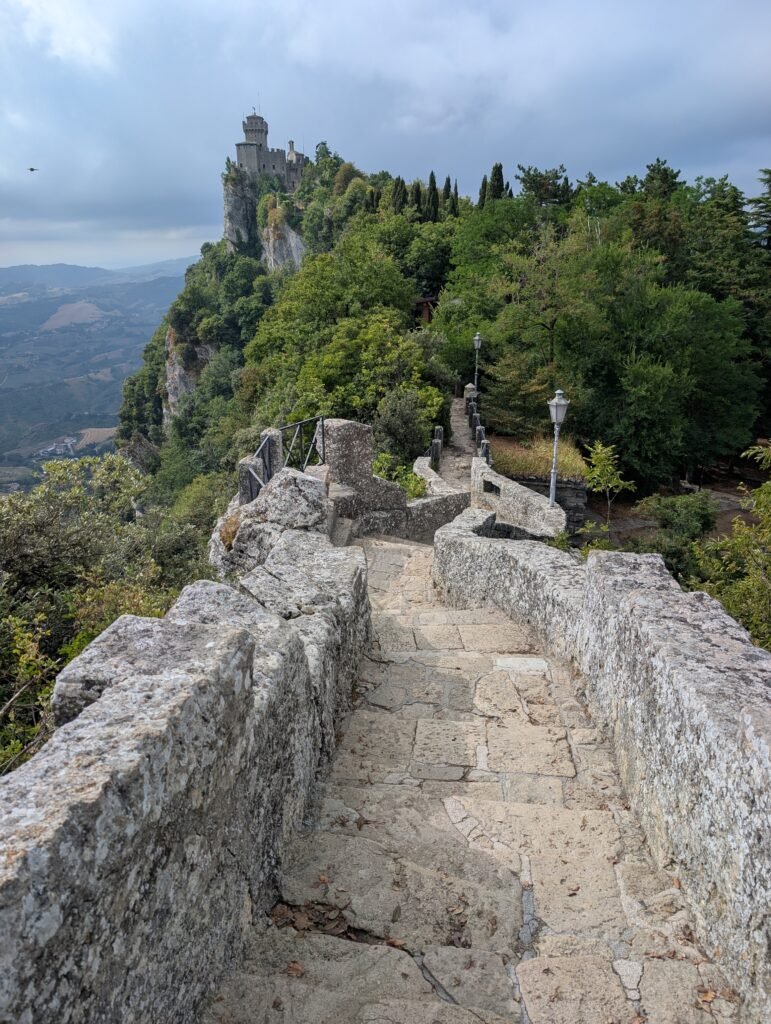
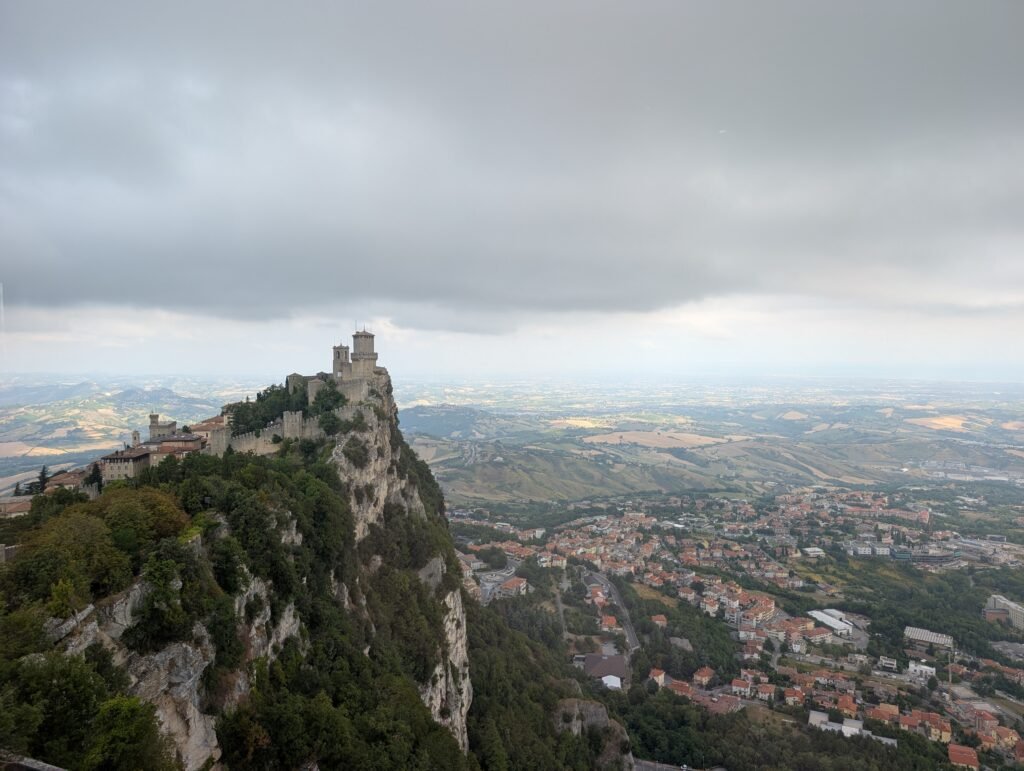
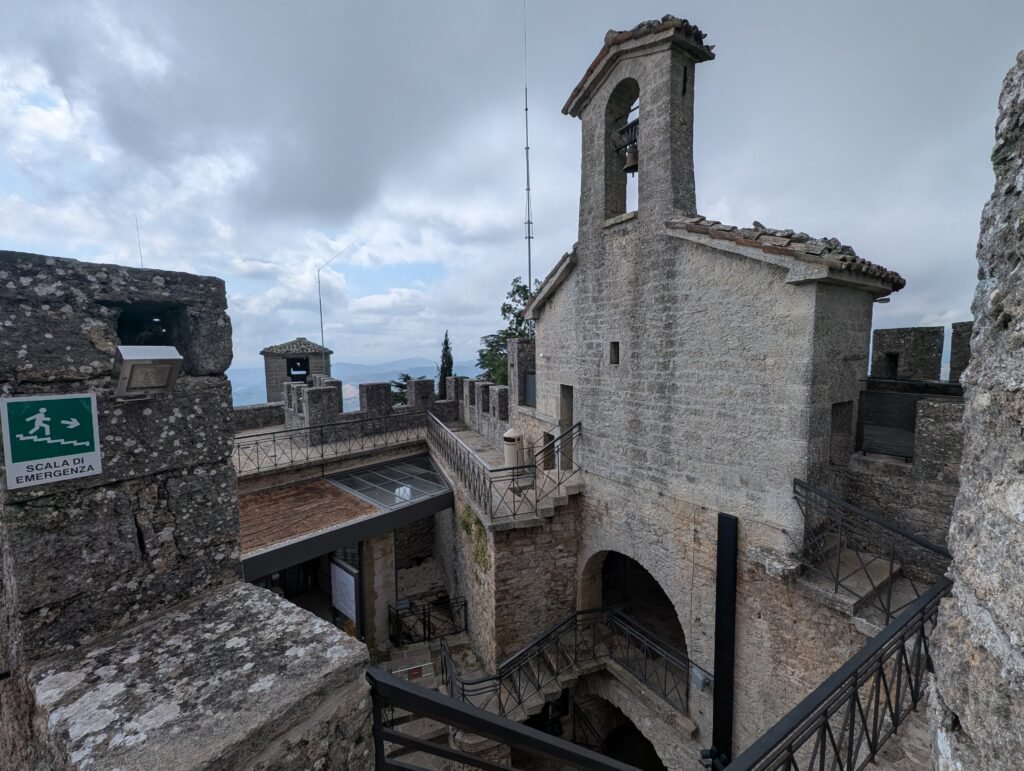
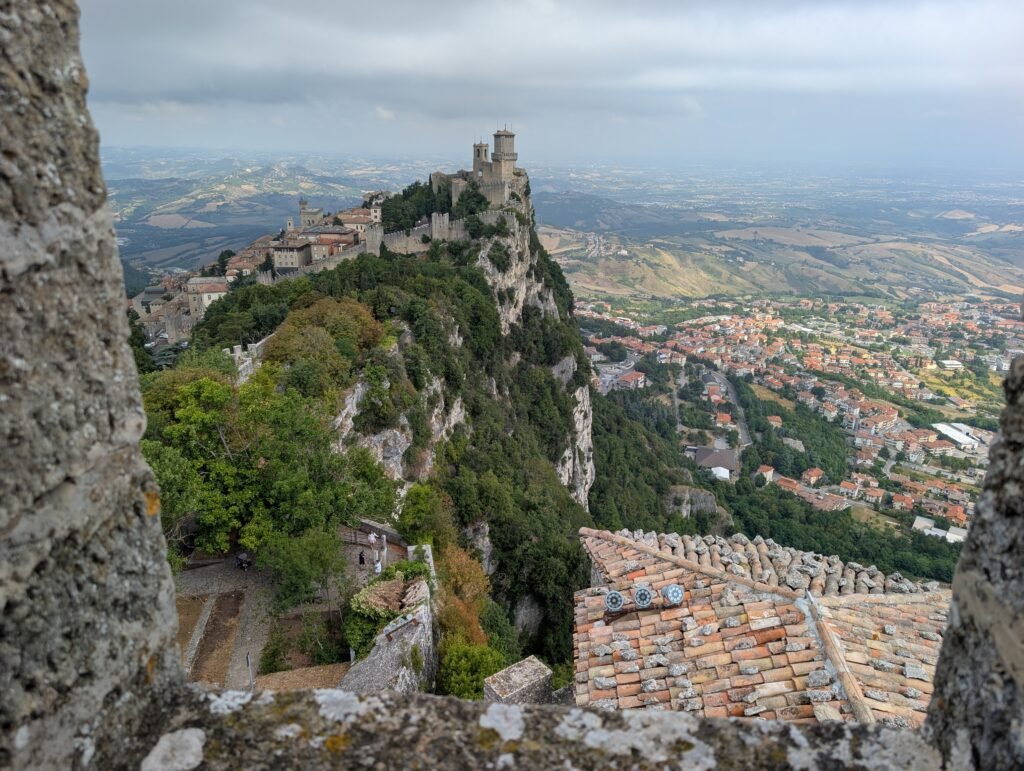
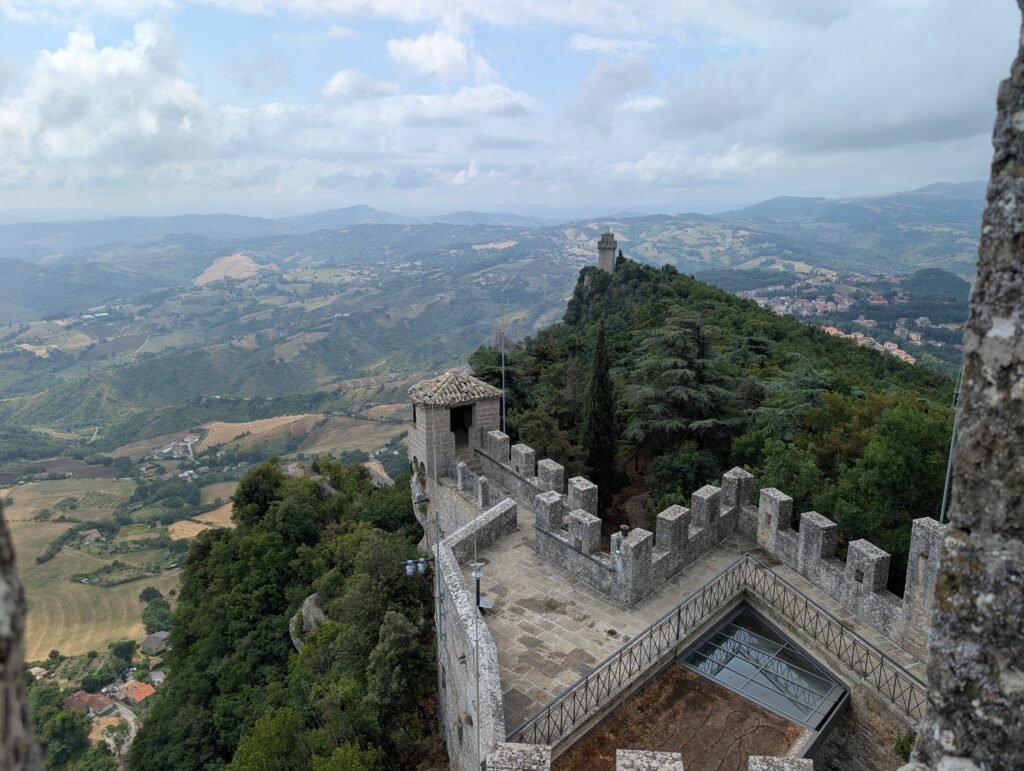
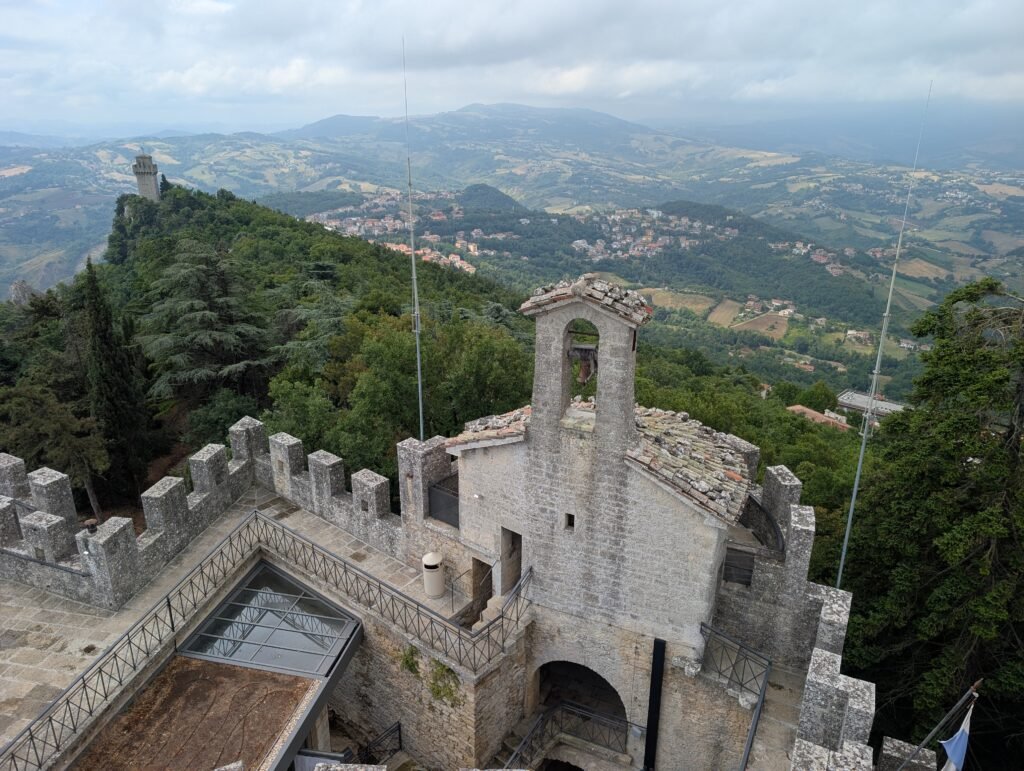
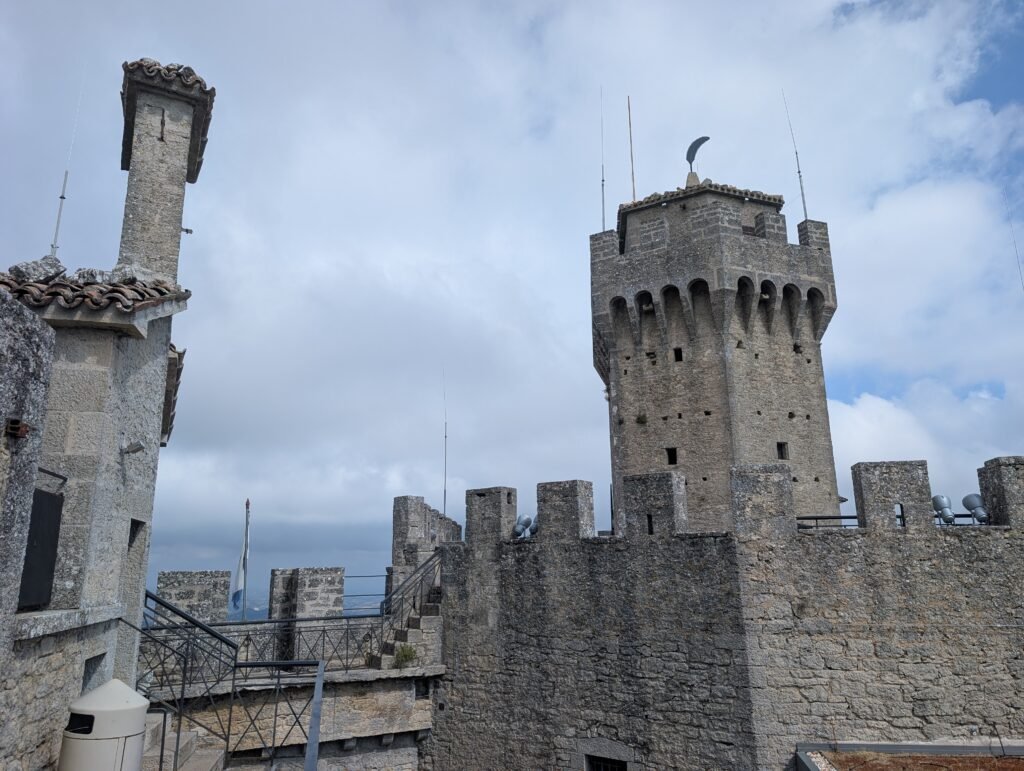
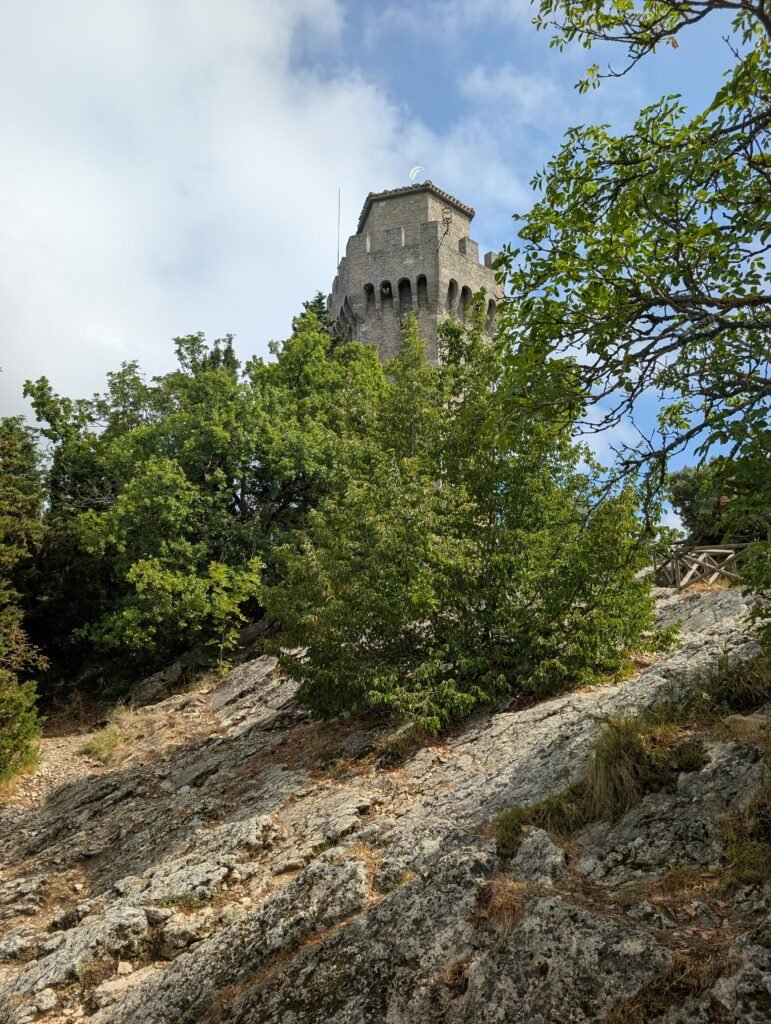
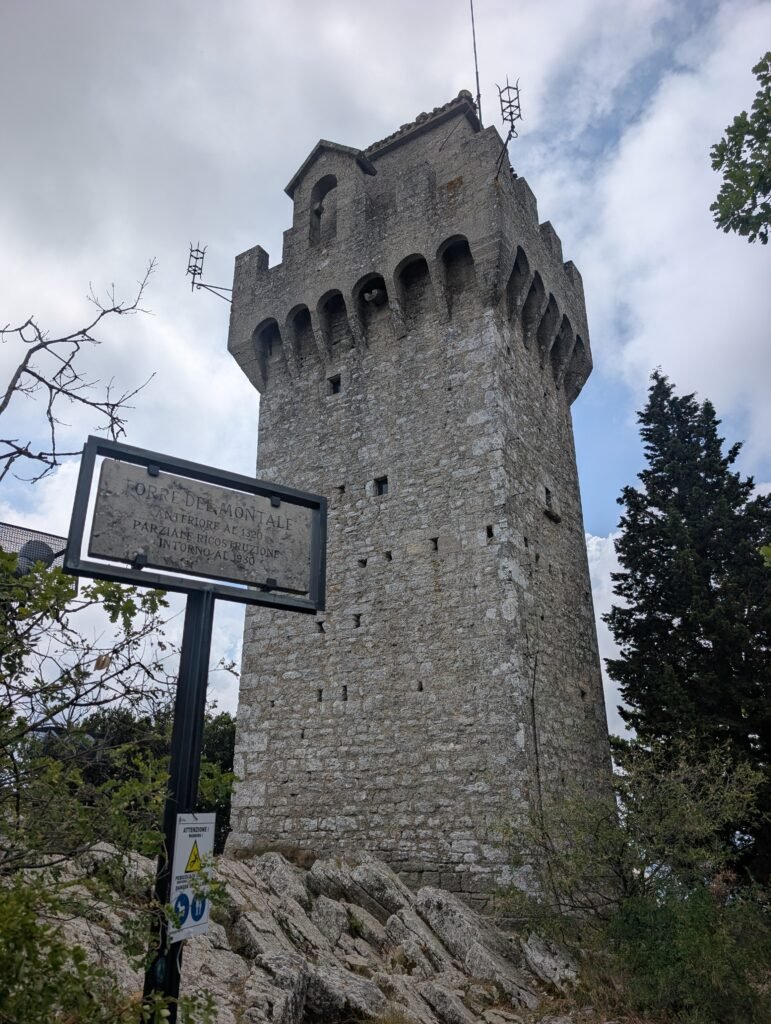
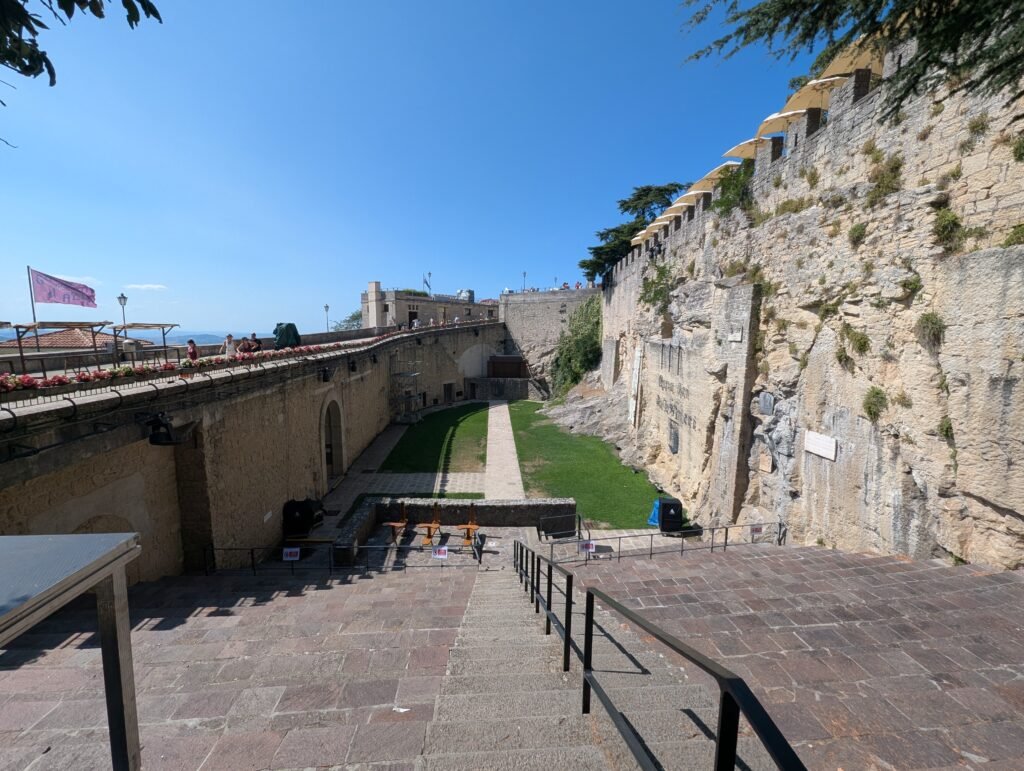
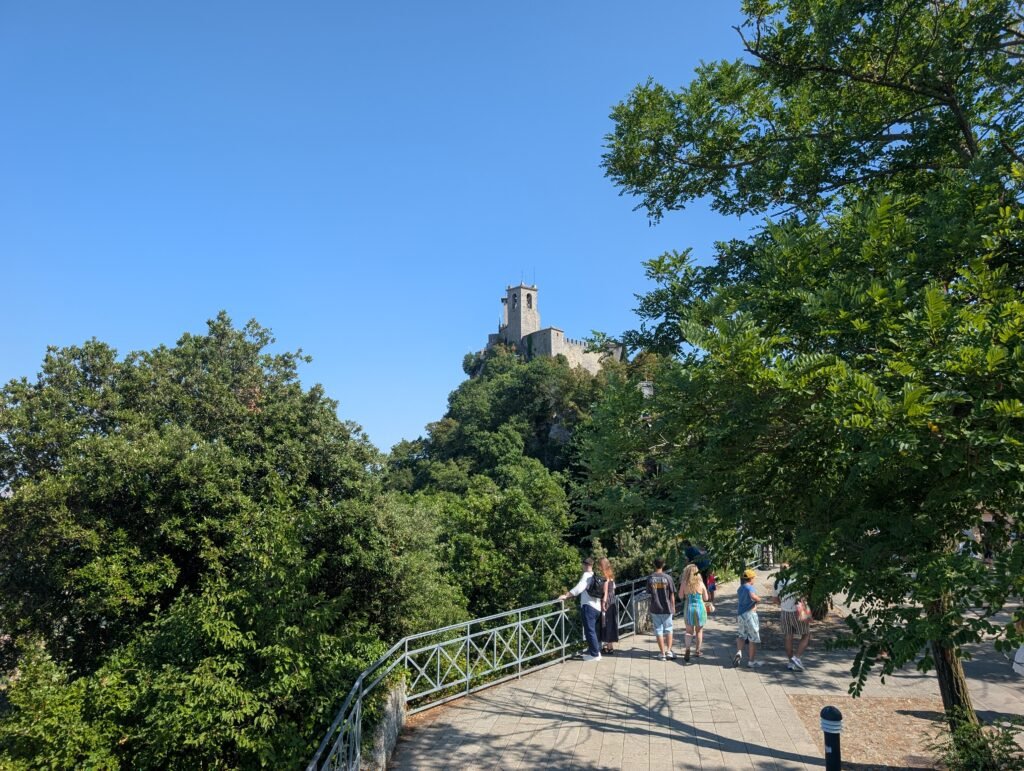
In order to protect the country from neighboring feudal lords and other external threats, San Marino’s leaders sought to utilize the unique, cliff-like terrain of Mount Titano to construct artificial defenses. They likely first just built a watch tower on one of the highest points, but between the 11th and 14th centuries, three fortified castle-like towers were built on the highest peaks of the ridge. They were renovated over time, and connected by first one small set of walls, then another which included all residential buildings of the city. These towers were later “stylistically restored” in the early 20th century, giving them their present iconic look. The towers really are the icons of San Marino. They appear on most of the country’s currency and stamps.
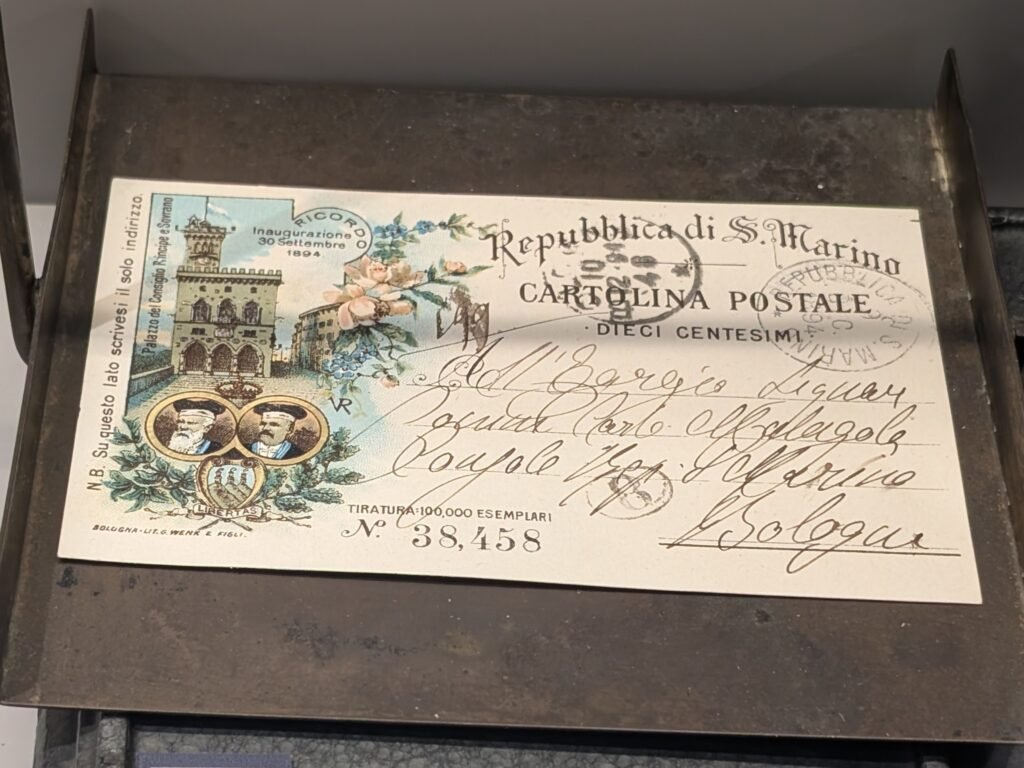
San Marino does not have it’s own currency anymore, but they are allowed to mint Euro coins, which they do from time to time. Their circulation is so small, however, that it is extremely difficult to pull one from circulation. Many shops in San Marino sell mint or proof sets of San Marino Euro coins. Collectors often buy these when visiting. Others go to mail postcards using relatively rare San Marino stamps. One of the state museums you can visit while in San Marino is a small one dedicated to coins and stamps. Being a coin collector, I made sure to visit this museum. It was included in my museum pass.
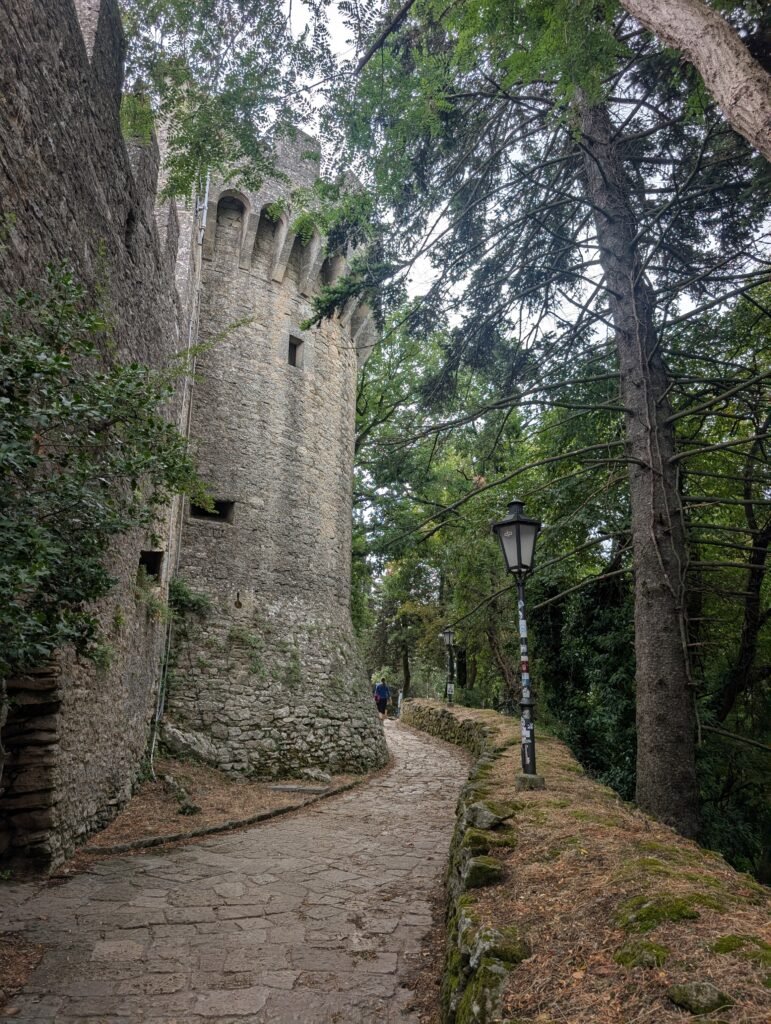
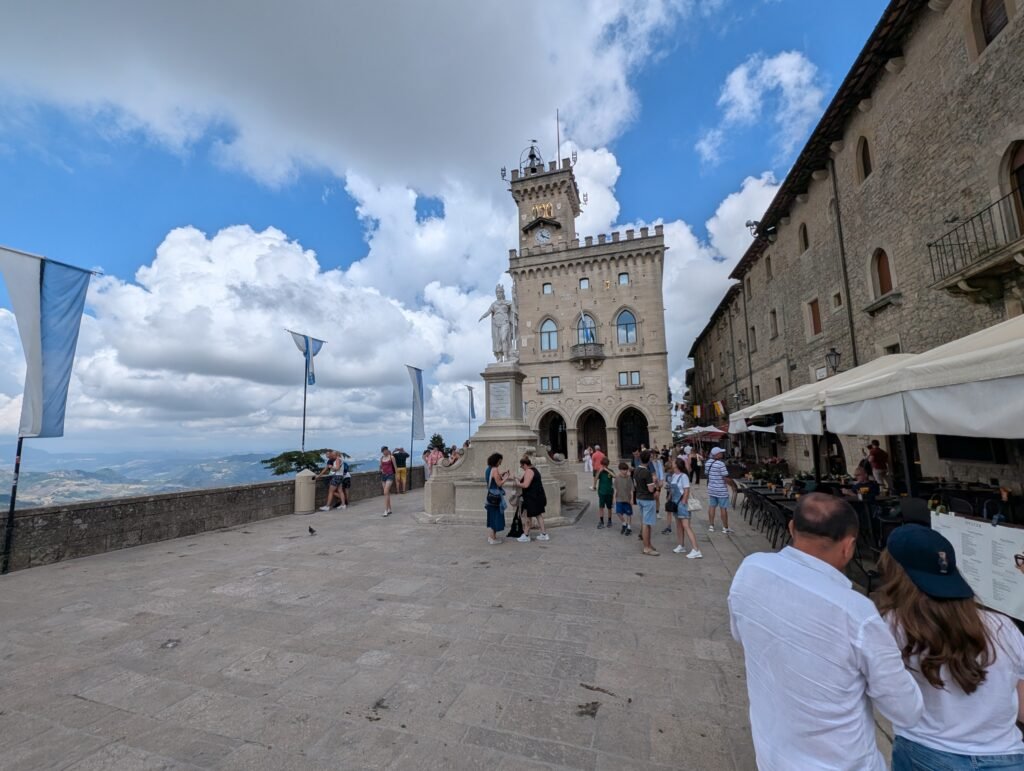
I began the day, though, by hiking the towers. To get to San Marino from Rimini, you can catch a bus from right outside the railway station for just €7 at the time of this writing. It drops you off below the old town area of San Marino. There is another, lower city in the small country of San Marino from which you can take a cable car to the higher points in San Marino. I bought my combined museum ticket which also gets you into the two accessible towers one my phone for €11 while walking up the hill. It is a decent climb, and a walk of about ¾ of a mile to the first tower. I walked a well prepared, but sometimes steep trail between the three towers. I continued past the third tower and descended to walk by the national assembly building before coming back into town.
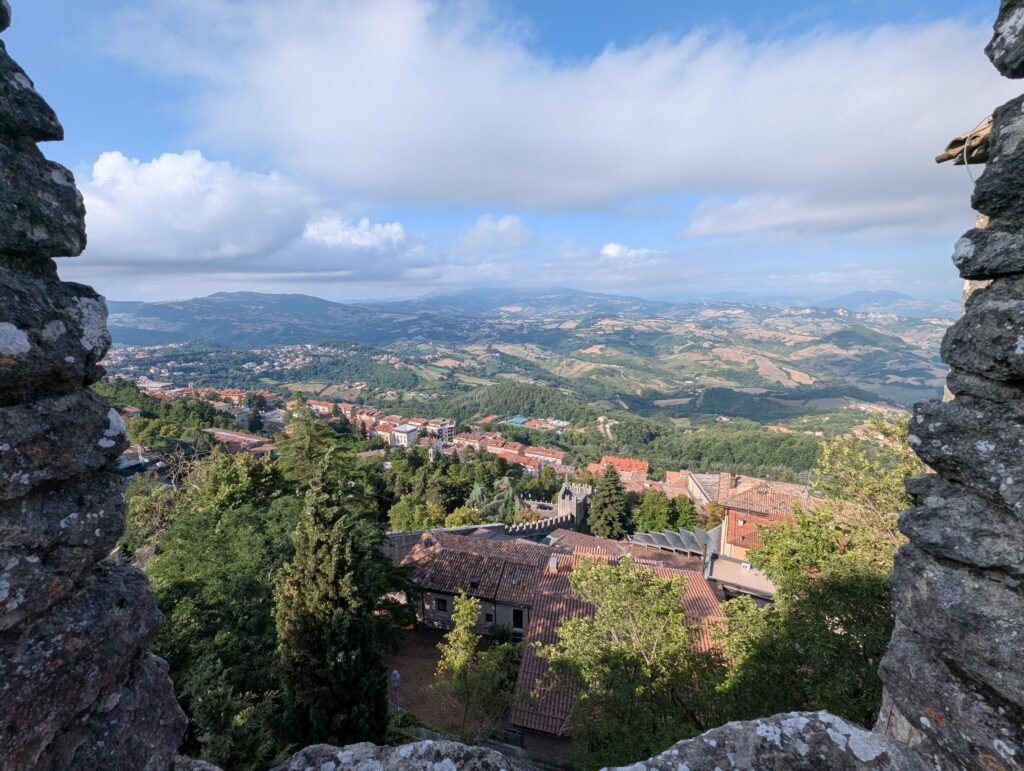
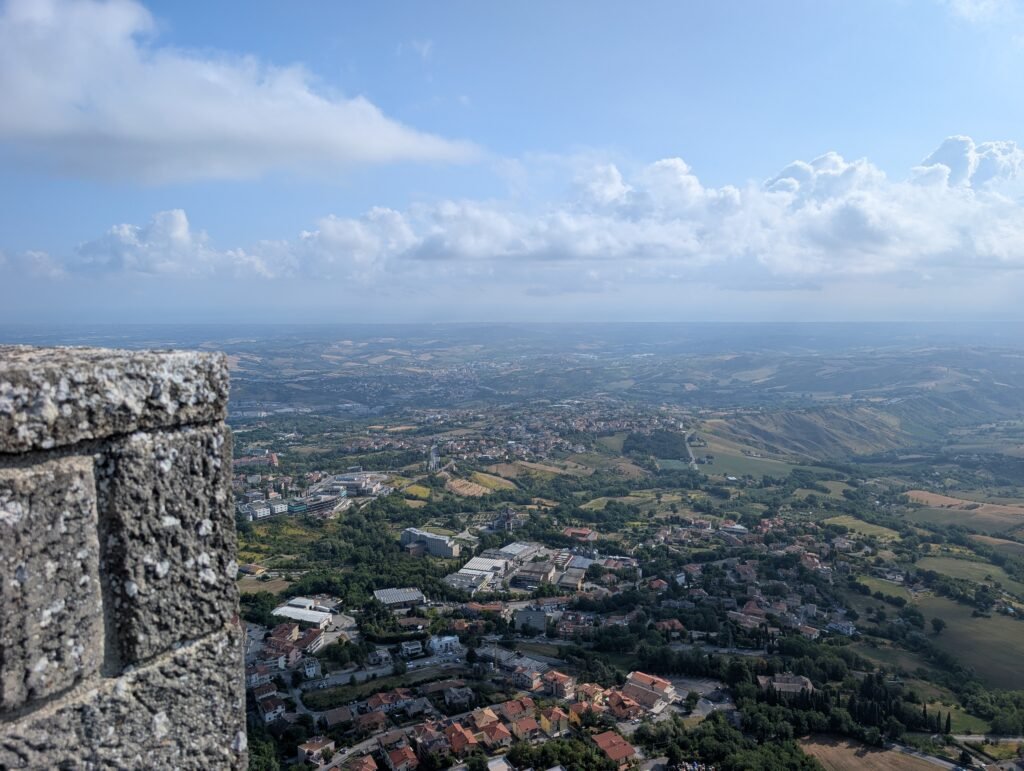
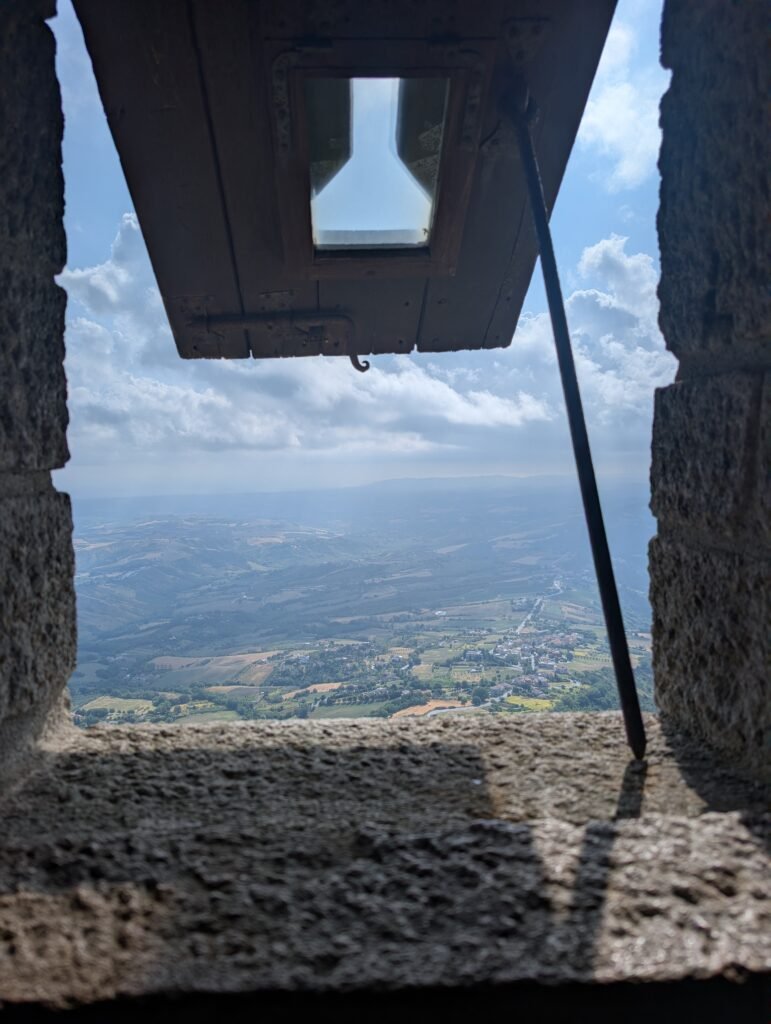
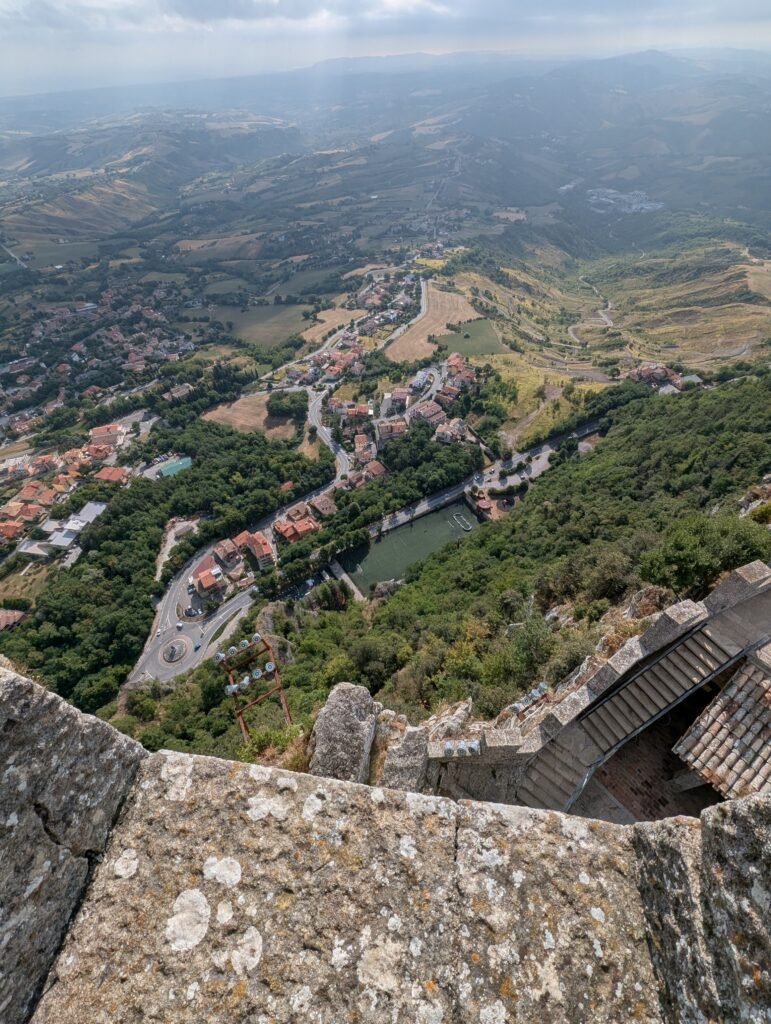
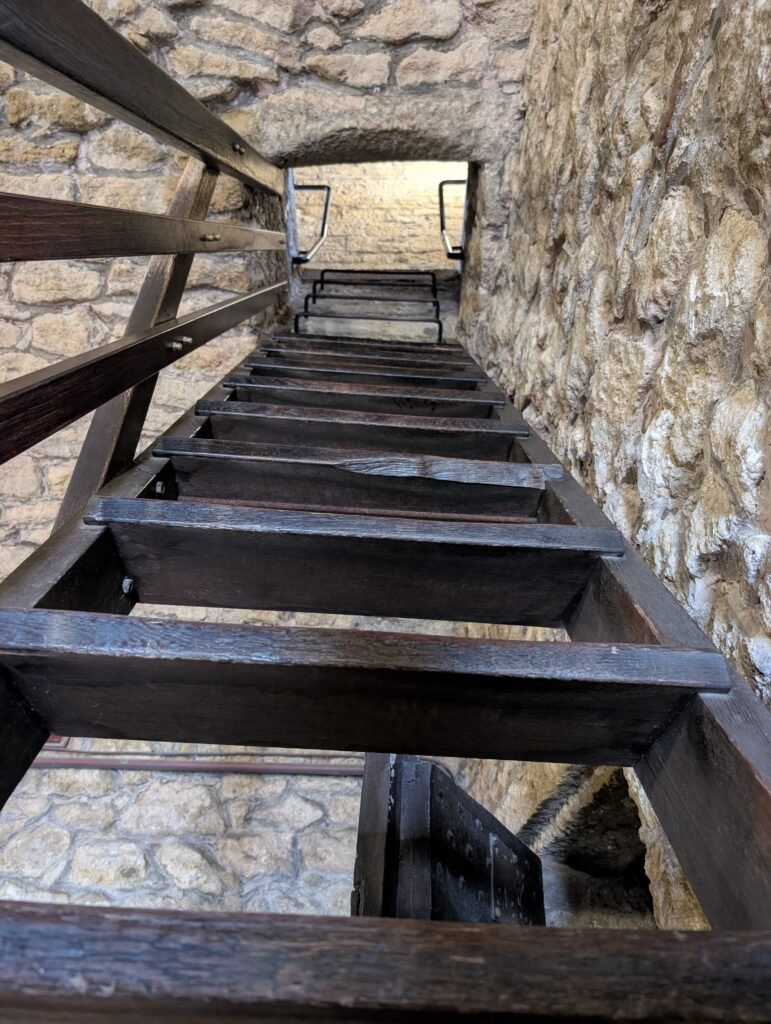
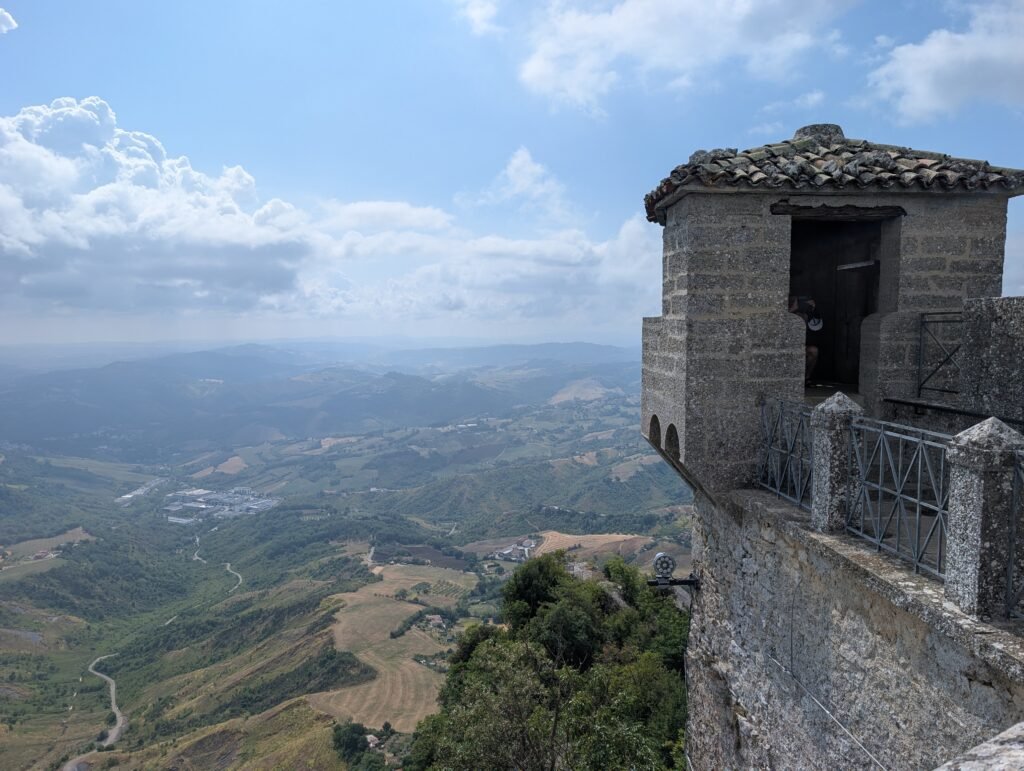
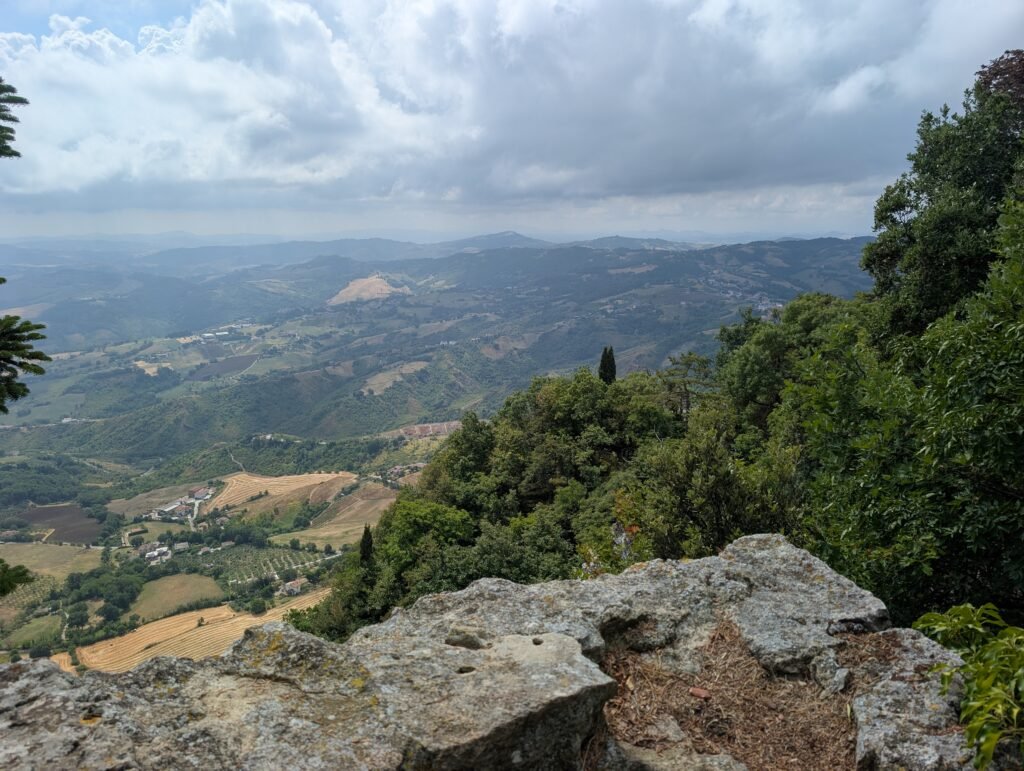
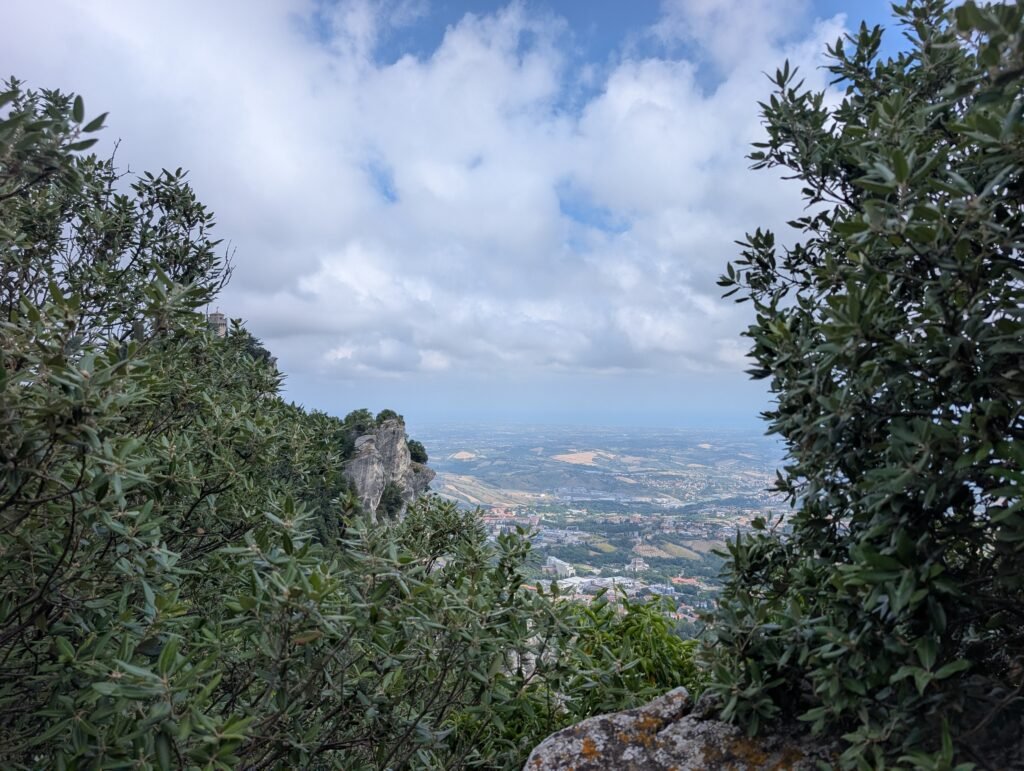
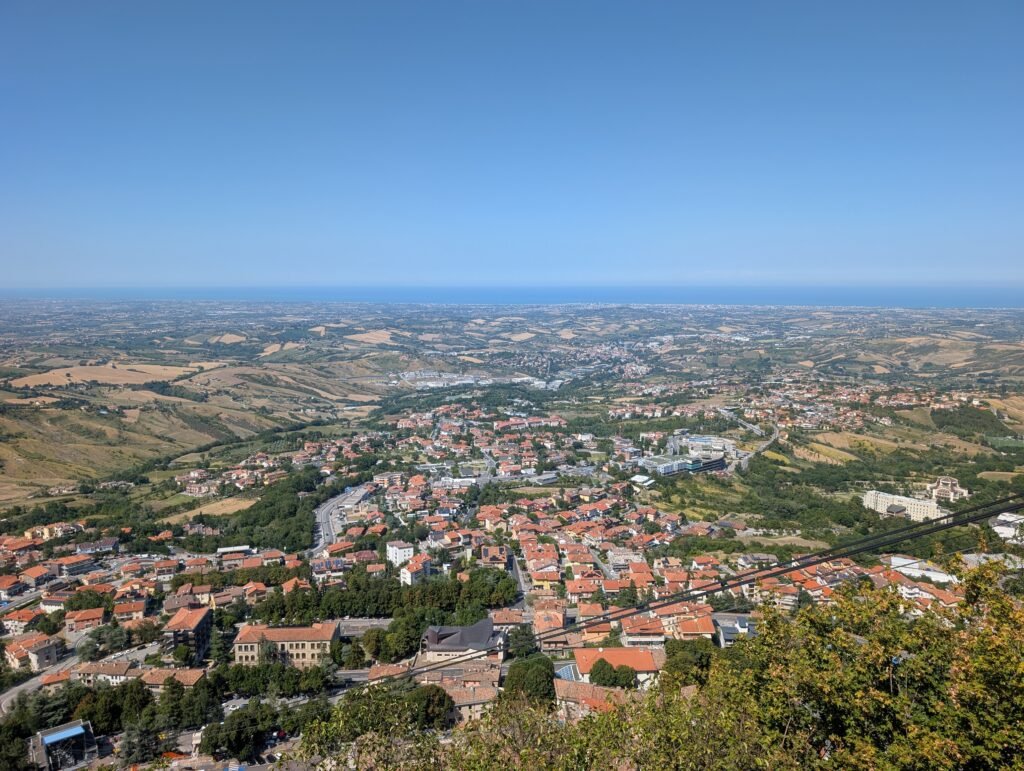
The views from the towers are spectacular. You can see way out over the Adriatic and well back into inland Italy. There are also very nice views of town and the other towers. There are a few placards giving a basic overview of their history and historical usages. The second tower even has a small armaments museum, though most of the collection there dates later than the era when the towers were most important to San Marino’s protection.
(Continued)
I arrived at the first tower just a few minutes after the scheduled opening, but the thick wooden door was shut. I tried anyway. Someone inside heard me open it, and a tiny wooden widow flipped open revealing not much more than a nose and an eye. The woman who owned these told me that the internet was down, so I couldn’t buy a ticket. I thought maybe it was the Frenchmen guarding the castle in Holy Grail. I didn’t have to solve any puzzles about swallows to get in. I only mentioned that I already had my ticket, and she kindly let me around the electronic scanning gate.
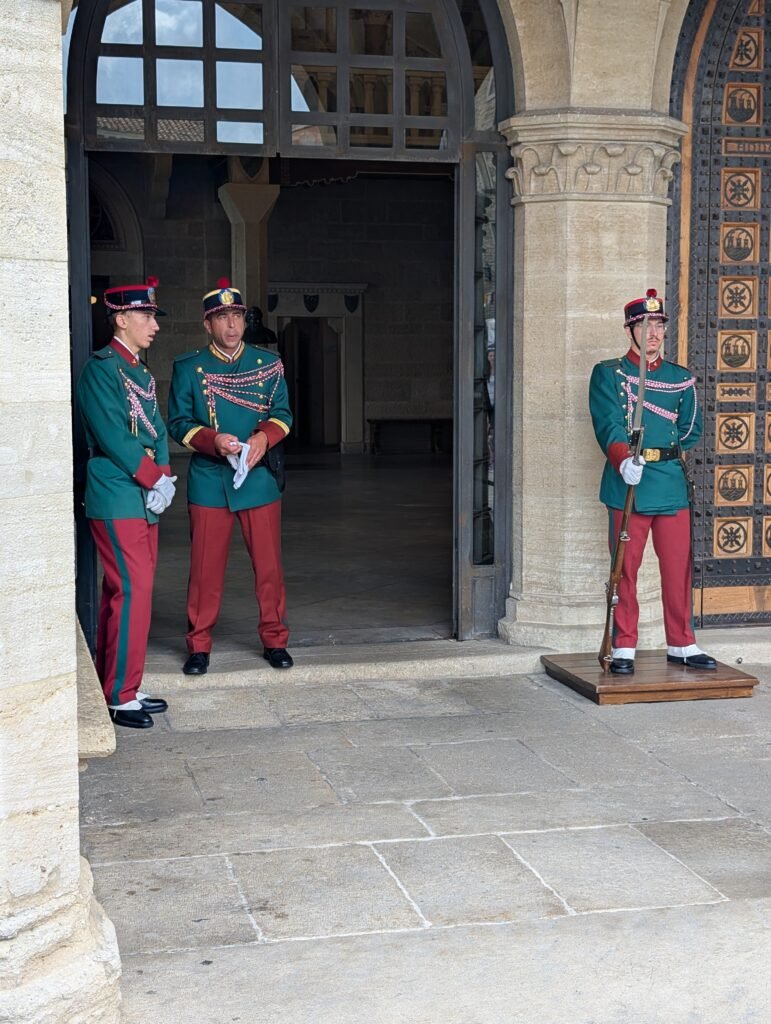
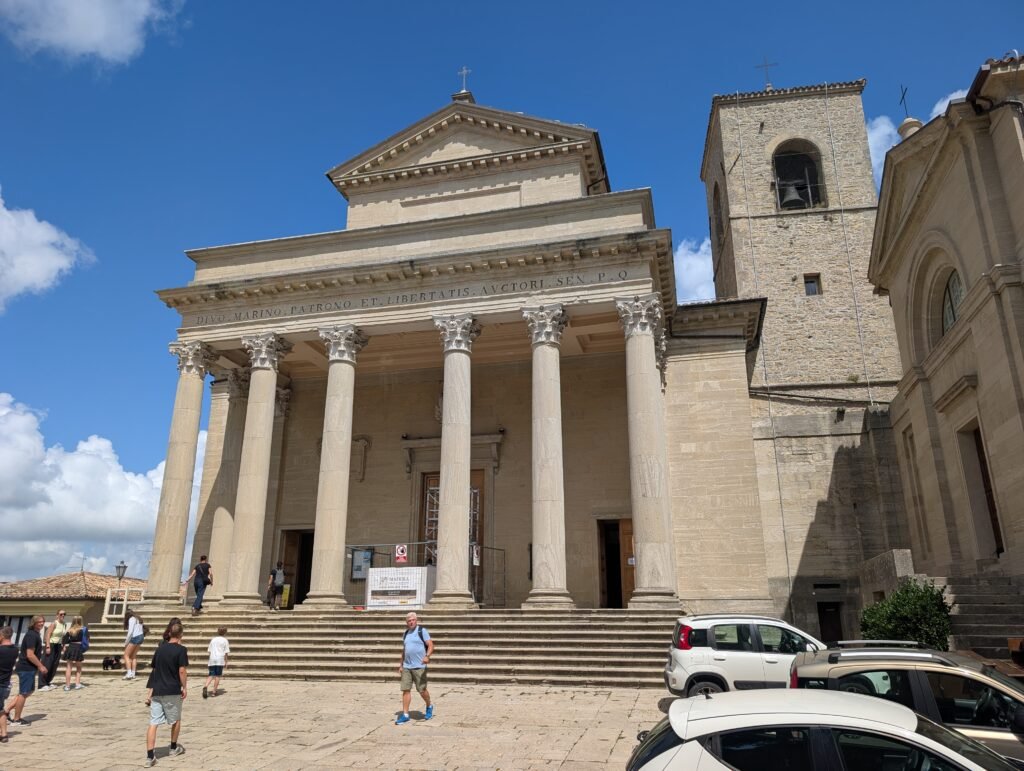
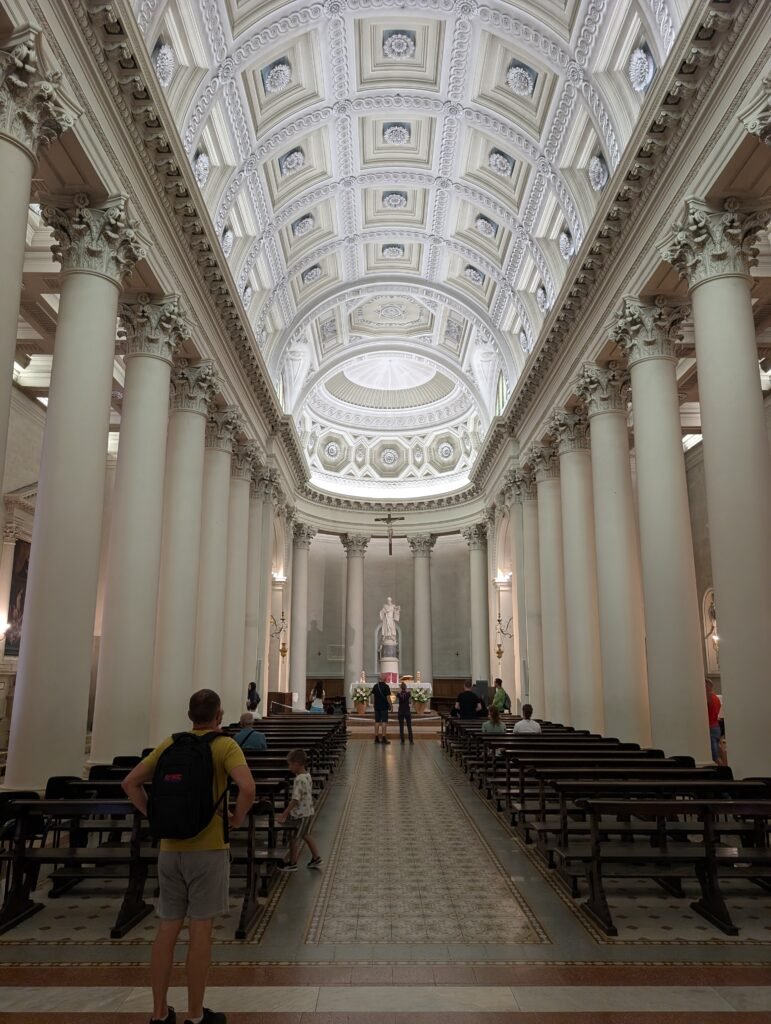
These towers don’t take all that long to explore, and the trail is only about 2km long. I read every plaque, took a lot of pictures, and stopped at every part of the armaments museum. Even at that, I was finished with this part of my visit in about 2 ½ hours. As the day went on, I bought postcards, wrote them, visited the church dedicated to the eponymous saint and one other chapel, bought some souvenirs, watched the changing of the guard ceremony, people watched, checked out the cable car, and visited every one of the small state museums that was open. The city got much more crowded in the afternoon, and I often had to squeeze through and around tour groups whose guides stopped them right in the middle of the narrow medieval streets. Even after revisiting many of the best photo stops for different lighting in the afternoon, I was about finished by 4:00 p.m. I made my way back to the now much busier bus pickup spot with a 4:45 ticket and was back in Rimini about an hour later.
San Marino is a perfect day trip destination. I read quite a few other online sources who recommended spending a night or two there. The main purpose of this was to see San Marino outside of the crowded periods, or to catch a sunset. The crowds are easily avoided simply by catching the first bus up the hill in the morning. Unless you are an avid souvenir hunter, there really isn’t all that much to see. The towers and their views are amazing. It’s absolutely worth going to San Marino just for those. But the museums are small and don’t hold much that you can’t see better examples of throughout Italy, or at other larger museums. A day in San Marino is plenty.
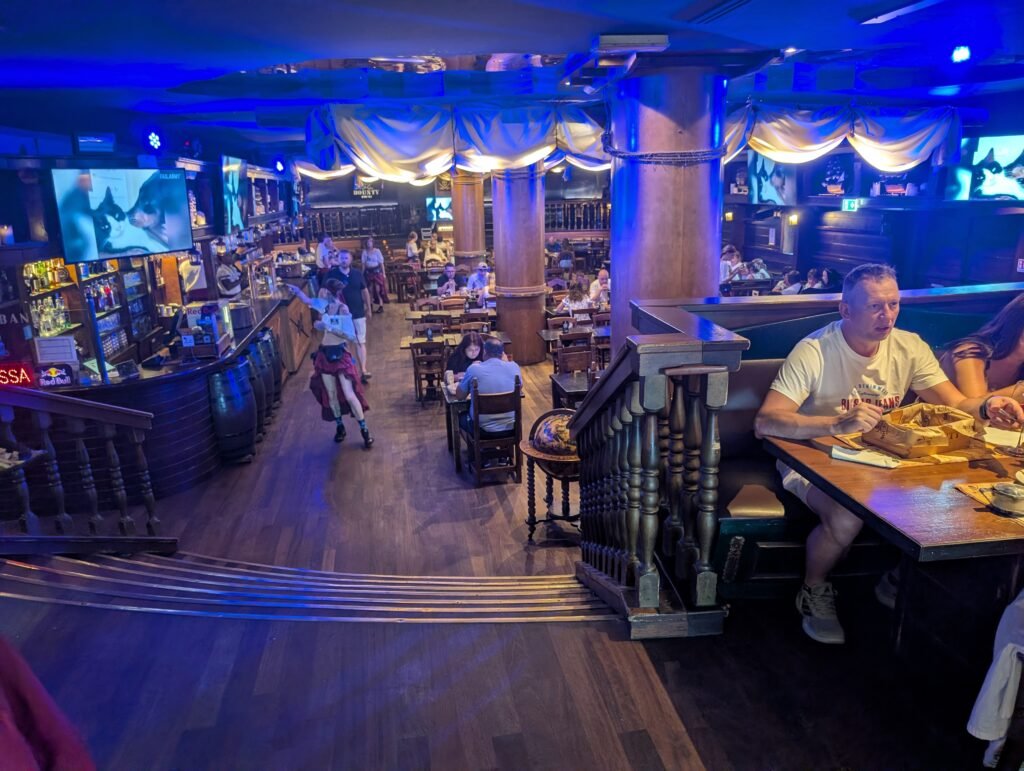
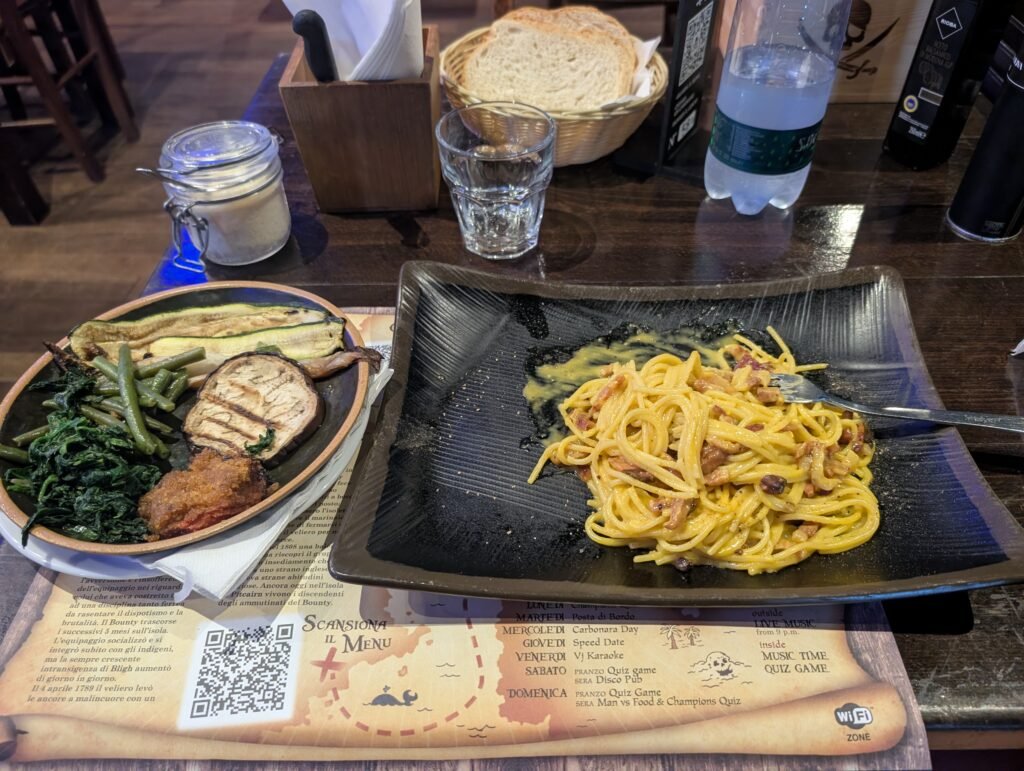
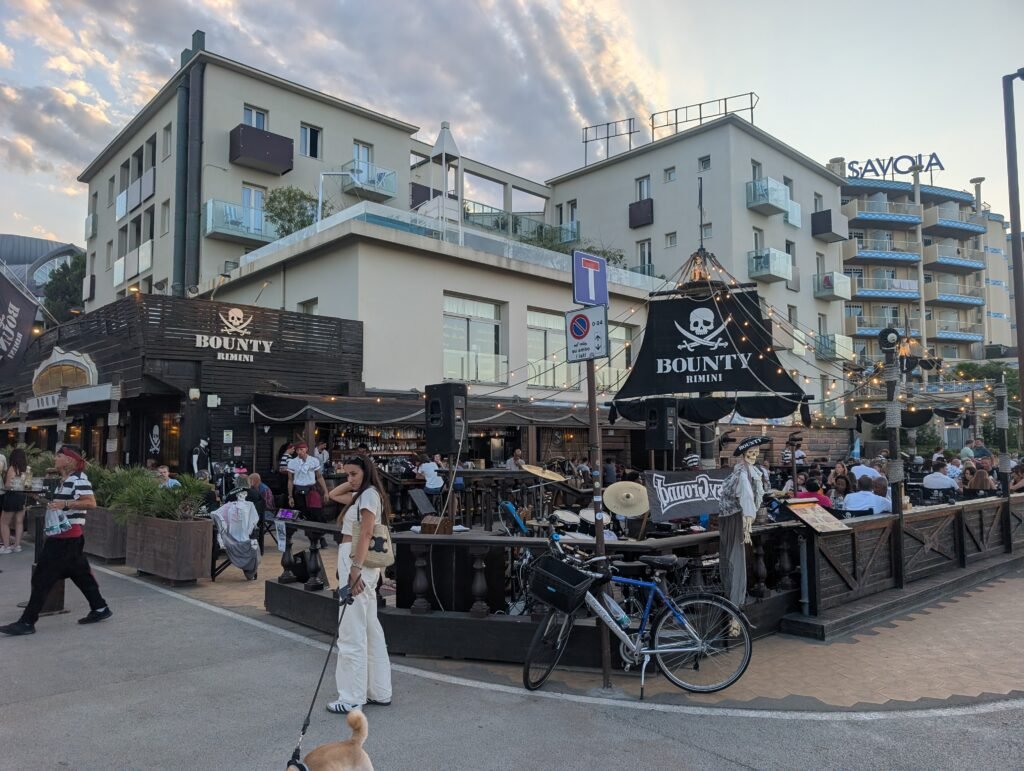
On my train to Rimini the day before, some local kids had recommended I try a restaurant in Rimini called The Bounty. I love taking locals’ recommendations. They said the beach in Rimini had green water and wasn’t so nice, but that the carbonara at the Bounty was worth the visit. I don’t really like spaghetti, so I was a little reticent about the carbonara. But it’s really the tomato sauce I don’t like. My carbonara had a cream sauce with lots of cheese and even quite a bit of chopped bacon in it. It was pretty good, better than any spaghetti I have had. The restaurant was fun, too. It is right near the coast, and looked like a ship waving pirate flags. All of the servers were dressed as pirates. There was even a pretty good Johnny Depp look-alike walking around. The place mats had a description of the story of the Bounty for customers not familiar.
I grabbed a few things for my train journey to Slovenia the next day, then called it a night so as to be ready for an early start on the next leg of my adventure. I had been in (mostly) Italy already for a couple of weeks, and I was ready to try something new.