Venice

An 1,100 Year Republic

We traveled by train from Napoli to Padua, thence by bus from Padua to Dolo. I reserved a small, family run motel in Dolo, a town of about 15,000 people roughly 40 minutes by train from Venice. I figured that would be a nice day tripping base from which to explore Venice. I had not planned out my Venice stay in nearly as much detail as I had Rome and Naples. In fact, my non-logistical planning had effectively run out on July 14th, with our visit to Herculaneum. My intent was to try to allow some latitude for Stephanie to choose things to do. Researching and planning those kinds of things just isn’t Stephanie’s forte and isn’t in her interest. So we ended up with some pretty ad hoc, inefficient exploring both on our last day in Naples and our entire stay in the Veneto. That’s my fault, not hers. We all have our strengths, and as the expedition leader, I need to be better about playing to them.

Stephanie had some laundry to do, so we walked from the Ca’Tron Hotel into the town of Dolo. We put our laundry in a coin-op, then walked to La Bodeguita Osteria for some supper. I had a meat skewer, which I ordered because it came with two vegetable sides and I didn’t think I had eaten a vegetable since arriving in Italy. Stephanie ordered some kind of steak, which was better than my meat skewer. Both were good though. We enjoyed our meals, then picked up our wet laundry and hiked back to the motel.

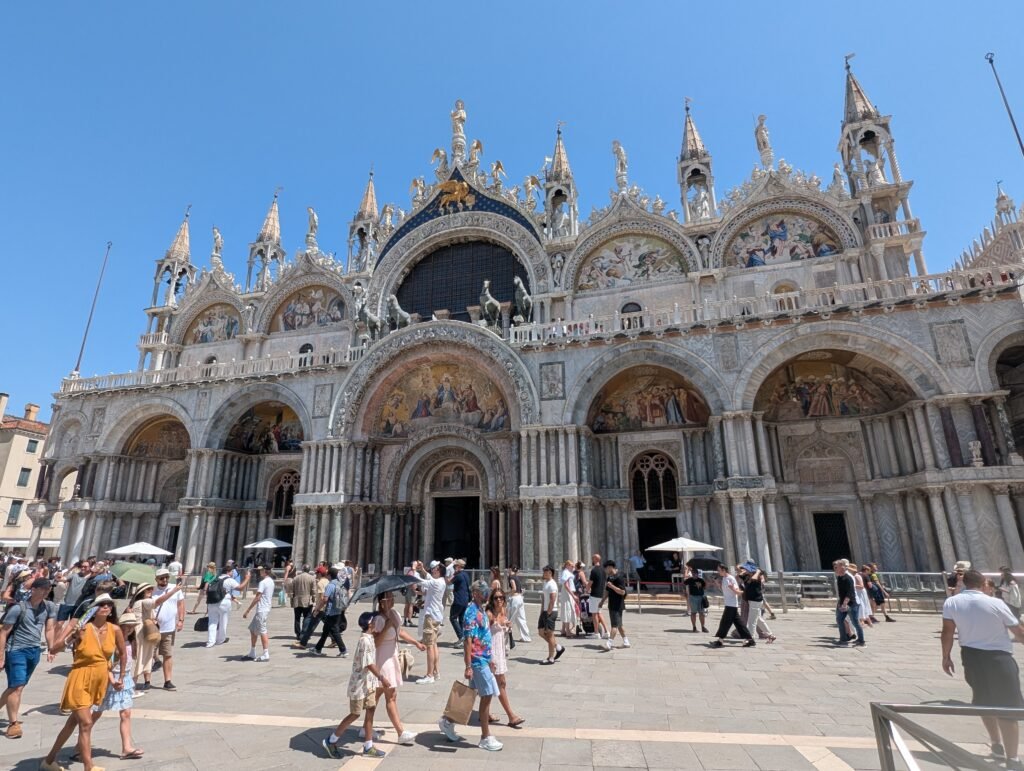
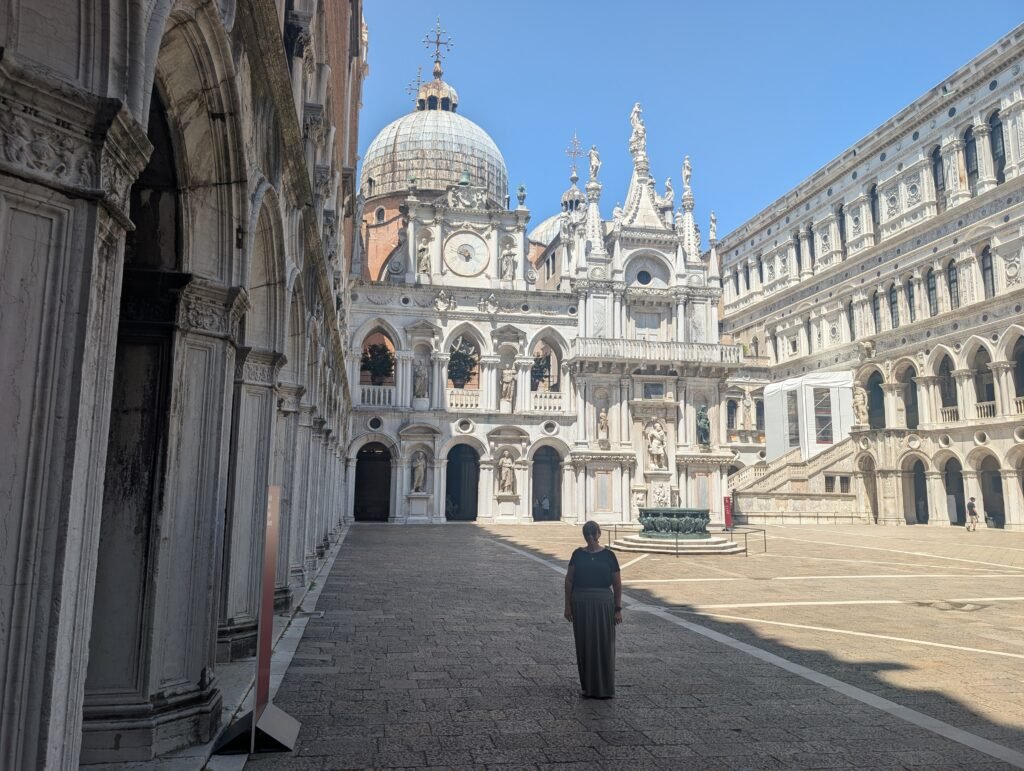
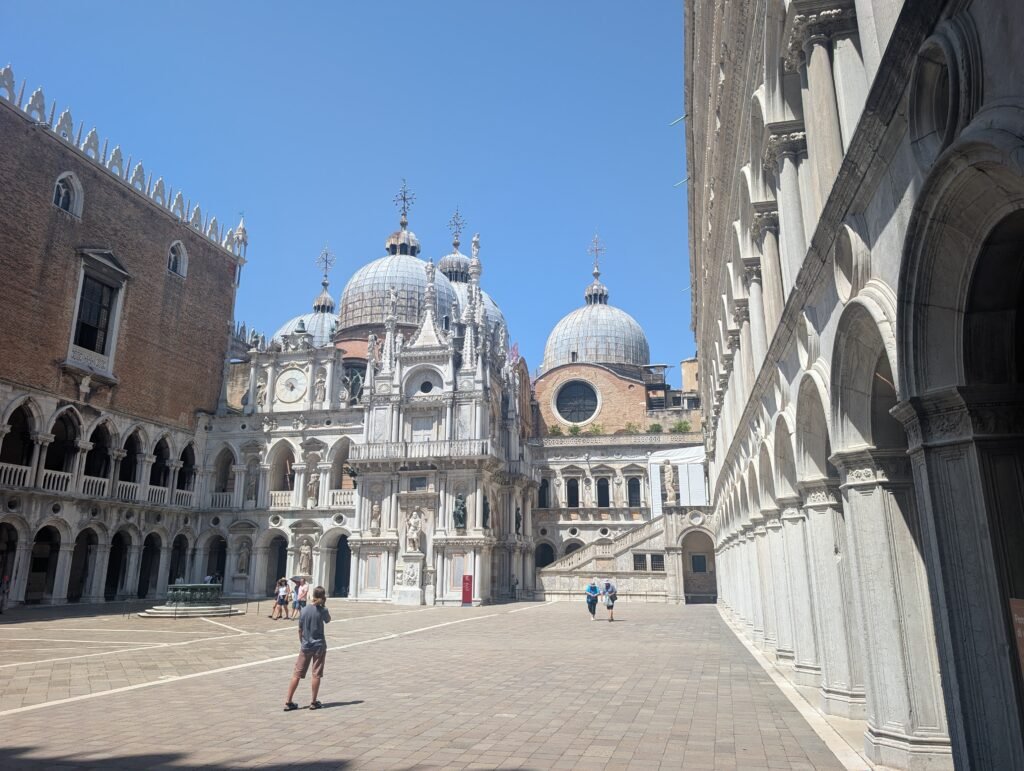
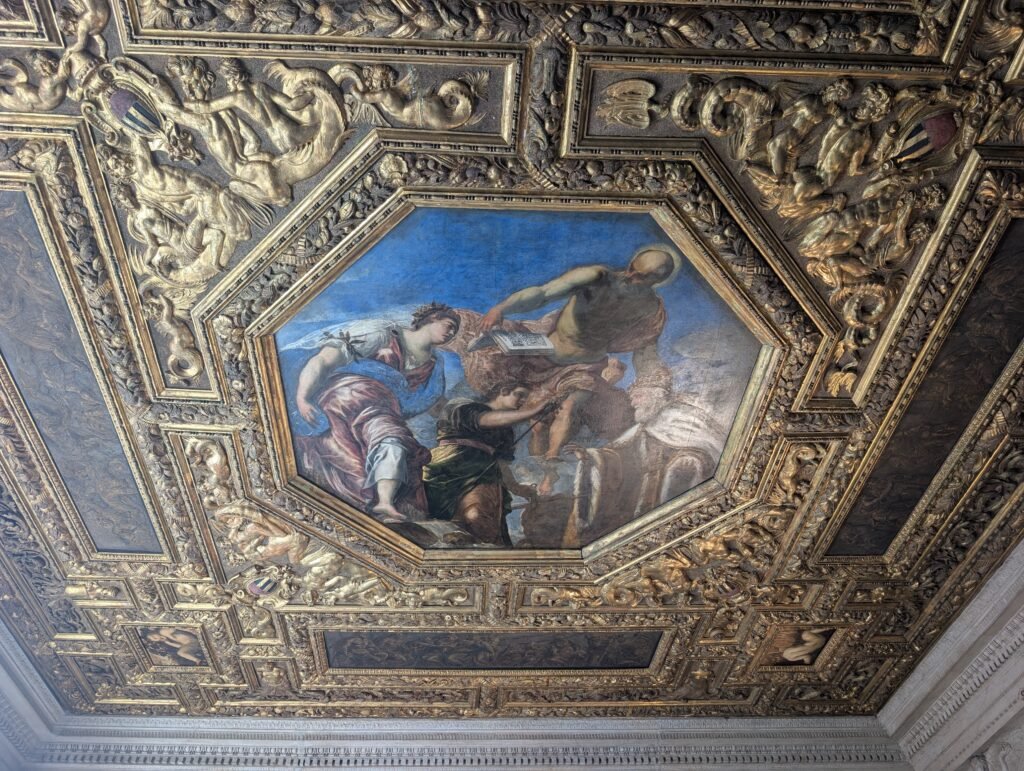
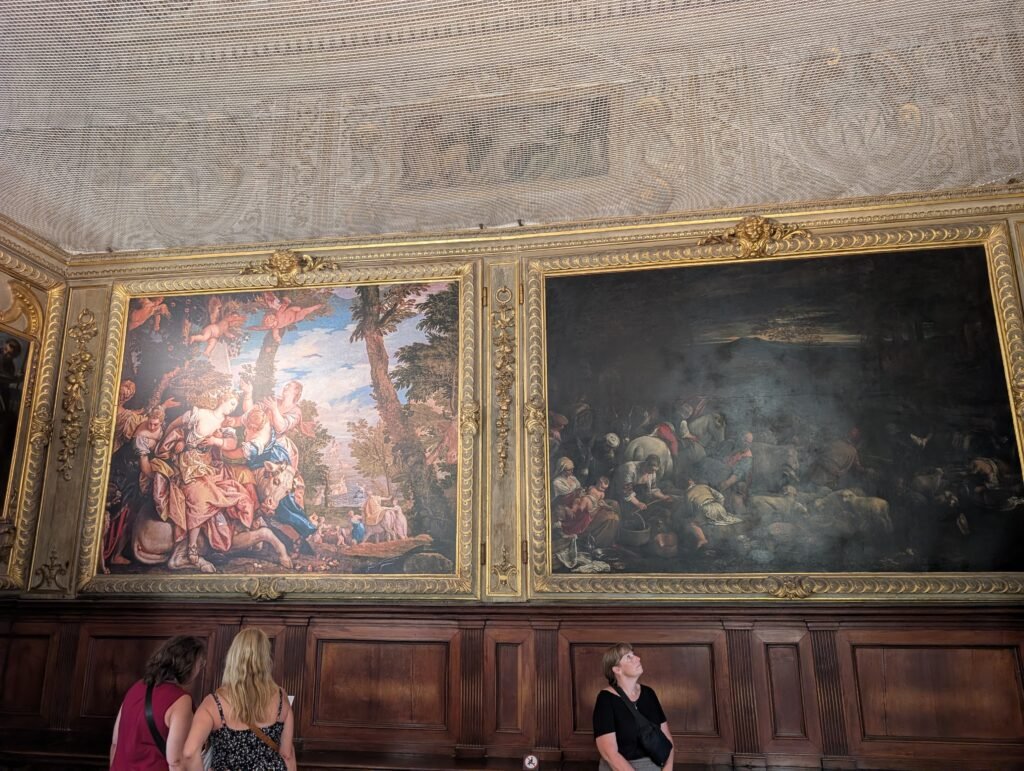
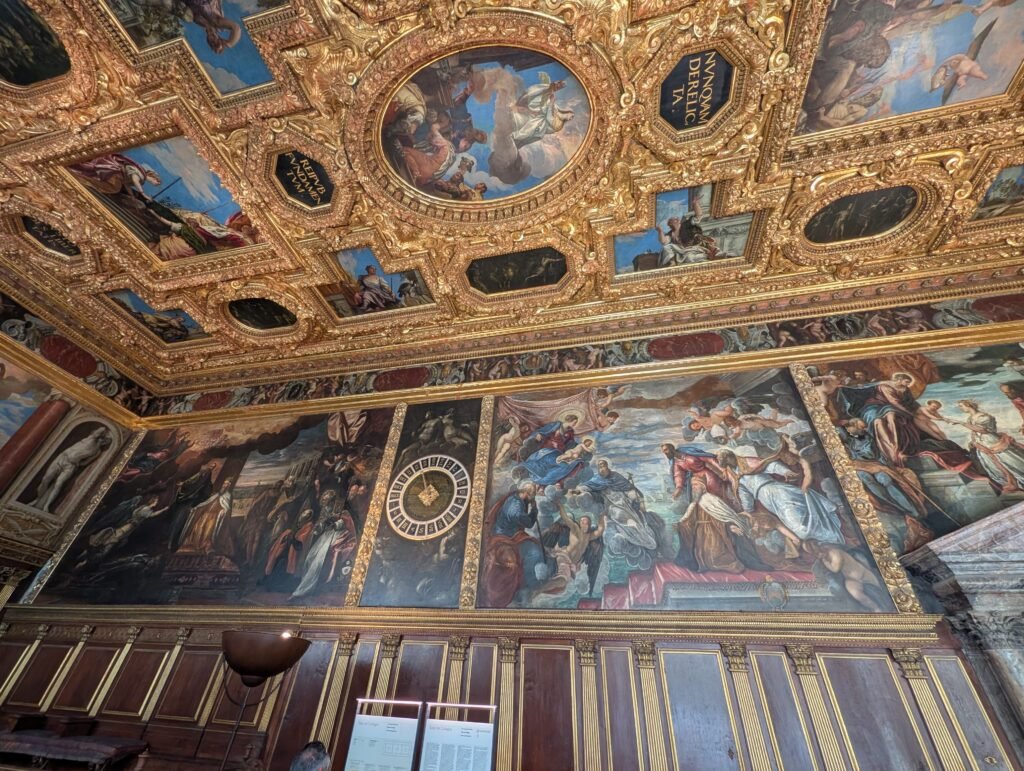
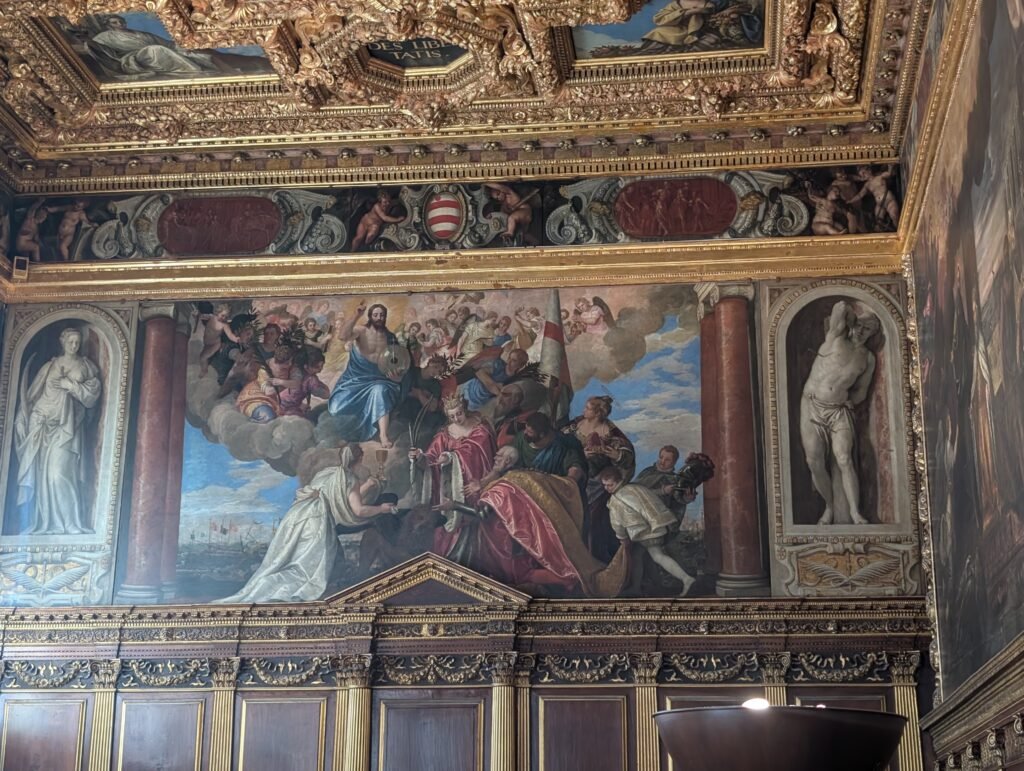
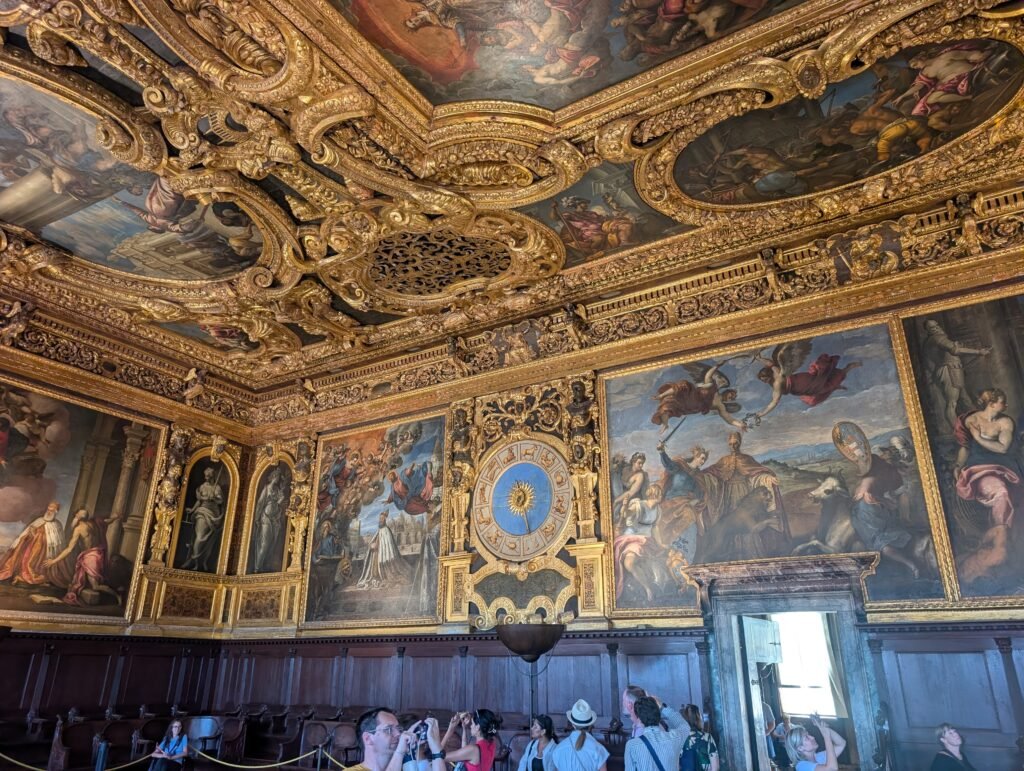
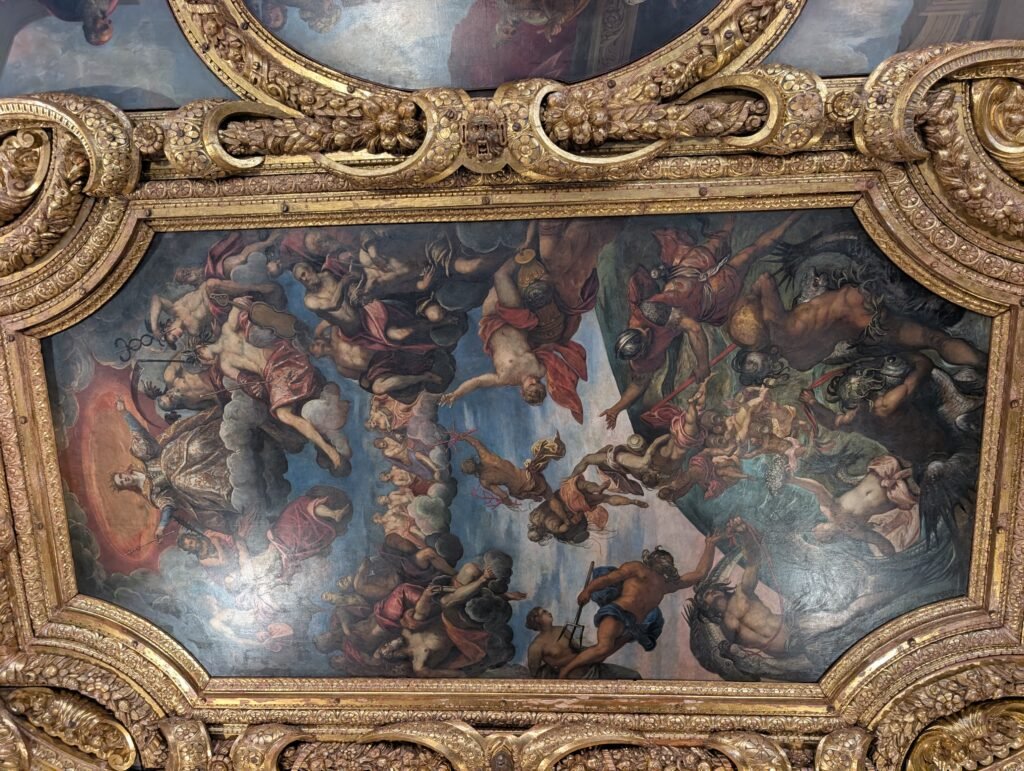
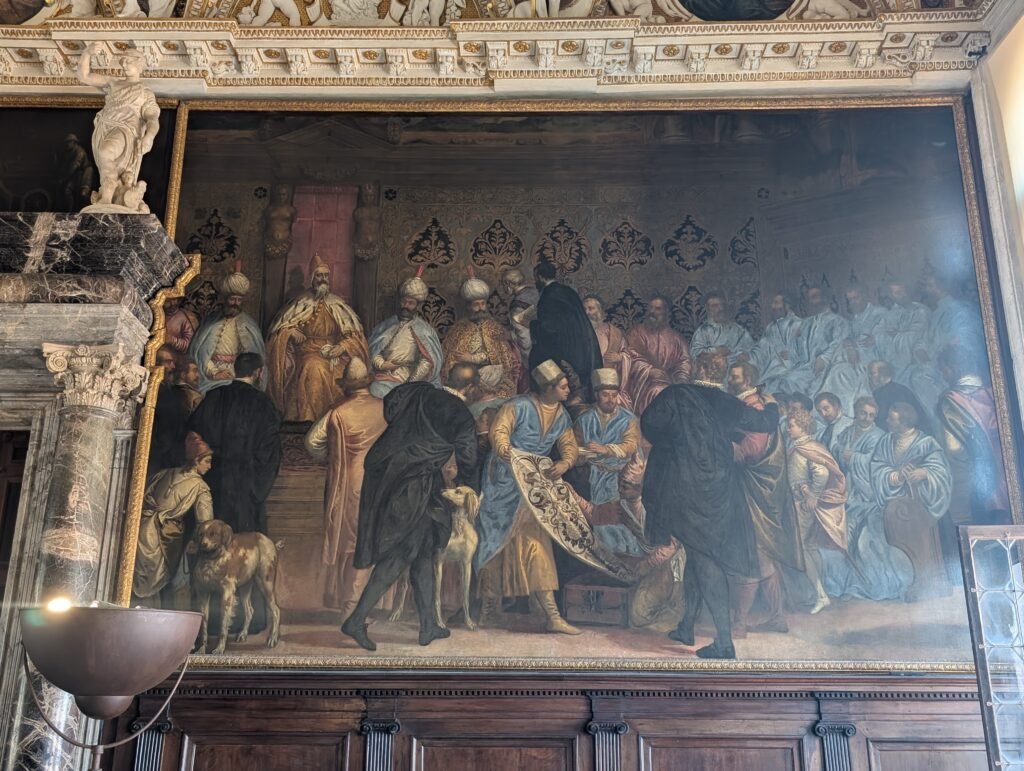
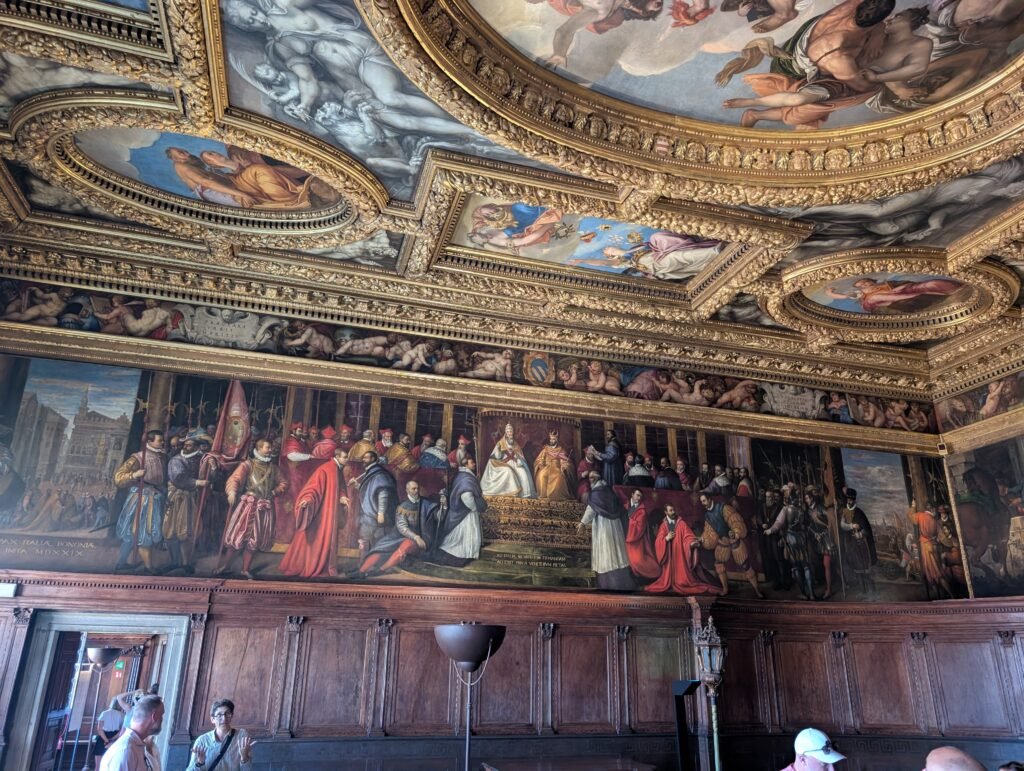
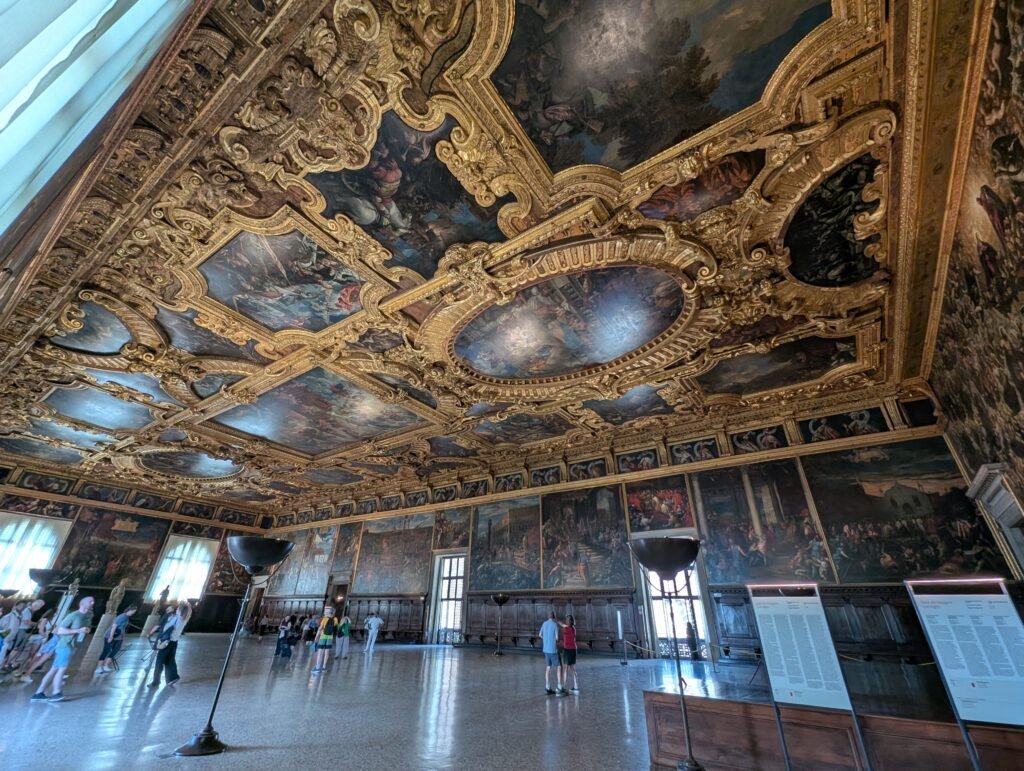
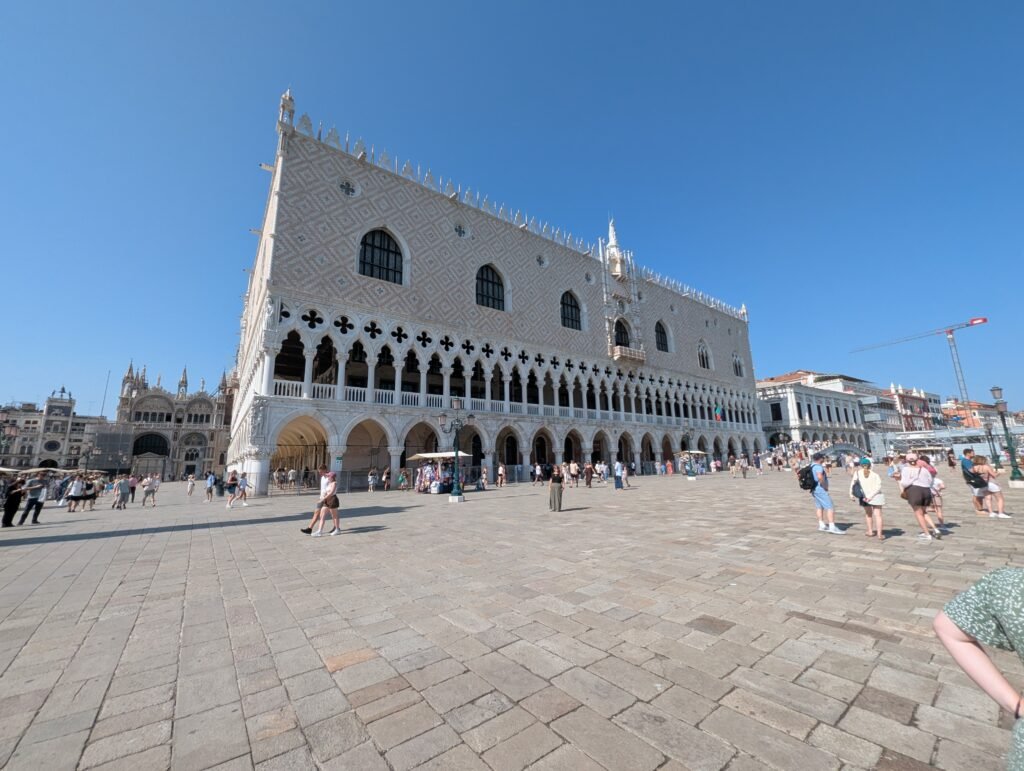
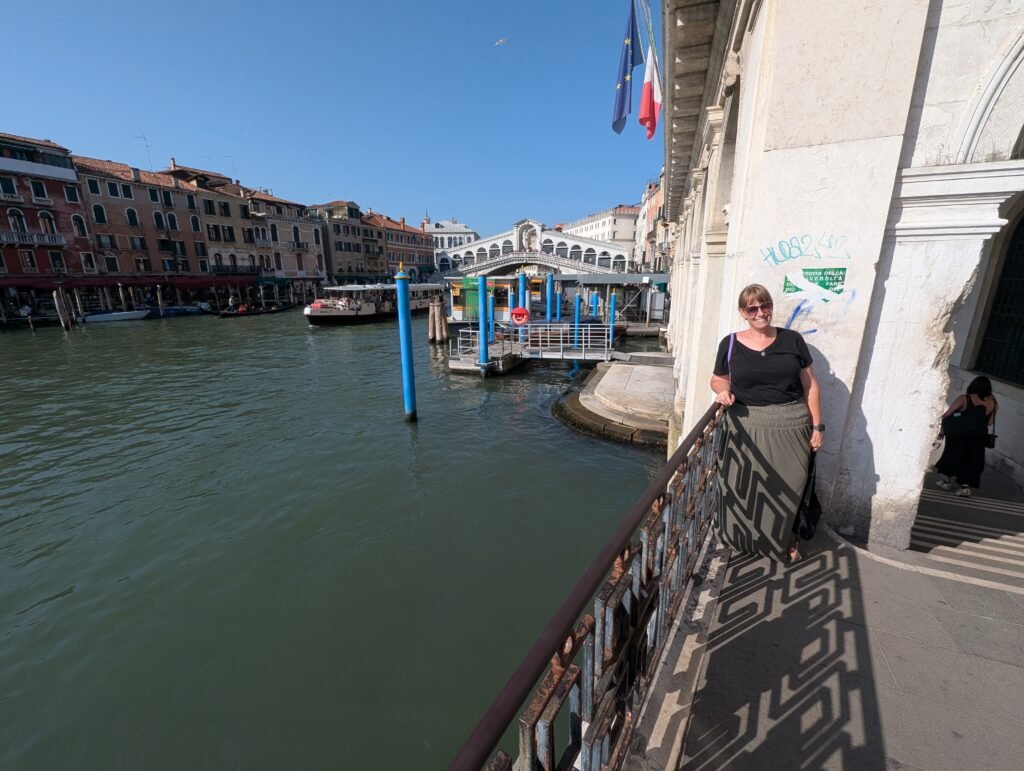
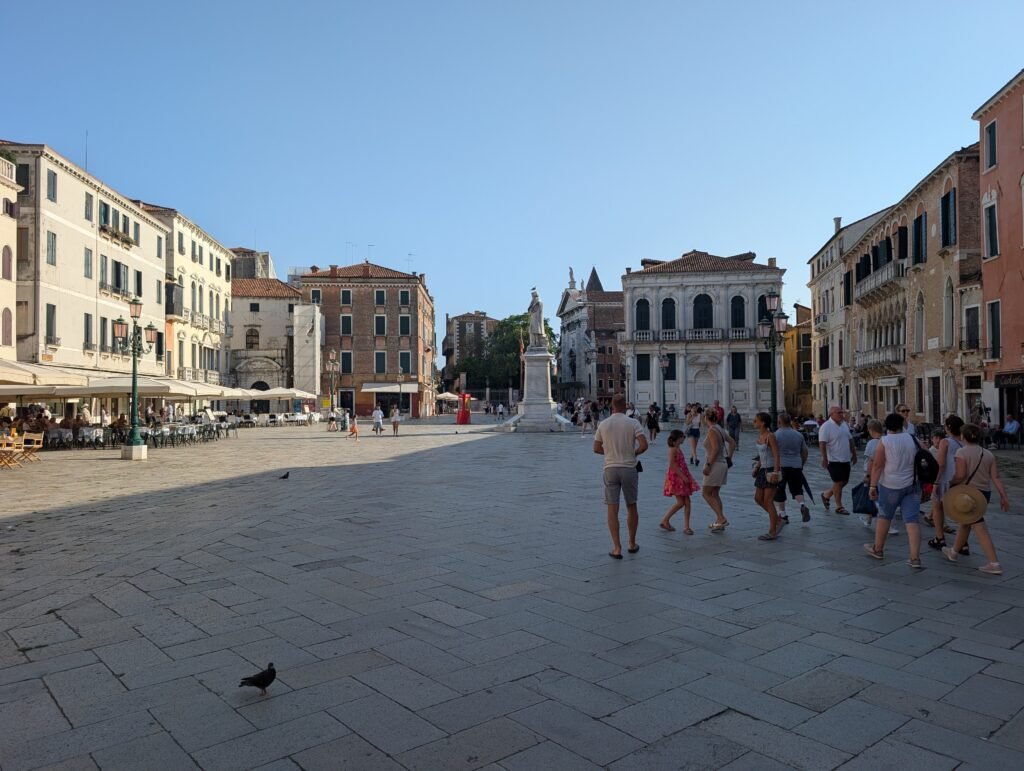
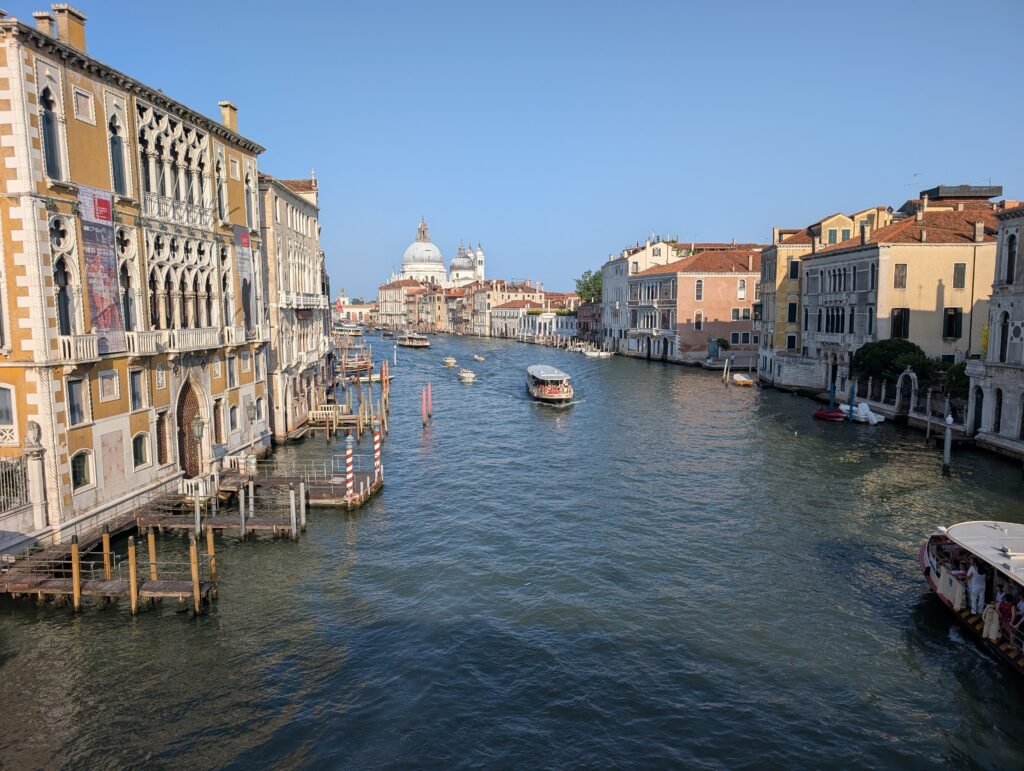
We did not get a very early start toward Venice in the morning. When we got there, we learned we had to pay a €10/each city tax just to walk across the bridge into town. This we did, with some angst, before walking to St. Mark’s Square. We opted to tour the Doge’s Palace this first day rather than entering St. Mark’s Cathedral. An audio guide came with the tour of the Doge’s Palace. We spent about three hours at this former head of state’s residence. Other than that, we just walked around the medieval street pattern of the islands that make up Venice. We saw canals, gondolas, bridges, and many churches other than St. Mark’s.

(Continued)

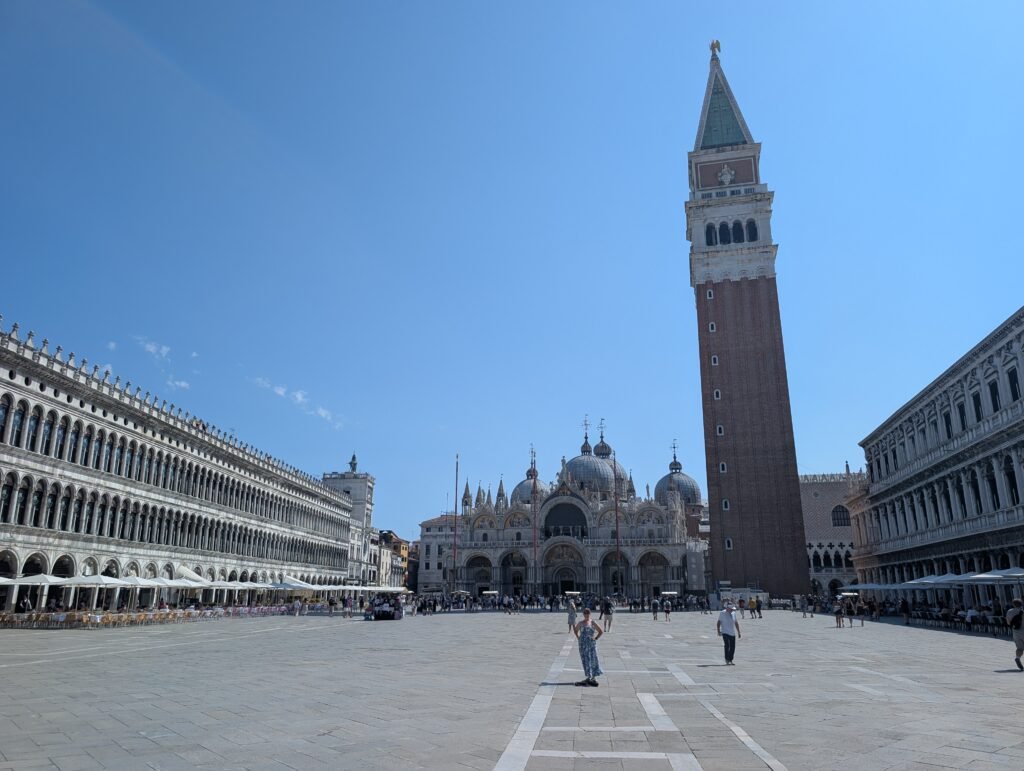
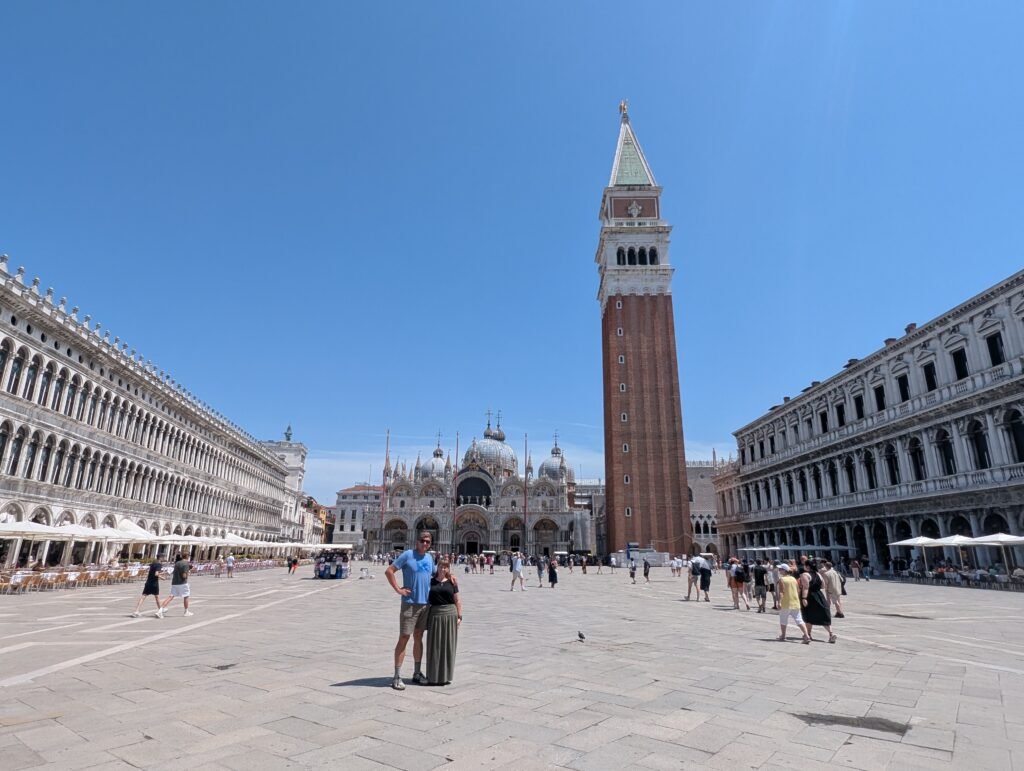
St. Mark's Square
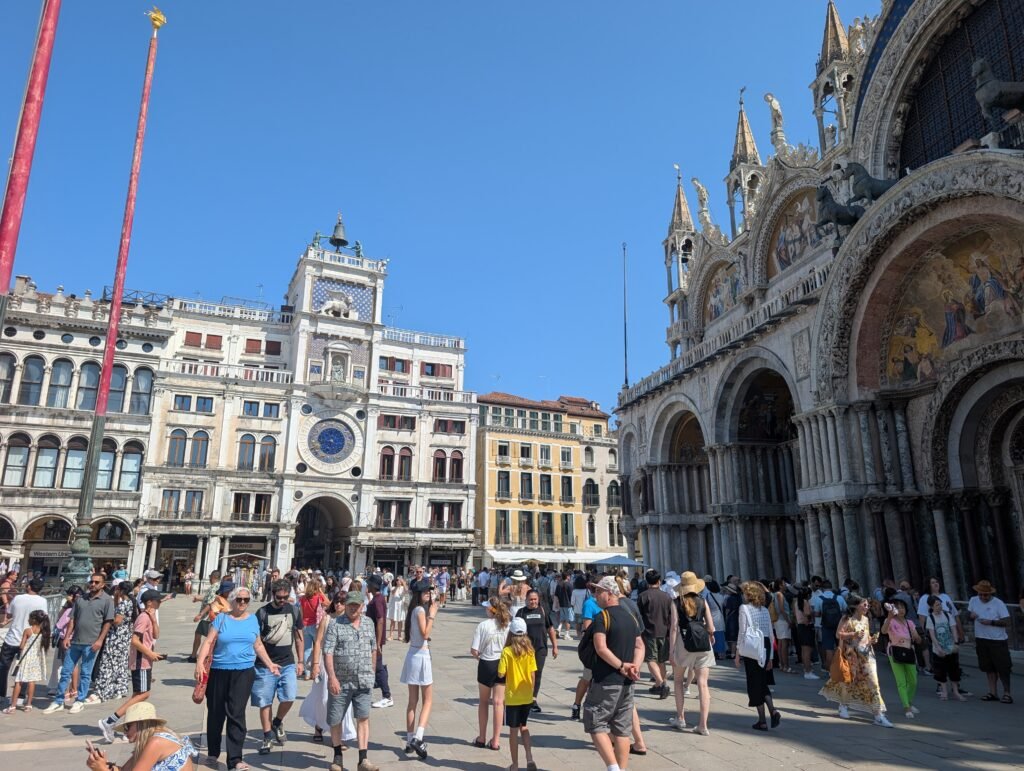
Detail on St. Mark's Exterior
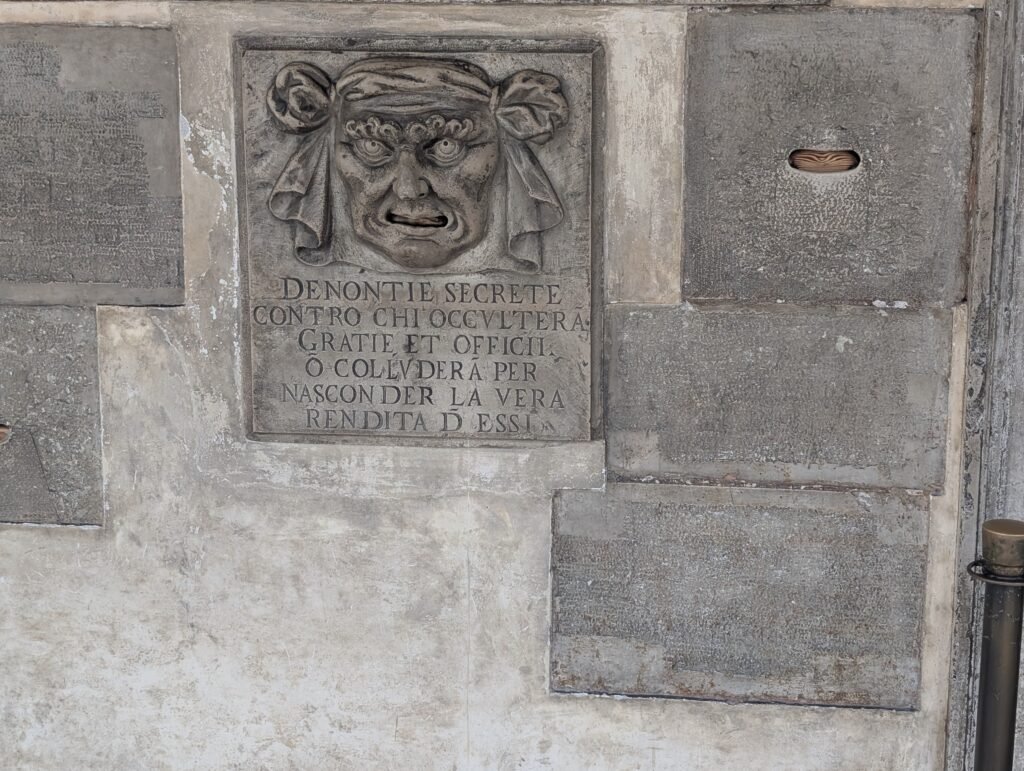
Anonymous Suggestion Box in Doge Palace
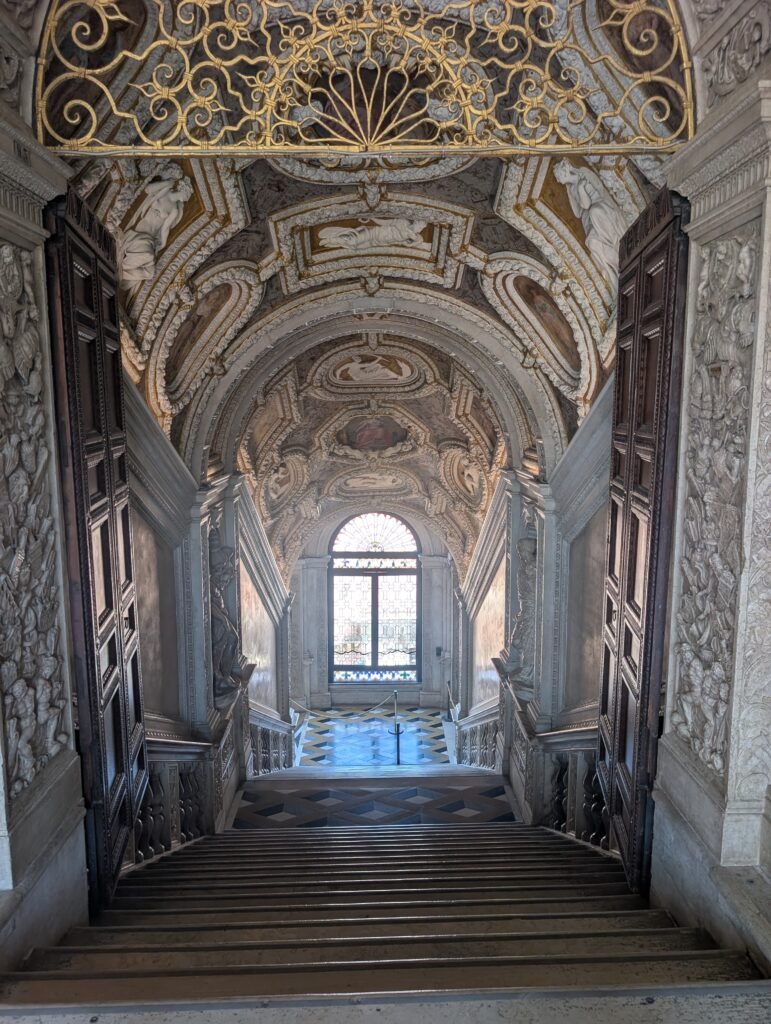
Doge Palace Stairway

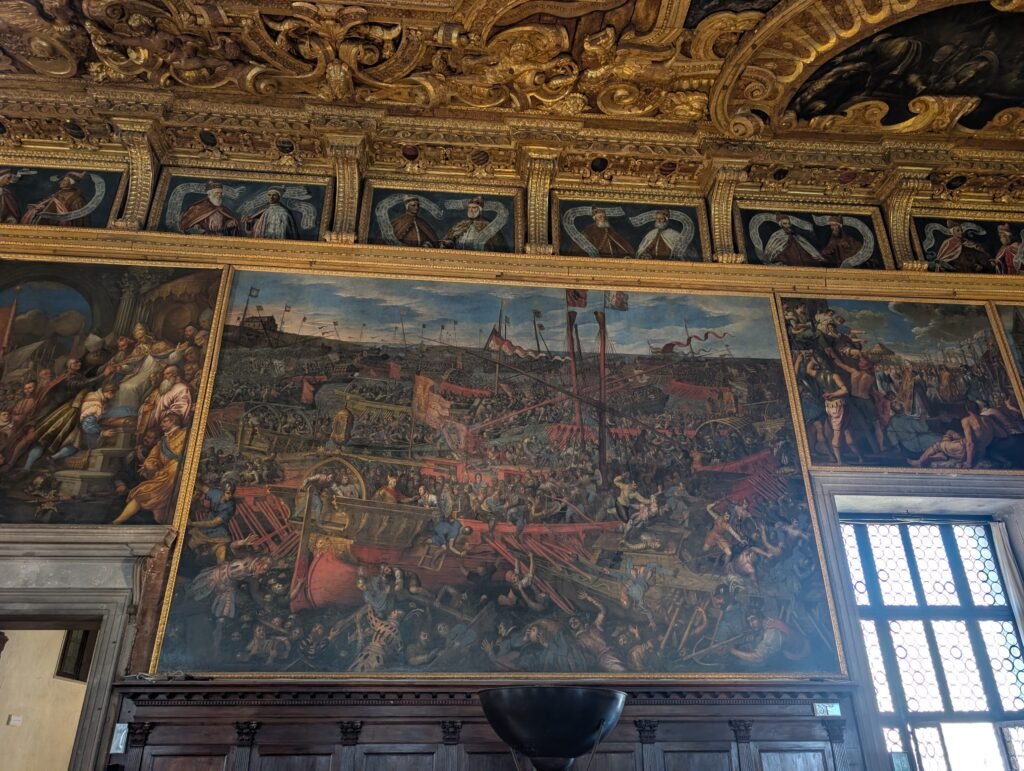
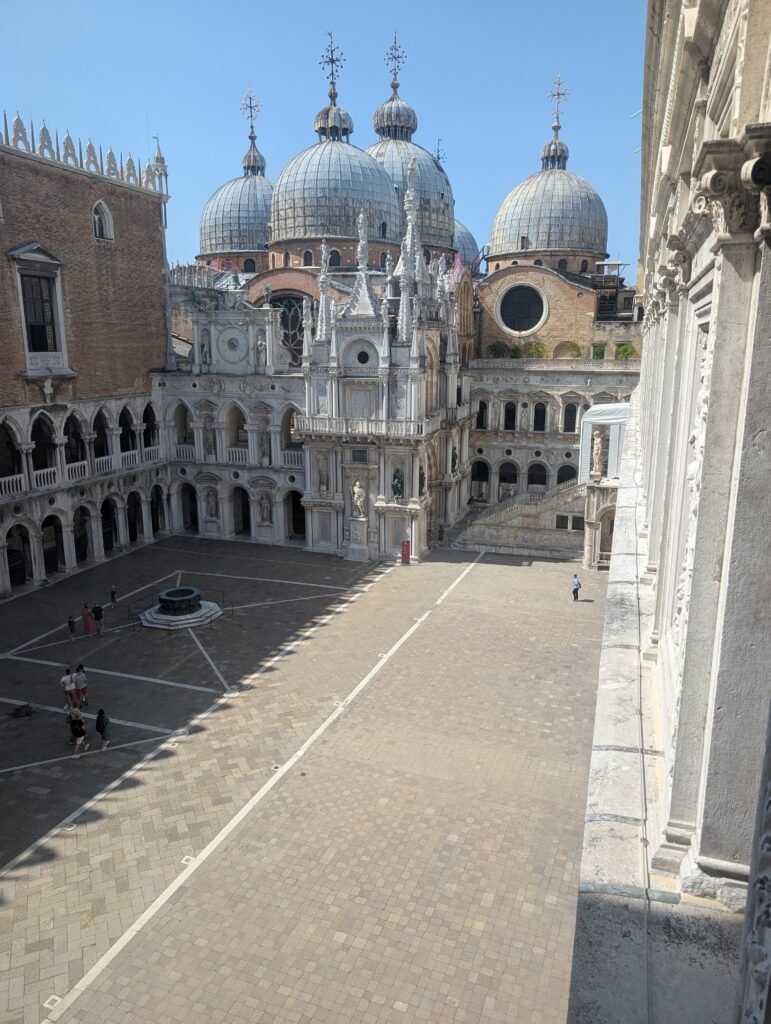
The Doge was an elected leader of medieval and early modern Venice. Soon after the Eastern Roman or Byzantine Empire lost control of Venice and the surrounding area, the nobility in Venice formed an oligarchy. They elected a leader from their own elite group who assumed the title of Doge. Doge is a derivative of “dux” the word that became Duke in English. In this way, Venice was established as a Republic. It lasted from 697 until Napoleon conquered it in 1797. Due to its emphasis on maritime strength and trade, Venice’s power was projected by its navy. When it expanded its territory, it tended to acquire only coastal ports for colonies, much as the Portuguese would do in the 15th century. For being such a small city-state, Venice was a surprisingly powerful force during its Zenith, often holding off or defeating the Ottomans or Byzantines, particularly if the conflict relied on naval strength. The Doge’s palace, then, was an opulent residence of the head of state of a major power. If one has time to visit only a couple of places in Venice, the Doge’s Palace should be one, along with St. Mark’s.

For lunch, we grabbed paninis just off of St. Mark’s square. These cost only €5-7, and were about the only reasonably priced things we bought or did in Venice. The museums are very expensive (in the €30-35 range, each), the vaporettos (public ferries that do nothing more than cross a canal) cost nearly €10, and you have to pay another €10 as mentioned previously just to walk into town. There are small grocery stores in town where we picked up a box of ice cream, and cold drinks for a somewhat more reasonable price. We had another similar hot sandwich on the way out of town, before taking the local city bus back to Dolo Ca’Tron.

Our host at Ca’Tron hotel was very friendly and enjoyed visiting about travel, politics, immigration, economics and other world issues. The room was basic, but inexpensive and comfortable. We had plenty of room, and the bus stops just outside the hotel. The only drawback is that you are extremely reliant on this one single 53E bus route if you haven’t rented a car. This came back to bite us on our way to Milan when leaving.

(Continued)

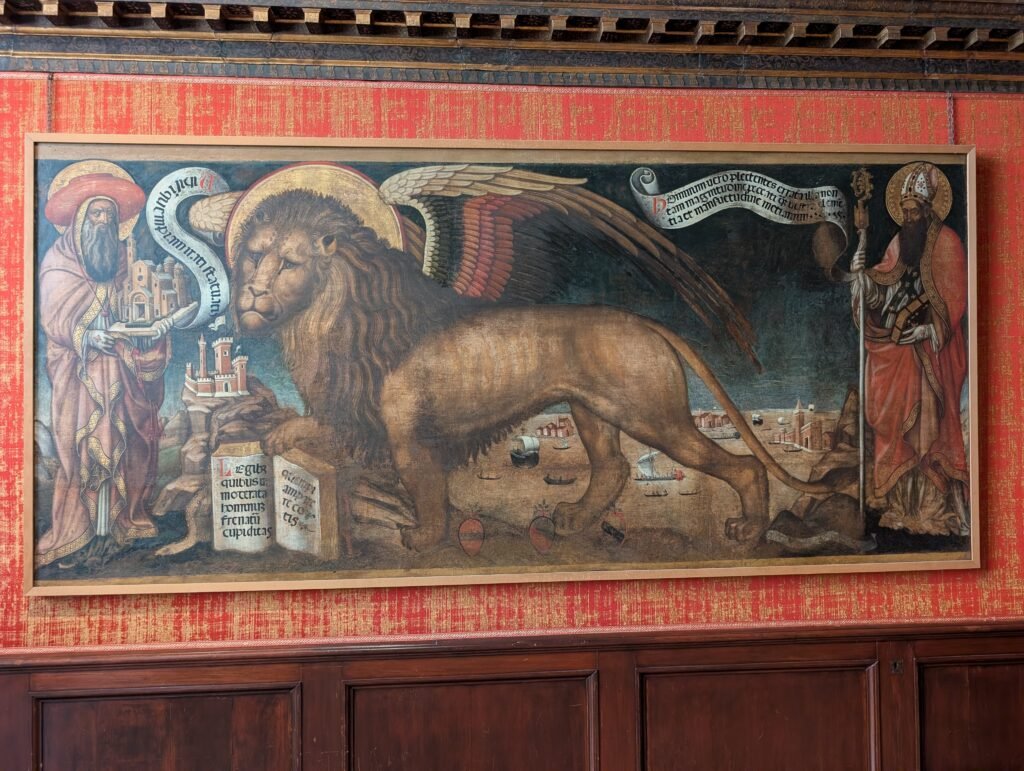
Many Paintings of the Lion
View From the Bridge of Sighs
Doge Palace Exterior
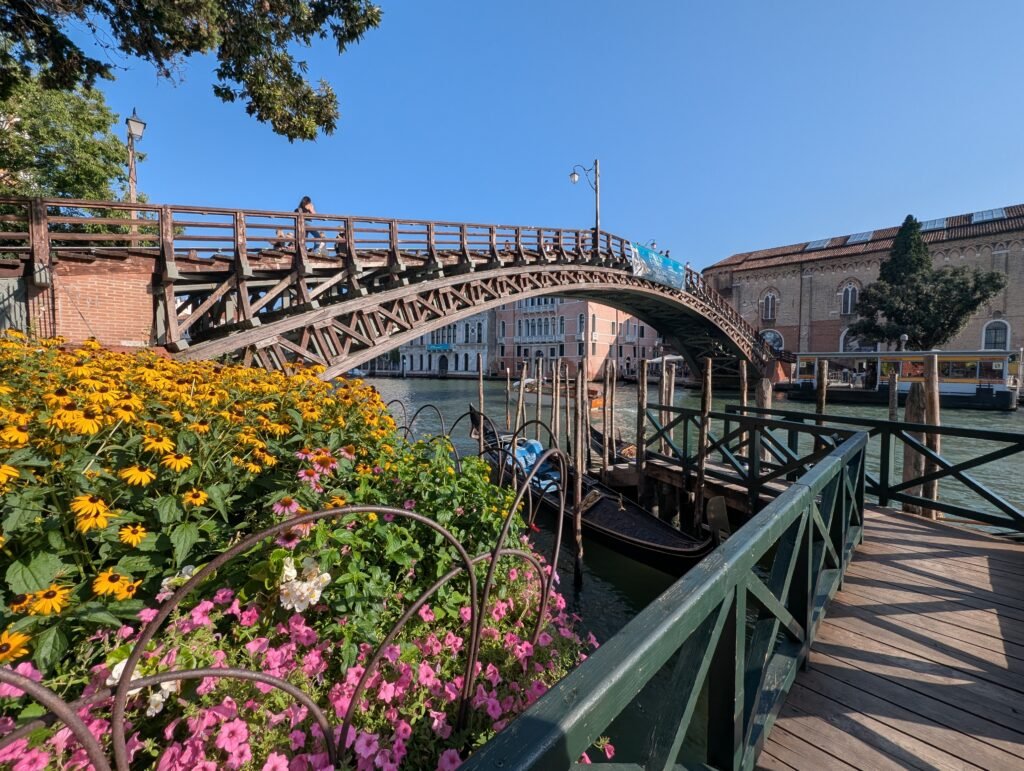
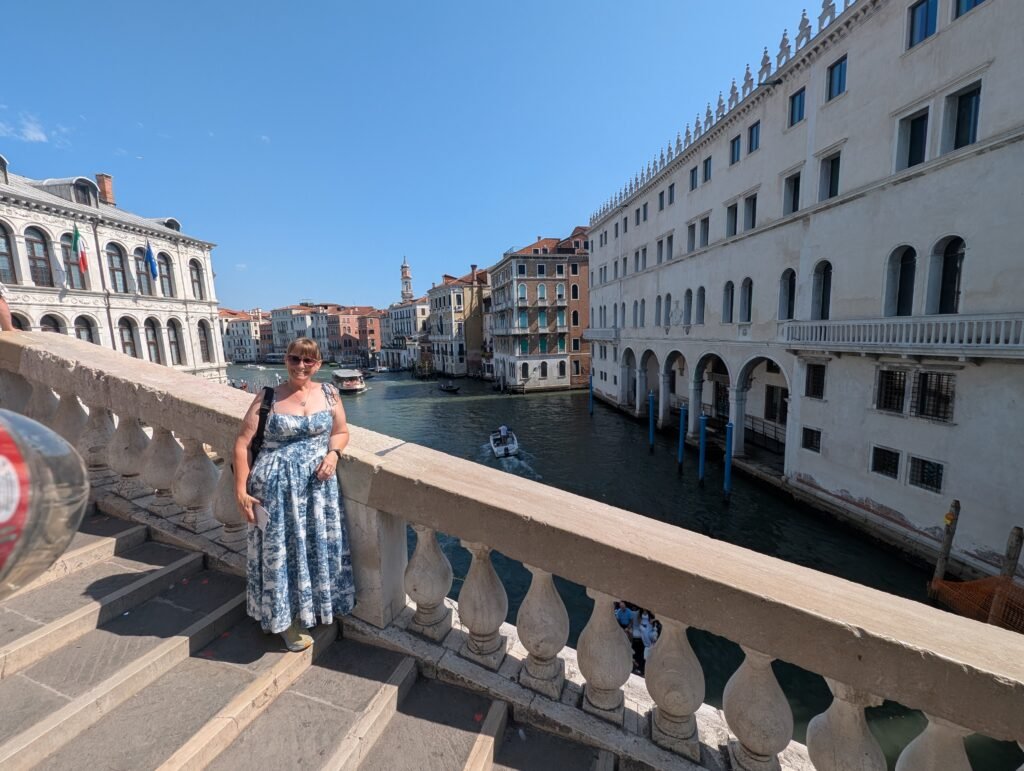
One of Venice's Bridges

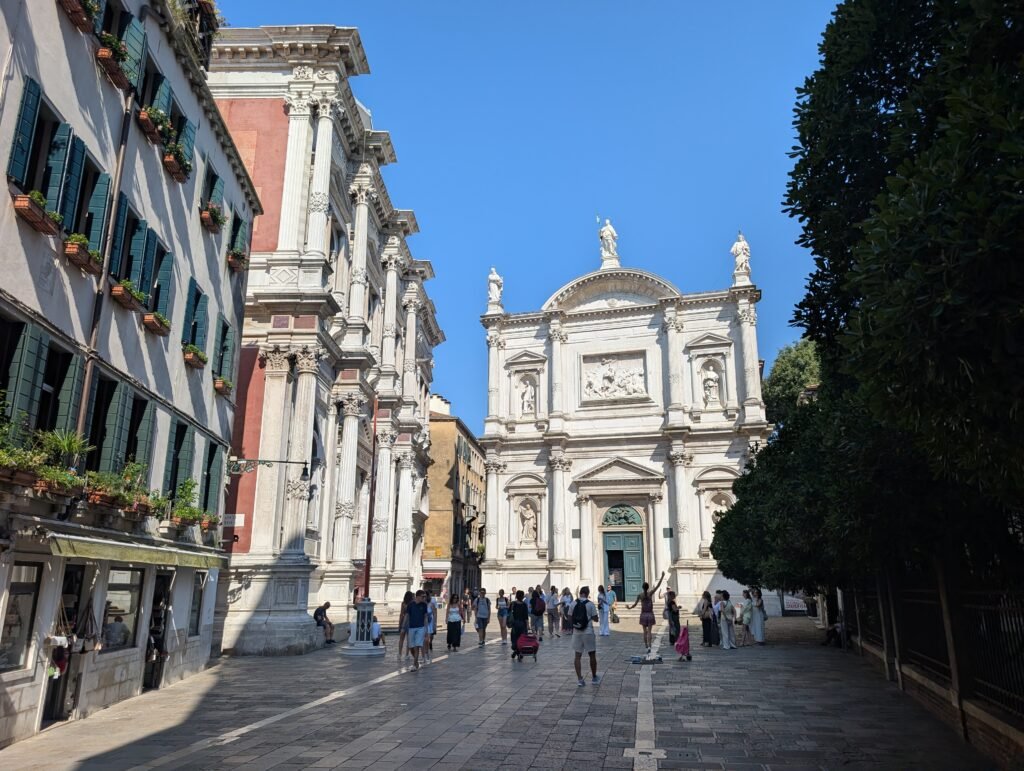
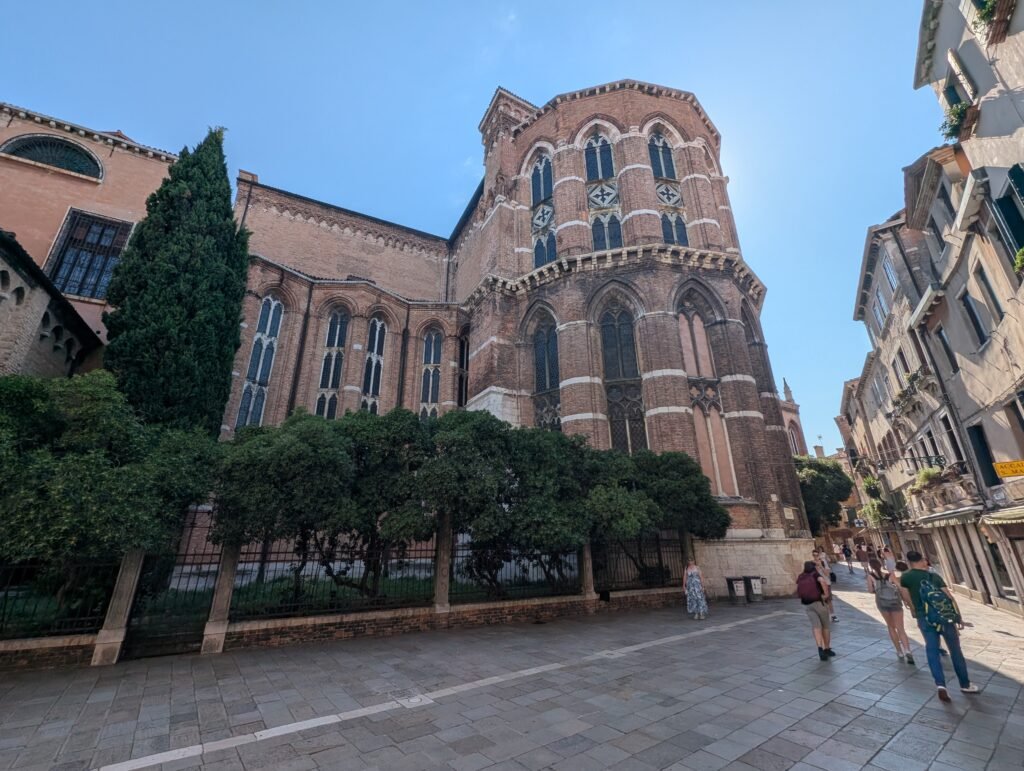
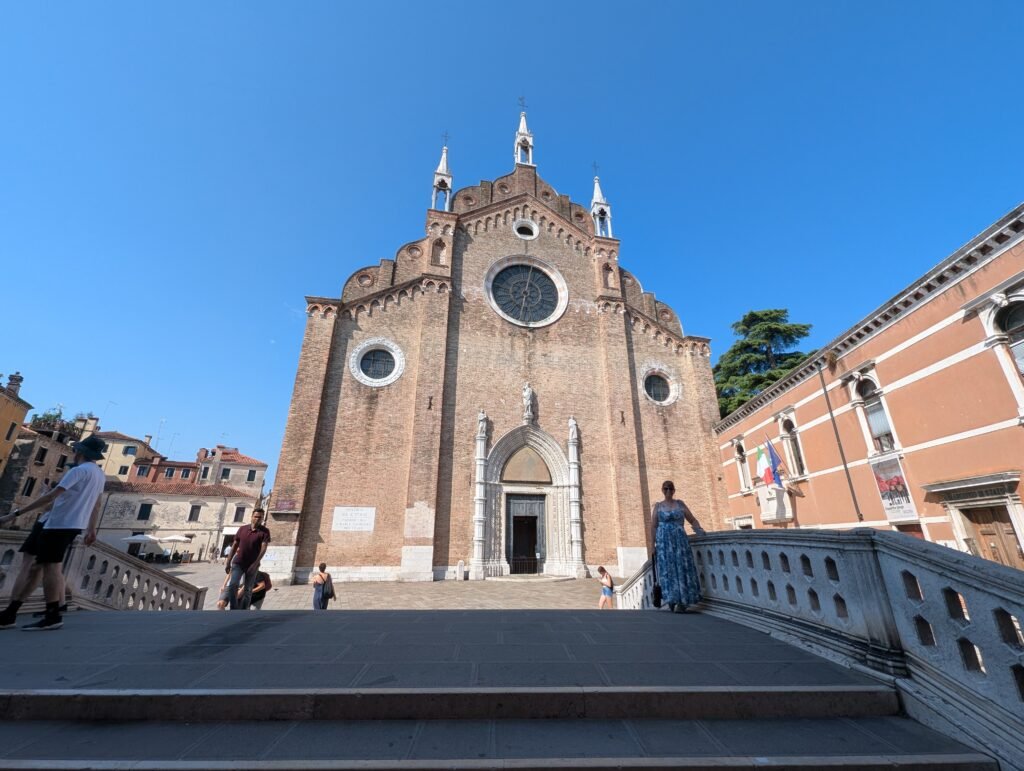
On our second and final full day in the Veneto, we decided to head back into Venice to clean up any places we had not seen the first day. Had we gotten an earlier start, I think I would have been satisfied with one long day in Venice. If you see St. Mark’s and the Doge’s Palace, plus anything else you run across by default on the way to and from those places, you’ve seen the highlights. Most of Venice is full of tourist gimmick junk shops, expensive clothing and bag shops, and endless numbers of cafes and restaurants. The other options are short stints out to the neighboring islands to observe colorful houses, other churches, or the glass blowing operation on Murano.

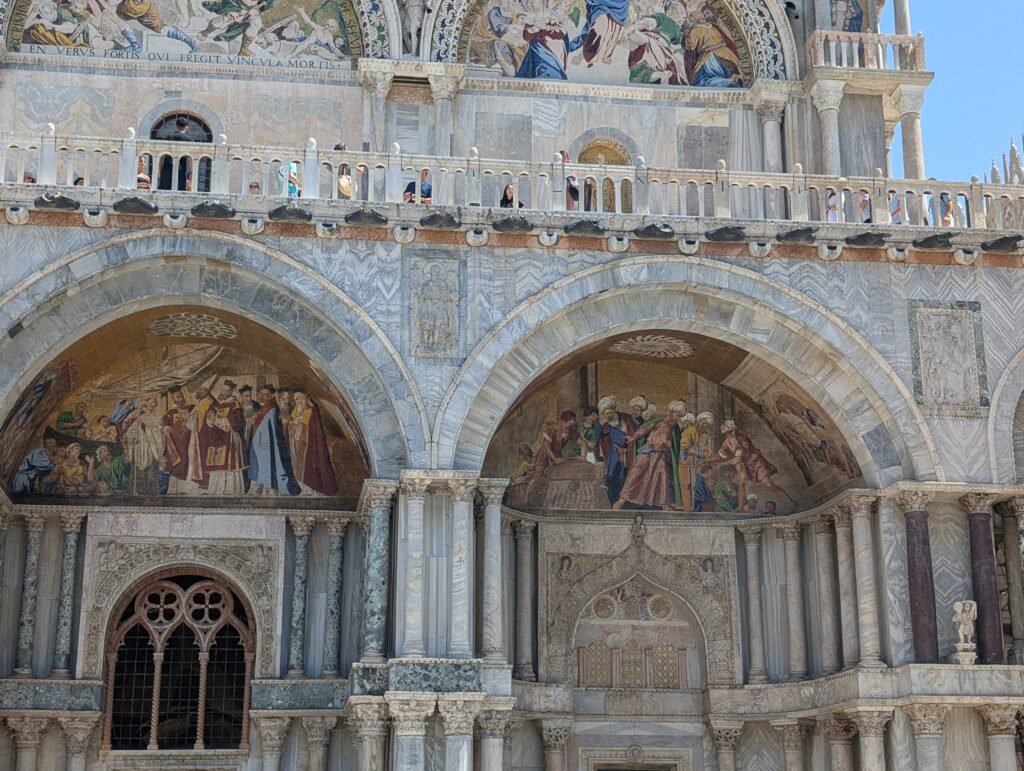
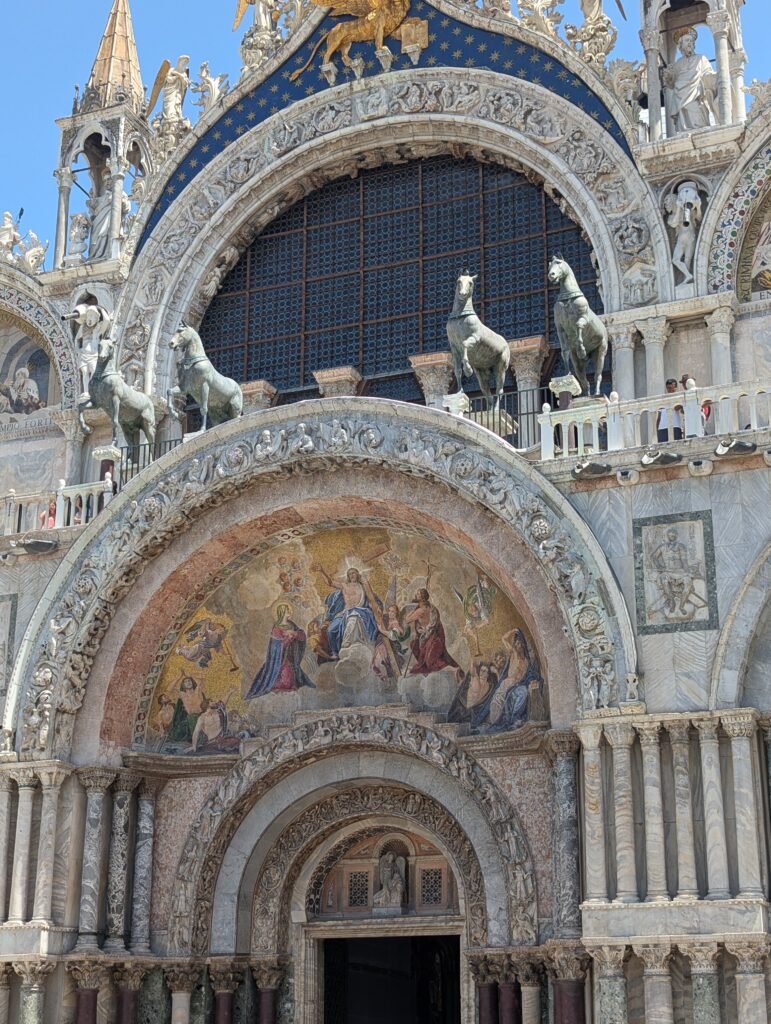
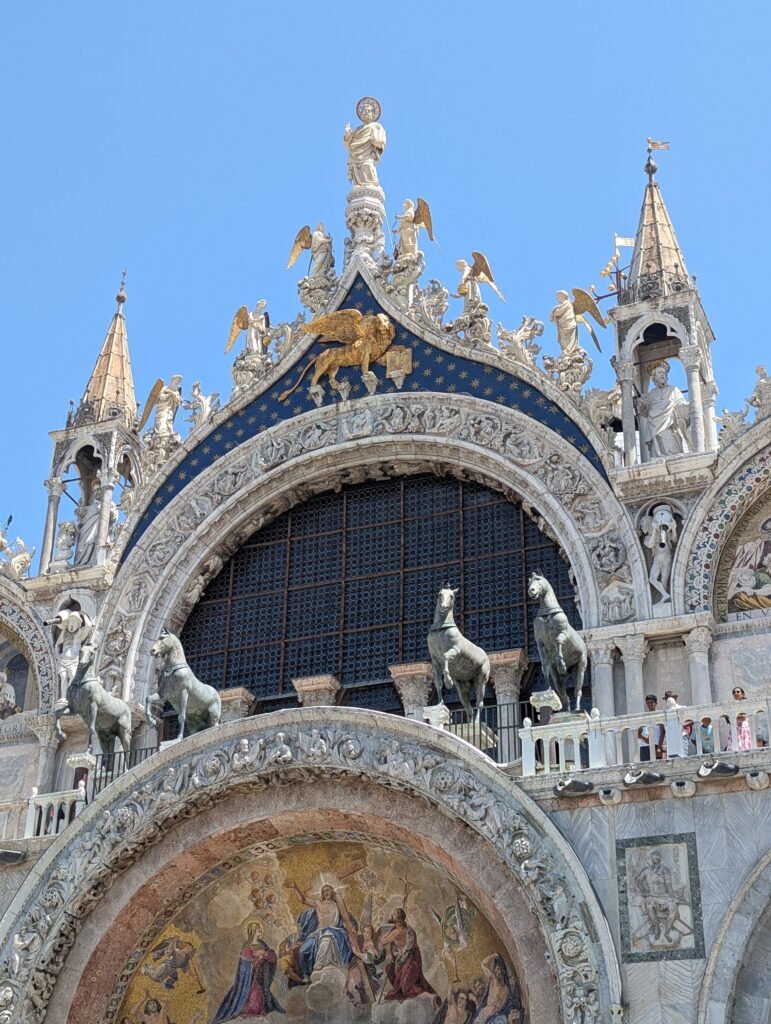
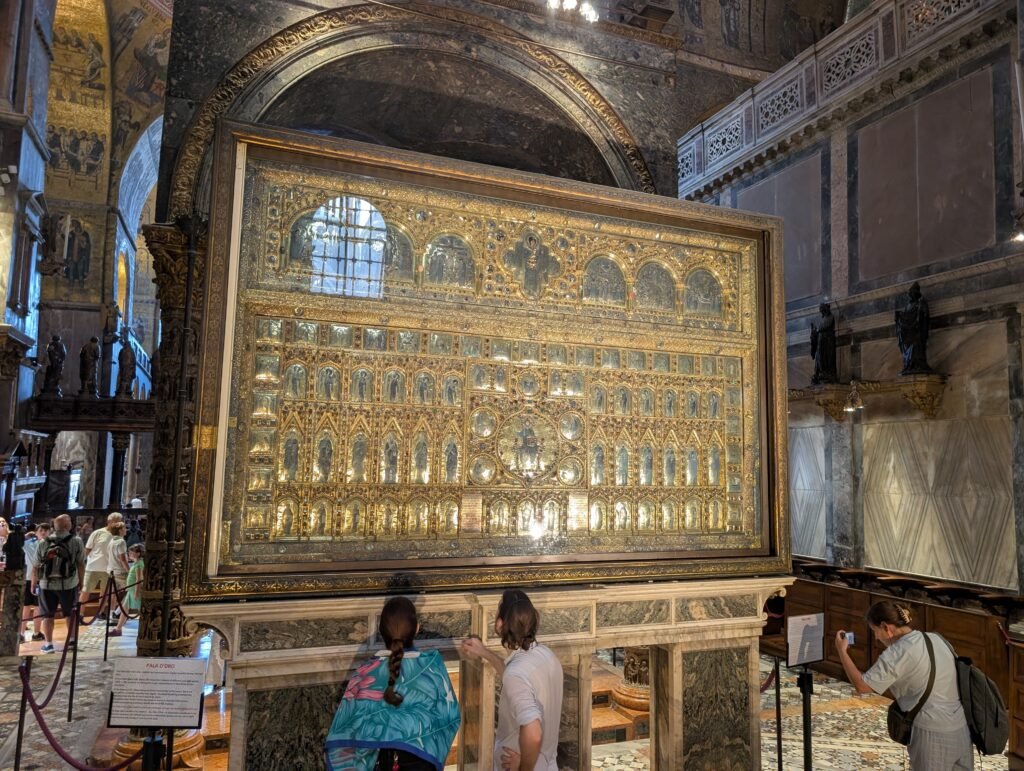
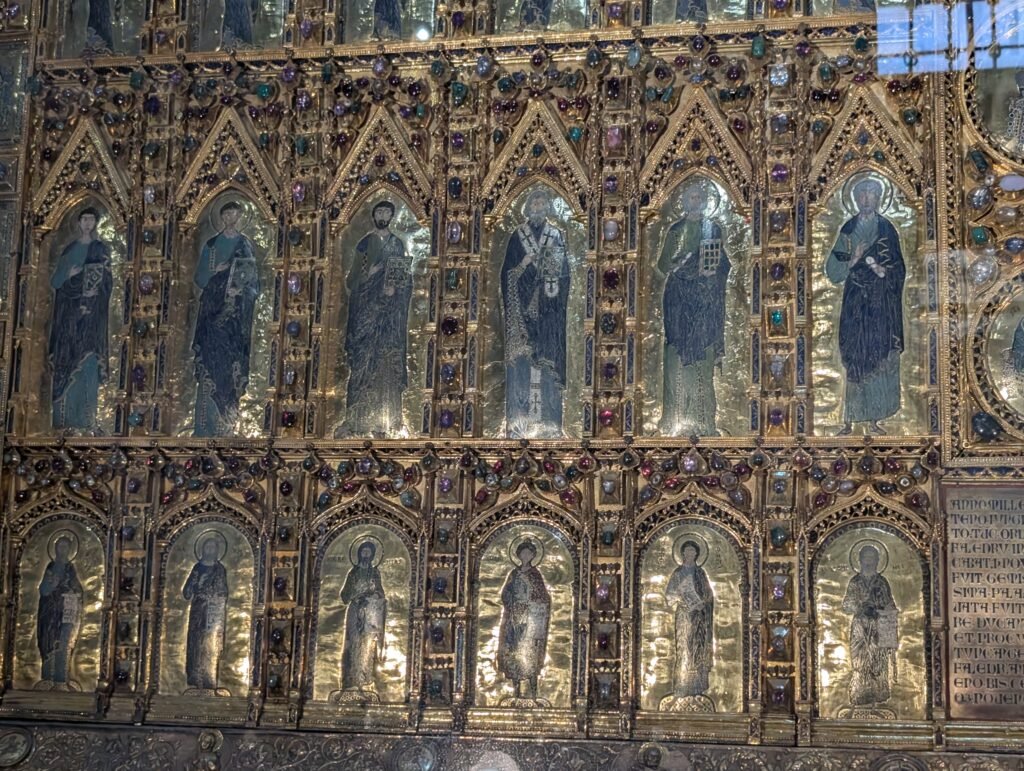
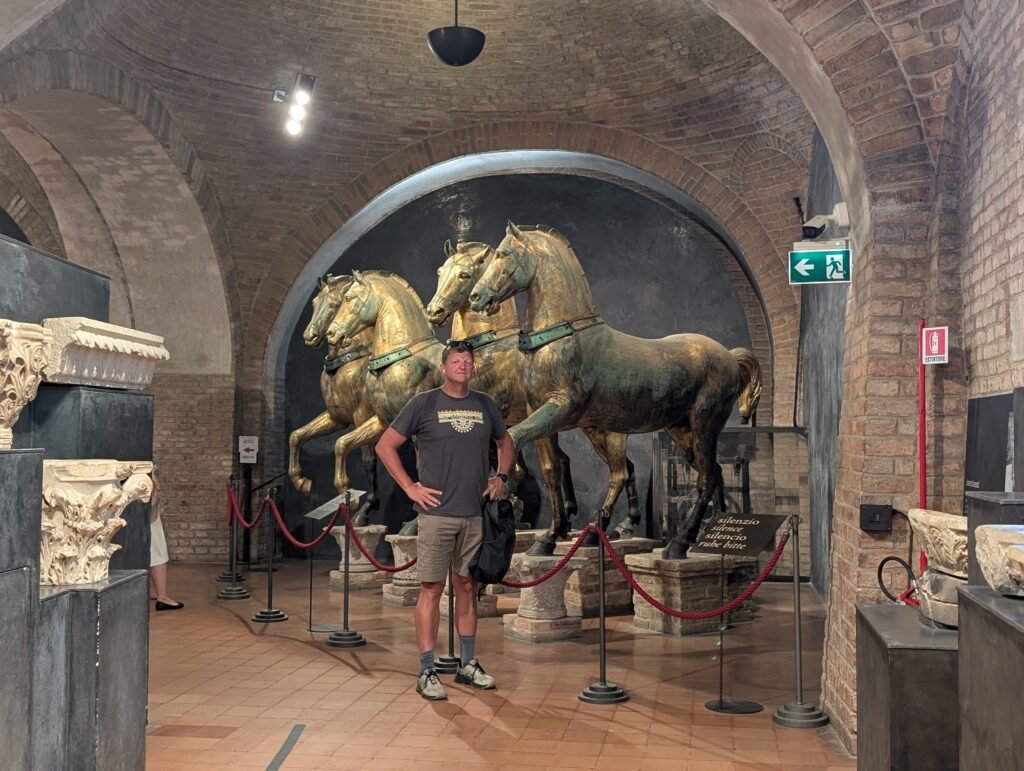
But we had not seen St. Mark’s Cathedral yet, and from looking at the outside in the square, I knew I wanted to see the interior. You must buy a combination ticket if you want to see the magnificent golden 10th century altarpiece, or the four horse statues swiped from Constantinople during the 4th Crusade. Oddly, no combination ticket includes a trip up the bell tower, which must then be purchased alongside your combination ticket to St. Mark’s. When you add it all up at the time of this writing, it cost €45 each just for the package of tickets to see everything at St. Mark’s.

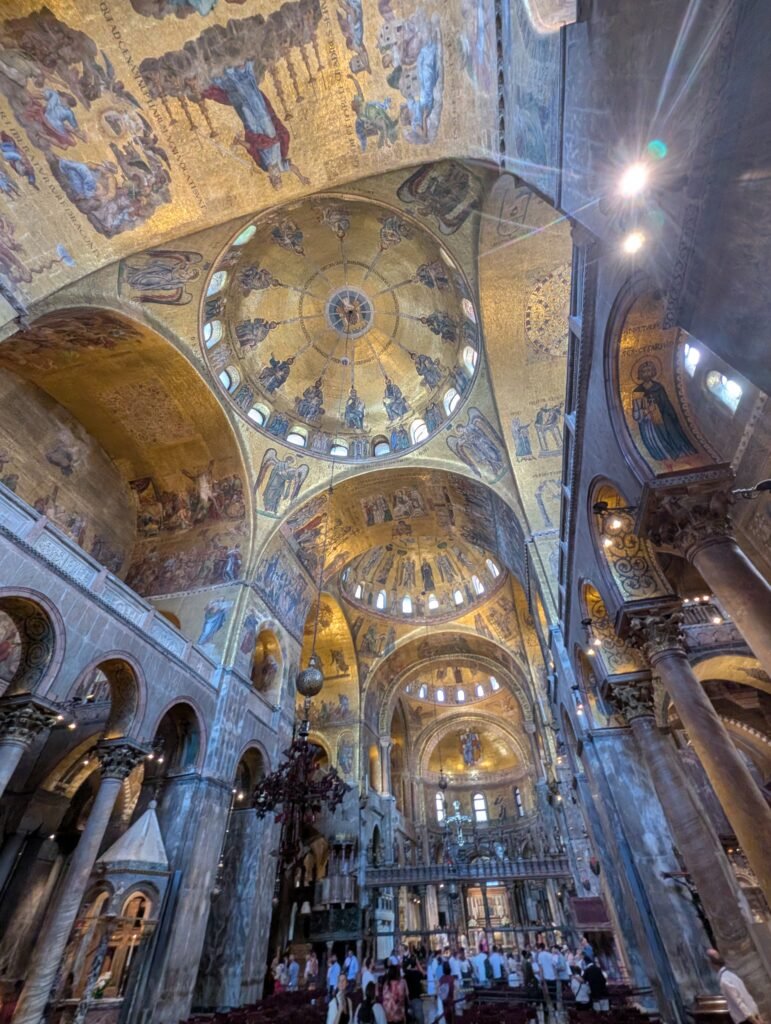
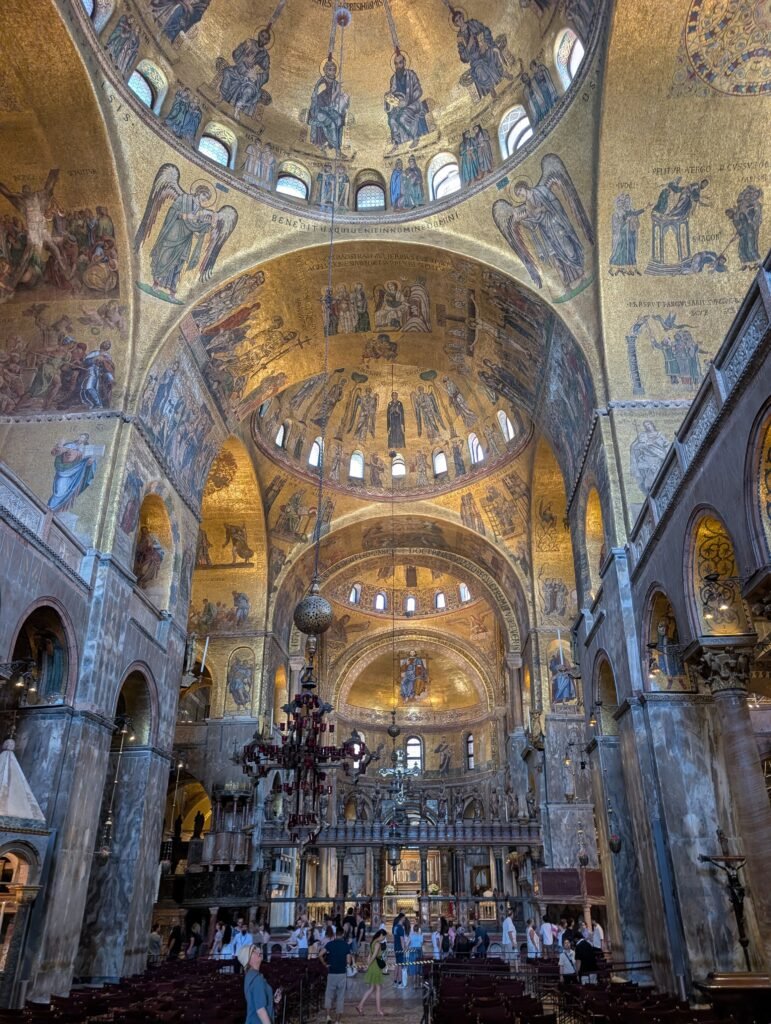
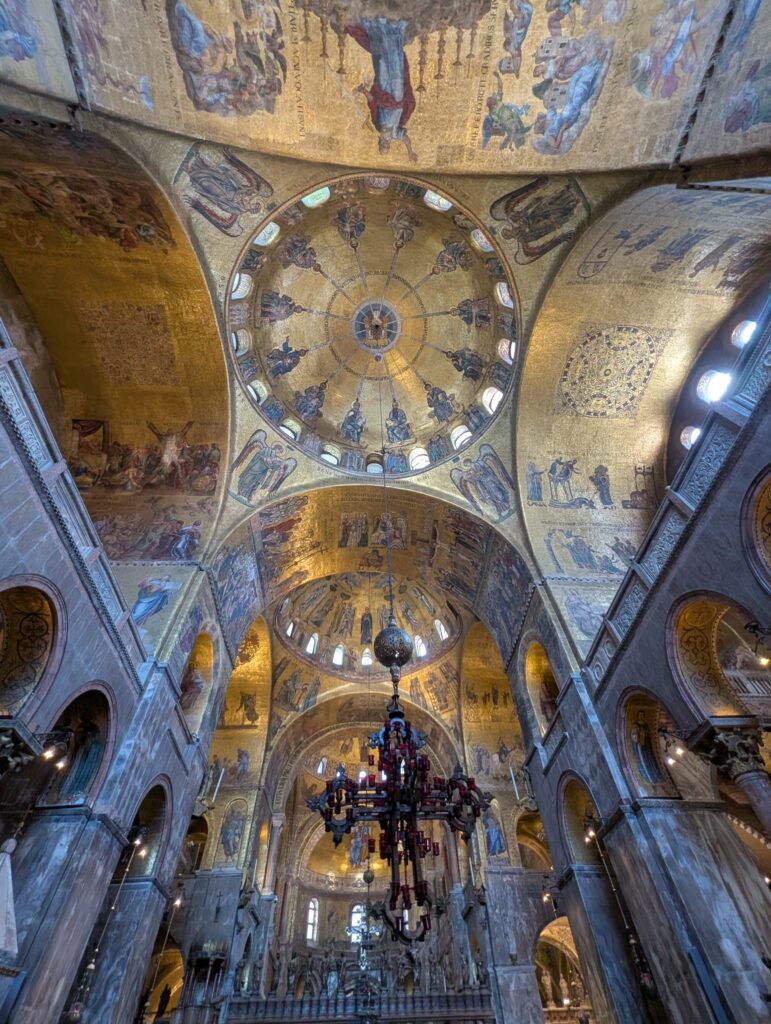
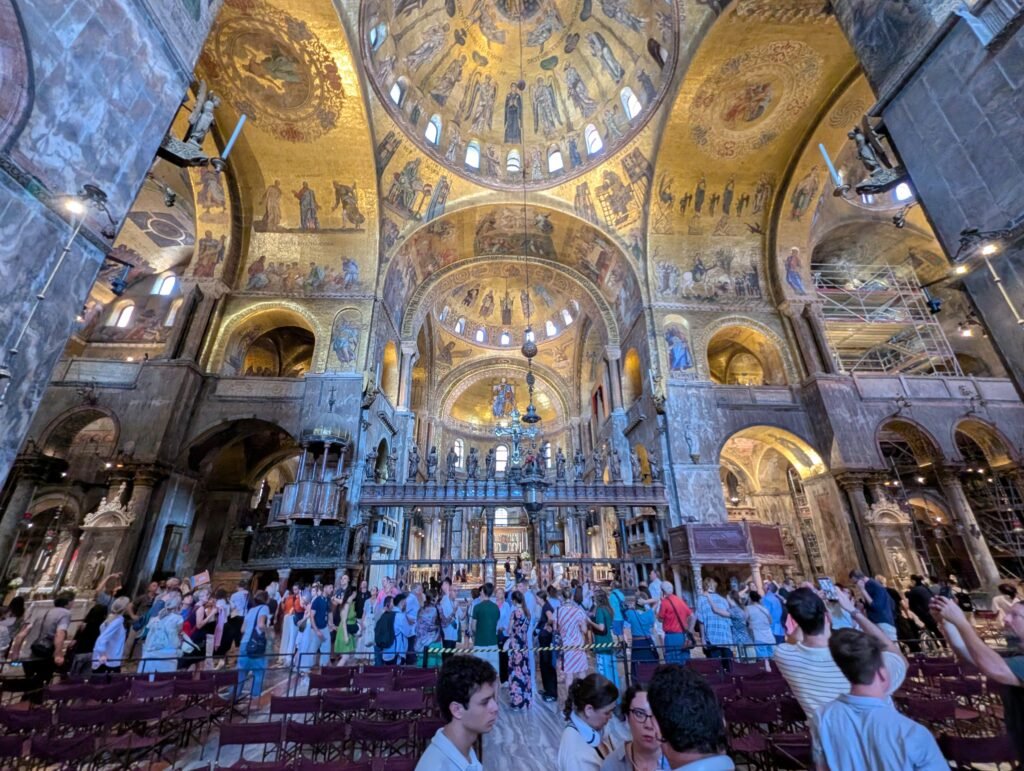
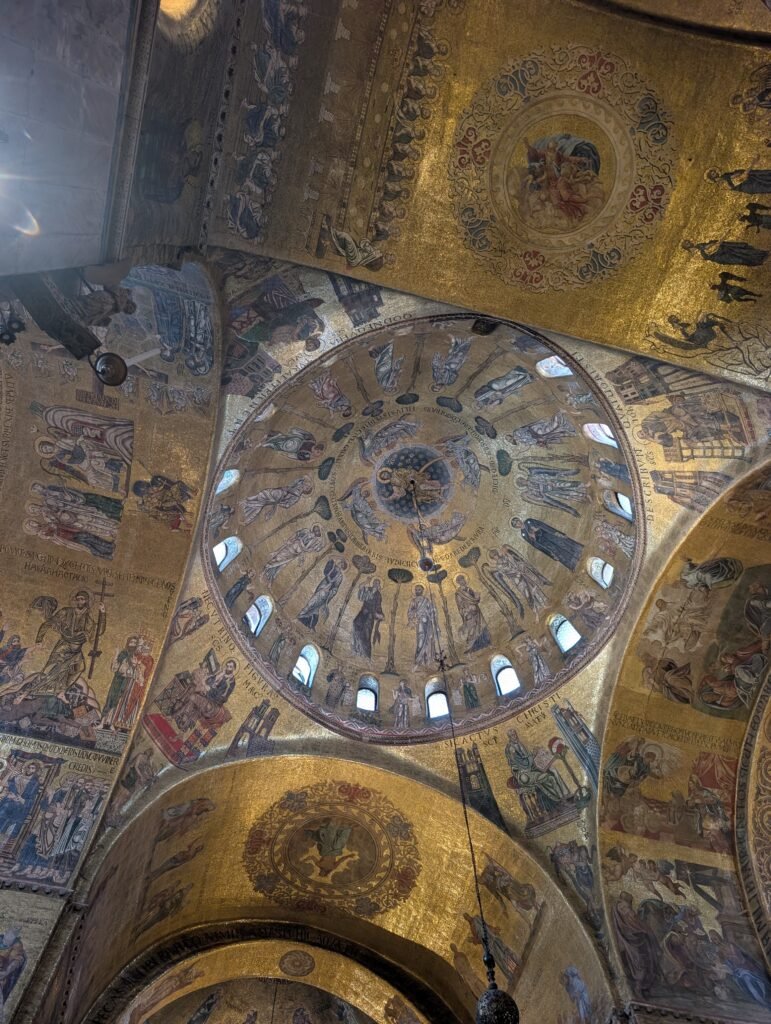
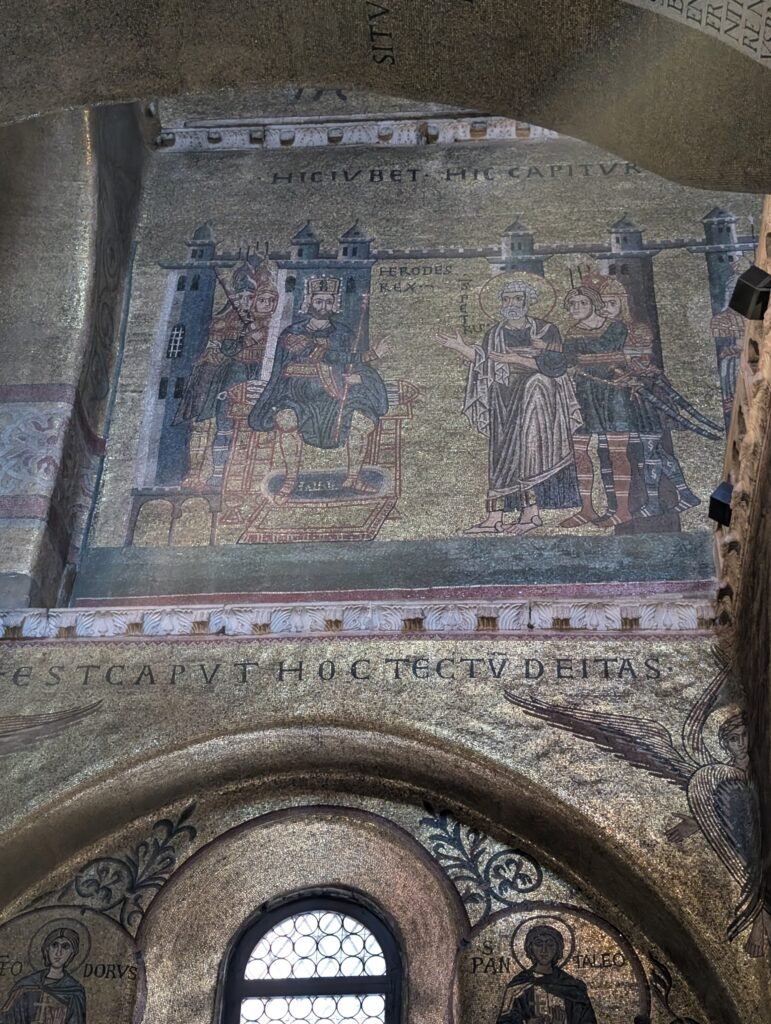
That being said, everything about St. Mark’s exceeded my expectations. I did not do much research before heading to Venice. I knew people visited St. Mark’s but didn’t have a solid understanding of what made it unique, and it is unique. Venice was a republic for 1,100 years and one of Europe’s most powerful forces during the medieval period. This power was built on marine commerce and naval strength. Due to its ongoing trade with Constantinople and other areas to the east, Venice had a lot more interaction with other parts of the world than its medieval neighbors. Venice regularly traded with Egypt and other Muslim regions, and continued trade with Constantinople after it fell to the Ottomans in 1453. Because of this, St. Mark’s looks a lot more like an Orthodox basilica with hints of Islamic design rather than the Roman Catholic church that it is.

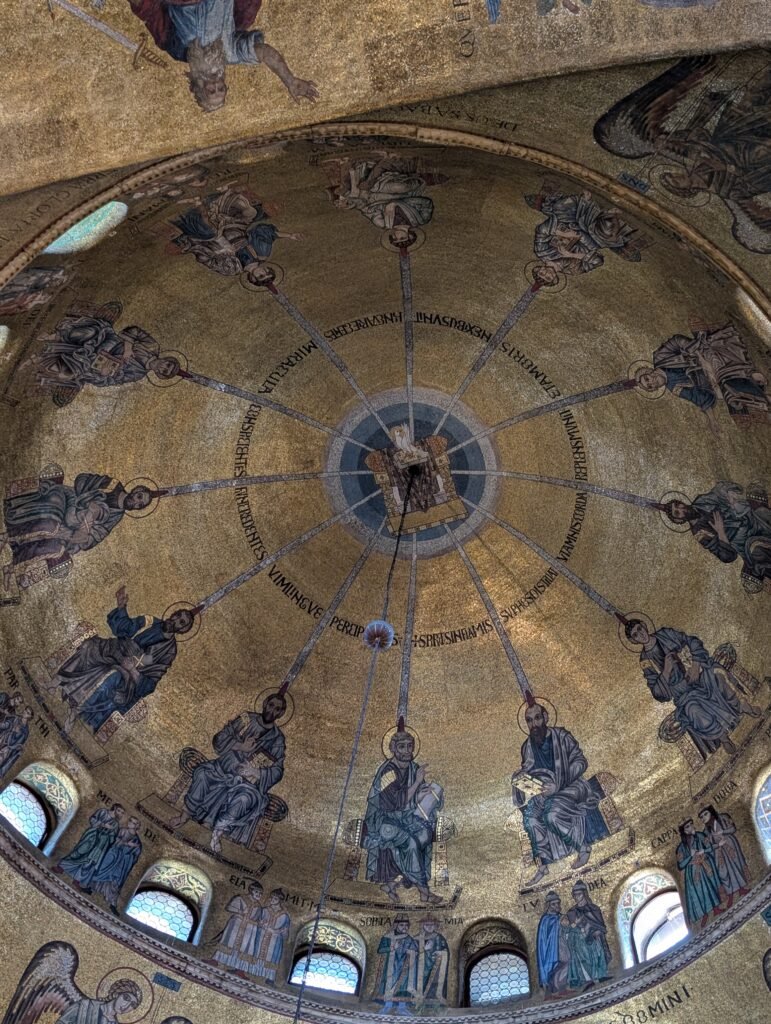
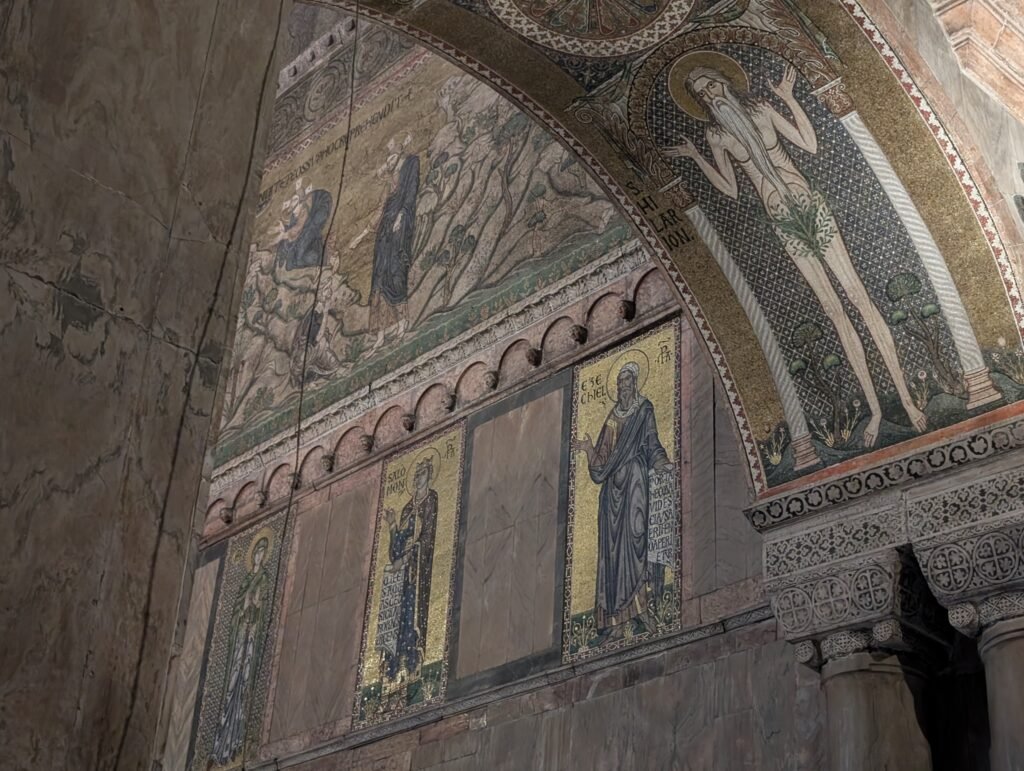
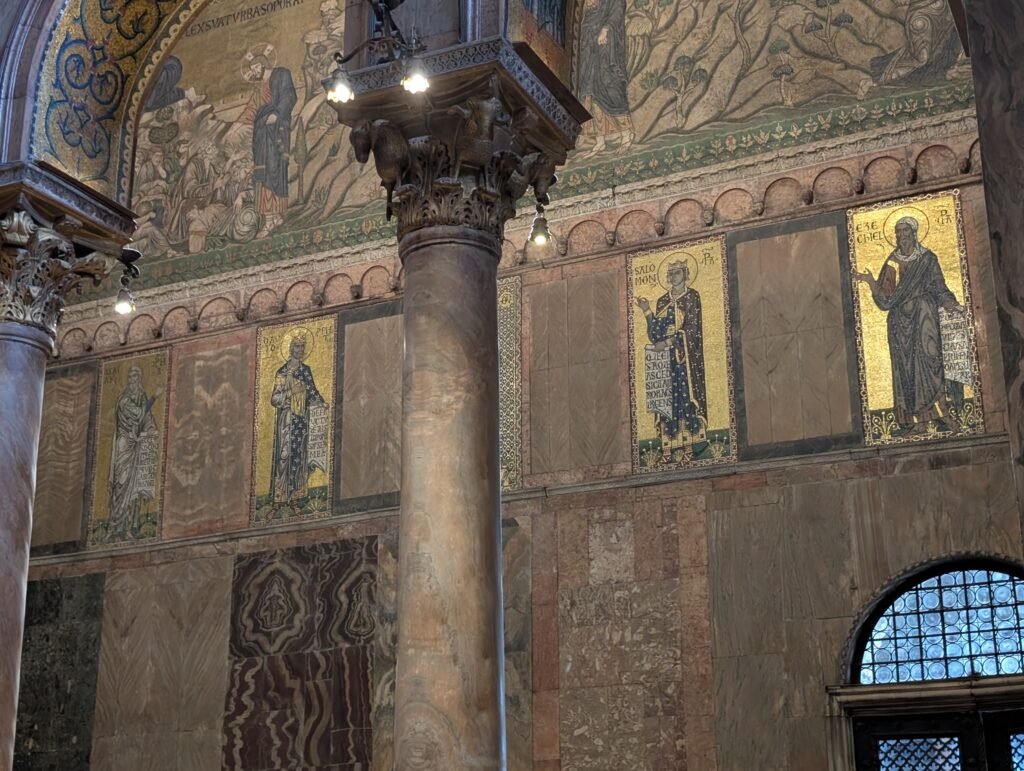
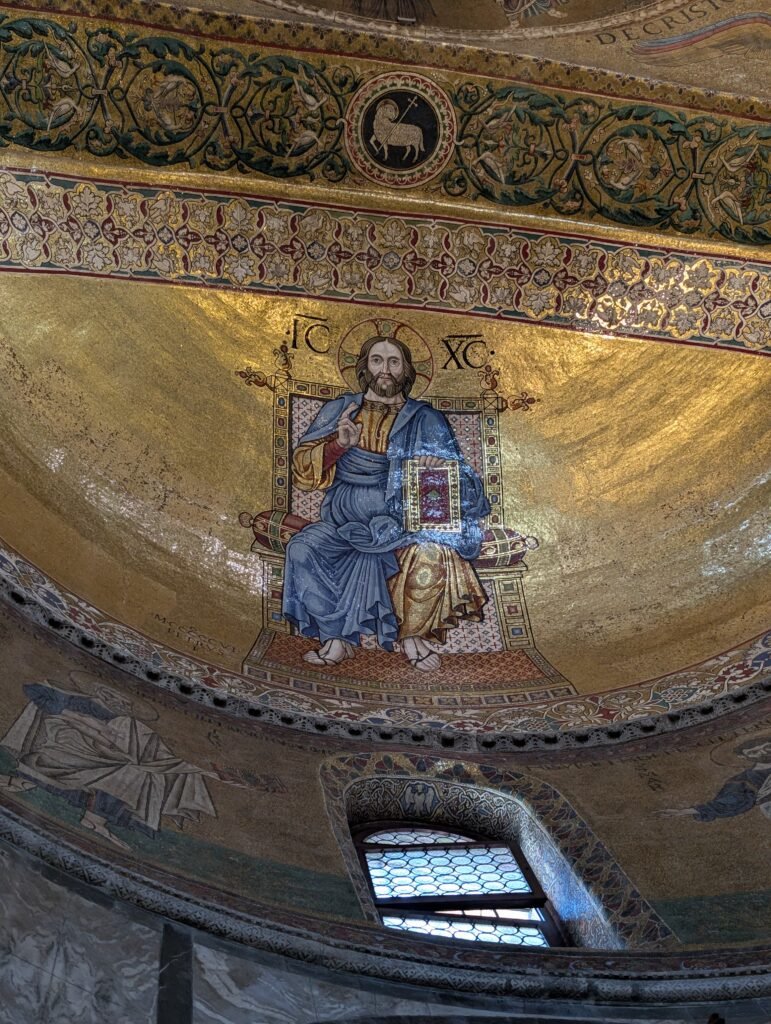
In addition to the shimmering golden mosaics that will make you think you’re in a first rate late medieval Orthodox cathedral, there are countless priceless relics and artworks that were plundered from Constantinople when the 4th Crusade went sideways and the Western Christians attacked and sacked Constantinople in 1204. The inscriptions on the mosaics are in Latin rather than Greek, but the artwork decorating the ceiling and the church interior looks very Orthodox. The treasury (which you can also visit with a combined ticket) is loaded with purported relics taken in the crusade, like pieces of the true cross, holy blood, and numerous chalices and the like. On the exterior of the basilica, you can even see a very early 4th century set of porphyry statues that are probably portraits of the tetrarchs – the augusti and ceasari positions created by Domitian to more effectively rule such a large empire. These statues were apparently carved off of some building in Constantinople and attached to the St. Mark’s exterior in the 13th century by the Venetian crusaders. So much of the splendor of St. Mark’s has been pilfered from other places that the design style has been jokingly referred to as “early ransack.” In an equally humorous vein, there have been great controversies over the years over the return of art and artifacts stolen from St. Mark’s by Napoleon. It seems at least a bit problematic to complain loudly about the theft of so many artifacts when those artifacts themselves had nearly all been lifted, at some point, from Egypt, Constantinople, or other various places. I’m glad they got most of the look back though.

(Continued)

Another Church in Venice
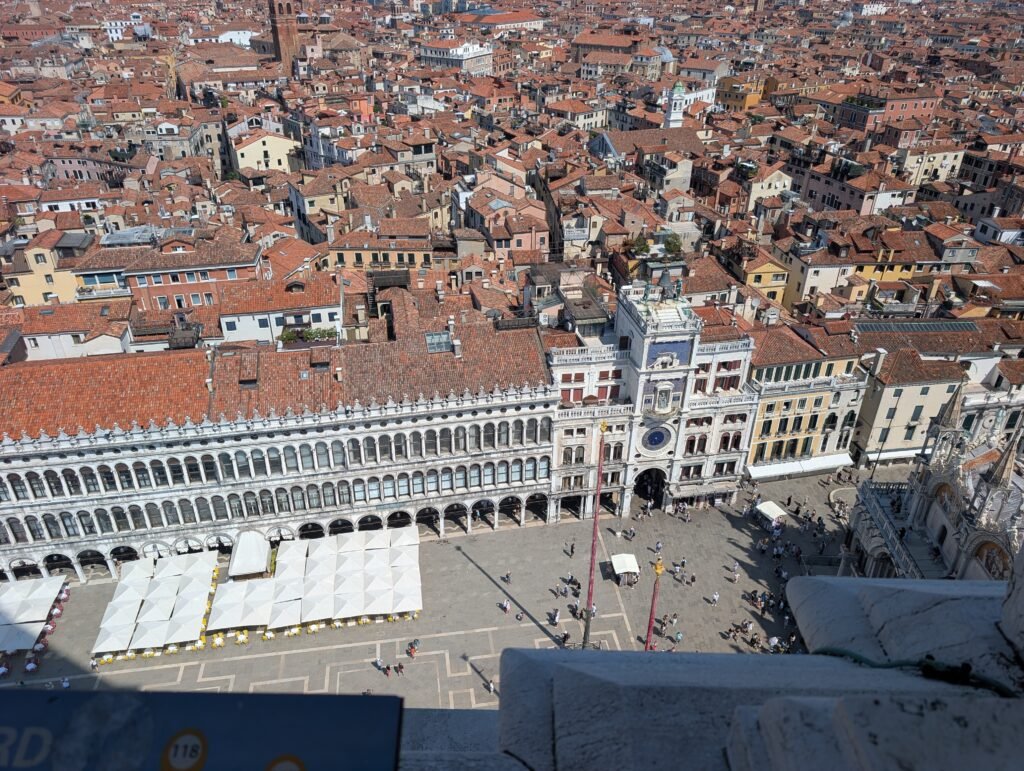
Another View of St. Mark's Square
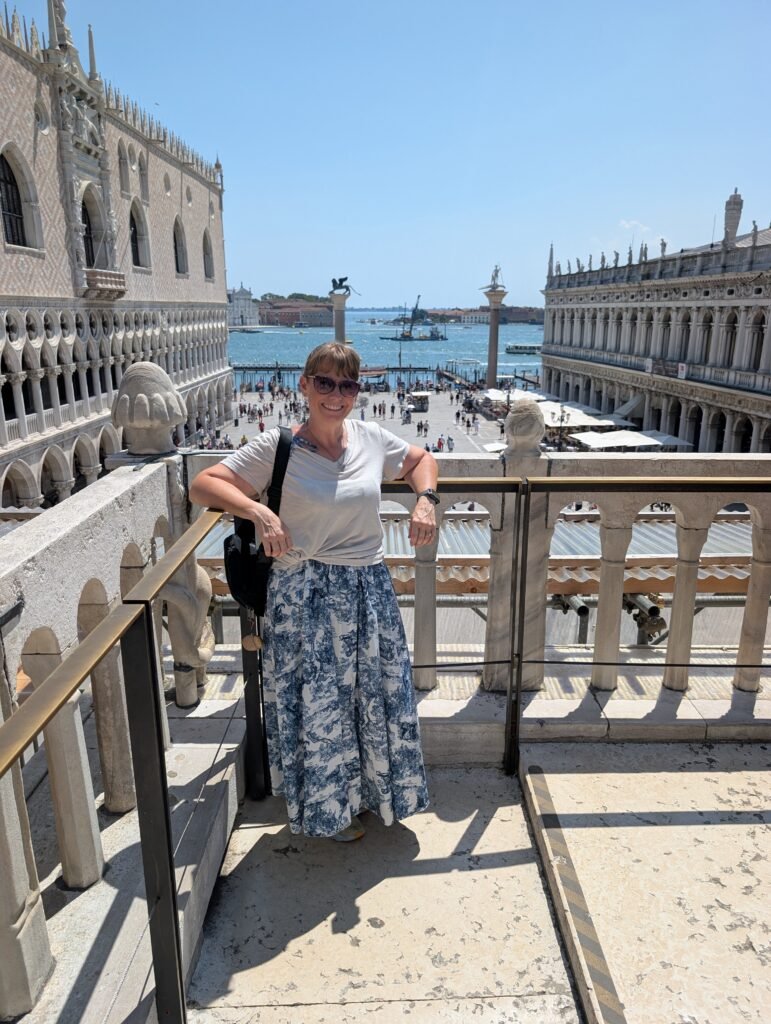
Views From the Bell Tower
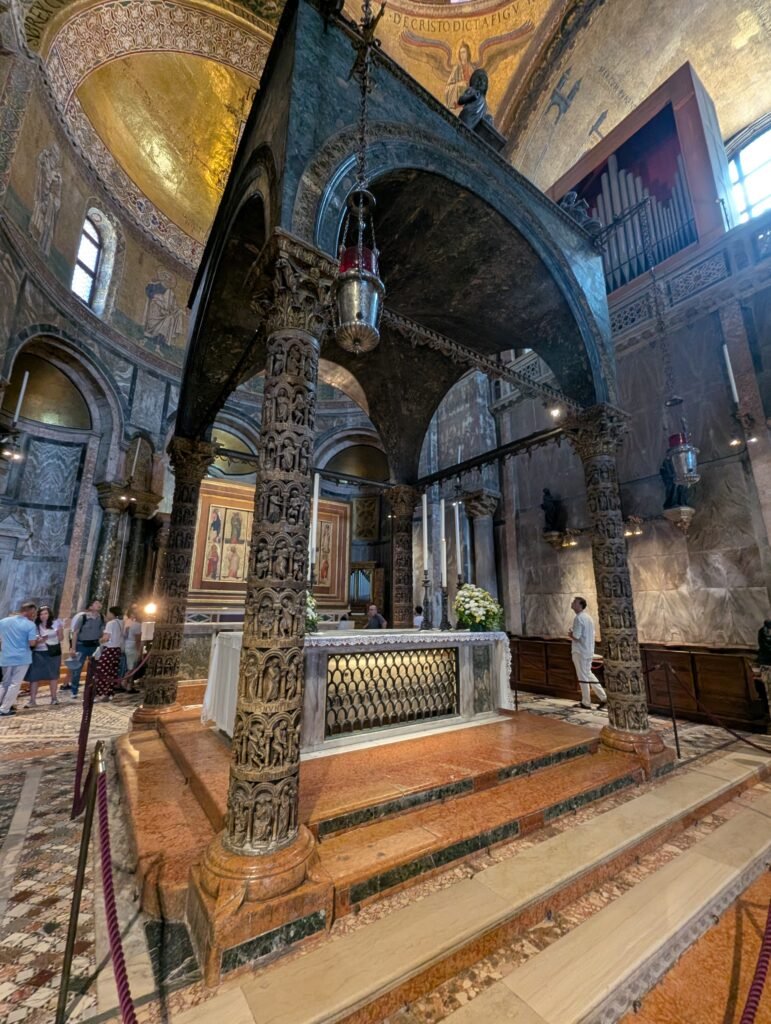
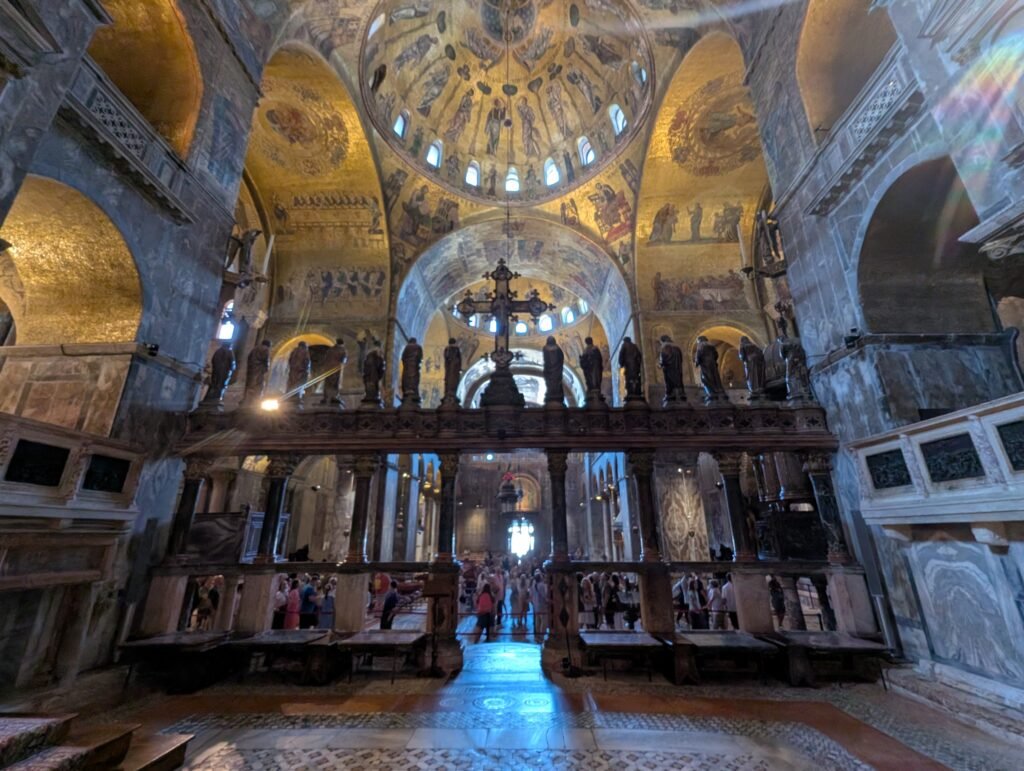
Interior Shots From St. Mark's

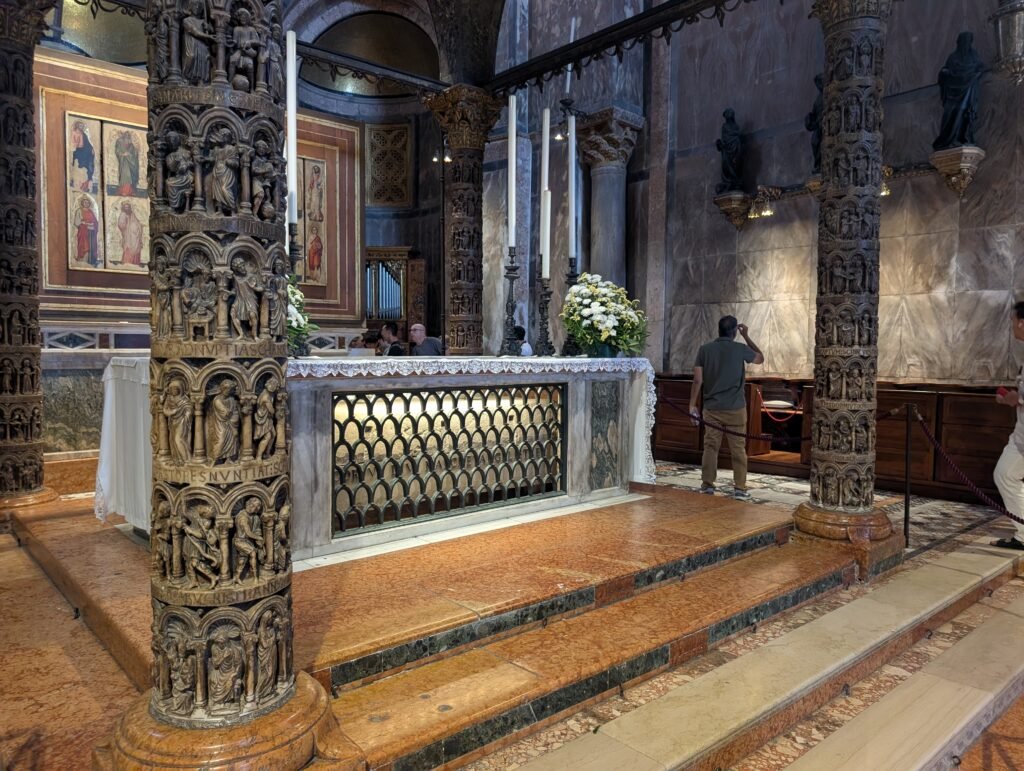
All in all, St. Mark’s Cathedral is a beautiful mix of religious iconography, stolen goods (both secular and religious), peculiar superstitions (like praying to a particular painting), and difficult to verify religious traditions. St. Mark’s, after all, is supposed to house the relics of Mark, the evangelist. Tradition holds that he had a vision while doing mission work in Venice stating that his remains would be buried there. Mark was killed and entombed in Alexandria around AD 68 after founding the Coptic church there. In the 7th century, Egypt was conquered by Muslim forces. Venetian merchants visiting Alexandria in AD 828 became alarmed seeing Islamic officials pillaging Christian structures for building materials. Worried the Muslims might desecrate the remains of the saint, the merchants somehow came into possession of Mark’s remains. They hid them in a pork barrel, under the theory that the Islamic inspectors would be less likely to scrutinize this “unclean” cargo, and sported the body off to Venice with other, more mundane cargo.

The basilica in Venice was then constructed to house these holy remains. Remarkably, the construction of the church was completed in only about seven years – very speedy for a structure of this size and complexity during the medieval period. During that time, Mark’s remains were somehow misplaced. The people of Venice prayed for guidance in searching for them, and they were miraculously rediscovered and duly interred in their present location beneath the altar of the cathedral in Venice. During our visit, Stephanie pointed out with some incredulity that there was not even any signage pointing out the remains of the church’s namesake. There is an inscription on a marble coffin-like sarcophagus, but the Latin inscription is behind a grate and pretty difficult to read, even if you understand Latin. It’s a fun story, regardless of the provenance of the corpse or whatever is actually beneath the altar.

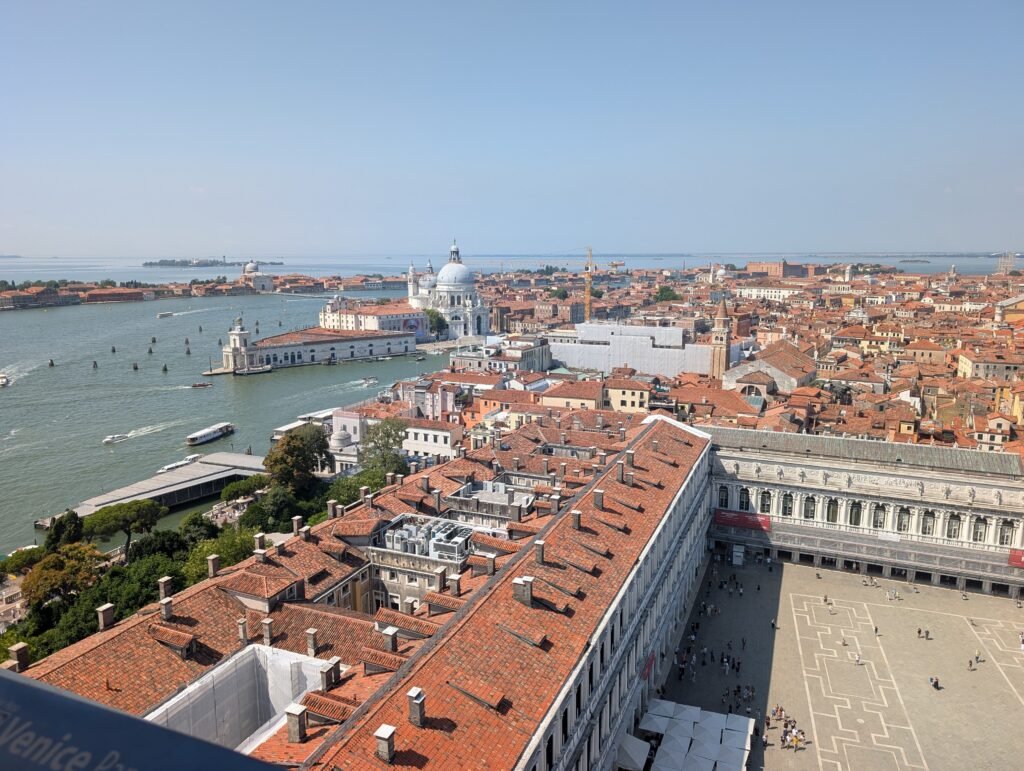
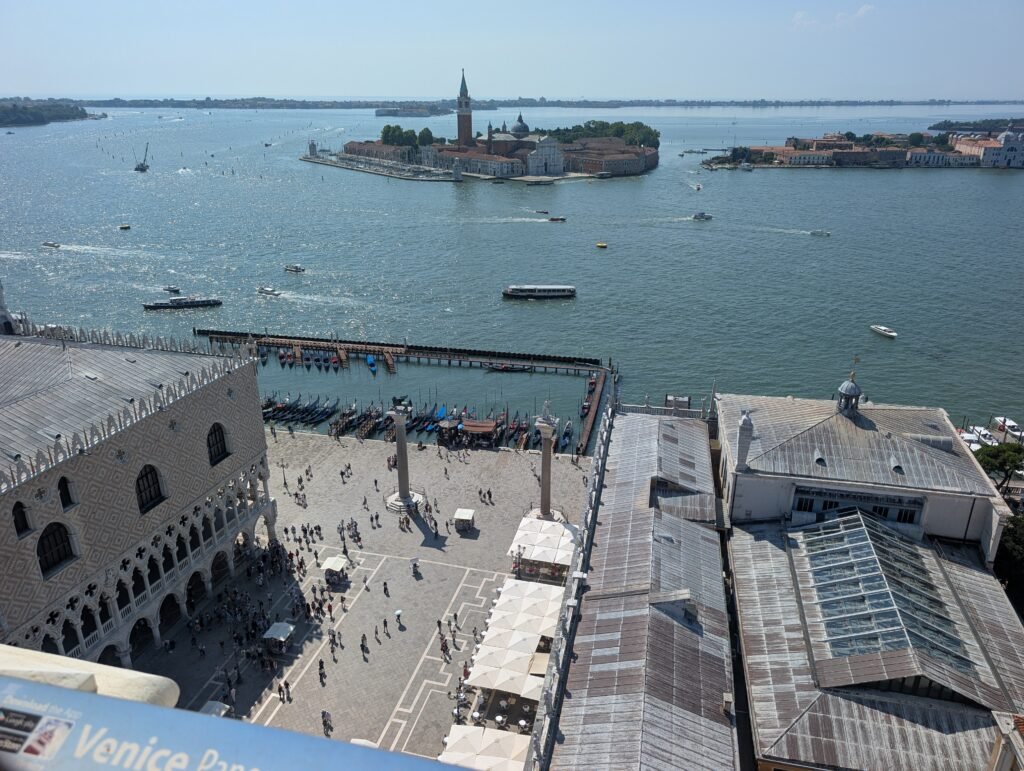
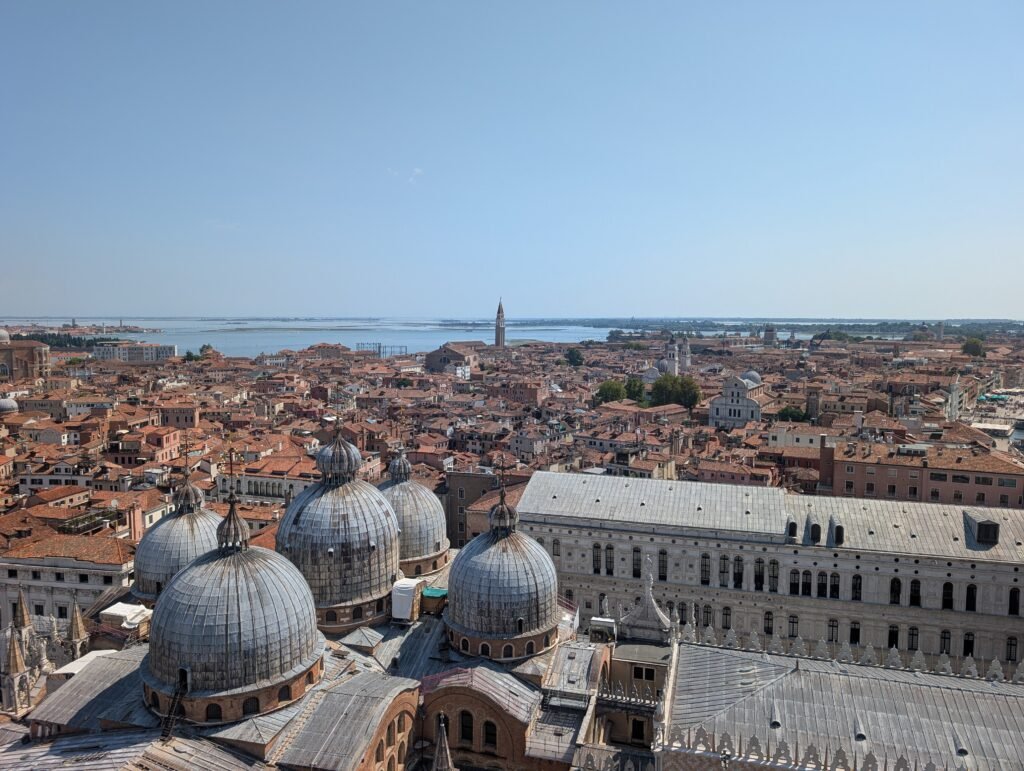
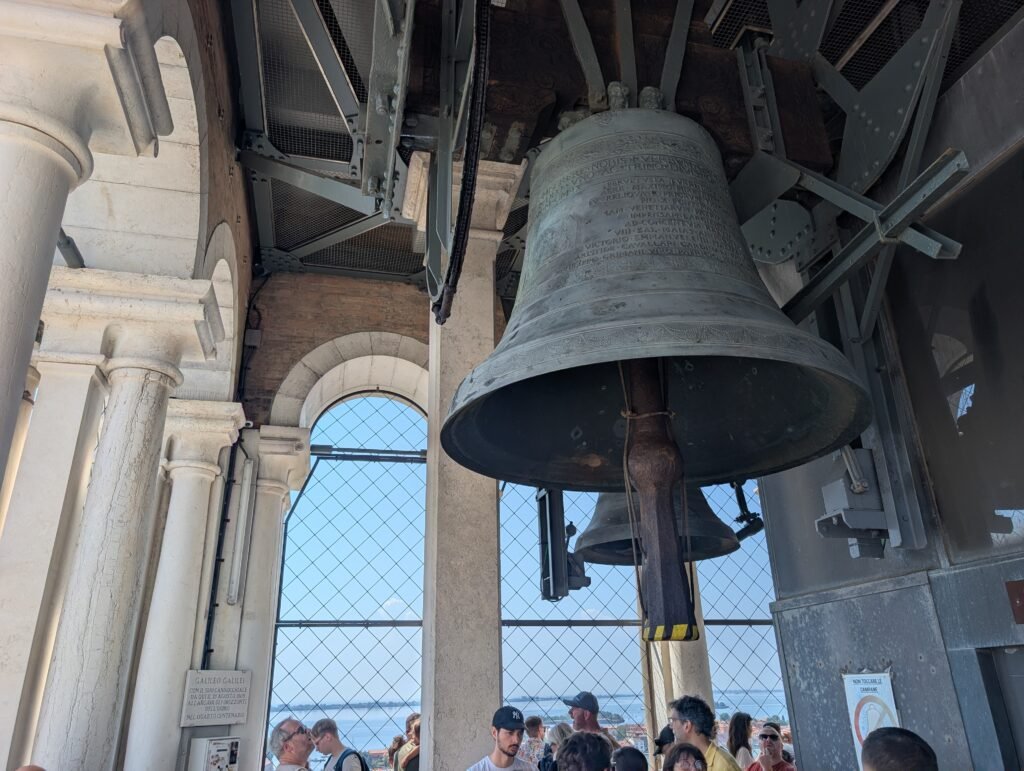
Before we ever went inside the church, we ascended the bell tower, which itself has an interesting story. The tower was begun in the 10th century and periodically increased in height, durability, and utility until the 16th century. The old tower collapsed in 1902, and what is currently there was reconstructed by 1912. In 1609 Galileo demonstrated his telescope from the tower. The telescope was presented to the Doge of Venice a few days later. Today, the tower offers panoramic views of the city and surrounding channels, churches, and islands. It is well worth the fee to ascend. There are machines as well as an app you can download to explain what you see in each direction from the tower – for a significant fee of course. The time atop the tower depends on your interest level. We spent between half an hour and forty-five minutes looking around before we descended to visit the church.

(Continued)

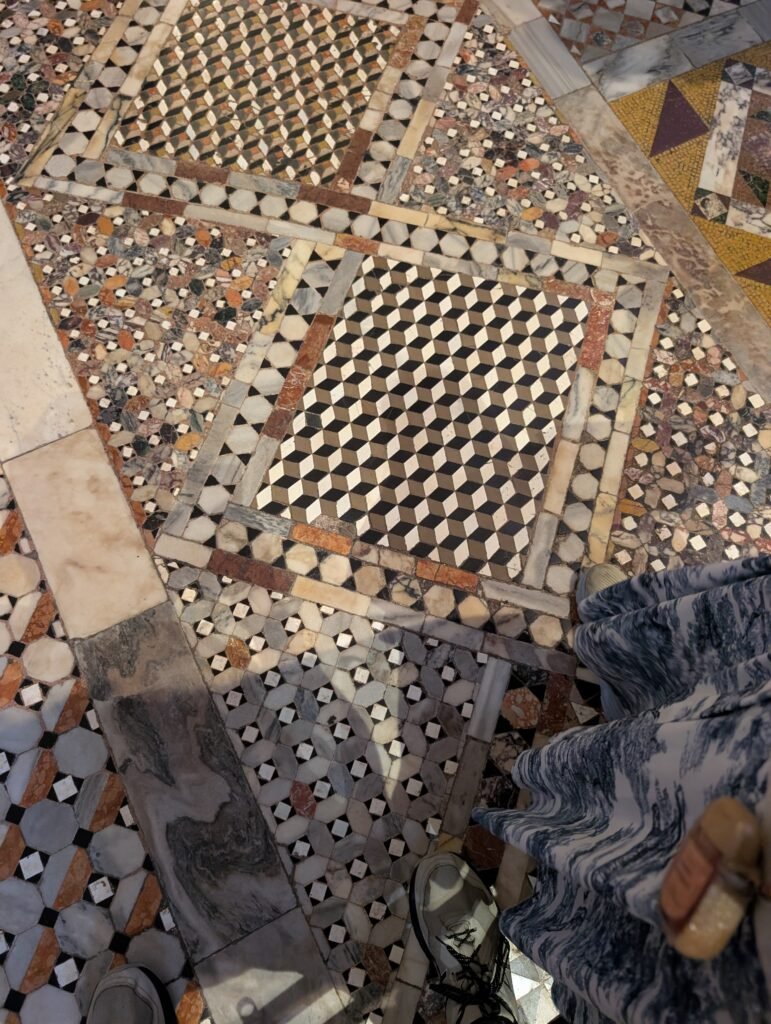
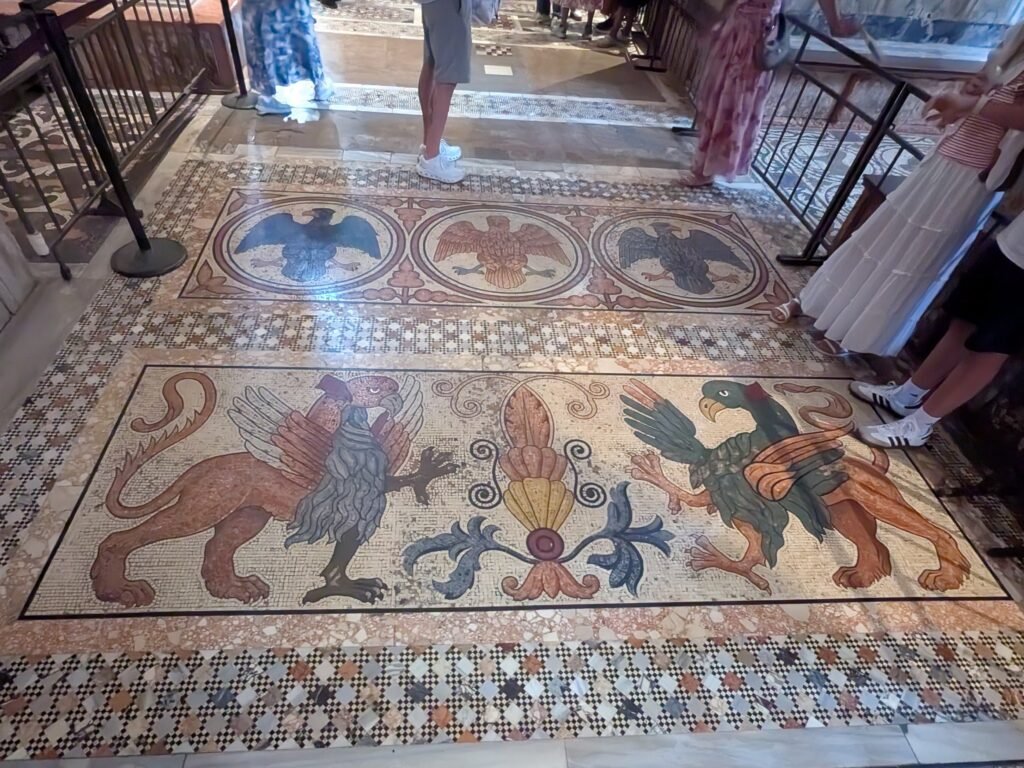
Fancy Floor Pattern
10th Century Altar Piece Decorated With Loot Stolen From Constantinople During the 4th Crusade
Tomb of St. Mark
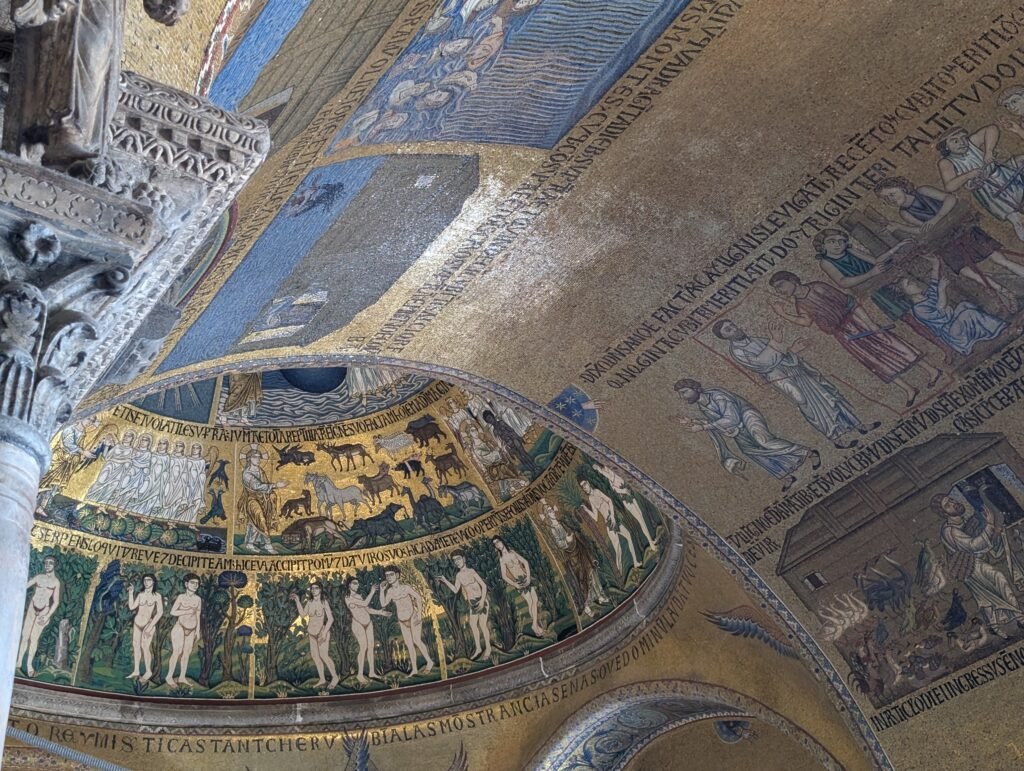
More Artwork From St. Mark's
Unique Floor Art
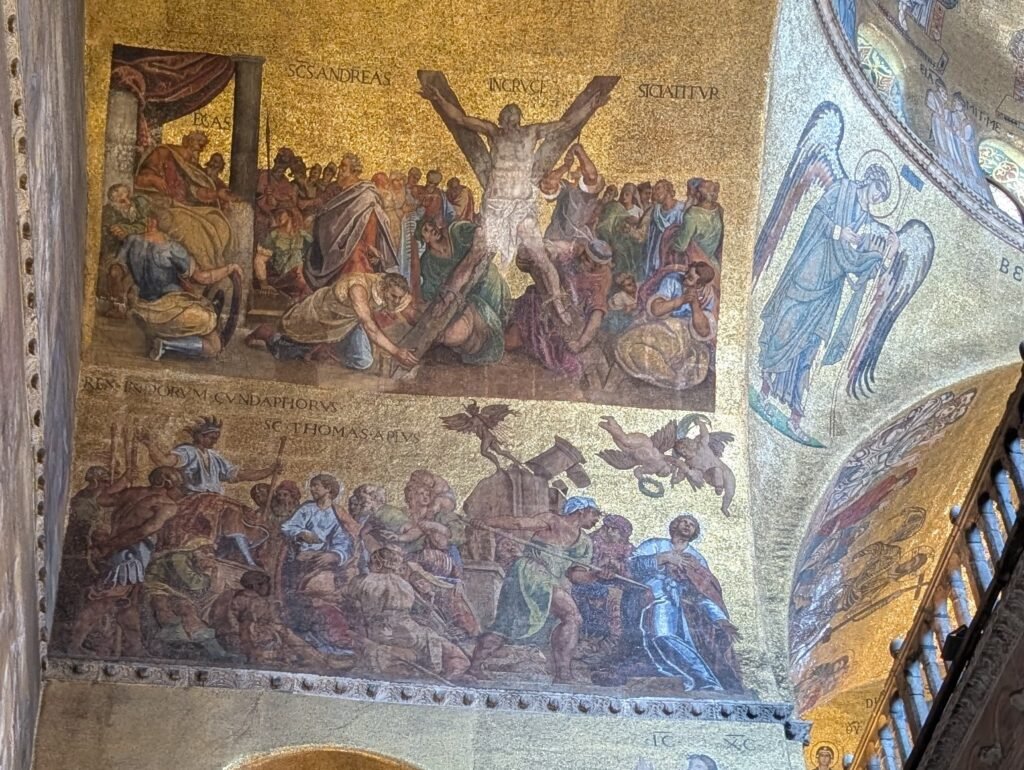
Martyrdom of St. Andrew
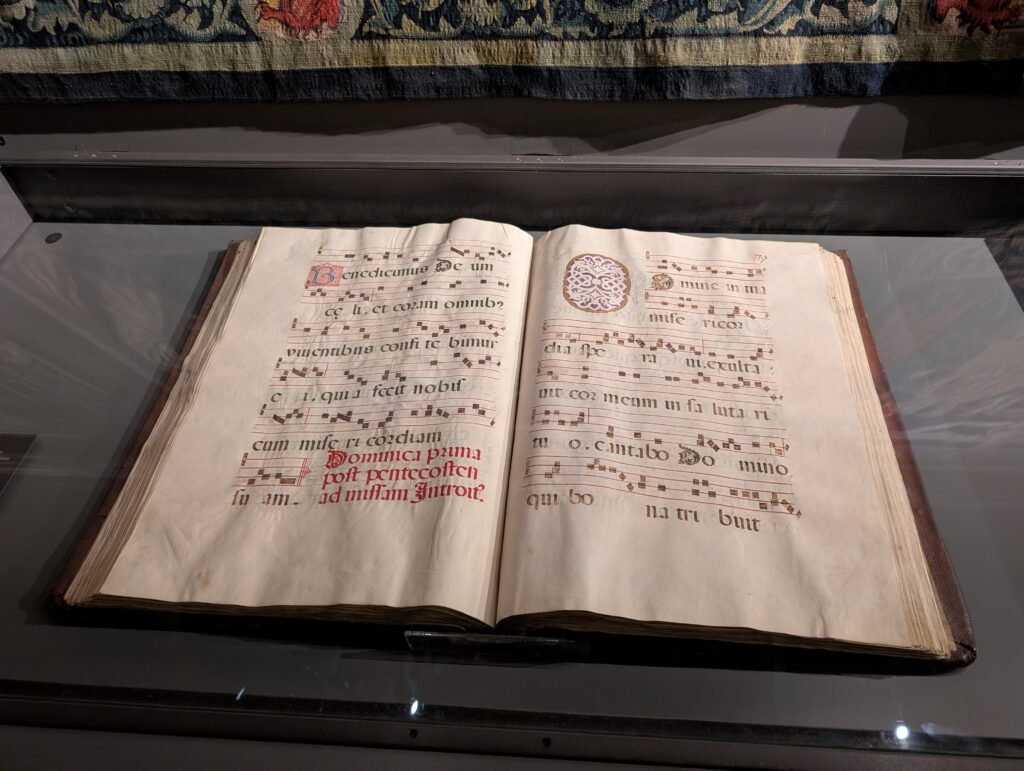
Chant Music Book From Museum in St. Mark's

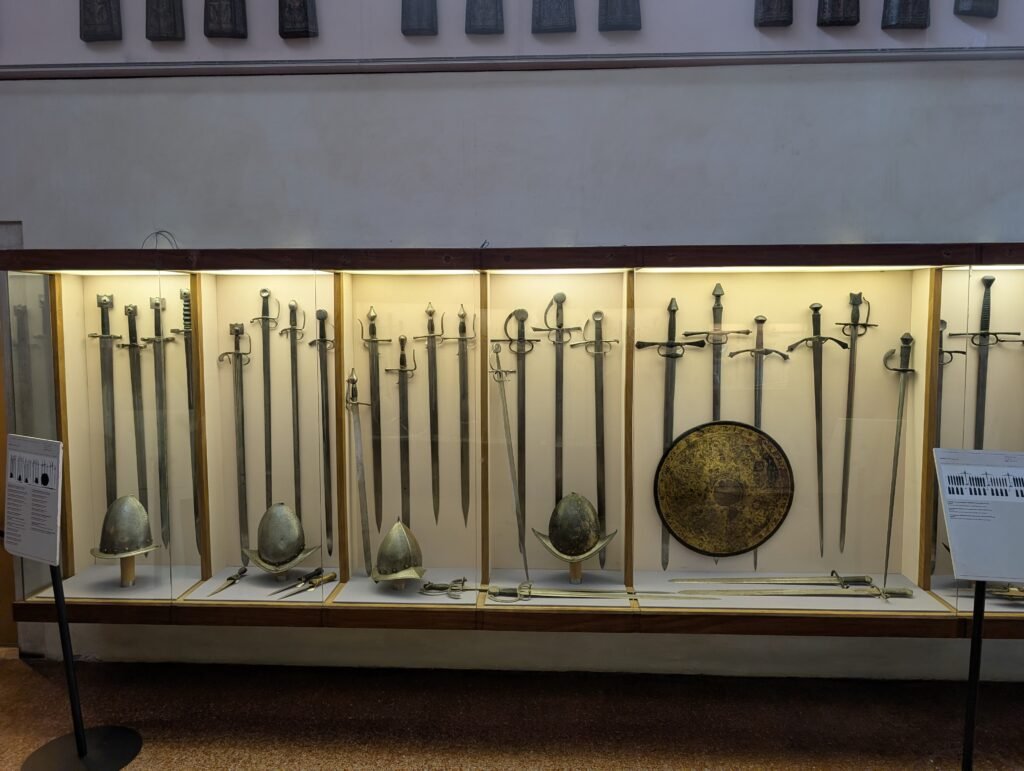
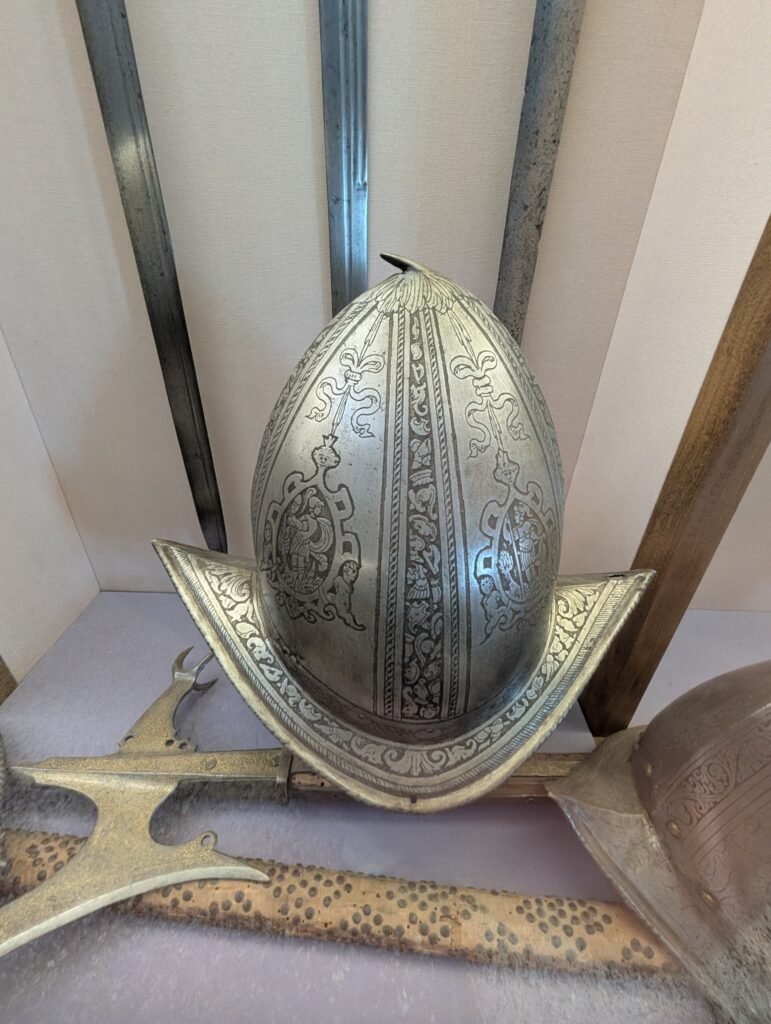
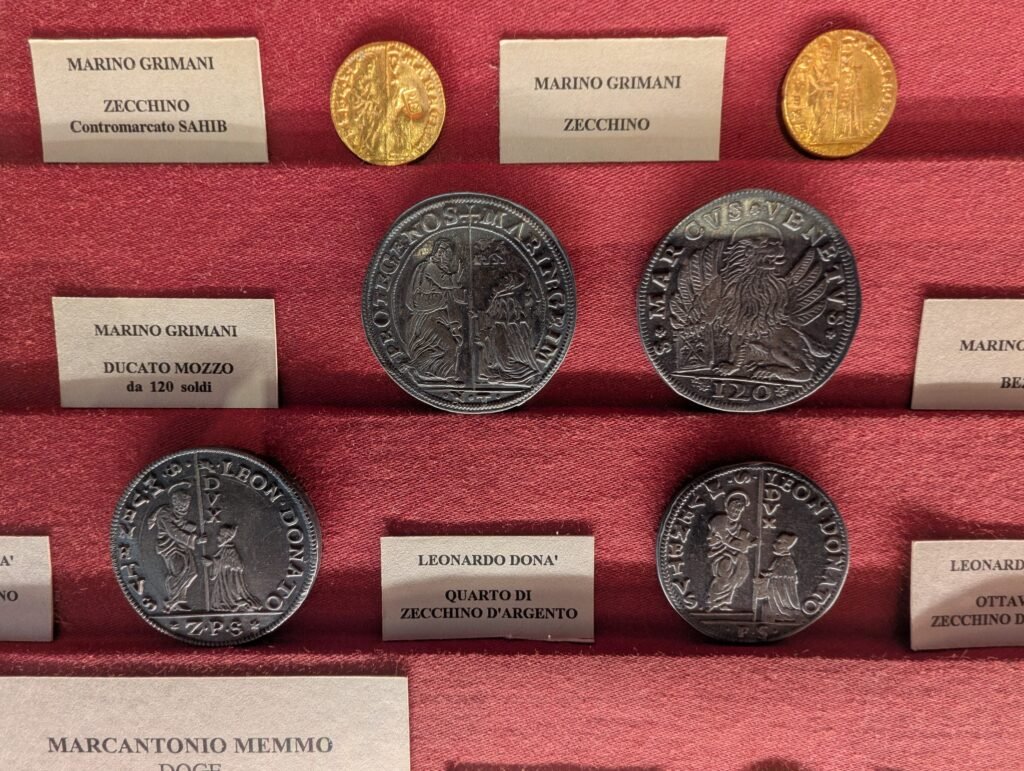
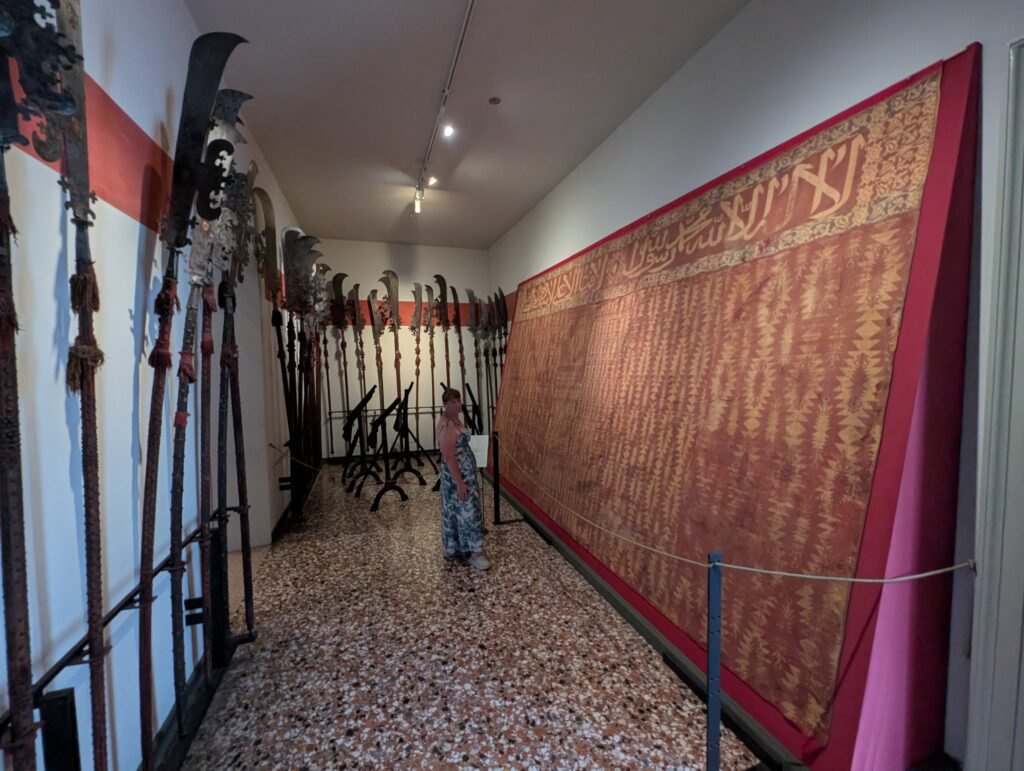
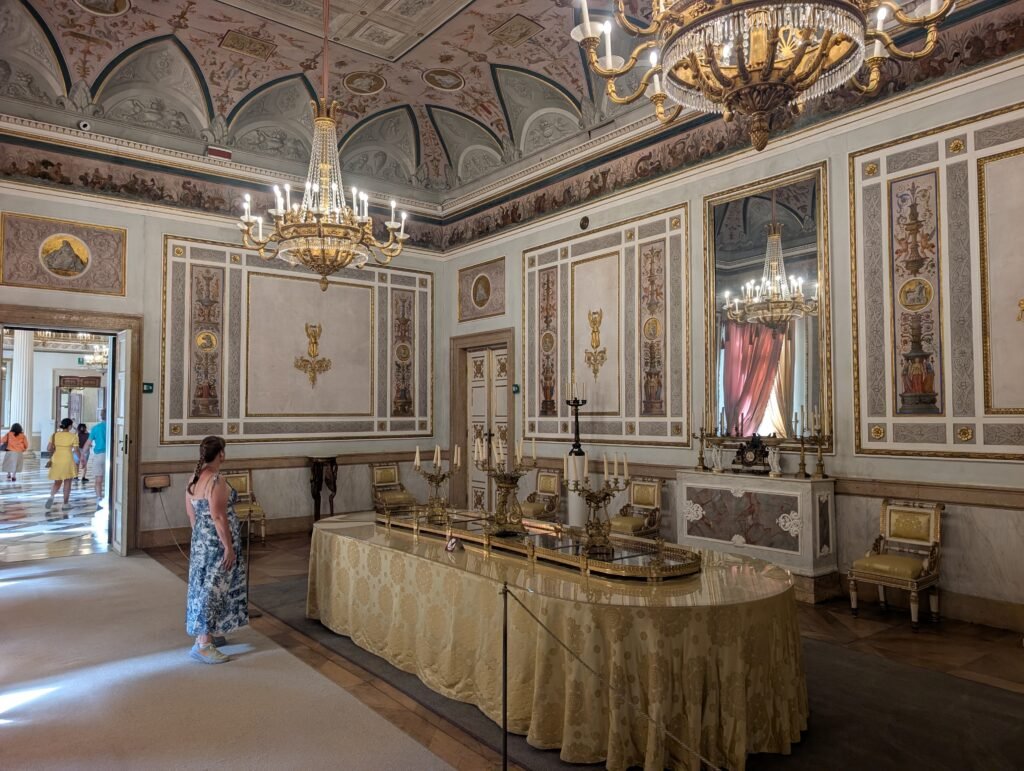
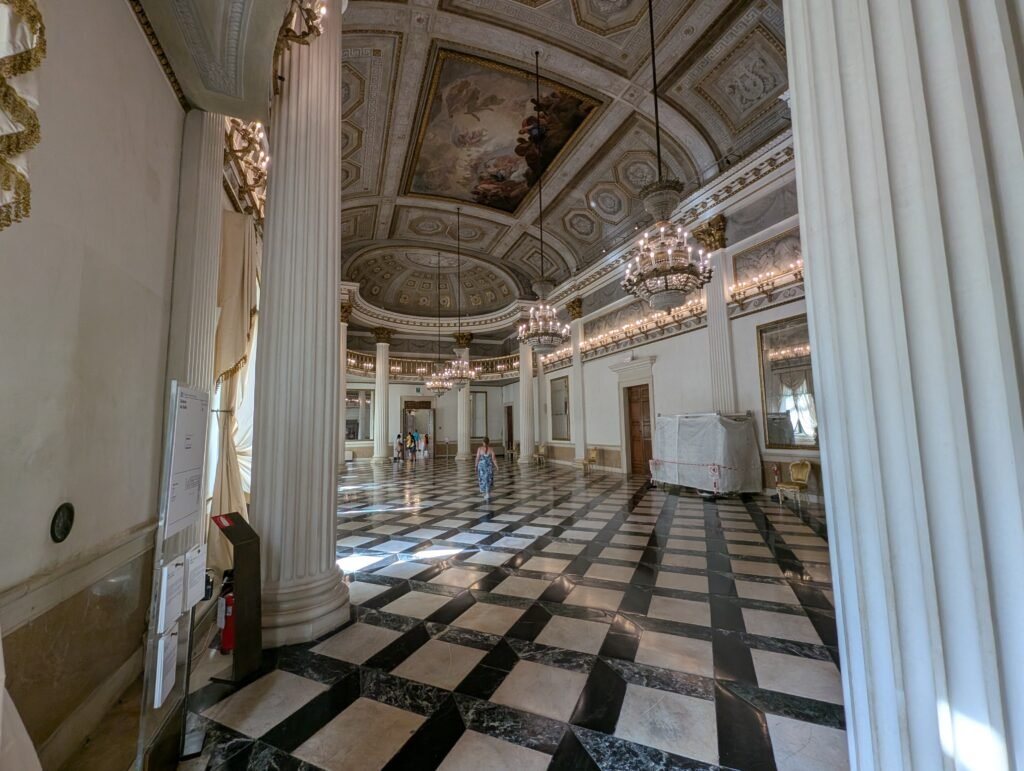
We grabbed some kind of rolled up pizza that you hand carry for lunch after visiting the bell tower and cathedral. We then walked through the Correr Museum, since this ticket came in a package with the Doge’s Palace entry we had bought the day before. St. Mark’s Square had been built in different periods. The side opposite St. Mark’s Cathedral was constructed by Napoleon’s engineers as an updated governor’s residence after France conquered the Venetian Republic in 1797. Much like the Doge’s Palace then, this area was also an official state residence. It has also been made into a receptacle for many other precious city possessions, including militaria, weaponry, a nice display of coins, and much of the furniture used by the French, Spanish, and Austrian governors who ruled Venice after the fall of the Republic.

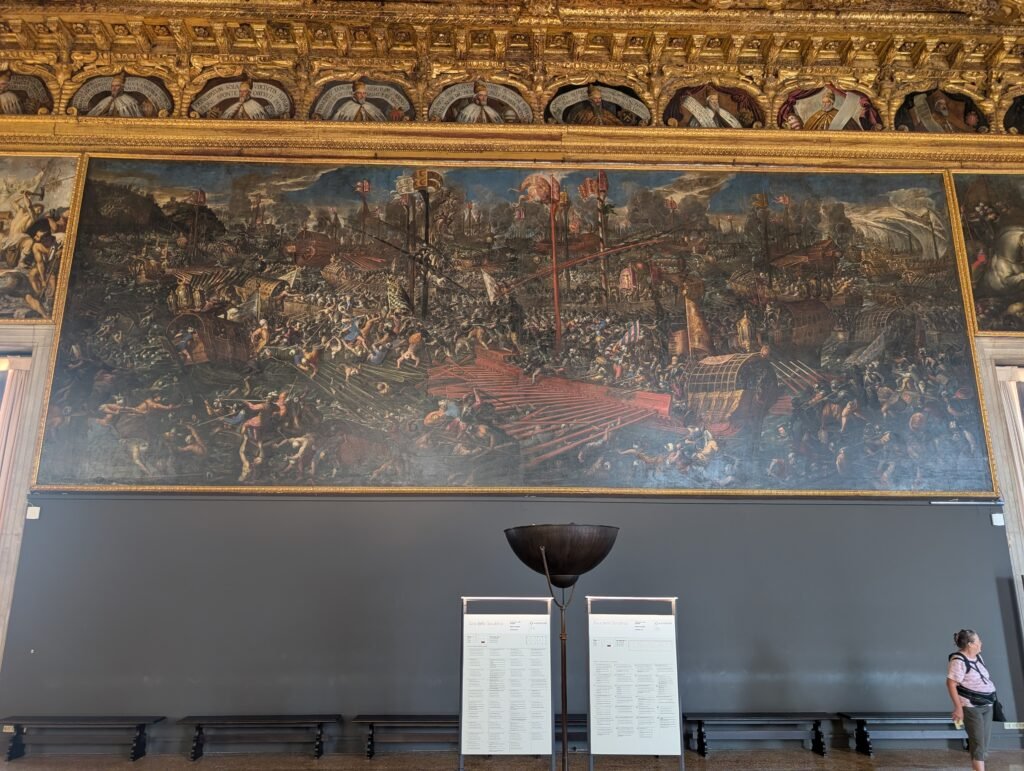
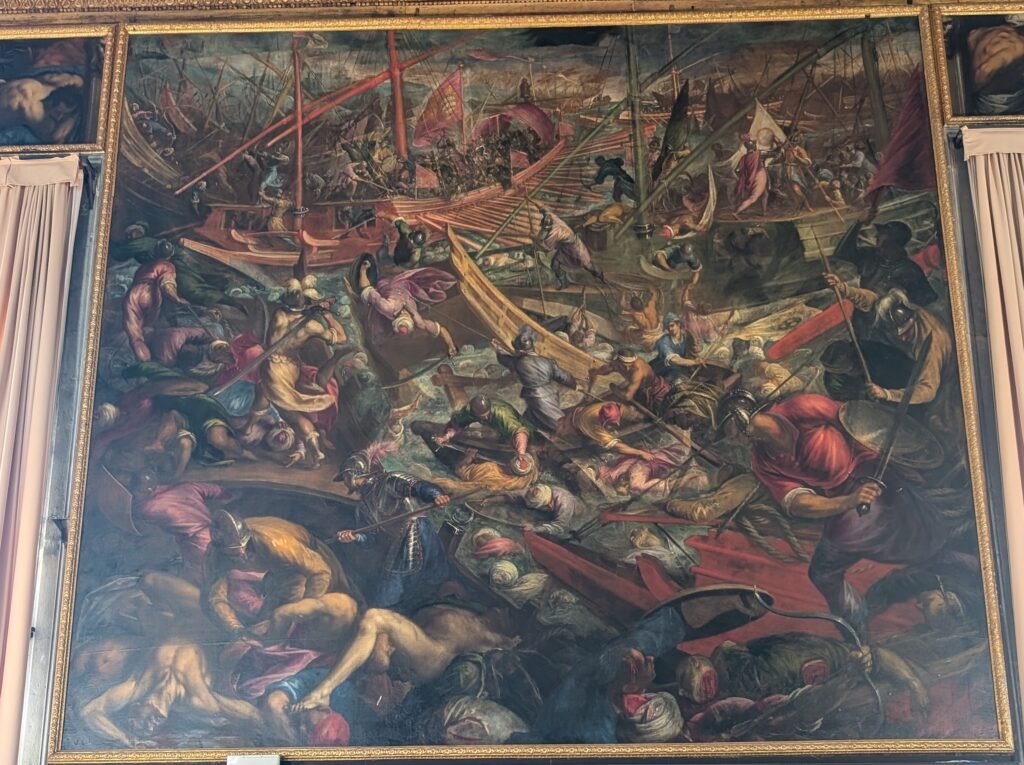
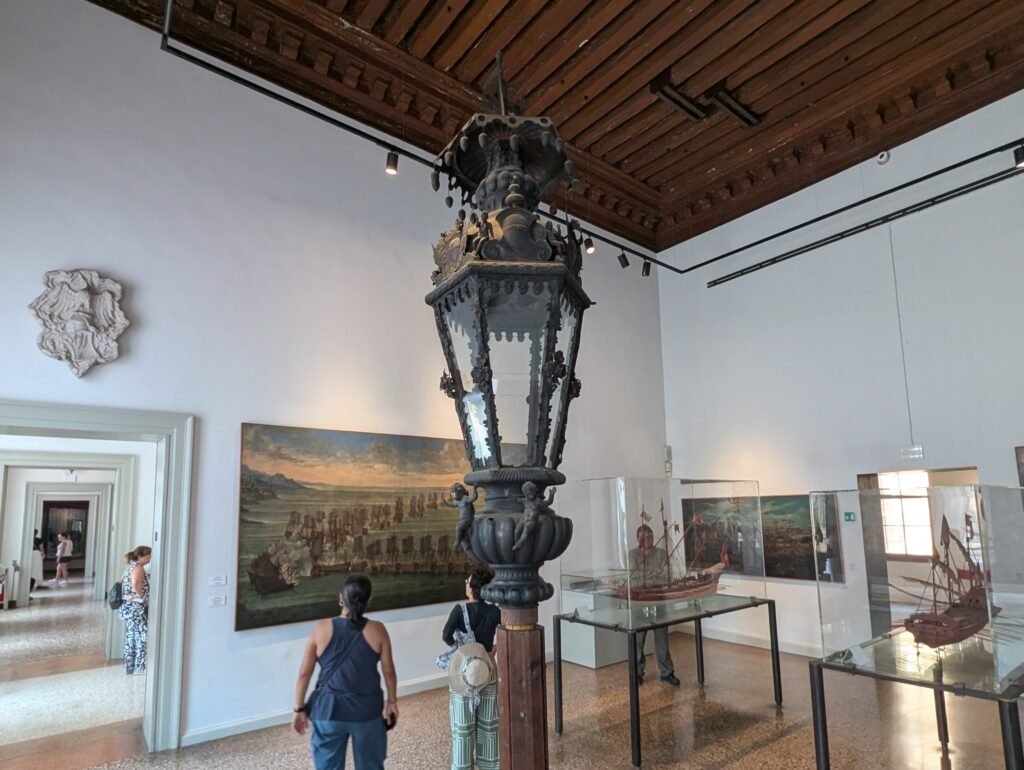
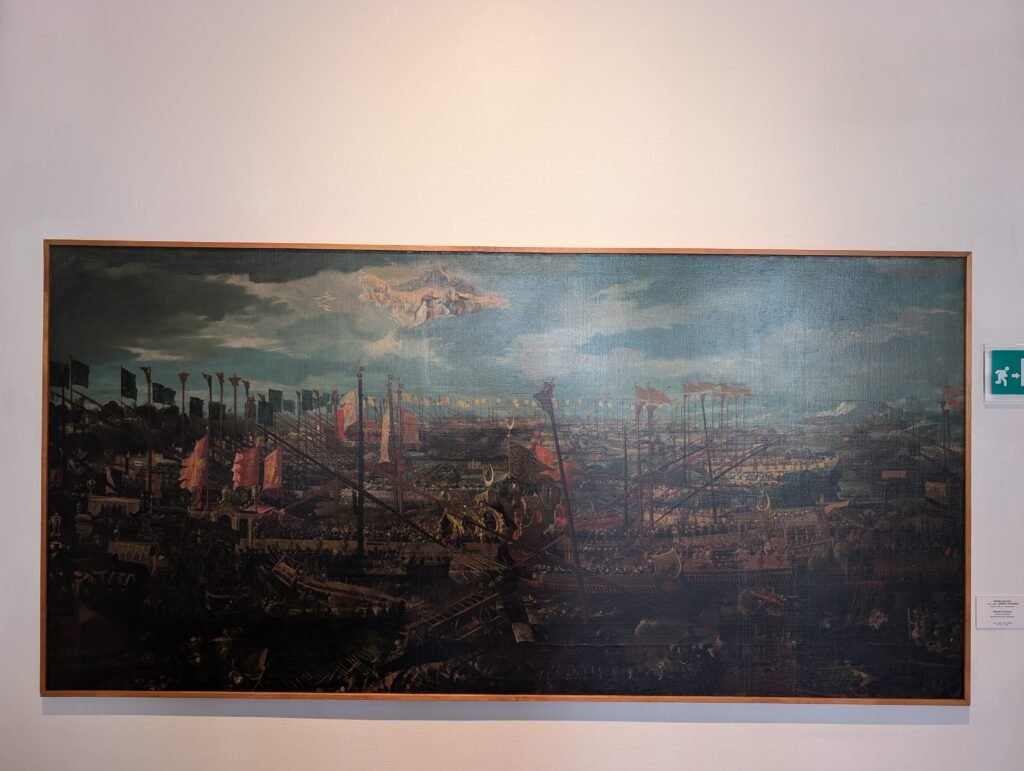
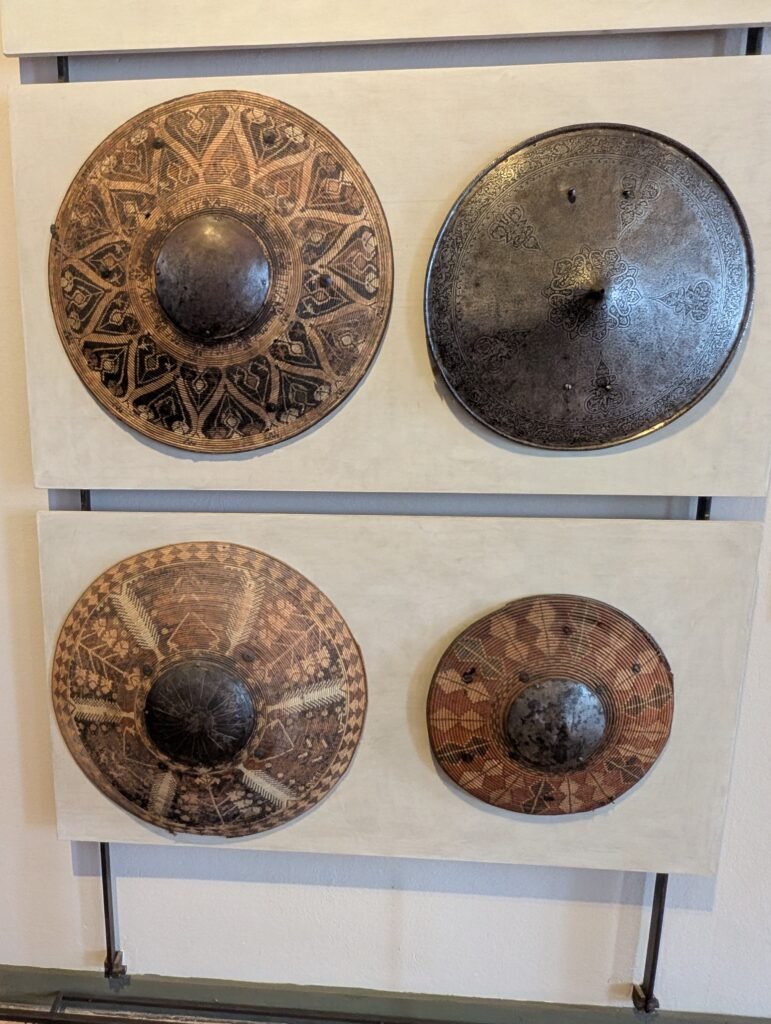
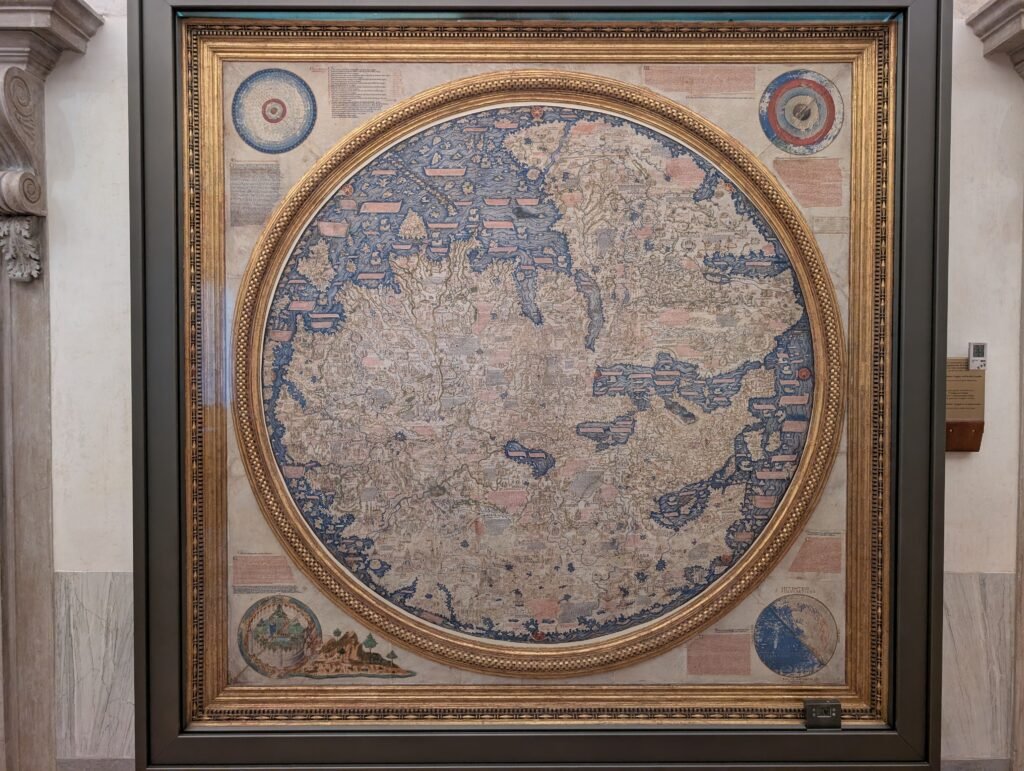
This museum, too, was more interesting than I thought it would be. I didn’t spend much time in the section on older relics, and did nothing more in the religious art wing than just walk through it. We did go through the royal governor’s apartments with the provided audio guide. I spent the most time in the areas dedicated to the civil and military history of Venice. They have a large trove of artwork celebrating the Christian victory at the Battle of Lepanto. There are also some nice pieces depicting festivals and traditions that were a part of Venetian identity. A nearby room with art and placards discussing the various Venetian trade guilds was also interesting. We saw also several artifacts captured from the Turks in naval battles like Lepanto, as well as busts and statues of the most successful naval commanders. I particularly enjoyed the medieval and early modern attempts at maps in yet another independent display room.

It took us a couple of hours to walk through the main parts of the museum. By the time we were done, it was not late in the day, but late enough we wanted to head back to the motel. It would be important to get an early start on Sunday so we could get to Milan in time for church. We passed a small store where we bought a box of ice cream. We ate this, and meandered slowly back toward bus stop, picking up a sandwich along the way.

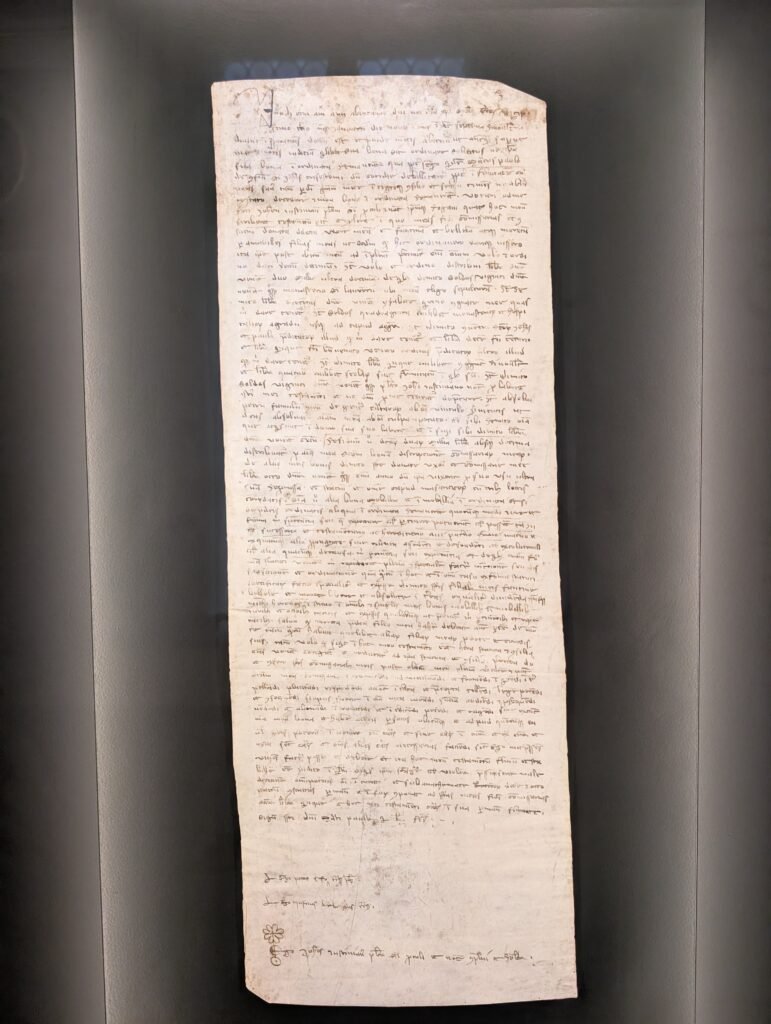
One of the times we were stopped to eat something, I dug around on the internet in search of Venetian sites associated with Marco Polo. Marco Polo was a member of a Venetian merchant family. During the 1270s, Marco joined his family members on an overland trade trip along the silk road, reaching China in 1275. Mongols ruled China at this time, and Polo ended up serving for 17 years in the court of Kublai Khan. Upon returning home, he wrote an account of his journeys. This remarkable document became a book entitled “Il Milione.” While not the most accurate description of everything about the Far East, it certainly contained more than almost anyone else in the west knew about China and the route to and from there. As one of Venice’s most well-known figures, I thought I might see more about him. You really have to search when you are there to find anything about Marco Polo. There is virtually nothing about the Polo family in any of the museums we visited. No buildings of his are preserved. I did see a preserved document in the Correr Museum of his – his hand written last will and testament. There really aren’t any specific sites you can visit related to Marco Polo in Venice, though, oddly.

Our time in Venice was relatively short. It was enjoyable and enlightening though. Due to the expense, I wasn’t entirely sorry that our stay in Venice was shorter than the time we spent in other parts of Italy. I was glad we had stopped, though, and I learned and was reminded about a lot of very interesting history in what was one of the world’s longest lived republics. I believe only San Marino existed longer with that form of government. I’ll visit that tiny country later on this journey.

Bronze Horse Statues From Constantinople
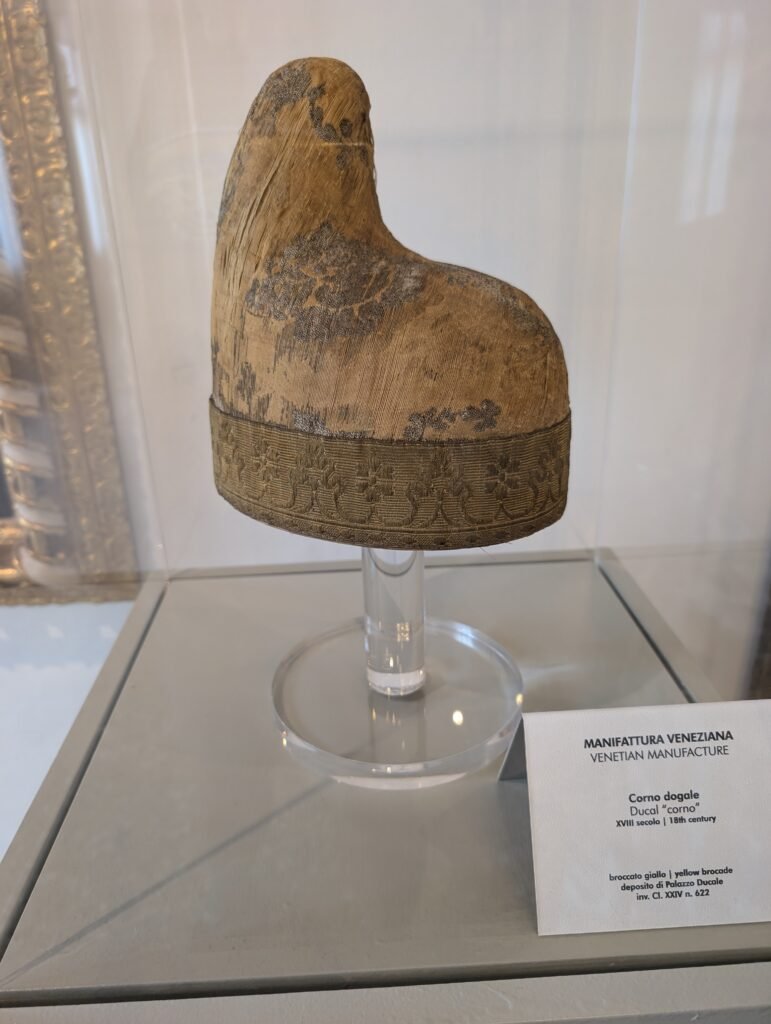
Doge's Cap From Correr Museum
Some Examples of Venetian Coins
Lantern From Captured Ottoman Ships
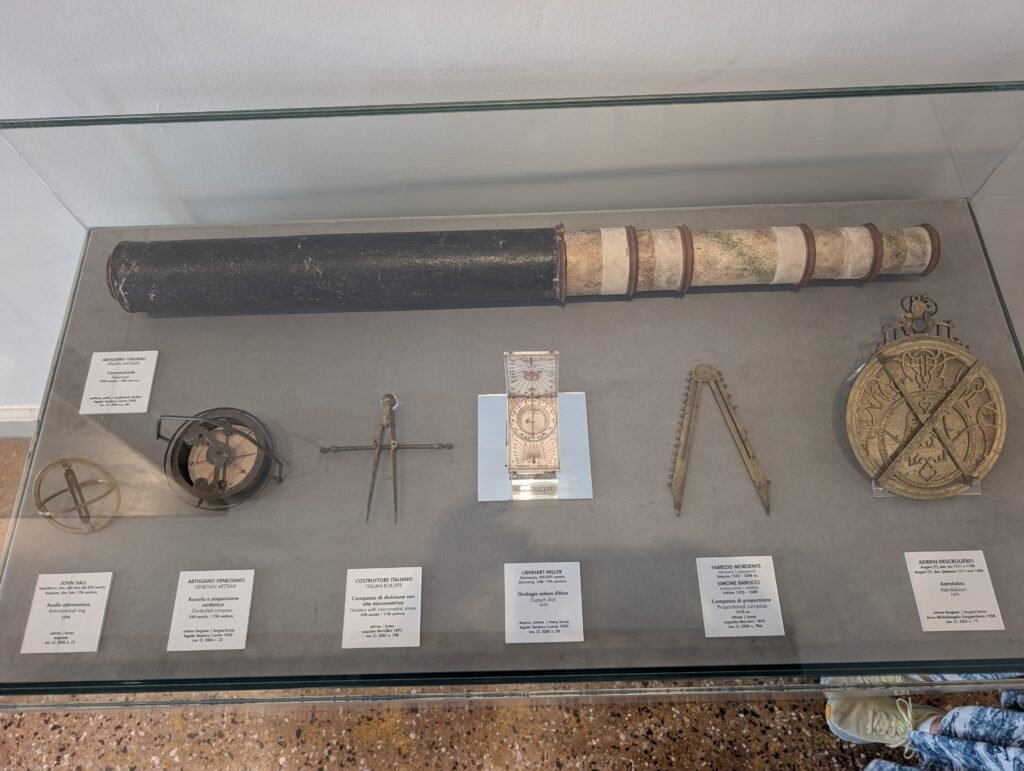
Naval Instruments
Weapons in Museum
Shields
Marco Polo's Last Will and Testament
Early Attempt at a World Map
Trip Overview
Italy
Rome
Lazio
Naples
Milan