Volubilis

Roman Provincial City in Morocco

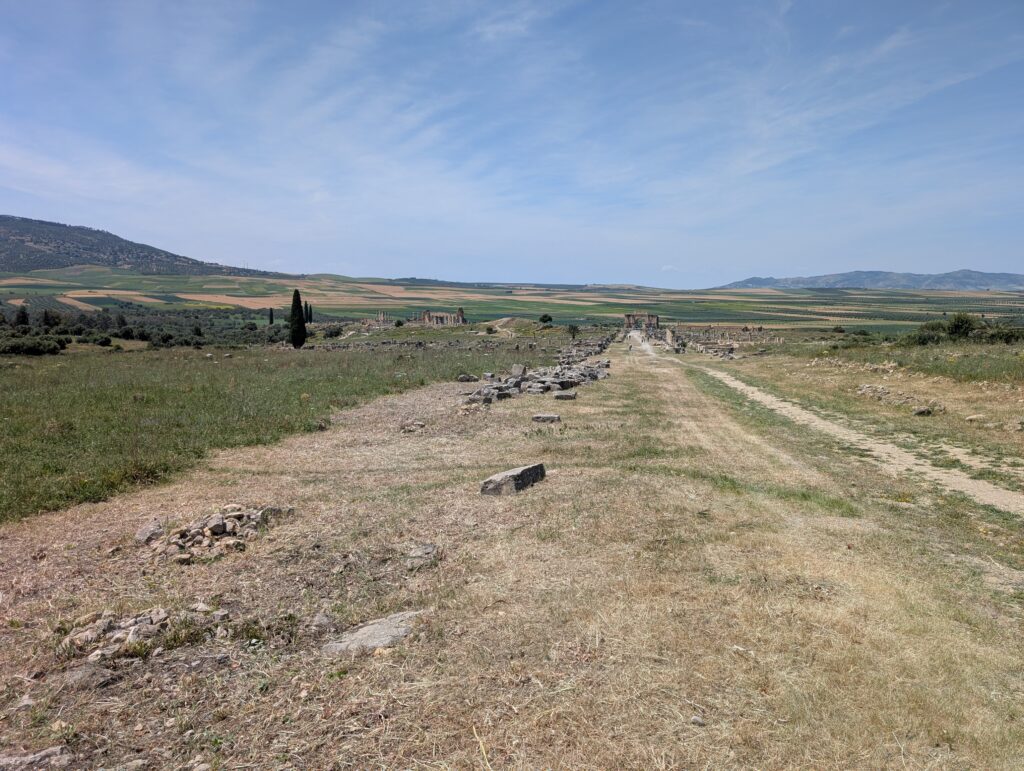
Volubilis was one of the Moroccan places I was most excited to visit. Volubilis is a Roman city ruin, perhaps the furthest Southwest Roman city of consequence. It is known for having very nice floor mosaics. Others have also commented that if you visit in April or May, there is a good chance that you’ll see lots of wildflowers. All of those aspects turned out to be true. I had high expectations for Volubilis, and it exceeded them in many ways.

The first thing I had to do was to figure out how I would get there. I had based myself in Fes for a few days. Meknes, Volubilis, and Moulay Idriss are often done on a day-long organized tour from Fes. These small group tours only cost about $25, and they work out all of the logistics for you, which is why they are so popular. The downside, though, as was again demonstrated on my Ait Ben Haddou trip, was that a relatively small amount of time is spent at the main attraction. A lot of time is wasted on the logistics of getting everyone rounded up and corralled. Further time is wasted on opportunities to buy overpriced trinkets. Some of the savings are paid back because the meal you are practically forced to purchase will be small and two to three times the price you would otherwise pay. In short, you are trading quality for convenience.

I know I nearly always need a lot more time to explore historic places than most people. Volubilis is an entire Roman city ruin, and I love mosaics. The site is also home to an interpretive center, which would add to the time I would need. I figured I would need probably three hours to see Volubilis the way I wanted to, and that I would probably be lucky to squeeze an hour out of the small group tour. But there was no direct way to get to Volubilis from Fes. It would require three steps. I could get from Fes to Meknes by train or shared taxi. Another shared taxi went to Moulay Idriss. From Moulay Idriss, I could ether catch a private “petit” taxi to the Volubilis entry or just walk. It didn’t look to be much over two miles.

My hostel host let me know where to catch the shared taxi, and encouraged me to take this route. I decided to try it. Shared “grand” taxis are kind of like the marshrutkas in Georgia. They are minivans that can haul six passengers, but will not leave until all of the seats are filled, or at least paid for. Sometimes, passengers have to wait some time before the trip leaves. I really felt I needed to get to Volubilis sometime near its opening hour of 8:30, especially if I was going to look at the couple of things I could see in Moulay Idriss and also the main sights of Meknes before heading back to the hostel. Mainly, though, it was important to get to the Roman ruins before the tour buses.

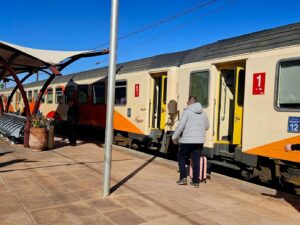
I walked to the shared taxi stand. I waited from 6:00 a.m. until about 7:15. Not only did no grand taxis leave for Meknes, not a single other passenger showed up to wait for this route. I opted to punt on this plan. It wasn’t that important how quickly I got home, but I needed to get out to my site before the whole day was burned. I would use InDrive to get to the train, then catch another InDrive to get directly to Volubilis, cutting out the walking time of nearly an hour from Moulay Idriss, not to mention the time I might spend waiting for another shared taxi. This turned out to be a more expensive option, but not really all that much. It cost 25 dirhams to get to the train station, 35 for the train ticket to Meknes, and then just 100 for the InDrive all the way up to the Volubilis gate. The total was about $17
(Continued)

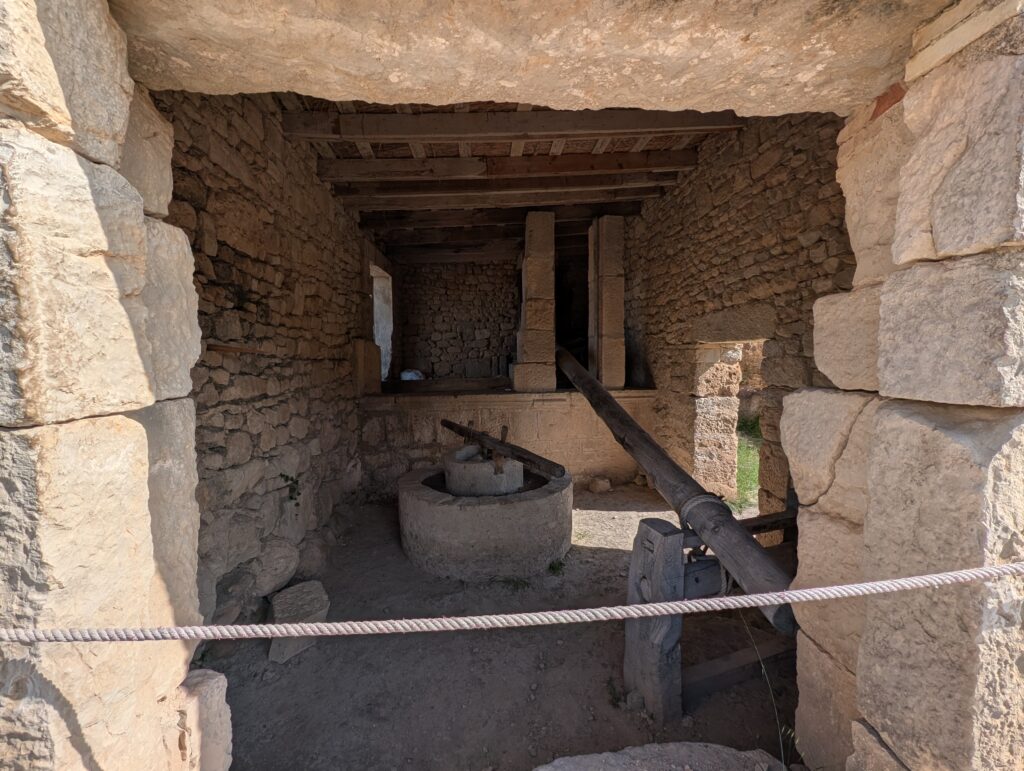
One of the Many Olive Oil Presses at Volubilis
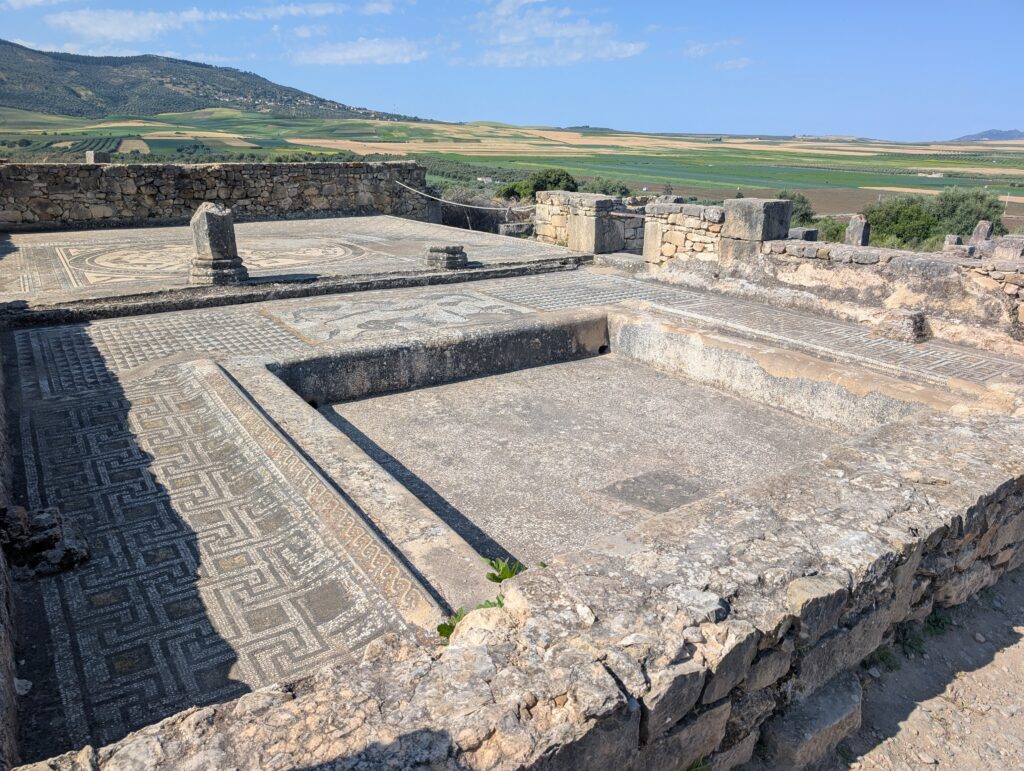
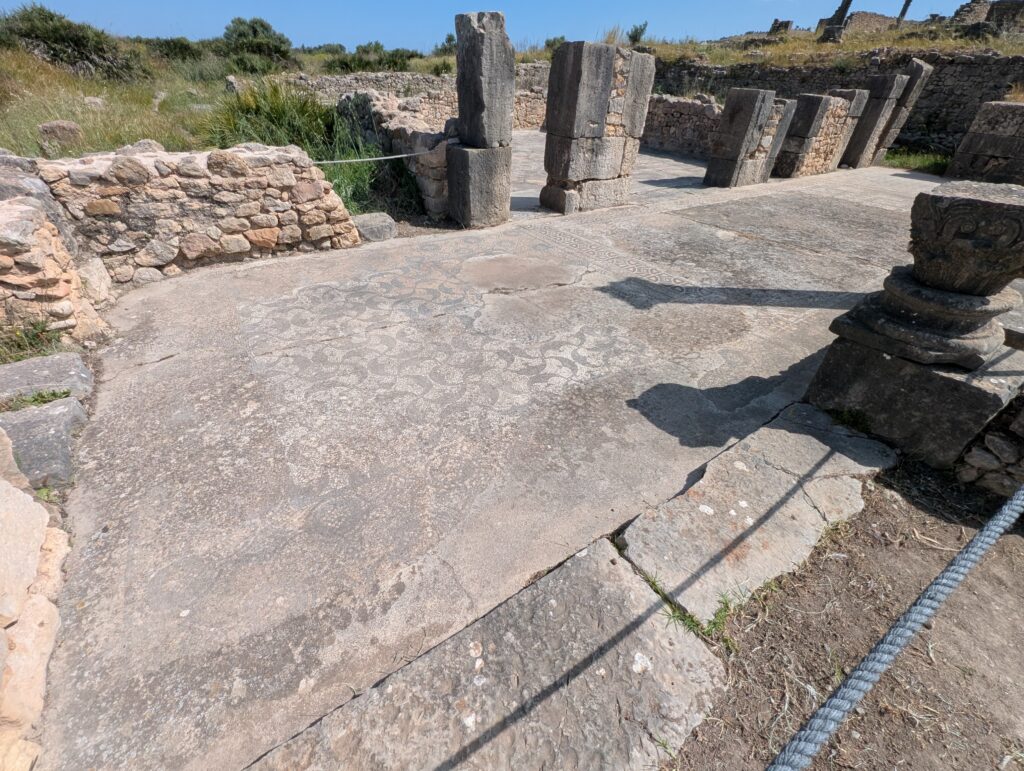
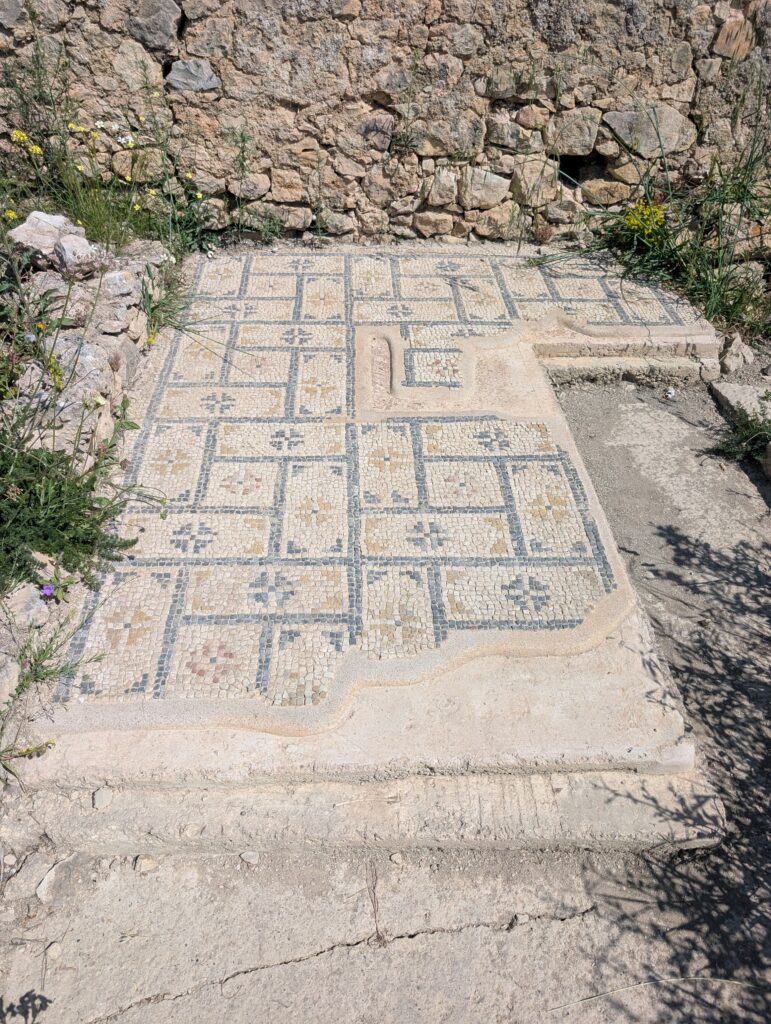
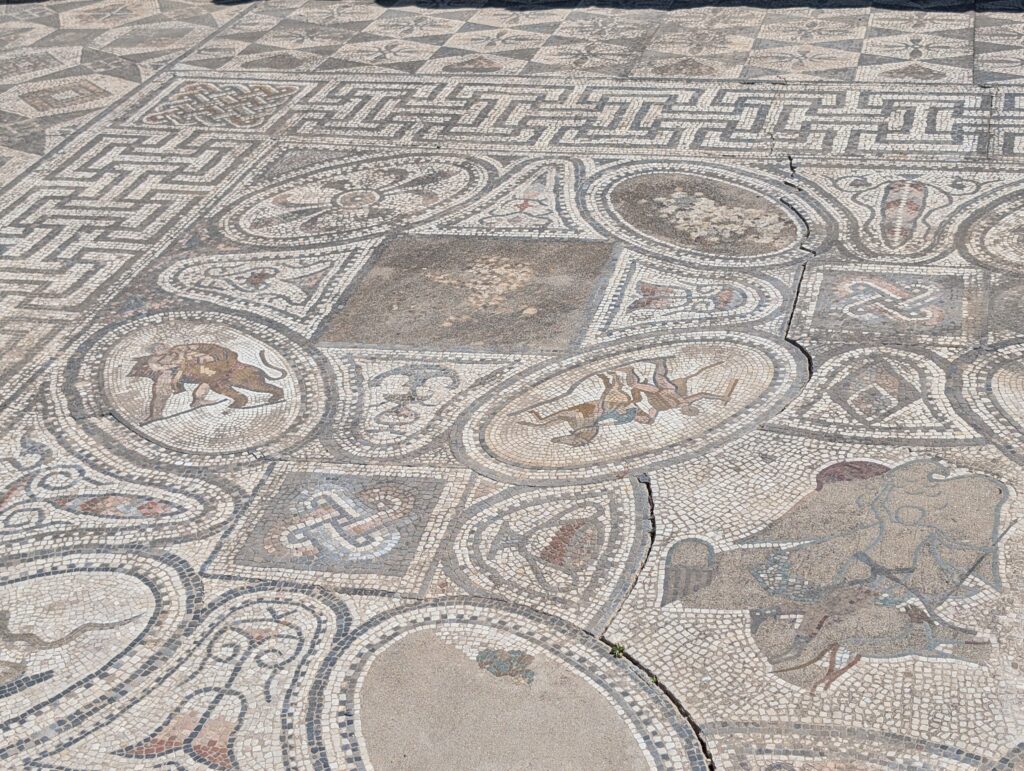
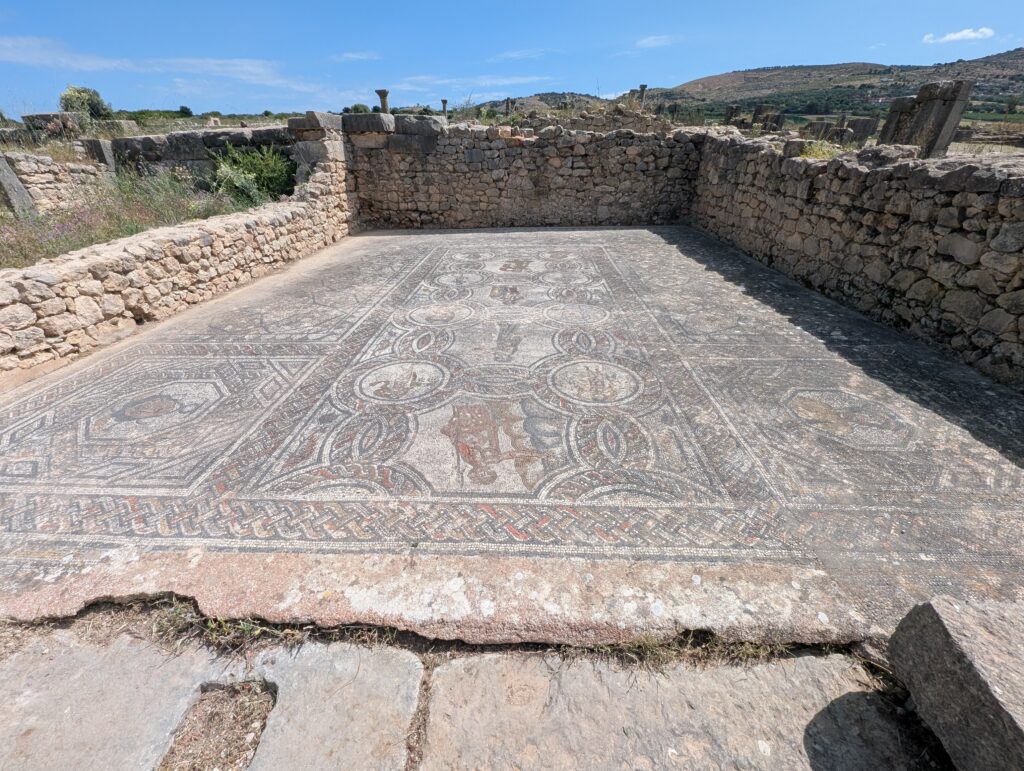
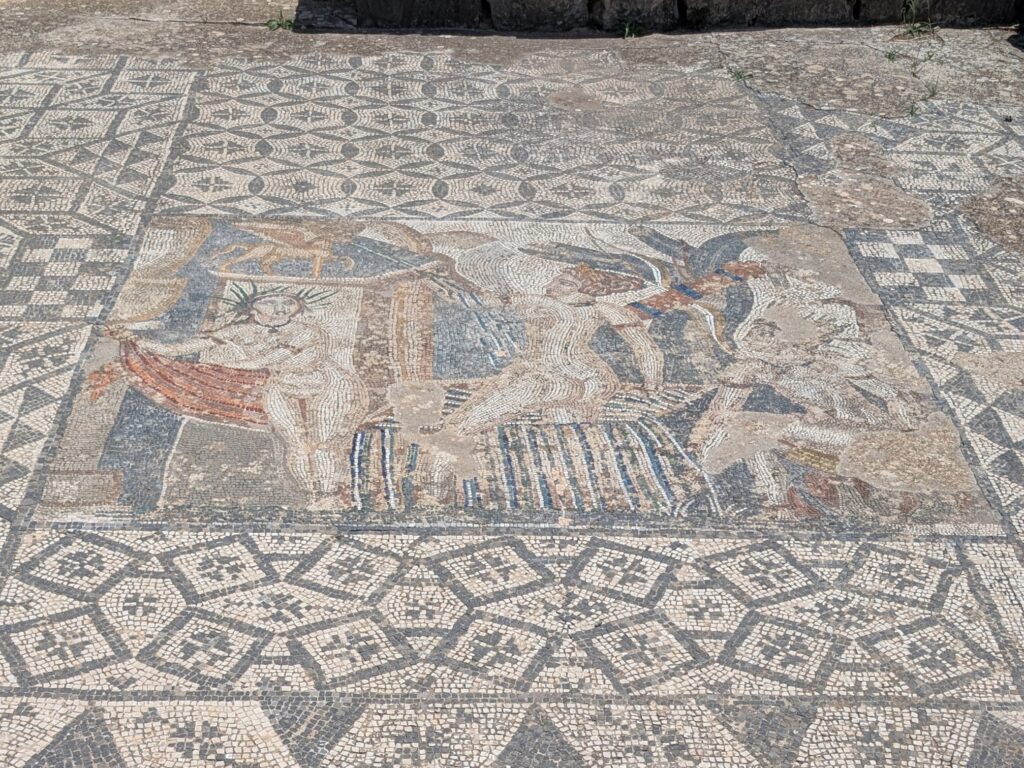
Part of One of the Many Floor Mosaics

On the way to the site, my InDrive driver explained to me that ride sharing apps like InDrive are technically illegal in Morocco. They are still widely used. It doesn’t seem as if there is some great danger in using them for tourists, and maybe only a mild danger to the driver. He told me that he had a brother in New Jersey, and that if the gendarme stopped him to ask, he was going to tell them that I was his New Jersey brother’s friend from the USA. We had no such problems, and I was at Volubilis before 9:30 – not as early as I wanted, but still well before the crowds.

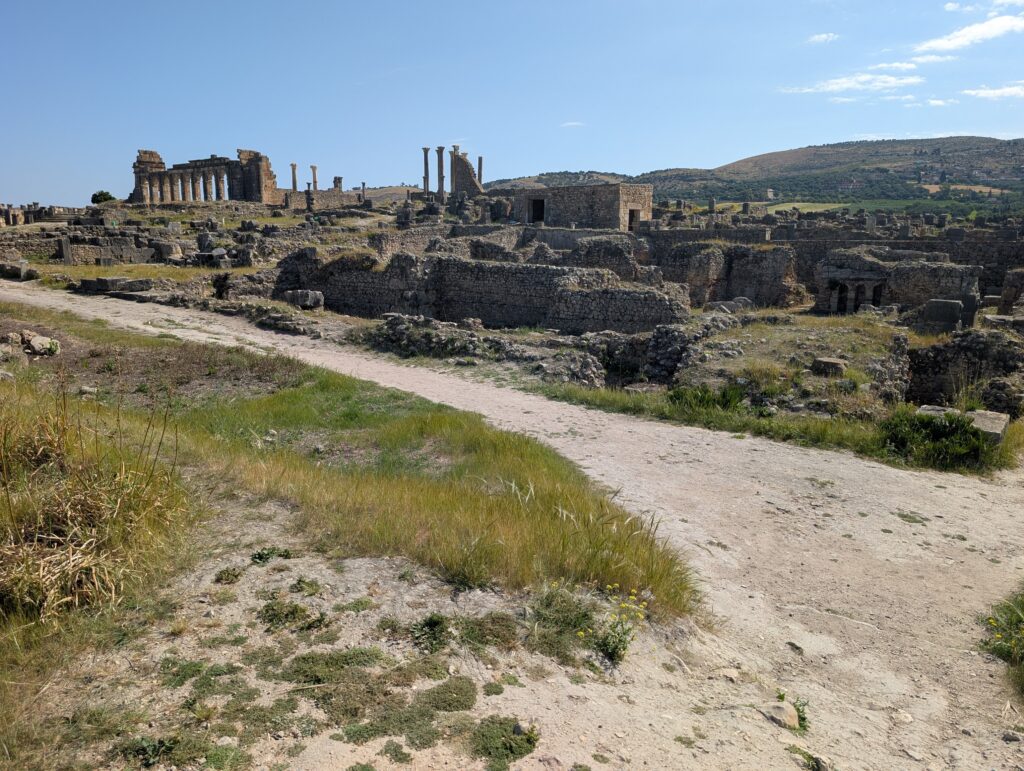
Volubilis was for at least a time the capital of the ancient kingdom of Mauretania, mentioned in my article on Tipasa. Mauretania became a Roman vassal state after the fall of Carthage, and was fully annexed by Rome in AD 44. Roman rule was financially beneficial to Volubilis. Trade and production of olive oil boomed. By the late 2nd century, the city was home to some 20,000 inhabitants – pretty big as Roman provincial cities went. Being so remote and without natural defenses, the city was not easy for Rome to defend. It fell to Berber tribes in AD 285 and was never retaken. It was continually occupied by Christians and Berber tribes for several more centuries, until the Muslim conquest and establishment of the Idrisid Dynasty described below.

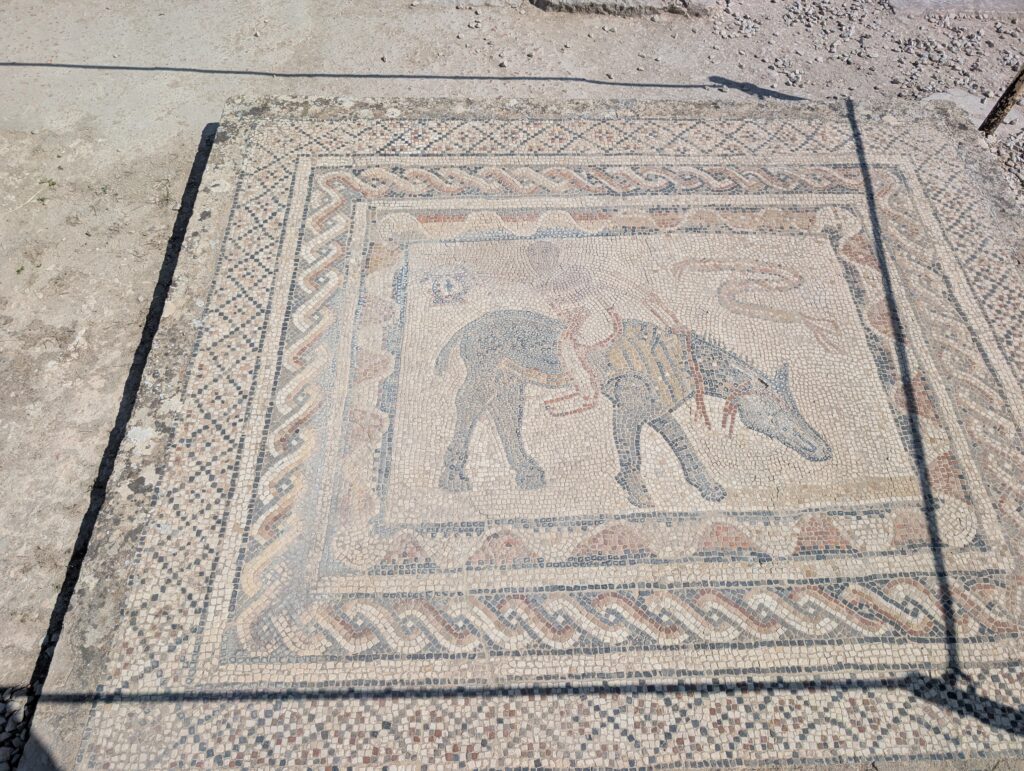
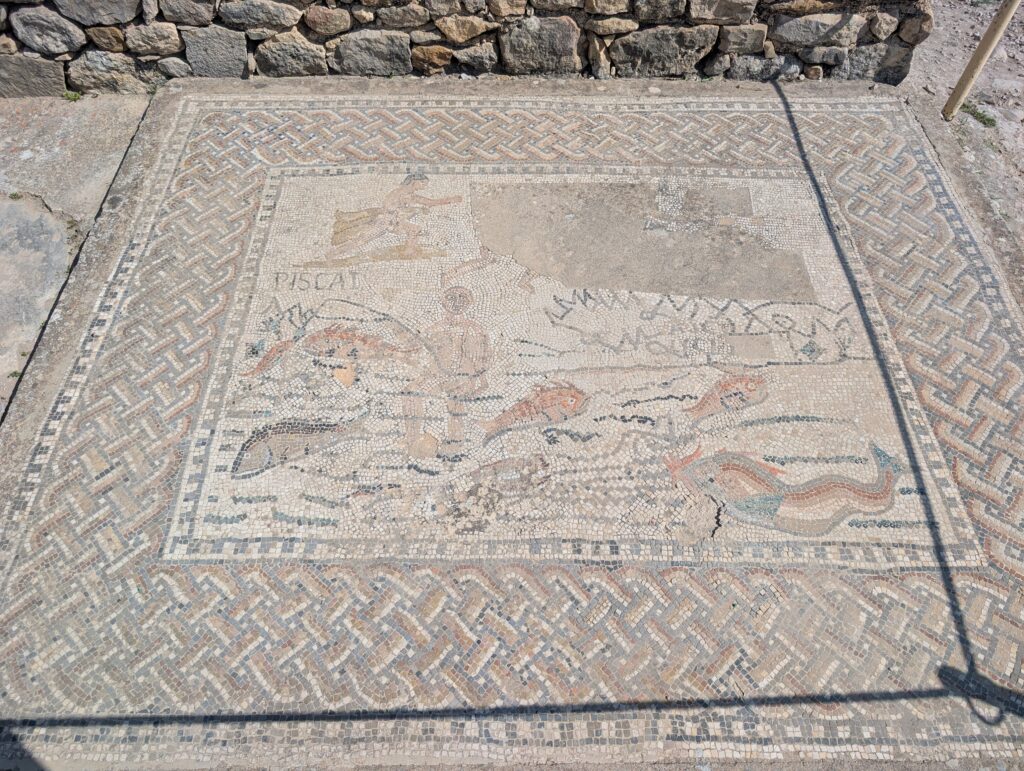
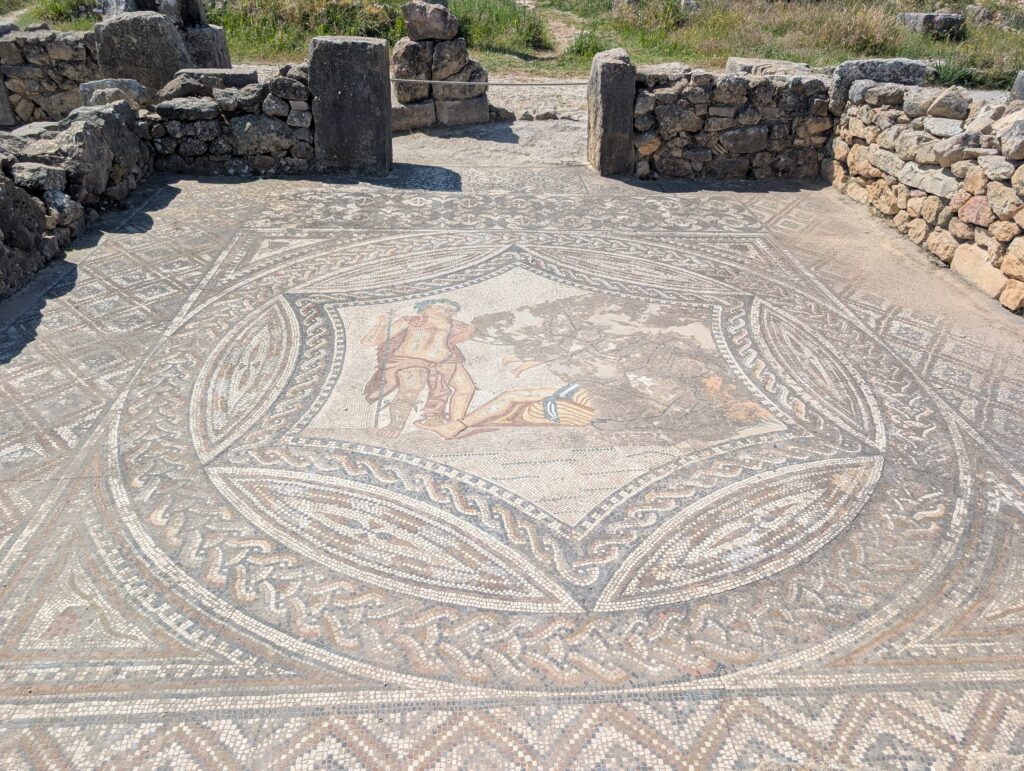
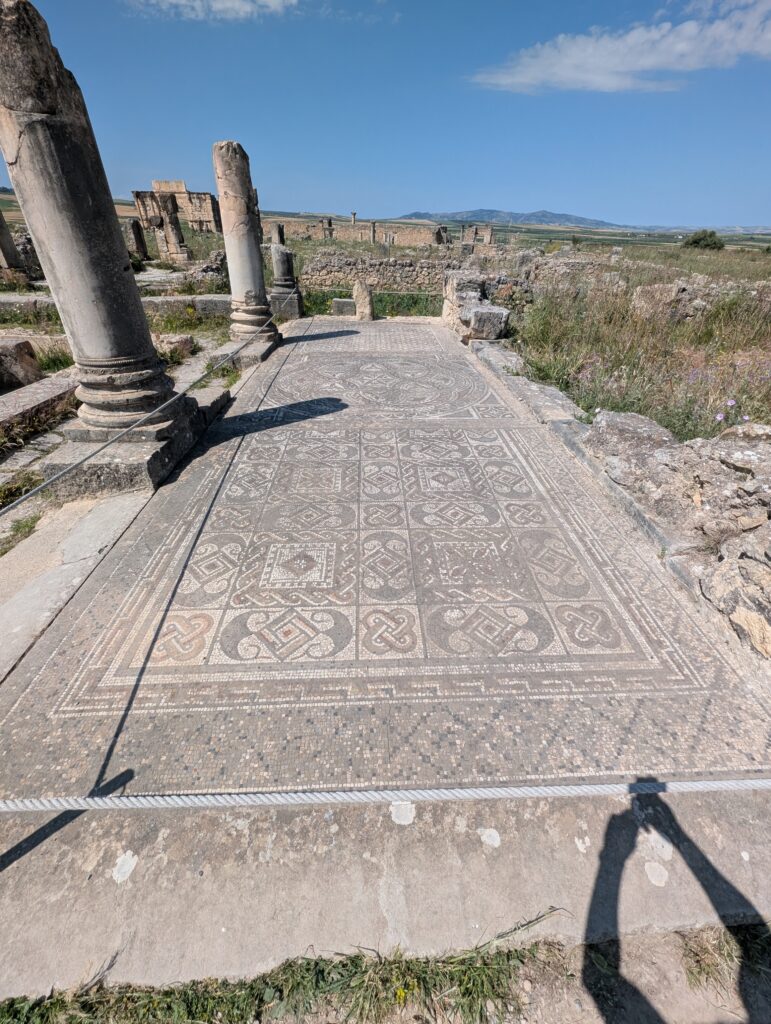
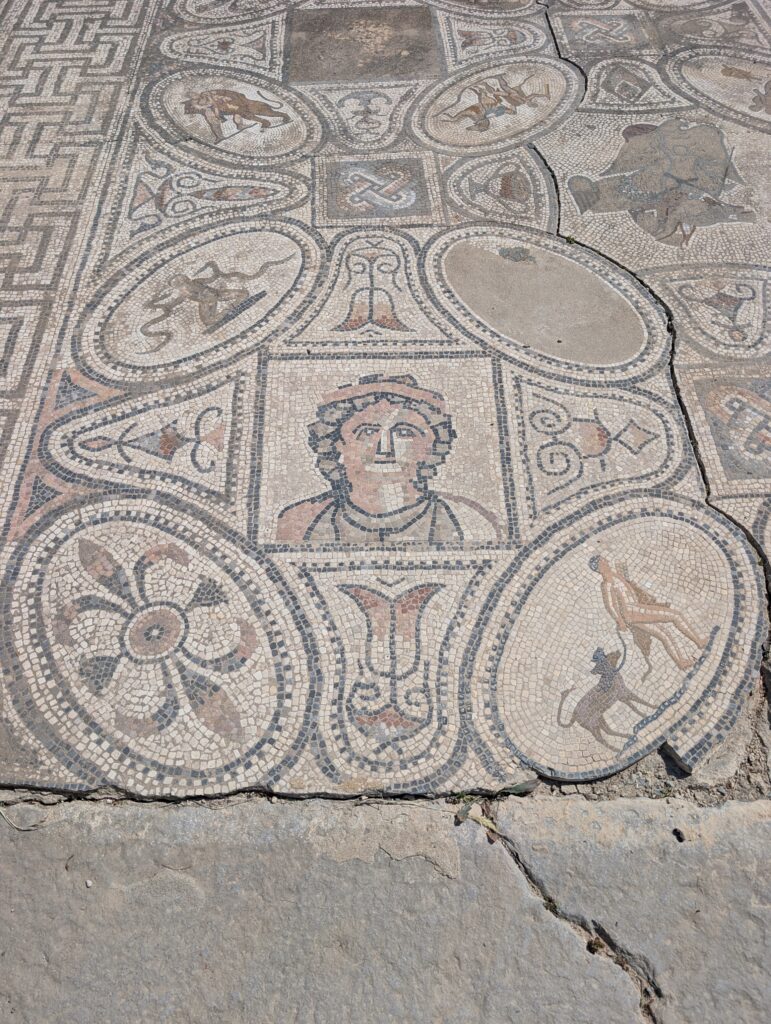
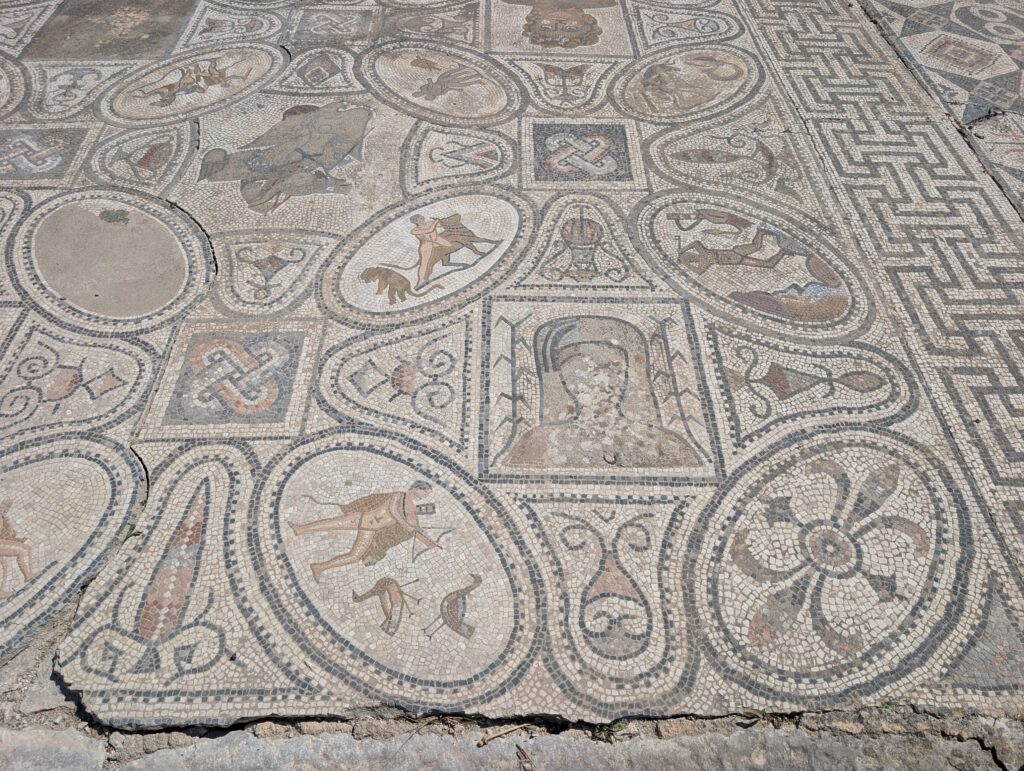
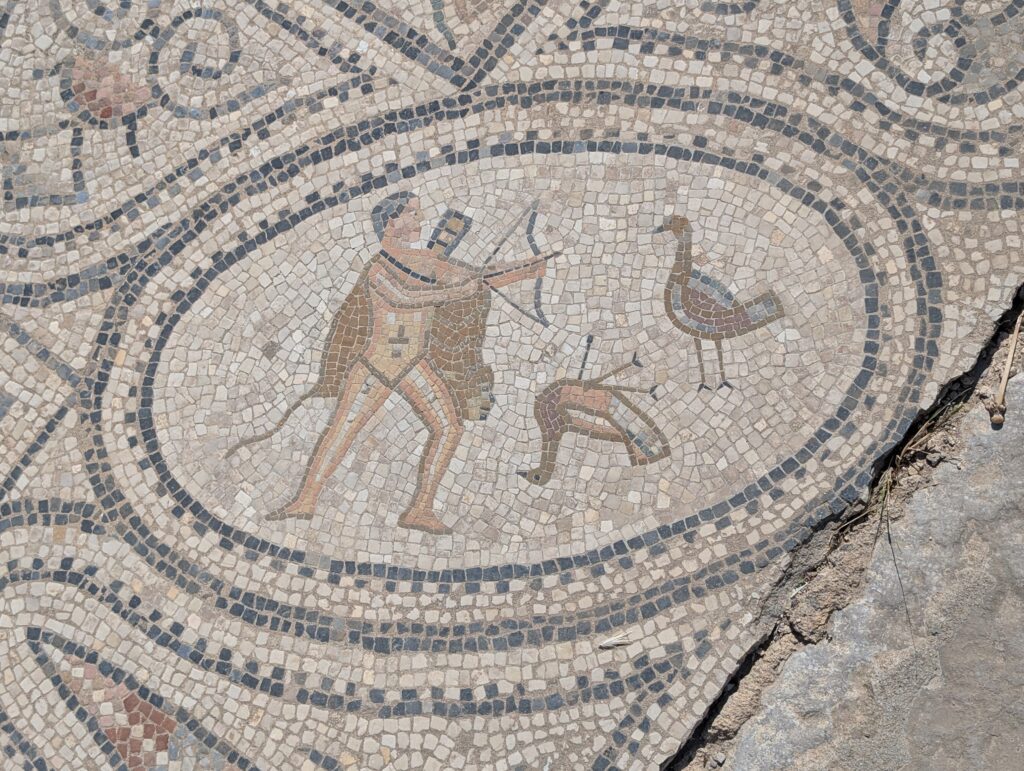
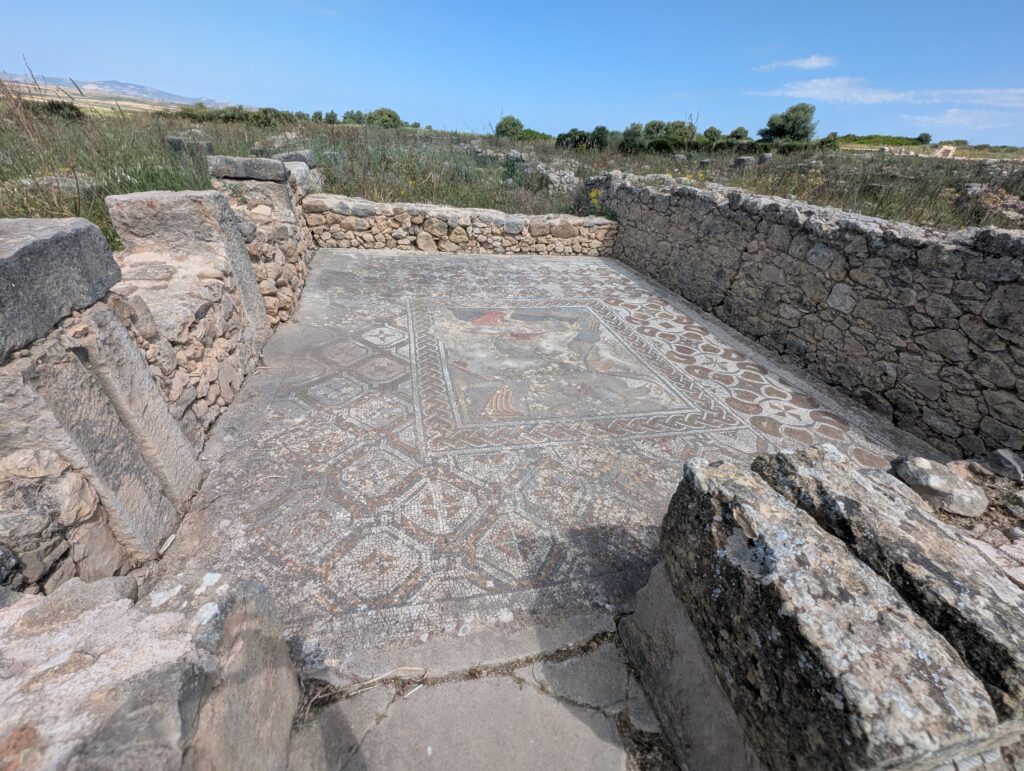
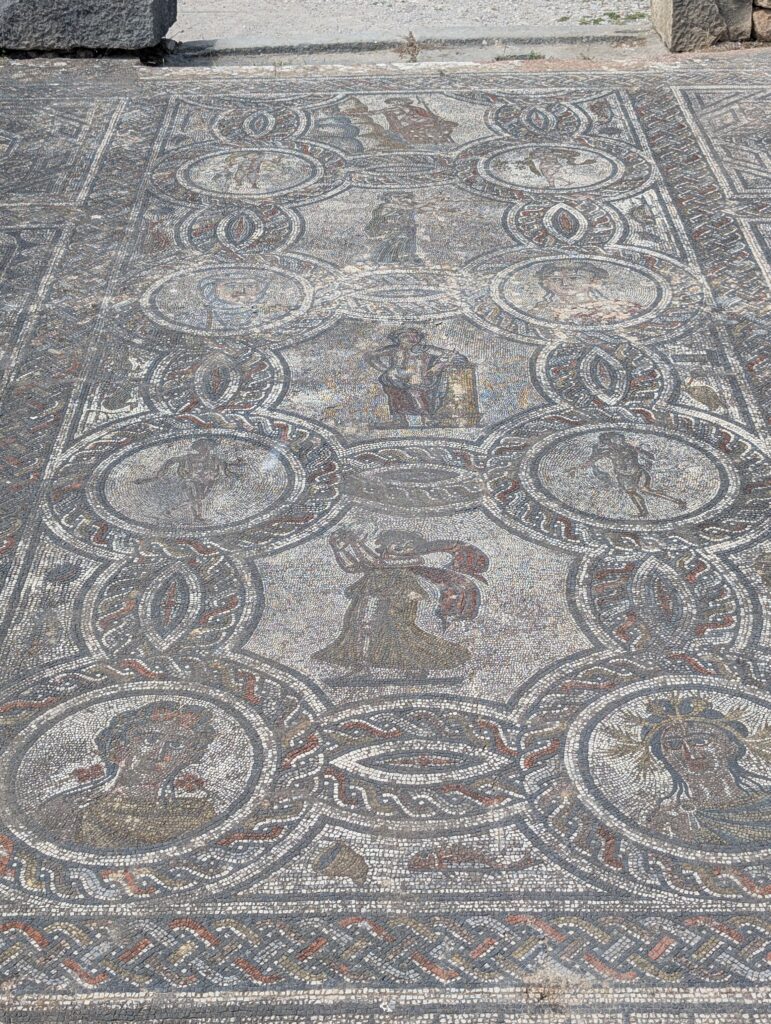
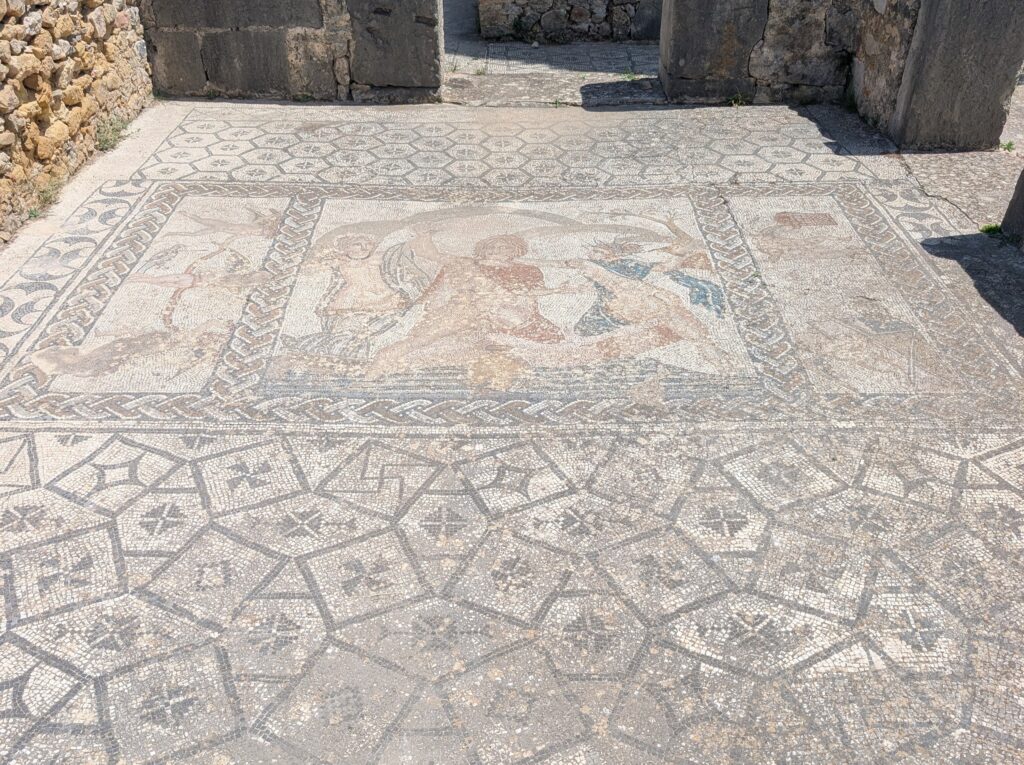
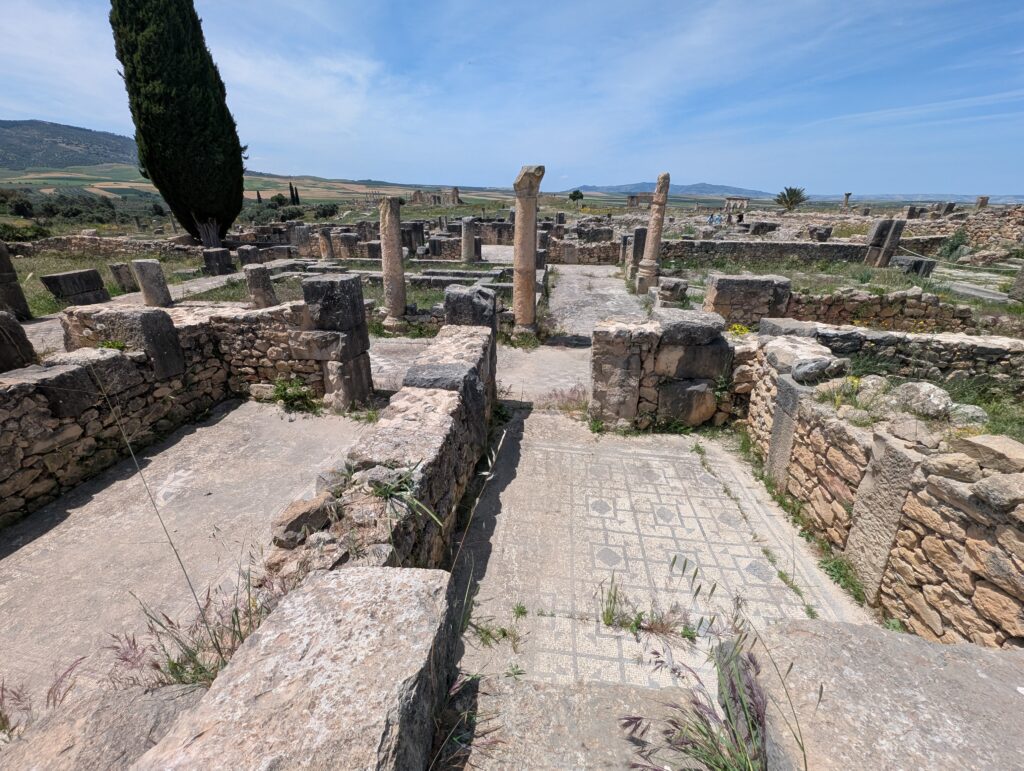
The city is appropriately well known for its floor mosaics. Nearly all of the main preserved residences are handsomely decorated with floor art. Some of it seems almost whimsical. Other pieces reflect Roman mythology. Nearly every house has some image of a dolphin, which for Romans was an auspicious symbol. Unlike the Roman sites I visited in Algeria, at Volubilis all of these floor mosaics are still in the floors where they were originally constructed.

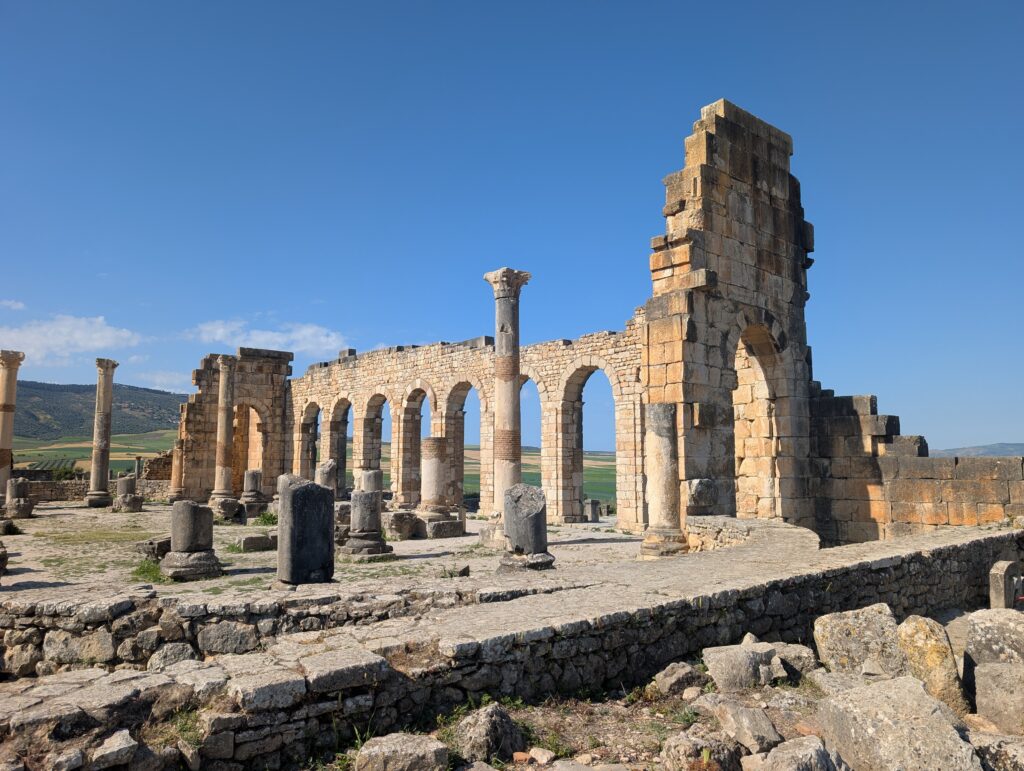
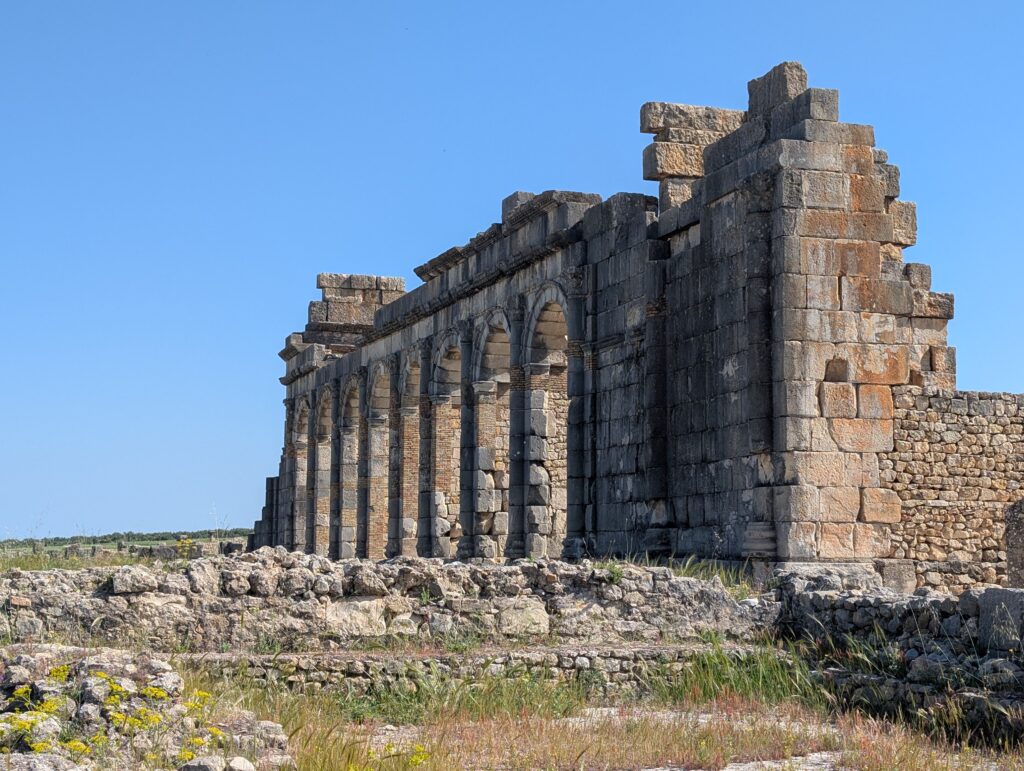
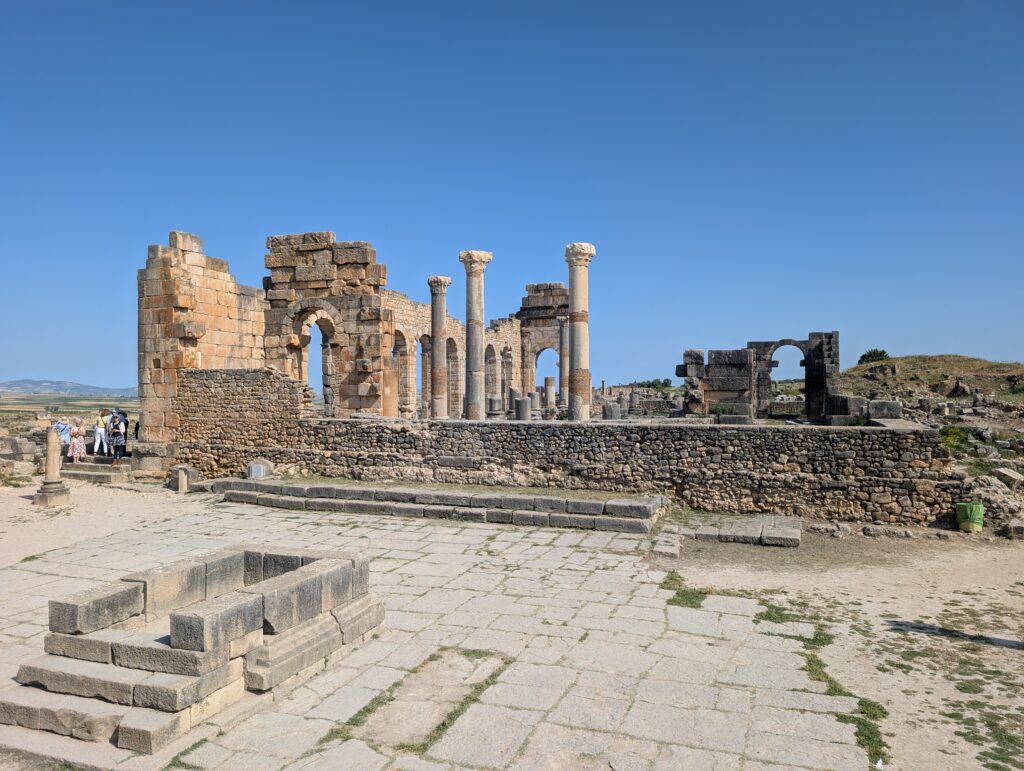
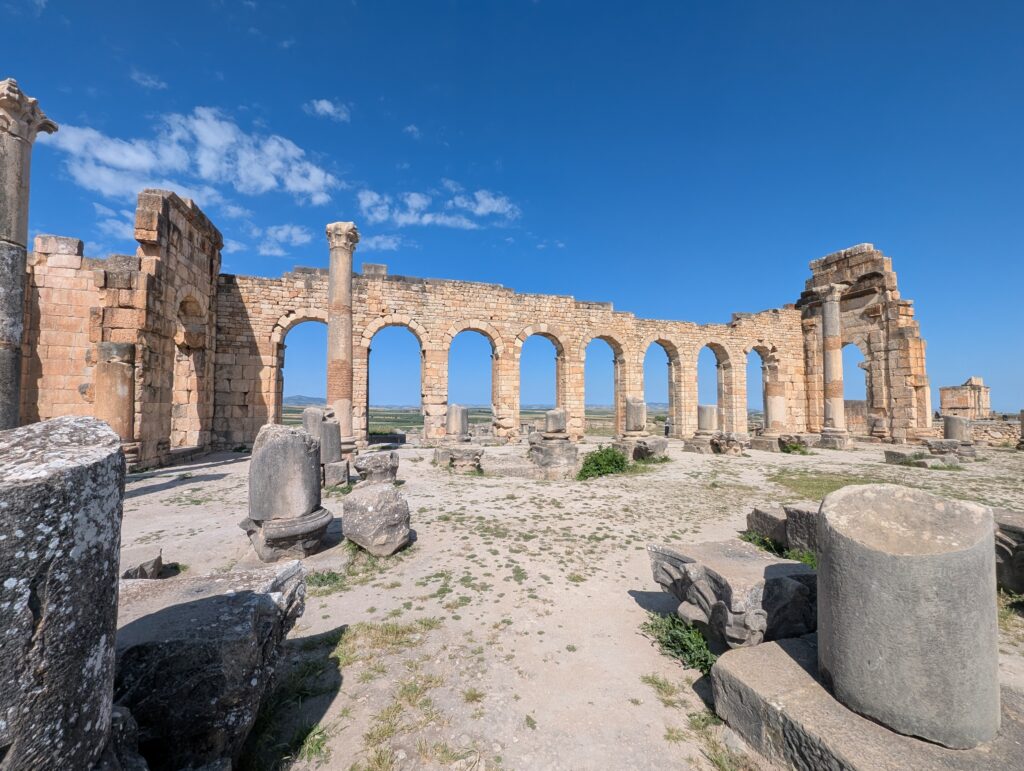
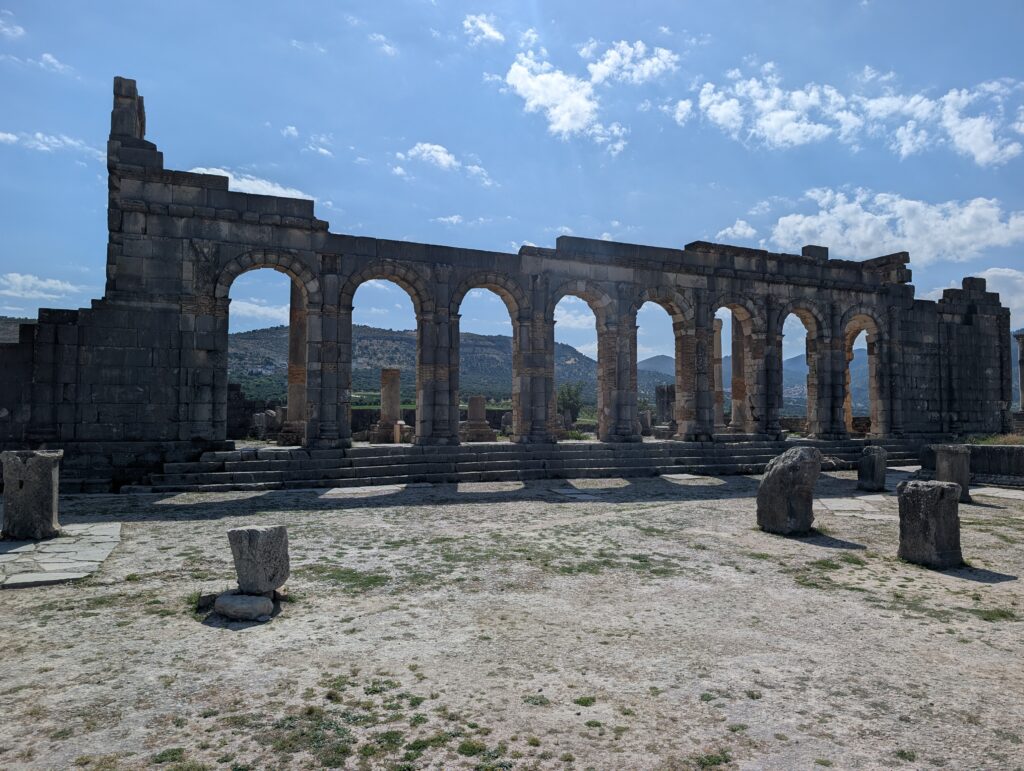
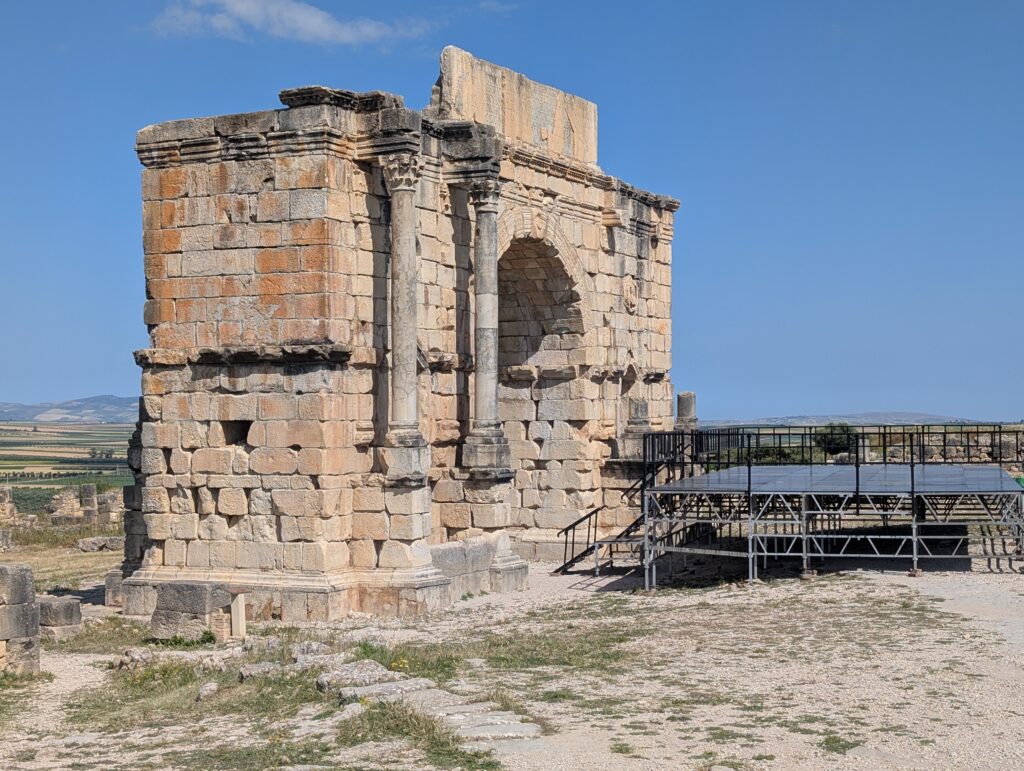
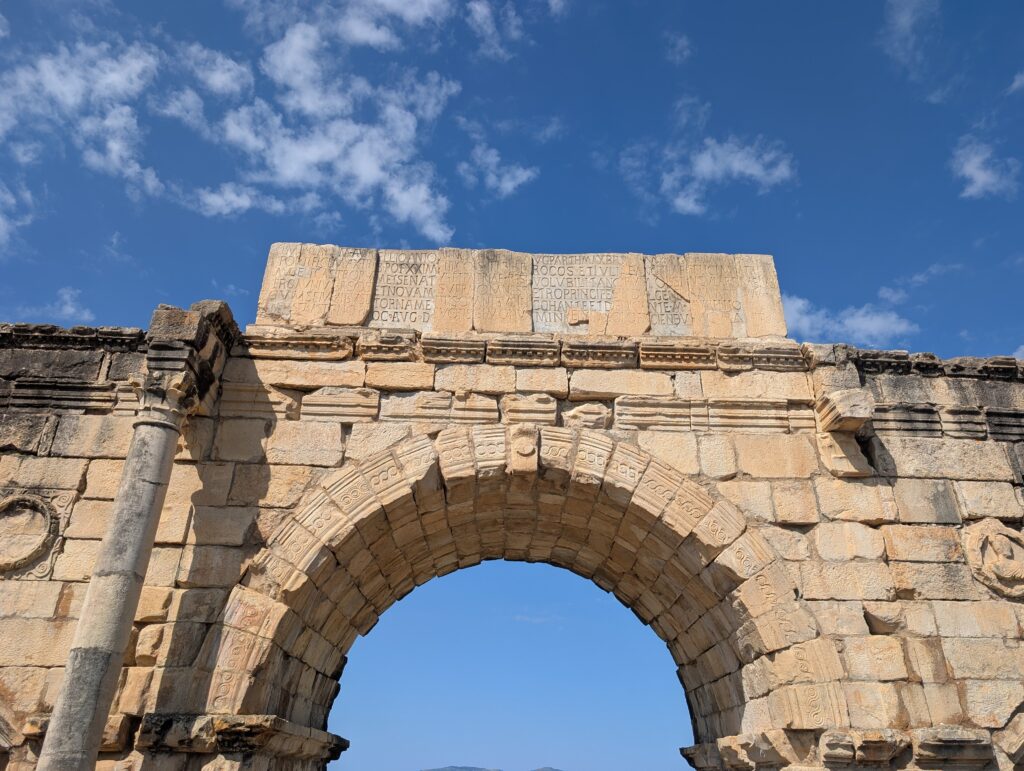
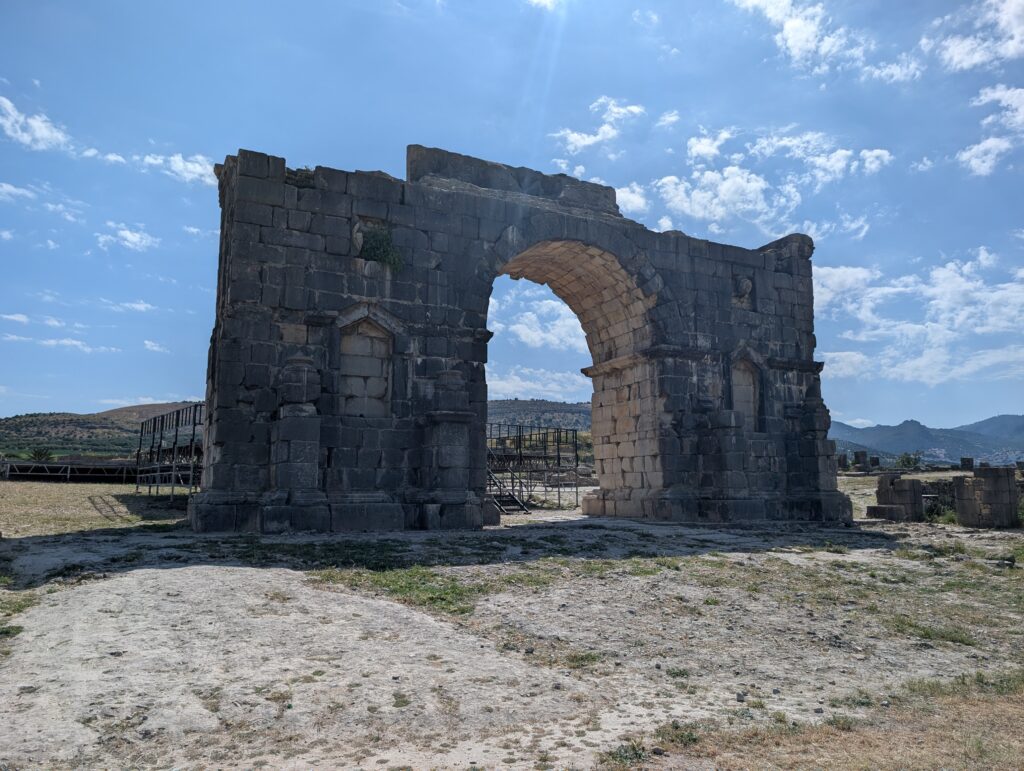
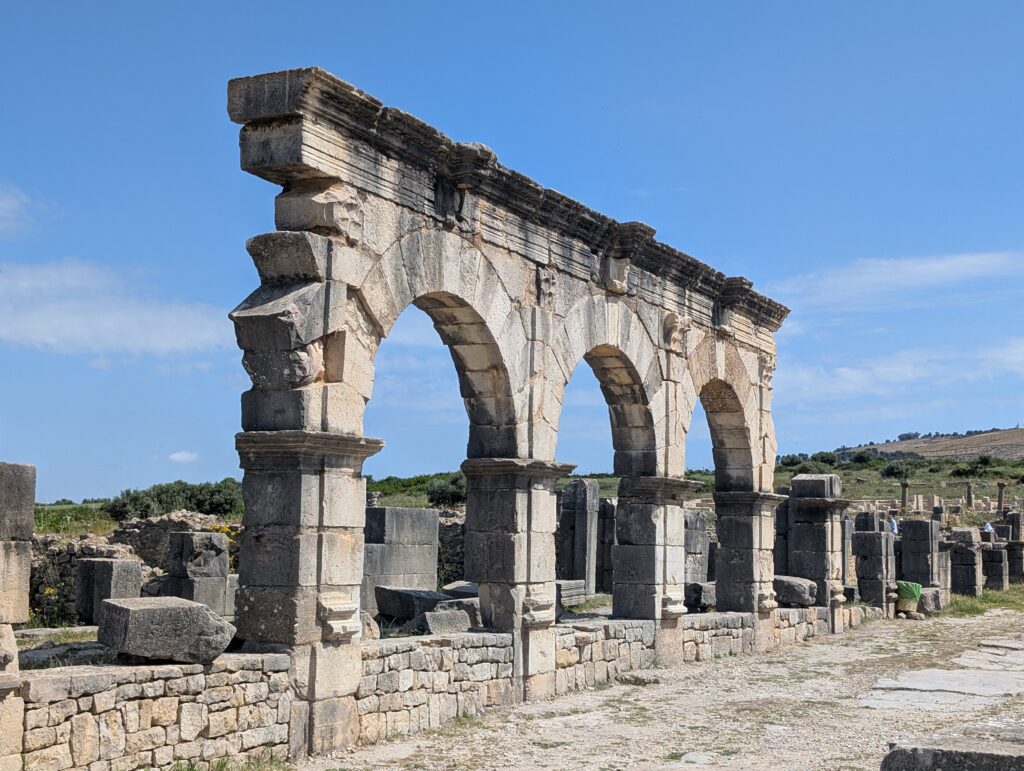
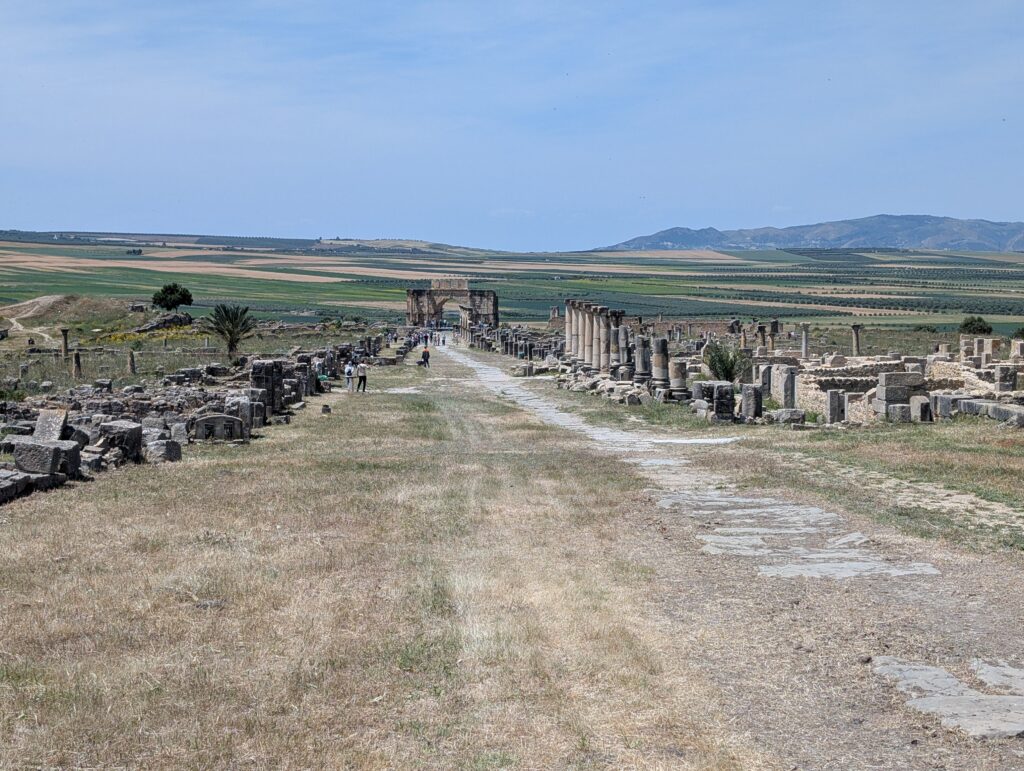
Volubilis also has an impressive triumphal arch, with the accompanying inscription. There is a Capitoline temple and a basilica. Unlike Christian basilicas, the Roman buildings were administrative centers. Christians adopted the buildings and the word to describe religious buildings because these Roman basilicas were such impressive edifices that they were often converted by Christians for religious use.

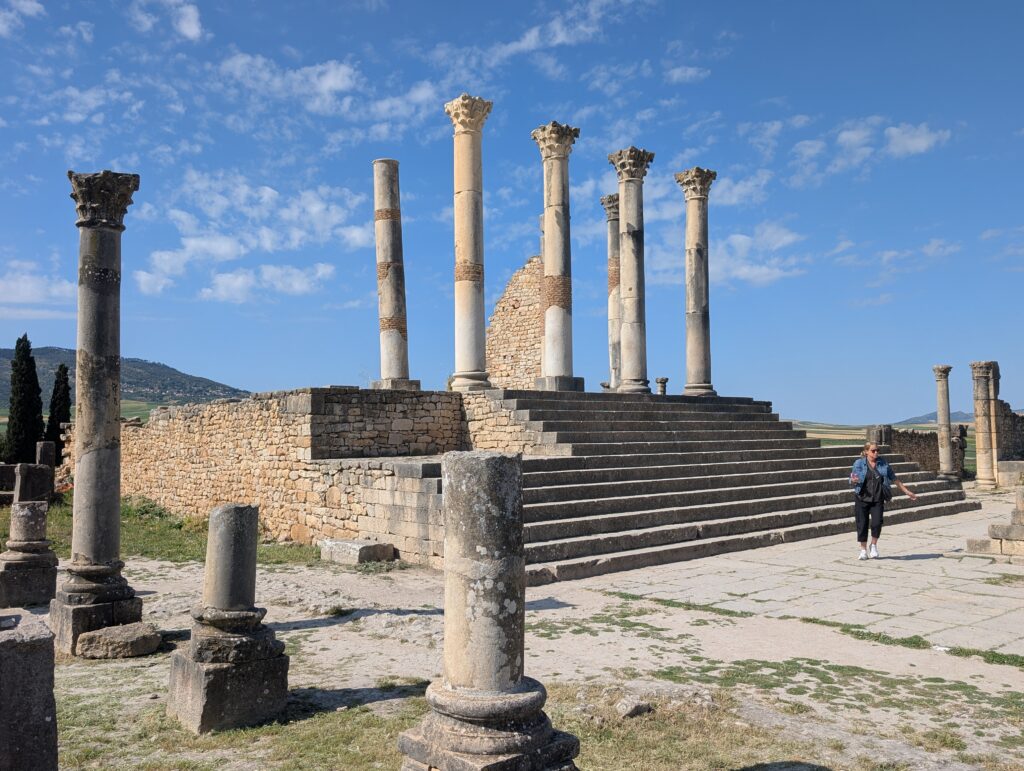
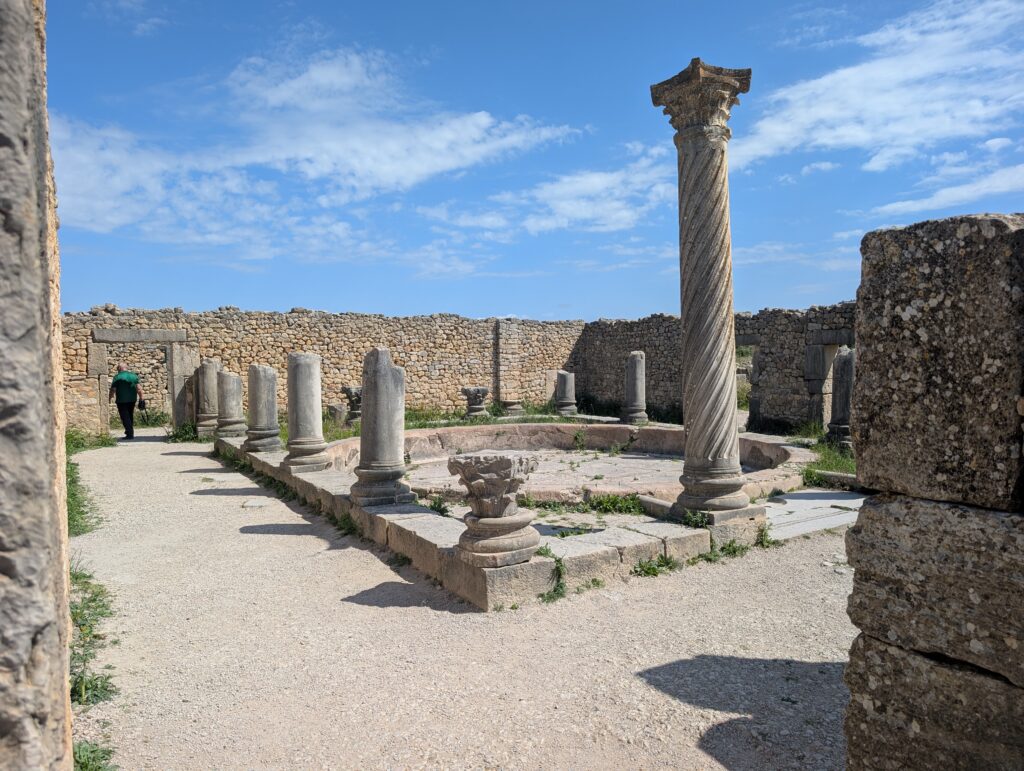
Many cities had a Capitoline temple. They were always dedicated to three major Roman gods, Jupiter, Juno, and Minerva. A little less remains of the Volubilis Capitoline temple. Many columns are still intact. All of these buildings suffered major damage during a 1755 earthquake that also completely destroyed the city of Lisbon, Portugal. Nineteenth century French archaeologists and historians used the original blocks to reconstruct as much as they could. Parts that could not be exactly reproduced with original material are clearly identifiable by their construction using much later brickwork.

(Continued)

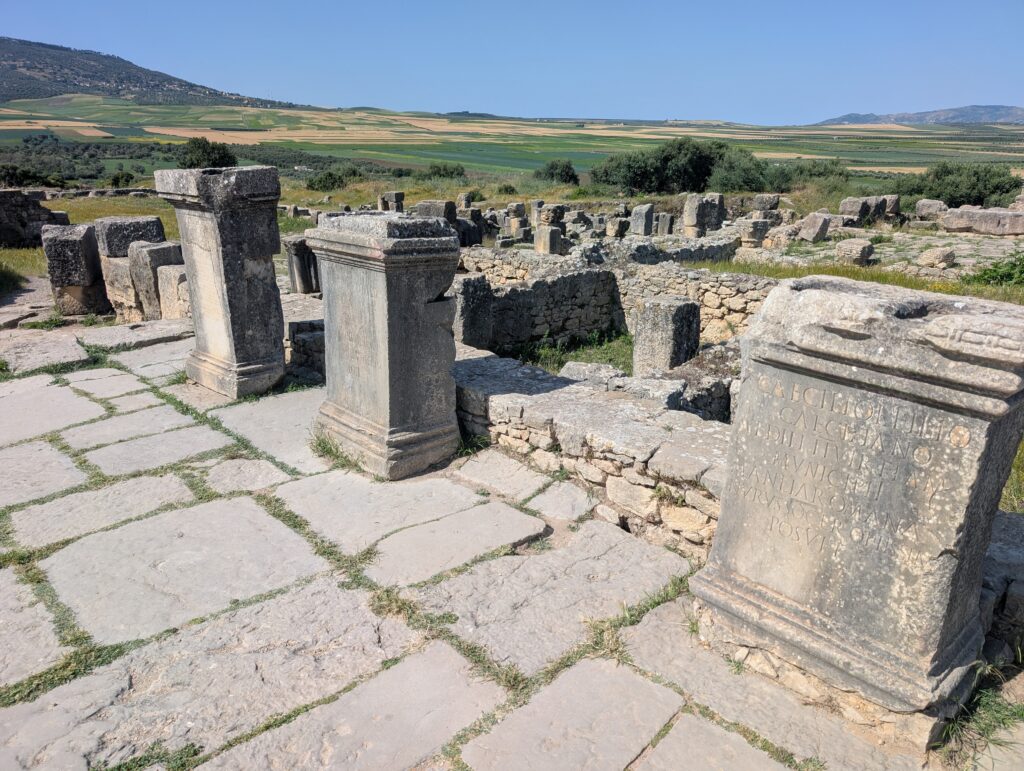
Stelae in the Forum Area
A More Whimsical Looking Mosaic
Fishing Portrait?
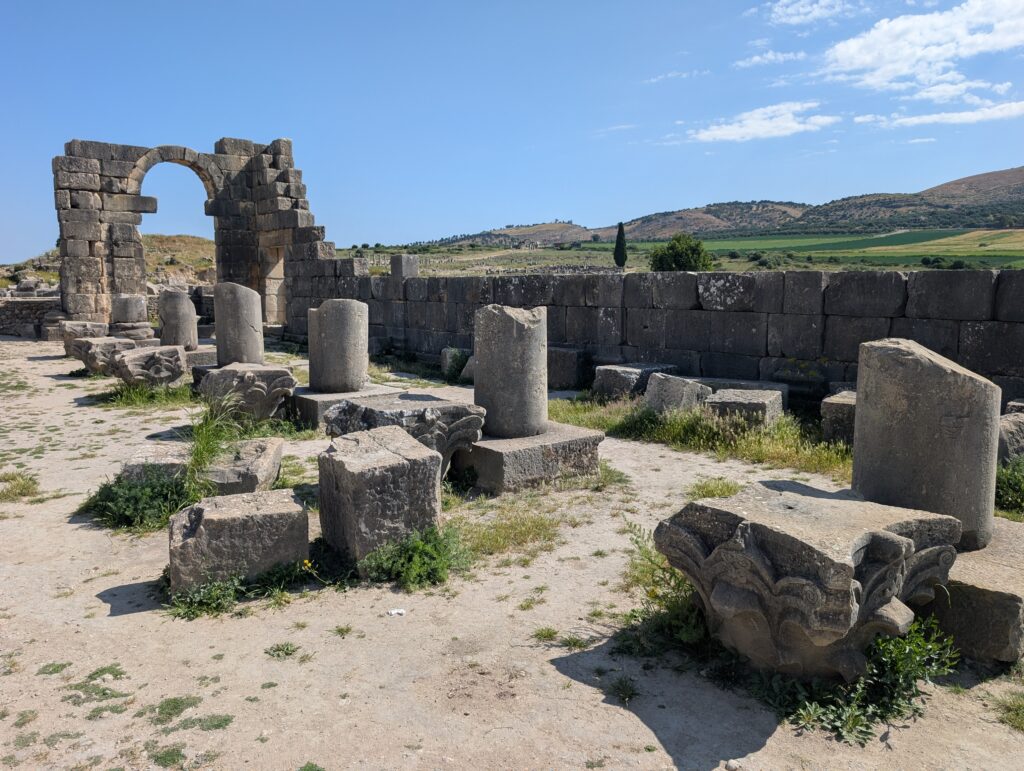
Triumphal Arch
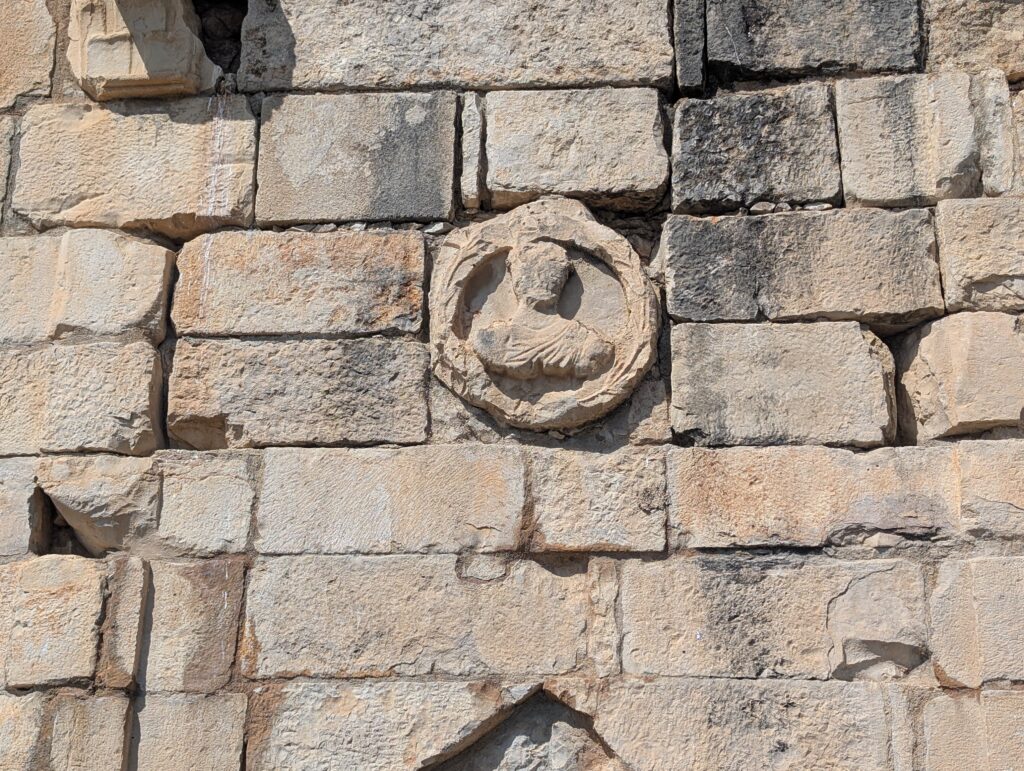
Closeup of Arch Portrait
More Mosaics

Walking through the ruins of this ancient city is made even more enjoyable by the rolling, rural Mediterranean landscape surrounding it. It would be beautiful without the ruins. Andrew told me the pictures reminded him of California. This seems true. The area was very fertile. Volubilis became an important city due to its production and export of olive oil. Fifty-eight olive oil presses have been identified in the city. One nicely preserved press, and one mostly complete one in its original state sit right along the main tour route and are part of the exhibition. I found myself splitting time between absorbing the beauty of the ancient buildings and mosaics and just looking at the lovely landscape. The two together must have made Volubilis a truly idyllic place to spend a second or third century life.

As I strolled back through the buildings a second time after exploring the far gate, the bus tourists began to arrive. I visited with some of them. I met people from New York, Chile, France, and Queretaro, Mexico. Some shared meal options in Fes, others related stories of inter-generational travel, others still recommendations to visit their home countries. I found all of this quite fulfilling as well. I suppose I spent at least another 45 minutes just visiting with other tourists. The interpretive center turned out to be closed. Nevertheless, I spent over three and a half hours at Volubilis. I never could have squeezed that out of a small group tour.

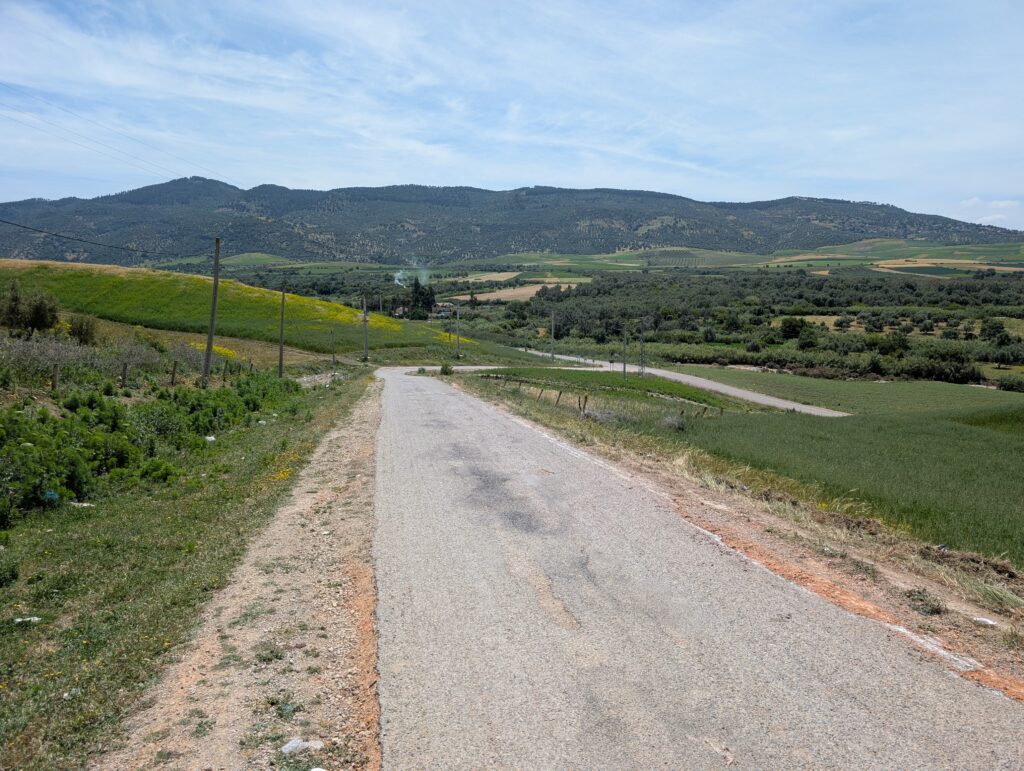
I set out walking a little over 3 ½ kilometers back to the town of Moulay Idriss. The town is on a hill. The last bit was a pretty good climb. Moulay Idriss Zerhoun is known for being home to the tomb of Moulay Idris I, who was kind of the father of Morocco. Quite a few Muslim tourists visit for that reason. Moulay Idris I was a Shia Muslim. During the 8th century, there was a Shia revolt against the Abbasid Caliphate in Arabia. Idris was one of the Shia rebels. He fled to Morocco. As a direct descendant of Muhammad, he had high status. He gained political traction in the area around Volubilis. By then, the ancient Roman city was lightly populated with Berbers and a few Christians and Jews. Sine the city was in an open plain, it would be difficult to defend. As such, the settlement was moved to the hills where Moulay Idriss Zerhoun now sits. Idris ruled from there only a short time before he died – probably from poisoning by Abbasid assassins. His son, Idriss II expanded this new Islamic Moroccan state. He moved the capital to Fes, and further entrenched what became known as the Idrisid Dynasty. There are only a couple of important places in Moulay Idriss Zerhoun that are visible to non-Muslims, and even those are only accessible on the exterior. I figured I would walk a bit around the small town seeing those, then catch the shared taxi back to Meknes to explore that Moroccan imperial city until my time ran out and I needed to go back to the hostel. I’d probably eat supper in Meknes.

(Continued)

More Fabulous Mosaics
Labors of Hercules
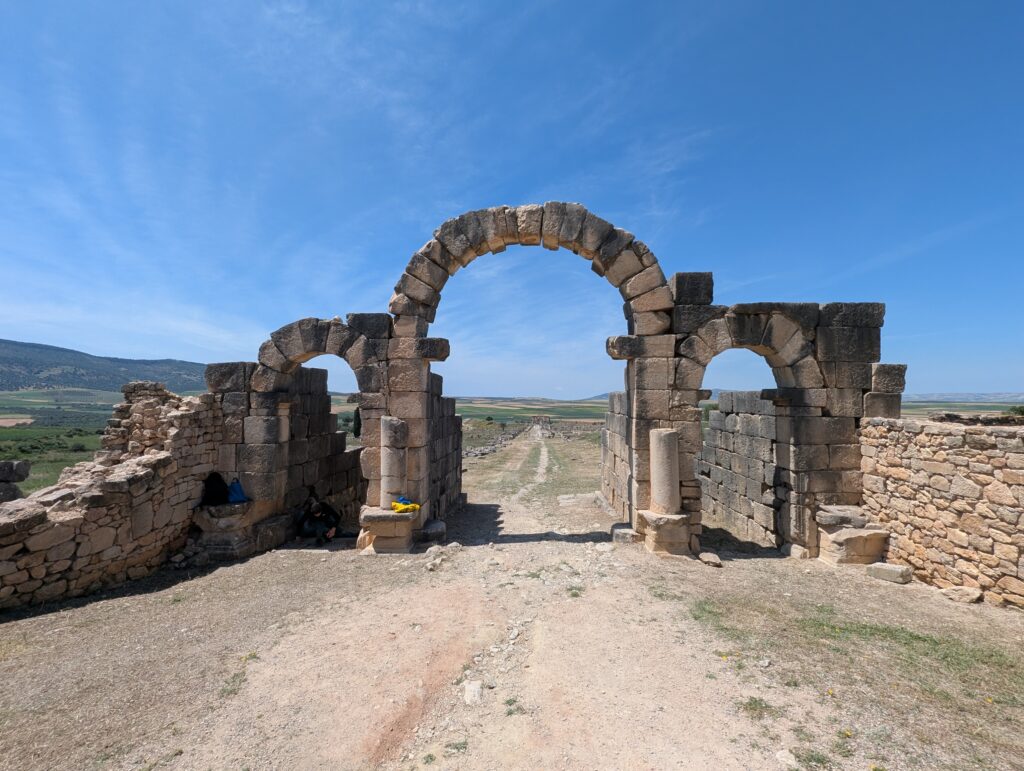
Distant Gate

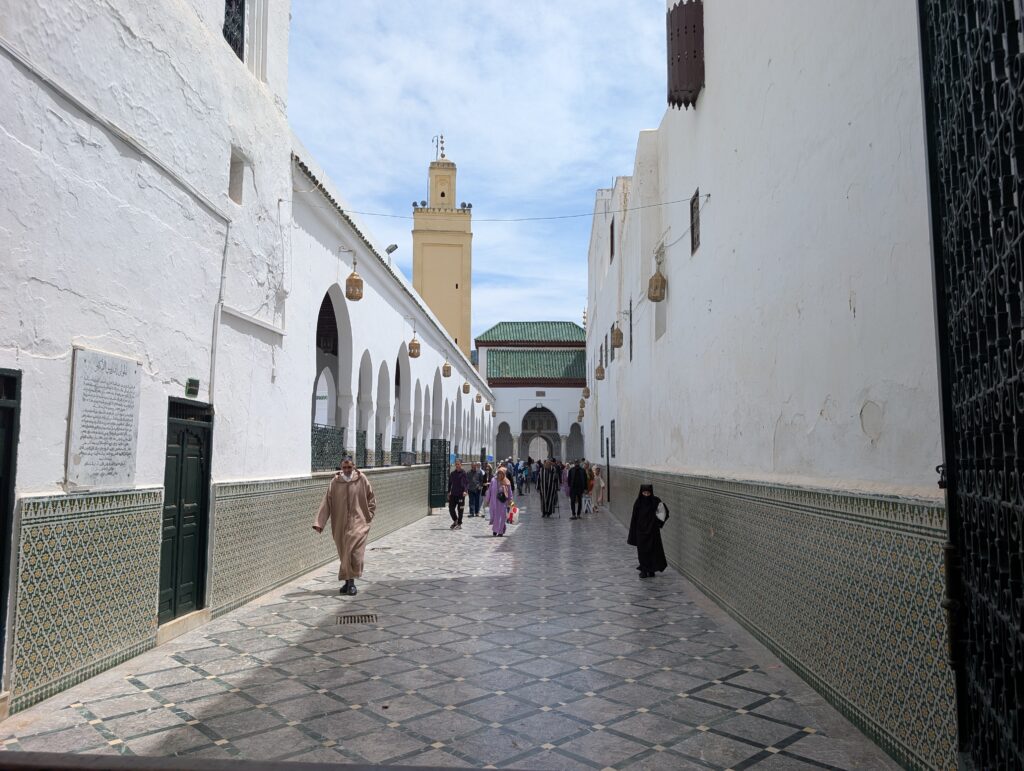
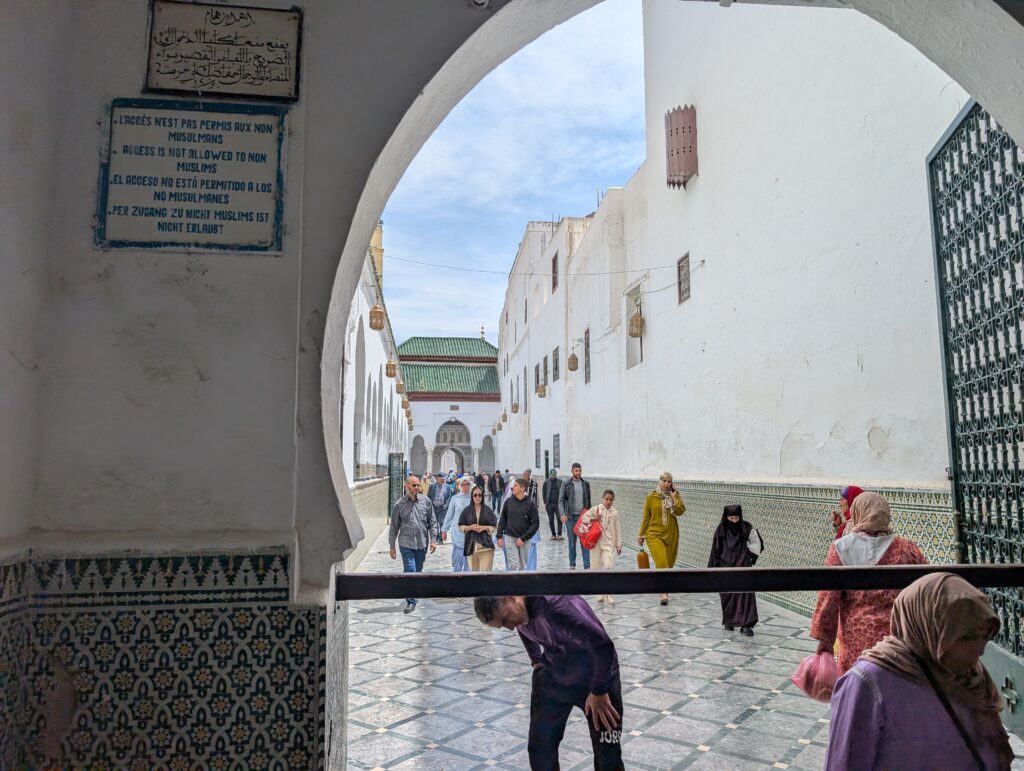
I was pretty gassed by the climb up the hill. I had already walked 10 miles. It was a good thing I hadn’t hiked over to Volubilis from Moulay Idriss. As I approached the mausoleum of Moulay Idriss I, I was accosted by self-appointed tour guides explaining to me the clearly obvious and well posted fact that I could not enter the mausoleum. They could, however, show me how to see it from some terrace. I knew how this worked. I declined and walked in the direction I could see others were going to try to get to this terrace. It really wasn’t all that important to me to see it, and I was tired. If I couldn’t get to it quickly, I’d use the grand taxi ride back to Meknes to recharge enough that I would be able to walk that town in the now waning hours of the afternoon.

One of the heckling guides followed me aggressively, then took the lead. I trailed off behind until he was out of sight. I pretended to be part of an Italian speaking group to duck more potential hooks. Another less pushy guide began to walk along discretely. I think he was on to the fact that I wasn’t part of the Italian group. He made the obligatory small talk. He didn’t really speak English all that well. He, too, was yet another unsolicited guide.
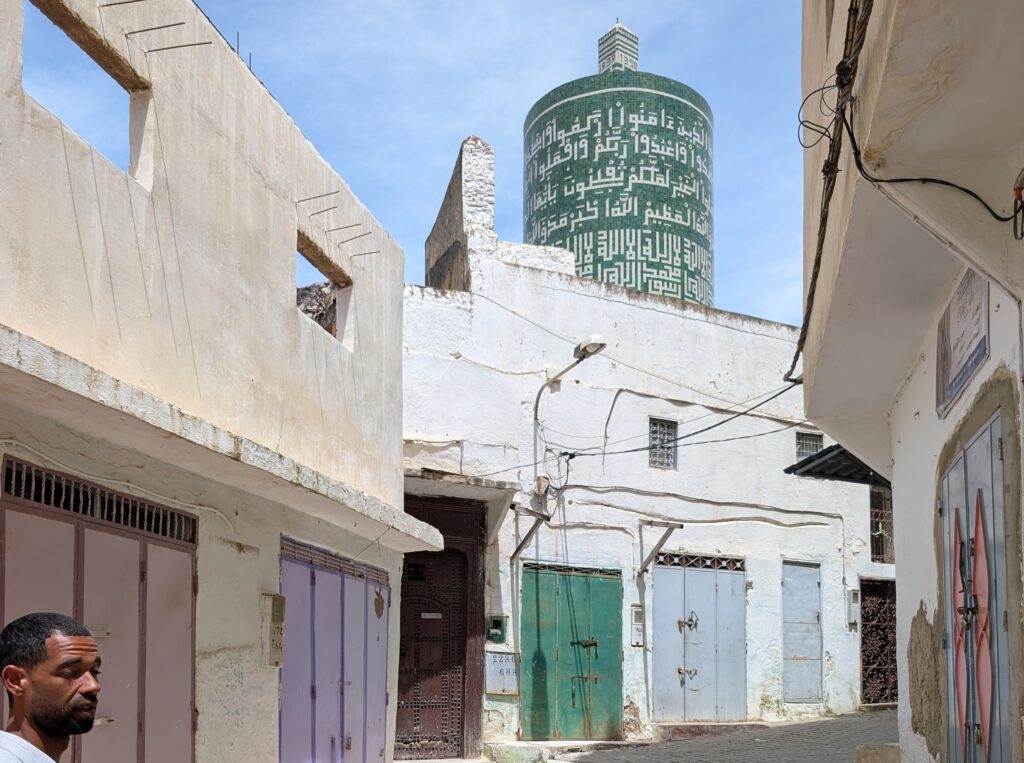
He did know where to go, and I turned the wrong way in an effort to escape. He kindly pointed me in the right direction. He was not rude, and at least had the awareness to understand that I wasn’t taking well to the usual harassment. His day job, it turned out, was as a Spanish and French language guide to Volubilis. It was his day off, so he was trying to hustle some more work here. The one other site I wanted to see in Moulay Idriss was the Sentissi Mosque. It is notable for its cylindrical minaret, the only one of its kind in Morocco, and one of just a few in the world. Without me asking for this, his path took us past it. It was pretty unimpressive, and just stuck up a bit over a railing. I thought to myself, “Is this really what he was taking me to see? I’ll just give him 20 dirhams and be rid of him.”

I tried to give him the money, but he insisted it was a short walk to some other things I would enjoy seeing, including a terrace that overlooked the mausoleum. Ok, I reluctantly went along. Honestly, I was too tired by now to be enthusiastic about further hiking in this steep, hilly town. The walk was substantially longer than he let on, but we did eventually encounter two terraces and a view of an ancient Roman thermal bath that people now swam in free of charge. This part of Moulay Idriss is a maze, like the medinas of Fes and Marrakech. I would never have found anything. I did drop a pin at the main terrace overlooking the mausoleum so others could find it without the aggressive guides.

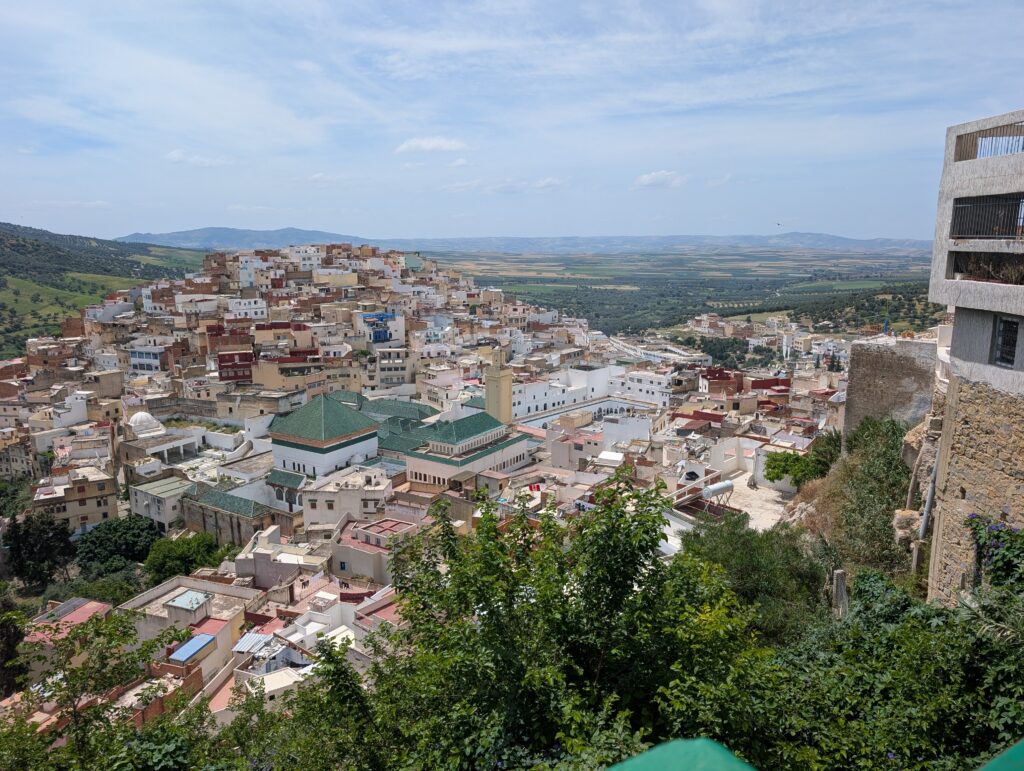
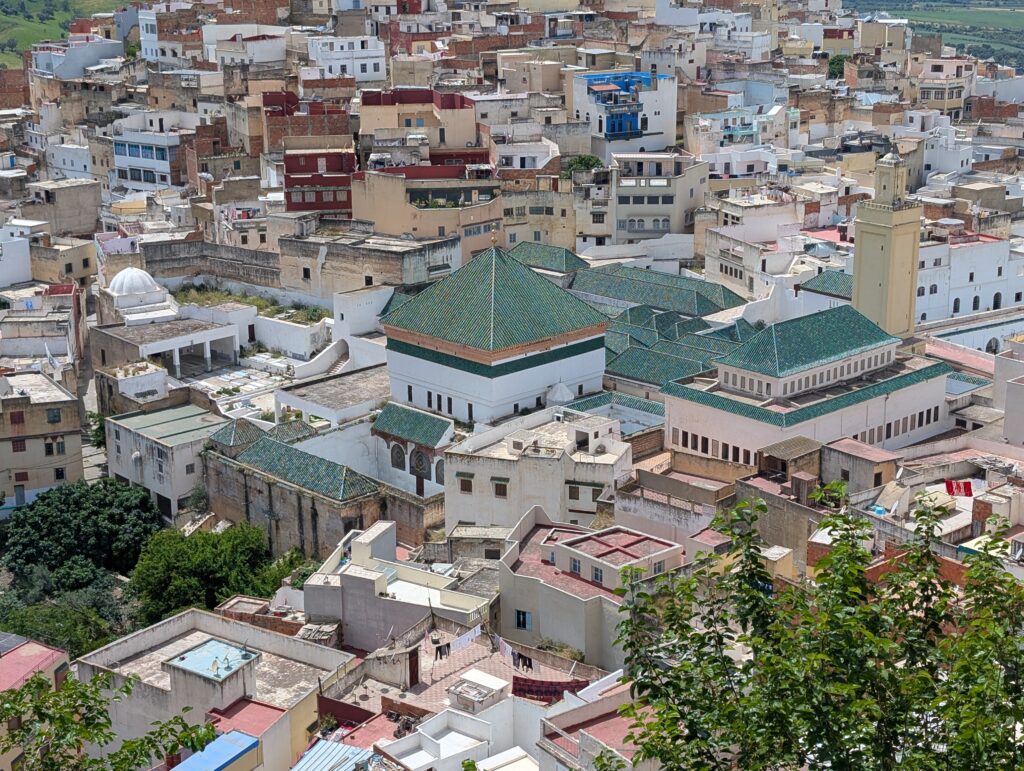
Walid spoke some English, but I often found myself having to resort to Spanish to communicate things to him. I think like me, he was probably better at speaking than listening and understanding the foreign language. This makes sense considering his work as a tour guide. The Roman bath was really just a round pool off in the distance, but I was able to see locals enjoying it – diving and swimming. There was nothing at the small terrace that couldn’t be seen from the large terrace. The large terrace, though, offered a spectacular view of the mausoleum of Moulay Idriss I, the market below, the whole town, the countryside, and even Volublilis off on the distance. It was worth the climb. When the unsolicited tour was done, I gave Walid 50 dirhams. His tour lasted less than an hour, and I hadn’t even requested it. He thanked me, but was sure to let me know that it was “Ok, but 100 dirhams would be better…” for his kids’ sake, you know? I don’t feel bad about the amount. I will post his contact information here. If I was going to recommend someone for a tour of Moulay Idriss, it would be Walid. The experience was a lot less unpleasant than with so many other unsolicited helpers in Morocco. If you want a non aggressive guide, contact Walid at +212 617-602398. He really was a pretty nice guy.

(Continued)

Still More Volubilis Mosaics
Looking Out on the Countryside With Gate in Background
From the Gate Looking Back Toward the Arch

Catching the shared grand taxi from Moulay Idriss to Meknes was easy. All of the cabs were collected in one easy to find place. There was a sort of “captain” on site, sending people to the correct cars in order. All I had to know how to say was “Meknes,” and “how much?” I was taken to the correct car and charged the same 12 dirhams everyone else paid. It was a tight squeeze in the little van, and no one behind the shotgun seat had a safety belt. But we were there faster than I was with my private InDriver.

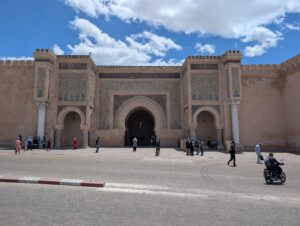
I failed to take into account something very important in my attempt to see Meknes. It was Friday. Friday is mosque day for Islamic countries. Everything that I had come to see that had opening hours was closed. Of course, I didn’t really learn this until I walked a couple of miles over to the old city from the shared taxi stand. I took a few pictures of an impressive old-city gate, but otherwise the place was deserted, and there wasn’t much to see or buy.

I decided I would walk to either the train station, or the shared taxi stand, whichever was closer. They were both pretty far, but the shared taxi stand I had walked to in Fes was only a few hundred meters from my hostel. The train station was over two miles. I figured if I took the shared taxi back to Fes, my trip back to the hostel from there would be a very short walk. I wouldn’t have to hike a long way or pay yet another cab fare.

This set of assumptions was riddled with mistakes. There are several shared taxi stands in Meknes, not just one. This is apparently true of most larger cities in Morocco. Each of these stations is dedicated to grand taxis to just one or two places. I ended up walking to four shared taxi stands in Meknes before finding the one that had cars going to Fes. Each time, I asked the “captain” for directions to the one that would take me to Fes. They were all kind, but none spoke English or had the patience to deal with translation apps. Each time, I tried to decipher French instructions, then pointed to the place on Google Maps I believed the “captain” had directed me. EVERY time, the captain shook his head vigorously, promising that if I got to that marked place, I’d find a cab to Fez. It was never true. I ended up asking at a gas station after my third attempt. At that point, I was close enough the gas station attendant just pointed at the blue shared taxis, and I walked to it.

An hour and forty minutes and 30 dirhams later, I was back in Fes, but right next to the train station – some two miles distant – rather than at the shared taxi stand right outside the medina. By this point, I had walked about 16 miles. I was pooped, yet too stubborn to call another taxi to get this short distance. I would just walk it. Perhaps there would be a bus. I had checked before, and Google Maps does not have information on a city bus system inside Fes. There is one, though. I just didn’t know where any of the buses went. I noticed one with a “10” on the side that looked as if it was going my direction. I figured it was likely to stop near the medina, and if it didn’t I would just follow along on the map until I was getting further instead of closer and hop off. Sure enough, the bus went right to the stand at the edge of the medina, and for 2 ½ dirhams, I saved two miles of walking at the and of an exhausting day. I found a nearby restaurant, got swindled out of whatever I had saved through all of this finagling, but at least went to bed with a full stomach and a full set of new experiences.

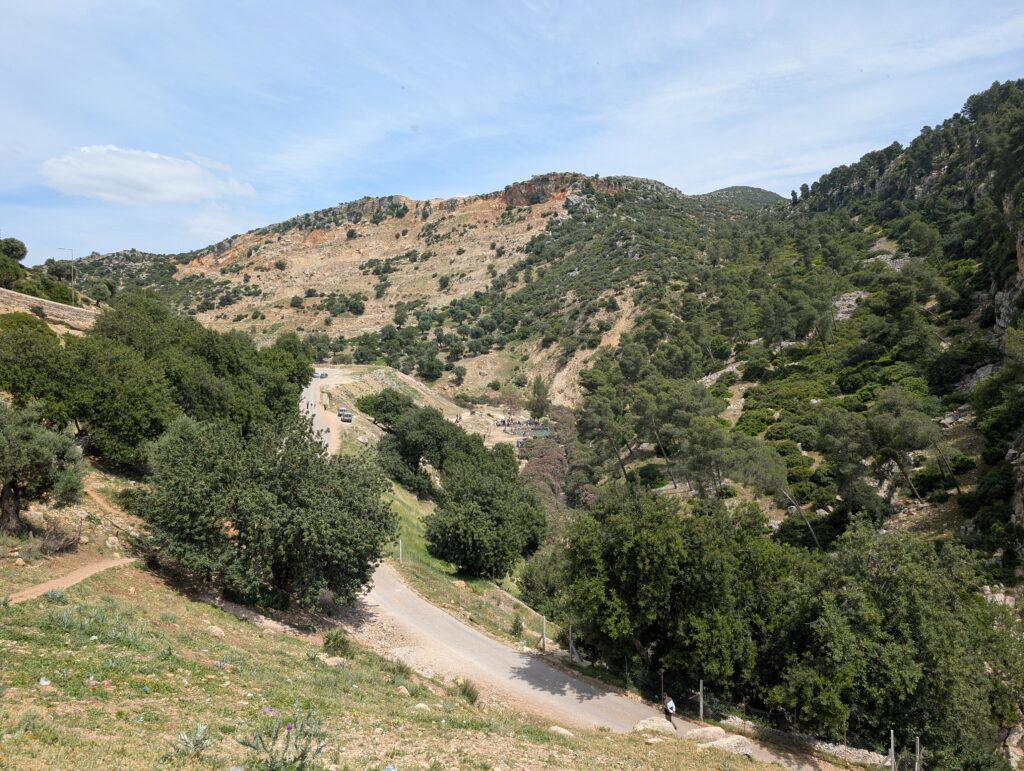
Walking Off Toward Moulay Idriss Zerhoun
Forbidden Tomb of Moulay Idris I
A Peek Inside
Cylindrical Minaret
Viewing Moulay Idris Tomb and City From Terrace
Zoom on Tomb
Old Roman Bath in Distance
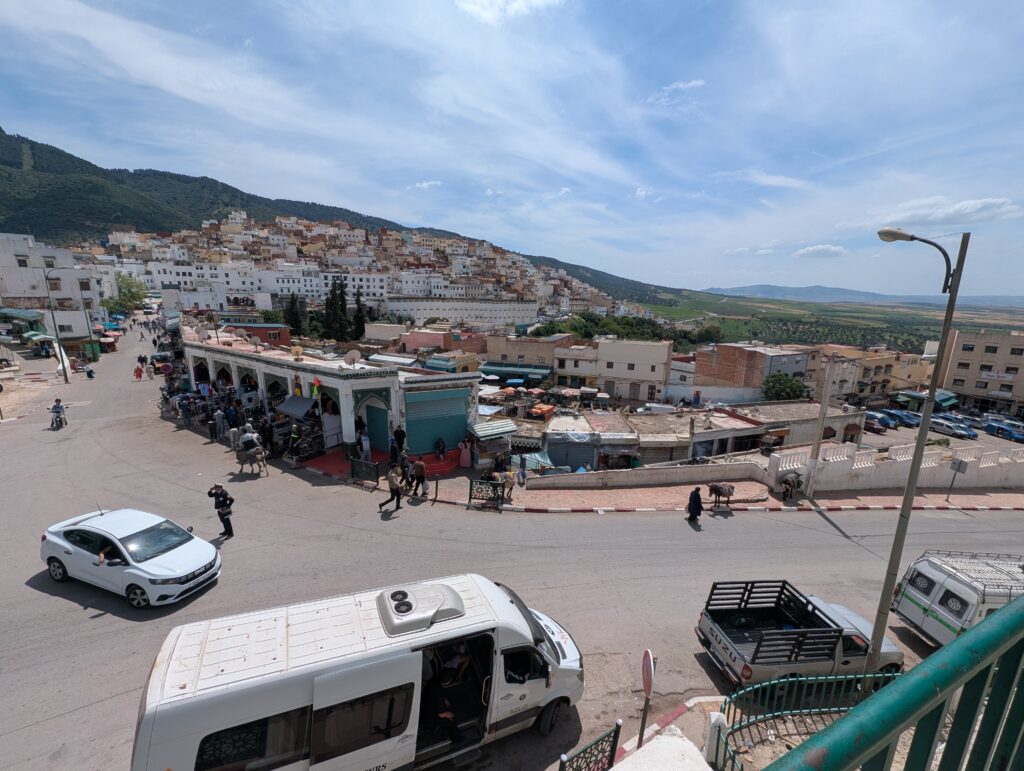
Overlooking Souq From Lower Terrace
Morocco
Marrakech
Ait Ben Haddou
El Jadida
Fes
Meknes
Morocco Travel Tips
Algeria
Trip Overview