El Jadida

Beach Town for Moroccan Tourists

After visiting Marrakech, many tourists head to the city of Essaouira. It is a coastal city that was once a European colonial outpost. People go for the beaches and the seafood more than the history I think. I enjoyed Marrakech, but one of the few things about it I found disagreeable was the sheer number of foreign tourists. The narrow winding streets of the Marrakech souqs were so crowded in the afternoons and evenings that you had to scooch between people to make your way down them. I enjoyed visiting with some of them, but it definitely felt like the old town was being preserved primarily to attract and extract money from tourists.

I looked for a place that had some historical significance along the coast, where I could get a taste of Moroccan seafood, enjoy the cool coastal weather, and see some great historically significant sights. I wanted to find a place with a few less tourists, though. I decided to try going to El Jadida rather than Essaouira. I had mostly decided on this route even before I arrived at Marrakech.
It didn’t seem like it would take all that long to explore El Jadida, but I could relax there if I wanted to have a break from my very aggressive program of the first few days of the trip. I planned to use Tuesday afternoon and Wednesday morning to see El Jadida, and either hop another train to Fes on Wednesday afternoon or if I wanted to spend a bit more time in El Jadida just wait until the following morning to leave.

I made a few beginner mistakes in my logistics getting to El Jadida, but none that cost me anything more that a bit of lost time. In researching the railroad schedule, I depended on a secondary ticketing site rather than verifying with the official website of the Moroccan National Railway. I spent a few extra minutes visiting with other hostel travelers in the morning, and figured I would just catch the last train in the morning. Unfortunately, the website I checked misstated the departure times by fifteen minutes, and I arrived at the train station only five minutes before the last train departed for El Jadida Tuesday morning. There wasn’t enough time to get the ticket bought and get on the train. After a lunch break, it would be three more hours before the next train for El Jadida.

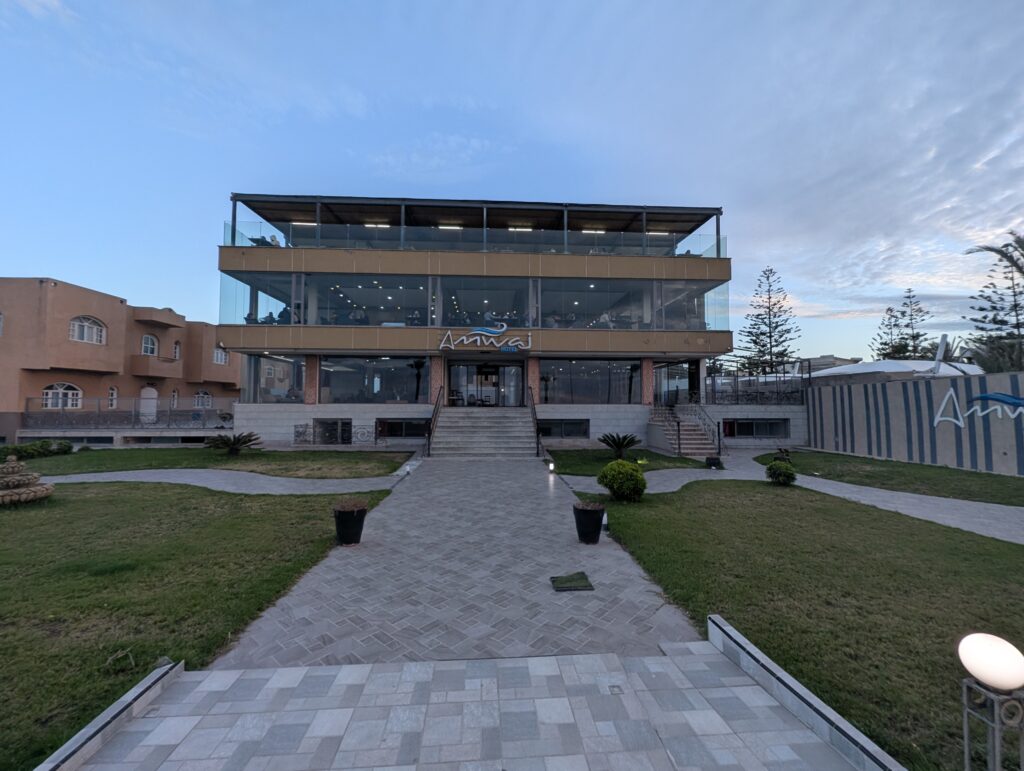
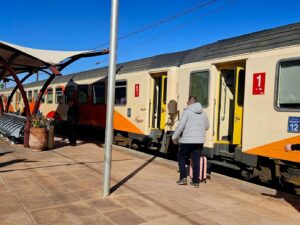
I waited in a Starbucks updating my journals, and bought a few snacks for the train ride. I visited as best I could with other passengers on the train, once I was on. I had read that there was a city bus system in El Jadida. If there was one, I never saw it and there was not a schedule for it on Google Maps. There are no hostels in El Jadida, either. I found a comfortable, inexpensive motel with a nice view of the beach. It was more than three miles from the train station, though. By the time I sat out the three hour train delay, adjusted my pack, and hefted all of my things to the motel, it was 7:00 p.m. There wasn’t all that much time left for sight seeing.

(Continued)

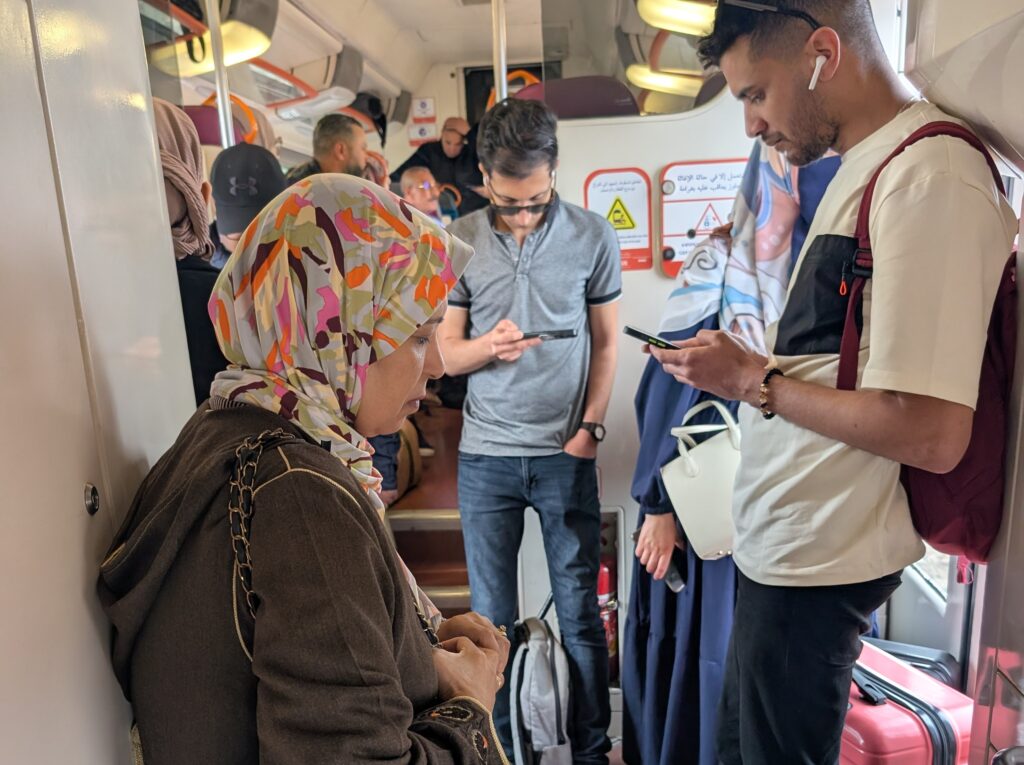
Standing Room Only Train from Casablanca to El Jadida
Pretty Nice Motel for About $30
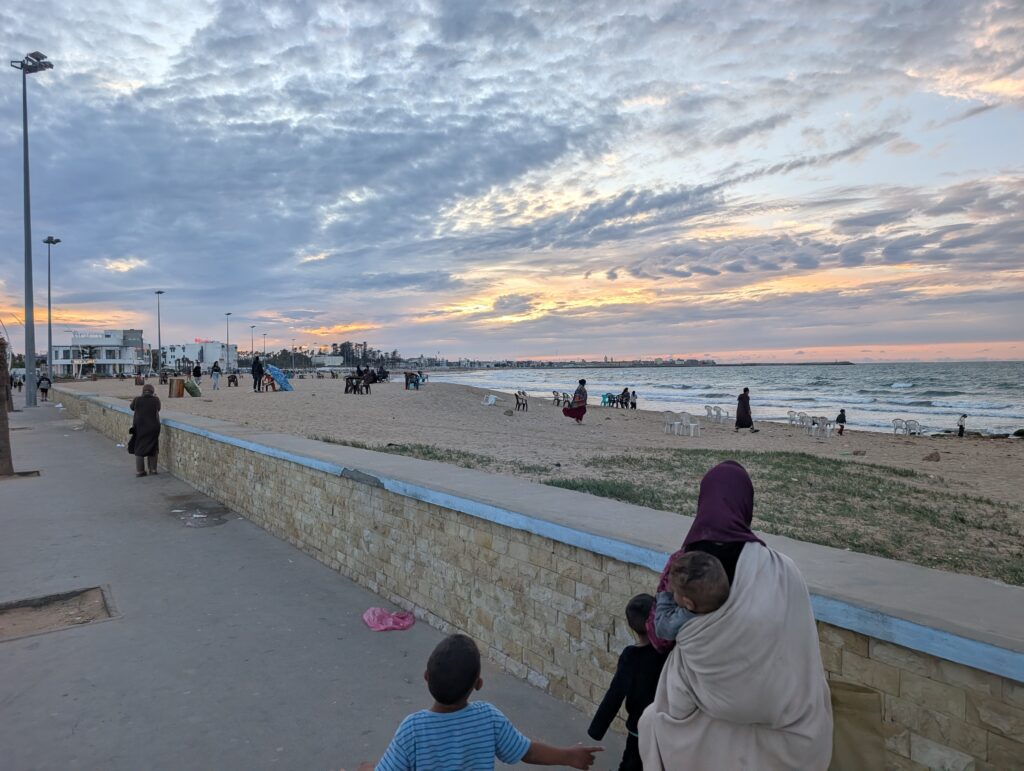
Beach at El Jadida
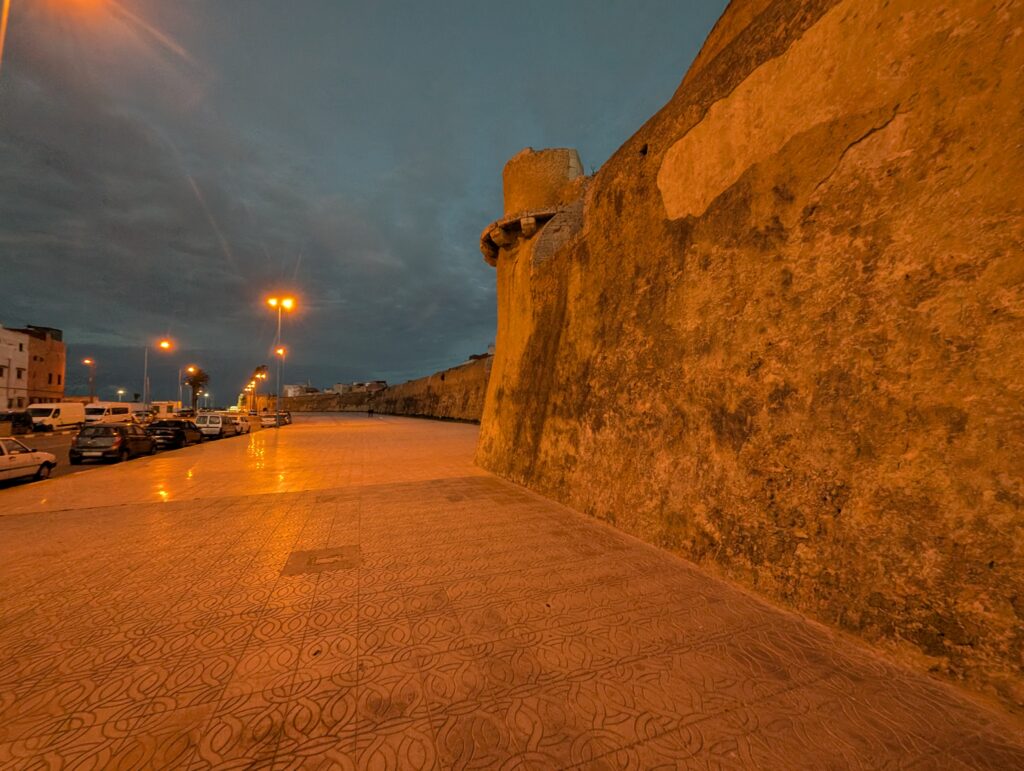
Walled City at Night
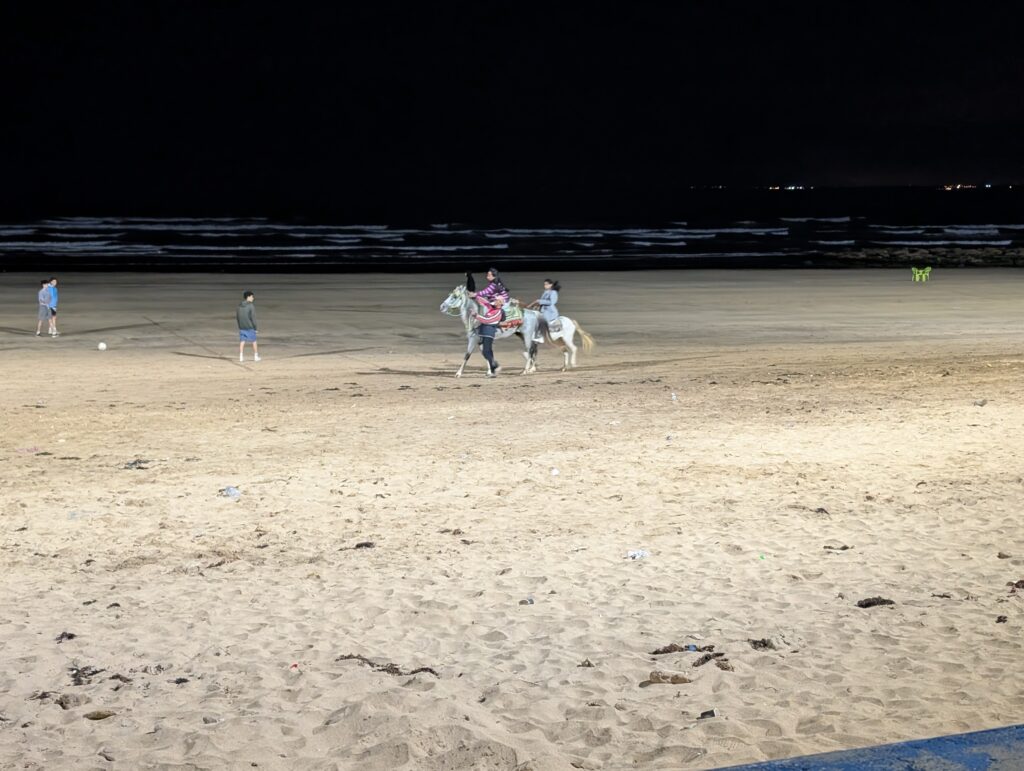
Moroccan Tourists Enjoying a Horseback Ride on the Beach

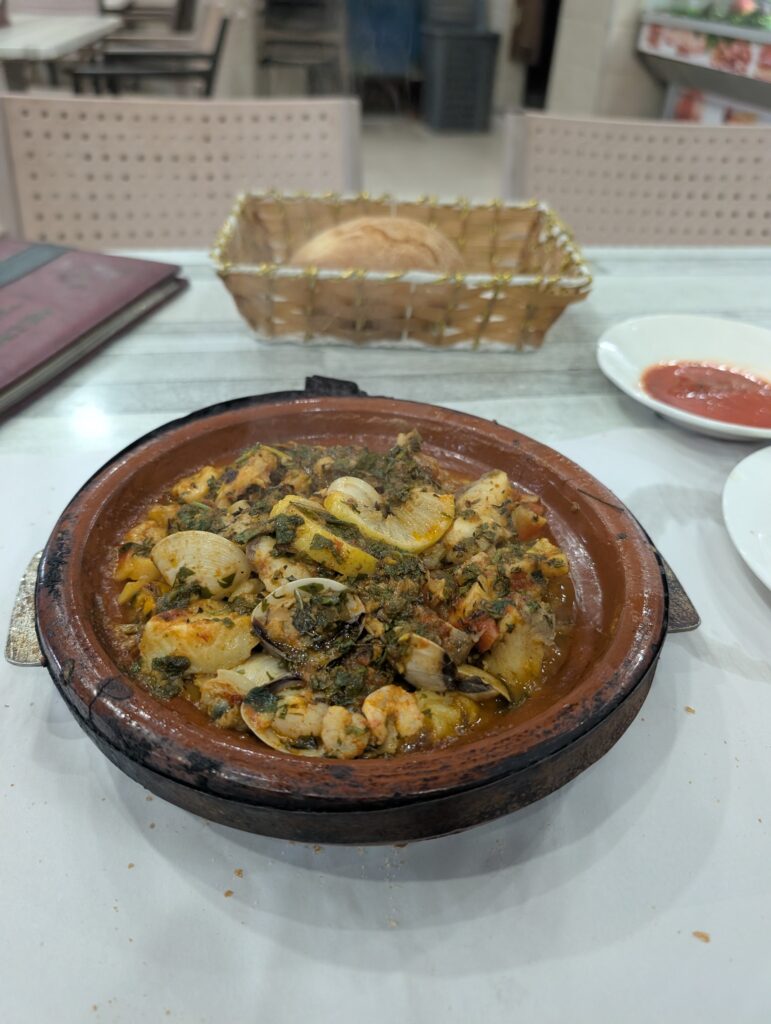
After checking in and a brief rest in my room, I walked a couple of miles down the corniche, past the old Portuguese city walls to a quaint seafood restaurant with very good reviews. I ate a very good seafood tagine with a seafood soup, large rolls, mint tea, and some kind of beans for only 90 dirhams. I have eaten cheaper in other places, like Cambodia, but for the volume and quality of food, it was a good deal, and a good deal better than anything I could have gotten for that price in America.

I walked past the Carrefour and grabbed some ice cream to eat as I laid out my plans for the next day, and made my train and hostel reservations for the next few. I could see what I needed to see the following morning, and catch a 1:00 train that would get me to Fes by 7:30. The list of things to see in El Jadida wasn’t that long, and I supposed I would rather pace myself exploring the many things to see in Fes than hang out at the beach for another day. By the time I had all of that decided and sewn up, it was very late. I wasn’t sure how early I would be able to start Wednesday morning, but I decided to sleep until I woke, in any case.

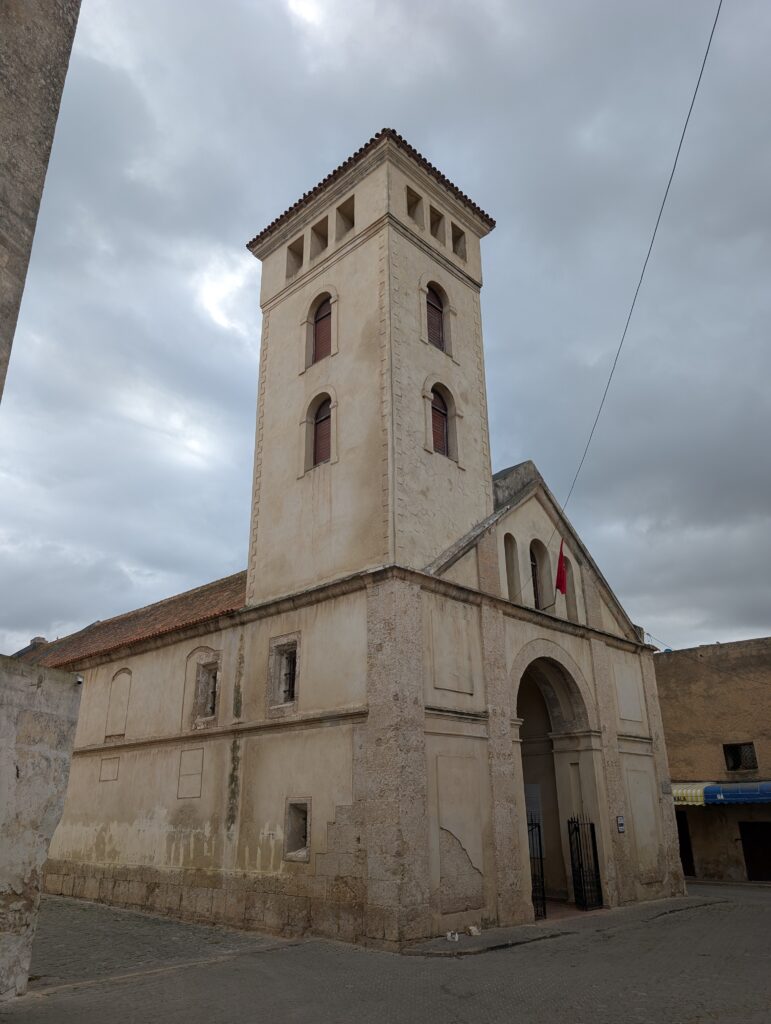
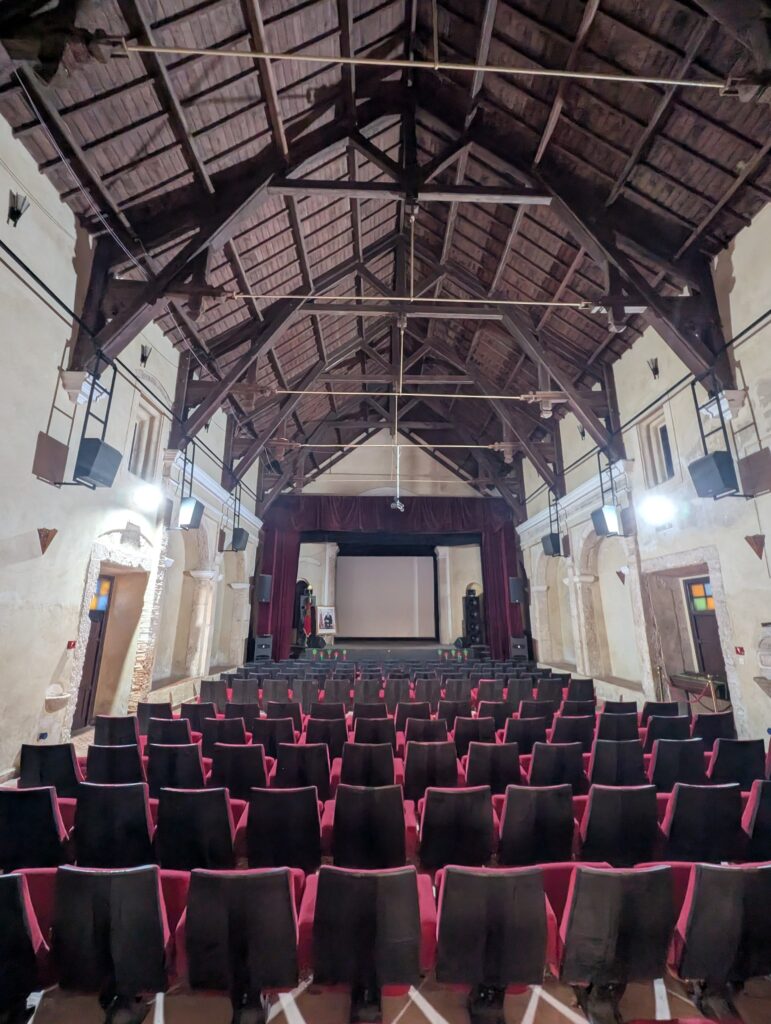
I was up a bit before seven and so opted to eat the complimentary hotel breakfast. It was good, and there was plenty. I hiked the two miles back down to the Portuguese walled city. One of the first things I encountered was the Iglesia Notre Dame del Asuncion. This church was built in the 16th century when the Portuguese walled city was called Mazagan. The building is realitively plain, by Catholic standards. This was apparently a trend during the time the church was constructed. The style is known as “manueline,” otherwise known as Portuguese Late Gothic. The term pays homage to King Manuel I of Portugal, who favored this architecture. Sadly, it had been turned into a movie theater by local authorities. This seems to be a trend in Islamic countries, unfortunately. I am not sure how they can get away with this, considering their UNESCO World Heritage Site status.

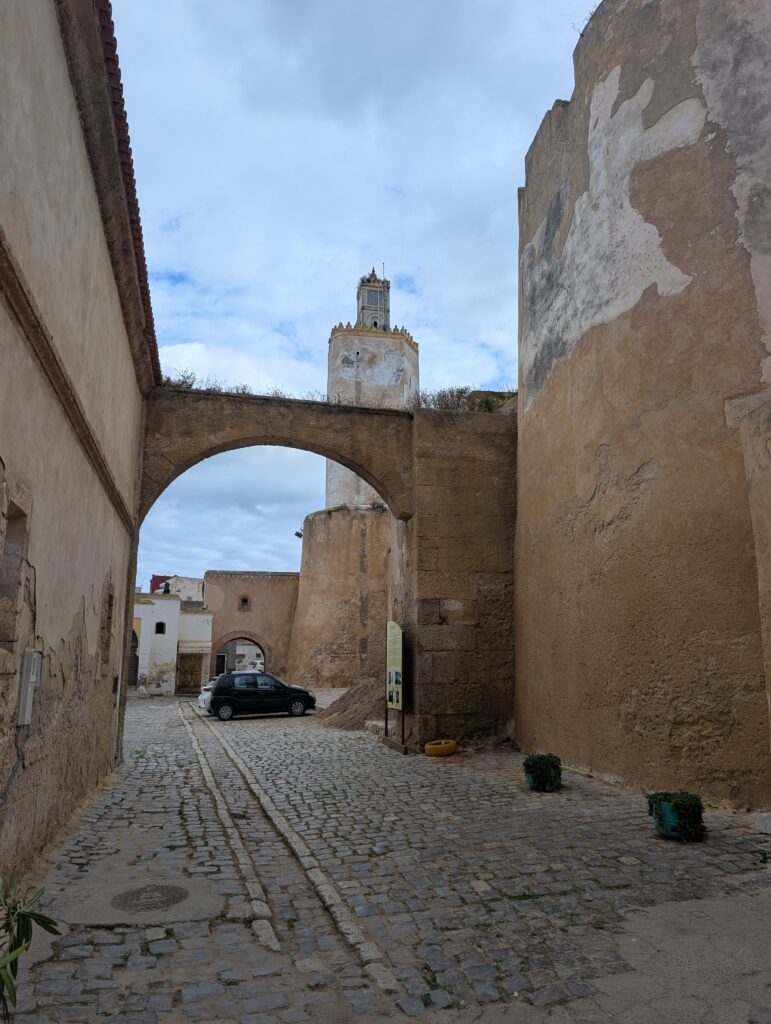
Nearby, also inside the old city of Mazagan stands the Al Masjid Al Atiq, or the Great Mosque of Mazagan. It dates just to the 19th century. One unique aspect of this mosque is its minaret. Since the building is a converted lighthouse and watchtower, it has a pentagonal minaret which was once the pinnacle of the lighthouse. As with most mosques in Morocco, non-Muslims are not allowed inside. I walked around the exterior. I could see the most noteworthy feature from there anyway.

(Continued)

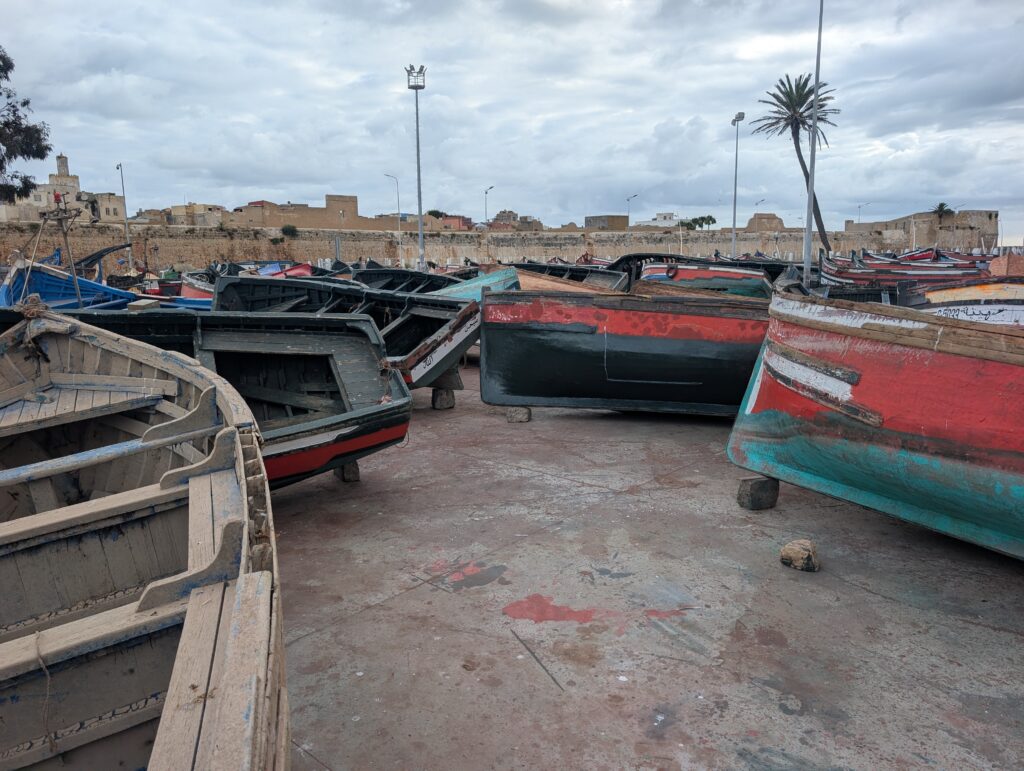
Walled City of Mazagan in the Distance, Behind Skiffs
16th Century Portuguese Church
...Converted to a Theater
Lighthouse Converted to Mosque
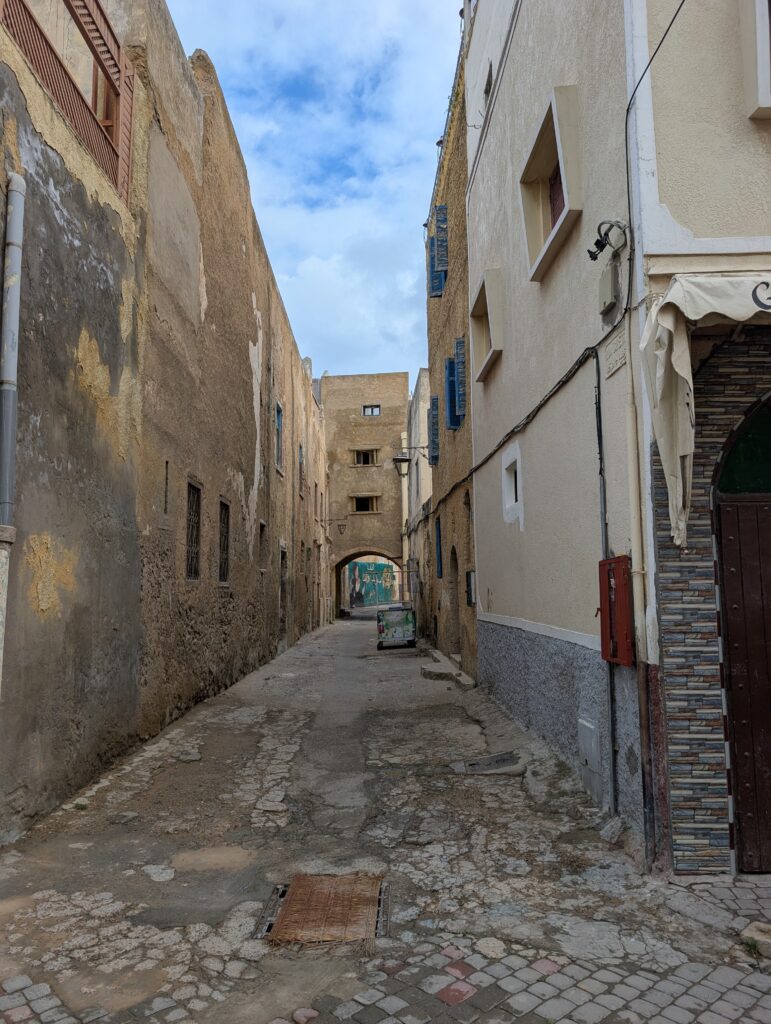
Street Scene
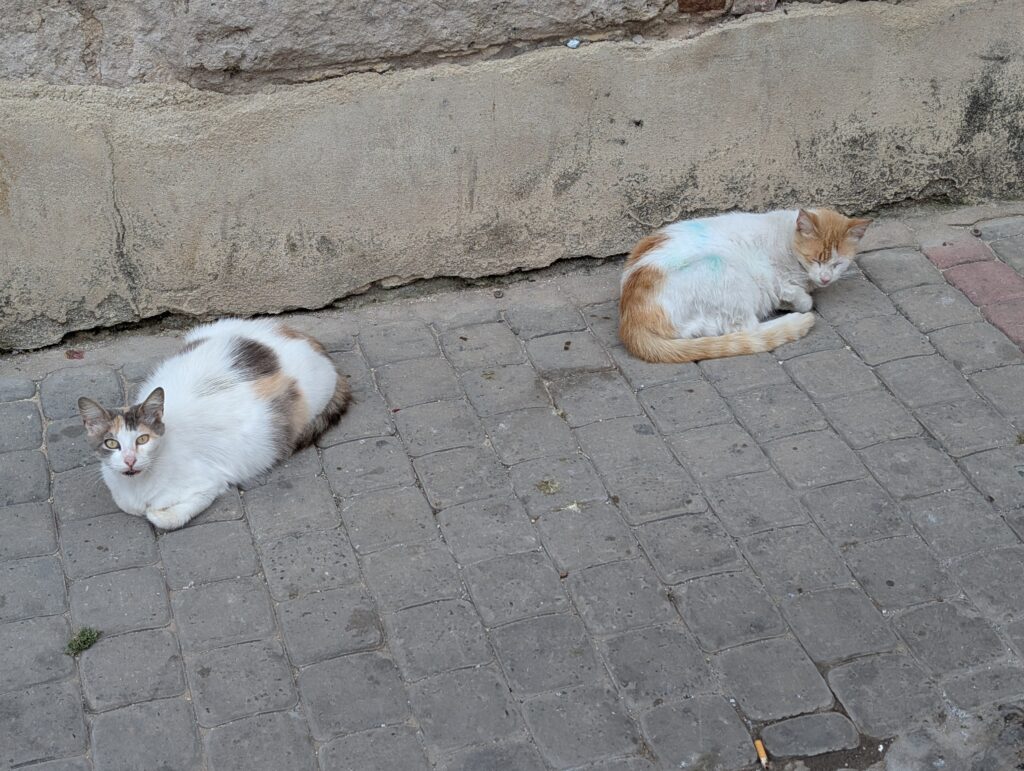
Morocco's Ubiquitous Cats
Entry to Portuguese Cistern
Gate to the Sea
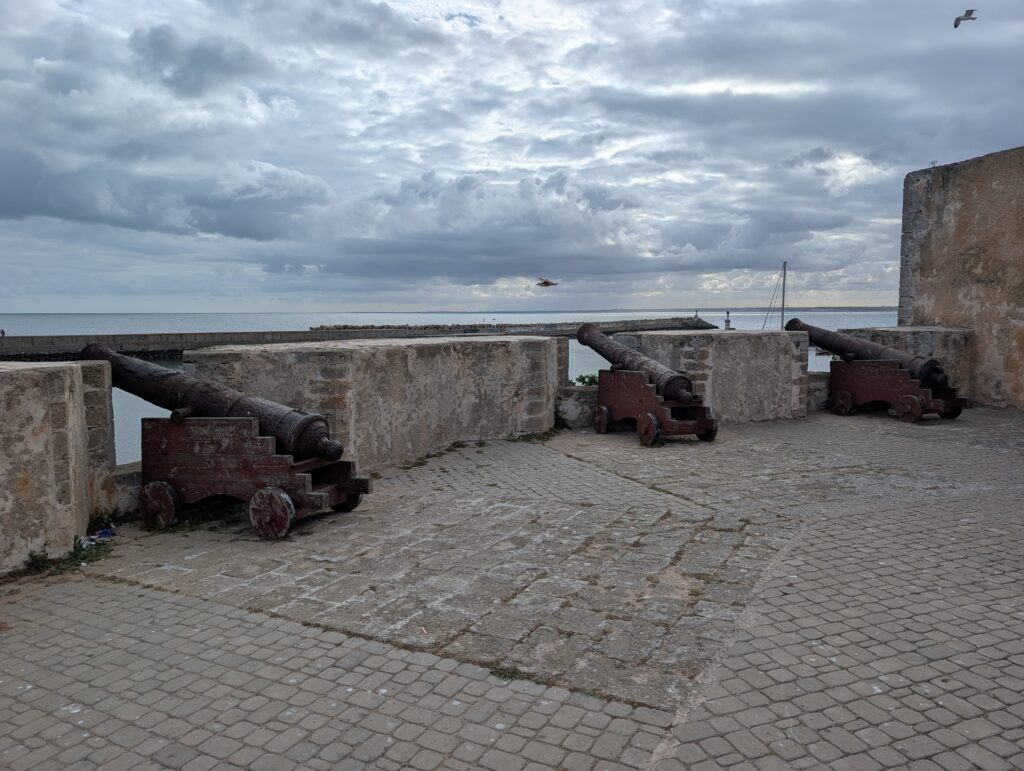
Gun Placement

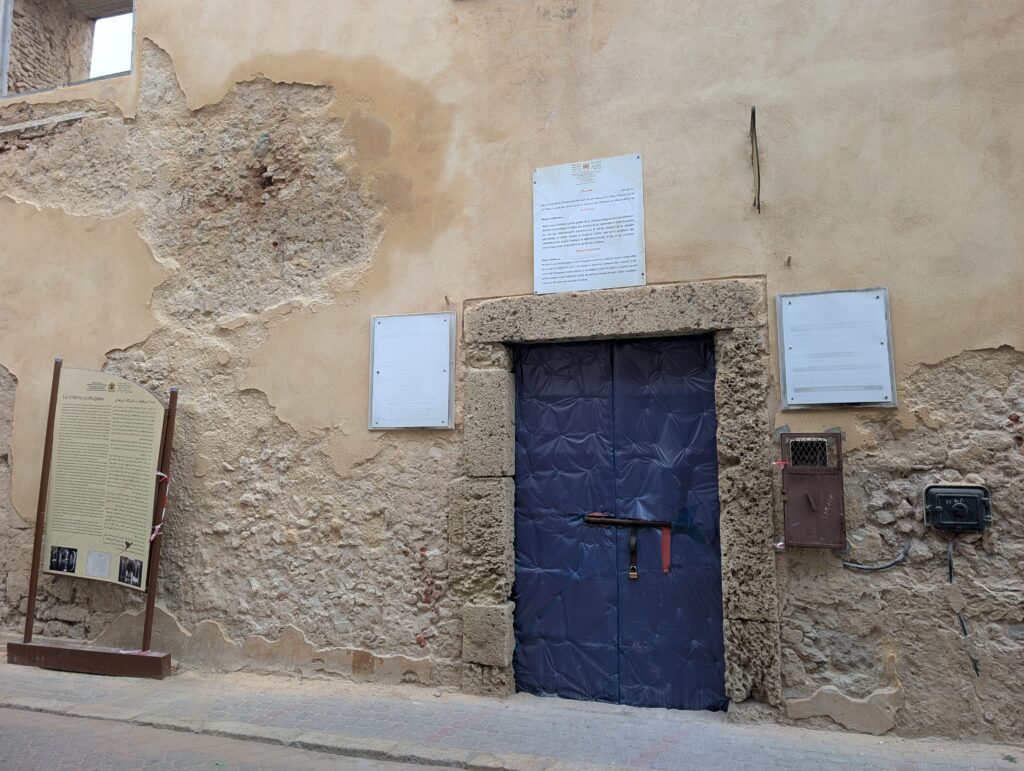
Also right near the entrance to the old walled city is an ancient Portuguese cistern with an amazingly beautiful underground structure, apparently quite well preserved. Sadly, sometime in the past – I believe well before the 2023 earthquake – the cistern suffered damage. It seems to have been closed to visitors for as many as five or six years. There is a sign saying it is closed, but implying that after some brief restoration period, it will reopen. That is apparently dragging out significantly. The cistern was lost for centuries before a local shopkeeper encountered it accidentally. While attempting to take down a wall for renovations, he flooded his own shop with water that must have packed quite an odor after all of those years. The source of the water was explored, and the ancient cistern rediscovered.

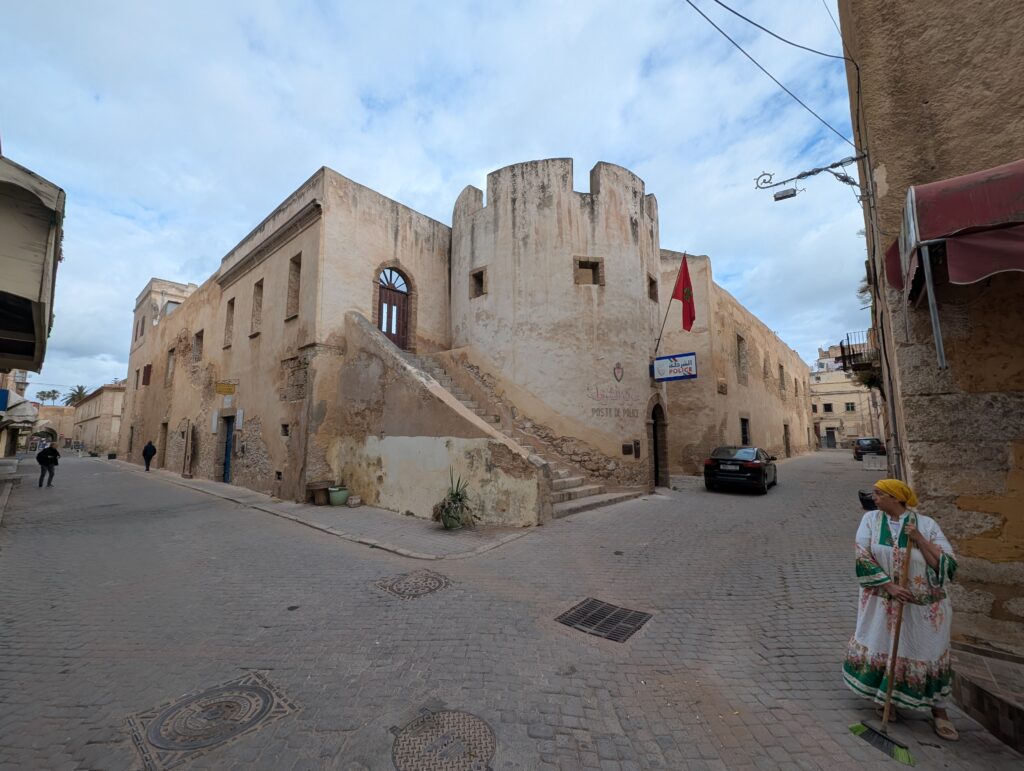
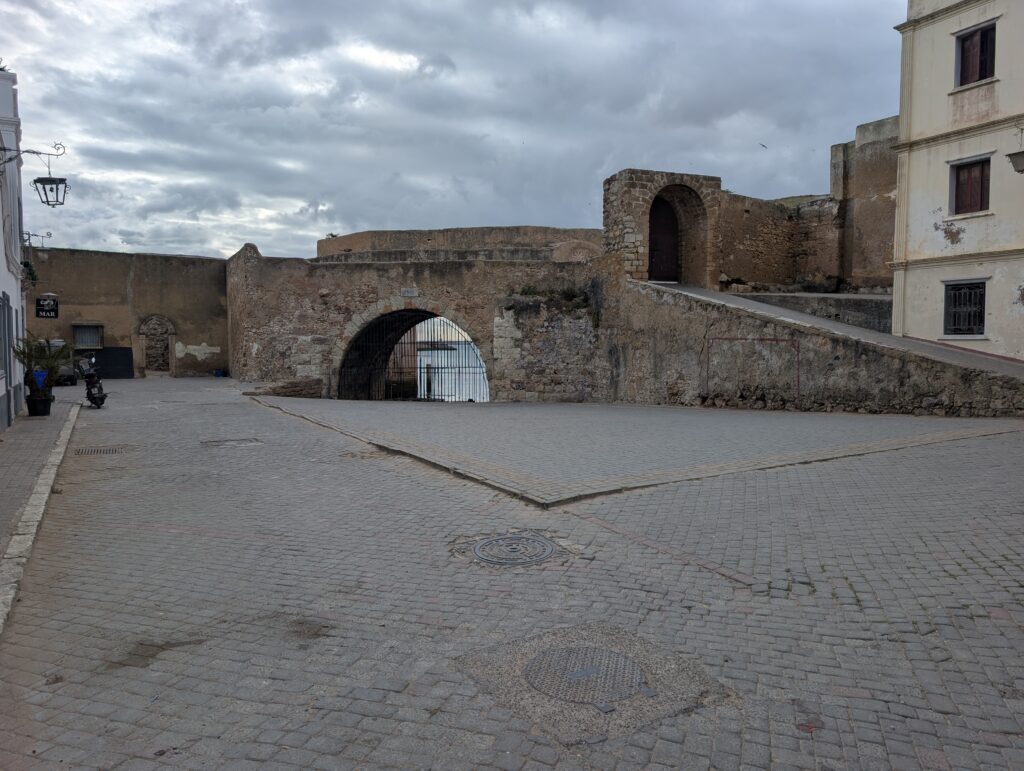
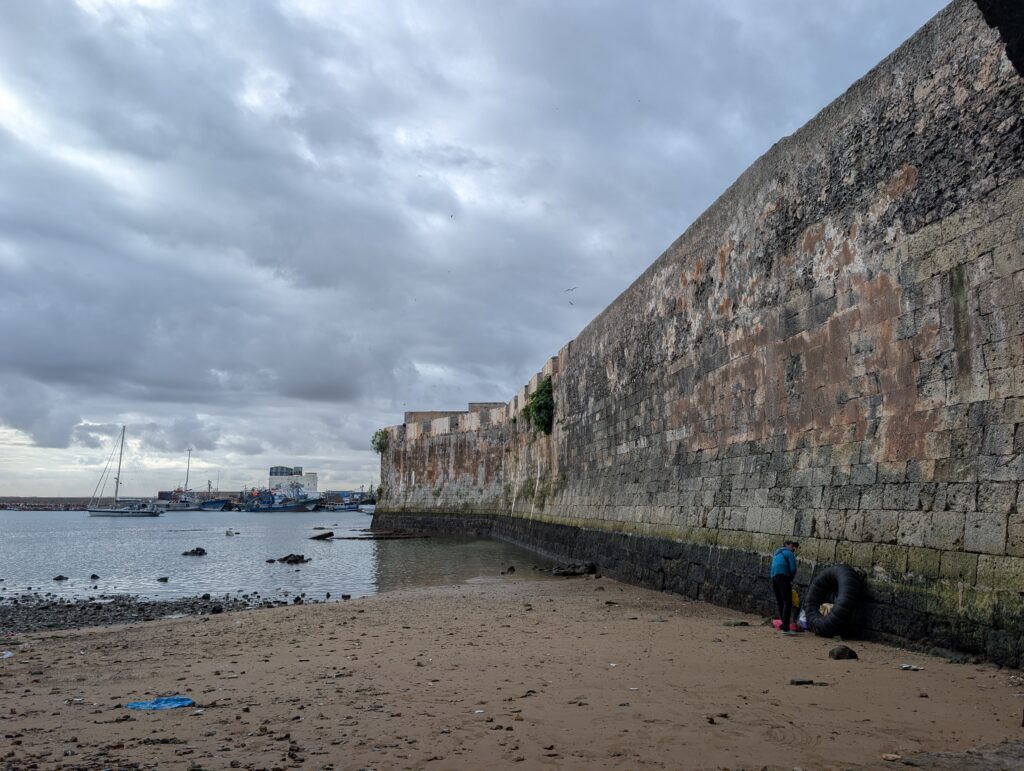
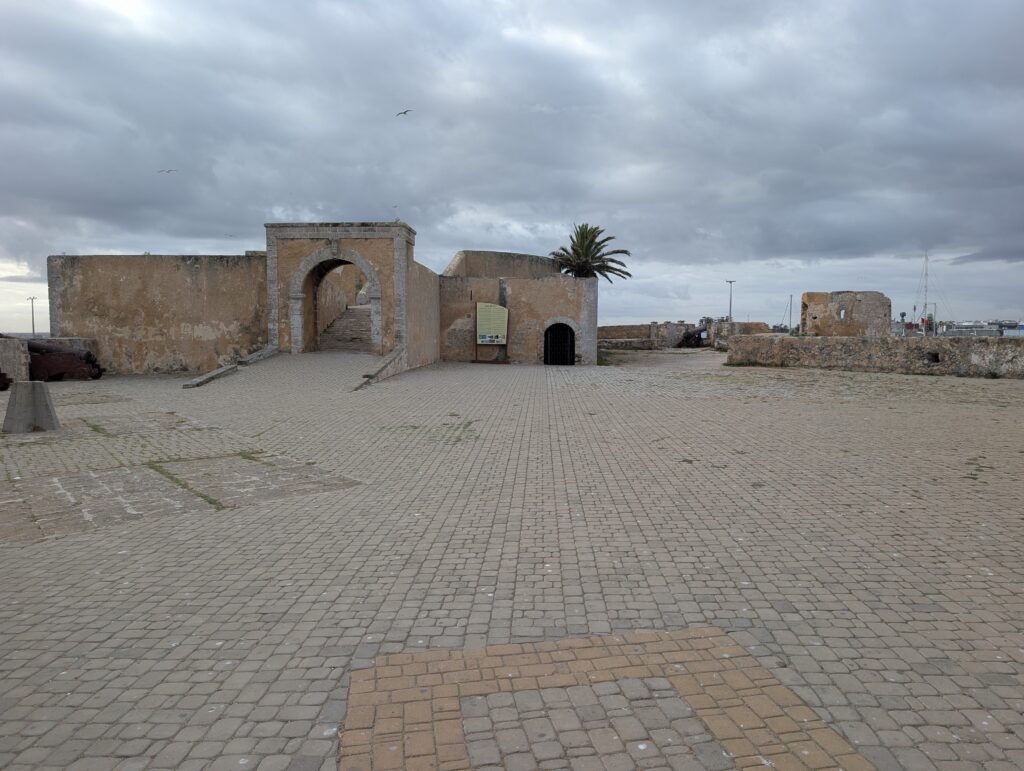
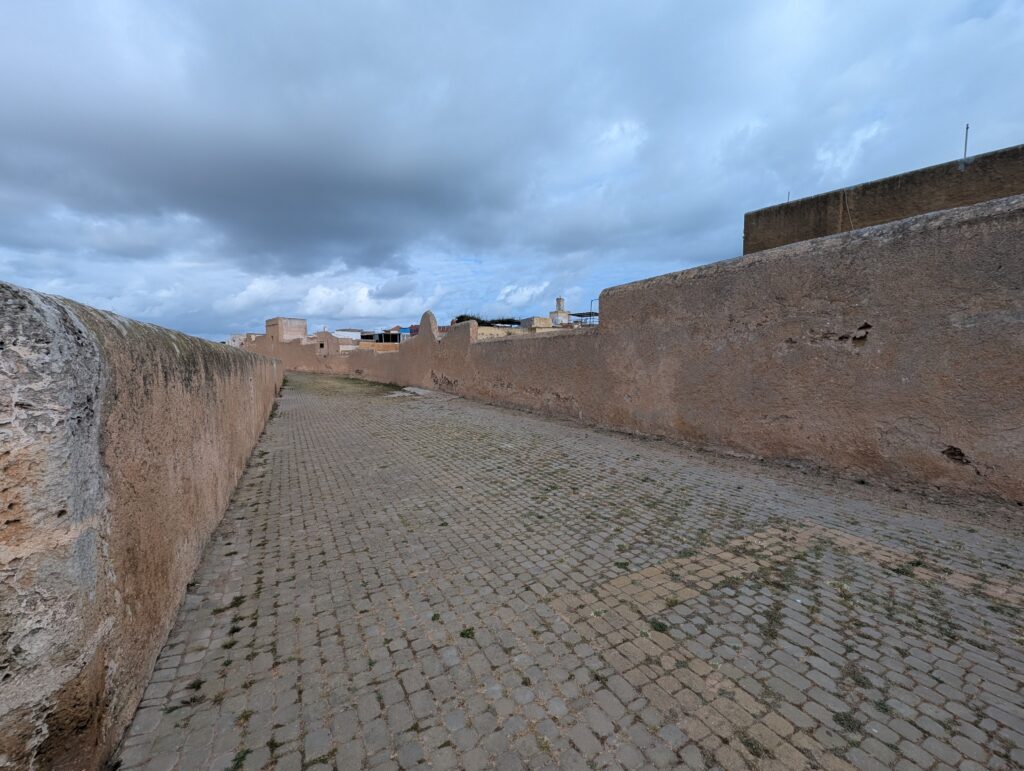
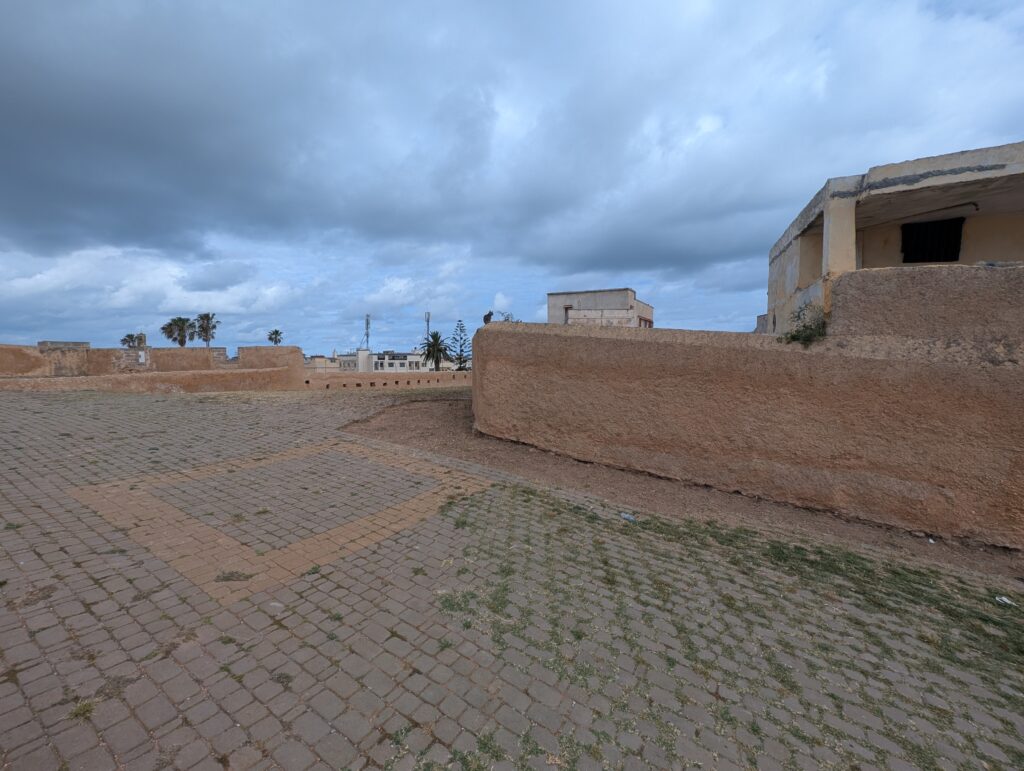
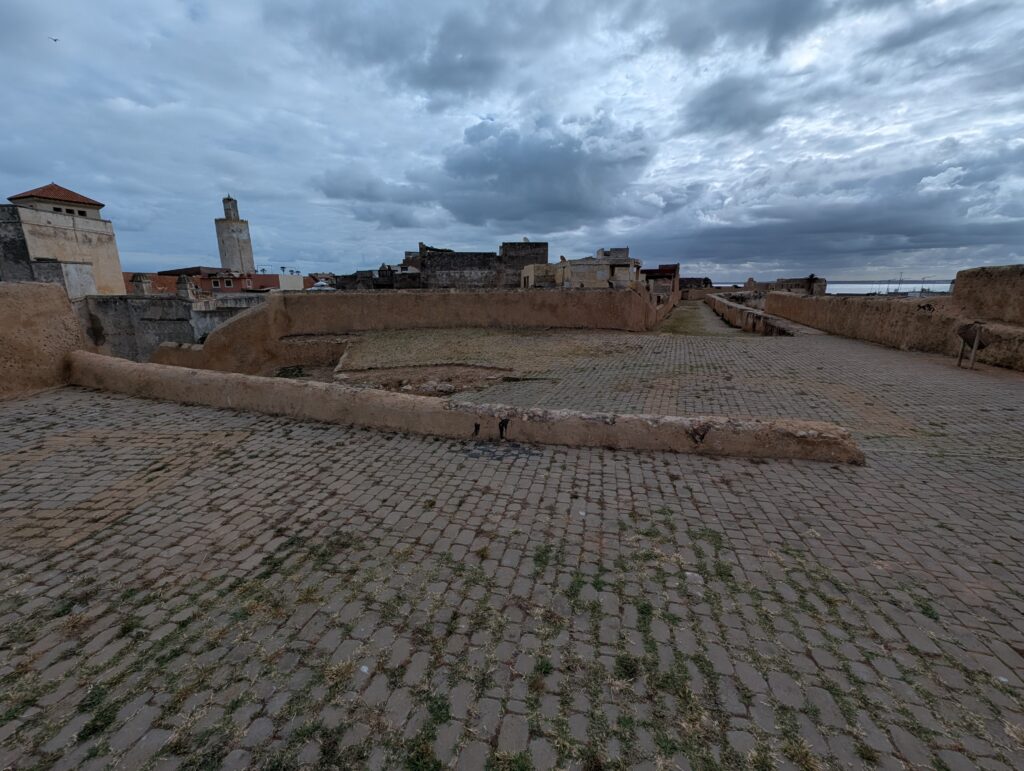
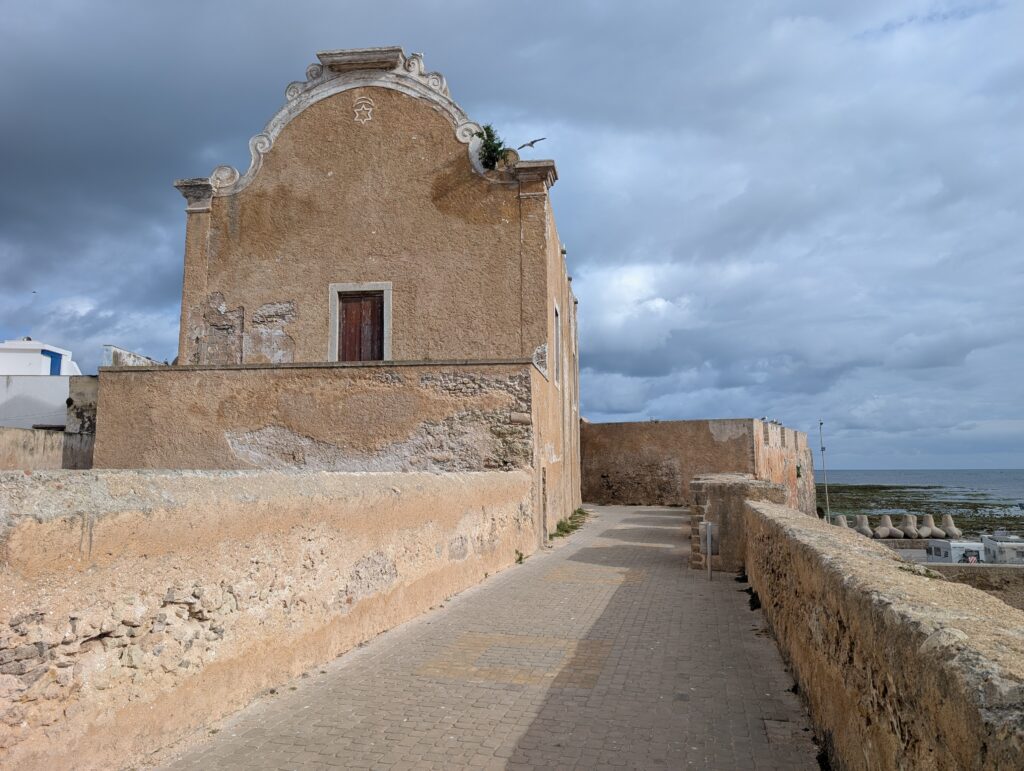
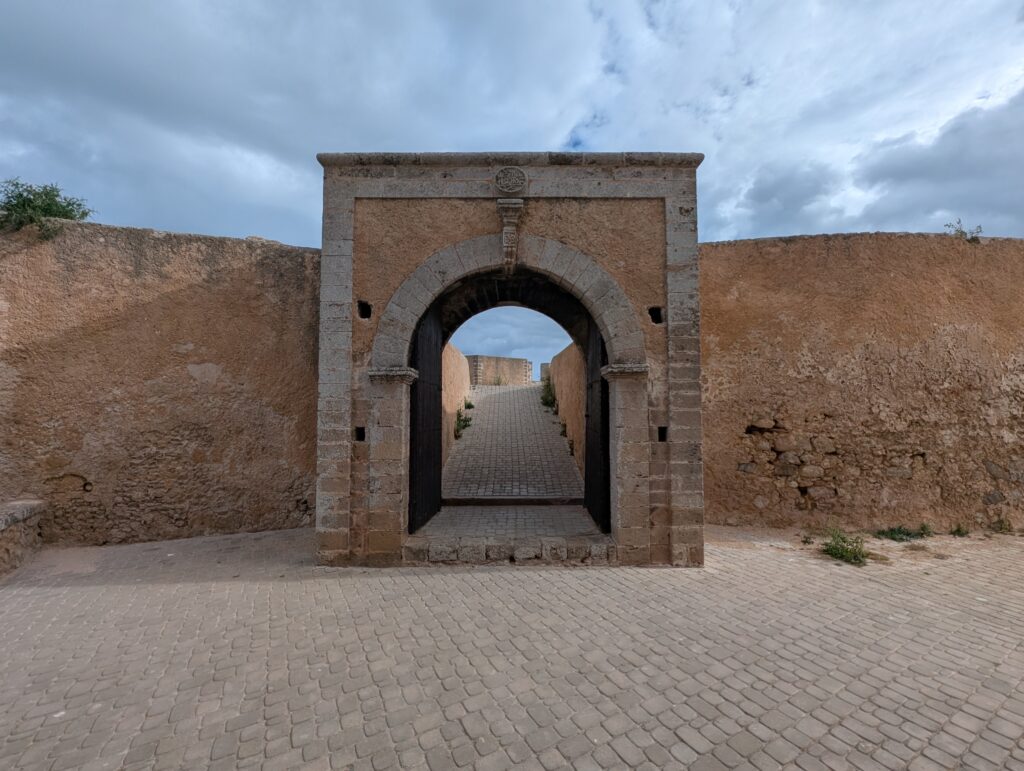
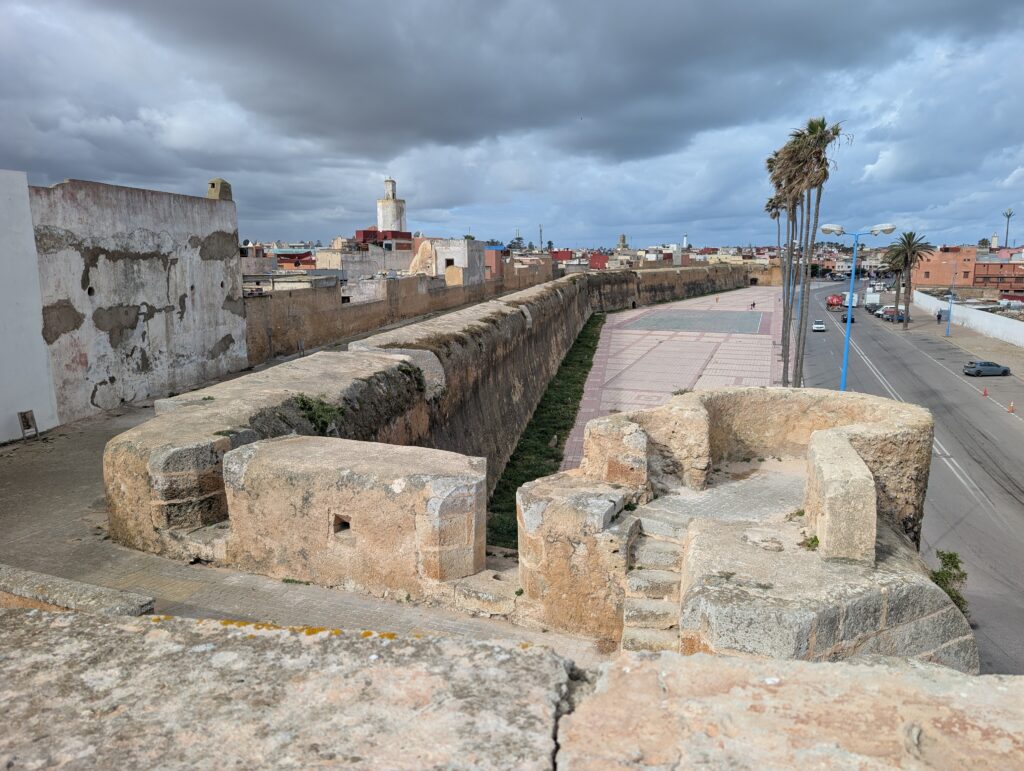
Since I did not need to spend much time looking at the cistern entry, I moved right along to the city walls and fortifications. I enjoy walking city walls, and I spent an hour or so enjoying the views and reading what I could on the signs. The signs were in French and Arabic. The views of the port were nice. I continue to be amazed at the colonial and economic reach of the tiny 15th and 16th century country of Portugal.

Having completed the main sites that were open in and around the old walled city, I decided to walk another couple of kilometers up a small rise to the Sidi Bouafi lighthouse. On the way, I stumbled onto the old market. I walked through it. It was interesting to see a souq not heavily influenced by tourist traffic. In many ways, it just looks like a market. The layout is archaic, but it was mostly fruits, food, dry goods, and other things that people might buy on the local economy. The only place I found souvenirs or trinkets westerners would want to buy was right inside the gate of the Portuguese city.

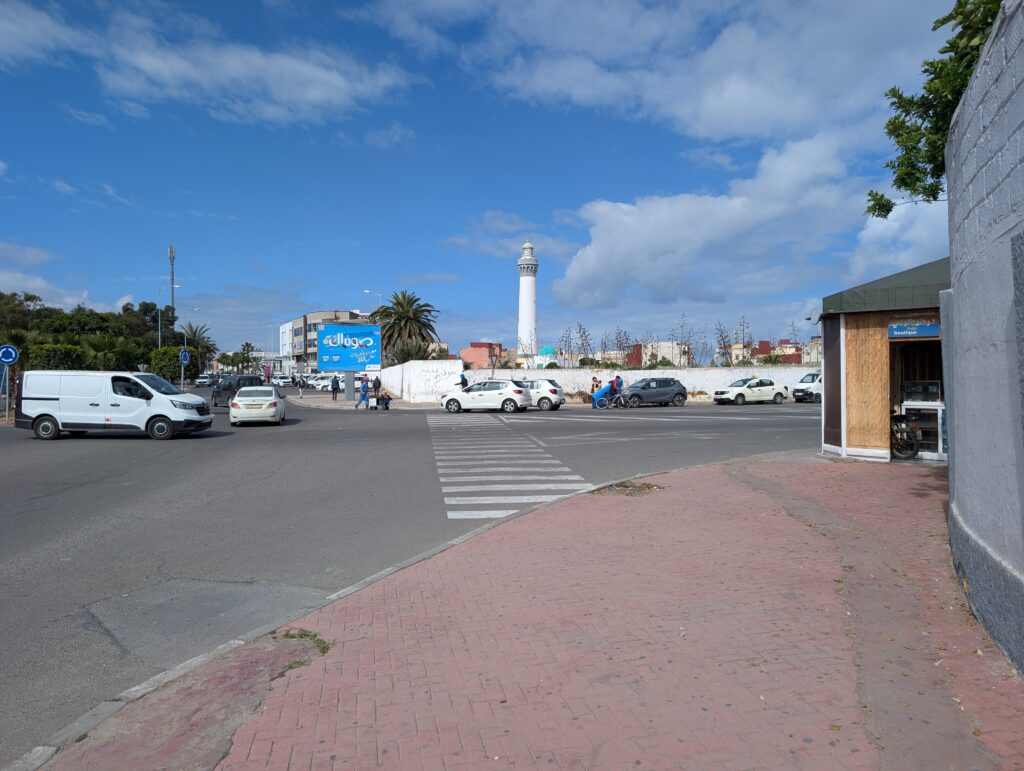
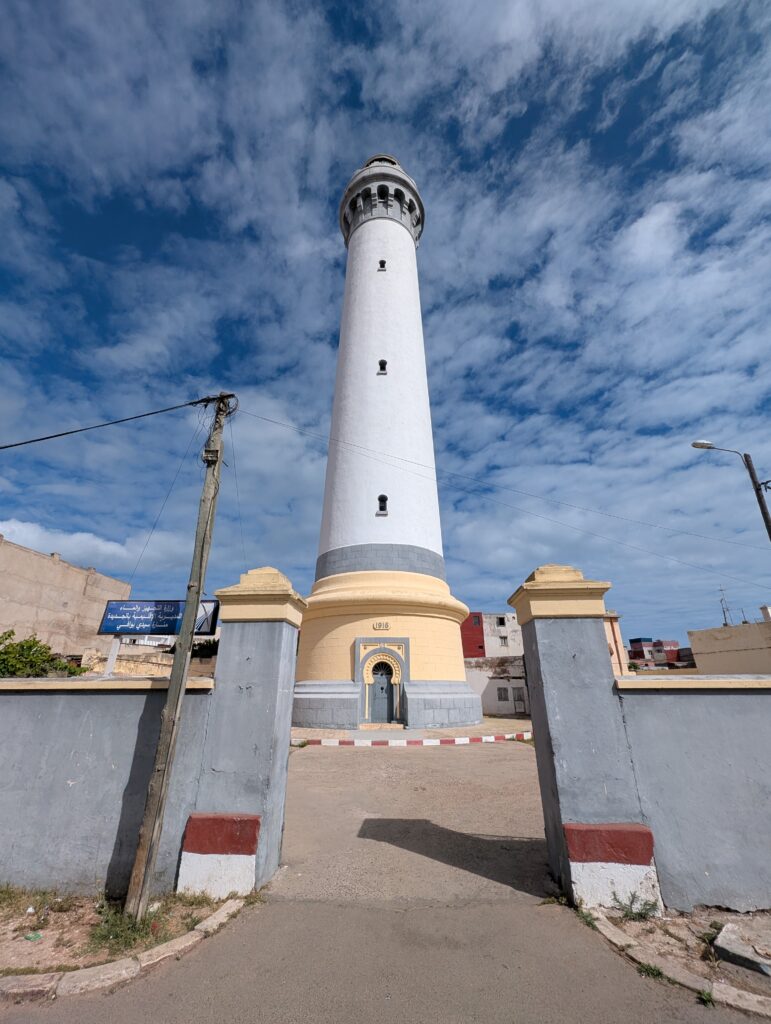
The Sidi Bouafi Lighthouse sits atop a relatively shallow hill. It apparently can be seen far enough offshore for its 250,000 candlepower to allow seamen to triangulate between Spain, North Africa, and Portugal in order to approach the Straits of Gibraltar from the Mediterranean or from the Atlantic and the Azores to the West. It was built during the Great War by German prisoners of war.

From the lighthouse, it was another four kilometers back to my motel. I still had to get to the train station from there. Fortunately, my checkout time wasn’t until noon. I passed Hassan II park along the way. It is a sprawling urban park with zig-zagging walkways and some elevation change, having been built on the side of a hill in the city. I made it back to the motel in time to comfortably check out and have a short rest, but not in time to carry my pack the three plus miles back to the train station in time for the train. A kind InDrive operator hauled me back to a shop about half a mile from the train station where I could restock my snack supply. El Jadida had been a quick stop, and now it was on to Fes. I would make that my base for a few days of exploration.

Portuguese Cannons
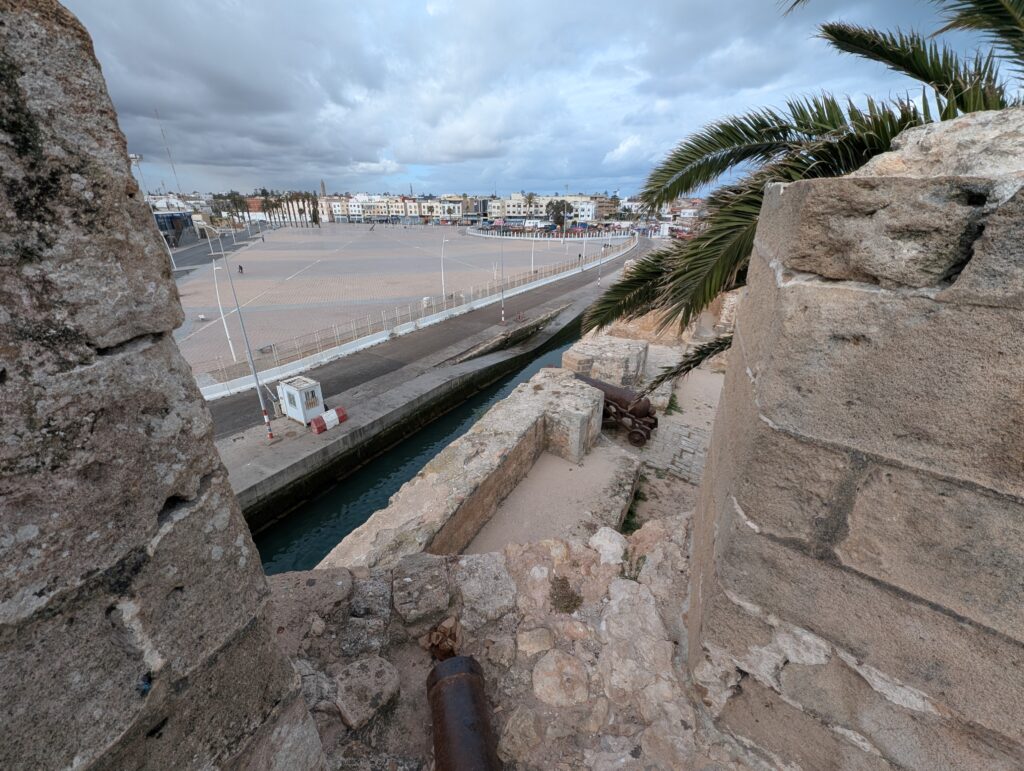
The Portuguese Protected Mazagan With a Seawater Moat on 3 Sides
Old Jewish Quarter Synagogue
Lighthouse in the Distance
Sidi Bouafi Lighthouse
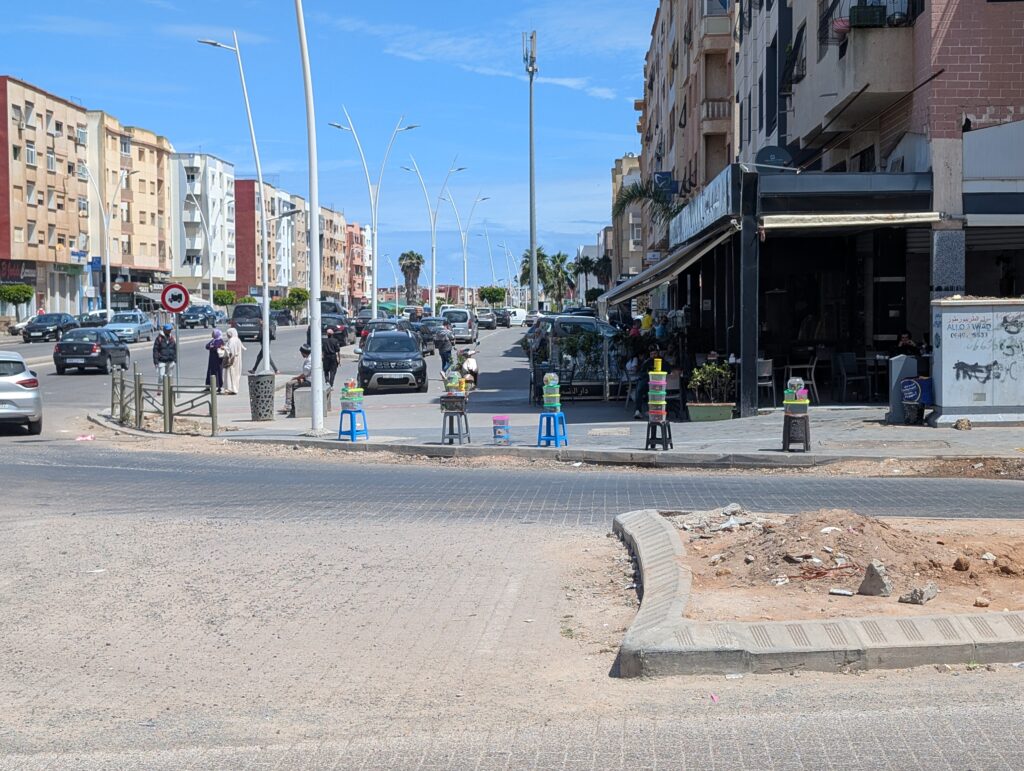
Modern Looking Part of Town
Morocco
Marrakech
Ait Ben Haddou
Fes
Volubilis
Meknes
Morocco Travel Tips
Algeria
Trip Overview