San Blas Islands

Sailing From Colombia to Panama

We didn’t really set off from Cartagena toward the San Blas Islands until about midnight on the 15th. I suppose it was a stretch to say that the trip was a six day, five night journey. The plan was to arrive in Puerto Lindo, Panama and eat an early breakfast before offloading on the 19th. It’s more like a four day, five night journey. Our San Blas adventure aboard the Quest was beset with problems from the start. That’s not to say it wasn’t enjoyable, but it felt for a while like the trip was cursed, or to borrow from some old sea lore that we had a “Jonah” on board.

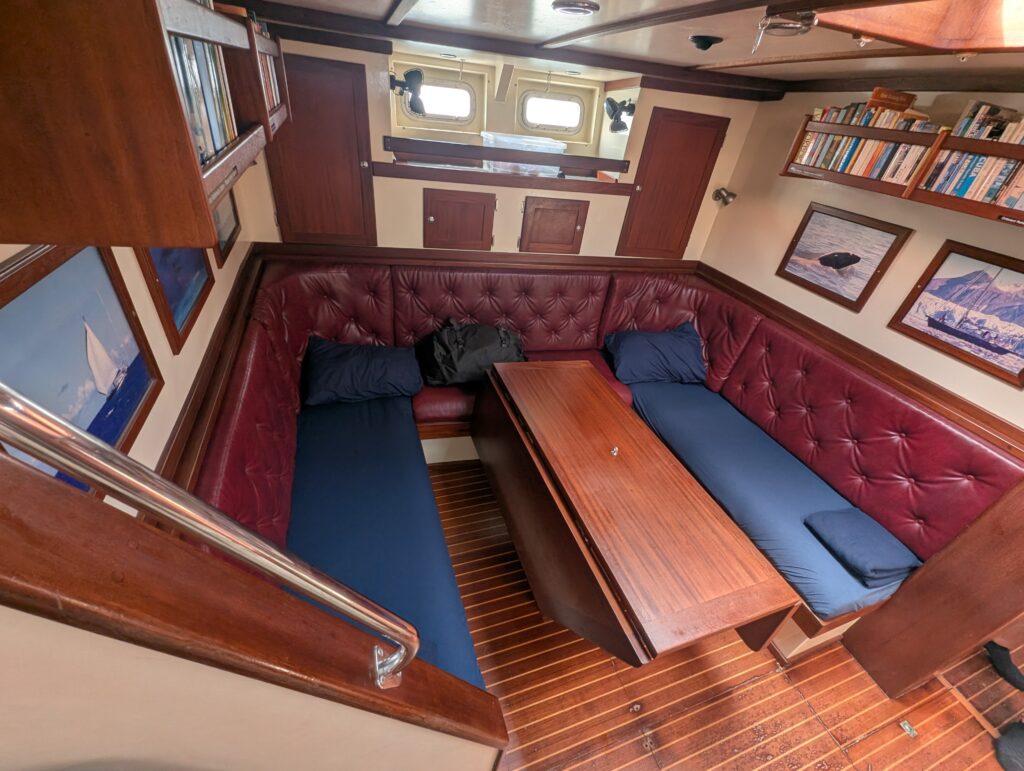
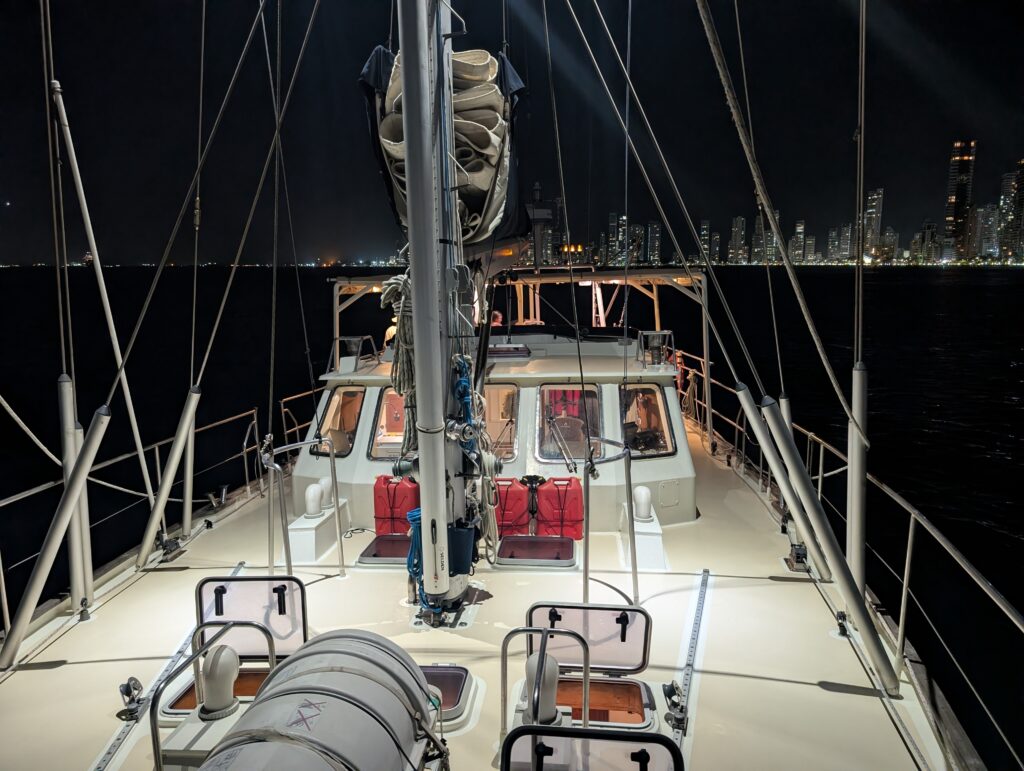
In spite of any problems, if I ever do a San Blas sail again, I would make every effort to book it on the Quest, and I would do it in the Cartagena to Panama direction again as well. The Quest is a 64’ sailboat that on it’s Caribbean journeys carries ten passengers along with its crew of two. The space can still seem cramped. I slept in the “salon” (essentially a small living room/library). Most others had tiny two bunk berths. While it may seem like the berths offer more privacy, that’s really not so. The salon may be completely open, but the doors to the berths cannot really be closed due to the heat, so we were all essentially in open, common space. Compared to other boats making this voyage, however, Quest is quite spacious. The other boats are smaller and carry twenty! They are so crowded that passengers are often required to stay below while underway. This must be very stuffy, as the berths are hot and have minimal air circulation. While underway, boats are required by international maritime law to keep all hatches closed for hull integrity.

Quest has several additional benefits over other San Blas boats. It is usually faster, though as we will see this did not prove the case on our trip. While passengers are allowed to bring their own alcohol, Quest is not a “party boat.” We were anchored a couple of nights next to Wild Card, which blasted music until 4:00 a.m. Our boat was usually in bed a couple of hours after dark. Even though most of my fellow passengers were young people, many were up at dawn to try to catch photos of the sunrise. This, to me, was an advantage. Quest also has its own water desalinizer, making it the only boat with unlimited fresh water. Then, there is the crew. The captain and his first mate (in more ways than one) are Swedish. I found their hospitality and sense of humor to be a key benefit of my time on the Quest.

Goeran, the captain is 69. He built Quest himself over fifteen years at an expense of over a million euros. It has many nice details of his own design. It may be the only sailboat in the world designed also as a diving platform. Goeran has spent his entire life on the sea, working container ships, cruise ships, and countless other jobs. Hilda has been his first mate for about two and a half years. She is 36, and is also Swedish. By birth, she is half Singaporean, with Chinese and Muslim Malay ancestors, whose culture give her a special affinity for Sweden and Western culture, tradition and values. She considers herself completely Swedish. She is a great cook, a historian, and has great music tastes, and I believe has completely internalized the role of host to the extent that she seems completely comfortable sharing hers and Goeran’s home with traveling strangers ever week or so.

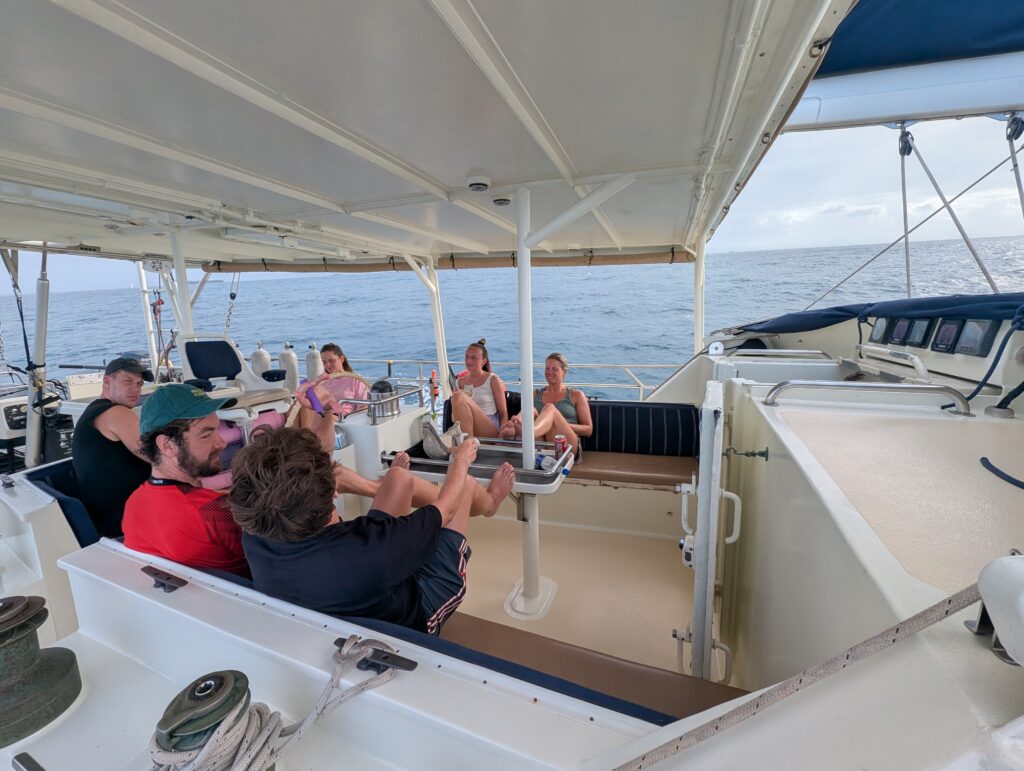
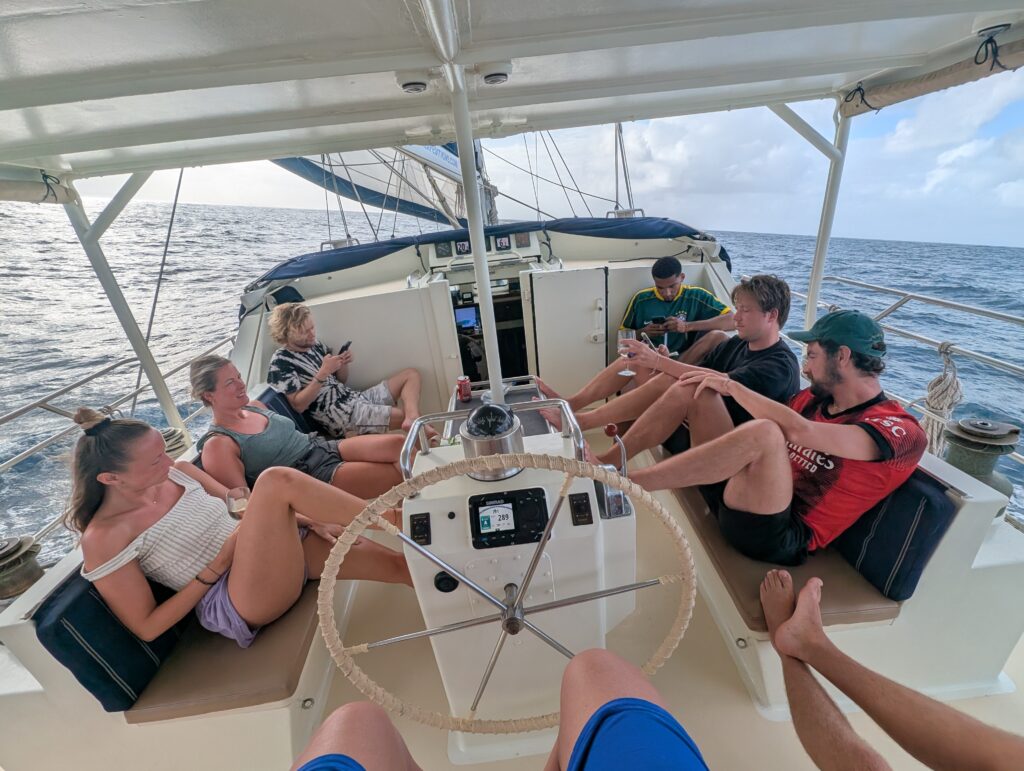
Our particular voyage had a marked European flavor. In addition to our Swedish hosts, we had five Dutch travelers, and four Germans. The Dutch and Germans tended to click together, and mostly spoke to one another in their native tongues. I felt a bit left out by this, though the Dutch passengers especially were gregarious and personable when they were speaking English. The Germans tended to spend more time on their phones, and the Dutch really bonded with each other and shared the experience. In fairness, no one was really unfriendly. I was certainly the old man of the travelers. Most of the passengers were in their twenties. The two Dutch girls were 34 and 38, so at 53, I was by far the oldest on board, with the exception of the captain.

Although all of the vessels running the San Blas route are sailboats, they often end up running their motors just to keep some semblance of a schedule. Even though we were traveling during the windy season, we got relatively little help from the sails the first couple of days. Under normal circumstances, Quest expects to make about seven knots. The first day was to be spent crossing the open part of the Caribbean. This is supposed the be the rougher part, and travelers are highly encouraged to take motion sickness medicine. Quest expected to make this passage in about 30 hours, putting us at our first San Blas island at daybreak on the second day of our trip. Sadly, during our first afternoon, Captain Goeran discovered that the transmission was getting dangerously hot. He attempted to resolve this by changing the impeller. This didn’t work, and the transmission continued to run hot. He ended up being able to manage this circumstance by running the motor at very low RPM, allowing us to creep along at three or four knots. Occasionally, we picked up enough wind to bring us back to six or seven, but this happened seldom enough that it took us all of the second day to arrive at the islands.

(Continued)

My Shared Area in Quest's Salon
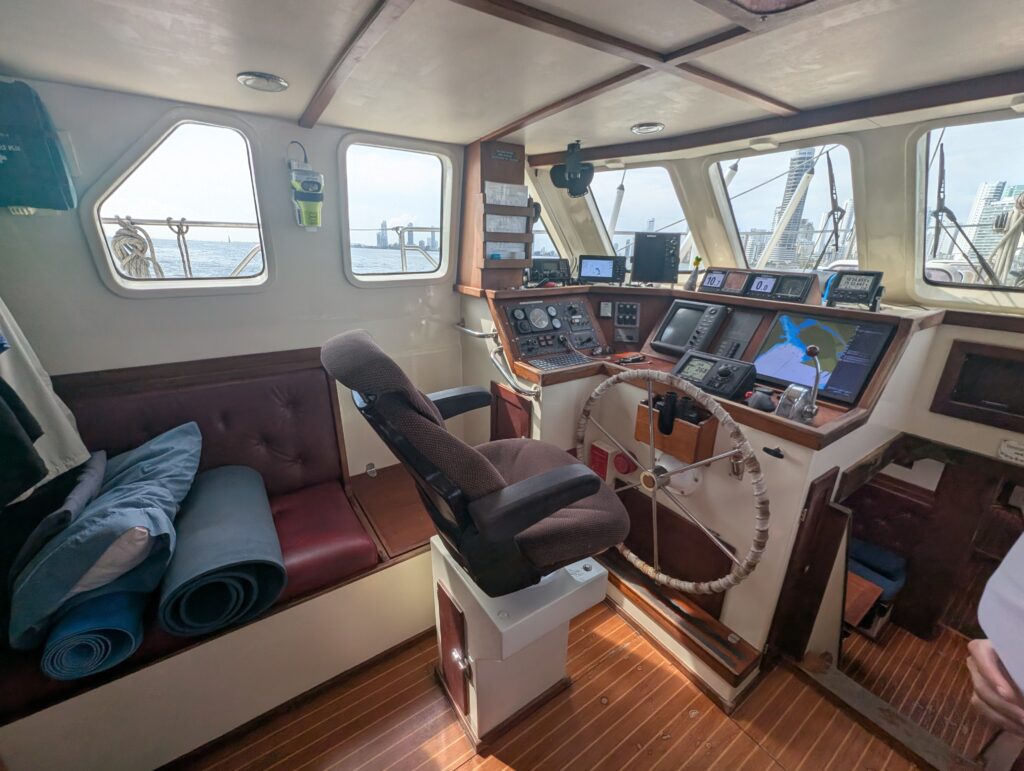
The Bridge
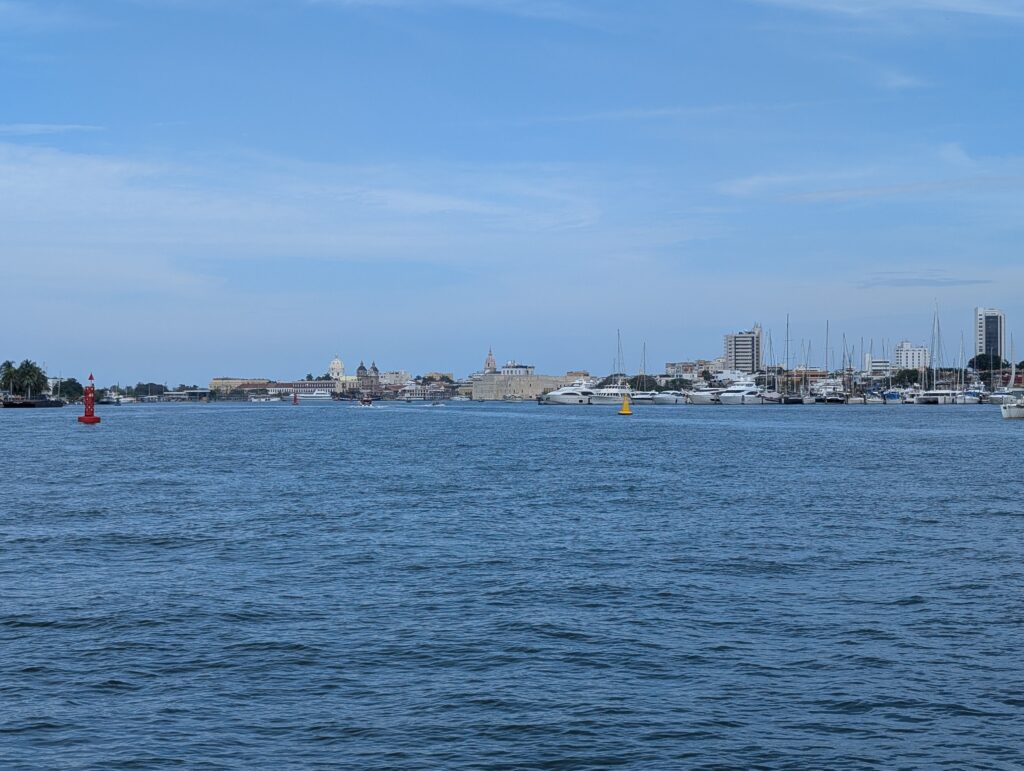
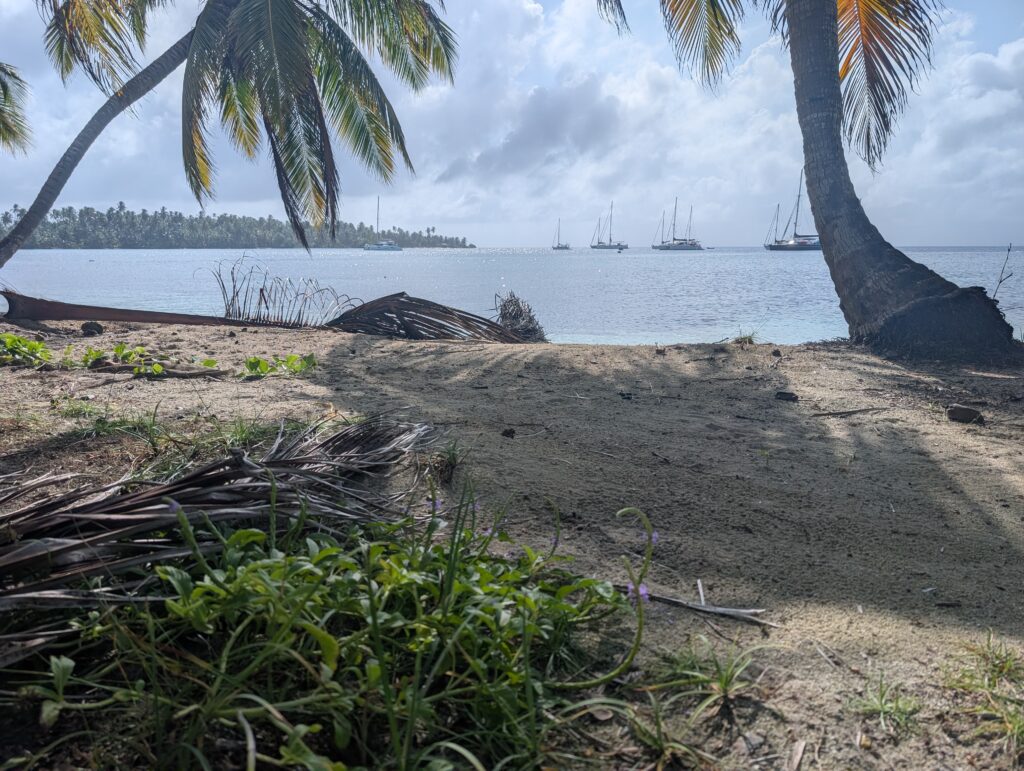
Daytime View From the Deck
Waiting to Set Sail
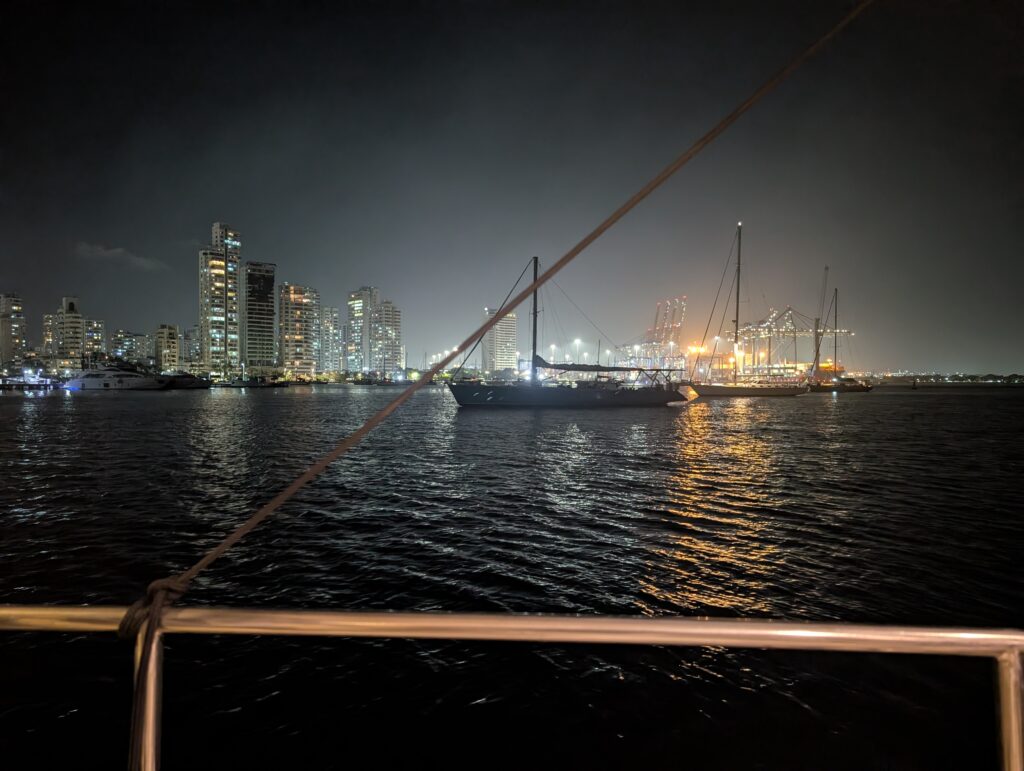
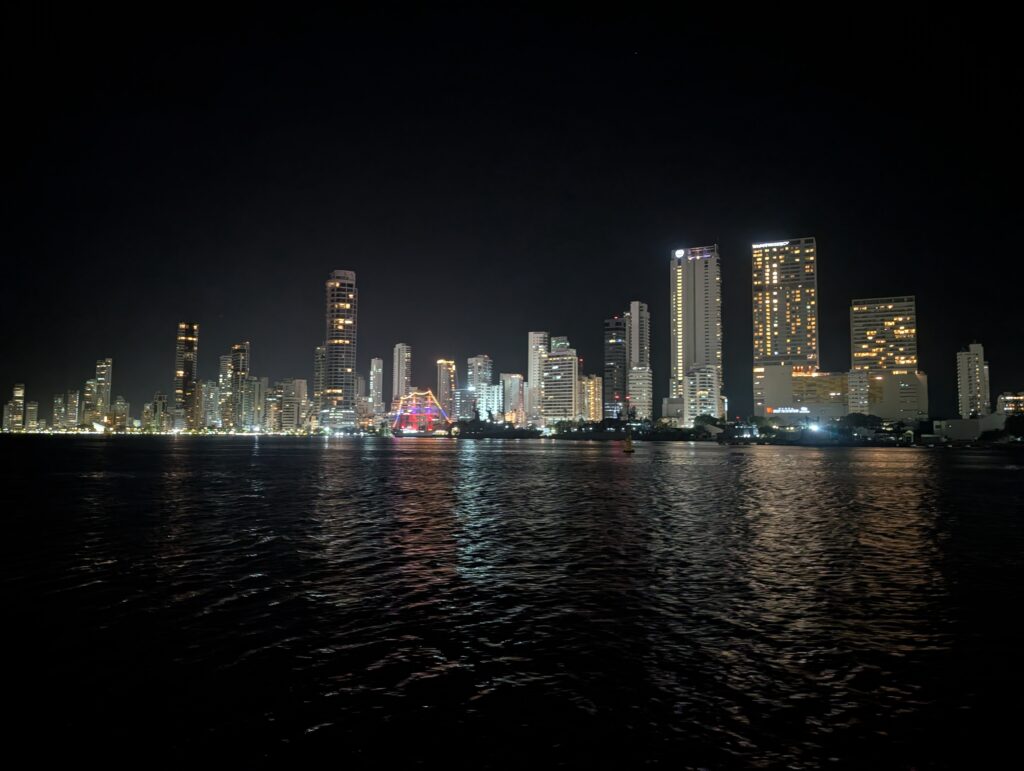
Night Views of Cartagena
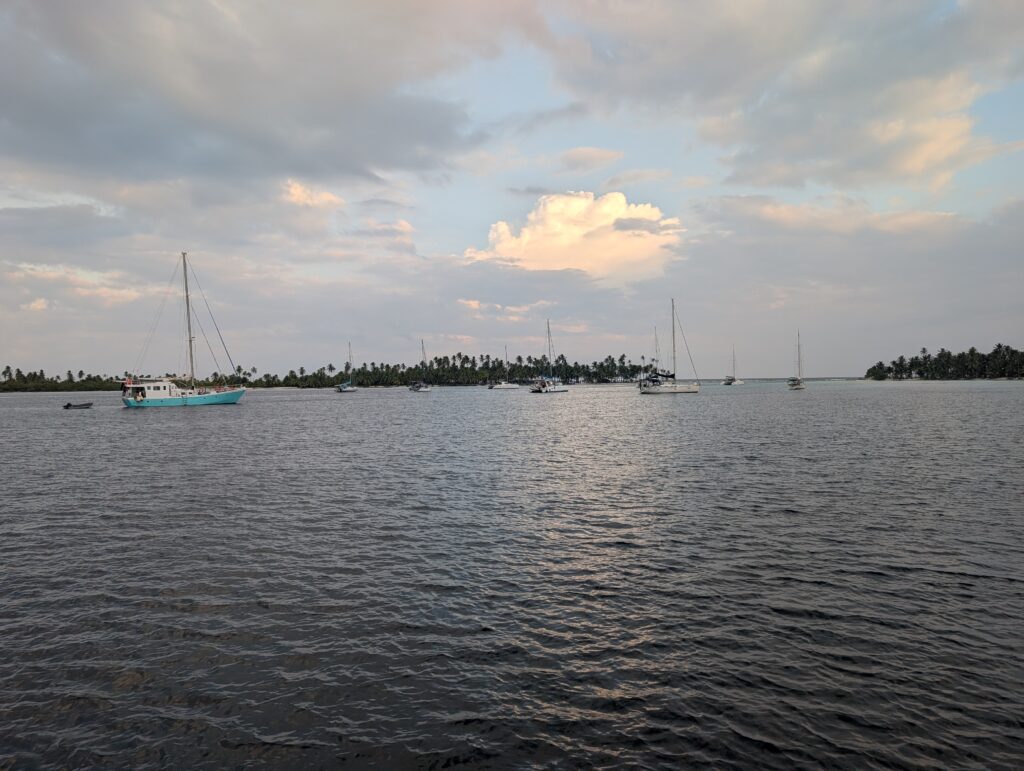
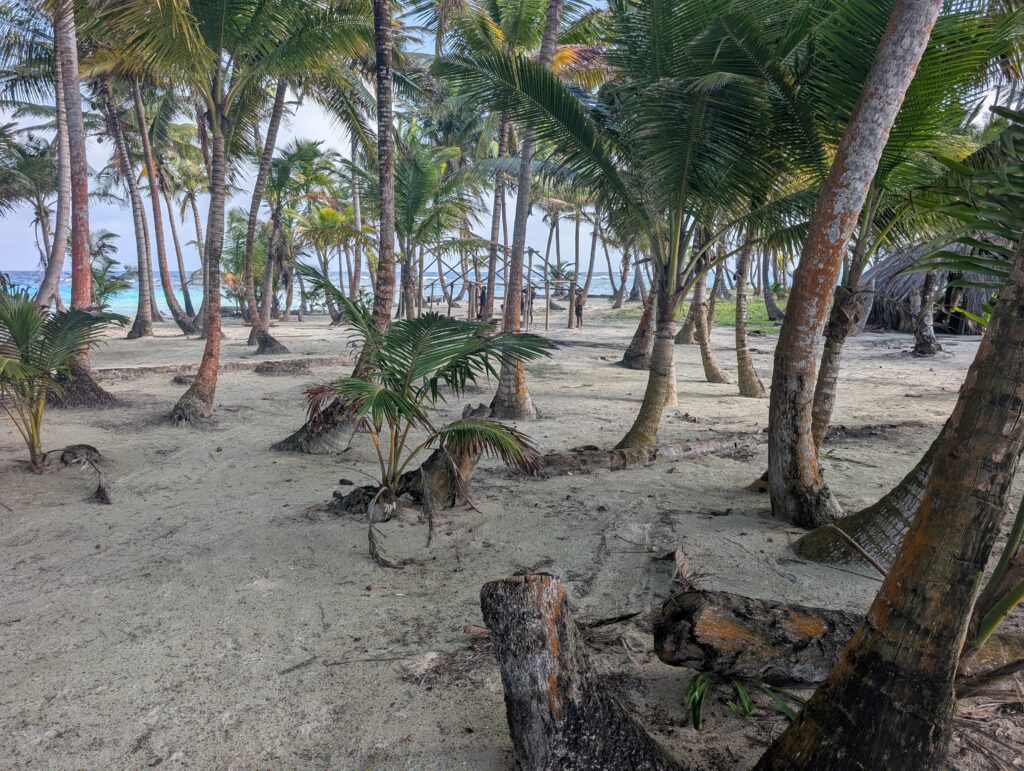
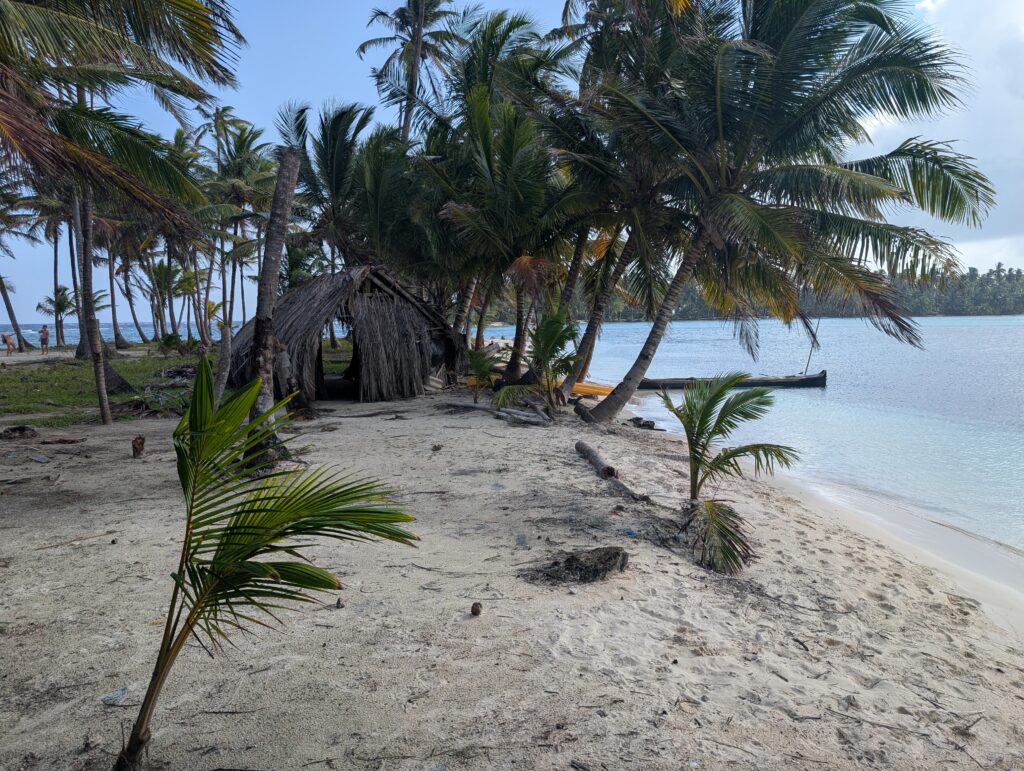
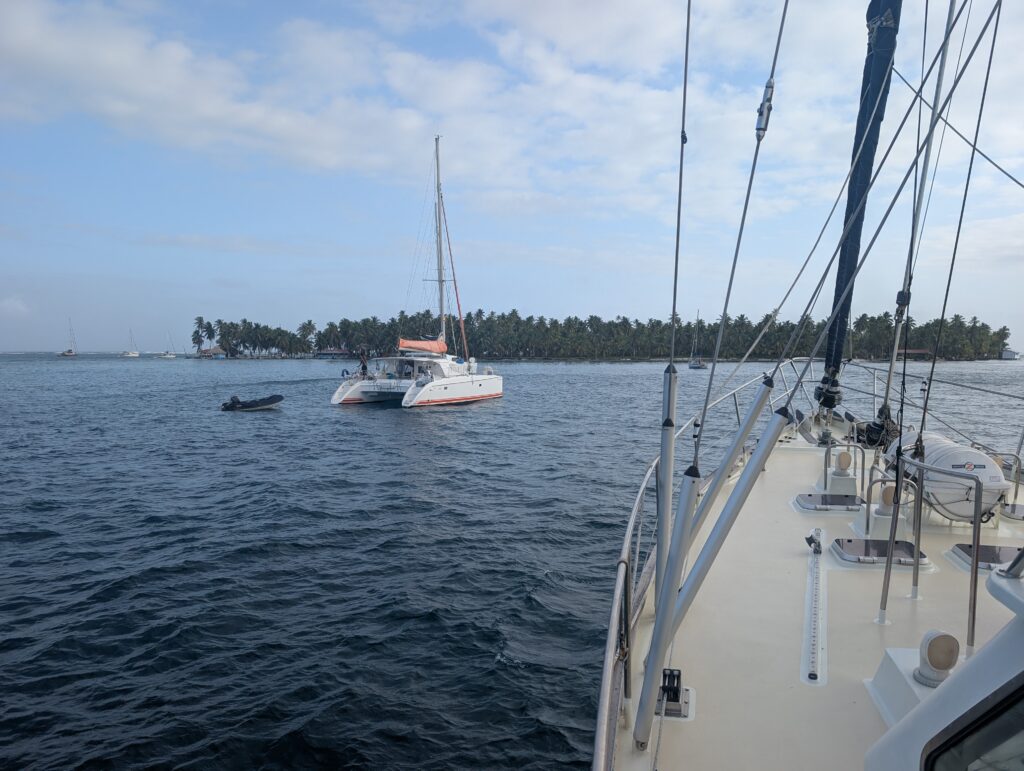
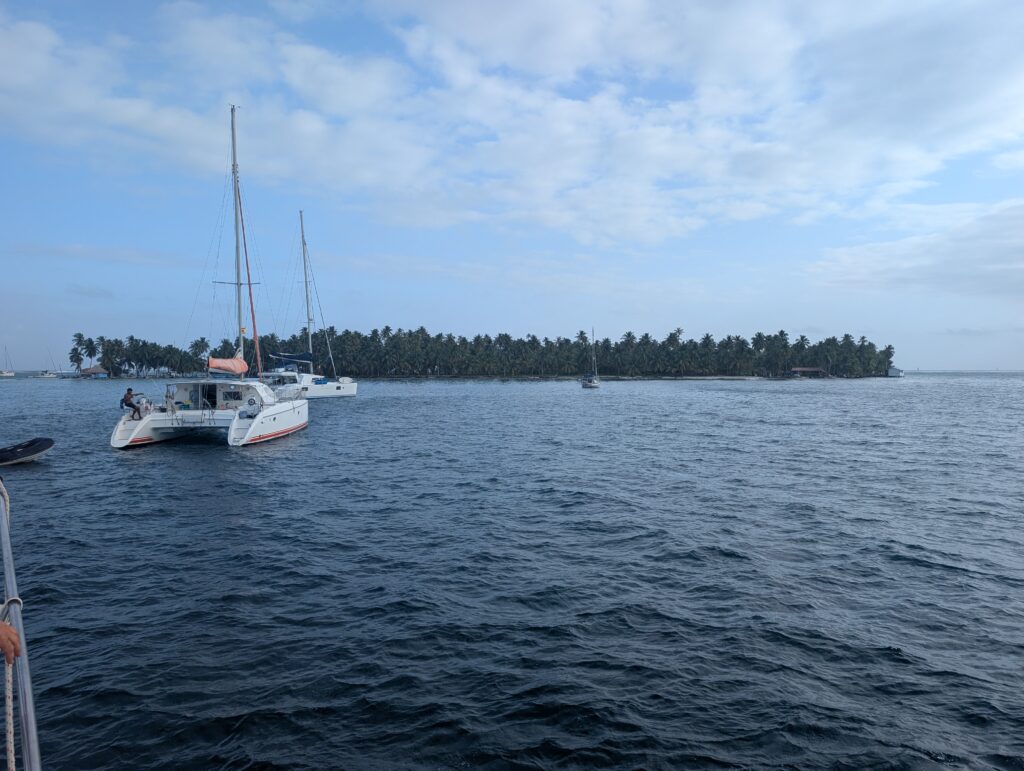
Our First San Blas Island Stop
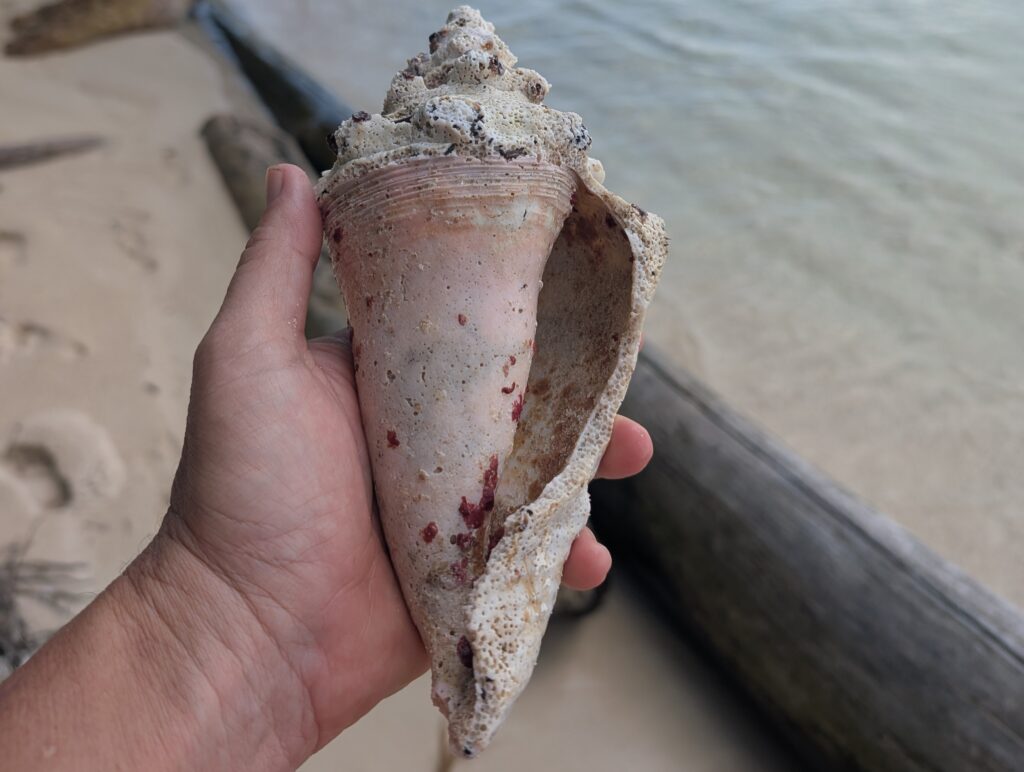
Since I Have the Conch, Does That Mean I am in Charge?
I Got a Bit of Color on Quest's Deck
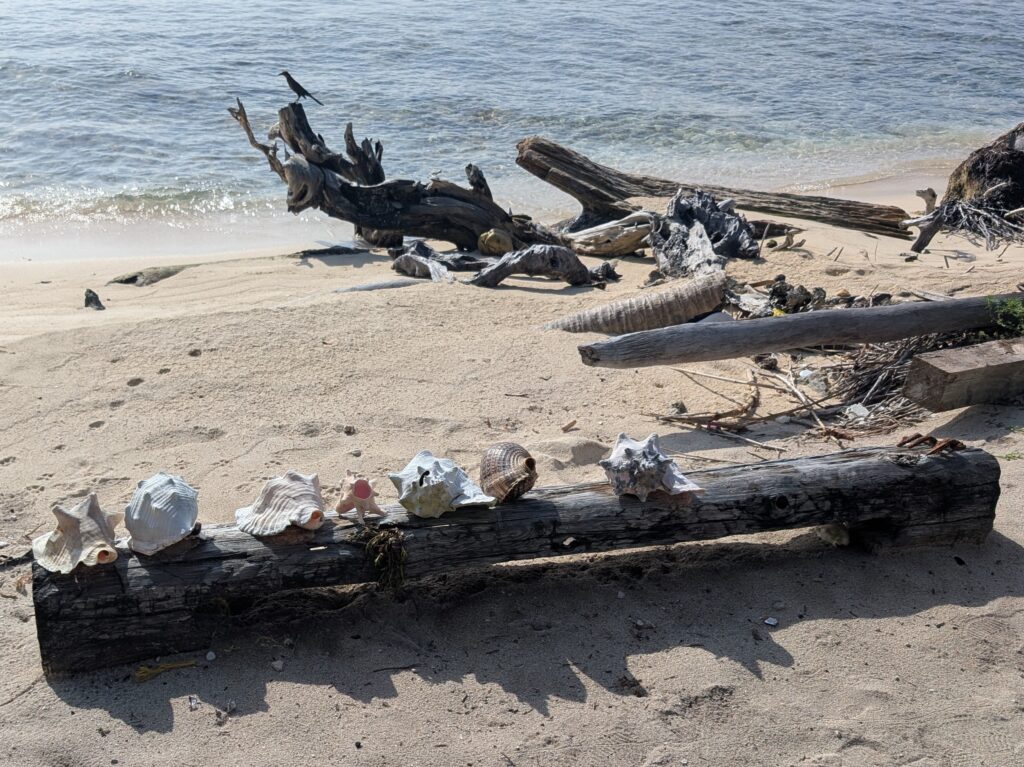
What a Collection of Shells!
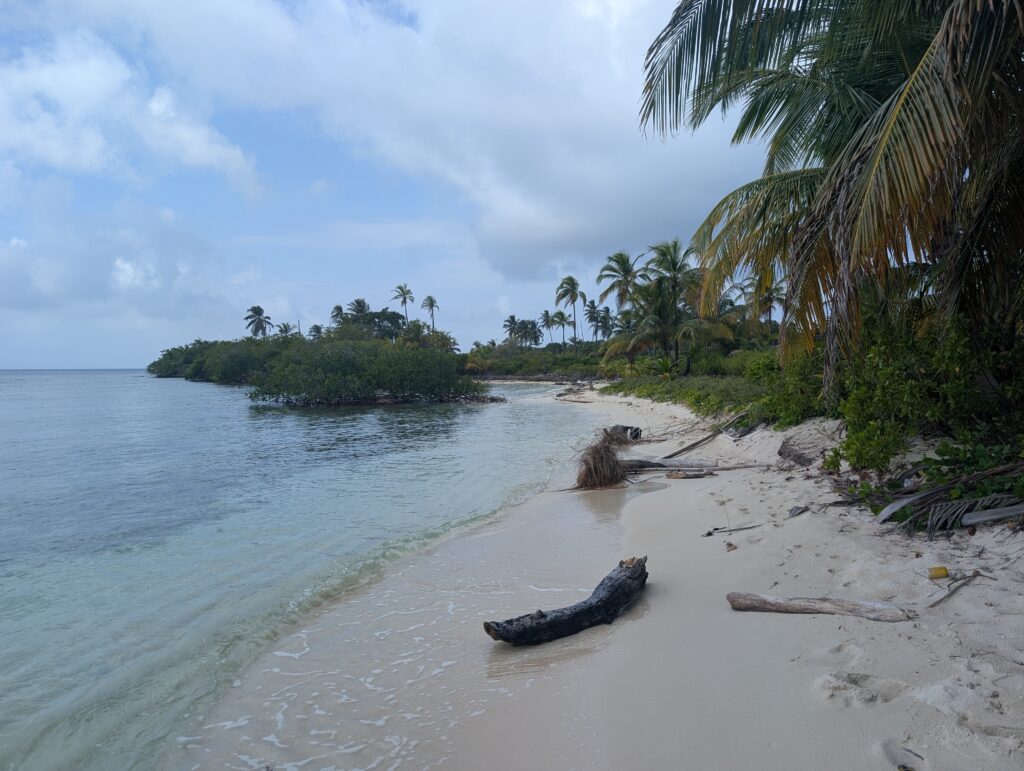
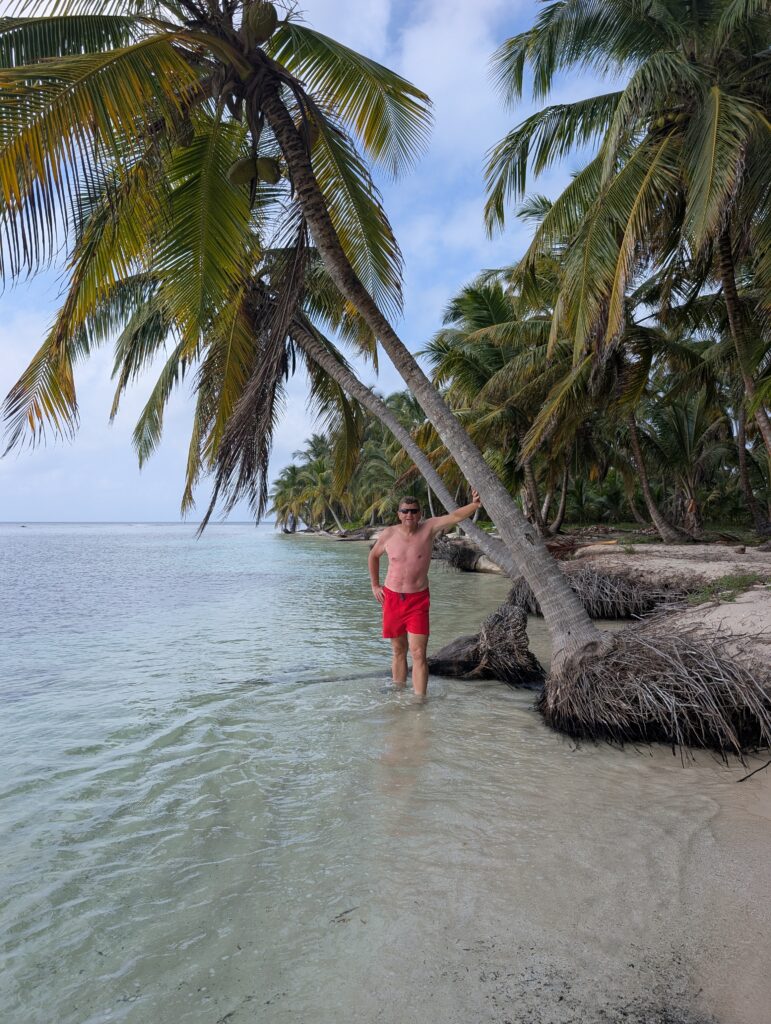
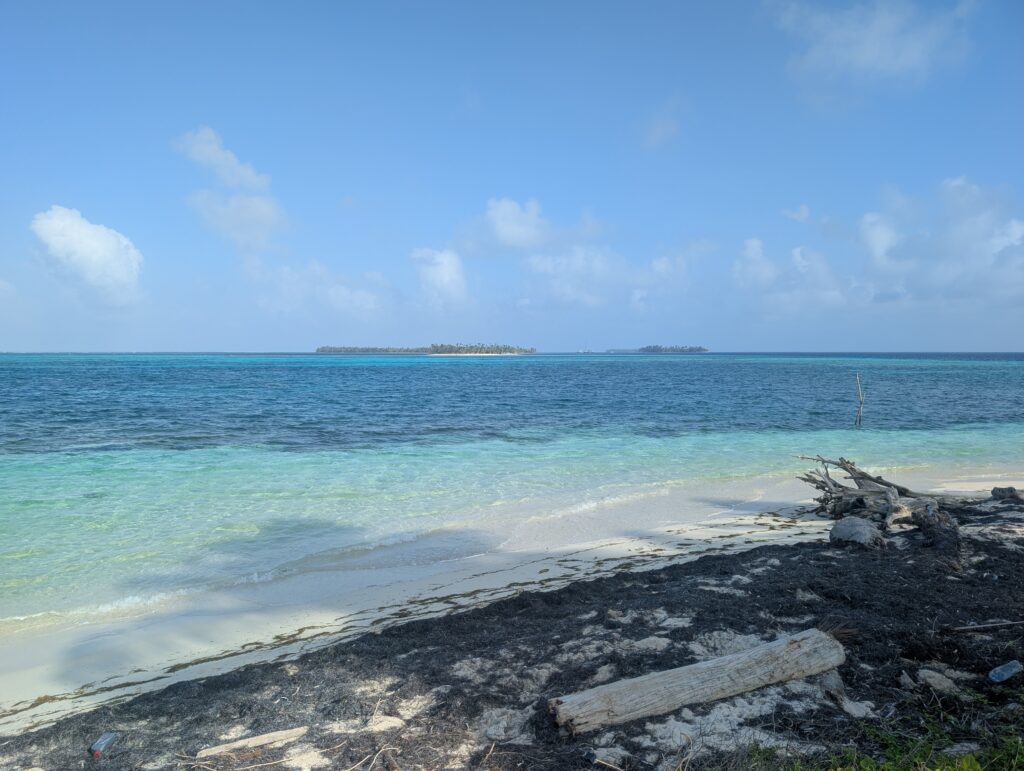
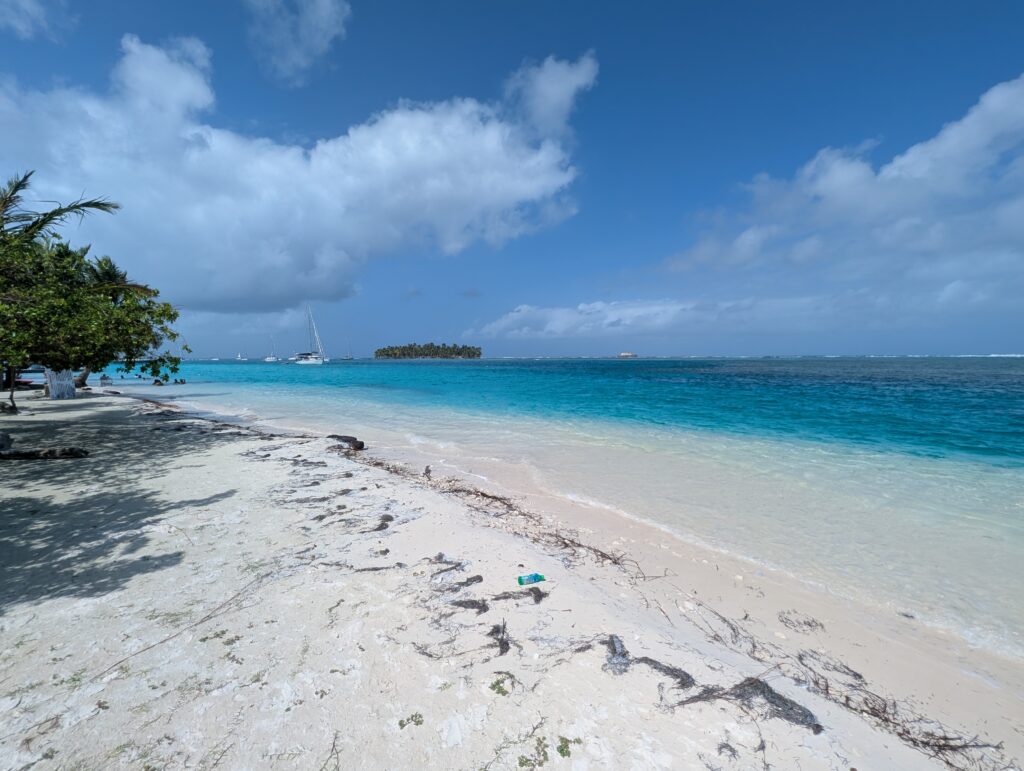
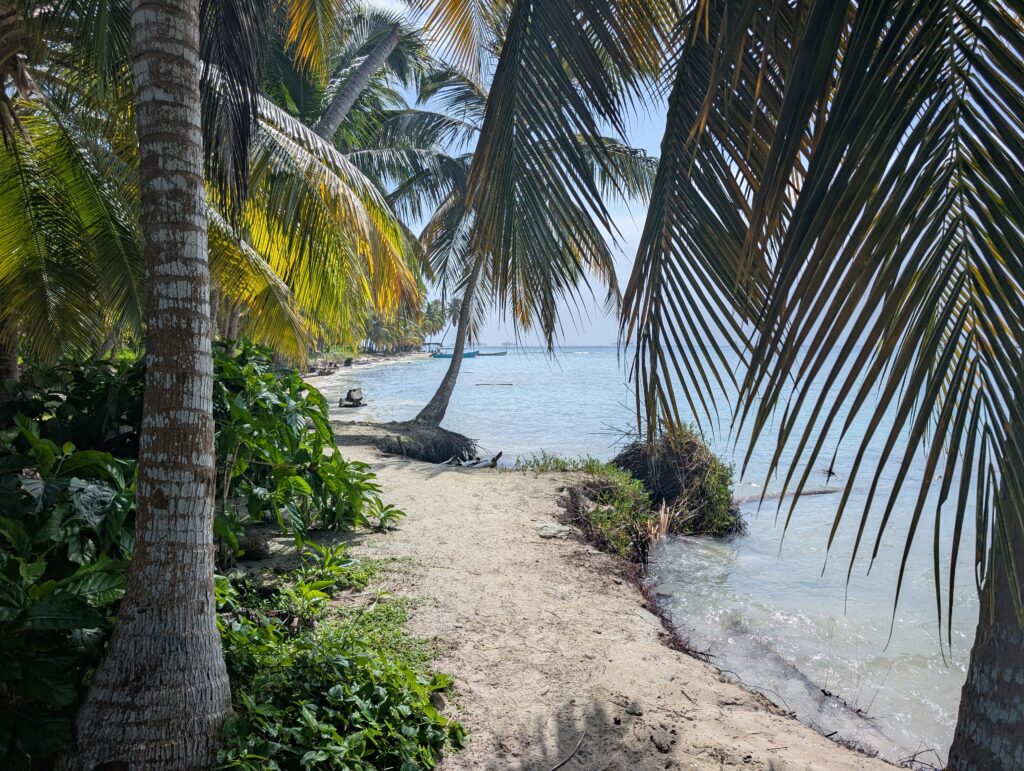
The Caribbean Waters are Spectacular, Though the Beaches are Not Always Pristine
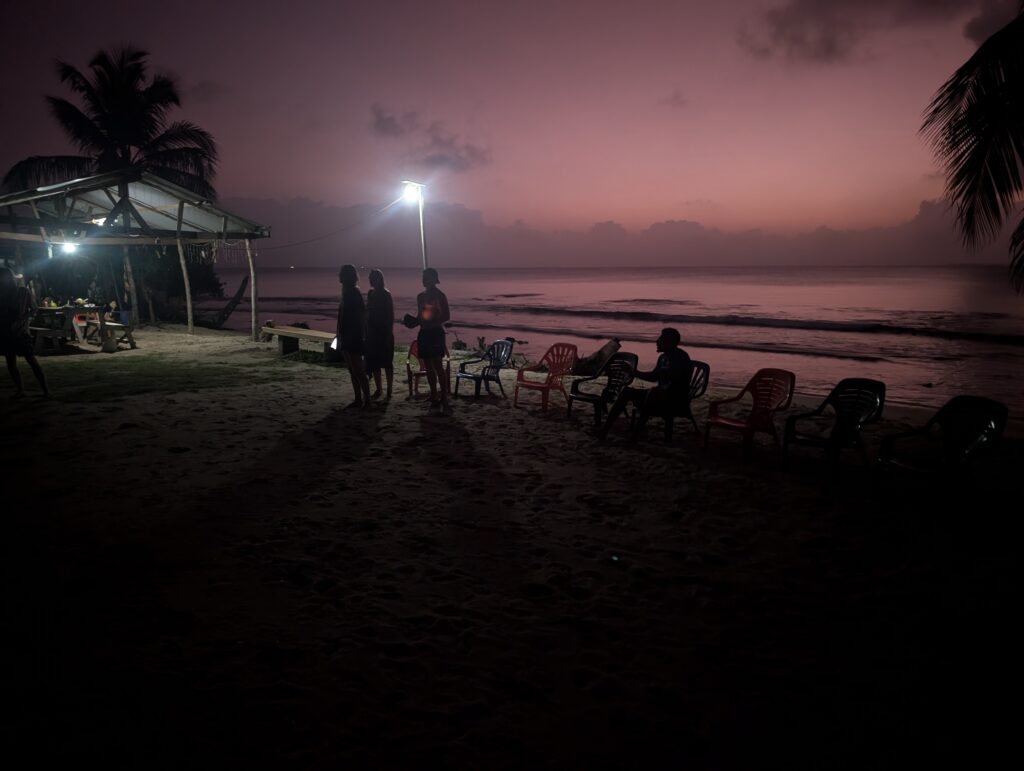
One of Many Amazing Sunsets
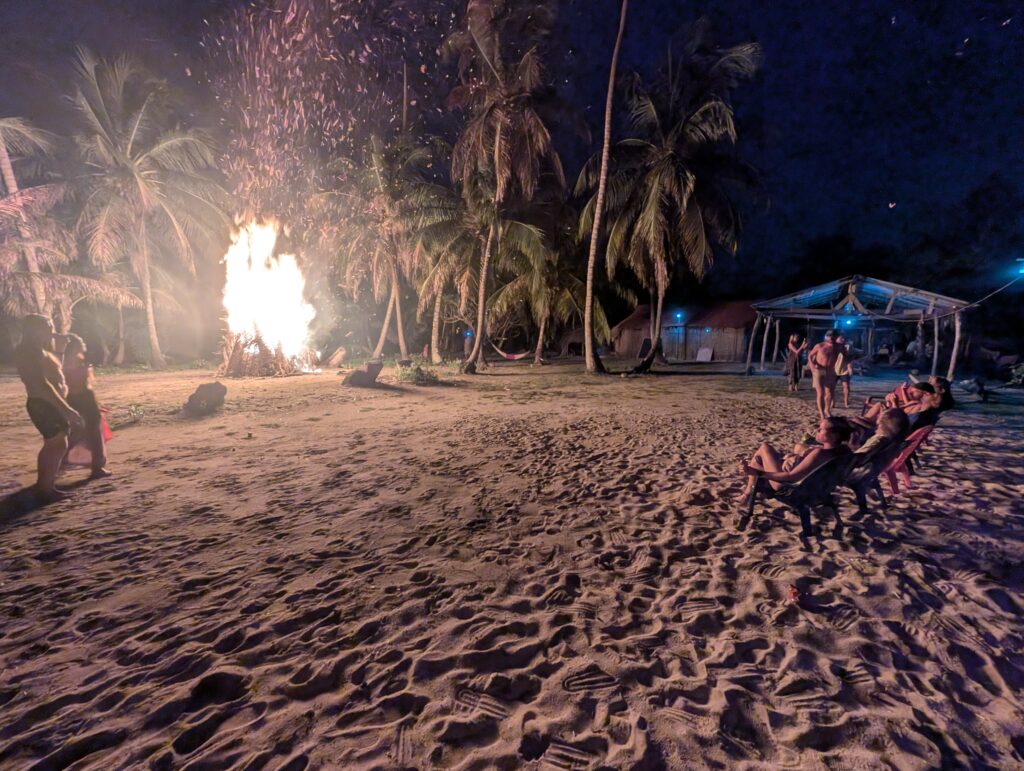
Prepping for the Bonfire
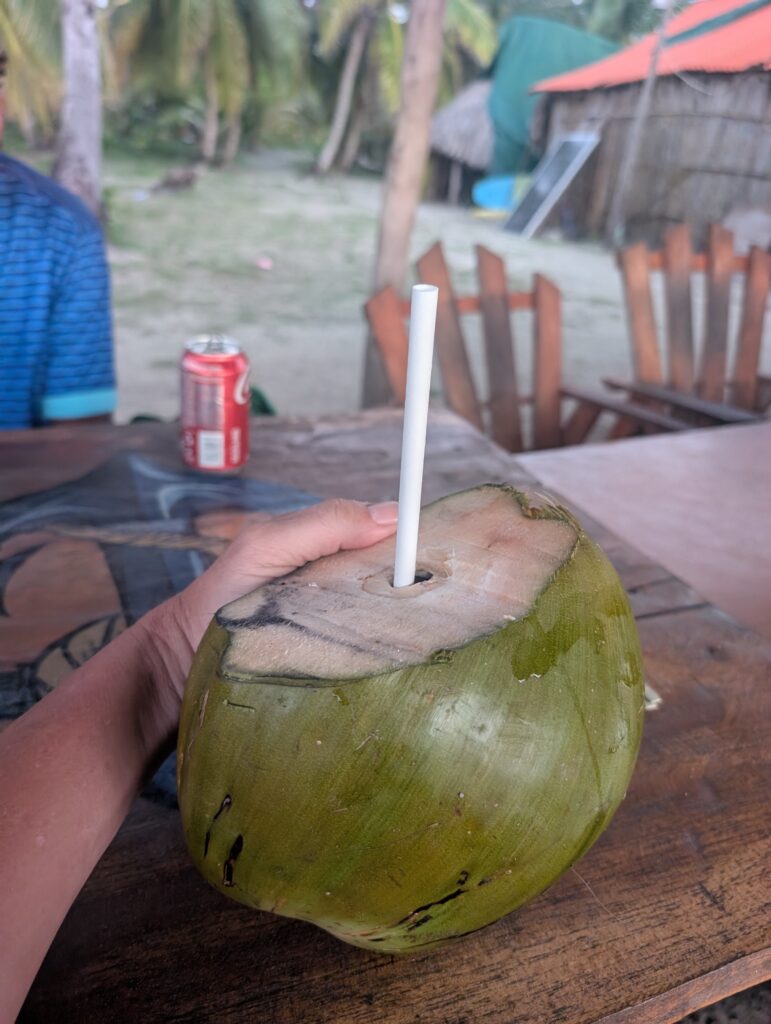
Sampling a Cocoloco

I assume it added a couple extra hours to our initial transit, but we entirely skipped the first of the three islands at which we had planned to stop. We arrived at the second after dark at the end of the second day. All of the Germans seemed miserable throughout both days of our open water cruise. I was occasionally a bit nauseous, but for the most part the Dramamine kept this in check, combined with careful avoidance of reading, writing, and anything else that kept my head inside. I stayed in fresh air, and gazed out at the empty horizon. I took every chance to run the winches and help with tasks to keep myself occupied. Otherwise, laying down on deck also helped some. Thus our time on the San Blas Islands themselves was cut from three days to about a day and a half. The visit was still worthwhile, but of course I would have liked to have made all of the stops.

Our first island apparently had a nice reef that was popular for snorkeling. For the second component of our curse, we discovered that there was a whole flotilla of Portuguese Men of War – the most massive and dangerous form of jellyfish in the sea. Goeran had once been stung by one. The venom from these creatures is paralyzing. It causes major cramps and can drown a person if they are stung in deep water. Our captain did not forbid us to swim and snorkel, but strongly advised against it. This stop was at two small islands marked on the map as Cayo Holandes, though Goeran and Hilda knew the place by a different Kuna name.

We were transported in the Quest’s rubber dinghy to the smaller of the two collocated islands for a couple of hours between breakfast and lunch. I walked the walkable part of the island. The others tried to swim, but one of the Dutch girls was almost immediately hit by a small piece of one of the jellyfish. True to form, this did more than just sting. She felt a shooting pain down the nerves in her leg, and got major cramps in her hip flexor on that leg. We didn’t have a way to get in contact with Goeran or Hilda, and so flagged down a dinghy from another vessel, which kindly hauled both Dutch girls back to Quest to be examined and treated. For obvious reasons, the others seemed reluctant to swim. I found a nice place with a lot of clear sand where I felt like I could see any approaching jellyfish, and got out into the water. Eventually, there was a Brazilian family there. I chatted some with the father. We swapped travel stories and advice. They were super friendly folks, and I appreciated the chance to visit.

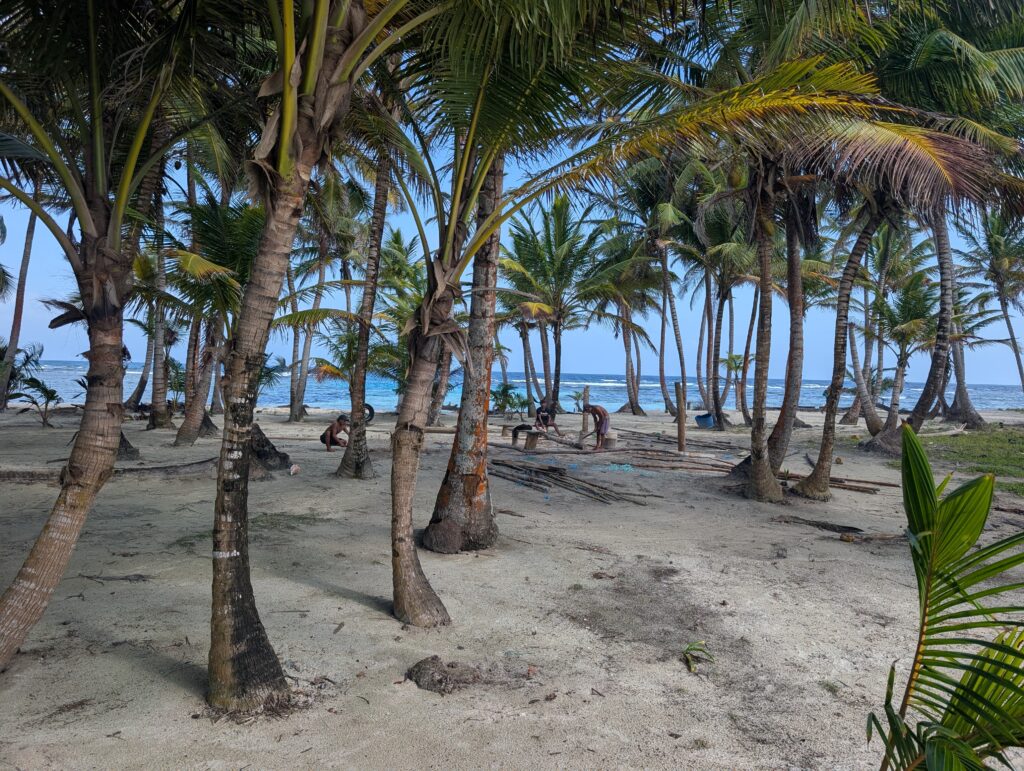
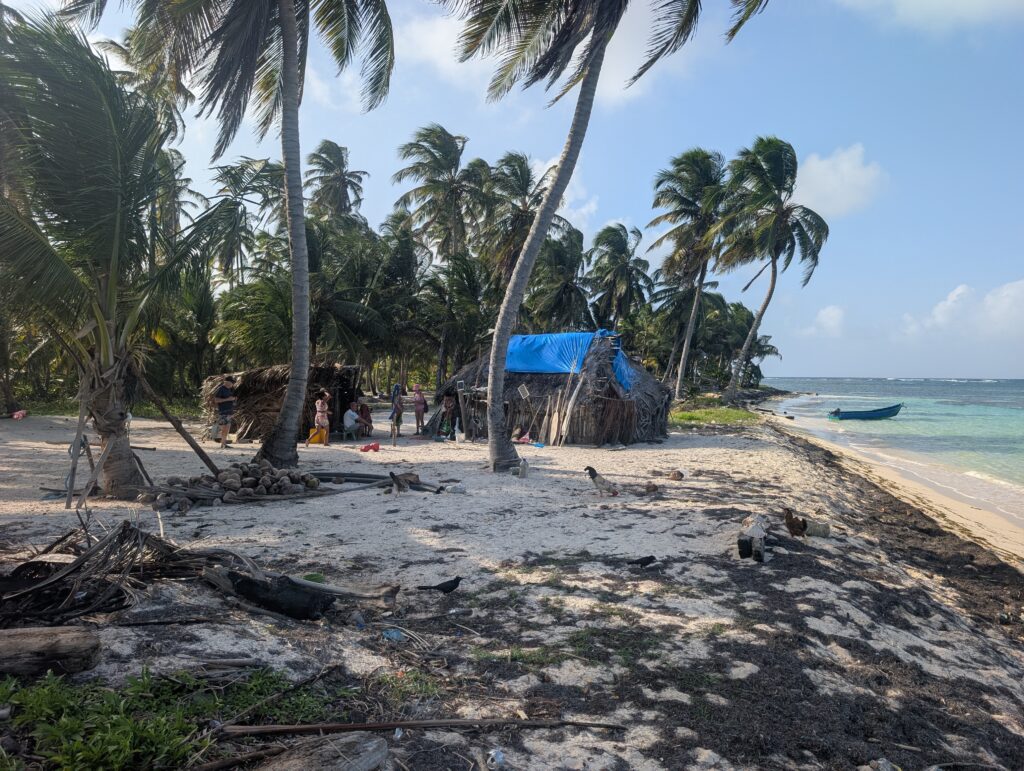
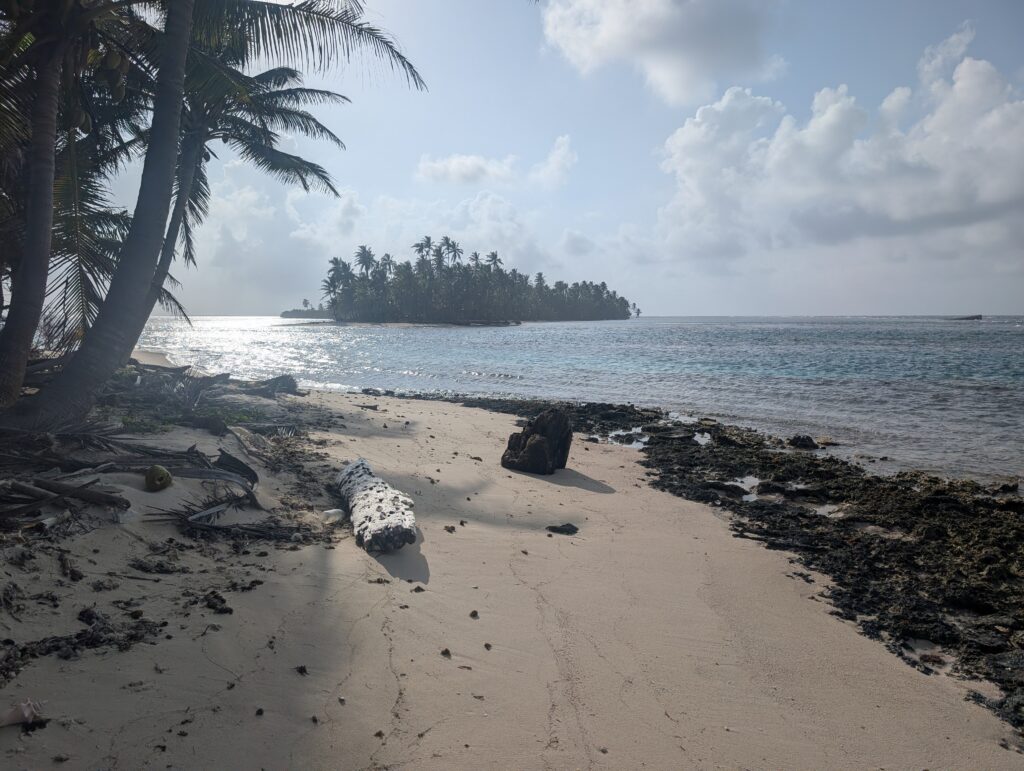
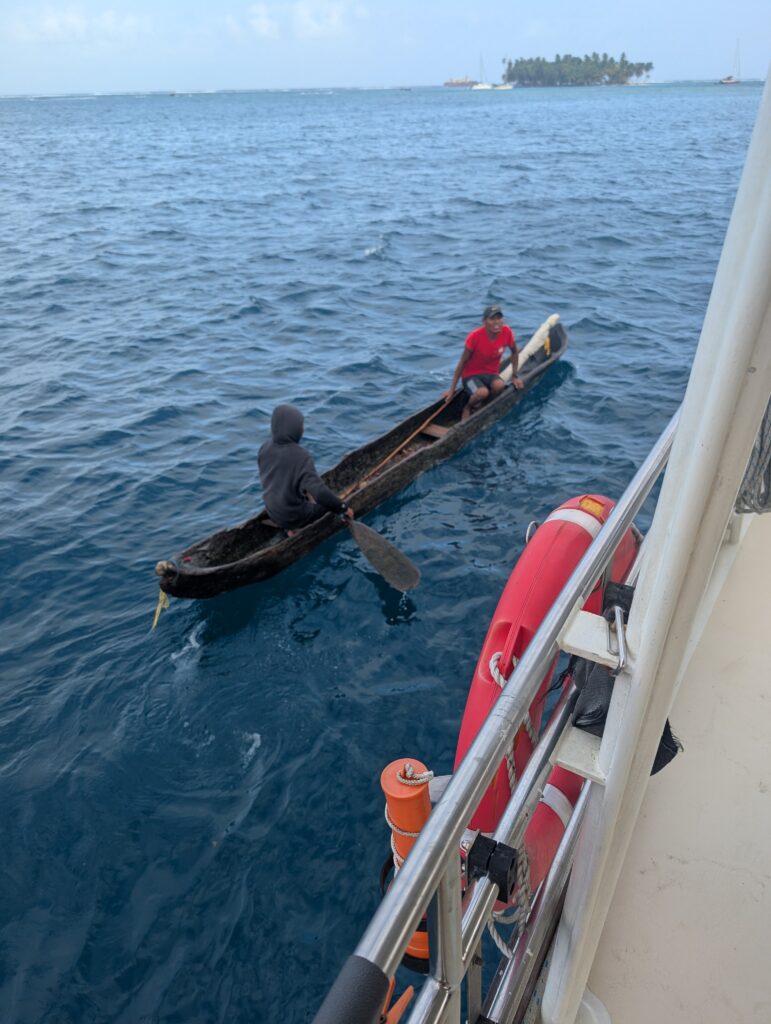
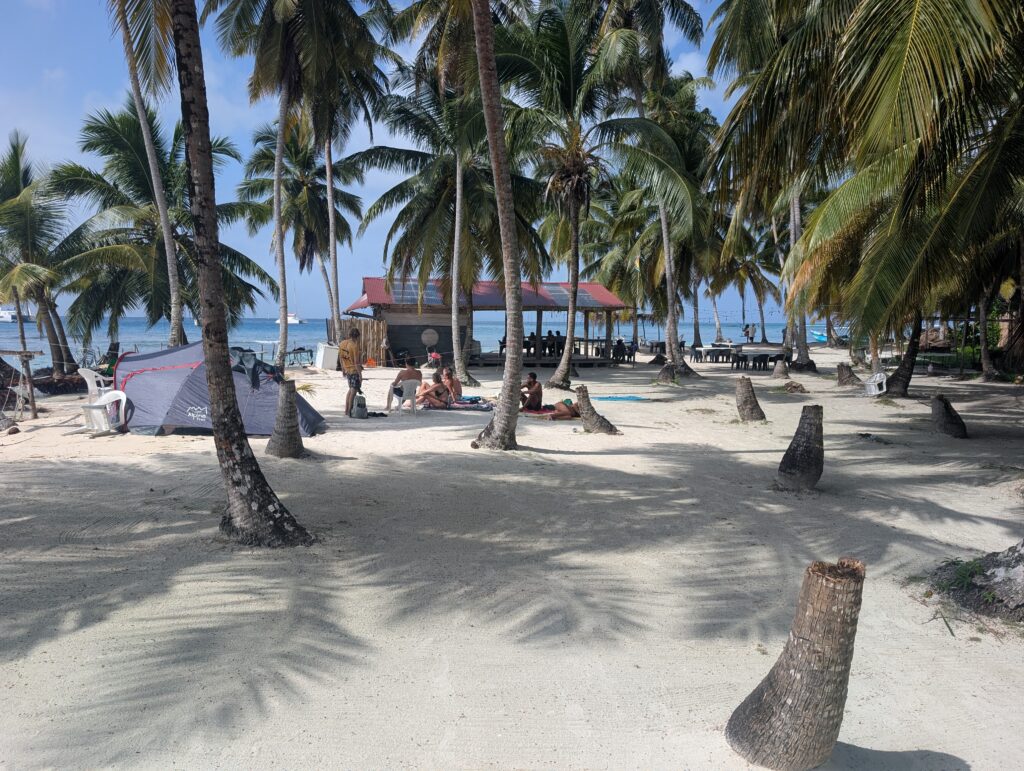
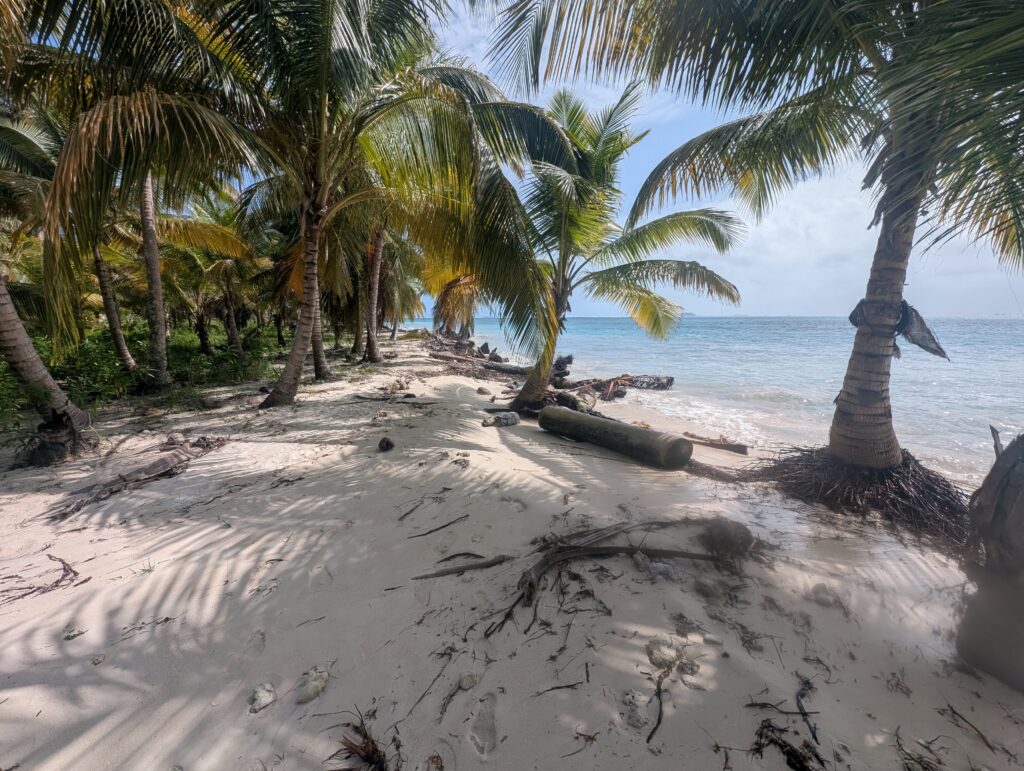
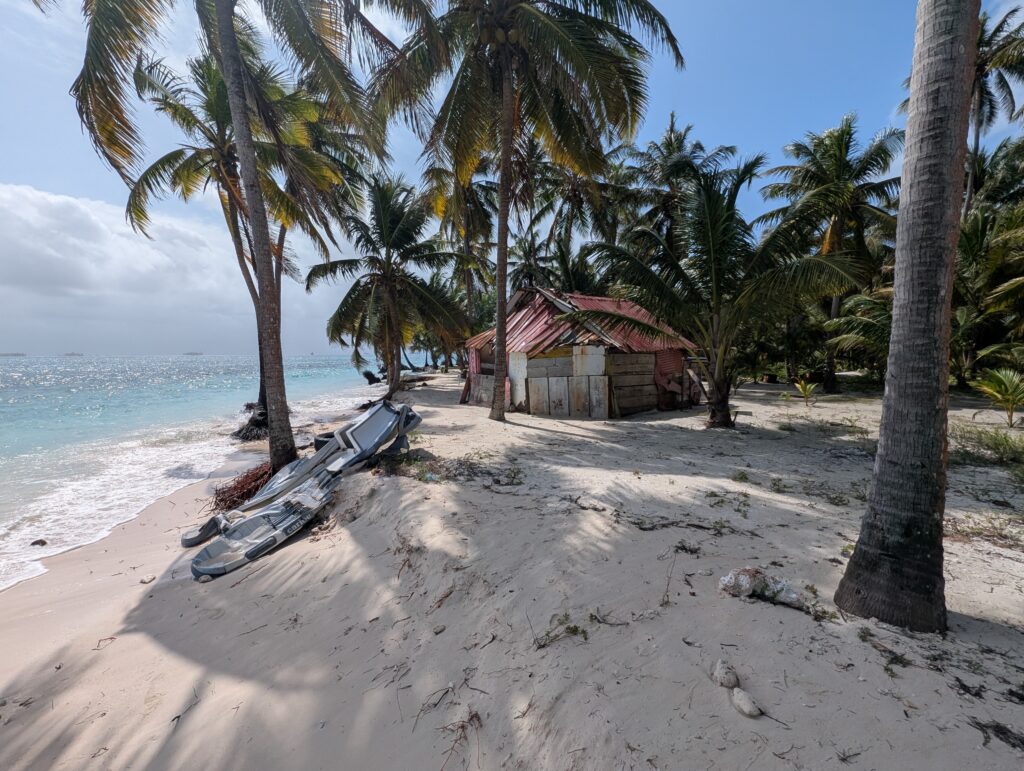
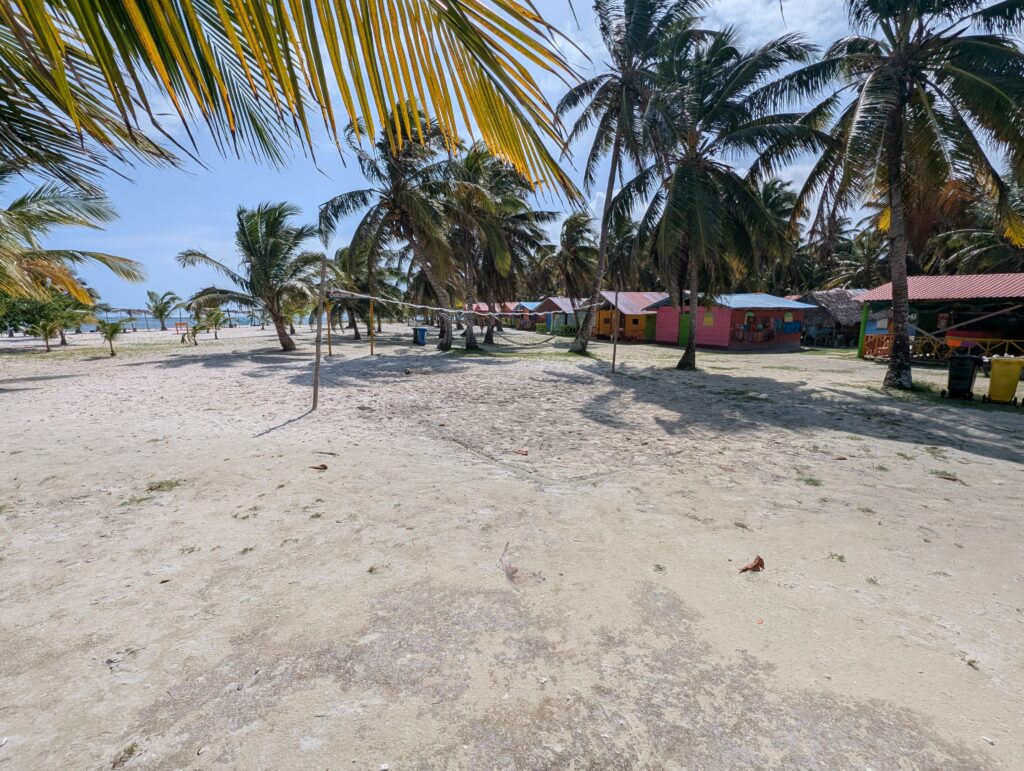
We were shuttled back to Quest for a delicious lunch, and rested on the boat for part of the afternoon. At about four, we were dropped back off on the larger island to explore some more. Again I swam. Again I walked the circuit of the island. I found some cool shells. I took some nice pictures. I was struck by the amount of plastic trash, as I sort of pictured this area as a protected coastal paradise. In many ways it is the picture of Caribbean escapism. There is trash, though, and the native people living here are doing so in pretty Spartan conditions. Most of these islands have native Kuna people living on them, trying to scratch out a living collecting coconuts for $300 a month, or peddling souvenirs, beer, and rustic travel services to tourists on visiting boats. I found a few of their huts. Goeran brought one family he know some fresh water. Apparently, they have only a brackish well on the island. The water can be consumed in a pinch, but it obviously tastes terrible. As you might imagine, they have trouble keeping any young people around who have had any exposure to the outside world.

Goeran and Hilda have a running relationship with the family on this particular island. They made us all cocolocos, and built a small bonfire for us – an experience we had missed by skipping the first, uninhabited island. Cocoloco is simply a coconut from which you drink out enough milk to allow room for rum, which is then mixed with the remaining coconut milk. I tried one. To me, it tasted better with the rum added, as I am not a huge fan of drinking the water straight from the coconuts. We watched the palm frond bonfire burn itself out very quickly, then headed back to Quest for a late but delicious fish supper. The girls played a good mix of music, and several of us sang and enjoyed the evening, calling it a night at a bit after 10:00.

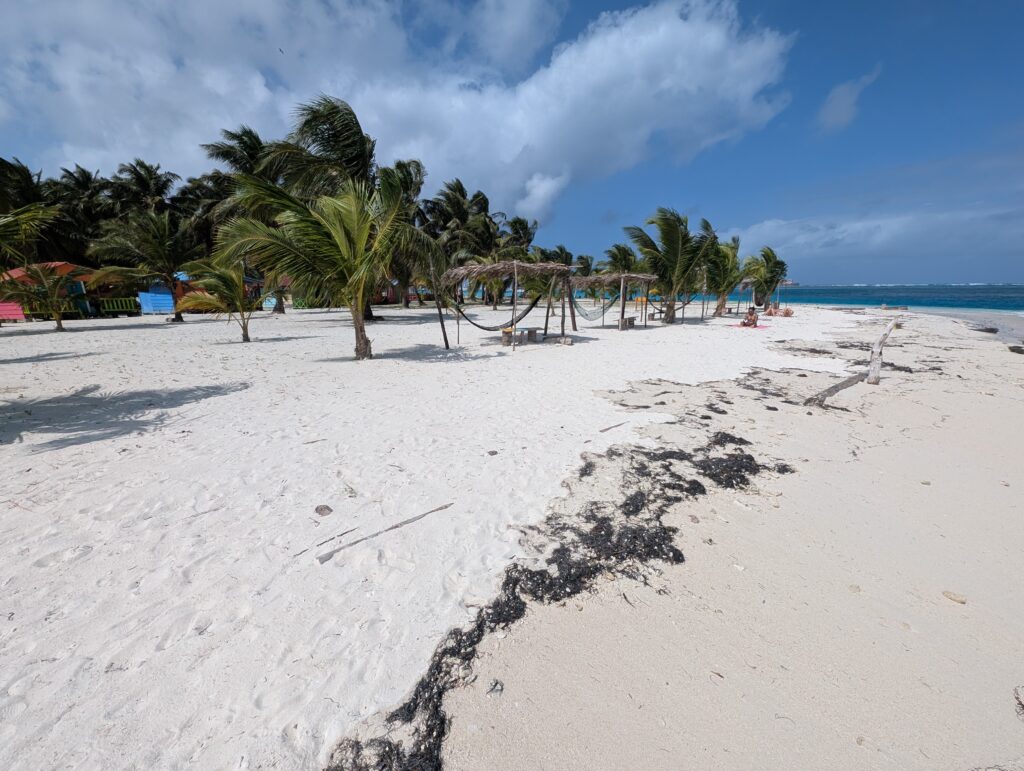
We motored over to our last island stop early Sunday morning. We arrived in time to eat breakfast at anchor, then shuttled over to the island to explore. We swam some and checked out snorkel gear. The snorkeling was not so good, as the reef where we attempted this was not in very good shape. There weren’t nearly as many colorful tropical fish as there had been when Andrew and I snorkeled in Belize. On top of all that, the water was extremely turbid, making it impossible to see any distance. We quickly gave up. I again walked a circuit of the island. I found a couple of restaurants and very rustic resorts on the opposite side from where we landed. It never took more than fifteen or twenty minutes to walk the entire circumference of one of these islands.

With plenty of time to kill, I got back in the water to cool down, then headed over to the bar to sit with the Dutch travelers. They sat speaking in Dutch, so I had very little to do. I wanted to buy a soft drink. This would cost two dollars, but none of us had anything smaller than a twenty. They didn’t have change, so we asked them if we could buy two drinks – one for my Dutch friend Nik and one for me – and then get change. This, too wouldn’t work. I eventually gathered that this largely was a problem because the Kuna girls working the stand didn’t know enough math to be able to make change for a twenty. They eventually told us that we needed to buy five drinks, and then they’d give us change. So we bought four two dollar drinks and a $1.50 water, and they gave us $5 in change for a twenty. I did eventually use enough of my Spanish to convince them to give me a second five. I didn’t figure it was worth the effort to try to get the other fifty cents. We called it a day and waited for Goeran to come back with the rubber dinghy.

We had some nice wraps for lunch and then spent the early part of the afternoon lounging on the boat. We would depart at 4:00 so as to make it back to Puerto Lindo with our crippled boat by morning on the 19th. As it turned out, we had a very nice assisting wind that allowed us to keep over seven knots for most of the evening. We briefly even hit eight. We arrived in Puerto Lindo at about midnight. Seeing this as a probability, I slept the last couple of hours on the deck going into Puerto Lindo. I woke about when we were turning into the harbor, went to the bathroom, then hit the sack since the hatches would then be open allowing air to circulate in the cabins below deck.

(Continued)

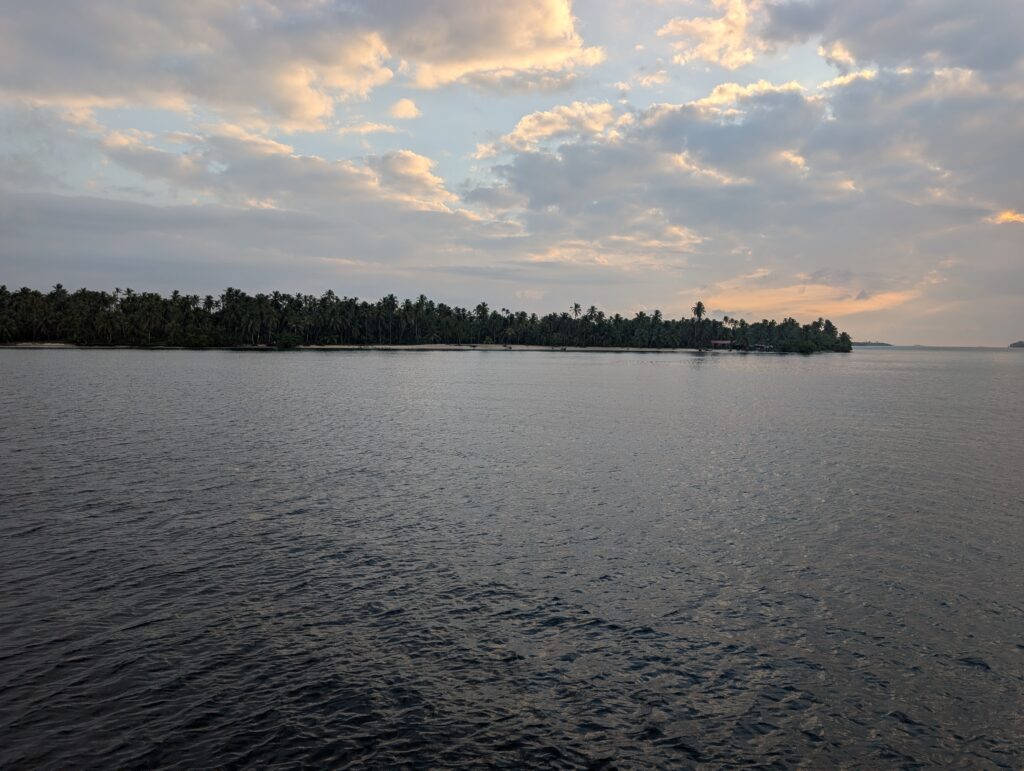
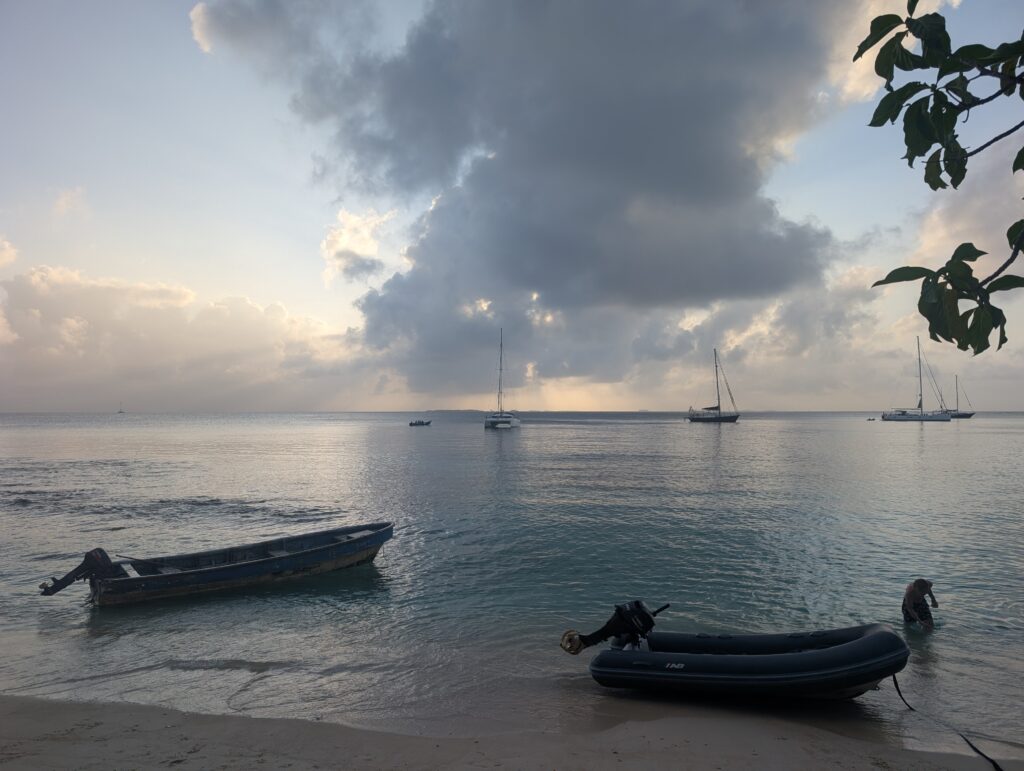
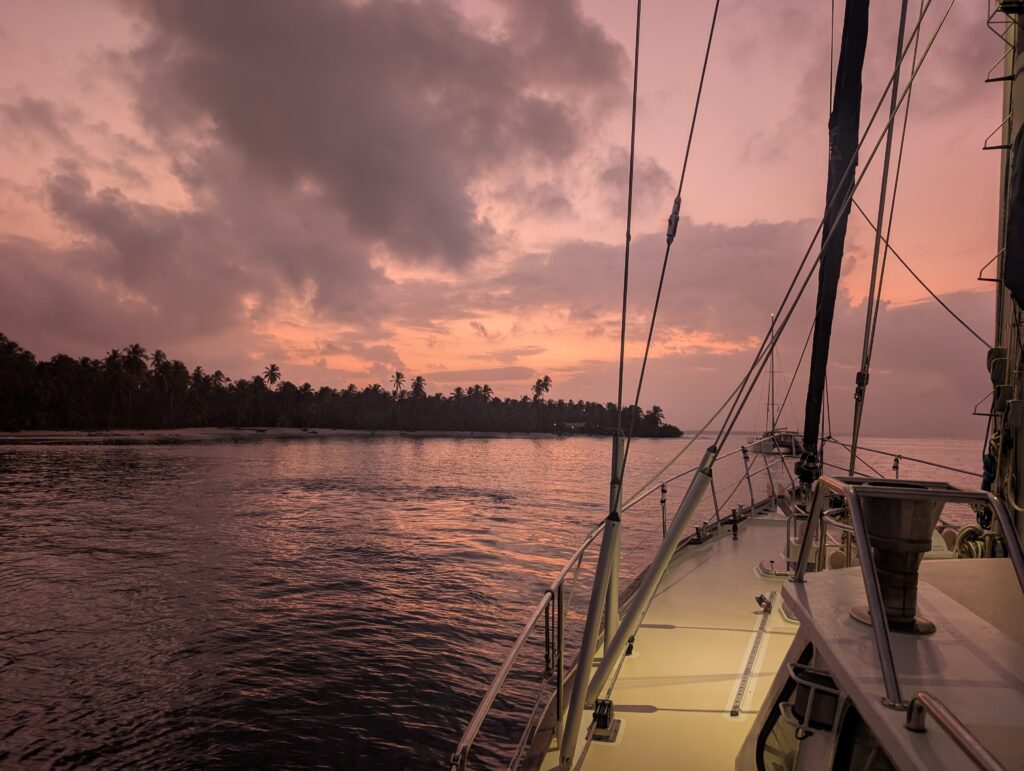
Dawn of 2nd Day in the Islands
Here Come Some Locals at our Second Stop, Hoping for a Sale
A Few More Amenities on This Island
Locals Seemed to Live in Pretty Rustic Circumstances
A Resort of Sorts
Our Passengers on Quest

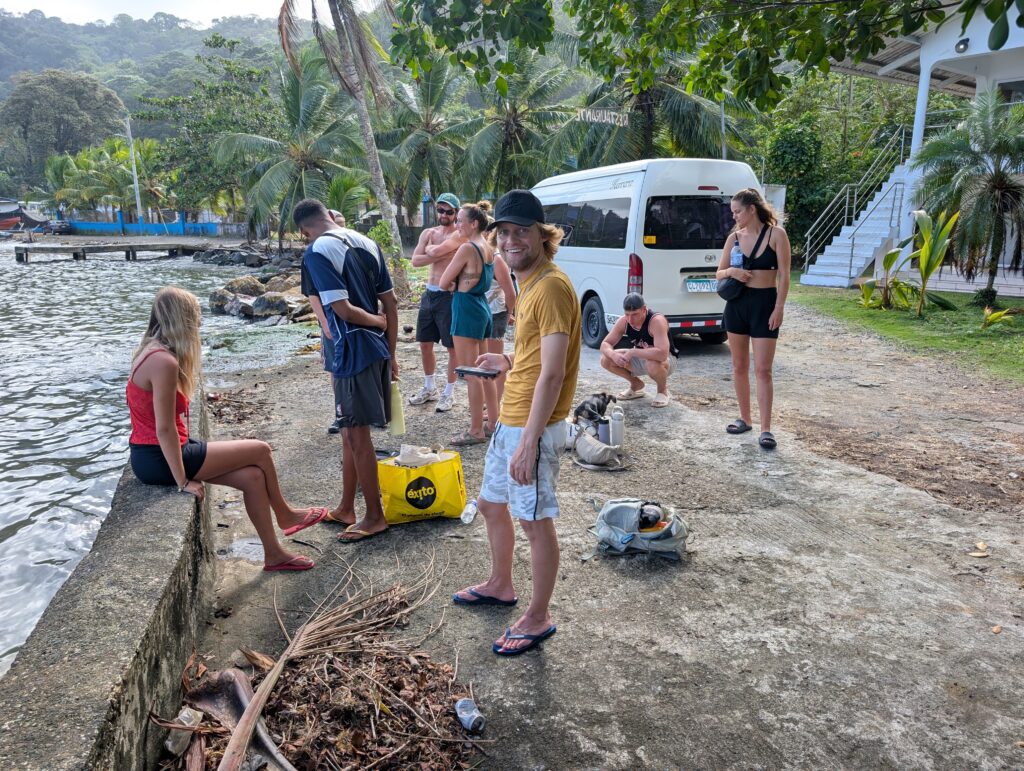
I was up early on the 19th, and wrote Stephanie a letter. I then prepared my things to disembark. Hilda made us a tasty breakfast of apple spiced oatmeal along with the usual excellent fruit tray. We ended up waiting quite a while to leave Puerto Lindo since Goeran had some trouble with the local immigration office. Apparently, that business is usually taken care of at Porvenir. Our shuttle driver loaded the other passengers bound for Panama City. I asked how much to drop me off at Portobelo, and he offered me the ride for $10. I knew I could get there for just a dollar or two on the local buses, and it was only about 8-9 miles, so I opted for that route. I bade my German and Dutch travel companions farewell, and set off for the main road to await the bus.

I found a small store a few hundred meters up the road. I grabbed a 1.5l water bottle and a heavy brown piece of sweetened bread of some kind. The bread was only 55 cents, so I decided to try it. The shop owner told me the bus did come by, but only came every two hours and would not come again until the top of the hour (it was just 10 after). Fortunately, a bus rolled by within five minutes, and before 11:00 I was in Portobelo for the cost of just $1.50.

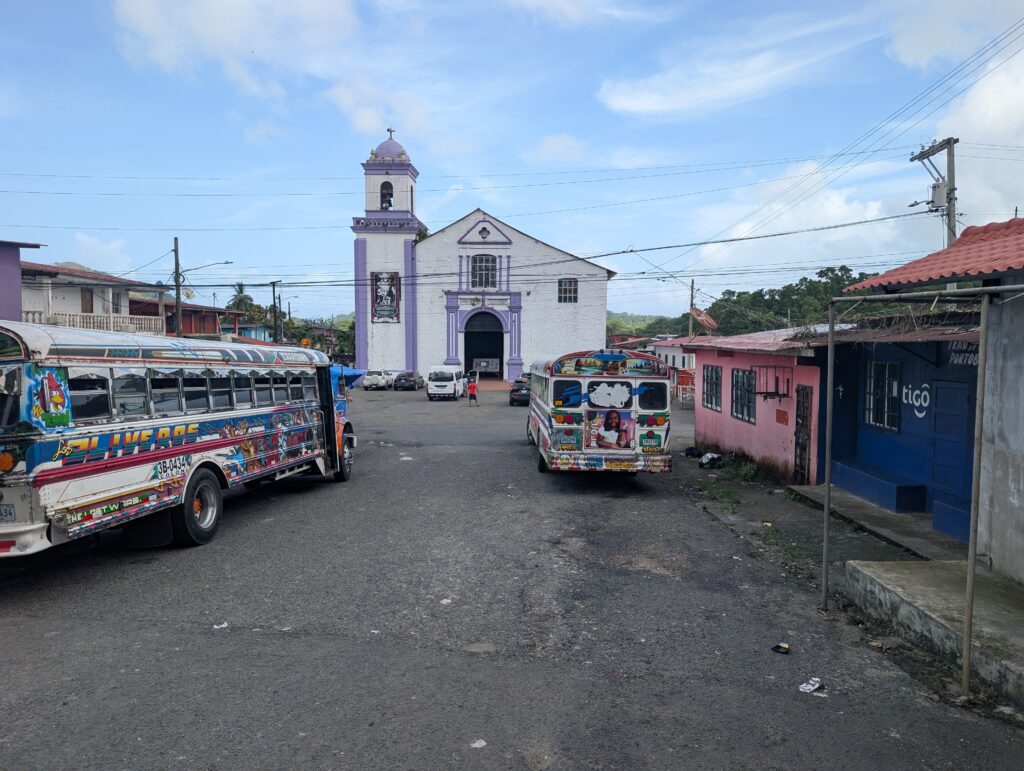
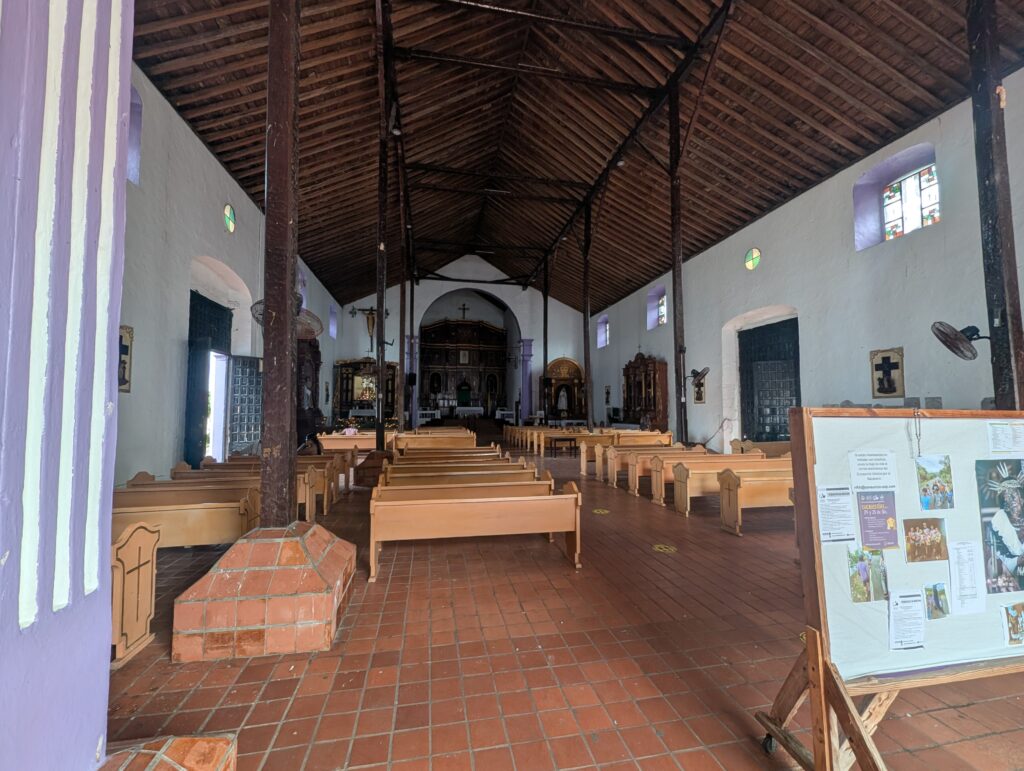
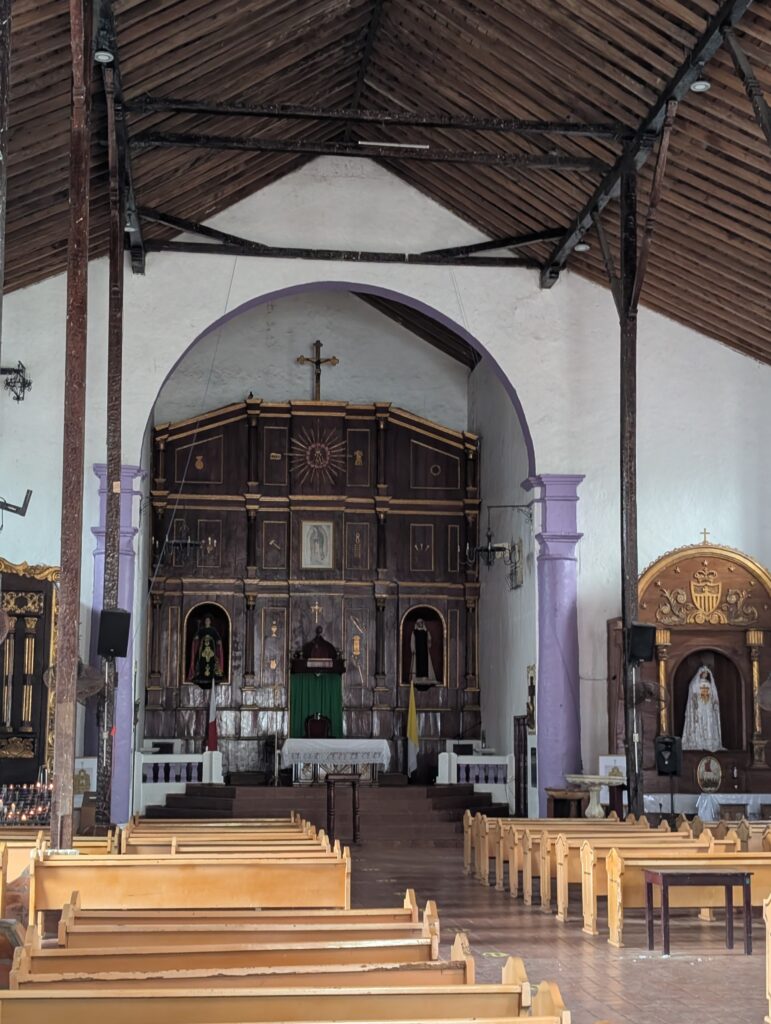
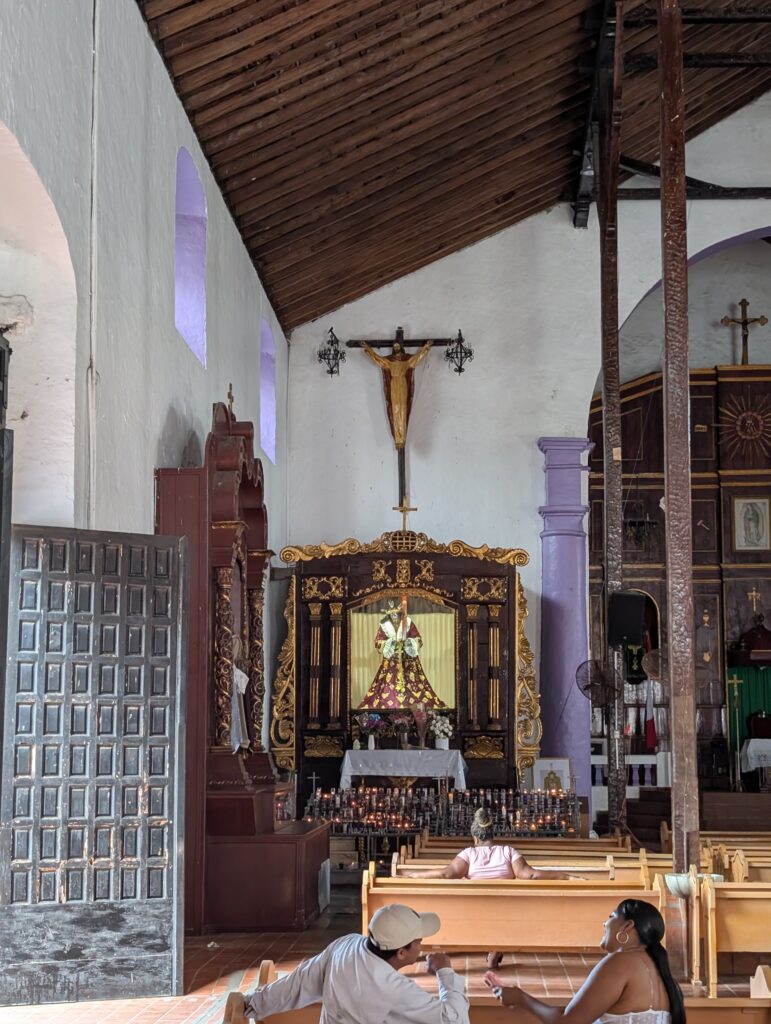
I walked around Portobelo for a couple of hours. It was a beautiful bay. The buildings were a bit run down, but the scenery was fantastic, and the area quite peaceful. I wish I had spent a day there instead of running on down to Panama City, but at the time, I wasn’t sure what I’d do for the rest of the day. I visited the Iglesia de San Felipe, built in 1814. It is famous for its “black Jesus” shrine, which draws pilgrims from the “Congo” culture of escaped slaves and maroons who established a presence very early on in Panama.

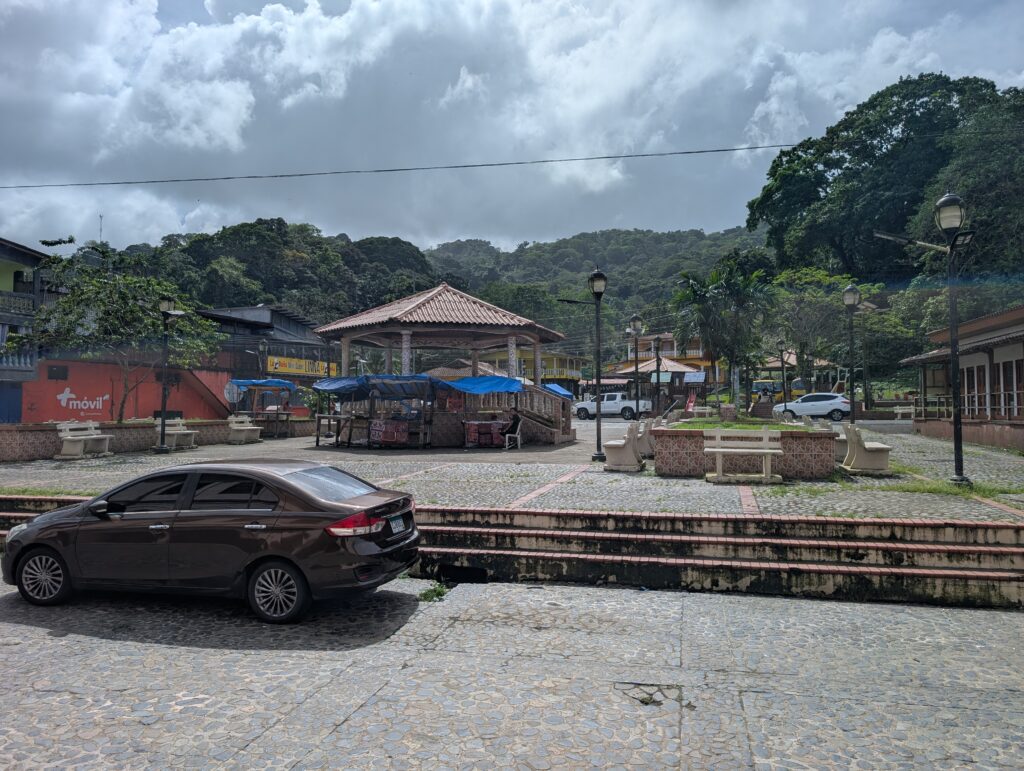
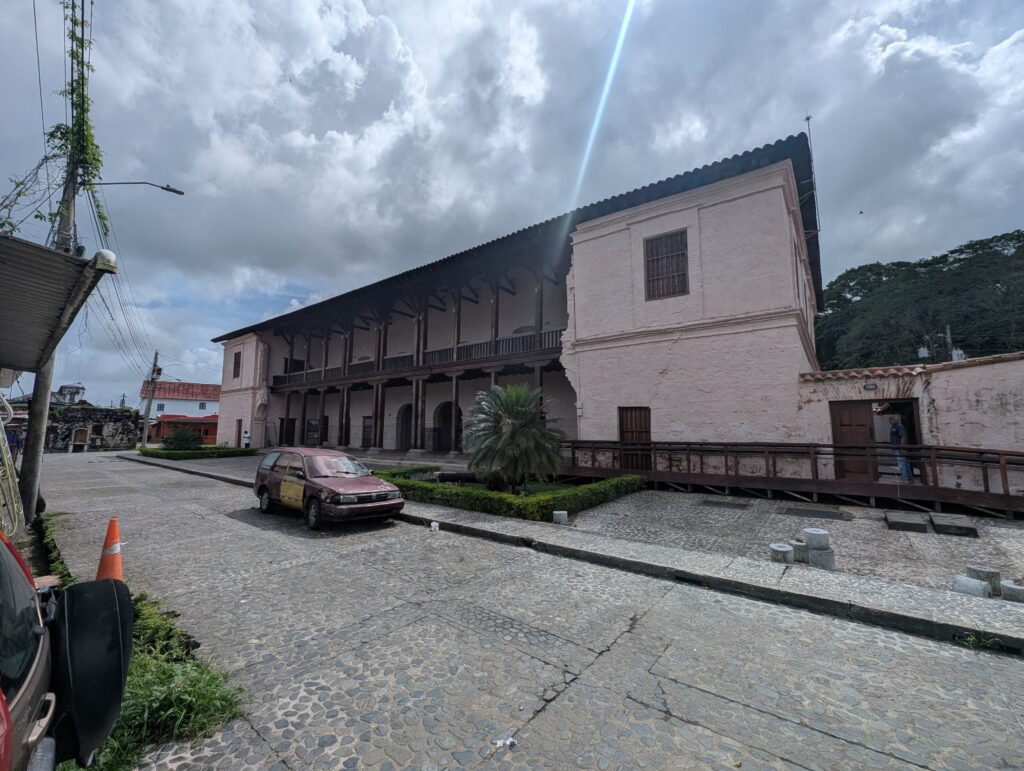
I walked to the Museo Casa de la Aduana – the customs house museum – in the center of town. Apparently, the museum inside has more to do with Congo culture than Portobelo’s history as the point of embarkation for colonial treasure heading back to Spain. The museum was closed Mondays, though the internet said otherwise. I guess I didn’t miss all that much, since I’m more interested in the Spanish treasure transport, and the British and piratical raids on the place. I walked the nearby town square, and grabbed something to drink. I visited another monument.

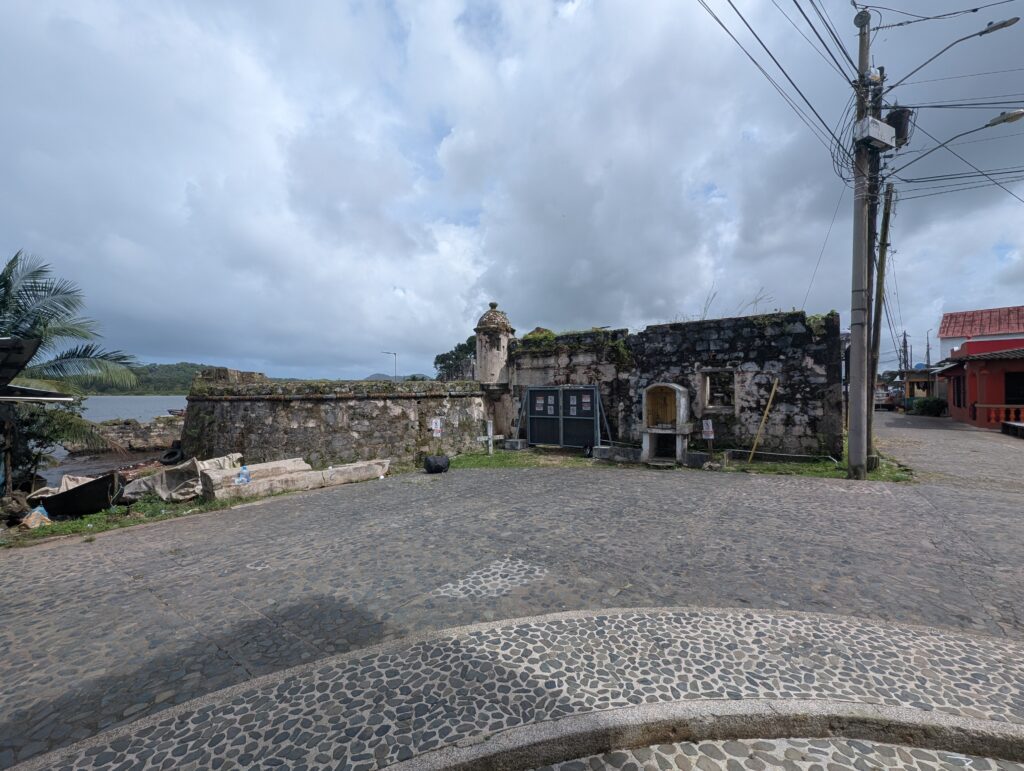
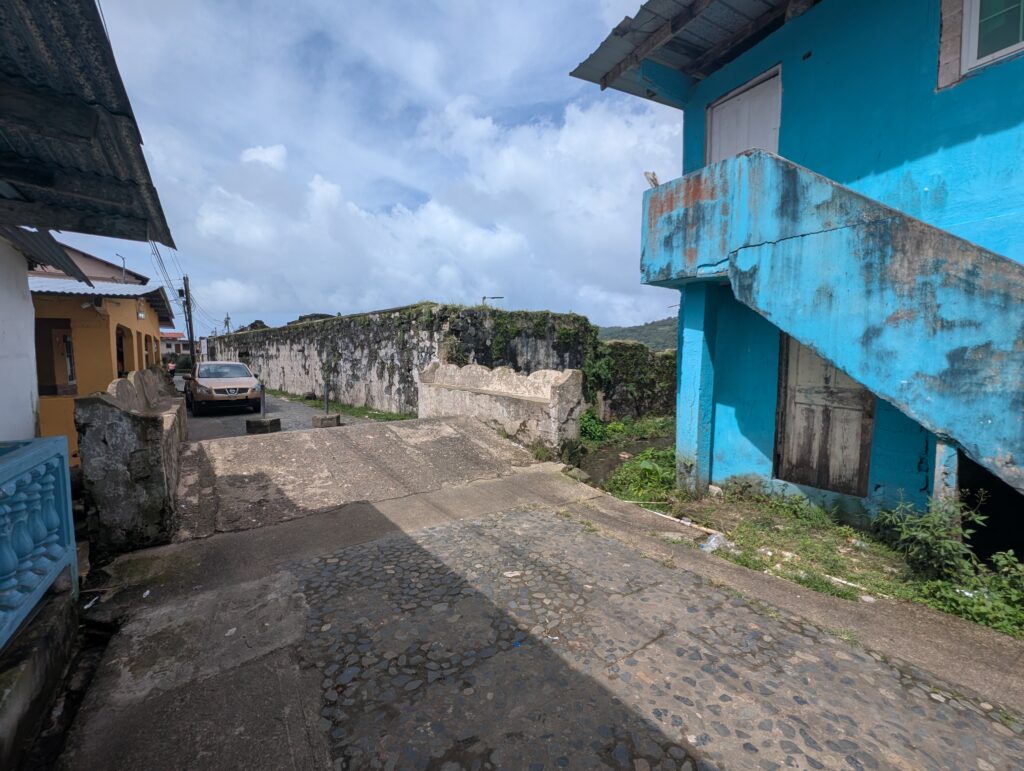
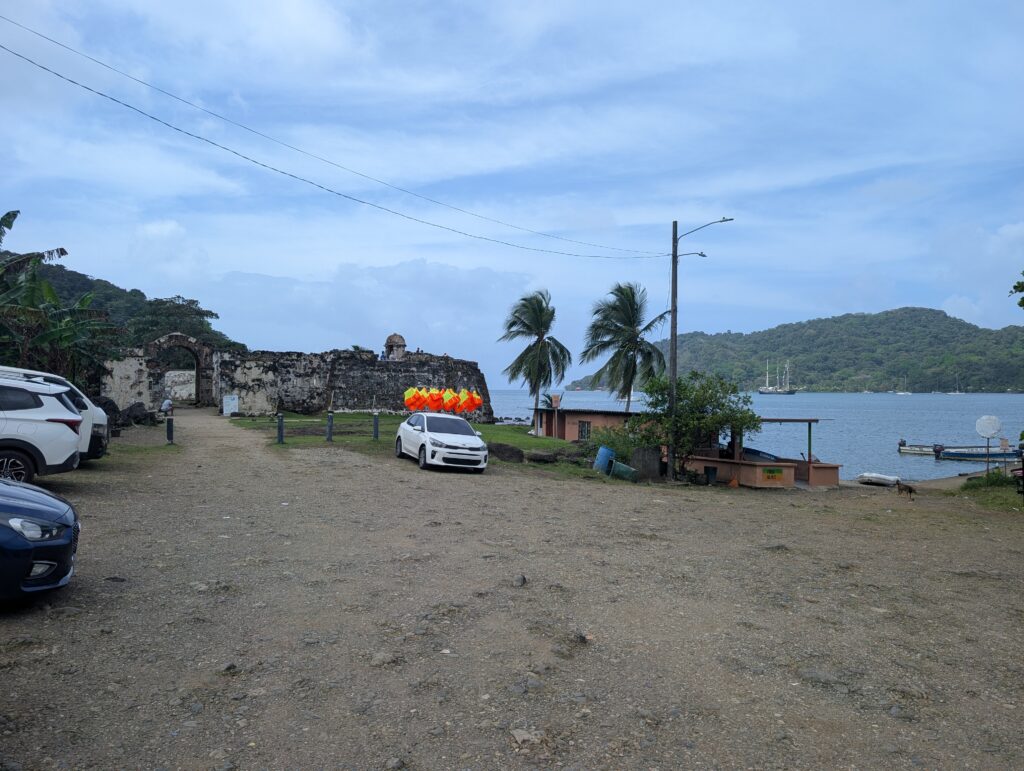
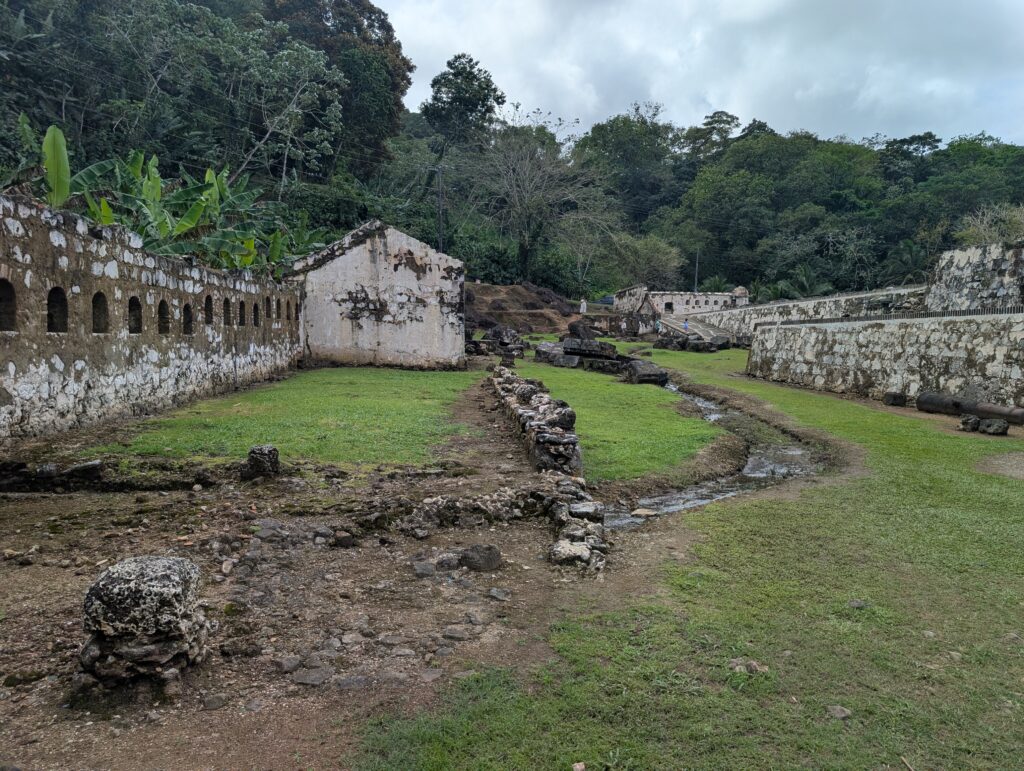
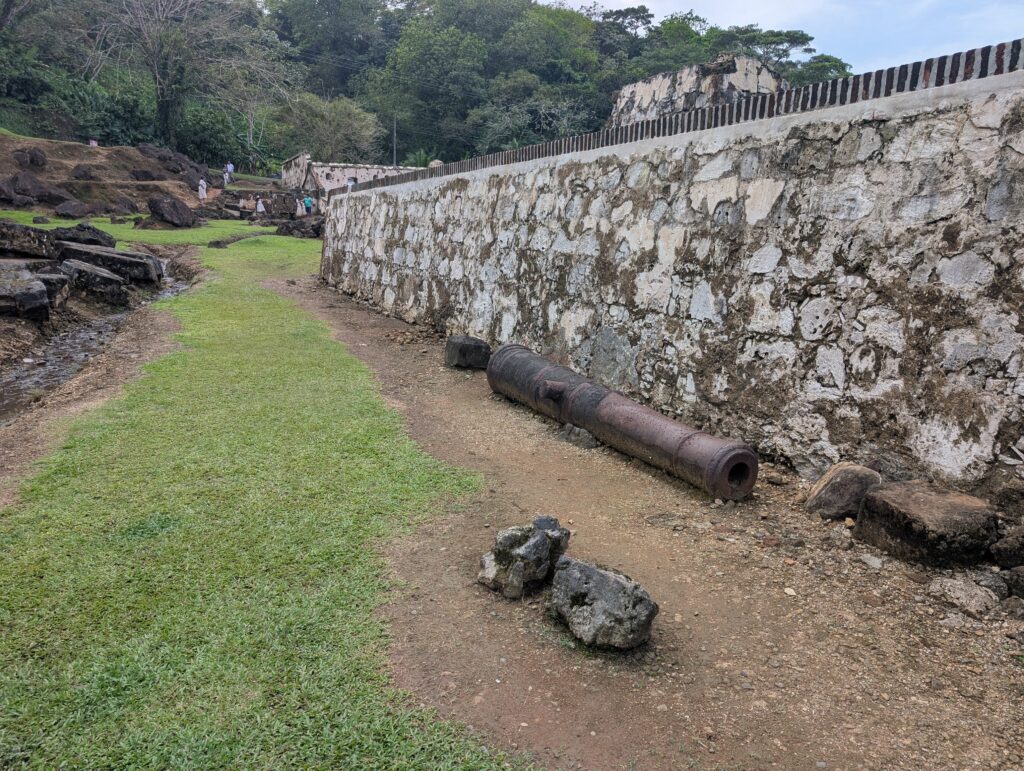
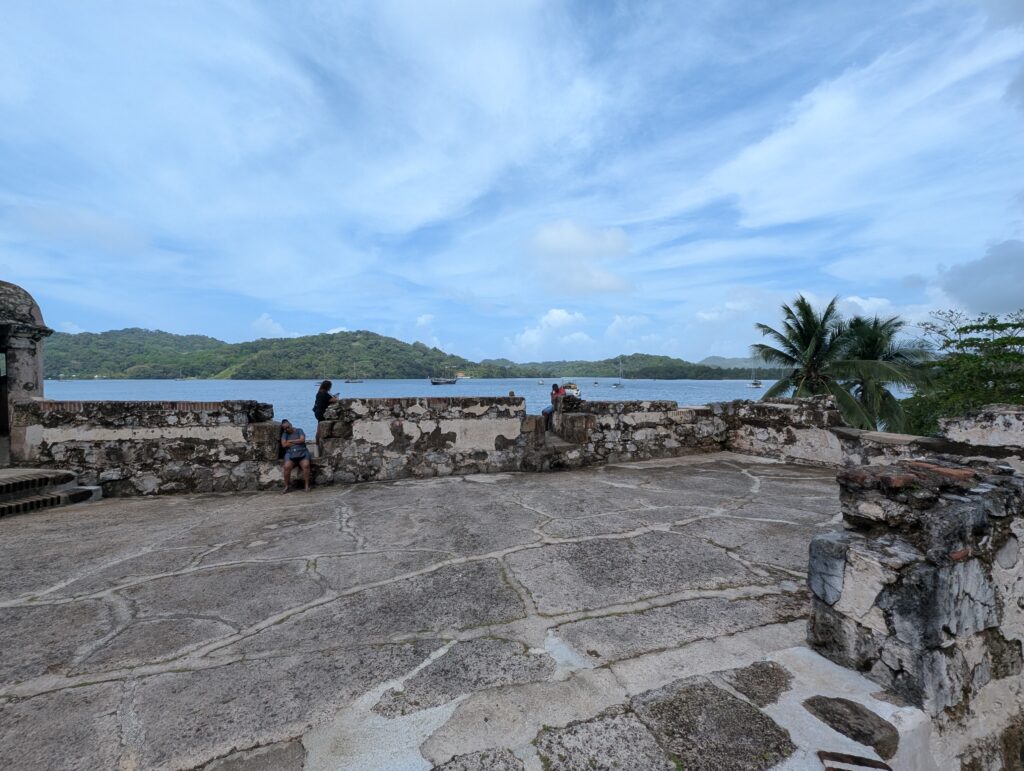
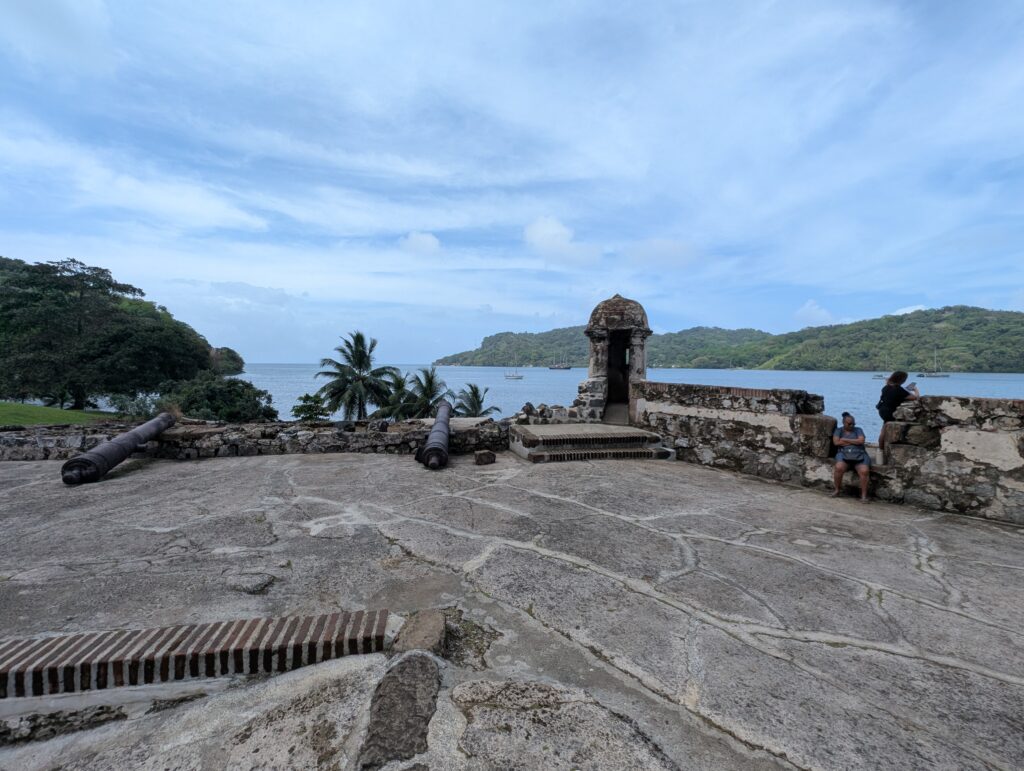
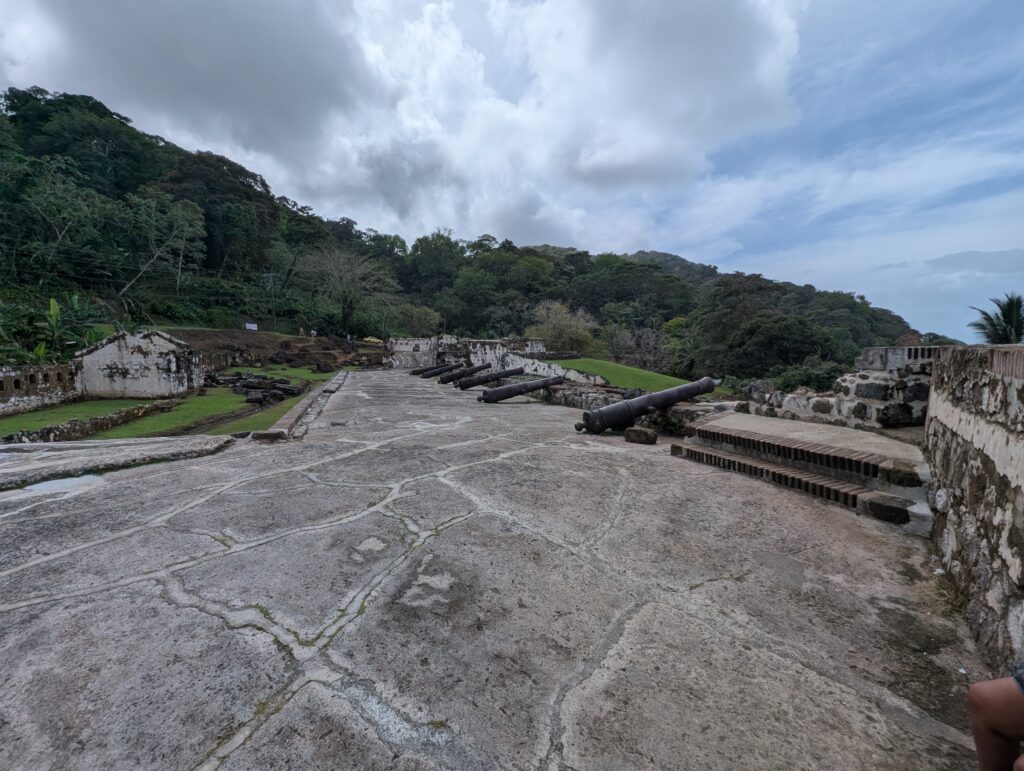
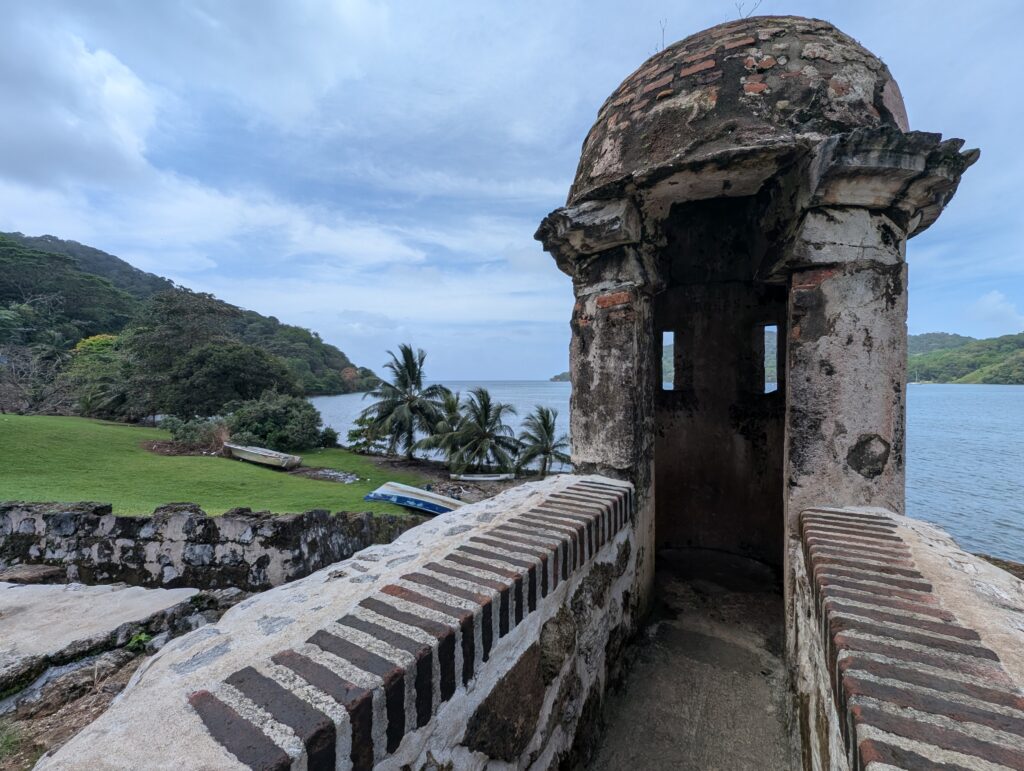
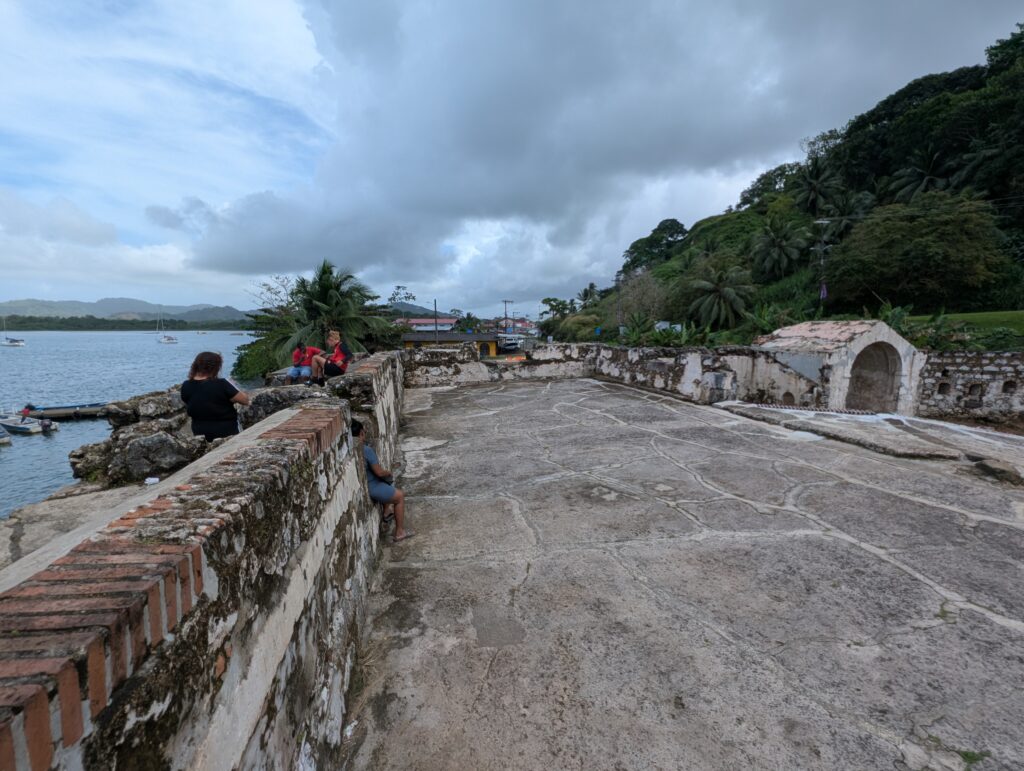
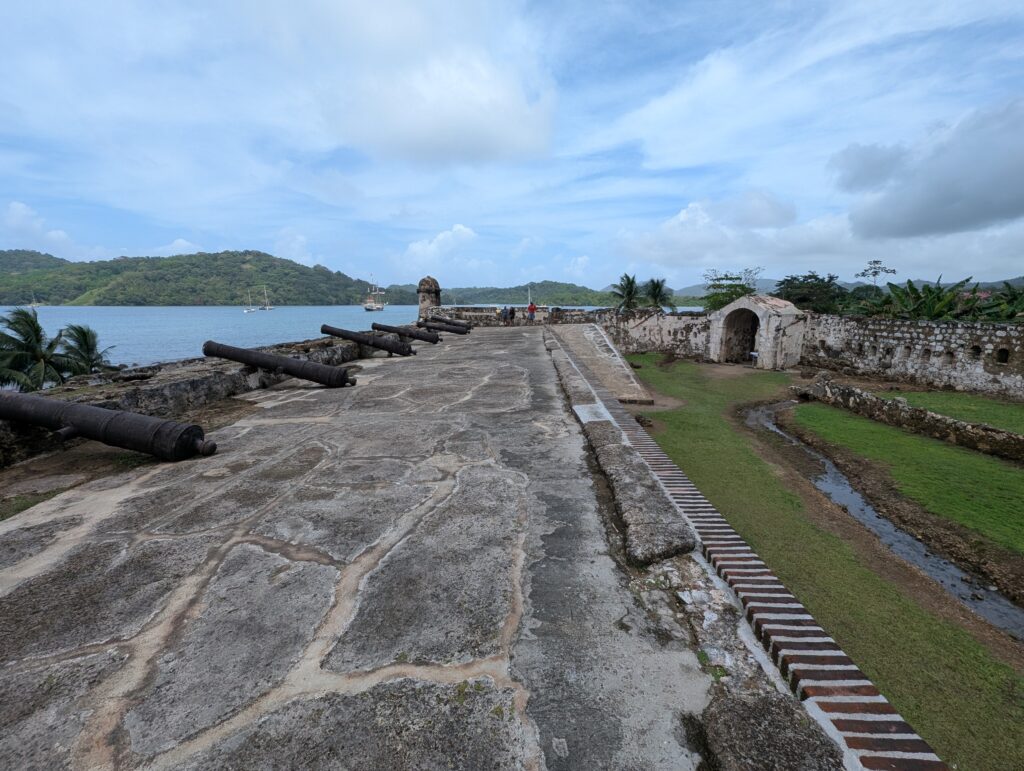
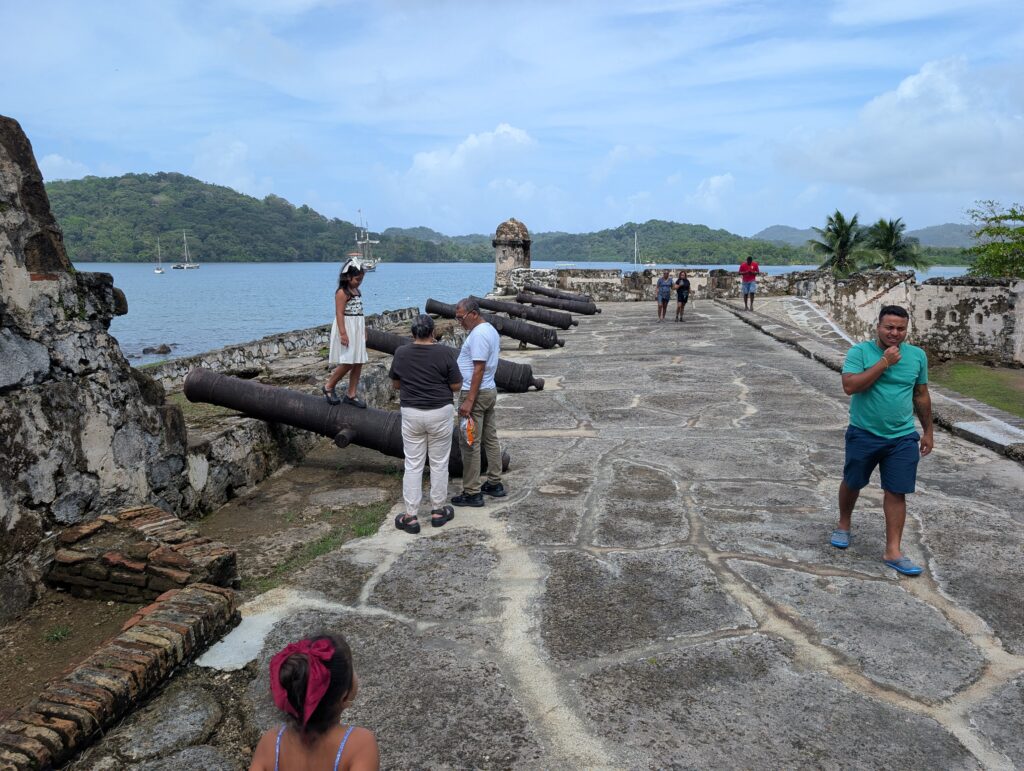
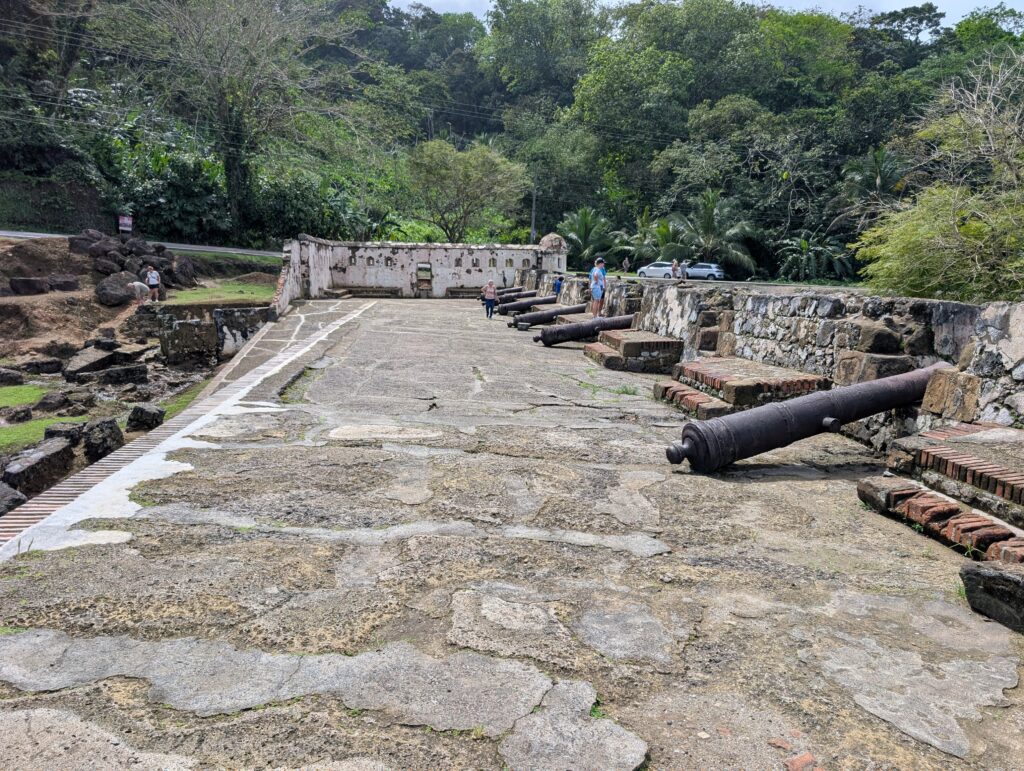
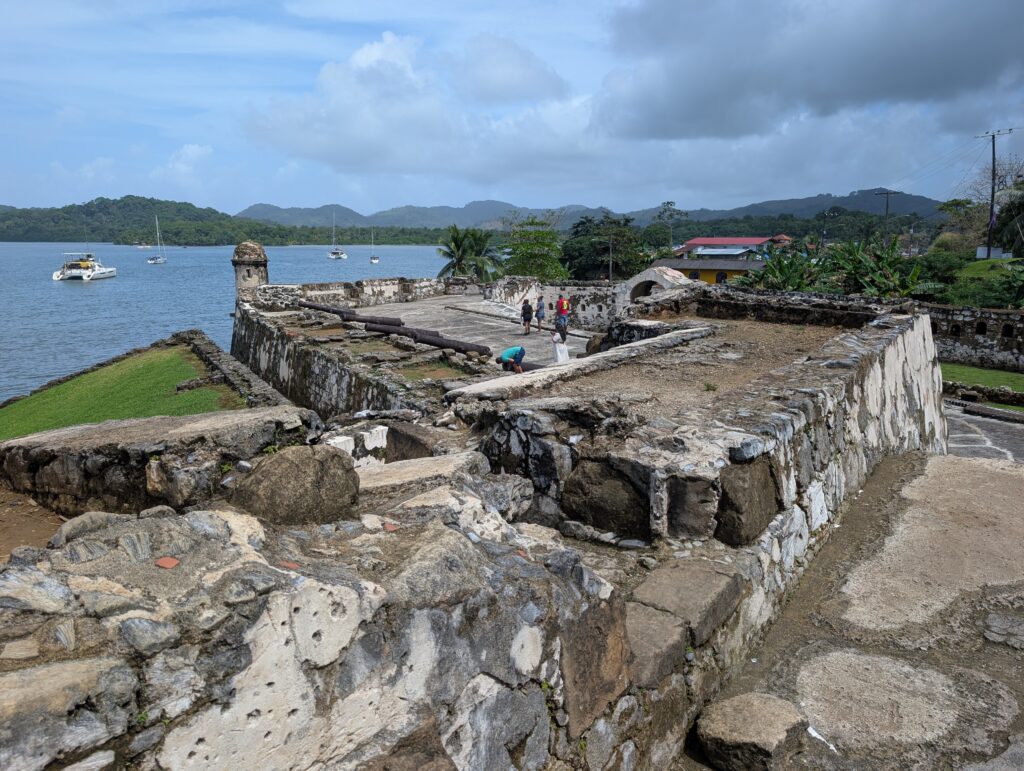
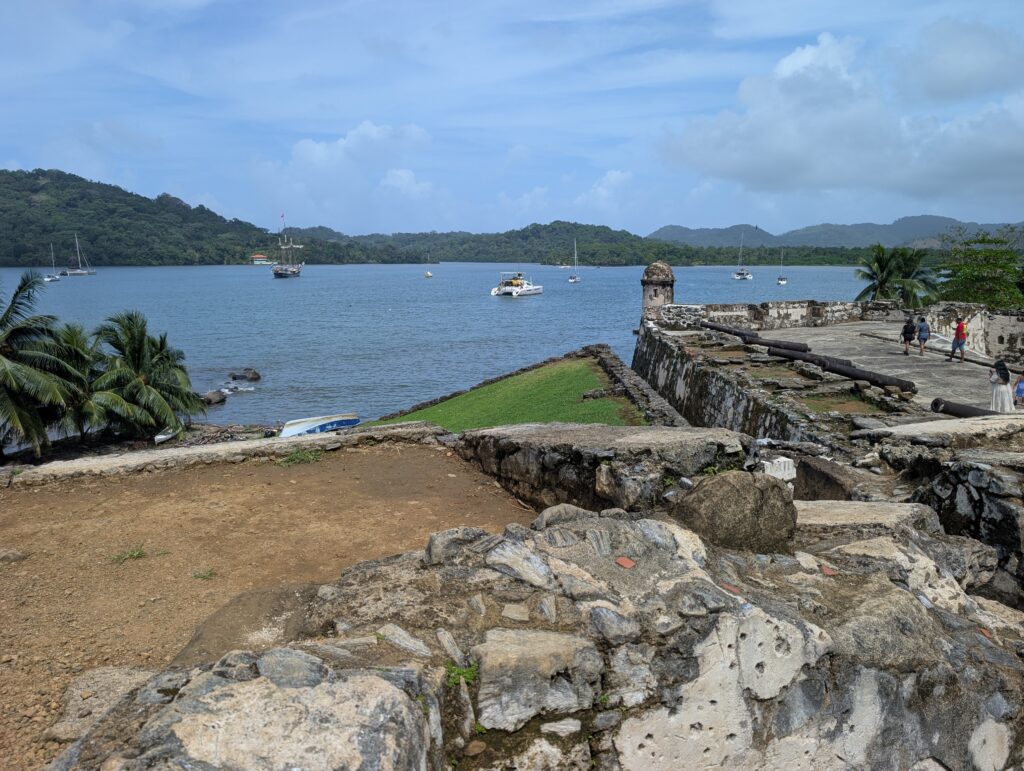
Portobelo’s original fortifications dated to the 16th century. These were rebuilt after a raid by Admiral Edward Vernon in 1739. There are a couple of different ruins of fortifications around Portobelo, but these ruins date from the 18th century reconstruction after Vernon’s raid. They’re not original. Fuerte San Jeronimo next to the customs house is closed indefinitely for restoration, so I couldn’t visit that either. If I had, it would have been a fairly quick visit. The main fortification is Fuerte Santiago on the west end of town. Although significantly damaged, there are several rusty cannons, and a lot of cement fortifications and munition storage areas still intact. It is a free stop, and it quite picturesque. There isn’t really any interpretation there, so you have to know what you’re looking at, otherwise, you just get a pretty picture. The picture would be worth it.

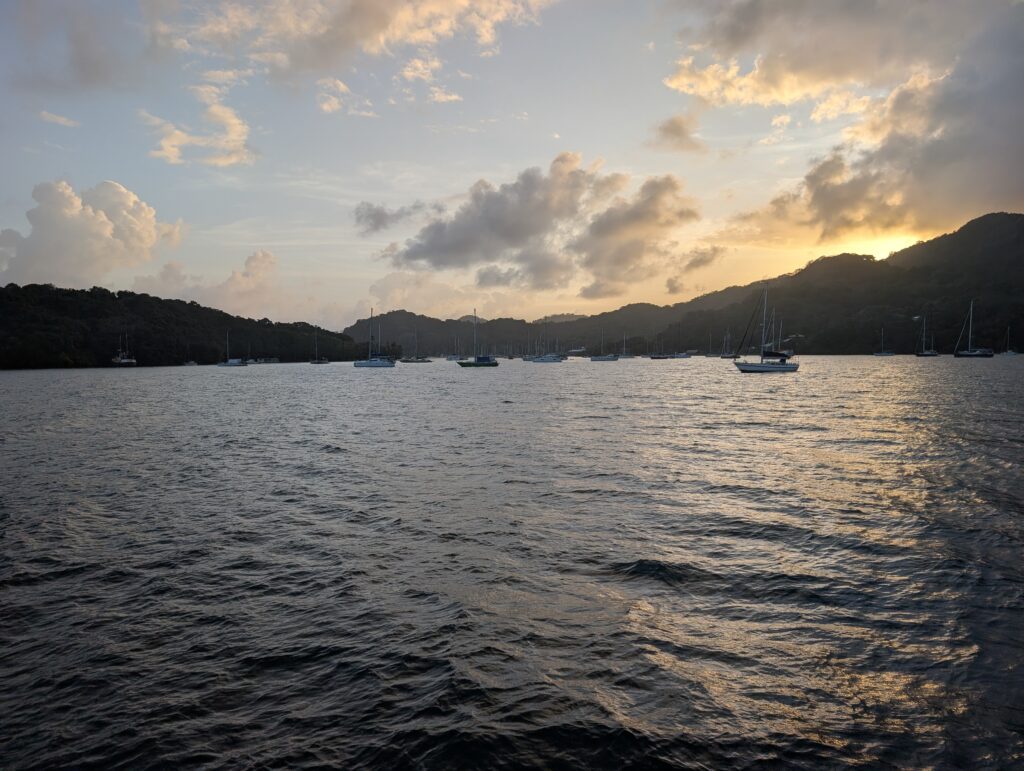
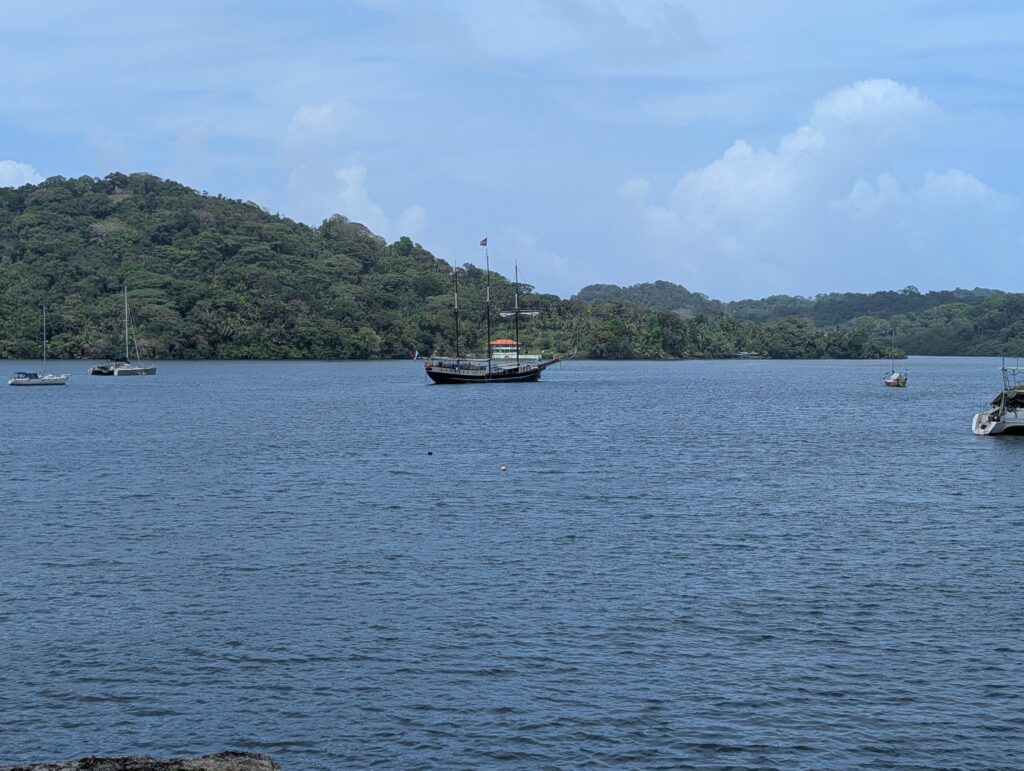
From Fuerte Santiago on the west side of Portobelo, I waved down another chicken bus which cost me $1.30 to get to Sabanita. From there, a young lady passenger helped me understand where to connect to the Panama City bus. That one cost me another $3.15 and delivered me to the main transportation center of Panama City. I bought and loaded a municipal transport card, and grabbed a local bus for my hostel. I was in by about 4:30, but was glad to be done traveling. I hadn’t been able to sit down on either of the two buses from Portobelo to Sabanita, or from Sabanita to the Panama City terminal. I stood shuffling my bags for nearly two hours. Consequently, I wasn’t really able to stand up straight for all that time, let alone see any of the Panama crossing scenery. What I did see between Puerto Lindo and Portobelo was beautiful green pasture and hills, the towns overlooking spectacularly beautiful coves hosting sailboats from all around the world. It was very nice, and made me want to revisit Panama’s Caribbean coast.

Sunrise in the Harbor at Porto Lindo
Farewell to My Shipmates
Iglesia de San Felipe, Portobelo
This Church Hosts a Locally Famous Black Jesus Statue
Town Square in Portobelo
The Customs House Includes a Small Museum That Was Closed the Day I Visited
This Fortification is in Town
The Main Fort is West of Town
Porto Lindo Panoramic Shot
Trip Overview
Panama
Panama City
Panama Canal
El Salvador