Panama Canal

An American Accomplishment

When you hear the name “Panama,” I suspect the first thing most people think of is the canal. For eighty five years, the Panama Canal belonged to America. It was, and still is, a uniquely American achievement. I knew if I came to Panama, I would have to see the canal. I spent the entire day Wednesday seeing different parts of it.

People have dreamed of cutting through the isthmus with a canal almost from the moment Vasco Nunez de Balboa discovered that the Pacific could be reached from the Caribbean after a short land jaunt. The Spanish decided in the 15th century that it wasn’t feasible. The French tried and failed in the 19th century. At the dawn of the 20th century – some call it the American century – the United States essentially created a country and made possible what so many others had deemed impossible, or had given up on. The canal was begin in 1904, and opened on August 15, 1914.

President Barack Obama had a sort of running motto during his presidency about “doing big things.” I didn’t often agree with President Obama, but I always seek to find things I can support even in people I see as political opponents. One of my biggest disappointments with that president was that he was so often critical of America’s past and legacy. His wife even famously said that her husband’s election was the first time she had ever been proud of her country. So when I heard President Obama lead off his 2011 State of the Union Address by saying that the United States of America is a country that “does big things,” I was optimistic that he might embrace some of our country’s best achievements as the basis for optimism going forward.

After all, America has a history of unprecedented spectacular accomplishments. We created a transcontinental nation – the largest republic – in an era when all previous successful republics had been very small. Many 18th century thinkers believed republics could only survive if they were small. During the next century, our country ensured the territorial integrity of that huge republic through a system of railroads that spanned the entire continent – built through daunting terrain still inhabited by hostile indigenous tribes. The creation of those transcontinental railroads ensured a peaceful and prosperous development of the rest of the continent. Americans landed men on the moon. More than fifty years hence, still no one else has done that. We defeated fascism, developed the most powerful weapon in the world – and along with it, the world’s most efficient source of energy. We defeated the Soviet communist regime without a disastrous military conflict. We also sliced a path between two continents completely revolutionizing world trade. Sadly, rather than focusing on these monumental achievements and planning more ala John F. Kennedy, Obama instead touted modest things like attempts to improve the education system and dubious achievements like his administration’s gift of atomic weapons capability to Iran. The only “big” parts of his program were a nearly $1 trillion stimulus/pork package, and the so-called Affordable Care Act (ObamaCare) that continues to be not only ineffective but also in constant need of further government subsidies.

In the very top rank of America’s actual world changing achievements was the creation of this ocean connecting canal that others had dreamed of, but only America had achieved. This accomplishment was only possible through the aggressive foreign policy of Theodore Roosevelt – a stance that I’m sure many people found uncomfortable at the time. Certainly, Roosevelt’s idea of the big things America could accomplish had a lot to do with naval power, sea trade, and a world-wide geographic presence to support those things. With his view of the importance of sea power in mind, it makes sense that Teddy Roosevelt would find the creation of a canal between the American continents of utmost importance.

The French were the first ones to actually attempt a Panama Canal. Ferdinand de Lesseps was put in charge of the project. Gustave Eiffel even participated. Lesseps was the architect behind the Suez Canal, and so seemed like the perfect person to build this even larger project. Lesseps’ Suez Canal had been a sea-level canal. In other words, a path was cut through the narrowest part of Egypt that allowed ships to pass through without having to gain or lose any elevation. The land was cut clear down to sea level. Lesseps figured if this could be done in Egypt, why not Panama? Sure, a cut through Panama would require a lot more dirt to be moved than had been done in Egypt, but when accomplished, the effort would have been worth it.

The problem was that there are some pretty big differences between Egypt and Panama. Although the Suez Canal is a lot longer than the Panama Canal (120 miles vs. 50 miles), the highest point the Suez Canal had to cross was a dry plateau about 35 feet above sea level. Panama has mountain ranges. The highest point the Panama canal must traverse is just 85 feet above sea level, but that’s still a lot higher than 35 feet. Panama is a jungle that receives massive amounts of rainfall. As the French tried to cut through the high points, they faced constant land- and mud-slides that impeded their progress. Panama’s tropical climate was also a breeding ground for mosquito borne diseases like Yellow Fever and Malaria. At least 20,000 people died trying to build the French sea level canal.

(Continued)

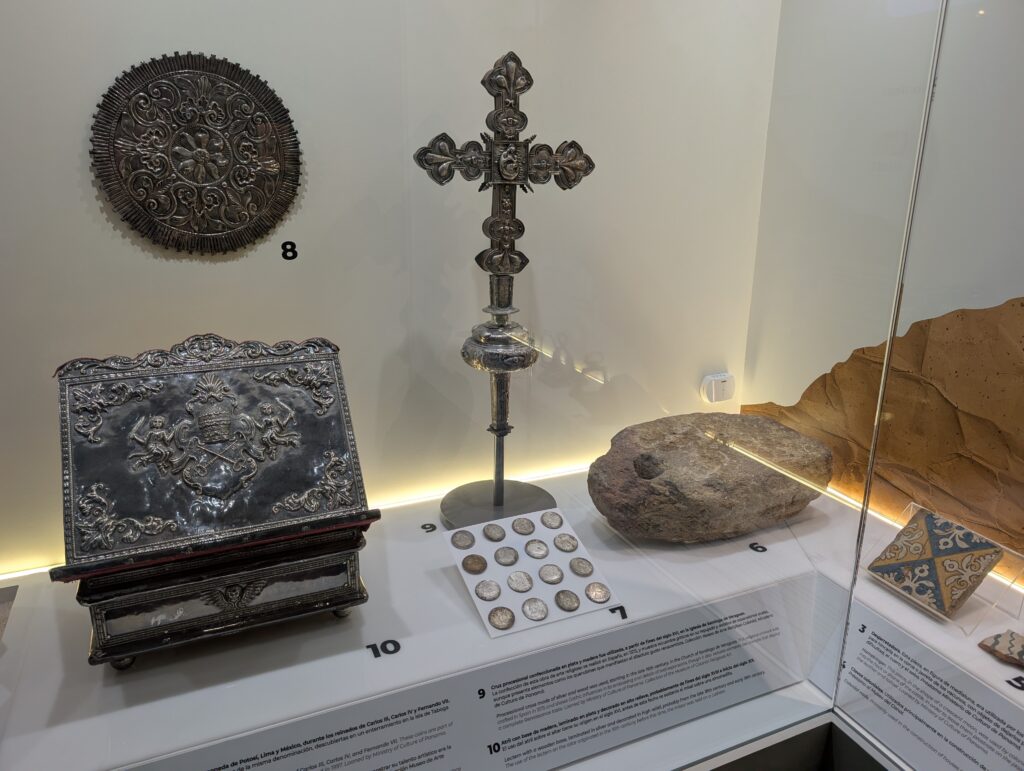
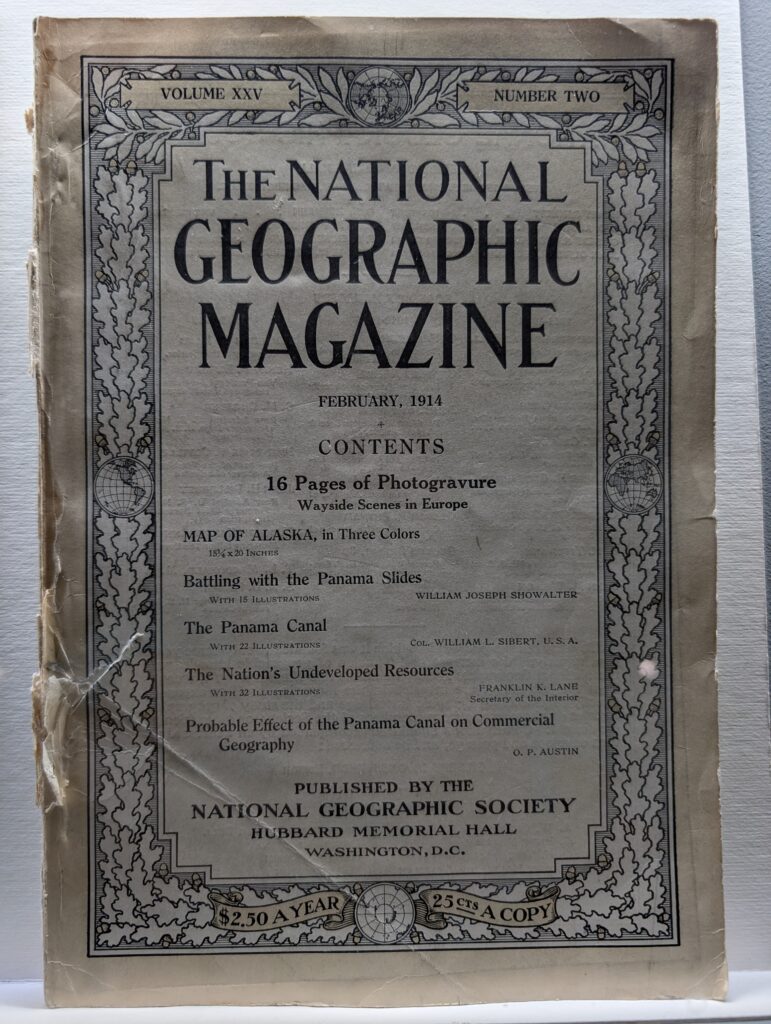
Artifacts Found During Excavations
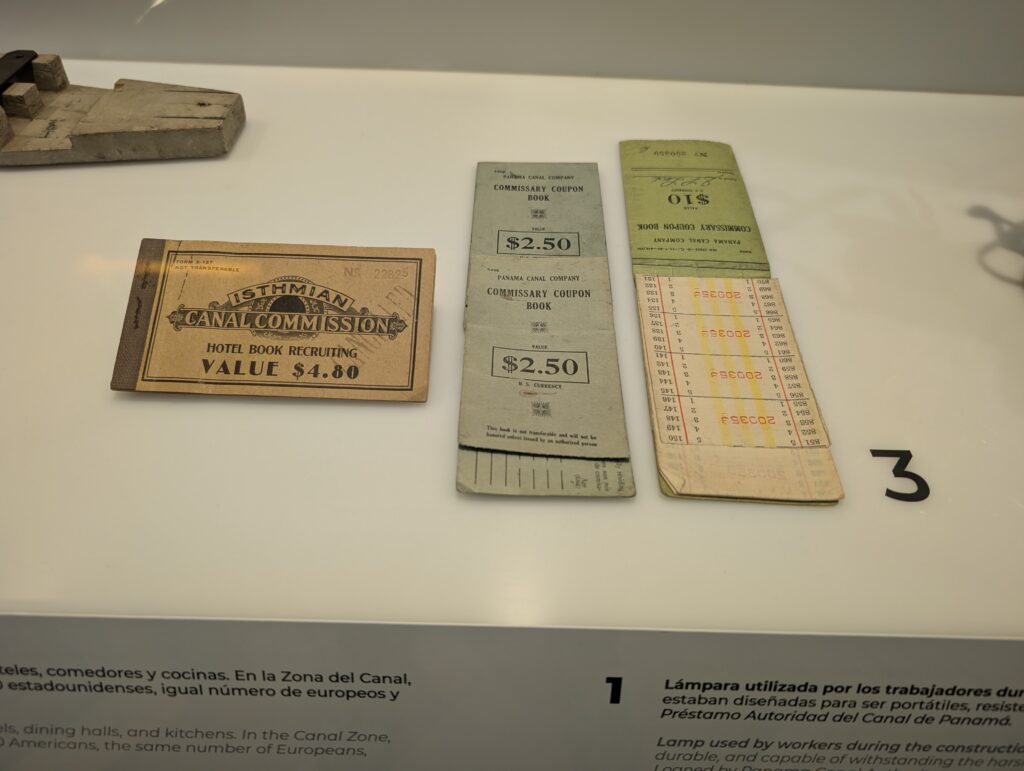
Script and Forms of Payment for Work or Passage
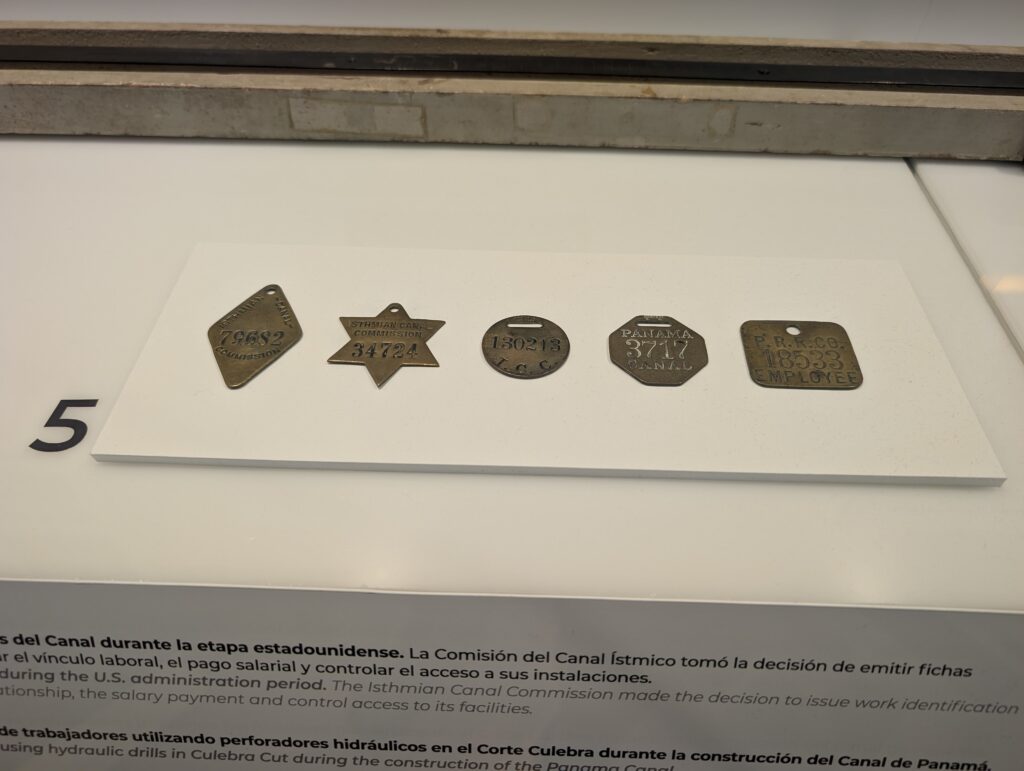
Worker ID Badges
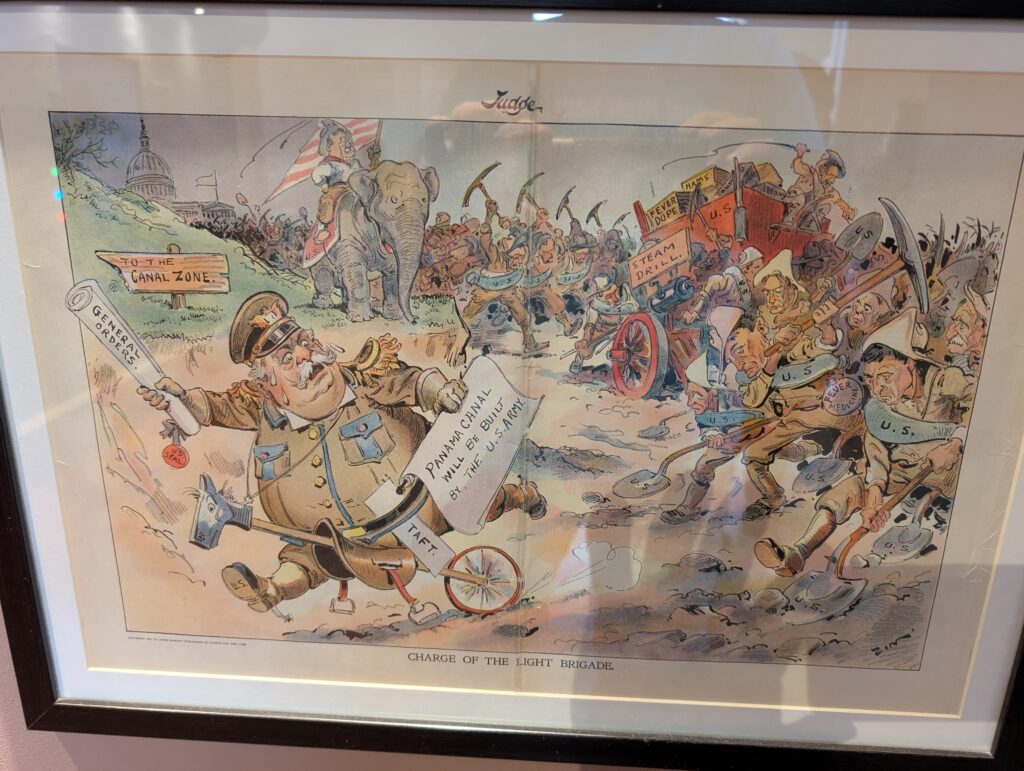
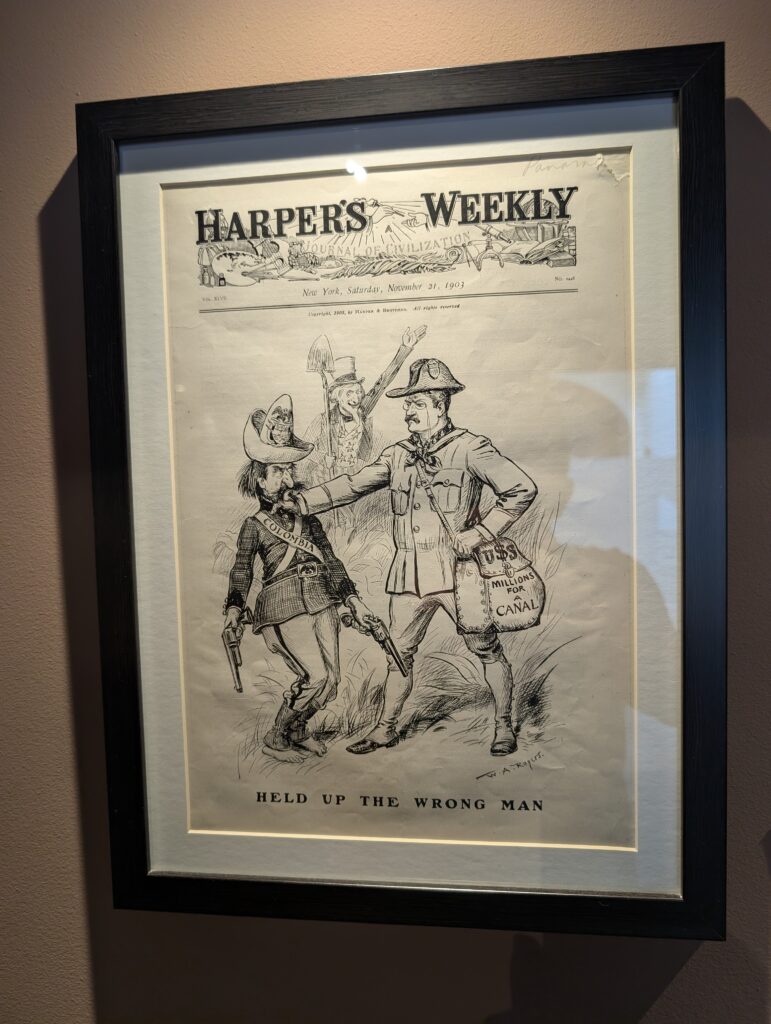
Political Cartoons From Roosevelt's Time
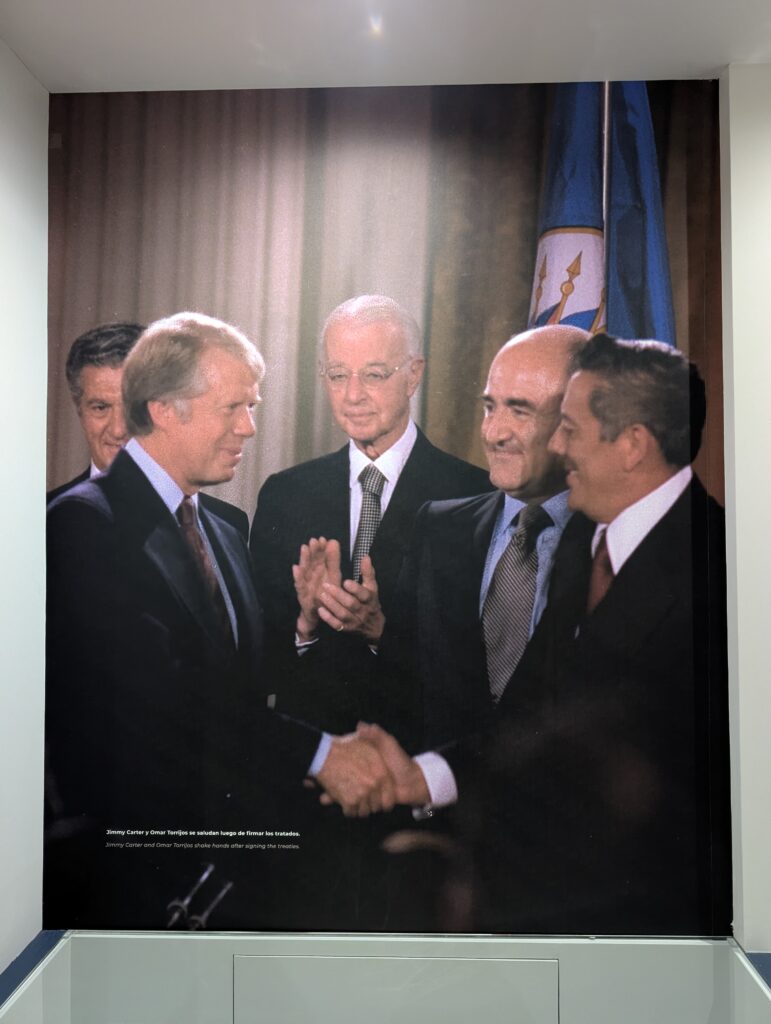
Carter Gives Away the Canal, Despite Domestic Opposition
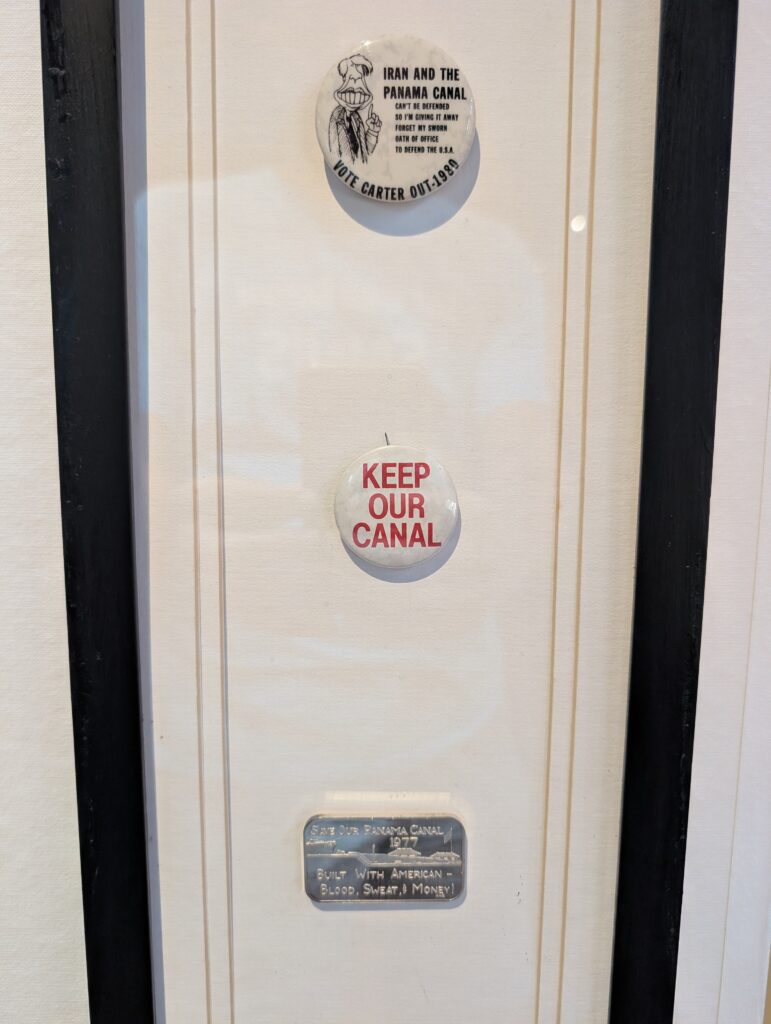
Expressions of Opposition to the Canal Handover

The French effort took place mostly during the 1880s. After about 13 years of struggling with this sea level construction method, the French company building the canal went bankrupt and efforts floundered. A second French company bought the rights to construct the canal, and all of the construction equipment, but really just held it hoping someone else would come along and buy the assets. The rights to build this canal had been secured from Colombia. During the 19th century, the isthmus was part of Colombia. Most of Latin America gained independence from Spain while the mother country was dealing with invasions by Napoleon. Renowned liberator Simon Bolivar forged a new country called Gran Colombia, but the effort took the entire decade of the 1810s. By the 1820s, the country included what is mostly now Venezuela, Colombia, Ecuador, and Panama. Gran Colombia was a poor, unstable, agrarian country. By the early 1830s, Venezuela and Ecuador had left. Panama would also leave, but not until 1903.

Around the turn of the 20th century, internal conflicts in Colombia led to the Thousand Day War. This instability of course worried Europeans and others attempting to do business in Colombia. The United States ultimately purchased the assets and rights of the second French canal company, which included their dirt work progress, equipment, and a trans-isthmian railroad that had been built in the 1850s. The Spooner Act approved this transaction in 1902, allocating $40 million for the purchase. The United States government then negotiated a treaty with Colombia to allow work on an American canal to begin. The Colombian legislature, however, did not approve the treaty. In the wake of the Thousand Day War, a party in Panama sought independence from Colombia. A representative of this Panamanian faction traveled to Washington, D.C. to propose approval of a canal treaty in return for U.S. support of an independent Panamanian republic. A revolution in Panama ensued with the presence of the gunboat U.S.S. Nashville off the cost of Colon controlling the aforementioned railroad and deterring the Colombian army from suppressing the Panamanian uprising.

America immediately recognized the new government of Panama, and within weeks signed a treaty with the fledgling country. Panama became independent in 1903, and by 1904, work began on the American Panama Canal. In the last years of the 19th century, mosquitoes were identified as the vector for malaria and yellow fever. Army doctor William Gorgas led an intentional effort to make Panama safe for canal workers. This prevented the disastrous toll of deaths due to disease that plagued the French effort. Just as importantly, American engineers adopted a plan to use the wet tropical climate of Panama as an ally instead of an enemy. The Chagres River had long comprised a part of the overland route across Panama. Engineers would create reservoirs to provide a significant portion of the waterways across the isthmus. One of these reservoirs was at the time the largest man made lake in the world. These were of course above sea level. A system of massive locks would use the water from these reservoirs to elevate ships from sea level to the lakes, and again to lower them at the other side.

A system of doors sealed by water pressure that had been designed centuries earlier by Leonardo da Vinci was used to build the locks. There wasn’t a single pump needed in the entire system. All of the water moved from lake to lock and on down by gravity. Further, electricity generated by the dam would provide all the necessary power. The amazing system took ten more years to construct, but it all worked. The locks that were completed in 1914 are still in operation, with only minor modifications to the door opening and closing system. Although because they are hollow, the doors don’t take all that much energy to open. A hydraulic mechanism to open them eventually replaced the original hand operated system decades later.

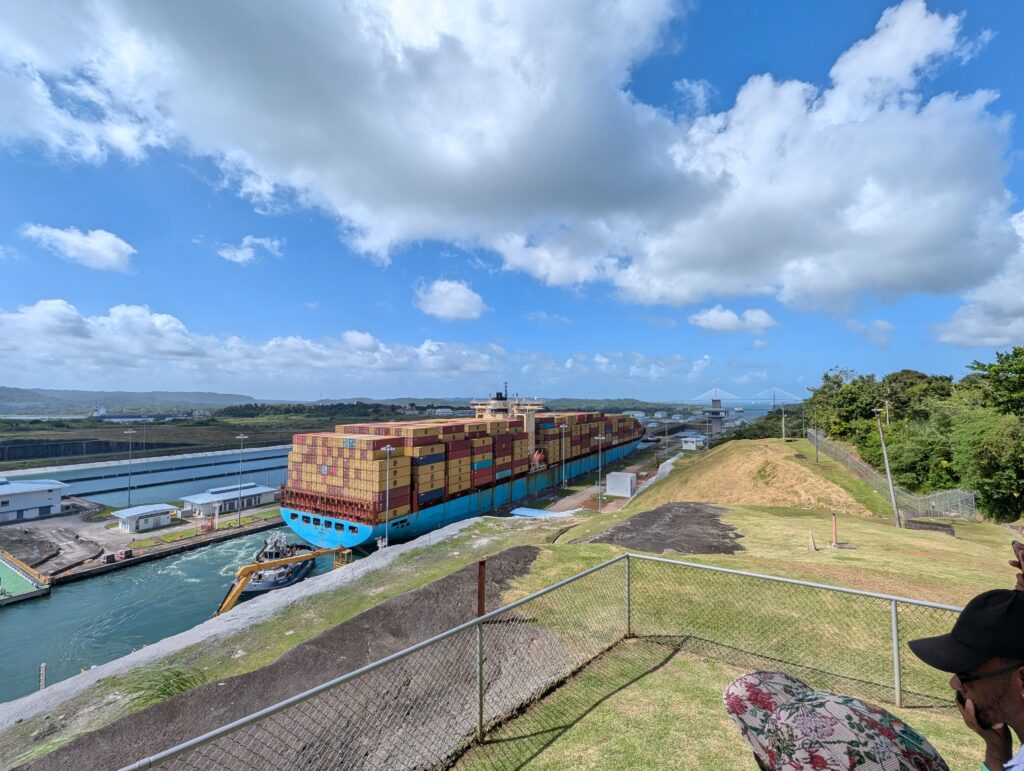
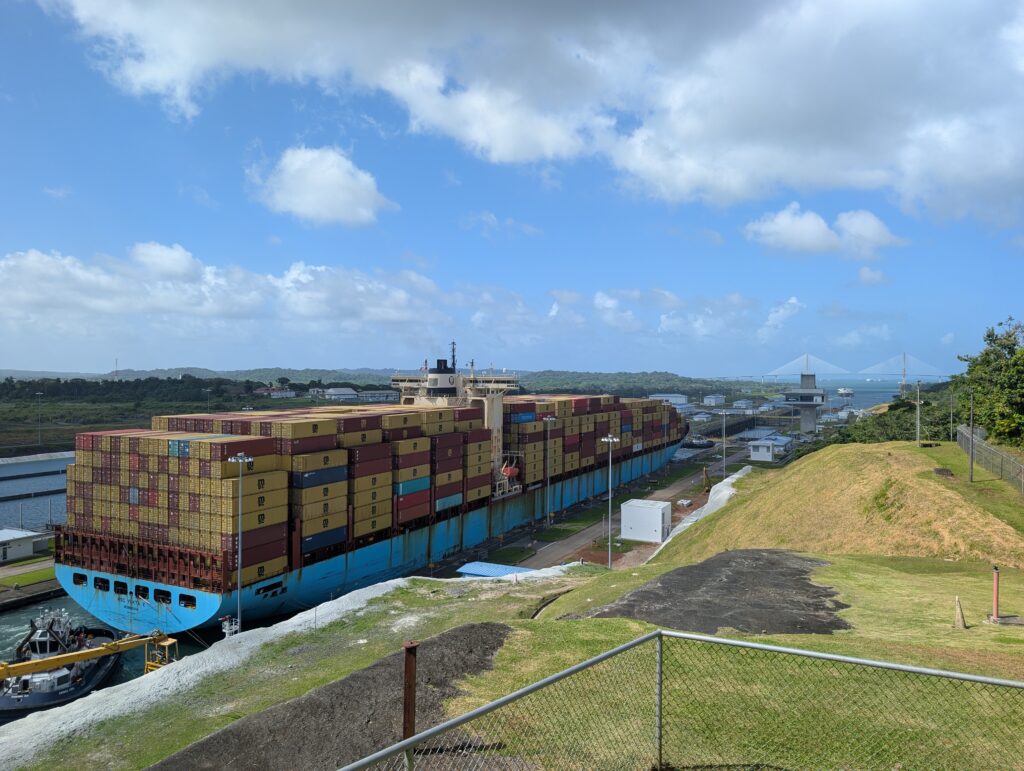
The Carter administration infamously handed control back to Panama in a 1977 treaty that was highly unpopular in the U.S. at the time. Control didn’t revert to Panama until December 31, 1999. The only distinctly Panamanian aspect to the design of the canal came about years after the handover. By the early 21st century, many cargo vessels had been built that were, in fact, too big to fit through the 1914 Panama Canal. The original canal could support ships that carried about 5,000 containers. The term, “panamax,” even emerged as shorthand for a ship of maximum width to pass through. Most cargo ships have only a few inches or at most a foot or two of clearance on either side when inside the locks. Today, there are massive cargo ships that carry 12,000 or 13,000 containers or more. In 2006, the Panamanian government put forth a national referendum asking whether $4 billion should be set aside to create more modern locks that could accommodate the 12-13,000 container vessels. It passed, and by 2016, new sets of locks opened, giving rise to a new term: “neopanamax.”

I decided I would dedicate my Wednesday to seeing the Panama Canal. I would use public buses to get to the Miraflores Visitor Center near Panama city right when it opened at 8:00. I had checked the transit schedule and seen that there would be traffic flowing through the locks there until about 10:00. I also knew they had a 45 minute IMAX movie narrated by Morgan Freeman that was included in the admission price. I would see everything I could see at Miraflores. I had also heard that you could see the more modern locks on the Caribbean side at Agua Clara, near Colon, Panama. I had gone fairly close to Colon on my bus ride from Portobelo, so I knew that it was possible to at least get across the country on an inexpensive bus. So, if I got done in time, I would catch a city bus back to the Panama City bus terminal, then an intercity bus to near Colon, then probably have to catch a taxi or Uber to Agua Clara, since there did not appear to be public transportation to that site.

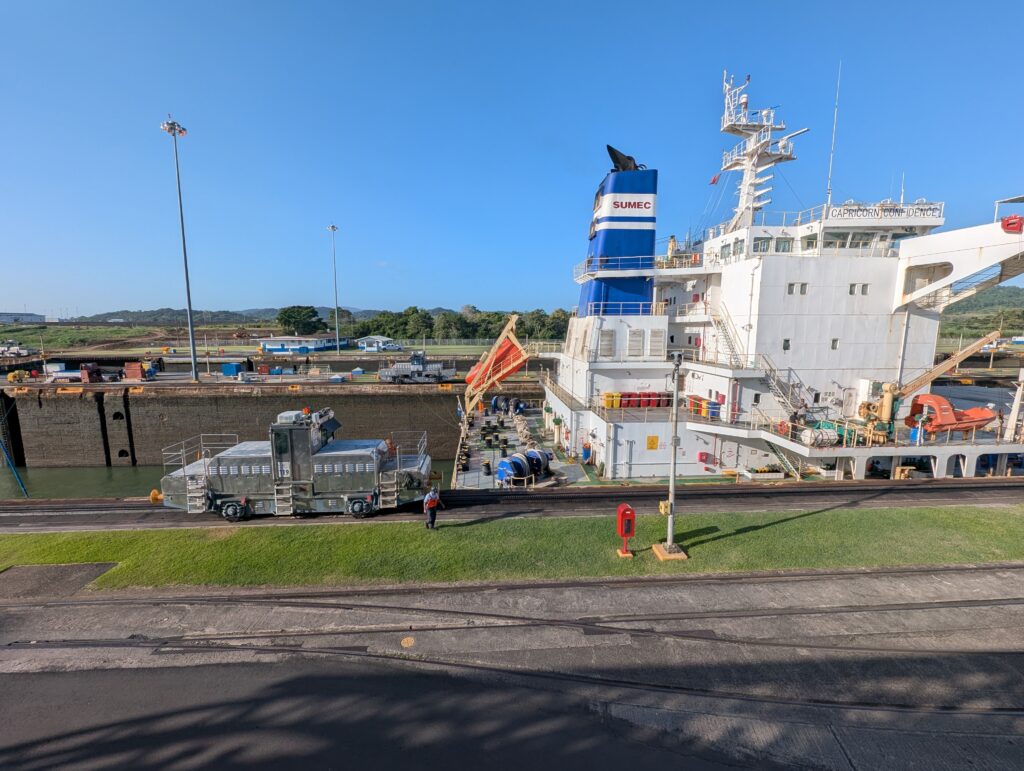
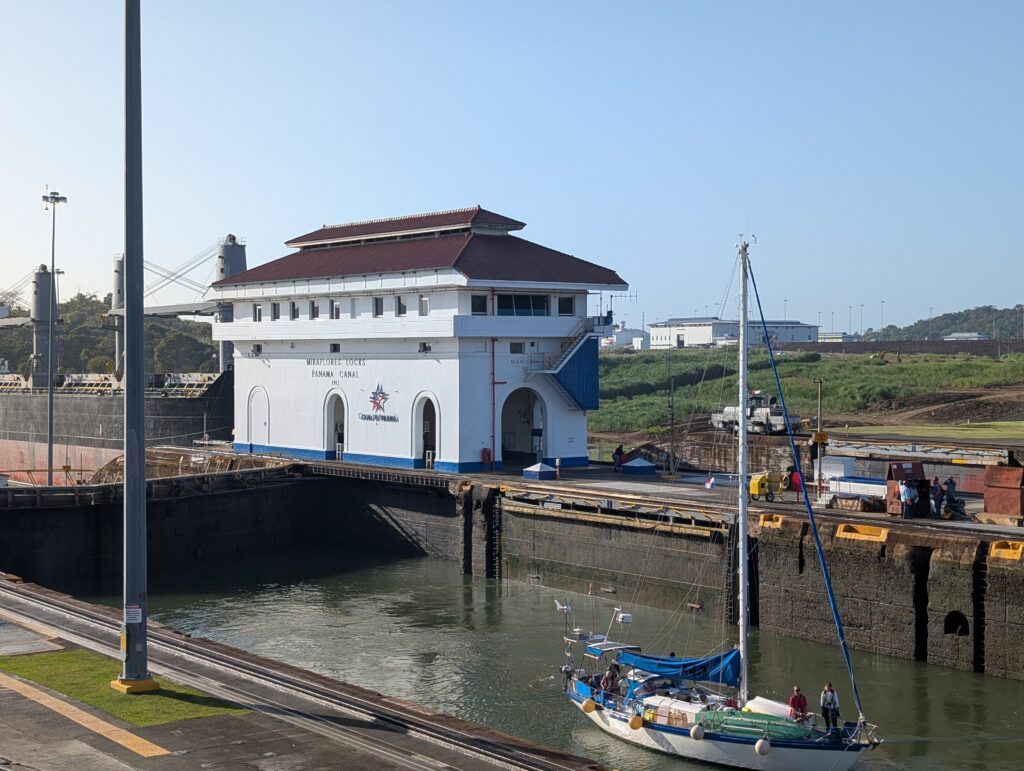
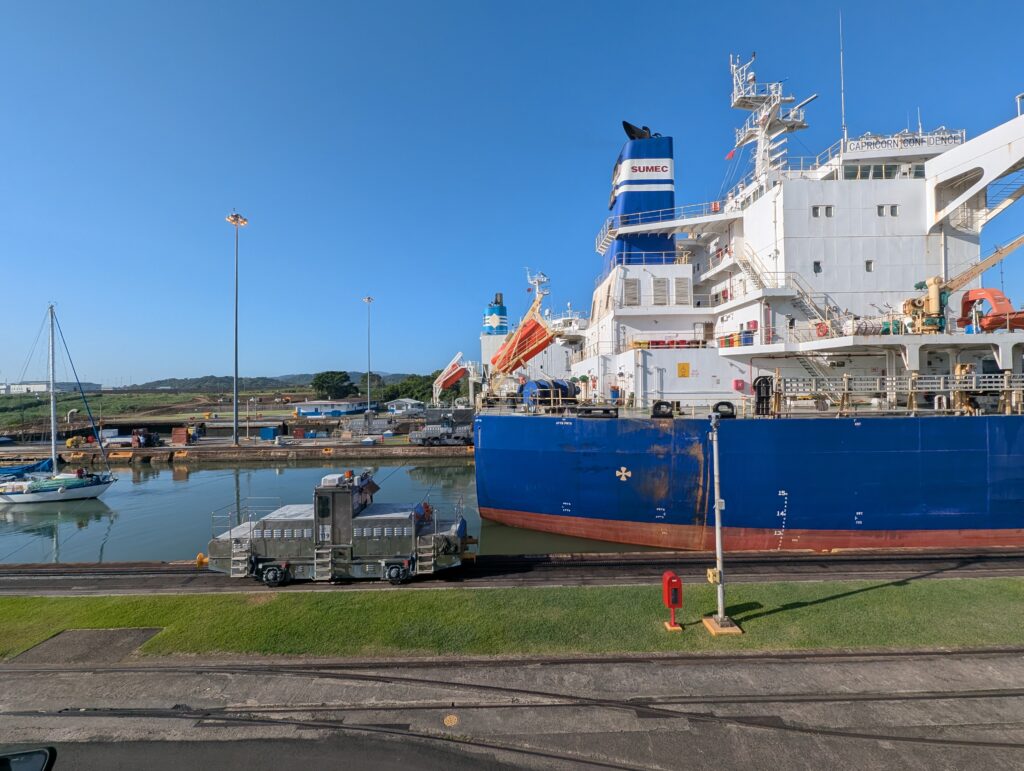
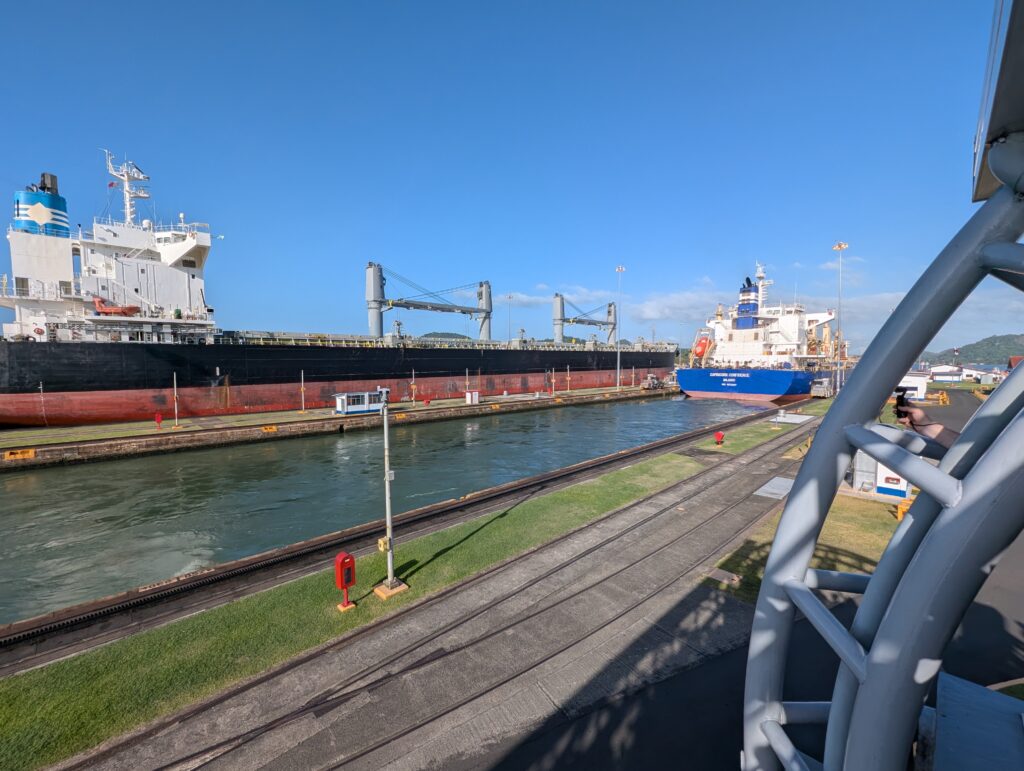
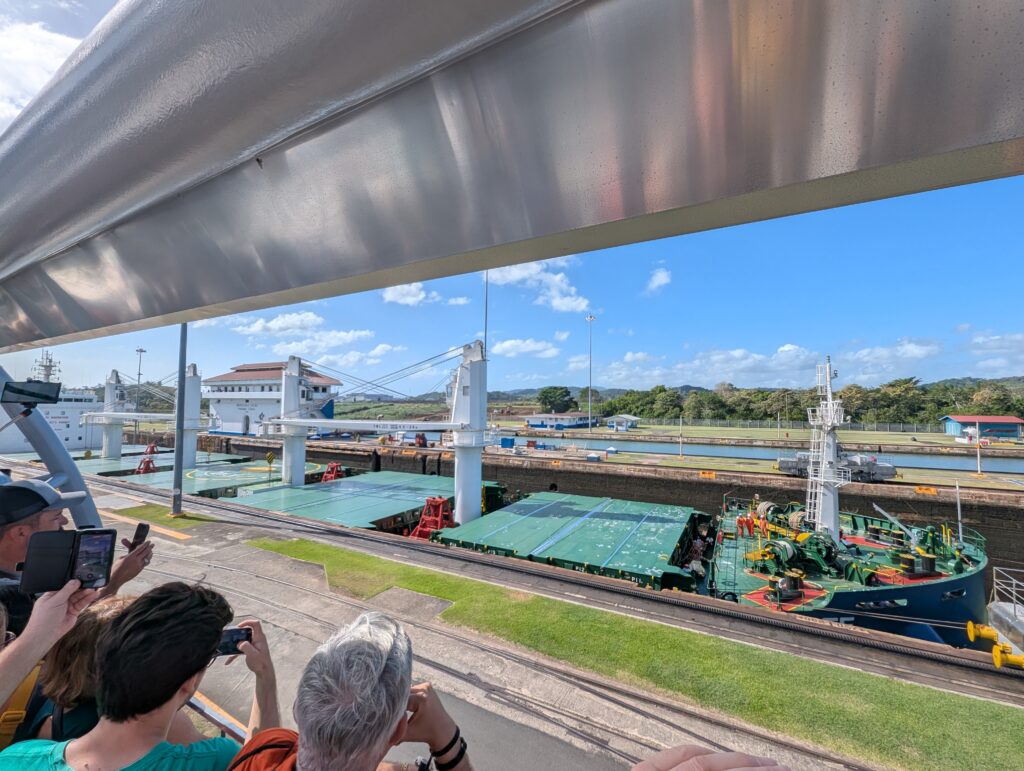
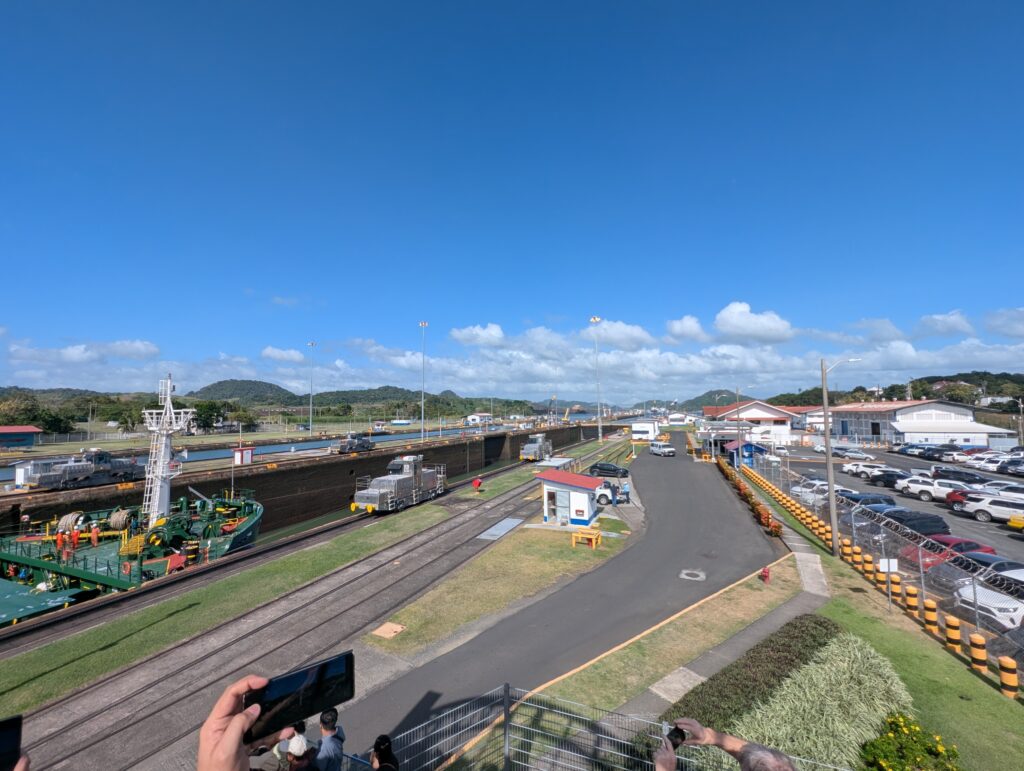
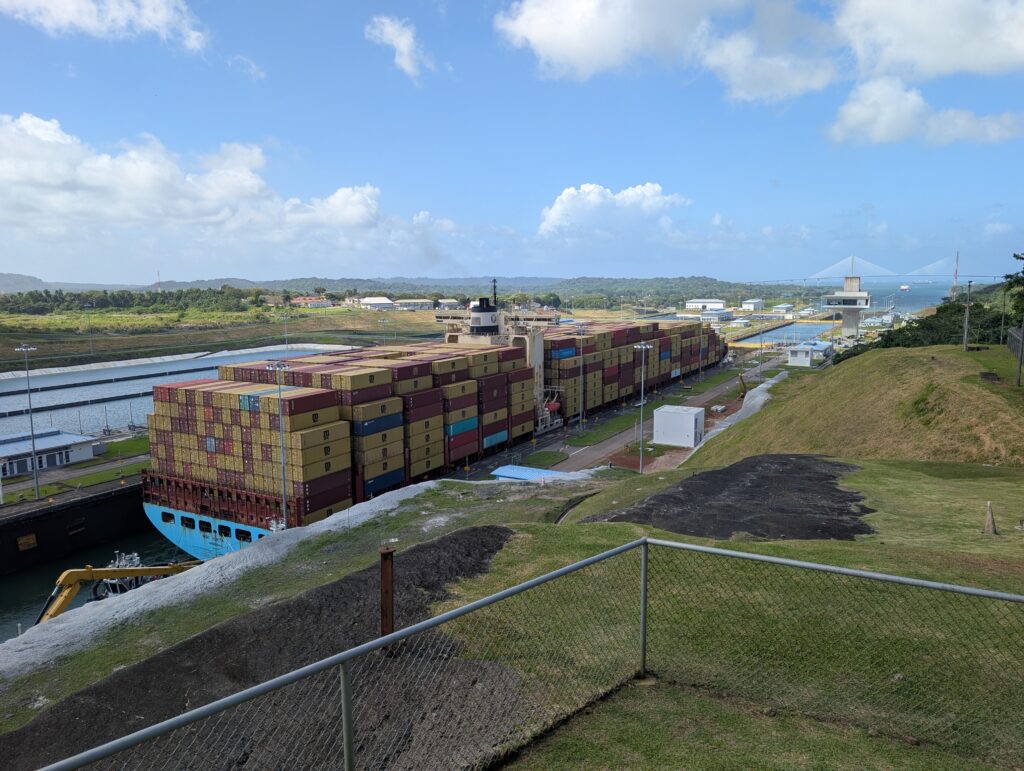
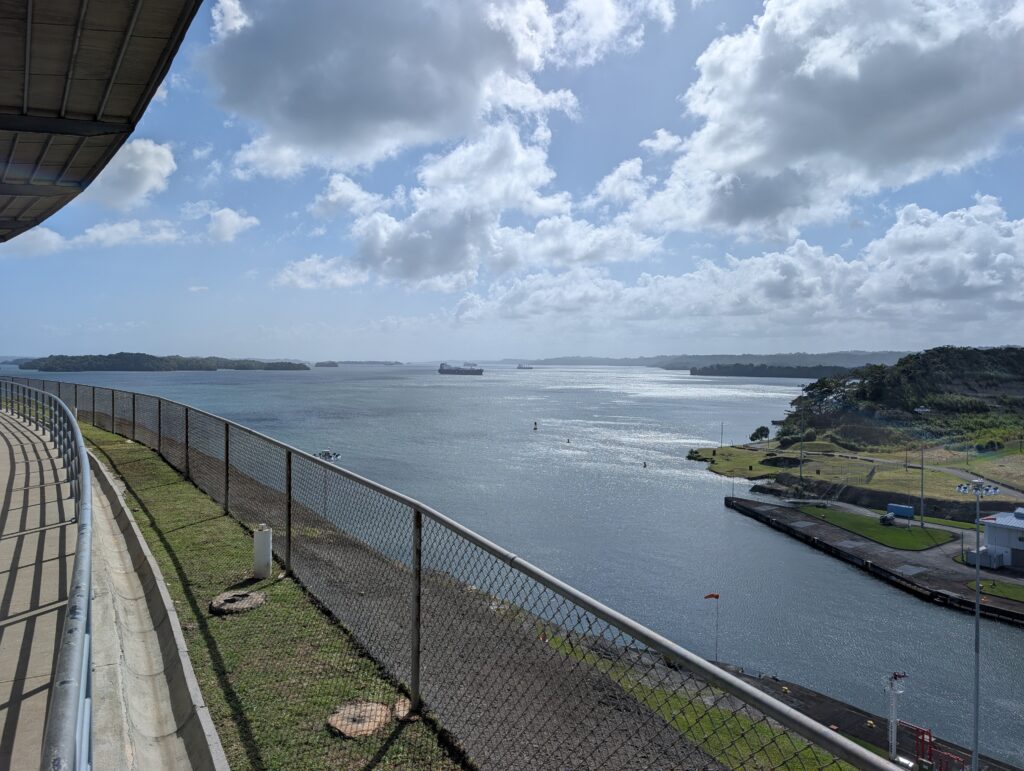
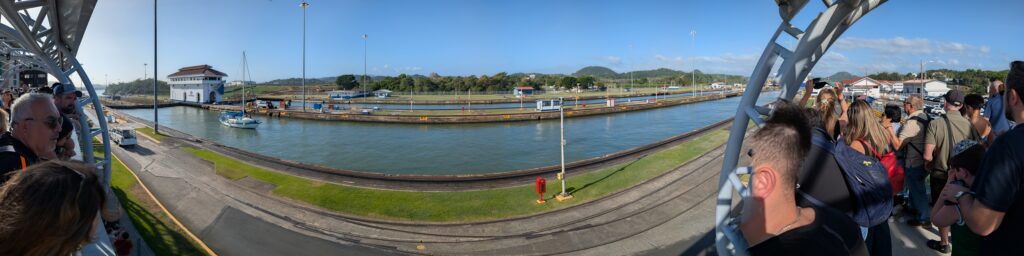
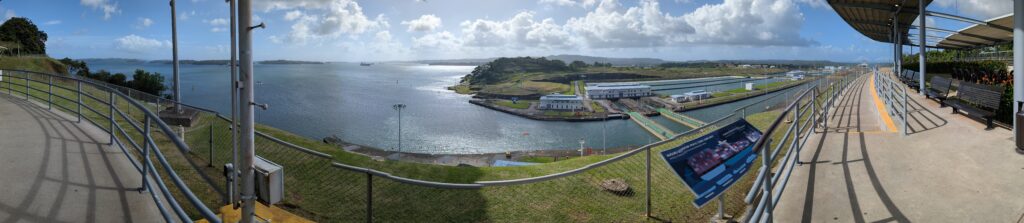
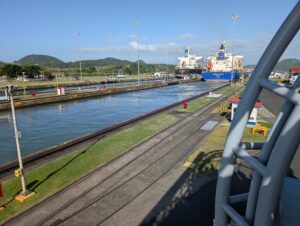
All of that worked according to plan. I spent about three hours at Miraflores, watching the operation of the locks as two container vessels, a gasser, and a small private sailboat made their way through the old locks. I saw the video, and got all of out of the experience I could. I was back down to the Albrook travel terminal by noon, and took the intercity bus toward Colon at the cost of about $3. I hopped off at a convenient stop near the turn off for Agua Clara and called an Uber. I got to Agua Clara at about 2:00 and spent another two hours at that site. The transit schedule said there would be ships traversing until about 4:00, but in truth the last one had cleared well before that hour. They also have a ten minute film there, and a short nature trail.

(Continued)

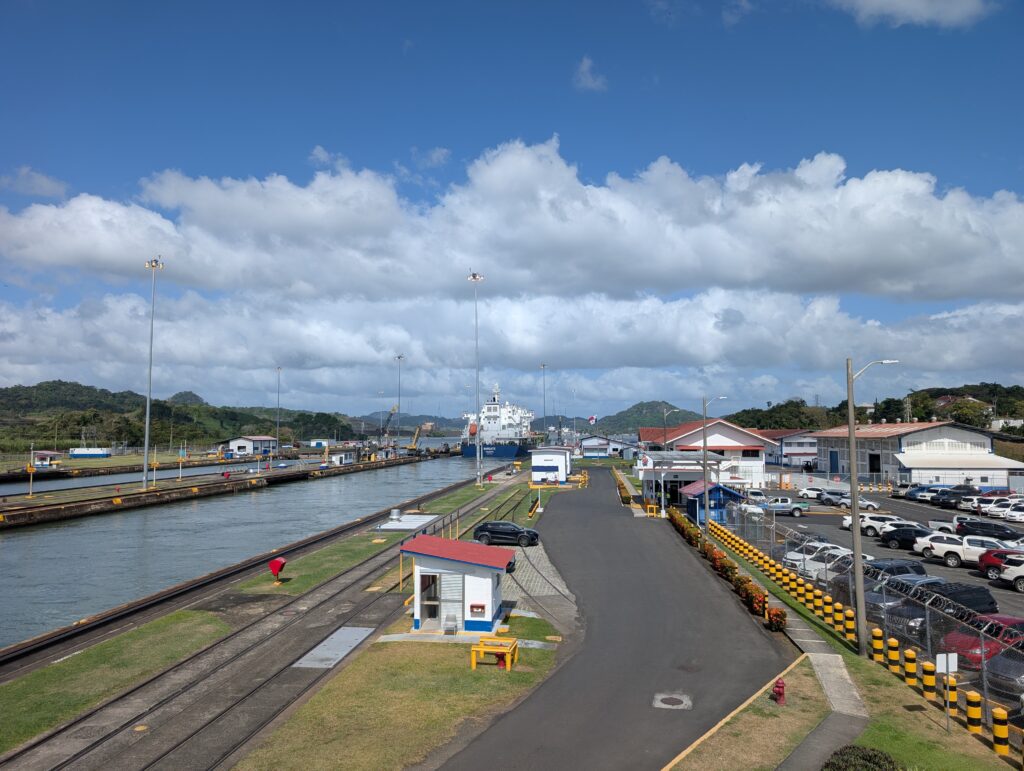
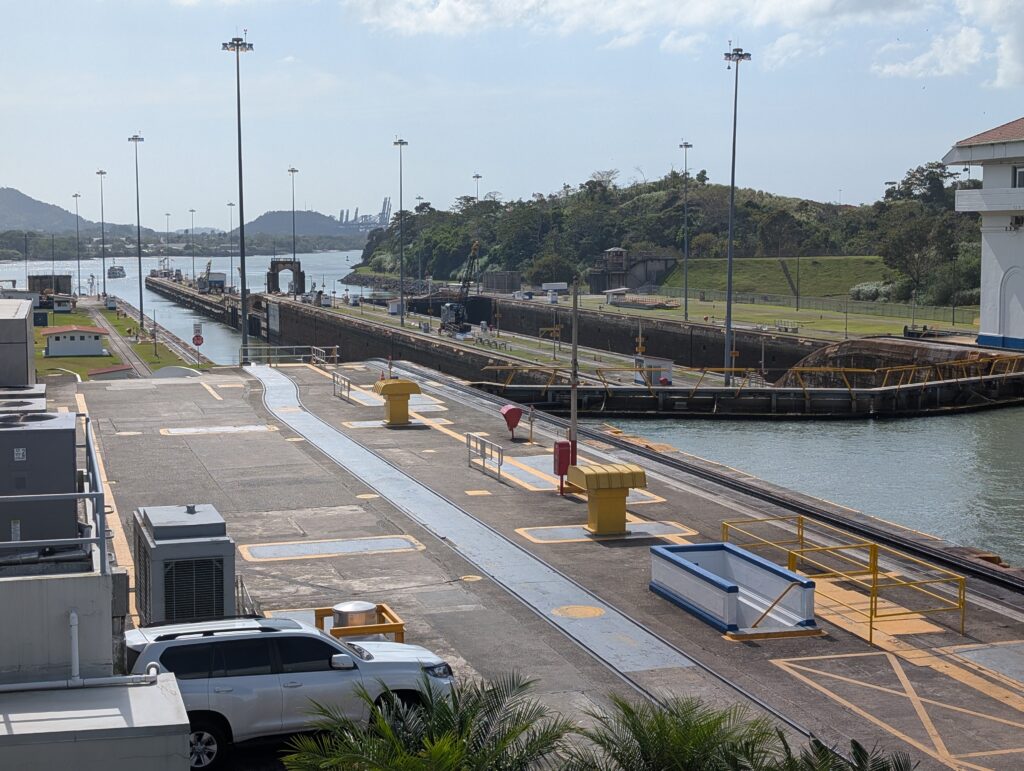
Scenes From Miraflores Locks
The Old Canal Lock Fills, Lifting the Boat
One of the Last LPG Tankers to Transit the Canal, as a Pipeline is Built Over the Canal Route to Make Tanker Passage Unnecessary
Looking North (Inland) From Miraflores Locks
Looking South Toward the Pacific From Miraflores

In the end, I was even happier than I expected at having visited both sites. It did slightly increase my admissions expenditures, and cost an extra two to three hours of transit time. In return for that, I got to see how both lock systems worked, and to see both ends of the canal. I didn’t realize this at the time, but at Miraflores, you can only see the operation of the old, 1914 locks. I definitely wanted to see those. Their operation is significantly different than the 2016 system on display at Agua Clara. You cannot see the old locks from Agua Clara. Seeing the two on the same day really illustrates the contrast well. It takes some knowledge of the Panama public transportation network to get this done at a reasonable cost, but in my opinion is well worth the effort. Just hiring a driver for the day would be a somewhat more expensive, but perhaps less stressful alternative for the less adventurous, or less amenable to public transportation systems.

One further benefit of my method was that I got to try new food at a local eatery in Colon. My Uber driver gave me his contact information so I could call him for a lift back from Agua Clara to Colon. On the ride back, I asked for a local food recommendation. My driver was a dock worker at the Colon port. He dropped me off at a cafe just outside the dock entry – a place many tourists are probably reluctant to walk around. Colon does not have a great reputation for safety. From what it looked like to me, Colon is simply a run down, poor place. Perhaps there might be some petty crime now and then, but I saw nothing that seemed particularly dangerous, just a very poor, economically challenged, working class neighborhood in a developing country. My cafe was priced accordingly. It is often useful to ask locals and employees where they eat, rather than just asking for a general recommendation. The latter often gets you a high priced meal directed at foreign tourists. The former usually gets you a low cost meal of higher quality, often with a much more local flavor.

My hosts recommended the “pulpo” which was octopus! I may not have ordered that on my own, but it was especially tasty over the coconut rice it came with. I was also given a salad and some fried plantains. It was a tasty meal. I walked a few hundred meters back to a much more salty-looking bus terminal than Albrook in Panama City. I walked right up to a bus with a crier shouting, “Panama, Panama!” Within ten minutes, we were underway on a one hour trip back to Panama City.

I met and visited with some older ladies at Agua Clara who were dual citizens of Panama and the U.S. When I learned they were heading back to Panama City directly, I cautiously asked if they would not mind an extra passenger to share the expense. They politely demurred. In our world today, the term “privilege” comes up quite frequently. I am a firm believer in privilege, though not in the political sense it is generally used. We all have advantages and disadvantages based on economic, experiential, and even physical factors. There isn’t just “white privilege.” In fact, when traveling, being white comes with significant disadvantages as well as advantages. It is true, though, that as a 6’6” 235 lb man, I can feel relatively safe walking through areas alone that would cause me serious concern if I were a small woman. On the other hand, sometimes being a great big male solo traveler prevents SERVAS hosts from offering to let me use their homes, even though they say they will host “all travelers.” In some cases, it may also deter older ladies from defraying the cost of their ride. I do not hold it against them. I wish the SERVAS hosts would indicate in their profiles that they are not comfortable with solo male travelers. Certainly, though, my older lady friends at Agua Clara had no obligation to share their ride with me, and I had plenty of other options, one of which I availed myself of without problems.

I made my transfer right onto the local bus, and was dropped off at Calle Uruguay about an hour later. By 7:30, I was back at my hostel. I had a bit of ice cream, as I caught up on a few messages from the day. I began to feel very tired. I thought perhaps I could take a catnap, then head back out to walk my neighborhood at nine or ten. I laid down to rest my eyes, and woke up after midnight to go to the bathroom! No use going back out at that hour. I got down to my bedclothes, and fell back to sleep until near four. I dozed off and on, and then gave up trying to sleep a bit after five. I came out to write my journal and prepare for my Thursday, visiting Old Panama, which is different from Casco Viejo.

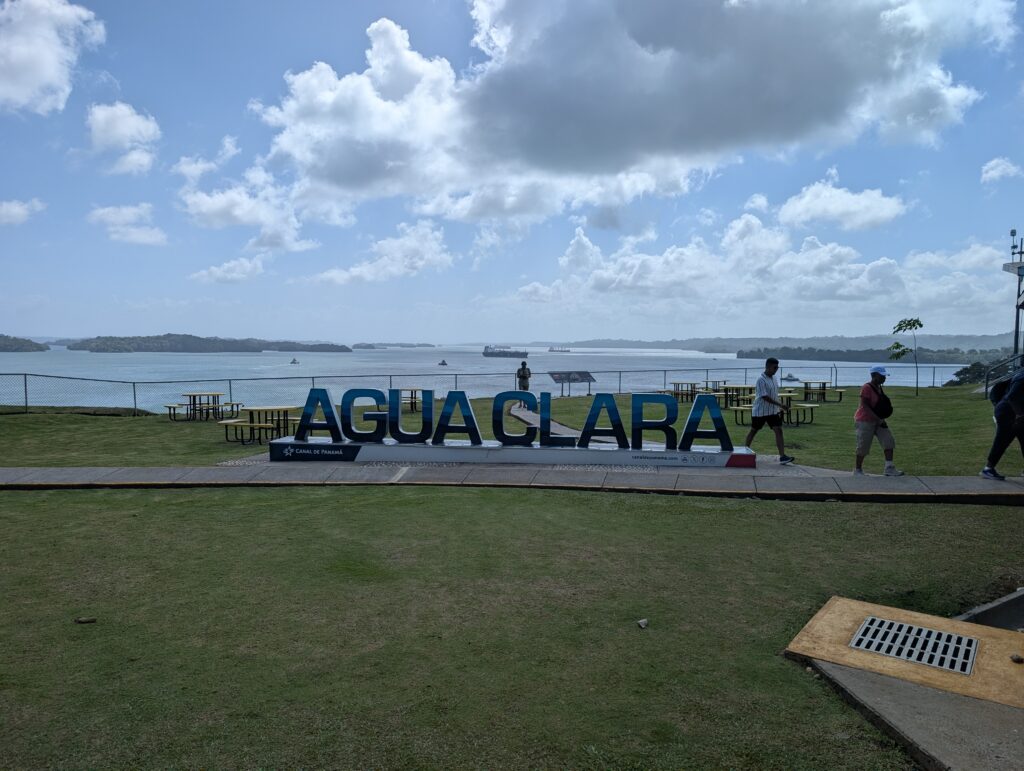
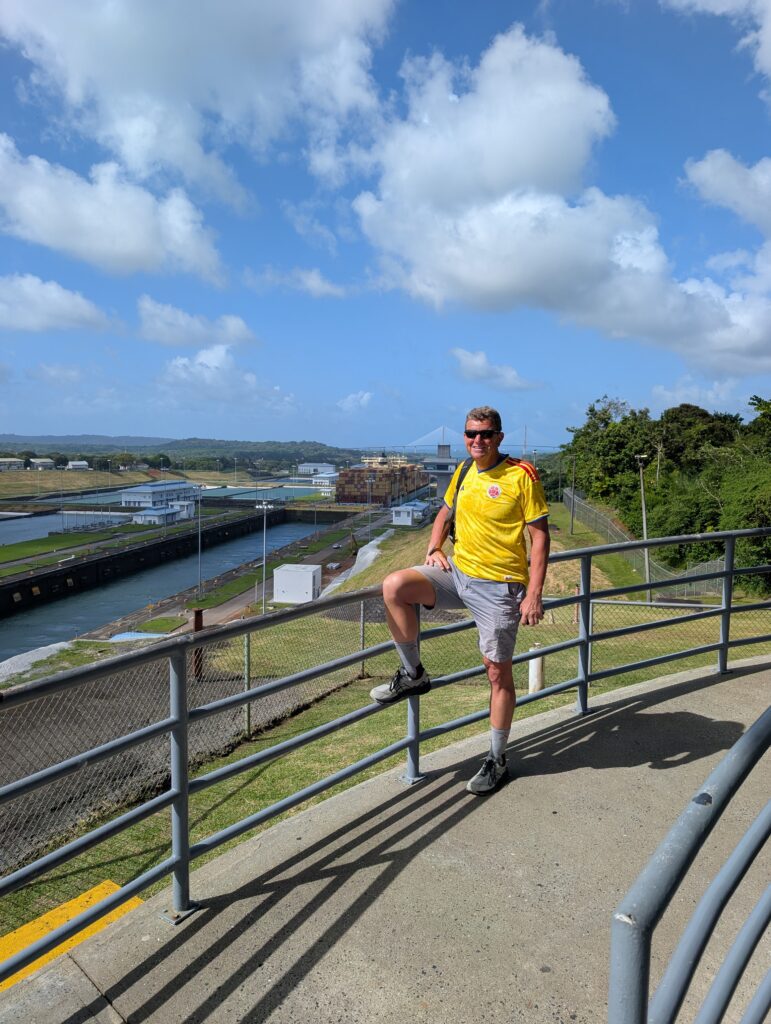
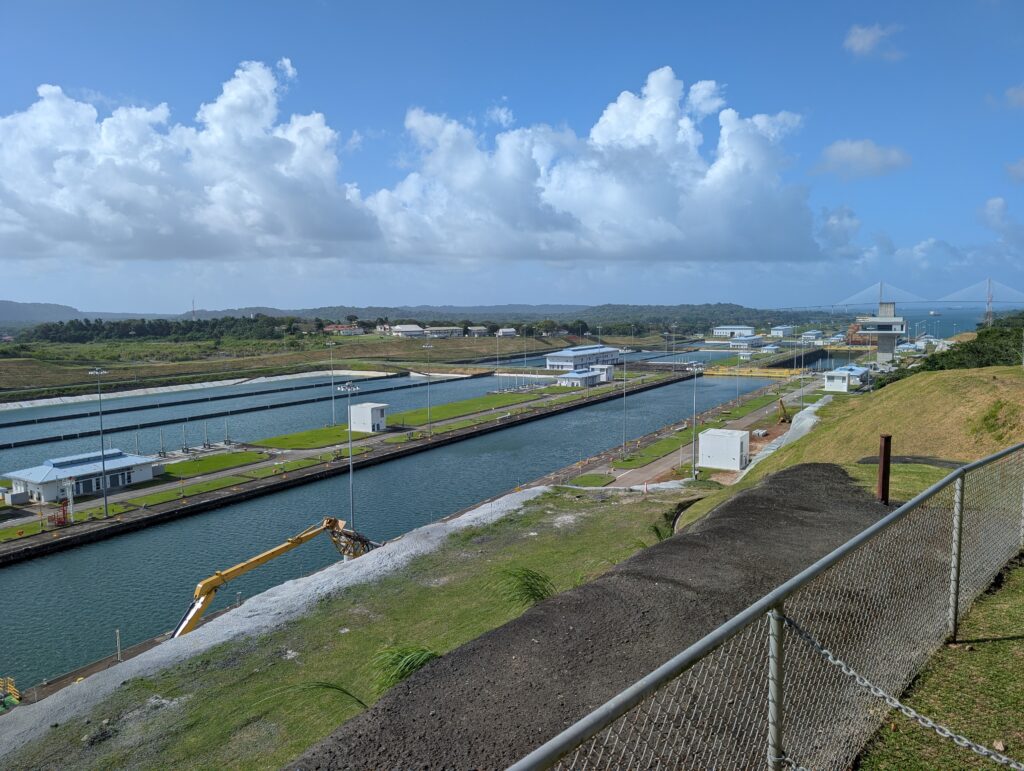
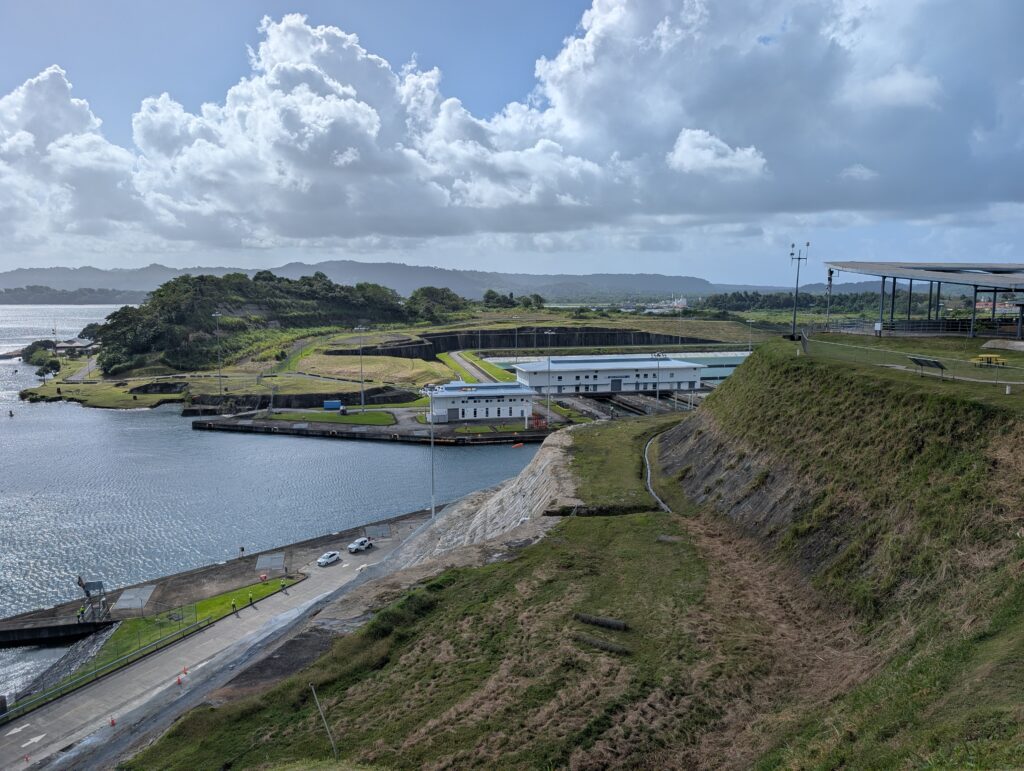
Agua Clara Locks, The New Canal
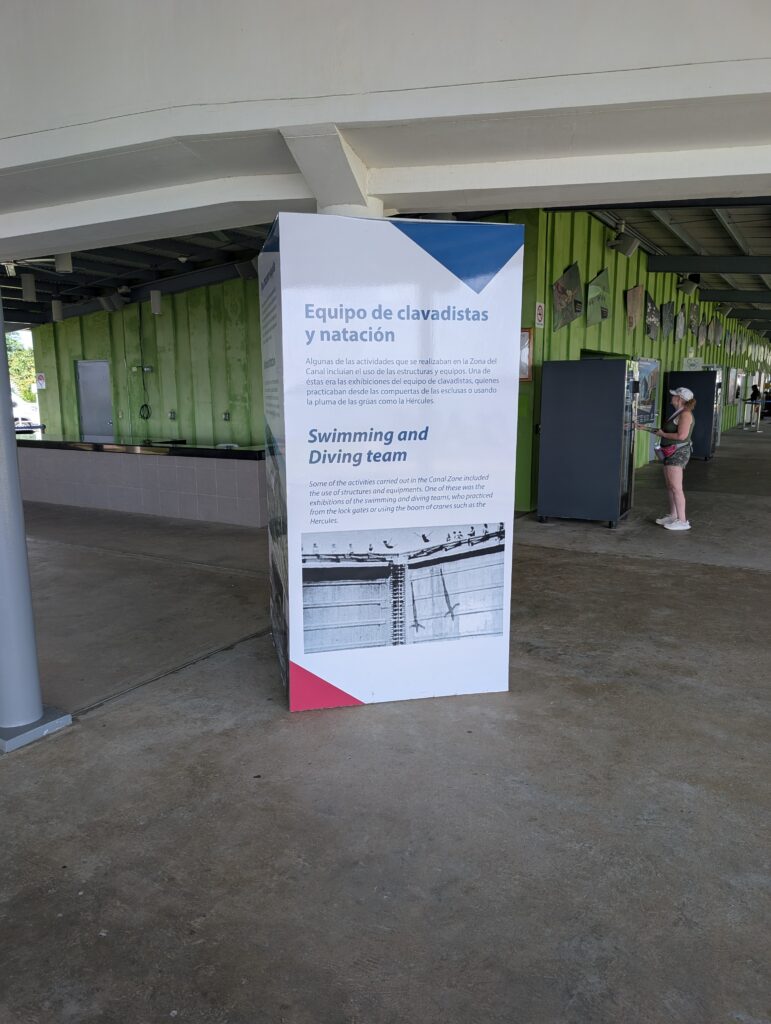
Interesting Activity
Noticeably Bigger Container Ships Can Pass
View Out to the Atlantic, As Ships Descend
View Inland to the Reservoir
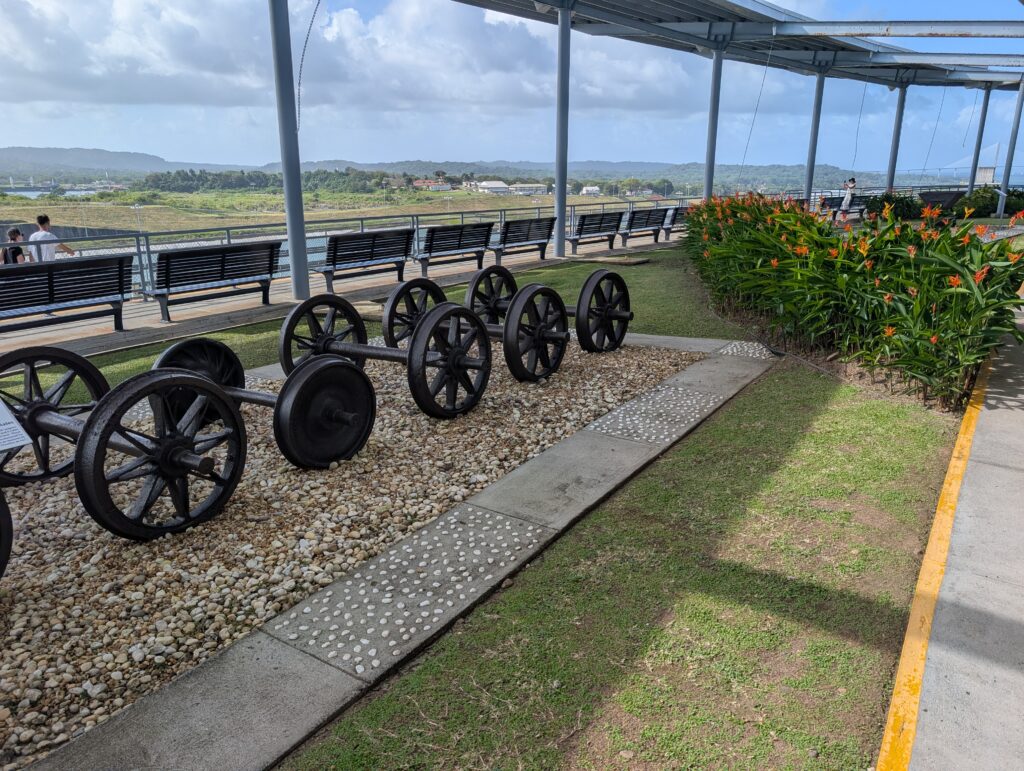
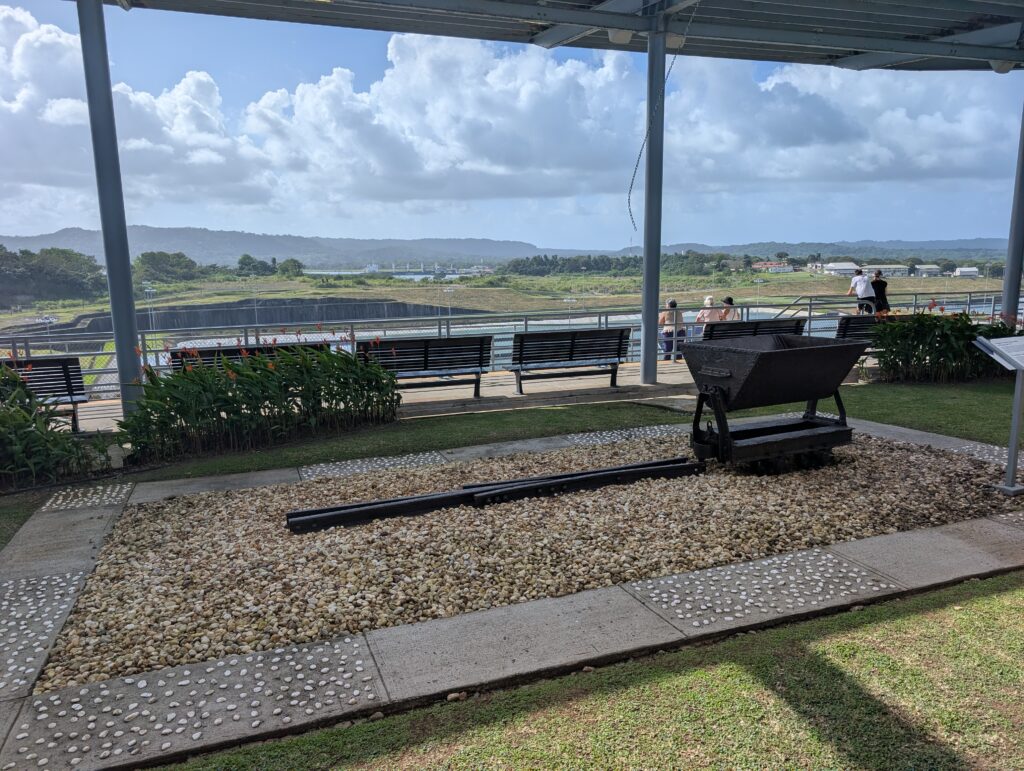
Hardware From the Original French Excavations
Looking Off Toward Cocoli, the Caribbean Side Old Locks in the Distance
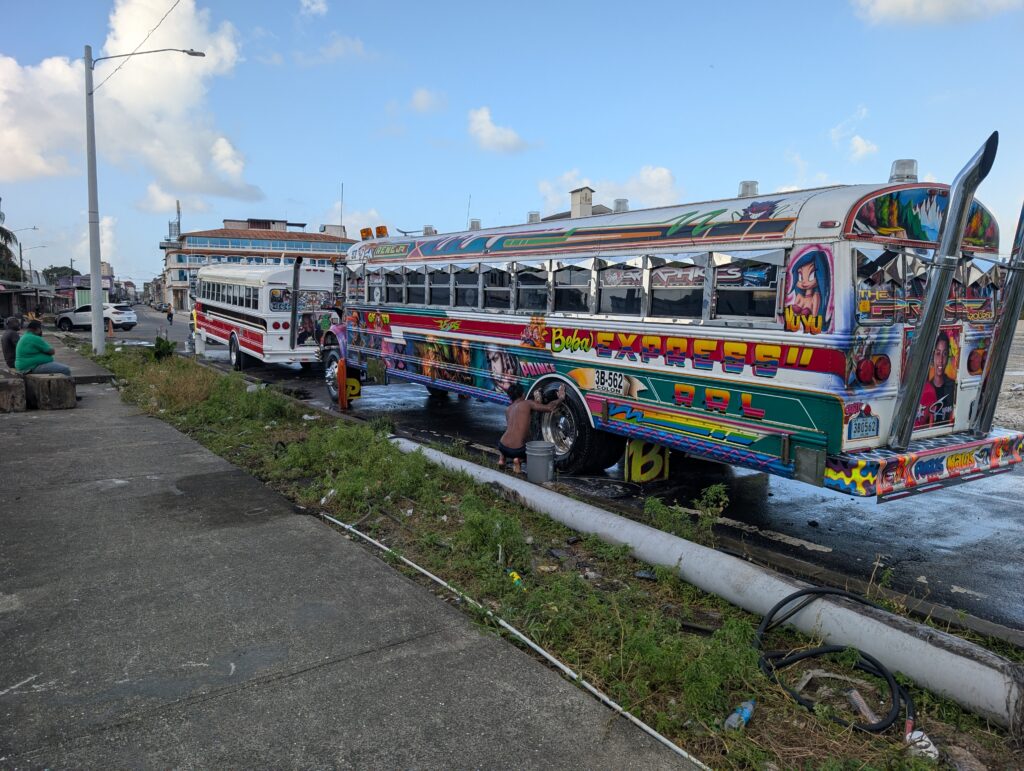
Buses Known as "Red Devils" Common Throughout Panama
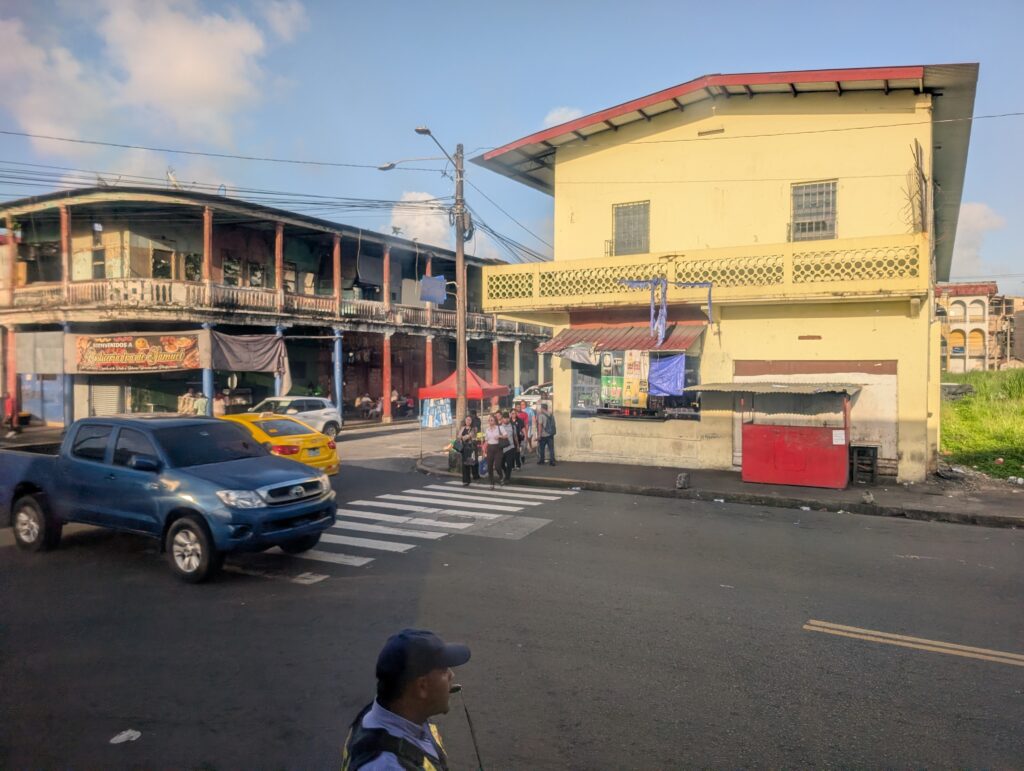
Typical Colon Street View
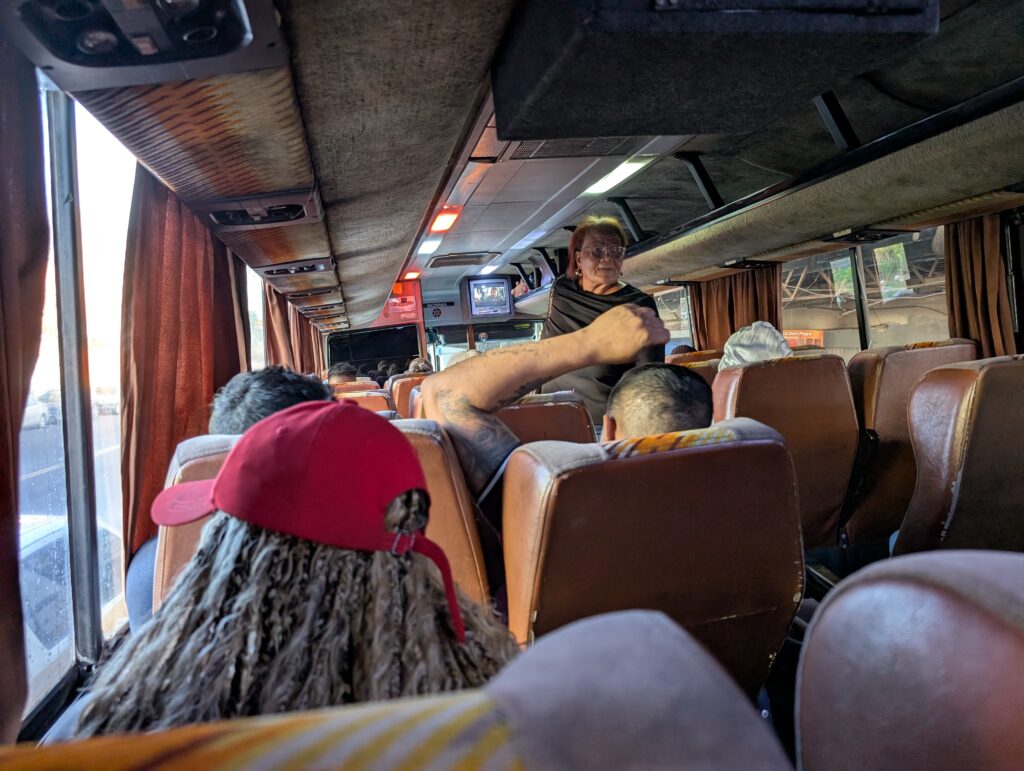
My Intercity Bus From Colon Back to Panama City
Miraflores Panorama
Agua Clara Panorama
Trip Overview
Panama
Panama City
El Salvador