El Salvador
Tropics, Highlands, & Cities
I most definitely would not have booked a $90/night hotel at the airport had I known I would be staying in El Salvador for four nights. It seemed the meal and two-way shuttle that came with the room would be enough to make it worthwhile when I had nothing but a short night in the country. If I had it to do over, I would just have grabbed a hostel in town. I did that for the second and third nights. The airport hotel was not refundable, though, so I did use the shuttle to get away from the airport, and I enjoyed the breakfast in the morning. Before bed, I sauntered to a gas station to grab a few snacks. It was supposed to be a ten minute walk, but the round trip took about an hour. I did find a drink and a few snacks.
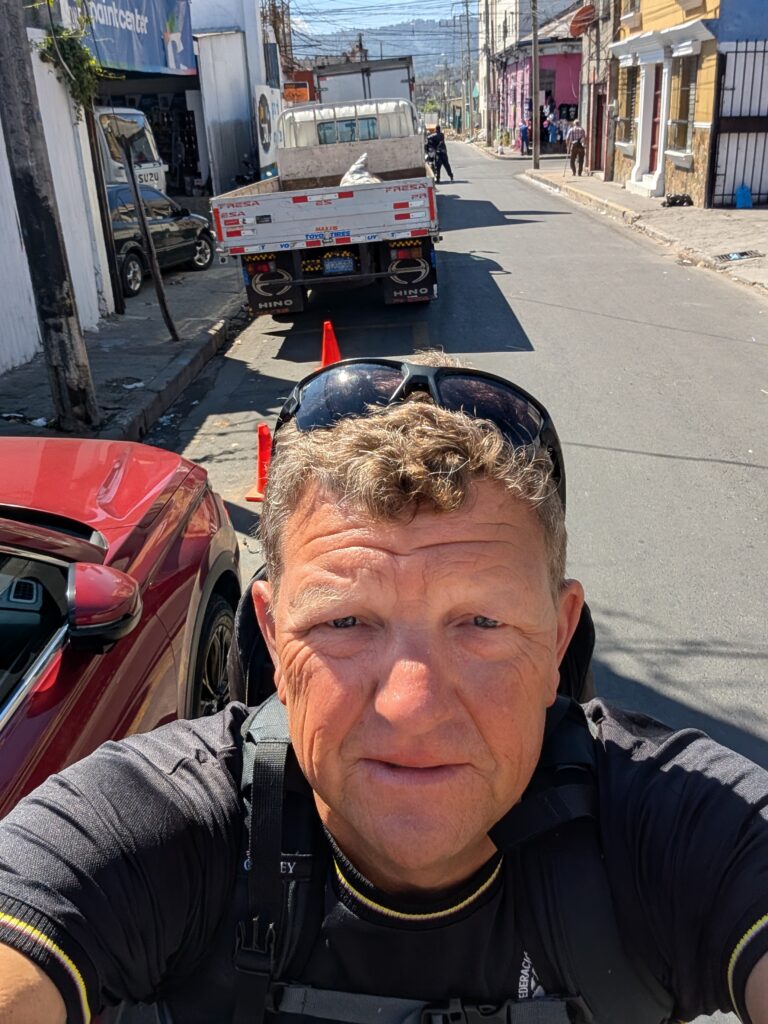
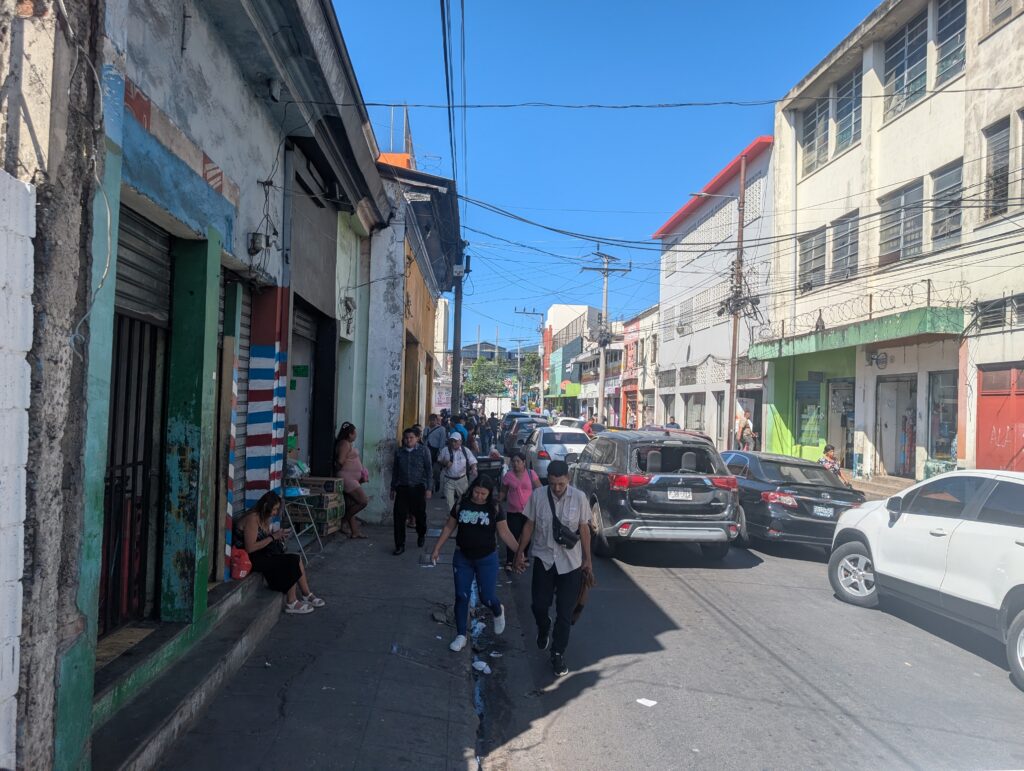
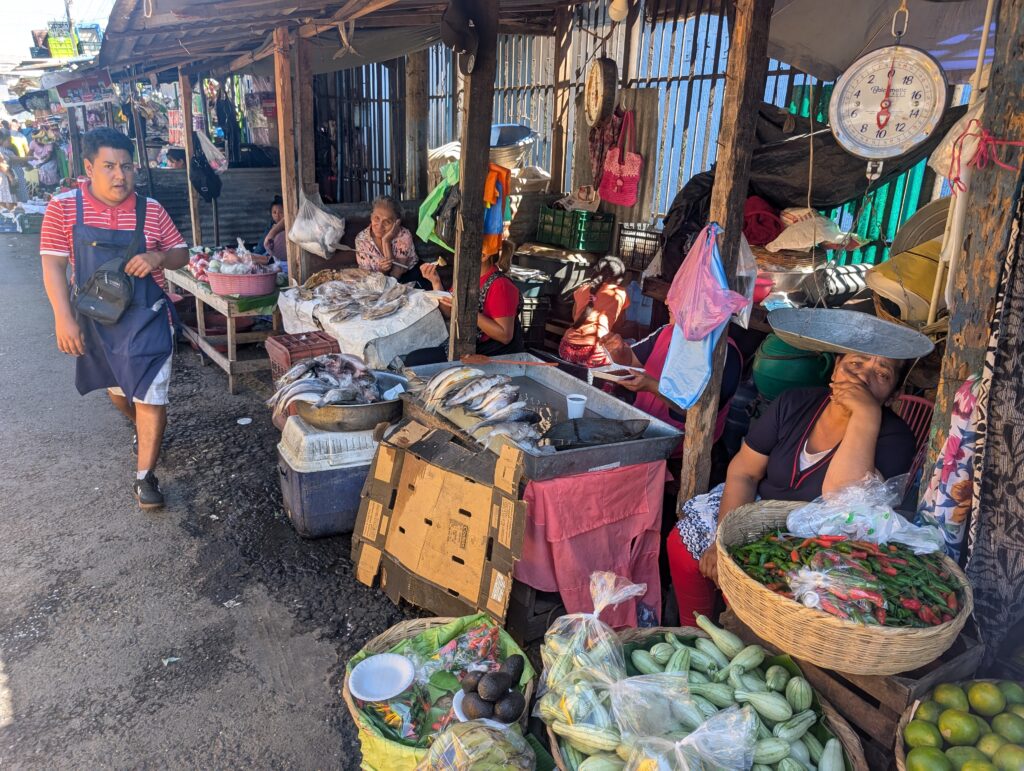
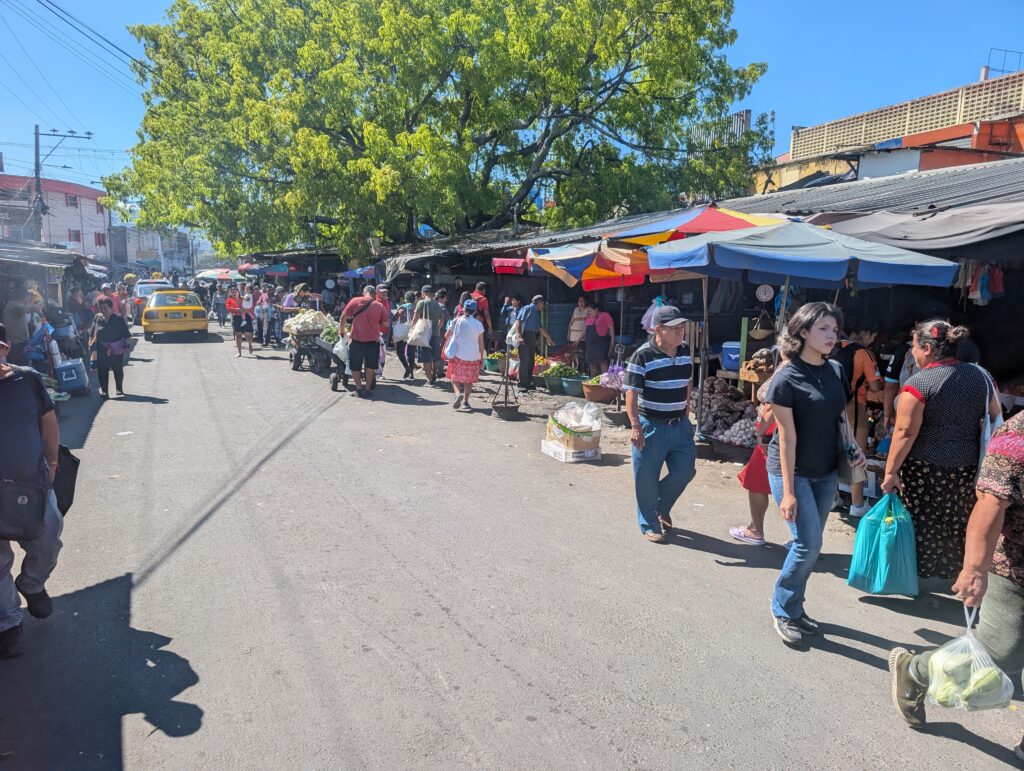
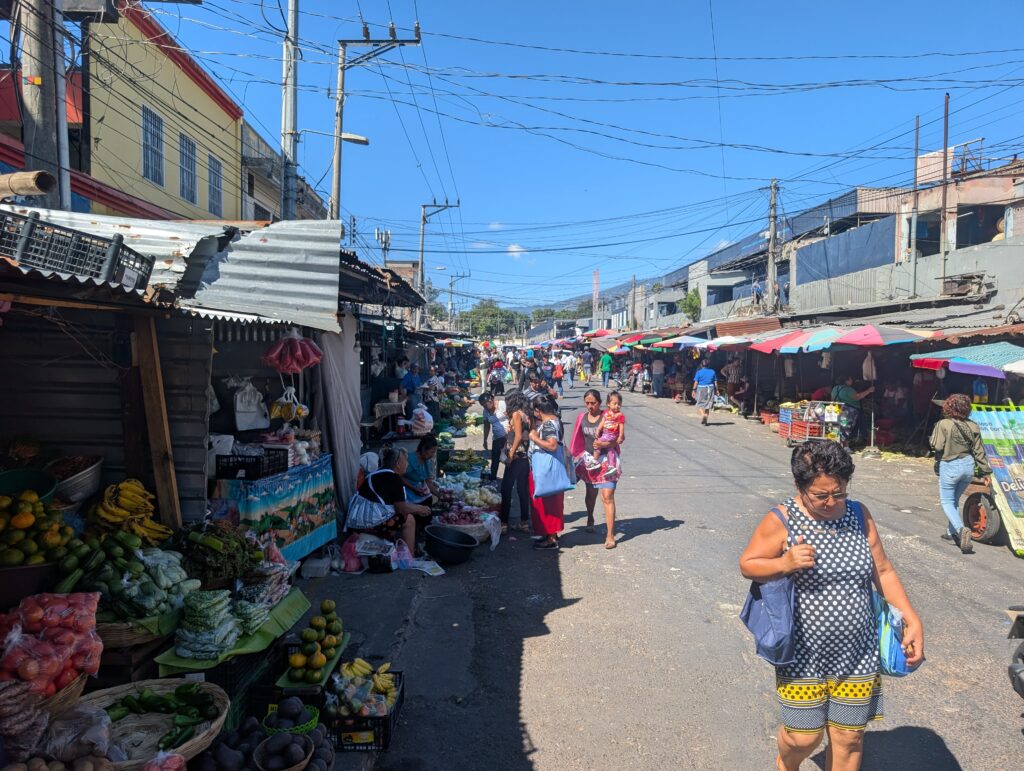
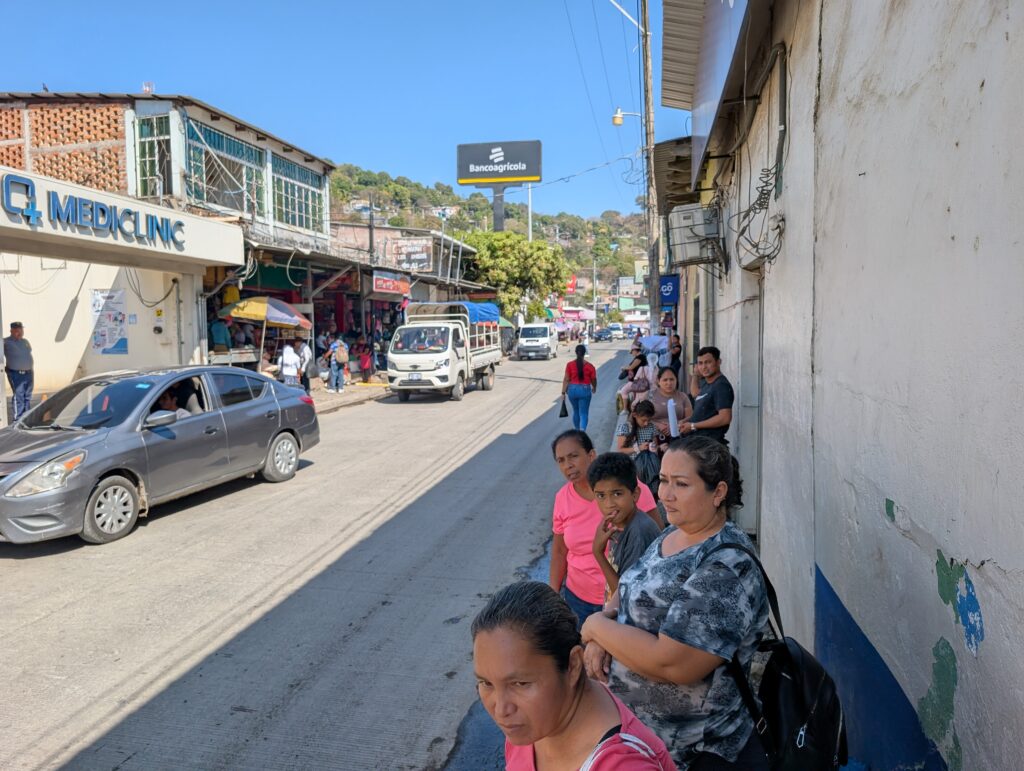
My Spanish had been steadily improving throughout my time in South and Central America. It was good enough now that I could ask directions to the bus stop and inquire as to how to hail the bus. I understood and followed the directions, and by mid-morning was on a bus bound for San Salvador. Often enough in Latin America, newer international airports are quite far from their associated towns. The San Salvador airport is not as far away from town as the one in Siem Reap, but it is over forty kilometers and takes about an hour to traverse via public bus. After I caught a bus to the “centro,” I still had to walk a couple of miles to my hostel, fully laden with everything I had brought or purchased on the trip. I doubled the backpack and wandered through the local market, and down the streets that warm morning, eventually finding my way to Hostal Cumbres de Volcan Flor Blanca.
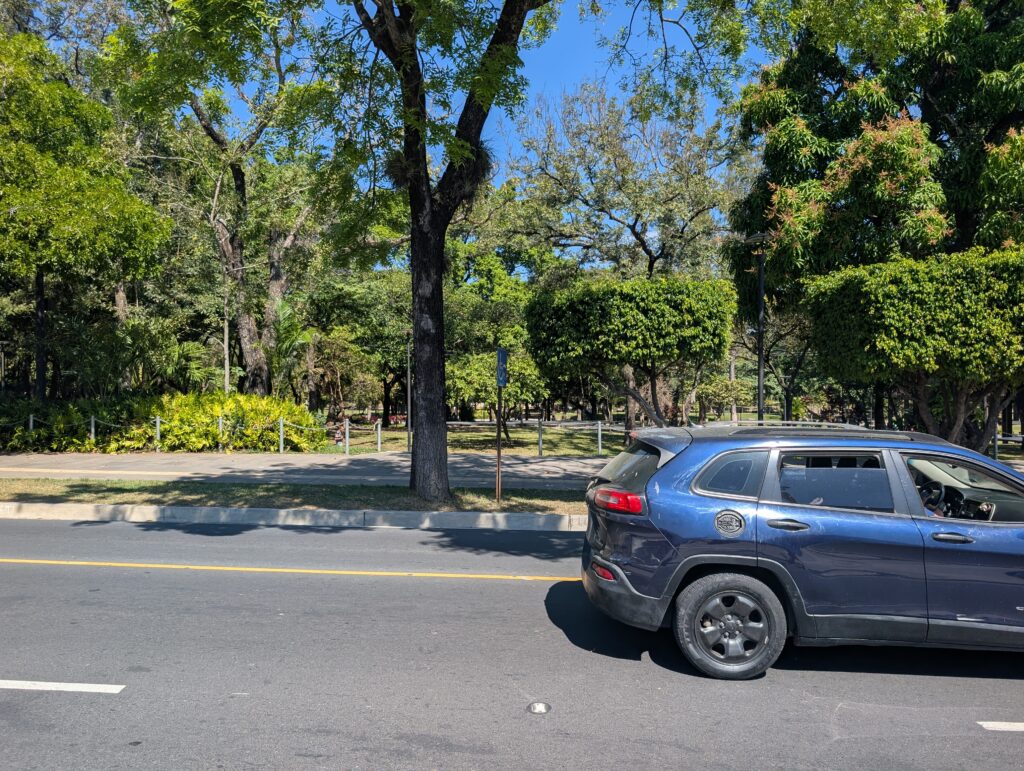
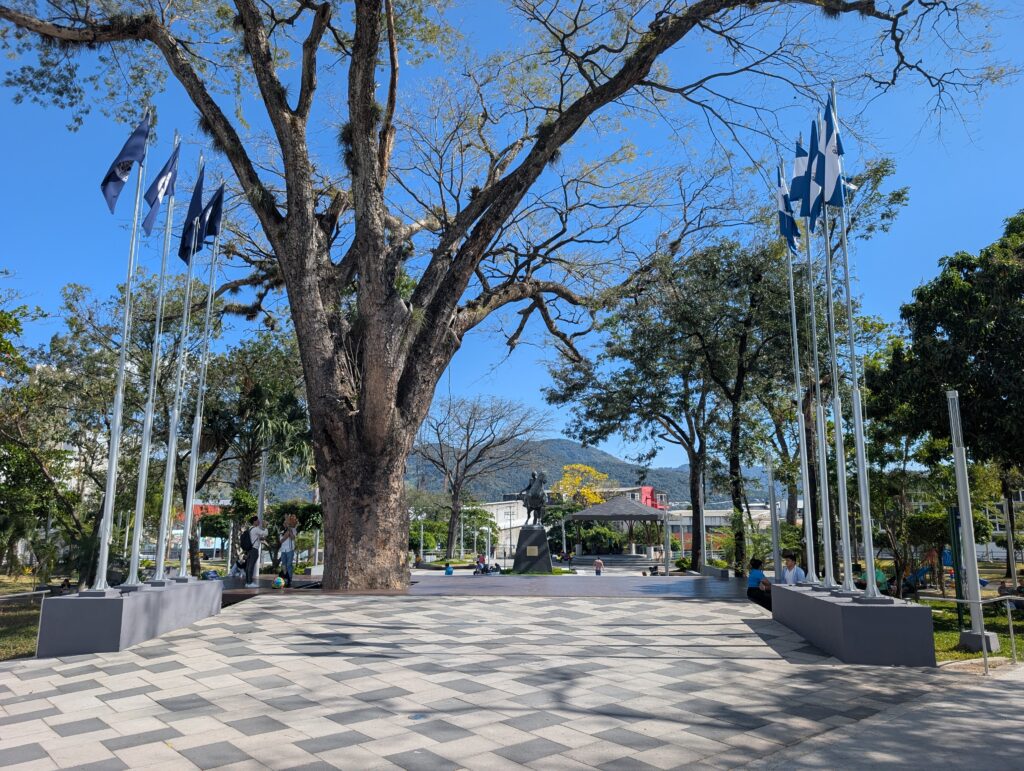
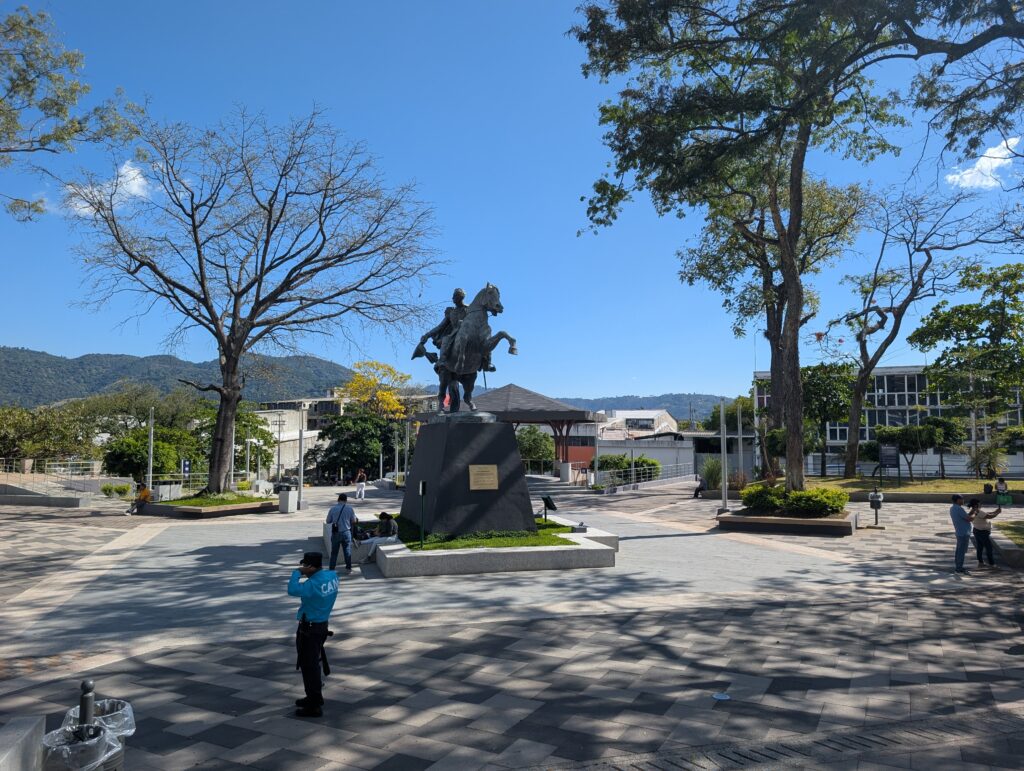
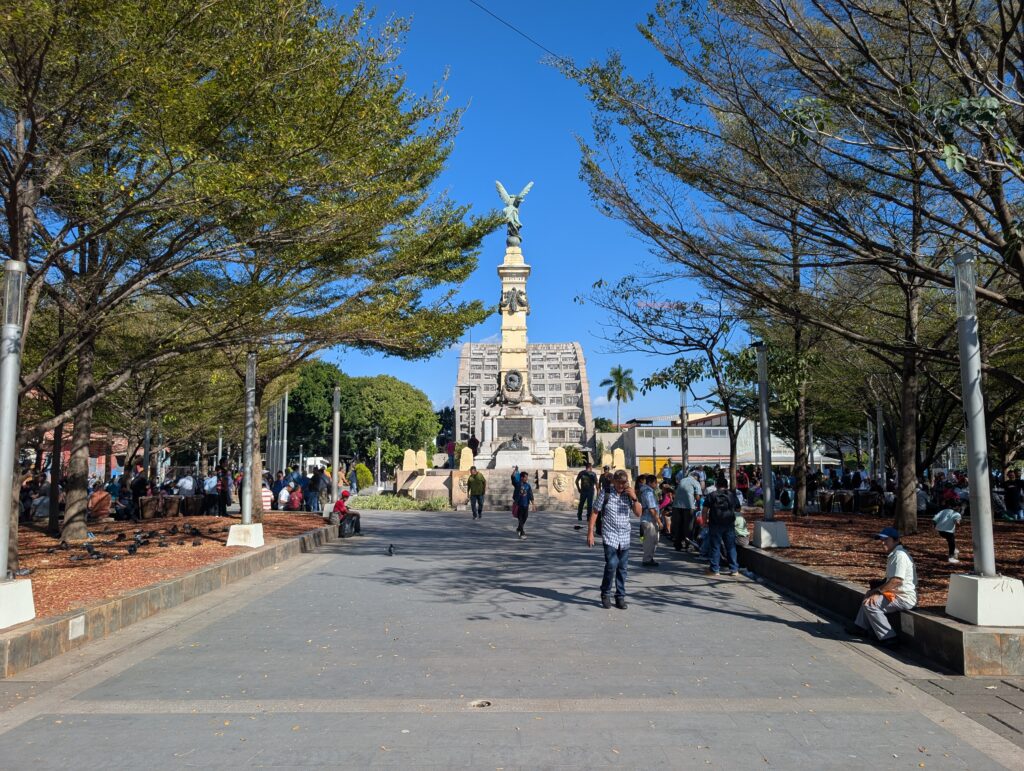
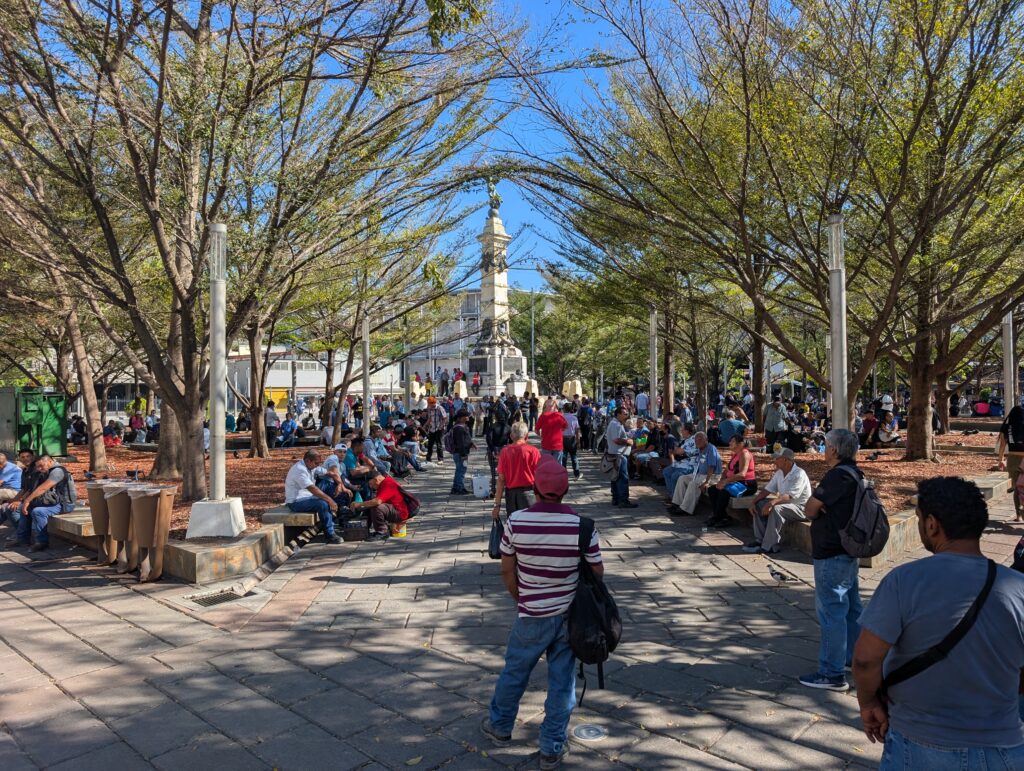
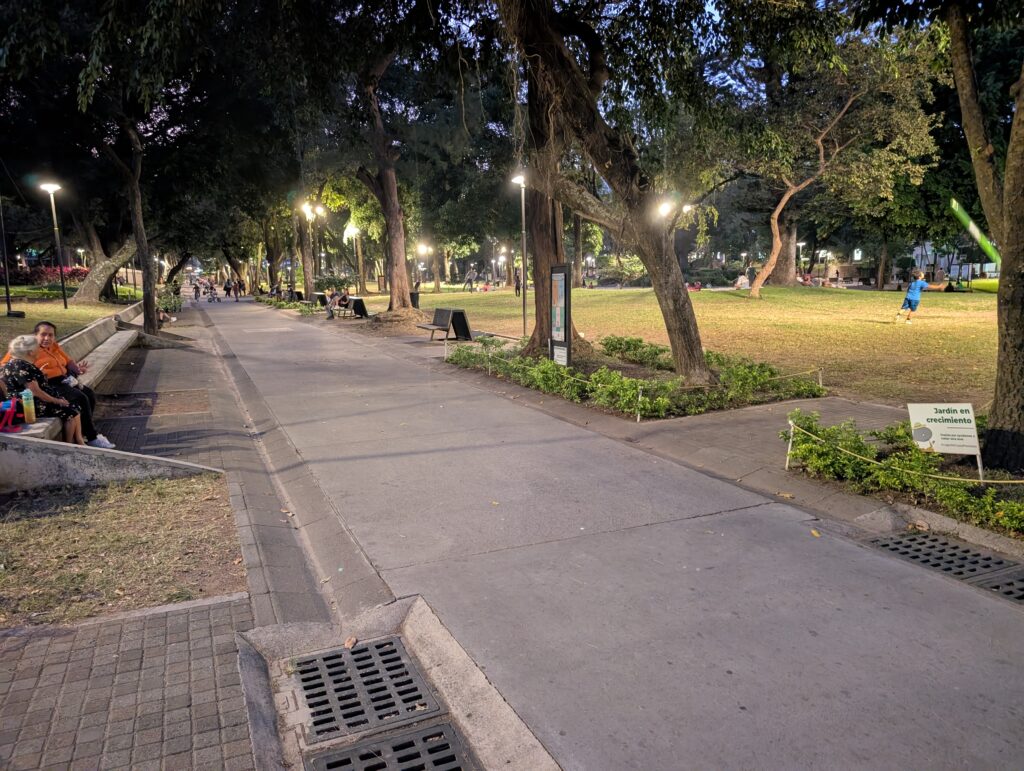
As I cooled down in the lobby awaiting check in time, I shuffled through different websites and found a potpourri of local attractions within walking distance, and a few just outside. The hotel had no shared beds available Saturday night, and no privates Sunday, so I just took a private room the first night, and moved to a shared one the second. I dropped off my goods and headed back to el centro. I found Cuscatlan Park right near the hostel, and passed a Bolivar Square. Every Latin American city has a Bolivar Square.
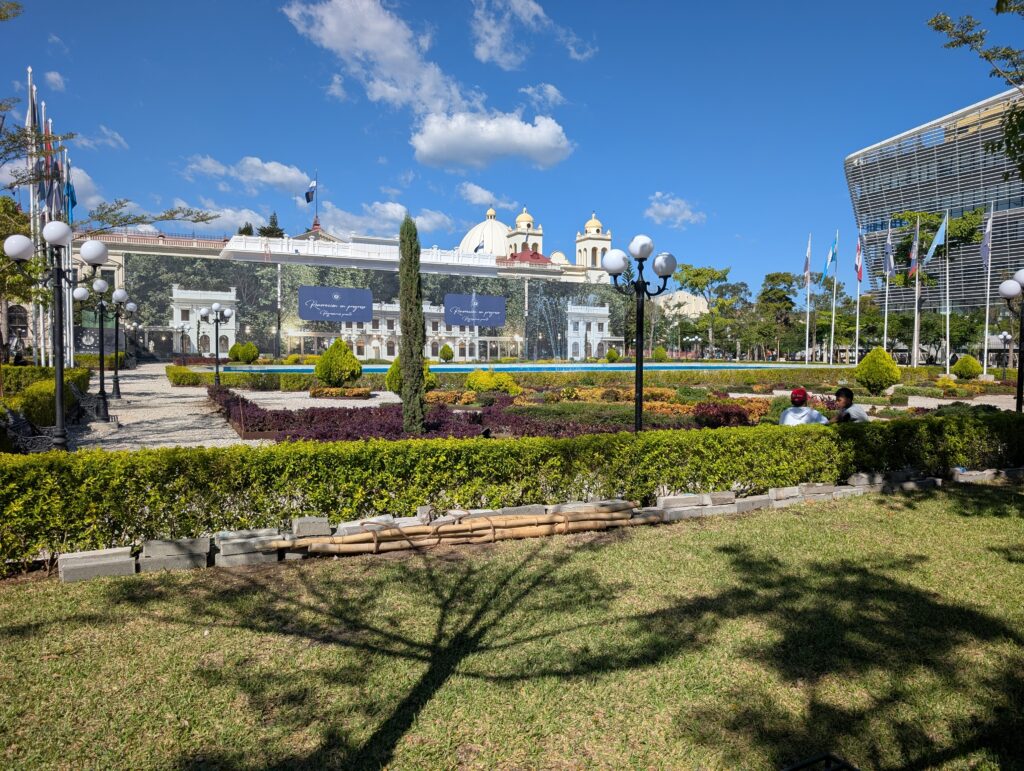
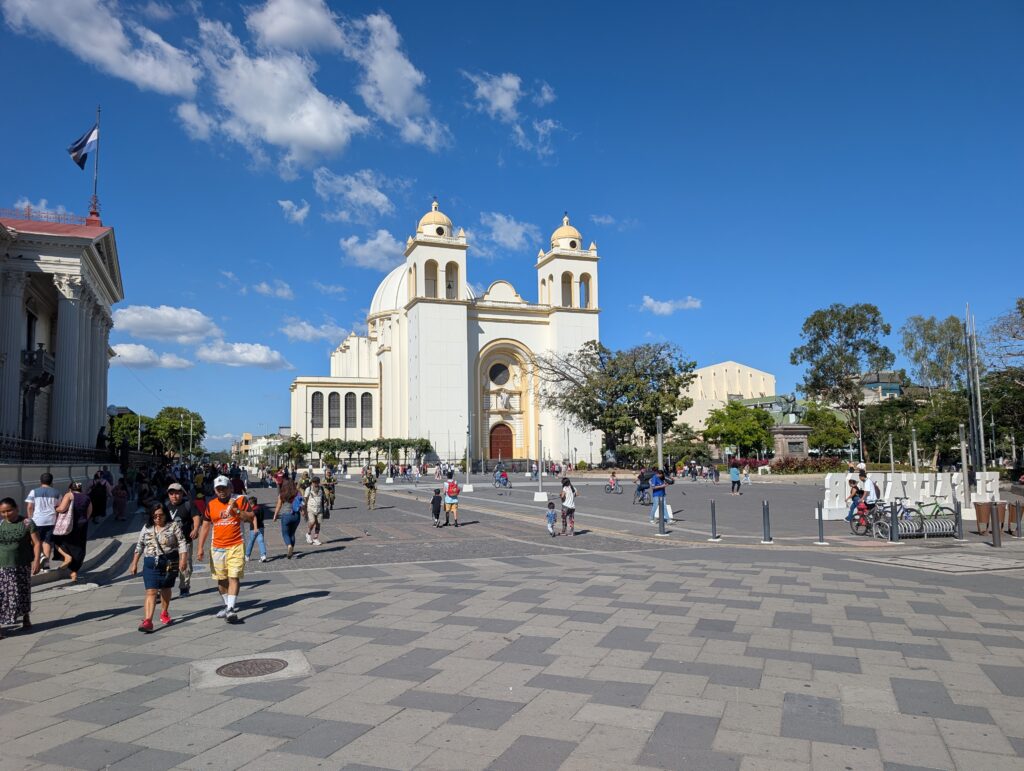
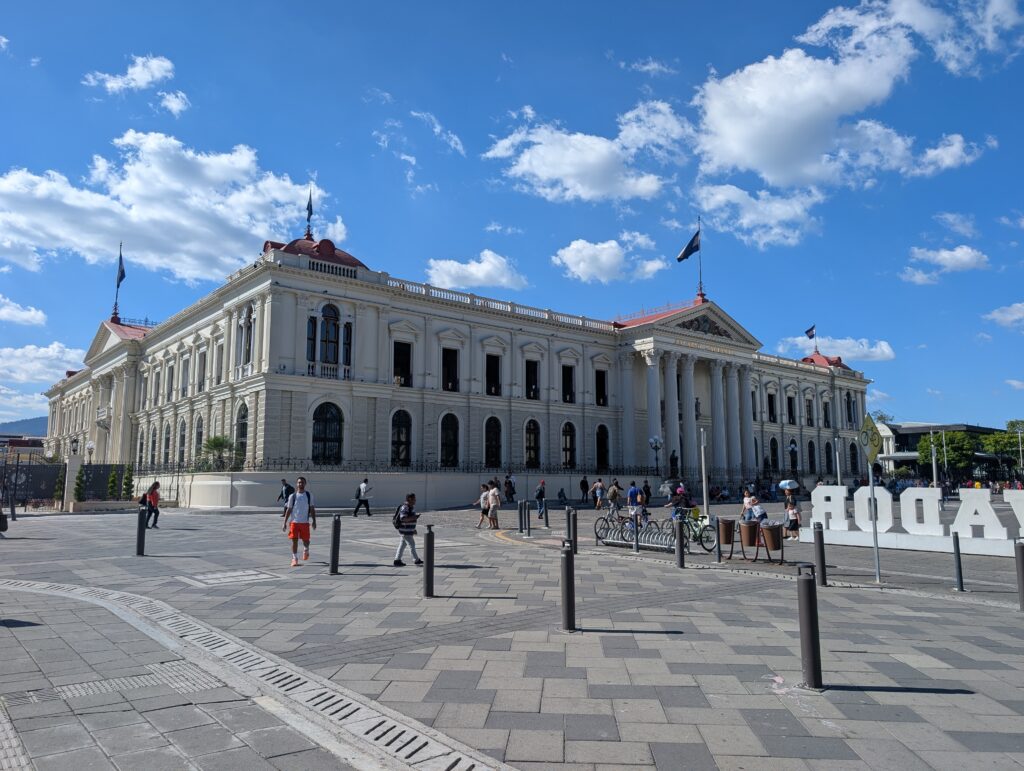
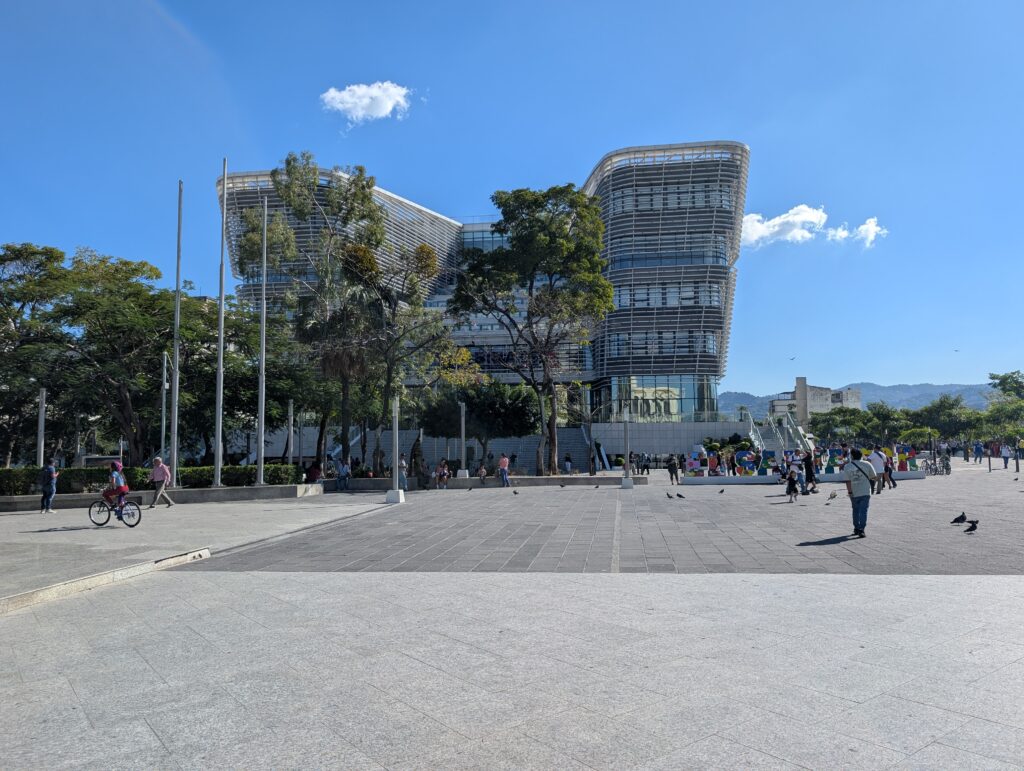
I found the National Palace, and a Massive National Library. I passed Barrios Square, named for a Salvadoran military hero, and saw the Metropolitan Cathedral of San Salvador. There have been churches on this site for a long time, but the modern building was just built in the late 20th century. Archbishop Oscar Romero, famous for projects funding support for the numerous poor of El Salvador, is well known for having put off the funding of a more ornate complex to send more money to aid the impoverished local residents.
In Salvadoran history, the cathedral is known not for it’s architecture, but as the site of numerous acts of extreme violence. Many of El Salvador’s political leaders have been victims of assassination. On numerous occasions, people attending the funerals of the dead leaders were gunned down while at the services. Even Archbishop Romero himself was assassinated. Security forces slaughtered a number of mourners at his service as well. If all of that seems ridiculously inhuman, perhaps it will shock you into the understanding that for decades El Salvador was one of the most dangerous, if not THE most dangerous country in the world. It repeatedly led the world in per-capita murder rates, one year peaking at over 100 murders per 100,000 people. It was the origin and homeland of the notorious MS-13 gang, as well as Barrio 18. You might ask, then, how was I comfortable walking the streets in a place like El Salvador?
Every country in the world has it’s own problems. Some have done a good job of solving those problems, and others not. But every country also has its own set of challenges. When I was in the national museum in Singapore, a friendly and well meaning docent took a few minutes to explain to a me and a Chinese visitor from Guangzho, China how Singapore had solved so many different problems that plagued the United States and China in different ways. The implication was that China and the U.S. ought to simply adopt the Singaporean policies and solve so many problems of environment, urban sprawl and planning, racial issues, social issues, and social well being.
The problem, though, is that Singapore is merely a city on an island that is dominated by urban banking centers and a population that is ¾ ethnic Chinese. The cultural expectations of people alone are massively different from America’s. Both China and the U.S. have far more ethnic diversity, not to mention burgeoning, diverse economies and sprawling geographies that cover areas hundreds of time larger and more varied that Singapore’s. Singapore has done a brilliant job of planning and developing Singapore, but implementing Singapore’s solutions in the U.S.A. would be completely disastrous. I expect the same would be true trying to run China like Singapore.
American conservatives are regularly lectured about how we should just adopt the socialist policies of the so-called “democratic socialist” Scandinavian countries. Their crime rates, health care systems, social welfare infrastructure, and so many other elements are touted as evidence that the U.S. should follow their leads on gun control, defense spending, social welfare, and so much more. But Denmark and Sweden, lovely countries that they are, have no meaningful ethnic diversity, no heritage of individual rights in the sense we do, and they can fund so many things by essentially relying on the United States of America to keep them safe from aggressive leaders like Adolf Hitler or Vladimir Putin.
I could go on, but the point is that it tends to be best for local leaders to come up with their own solutions to the problems of running their own countries. As bad as Maduro was, it probably would have been best to let Venezuela get rid of him, if they felt so inclined. Don’t think that’s true? Take a look at what has happened in Afghanistan and Iraq after American intervention. It doesn’t always have negative effects, but it happens often enough that we ought to seriously question suggestions that involve aggressive foreign policy to topple foreign regimes.
(Continued)

So what does any of this have to do with El Salvador? El Salvador was the most dangerous country in the world, until the ascent of current President Nayib Bukele in 2019. Bukele took an extremely aggressive stance against gangs and criminal activity, wresting control of the country from these criminals and filling inhospitable prisons with accused members. Some (mostly outside the country) have argued that civil rights and due process are often violated in the prosecution of these miscreants. European leaders often criticize Bukele. Their criticisms are parroted by tourists from those countries, who complain when Bukele is praised by locals, tour guides, and other actual stake-holders in the country.
But inside El Salvador, Bukele has an approval rating about as high as any leader in history, rising into the low and mid nineties, and never falling below 85%. Everyone seems to like him except the gang members, and they’re all in jail. So how can a political leader achieve this kind of popularity? It’s unheard of in a place as politically divided as America. The answer is simple. Look at what El Salvador was just a few years ago, and look at what it is now. Any law abiding citizen would gladly sacrifice a few rights not to live in a gang-ridden murder capital. Bukele has given them a secure country worth living in.
Would this kind of crime crack down work in America? Absolutely not. We embrace our heritage of civil rights. We would never compromise our freedoms for a bit of security – most of us wouldn’t anyway. It is part of our heritage – the values that are ingrained upon us from early childhood. Our legal system insists on due process, and prevents “cruel and unusual punishment.” Not insignificantly, we’ve also never had a murder rate much above 10/100,000. It’s usually about 5 or 6. We haven’t the need for these kinds of extreme measures. But it was needed, and has worked in El Salvador, to the point that the country has been saved. It was saved by Salvadorans a Salvadoran way, not European or American – and it worked! So who are we to criticize it? I am not, but I will come and visit now. There’s no way I would have done that seven or eight years ago. So, thanks, President Bukele. I will join the multitude of Salvadorans in gratitude, rather than the somewhat arrogant foreign critics. I don’t worry about being gunned down while site-seeing.
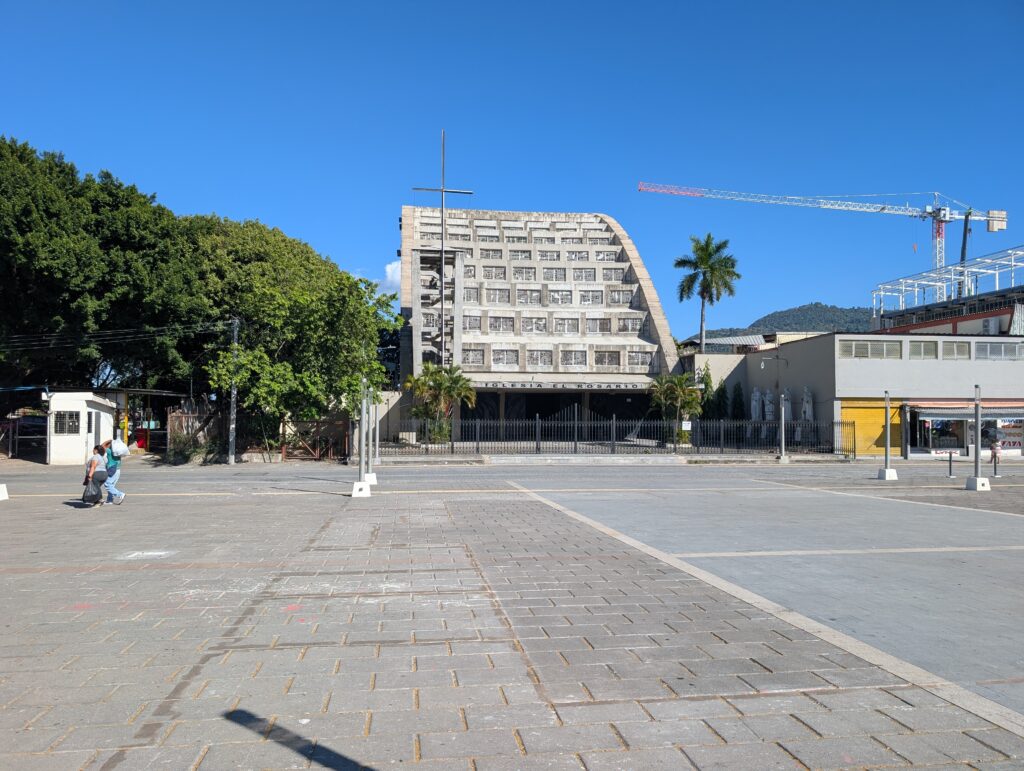
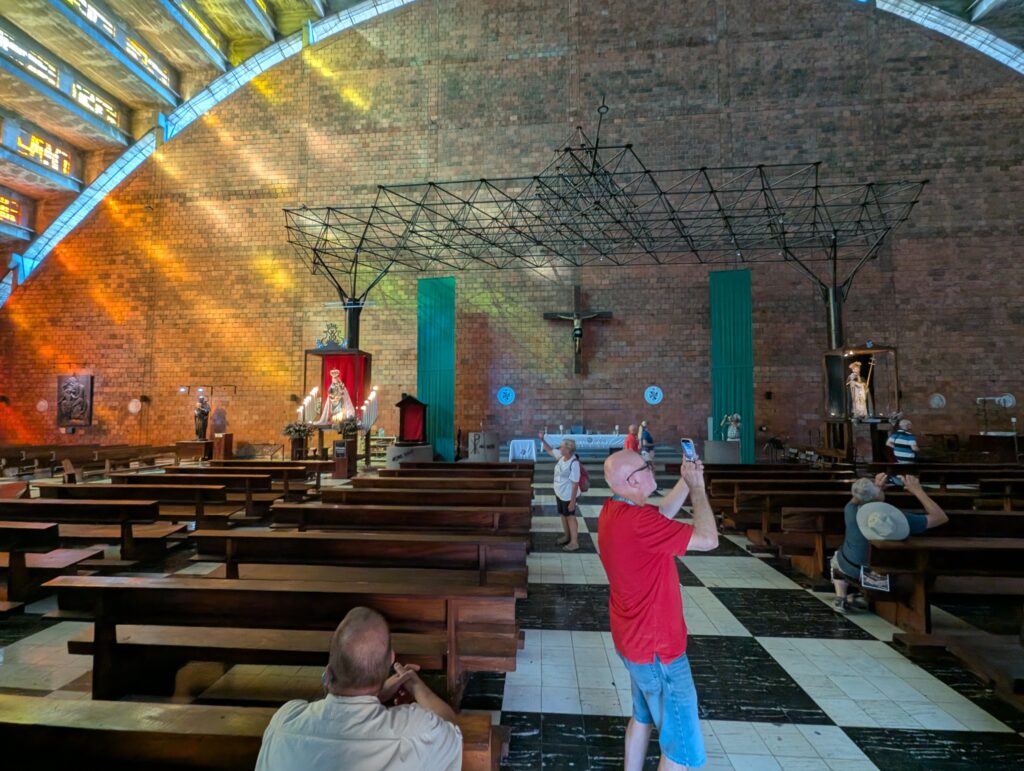
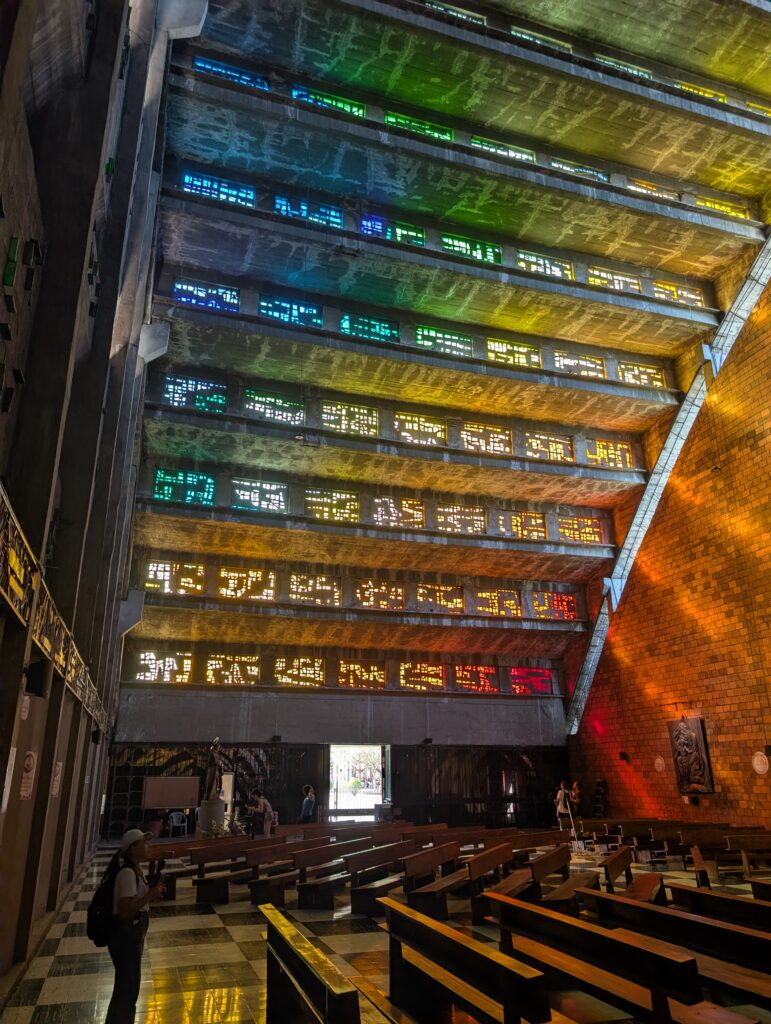
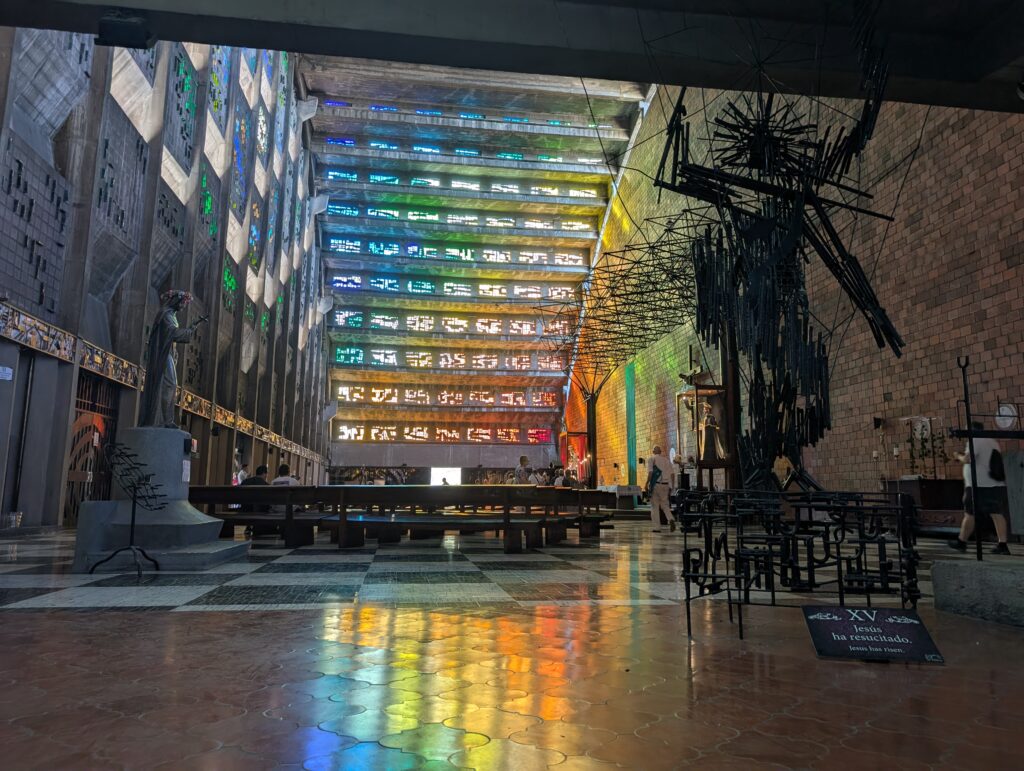
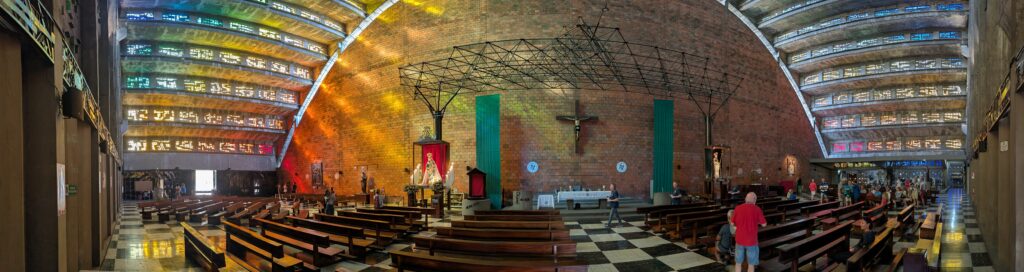
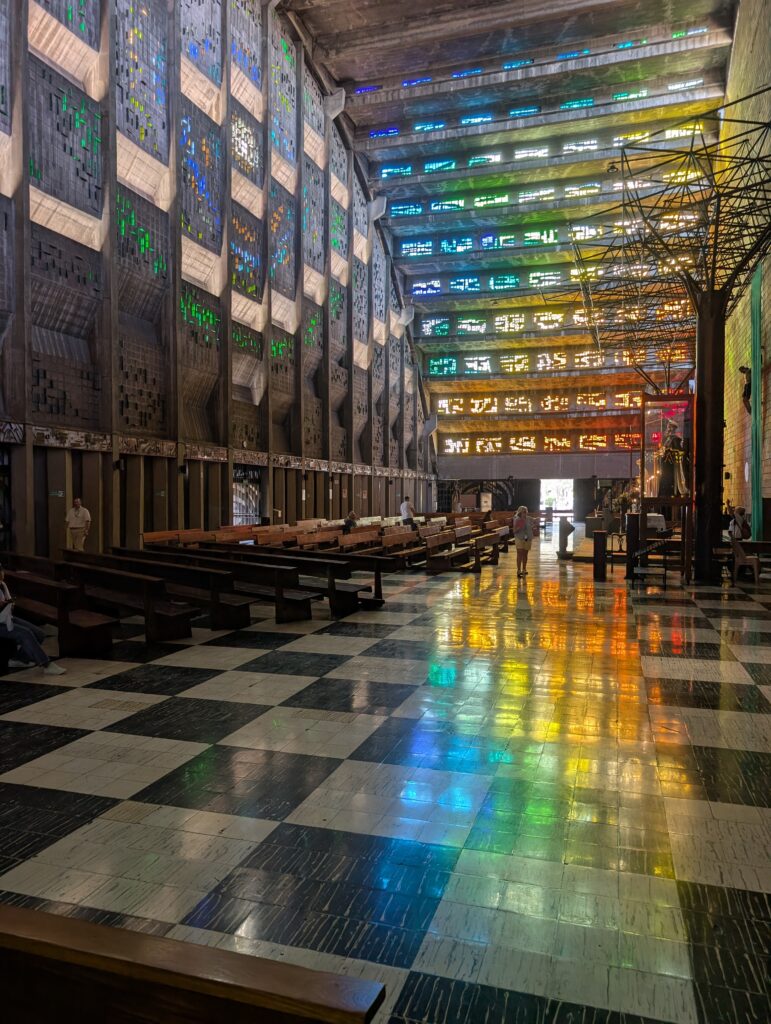
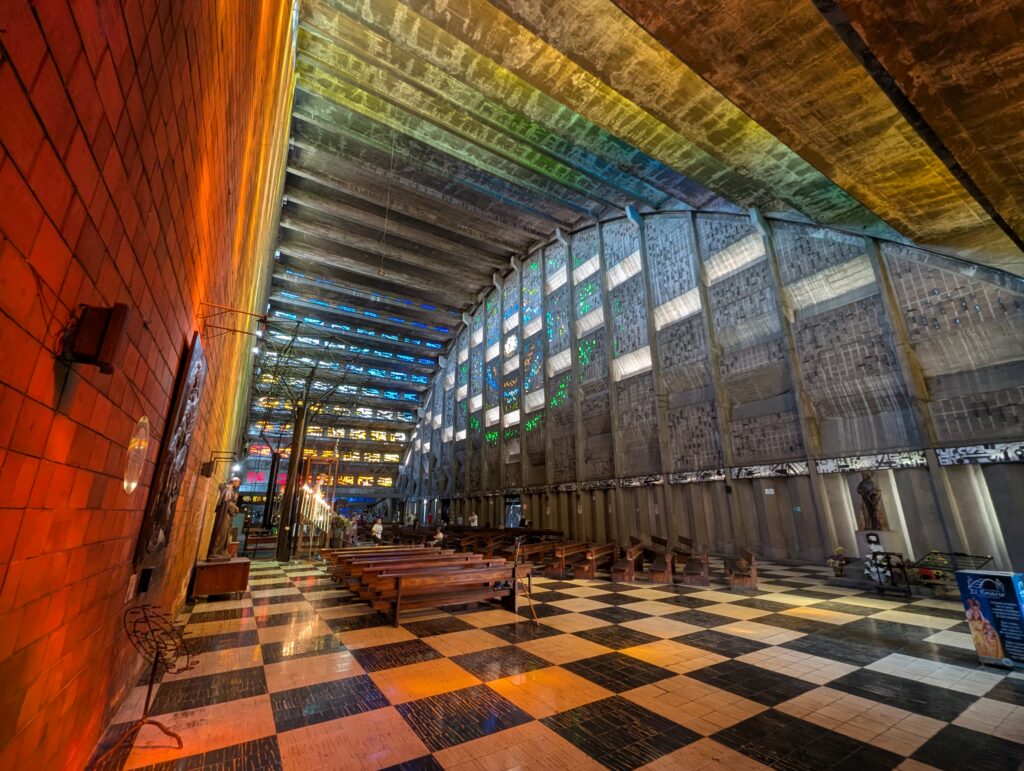
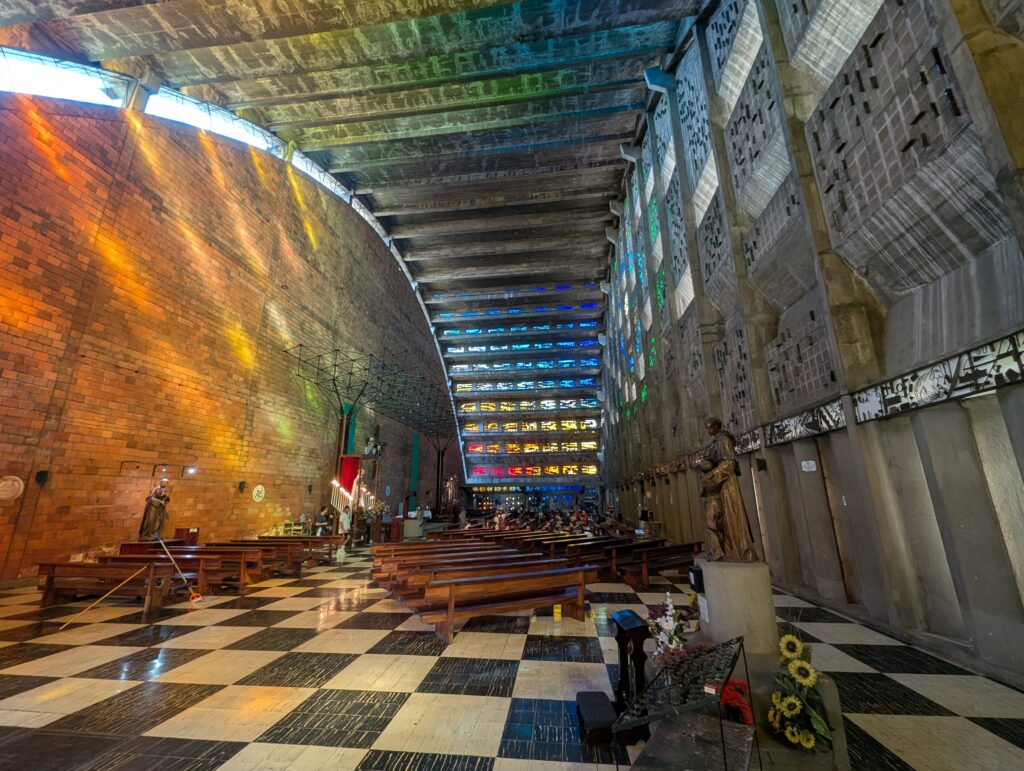
From the Municipal Cathedral, I walked to the Iglesia del Rosario, another not-that-old Catholic church. It was built during the sixties, and has a spectacular array of stained glass built into the curved ceiling and walls. The secondary light effects were just spectacular. I don’t think I can do anything more to explain the effects of the stained glass other than to just let you, the reader, gaze at the photos. The Iglesia del Rosario also has some interesting and unique sculptures depicting the stations of the cross, with two dimensional images that have hands or limbs sticking out, making them partially three dimensional. Although I found these interesting, they certainly were not as aesthetically pleasing as the effects of the glass. The Resurrected Jesus sculpture, though was intriguing in the way it depicted an abstract idea of what a resurrected body would like like.
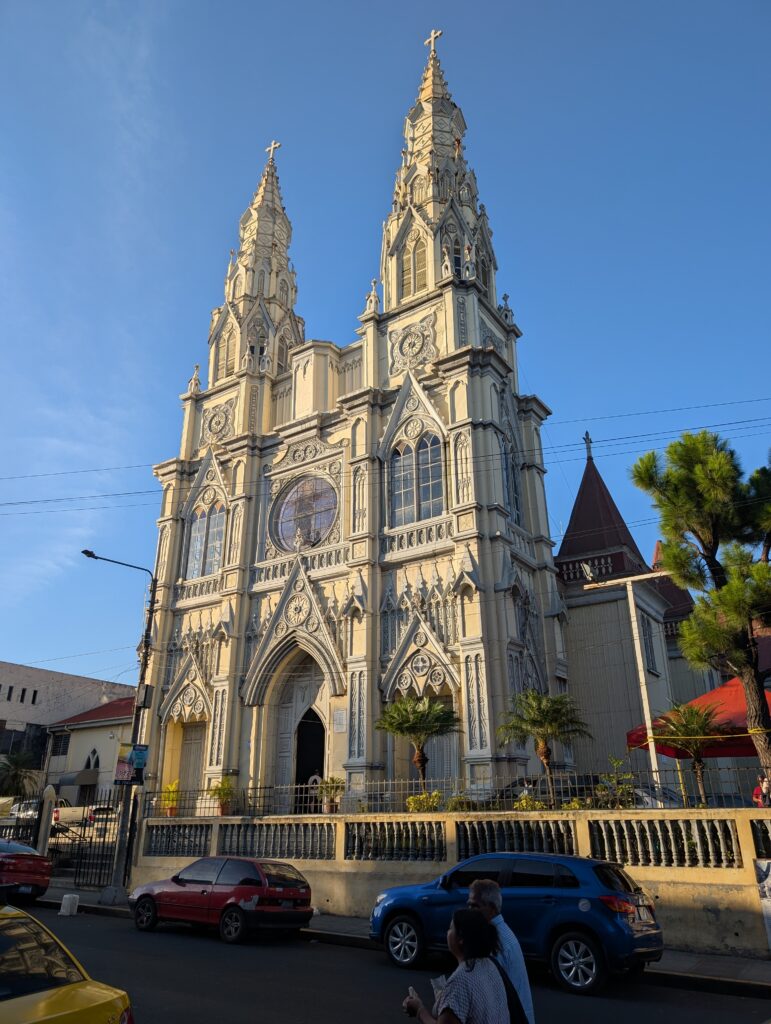
On the way home, I found another interesting church, this one a century old. The Basilica of the Sacred Heart of Jesus has a striking exterior, and stately appearance. I just looked at the outside, before heading in to a local eatery to grab a $4 mega-torta. I believe they were holding a mass that Saturday evening. It would have been rude to enter as a tourist. I spent the rest of the evening heading to a grocery store and visiting with a Chinese tourist about my age who needed some advice on love and marriage, of all things. I did the best I could as we walked to the grocery store, KFC, and the circuit at Cuscatlan Park.
(Continued)
There was plenty of time to run Sunday morning, but I didn’t do it. I don’t remember doing anything to injure my left knee, but for some reason, I noticed significant swelling in it, beginning on the sailboat. I knew there would be plenty of walking on the trip that I did not want to avoid, so I decided I would rest my knee from running, at least, until it wasn’t swollen every night. Since the problem didn’t resolve, I did not run after sometime early in the Panama stay. I did, however, get up early enough to make my breakfast and head to church by 8:30.
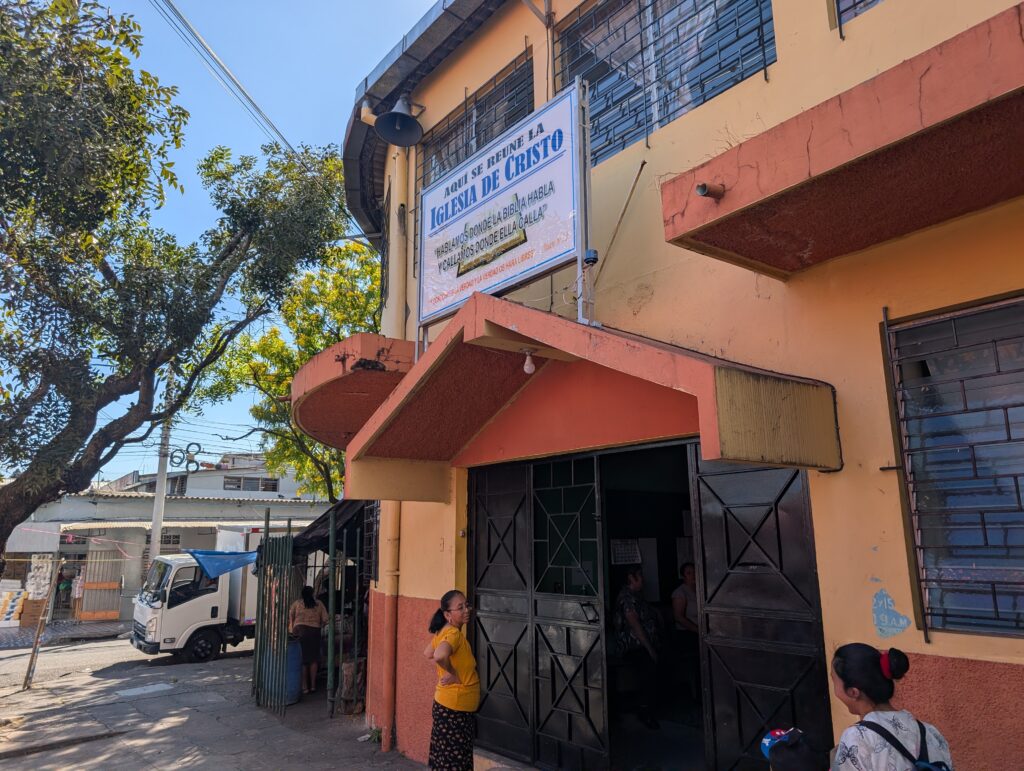
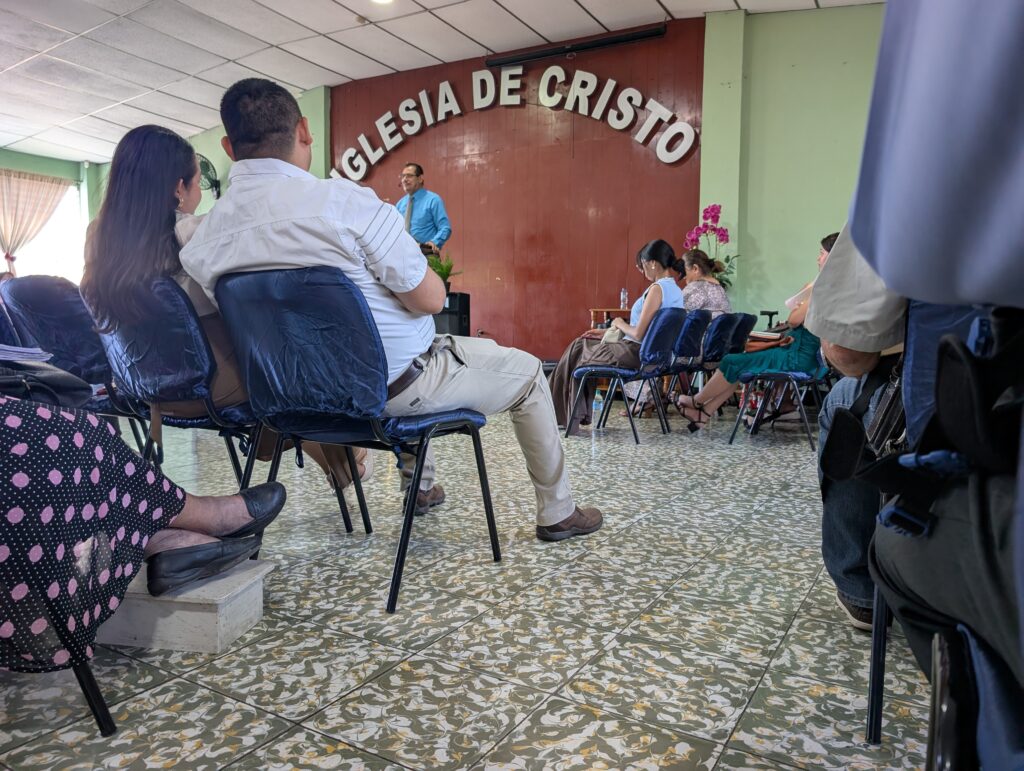
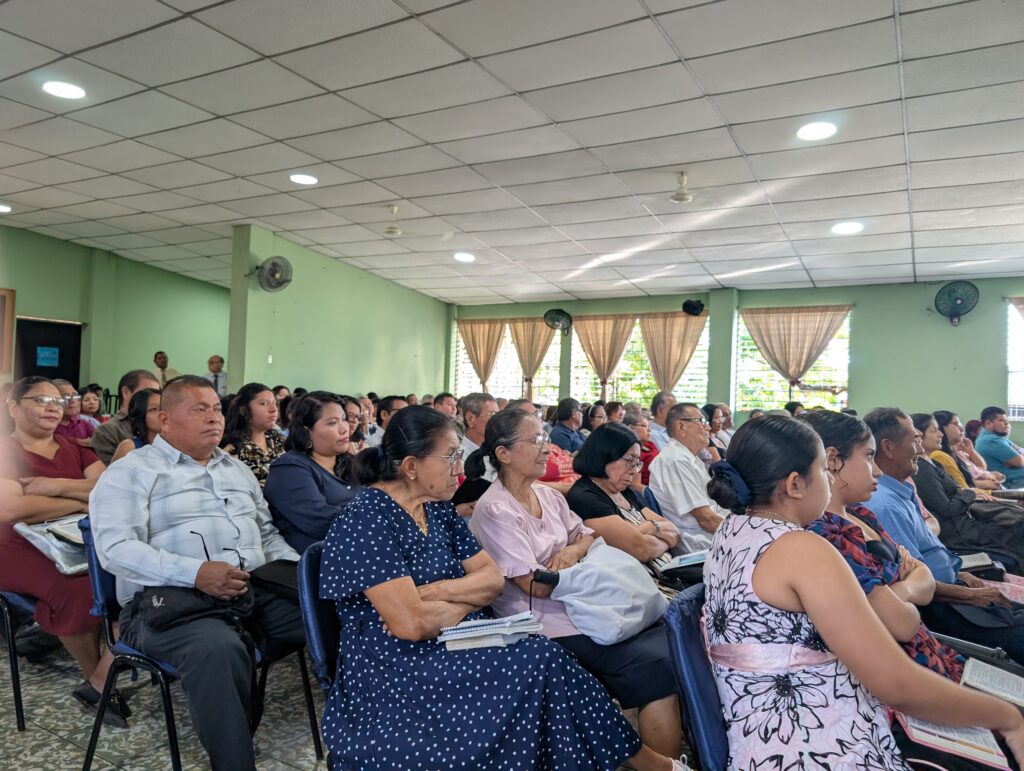
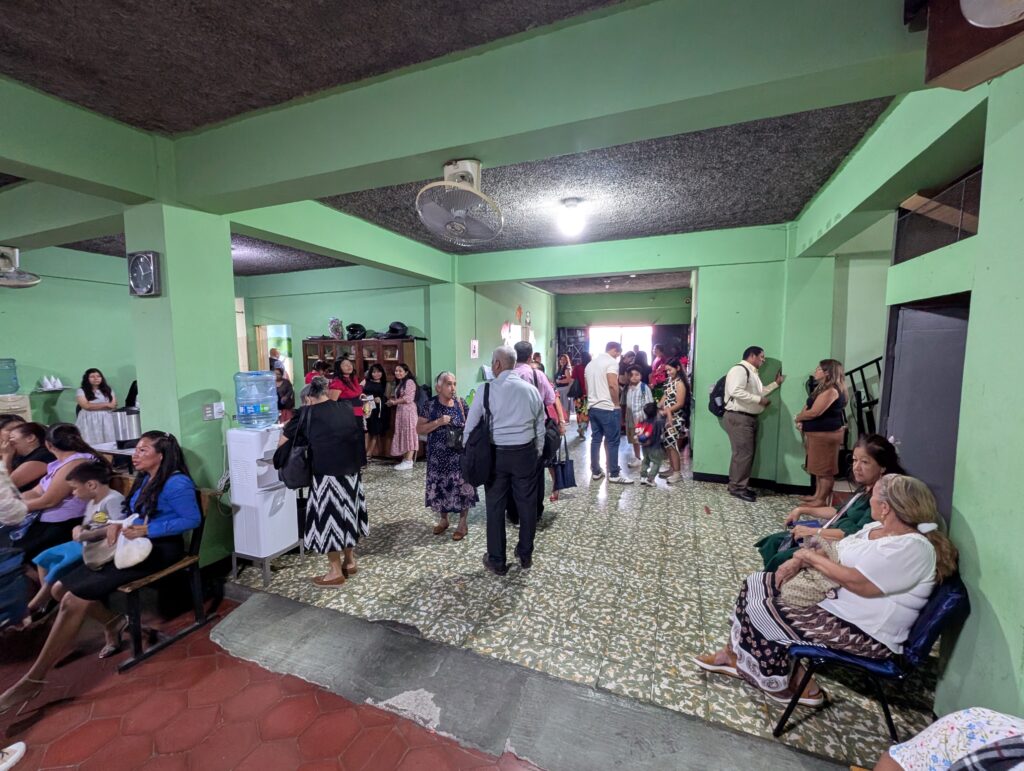
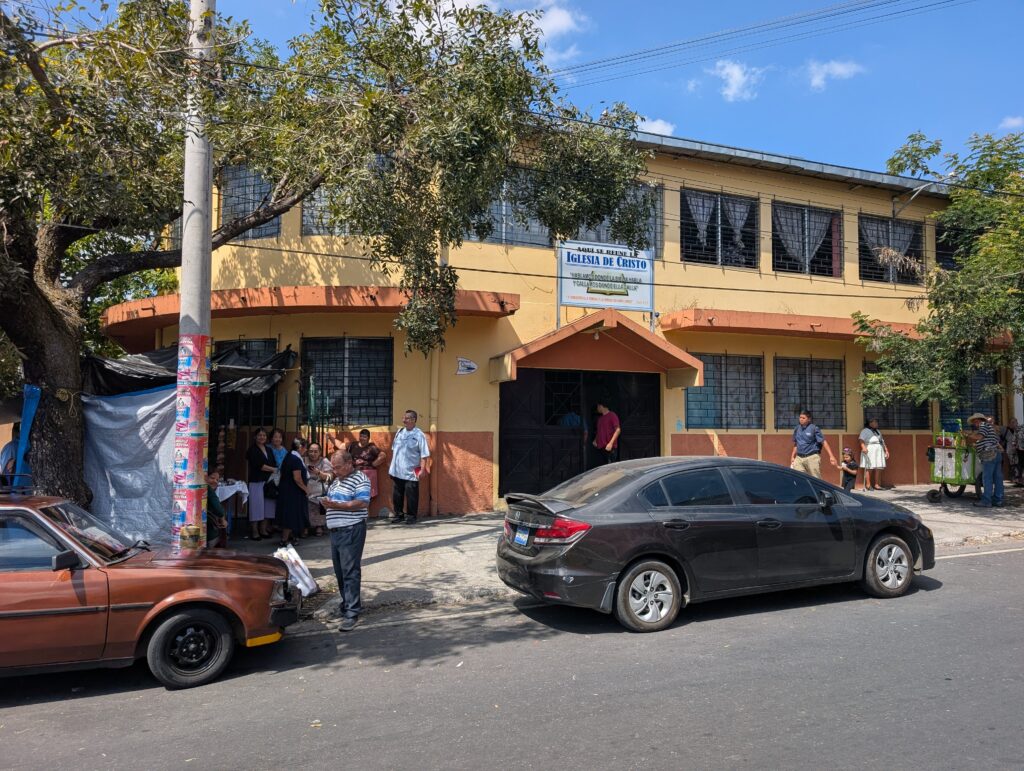
When I passed the Iglesia de Cristo San Salvador Central on Saturday afternoon, there were vendors on the front edge of their space who I assumed to be members operating. The church was also open, as apparently they have men’s and women’s Bible studies on Saturday afternoon. A lady near the door confirmed for me that worship started at 8:30 Sunday morning. In most Latin American countries, things tend not to start on time and take quite a bit longer than one might expect. The service did go pretty long, but they were more than punctual starting. I arrived at about 8:20 so I would have time to visit. Not only had the service already begun, I could barely find a seat in the large building. The place was packed with at least 200 people.
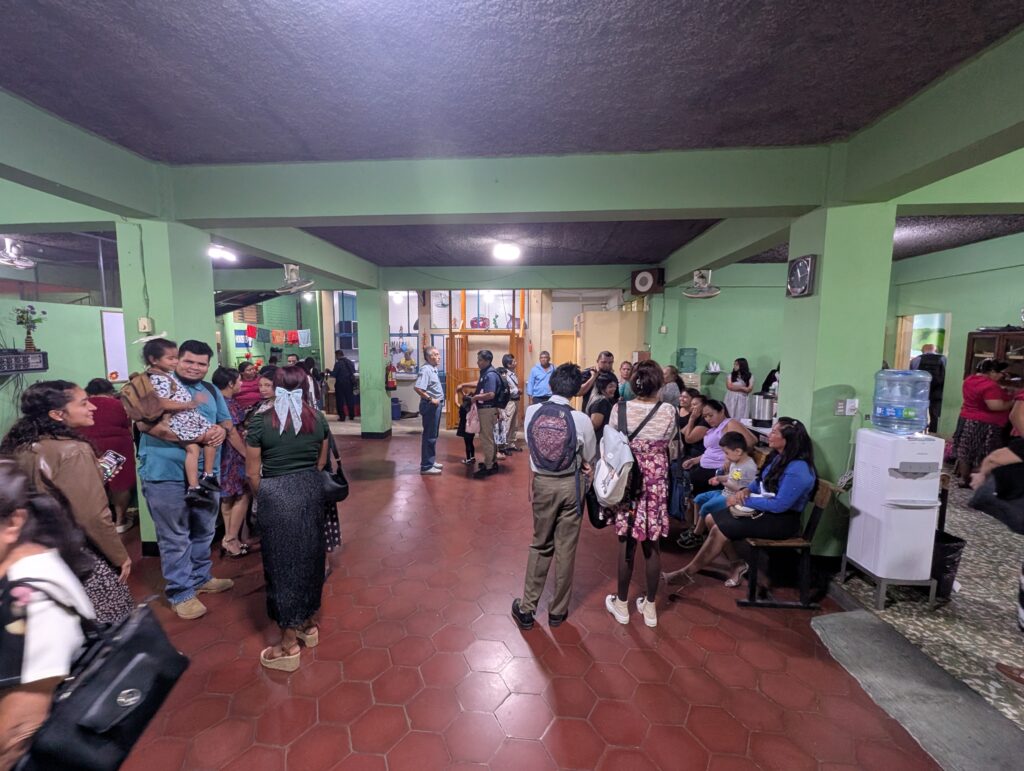
Worship lasted for about an hour and a half, with a brief respite before Bible Class from 10-11. People at church were friendly in general, but I was not asked to join anyone for lunch, and I didn’t have much other interaction with people beyond greetings, shaking hands, and “Dios te bendiga.” I didn’t have a problem with this. My Spanish is limited, and no one there spoke any more English than I did Spanish. It is also a poor place, where people are probably reluctant to invite visiting tourists likely to be used to a much higher lifestyle than what theirs normally is. For that matter, they probably seldom have foreign visitors. The members at Medellin had even commented that Andrew and I were the first “walk-in” American visitors they could remember, and Medellin gets a lot more tourism than San Salvador. If anyone visits from the U.S., they are almost certainly people working on a mission. So my presence wasn’t likely something anyone had given much thought to.
One lady in Bible Class did lean over afterward to tell me in Spanish she knew someone from the U.S. When people learn I am from Texas, they will often say, “I know so-and-so from Texas. Do you know him?” Of course the odds of that are minute, and people have little idea of how large Texas is or how many people live there. Well in this case, my Spanish speaking sister leaned over to show me the picture of her American friend. I instantly knew who he was! She showed me a photo of her getting a hug from Tim Archer, who had preached so many years in Stockdale, Texas and served on the same Argentine mission as our good friends, Mark and Judy Edge. Being a member of the church increases the odds that we will know someone in common, but given the circumstances, I thought it an amazing coincidence.
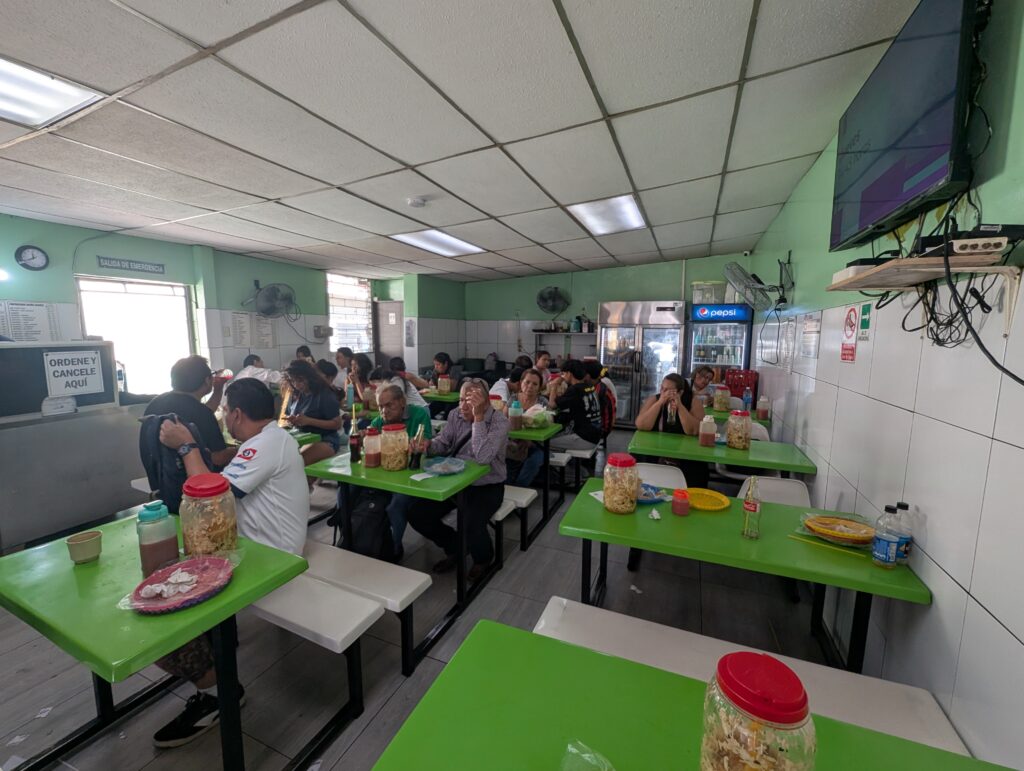
I lingered in the church “coffee shop” for a few minutes after services concluded, shaking hands and exchanging greetings, then set off to find some lunch in the area. I quickly arrived at an open air pupuseria. Pupusas are the most famous Salvadoran food. A pupusa amounts to a fat corn pancake, usually stuffed with something. At a good pupuseria, you can ask for any variety of different fillings. There is almost always some cheese, but you can also ask for any number of different vegetables, mushrooms, or different kinds of meat, fish, or even shrimp. I tried two different kinds. Both were tasty.
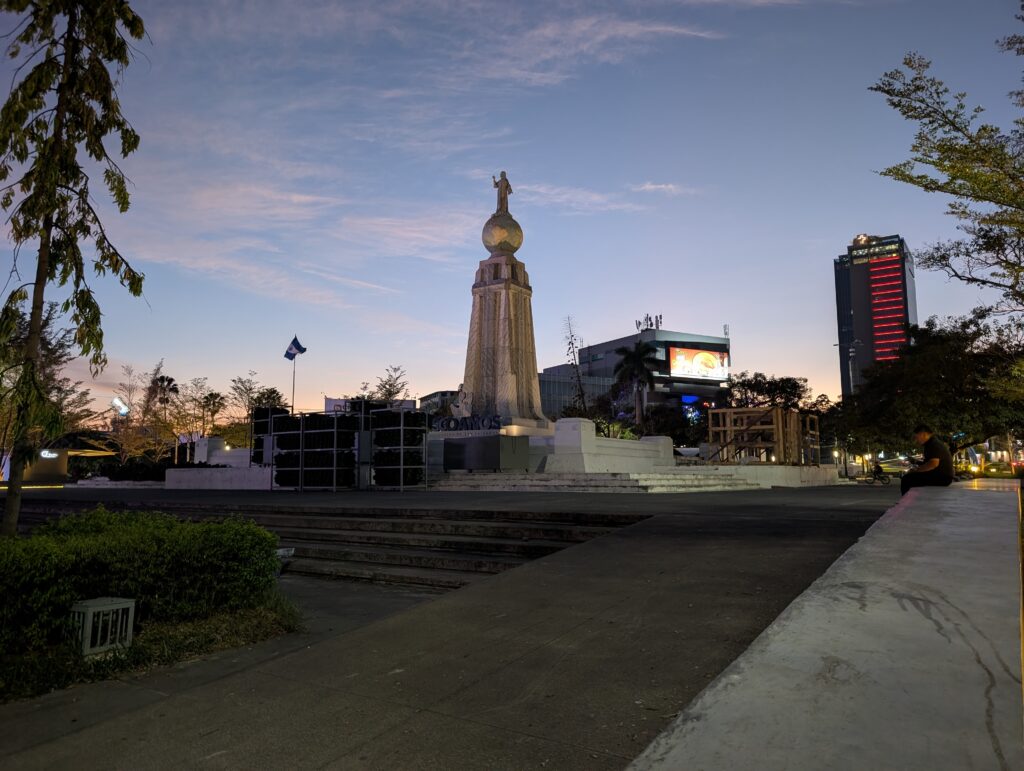
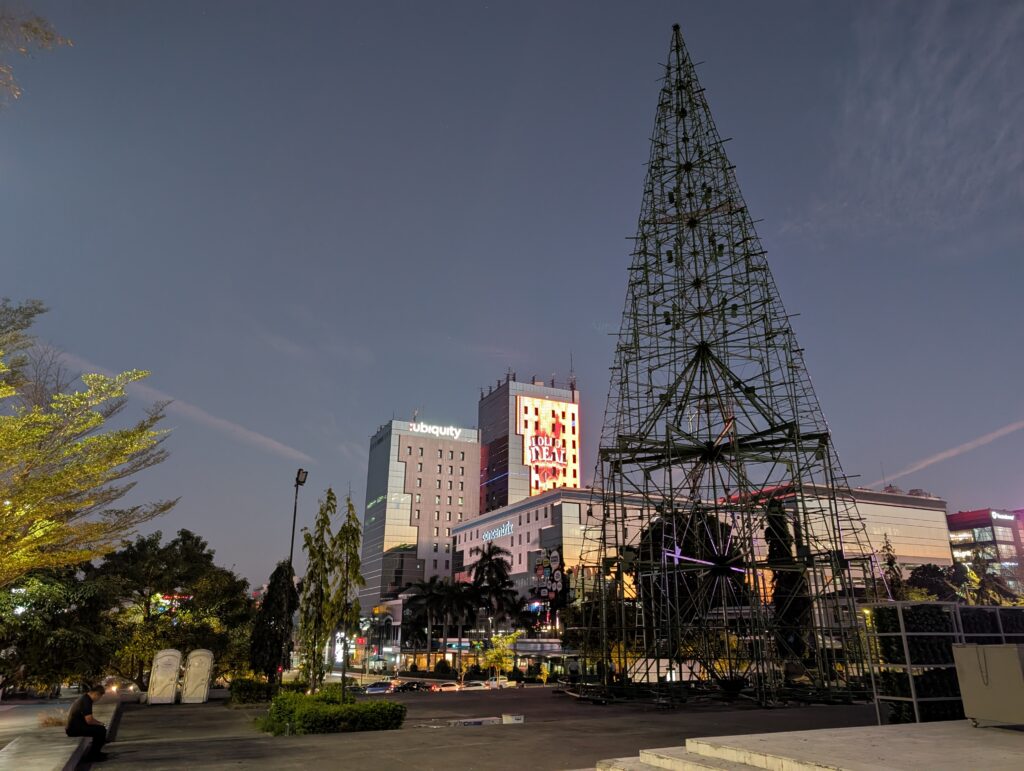
I didn’t really have a solid plan for the afternoon. There were a few small sites further from el centro that I hadn’t visited Saturday. It was also warm, and I was kind of tired, so I retreated to the hostel to make my room switch and do some writing. I spent most of the afternoon this way, before heading back out to visit the Christ the Redeemer of the World monument in the western part of town. This happens also to be where most of the American and European stores and restaurants are. It’s a more upscale shopping area than where I had been staying. I visited a grocery store and picked up a few things before calling it a relatively early night. I was sleepy and needed the rest. I would have a big “last day” in El Salvador.
(Continued)
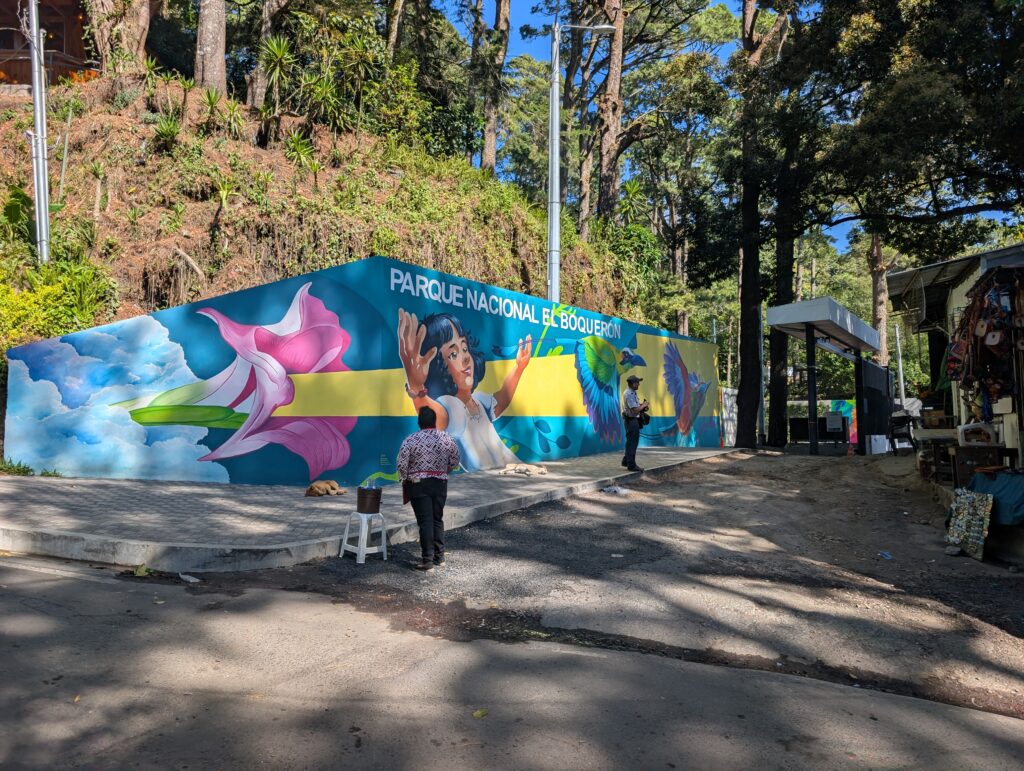
I got up early on the 26th. I did not run. My knee had been hurting, and I knew I would be getting some walking in. I caught a bus out to Santa Tecla, a relatively upscale suburb of San Salvador. I hopped off to find a smaller colectivo-type bus up to the entrance to Parque Nacional El Boqueron. All of this went relatively smoothly. I had to walk the last kilometer or so, but I was at the park close to opening time.
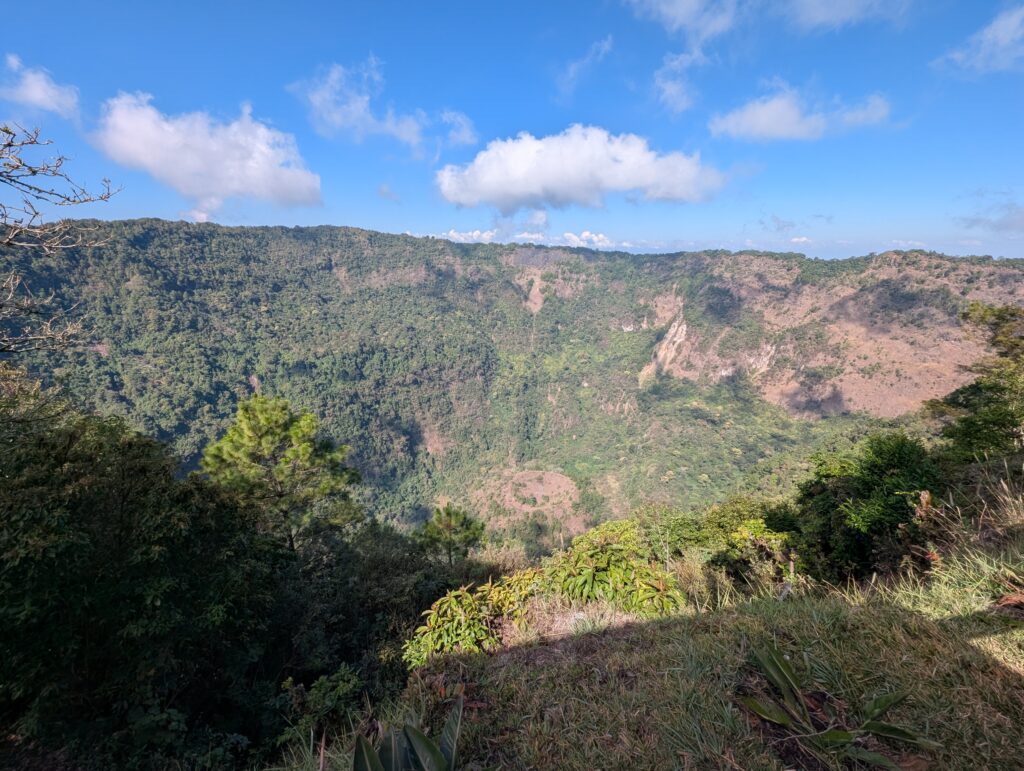
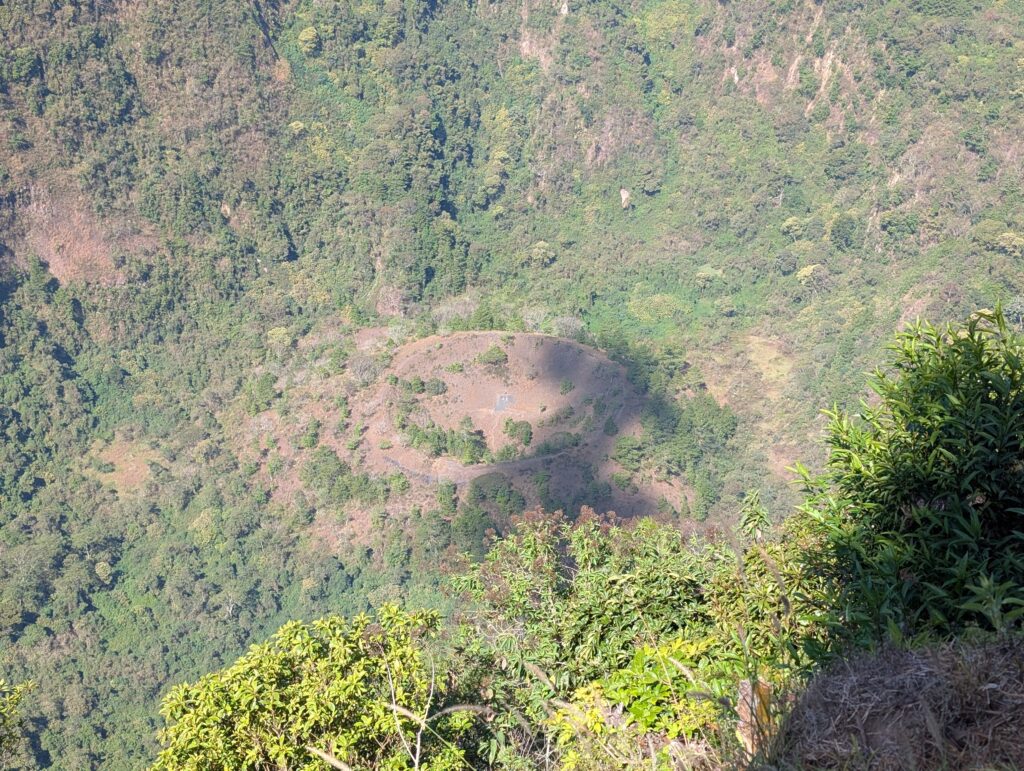
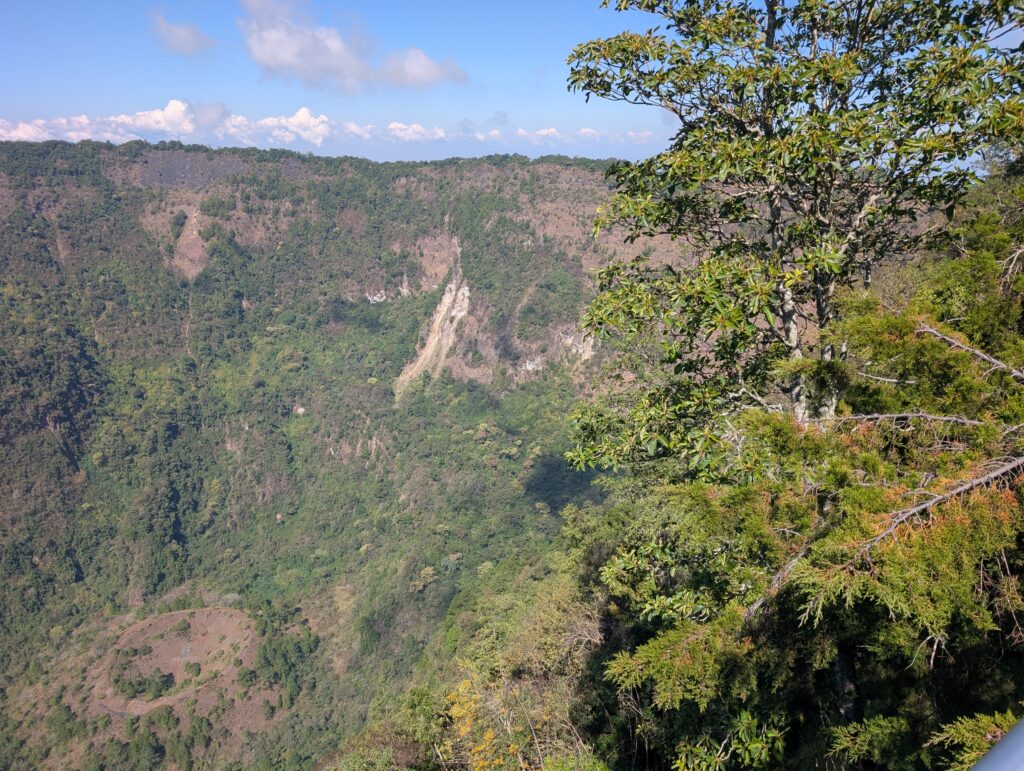
El Boqueron is home to the closest volcano to San Salvador, referred to otherwise as the San Salvador volcano. This is a relatively young volcano, formed in the last thousand years or so. It last erupted in 1917. This eruption was preceded by a couple of powerful earthquakes. Photos taken prior to 1917 showed a lake inside the crater. This lake completely evaporated within a month of the eruption. A new, smaller cone was formed at the bottom of the crater called “boqueroncito.” Some small villages were destroyed during each of the last two eruptions, and due to its proximity to the city of San Salvador, any future activity poses a major threat to many thousands and even millions of people. Nevertheless, El Boqueron remains a famous attraction and a part of the city’s identity. Several radio towers occupy the highest points.
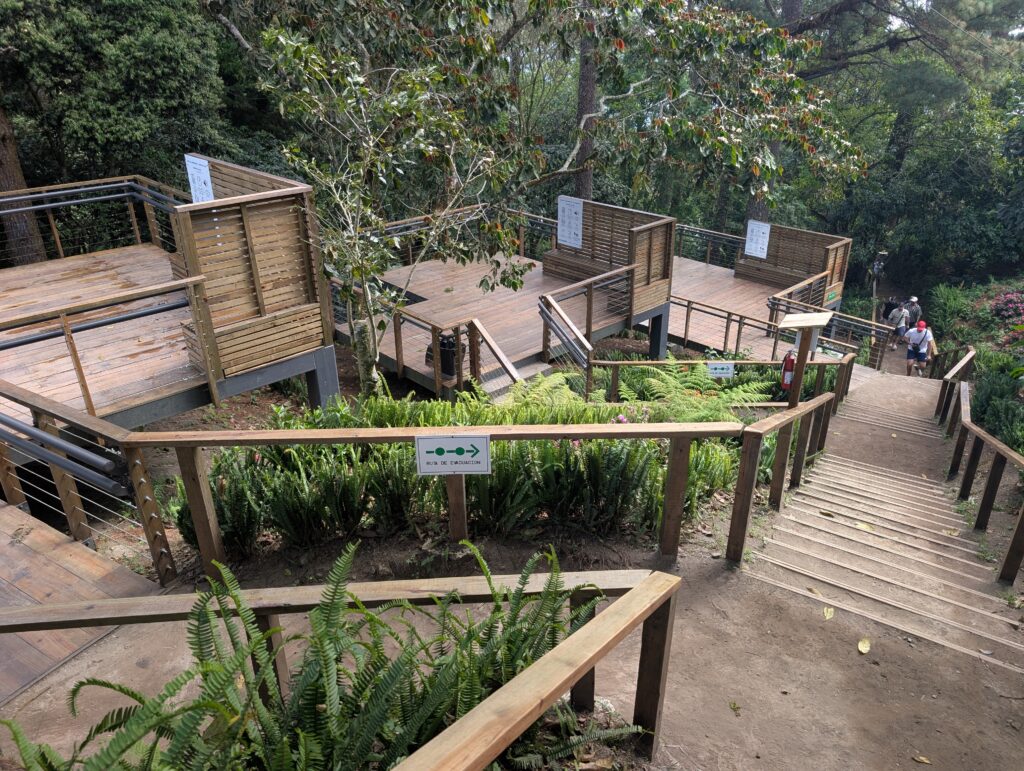
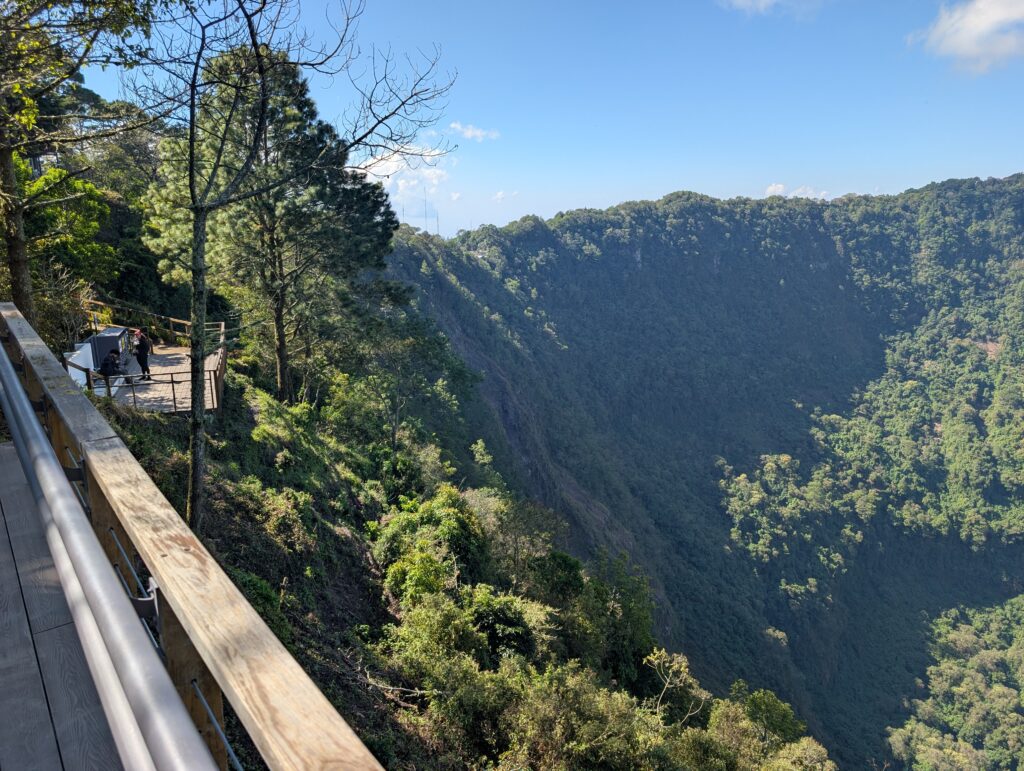
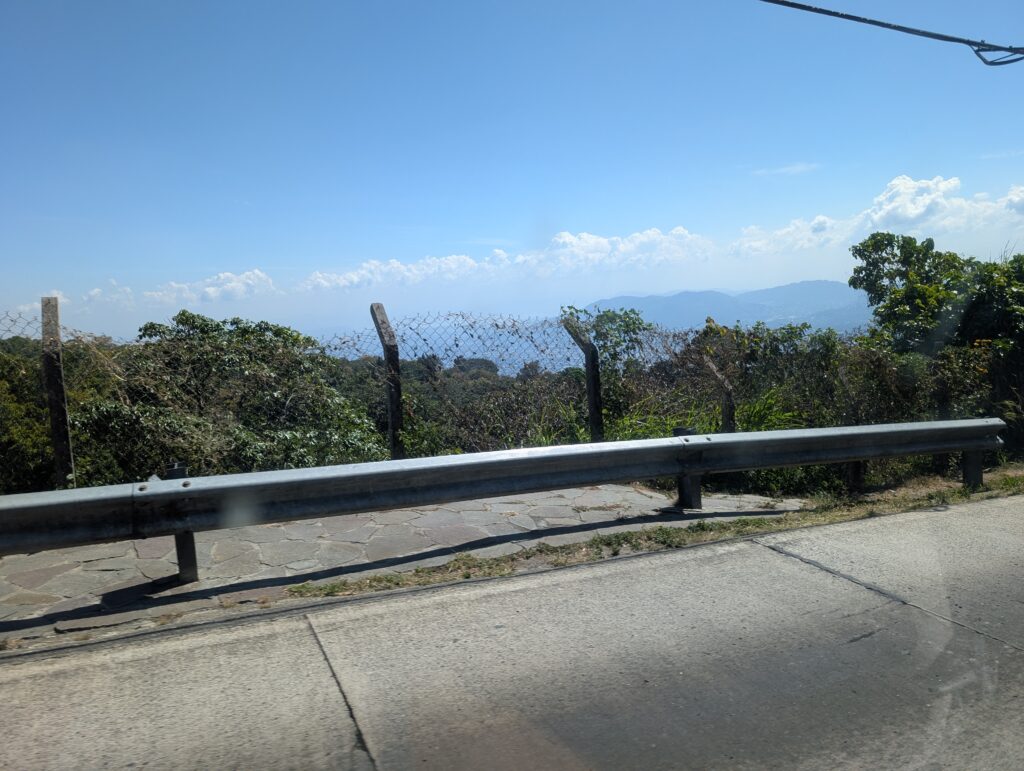
The park is relatively easy to visit. It can be done even quicker, for travelers not relying on public transportation. The entry fee is a paltry $3. There are quite a few low difficulty hiking trails up to and around parts of the rim. You can’t really descend into the crater without specialized equipment. Hiking around the accessible parts of the rim is very pleasant, with nice views of the city on clear days, and cool temperatures. Parts of the rim reach over 6,000 feet, so that even on hot days, the temperature atop the volcano is relatively cool.
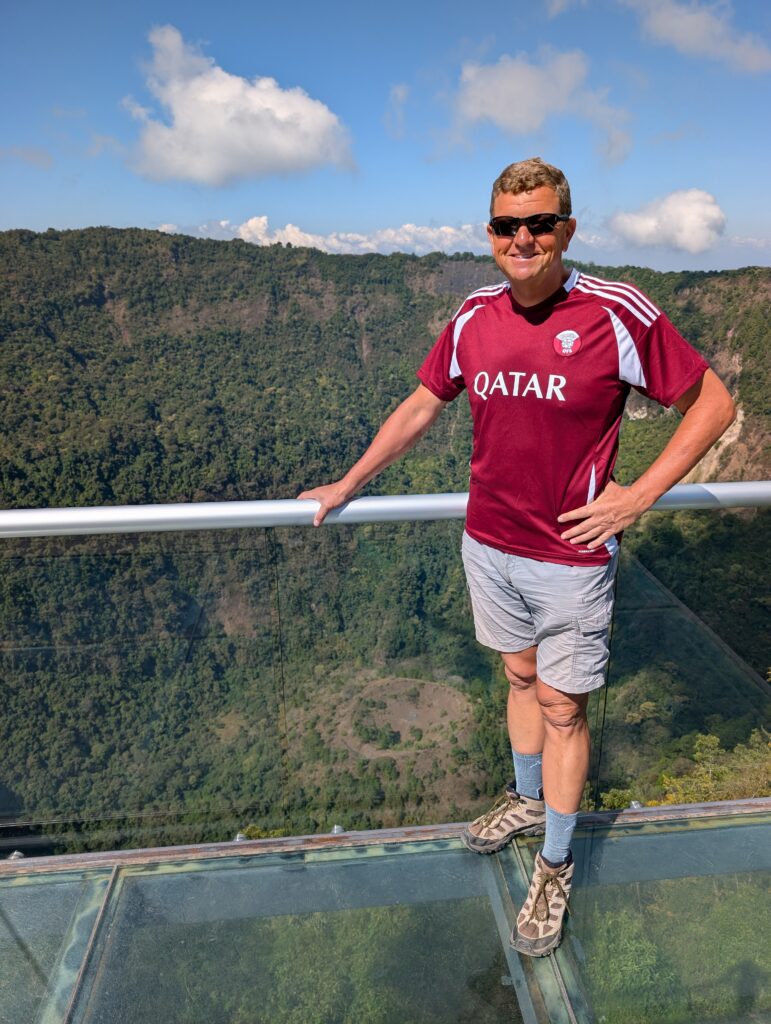
The crater itself isn’t spectacular in terms of features, but the size is impressive. The crater has a diameter of almost a mile and is over 1,500 feet deep. There is a small coffee shop along the trail, along with several viewing platforms. One of the platforms is glass and allows you to step out over a steep drop-off. As I was taking a few shots from the glass platform, I visited with some Chinese speaking tourists from Singapore who were kind enough to take a picture of me, posing there on the volcano’s rim. We talked about Singapore, the caning incident, and Joseph Schooling for a few minutes, and then went our separate ways. For more information on Singapore, and those subjects, follow the link to the Singapore page from the summer of 2024.
I meet friendly and welcoming people in most places I visit. While walking back to the parking lot, I answered a few questions asked by a man and his adult daughter. They had lived in the U.S. previously, but worked now for some government safety accountability organization in El Salvador. They drove around the country inspecting roads, buildings, and tourist sites. They reported safety concerns and had the Salvadoran government pressure the property owners, road departments, or whomever was responsible to make any necessary repairs to keep the property in safe working order. This fellow was heading back down to San Salvador, and kindly offered me a ride, which would save substantial time over riding buses back to my hostel. He was going to pass very near the park next to my hostel, so I rode with him back down to San Salvador. This was one of the many kindnesses extended to me during my time in the country.
(Continued)
I ate lunch at the hostel, finishing the last of my non-portable food. I bade farewell to the extremely kind and helpful host. I packed my things, which had been in the daytime storage behind the desk, and set out for my final motel on the Costa del Sol. I decided that since there were no bargain motels very near the airport, I might be just as well off staying at a nearby beachfront hotel. It looked as if a 15 minute taxi ride would get me to the airport from some of these places, and they were priced at or below the cost of the motel I stayed in the first night I landed at San Salvador. The airport itself is almost an hour from the city center, in the best of traffic conditions.
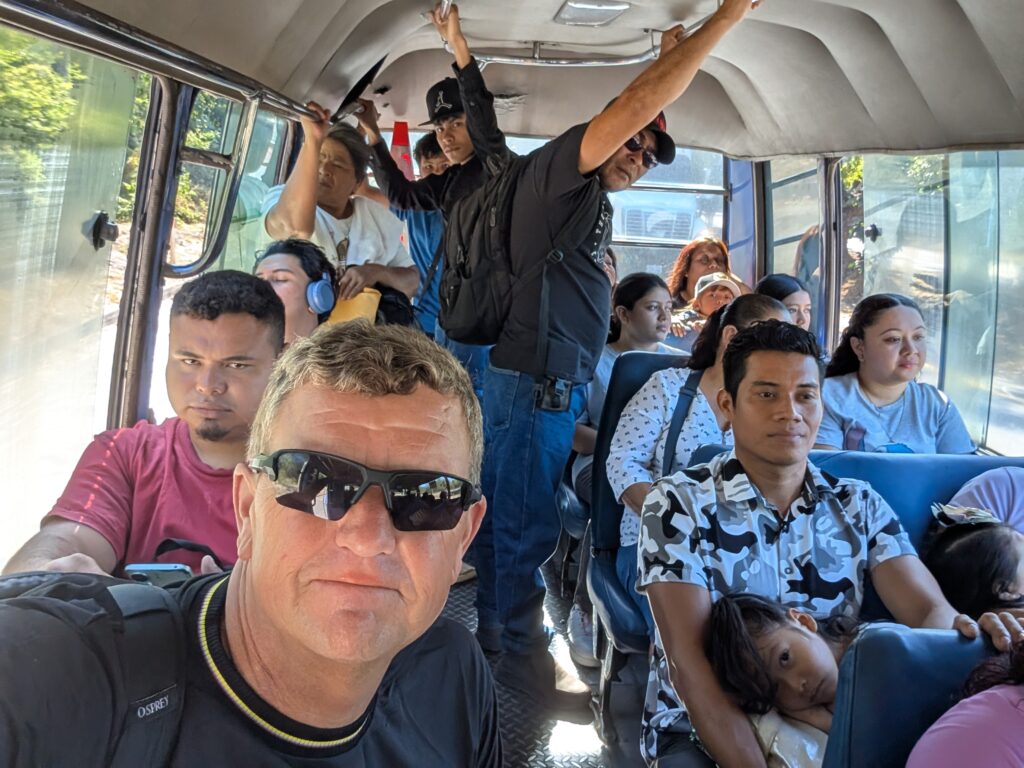
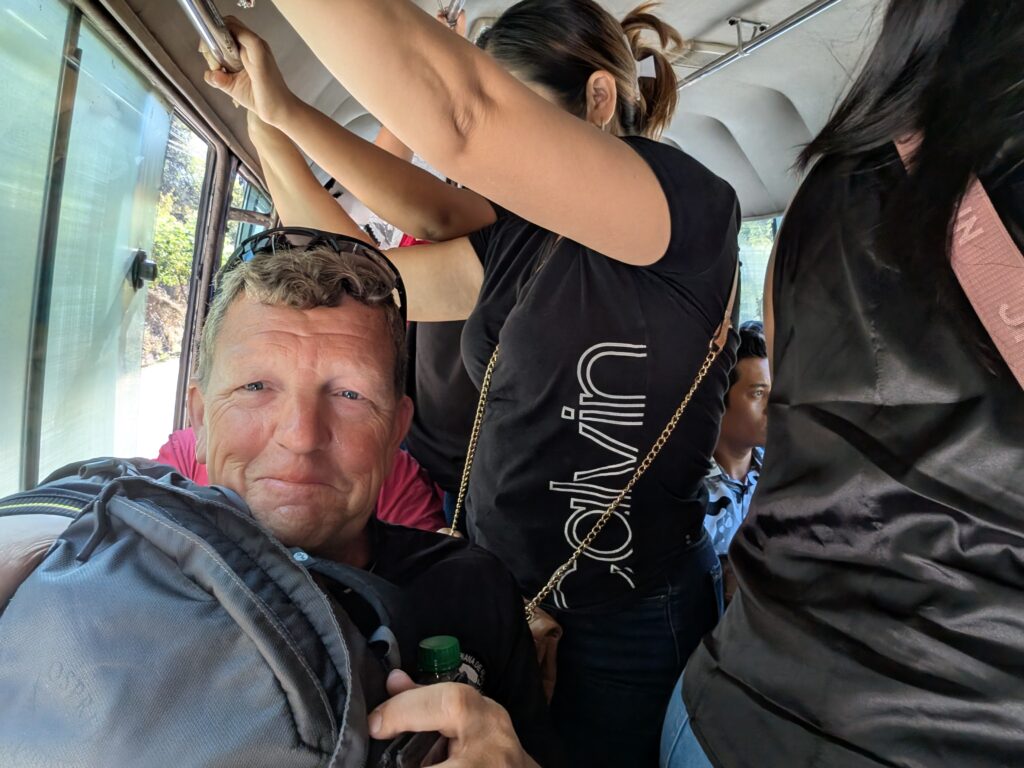
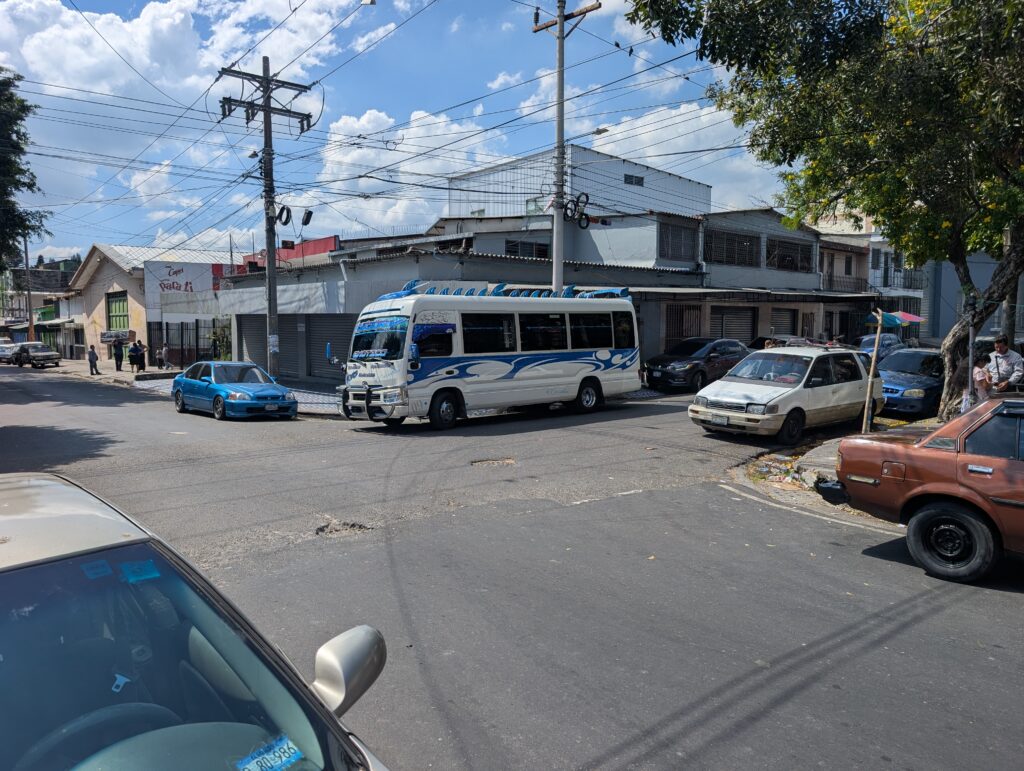
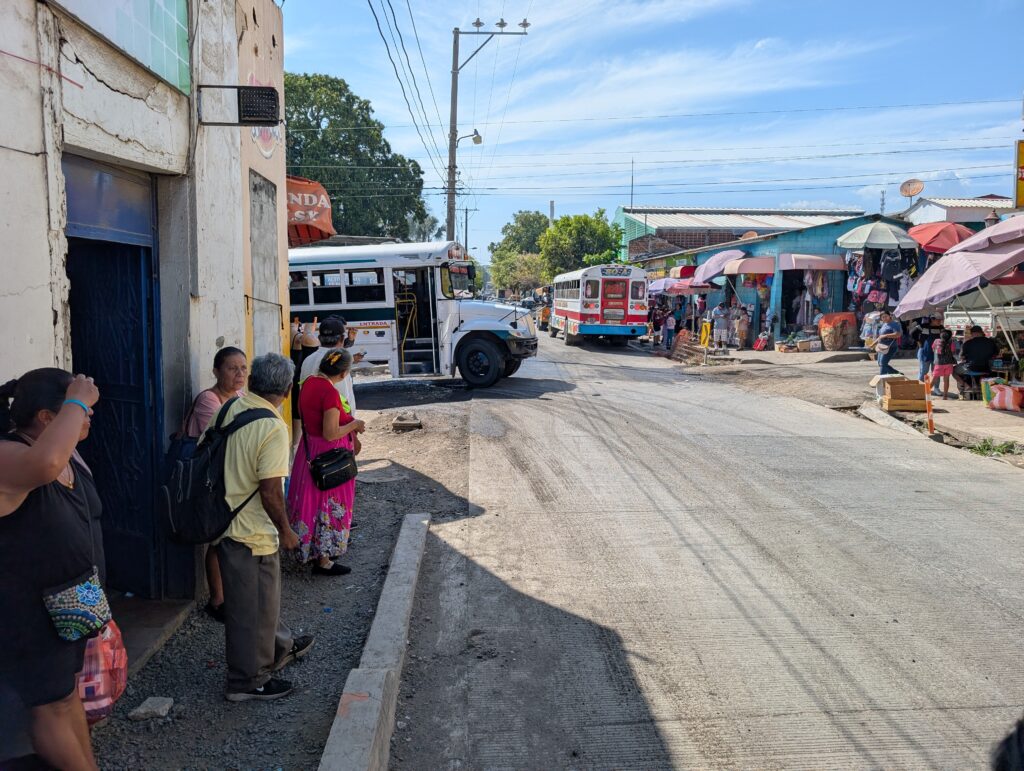
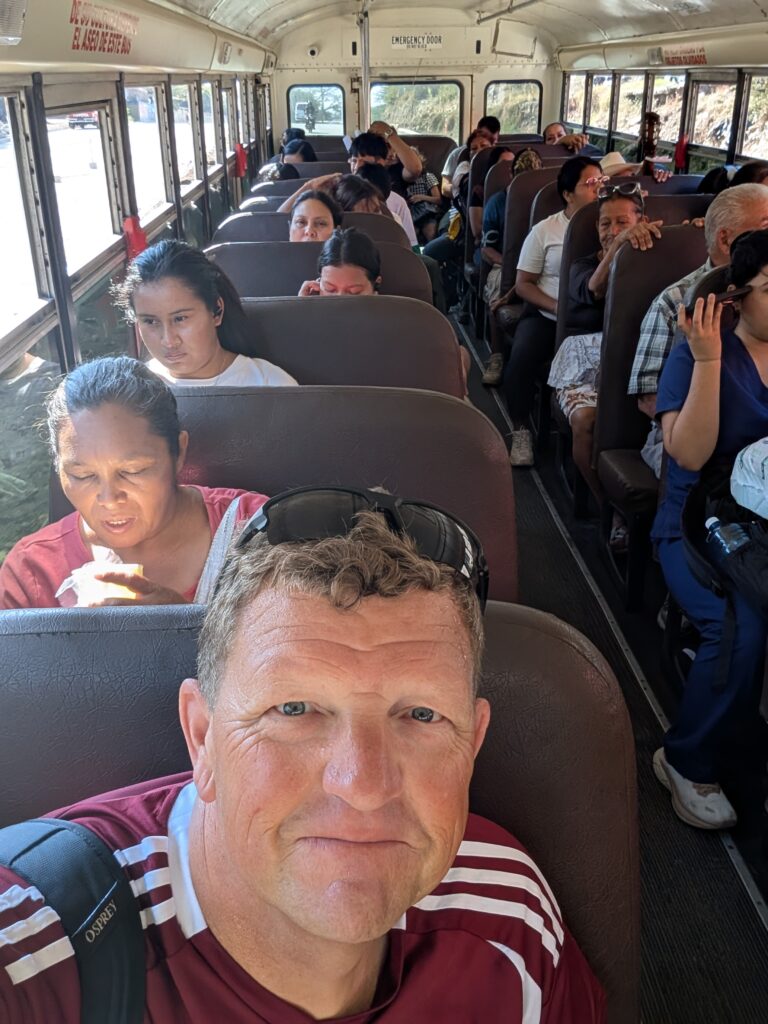
I relied pretty heavily on buses to get around El Salvador. I often use buses, trains, and metro systems when traveling. For many of them, I can just navigate using Google Maps or some other similar program that has all of the public transportation routes and time tables built in. This does not really work well in El Salvador. The buses are cheap, and seem safe, but there does not seem to be any time table, or even a master route map anywhere. It seems like for such a small country, it would not be all that difficult to create such a thing. With some observation, one can learn which kinds of buses go where – larger, tourist looking buses are express, inter-city routes; medium sized school buses do shorter hauls from one city to the next, or to other parts of a big city, like San Salvador; smaller, round-nosed buses served urban city routes. But there was no means for a foreigner to learn which was which, other than trial and error, or word of mouth. This was one instance where knowing some Spanish was absolutely imperative. I had to ask several times where to go to catch the next bus, or which bus I needed to take to go to the next place. Since El Salvador is such a friendly place, this often worked just fine.
That sort of “word-of-mouth” system works well, until it doesn’t. It is kind of like trusting your personal logistics to a game of “gossip.” Sometimes, well meaning people do not really know how best to advise you, but they want to help you so badly that they will still offer what they think is the best advice. This well intended, but flawed system sent me on five buses over five hours to go a distance that shouldn’t have taken much more than an hour to an hour and a half – on at most two buses. I did get to see a lot of the country, and practice my Spanish a lot. I did also eventually get where I was going. I did some back tracking and a lot more walking, waiting, and wondering than necessary. It also set me once or twice at the mercy of some know-it-all who, because he knew some modest amount of English, felt the urge to butt in when I knew better than him where I was going.
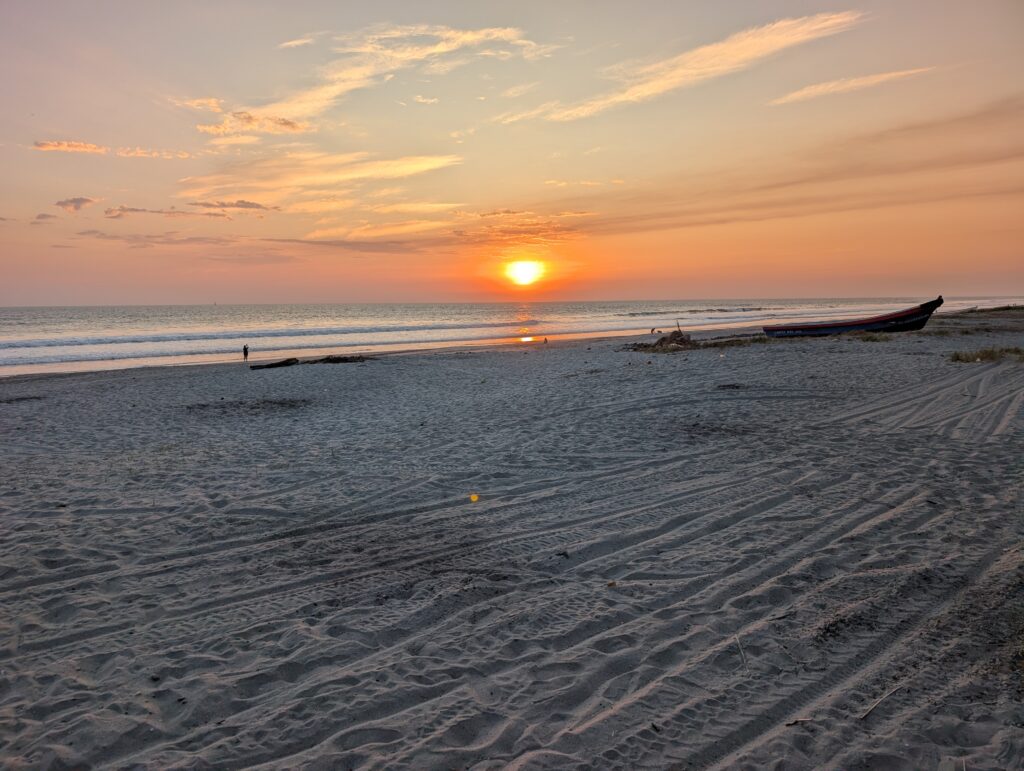
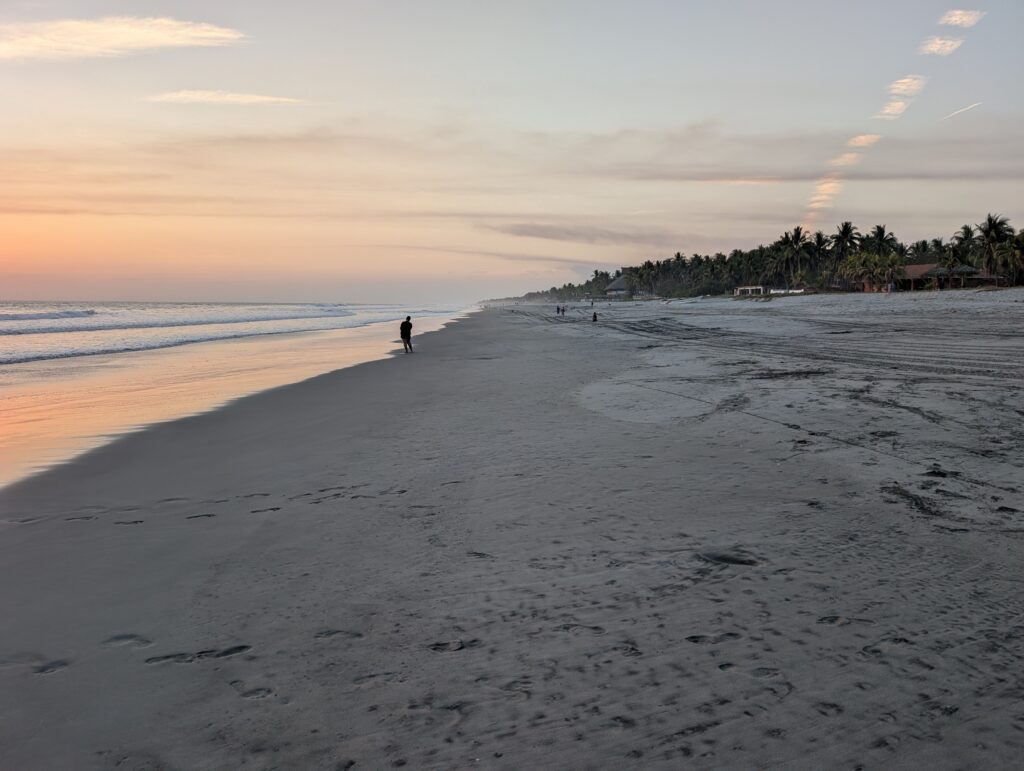
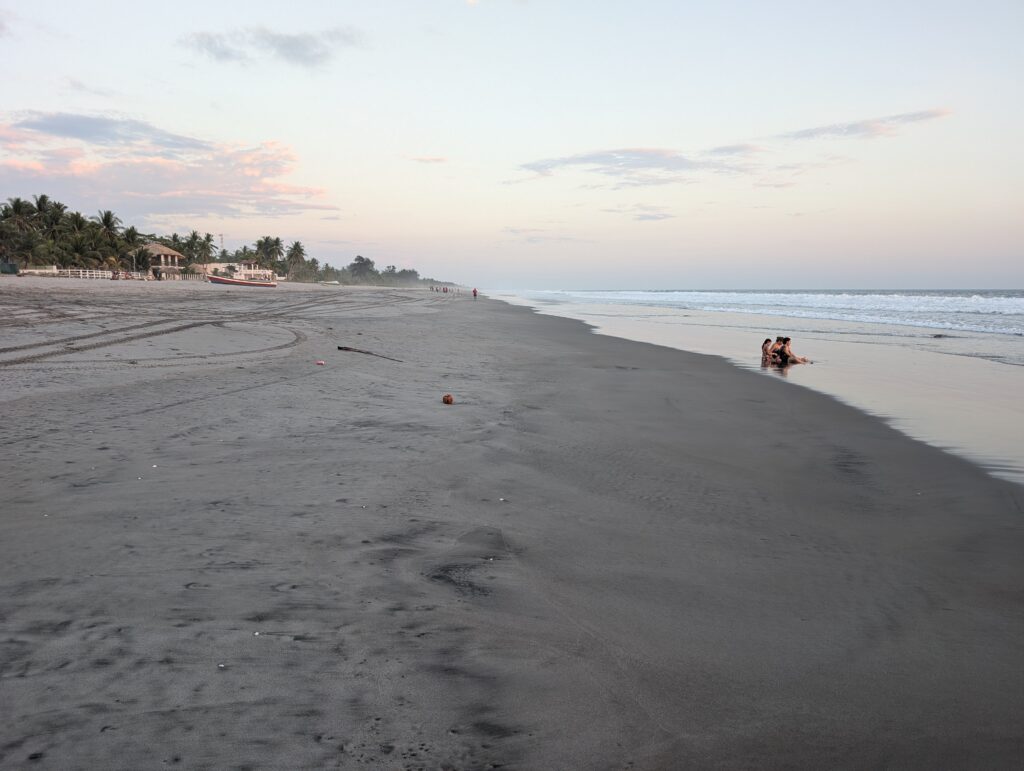
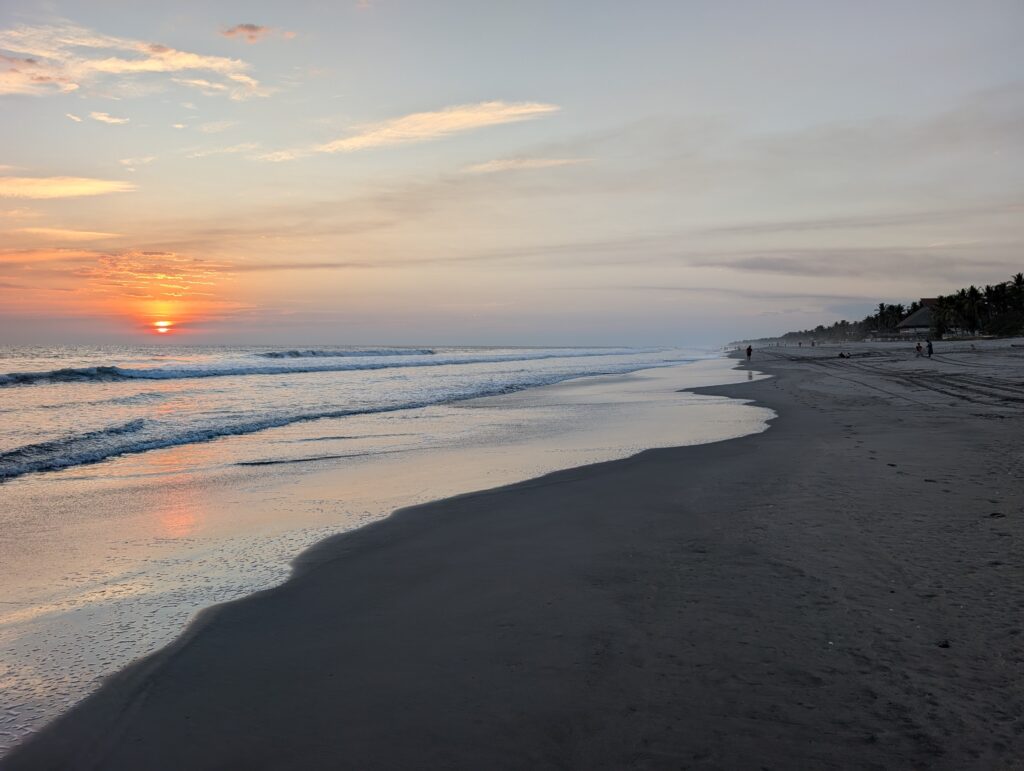
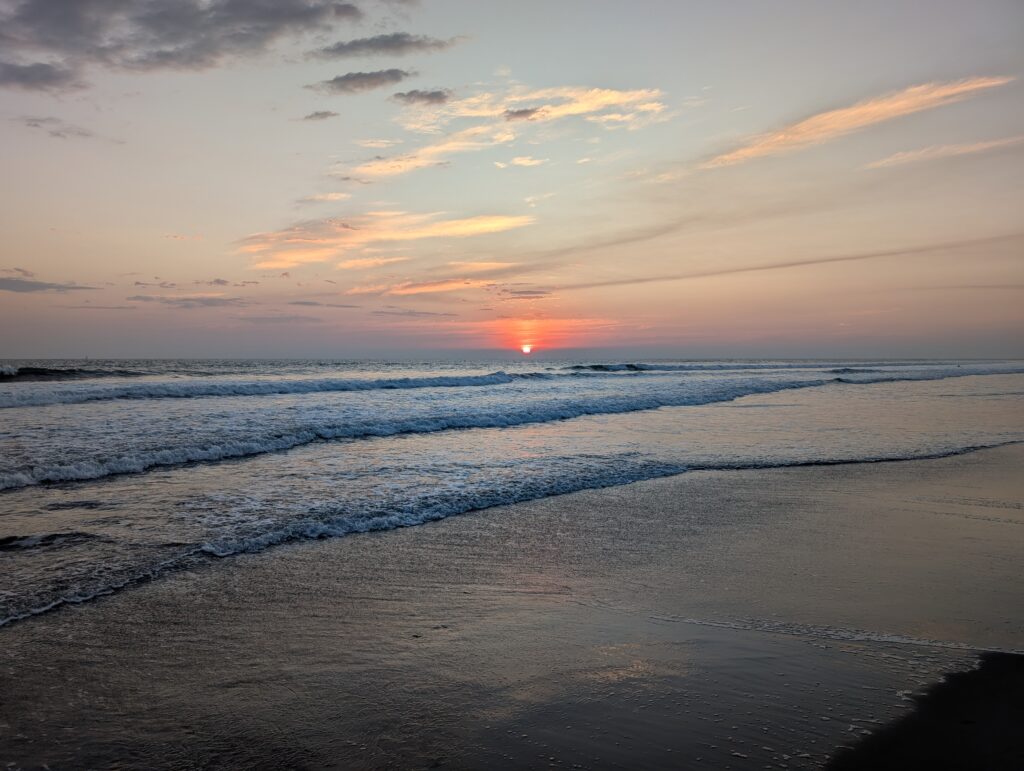
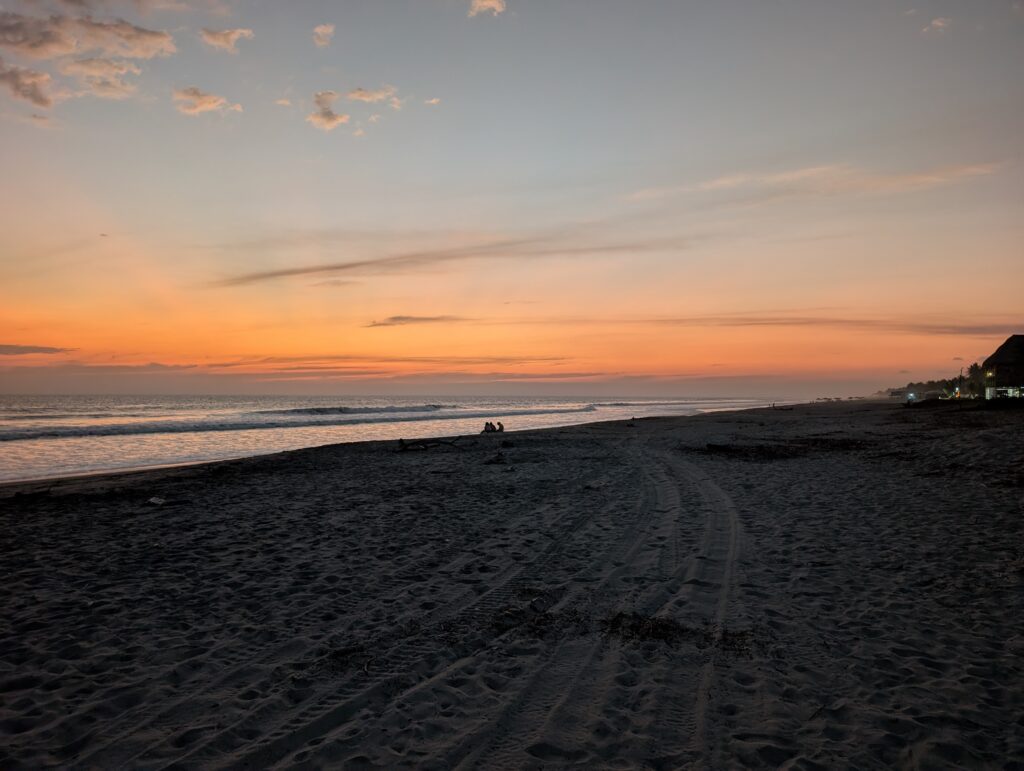
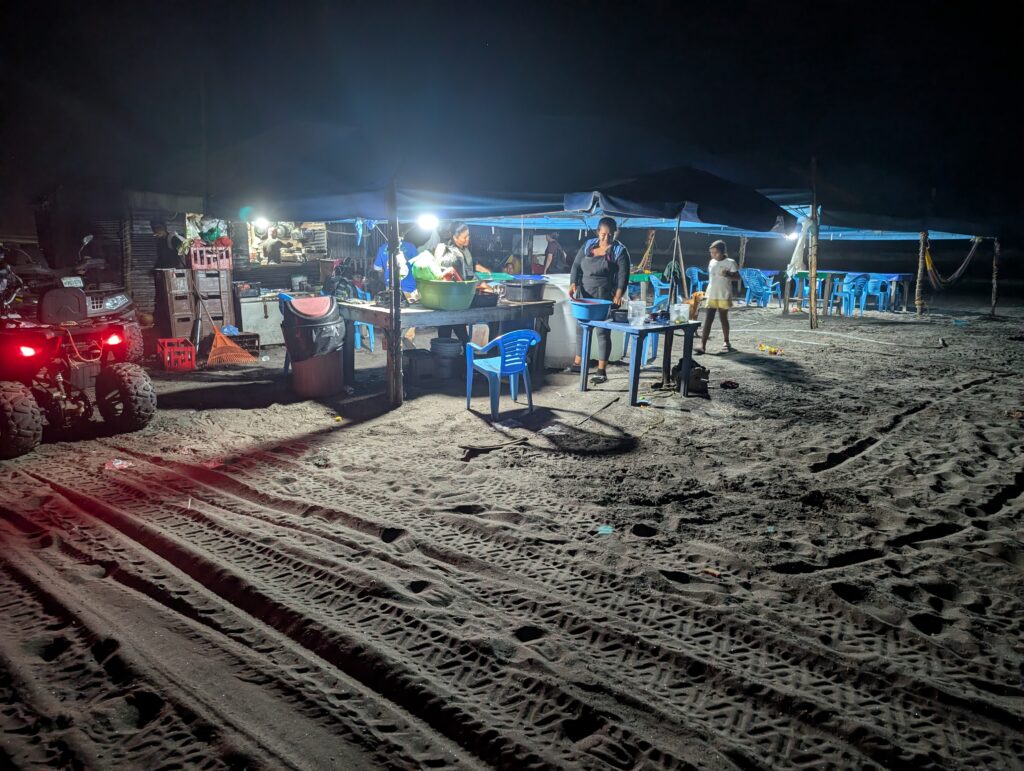
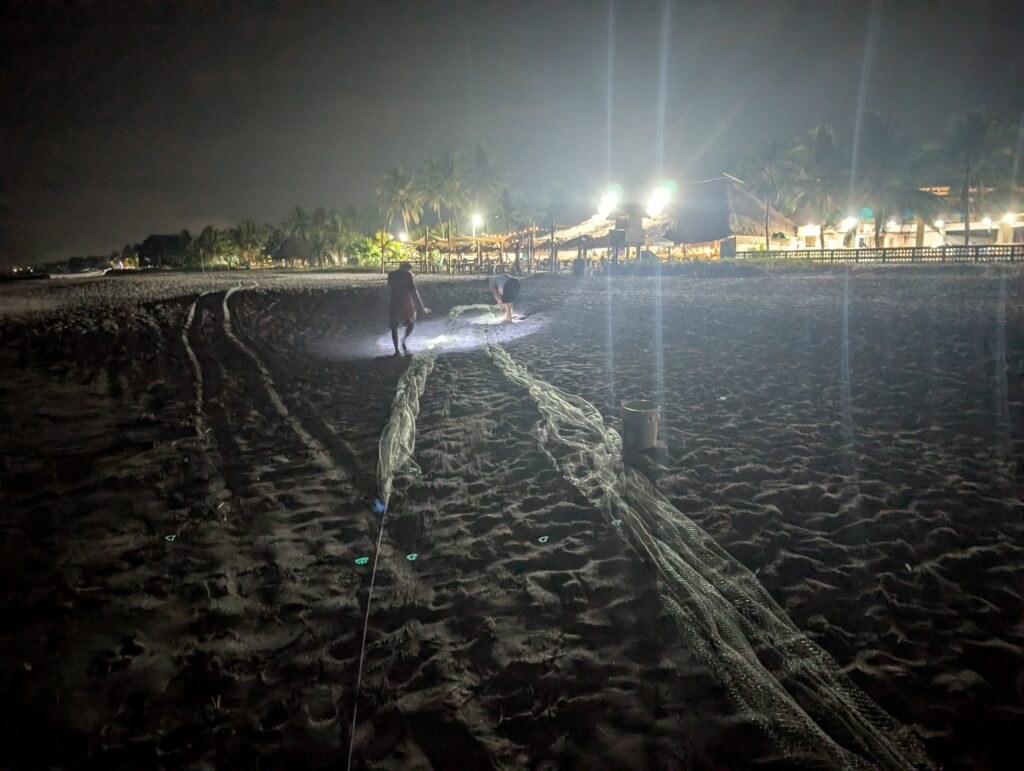
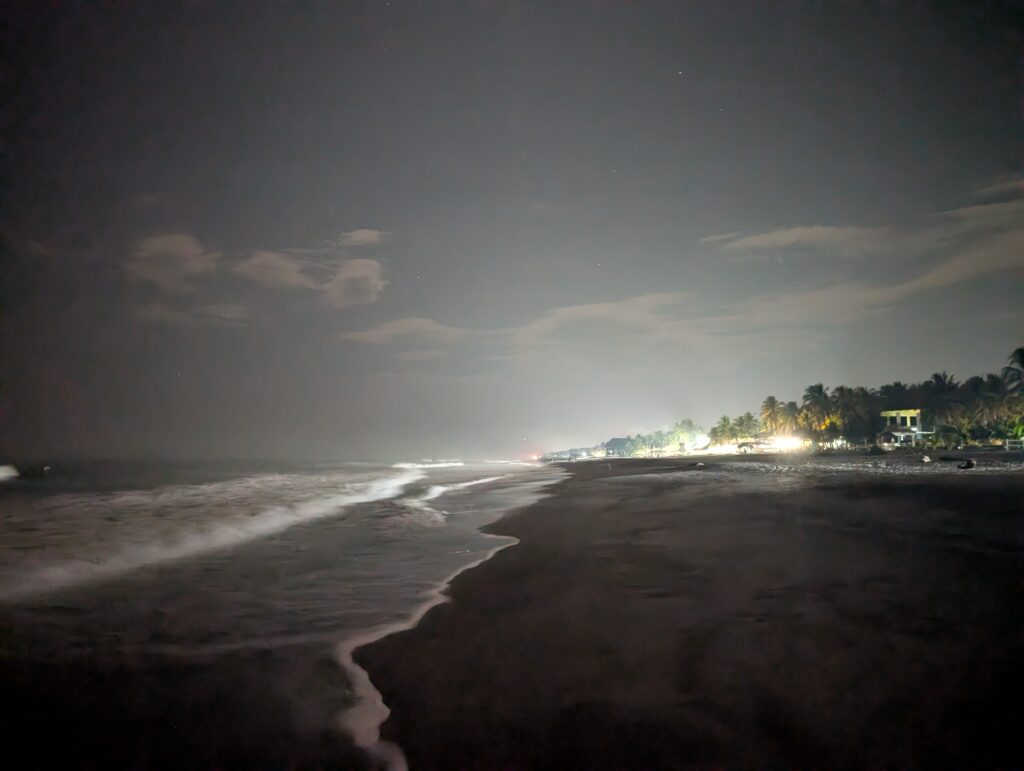
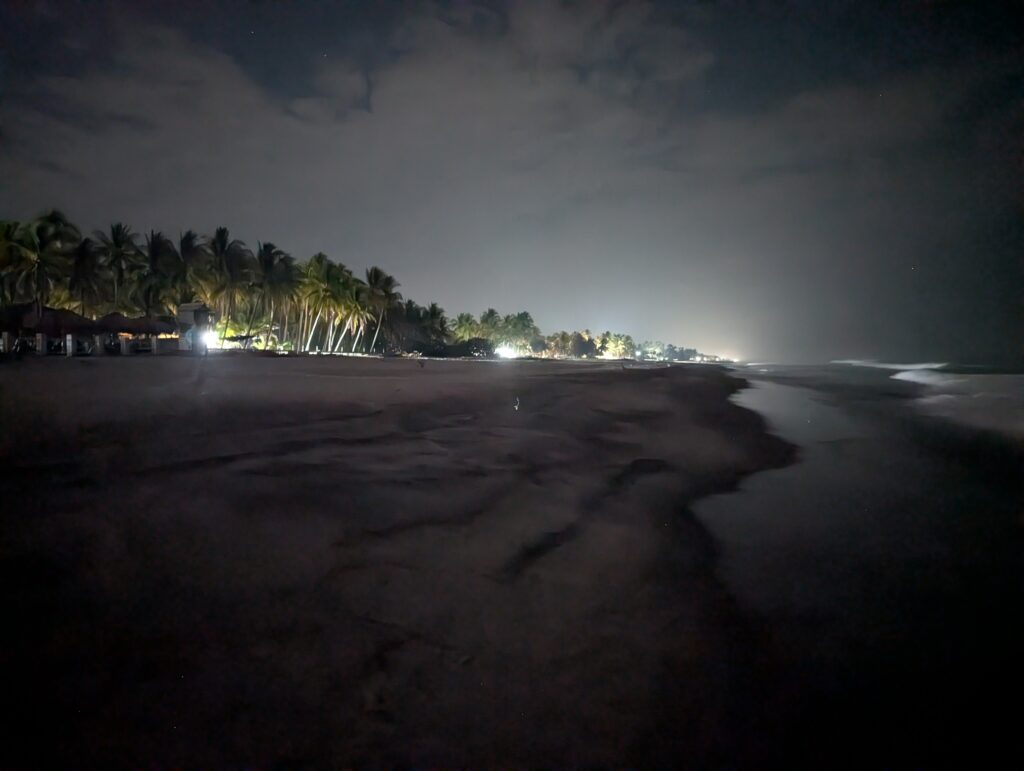
The trip was a bit frustrating on the whole, but a kind of funny part of traveling the way I do. I didn’t get angry, though sometimes things like this can wear on my patience. I just rolled with it, looked out the windows, and visited with people at stops. By about five or six in the afternoon, I reached my hostel. It was nice, and the hosts were friendly. The room was cool and clean. I walked the beach as the sun set. I ate a meal on a plastic chair under a tarp overlooking the sea. I walked a long way. The beach seemed almost endless. There were very few tourists. Visiting the beach in El Salvador is not an extremely popular tourist venture, but I would recommend it. It was pleasant, friendly, and cheap. El Salvador has certainly benefited from the Bukele clean-up.
For $25, my motel host got up early and took me back to the airport at 5:00 a.m. The ice storm in Texas had subsided enough for flights to resume. I had an uneventful flight back to DFW, but then had to drive home another five hours on roads that were still a bit slick. The further I got from Fort Worth, the better the roads. I was home by early evening. It had been a great trip on which I was able to explore three new countries, but I had been gone thirty days by the time I got back and I was ready to be home.