Fes

Another Moroccan Imperial City

It was late on the afternoon of May 6th when I arrived at Fes. I walked the two miles to my hostel and checked in. I stayed four nights in Fes and used it as a base for day trips to Volubilis, Moulay Idriss, and Meknes. But first, I wanted to explore Fes itself. I dedicated the entire day of May 7th to do this, and that was adequate to see everything in and around the old medina.

My hostel served breakfast, but not until nine. Really, they started making it at nine. My hostels in Morocco always came with a warm breakfast. Generally there was an egg and some cherry tomatoes, but other than that, it was all carbs. I doubt anyone visiting Morocco can maintain a keto diet. I had a croissant, a hard long roll with rounded ends (typical French type roll), and a couple of different pancake like things. All of this was served with butter, honey, and orange marmalade.

As I waited for breakfast, I made a list of things I wanted to see, then used Google Maps to locate each of them. The website will allow you to arrange a trip with several stops, laying them out on a map. Then, you can slide the individual stops around in different order so the trip makes more sense, sequentially. I have the places already written down in a notebook. Then, I place a number alongside each, according to the order I want to walk to them. I end up walking a lot anyway, and this makes my self-directed walking trips far more efficient.

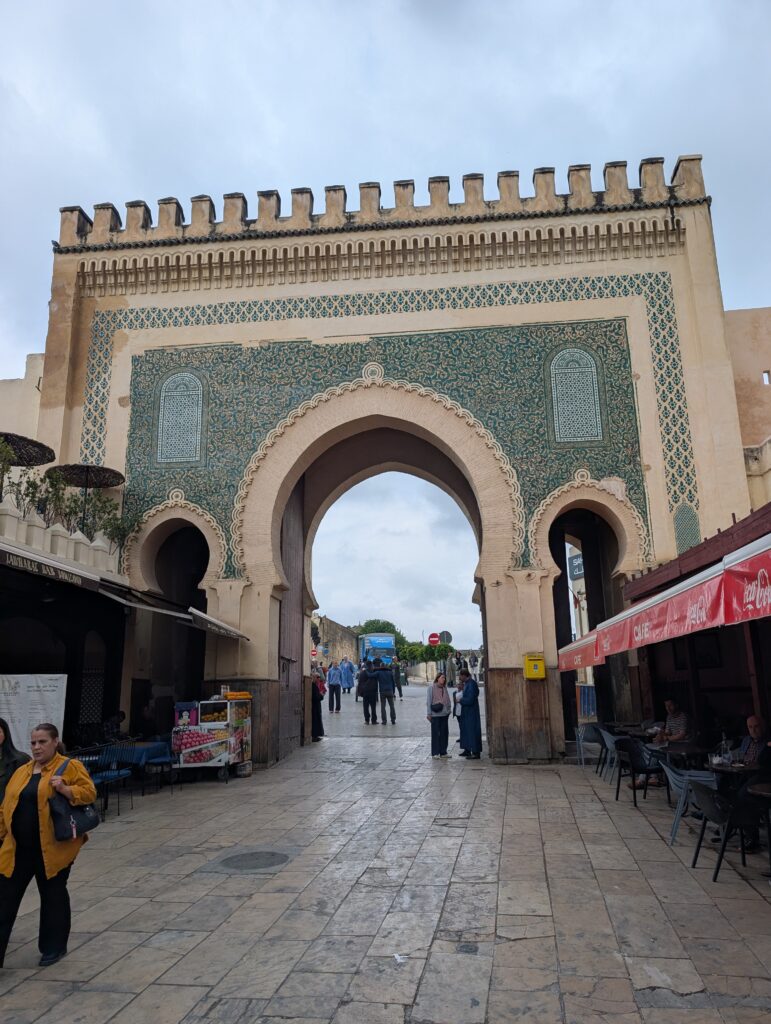
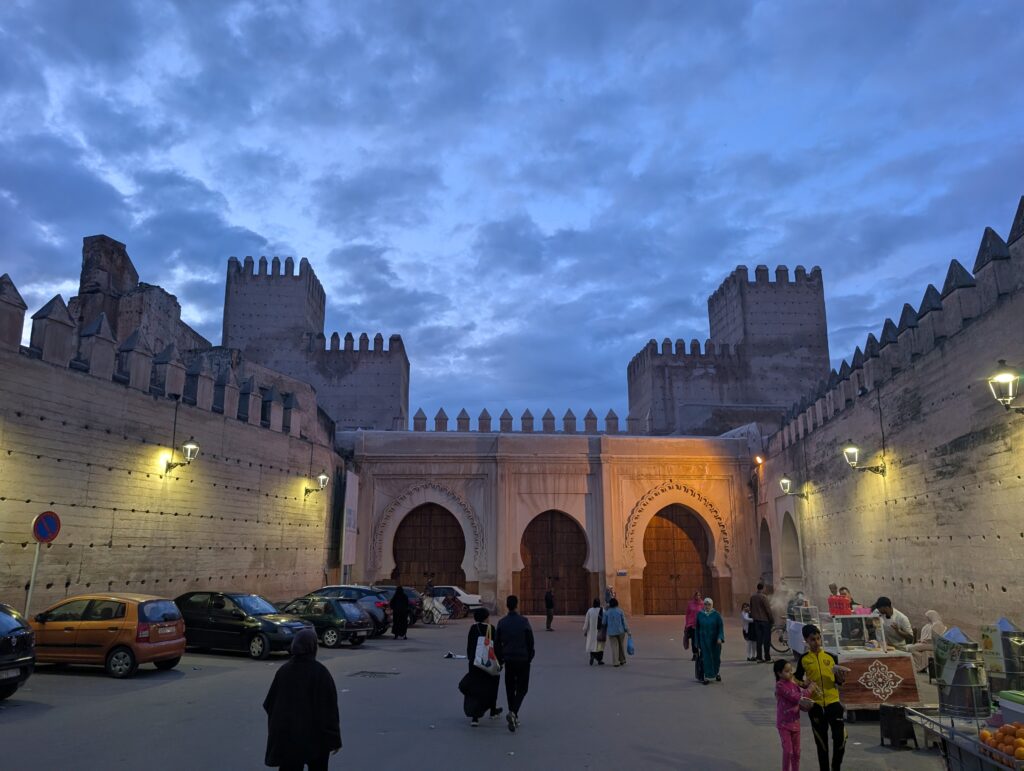
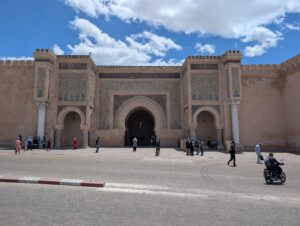
This first place I had marked to see was Bab Monsour, which was supposed to be the most beautiful gateway into the old city. It was a very impressive gate. I actually passed through it on my way into the casbah, and thus saw it virtually every time I came and went from my Fes hostel. It is a pretty gate with decorative blue tiles. It is also an actual, active gateway through which people pass. This makes getting a picture free of other people nearly impossible, but gives the place an authenticity above a couple of other gates I saw that were essentially museum pieces no longer in use.

(Continued)

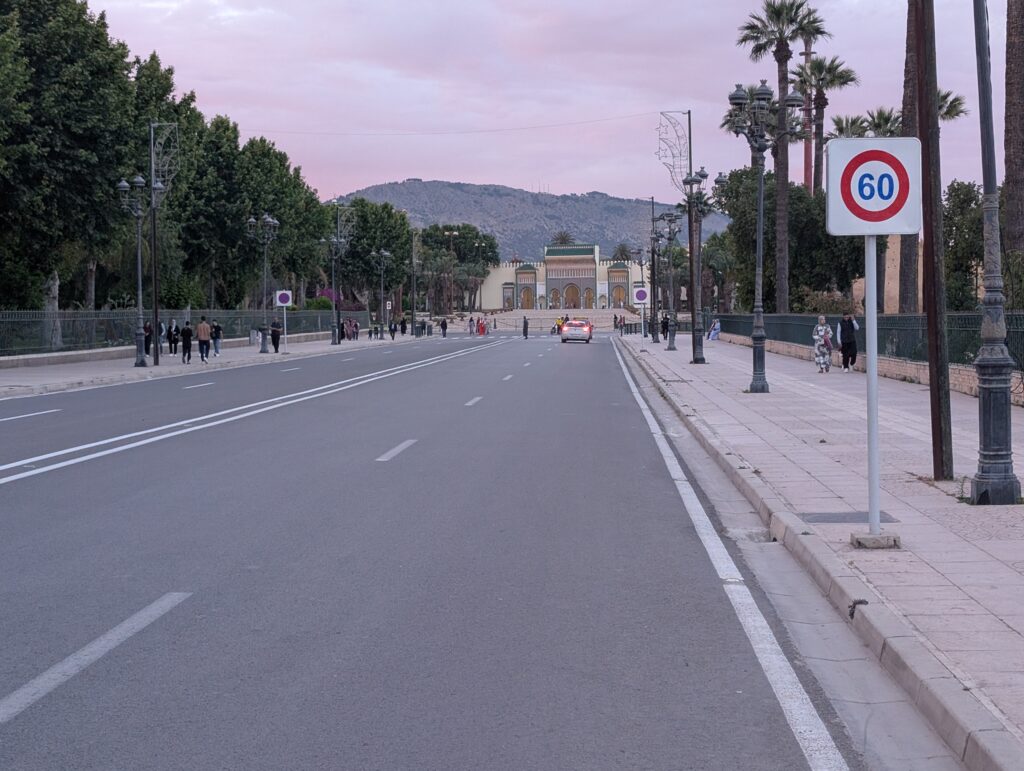
Royal Palace of Fes
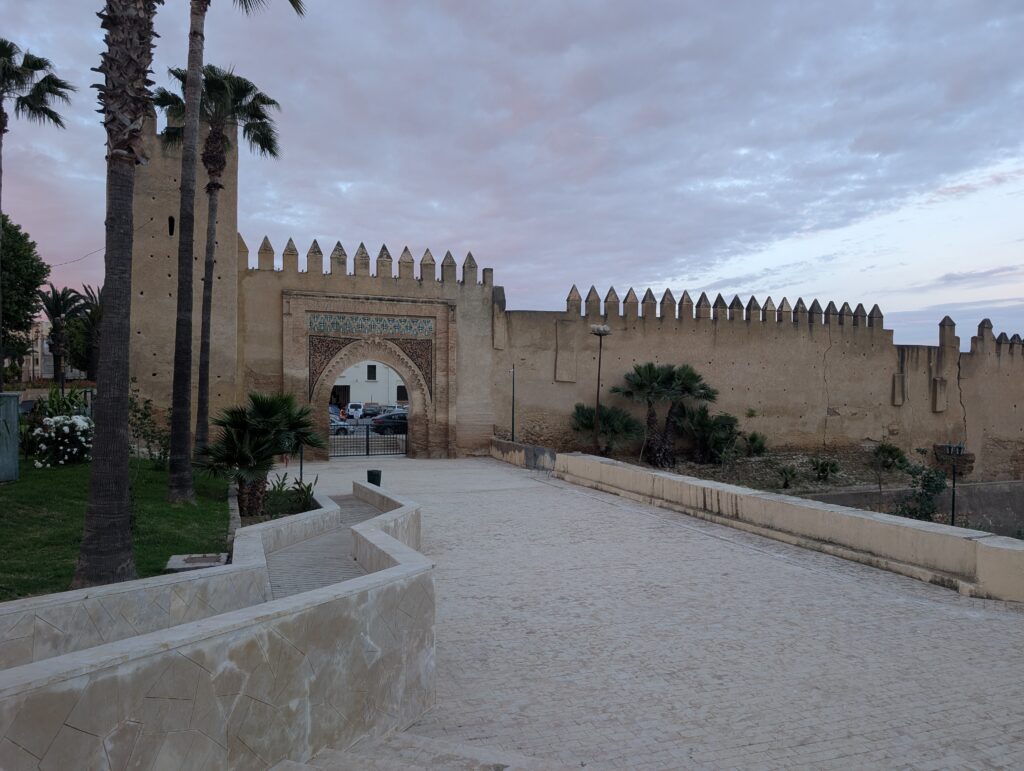
One of Several Nice Gates
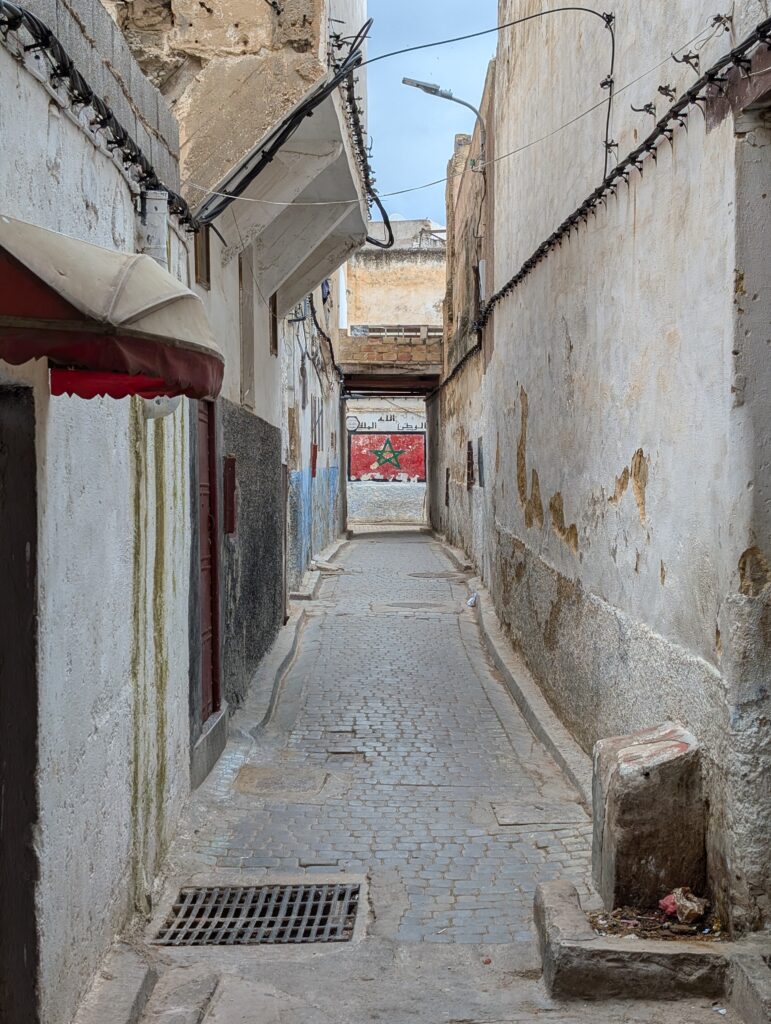
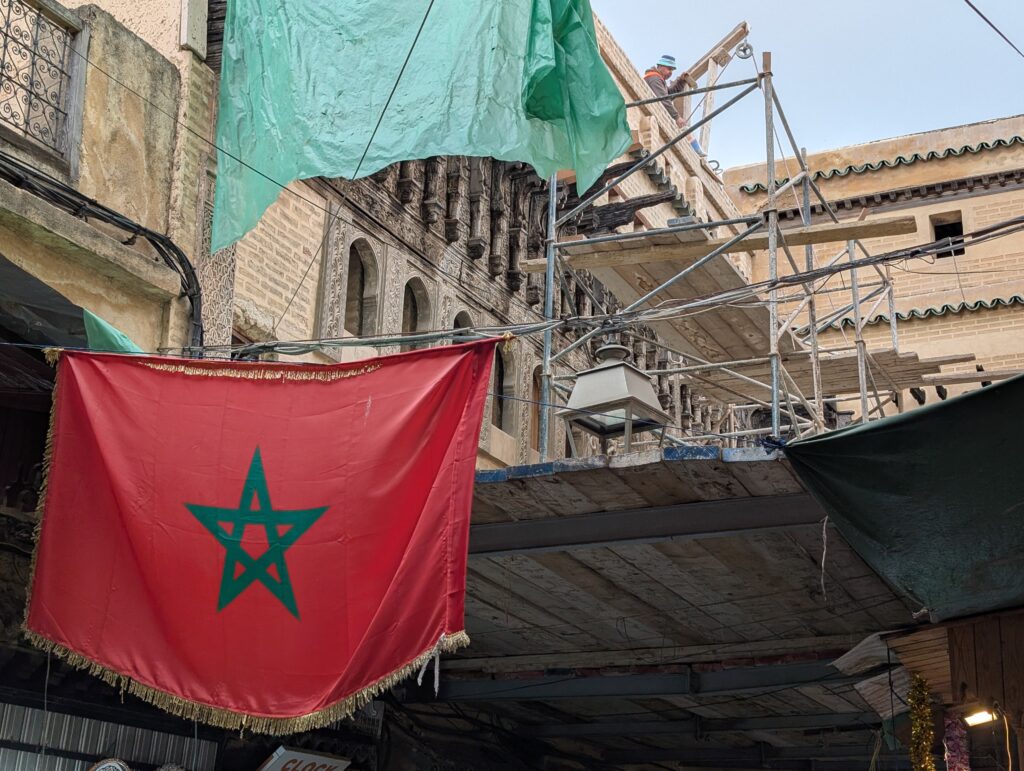
Walking the Streets of the Fes Casbah, Moroccan Flag Art at the End of the Walkway
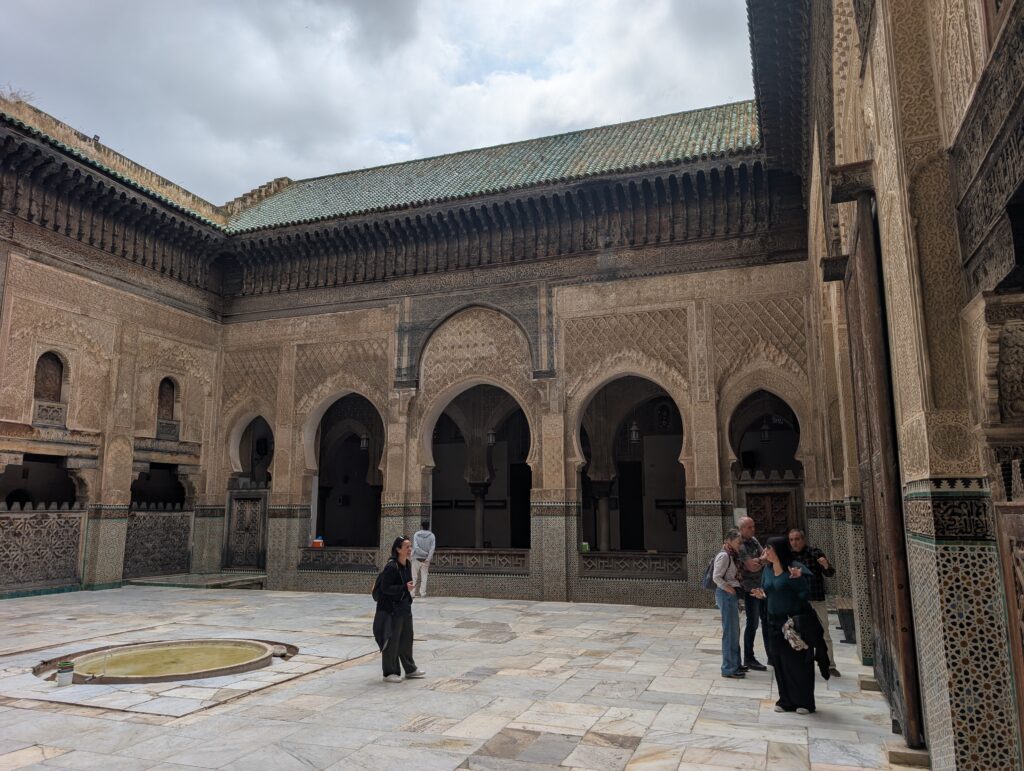
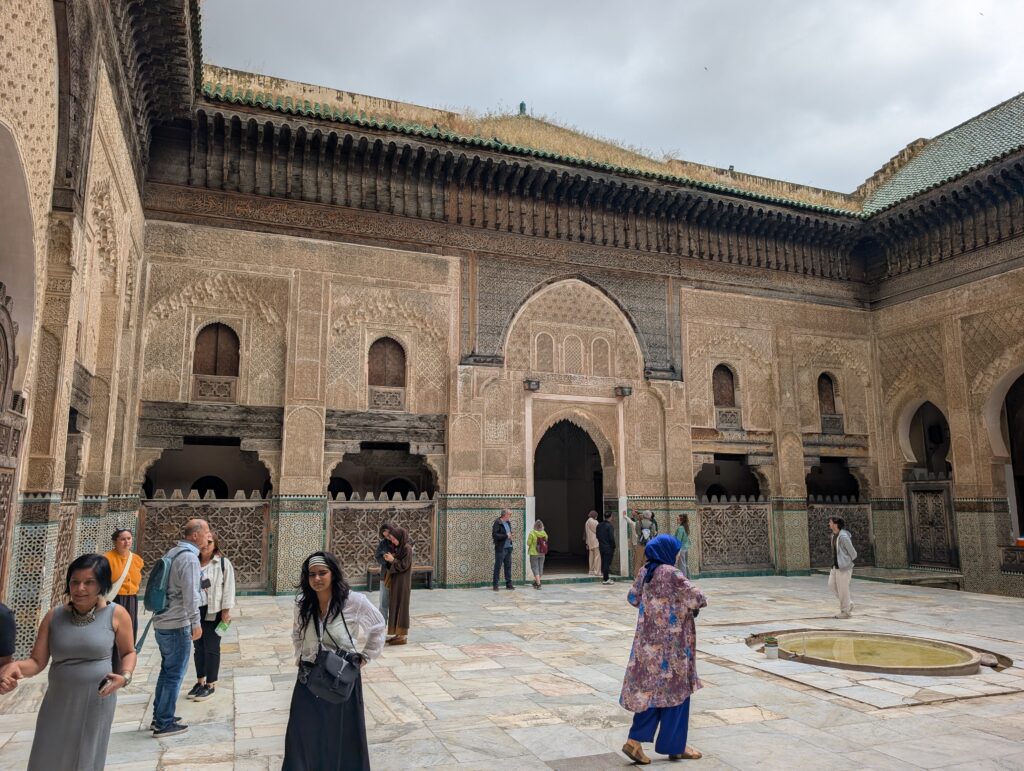
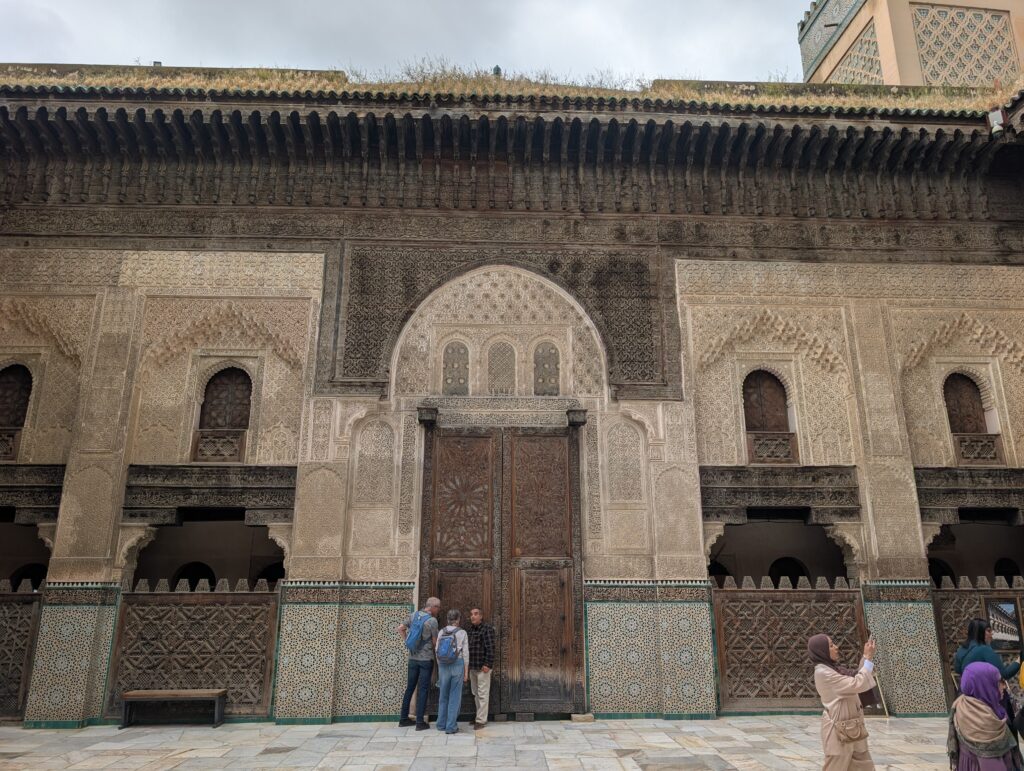
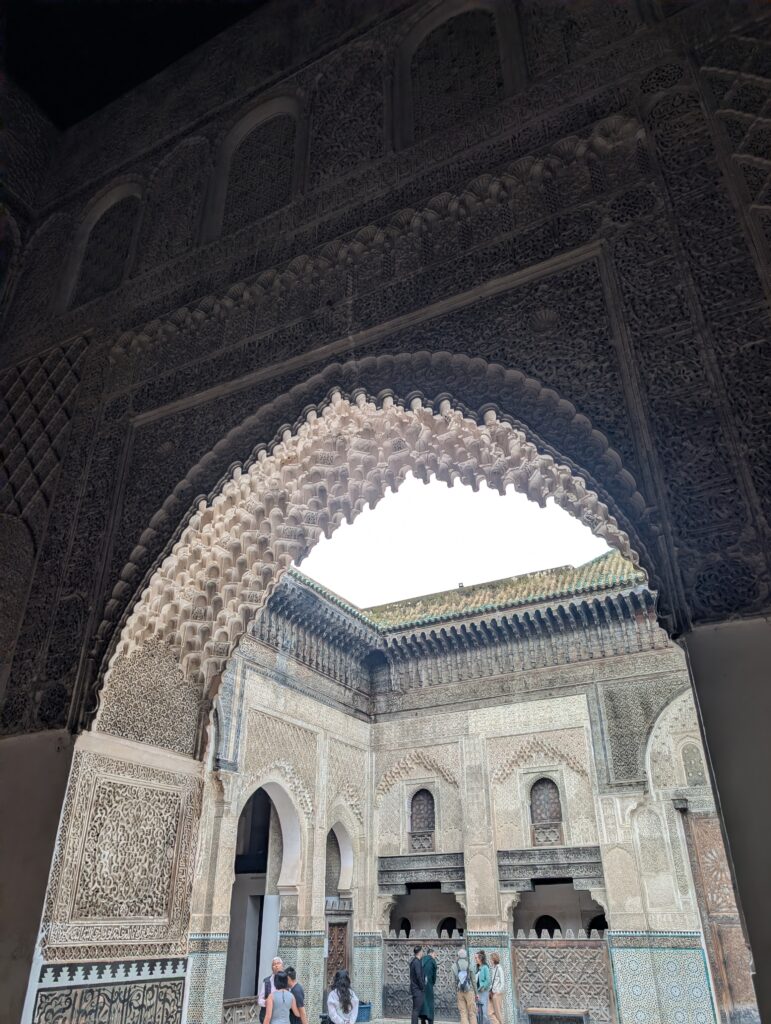
Madrasa Architecture
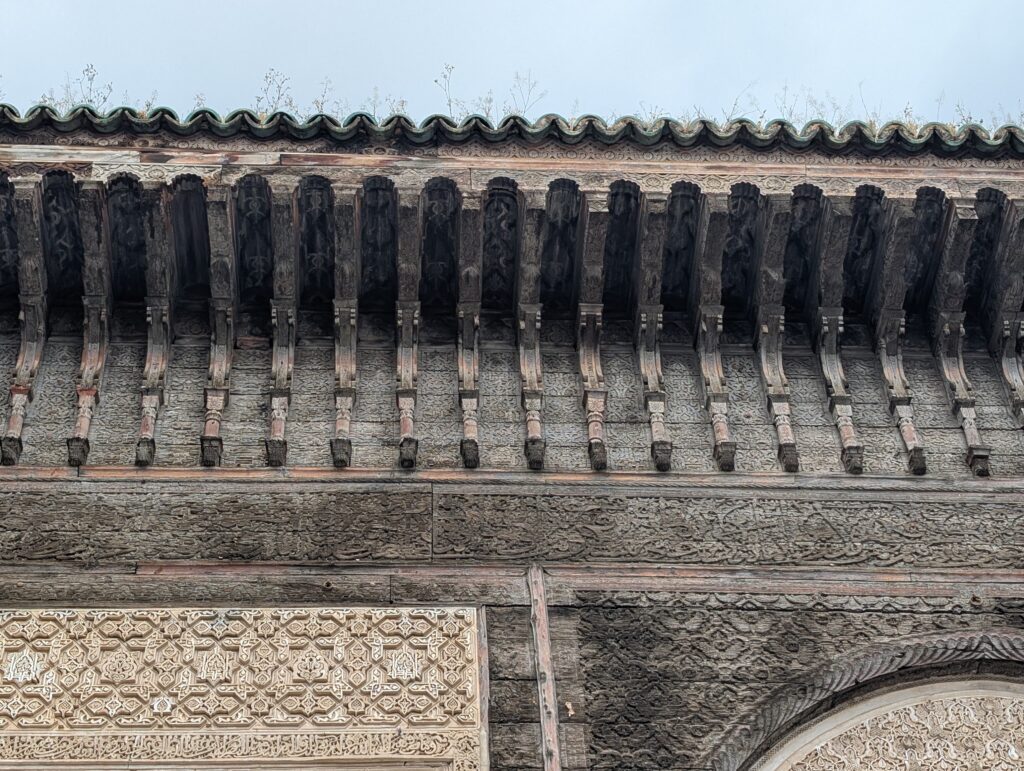
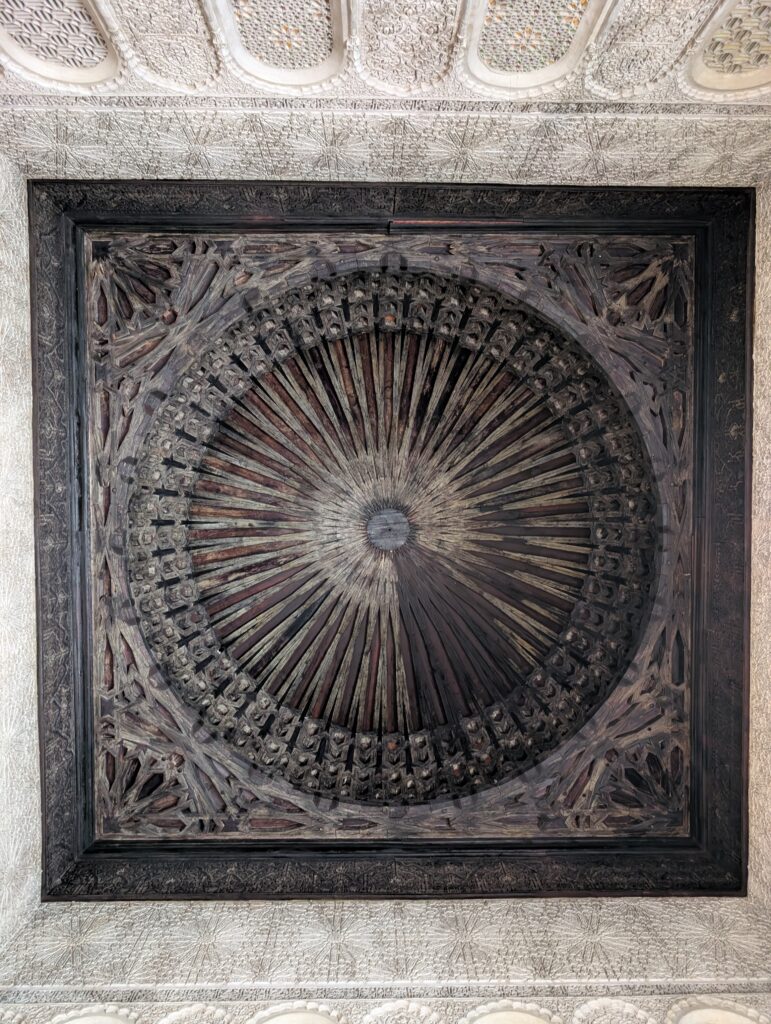
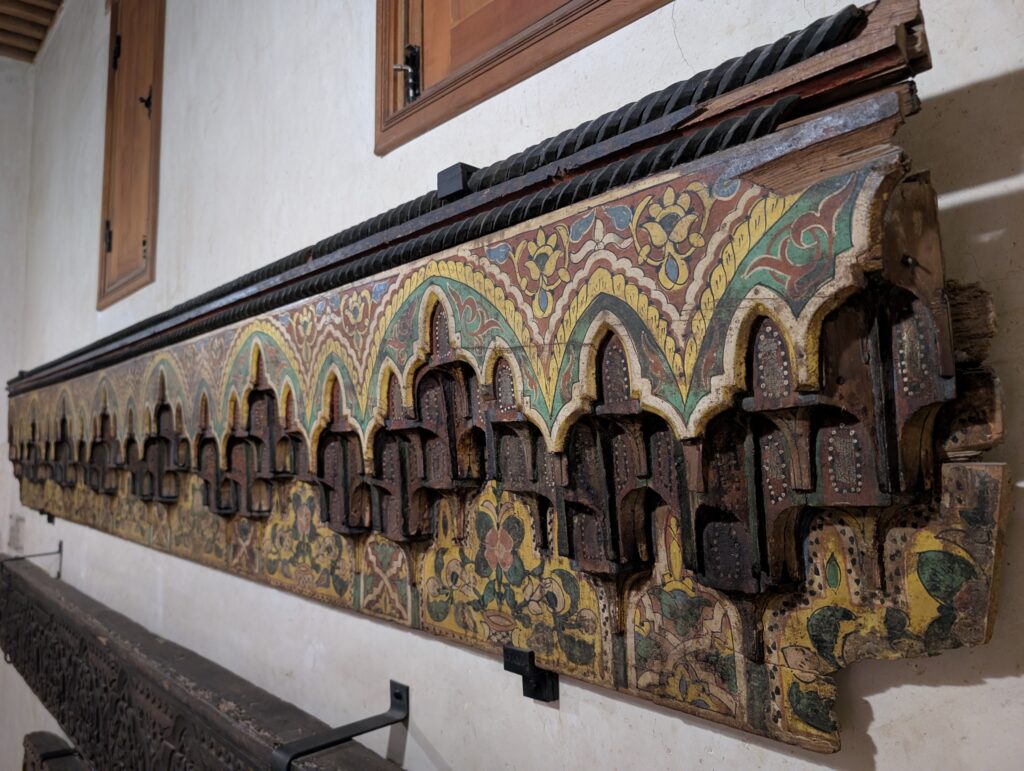
Fancy Woodwork Near the Rafters
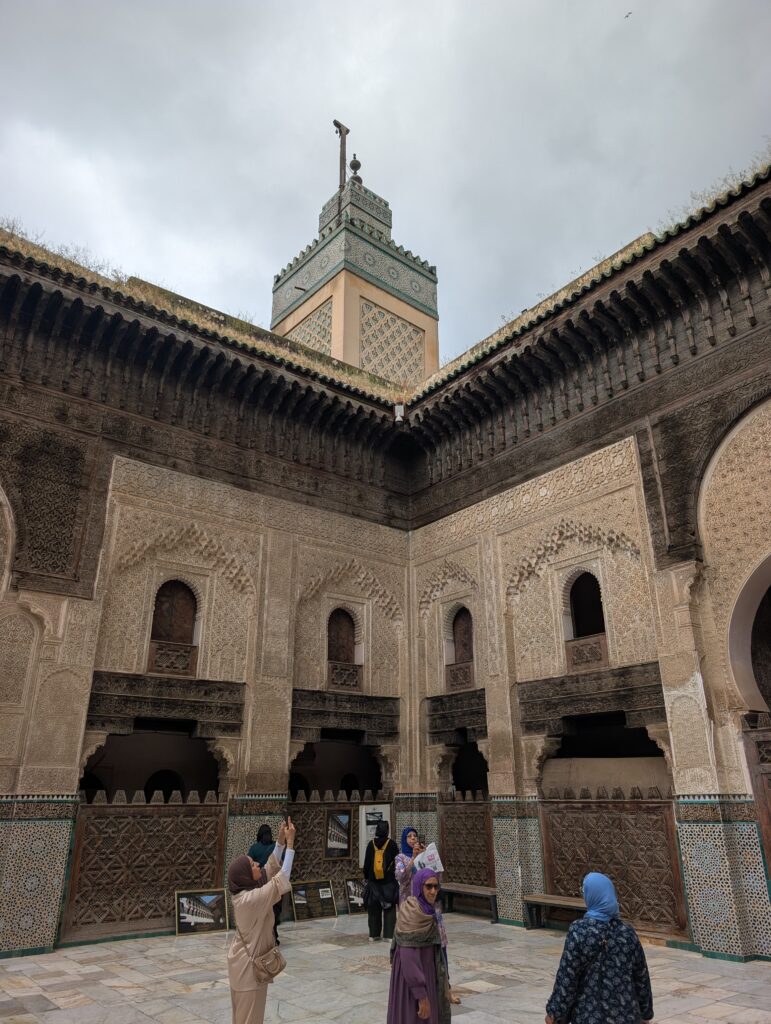
Minaret in the Background
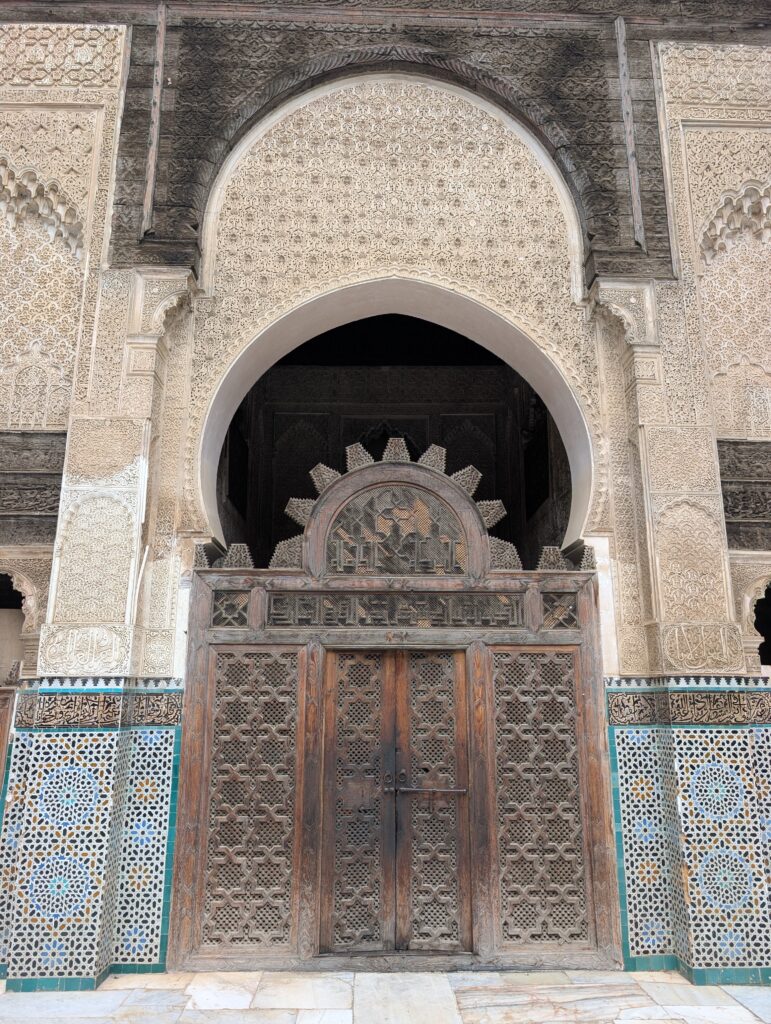
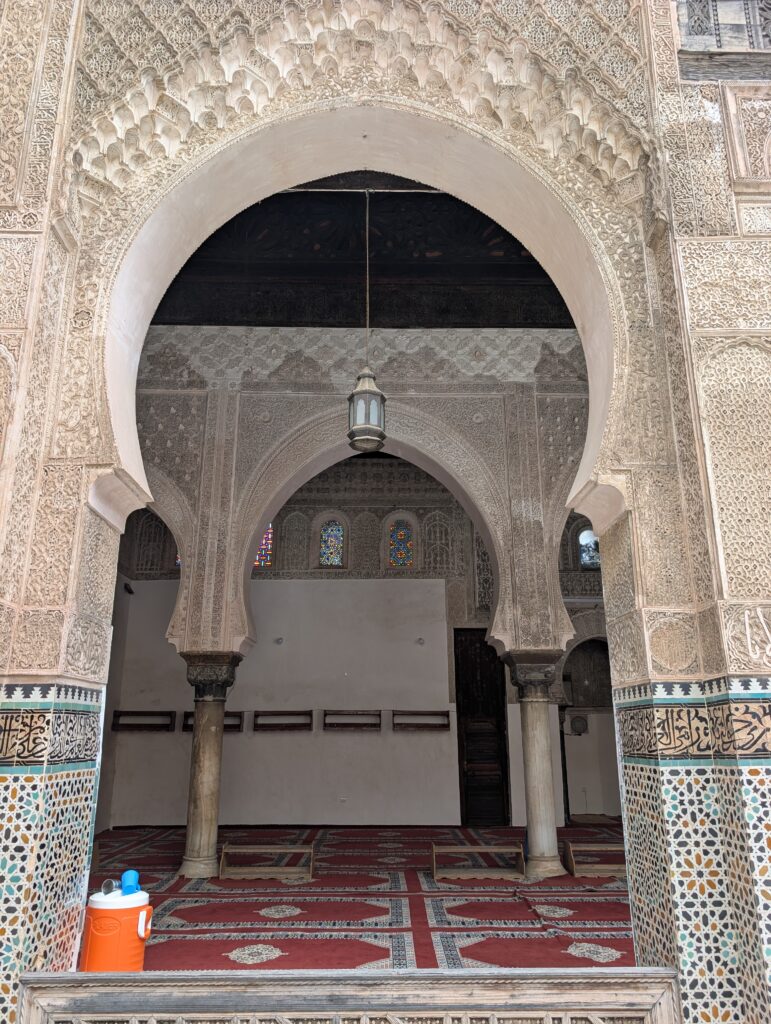
Typical Moorish Archway
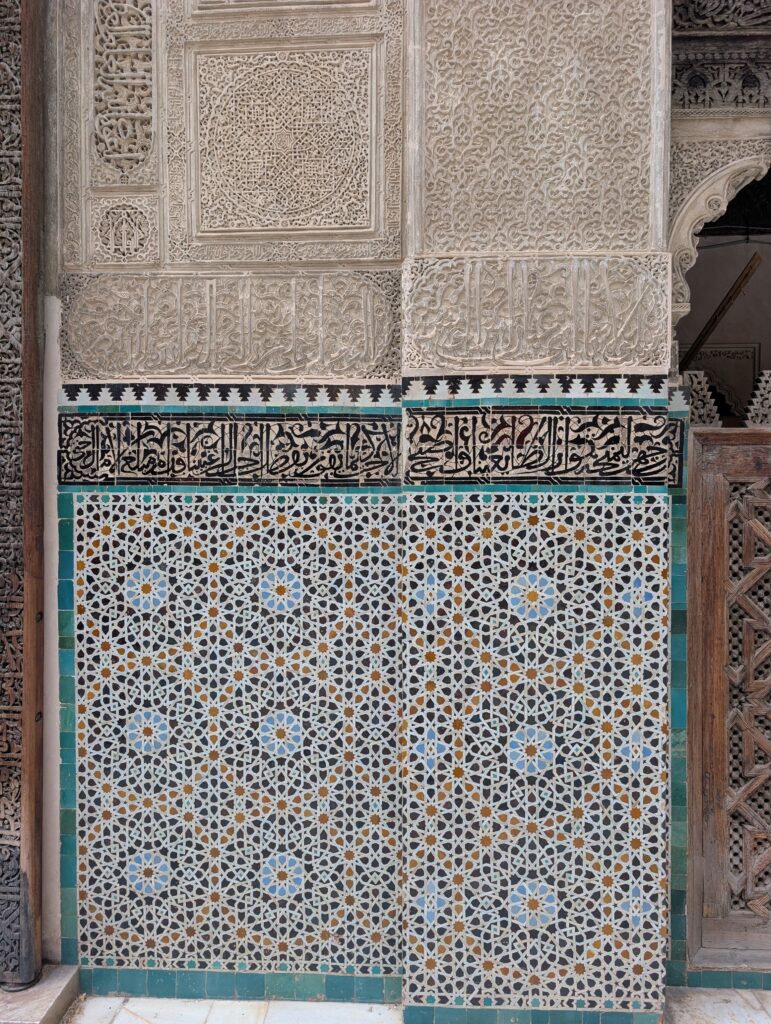
Calligraphy and Tile
Scalloped Decorations
Ceiling Dome
Hydraulic Clock
Bab Mansour

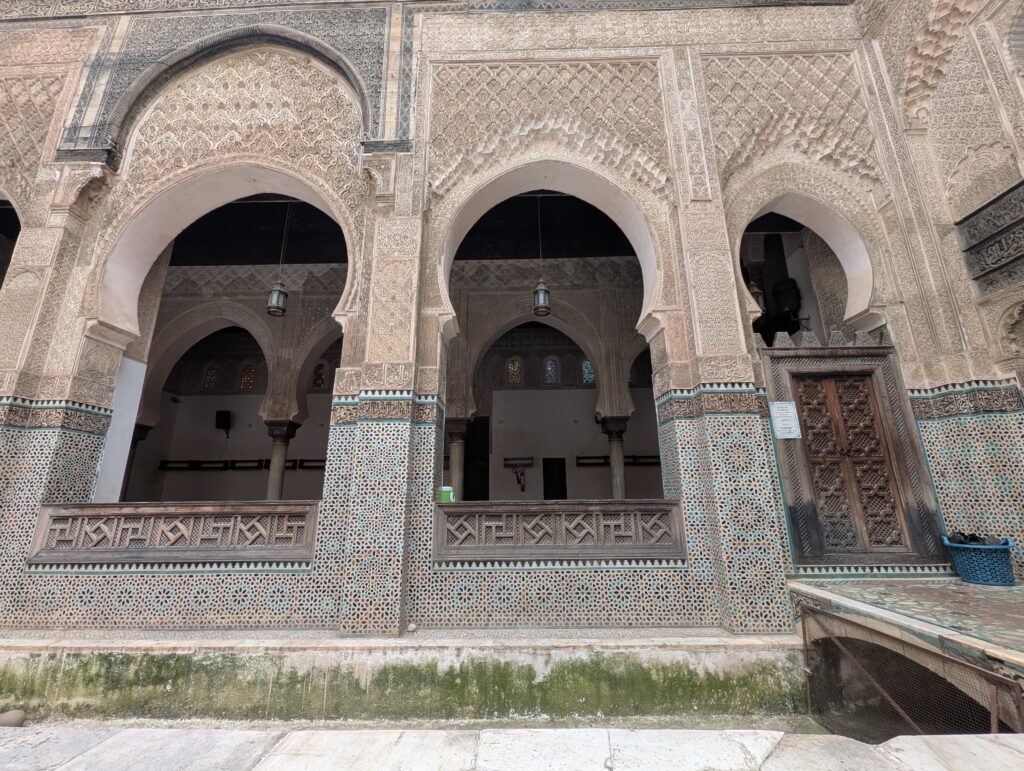
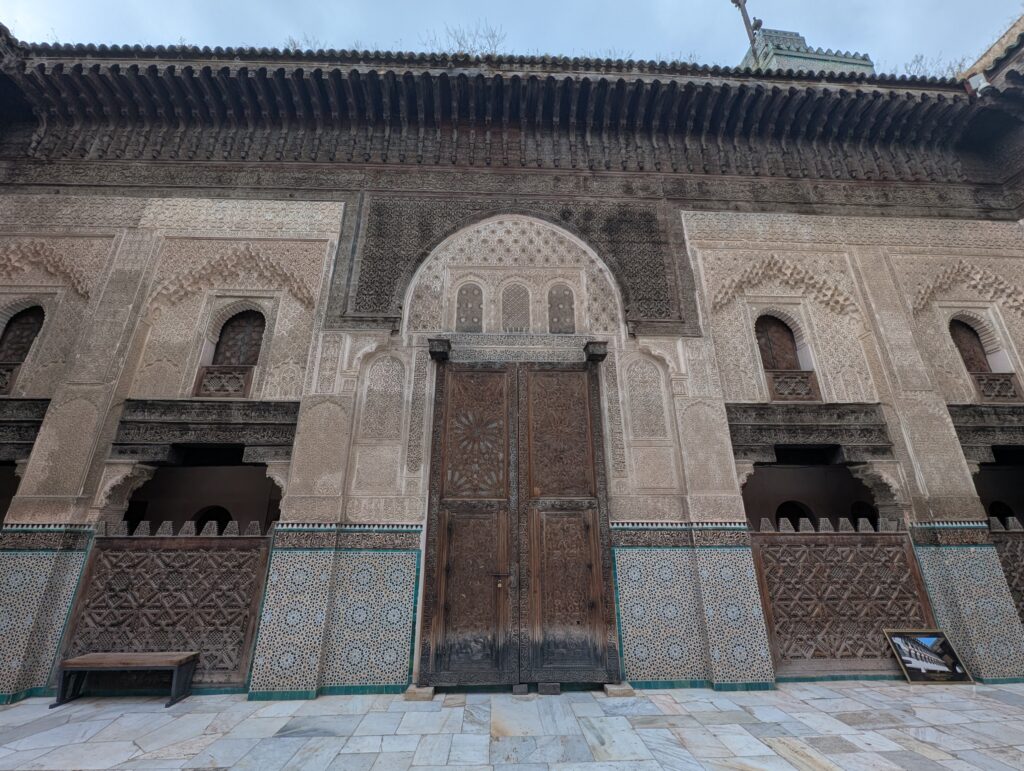
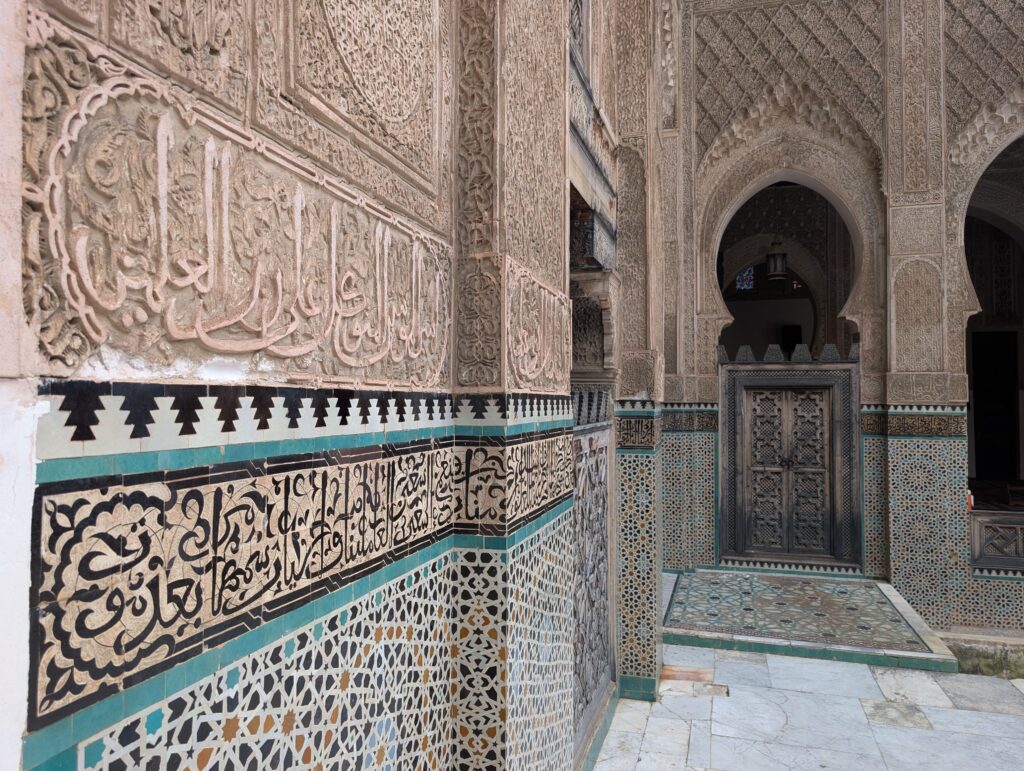
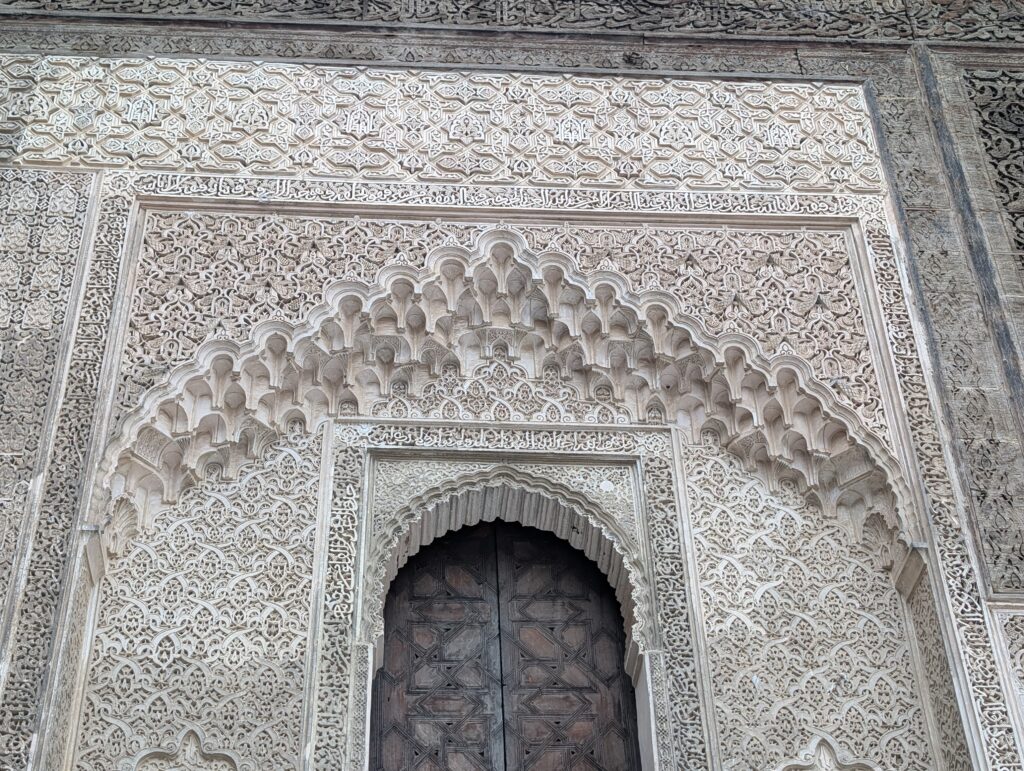
The first new place I saw on Wednesday morning was the Bou Inania Madrasa. Like the one I visited in Marrakech, this was one of the few madrasas accessible to non-Muslims. Unlike the one in Marrakech, Bou Inania in Fes cost just 20 dirhams to enter. This trend held true through most of the visit. There were many similar things to see and do in Fes and Marrakech, but doing the same things in Fes was often less that a quarter of the price I paid in Marrakech. Not that Marrakech was expensive, things just cost more there than in Fes.

Bou Inania was a beautiful building, but again, it wasn’t drastically different from the one I had already visited. It is decorated with gorgeous colorful, geometric tile designs and intricately carved wooden doorways. Woodwork in Morocco seems to be a specialty. The school itself was built in the 1350s, though I don’t think the doors and many of the decorations from that long ago survive. It isn’t clear from any of the scant explanations posted when different aspects of the building were constructed. As with most Islamic buildings, the Arabic calligraphy is part of the decoration. One unique aspect of the Bou Inania Madrasa is the hydraulic clock. This apparently original piece of the building from the 14th century is no longer intact. It isn’t clear exactly how it worked, but it somehow kept time through water descending from thirteen bowls mounted high upon the exterior wall. You can see where it was, but not really any remains of the hydraulic clock.

(Continued)

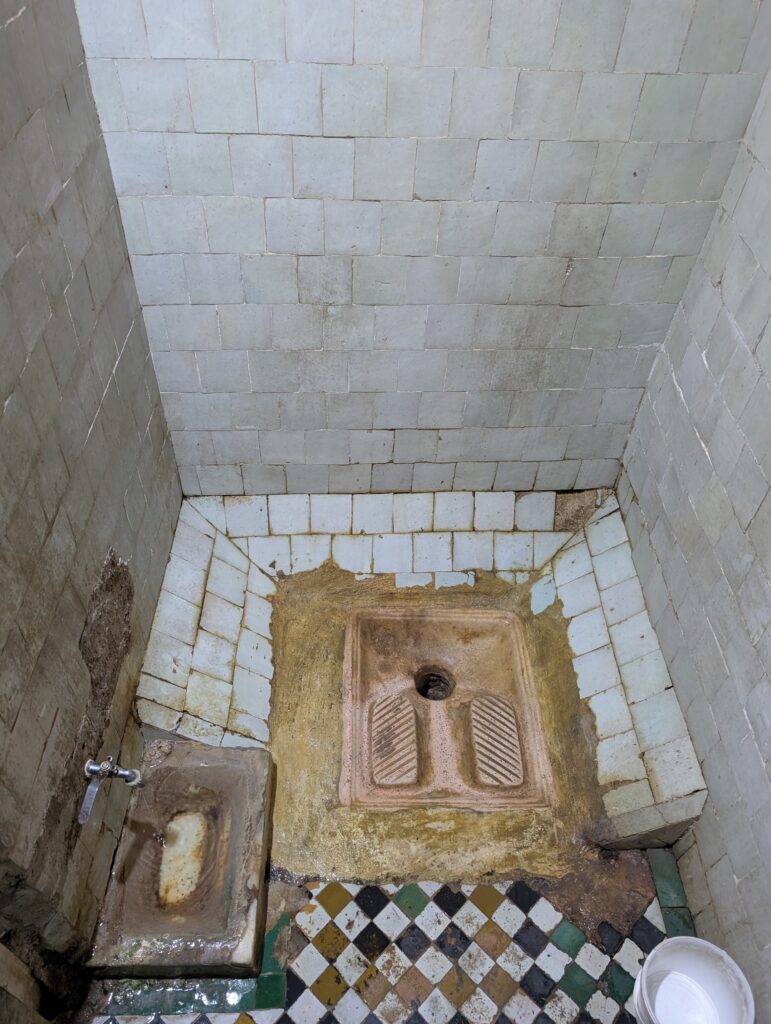
Squatty Potty
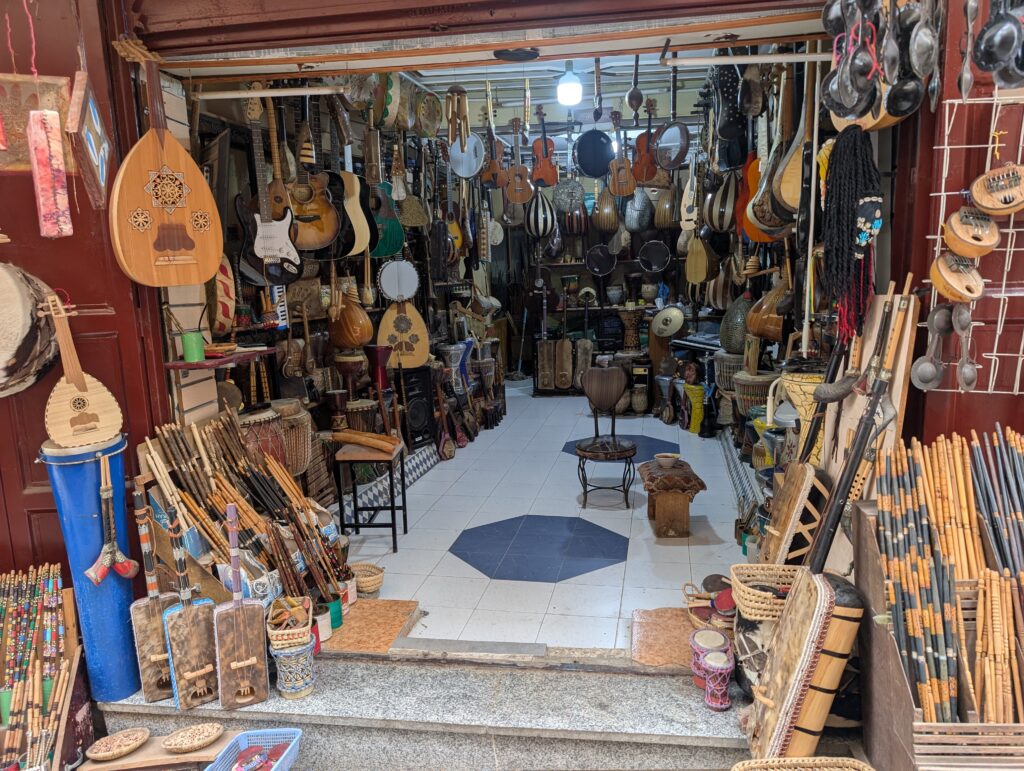
Musical Instrument Artisan Shop in the 1st Mandouk

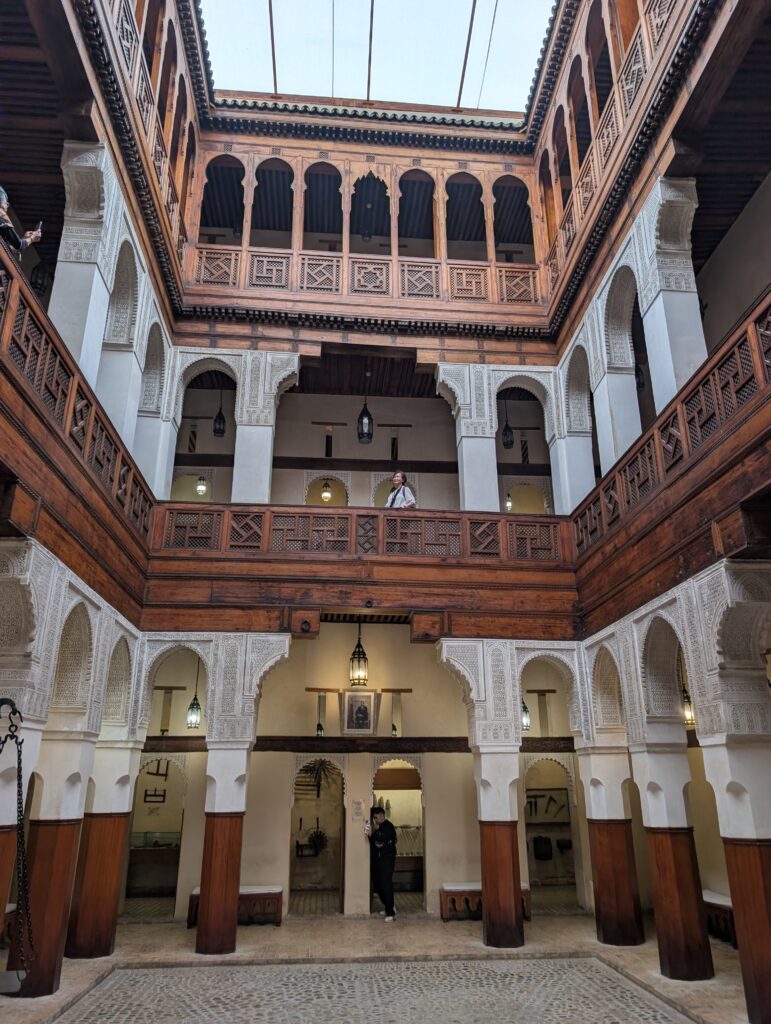
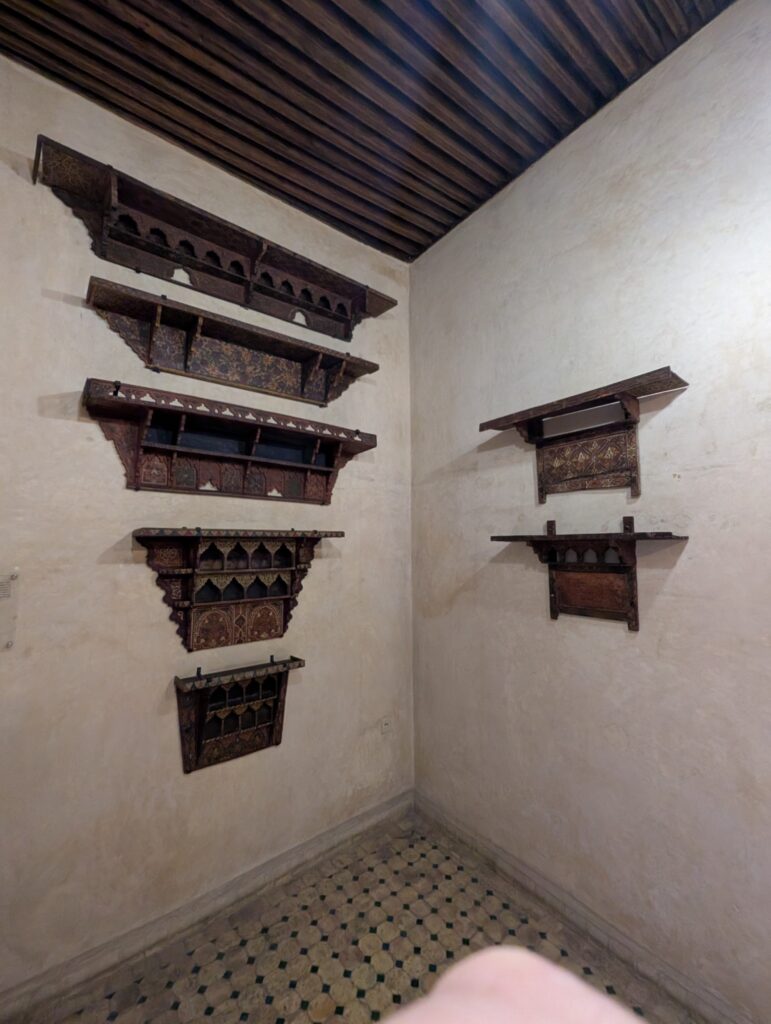
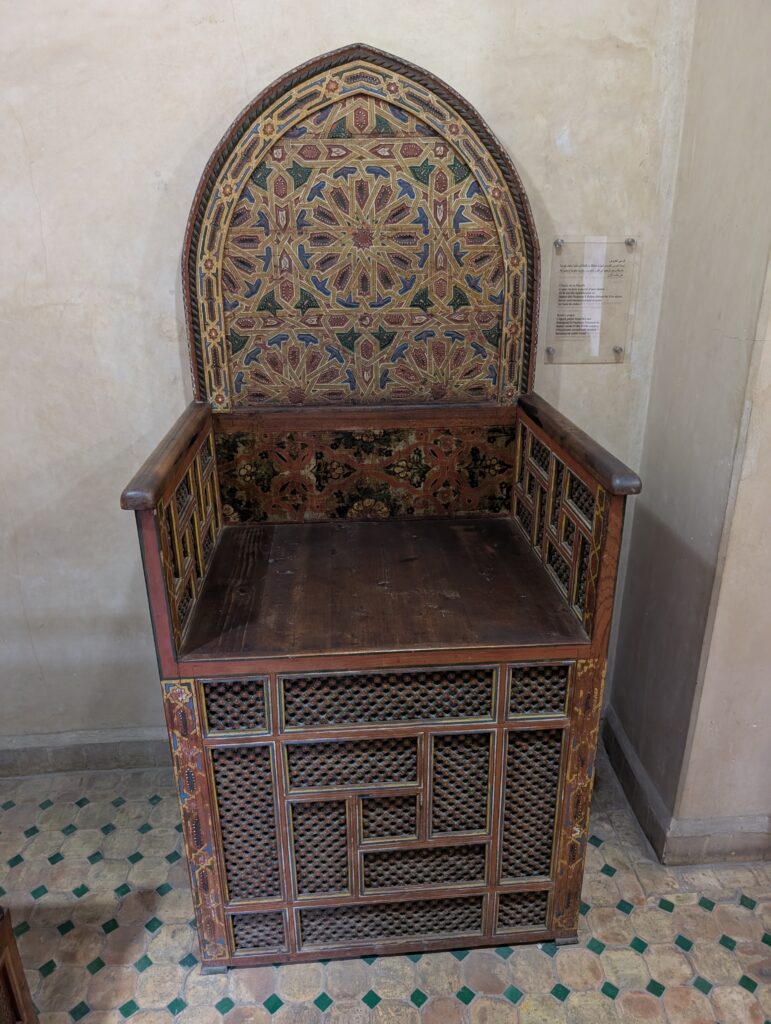
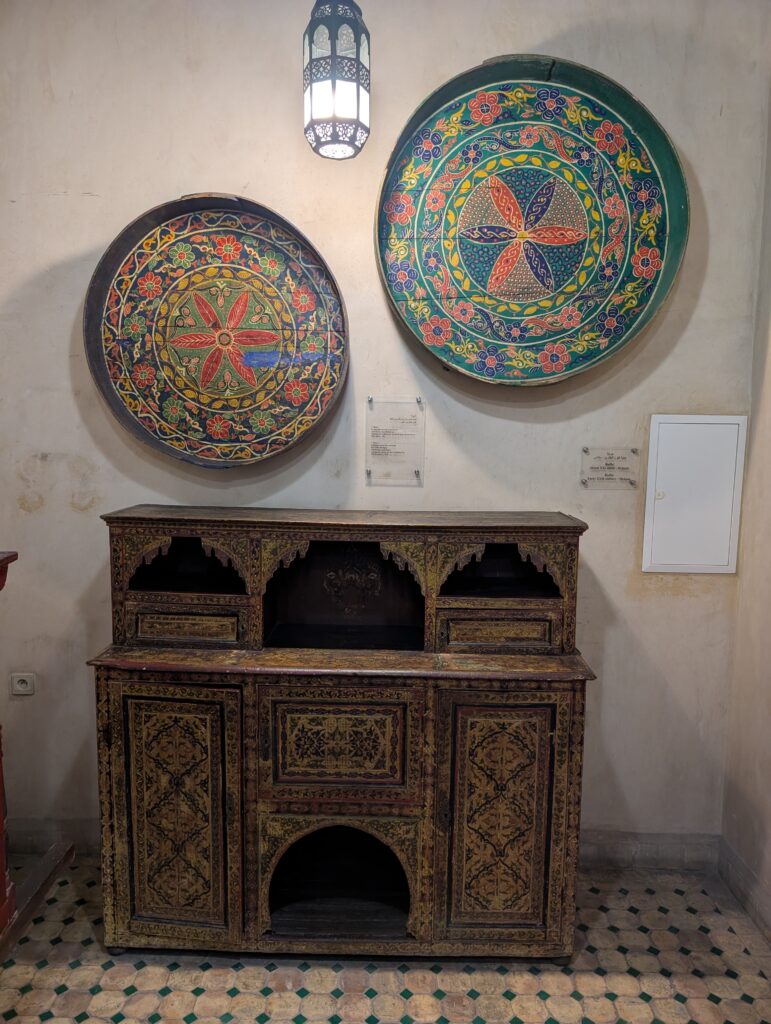
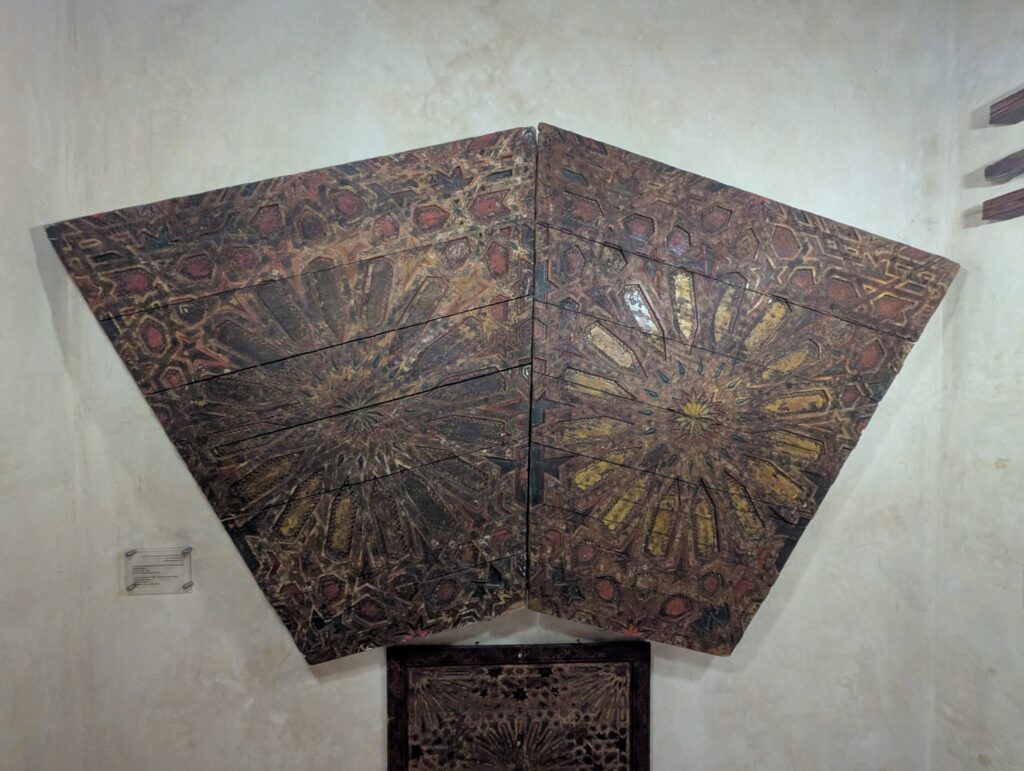
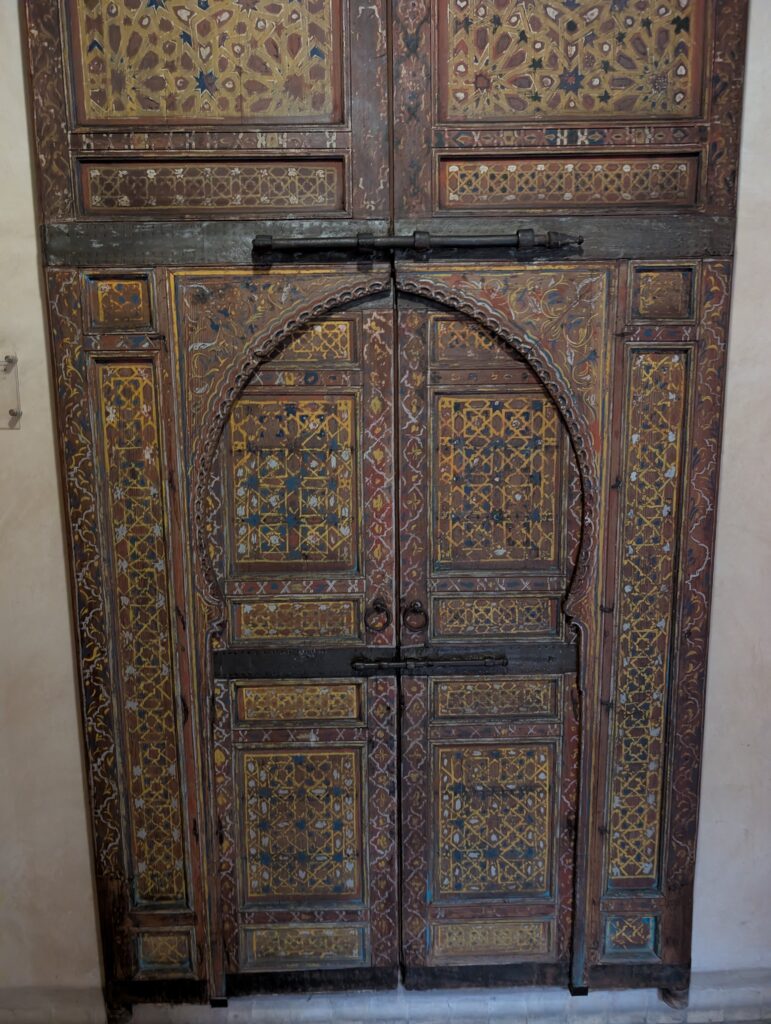
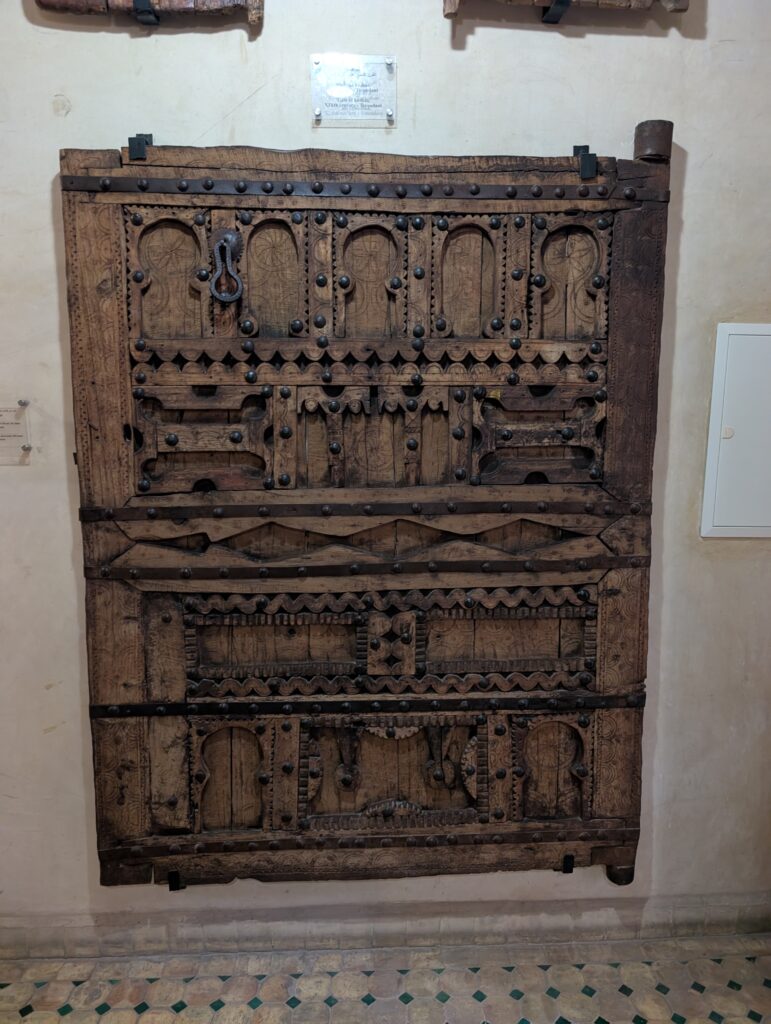
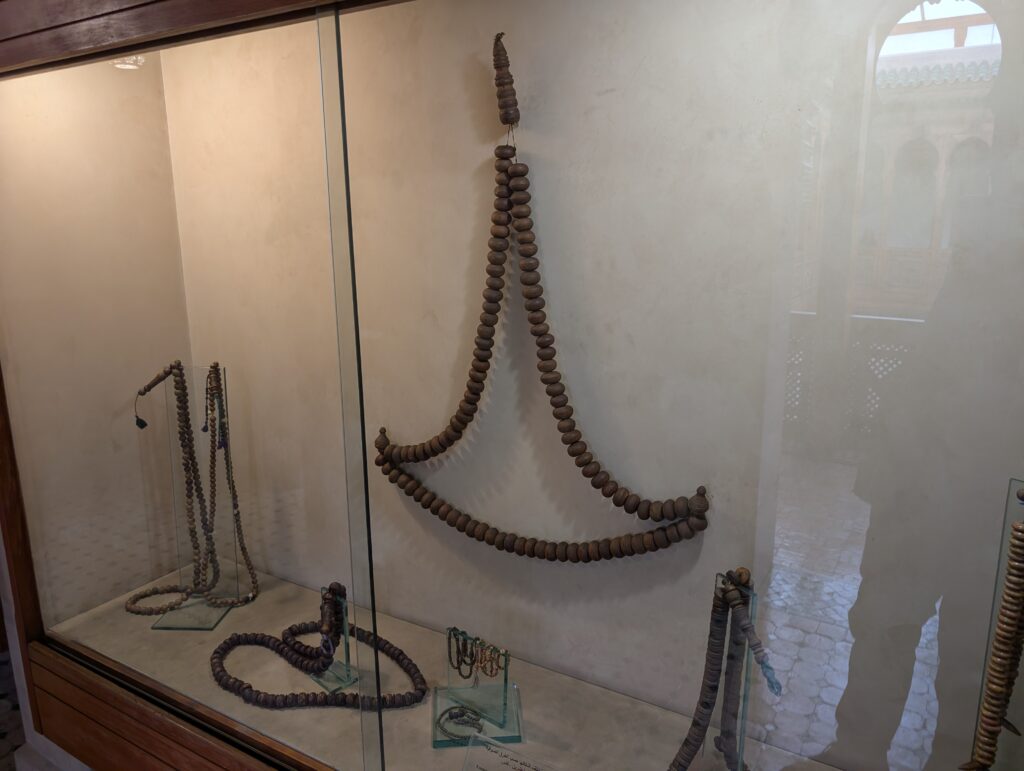
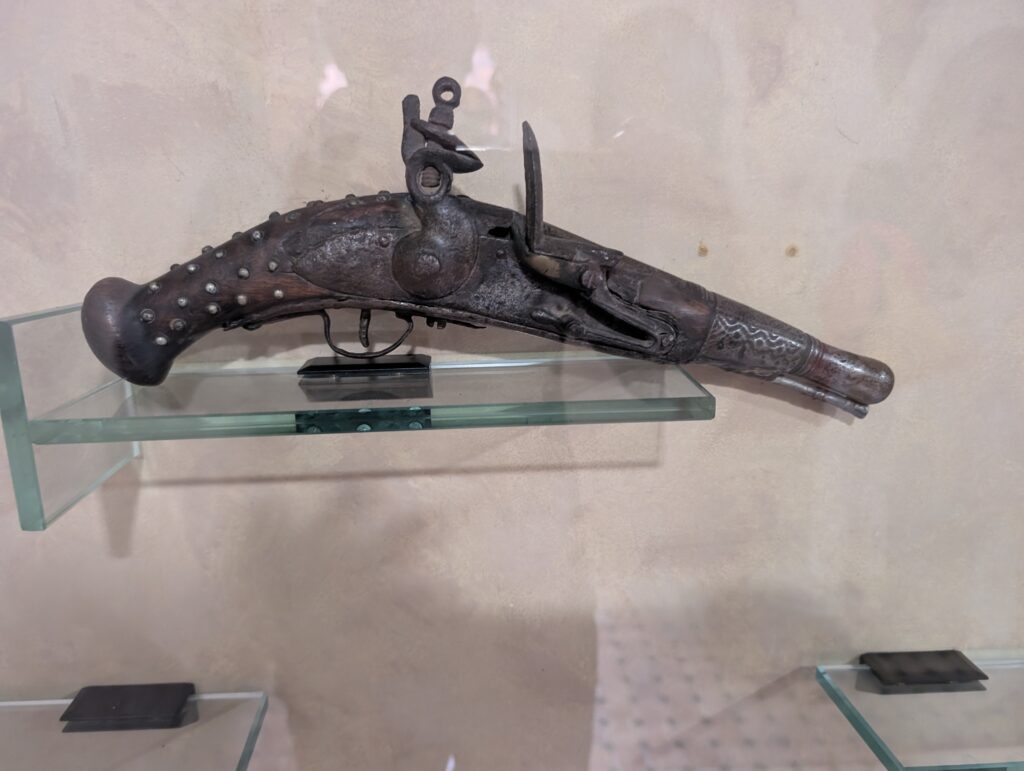
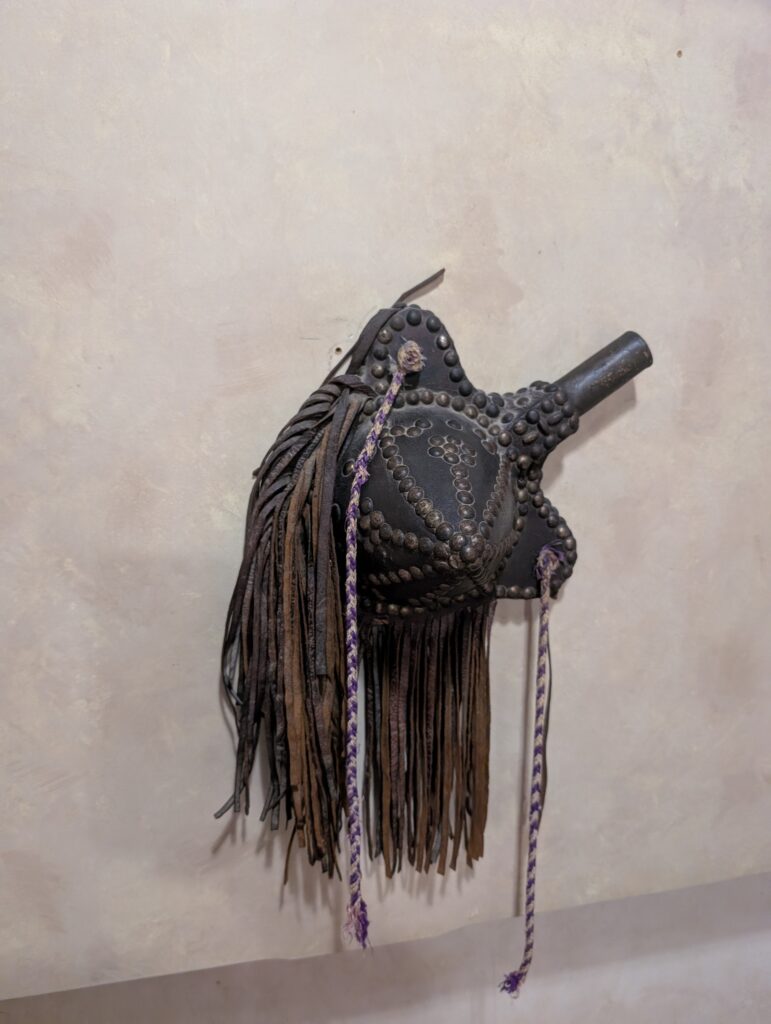
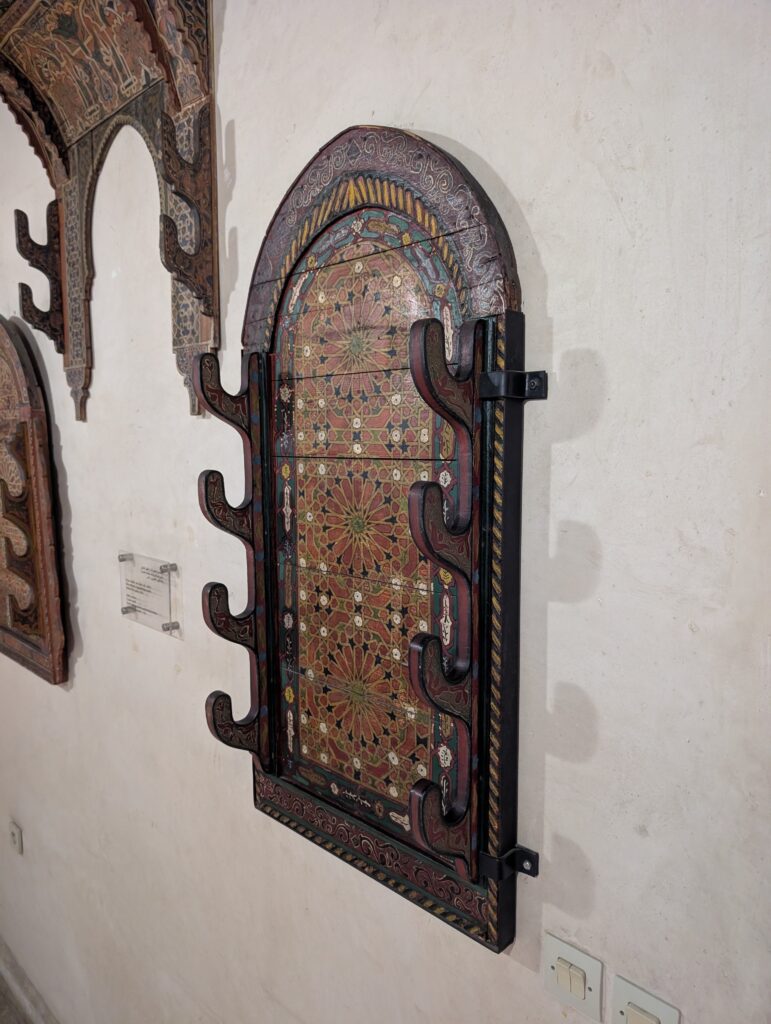
From the madrasa, I walked to the nearby Fondouk al Najjarine. A fondouk is a traditional inn, like a caravansarai. En route, I passed Fondouk Tazi, which I discovered by accident. It was a short detour into a small part of the casbah that had been dedicated to showcase of a couple of functioning workshops that operated in the old style. Fondouk al Najjarine was a much larger inn that had been converted to a woodwork museum. The current name means “Inn of the Carpenters.” It contains many nice examples of different kinds of Moroccan woodwork, from doors, to chests, to architecture pieces, to musical instruments. There were of course woodworking tools as well, and some description of how the work was done. It was nicely displayed, and there were enough examples of fine woodwork in the building itself for this to seem an appropriate place for this kind of museum.

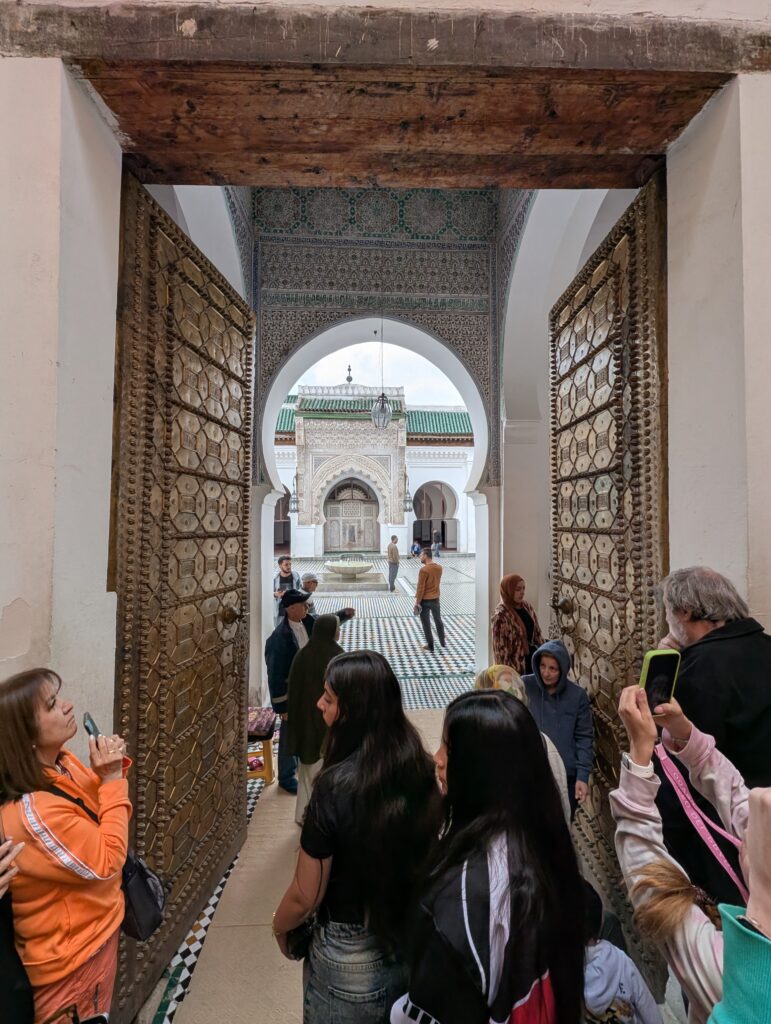
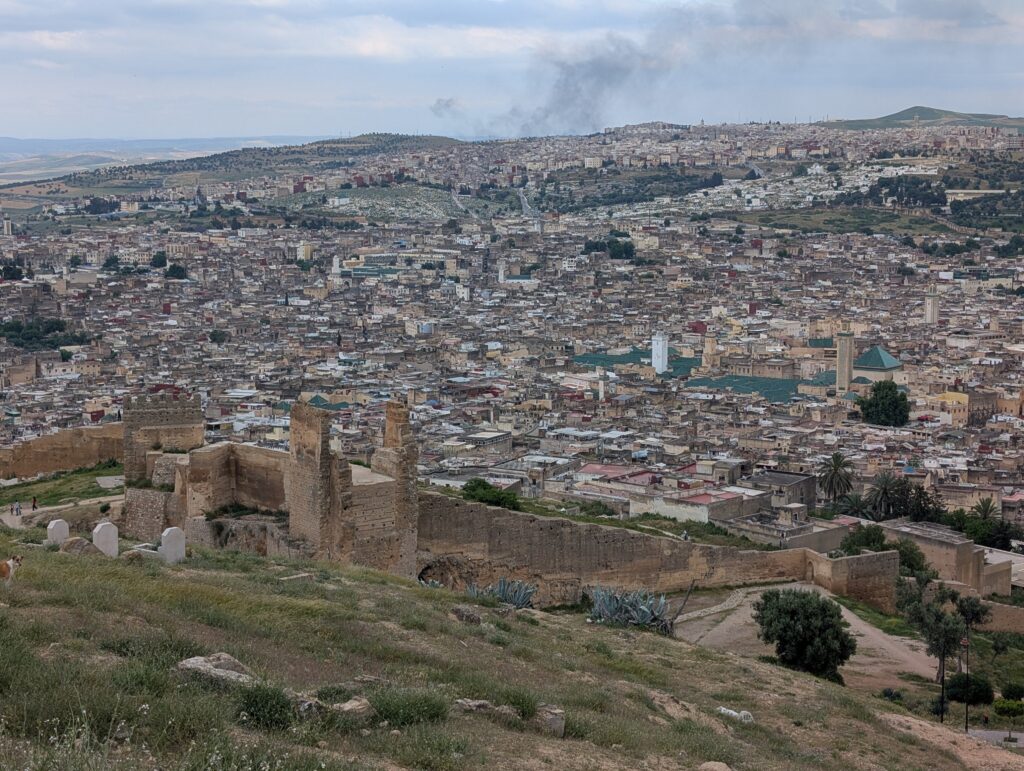
I next passed another madrasa, mosque, and university combination. Al Qarawiyyin university was established in 859 and is supposed to be the oldest known continually operating university in the world. Because it contains Muslim worship space outsiders cannot enter. I had heard that from the terraces or rooftops of certain nearby shops, you could see down into it, but I didn’t find them. I was, however, able to get a nice, though distant view from the tomb ruins atop the hill later that evening. I was able to peek into the doorway, however. This is allowed, and many tourists were snapping photos through the traditionally shaped entry. The reasoning given for barring non-Muslim tourists is that tourists do not treat worship sites respectfully, snapping selfies and those sorts of tourist behaviors. Interestingly, through the entry I could see the Muslim visitors to the university. What were they doing inside? They were doing the same typical tourist behaviors seen around the world. They were posing and snapping selfies. I guess it is OK if Muslims are the ones doing it.
(Continued)

Scenes From the Woodworking Museum in the 2nd Fondouk
Ceiling Fragments
Doors in the Wood Museum
Muslim Equivalent of Rosary Beads
Pistol With Decorated Wood Handle
Powder Horn
Muslim Gun Rack
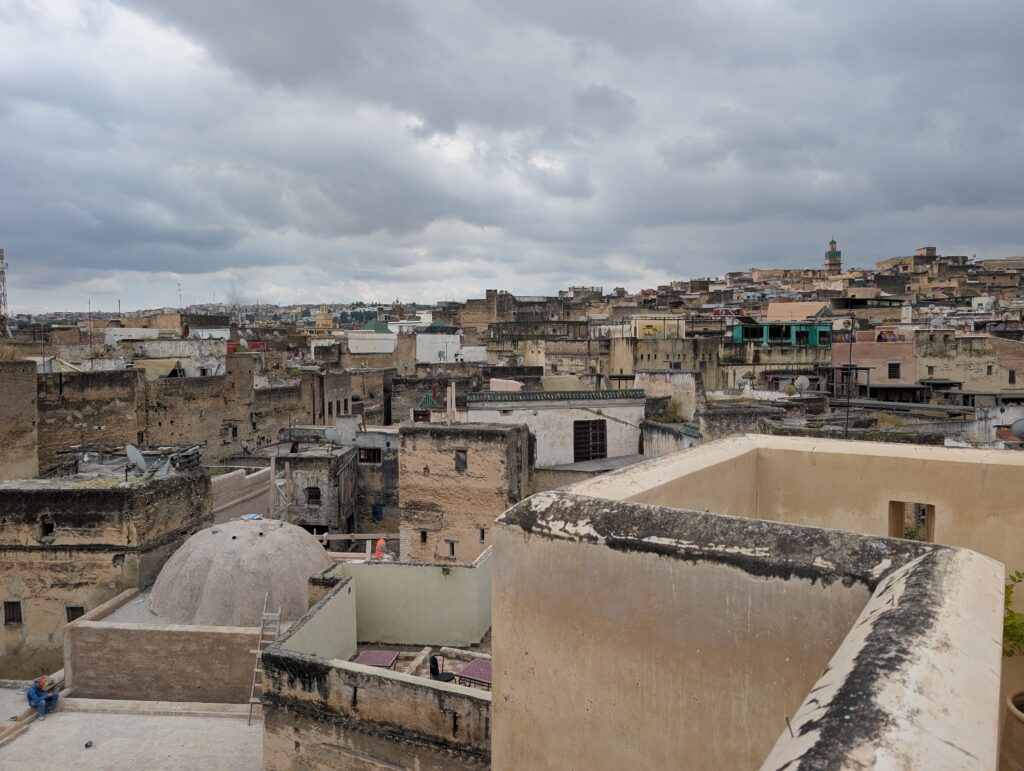
City View
Peeking Inside the Oldest University in the World

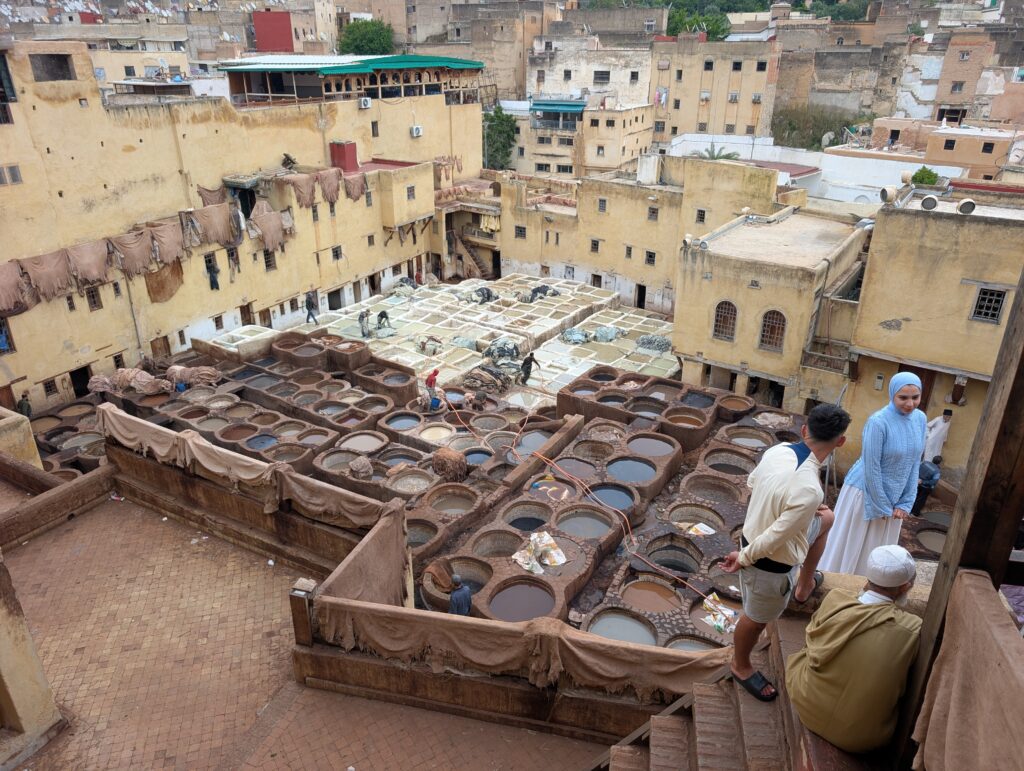
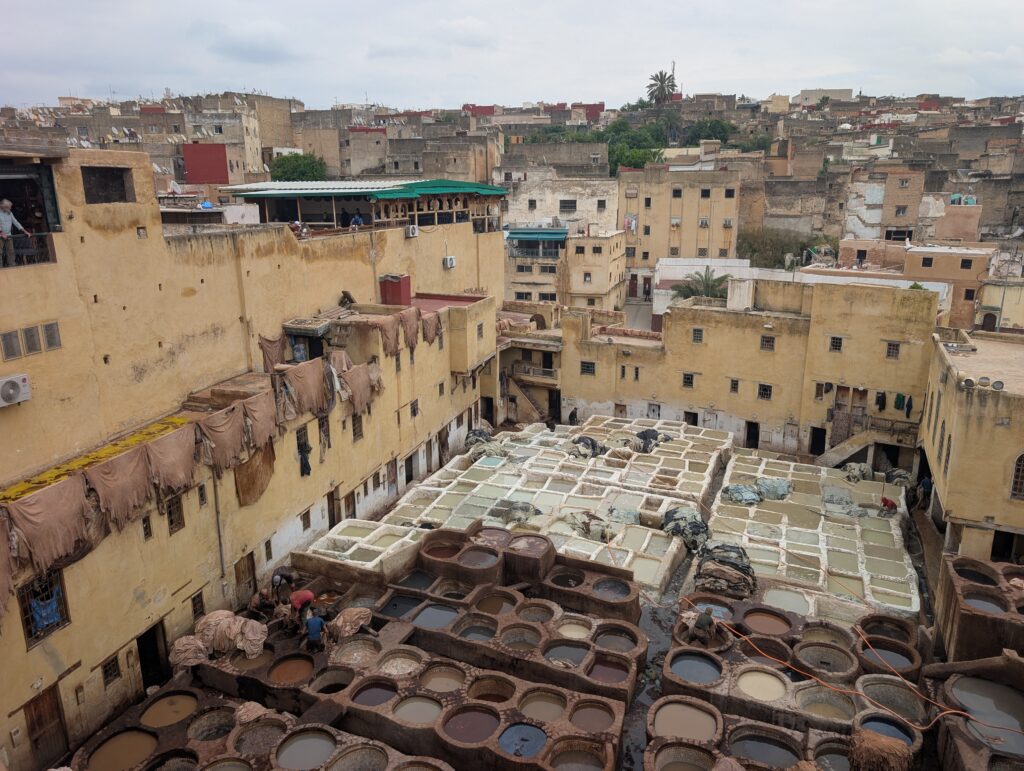
Fes’s best known tourist attraction may well be the tanneries. Tourists are continually bombarded with questions from Moroccans. Are you looking for the tannery? They will nearly always tell you you are heading the wrong way, and offer to “guide” you to it. It’s a scam. They will want money. There are, in fact, several tanneries in Fes. I went to the largest one, called Chouara Tannery. Various dealers of leather products offer free access terraces overlooking the operation, since they know that’s what tourists are coming to see. To get to the terraces, however, you must walk through a Las Vegas casino-style maze of products for sale that appeared to me a bit too processed to have come from this rather rustic looking hide processing operation. Perhaps some products come from there, but it seems doubtful.

There are dozens of vats below where men (and only men) are doing the difficult work of softening, treating and coloring the hide in vats filled with various liquids. One concoction uses the acidic qualities of pigeon manure to remove the hair. Water alone softens the hides. Different types of flowers and plants are used for shades of color. It is interesting to see the work. Much is made of the smell. Guided tours supply tourists with mint leaves to sniff. It did have an odor, but it didn’t seem to me to be any more overpowering than passing a feed lot, sugar beet mill, or that kind of place. It may have been less pungent than those.

Inside the shops, I people watched. It was interesting watching older Western Europeans validate nearly all of the typical tourist stereotypes as they viewed, negotiated, and made their leather goods purchases, confident that they had acquired a unique, authentic souvenir, and done so at a great bargain.

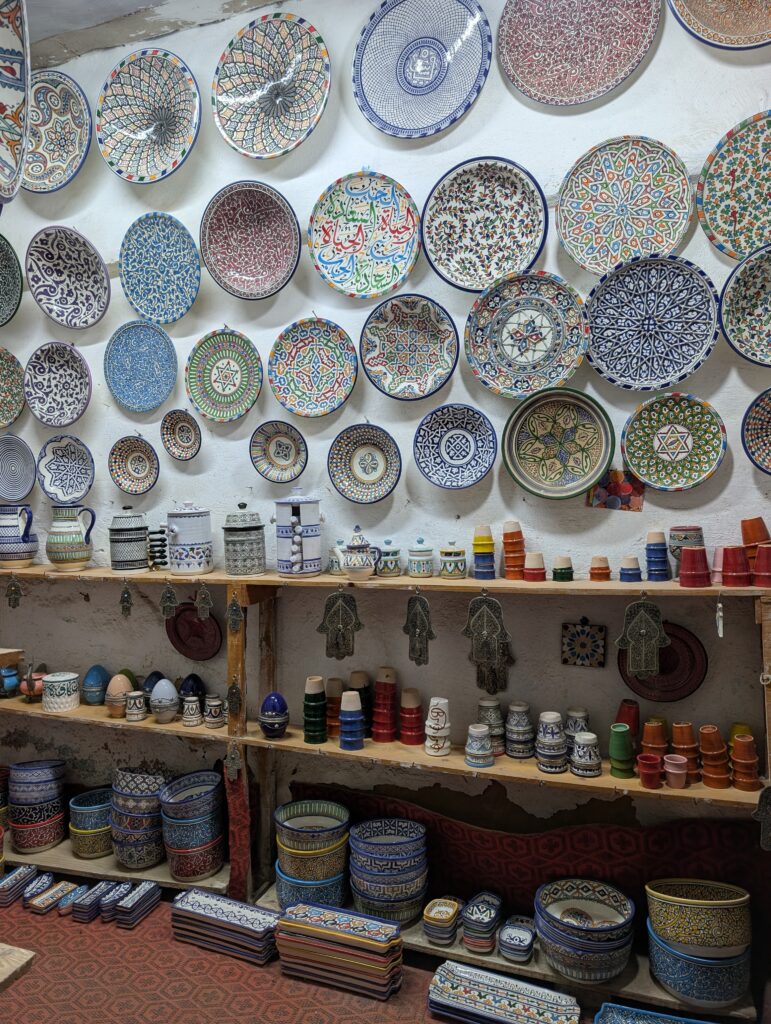
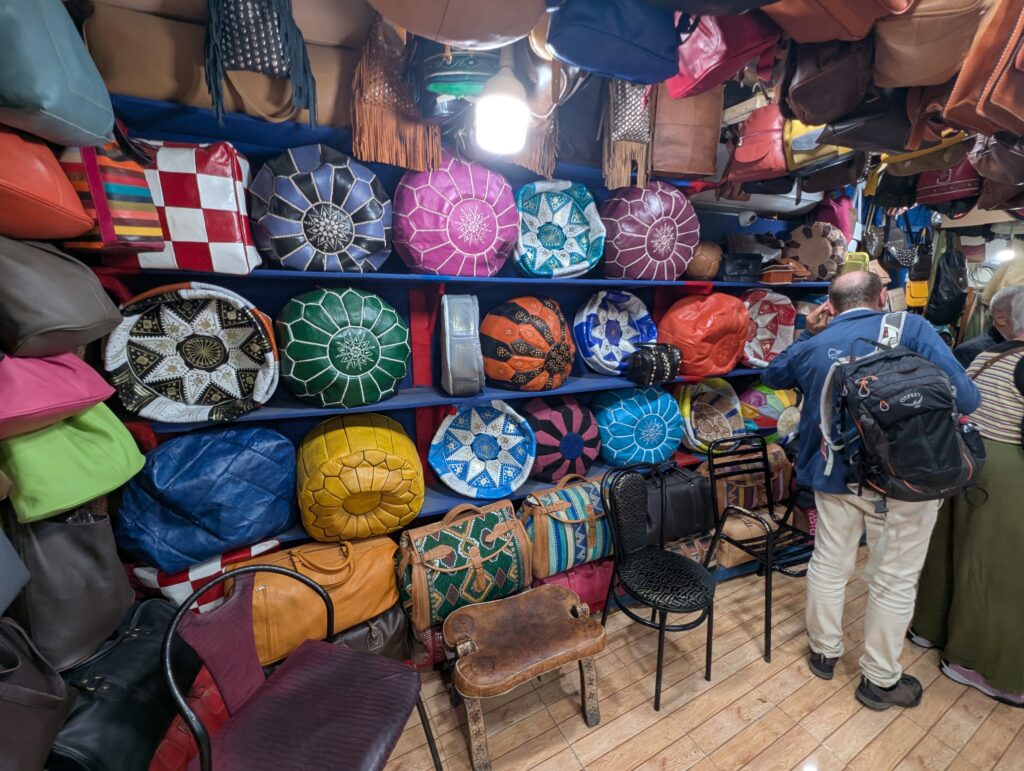
It was in one of these shops that I ran afoul of a custom I had been warned about but did not take seriously enough. There was a wall of beautiful poufs for sale. Poufs are those things that look sort of like squishy ottomans – colorful leather containers that can be reversed and used for a laundry basket. I suppose if filled and supported you could sit on one. If I am not being clear, just look at the picture.

I had been warned that it was impolite to photograph people in Morocco without their permission. I certainly would not have taken a photo specifically of a person without asking. In tourist areas, however, there is always someone in the picture, so I had gotten in the habit of taking pictures of touristy things whether or not a person happened to be in the photo. Three men, two tour guides awaiting their clients and an apparent friend of theirs, were sitting on a row of chairs right in front of the pouf all. I wanted a photo of the poufs. There were a lot of people in the shop, many of whom were snapping photos of the items for sale. I raised my phone and snapped a shot of the poufs.

Immediately, the thin, well put together tour guide – a very stately fellow – crisply and directly informed me that it was rude to take people’s pictures without permission. I apologized, and mentioned that I was just trying to photograph the poufs. He helpfully (if a bit grumpily) relayed the info that I wanted a picture of the poufs, and cleared the men out of the way, improving my shot of the subject I was trying to capture.

I thanked him and apologized again for any offense given, and made a comedic quip about tourists and getting photos. His companion thought it was funny and razzed him a bit. I saw a brief crack of a grin from Mr. Put Together. His companion talked to him, and I made some more friendly conversation. He opened up quickly, and his tour guide personality came through. He was a nice guy, and probably had just had a bit too much of his wealthy old Europeans, who were driving him a bit crazy by taking him off schedule, puttering around while they were getting swindled a bit in this shop he had brought them to. We parted on good terms, and I thanked him again for his help. Having a bit of a sense of humor and knowing how to apply it can get go a long way toward mending minor insensitive offenses. As with any communication, we both had to contribute to that.

(Continued)

Tannery Shots
Poufs Vacated by the Tour Guides
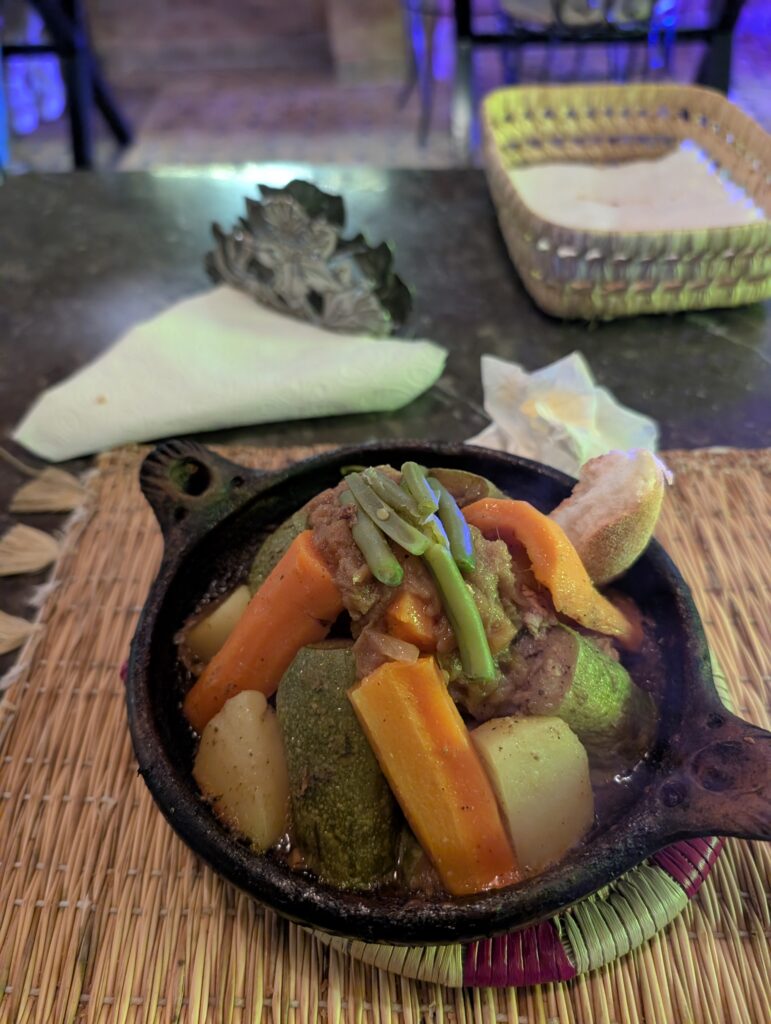
My Tagine That Night

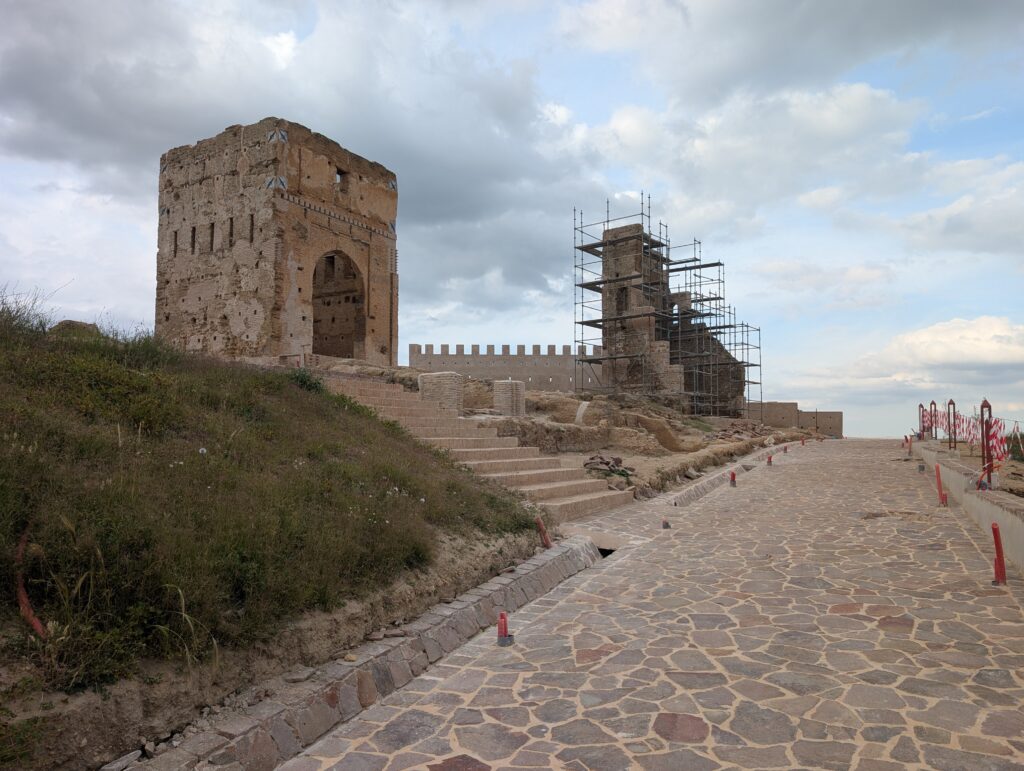
The tannery was on the far side of the medina from my hostel. It was early afternoon. I decided I would walk back to the hostel, and rest for a bit before heading out to climb the nearby hill and eat supper in the evening. Fes is one of four imperial cities in Morocco. During the medieval period, the Marinid Dynasty made Fes its capital. Remains of their tomb complex are atop the hill. That site was reportedly closed, but there were supposed to be good views of the city from there, even if the site was inaccessible.

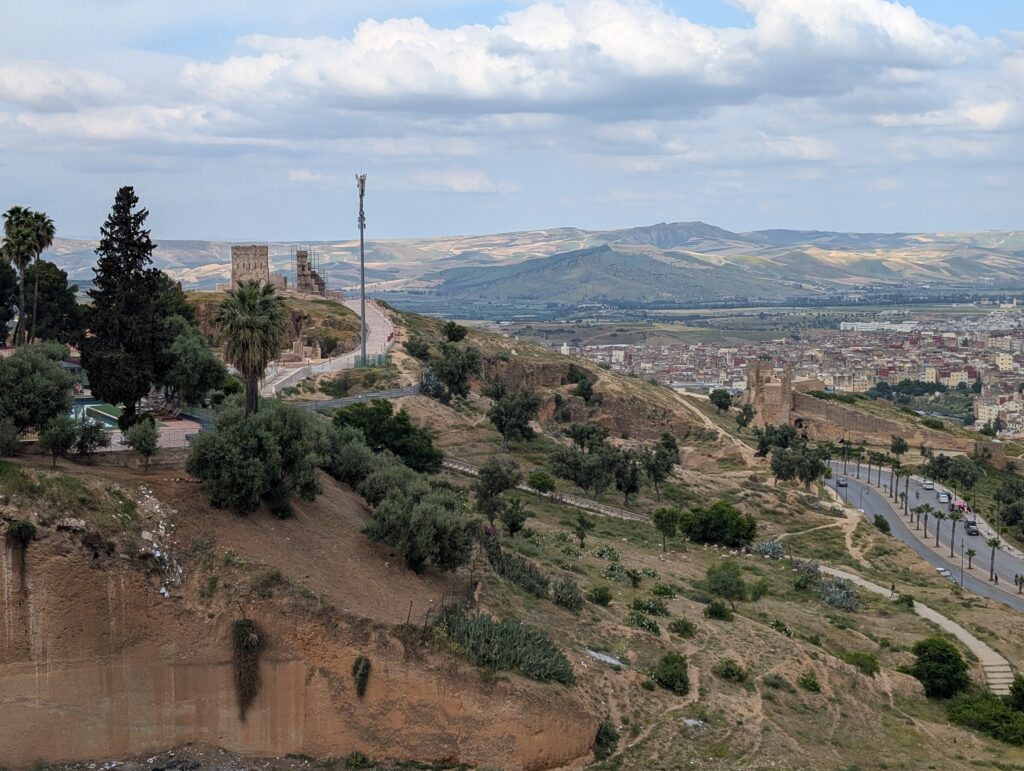
I strolled up the hill. The walk was only about a mile and a half. I passed a very nice city overlook, and I could see well the mosque and university I could not enter below. The tomb site seemed to be just on the other side of a motel/restaurant. I decided to walk around and see if I could get a glimpse of the tombs.

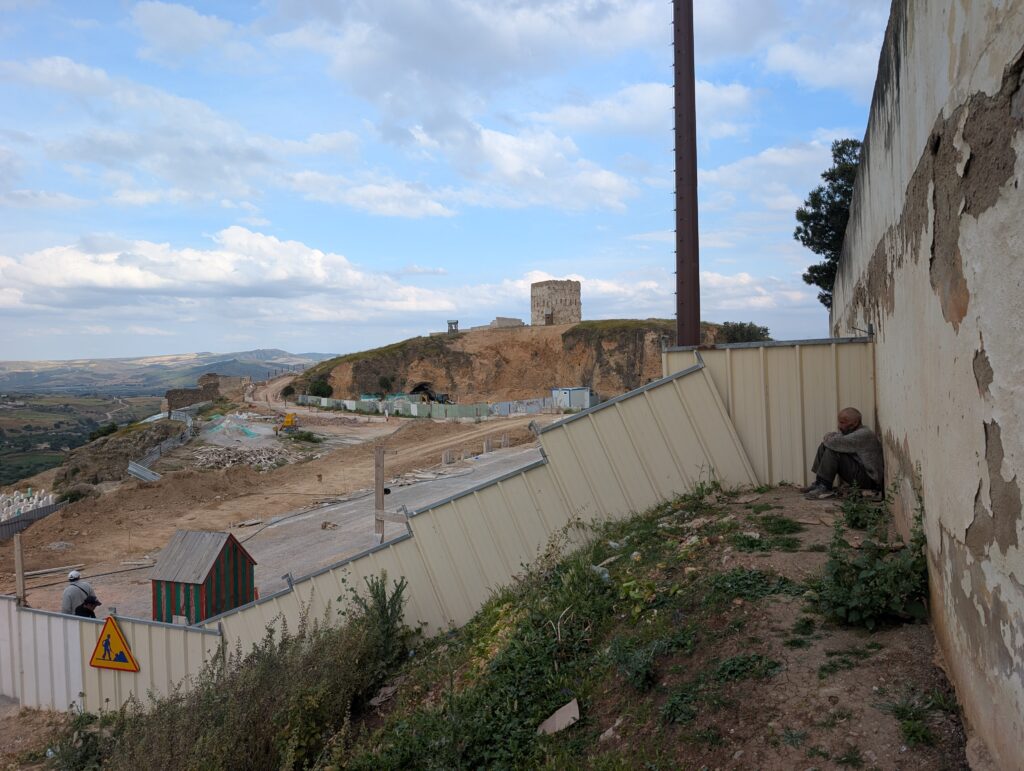
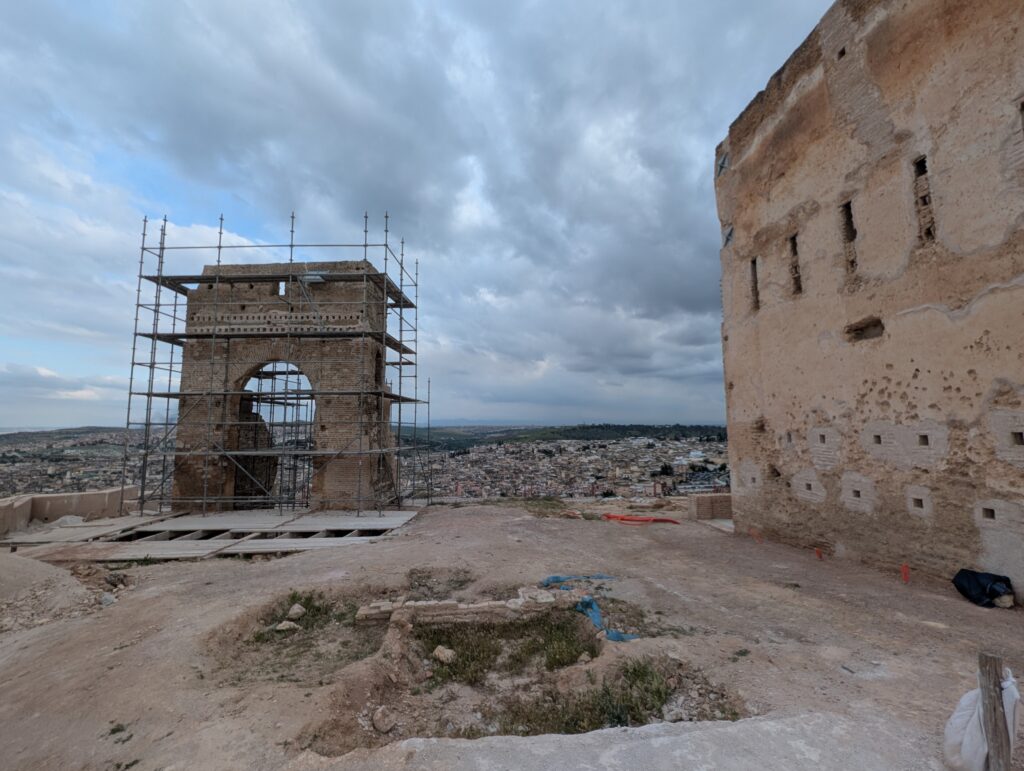
When I saw it, it was clear there was construction and restoration work going on, though none of the equipment was active at the time. The place was fenced off, and a large, blue metal construction gate blocked the ability to even see through. There was a dirt mound to one side, so I walked up it in order to see over. An old man sitting just inside the gate asked me if I wanted to come inside. I am nearly certain he was not an “official.” He held his hand out and asked for twenty dirhams. I gave him the twenty dirhams, figuring this would at least give me plausible deniability if it turned out I wasn’t supposed to have entered.

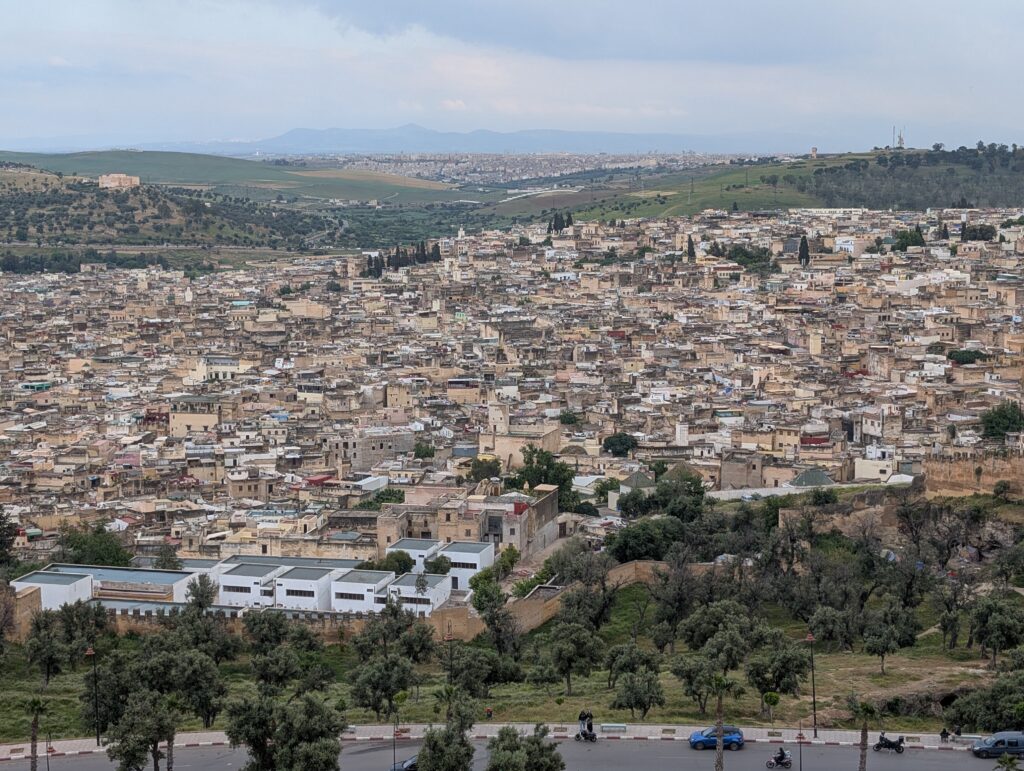
There was a little bit of work being done to parts of the path around the tombs on the higher part of the hill, but most of the area was safe and ready four tourists. The buildings were much older than the Saadian tombs in Marrakech, and not nearly so ornately decorated. It was interesting to see the funerary architecture, and how it had evolved over time. I spent at least an hour slowly walking around the site, intermittently looking back and forth between the ancient buildings, and the fantastic views of the city below. It was worth the twenty dirhams, whether or not I could have gotten away with avoiding paying them.

I thought I might find a restaurant away from the tourist zone by taking this walk but I was unsuccessful. I found a place in the medina near my hostel and had another different kind of tagine. I never could find the tangia in Fes, but the tagines were good. Tangia is a Marrakech specialty. I headed back in for an early night, since I would have to start early to try and see Volubilis the next morning.

Overlooking the City
Construction Fence I was Let Through by Self Appointed Gatekeepers
Green Roofs are the Ancient University
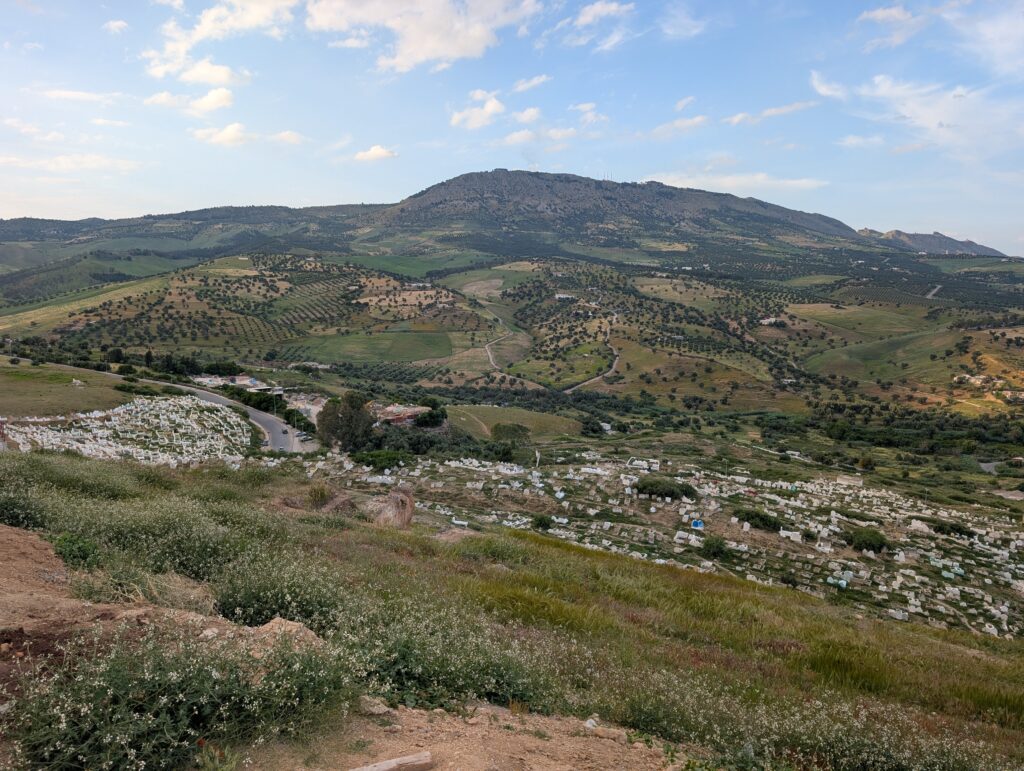
Where the Less Affluent are Buried
Mountain Top Panorama
Morocco
Marrakech
Ait Ben Haddou
El Jadida
Volubilis
Meknes
Morocco Travel Tips
Algeria
Trip Overview