Panama City
Colonial Fortress
I arrived at Panama City about a day earlier than I had planned, once I ended up on the January 14th San Blas voyage. I thought I might stay a night in Portobelo, and in retrospect perhaps I should have. Panama City is nice enough, but in the end, it’s just another big city. I arrived on the evening of January 19th. It was early enough so I had some time to explore the neighborhood, after getting some faulty advice on where to find inexpensive food and groceries from an Italo-Brazilian neighbor in my hostel. I did eventually find the restaurant complex he meant to suggest, but it was in the opposite direction from where he sent me. The next day, he told me Casco Viejo was a thirty minute walk, when it turned out to be three miles. He was friendly in any case and tried to help and visit. I did find his Spanish quite difficult to understand.
I made it out in the evening to a local food stand and had choripan, a chorizo sandwich with fries for $6.50. I then headed to Buffalo Wild Wings to watch Indiana defeat Miami in the national championship game. There were a surprising number of fans there, with the majority supporting Miami. The service was incredibly slow. It was a good thing I had an entire football game to watch. It was also the most expensive food I bought in Panama. I showered off and went to bed.
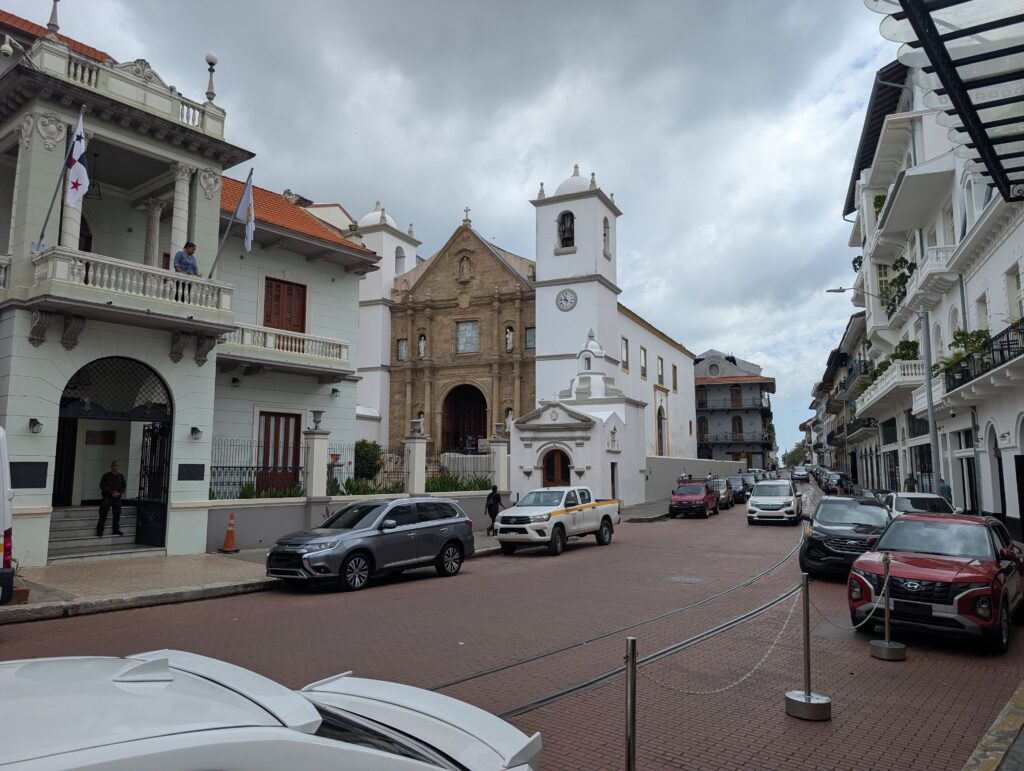
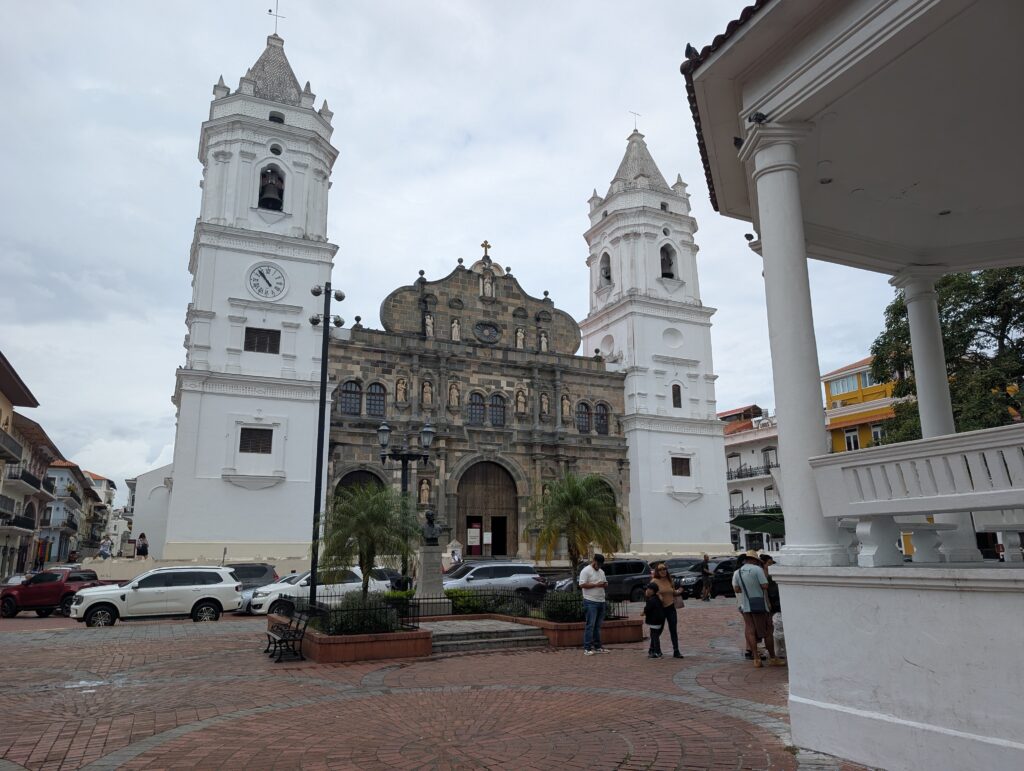
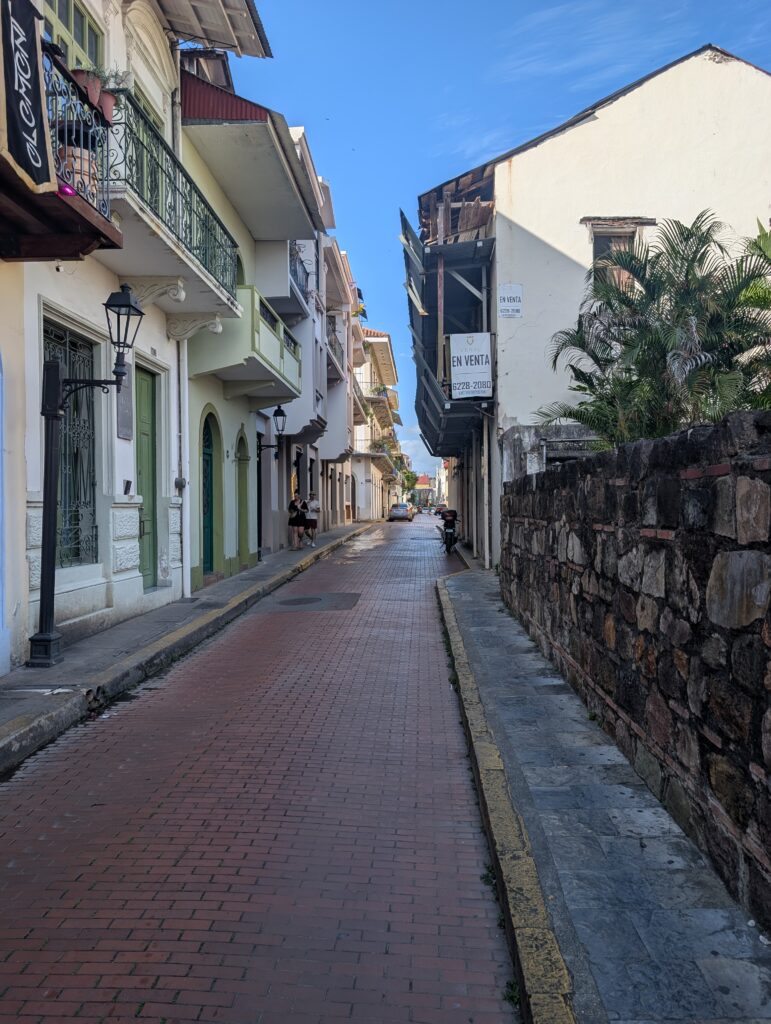
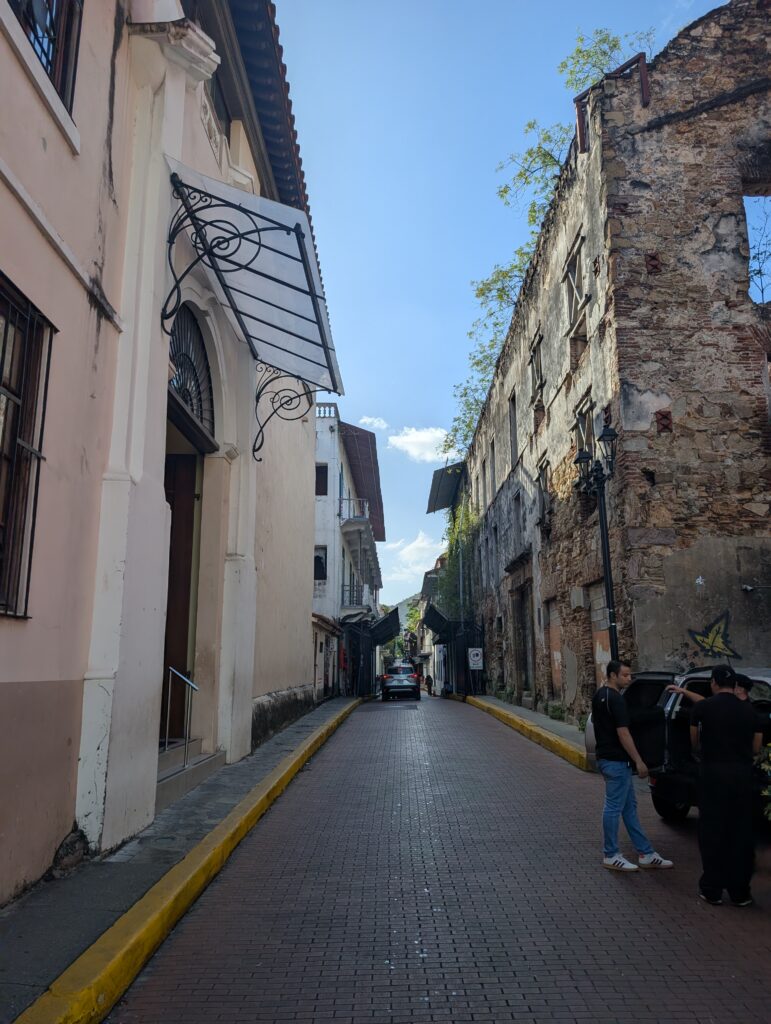
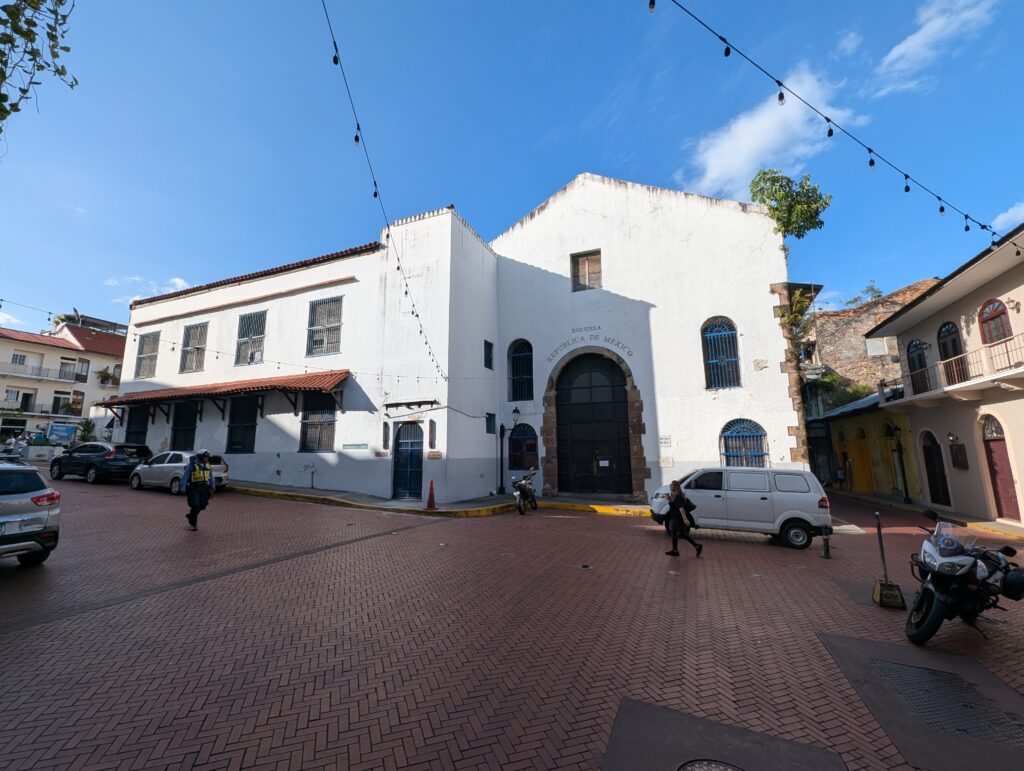
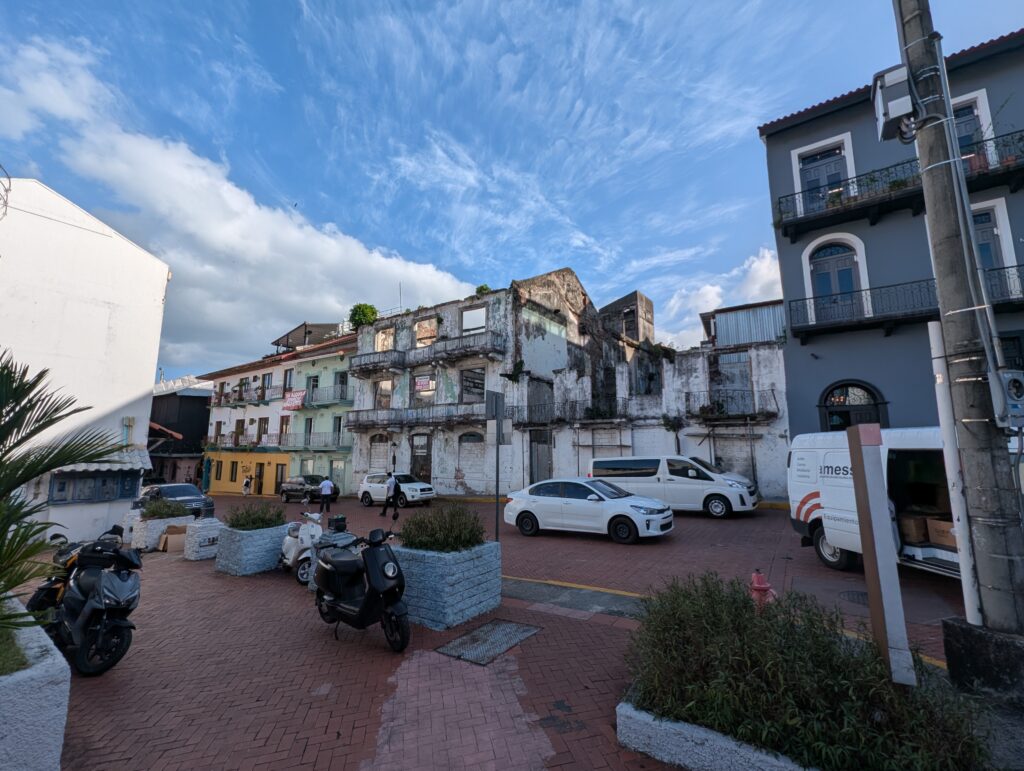
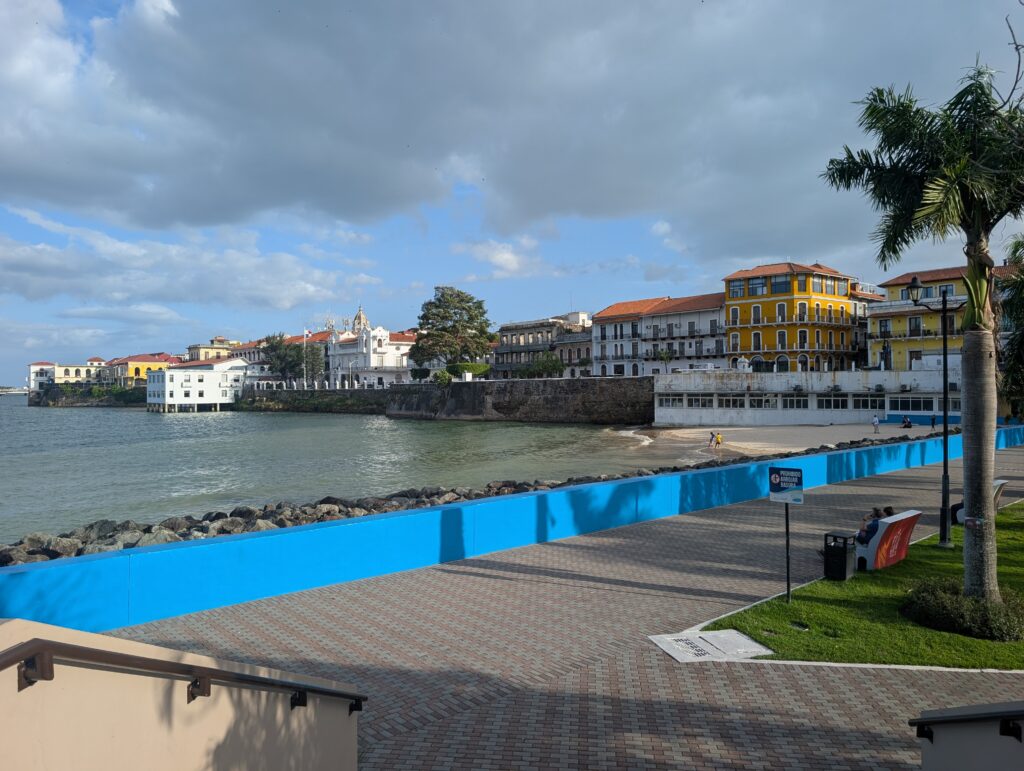
I was up early on Tuesday morning to run. I ran five kilometers along a very well used coastal bike and running trail. I never found the west end of the trail. I walked another four, then came back to heat my oatmeal. The hostel kitchen was so filthy, I had to wash just about everything from the tables to the crockery to the stove top before I could cook anything. I got all of that done, then walked another three miles over to the Panama Canal Museum. Since the museum was in the Casco Viejo – an old part of town built just after the original Panama City had been sacked in the 17th century – I followed up the museum visit by wandering this touristy area of colonial buildings and brick streets.
The Panama Canal Museum was fairly detailed. I spent about four hours there. Most of the placards had English translations. It definitely told a very Panamanian political story, casting the U.S. in the most negative light, and blaming America for all of its problems from 1903 through the relinquishing of the canal on the last day of 1999. As bad as they admit Manuel Noriega was, acknowledging that his regime essentially stole an election and refused to relinquish power, they still hammer the U.S. for removing him. All of this is quite ironic, considering that not only does Panama owe its very existence to U.S. intervention in their secession from Colombia, they have also requested U.S. intervention on numerous occasions, and also owe the very basis for the heart of their economy to U.S. construction and engineering of the canal. While the U.S. was often heavy-handed in its dealing with Panama, some recognition of the benefits Panama continues to reap from its relationship with the U.S. would seem to reflect a more balanced presentation. The word “ungrateful” certainly comes to mind. I am reminded of the one sided nature of India’s Partition Museum. The state controlled nature of the message in Vietnam’s War Remnants Museum is equally one sided, if without the ungrateful element of the other two official presentations.
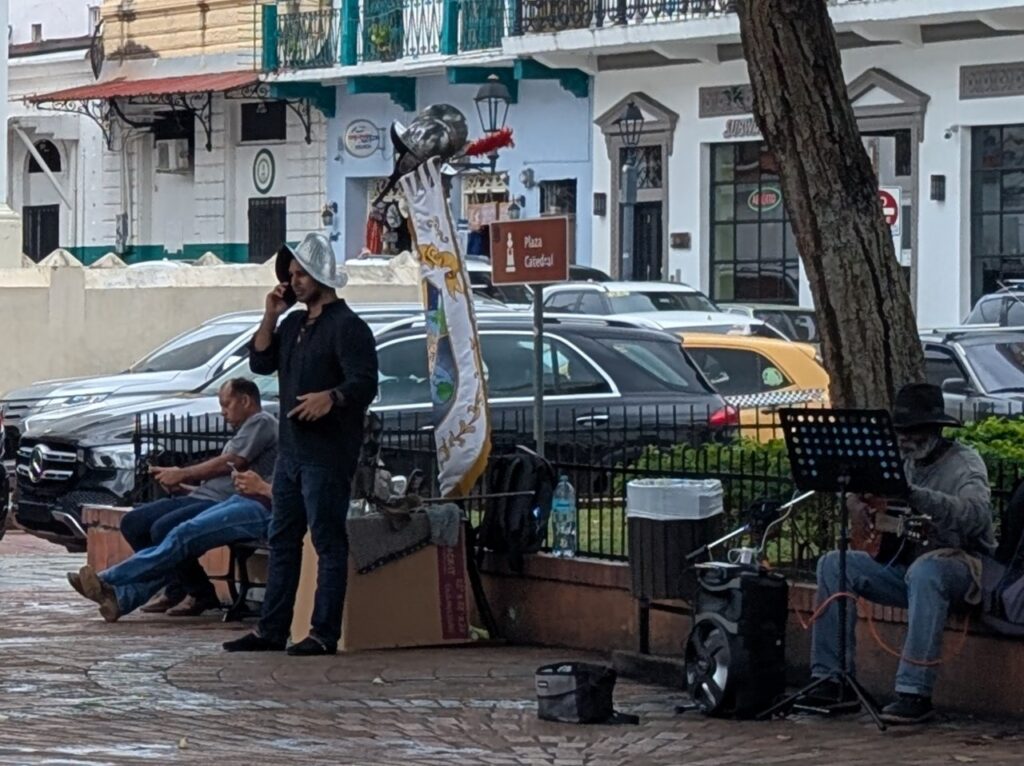
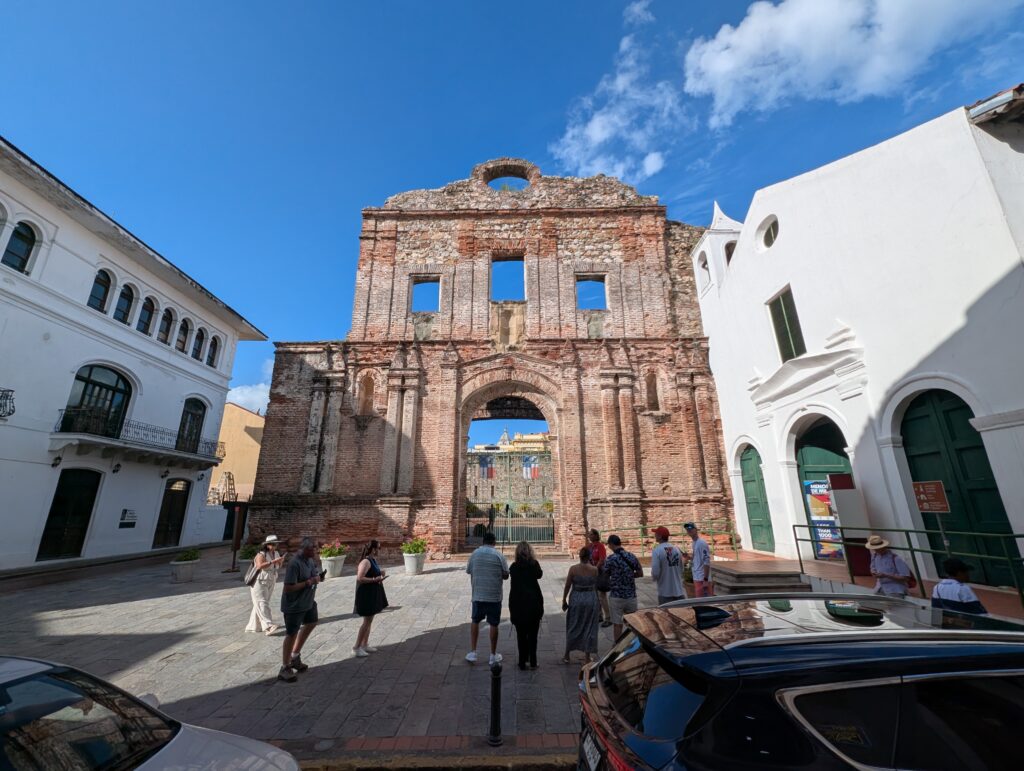
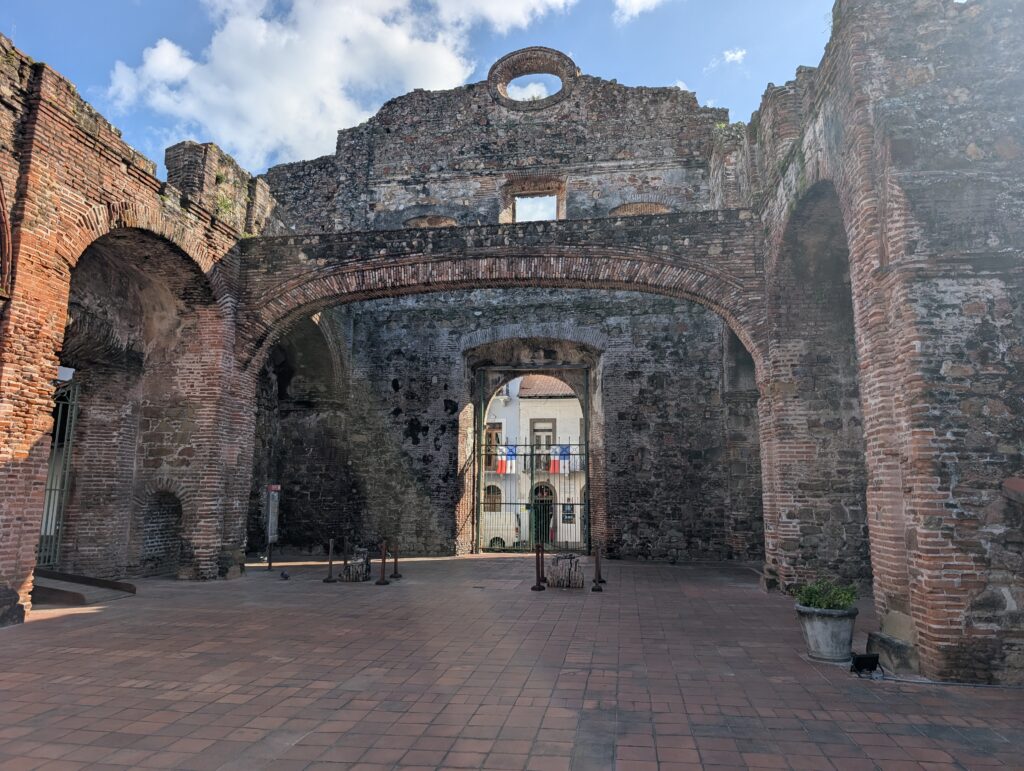
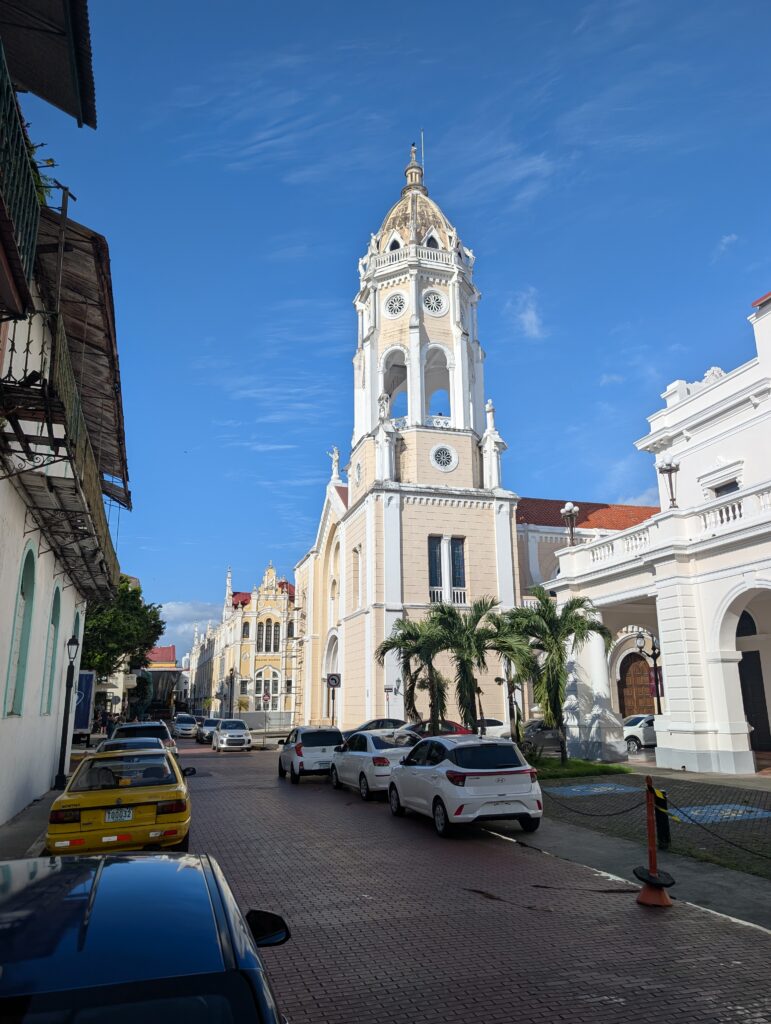
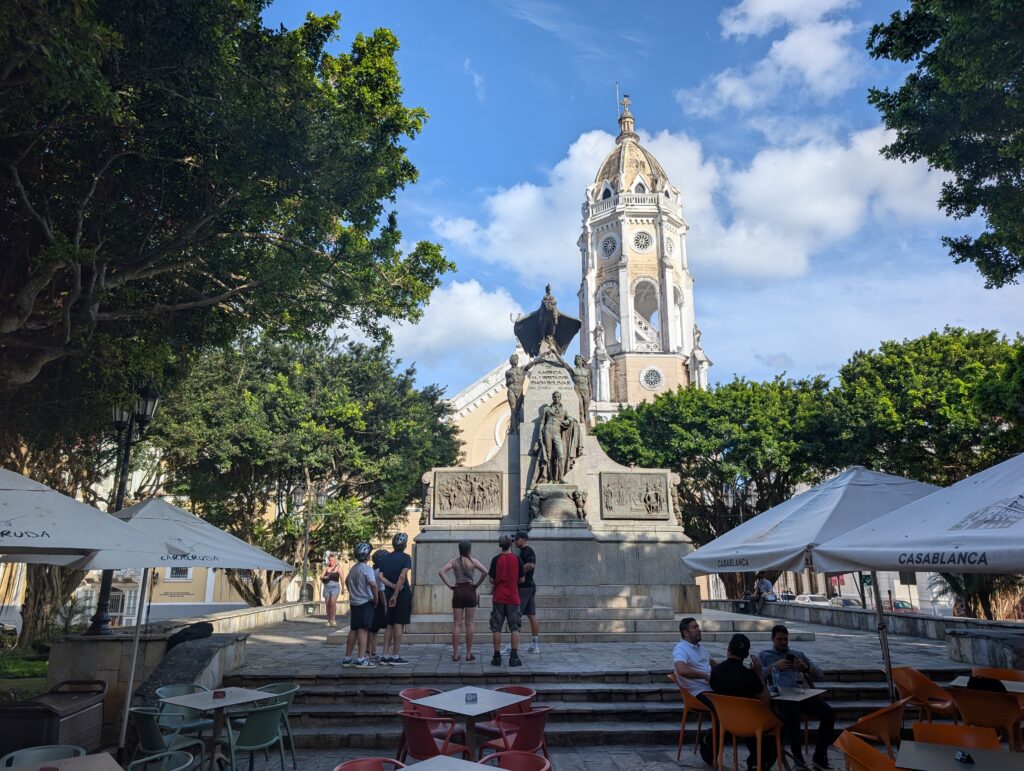
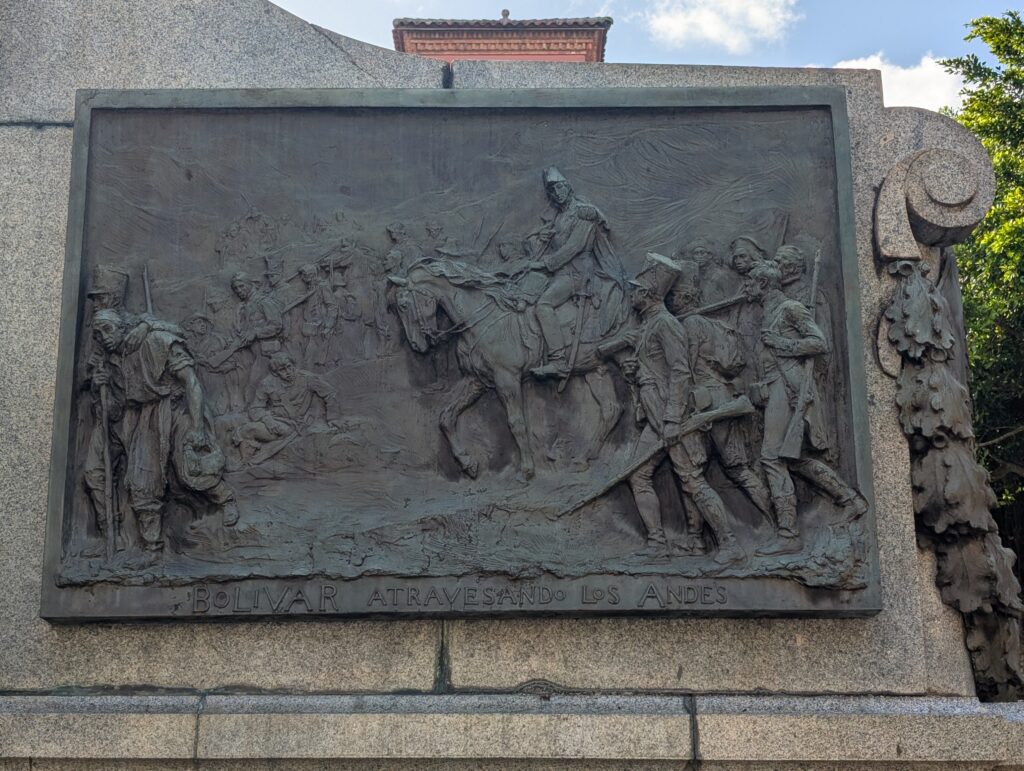
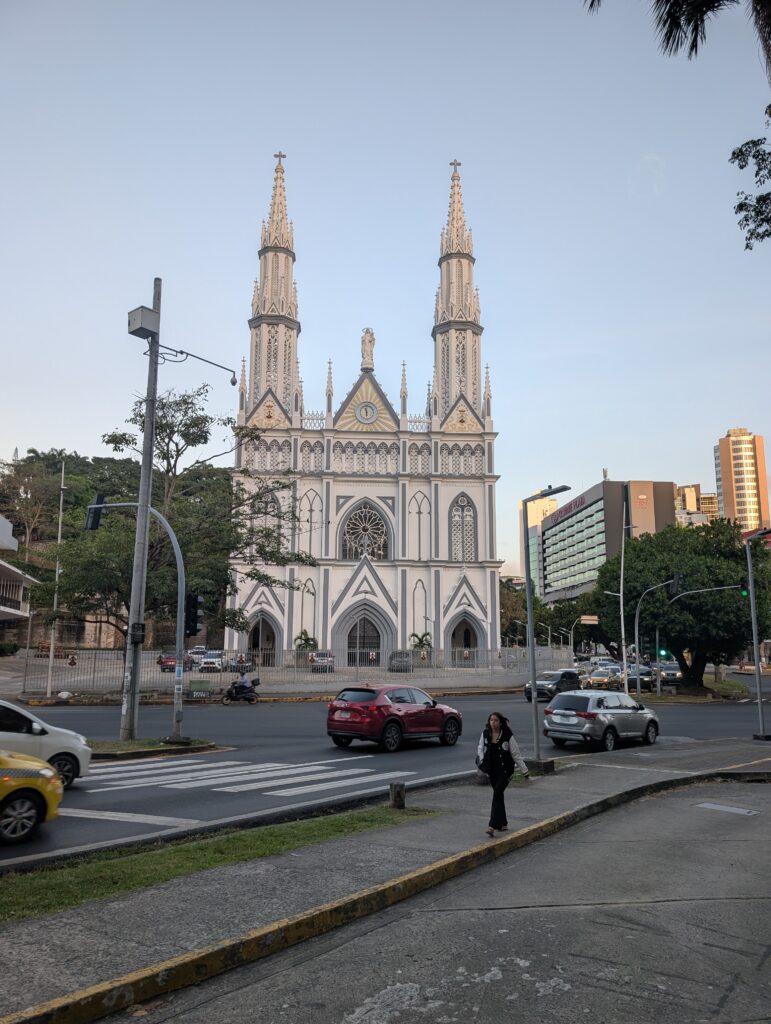
I grabbed lunch at the Fonda San Felipe, a cafeteria-like eatery in the back of a grocery store. I was handed an entire platter with shrimp, rice, platacones, beans, and a mixed vegetable plate for $5.50. It was pretty tasty, and I had plenty of food. I grabbed an ice cream bar, and set about walking Casco Viejo. There are many souvenir vendors there. The colonial buildings were quite nice. I visited the Arco Chato, Iglesia de San Francisco Asis, Independence Square, Bolivar Square, the Bolivar Palace which now serves as the Foreign Ministry of Panama, and numerous other monuments, buildings, and vistas. Arco Chato is in the ruins of an old church designed by the French. It was often shown as proof that the area was not subject to the same earthquake problems that plagued other Central American cities, since it was very flat and had survived for a very long time. It was declared a national landmark in the 20th century. It was rebuilt after it inexplicably collapsed in 2014.
The Casco Viejo area was quite nice, but I was tired, and ready to head for home. For my last stop, I strolled through the Mercado de Mariscos. This seemed to be mainly just a collection of tourist oriented fish restaurants, though I didn’t really examine the menus closely enough to know if the prices were artificially high. I had just eaten, in any case.
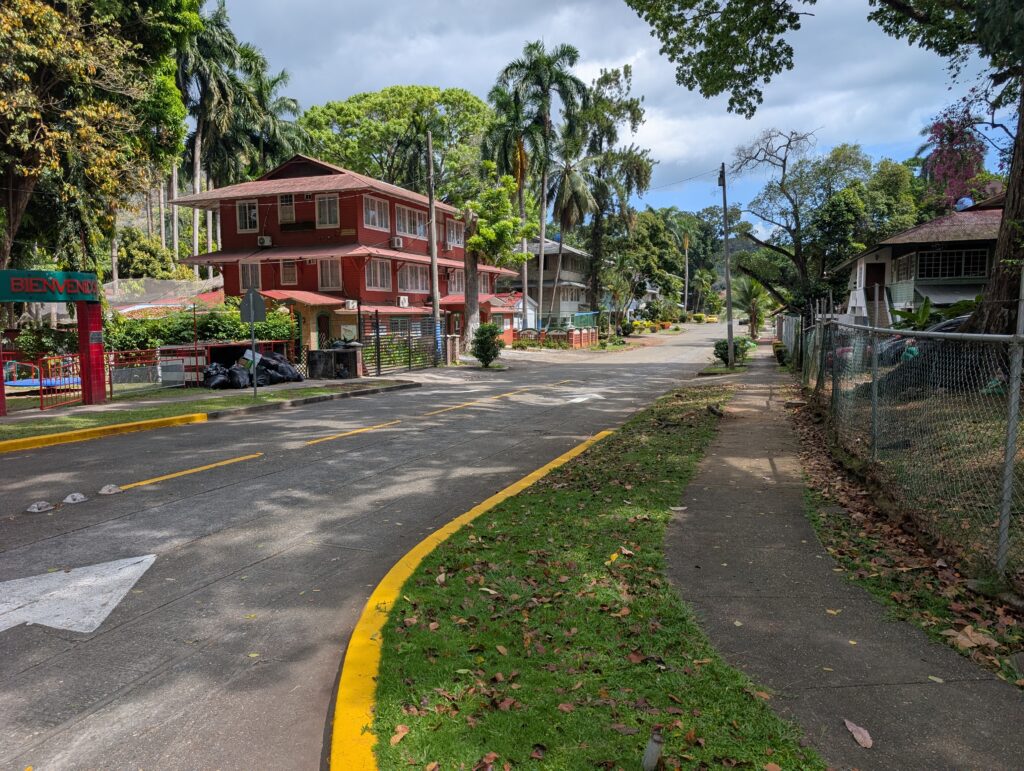
I was also pretty tired by then, so I walked to the main highway along the coast and caught a bus most of the way back to the hostel. This left me another half a mile or so to walk. It also took me past a grocery store, where I restocked my oatmeal, snack, and dessert supplies. I headed in at about 5:30 to rest and journal before heading back out in the relative cool of the later evening to see what was going on in the neighborhood. It still was quite warm, so I didn’t stay out too long. On top of that, almost everything in my local neighborhood was quite expensive. If I return to Panama City, I think I will stay in a hostel in a different part of town in order to take advantage of better pricing, and closer proximity to the major attractions. My current hostel was cheap, and in subsequent days, the kitchen was not so dirty.
(Continued)
There is an old saying that history is written by the winners. That isn’t really true. Academic historians from Western countries do almost the opposite. They specifically privilege race, gender, or class groups who they feel didn’t win, and tell history from that perspective. I prefer to try to learn what I can from history in a broader sense, which demands attempting to understand history from as many angles as I can – it requires at least attempting to look at events objectively, even if a completely neutral interpretation is technically impossible. It is a useful endeavor. In any case, most history – especially public history – has a teller – an institutionally approved or state approved voice in charge of relating events. In the United States, we are used to that voice being quite self-critical. National parks go above and beyond to include racial minorities, women, and others in the historical narrative. As I have related in my articles about museums in Vietnam, India, and even the Panama Canal Museum I visited earlier on this trip, this is usually not the case outside of the traditions emanating from Western Europe. They tend to give a highly state-centric interpetation.
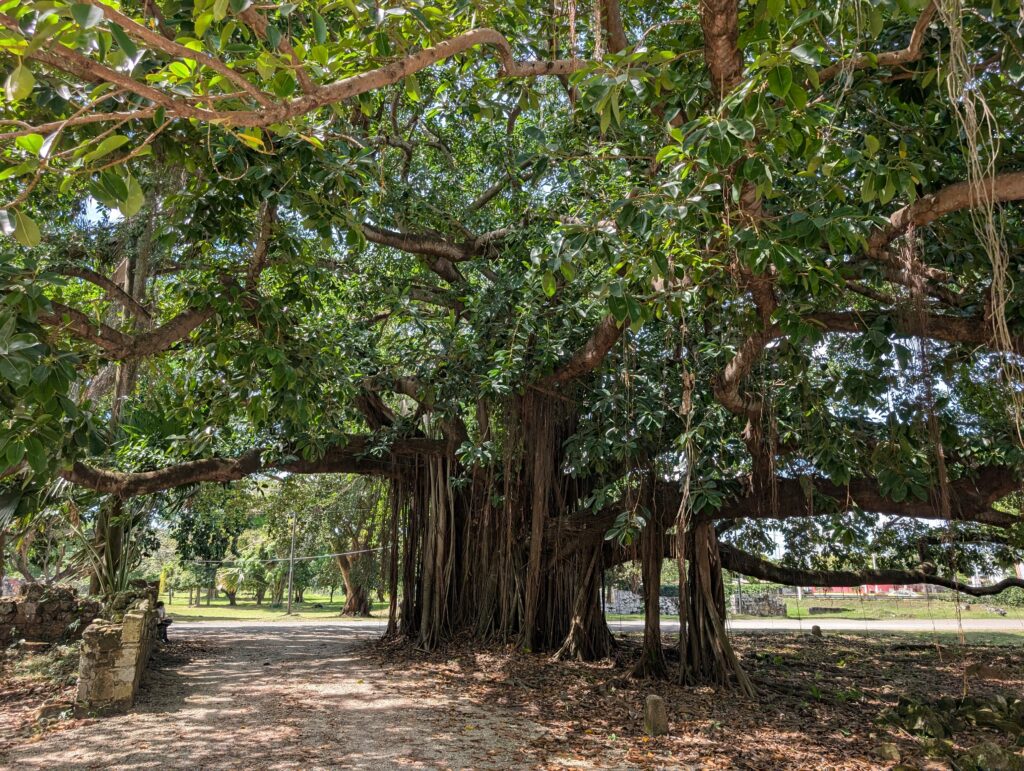
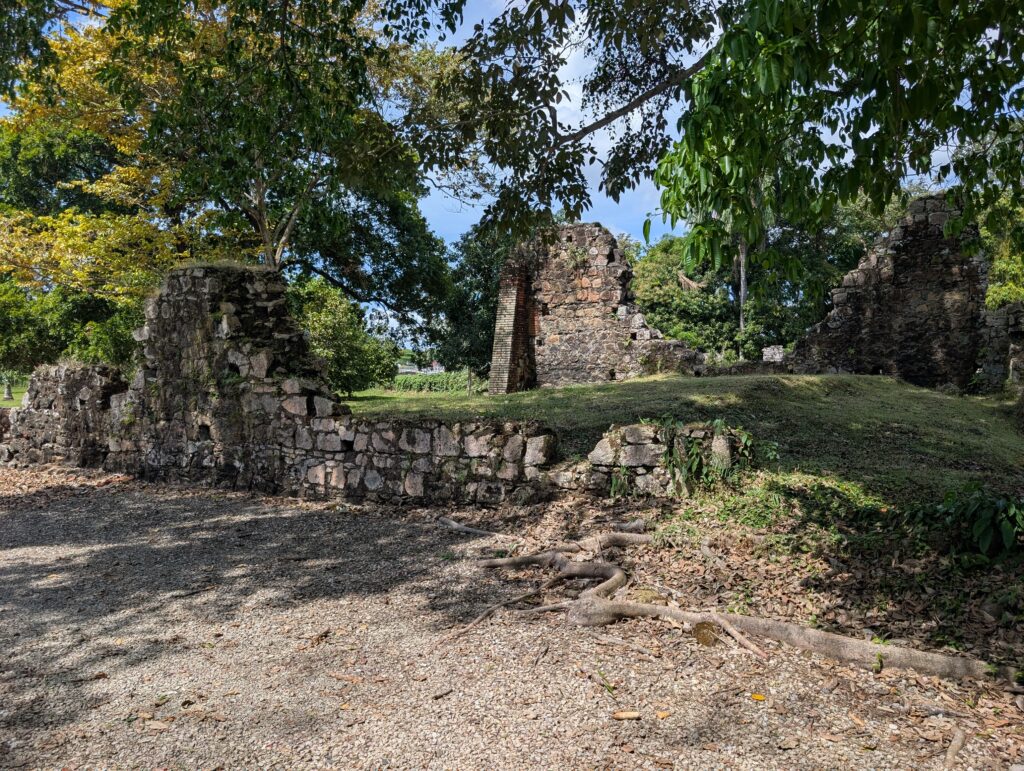
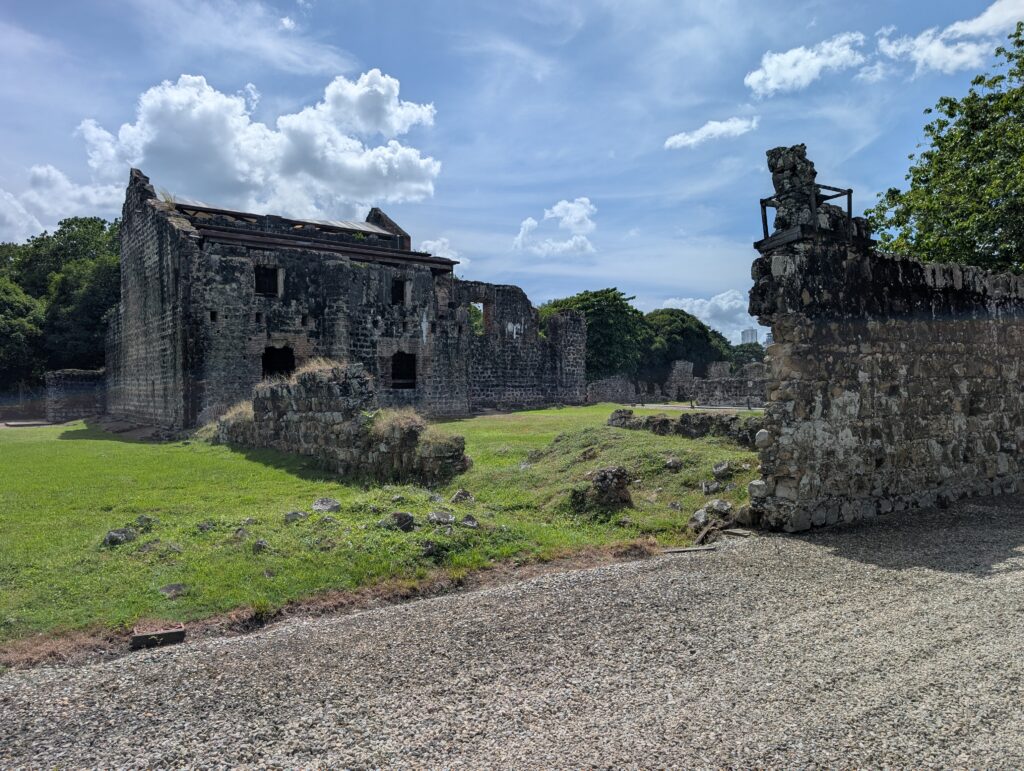
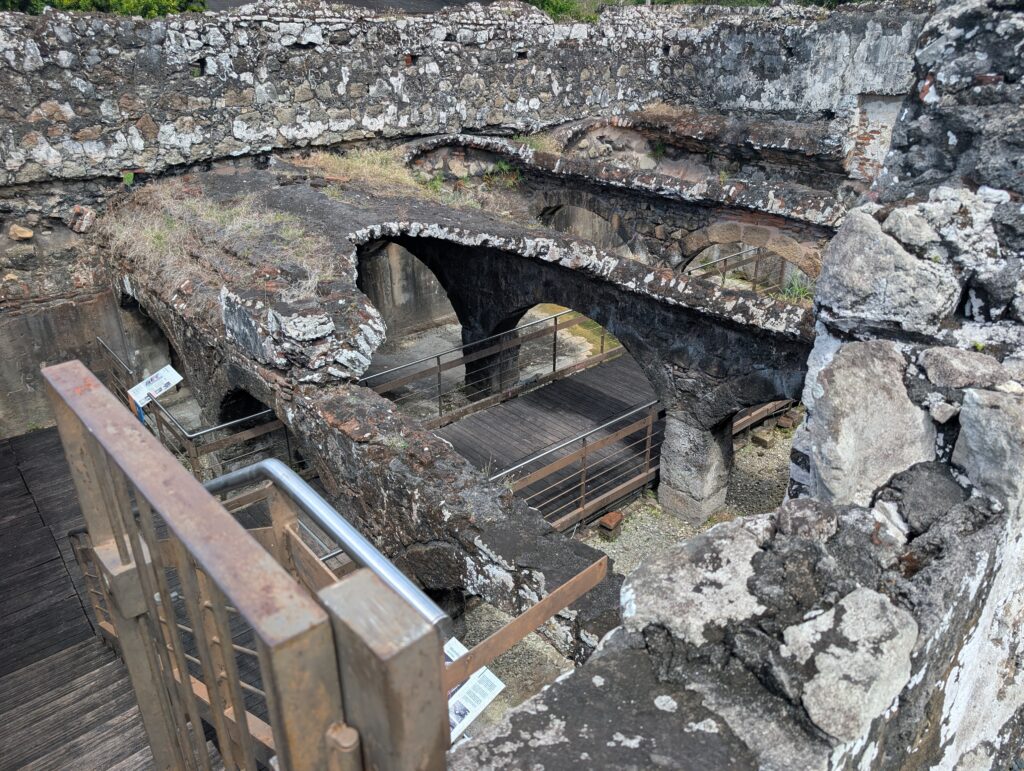
On Thursday, I visited Old Panama. This original version of Panama City was the first European settlement on the Pacific coast of the Americas. It was established in 1519. Old Panama served as the area’s capital. It evolved into a Spanish settlement of a few thousand people, with the requisite multitude of buildings built by and for the different Catholic religious orders of the day. The stone buildings in Panama Viejo were mostly built in the early to mid 17th century, after the older wooden structures had been destroyed by fire a few times. This site was abandoned, however, when it was destroyed by “pirates,” the Panamanian state version says, in 1671.
One nation’s pirate is often another nation’s military hero. Antonio Lopez de Santa Ana accused the Texian settlers of being pirates as an excuse to execute every one he captured. Old Panama was destroyed by a company led by Henry Morgan, an English privateer. There is an important difference between pirates and privateers. Pirates were maritime criminals who sailed the seas, raiding and capturing ships, cargo, and sometimes slaves for their own personal gain.
Maintaining a navy during the Age of Sail was a monumentally expensive tasks. The wooden ships required specialized material, enormous amounts of skilled labor to create, and only lasted on average perhaps thirty years. Naval arms races necessary to protect maritime trade, colonial possessions, and the treasures extracted from them required levels of expenditure that many countries just couldn’t afford. From the early modern period all the way into the 19th century, countries that could not afford to fund or fully fund navies often resorted to a way of essentially subcontracting naval power. Private citizens who already owned ships built for other purposes were granted letters of marque, which was kind of like having a “pirate’s license,” and were what made you a privateer rather than a pirate. Privateers were allowed to keep most or all of what they could capture of enemy nations’ ships and resources. The letters of marque gave these private operators official state status, and made them prisoners of war rather than international criminals if they happened to be caught. It also required them to operate by some legal constraints.
Certainly, all of that meant little to the victims of these state sponsored raiders, but it meant a lot to the nations they served, and to the privateers and their crews if them happened to be captured or otherwise unsuccessful in their endeavors. It seems a bit disingenuous to call Henry Morgan a pirate when he, Francis Drake, John Hawkins, and so many others were actually acting on behalf of Spain’s enemy, England. I suppose at the time, the Spanish crown considered England and all of her royal family illegitimate, and considered the whole country a nation of pirates. But that is certainly a one-sided view.
So Old Panama was attacked by Henry Morgan and his group of privateers who had traveled overland from the Caribbean side in 1671. The Spanish governor of Panama, Don Juan Perez de Guzman y Gonzaga had Morgan outgunned and outnumbered, but completely mismanaged his defense. He was outmaneuvered, and his undisciplined troops became confused, thinking the privateers were retreating and mistakenly pursued them, pressuring Guzman to commit the rest of his troops to a disastrous counter attack. Once it was apparent the battle was lost, Guzman assumed the English were there to capture and occupy Panama rather than just raiding, though Morgan had no such intent. Guzman, then, had his own town burned to prevent the English from using it as a base. The fire ignited Panama’s gun powder stores creating a big explosion, doing even more damage.
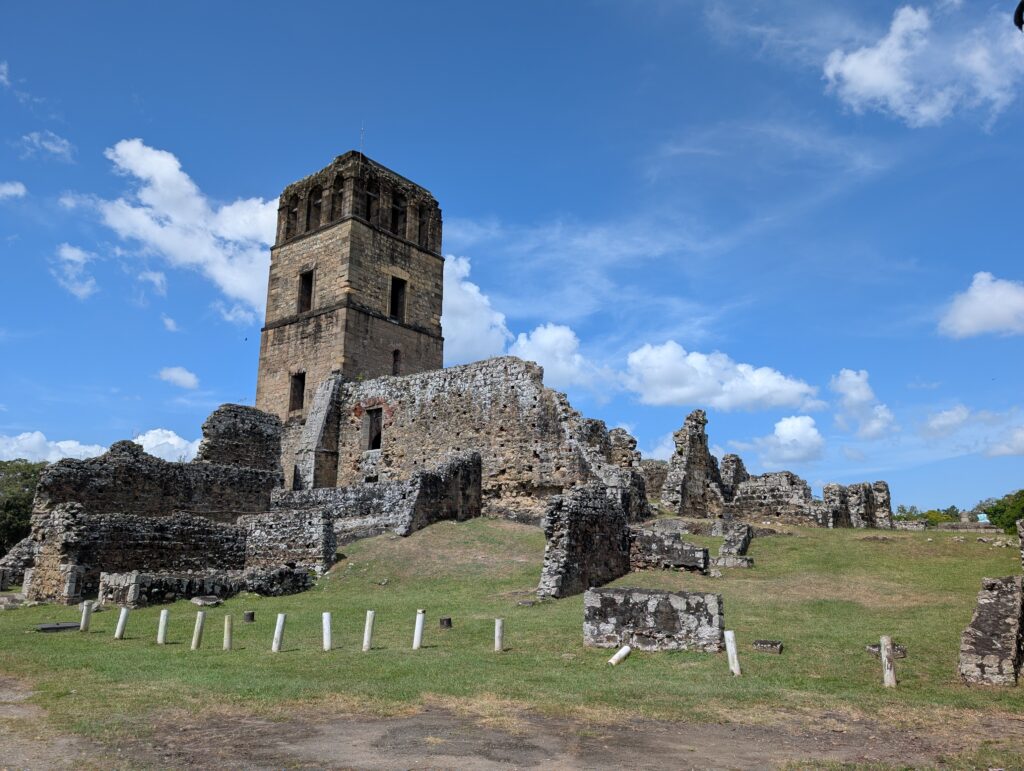
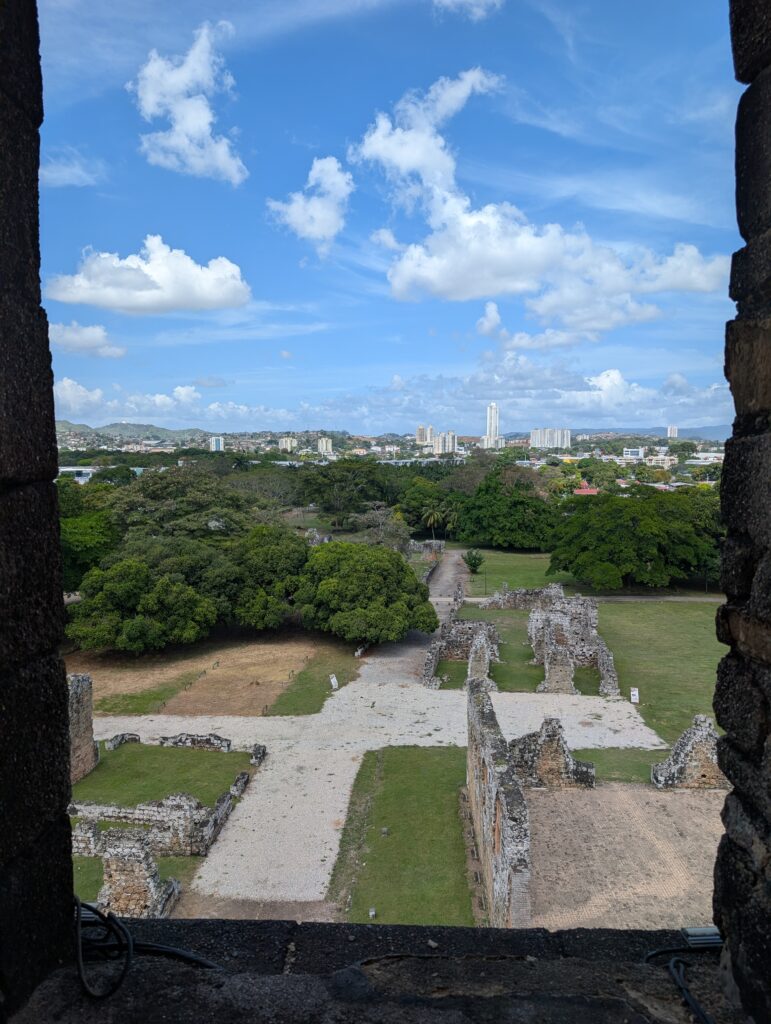
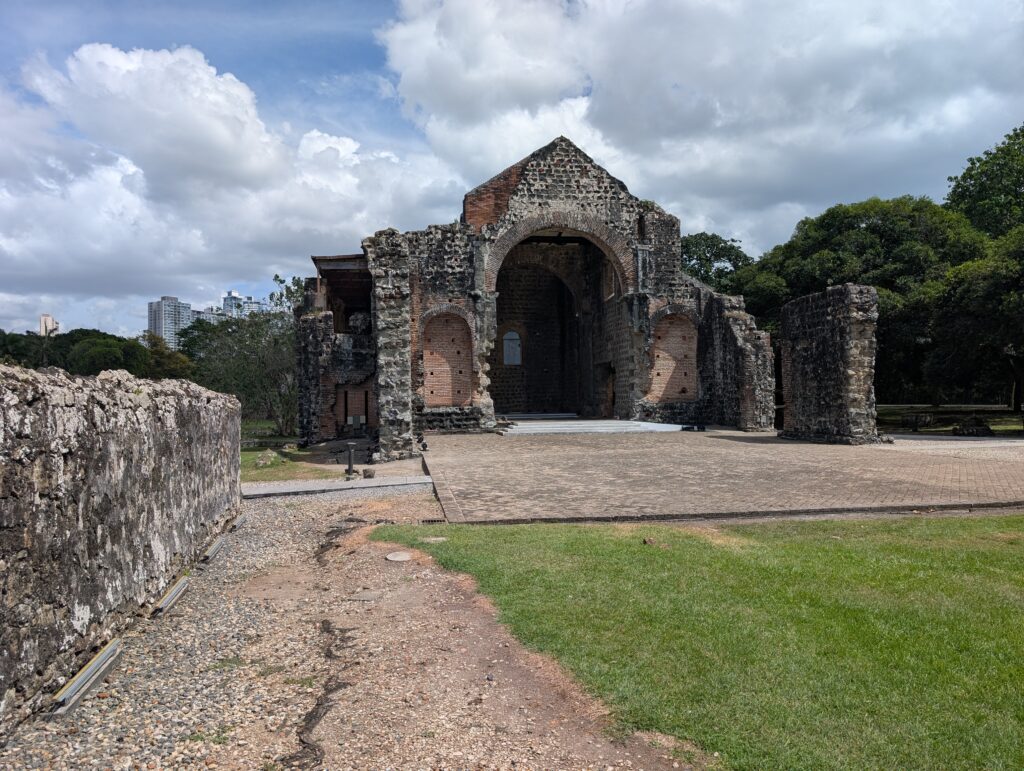
In the aftermath, then, Panama’s capital was moved down the coast to the present site of Casco Viejo, which also has many very nice surviving colonial buildings. Panama Viejo is an archaeological site, with ruins to explore. Because the Spanish put such a heavy emphasis on Catholicism, all of the best preserved buildings were churches, cathedrals, or other buildings associated with religious orders such as hospitals and convents. Some ruins of residences survived, but even those were tied to Catholicism, with the crown often requiring that rents from certain buildings be used to support construction or repair of churches or other religions edifices.
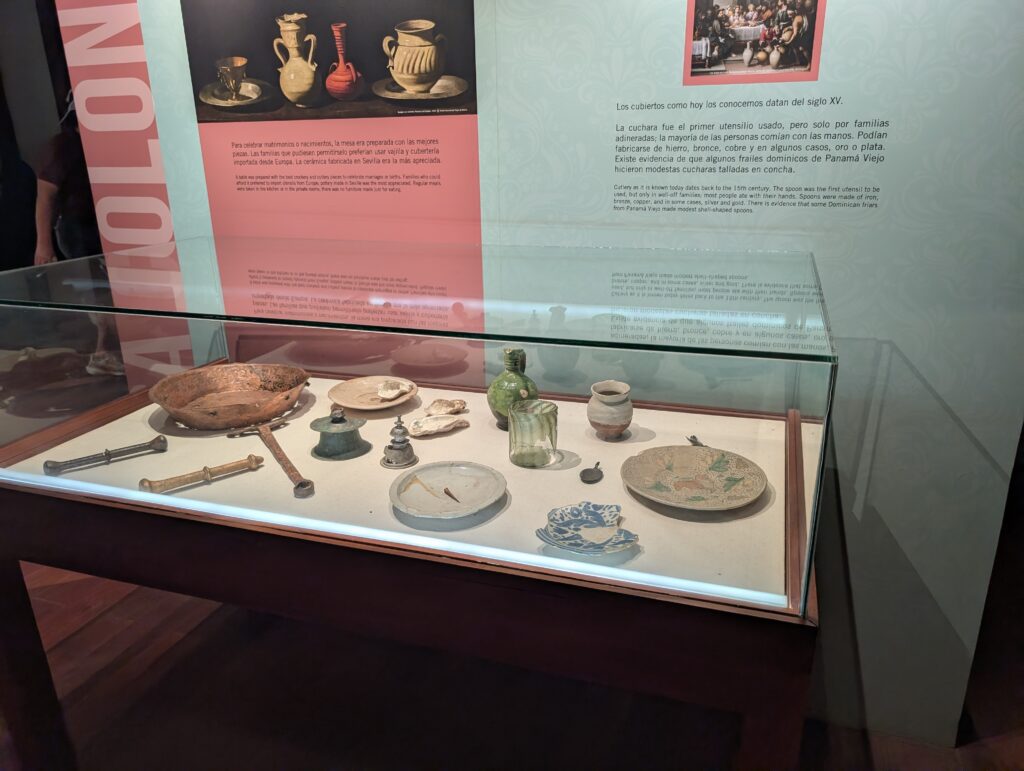
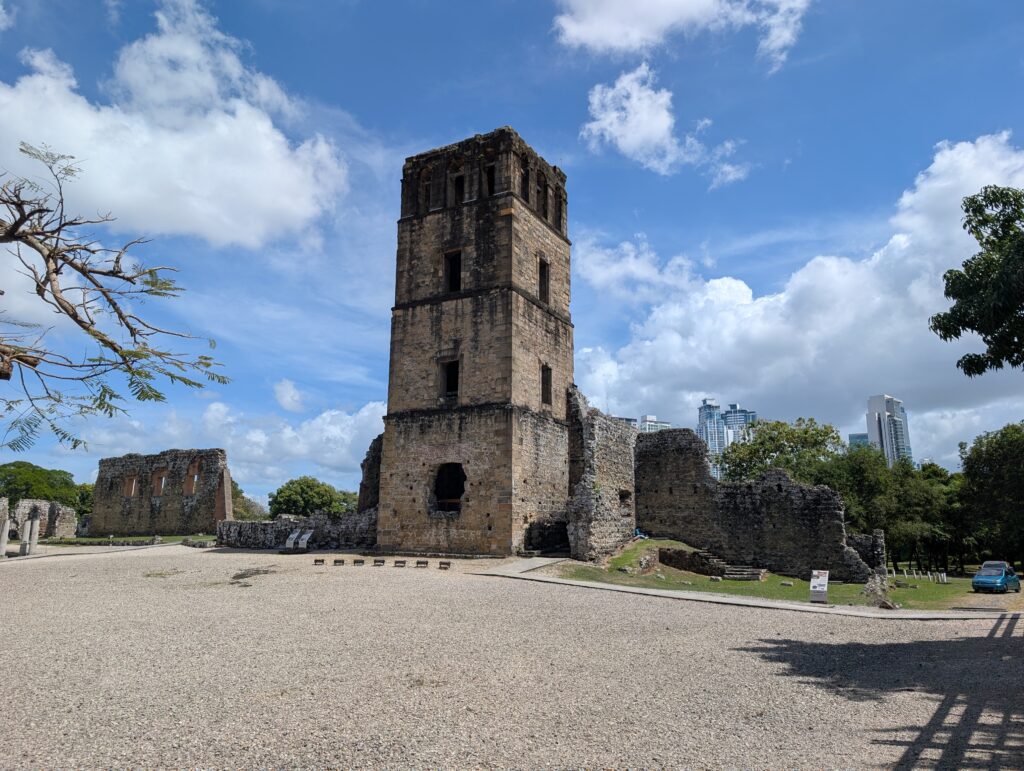
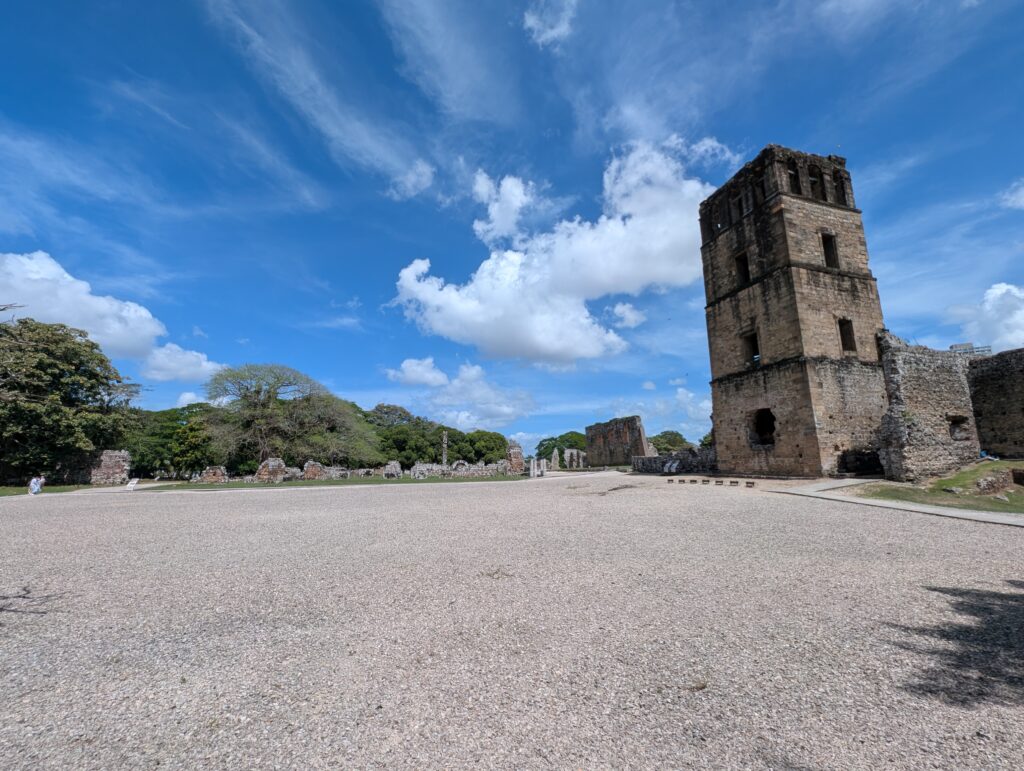
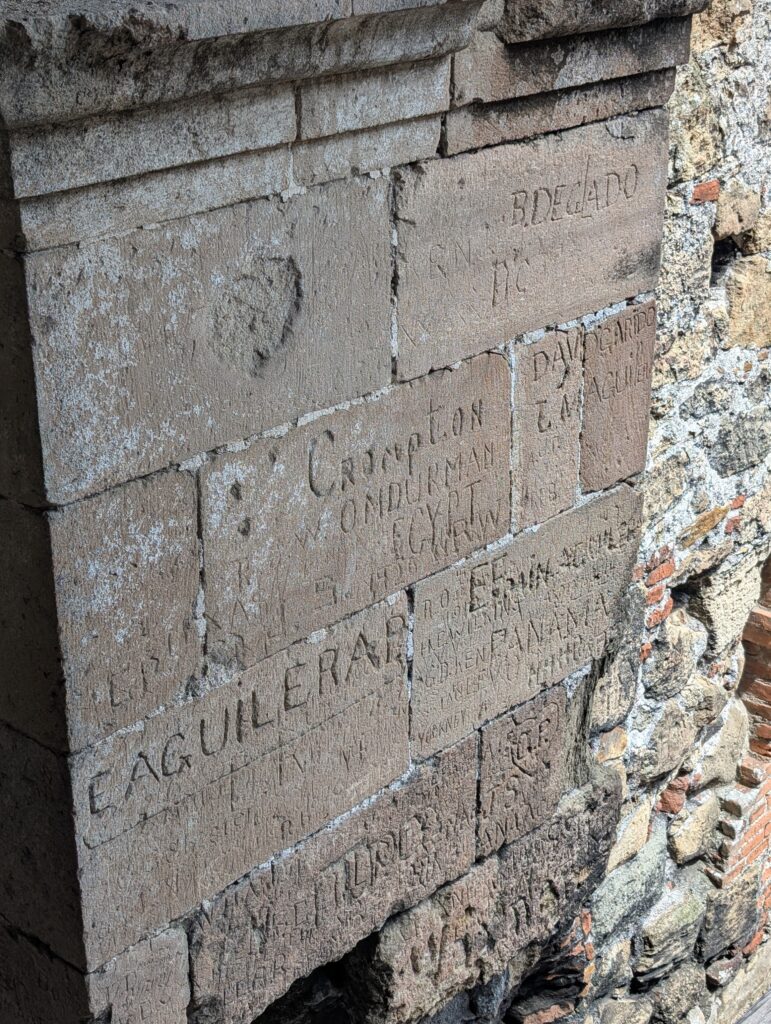
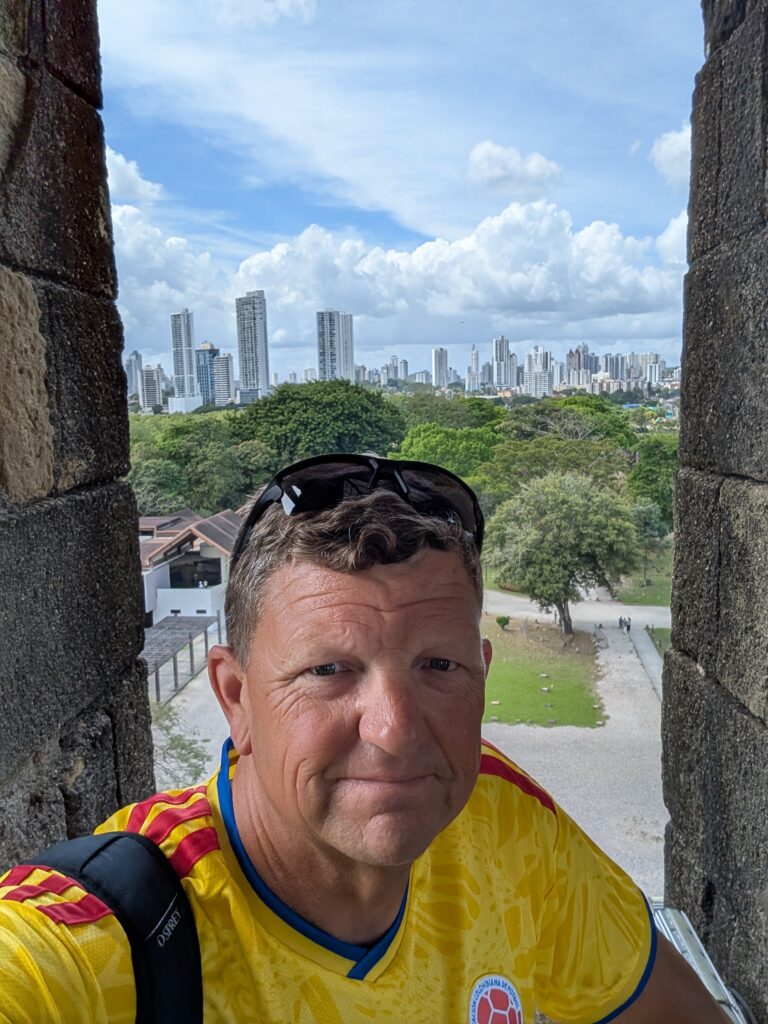
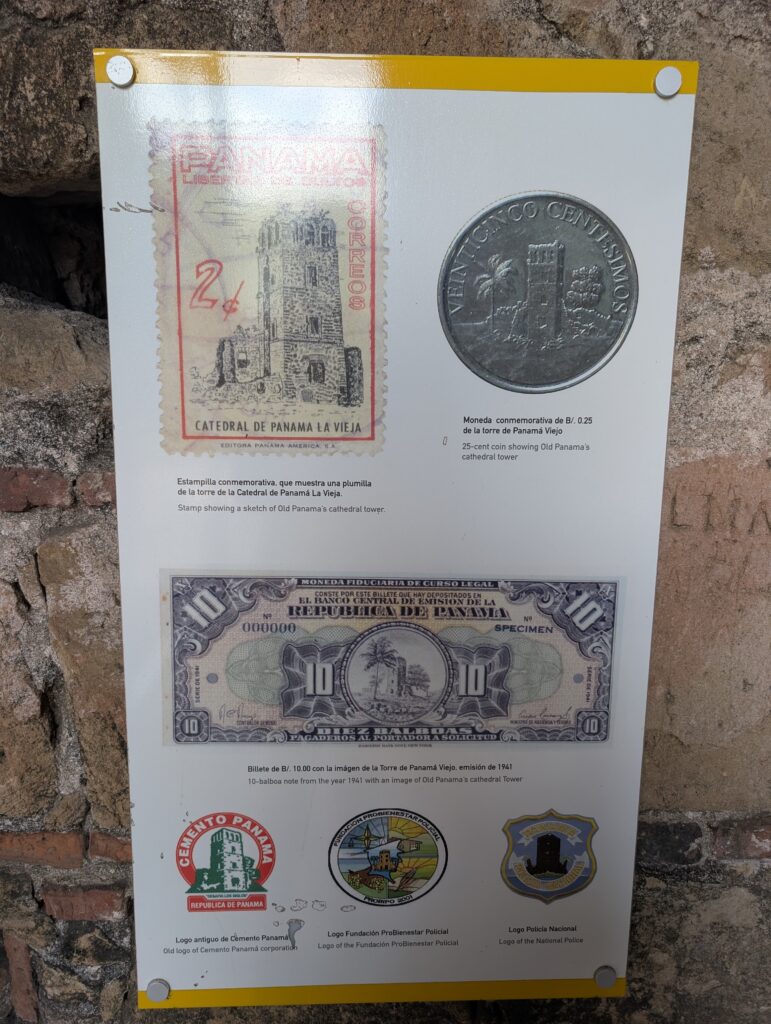
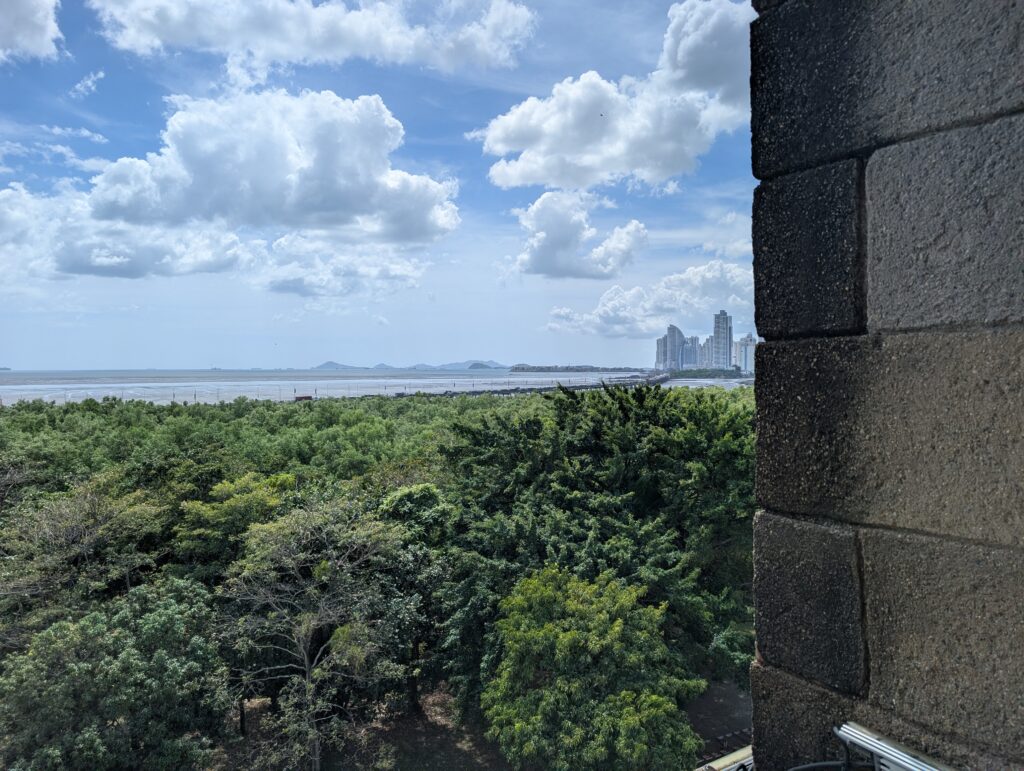
The stone ruins are impressive to explore, and the signage does a pretty good job of explaining what has been learned through archaeology about each building. By far the most impressive structure is a seventy foot tall tower that has been preserved. It was part of the original cathedral, but was also used as a lookout. It is an iconic piece of Panama architecture, and appears on many national and corporate logos, postcards, and pieces of currency. It is a striking enough building that it’s hard not to include it in just about every picture of the area. Since the area is overseen by UNESCO, measures have been taken to historically preserve it in a responsible way. The building has a modern roof, but this needed to be essentially invisible, so it is small, and routes rain water down the center of the tower through pipes in order to prevent erosion without impacting the aesthetic appearance of the tower. They did a very nice job with this. The interior staircase is also hidden inside of the tower, and leads to platforms built about where the old interior floors of each level were so you can climb it. The views are very nice, and this is definitely the highlight of the visit. There is also a small museum with some interesting information about what the archaeological site helped us learn about 16th and 17th century life in a Spanish colonial city.
(Continued)

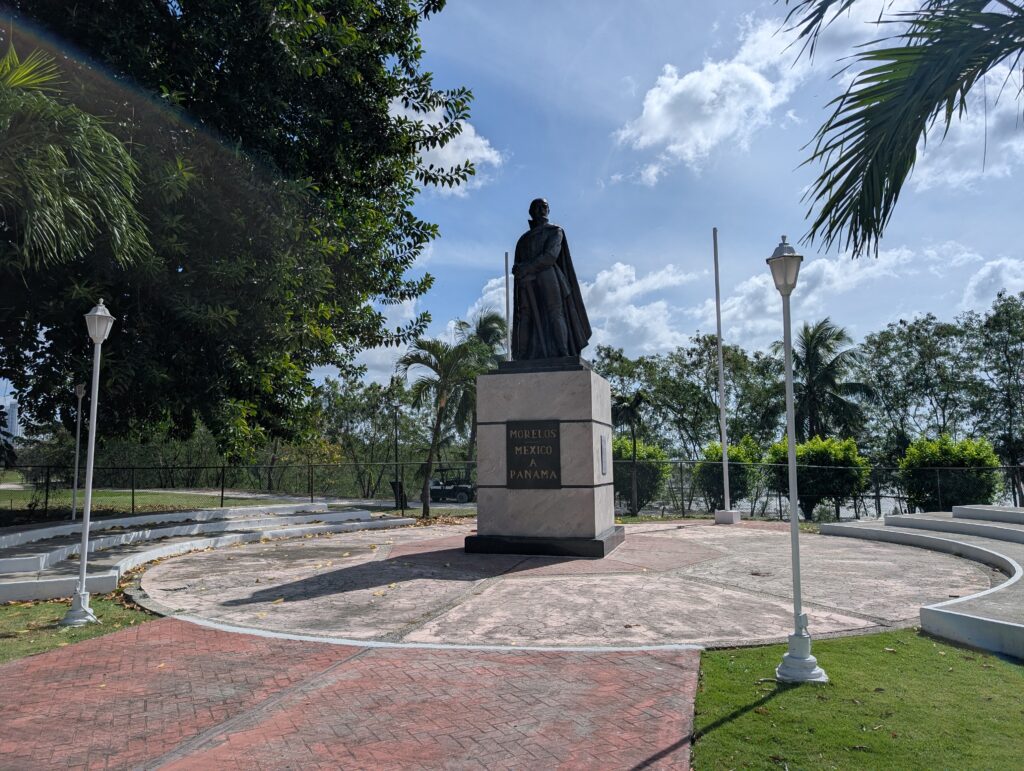
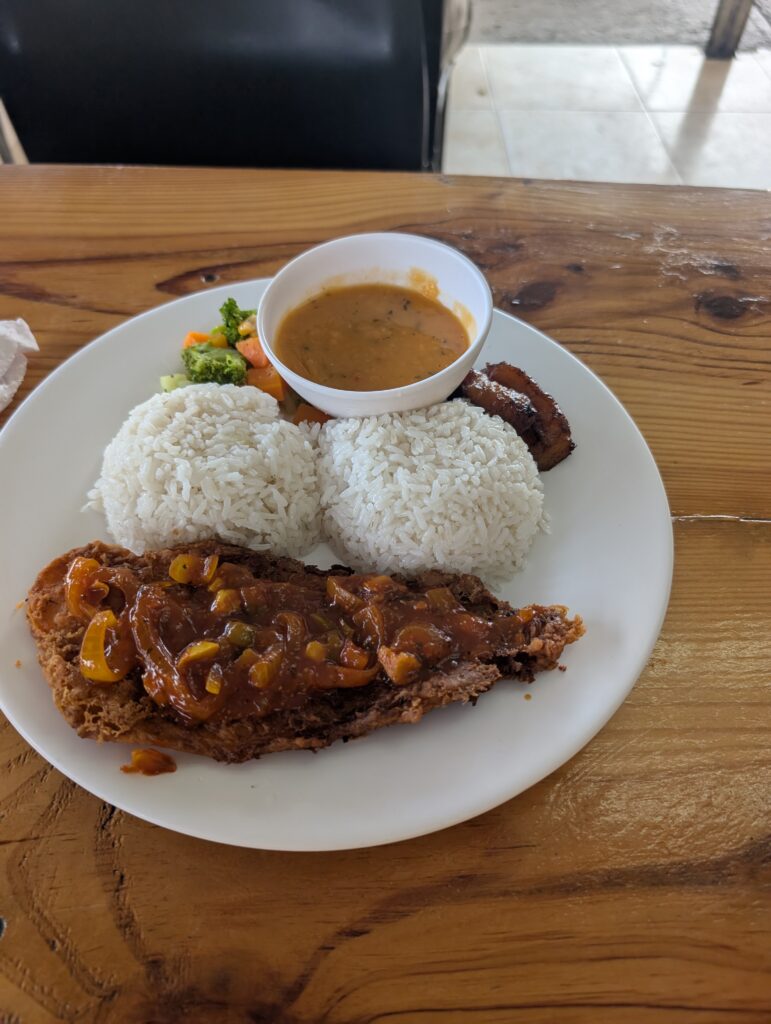
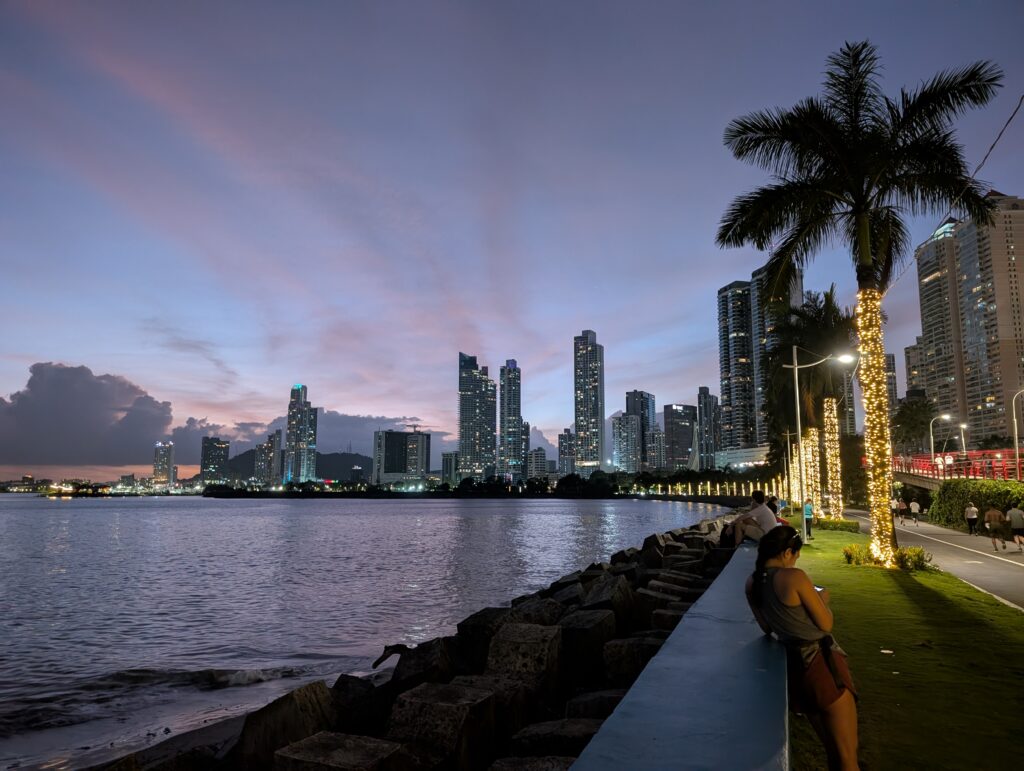
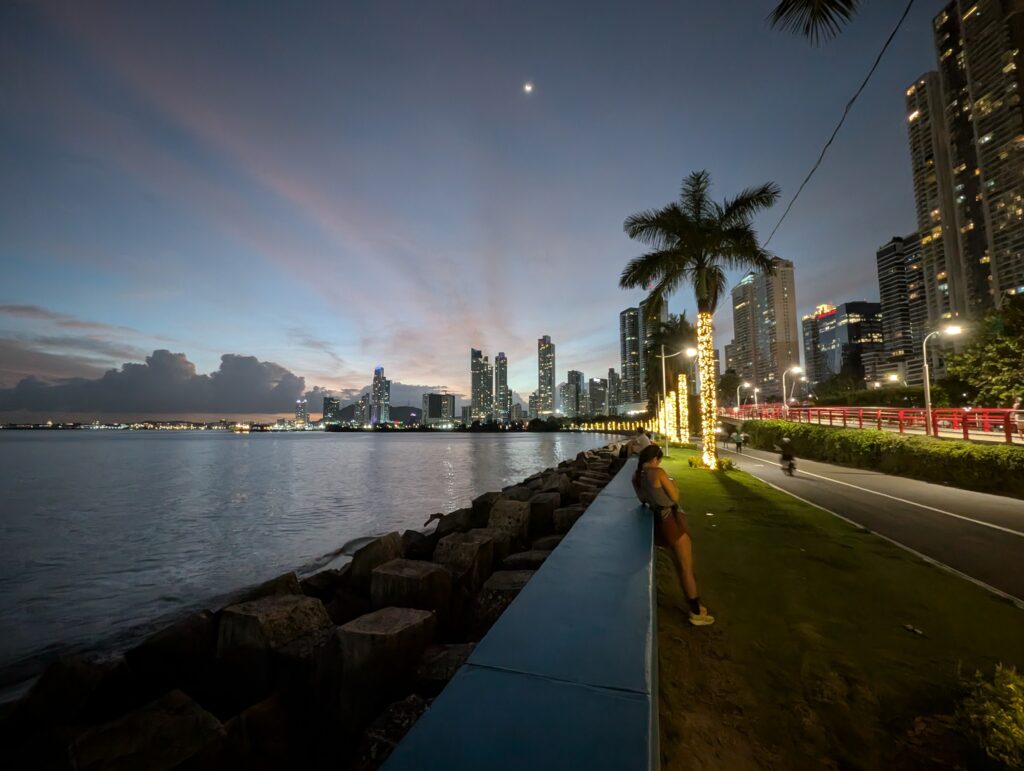
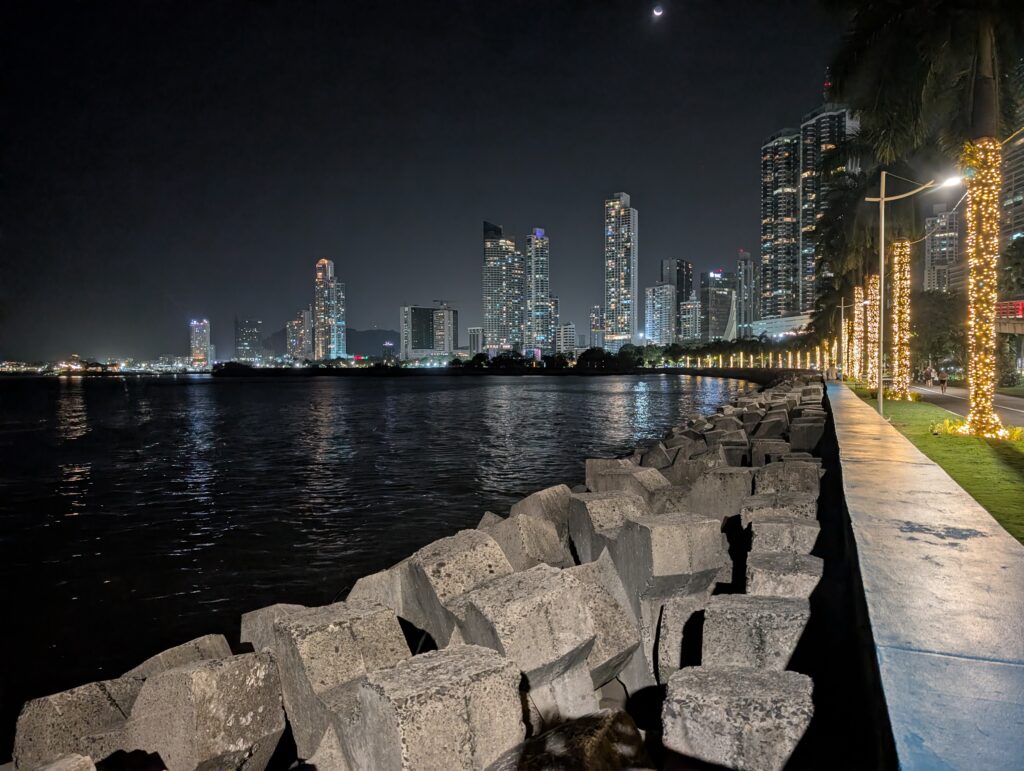
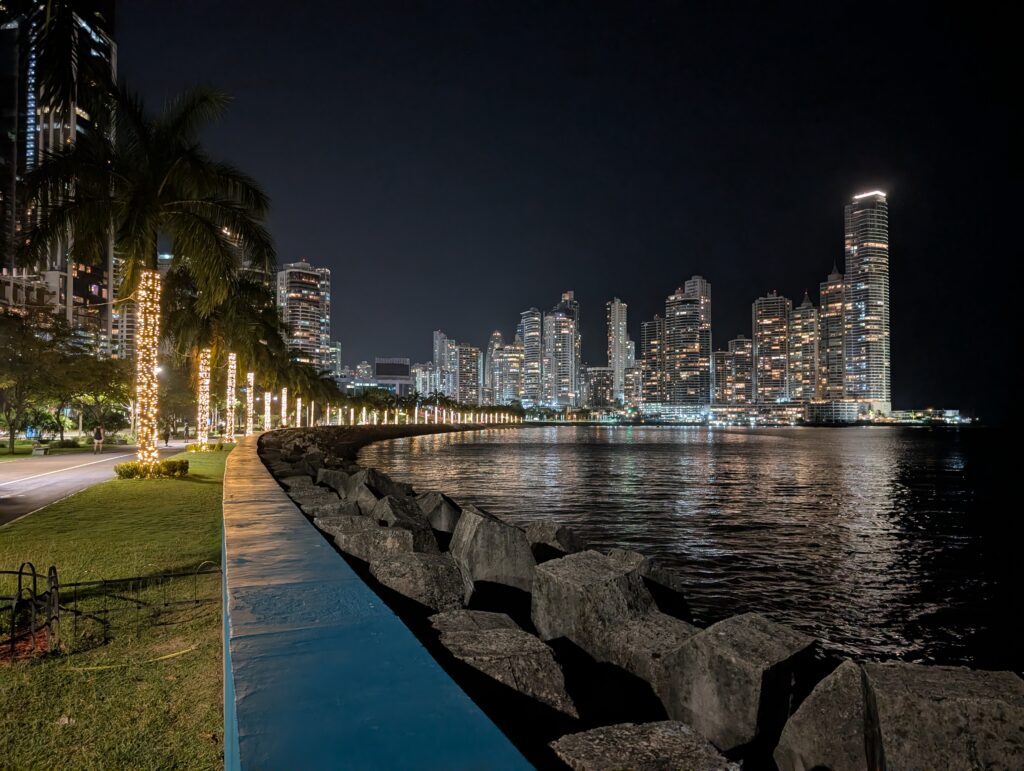
The part of town where I was staying was a very upscale, touristy neighborhood. I figured I might find better and cheaper food over near Old Panama, which is a few miles east of downtown. That calculation was correct. I enjoyed pescado ala Veracruz with rice, a salad, and plantains for about $4 before hopping the city bus back to my hostel. I rested for a while in the room, then enjoyed a nice walk on the Cintra Costera as the sun went down. I lingered into the dark before walking back to my neighborhood. I took a stroll also down to Alejandro’s, a local bar that was playing a soccer match between Panama and Mexico. I enjoyed a Pina Colada, and visited with customers. It seemed the place had bar girls similar to those in Thailand, with the exception that they weren’t necessarily there for you to pay a fine and take home for sex. You were encouraged to buy them expensive drinks as a way of helping drain money from customers. If there were any other transactions going on, it wasn’t obvious. There were, however, some very young and nice looking ladies visiting with some older male tourists. None of this ruined my Pina Colada. The soccer game took an unfortunate turn for Panama, however. A ball struck by a Mexican forward glanced off of a Panamanian defender in the final minutes and was redirected enough to cause the goalie to miss it, leading to an “own goal,” and a canalero defeat.
I did not run Friday morning. My knee had been swollen, and I wanted to rest it. I saw that a massive winter storm that had been forecast was actually going to come to fruition over Texas when I was supposed to come home. I had been scheduled to fly to El Salvador at 8:00, over night there, then proceed to DFW early Saturday morning. Although I had not had any information from Avianca, I decided to check the status of my Saturday flight. It turned out, Avianca had preemptively canceled all flights to DFW on both Saturday and Sunday. An identical flight on Monday was already full. To no avail, I attempted to call Avianca to hear of my options. Through two hours of phone calls, I was never able to talk to a human at Avianca. I gave up, and was eventually just assigned the same flight but on Tuesday, leaving me four nights and three full days to kill in El Salvador.
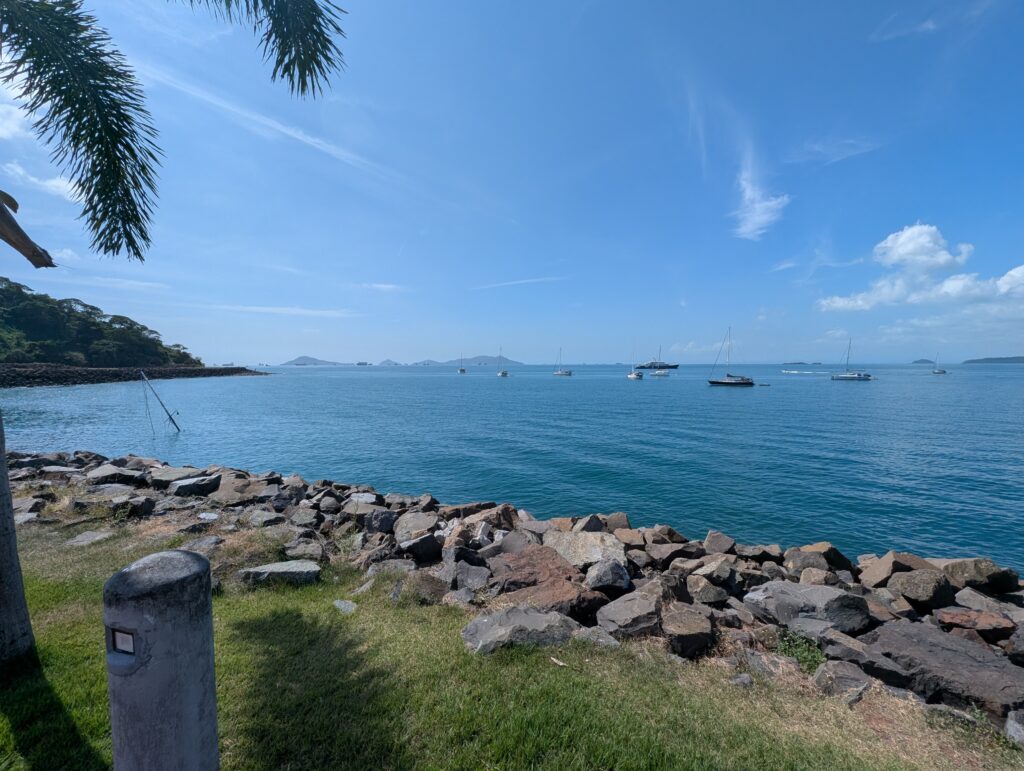
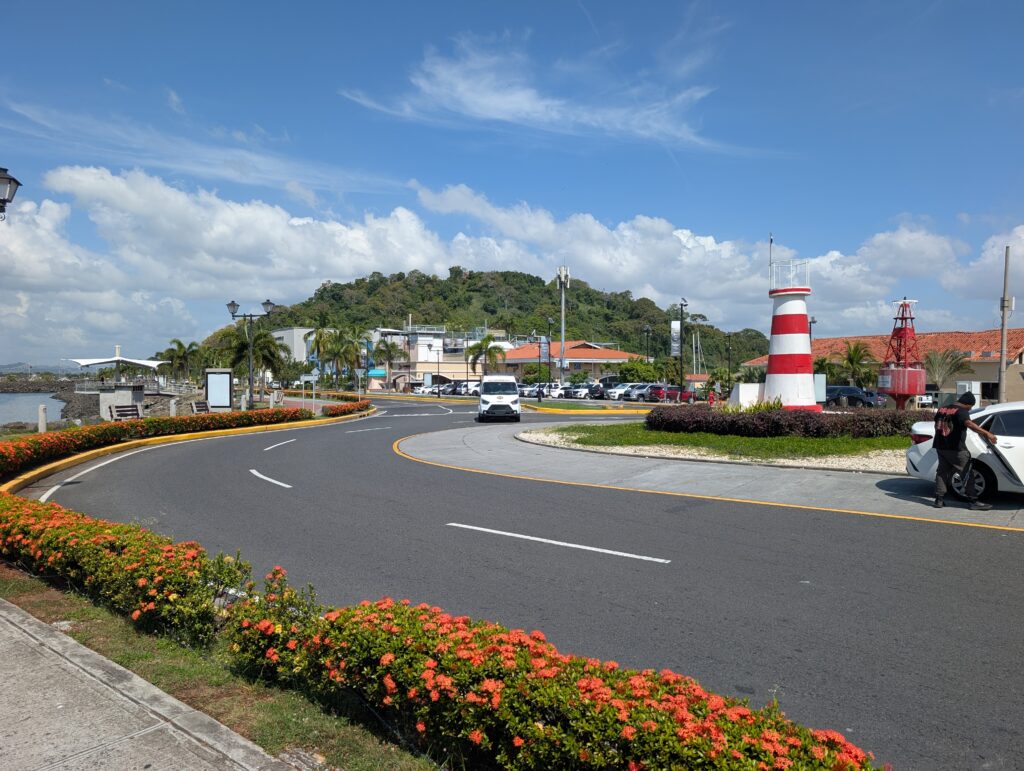
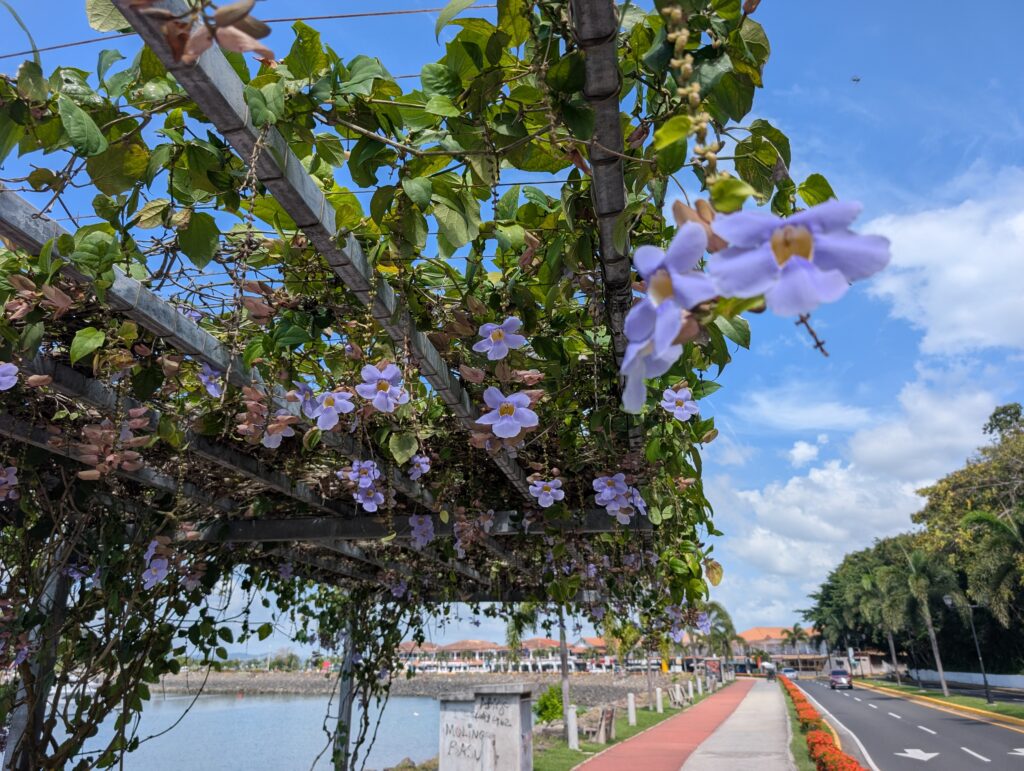
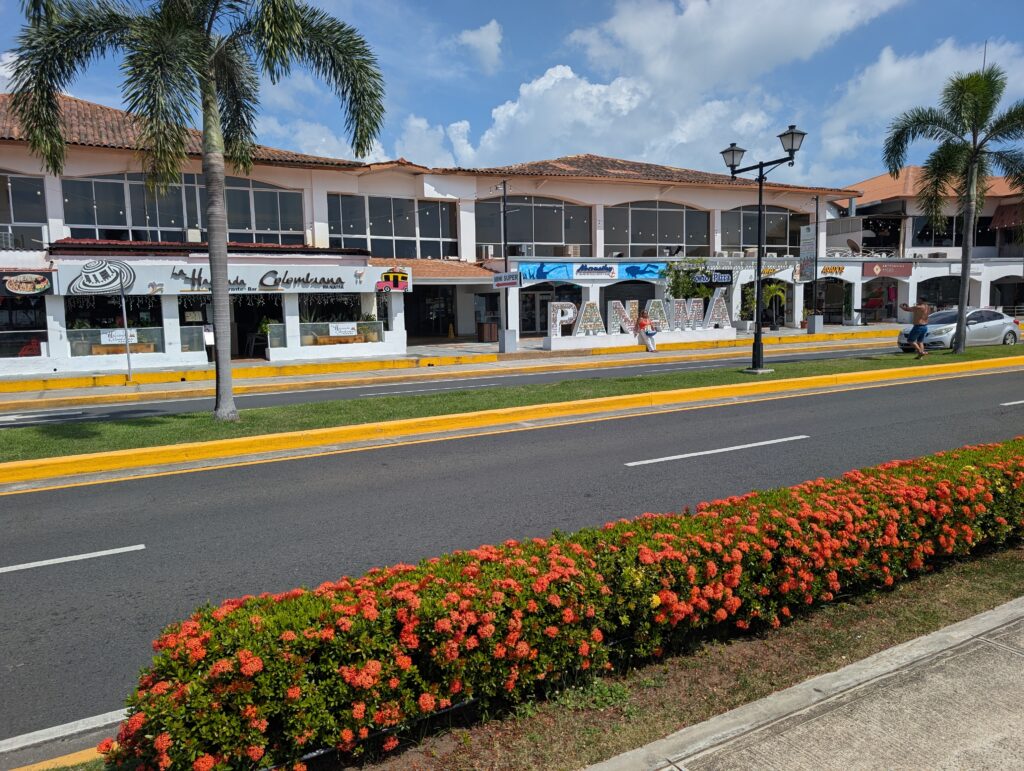
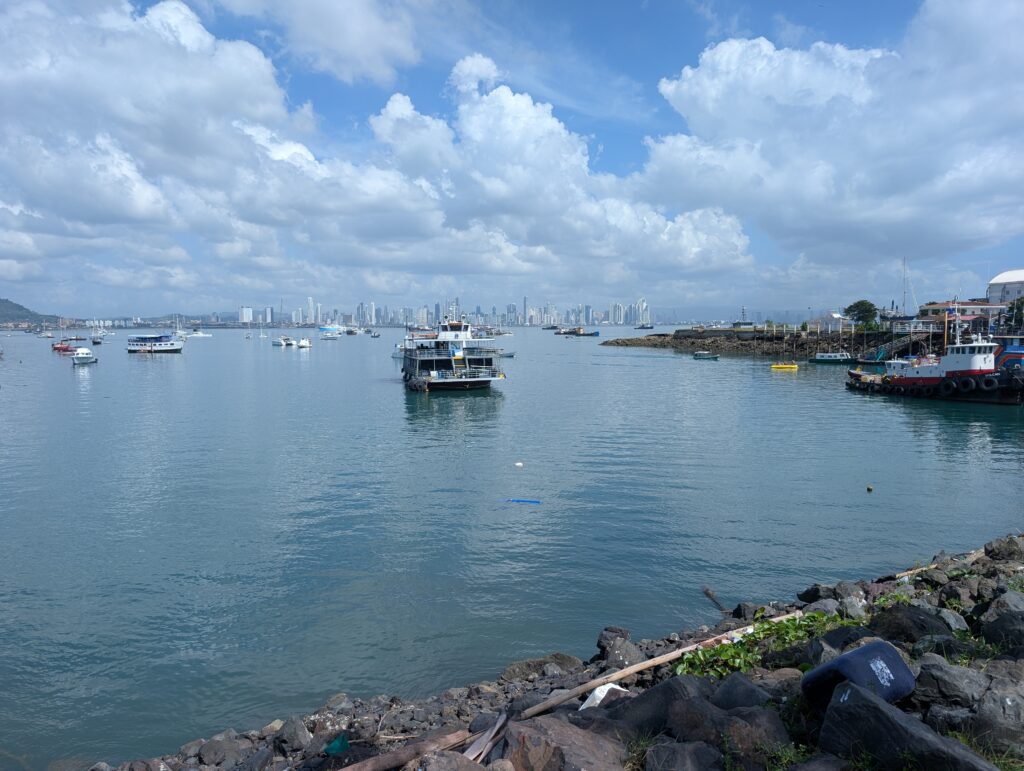
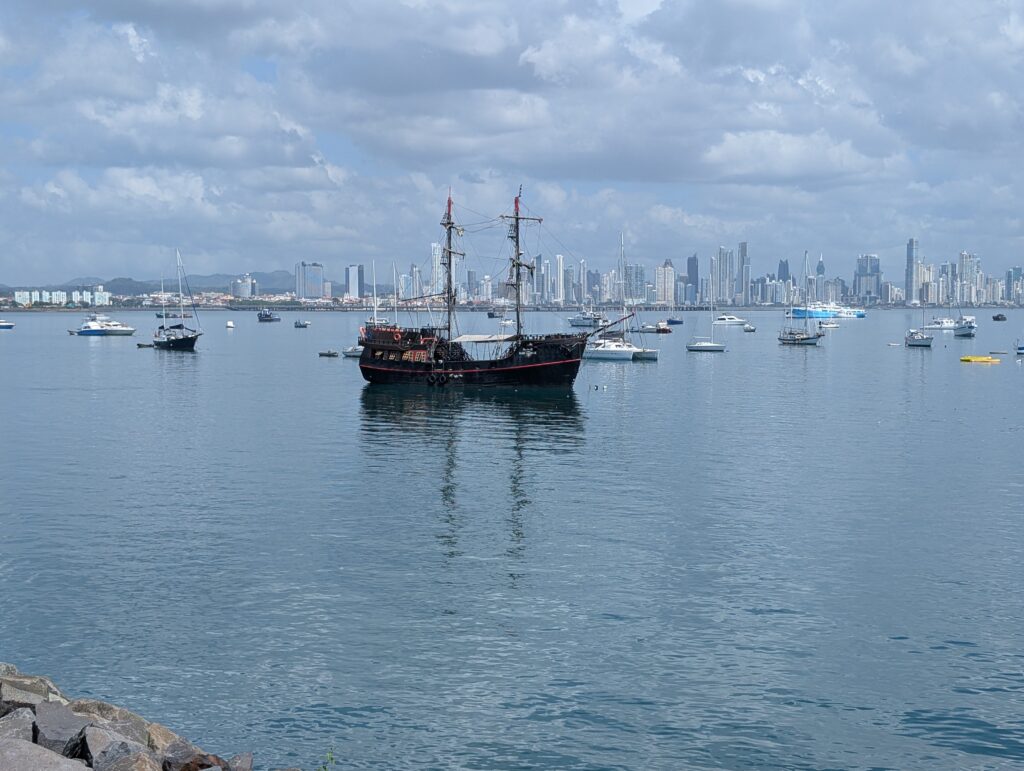
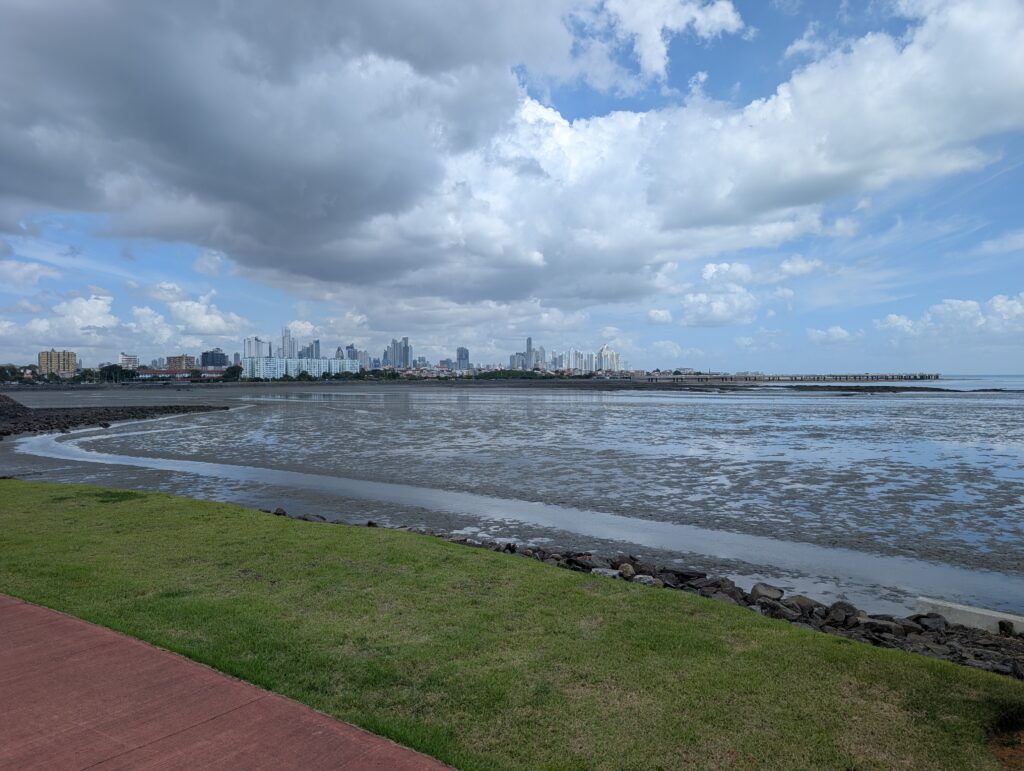
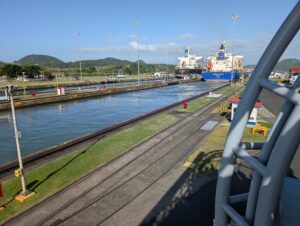
I would make the best of it, but it turned out to be a real waste of the airport motel and its associated shuttle I had scheduled for Friday night. I did still have what was left of Friday to explore Panama City before leaving. I ate my oatmeal while futilely awaiting Avianca. I took a bus over to Calzada Amador. This is a long, artificial spit connecting mainland Panama to some of the islands near the canal entry. It was built from tailings from the canal construction, and during the early 20th century housed heave artillery to protect the canal. The guns were later removed and two forts remained until the whole area was eventually returned to Panama with the canal. Now, the causeway is a tourist trap with shops, a bike path, and many places to stop and look at boats. Panama City harbor is so shallow that most boats have to anchor near Nau Island, quite a distance from the shore.
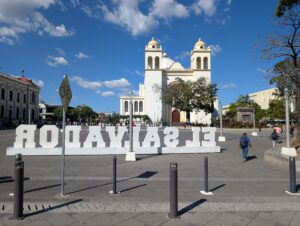
This is a nice walk, though in direct sun it is very hot. I was drenched by the time I arrived back at the hostel a little after noon. I took a shower and visited with one of the other guests before showering off and waiting as long as I could for my clothes to dry out. I waited to eat for supper, since I knew I would have lounge access, though the food was pretty disappointing. The Avianca folks tried to help me find a better option to go home a bit earlier, but it still seemed the best option was to simply await the early morning flight on Tuesday. I had wanted to mark El Salvador off as a visited country, anyhow. Now I would legitimately be able to say I had visited. At that point, I would have gladly traded that option for the ability to get home earlier. But it’s best to make lemonade from the lemons, so that’s what I did. Click on El Salvador to read about what I did over the last few days of the trip.