Jajce

Pronounced Yai'-tse

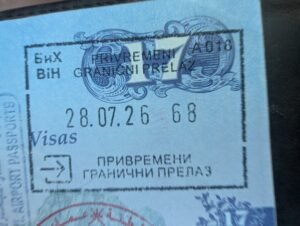
My bus took some time to get through immigration out of Croatia and into Bosnia, but I still arrived in time to get to my hostel and join some of my fellow guests for supper in town. We ate at an Ottoman era gatekeeper’s house converted to a Bosnian restaurant. Omer Bey House is stone on the bottom and wood on the top, as many 17th century structures were. The house’s exterior retained much of its original look, but the inside has been completely redesigned to serve as a restaurant. Significant restoration was probably a foregone conclusion anyway as the building took some damage during the wars of the 1990s.

I decided to try the Bosnian Pot, which was a kind of stew with meat, potatoes and the other typical things you might find in stew just about anywhere. My meal was good, but nothing spectacular. The 27 year old English fellow with me thought that sounded just about perfect. We joked some about England’s bland food. He said that was just how he liked it. He got a kick out of my Grandma Ellen Cornish Pasty story. He would have loved the pasties – filling and comforting, without any unnecessary spices. Unfortunately for him, he ordered the cevapi, which did have some spice in it. We probably should have traded plates.

Surprisingly, everyone in the hostel turned in relatively early. I was a bit worried about my comfort that evening. The hostel didn’t have air conditioning, and it was the only hostel in town – or at least the only one with any vacancy. The high temperatures were in the low nineties. I was concerned it might be a bit warm for sleeping. Fortunately, it cooled down nicely in the evenings. The fans also helped with both air movement and mosquito abatement. We did get a few mosquitoes anyway, but it was not too hot to sleep.

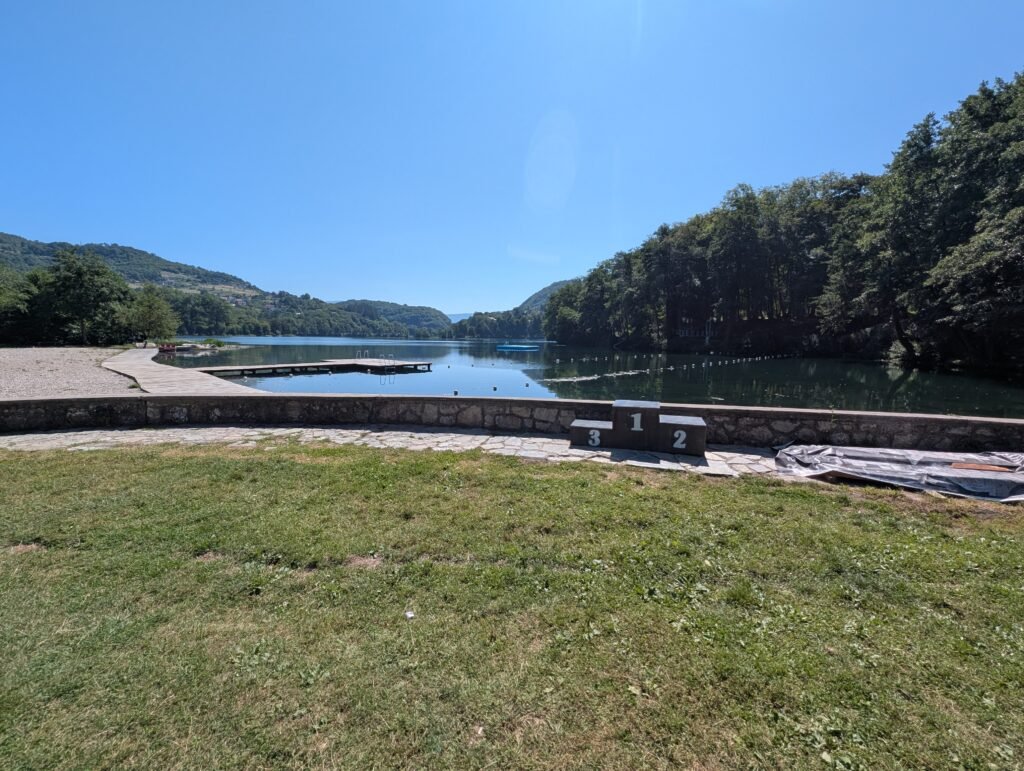
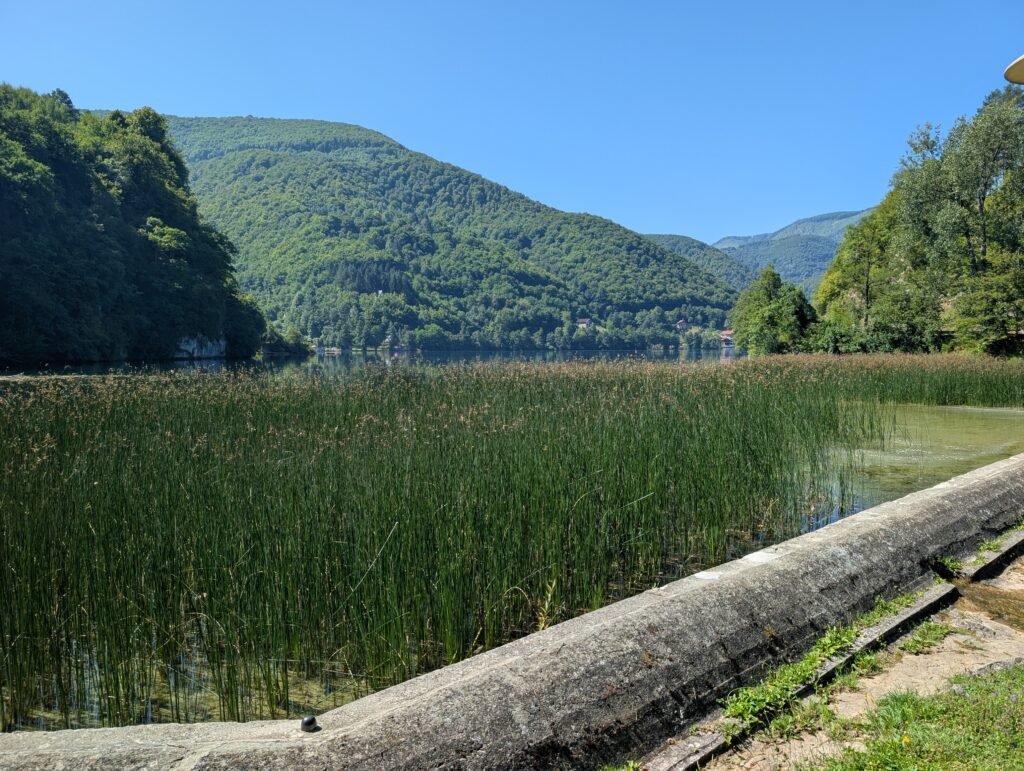
I rose early the next morning and set out to hike to the nearby lake everyone recommended seeing. One traveler told me she thought it was about a kilometer and a half (just less than a mile), but it turned out to be closer to three miles each way. I think she went to the lower “forebay” reservoir and never actually made it to the main lake. Still, the hike one way didn’t take much more than an hour. I got to see the lake and the recreational facilities along the way. I passed quite a few AirBnB type apartments set up to house tourists.

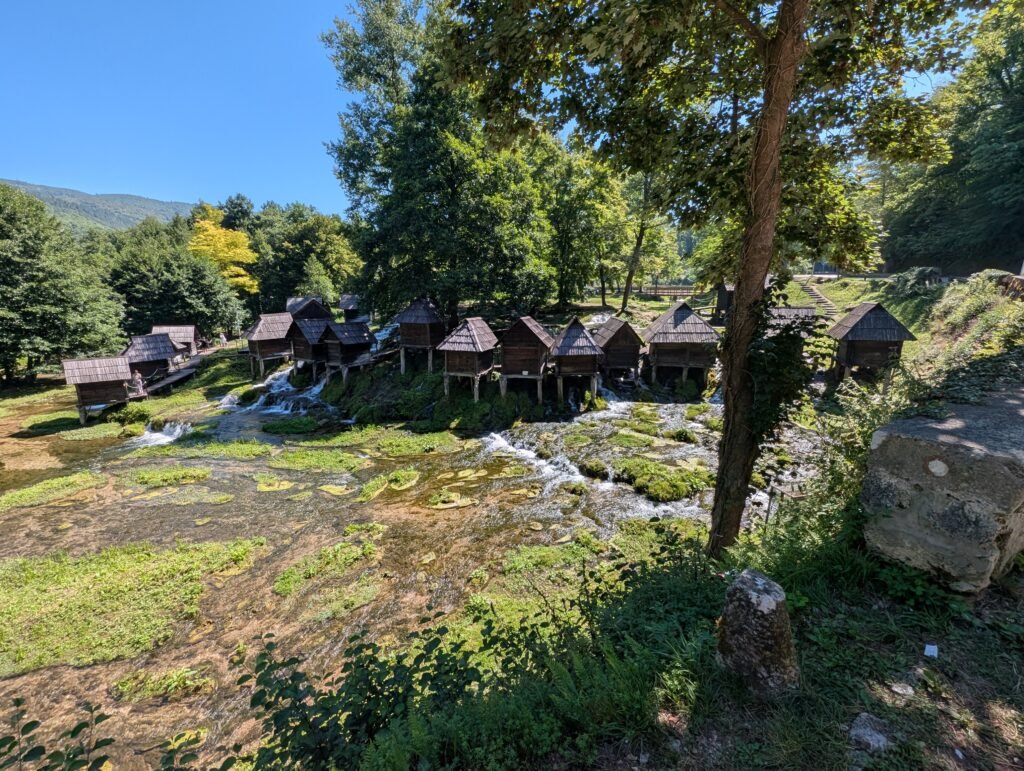
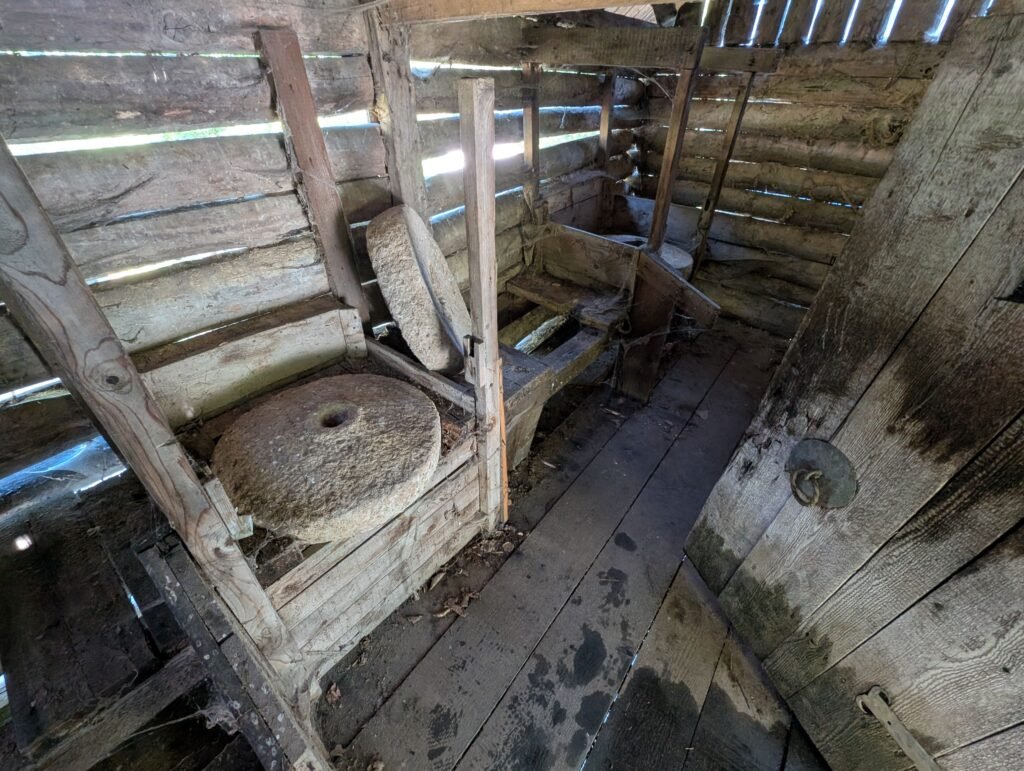
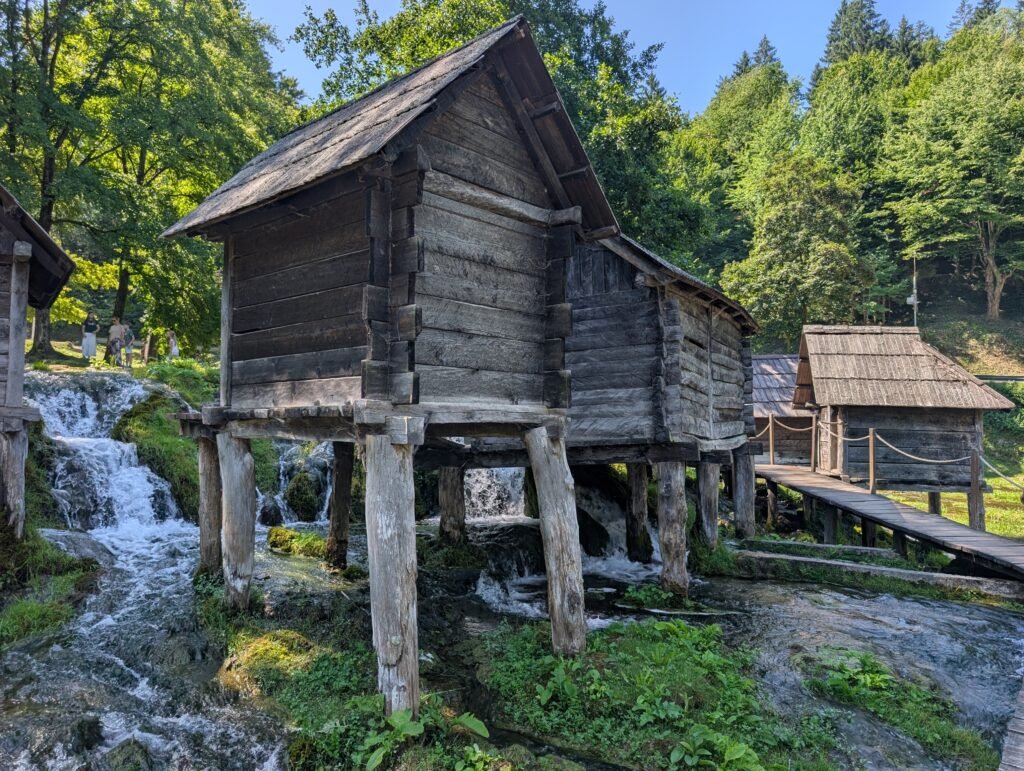
Just below the main lake, I found a park featuring several tiny wooden mills. Known as Mlincici, these dozen and a half or so little mills were used by local farmers at least as far back as the 16th century to mill grain. They are no longer operational, but serve as a tourist attraction in a cute little shady park near the bottom of the lake. I was surprised to learn that you can actually poke your head into a couple of these rustic little buildings and go inside. I wasn’t certain, but it seemed like they would not let you do it if someone hadn’t determined they were structurally sound enough to walk in. I checked out the inside, after seeing a few others do it. They weren’t all open, though. I walked the trails through this area for a while, enjoying the views and watching families go about their recreational activities. I continued this people watching as I made my way back toward the hostel, which I would have to pass to go back to town anyhow.

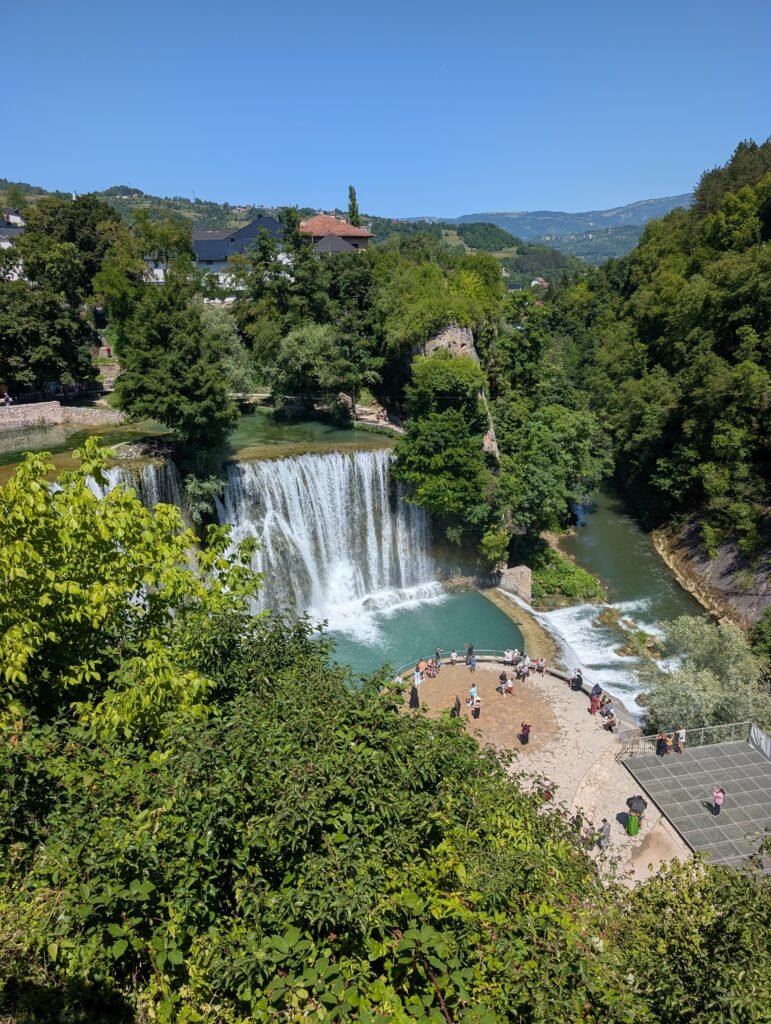
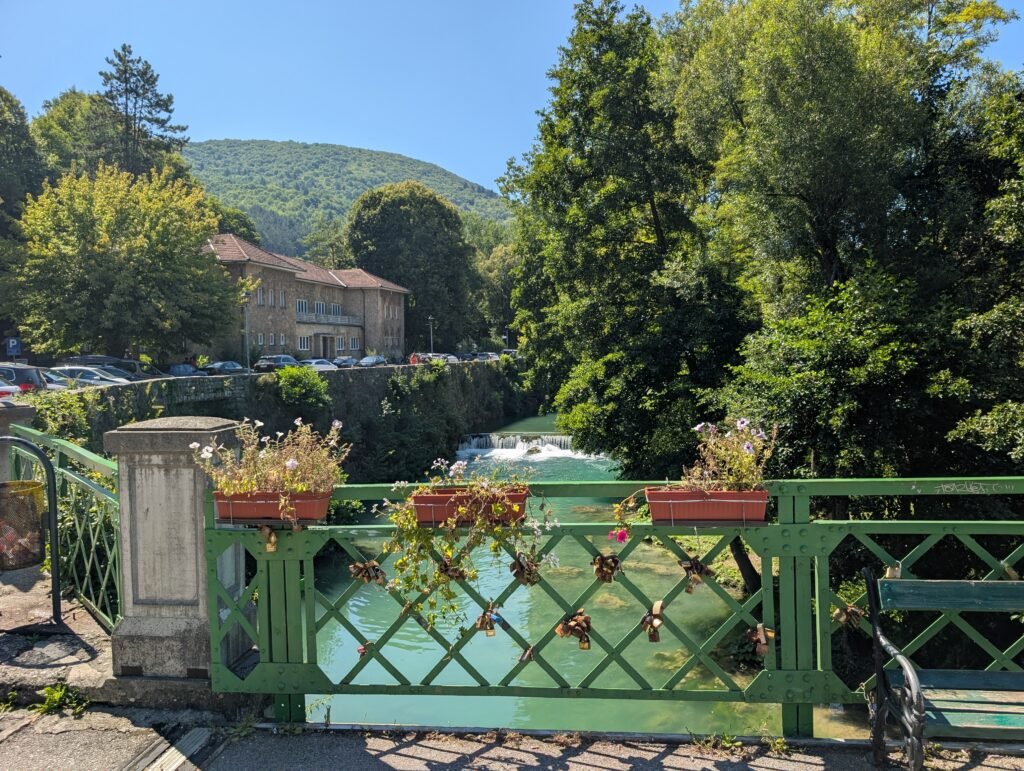
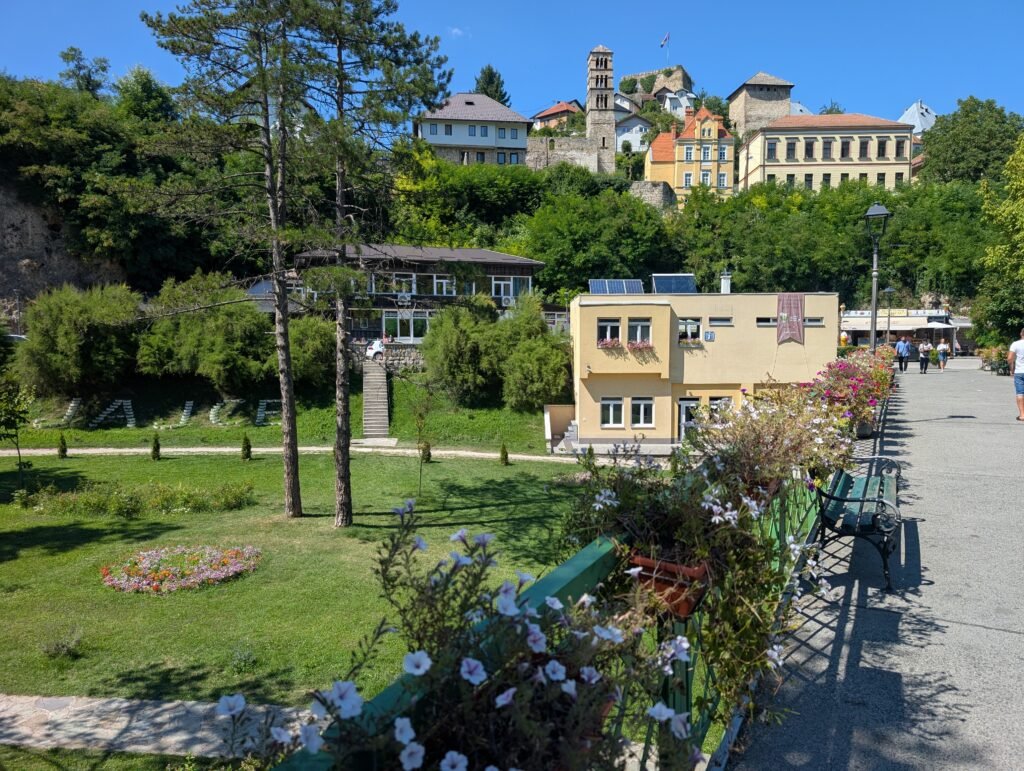
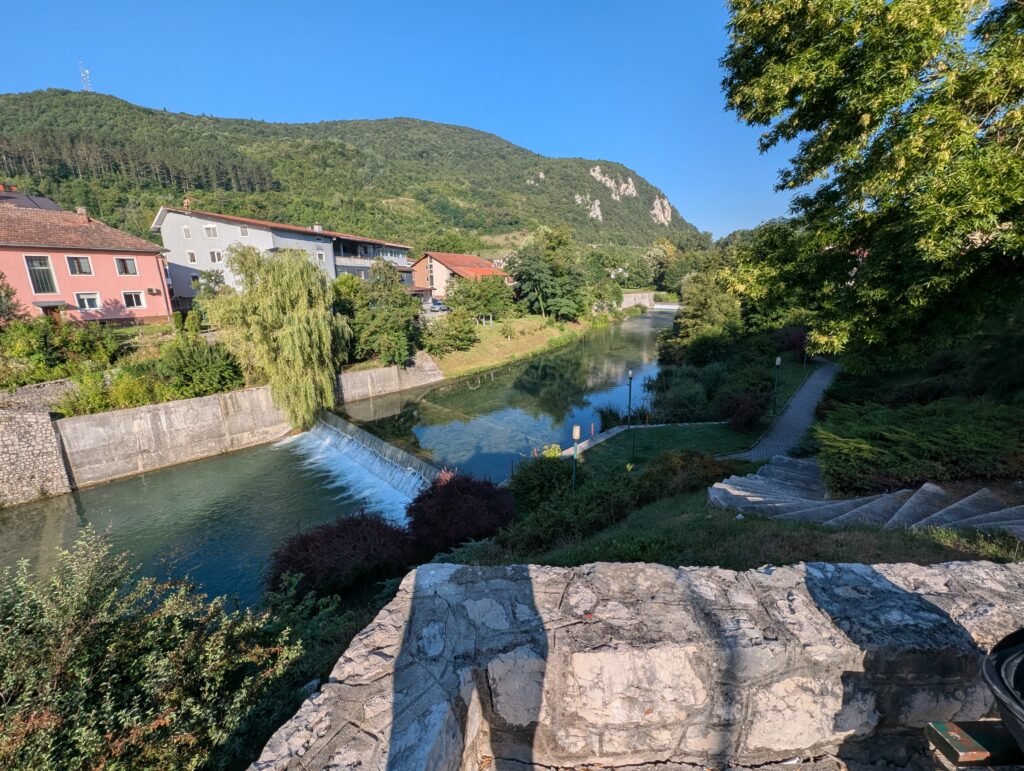
There were a few items in town I wanted to see. I incorrectly figured that most of these sites would be indoors and therefore cooler to view in the afternoon. In the lower part of the town I walked back to the waterfall and shot some more photos. There are some scenic bridges and flower gardens in the area. The waterfalls are really very pretty, and there is a fairly steep canyon they fall into. From hearing people talk, you would think they are something that would compete with American National Parks. That’s too bad, because it creates higher than reasonable expectations. It is a nice area, worth seeing. Niagara Falls it is not.

(Continued)

Competition Venue at Pliva Lake
Tiny Mills
Interior
Jajce Waterfall

Not far from the falls stands the one museum in town I was interested in visiting. Like most of Europe during World War II, Yugoslavia was overrun by Nazis. The Nazis always struggled to maintain complete control of the area, as guerrilla forces offered constant resistance. There is a famous photo of Stjepan Filipovic, an early resistance fighter who was captured and executed by the Nazis, raising his fists in defiance as his final act before facing the gallows. Yugoslavia’s royalists had fled the country. It was the communist anti-fascist groups who remained. Unlike most of the rest of Europe, these communist Yugos self-liberated, thus not falling behind an iron curtain like the rest of Eastern Europe.

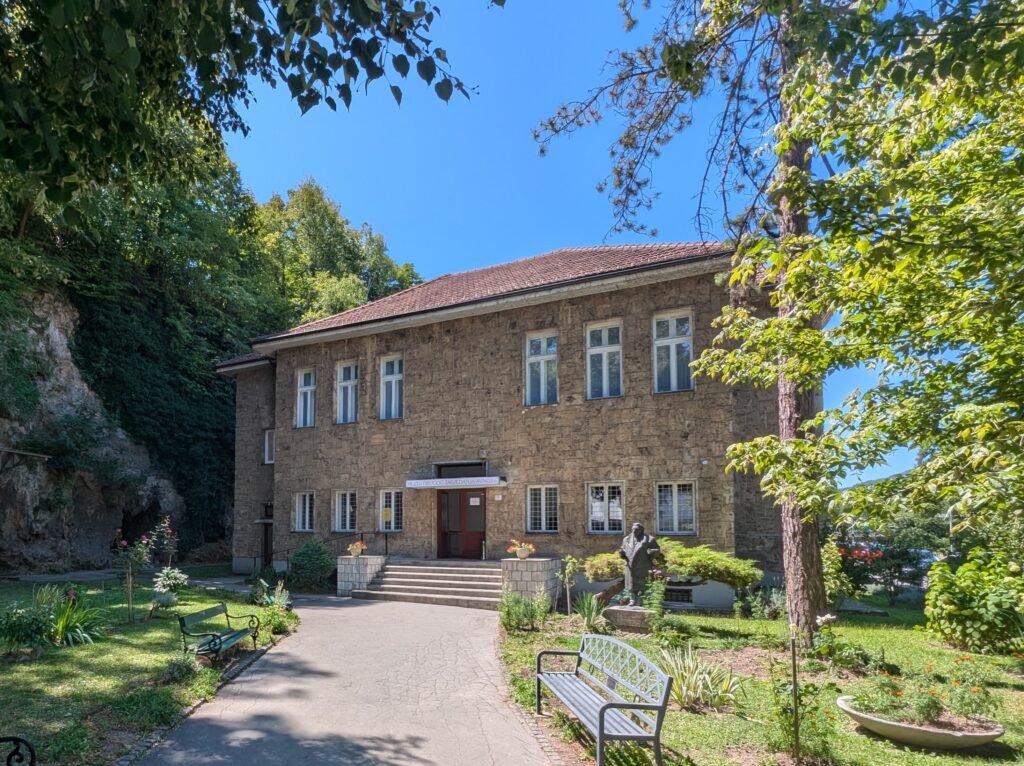
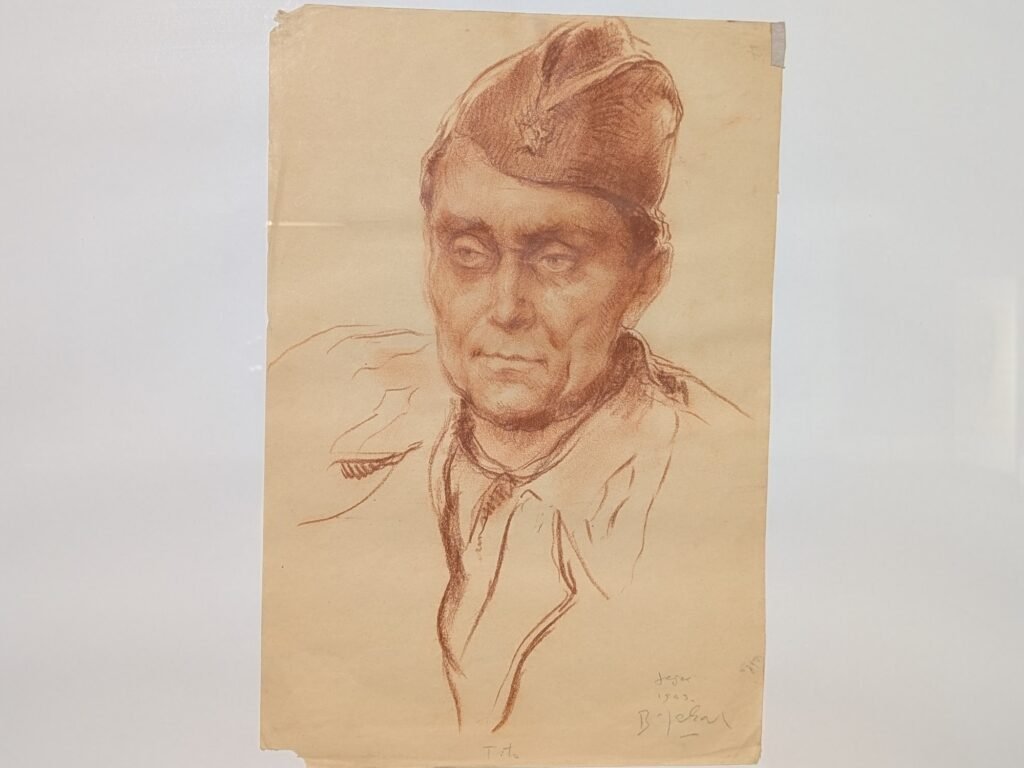
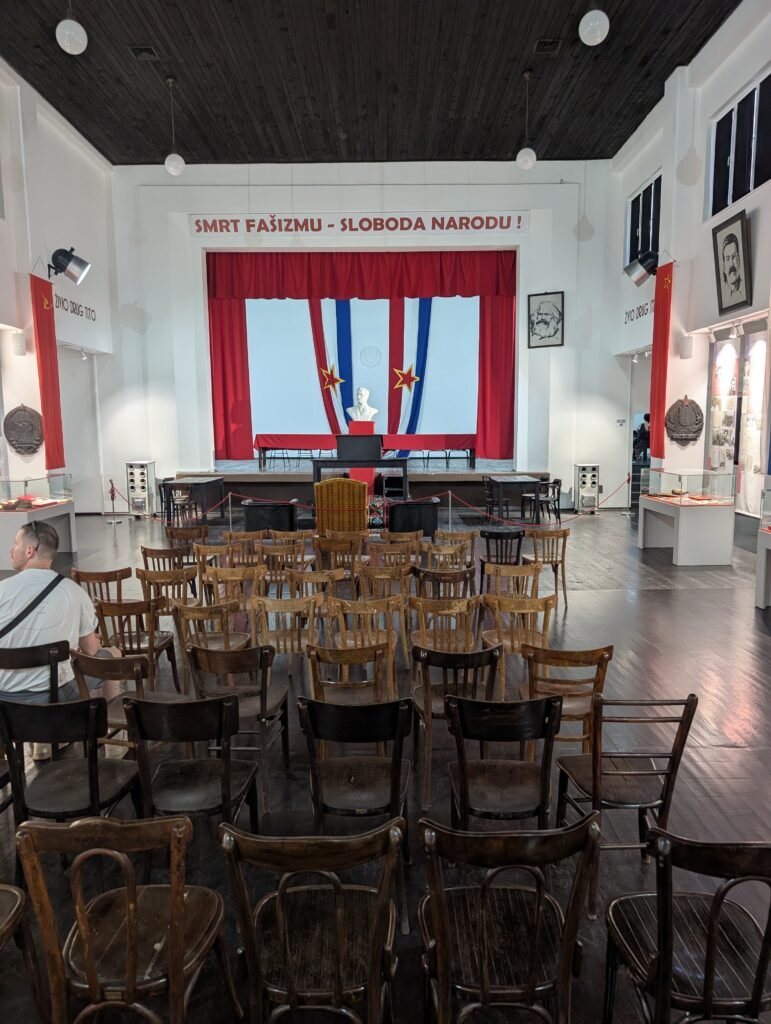
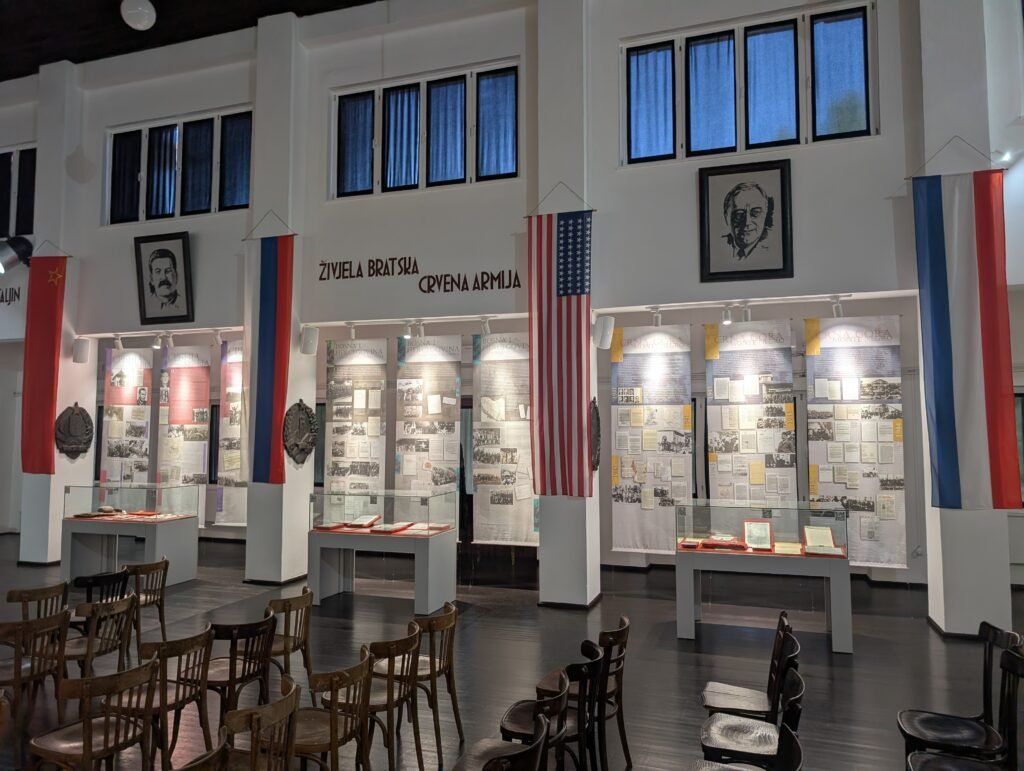
In late November 1943, a group of these anti-fascists called AVNOJ met at an all-age gymnastics association building in Jajce. The site of this AVNOJ meeting is now a museum commemorating Yugoslav resistance to the Nazis and celebrating the establishment of post-war non-aligned Yugoslavia. There are, of course, a lot of items on display venerating Tito. There are also displays featuring the fathers of communism. Even more prominently featured are the heads of state of the Western allies who recognized the fight the Yugoslav partisans were putting up, which in turn led to their acceptance of Tito’s government and the discrediting of the King of Yugoslavia and his government in exile. The latter were not allowed to return to power and were no longer recognized as holding the right to speak for the country. It was a well put together museum with enough information in English as to be useful and interesting to me. While being favorable toward the anti-fascist movement in Yugoslavia, I found it to be fair and generally accurate, as far as I knew, anyway. I’m not an expert in Yugoslav history. I will say that I found it pretty interesting to contrast the people calling themselves “Antifa” today with these guys who were clearly the original anti-fascists.

I walked next toward the Jajce Fortress, which in truth was the main reason I wanted to come to Jajce in the first place. Bosnia was an independent kingdom in the medieval period. The complexities of feudal governance leave a good deal of murkiness around Bosnia’s period of sovereignty. From at least the middle of the 1100s, Bosnia was a “banate,” an area claimed by the Hungarian crown with a subordinate ruler. Neither the Hungarians nor the Byzantine Empire could truly exert control over this remote, mountainous region. It was as a de facto independent state for much of this time, operating with near complete autonomy.

Bosnia was unquestionably a sovereign kingdom from the mid 14th to the mid 15th century. It became one of the most powerful nations in the Balkans during that century of independence, but Bosnia’s timing was terrible. The Ottoman Empire was on the rise, having just conquered Constantinople in 1453, obliterating the last vesitges of the Eastern Roman Empire for good. The Turks eventually conquered Bosnia, capturing and killing Stjepan Tomasevic, the last king of Bosnia in 1463. A few cities held out, but the death of Stjepan II was the end of Bosnian sovereignty. During its period as a sovereign kingdom, Bosnia had a few different fortified seats of government. Jajce was the last of these. It was in fleeing from this castle that Stjepan II was captured. The Bosnian kingdom was falling apart around him and disintegrated quickly after his death. Morale was apparently low as most Bosnians figured conquest was inevitable either way, whether it was at the hands of the Ottomans or the Hungarians. Many felt they might have more tolerance and lower taxes under the Ottomans. In any case, resistance wasn’t too stiff.

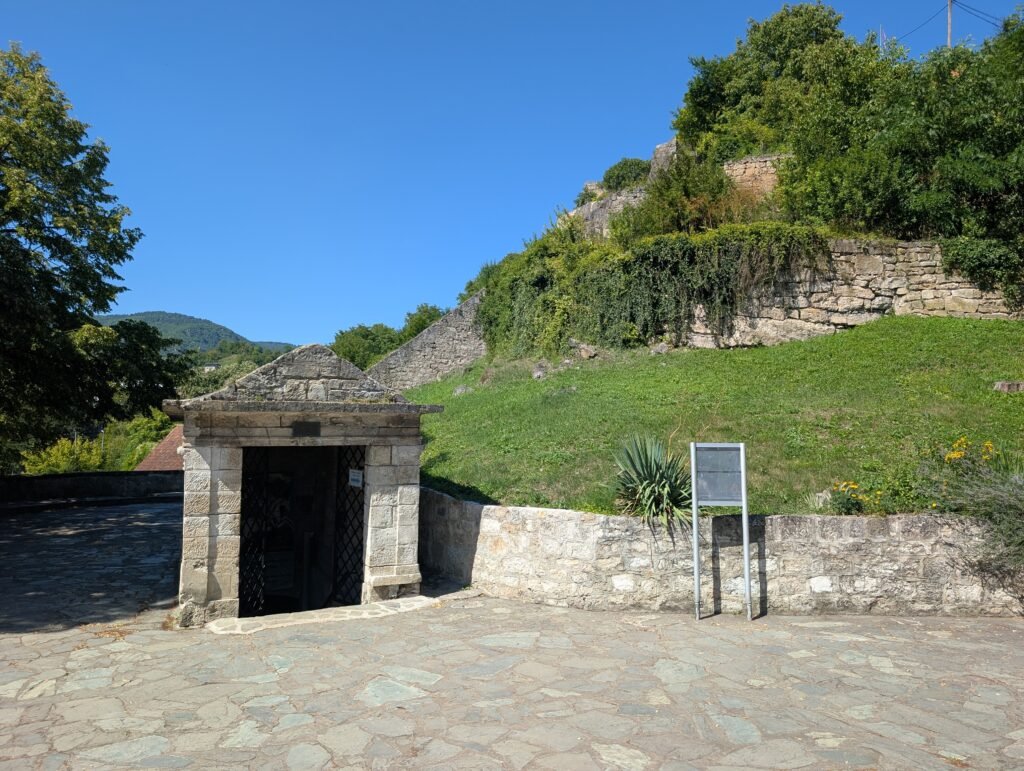
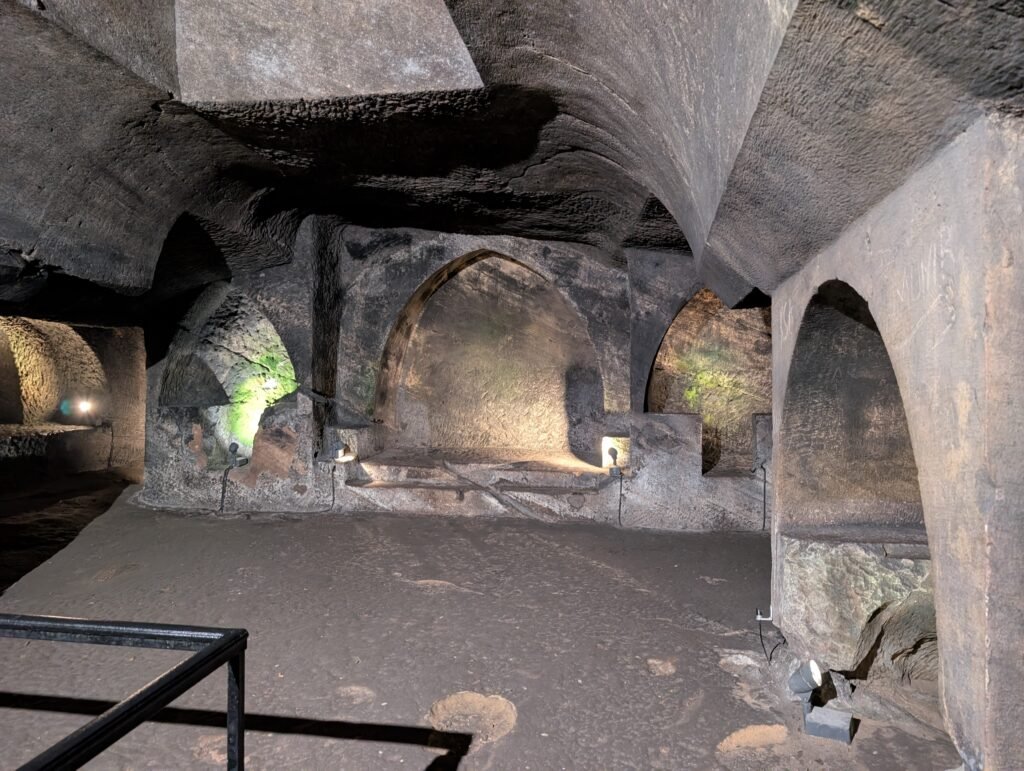
On the way up to the castle, I found a small catacomb. This was noted as one of the things you should look at in the old city, so I paid a few CM and walked in. It was nice and cool below the surface, but there wasn’t really all that much to see inside. The place is billed as an underground church. It is really a very small chapel built by a duke in the 14th century who intended to bury some family members there. No one was ever interred in it. There isn’t much designating it as a chapel. There are a few amateurish carvings near the entry. The general shape of the carved out underground space seems like it could have been used as a chapel, but no one was conducting regular worship services down there. I came away with the impression that it was mostly over-billed and good primarily as an escape from the afternoon heat.

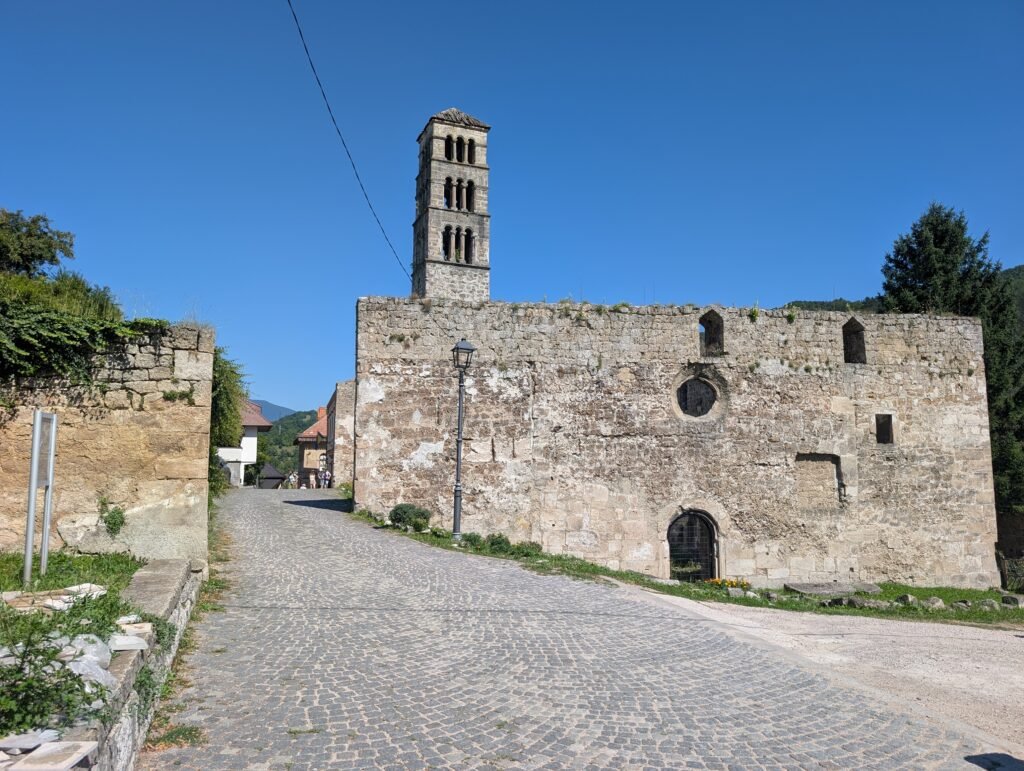
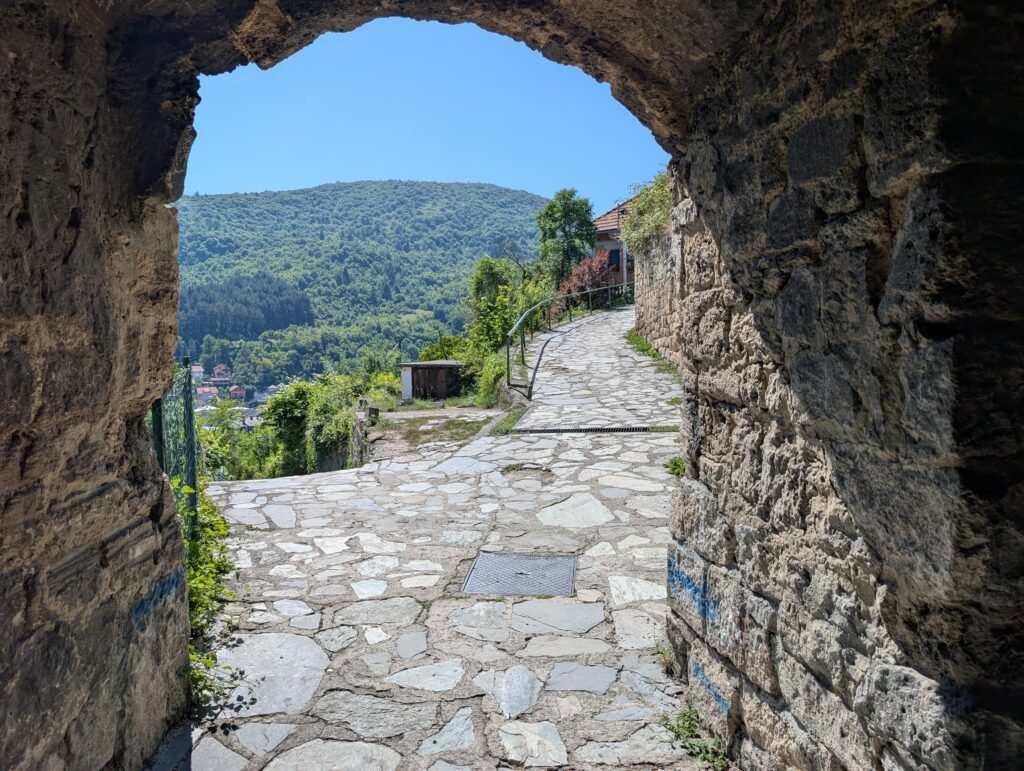
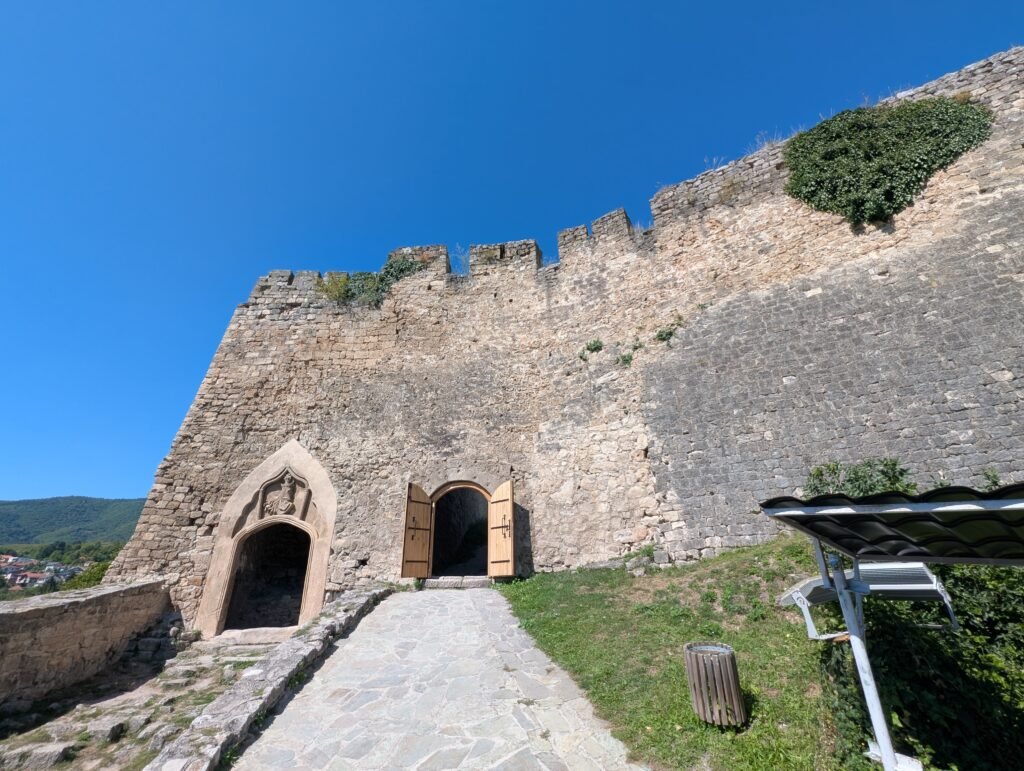
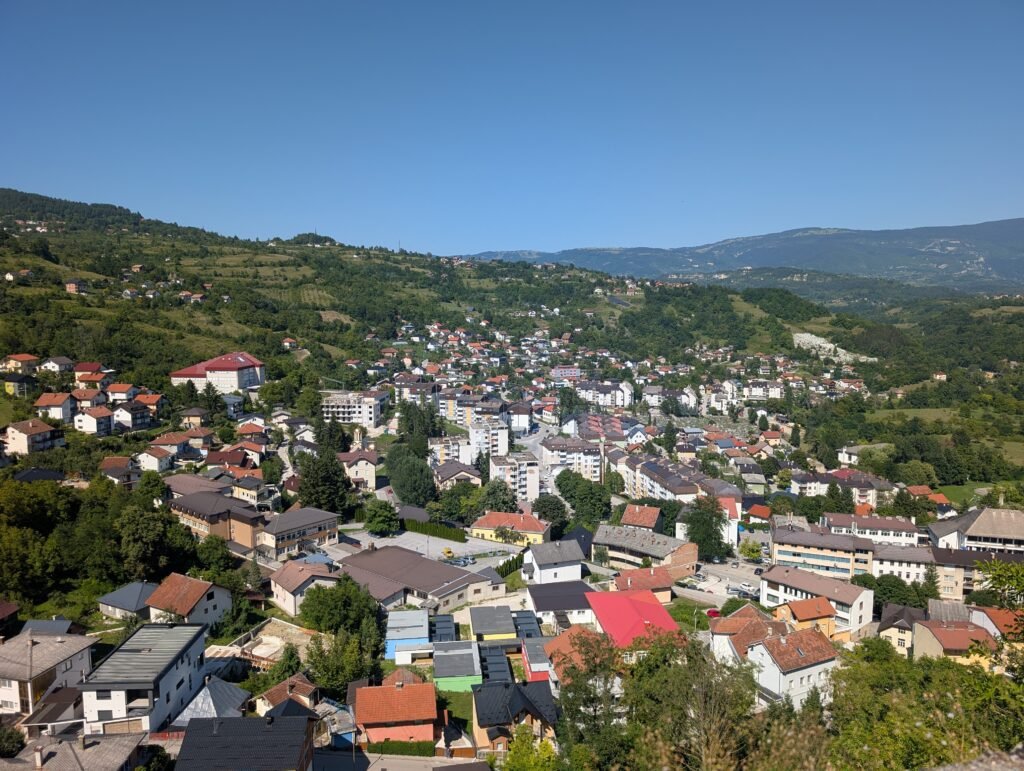
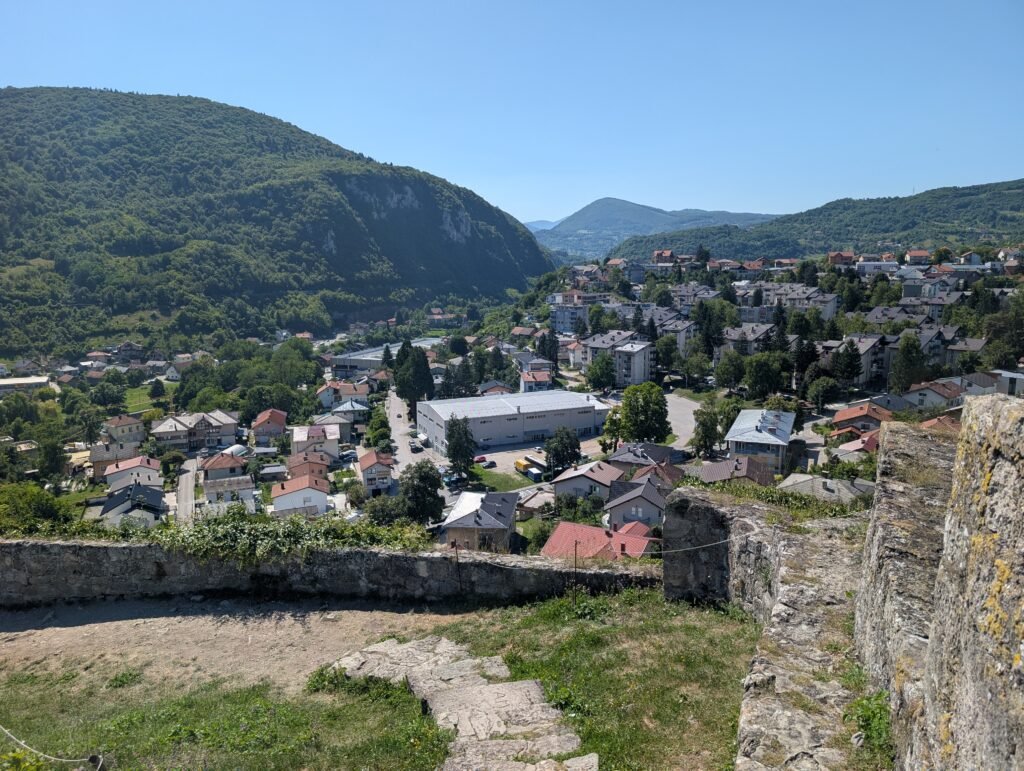
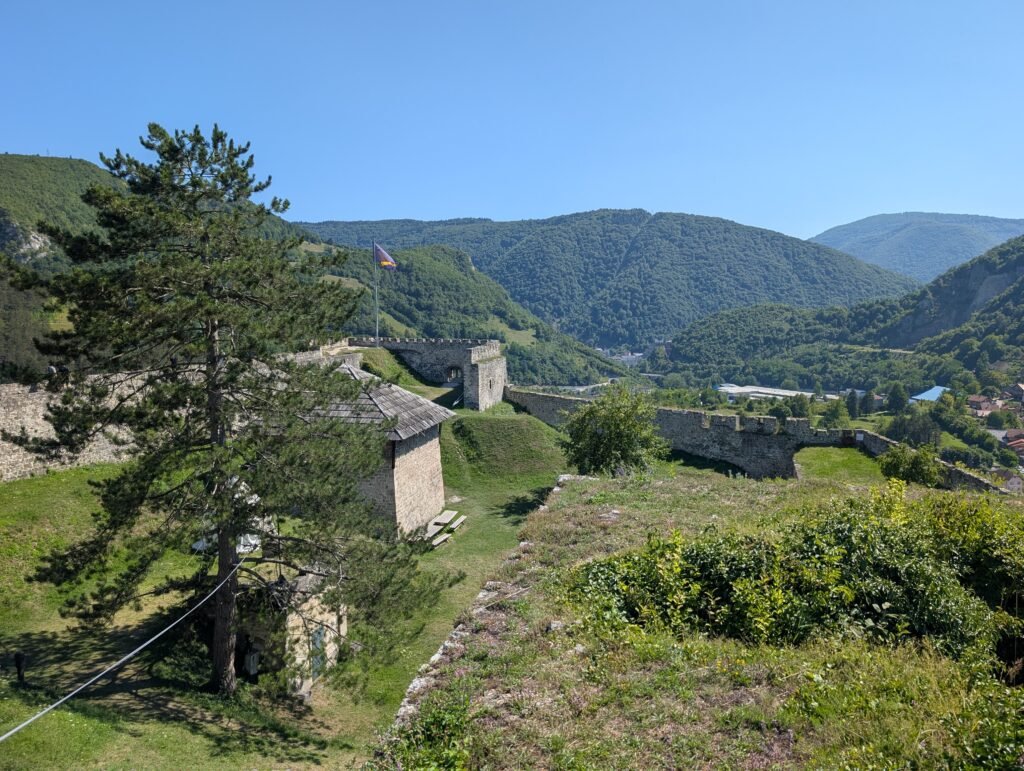
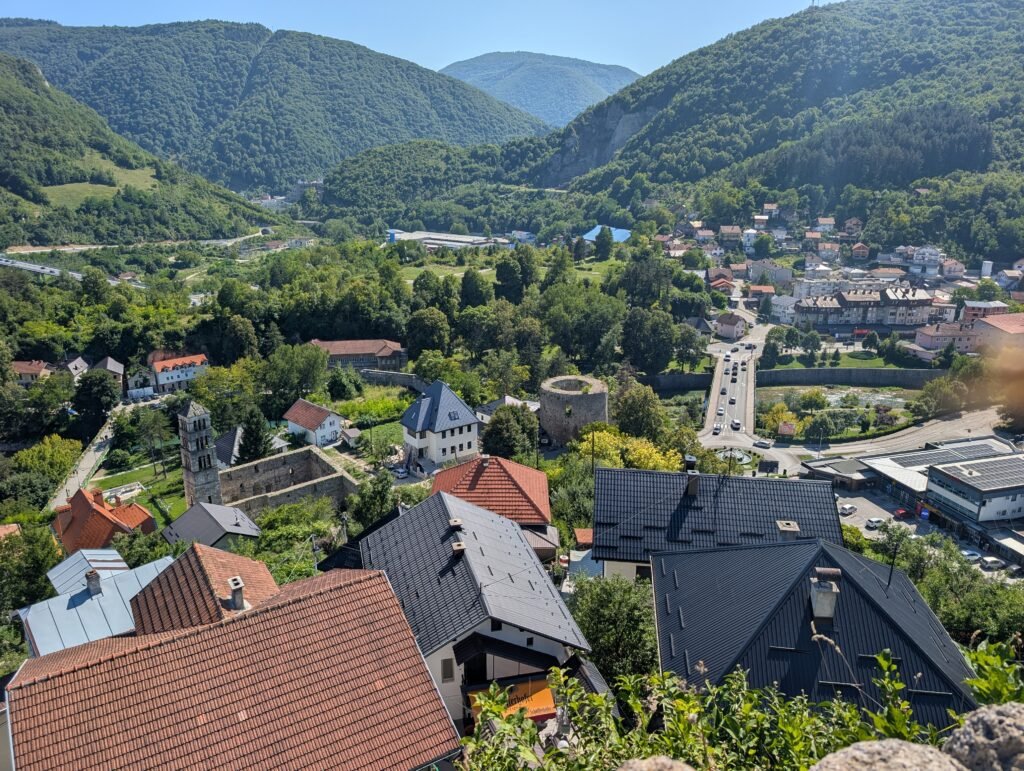
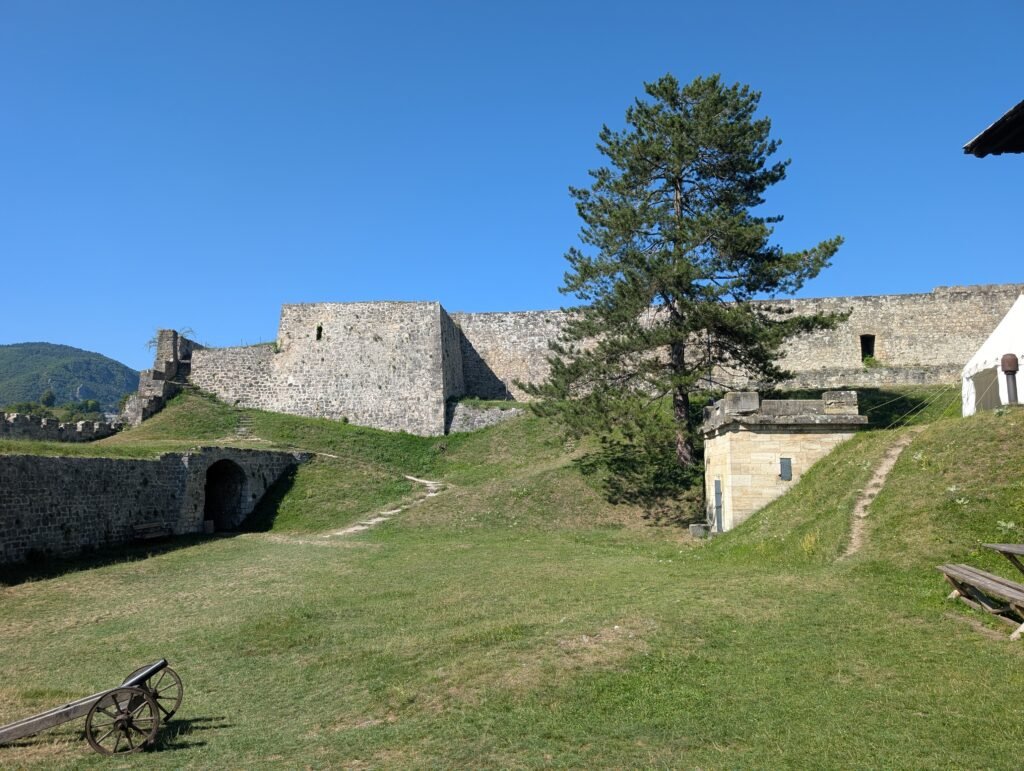
The Jajce Fortress overlooks the city, with a mostly intact ¾ mile set of walls on top of a set of hilltop ridges. You pass through some guard and bell towers as well as some church ruins on the 15 minute climb up the hill. There is not any historical interpretation to speak of in the fortress itself, or on the ascent. You have to know why it was there ahead of time, or just go up to enjoy the views of the city and surrounding landscape. Nothing on site explains it. There was a small admission fee, but it only amounted to a few dollars. As I was entering, I met an Austrian tourist named Nina. She didn’t have correct change for admission. The amount was so small, I just paid for both and we chatted a bit as we walked the walls and shot photos.

There were a few huts in the interior portion of the walls, but they weren’t open, so it was unclear what their purpose was. Most of the area within the walls was either deserted or in ruins. I am nearly certain that this must have been the core of the medieval town. Nothing of what was inside the walls in the 15th century remains. I walked the walls, enjoyed the scenery, and the visit with my friend Nina. It’s a very pretty place, and would have been worth visiting even had it not been the last capital of the medieval Kingdom of Bosnia.

(Continued)

AVNOJ Museum
Josip Broz Tito, OG Antifa
Meeting Hall of the AVNOJ Conference
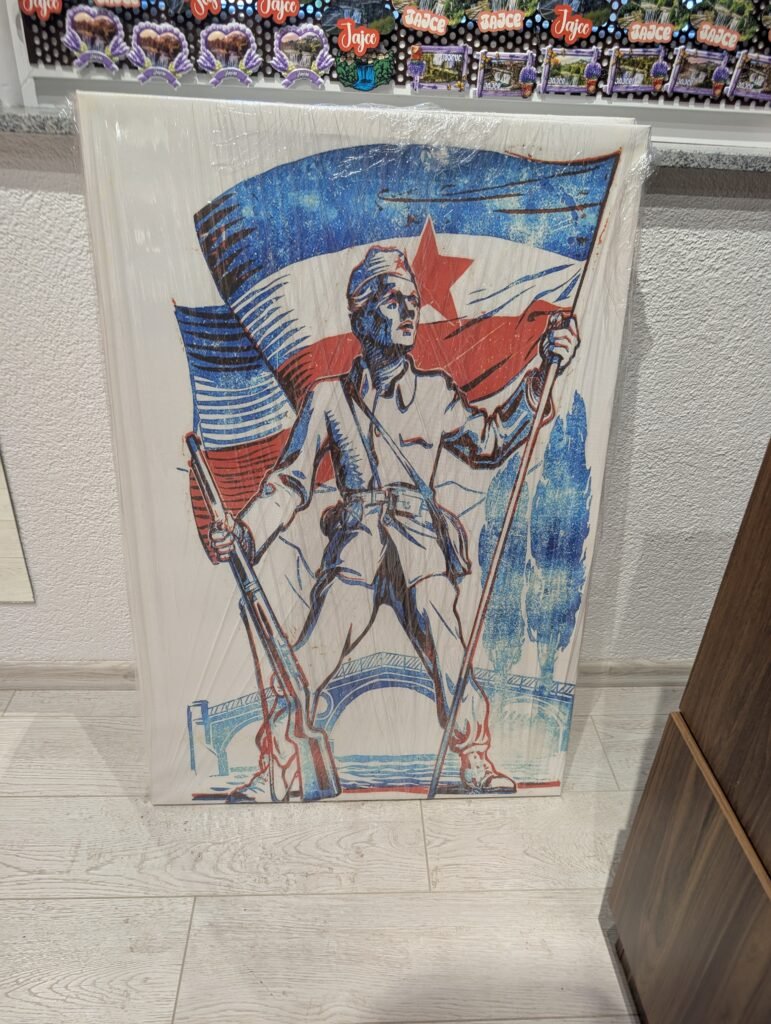
Yugo Nostalgia
Honoring Allied Leaders
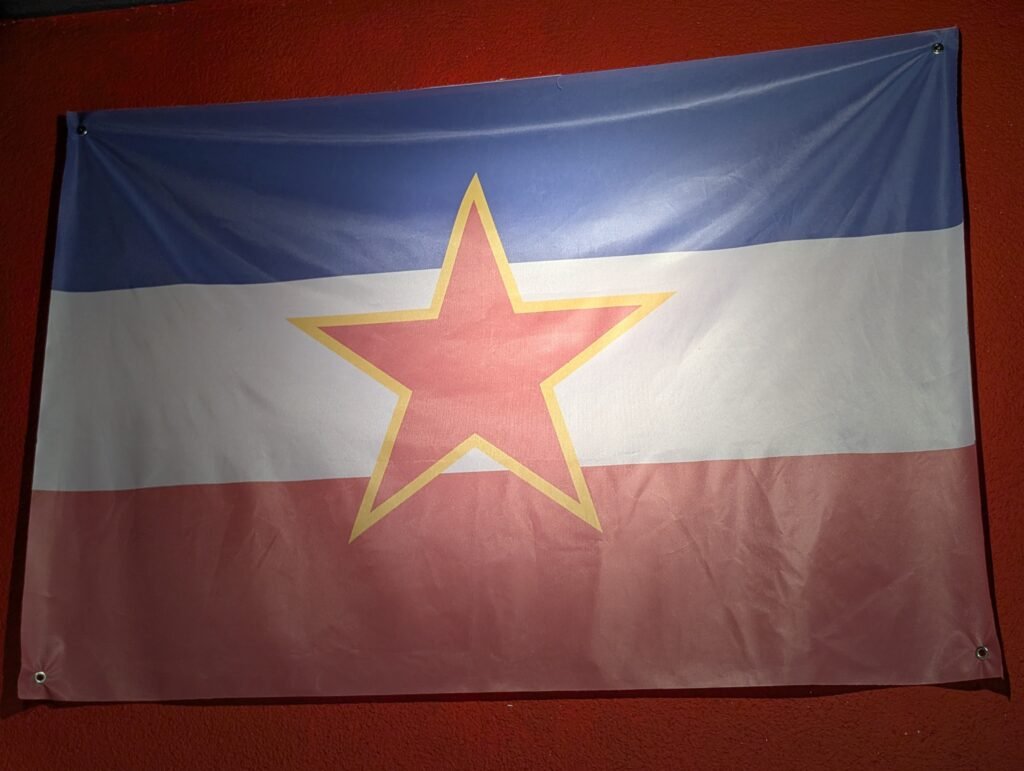
Flag of Yugoslavia
Colorful Bridge Floral Displays
Entrance to the Catacombs
Catacombs

I saw one other interesting historic site during my brief tour of Jajce. Rome was home to many pagan religions, not all of Western origin. Besides some Greek cults, that of Isis, an Egyptian goddess was also quite popular and was tolerated by the Roman government. The Persian mystery religion of Mithras was another prominent coexisting cult. Mithras cult members were all male, and generally worshiped in underground temples or caves. The Roman Mithras cult was a kind of adaptation of a wing of Zoroastrianism. They had seven different levels of initiation and a secret handshake. It was all quite mysterious. Mithraism continued as a sort of rival to early Christianity through about the end of the 4th century.

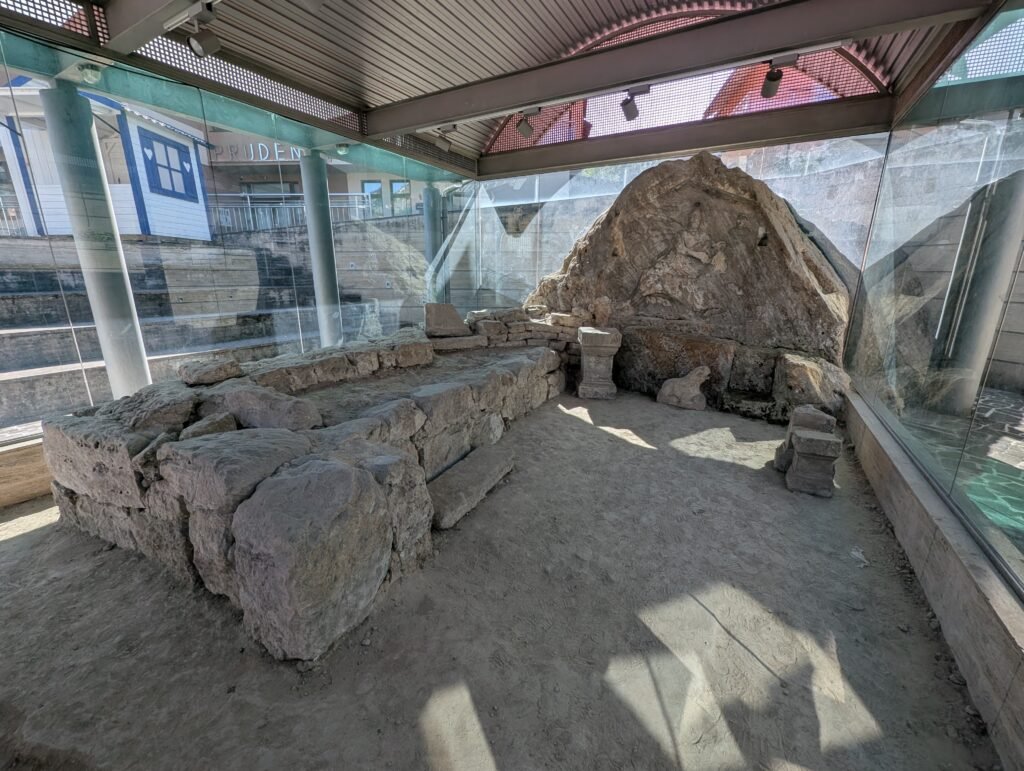
While excavating for the construction of a house in Jajce in the 1930s, the crew stumbled onto a 4th century underground Mithras temple. There is a small shelter placed over what was dug up. You can clearly see large relief of Mithras slaying a bull. It is a small site, and it does have a small admission fee. For a couple of dollars, though I found it worthwhile to enter. Nina didn’t want to go into this one, saying she could see what she needed to see through the glass walls. That was probably true, but I got a better view and she waited for me for a few minutes. That was all it took to see the site and read the placards. It was very cool, though, to see a 4th century pagan Roman temple with such a nice relief.

Nina was heading back to some other town that evening. Her phone was about dead. I didn’t have my external charger on me, but I had a quick charge device back in my room. We had both decided a dip in the river would be a good way to cool off and remove the day’s perspiration. She didn’t know of a good place to swim. I told her there was a nice little swimming hole just below the hostel, along with several other places upstream toward the lake. We walked back to the hostel where I loaned her my charger. Later on, I went down to the water and she was still there. I was pleasantly surprised by how fresh the water was. It was almost cold – cool enough to make getting in the water uncomfortable, but very refreshing once you are in. It was a well needed dip.

After Nina’s phone had been charged, which didn’t take very long, we said our farewells and she headed back to whatever town she was staying in. I went on in to my hostel and found some of my fellow tourists. We had decided earlier to head back to the same Ottoman guard house for dinner. This time, I had the cevapi. It was not super spicy, but it had more flavor than the Bosnian pot. I had a pleasant evening visiting with my fellow travelers.

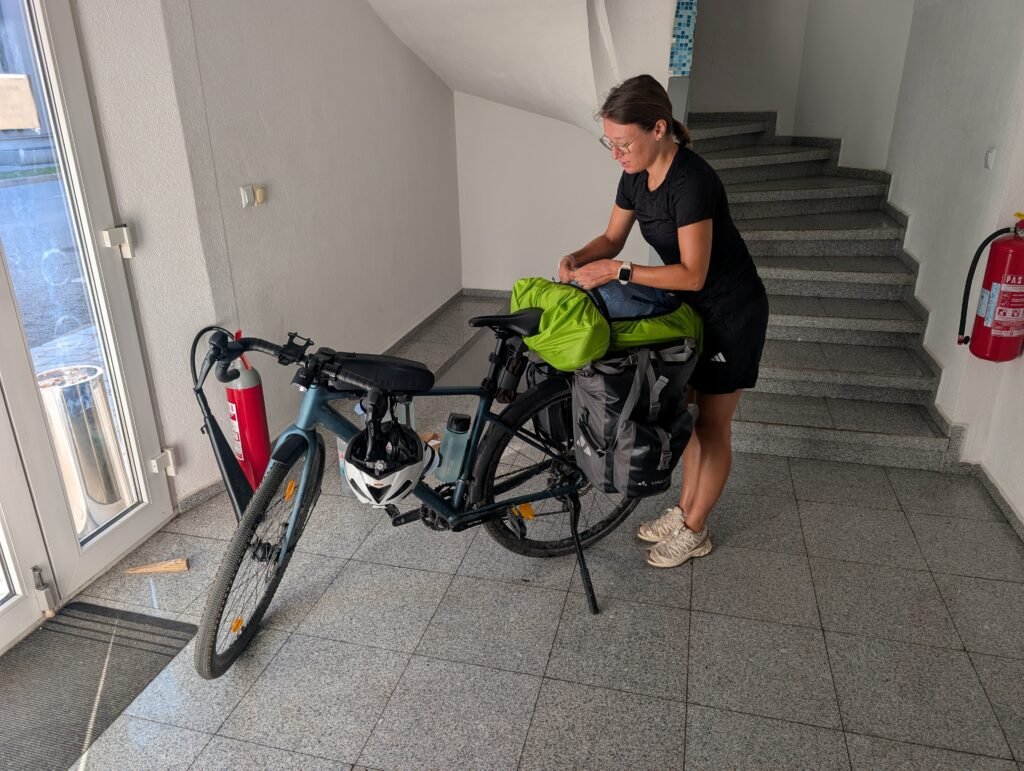
One of my fellow tourists was a thirty year old woman who had ridden her bike all the way to Jajce from Germany. She had panniers and a tent. In our visits, I wondered aloud if a tent was necessary weight, since she slept most nights in hostels. She quite reasonably pointed out that sometimes you just don’t feel like moving any further. She had an app, also, where she could find routes and even farmsteads where people allowed passing cyclists to camp for the evening and even use the shower and bathroom. That may have almost made carrying a tent worthwhile. I marveled at her toughness and independence. It was quite a trip she was on. She wasn’t the only cyclist I met on the trip who was doing some kind of long haul route.

I was up early enough to see her off the next morning. I, too, had an early departure. I was just carrying my pack down to the bus station for a ride to Sarajevo. On this morning, I was glad of that. I don’t think I have the energy to climb the 1,500 meters of elevation gain she was going to have to traverse on her bike trail to her next destination that day.

Church on the Way Up to Jajce Fortress
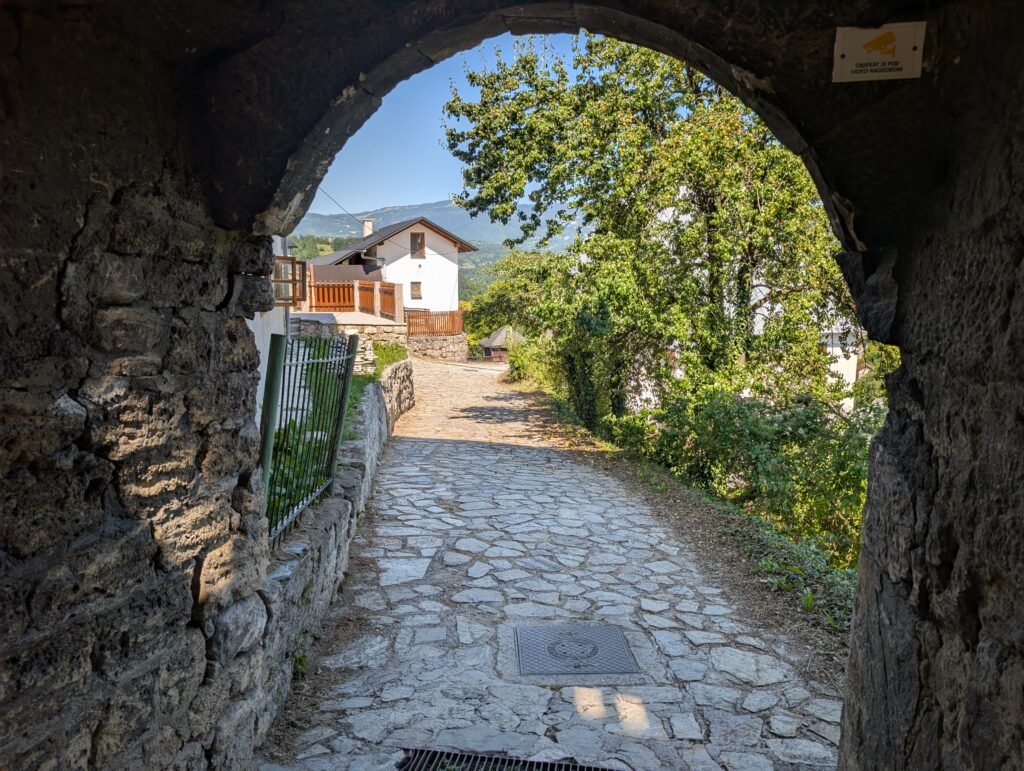
Views From Guard Tower Along the Climb
Entrance to Upper Part of Castle/Fortress
Views From the Top
4th Century Temple of Mithras
My Cycling Friend From Germany, Heading out for a Huge Day of Climbing
Dams Along the Pliva River
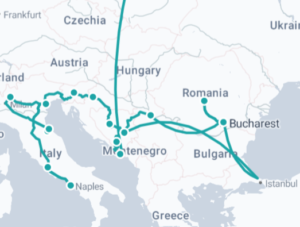
Italy Yugoslavia Overview
Bosnia
Sarajevo
Mostar
Romanian Interlude