Mostar

The Muslim Mediterranean

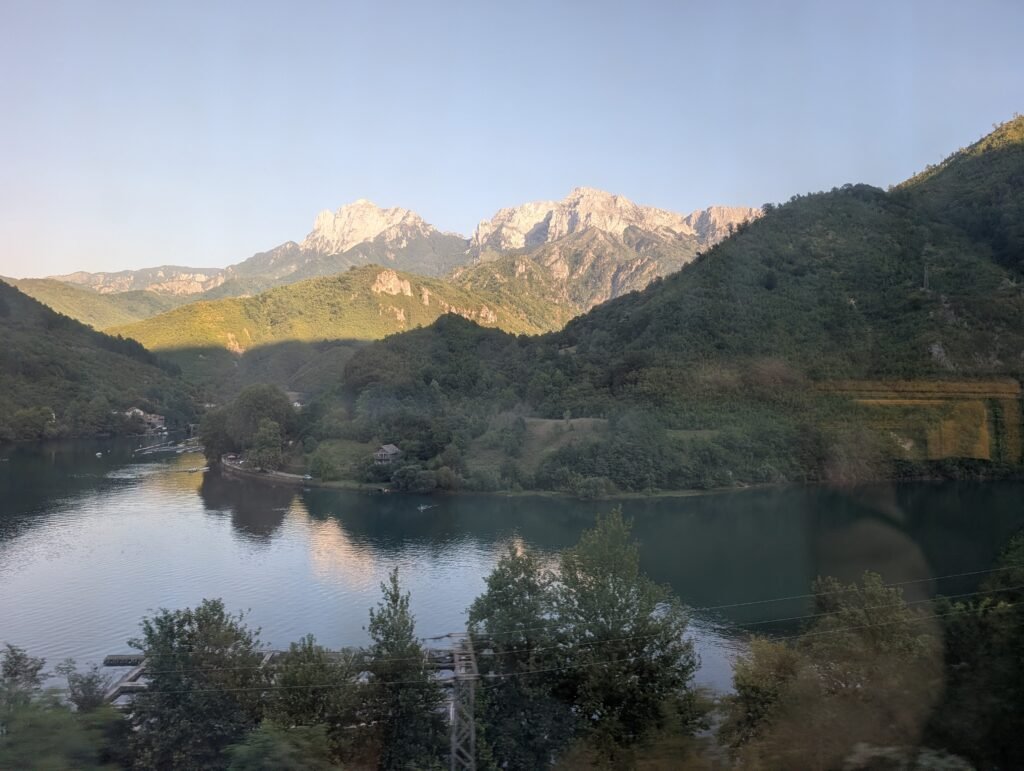
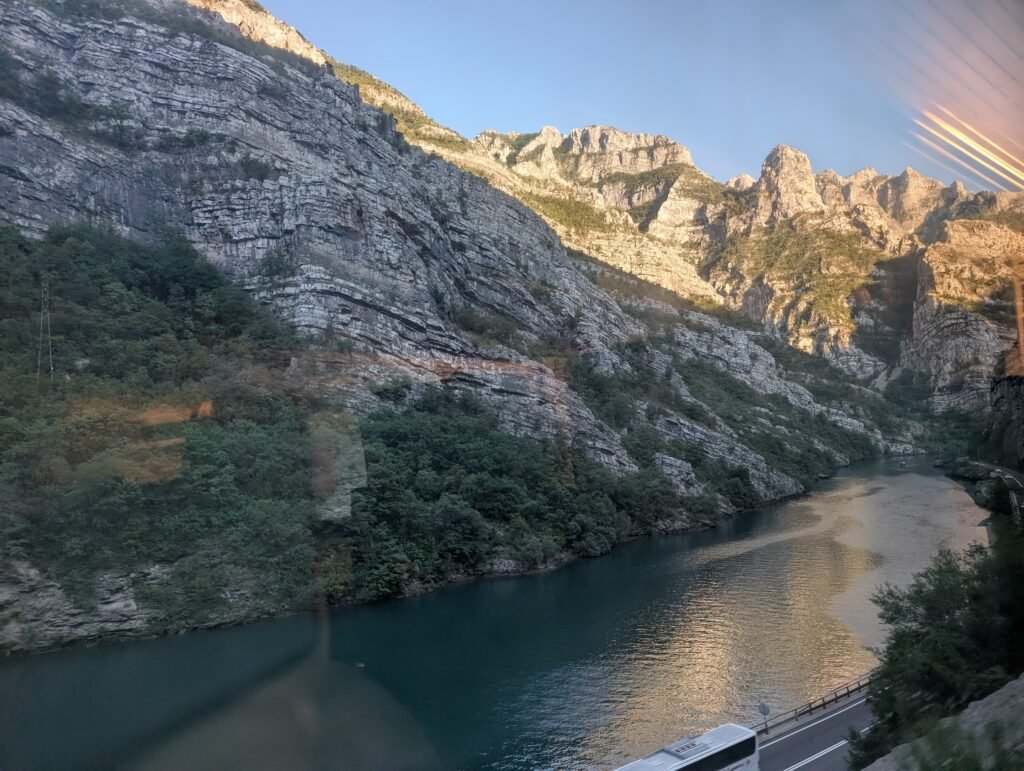
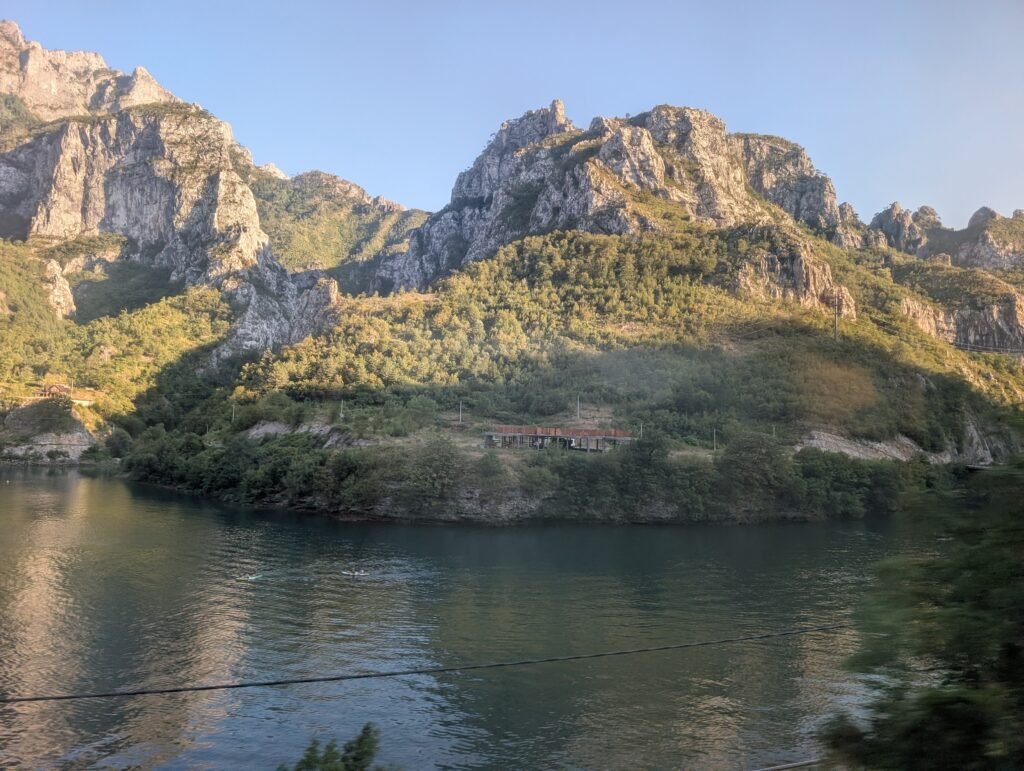
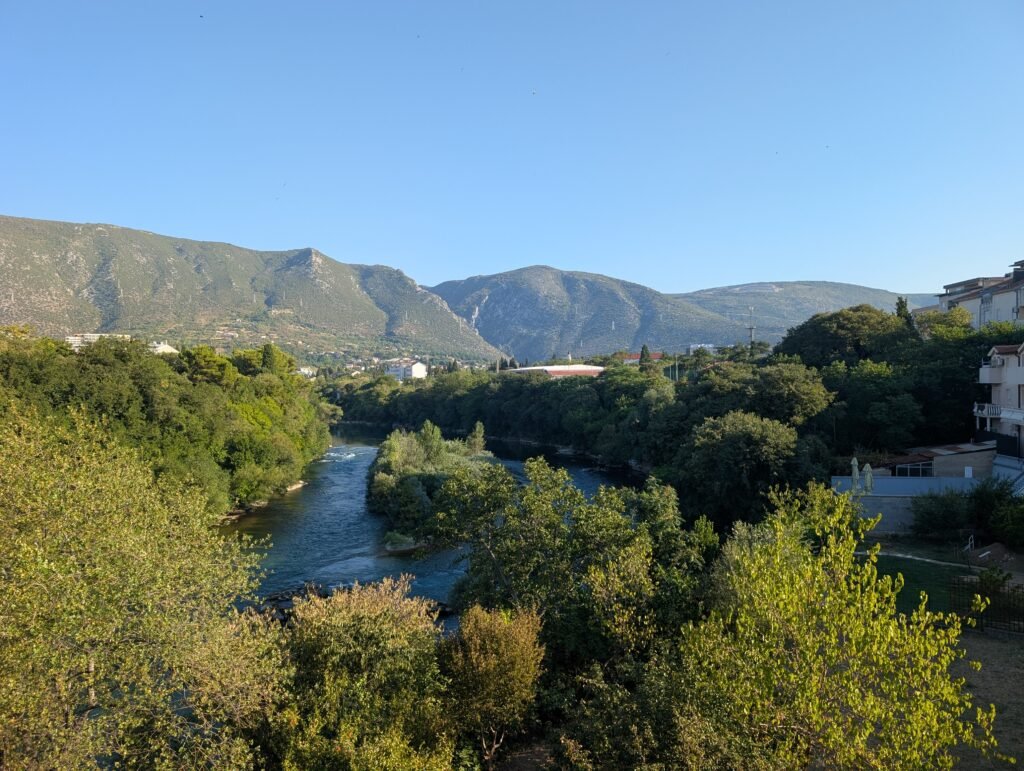
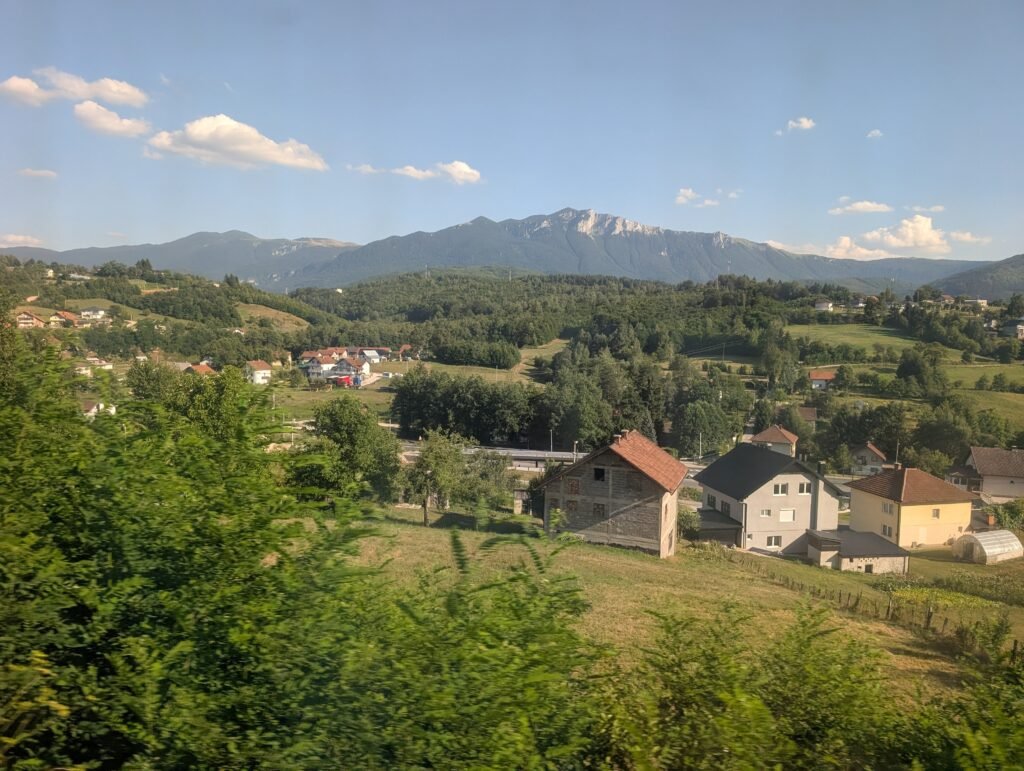
Late Sunday afternoon, Andrew and I took a train to Mostar from Sarajevo. This is a route famous for its scenery. I read online that you should try to sit in the left side of the train, if possible. There were good views from either side, but the left seemed a little bit better. We passed long thin lakes and some majestic mountains. Initially the mountains were stone at the top and covered with trees, like those around Sarajevo. Not too long after we left, the mountains started getting less stony, and eventually drier. Andrew commented that they looked like the Coast Range in California. I thought they were a little more brushy and had less oaks in my view. But they were dry and sprinkled with other fruits of the increasingly Mediterranean climate. We made our way through vineyards and fig orchards. It was hot country.

It was a pretty ride, though I think Andrew liked it a bit better than I did. In general, I do prefer trains to buses. We had the freedom to get up and move about. We also had more space than I was allotted on most bus trips throughout the Balkans. We made it to Mostar at about 7 p.m., in time to check into our hostel and stroll the streets in search of some food. Our host at the hostel in Mostar was the owner. I have to say, it was the cleanest hostel I’ve ever stayed in. The owner was kind and friendly with us. While she was checking us in, however, some Australian girls came past who had apparently closed some doors a bit too firmly during the night. The host jumped all over them. She did not let them off the hook with a quick apology. “You don’t slam doors like that at your house, do you?” she barked. I knew instantly why the hostel was so clean. Andrew and I were very careful to follow all the rules and leave things as clean as we found them. The clean and quiet environment more than compensated for the rigid enforcement, in my opinion.

We found dinner at a cafe in Old Town Mostar boasting traditional Bosnian plates. We decided to split a large plate with a variety of local delicacies. We shared peppers and onions stuffed with minced meat. There were cevapis, pljeskavica, traditional sausages, potatoes, and a few other things – just no vegetables to speak of, besides the stuffed peppers. Our plate together was 25 BAM, which amounts to about $14 at the time of this writing.

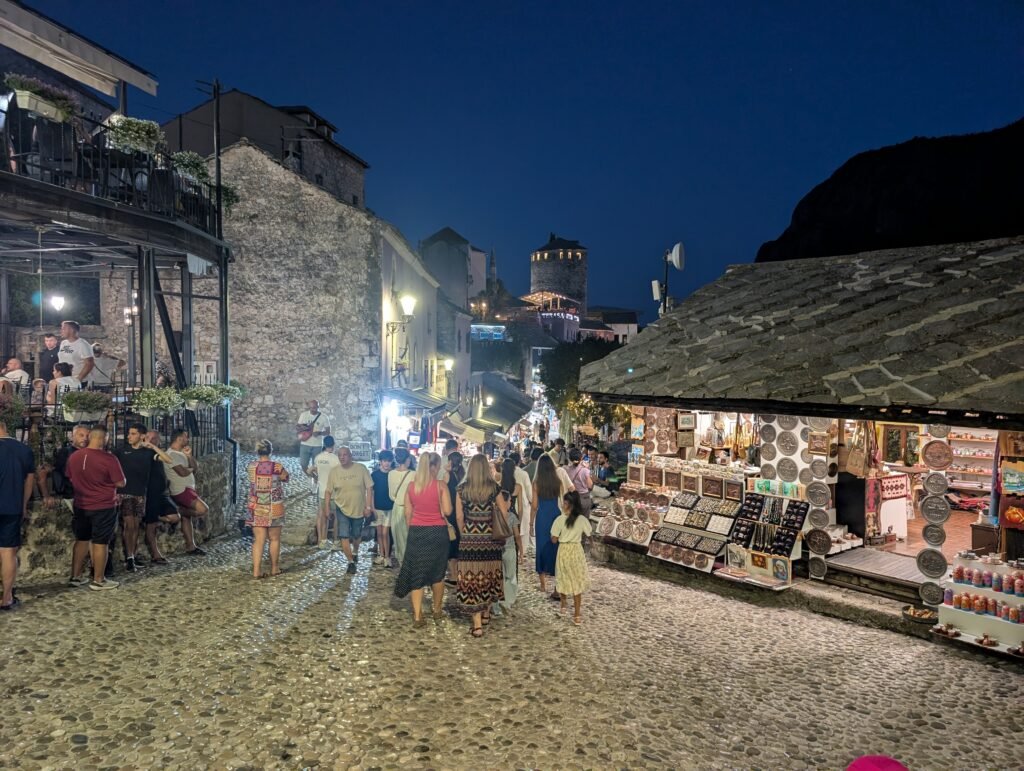
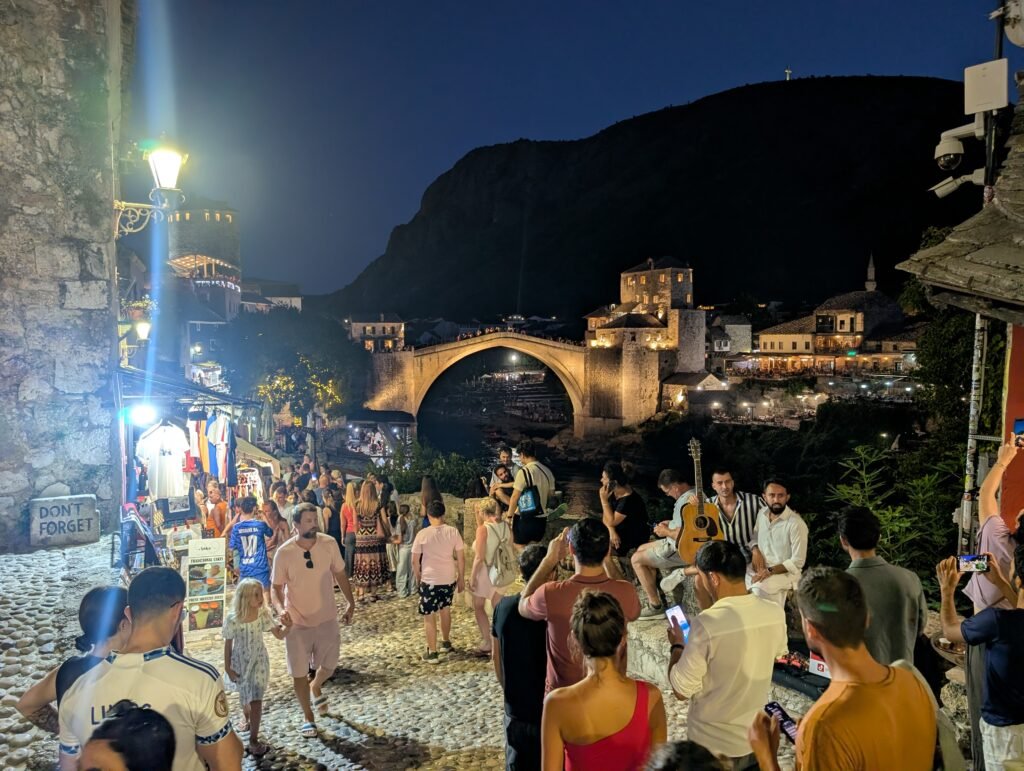
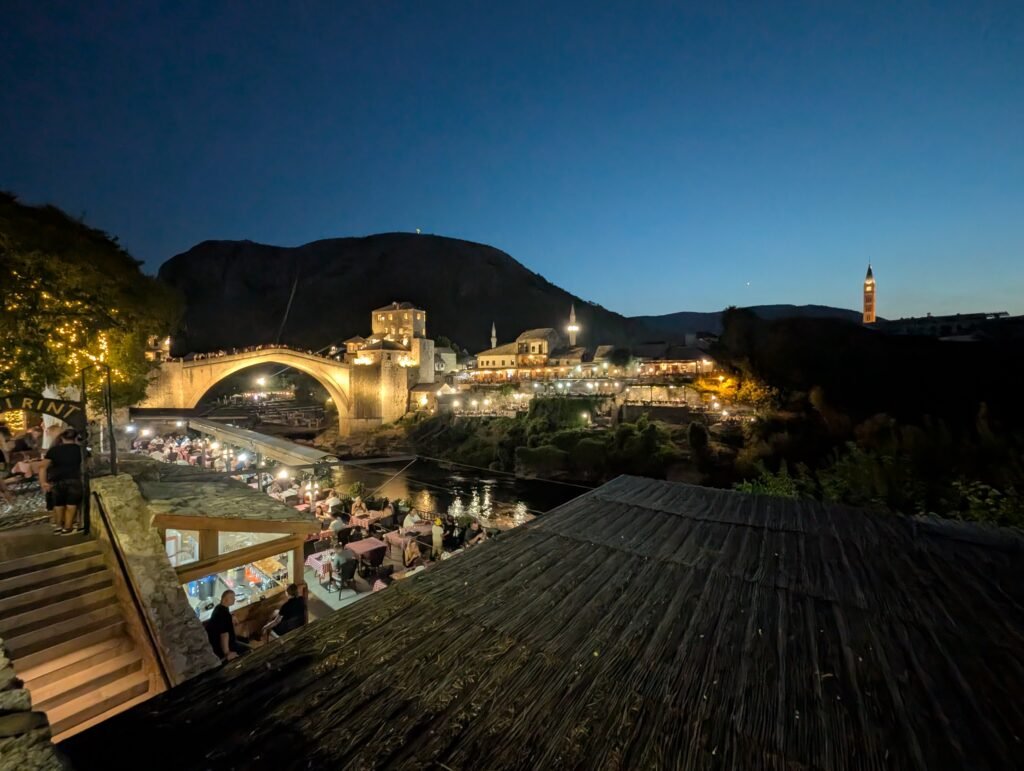
The slick limestone streets were packed that evening. We walked the Old Town in search of someone selling day tour packages for the next morning. I don’t normally like package tours, but there were several interesting places to visit within about a half hour’s drive from Mostar, none of which could be consecutively reached with public transportation. I figured we could see most of the sights in Old Town Mostar piecemeal. We saw the famous bridge and the exteriors of many of the historic buildings just walking through town that night. The plan, then, was to pay for a day tour that would visit Blekke Blagaj, Zitomislic Orthodox Church, the medieval Bosnian village of Pocitelj, and the wildly popular Kravica Waterfall. Despite several people directing us different places to book the tour, I never found anyone offering this service in person. I eventually gave up and booked online using Get Your Guide.

The tour occupied about eight hours, but got us to more different locations than we ever could have managed in the time we had using public transportation. Further, we were back in enough time to see the most important local buildings we had missed the first night. It turned out to be the perfect plan for the constraints we faced.

(Continued)

View From the Train
Mostar's Old Town
The Iconic Bridge
Morning in Mostar
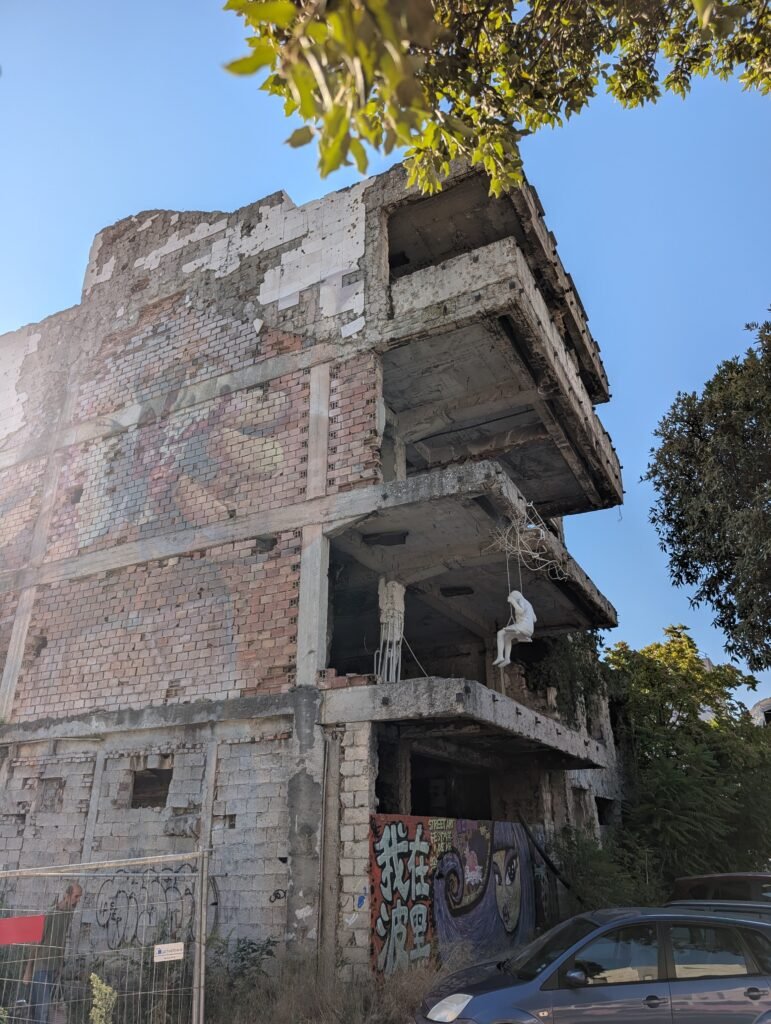
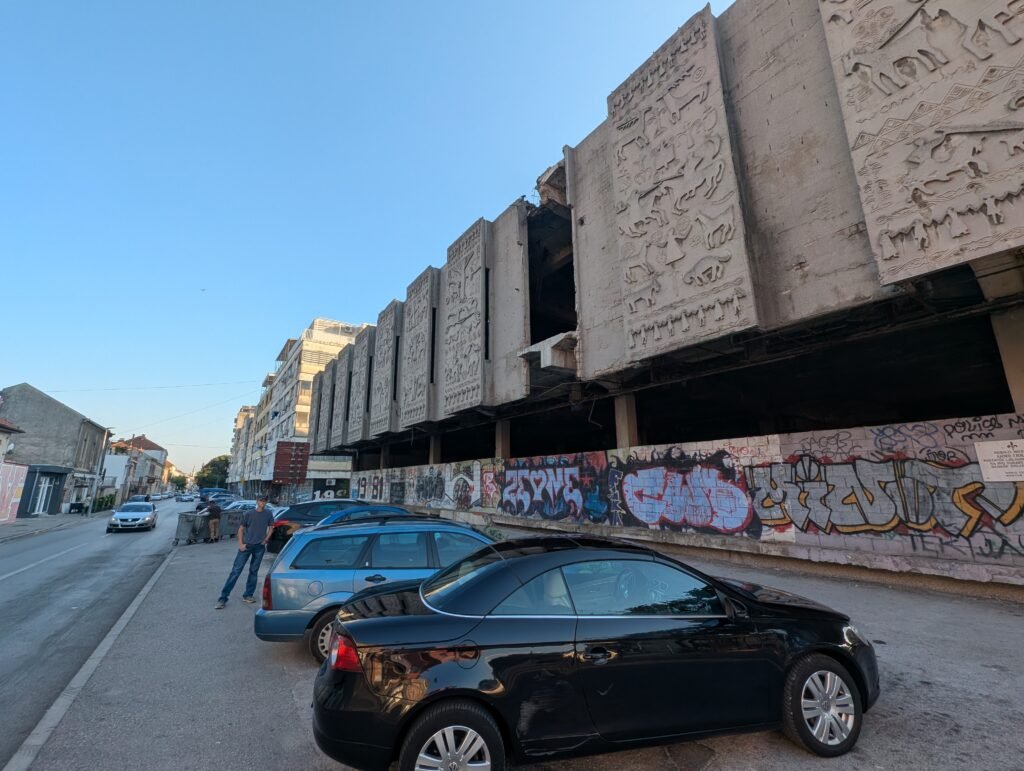
Mostar's Damage From the War
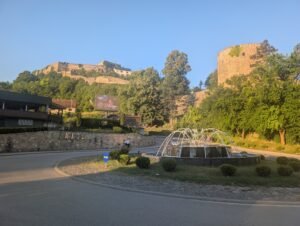
Herzog's Castle Atop the Hill
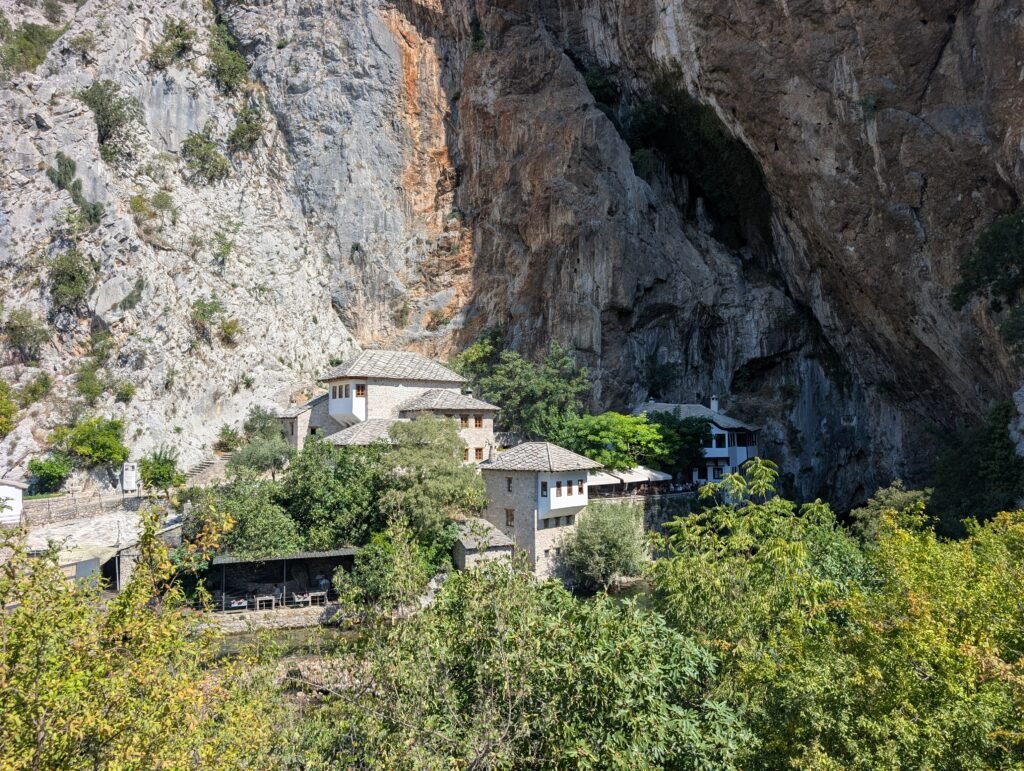
Blagaj Tekke
Intricate Ceiling Woodwork

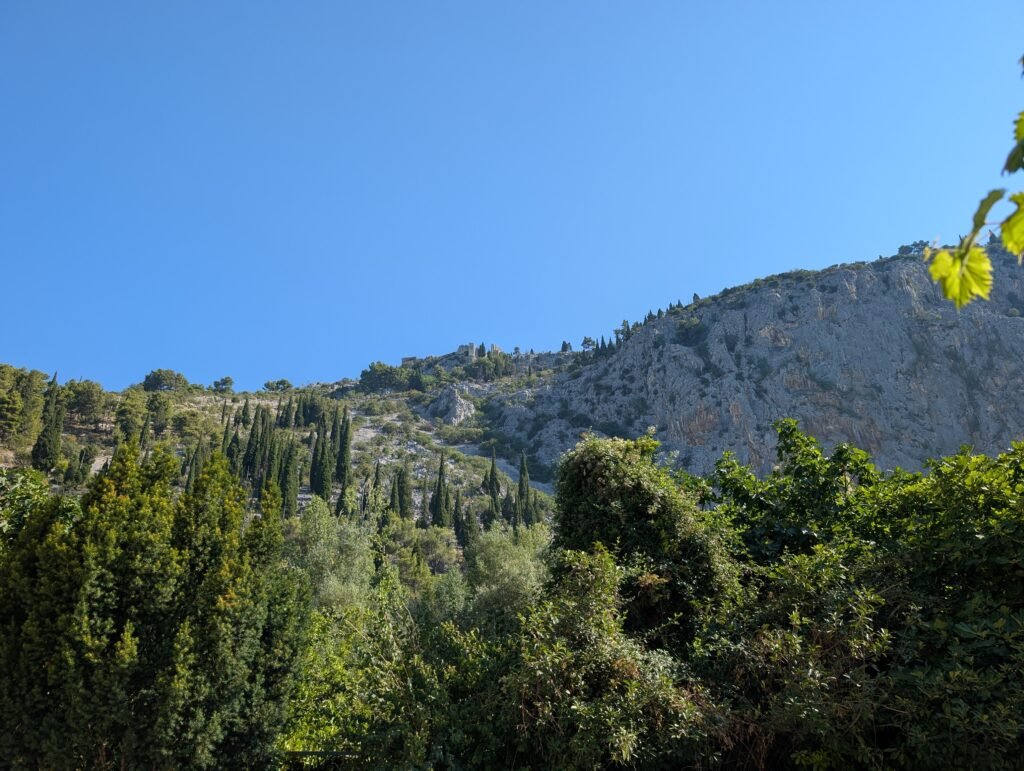
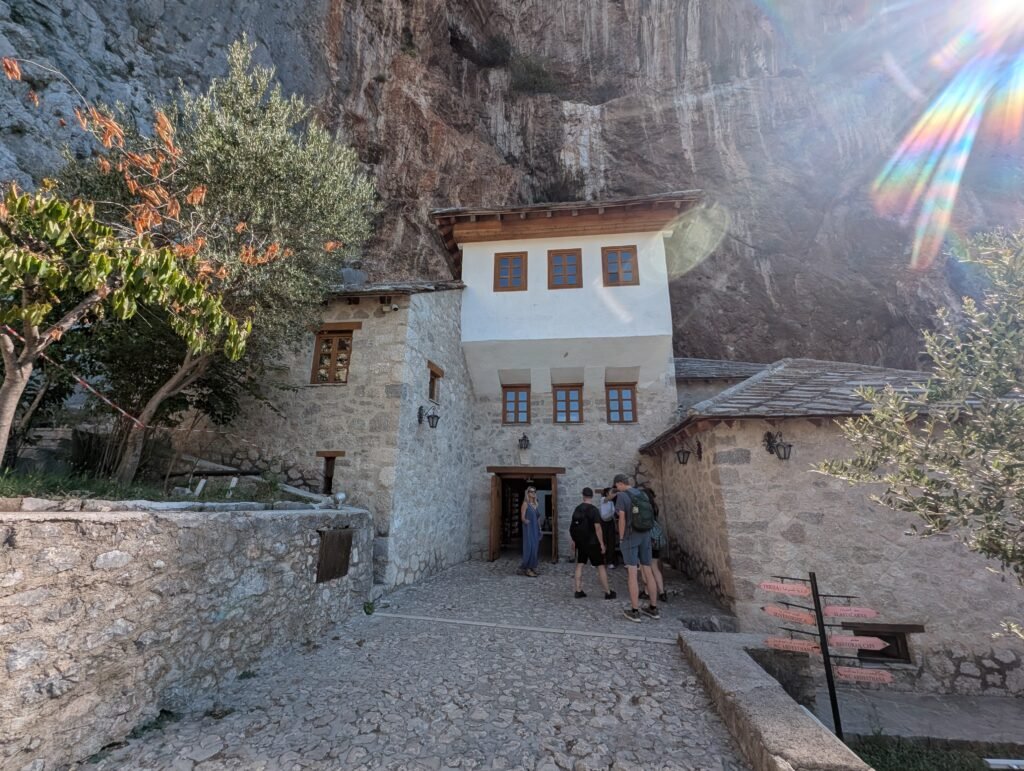
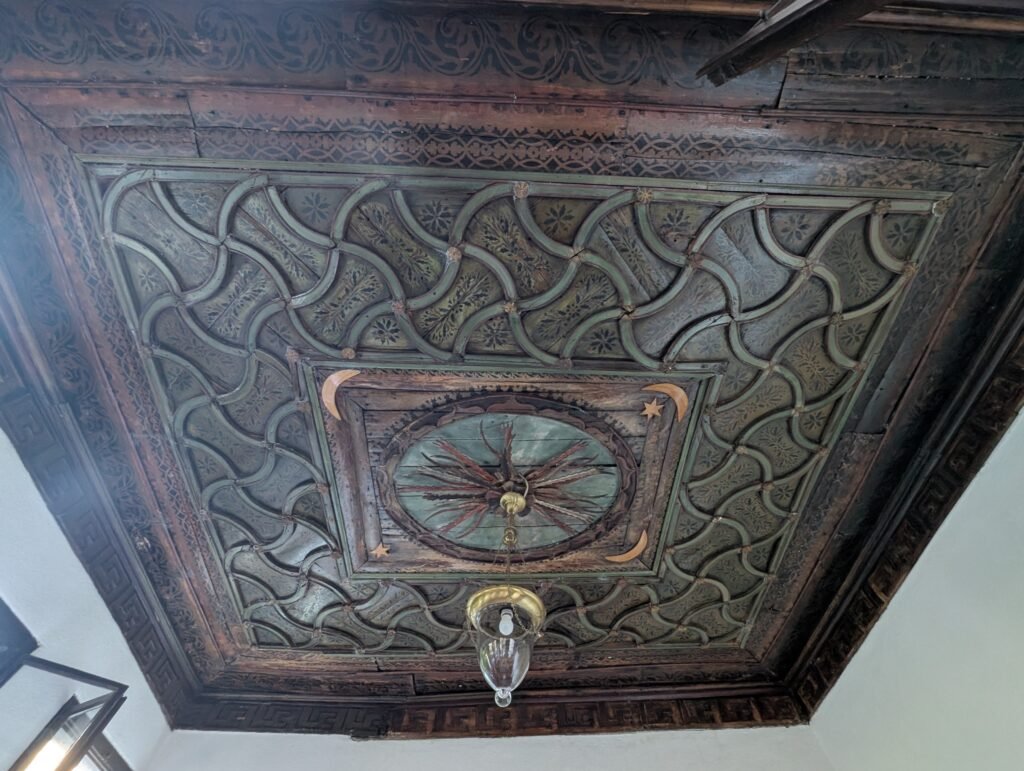
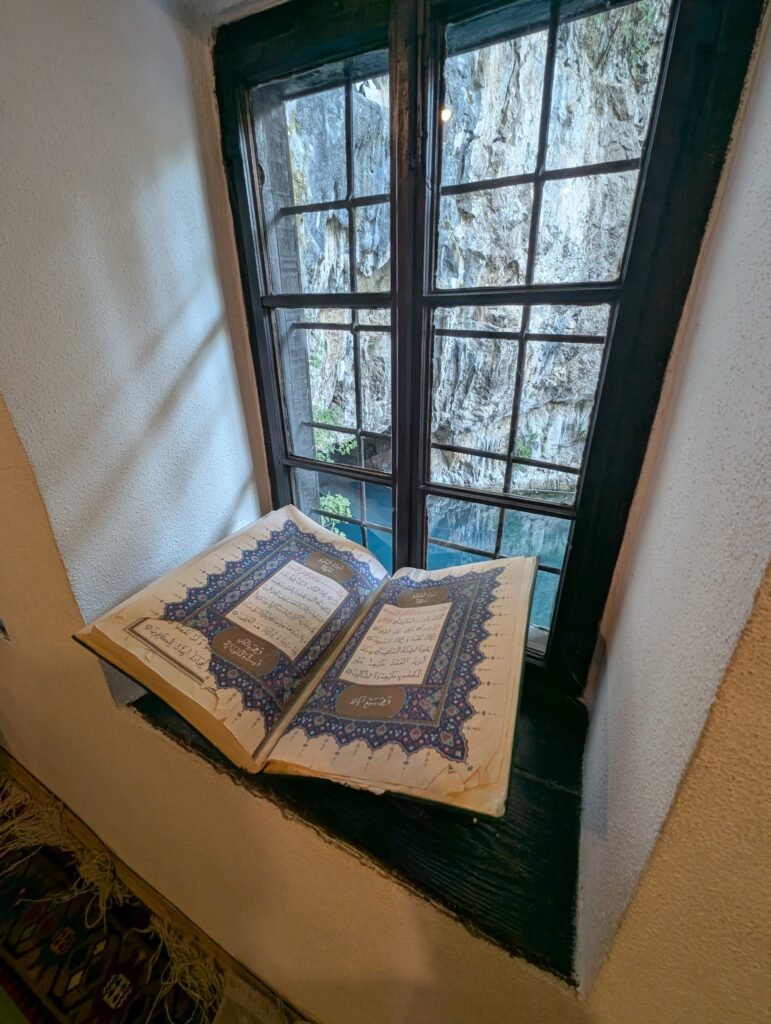
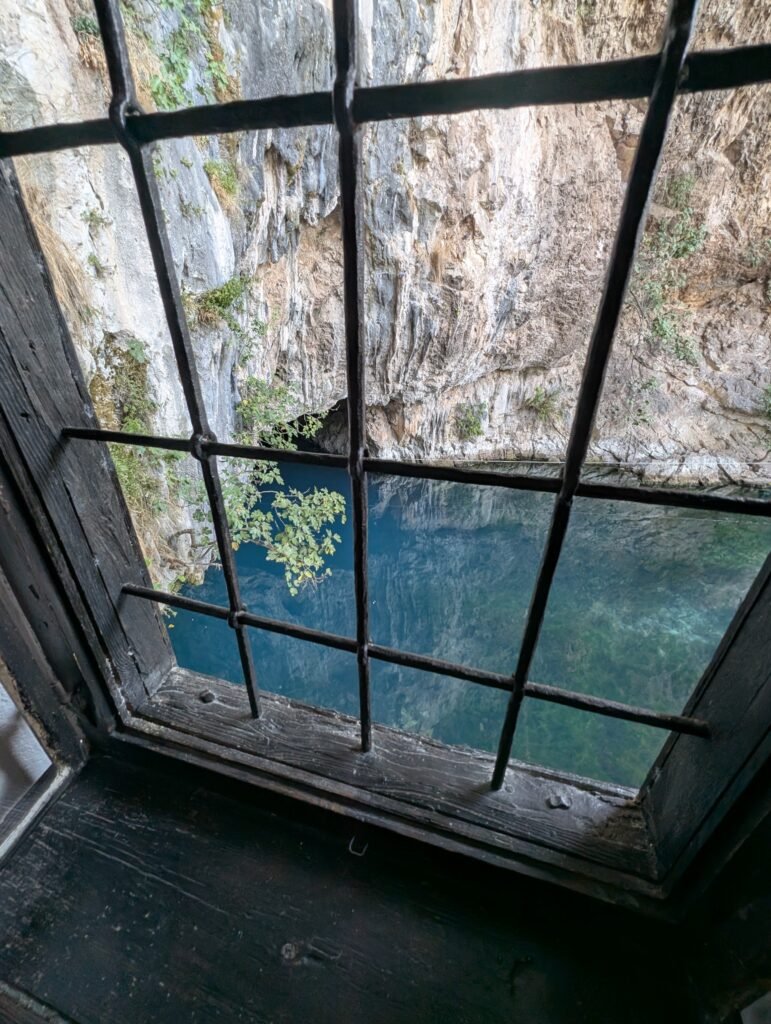
Our tour took us first to Blekke Blagaj. This is usually described as a Dervish monastery. That’s a bit of a misnomer, as there are no monks nor monastic orders in Islam. It served a similar purpose. This 15th century retreat was a place created by Sufis. Sufis can be either Shia or Sunni Muslim, but practice a more mystical, spiritual version of Islam. They seek to be more aware of God’s created world. Dervishes in Turkey meditated by whirling in circles. At Blagaj, they also ran a sort of Caravansarai. The place doubled as an inn, and even offered lodging free for up to three days to those who needed it. Those who sought guidance were told to enjoy the quiet and listen to the natural sounds surrounding the cool place and the flowing water. The water emerging from the Karst cliff in this location is very cool and clear. We had to cover up and take off our shoes, even though the place had not been an active place of worship for a very long time. There were a few artifacts here and there, but the inside of the building could be toured in 20 minutes or so. The cliffs were pretty and had a large castle on top. I learned here that the place name Herzegovina comes from the word for the Duke.

Originally, Herzegovina was ruled by a Duke. The name for this is herzog in Bosnian. He liked the area so much, he named it “duke-land,” translated Herzegovina. Herzegovina was historically just a region of Bosnia, but was given special administrative status when some of the leaders of an initially successful Bosnian revolt against the Ottoman Empire turned on their countrymen and sold them out to the Ottomans. They were from this area, and were thus awarded control of the region, which was broken out of Ottoman Bosnia and renamed Herzegovina on equal terms.

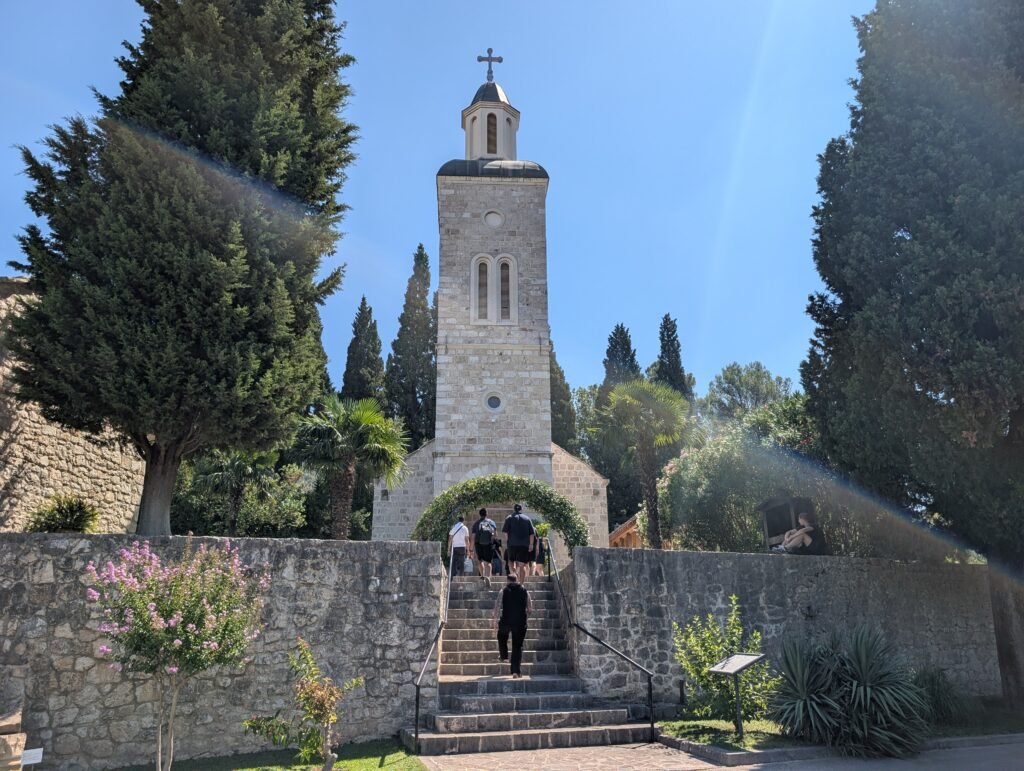
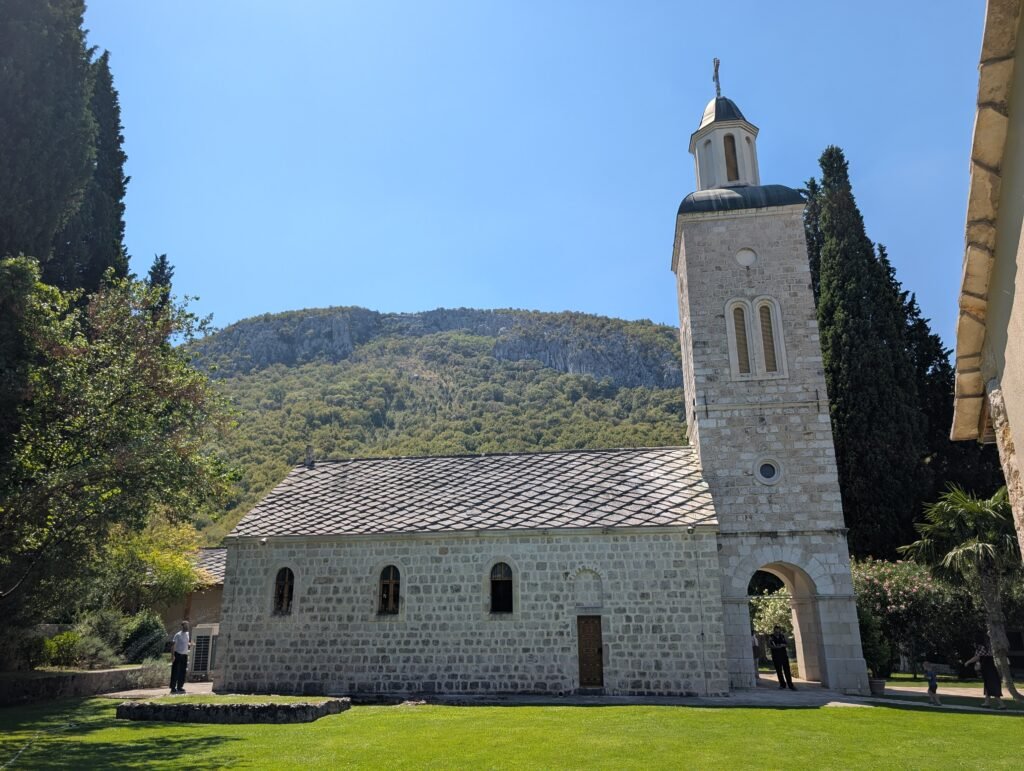
After Blekke Blagaj, we visited a Serbian Orthodox church and monastery. Mostar likes to think itself a wine region. There are a lot of grapes growing there. The Orthodox monks seem to be growing some grapes there and are planning to open a cafe and wine tasting venue in the next couple of years. The church itself looks very much like an Orthodox church. Previous buildings on site have been destroyed, and only the floor and a couple of pillars remain from this facility’s older structure. They also have on display a Madonna and Child portrait that survived the 1990s wars. This was a relatively quick stop. Considering the newness of the church, I didn’t understand exactly why it was included. We walked around and looked at the grounds and the inside of the building for a few minutes before continuing on to the medieval village of Pocitelj.

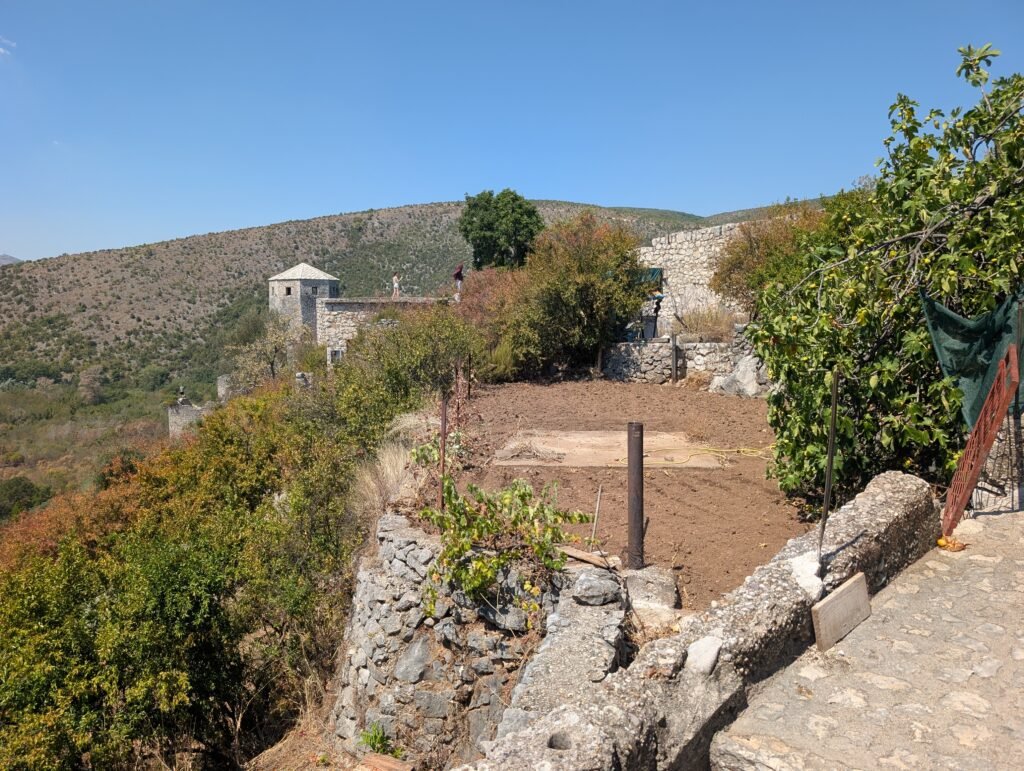
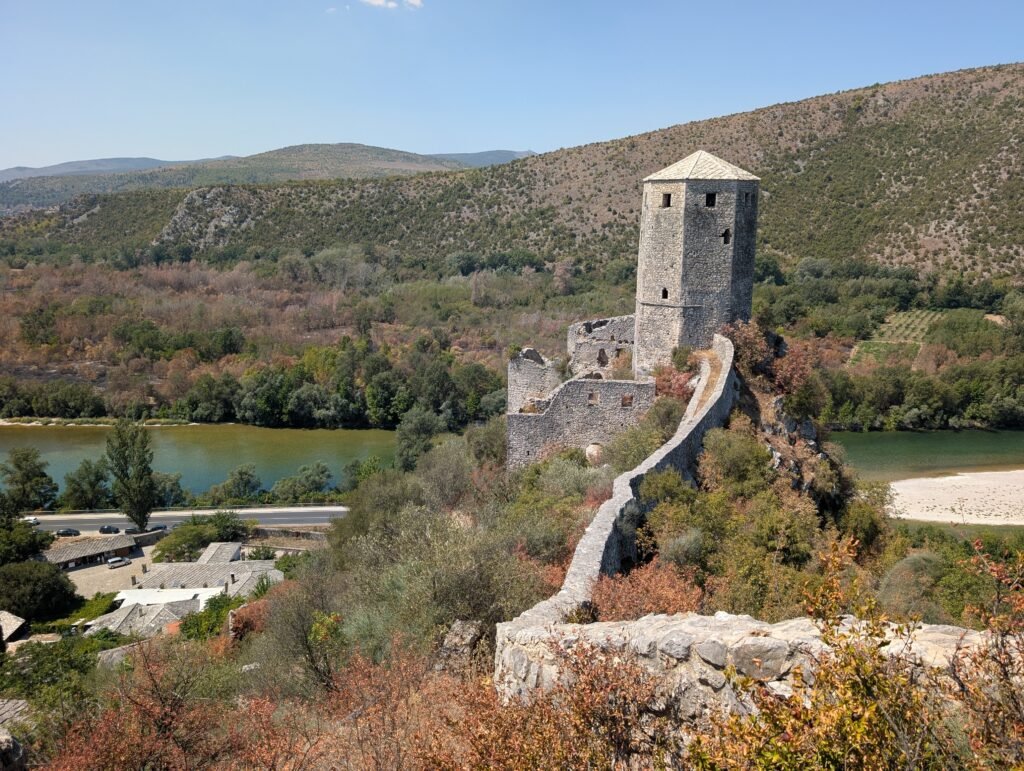
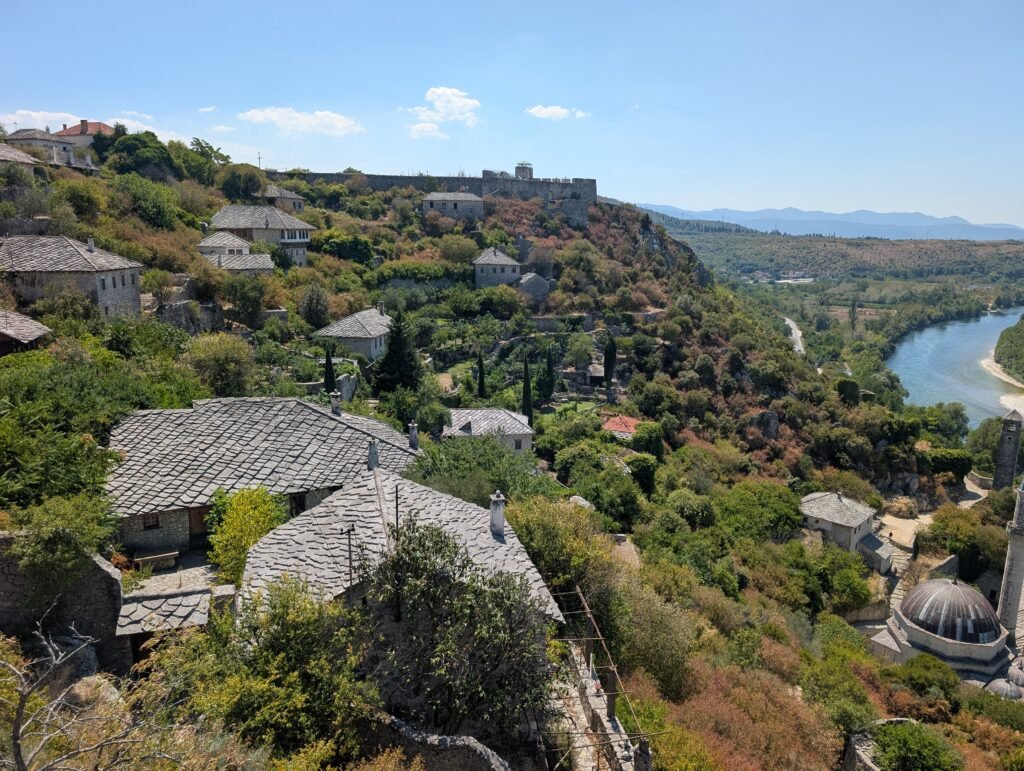
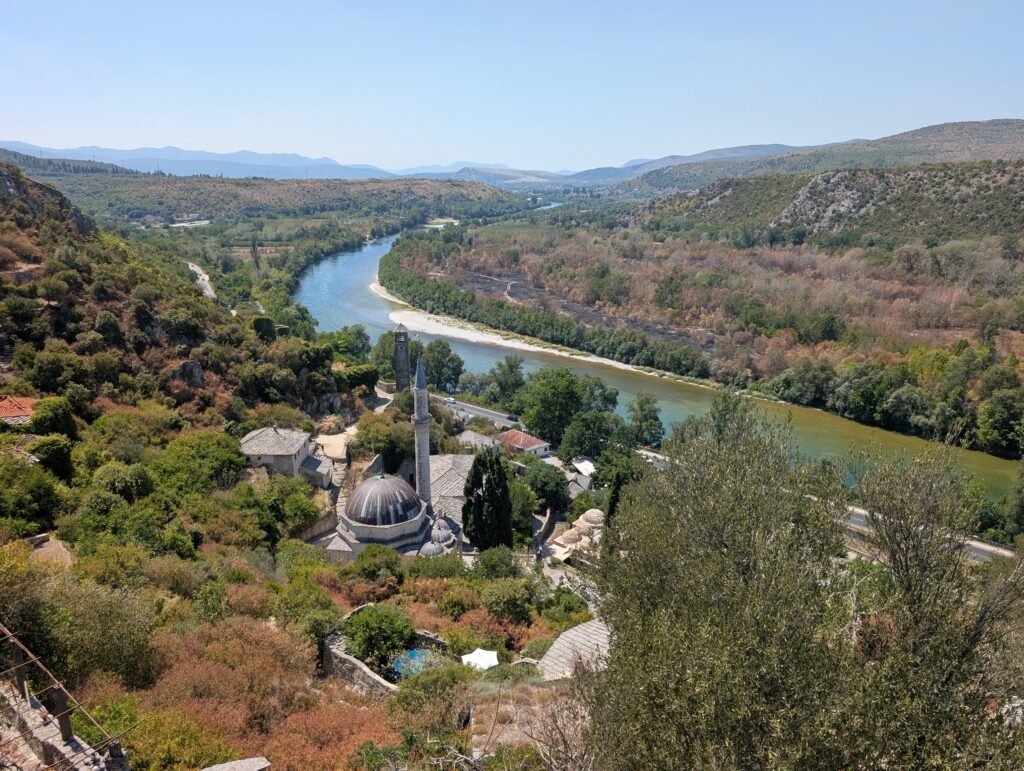
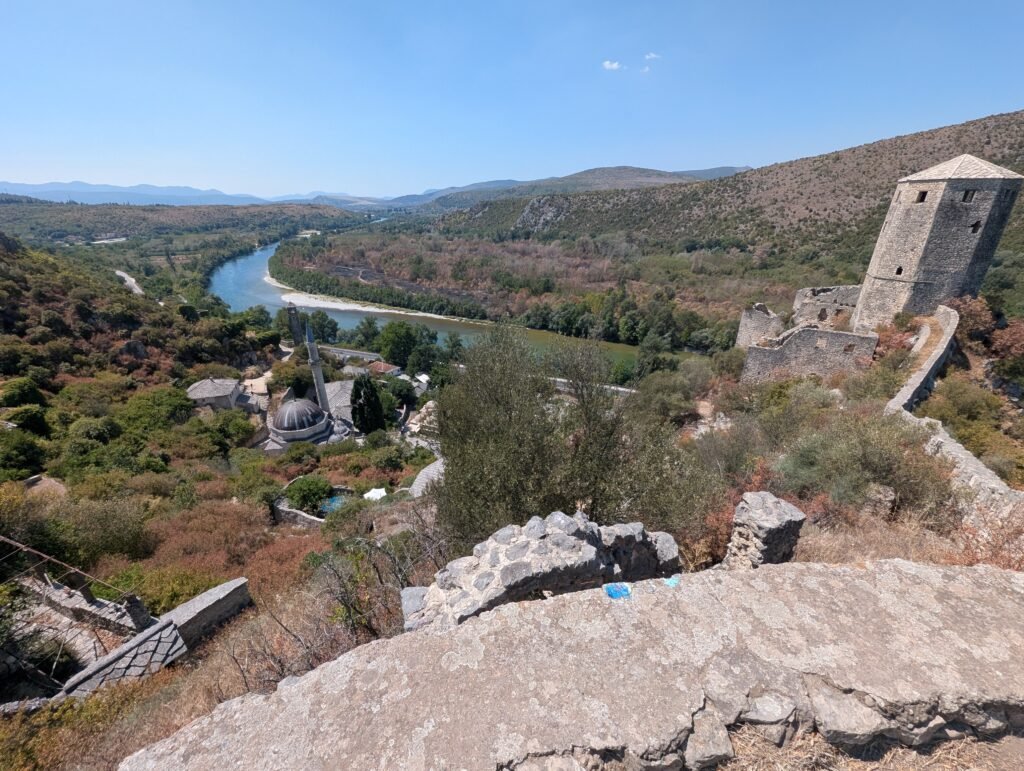
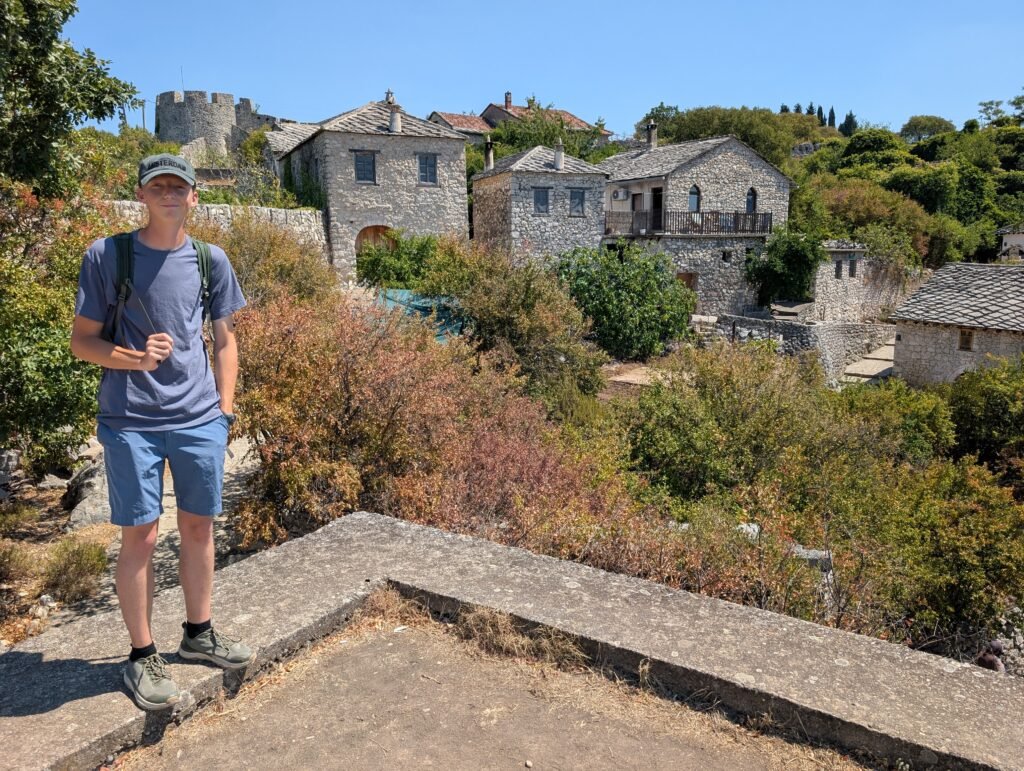
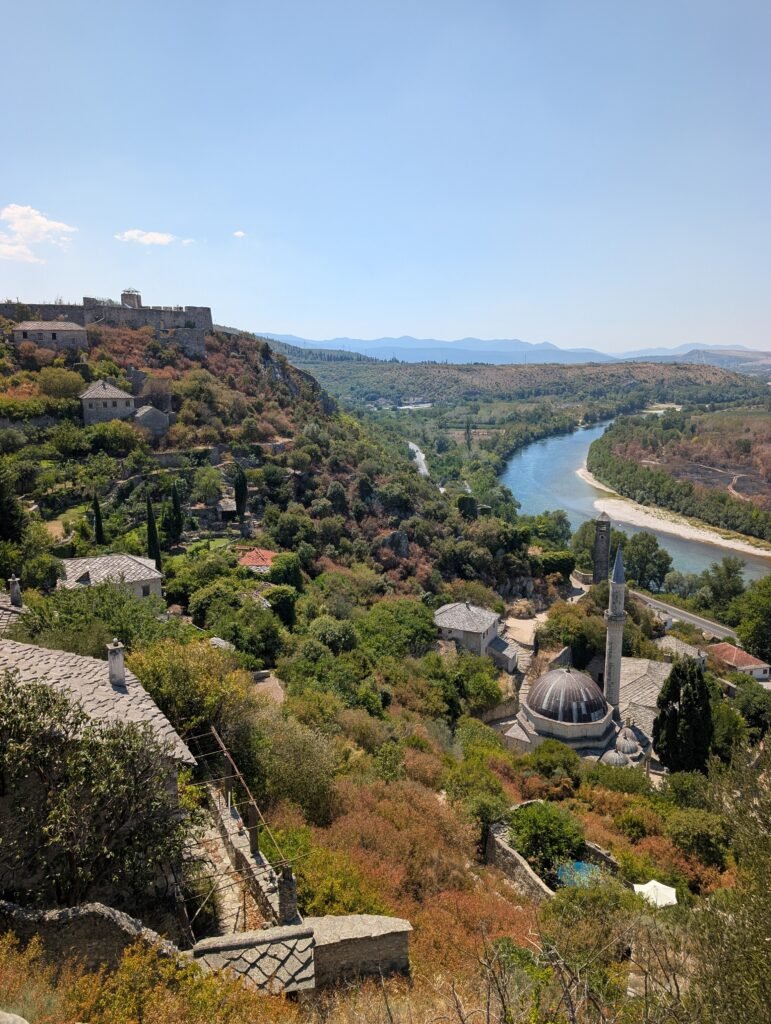
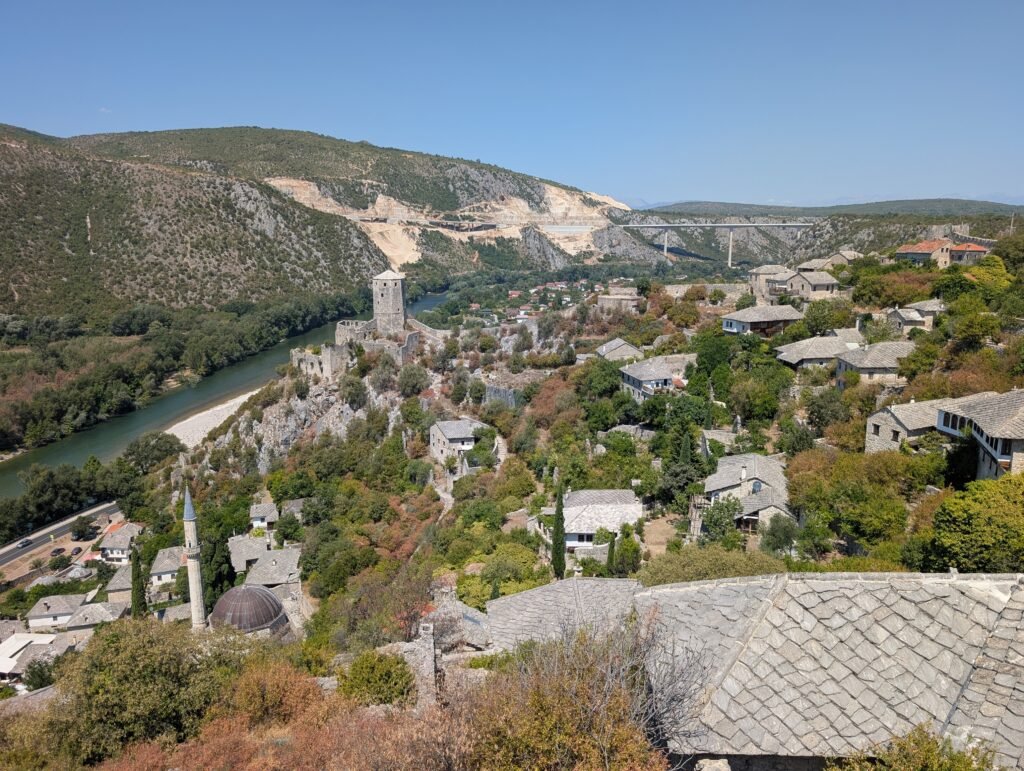
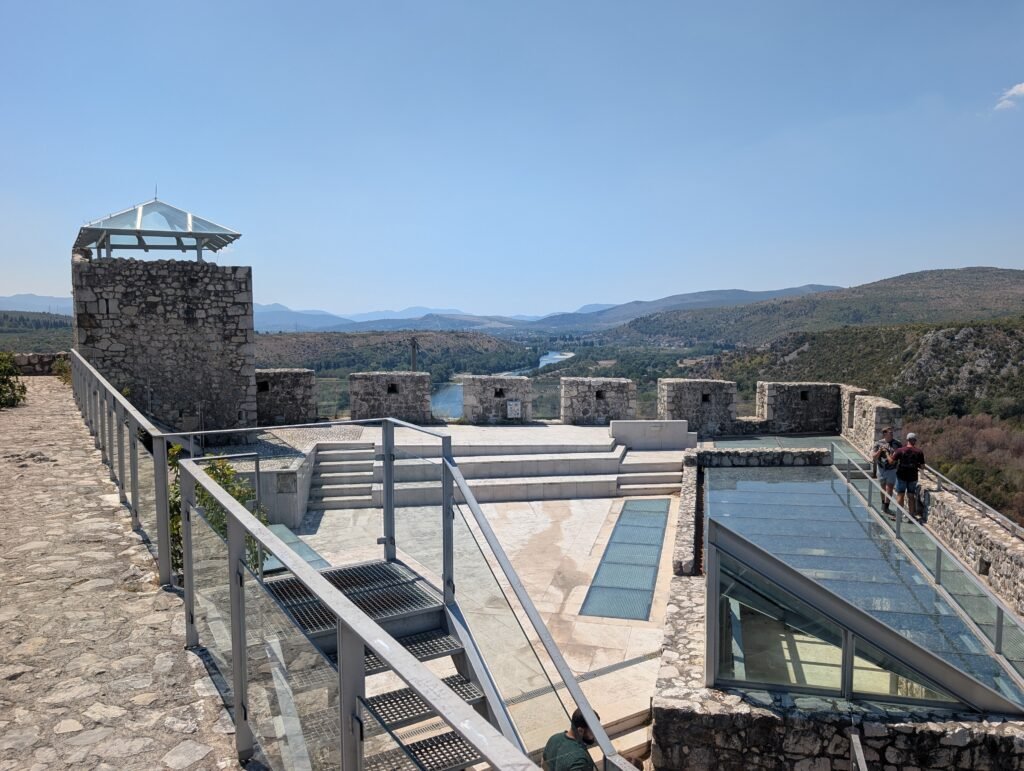
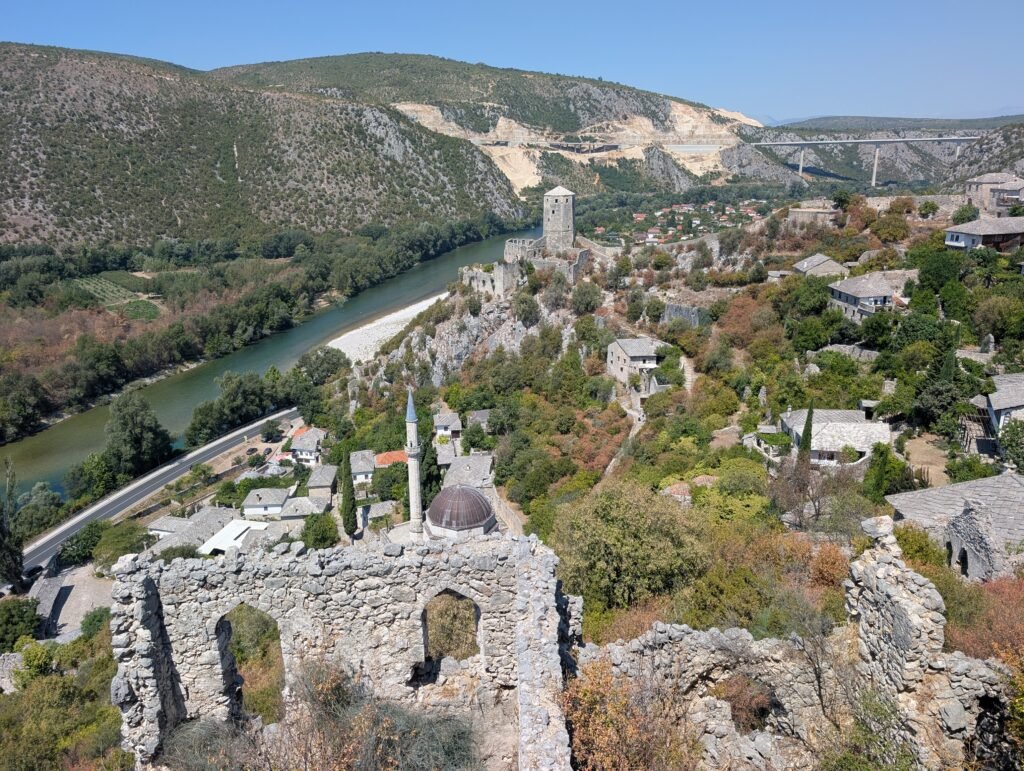
During the period of the Bosnian kingdom, this city was constructed on a steep hillside. The upper regions of the town were protected by a series of walls and parapets. These offer very nice views of the surrounding area. Our tour dropped us off at the top of the town, so that we could make our way toward the bottom rather than having to climb the often steep, winding stairways through the stone roofed houses and shops. Andrew and I made our way over to the highest fortification. This required a bit of climbing, but not too much. I snapped some photos and enjoyed the view for as long as I felt was appropriate. I knew once we started down, the views would be less impressive, and the airflow more restricted on this already very hot midday.

Andrew bought some pomegranate juice from a local vendor which he said was very good. We saw our Pakistani friends from the Yellow Fort on the descent. Andrew stopped for some meat filled pastries at the bakery near the road at the bottom of the city. This was our meeting point, so we sat for a rest while Andrew ate his pastry and we awaited our minivan.

(Continued)

Inside Blagaj Tekke
The Setting is Appropriately Cool and Peaceful
Serbian Orthodox Church and Monastery
Overlooking Pocitelj
Cool Tower in the Medieval City
Views From the Upper City, Andrew and I Walked All the Way Over to the Other Fortification
Lots of Elevation Change

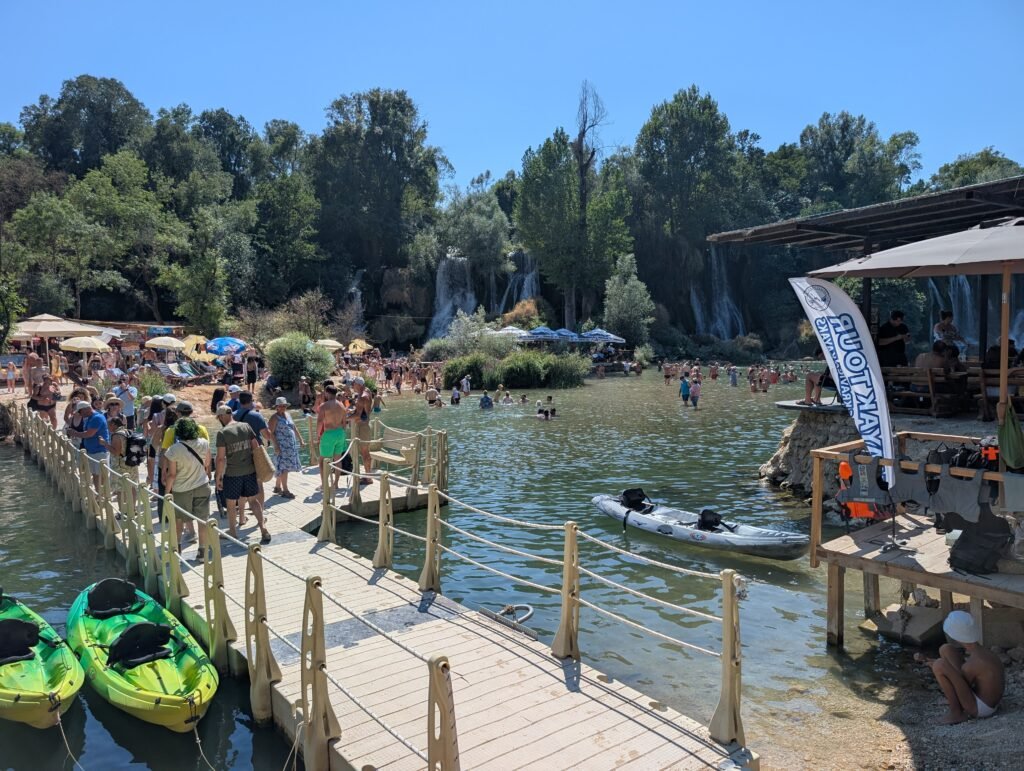
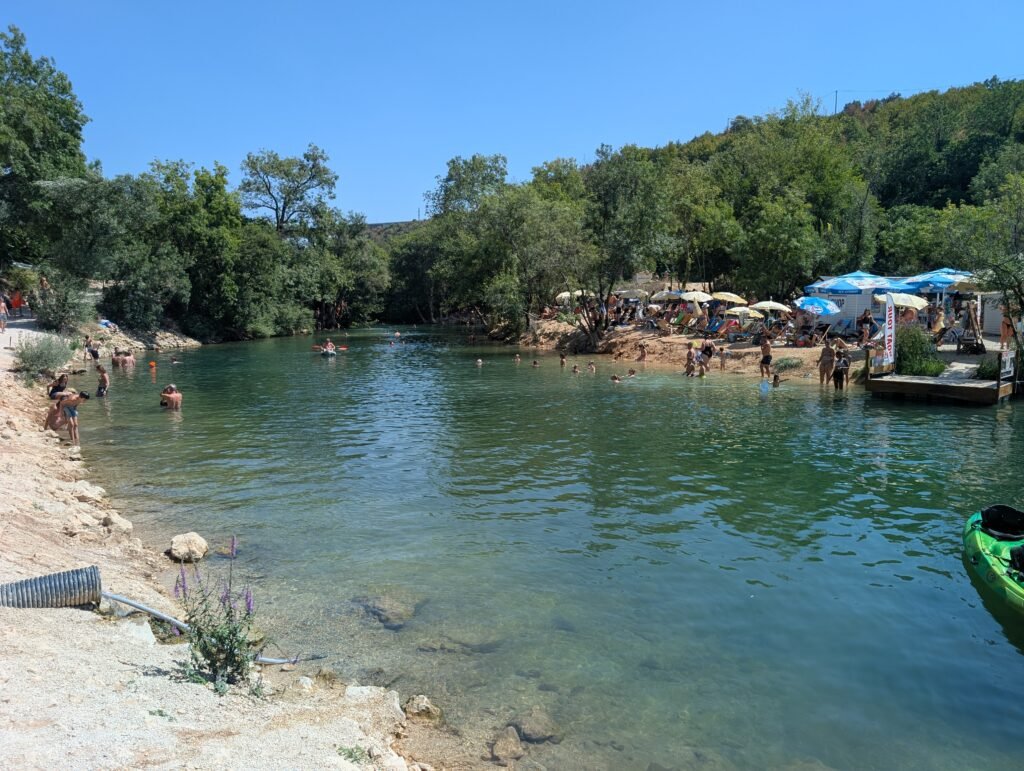
From Pocitelj, we headed to our final stop, the Kravica waterfall. From what I had read, I thought Kravica might be something spectacular – perhaps a Bosnian version of Niagara Falls or something. It turned out Kravica was really just a series of small falls, perhaps 15 to 20 meters high coming out of or over the Karst formation. They formed a pool and the river continued downstream. As was the case at Jajce, the water was surprisingly cool – enough to be slightly uncomfortable to enter, but completely refreshing once you had gone all the way under. We had to pay an additional €10 to get in, and we stayed two hours, which was a bit longer than I really need at a swimming hole. The temperature was nice, and I enjoyed people watching. The swimming area was too crowded to be very relaxing, and the areas outside of the water were covered over with expensive (for Bosnia) vendors. I was not sad when the time came to return to town.

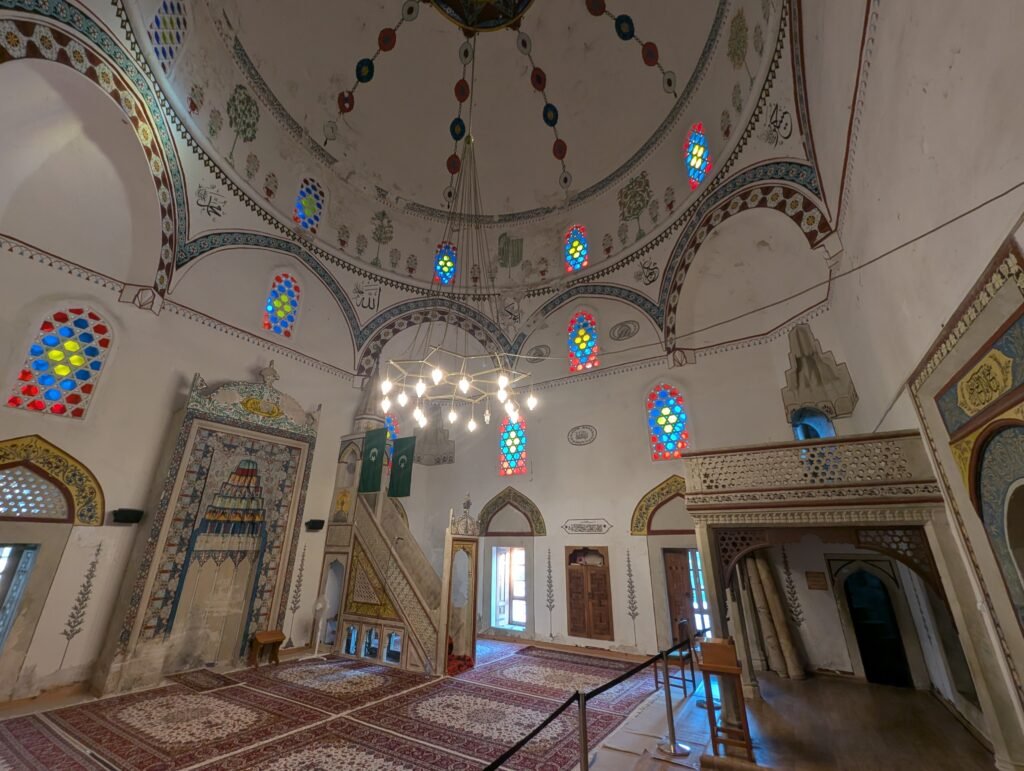
Our minivan made it back to Mostar by about 5:00, in time for me to get a badly needed haircut. This set me back just 15 Bosnian Convertible Marks. Andrew decided to forego the haircut, and just waited for me in the room. Upon my return, we headed to the Koski Mehmed Pasha Mosque. A few of the important buildings in old town that looked interesting were for some reason closed on Wednesdays. This mosque was not, however. For a small fee, we were able to enter the early 17th century mosque and even climb the minaret. We were not even required to cover up or remove shoes to do this. The gate guard said this was because the mosque here was essentially just a museum, not an active place of worship. Still, most other similar Islamic venues required us to do those things, including Brekke Blagaj earlier that morning.

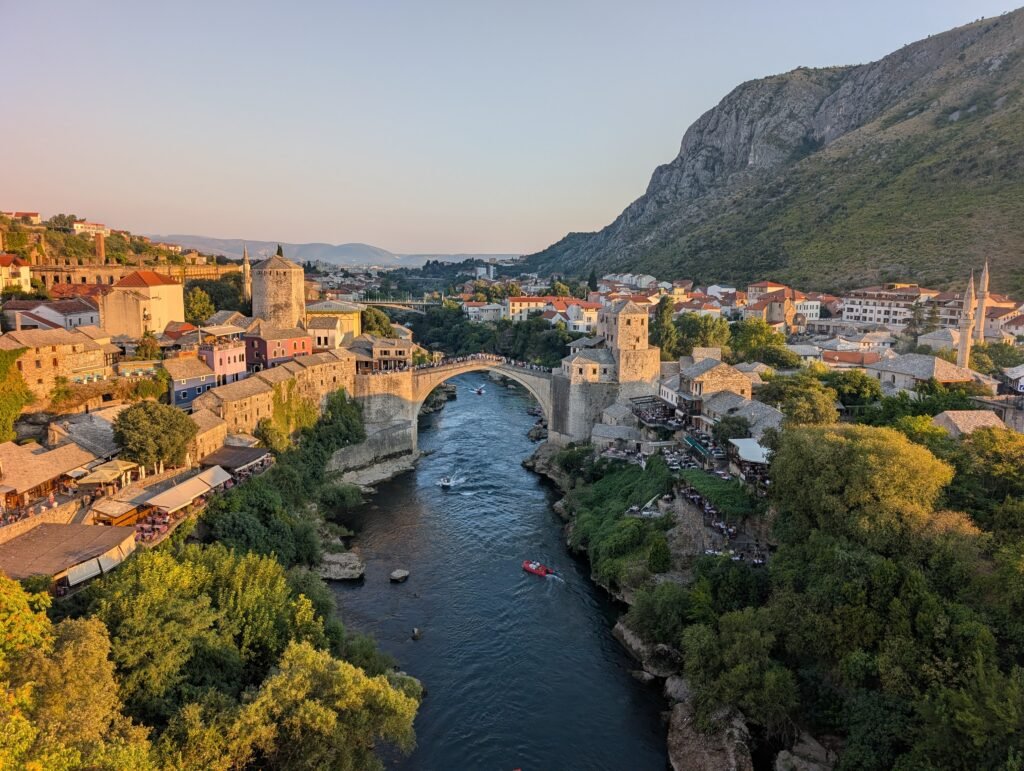
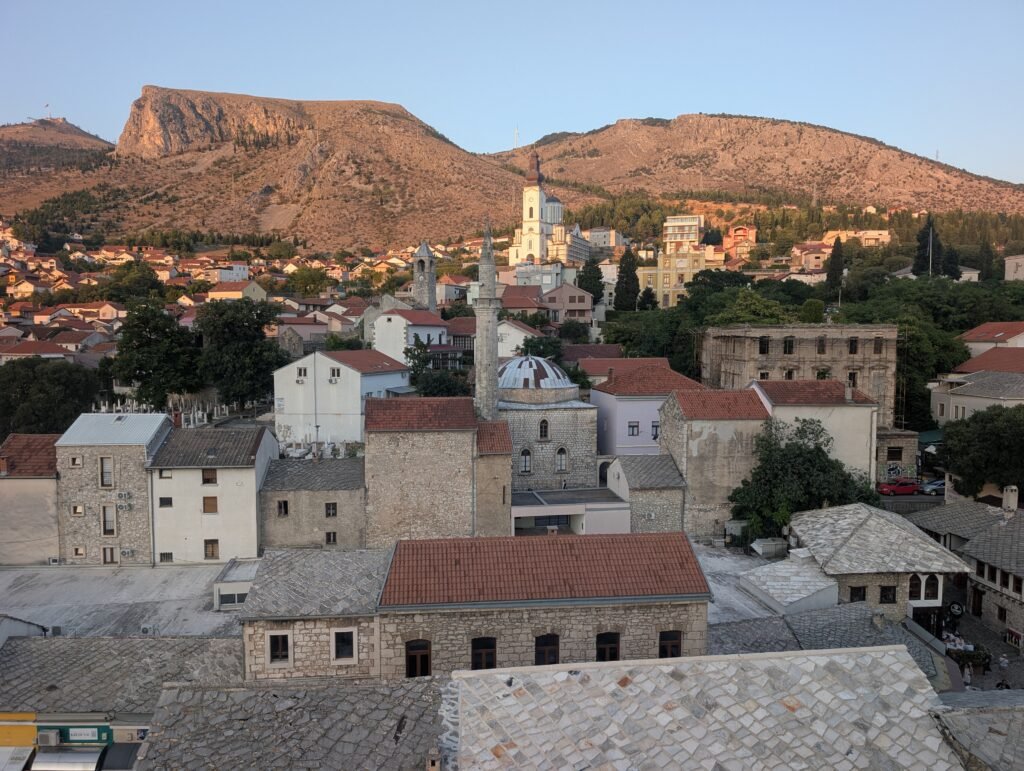
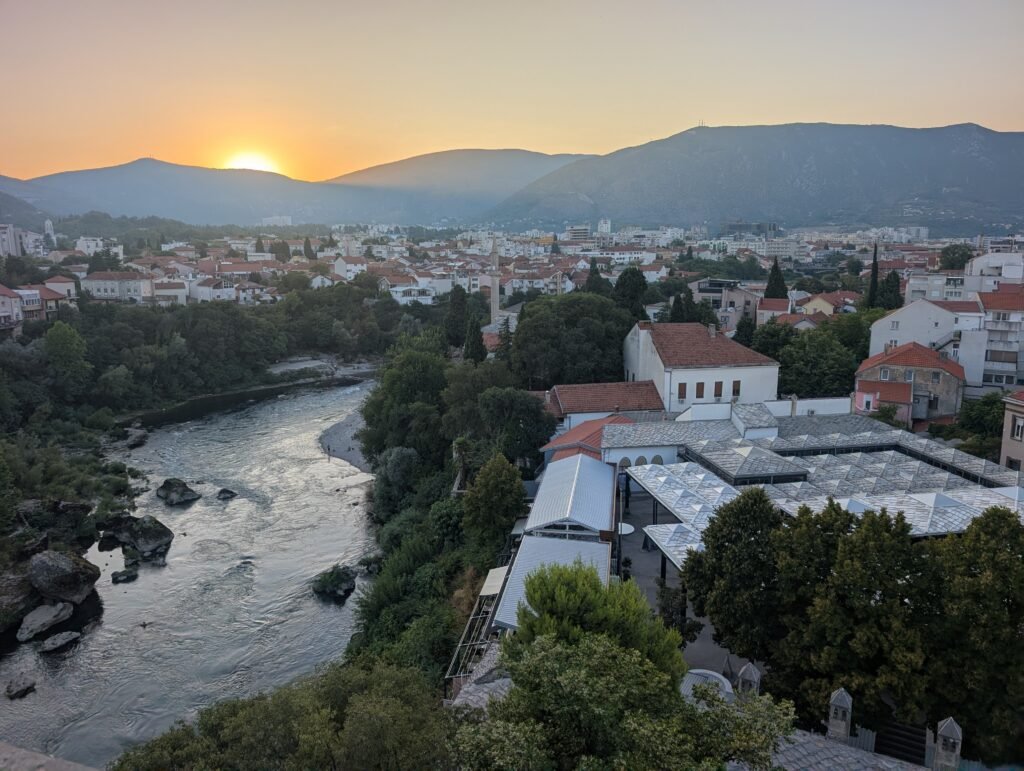
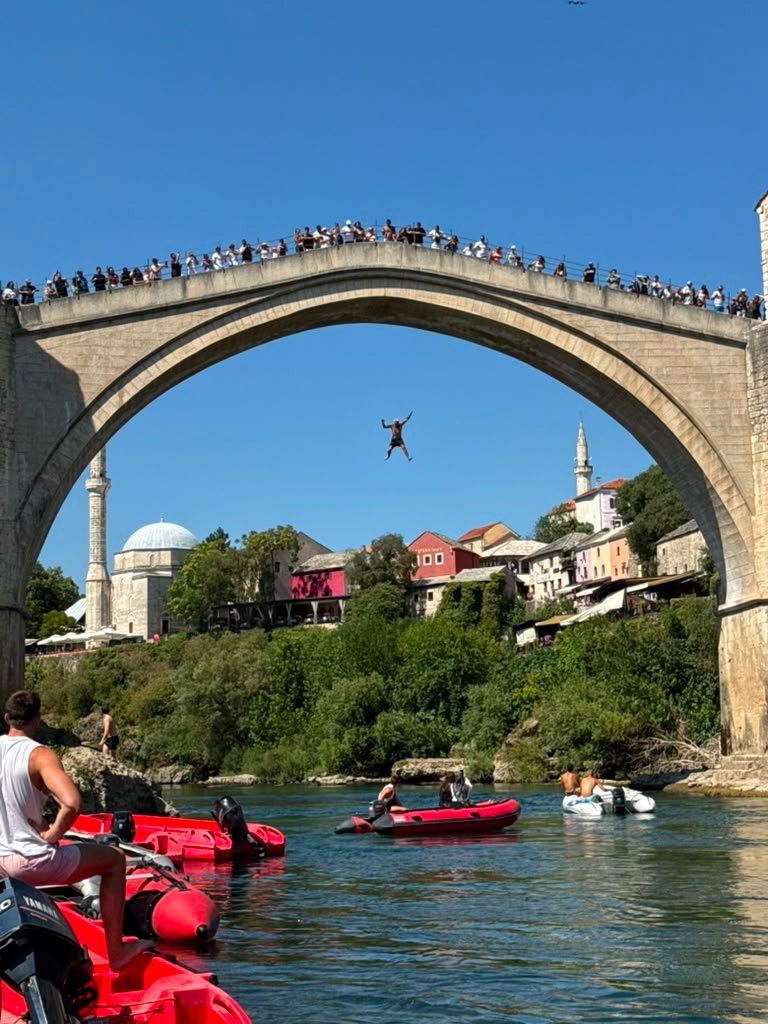
There were a few interesting decorations in the main floor of the mosque, including a nicely decorated minbar (pulpit). The main attraction, though was climbing the minaret. A very narrow, spiraling staircase took us up 78 steps to an also very narrow parapet around the upper level of the minaret. From here, you get a fabulous aerial view of the Old Town and especially the bridge. While we soaked in the views, three jumpers took their chances from the old bridge.

Our tour guide explained to us that jumpers could pay €50 to jump from the bridge. Before they could do so, they had to undergo some instruction, then prove what they had learned by jumping from a smaller platform of about 10 meters in height. Once they showed they could keep form that would not hurt themselves, they were allowed to jump from the bridge. Competitive diving events are also held from the bridge, but these paying tourist jumpers must go feet first. Two of the three jumpers we saw broke discipline a bit and landed in a way that seemed a bit painful. The bridge is, after all, about 80 feet high. No jumpers were harmed during our watch. Andrew, was, however, a little nervous about how much he was jostled as he tried to edge his way around the narrow walkway around the top of the minaret. It was enough to make one a bit squeamish. The cement guard hit us tall guys somewhere in our upper thighs.

After spiraling around the descent, we walked the smooth limestone streets one last time toward our hostel. We found a doner stand not too far from our room and decided to save a few bucks by taking something from there back to our rooms where we enjoyed our supper and called it an early night.

I ran the following morning. That gave me another pass through Old Town. I walked across the old bridge again, with only a handful of other tourists during the 6 o’clock hour. I had plenty of time to eat breakfast, pack bags, and make it to the bus station in time for a 10:15 departure. I even had time to write and mail some postcards. As usual, it took some time to get my stamps.

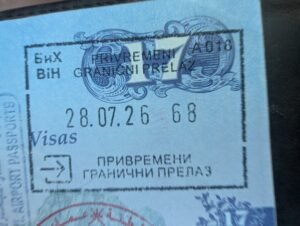
The bus trip toward the Adriatic coast was increasingly dry. There were a few nice views. It took us close to four hours to get to Dubrovnik. Our border crossing was smooth, but they apparently did not mark me as entering Croatia, because I had to provide that information when I exited the Schengen Zone in Stockholm a few days later. Follow me to Dubrovnik if you want to be chronological otherwise go to Romania to continue the list of countries visited on this trip.
More Views From Upper Pocitelj
Fort at the Top
Monument to Croatian War Victims
Pool Below Kravica Waterfall
More Mostar War Damage
Inside Koski Mehmed Pasha Mosque
Views From the Minaret
Jumpers From the Bridge
Italy Yugoslavia Overview
Bosnia
Jajce
Sarajevo
Romanian Interlude
Dubrovnik