When I told my dad I was in Bosnia, his response was, “Be careful!” The last he knew there was a war in Bosnia. That war has been over for thirty years. It’s the same for places like Colombia, where the notorious drug cartels have been defunct for about as long. Bosnia is a pretty place. It remains an inexpensive place due to public perceptions. People are quite friendly, and it is an interestingly diverse place.
Bosnia is the most Balkan of the Balkan countries. It continues to be the home to several very different ethnic and religious groups. Some of those groups get along, while others just go their separate way. I do not know that this is a model that can continue indefinitely, but it is working now, and has been more or less since NATO bombed Serbia, forcing them to make terms known as the Dayton Peace Accords. This is the agreement that framed the convoluted shared-power governmental system operating in Bosnia today.
When visiting Bosnia, however, the convoluted governmental structure has no impact on your visit. There are mountains, natural areas, waterfalls, medieval cities, and any number of other peaceful pursuits to explore. I liked Bosnia. As much as Europeans are enamored of Croatia and it’s coastline, if given the choice to visit Croatia or Bosnia, I’d go back to Bosnia.
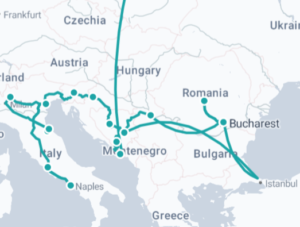
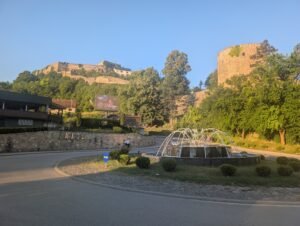
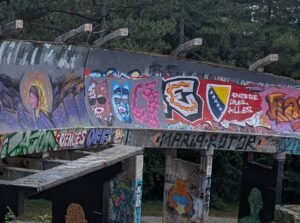
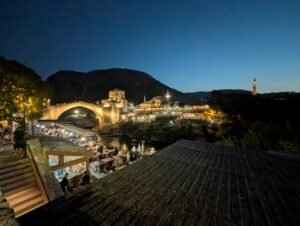
I visited three main locations in Bosnia. I went to the former medieval seat of government in Jajce, the current capital and major city of Sarajevo, and the home of the famous bridge in Mostar. Andrew joined me for my second visit to Sarajevo and for Mostar. If you are following my trip chronologically, you’ll have to leave the article part way through Sarajevo and skip over to Romania. If you are going country by country, just work through the three articles on Bosnia, then continue to Romania. Either way, there are always tiles with links at the bottom of the page.