Dubrovnik

Croatia's Seaside Old Town

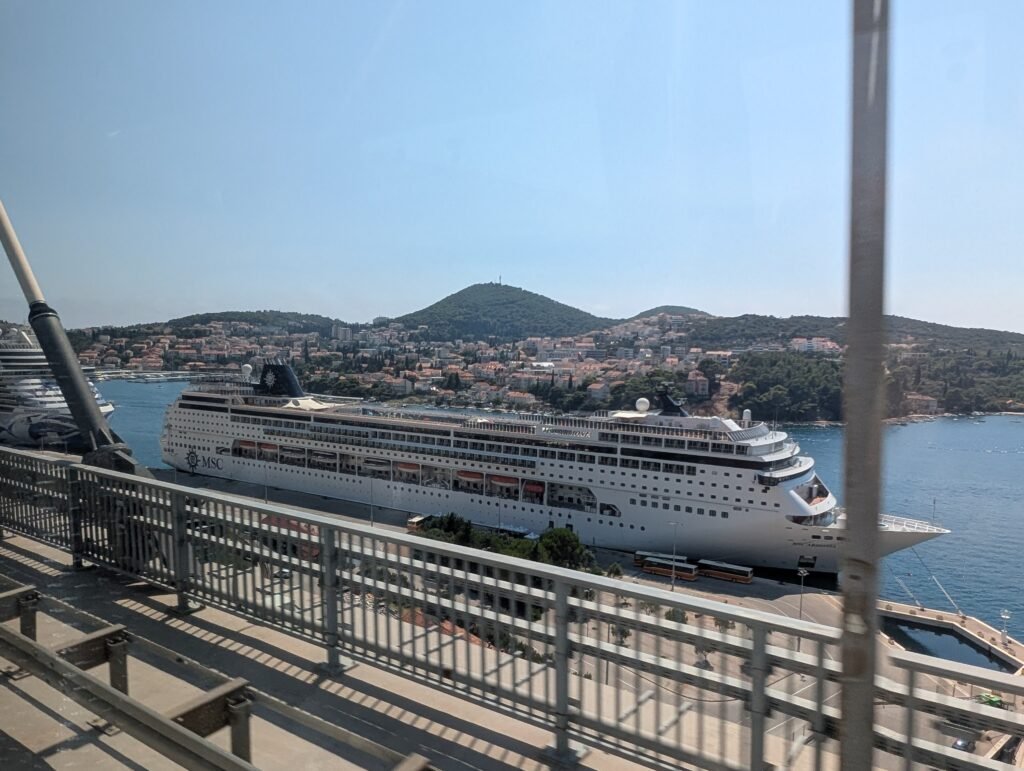
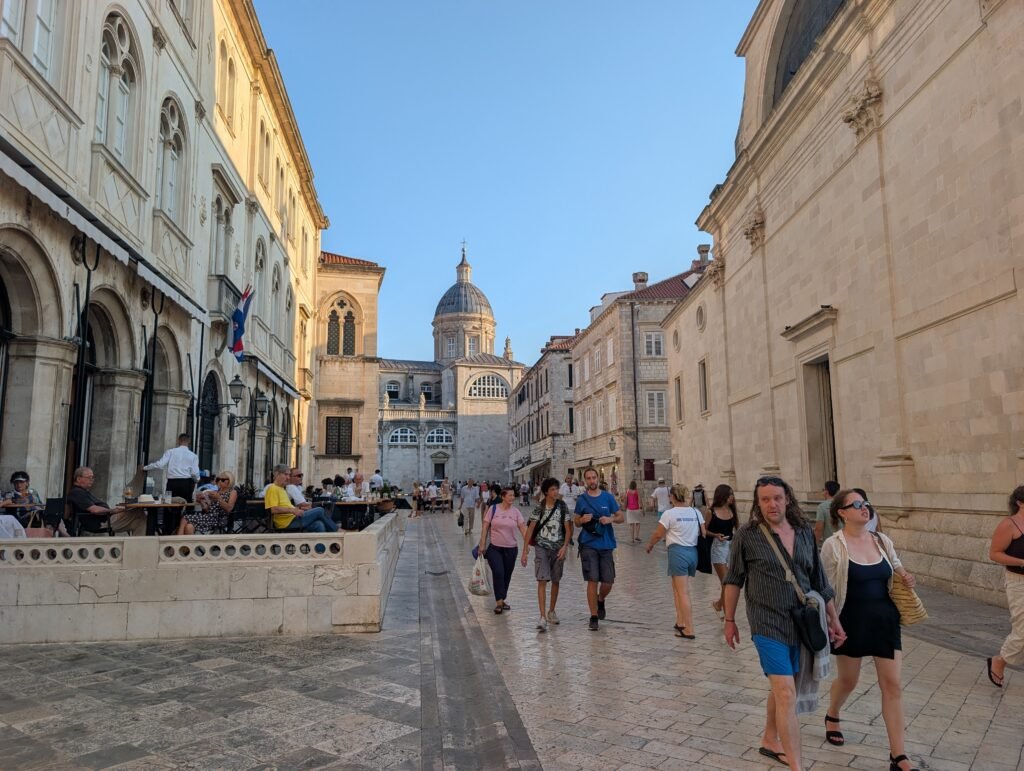
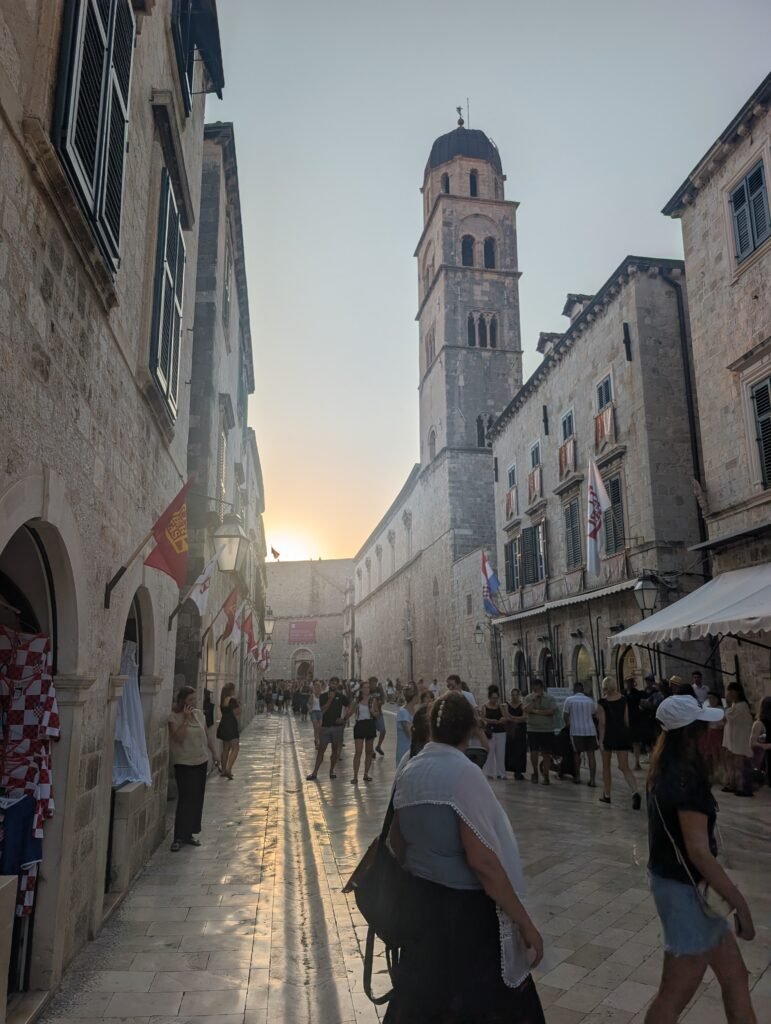
Dubrovnik is a cruise ship port. In every way, it lives up to that role. Dubrovnik has a pretty cool old town. It suffered significant damage during the 1990s Balkan Wars. Rebuilding work has been done to make it an attractive tourism venue. The whole area is chock full of expensive shops, expensive restaurants, and visiting tourists. Because it has so embraced tourism, Dubrovnik is one of the most expensive cities I have visited in Europe. People just can’t get enough of the Croatian coast. As Andrew has pointed out, the sea water on this side of the Adriatic is pristine. I never found a spot I couldn’t see through all the way to the sea floor.

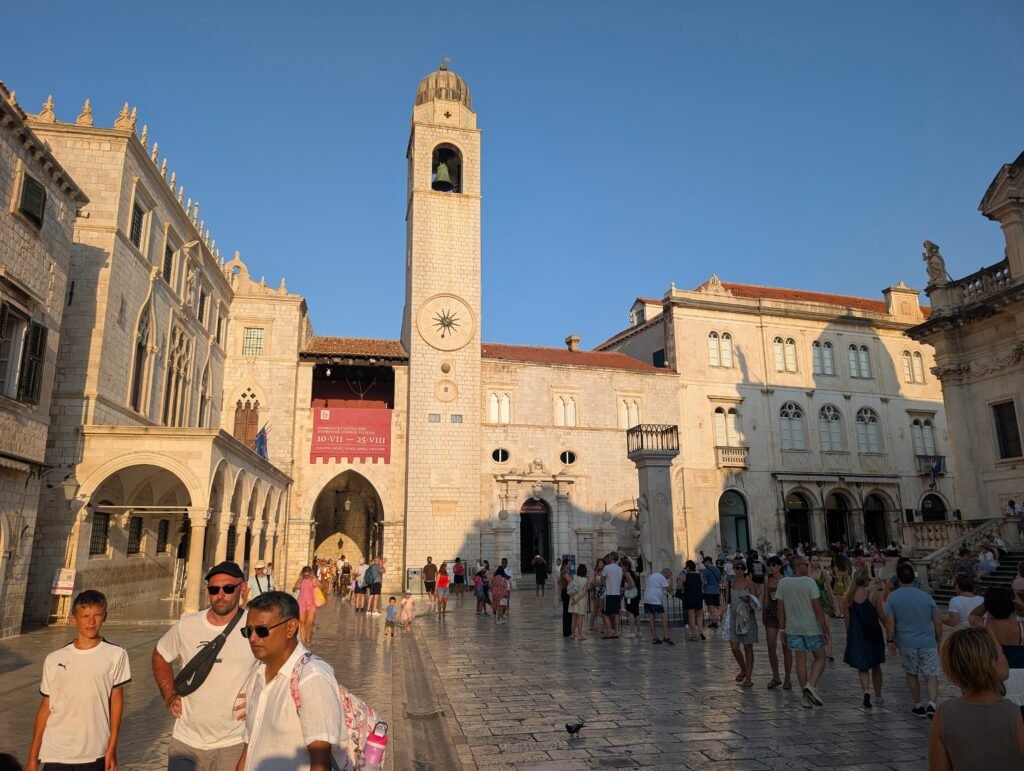
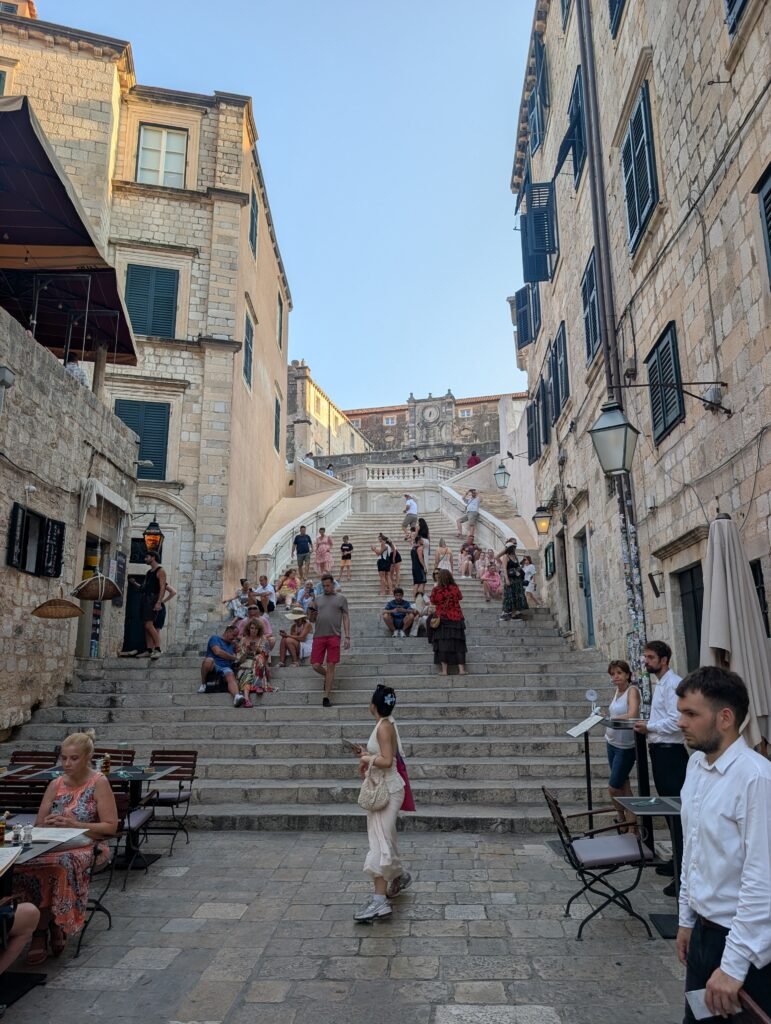
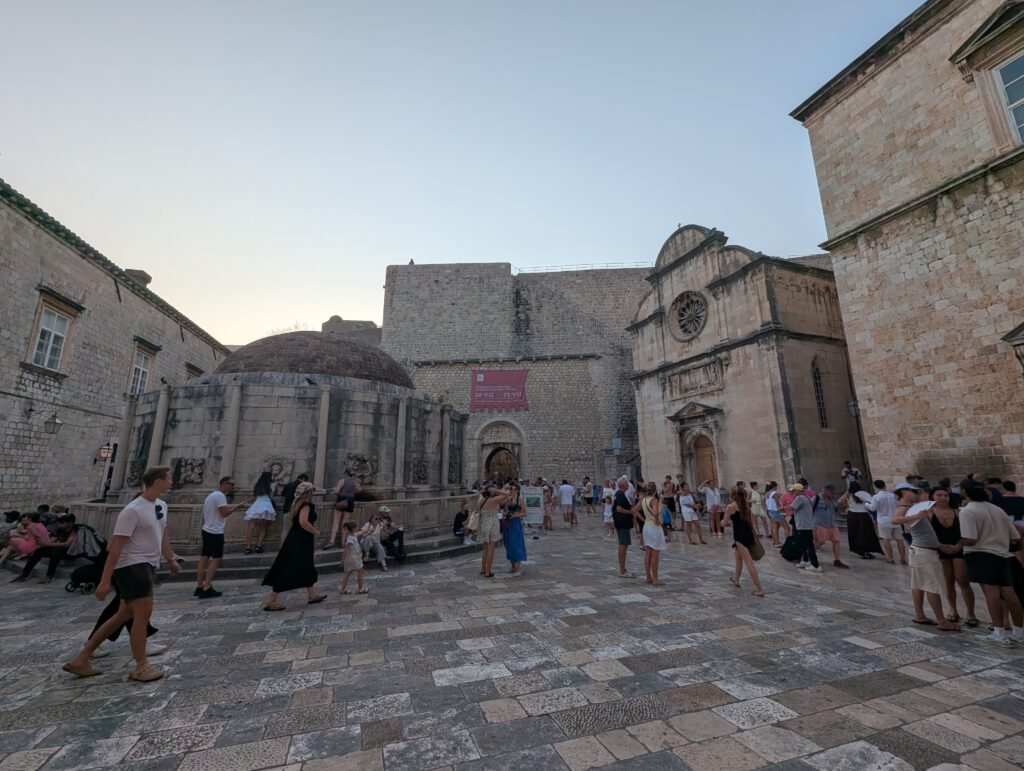
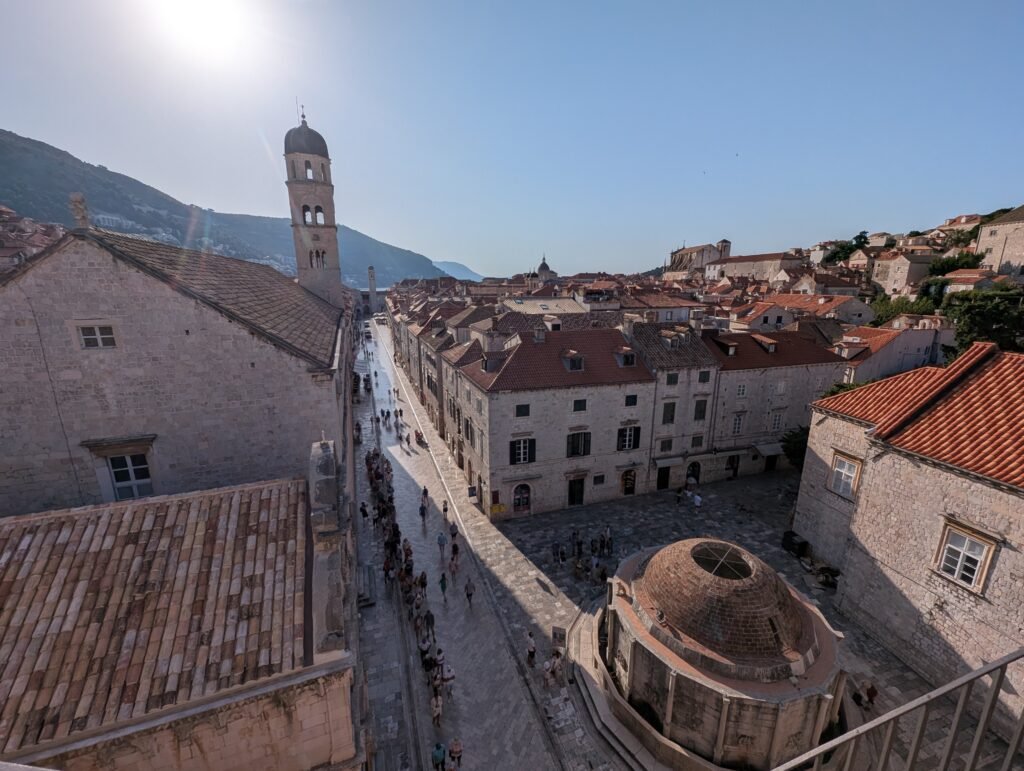
Dubrovnik’s assets are also its liabilities. There are so many tourists walking Old Town Dubrovnik that you can hardly get down the streets in the evenings. People are constantly jostling you. Eastern Europeans, who can be brusque anyway, seem angry that you are there. There are a few places to get in the water, but they are bobbing with so many people it’s hard to avoid hitting them. The prices are eye watering. And that warm sun that draws so many Europeans to this long coastal country? It makes Dubrovnik uncomfortably hot in the summer – right when everyone is visiting. It was over 100 degrees Fahrenheit every day we were there. It didn’t cool very much in the evening. The proximity to the Adriatic brought with it humidity. There is no way to avoid constantly walking around in a lather with all of the stairs you must climb. It’s hot, very hot.

Andrew and I rolled into Dubrovnik already a bit tired. We had been “power tripping” for over a week. Our bus ride wasn’t brutal, but it had taken a few hours. It took some sleuth work to figure out how to get to the hostel in Old Town Dubrovnik. The Dubrovnik city buses are not loaded into Google Maps. Dubrovnik does have an efficient city bus system, though. If you buy a city pass to see many of the museums and walk the city walls, you get a day pass on the city’s public transportation system thrown in for €40 total. I found a map of the local routes and figured out how to use it from the walls of the bus stops.

We walked around a bit in the Old Town that evening after resting in the room for an hour or two. We saw some of the churches and figured out what we would do the next day. We got some Euros, bought a few things from the grocery store, and found a local restaurant to try some Croatian food. The foods from the former Yugoslav countries bear a lot of similarities to one another, and all borrow quite a bit from Turkish cuisine. Don’t tell any of the locals that, however, or you’re likely to get a strong protest. There are some small, regional variations, but burek is burek, cevapi is cevapi. Even the coffee is for the most part just Turkish coffee. People have national pride, though, and like to think their foods, cultures, and traditions are unique. Our food that night was good, and while it was cheap for Dubrovnik, it was at least double what we would have paid for equal or better food in Bosnia.

We decided to bite the bullet and shell out the €40 each for Dubrovnik day passes. It seemed as if there was about one day’s worth of things to see in Dubrovnik if you were efficient. Anything else required a day trip. Many of the day trips were back to places such as the waterfall in Bosnia where we had already been. Our plan, then, was to hike the city walls as soon as they opened (8:00 a.m.) when it would be as cool as possible, then pick off the other forts and churches that seemed most interesting until we were so hot we needed to hop in the Adriatic for a swim. If we revived, we’d go see a few more things. If not, we’d grab some dinner and call it a day.

(Continued)

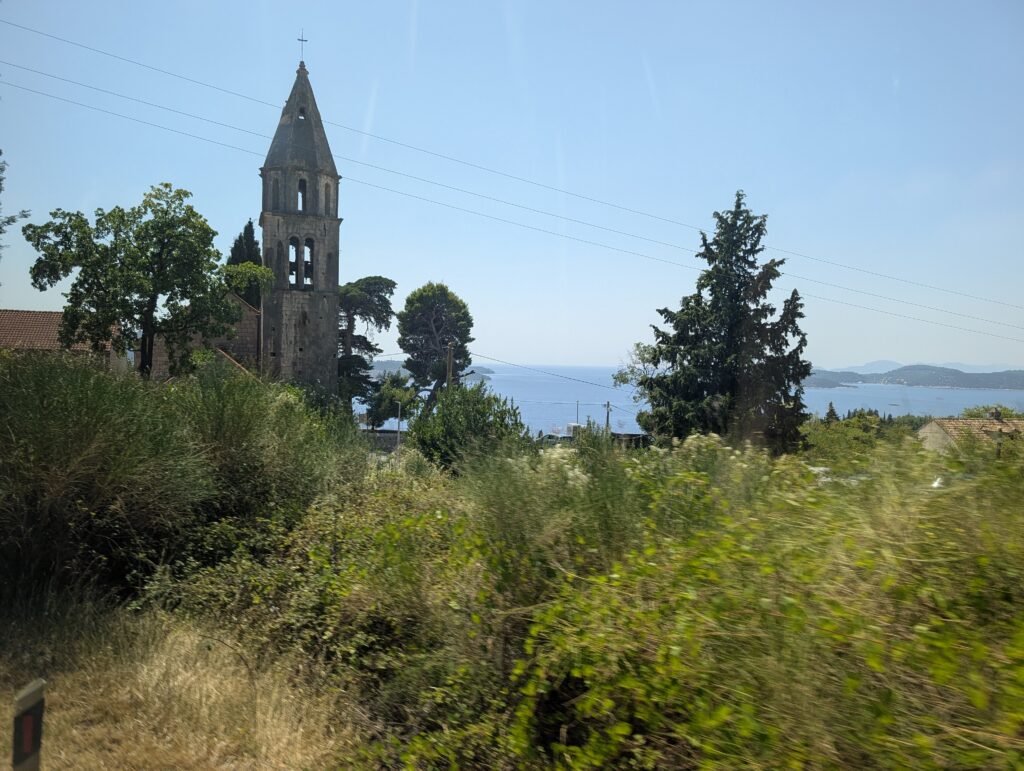
Coming Toward Dubrovnik on Bus
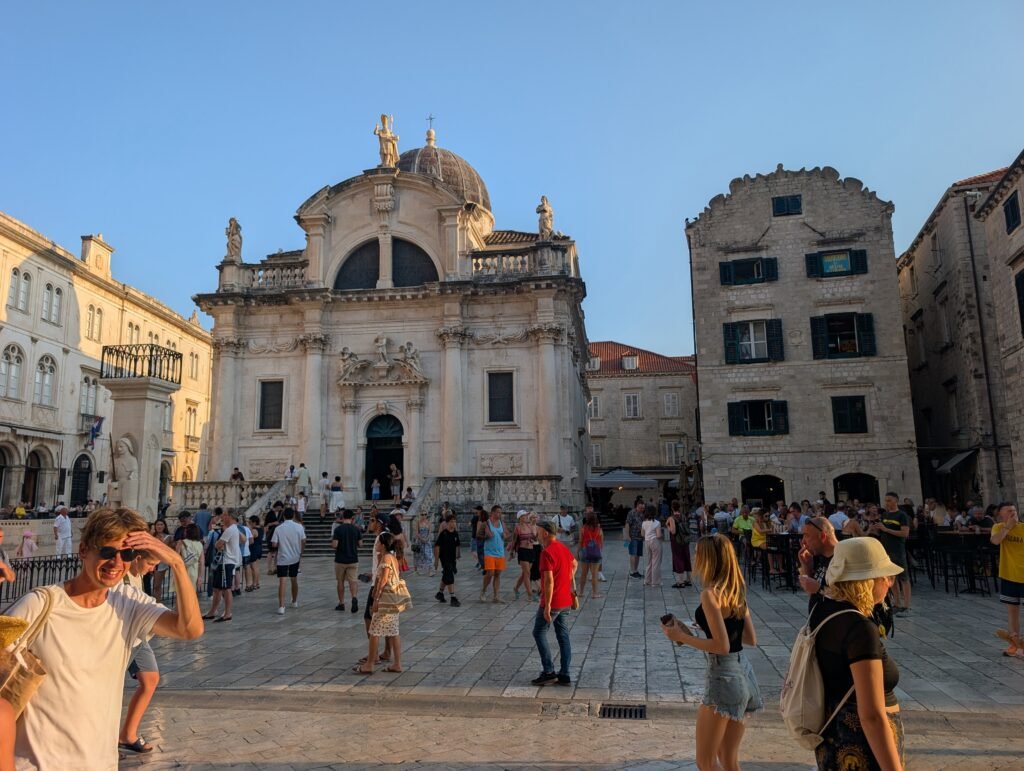
Walking Old Town the First Evening
I Love This Shot
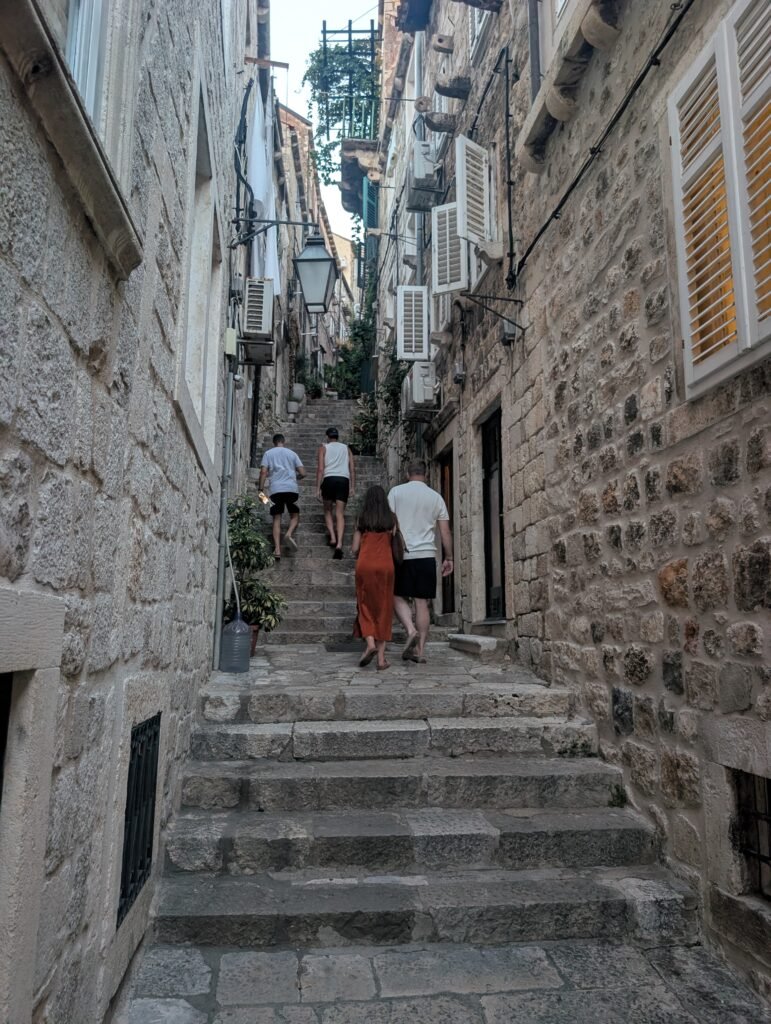
The Ascent to Our Room
Water Dispenser

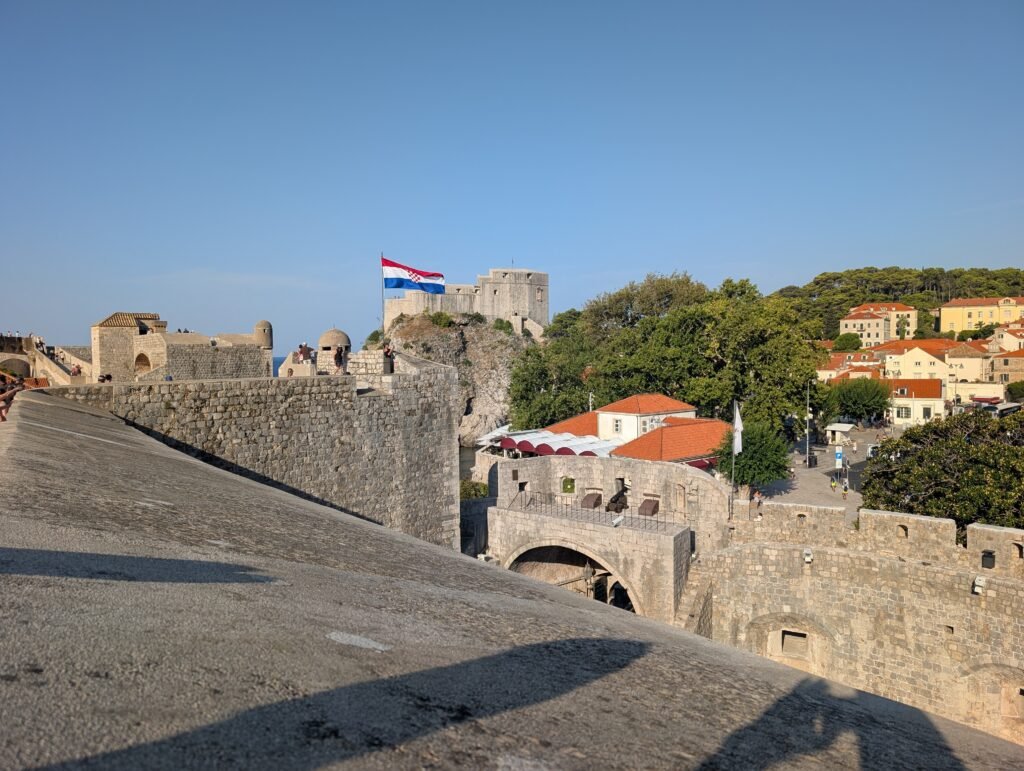
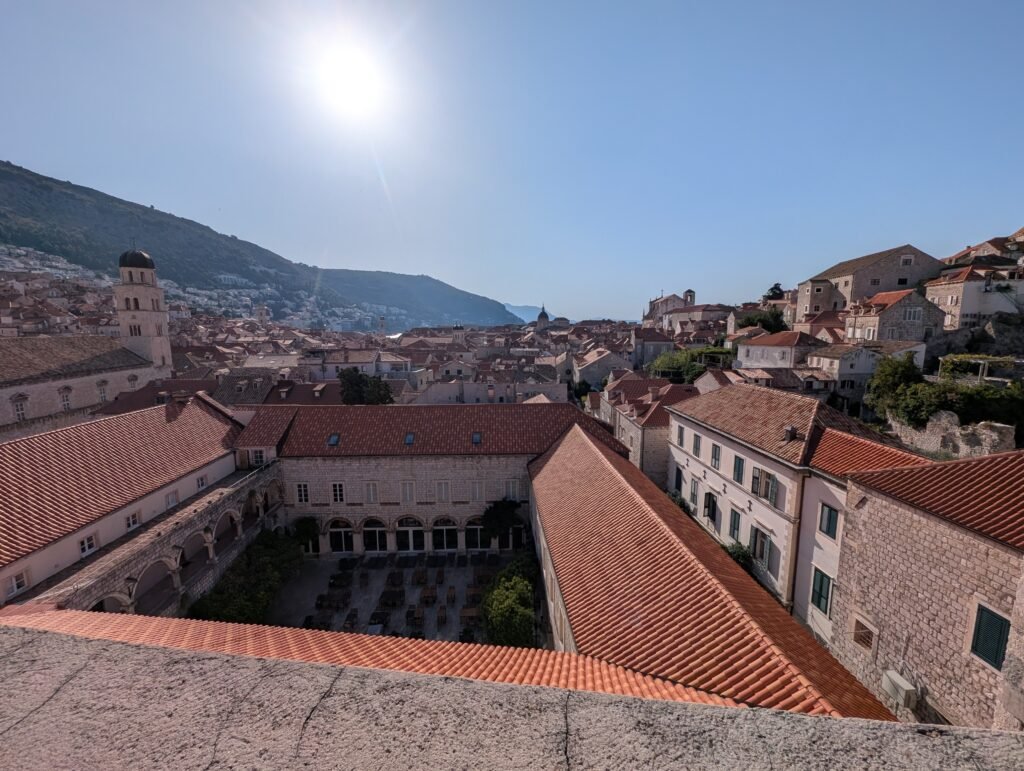
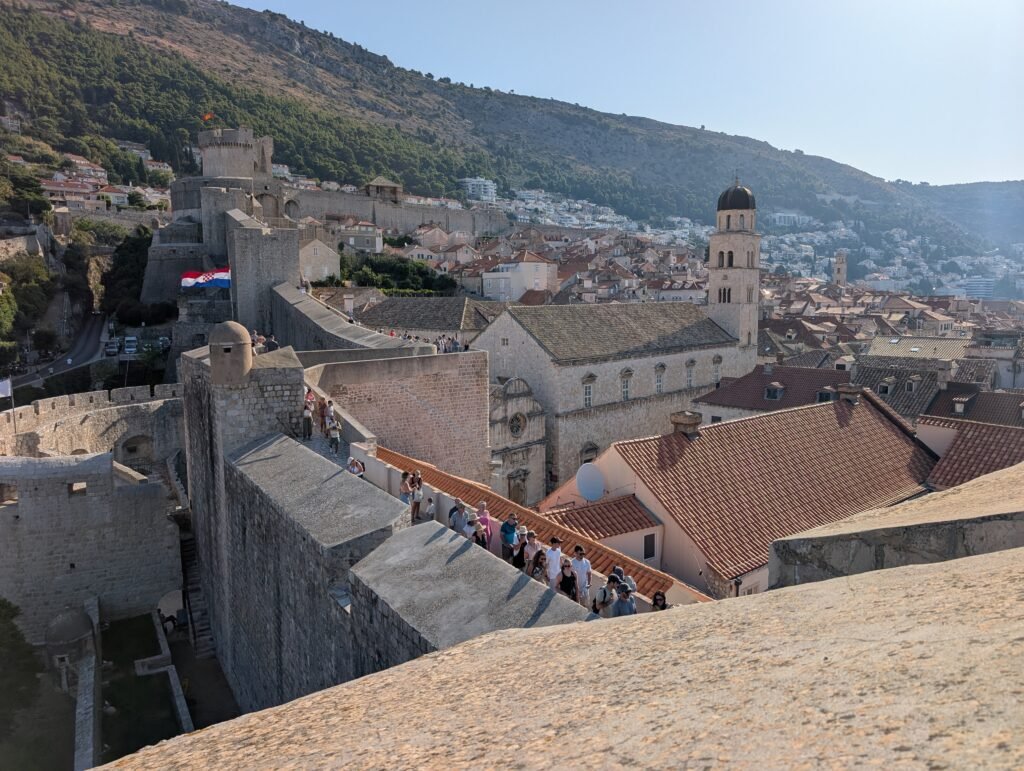
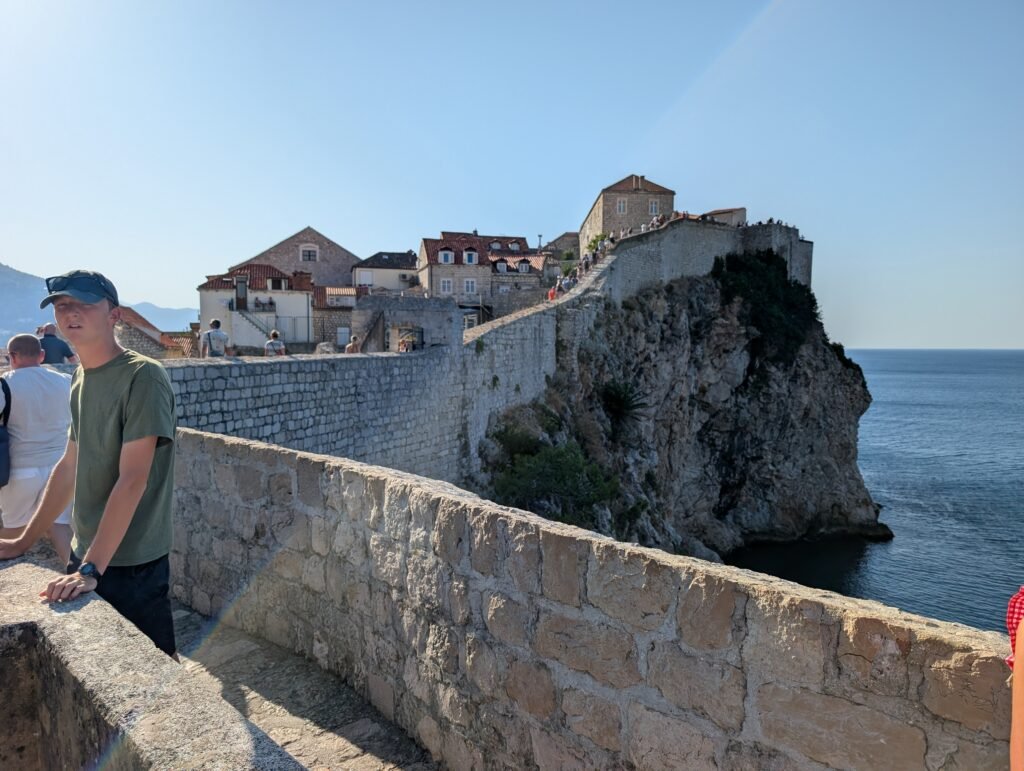
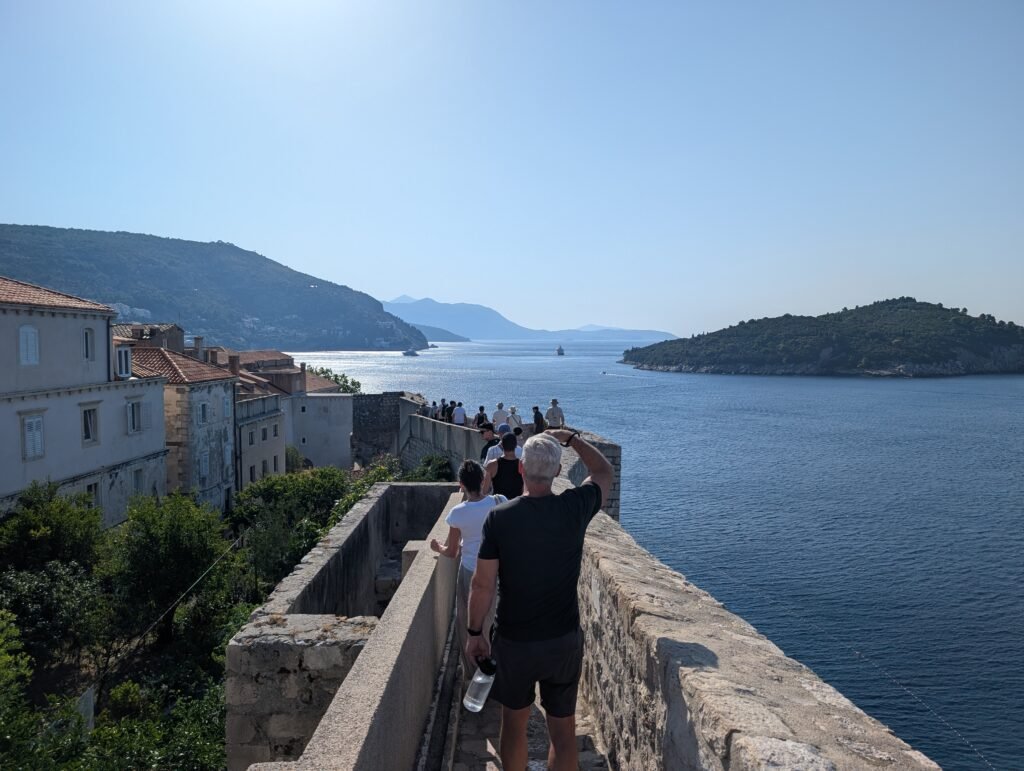
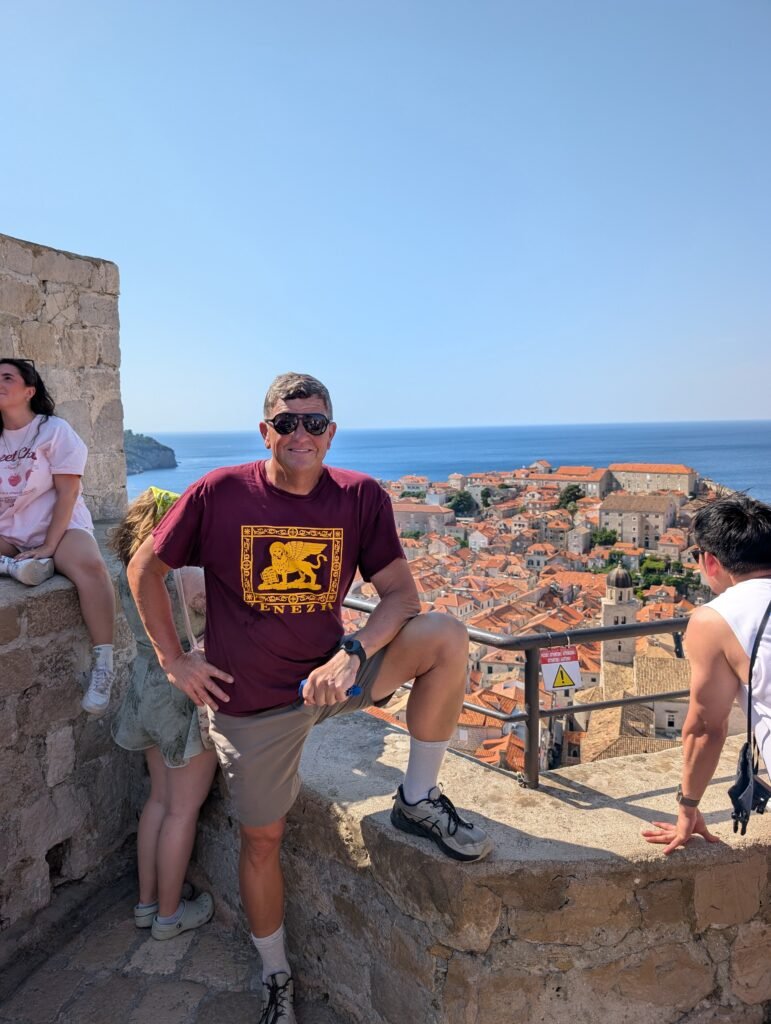
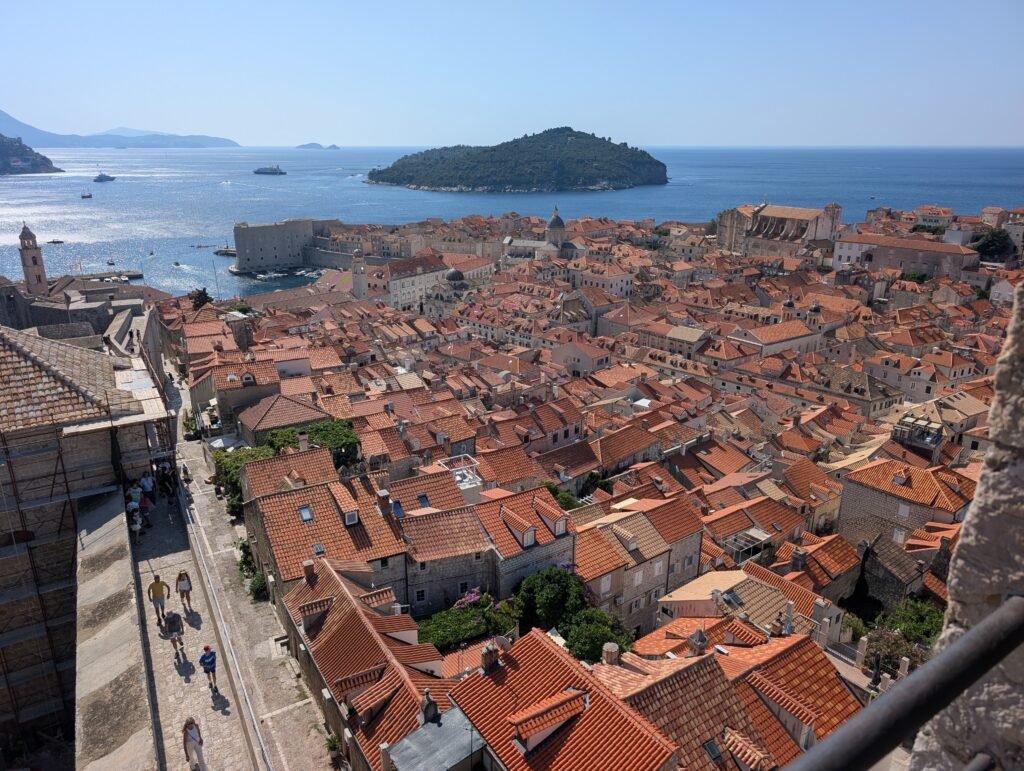
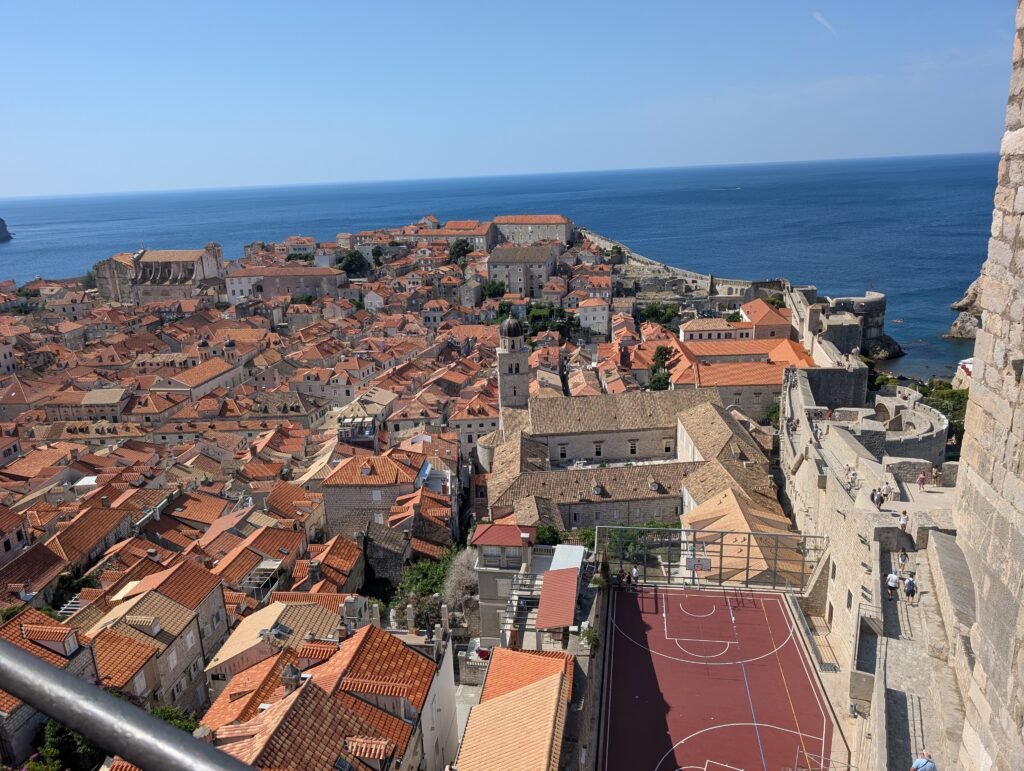
Walking the city walls seems like the most popular thing to do in Dubrovnik. Most people have the same idea to do this in the morning due to the extreme heat. There is no shade, and the walk requires a surprising number of steep stairways. It was very warm even right at 8:00. There was quite a line when we arrived about ten minutes early, but it moved quickly as soon as the gate opened. Most people seemed in a hurry to death march around as much of it as they could stand and then get off. Andrew and I stopped periodically for pictures, or just to soak in the views. The views of the Adriatic and the city really are amazing. There is not much in the way of interpretation. There are no placards to explain what building is what, and no explanations of the historical significance of the walled city. I picked up bits and pieces from overhearing tour guides. Other than that, you have to do your own research.

I believe many people also choose not to go all the way around the walls. The most popular place to ascend and begin is the Pile Gate. Foot traffic is restricted to a counter clockwise direction. This puts you on the seaward side first. This side is also lower. You have the opportunity to exit on the opposite end of town, at the Ploce Gate. If you continue there are some better “high ground” views and turrets, but there is also a lot more climbing. We, of course, walked all the way around.
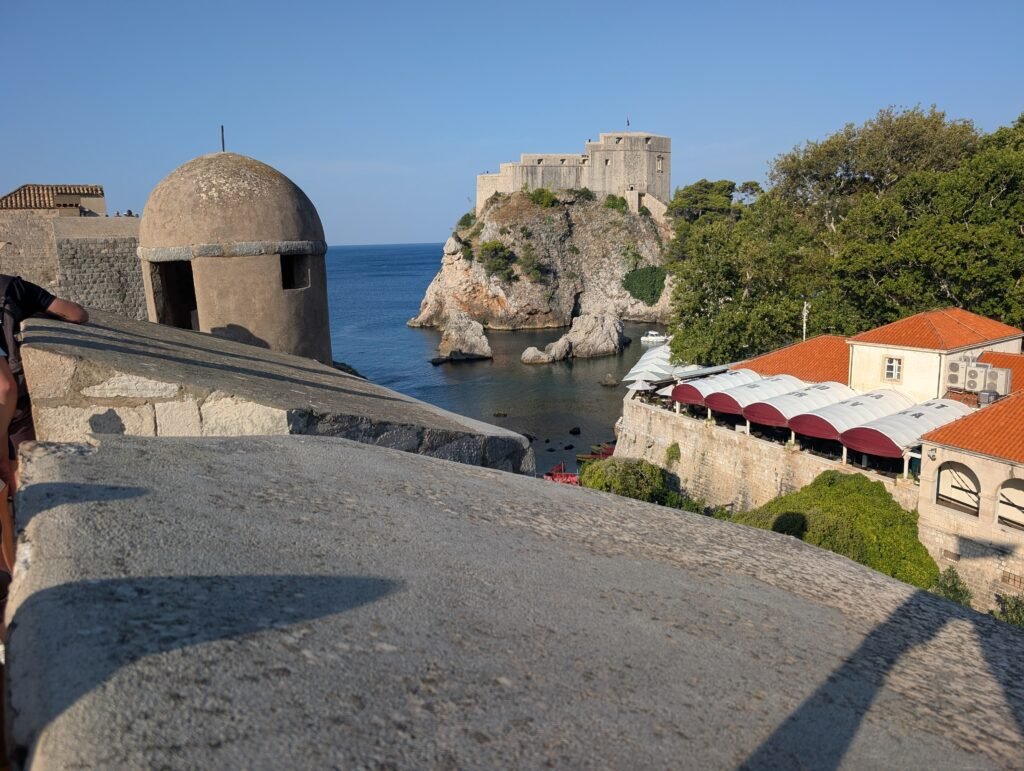
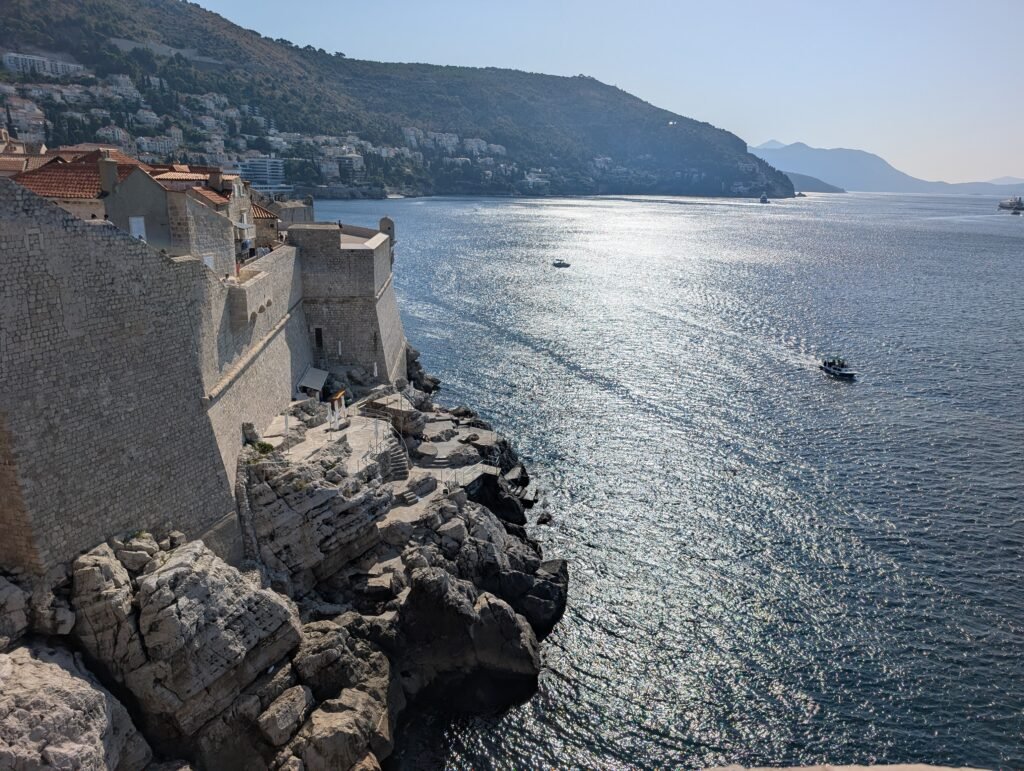
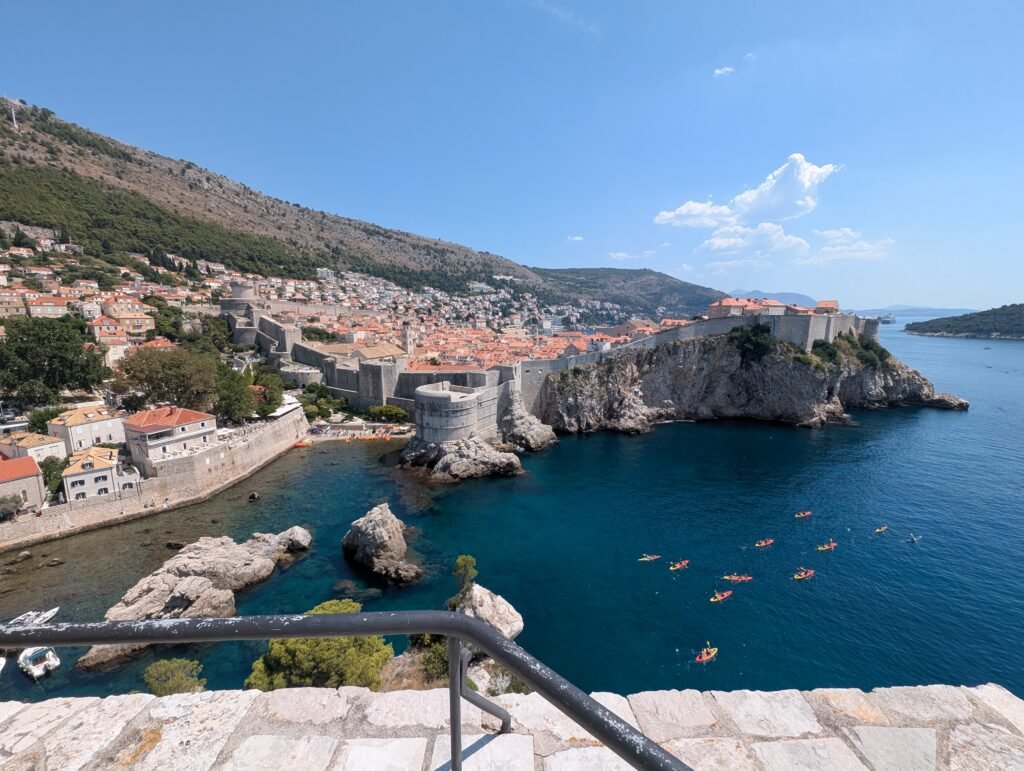
The seaward side has a couple of bastions, and overlooks to neighboring fortified areas. We also saw two “hole in the wall” cafe’s known as Buza Bars. You literally access them by walking through a hole in the city wall and eat and drink along some small cliffs and platforms on the water’s edge. You can swim or jump in the water from these as you purchase your overpriced alcoholic beverages. These would have been more interesting in the afternoon, when you could do some people watching. We did have wonderful sea views in the morning, however.

So many people were in such a hurry to get around that after 9:00 the crowd already began to noticeably thin. It got easier to get up and down the narrow stairwells ascending the turrets and high points. We walked slowly, stopping often. It took us a little more than two hours to make the whole circumference, a distance of about 2 kilometers. We were pretty warm by then, and we had left the room carrying as little as possible so as to not be encumbered. We had no water and were very thirsty even after just this short stint. We rested for a few minutes, drank our water, then headed to Lovrjenac Fortress.

As with the wall, Lovrjenac Fortress offered only nice views and no real historical interpretation. We noticed while we were walking over more information on how the city bus system operated. We also saw a couple of places for public swimming, which we noted. The actual area of the fortress that was accessible was pretty small. It took a bit of climbing to get to the top, and that’s where we spent most of our time. All in all though, it was not a place that warranted a very long visit.

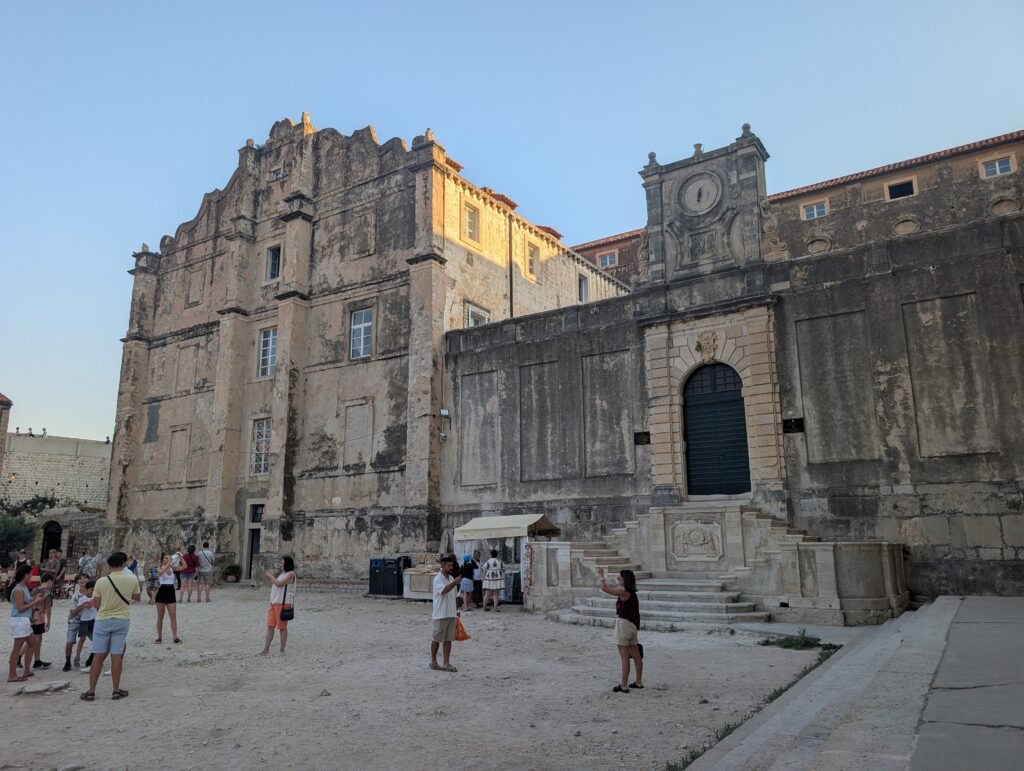
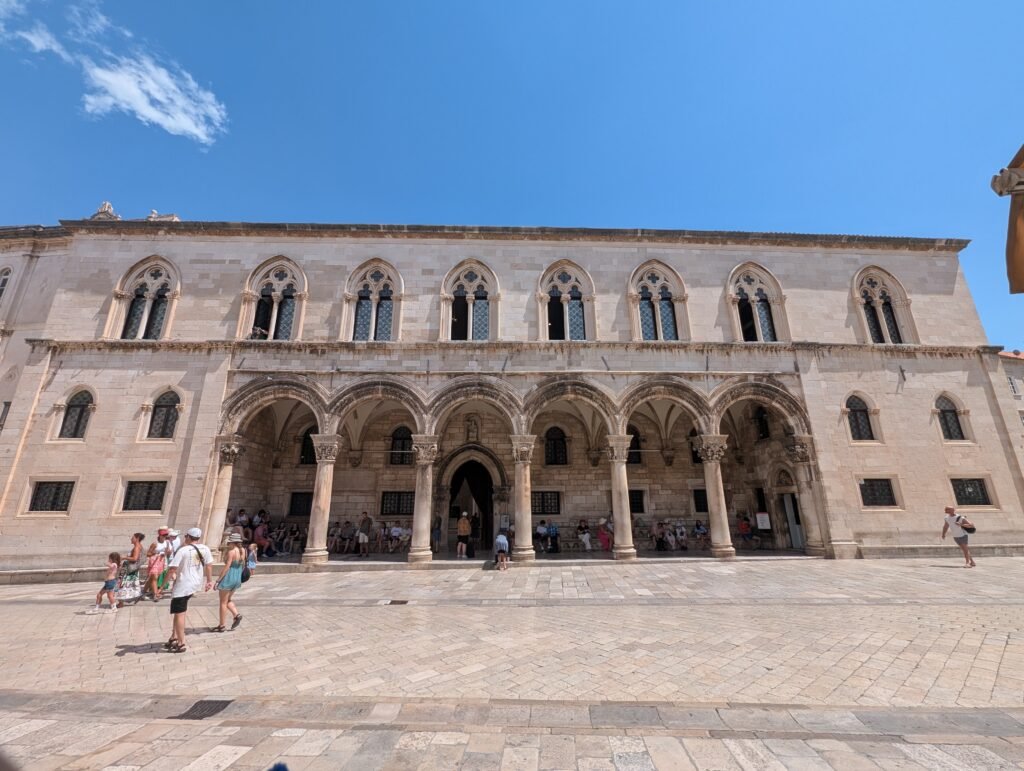
We headed off to the other side of Old Town. We visited the Rector’s Palace, the Church of St. Blaise, and the Cathedral of the Assumption. The Maritime Museum and Fort St. John were closed for the day. The Rector’s Palace was about half art museum and half biographical information about rulers of a local Republic. The Republic of Ragusa occupied the area which is now the small strip of Croatian coastline that is separated from the rest of Croatia by Bosnia’s tiny 12 km coast. It was really just the city-state of Dubrovnik.

Dubrovnik somehow remained free of Ottoman rule, and acted as a trading intermediary between the Muslim Ottomans and the Christian Italian city-states. Ragusa seems to have been an oligarchy, kind of like Venice. A group of noble families elected a legislative body from which was chosen the Rector, who served as executive for the tiny nation. The population in that era may have been 30,000 or so. This was no Roman Empire. They did place a high value on their own freedom, independence, and sovereignty. Flags around the city bear the Latin term “Libertas.” This was a shorthand version of the city’s motto NON BENE PRO TOTO LIBERTAS VENDETUR AURO. Translated, this means “Freedom is not worth selling at any price.” This little bit of explanation in the Rector’s Palace was the only historical interpretation I saw anywhere in Dubrovnik’s Old Town area.

(Continued)

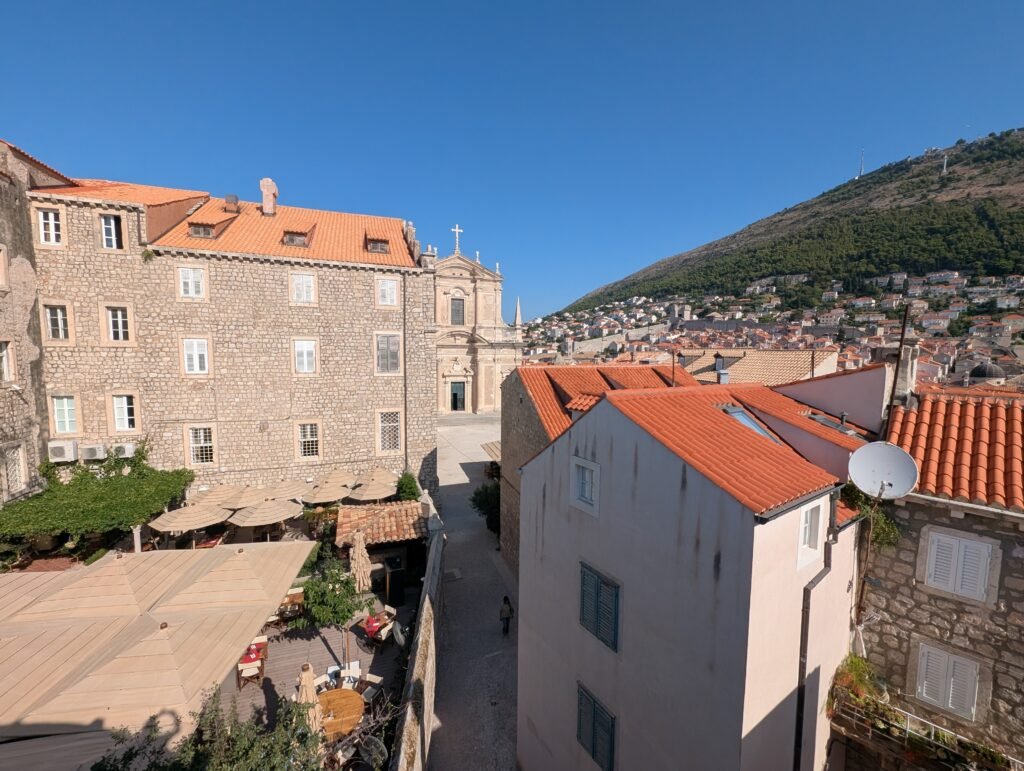
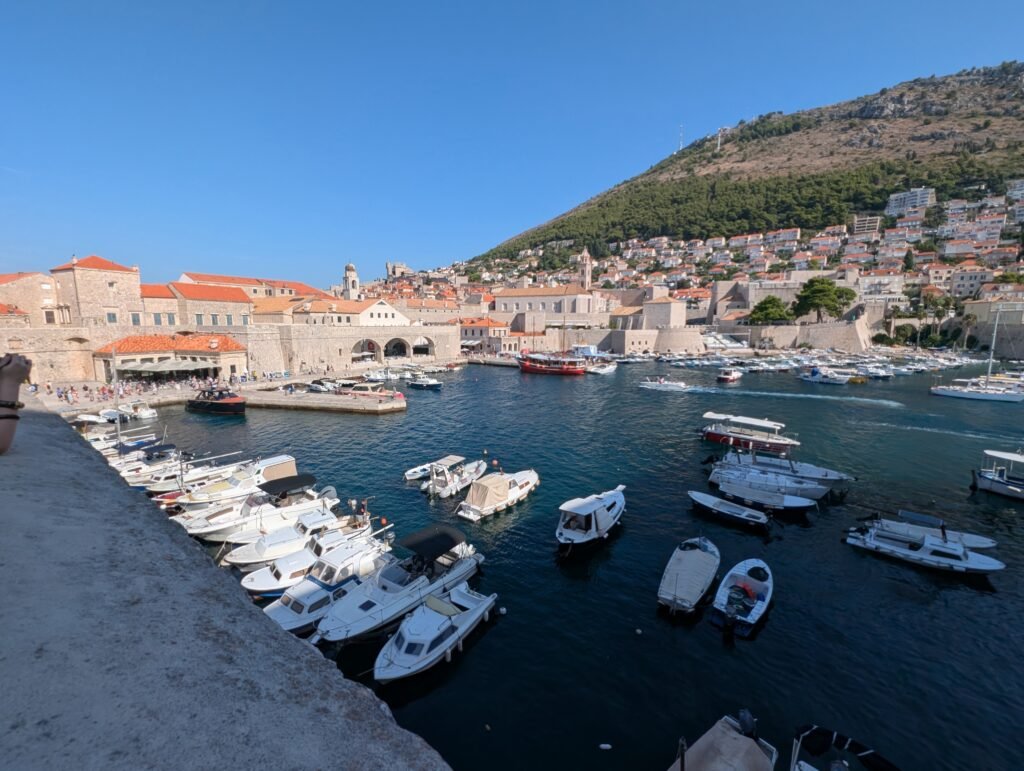
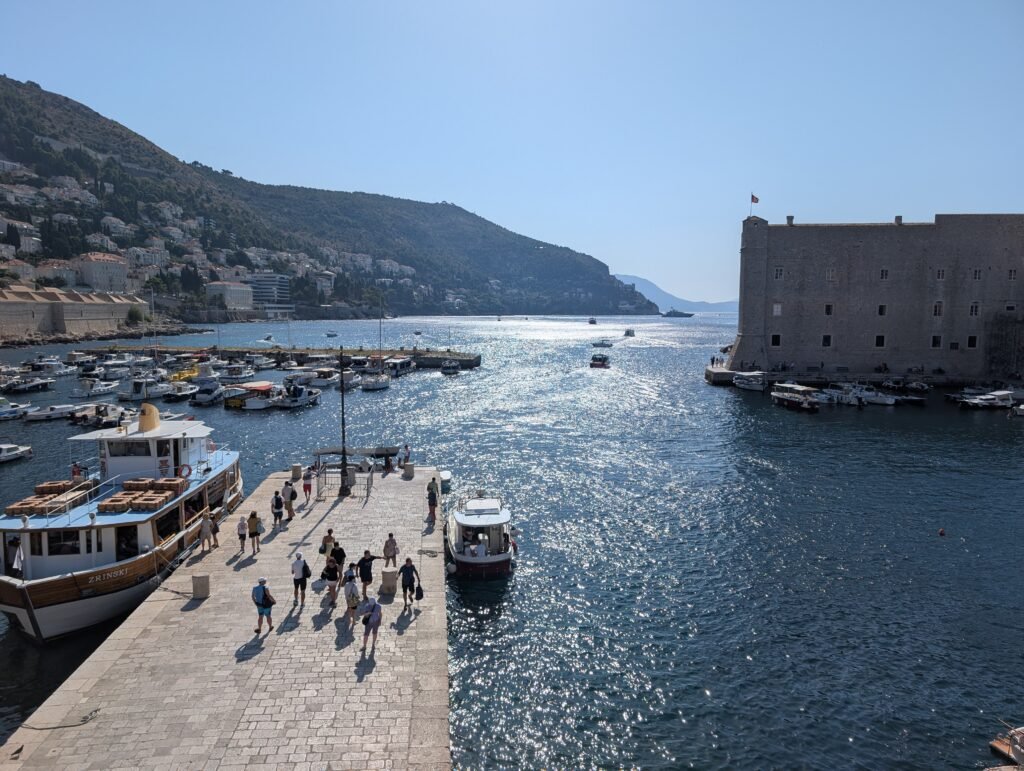
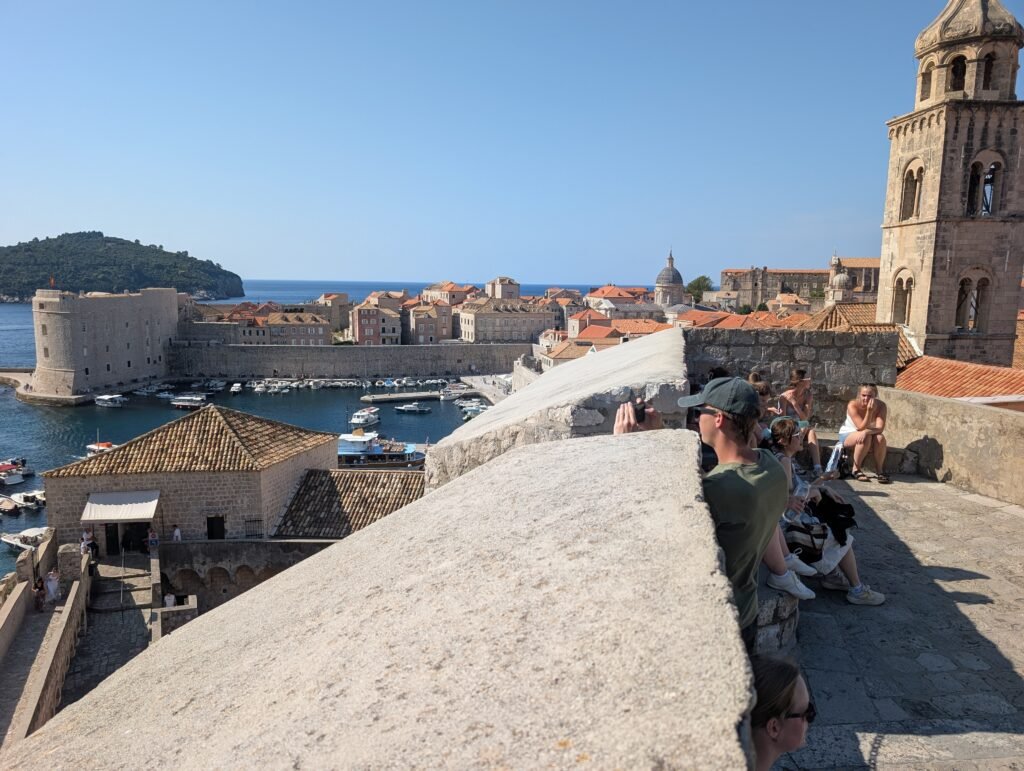
Views From the City Walls
Fort From the Walls
The Walls are Pretty Long
But the Views are Non Stop
One of the Buza Bars

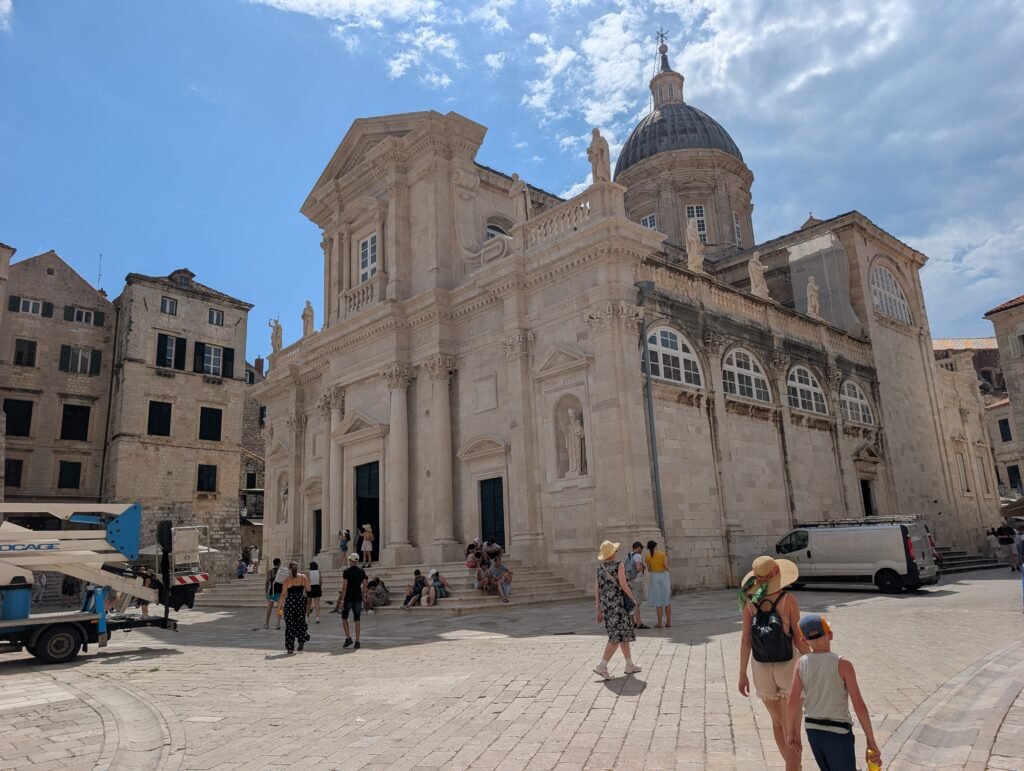
The churches we visited were relatively modern. In many cases, they weren’t constructed until the 19th century. Andrew pointed out that these were not so ornate as many other older Catholic churches. The exterior architecture was interesting, though, and they all had places to sit and rest for a bit before continuing.

We wandered back toward the Western side of town to get in the water for an hour or so. We swam out to the buoys and back and watched some kids jumping from as high as they could scramble up the rock faces for a foothold. I people watched. Andrew looked for fish. It was nice and refreshing, but I quickly grow bored of swimming if there’s no workout involved. We activated our city bus passes, then rinsed off and rested a bit before heading out for dinner.

I had been on a quest since returning to Bosnia and Croatia from points further East to pick up some of the oat snack bars I had discovered coming through Bosnia the first time. We ops checked our understanding of the city bus system to get to a larger supermarket a ways away from Old Town. I was successful in getting the bars. I also figured that we would find cheaper, better food by getting away from the tourist trap cafes in and near Old Town. My supper was similar in both quality and price to what we had the night before, so I didn’t really gain much, other than the bars.

The bus eventually got us back. It was getting fairly late by then, and Andrew, especially had an early bus to catch for Albania the following morning. I needed to get to the airport to fly to Helsinki. I would have an overnight layover in Helsinki, leaving me plenty of time to get to the airport and have some breakfast.

Early that next morning, Andrew and I parted ways, and I began my long journey home. This included a 20-plus hour stopover in Helsinki. I made the most of this and did some sightseeing, which you can read about by following the Helsinki tile below. To go instead to Bosnia, click the Bosnia tile.

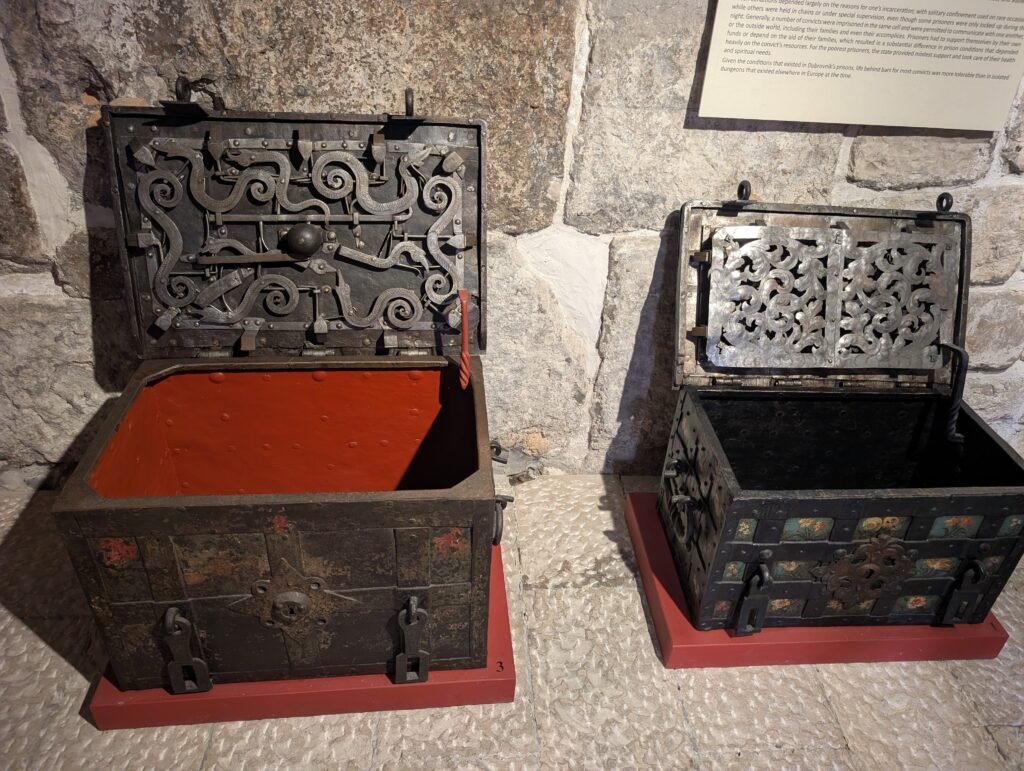
Complicated Safe Mechanisms in the Palace of the Rector
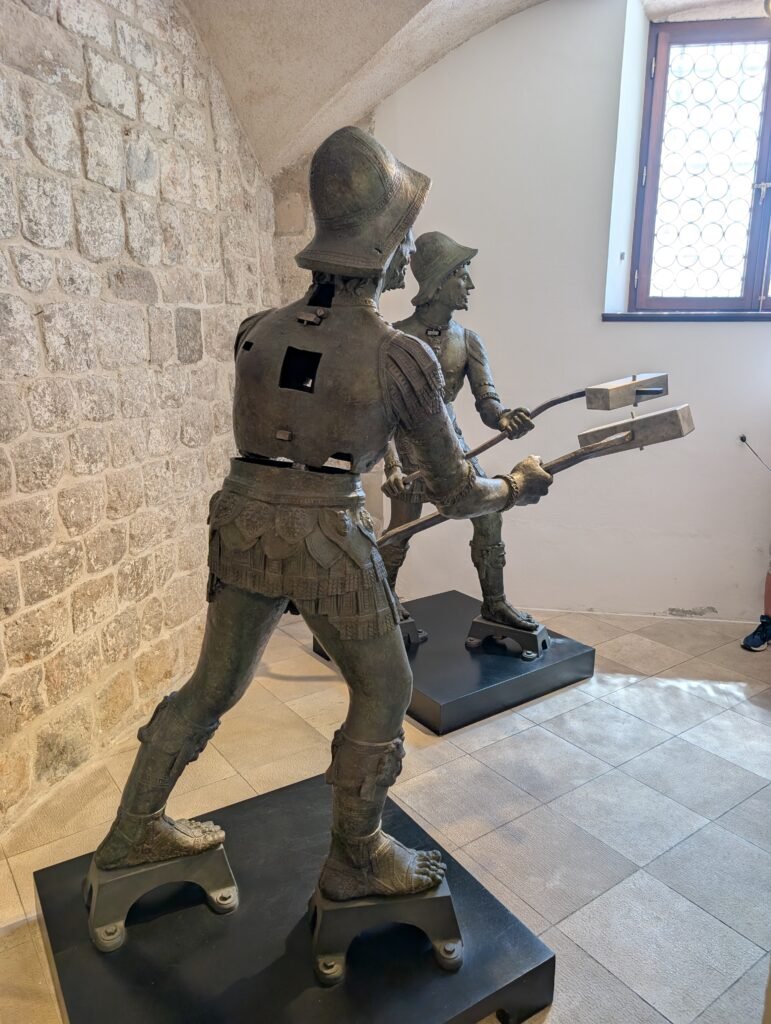
Bell Ringers
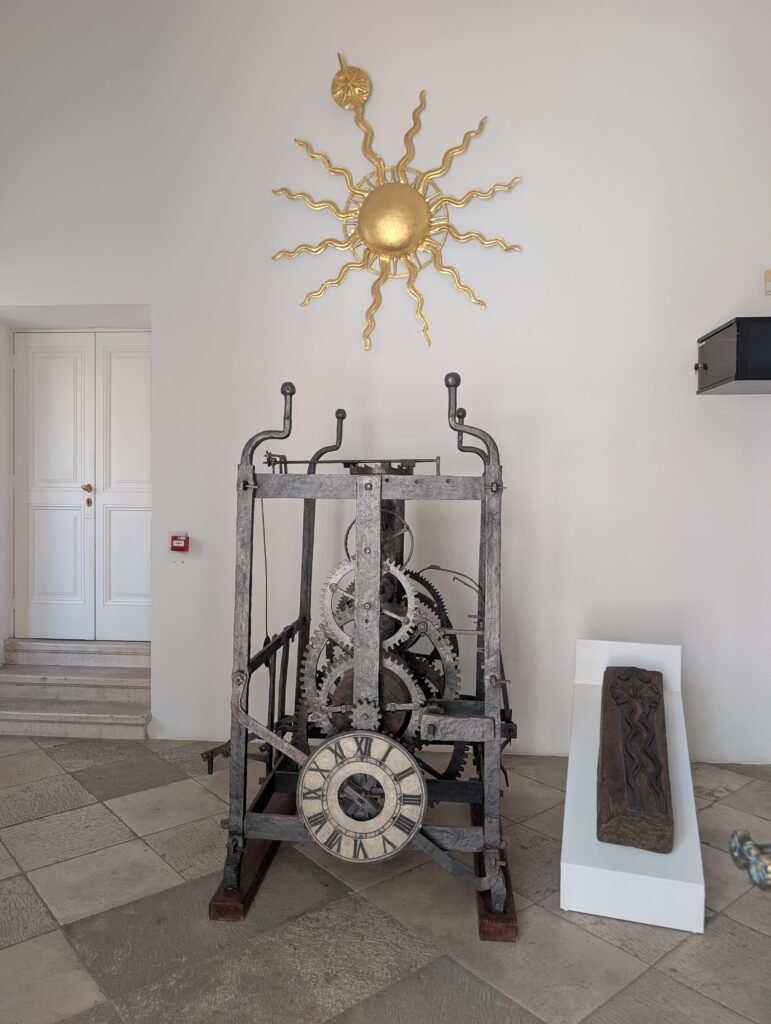
Clock Innards
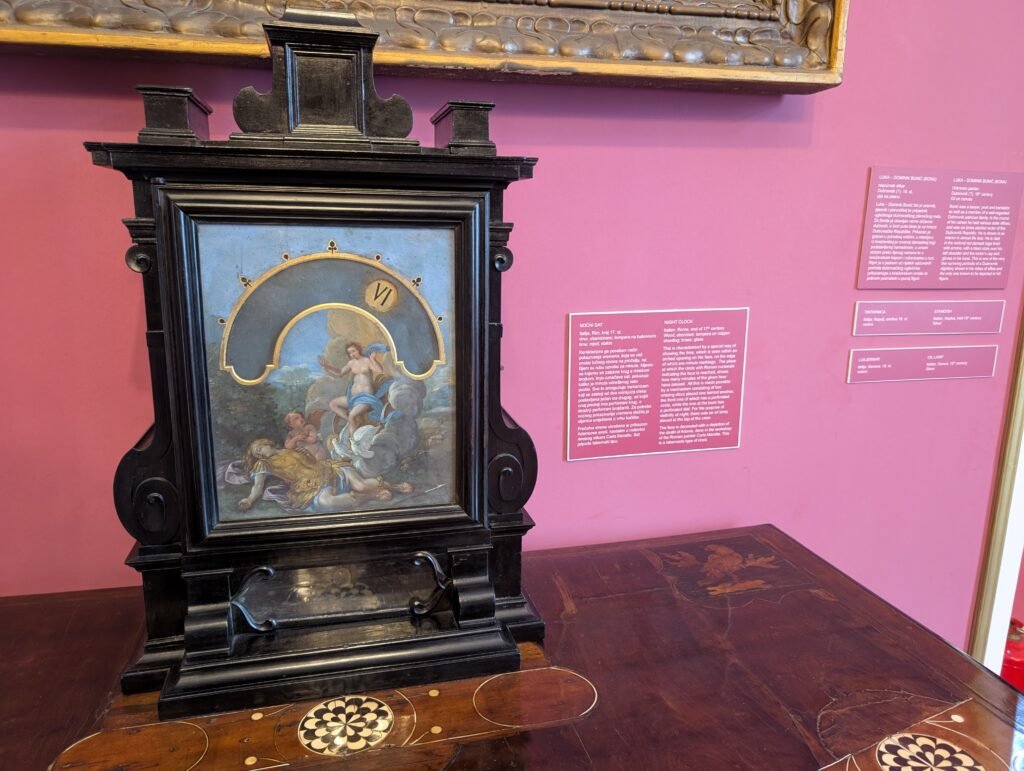
Night Clock: Hours are Shown by Roman Numeral, Minutes by Position Within the Arc
Italy Yugoslavia Trip Overview
Croatia
Zagreb
Helsinki
Bosnia