Milan

Castel, Duomo, & Galleria

Attending a local Church of Christ is always a priority for me on Sundays. I found some evidence that at some point there had been congregations in Padua and Vicenza, but it seemed like if they were still meeting at all, they were likely in someone’s home making them difficult to find at best, or defunct at worst. I found a church with a robust online presence purporting to represent congregations in both Milan and Bologna. This seemed like a surer option. We’d have to leave pretty early in the morning from Dolo to arrive in Milan in time to make 10:30 worship. It was a bus ride, plus an expensive fast train away. It would be worth the effort, though.

The local buses between Padua and Venice only run once an hour on weekends, so we had but one chance to catch a bus that would make our train departure. We needed to be at the bus stop to catch the 6:35 bus. Based on the irregularity of Italian buses, I thought it best to be at the stop at least five minutes prior to the scheduled time. We weren’t both ready in a timely manner, but we were walking out to the stop at about two minutes before the bus was scheduled to arrive. Sadly, the bus was running about two minutes ahead of schedule. We watched it drive off just as we exited the motel parking lot about 50 yards away.

I always have a backup option in mind, in case our scheduled itinerary breaks down somewhere, and I try to be aware of places where I have a “single point of failure,” so as not to box myself into a corner. In other words, I know to be extra cautious when there are no other alternatives for making connections than the one I am using. In this case, we had options. We could just punt on going to church, we could wait for the next bus and just hope our train departed a few minutes late, or we could call an Uber to get us the 7 or 8 miles over to the train station. We opted for the latter, though the cost was eye watering. That Uber set me back €120.

It turned out our train didn’t leave all that late, but it was slowed down considerably by operation delays en route. We arrived more than half an hour late to Milan, leaving us just enough time to catch the metro and scurry up to church. We would be late, but if we found it efficiently, we would be there within five minutes of their published start time. Carrying both bags, I huffed and puffed to and from the Milan Metro, and we walked up to the spot marked by the congregation on Google Maps. I found nothing but a closed library. We walked around the building, and searched the whole courtyard area. Nothing. We spent 15 or 20 minutes searching before I gave up and thought one last option might be to see if I could find another church. A dead website listed an address for another place a Church of Christ had met at one point. When they let the website die, they had been holding worship at 11:00. We would be even later if we found it, but it was only about a mile away. Again, I chugged over with the bags, and this time walked right up to a building with a Chiesa di Cristo sign. I could even hear the service happening inside. We walked in and dropped our bags. I was covered in a lather, but I had found it. We cooled off as the service went on.

(Continued)

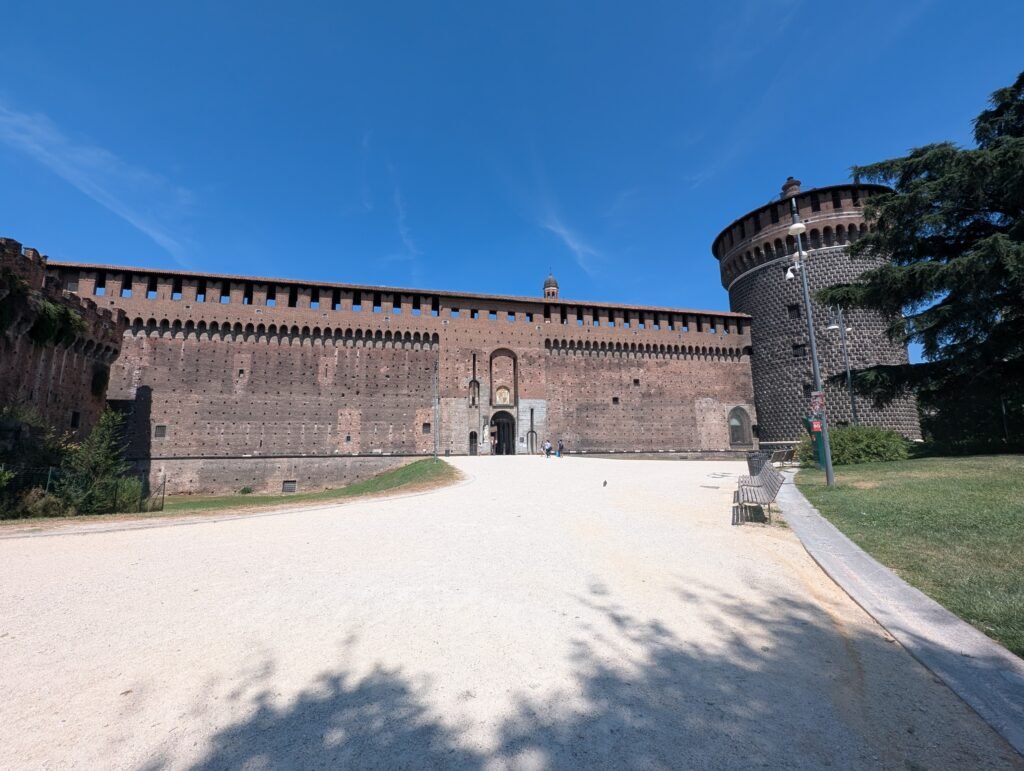
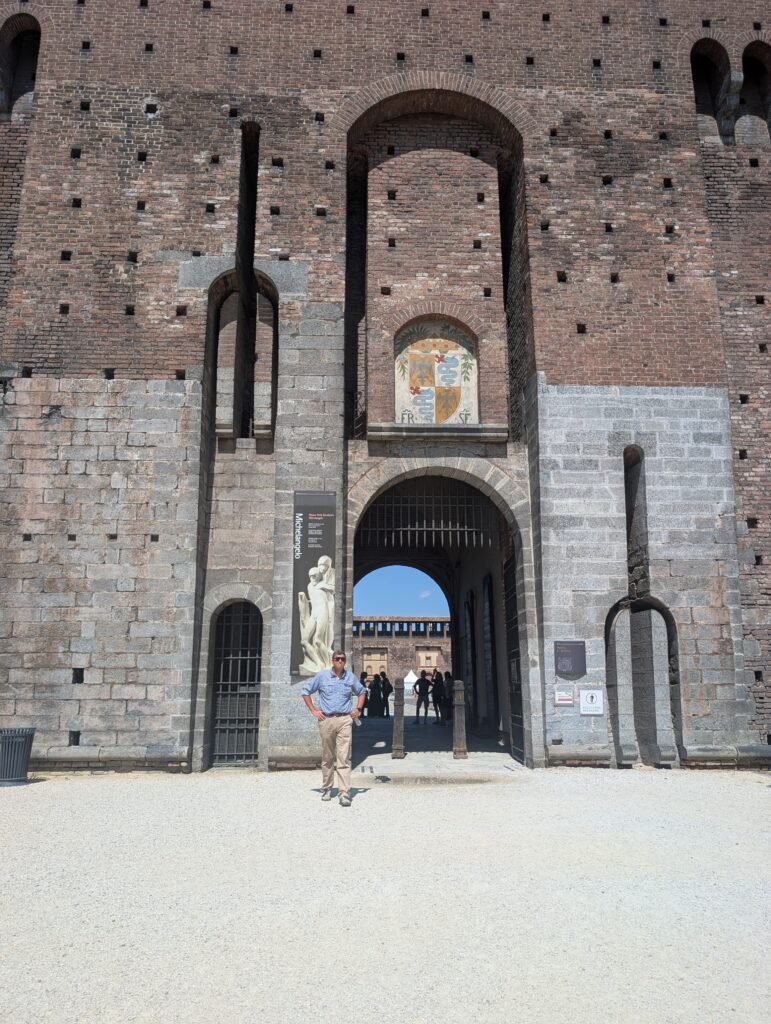
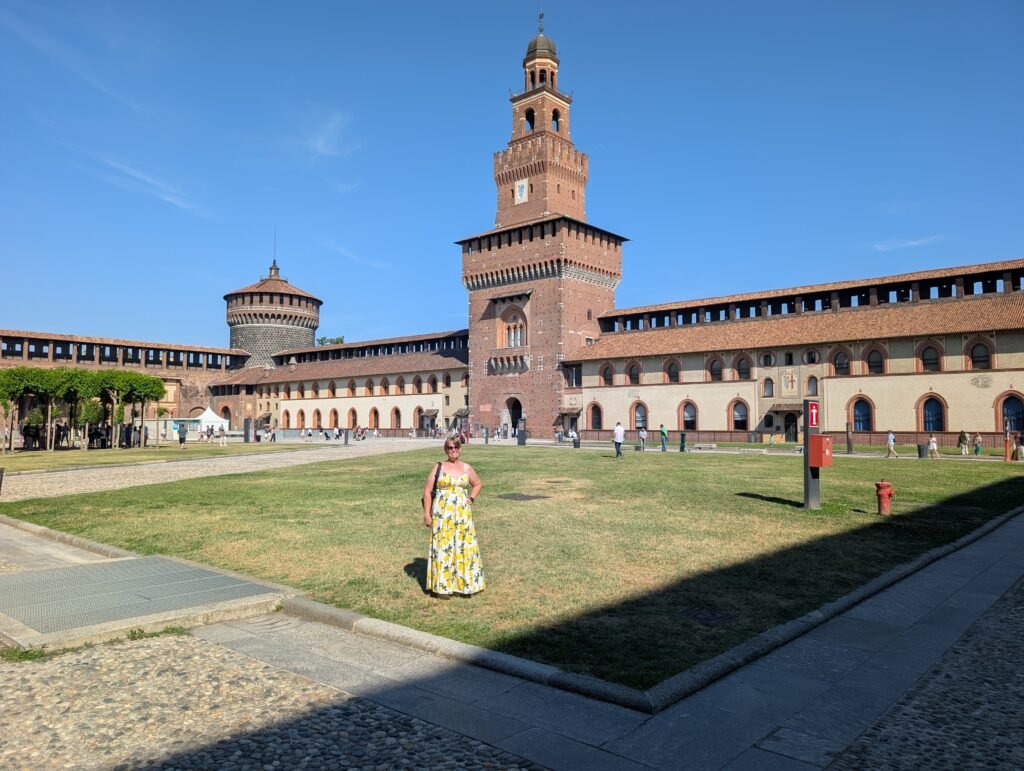
Exterior of Sforzesco Castle
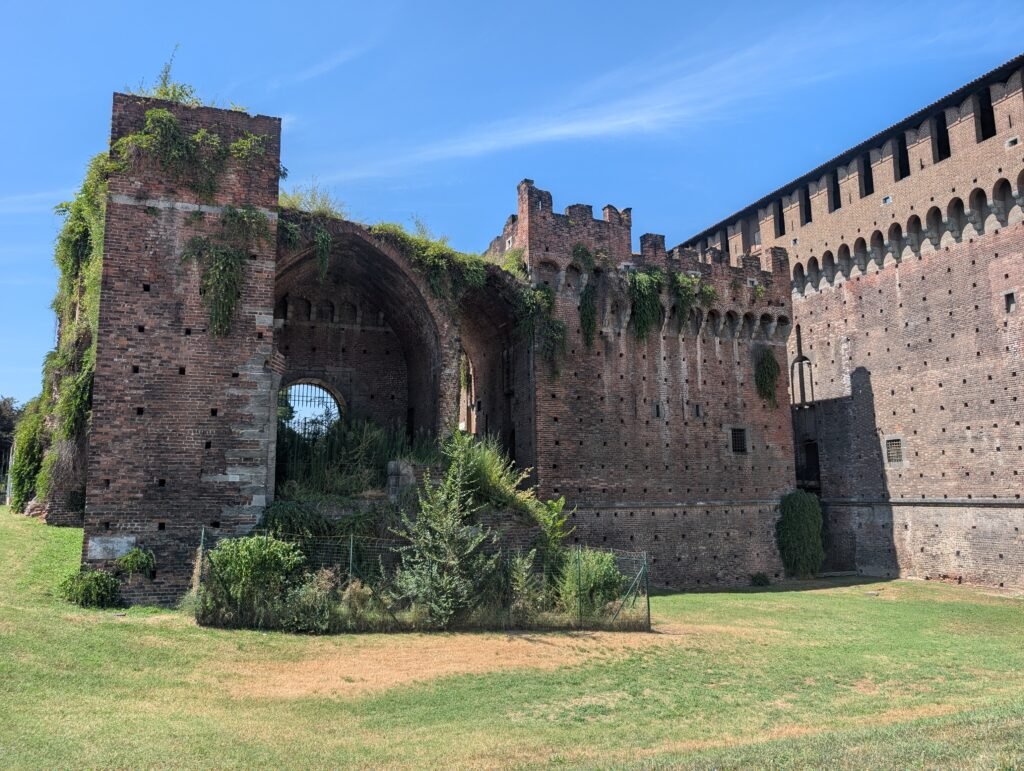
Drawbridge Works, Sforzesco Castle
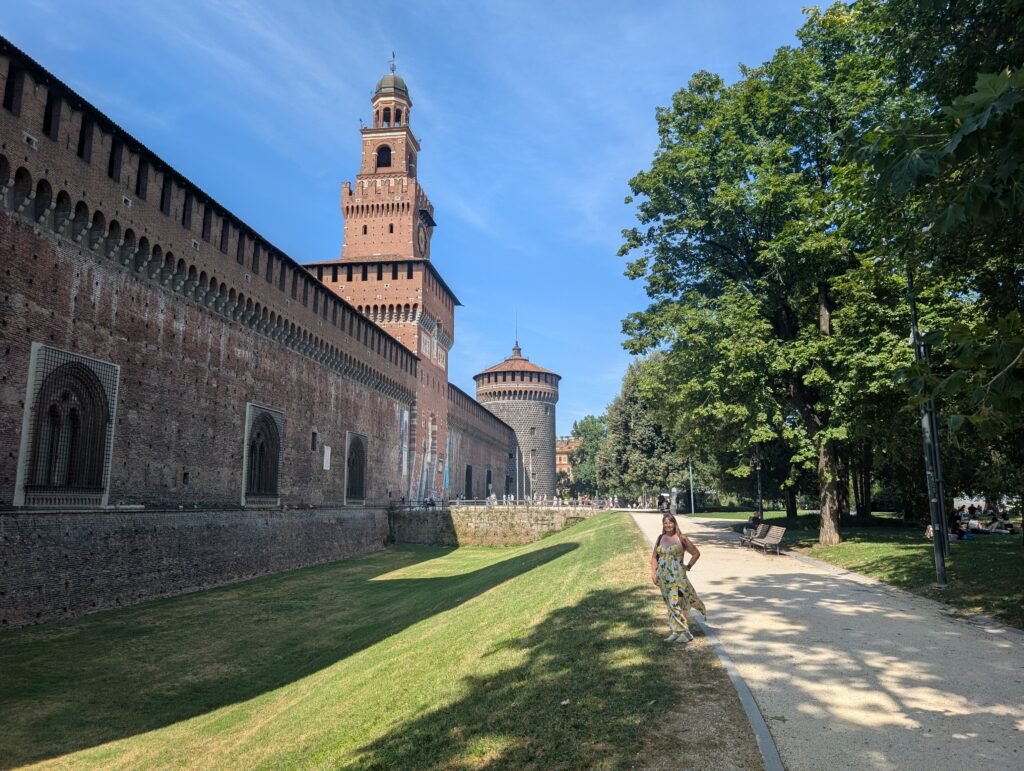
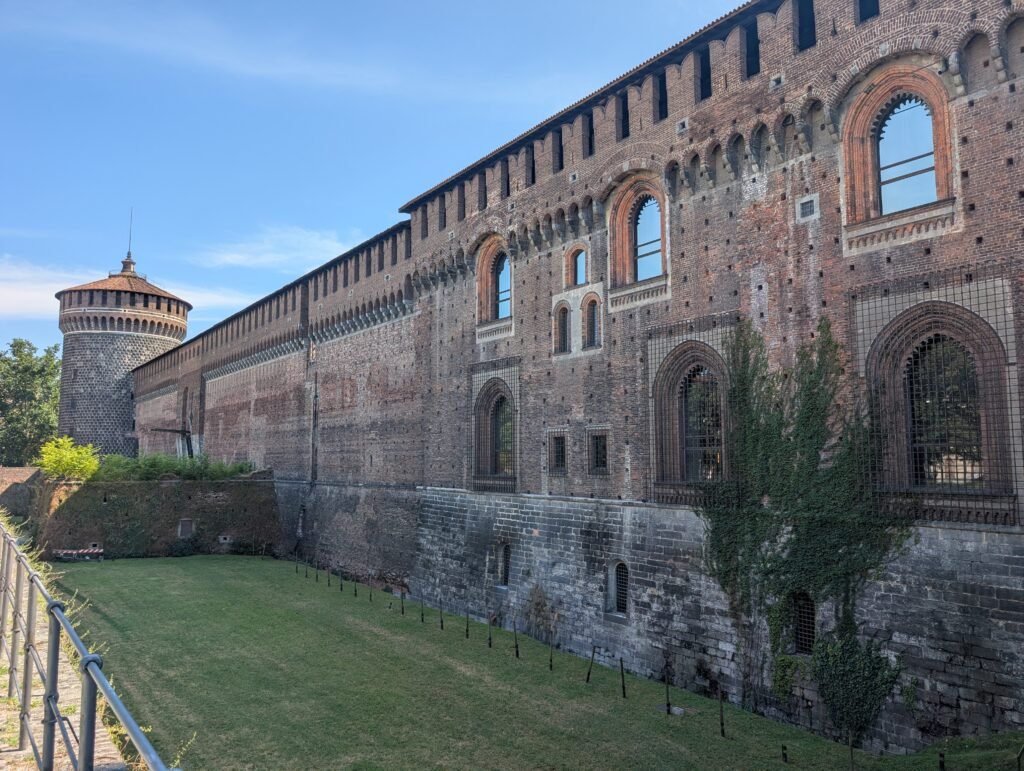
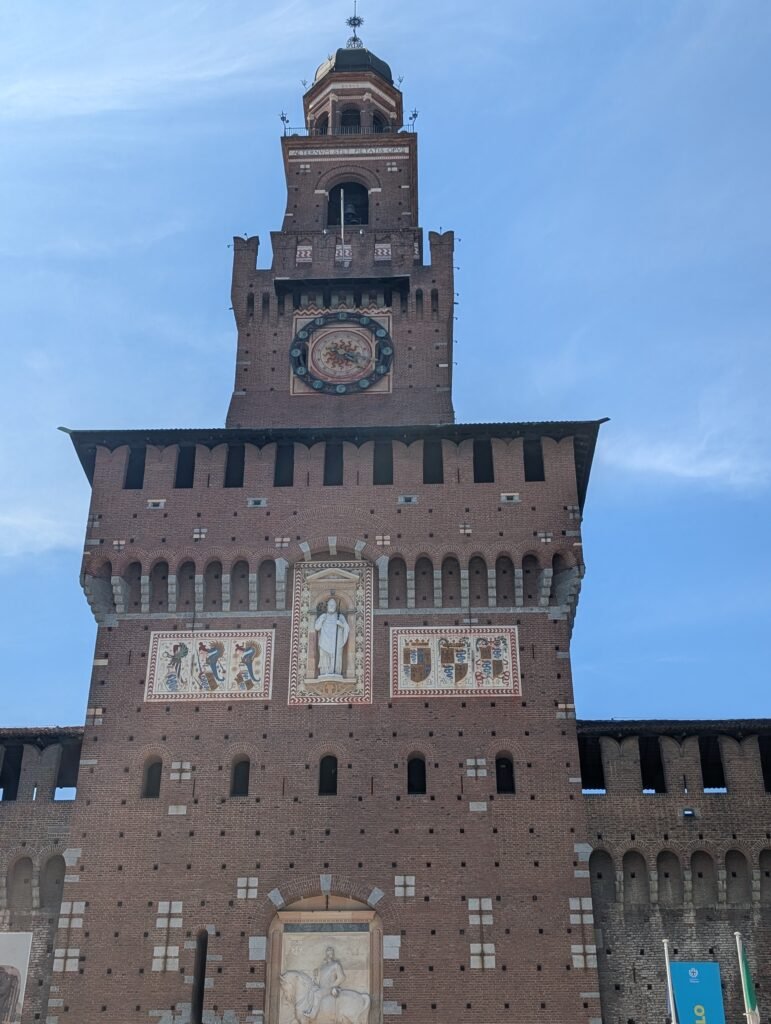
Tower Detail
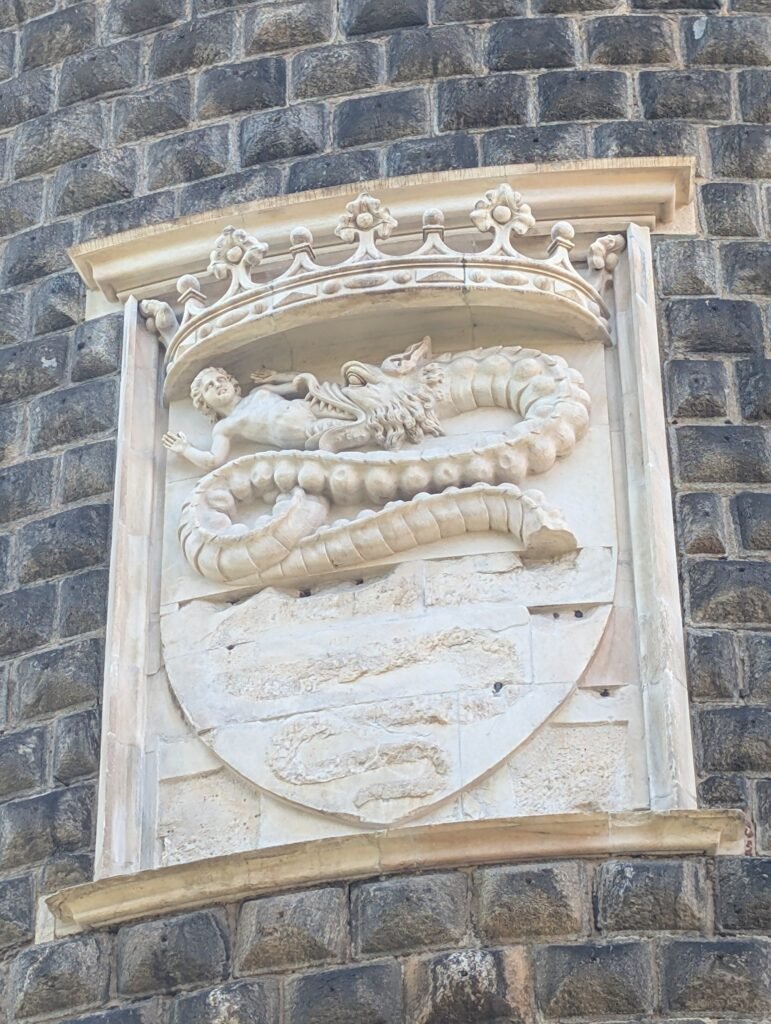
Imagery From St. George & Dragon

We joined a very welcoming congregation made almost entirely of Filipinos. There was one family from El Salvador as well. They were quite enthusiastic when they learned I could speak some Spanish. We hadn’t had time to make acquaintances before the service, so we made all of our greetings afterward. By and by, we were invited to stay and have some coffee as we visited. After a while, a whole Filipino meal came out, and we were again invited to stay, share, and visit. Our communication was limited. One English speaker who had been a missionary left soon after worship. We shared anecdotes with the Salvadorenos for a while, and were able to visit a bit with the preacher and his wife, who spoke some English. Eventually, the visiting died down, and we decided maybe we ought to go on and visit Sforzesco Castle. It was going to be closed on Monday, and that, the Duomo, and the Victor Emanuel II shopping center were really the only things we thought we’d have time to see anyway. The Duomo and shopping center could be visited Monday before Stephanie’s flight which was scheduled to depart at 7 p.m. from Milan Milpensa Airport about an hour away by bus or train.

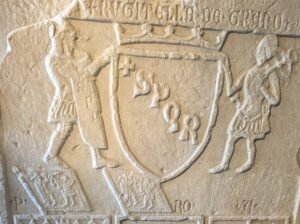
We hiked over to Sforzesco Castle. This castle is home to several museums we could also have visited. They house Michelangelo’s unfinished Pieta, many other pieces from his proteges, collections of ancient Roman and Egyptian artifacts, and items from the Visconti and Sforza families – the ruling families of Milan when it was an independent state. We figured we had probably seen better Roman artifacts in Rome, and would save seeing more Egyptian items for Egypt. There was a photo outside of the Pieta, and it wasn’t finished anyway. We had seen the finished one in St. Peter’s the week before. They were interestingly quite different. The Pieta in St. Peter’s was made when Michelangelo was in his twenties. To represent the Jesus as the world’s only perfect man, the artist had chosen to mimic the most perfect body he could find depicted in ancient Roman sculpture work. This unfinished Pieta was something he had been working on in his eighties. The Jesus depicted here is thin and almost sickly looking, showing the true suffering he must have endured leading up to his crucifixion. If finished, the piece would have evoked a much more somber reflection on the suffering savior.

Sforzesco Castle itself was built in phases, probably on ancient Roman defensive works. During the late Roman Imperial period, Milan actually briefly served as the capital of the Western Empire. After Roman rule broke down, a group called the Lombards controlled the area. In the 8th century, it was conquered by the Franks and thus incorporated into the Holy Roman Empire. As the middle ages wore on, many Italian city-states balked against feudal rule. The Visconti family gained power and took control of the Duchy of Milan in the 14th century. They built a formidable castle on the site, and Milan became a powerful agricultural, cultural, and economic center as well as one of the largest cities in Europe. In 1447, the Visconti Duke of Milan died leaving no heir. Local leaders saw the opening as an opportunity to create a more republican form of government, as was in place in both Venice and Genoa. Struggling to defend themselves against powerful and aggressive neighbors, the Milanese nobles hired mercenary Francesco Sforza to defend them. This plan backfired as Sforza ultimately used the opportunity to seize power himself. He appointed himself Duke of Milan in 1450, and undertook construction of the massive new castle similar to what can be seen in Milan today.

Milan remained a duchy until the defeat of Napoleon in 1814, though the duke was at different times subject to the French, Spanish, or Austrian crowns. It was eventually absorbed into the unified Kingdom of Italy in the 19th century. Toward the end of that century, it was determined that the castle should be rebuilt in a way that both reflected and protected the city’s important past. The castle was renovated so as to look much as it had during its time as the Sforza residence. It then came to house the museum collections that are such a large part of what you can visit with your ticket to Sforza Castle.

(Continued)
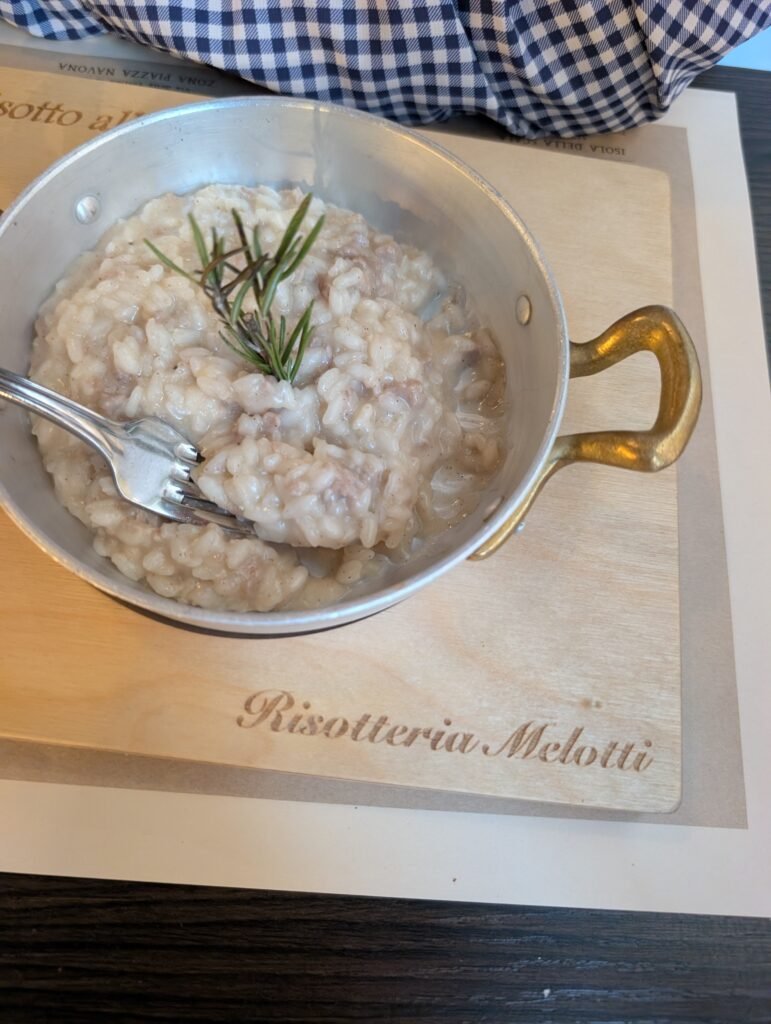
Our Risotto Dish
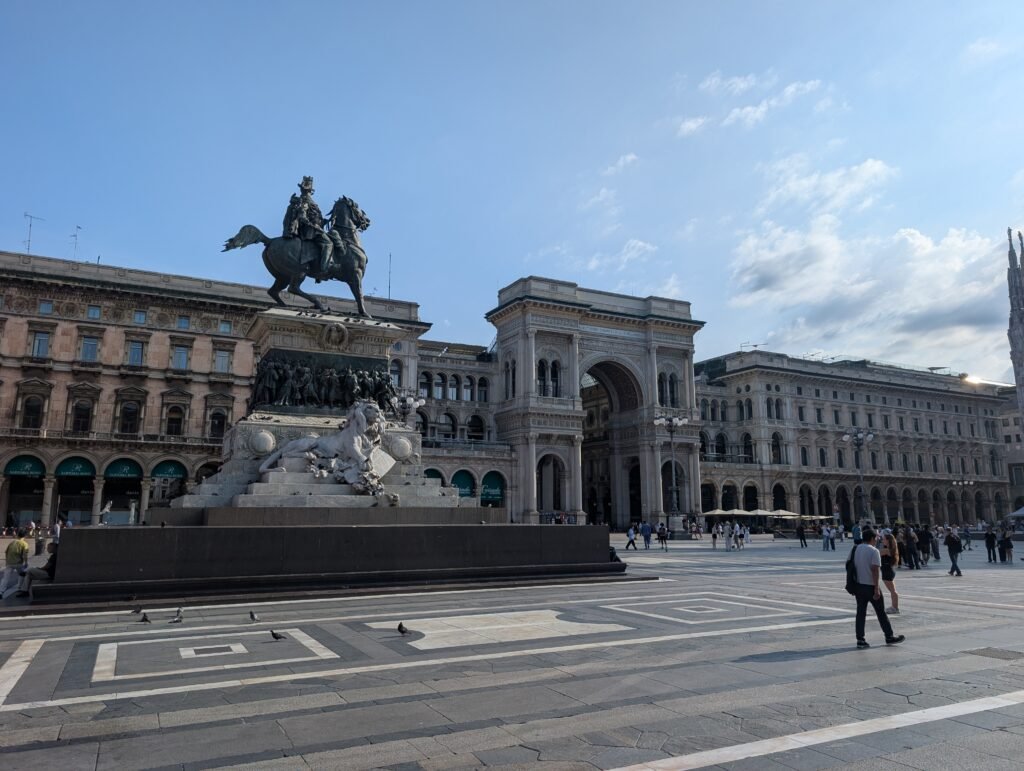
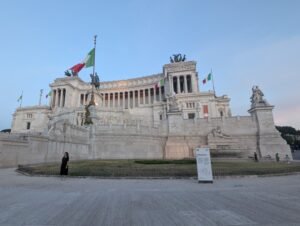
Vittorio Emanuele Statue
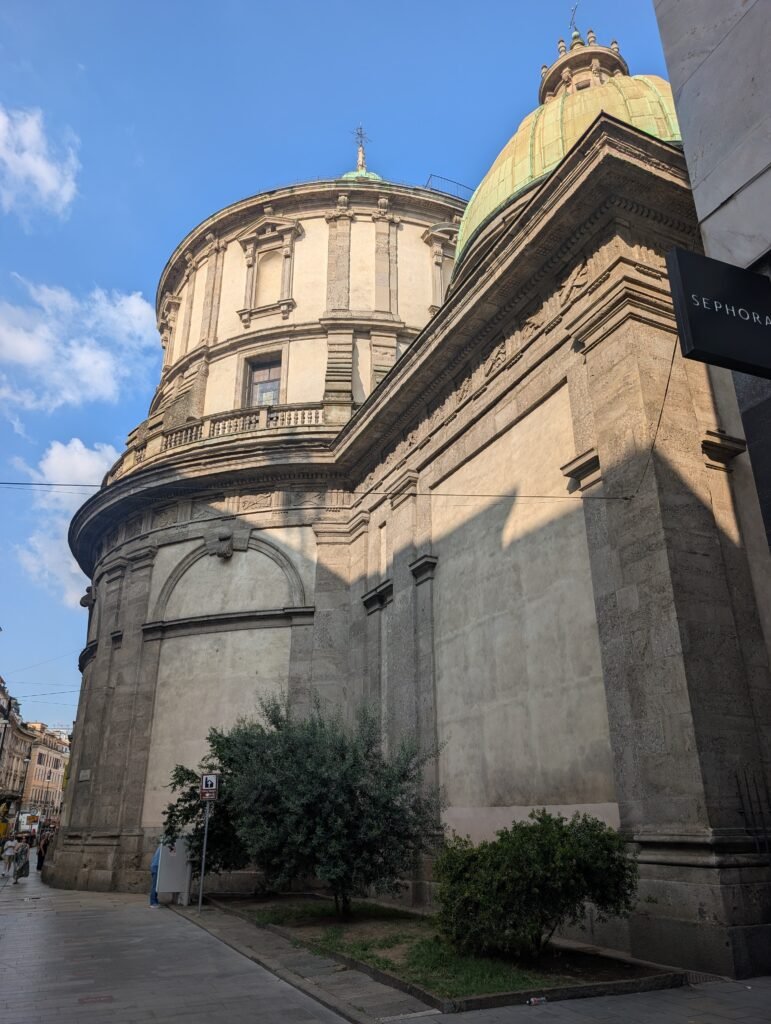
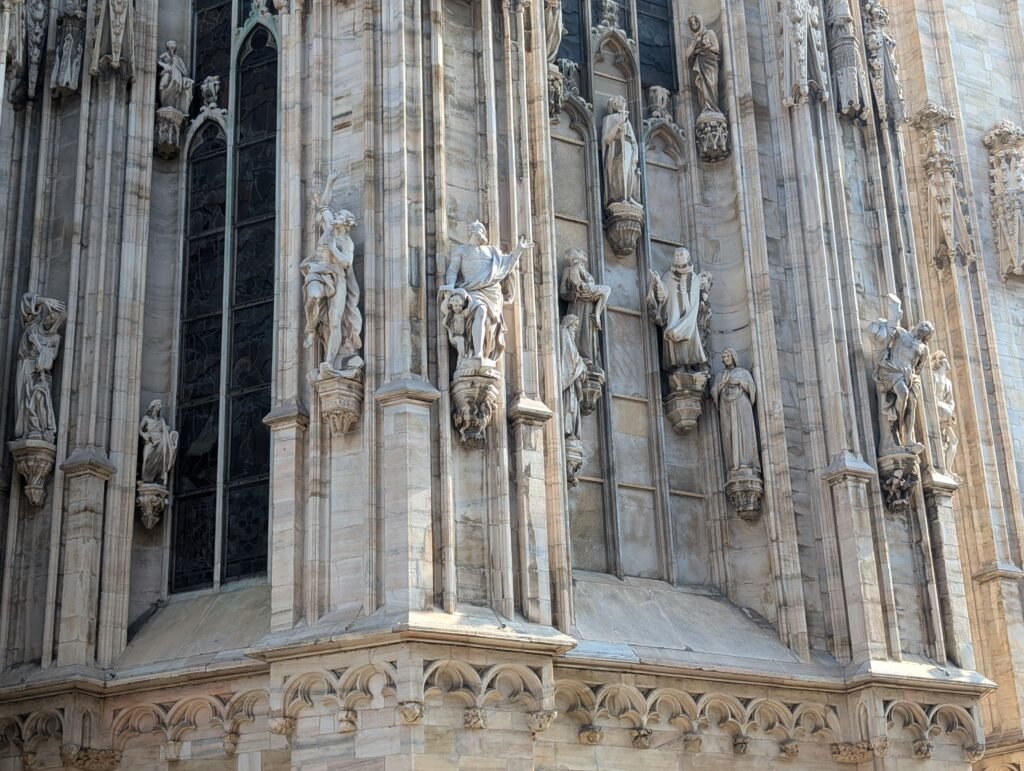
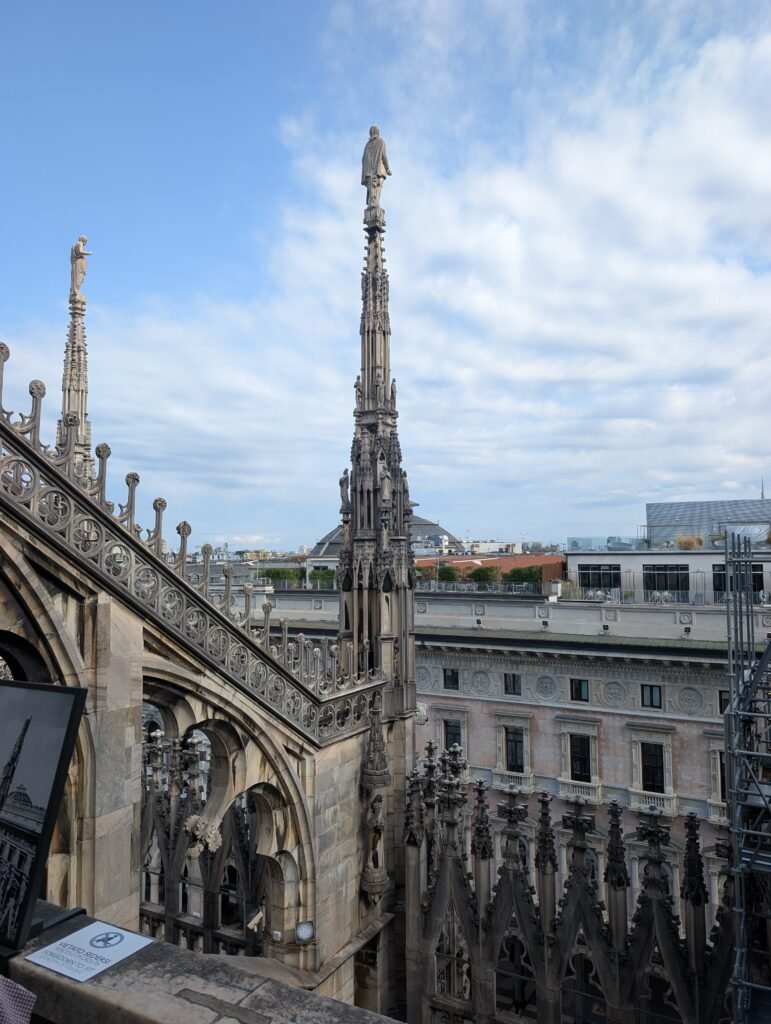
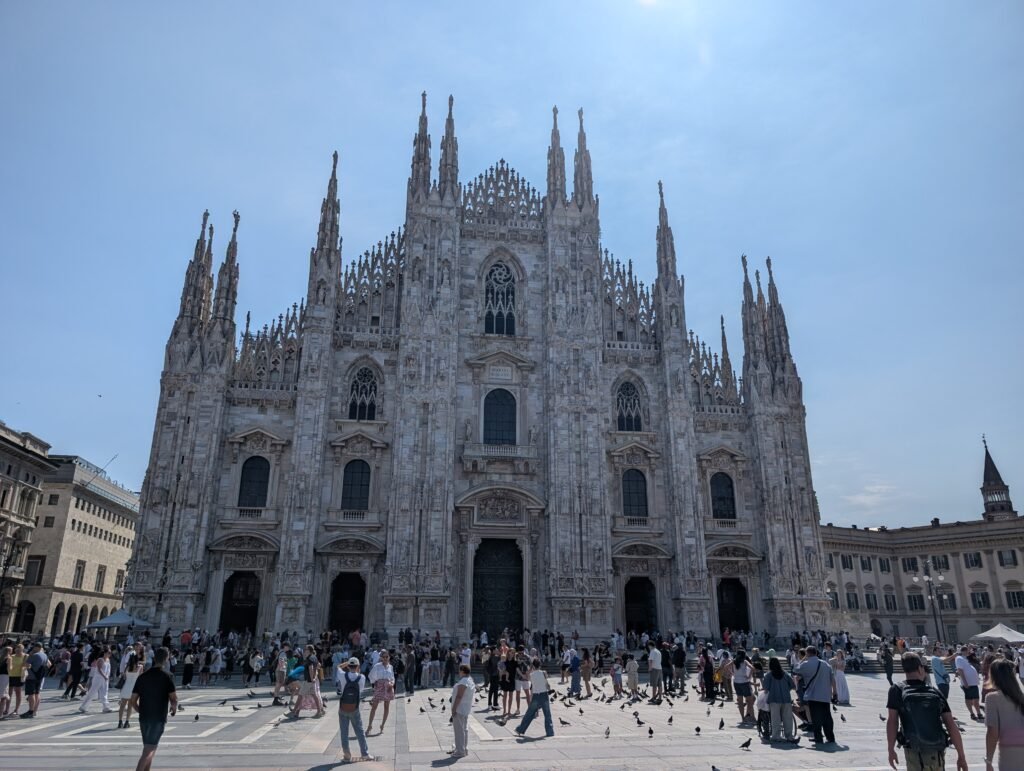
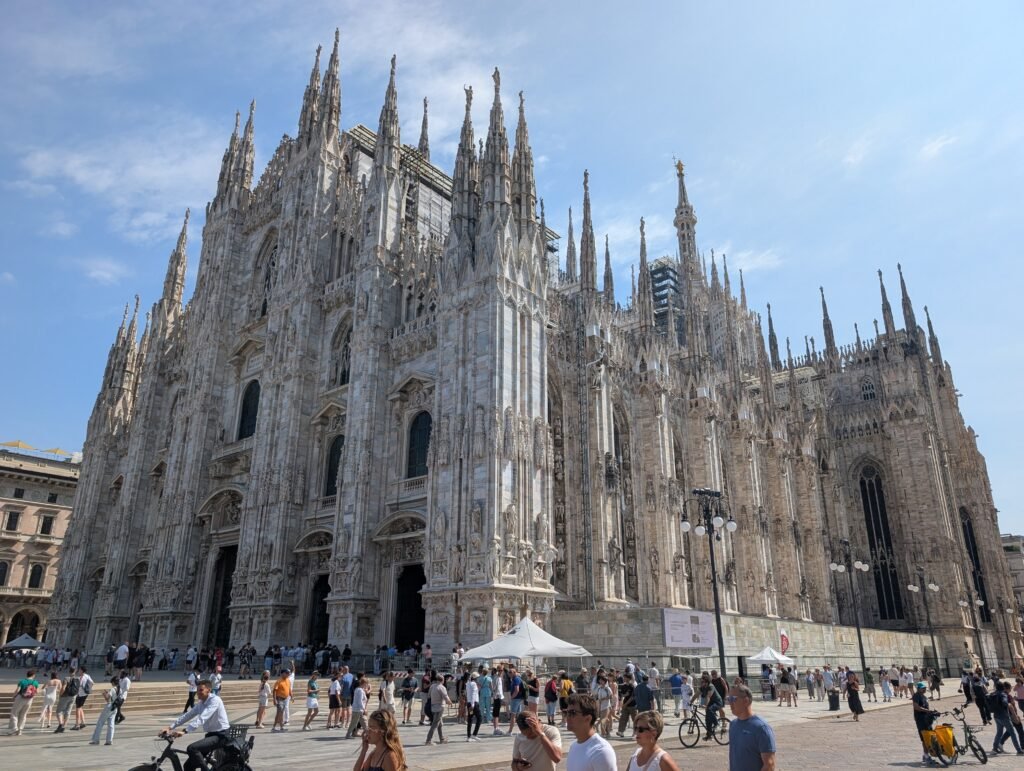
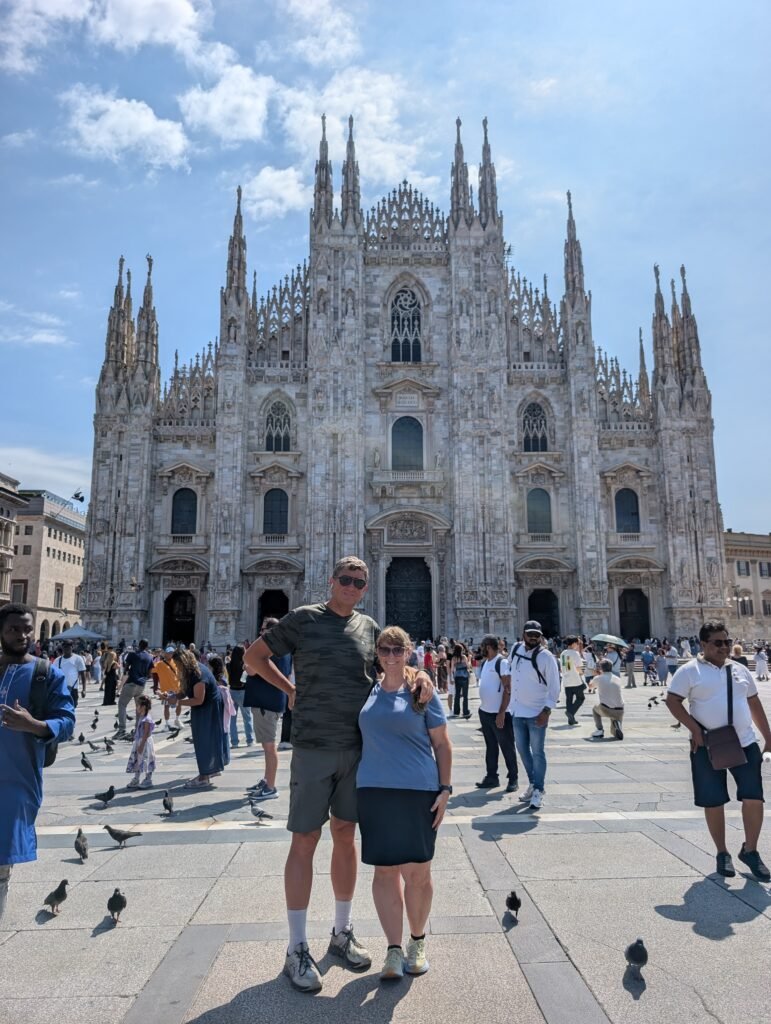
Some Exterior Features of the Duomo
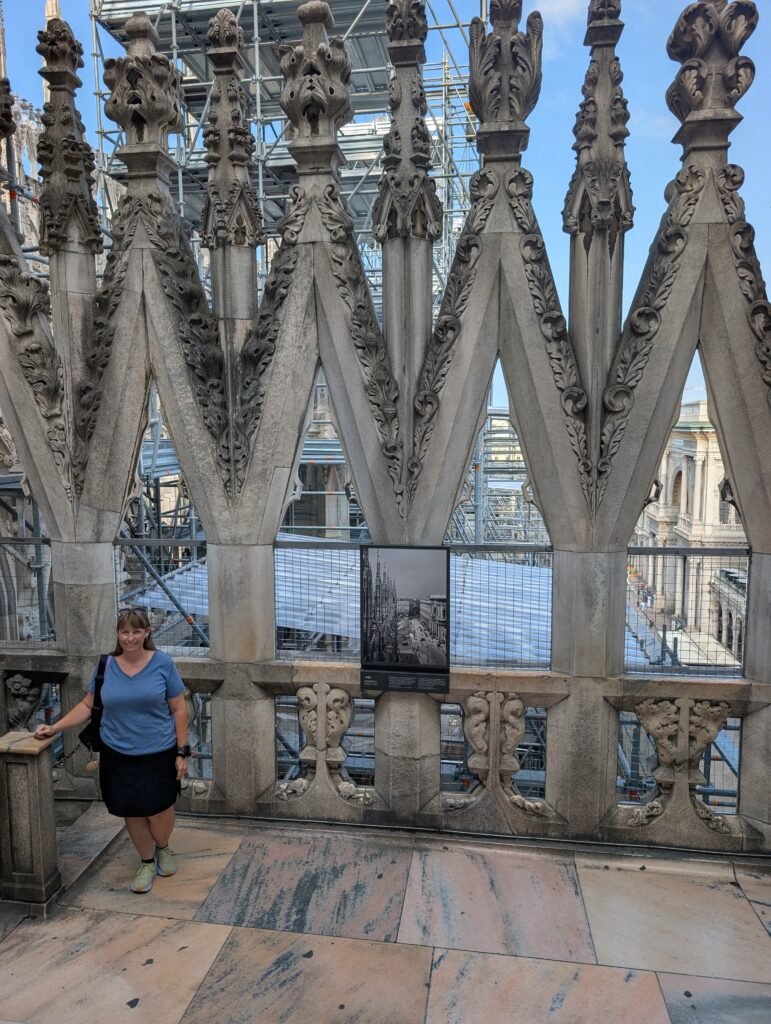
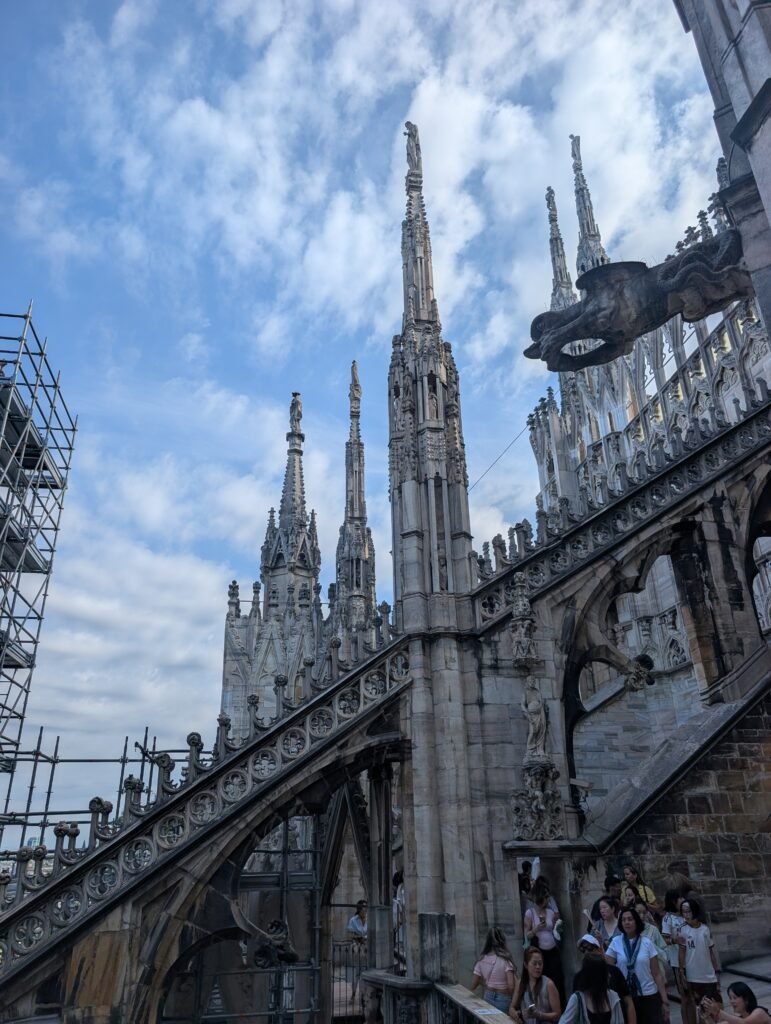
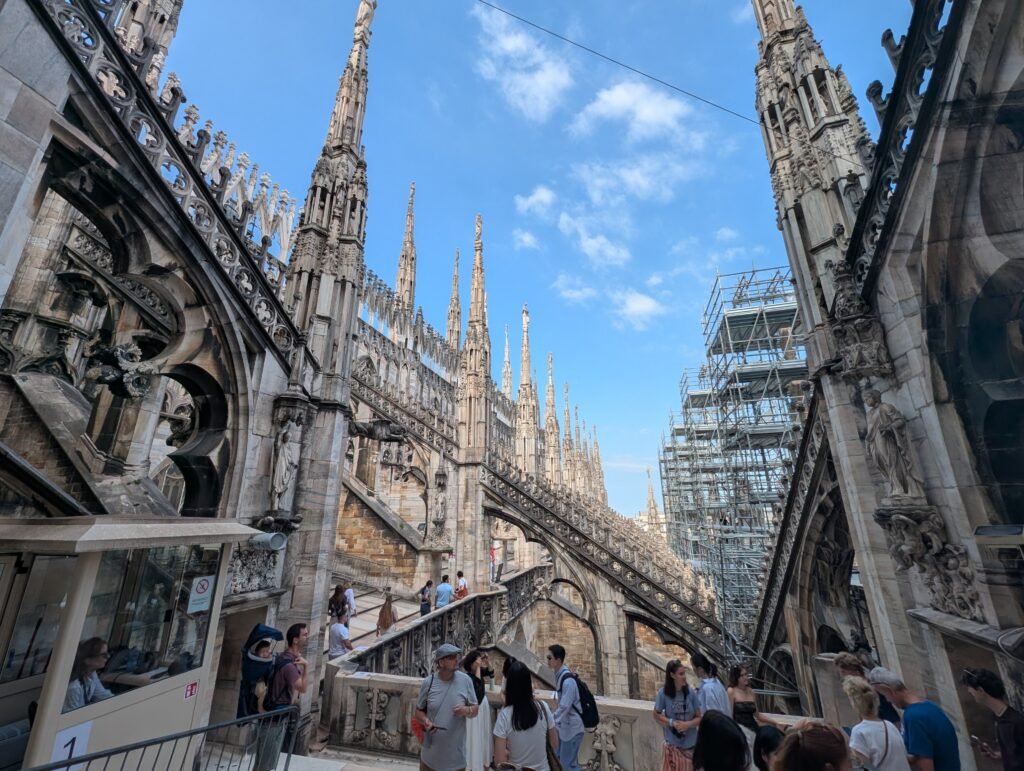
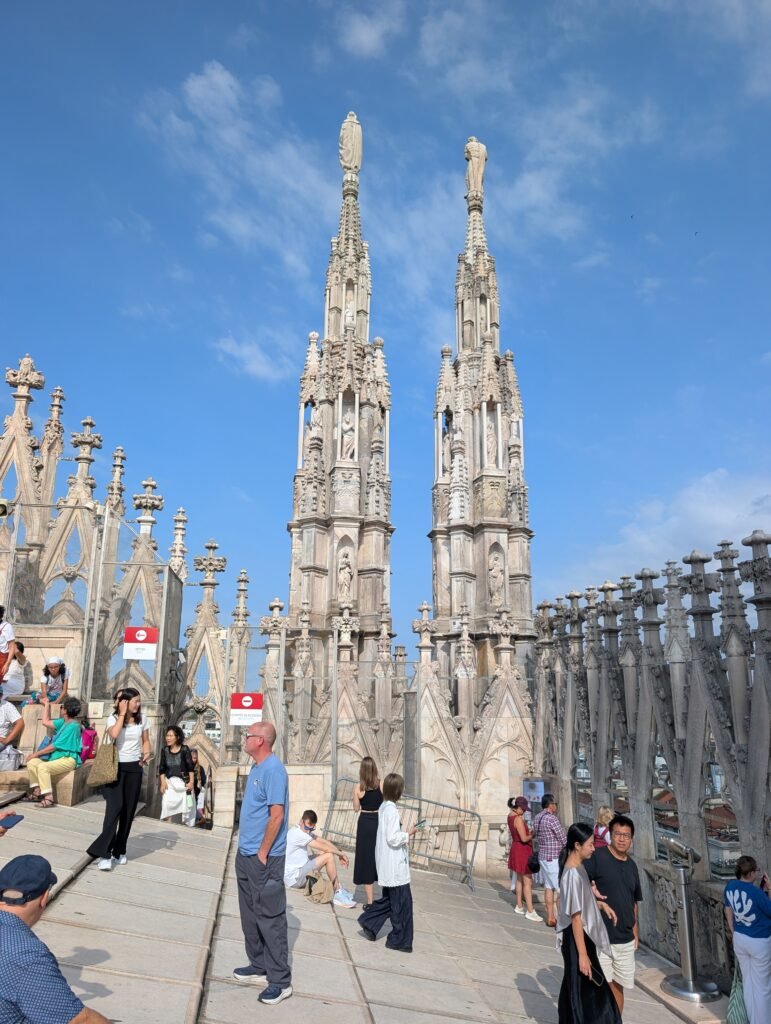
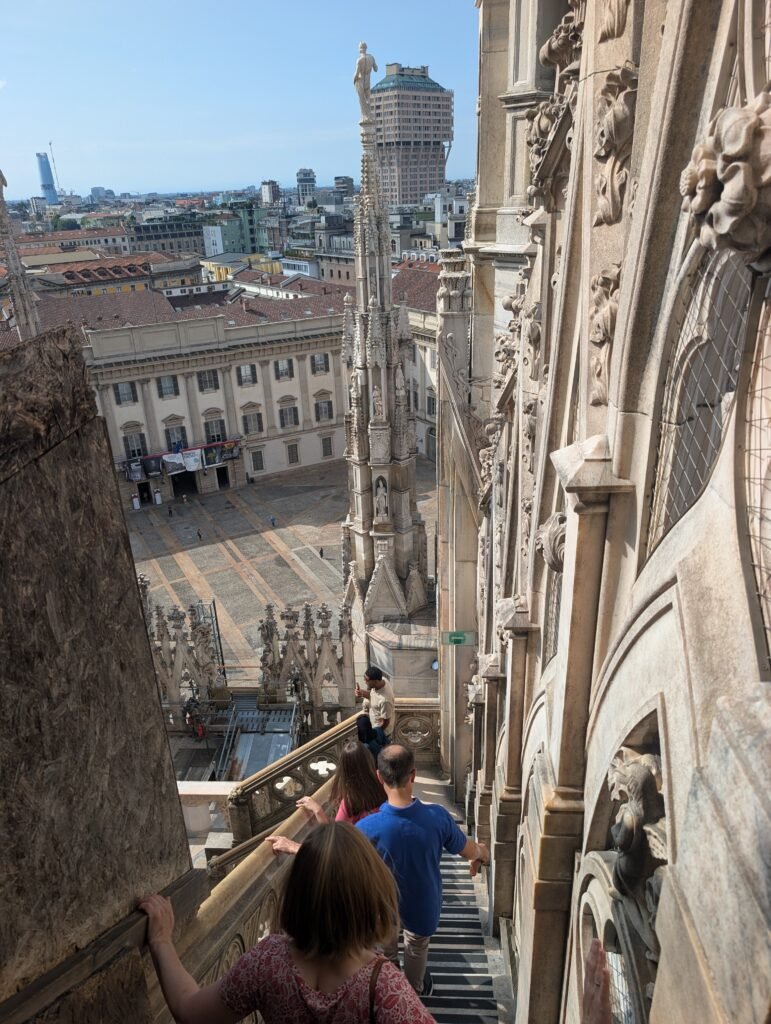
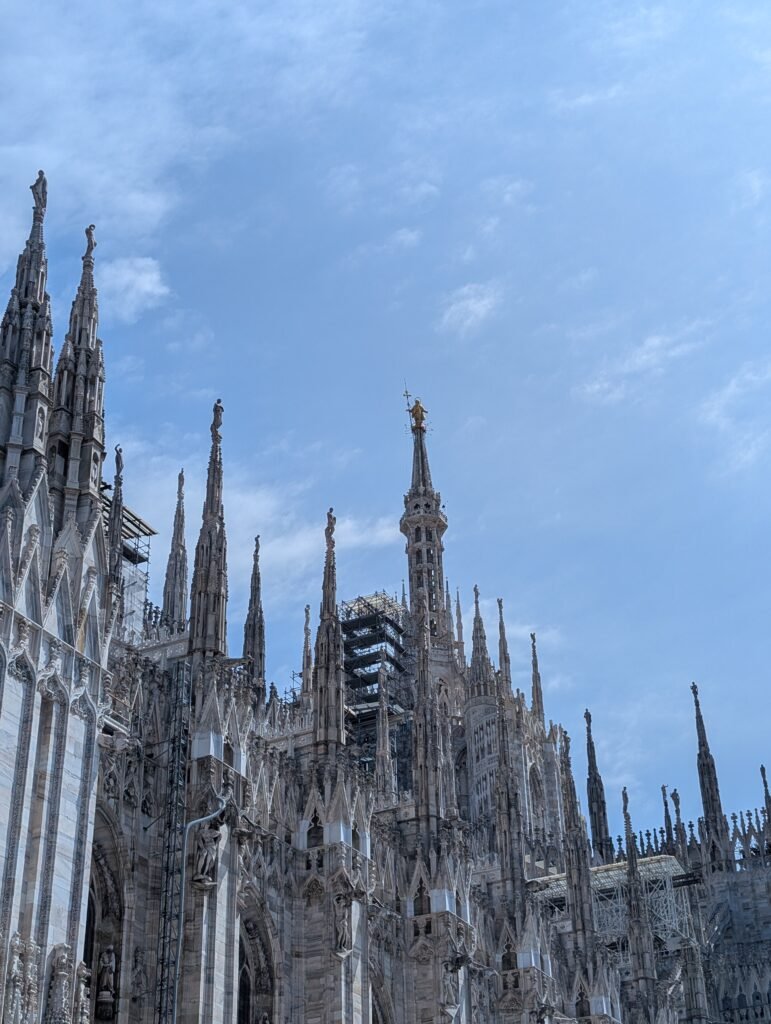
Some of the Features You See on the Rooftop Tour of the Duomo

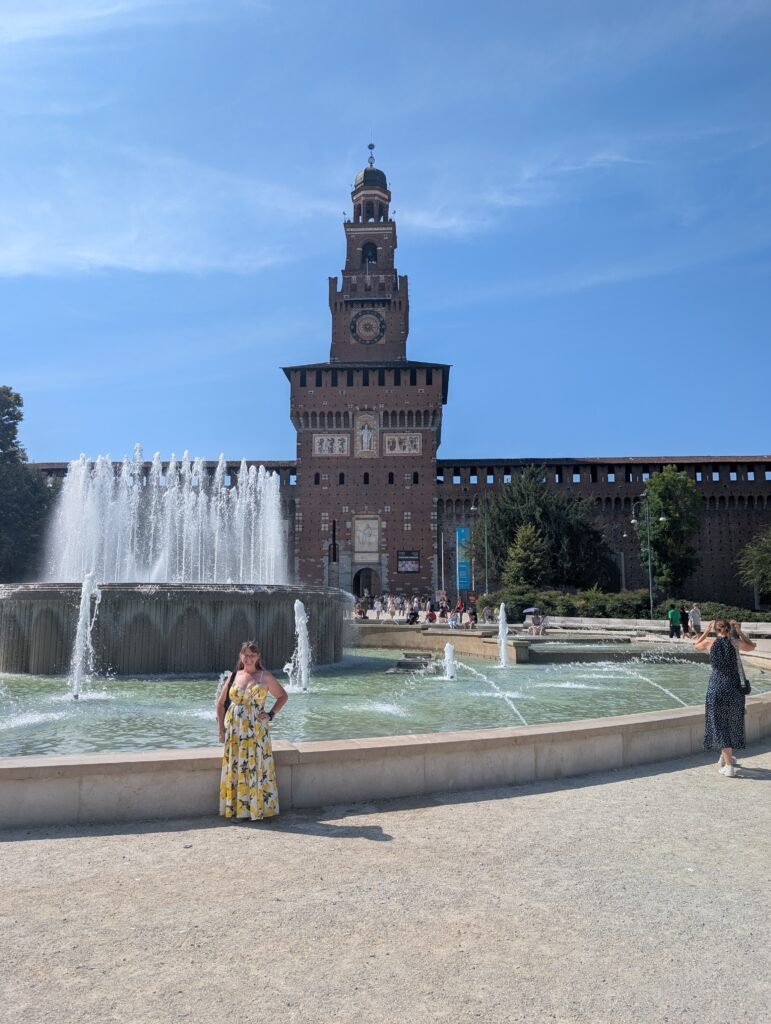
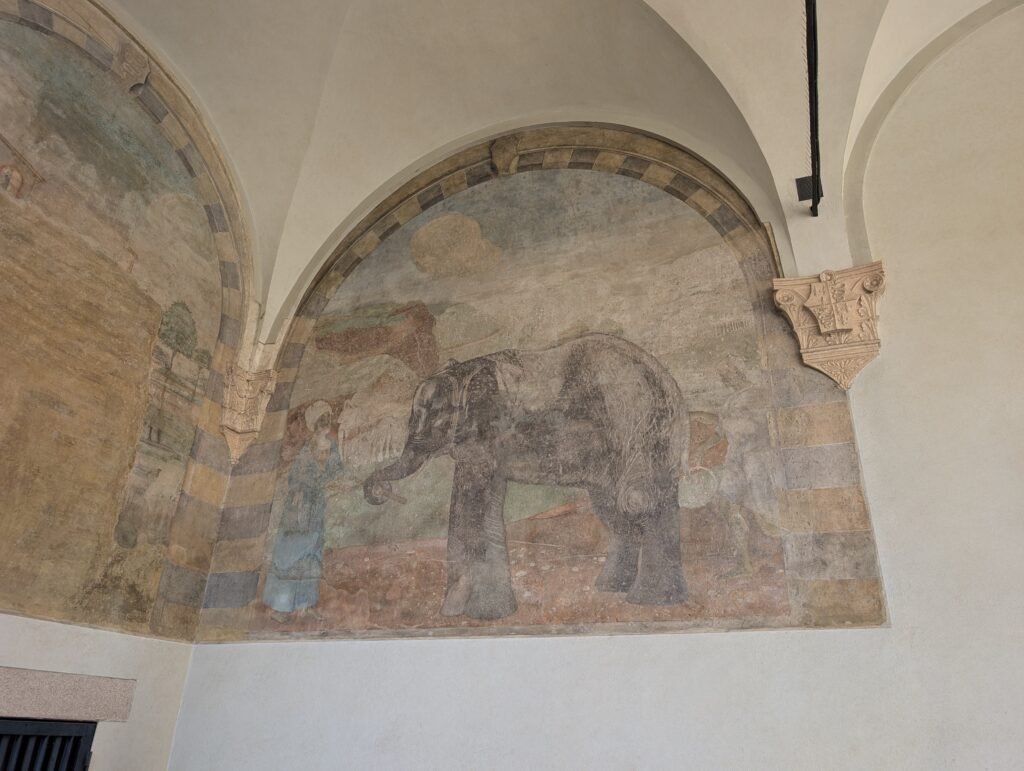
You don’t have to buy a ticket to see the exterior and the courtyards of the castle, however. You can walk the perimeter of the castle in a pleasant, shady park. A huge fountain decorates one side’s entry. Placards around the castle’s entries and courtyards offer a brief synopsis of the castle’s history and importance. When we were there, they had set up chairs and a stage for some kind of presentation in the interior courtyard, but we never saw any indication of exactly what it would be. There were a few squares on the interior grounds off of the courtyard where plaster had been removed, exposing older frescoes with some brief explanations of what was depicted therein, or why they had been created.

We wandered the park and all around the grounds for a couple of hours, then decided to collect our bags and head to the Nhow motel. We made it to our motel, then rested up a bit while Stephanie chose what we thought would be her last big supper in Italy. She chose a restaurant that specialized in Risotto, the Risotteria Melotti. It was apparently small chain owned by a family who had started in the 1980s with a 5 acre rice farm. Everything they served in the restaurant had something to do with rice. I really liked the risotto, but it was a tad rich. The creamy rice itself was a different texture for me, but they have creamy rice with minced meat in it. Some risotto even has cinnamon mixed in. There were dishes with shrimp or mushrooms in them. The appetizers were little rice-based fried balls. Even the desserts were rice.

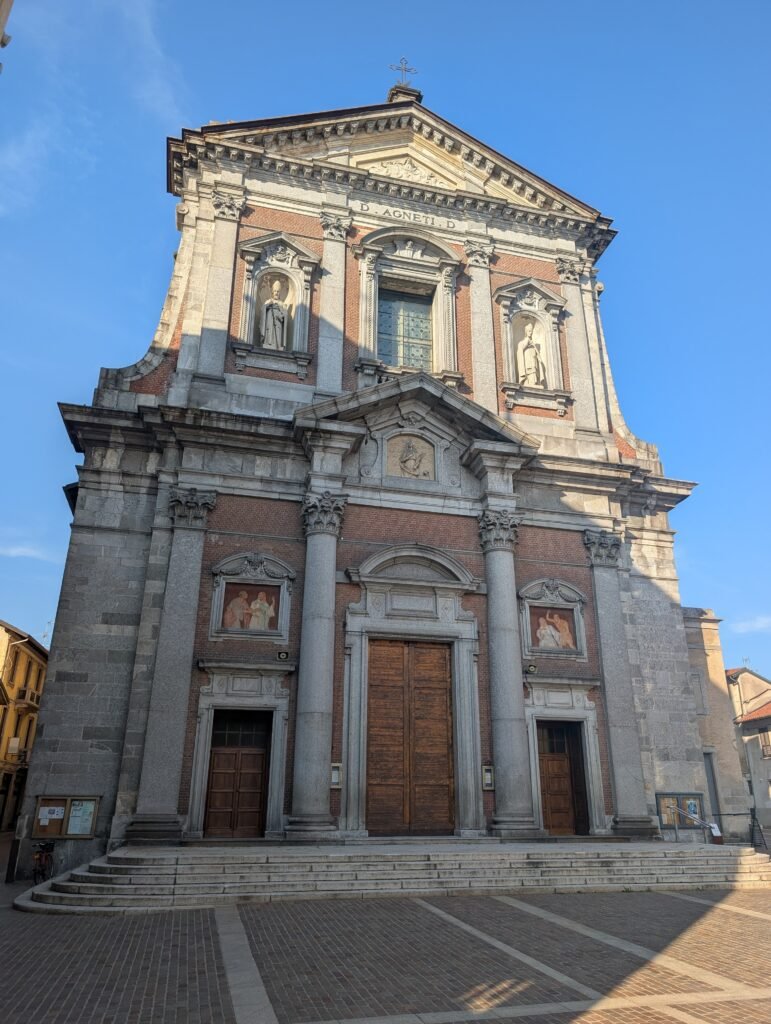
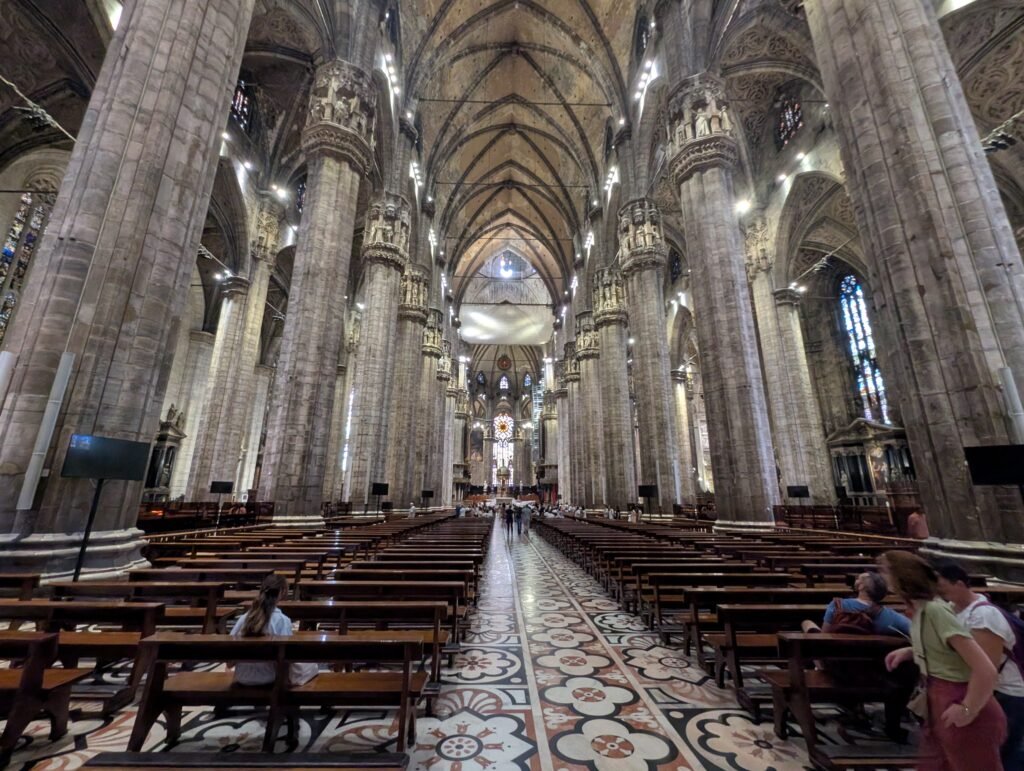
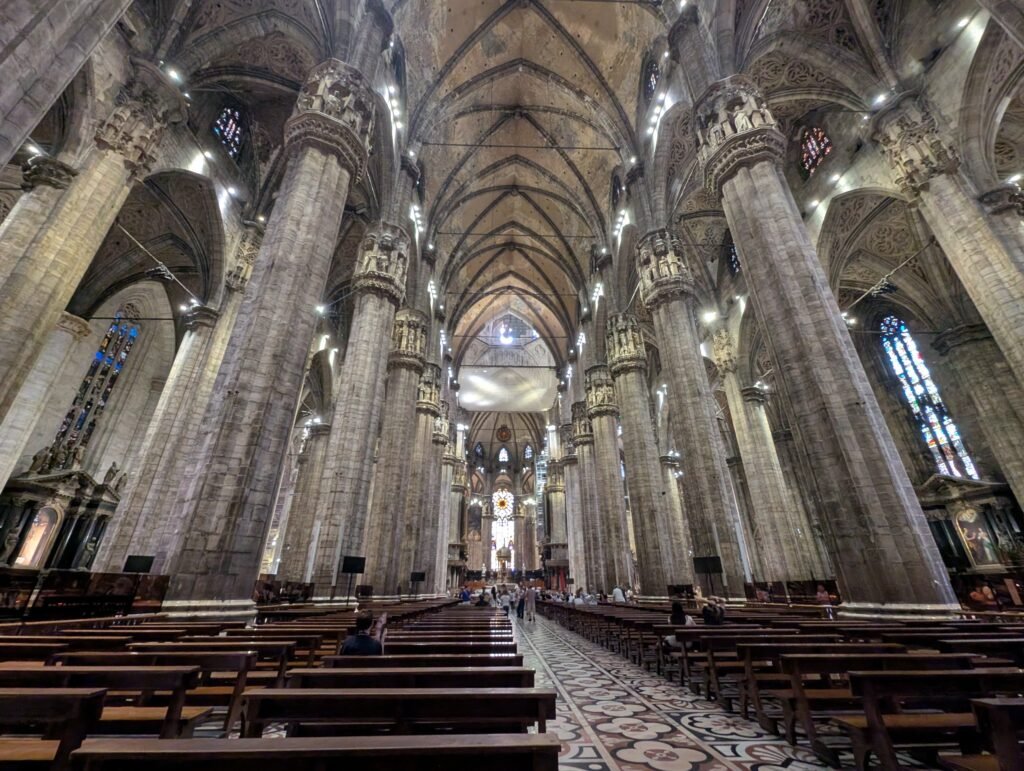
We were planning to walk to the Duomo on Monday morning, then return to the room in the early afternoon so we could eat a late lunch on the way to the airport. We knew the Duomo would be worth visiting. It is the most well known architectural icon in the city. We bought a ticket that would allow us not only to enter the sanctuary, but also to climb up and walk around on the roof. We didn’t figure we’d have time to utilize the tickets to the museum, the archaeological area underneath, or the crypt. Given the time we had, this worked out about right. It took us about three hours to explore the church, the square, the roof, the Victor Emanuel II shopping center, and the neighboring central areas of the city.

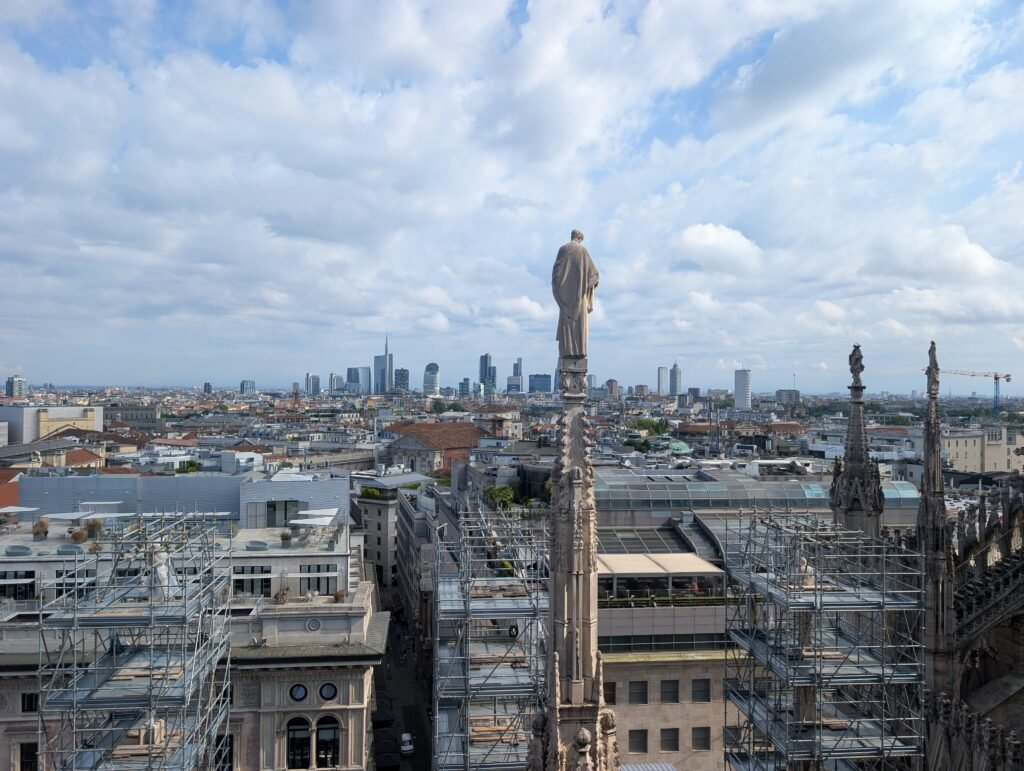
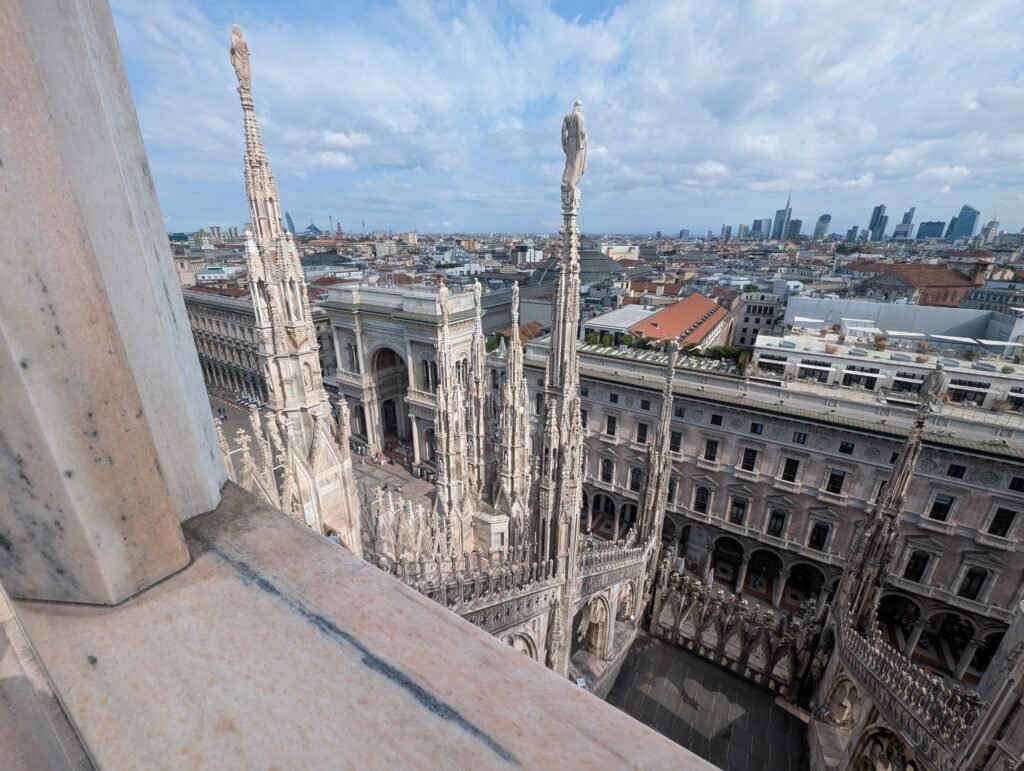
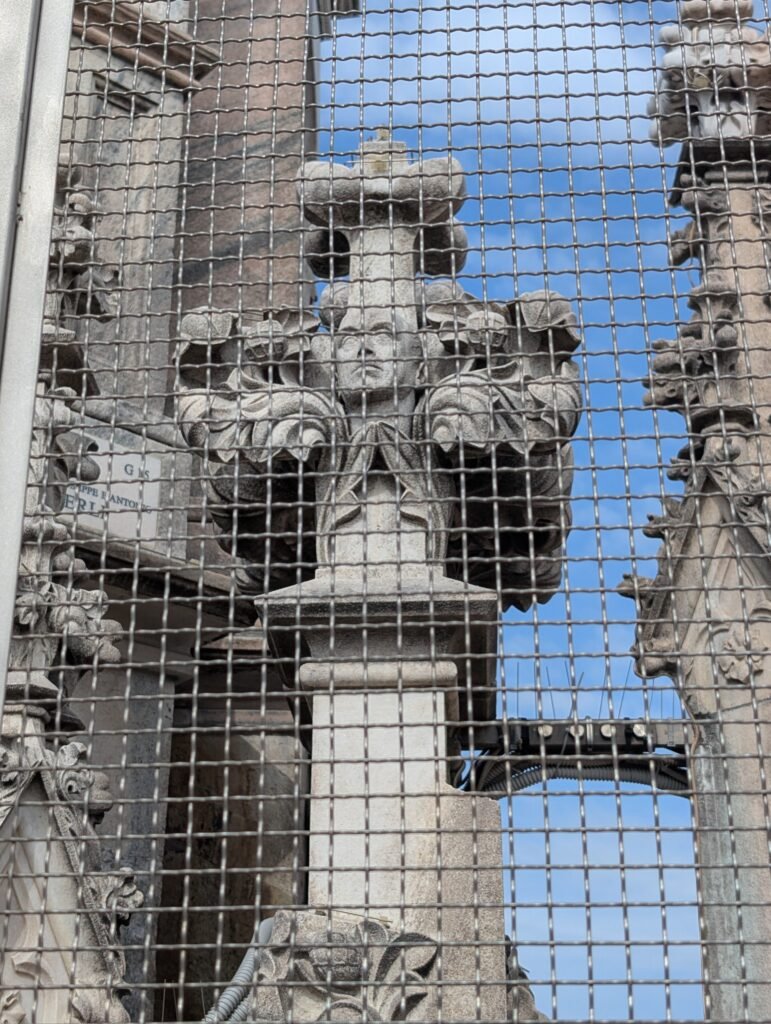
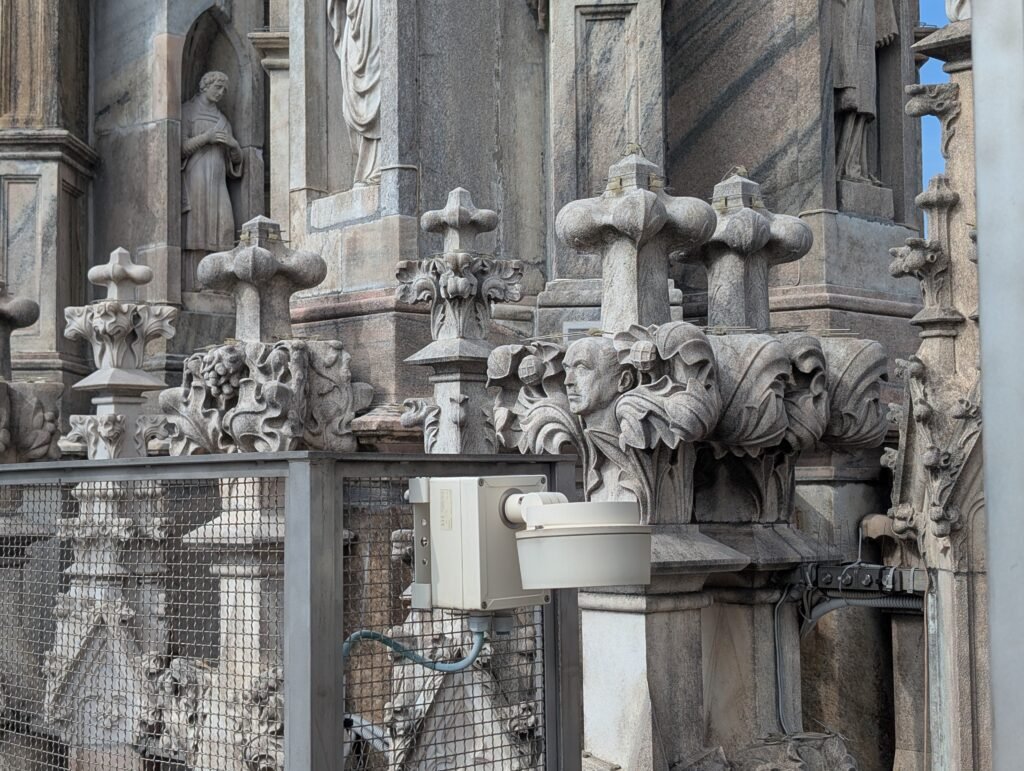
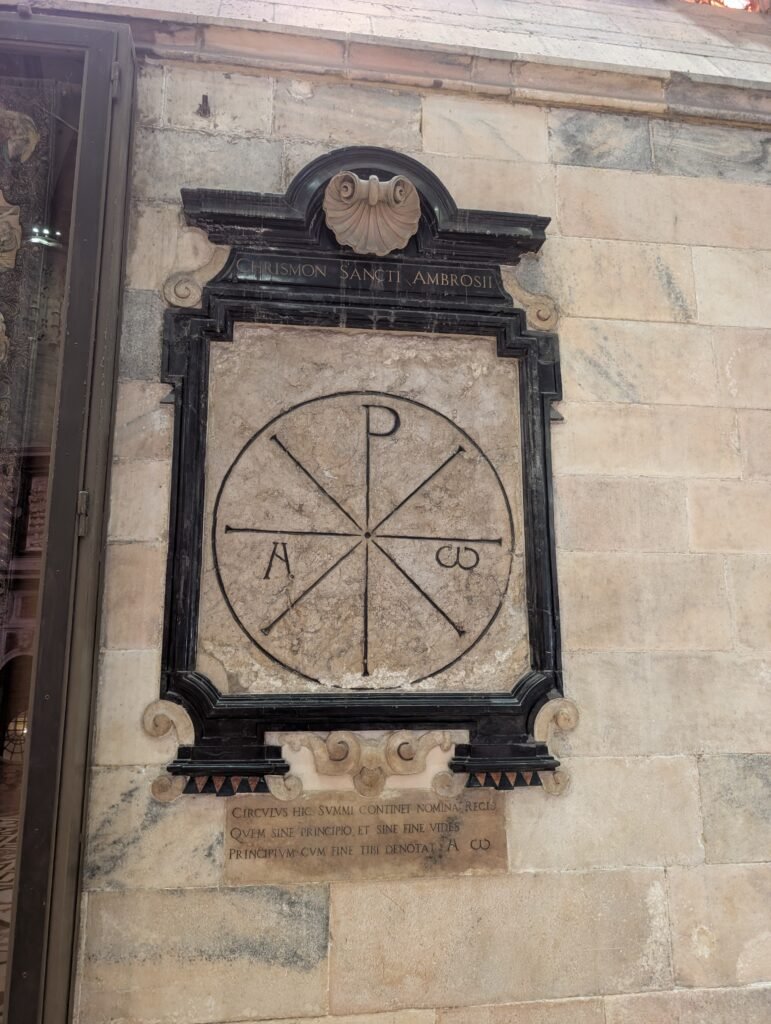
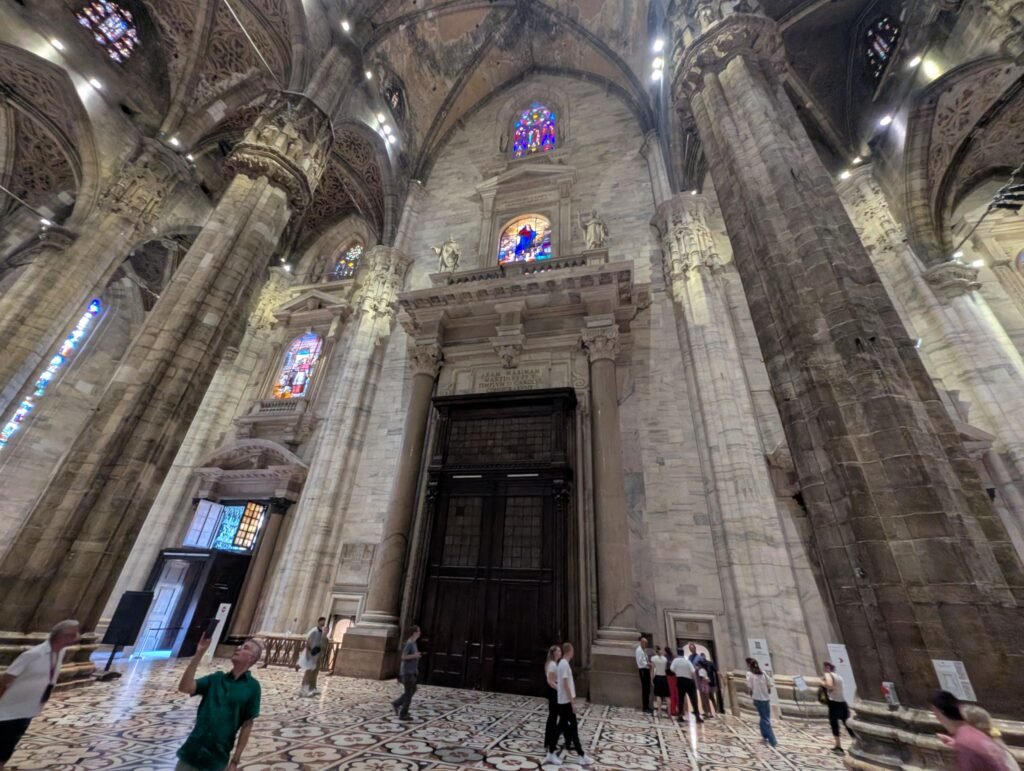
The Duomo itself is enormous. It is the third or fourth largest church in Europe. It was begun in the 14th century, but construction continued through the 20th – nearly 100 times as long as St. Mark’s in Venice. When construction began, Gothic architecture was en vogue. Soon after, Renaissance style domes were the rage, but work had already been started. Building continued under the original plan. The cathedral is easily recognizable by the prickly spires that adorn the facade. Each of these is ornately decorated with many carvings, each one unique. There is a different saint atop each. You can see a lot more of this detail from the roof. One of the weirder pieces of trivia presented in the audio guide was that in the 20th century, a carving of Benito Mussolini was included on the back side of one of the smaller spires on the roof. I was able to find it, and marvel that it had been allowed to remain, despite what happened to Mussolini himself.

(Continued)
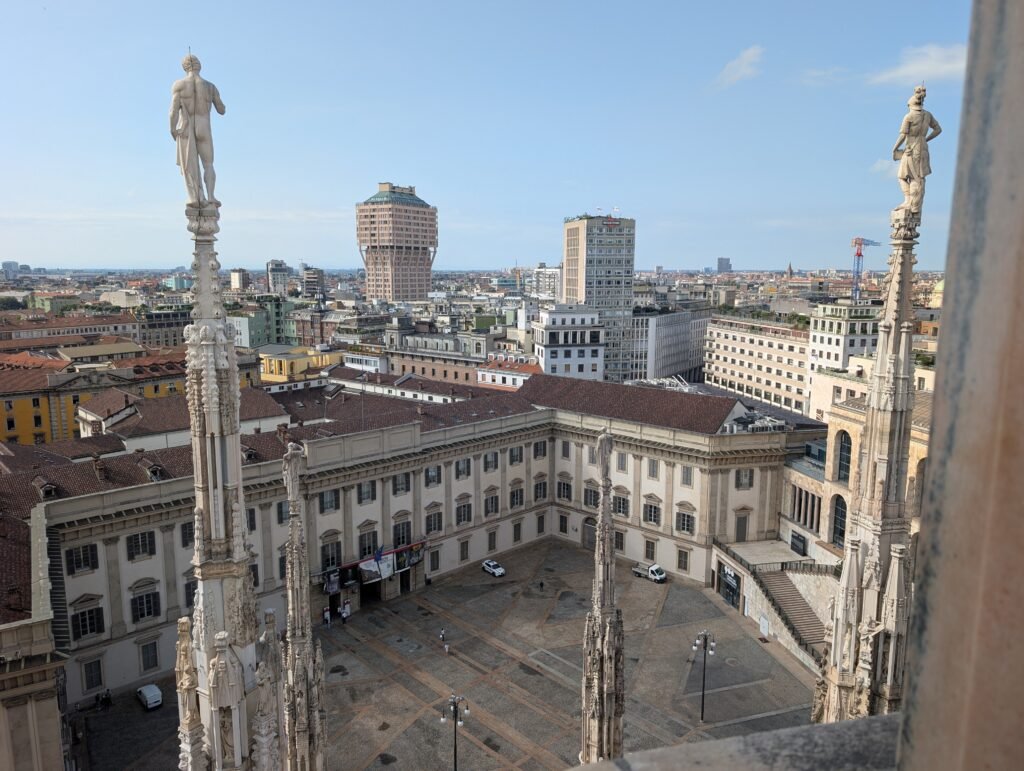
Distant Skyline, Saint in the Foreground
Galleria Vittorio Emanuele in the Background
Climbing Down the Stairs Toward the Duomo Floor
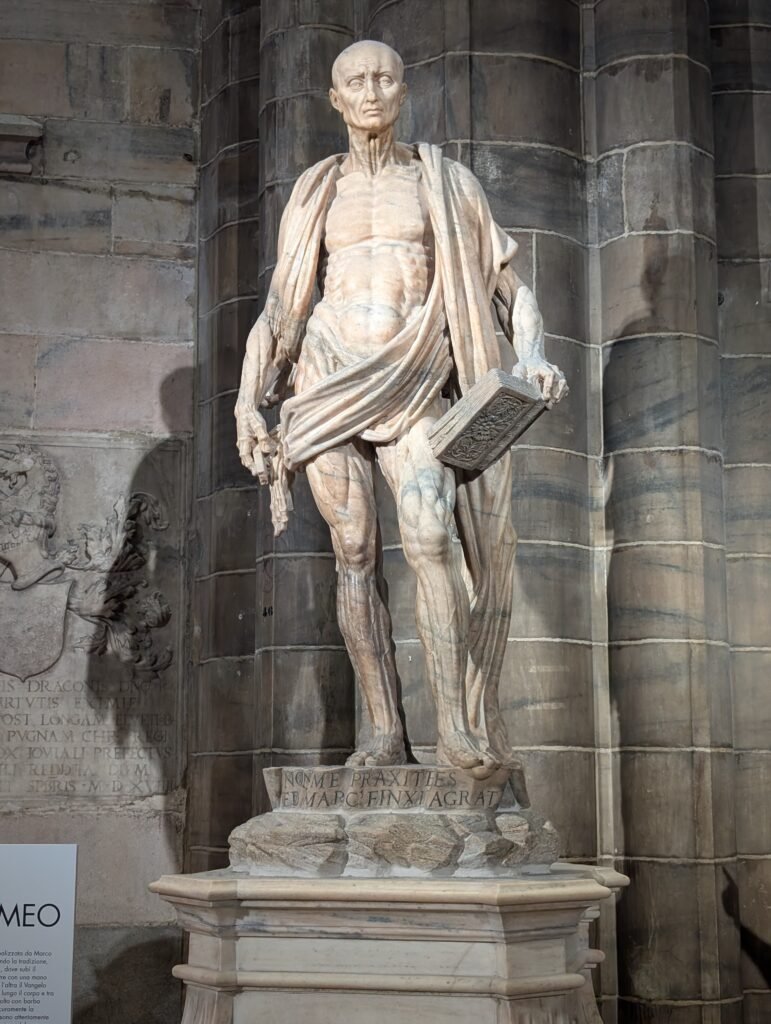
Sculpture of St. Bartholomew, Flayed Alive and Depicted So Here Wearing His Skin Over His Shoulder

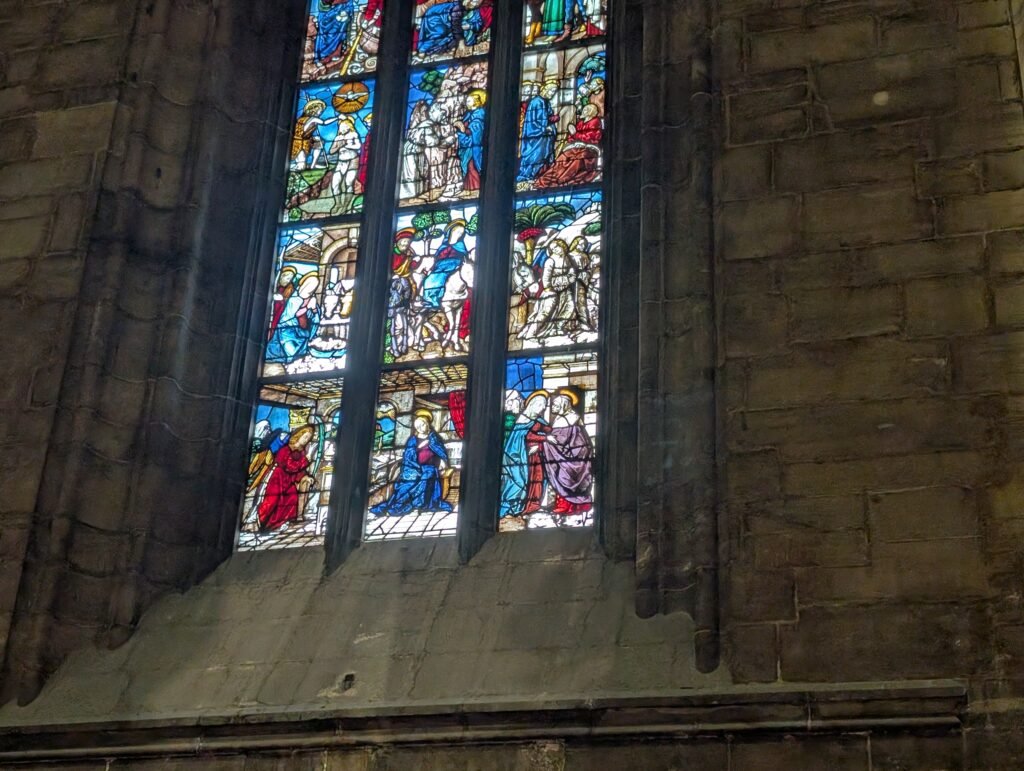
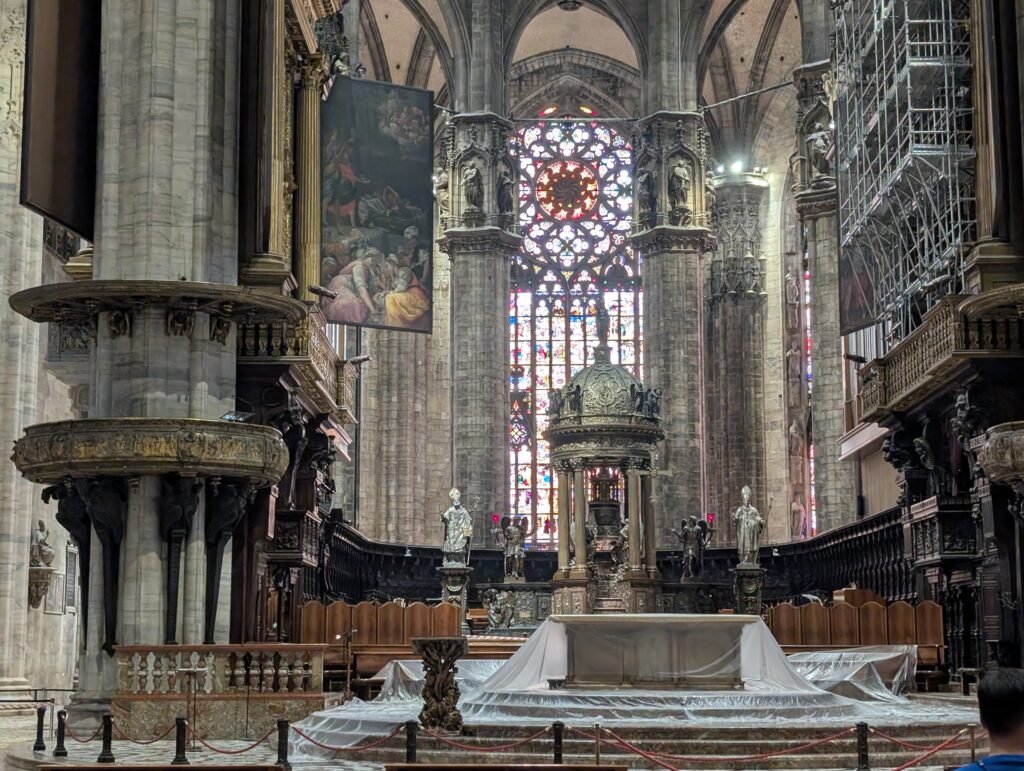
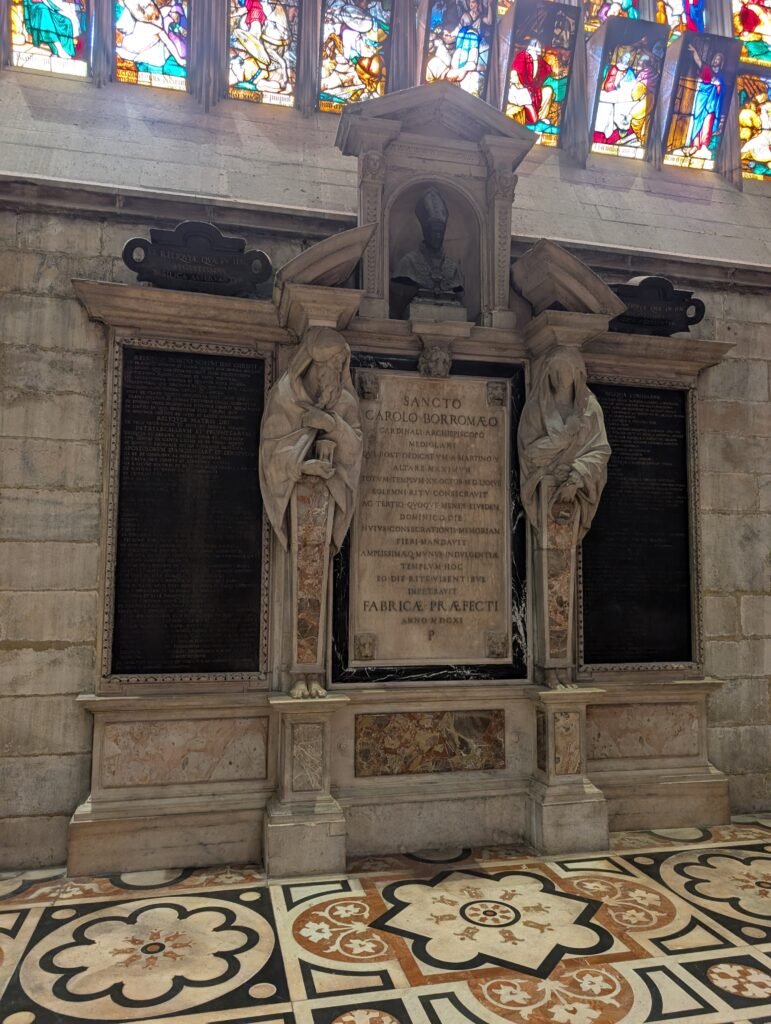
It takes quite a while just to walk the inside floor of the Duomo. We used a Rick Steves Europe free audio guide. This was adequate for our visit. The commentary explained the highlights of the church, explaining the history, the fancy pink marble used in the building, and the differences between the new and old stained glass. It even pointed out examples of each, and explained the different methods of production. The audio guide additionally pointed out selected tombs, shrines, and pieces of artwork around the cathedral, explaining those highlights. Rick and his partner also explained the purpose of the altar, told how Napoleon had himself crowned King of Italy here, and shared the story of Constantine apparently bringing a supposed nail from the true cross here. This relic is displayed at certain points during the year – unless you’re Napoleon. Napoleon had it brought out and included in the crown he used at his self-coronation.

This nail is stored well over a hundred feet above the altar, in a place marked with a red light. Once a year, the archbishop takes a 16th century cloud-shaped lift up to retrieve the relic for a day of public display. The same cloud is ridden to return the nail to its lofty place once the public viewing period is over.

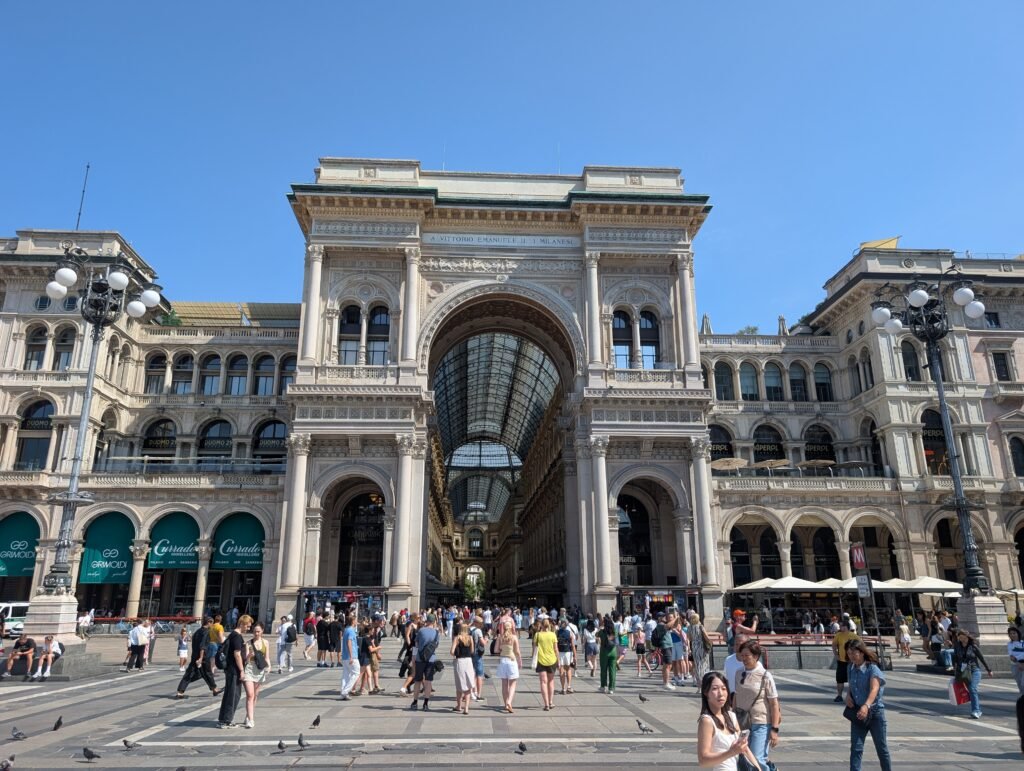
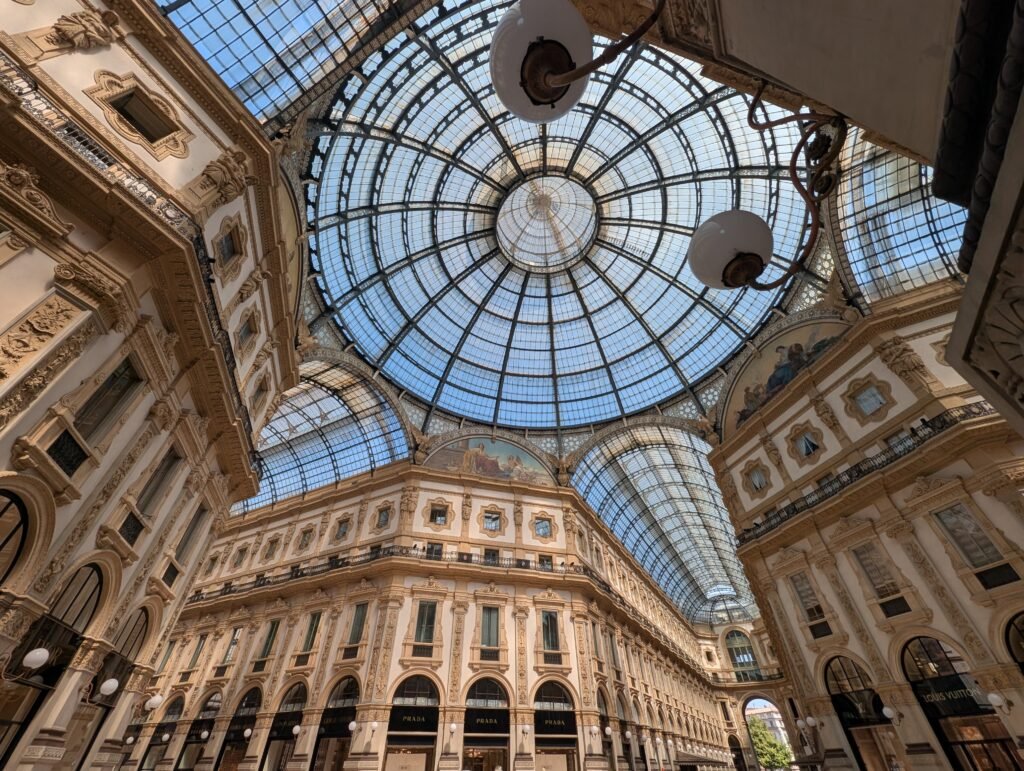
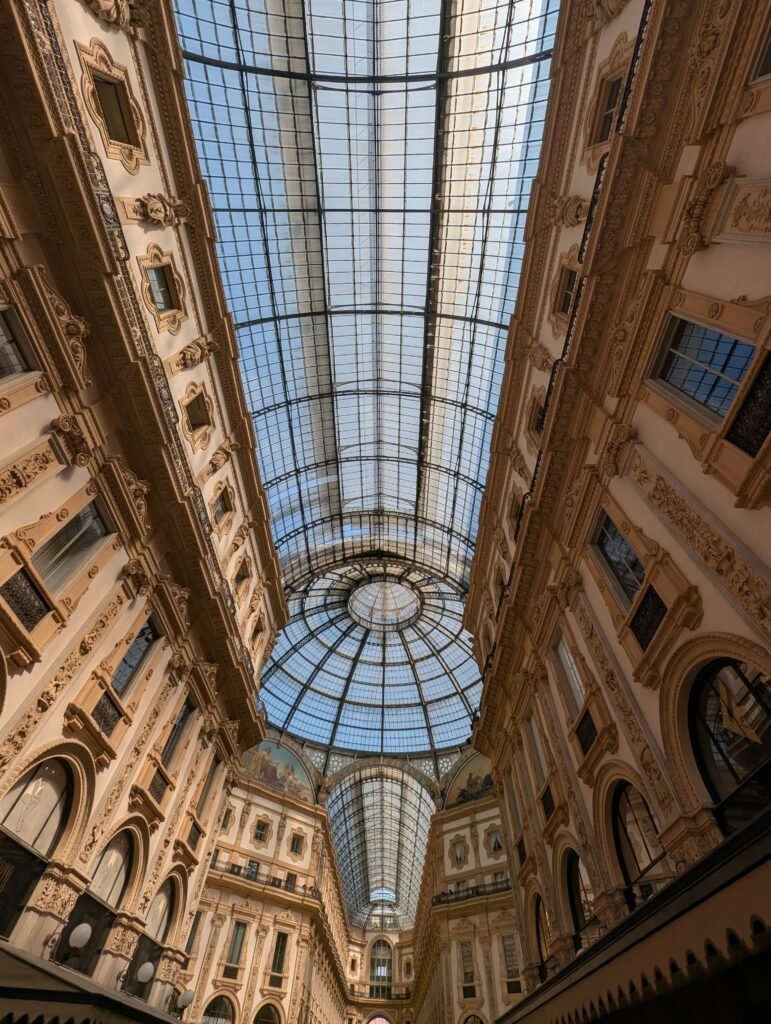
After we had walked and climbed this amazing church, we sat in the square for a bit, listening to the explanations of the surrounding architecture. The differences in buildings constructed during different eras is obvious, when pointed out. Well, the differences are obvious anyway, but the explanations make it clear why and when. You can easily see the Victor Emanuel II shopping center from the Duomo square. It’s right behind the 19th century triumphal arch. While we weren’t interested in shopping in the extremely high brow shops inside, we really enjoyed seeing the way 19th century leaders and builders sought to pay homage to Italy’s glorious past with a modern (by 19th century standards) touch that looks like so many large government buildings or post offices. It has a massive, arched glass roof. It’s quite a place.

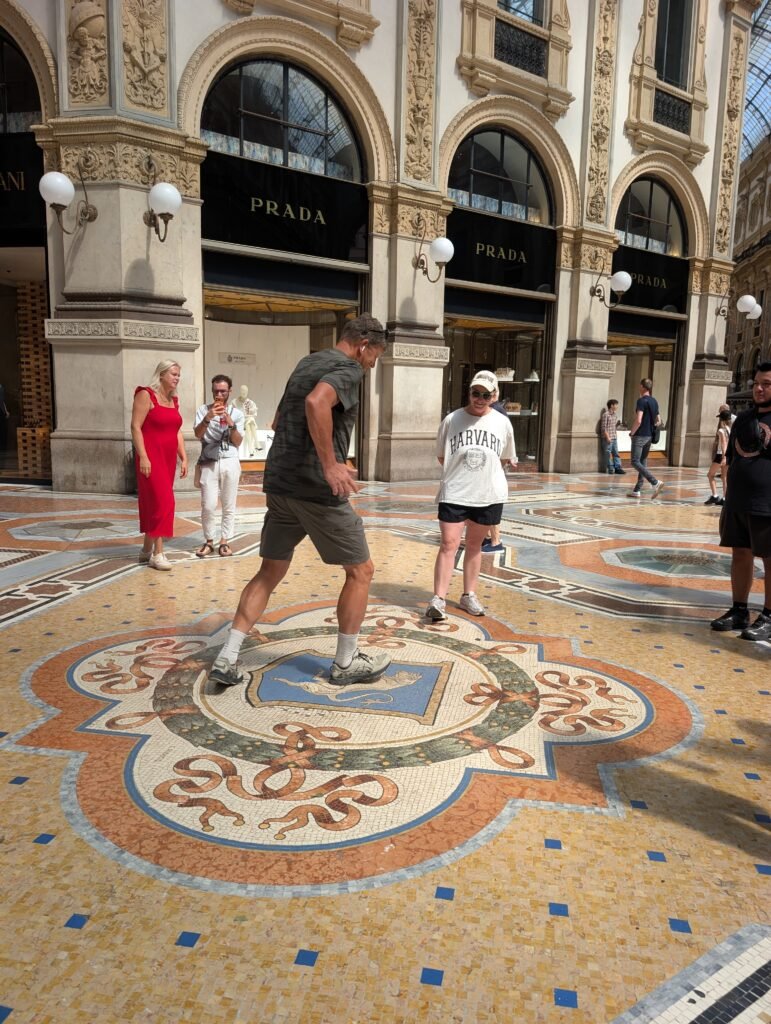
One of the better known aspects of Galleria Vittorio Emanuele II is a floor mosaic of a giant bull. It is said that if you plant your right heel directly on the bull’s testicles and spin clockwise three times, you will be granted good luck. So many visitors do this that the City of Milan has to regularly replace the bulls testicular mosaic stones. I did not notice a major change in my fortunes. I did notices many tourists performing the ritual with the wrong foot or in the wrong direction.

(Continued)
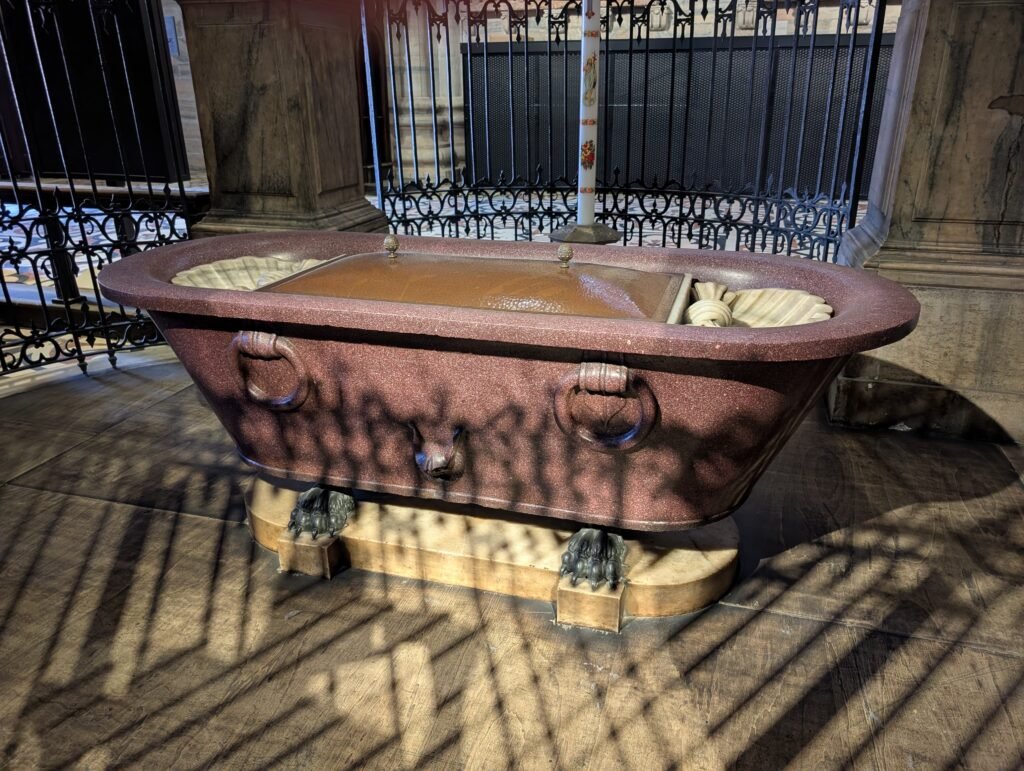
Ancient Roman Porphyry Labrum, Converted to Duomo Baptistry
A Few More Exterior Duomo Shots

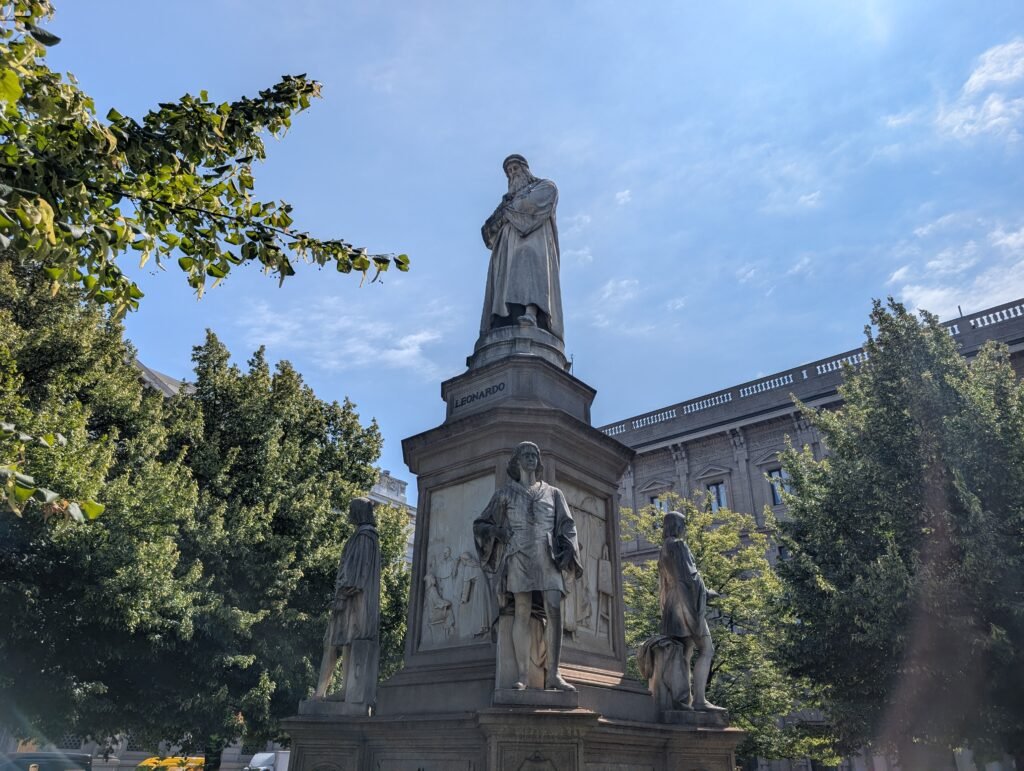
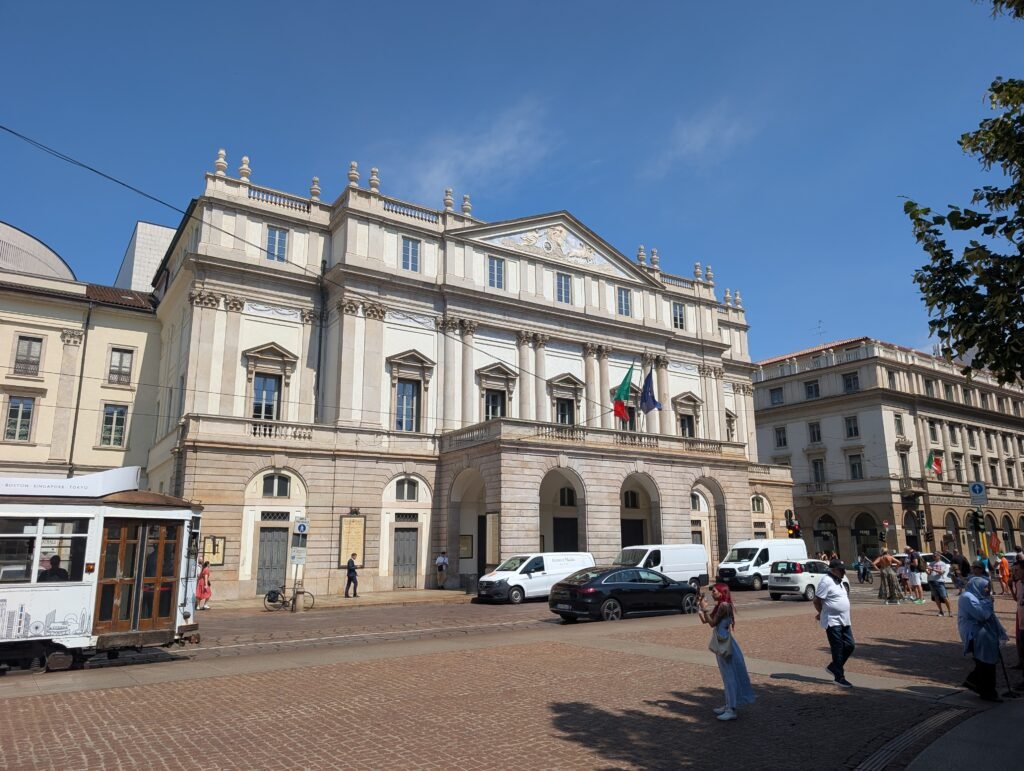
We walked by the famous Milan opera house, and saw squares where Michelangelo had been active and trained proteges. We figured that by then, it was time to make our way back to the motel to take advantage of our late checkout so we could then eat and have time to make the one hour journey to the airport. We ate in a small food shack at the place where we made the switch from local Milan buses to the airport express bus. We both had some pretty good sandwiches for just a few Euros.

When we arrived at Milan Milpensa International Airport, I pretty quickly found the Finnair window, but oddly no one was there. A Qatar employee told me they never show up until about 2 ½ hours prior (since it was an international flight, we had arrived closer to three hours early). As we sat there waiting for someone from Finnair to show up, Stephanie decided to check her email. She had been sent a notification at about 9:00 a.m. that her flight had been canceled. She would not set out for DFW until the next morning! Finnair was kind enough to provide vouchers for taxis, a motel room, and even her meals. We should have set up Stephanie’s notifications to ping me, since I generally make all of our plans and since her phone had been stolen. We would not, then, have had to do so much shuffling.

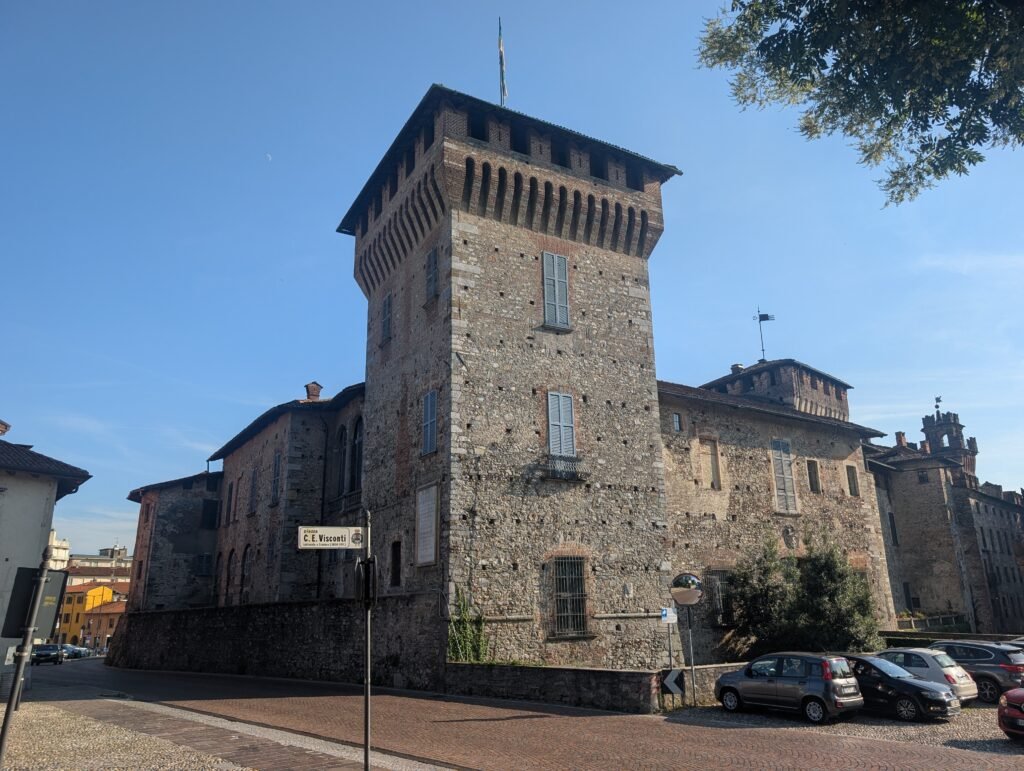
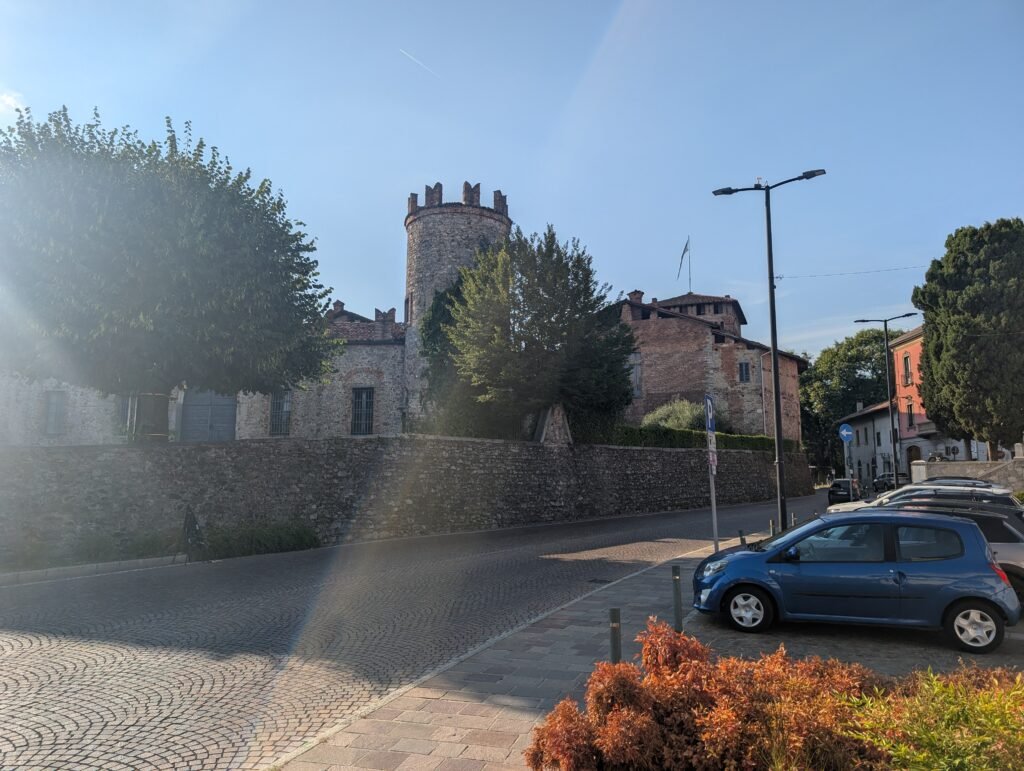
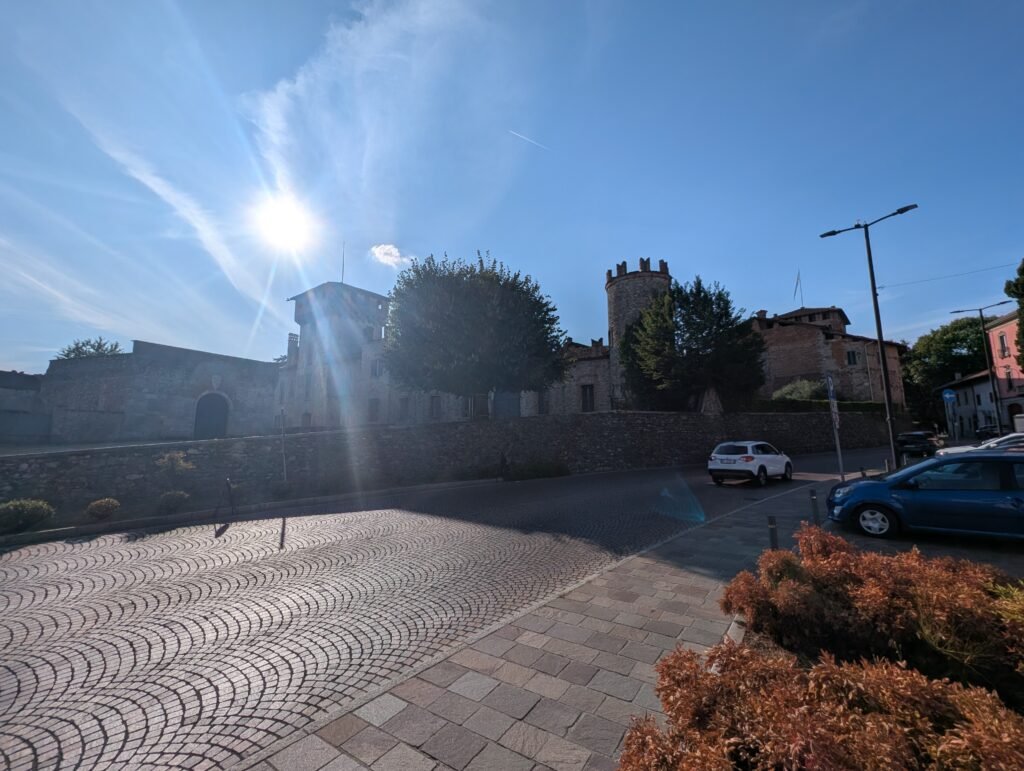
We grabbed a cab to Stephanie’s designated airport hotel, which was even further from the city of Milan than the airport. This, of course, crumped my plans for the next couple of days. Spending another night with my love and best travel partner was more than compensation. We weren’t able to do much in the tiny town of Somma Lombard. I tried to walk to a mini-mart to grab a soft drink or candy, but all of the markets in town were closed. We were able to see a local Visconti castle from the outside. It was only open Sundays, but it seemed like we could see the best of it by walking past anyway. It was a cool building. We walked back and Stephanie enjoyed her comped supper. I slept very well. I had burned a lot of energy hefting both bags most of Sunday and Monday.

After putting Stephanie on her new flight the following morning, I had another mild logistical adventure, but made my train for Rimini. By mid-afternoon, I was on the Adriatic Coast, ready to visit a new country.

Galleria Vittorio Emanuele II
Amazing Glass Dome and Roof
Me, Crushing Some Bull Testicles
Michelangelo Statue in a Square Near an Area He Frequented with Protoges
Renowned Milan Opera House
Visconti Castle, Somma Lombard
Duomo Area Panorama
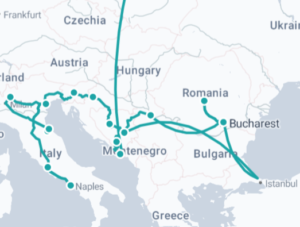
Trip Overview
Italy
Rome
Lazio
Naples
Venice
San Marino