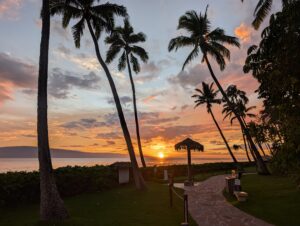
Oahu

Navigating Hawaii's Most Populous Island During a Kona Low

When planning this Hawaii trip, I arranged four days each on Oahu and Maui, sandwiched around five on Molokai. I figured the Oahu and Maui stops would be busy, and that we could relax on Molokai in between. Oahu has many things to see and do, being by far the most populated of the Hawaiian Islands. However, while we were visiting, most of the islands received unusually high amounts of rainfall from what is called a “Kona Low.”

Like most island anywhere in the world, the Hawaiian islands all have a windward and a leeward side. The prevailing wind hits the windward side, thus bringing the bulk of the moisture, whereas the leeward side sits in the rain shadow. The difference can be quite pronounced in Hawaii, where the island often have large volcanoes contributing to the rain shadow. The word kona in Hawaiian means leeward side, and thus refers to the west or southwest sides of all of the islands since in Hawaii, this is always the leeward side.

During the winter, weather conditions sometimes create a Kona Low, which brings a set of pretty big storms from the leeward side of the island. These can contain hail, thunderstorms, and even waterspouts sometimes. We didn’t experience any waterspouts or anything that we would have called severe weather in West Texas, but parts of the islands did receive a lot more rain than they were used to – especially as late as March. Maui and the Big Island had significant flooding.

These storms were just approaching as we arrived in Oahu. They limited much of what we were able to do, especially on Friday and Saturday. In many ways, this seemed as much a factor of extreme caution and sometimes government indolence as actual weather related emergency, especially on Oahu. But as in farming, weather is a part of travel. We are all effected by weather. That is undeniable. We are also impacted by the way people respond to weather, and often have no more control over that than we do the weather itself. As travelers, the only choices are to roll with it, complain about it, or both. But if some decision maker decides to close sometime, it’s closed, whether you like it or not.

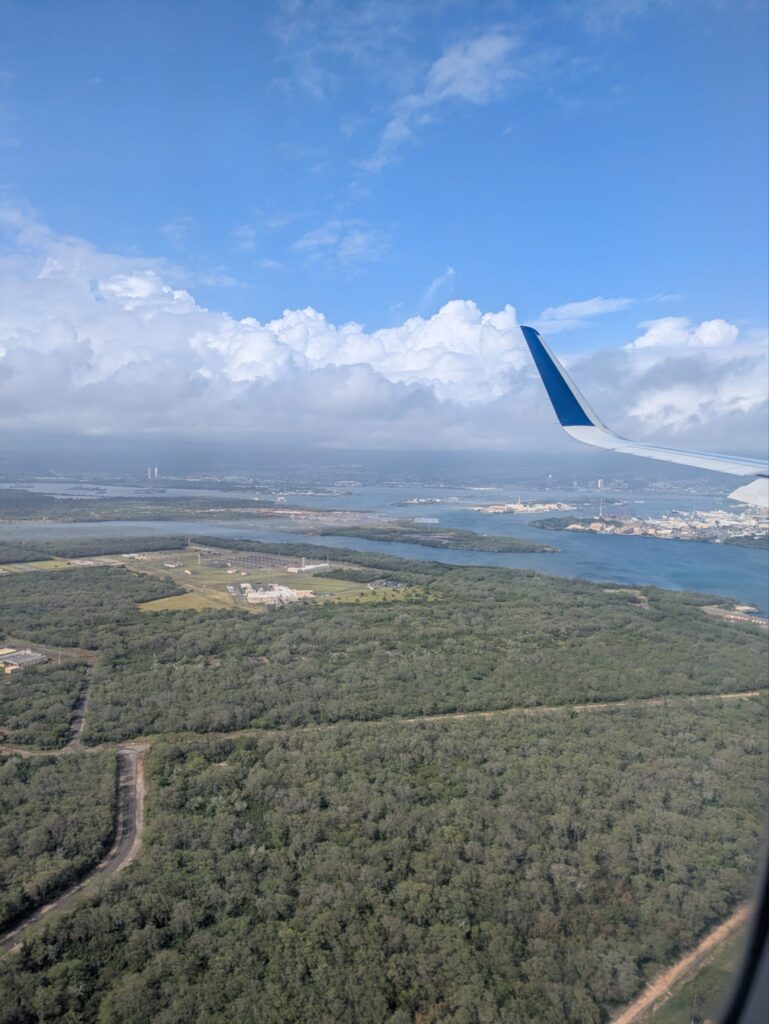
We had been looking at the weather forecasts often leading up to the trip. As we made our departure, it became clear that we would likely be dealing with some rain while on Oahu. I figured incorrectly that this would be sporadic. In my experience, it seems to rain a bit every afternoon on Pacific islands. In any case, it seemed prudent to knock out our Pearl Harbor visit on Thursday, the first day we’d be in Hawaii. There is a ferry that takes you out to the U.S.S. Arizona Memorial. It is free, but you need a reservation, or you end up waiting on standby for a slot. During our descent into Honolulu, I used the airplane wifi to score four of the last minute morning tickets to visit the Arizona first thing Thursday morning.

Once we got off the plane, we walked through the relatively small Honolulu airport to a public transportation station just outside. We bought cards for $2 each and loaded $20 on them. At the time of this writing, any ride on the Skytrain or Honolulu bus system, including any combination of the two costs $3. There is a daily max charge of $7.50. Although that’s a bit higher than public transportation in most other cities, it still was substantially cheaper than renting a car, or constantly relying on ride sharing apps. The bus dropped us off within a couple hundred yards of our motel, which was quite convenient.

We found a local market and a restaurant that specialized in musubi our first night in town. Both of these were within a couple of blocks of our motel. Musubi looks somewhat like a big sushi wrap. It is a big ball of Japanese sticky rice in a seaweed wrap with a chunk of meat in it. As opposed to sushi, though, musubi contains a slice of Spam instead of raw fish. Sometimes there is some other ingredient or spice as well, but in Hawaii, musubi always centers on Spam. For some reason, Spam is quite popular in Hawaii. Most of us think of it as “junk meat,” but people in Hawaii have some kind of special affection for Spam. I have to admit, the musubi at least was very good. Caleb was opposed to eating anything with Spam in it, but was converted by the musubi.

The five hour summer time change led us all to fall asleep pretty early Wednesday night. We were up early Thursday, and caught the bus toward Pearl Harbor. Although I was a bit nervous about it, we made it in plenty of time for our 8:45 ferry to the Arizona. When the Japanese attacked Pearly Harbor on December 7, 1941, they had already been in a war with China for nearly a decade. As this war drew on, Japan desperately needed war materials like oil, rubber, and metals to fuel their efforts in China. All of these materials were readily available in the parts of Southeast Asia that had been colonized by France, the Netherlands, and other countries that were at that moment in no position to defend their far flung colonies. To the Japanese, the answer to their problem was simple. They would just grab Indonesia, Indo-China, and some of these places and take their natural resources as European colonizing powers had been doing for centuries. The problem was that the United States would almost certainly then enter the war to help protect the territories of our closest allies.

The Japanese military junta that was running the country decided that a bold attack on the American Pacific Fleet in Hawaii might cripple our ability to respond militarily to Japanese advances for several months or a few years, after which time they would have captured all that they needed. By then, they calculated, American resolve would not be strong enough to continue fighting for someone else’s colonies. The Japanese never planned to conquer the United States. They just wanted to impeded our ability to respond to their capture of territories in the Far East, and we were the only nation with the naval power in the Pacific to stop them. They would sneak their entire fleet halfway across the Pacific undetected and launch a surprise attack, destroying all of our capital ships (battleships and aircraft carriers) and whatever other infrastructure they could damage.

In a stroke of luck, there were no U.S. aircraft carriers in Pearl Harbor at the time of the attack. Of the Saratoga, Enterprise, and Lexington, two were shuttling aircraft and personnel to reinforce other U.S. bases in the Pacific, and one was preparing to return from a refit on the West Coast. The other four American carriers were in the Atlantic. The Japanese knew this, but ultimately decided that the chance to destroy all eight of the American battleships was too good to pass up. The attack did sink or damage all eight Pacific Fleet battleships, as well as three cruisers, there destroyers, and many other smaller ships and planes. The Japanese lost only 5 mini-subs and 29 planes.

Prior to the war and for centuries before that, battleships or their equivalents had been considered the crown jewels of any country’s naval force – the most important component of a navy. Although this was changing due to technology and the use of aviation and the battleships themselves were either built for the First World War or with technology from that era, this was obviously a heavy blow to the American naval presence in the Pacific. Remarkably, six of the eight battleships were raised, repaired, and returned to service. The two that weren’t were the Oklahoma and the Arizona. The Oklahoma capsized and trapped hundreds of seamen below deck. Many of them survived in air pockets for days or weeks tapping on the hull to let rescuers know they were still alive, but were never able to be rescued.

(Continued)

Off We Go
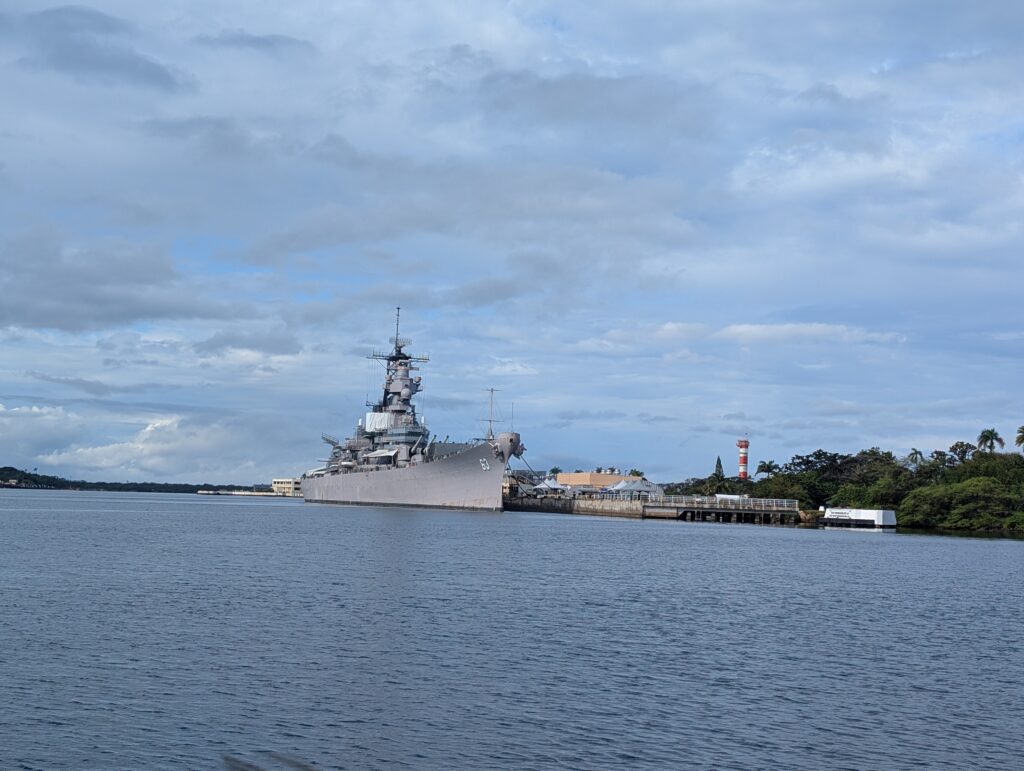
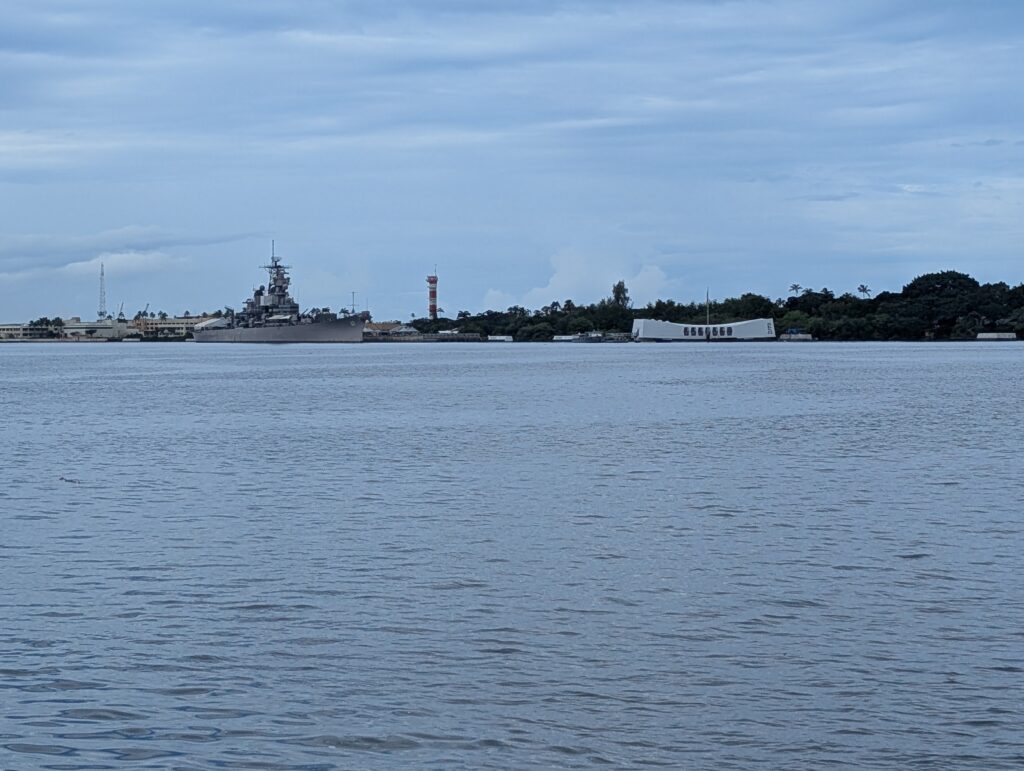
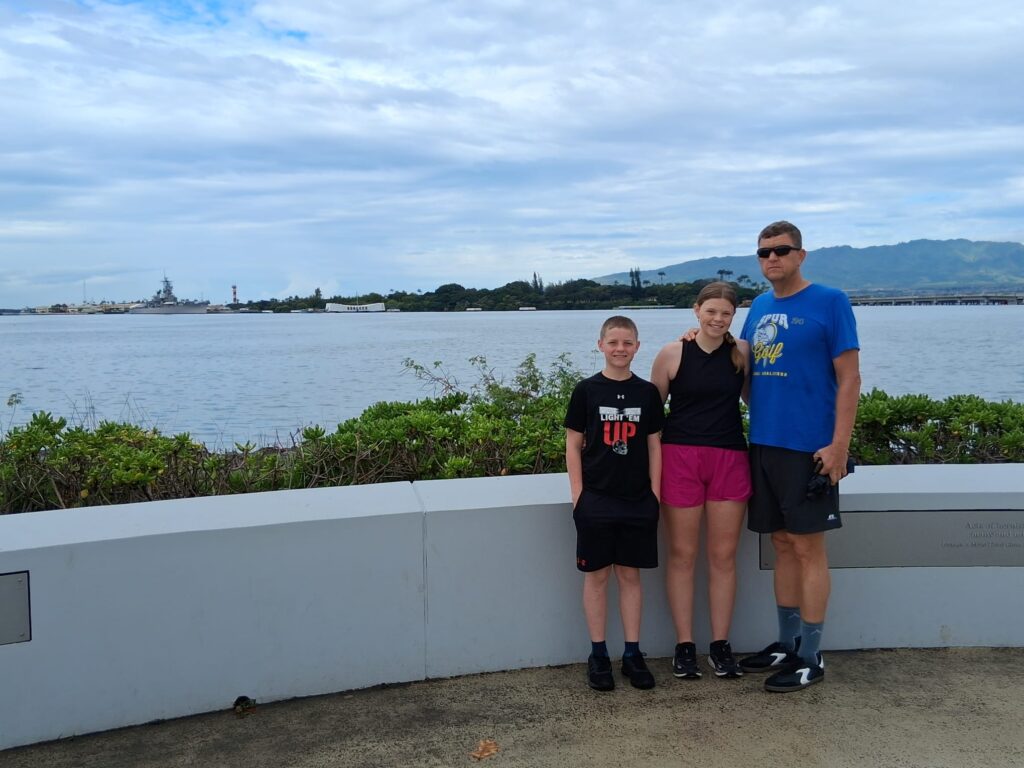
USS Missouri From the Ferry to the Arizona
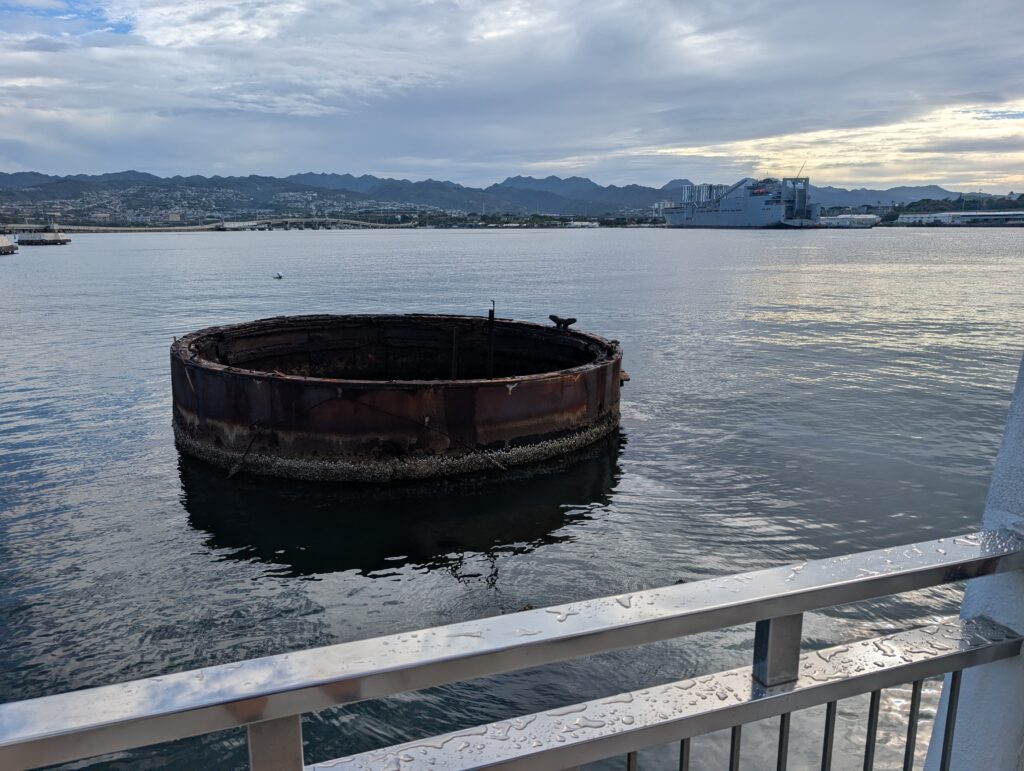
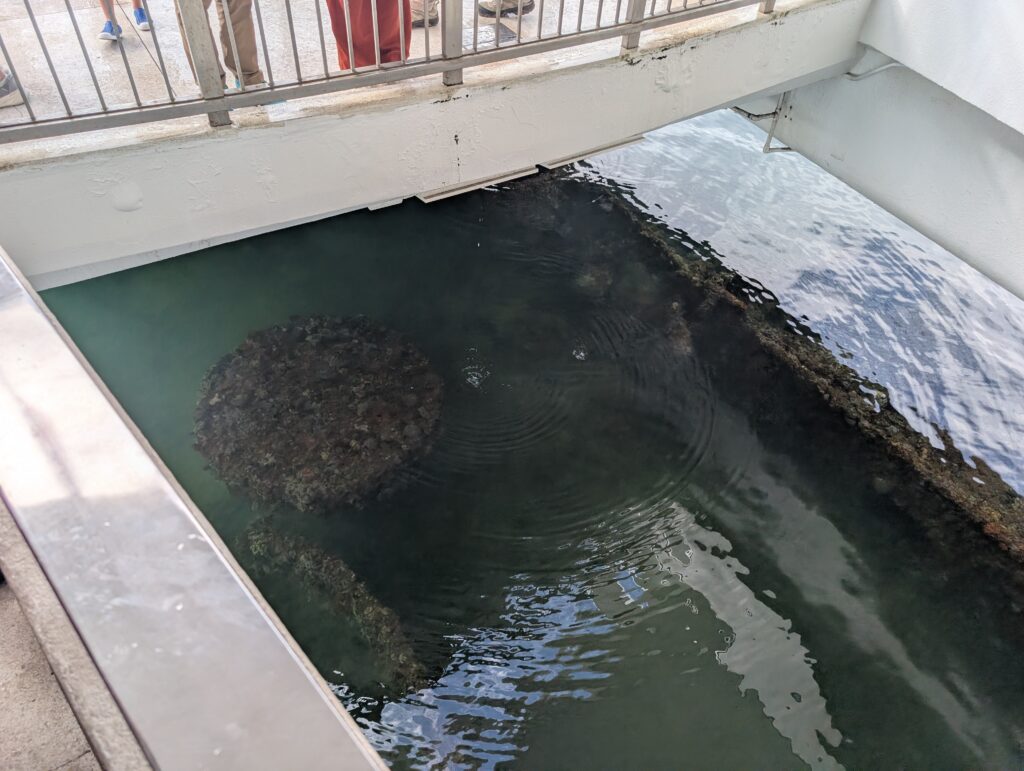
Remains of the Arizona Above the Waterline
From the Platform You Can See the Ship Below
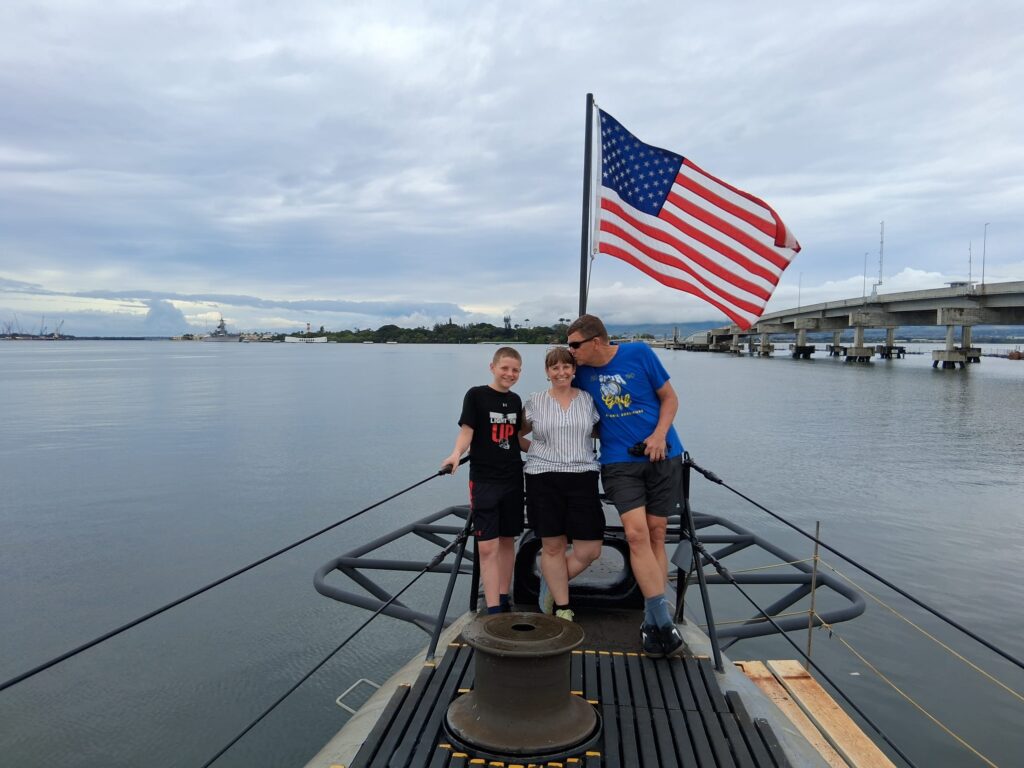
Bookends of the Pacific War, the Arizona and the Missouri Sit Side By Side
Preparing to Board USS Missouri
Missouri's Main Guns From the Bridge
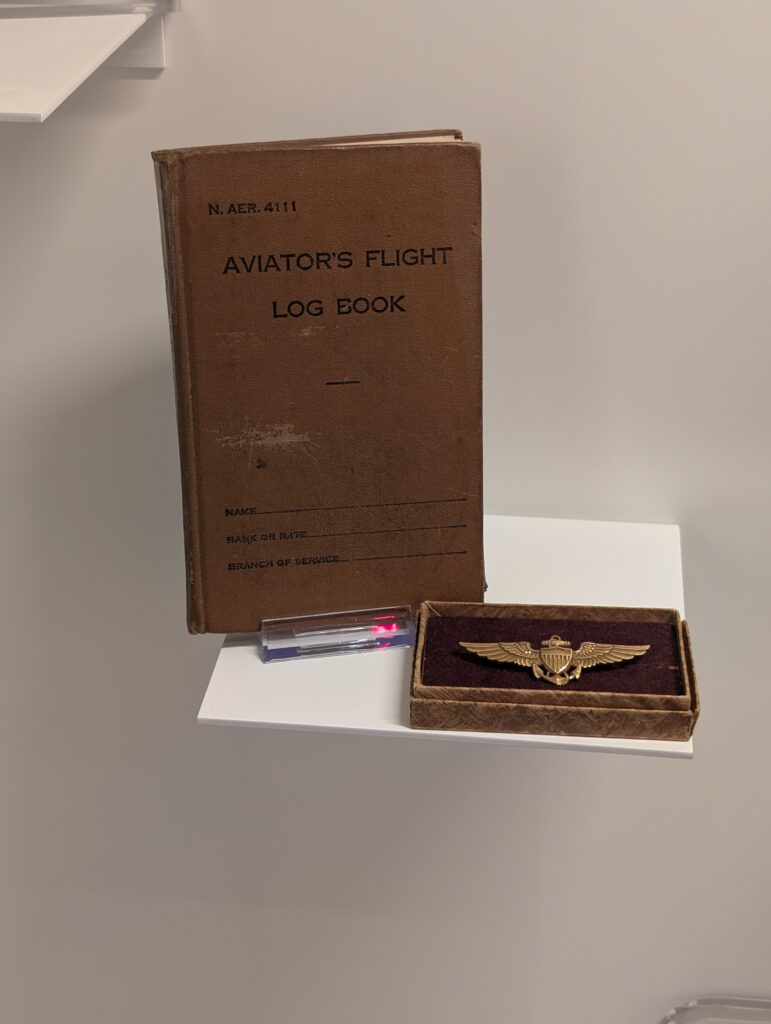
Museum Display
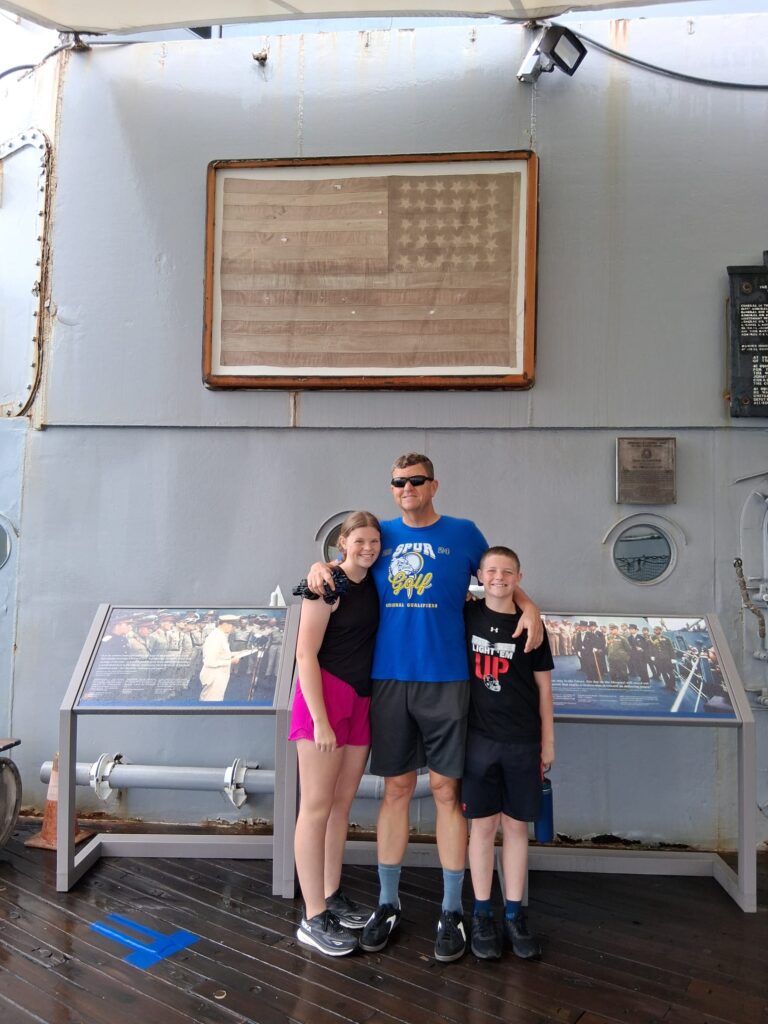
Replica of the Perry Flag on the Surrender Deck of USS Missouri
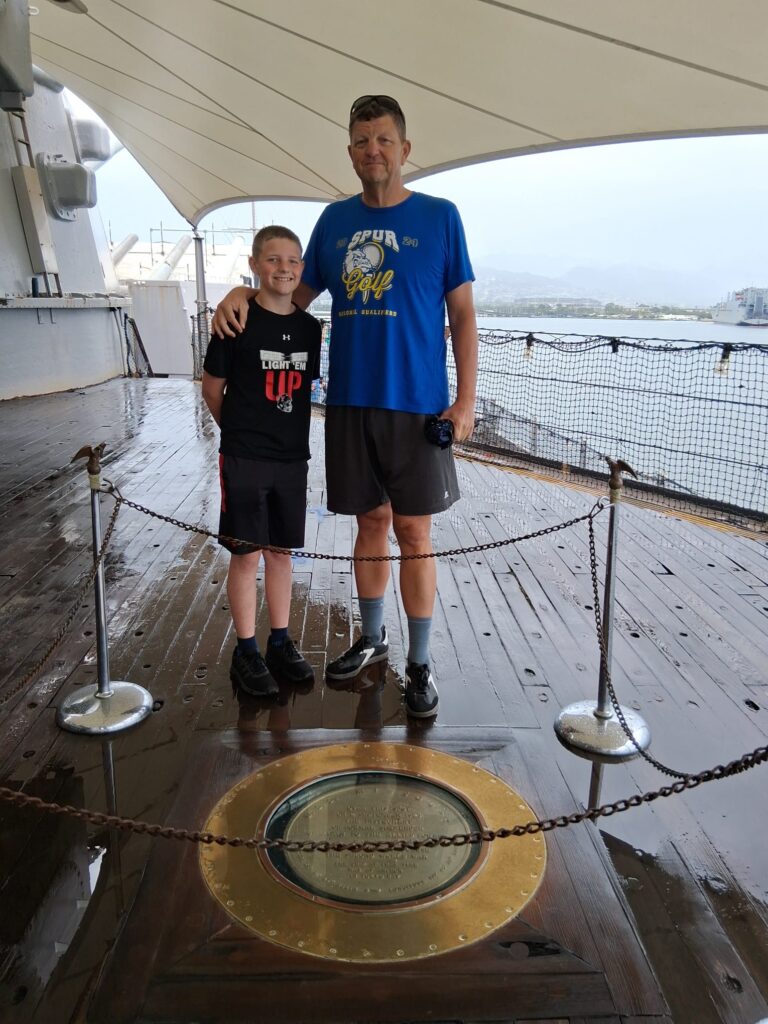
Plaque Marking the Site the Surrender Was Signed, Ending WWII
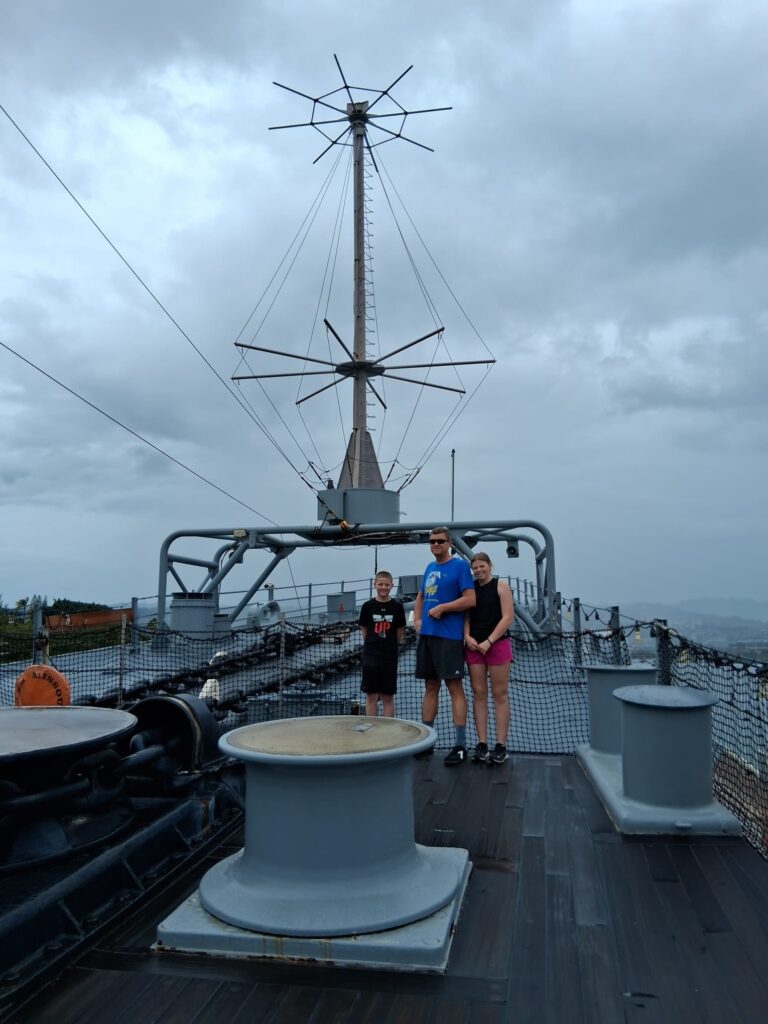
On the Deck of the Missouri
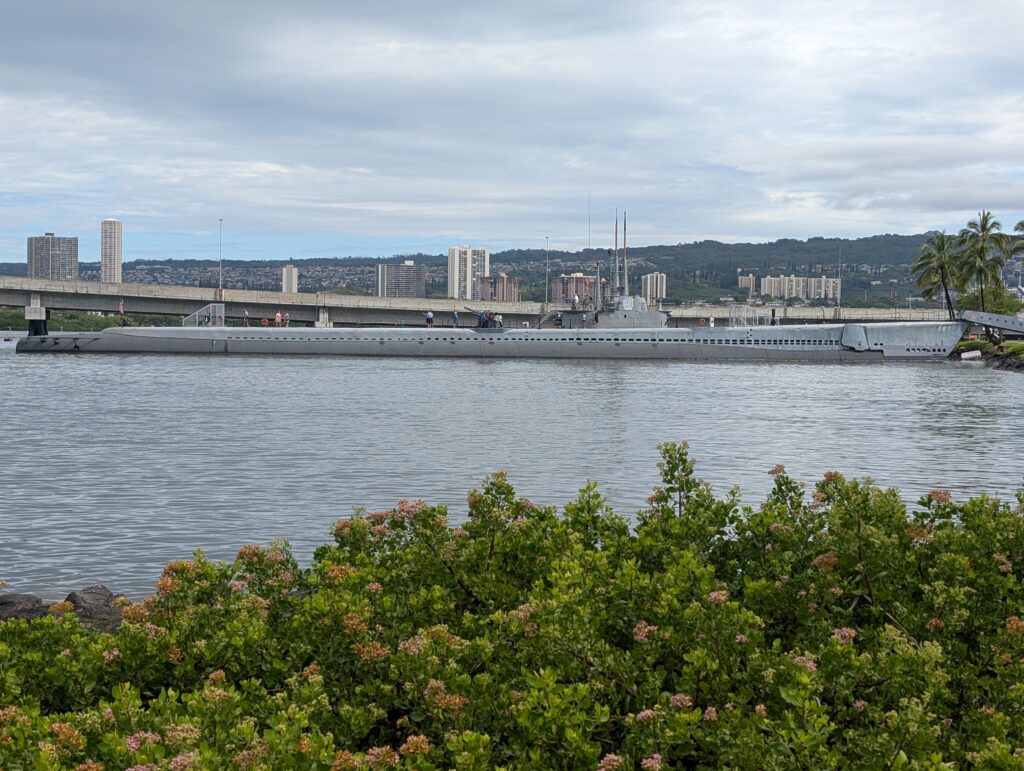
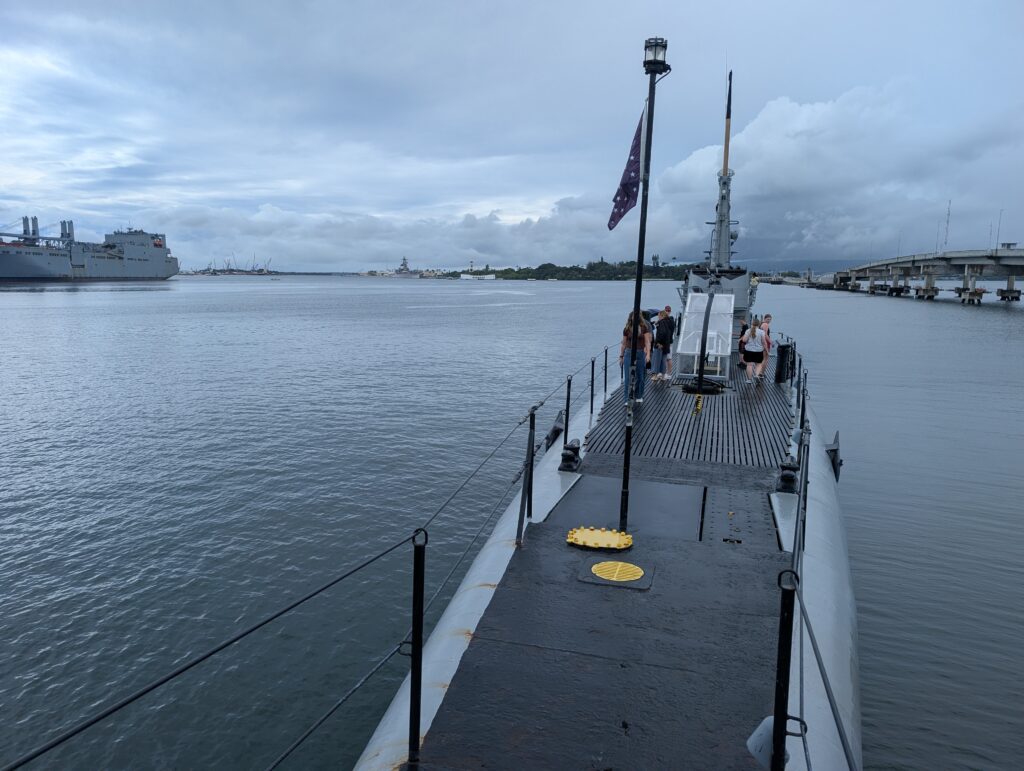
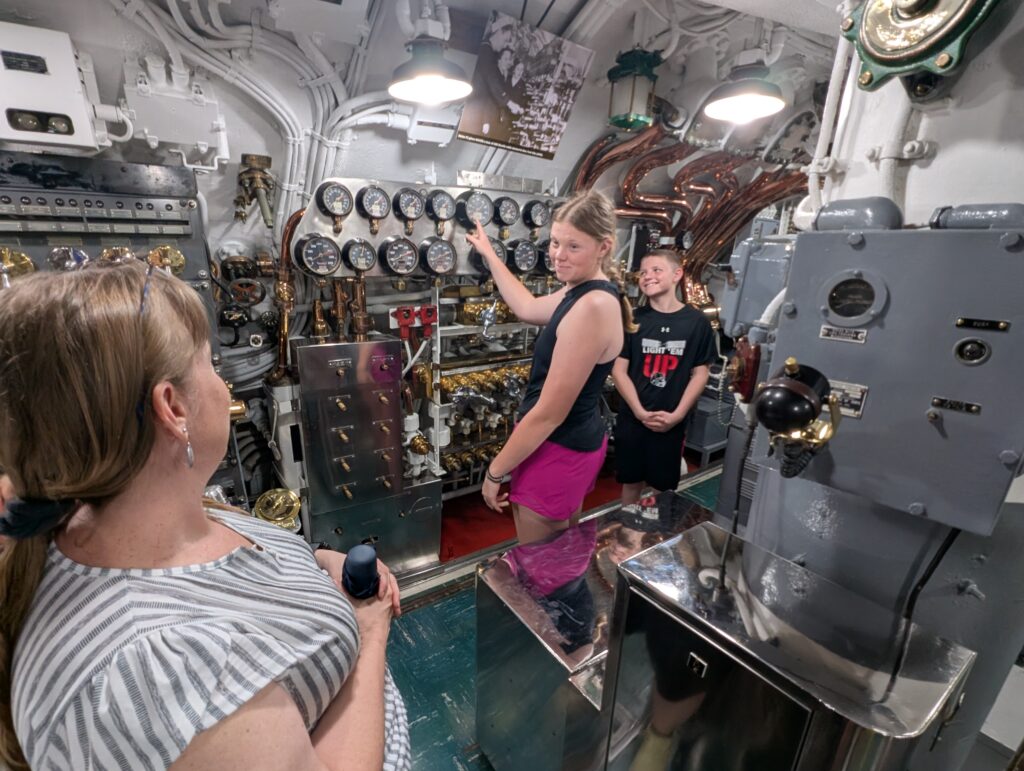
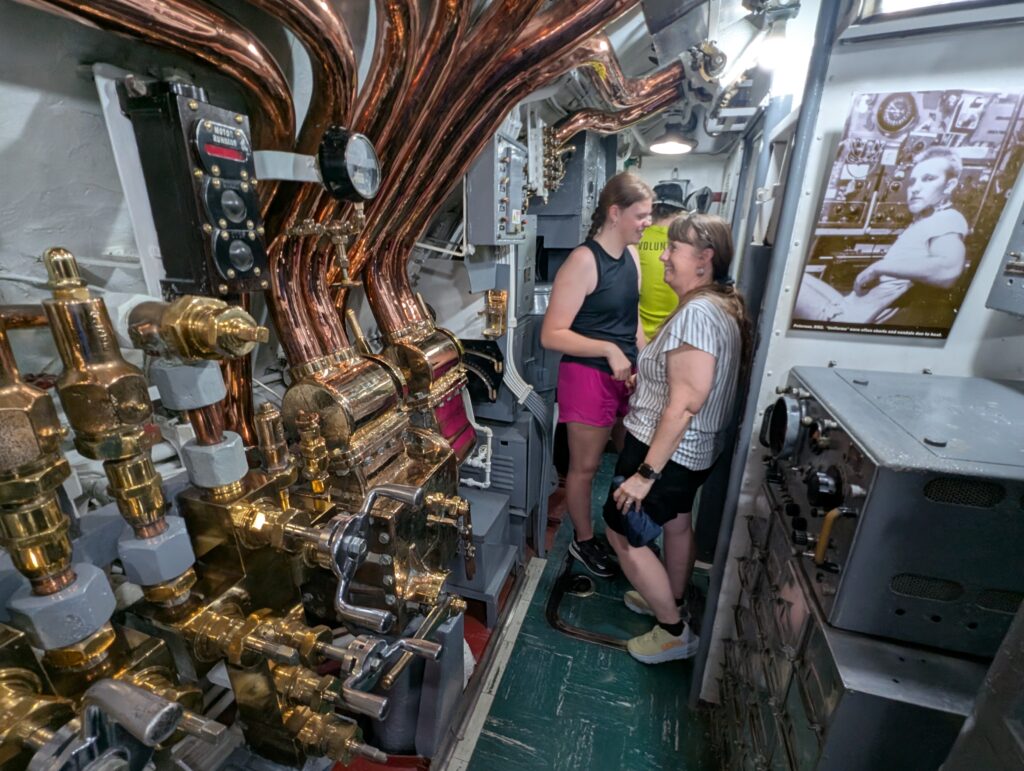
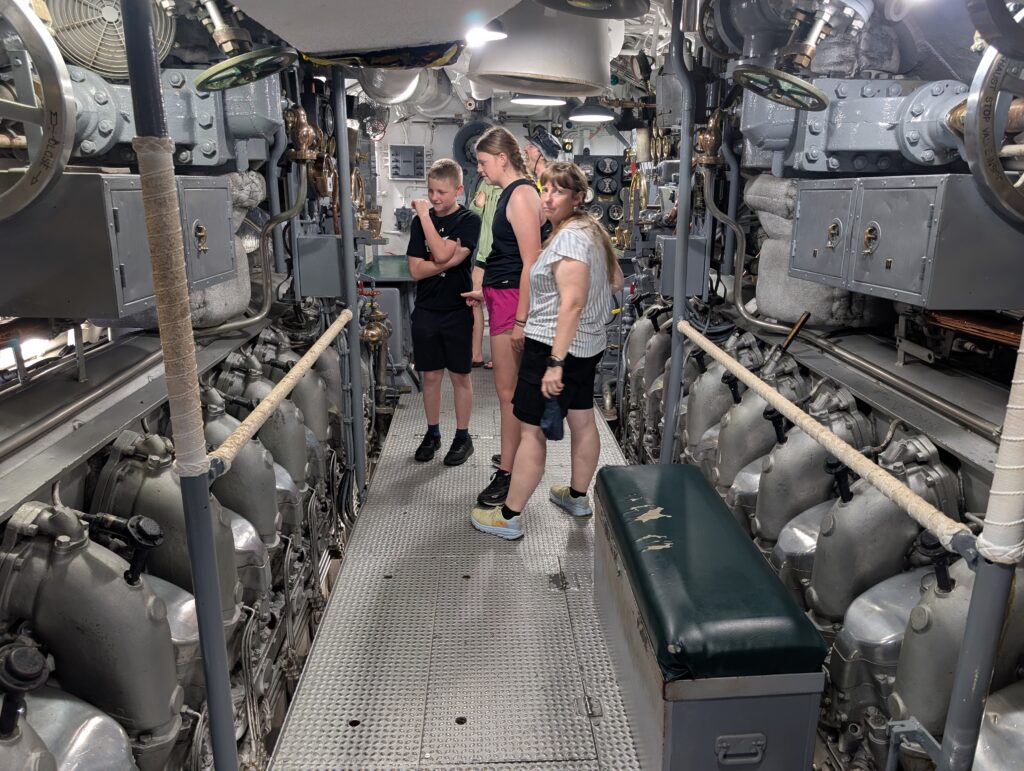
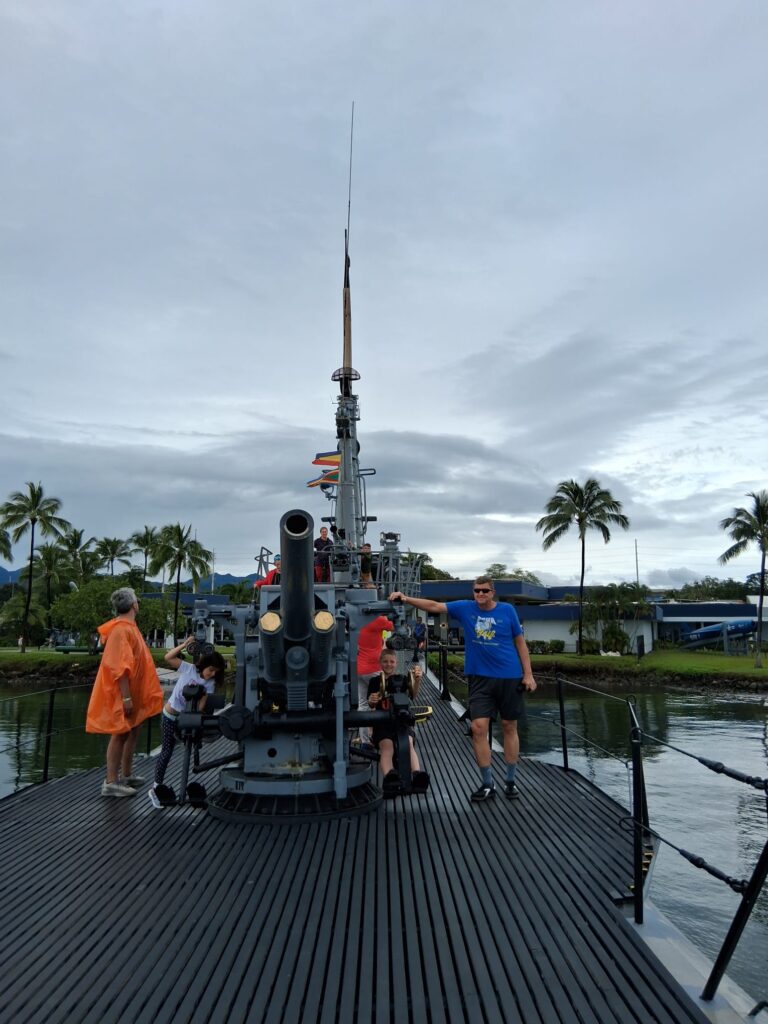
USS Bowfin at Pacific Submarine Fleet Museum
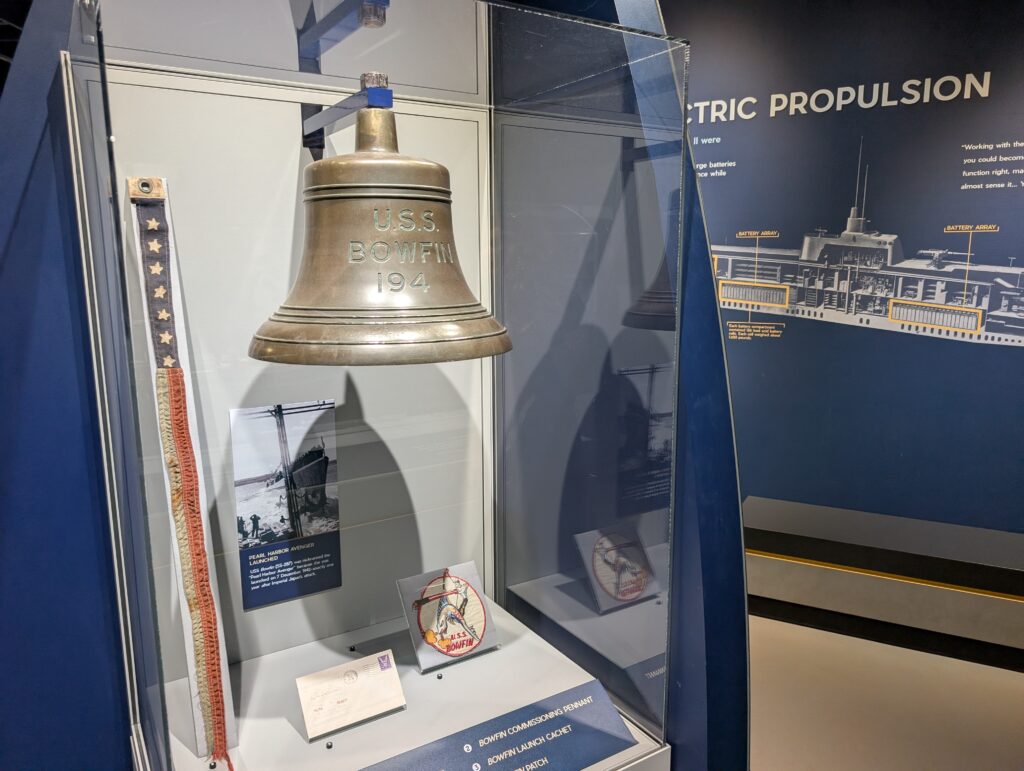
Bowfin Bell on Display in the Museum

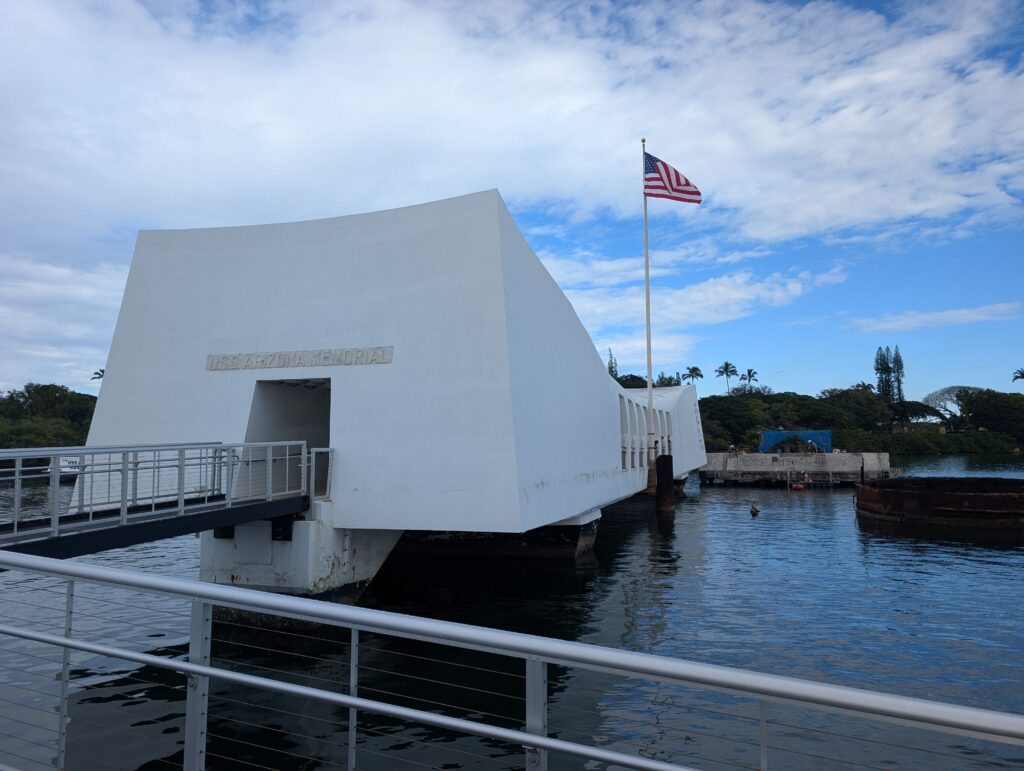
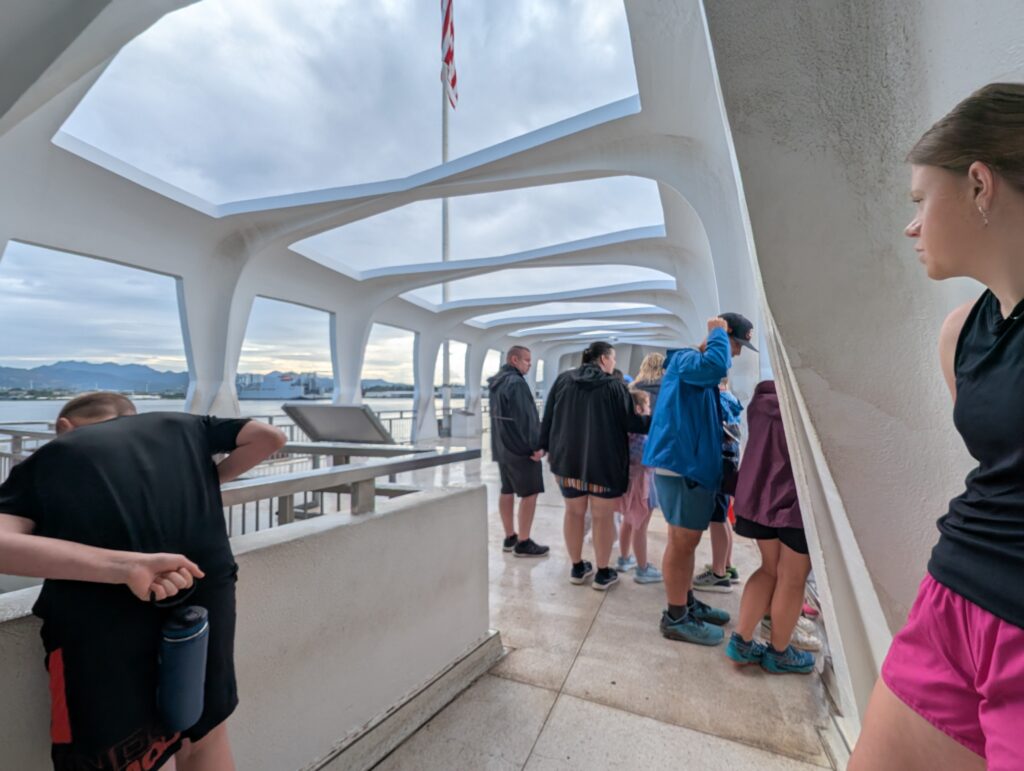
A 1,760 pound Japanese armor piercing bomb penetrated the U.S.S. Arizona and set of a chain reaction explosion in it’s magazine. The explosion destroyed the ship, sinking it, setting a blaze that would not be extinguished for several days, and killing almost 1,200 seamen. Because it sunk at it’s moorings, it is in shallow water. A few pieces of the ship remain above the waterline today, and much of rest is visible from the memorial platform that has been built over the ship, perpendicular to the orientation of the hull on the bottom of the harbor. Because the Arizona was destroyed so quickly, over 900 of the deceased crewmen remain entombed inside the ship. Arizona veterans who survived the attack have been allowed to have their remains placed in the ship with their crew mates. As such, the U.S.S. Arizona Memorial is a war grave, not just some historical relic. It was a somber way to start the trip, but a site I have always wanted to visit. It is both powerful and eerie to stand over the remains of the Arizona, considering what it must have been like on that Sunday morning. Inside the memorial stands a wall of names, attesting to the magnitude of the tragedy befalling just this one ship.

So many people want to visit the Arizona that you are only allowed about 10 minutes on the memorial itself. Two ferries operate constantly to and from the visitor center. When the next one arrives, you must line up to leave, and are replaced on the memorial with the new visitors. It feels a little rushed and overly touristy for a war memorial. I suppose, though, that there is not a better way to manage the number of visitors wanting to pay their respects to the fallen sailors. I am glad I got to see it, and in the end, I guess it was enough time.

Shortly after nine we were back at the visitor center. There are many other things to see and do at Pearl Harbor. We bought Passport to Pearl Harbor passes that allowed us to visit the U.S.S. Missouri, the Pacific Fleet Submarine Museum, and the Pearl Harbor Aviation Museum, as well as a virtual reality experience. These tickets are expensive. The passport gets you all of these museums for $100 per person. You can only enter each once, but you have a two day window in which to visit them all.

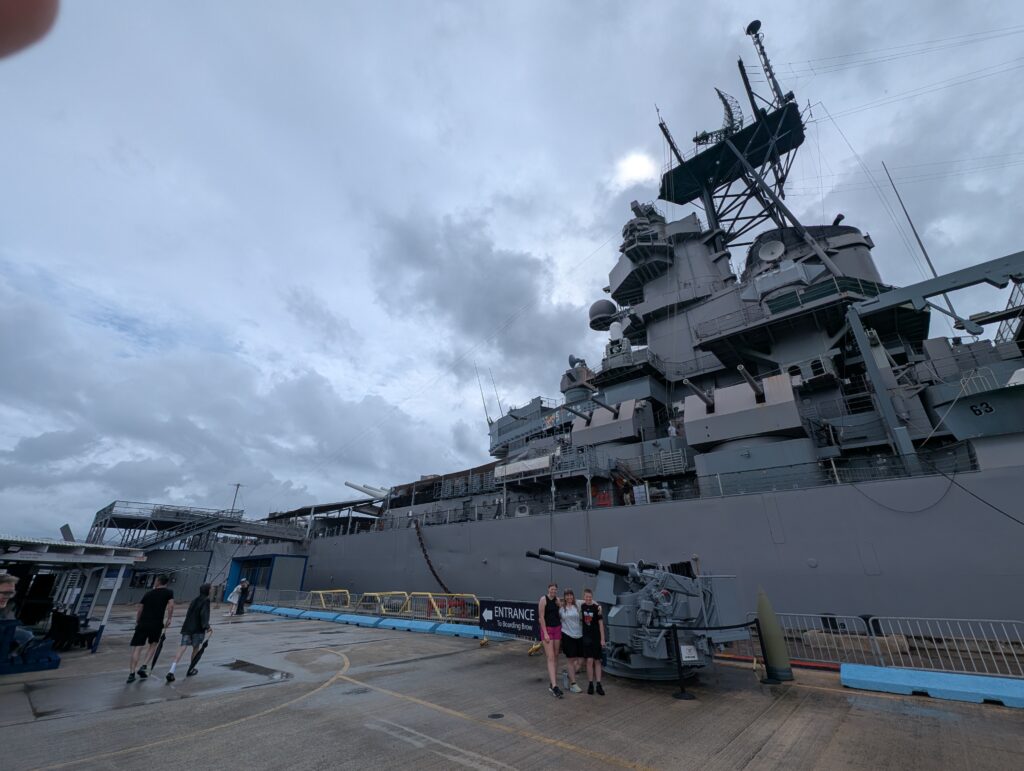
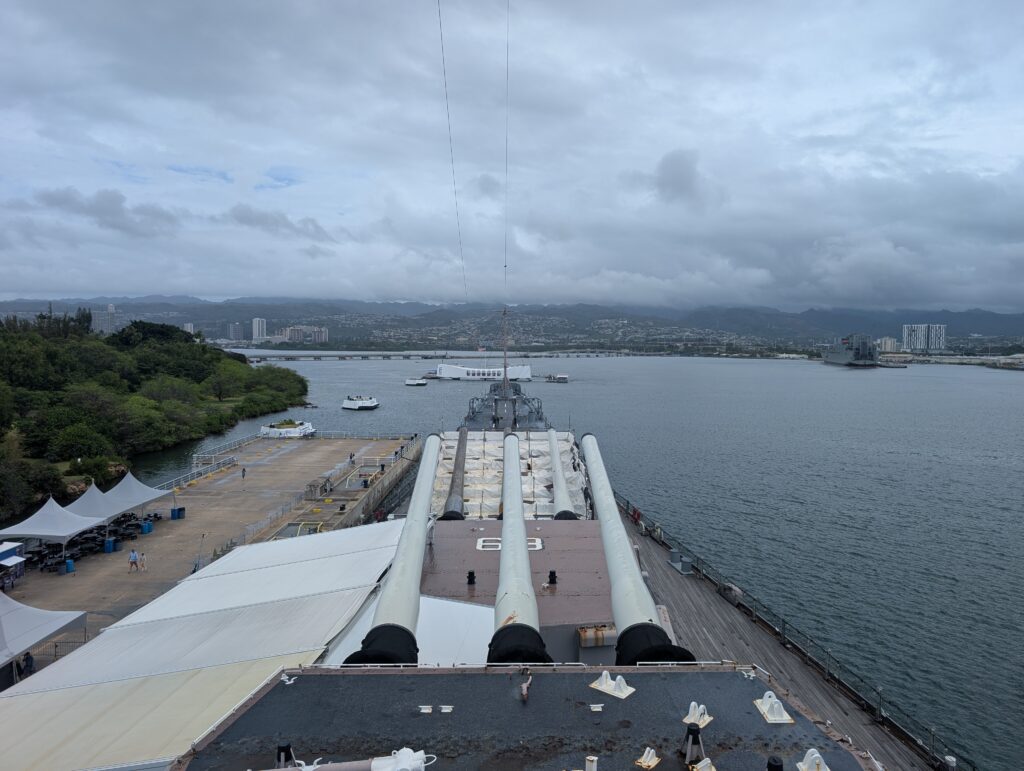
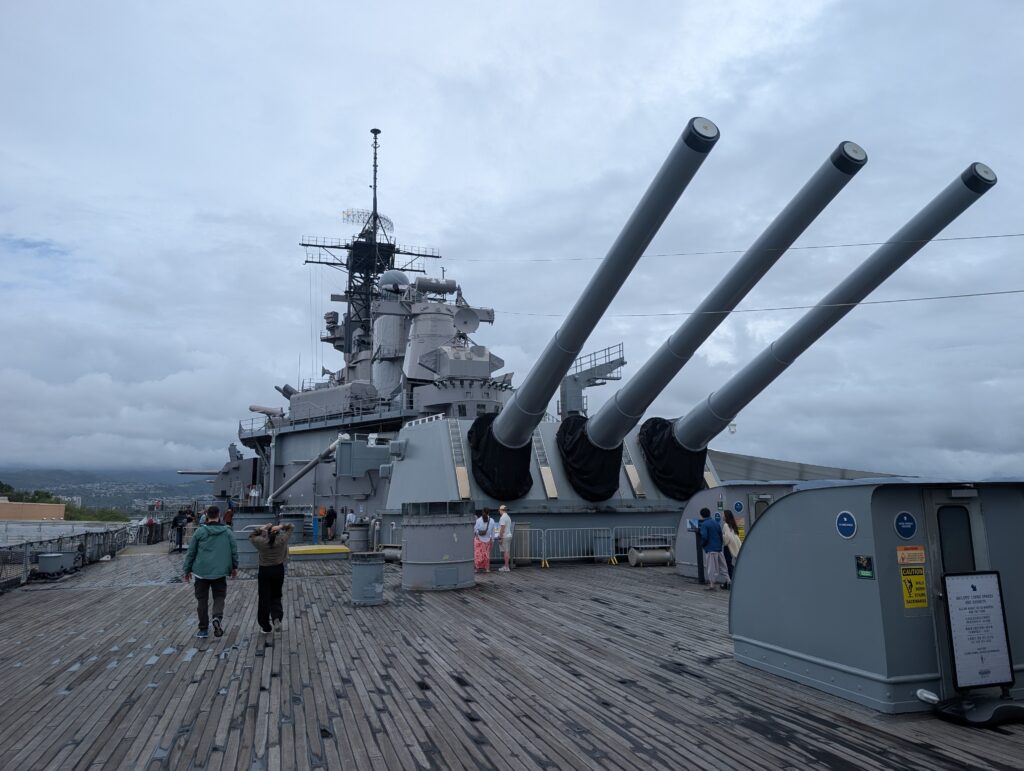
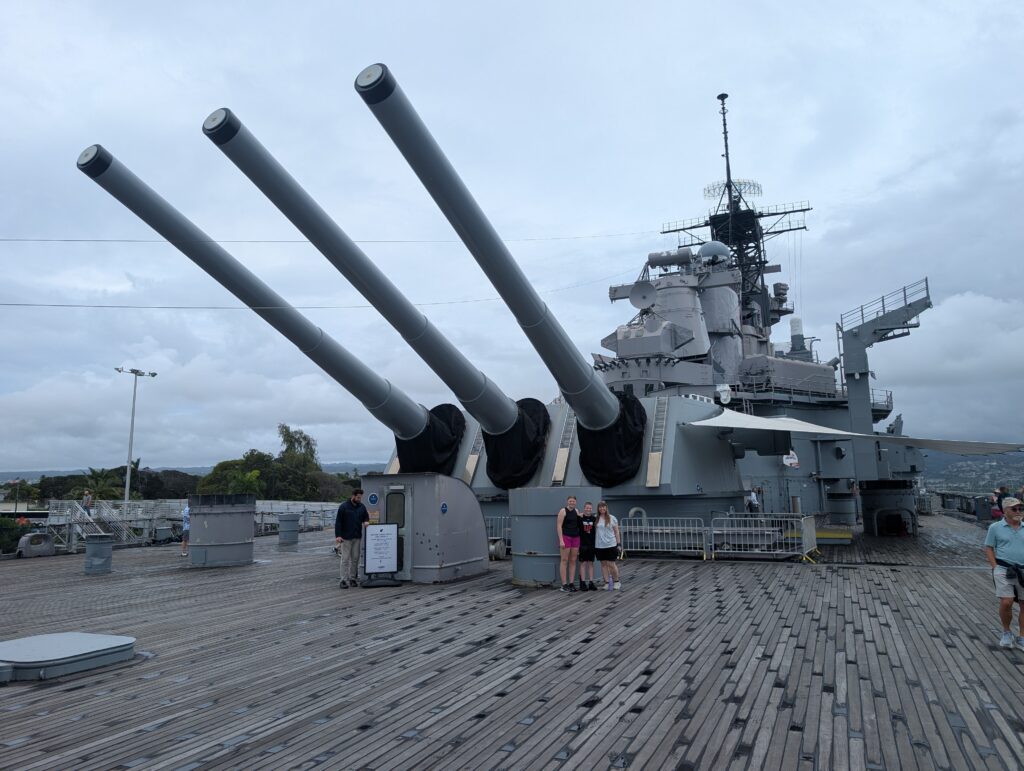
We went to the Missouri first. There was rain forecast for later in the day. Some parts of the Missouri were outdoors, so it seemed best to go to it while it wasn’t raining. The U.S.S. Missouri is an Iowa class battleship. It was built during the war, and was faster and more capable than the ships damaged in the Pearl Harbor attack. Missouri was commissioned in 1944 and saw action during the last campaigns of the Pacific War. It also saw service in Korea, and was refit and put back into service in the 1980s in time to participate in the 1991 Gulf War – the last U.S. battleship to see active service. The greatest significance of the U.S.S. Missouri, though, is that it was the site of the signing of the surrender agreement that ended World War II.

Interestingly, then, right next to the Arizona Memorial sits the Missouri. You can experience sites representing both the beginning and the end of U.S. involvement in World War II. Caleb and I toured the U.S.S. Iowa in Los Angeles a couple of years earlier. That is a fairly similar ship in terms of World War II era armaments, propulsion, etc. There is a mechanism for launching much later Tomahawk missiles from the Missouri. Missouri has a few other unique items. They have a replica of an 1853 U.S. flag presented to Japan by Matthew Perry during his historic visit that year, which is largely seen as the opening of Japan to the West. It had been a very isolated, feudal country before the Meiji restoration (1868), which ended centuries of shogun rule. The flag returned to the U.S. following the surrender ending World War II as a sign that the nations would strive for friendship going forward. The original is in the Naval Academy Museum in Annapolis, but it was returned to the U.S. when the surrender was accepted on the Missouri. The Missouri also houses a “surrender deck” where Nimitz and MacArthur accepted the surrender from such Japanese officials as could be found to do so. There are photos and replicas of the instruments of surrender on the surrender deck, but the originals, of course, are in the National Archives.

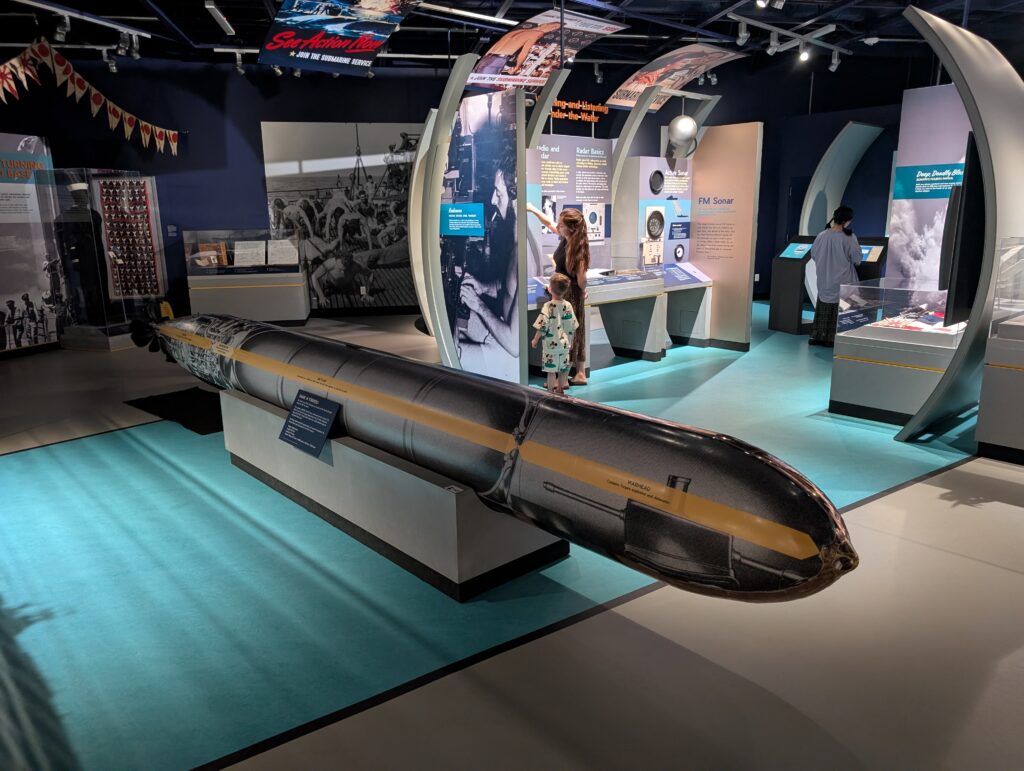
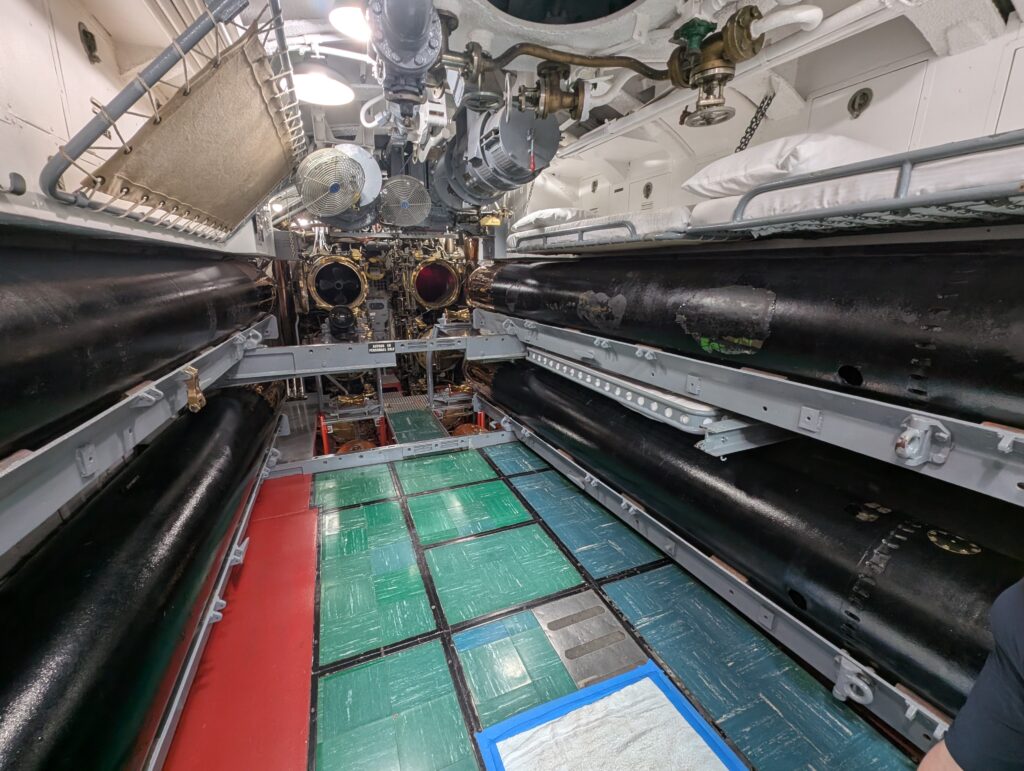
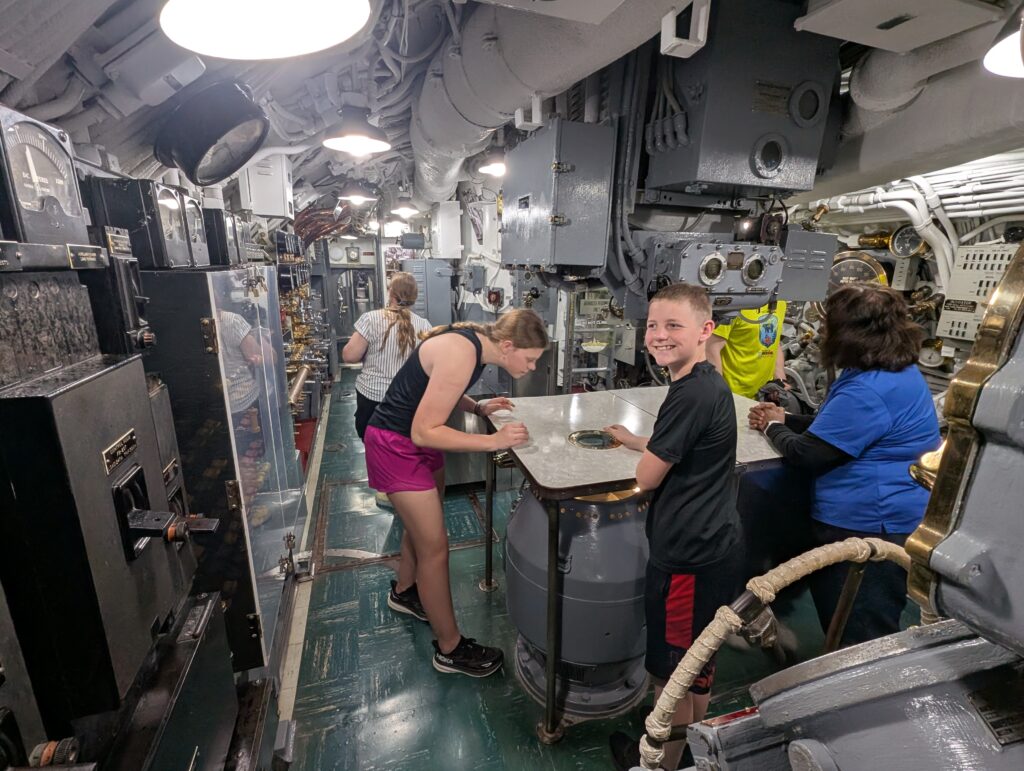
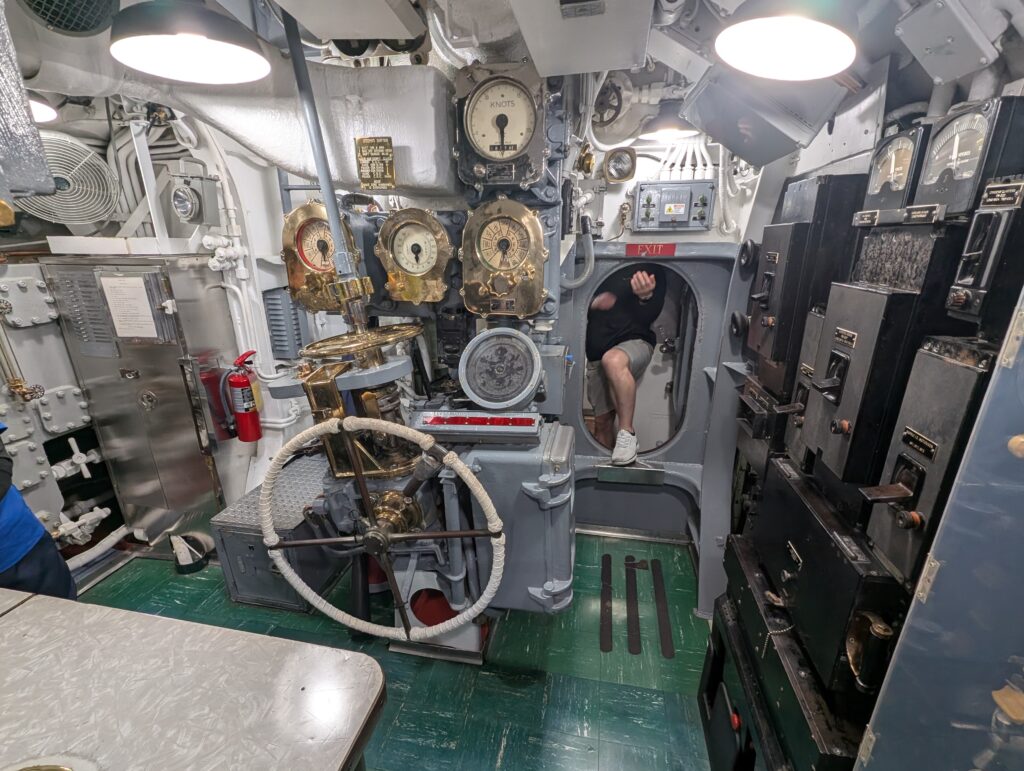
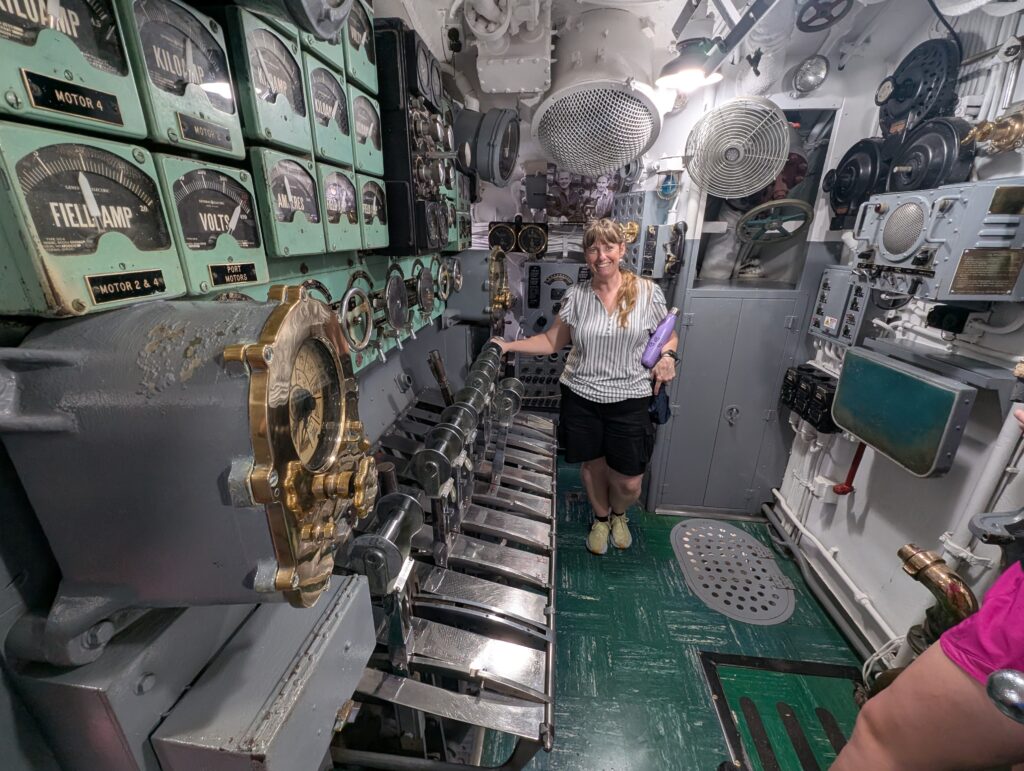
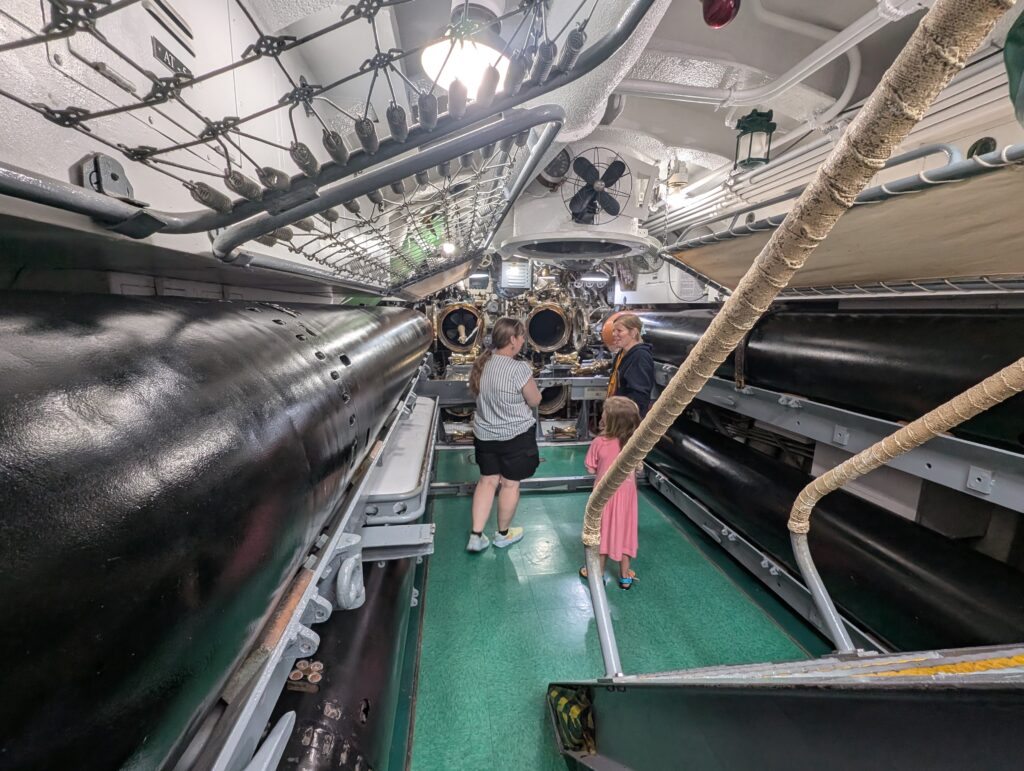
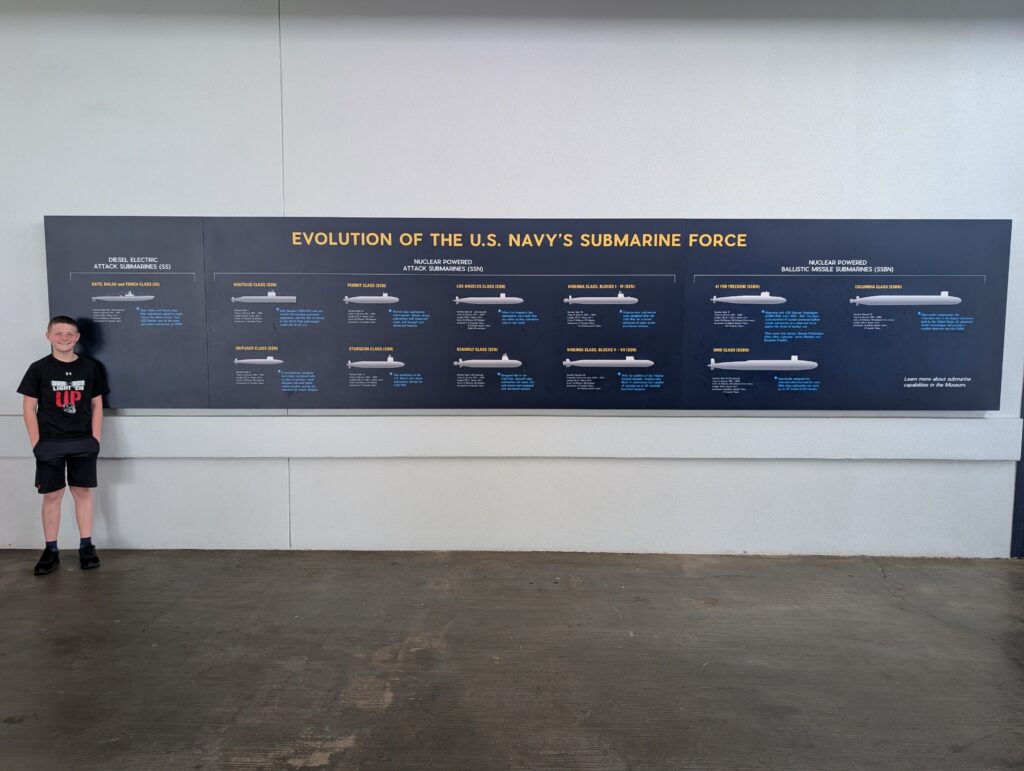
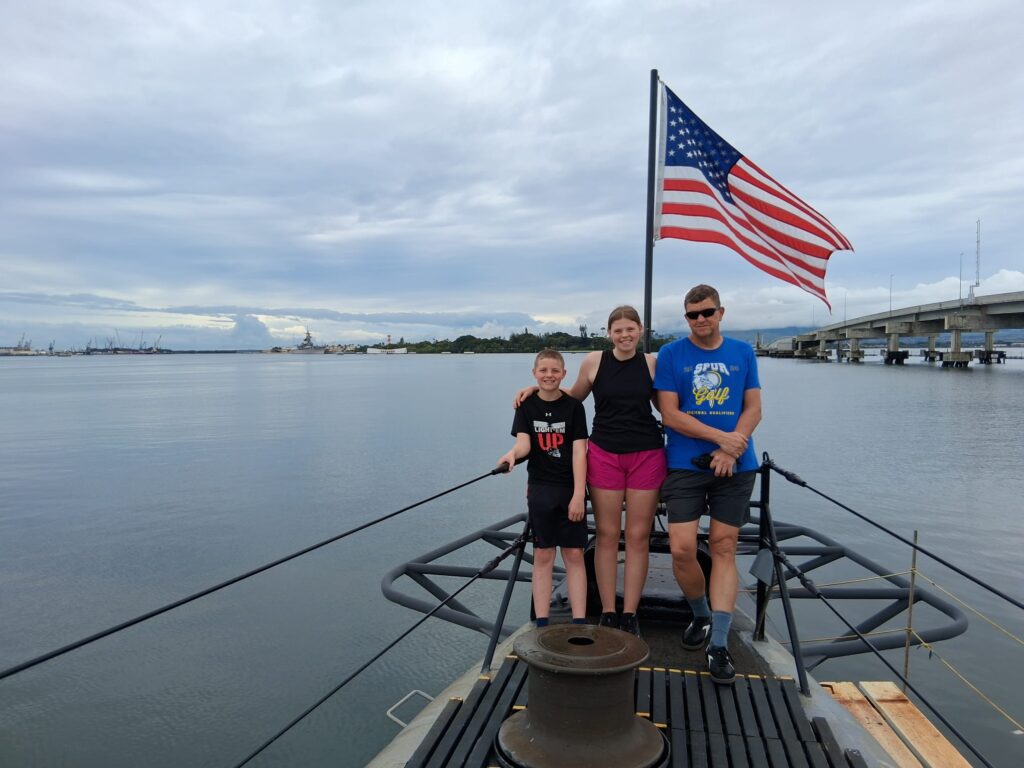
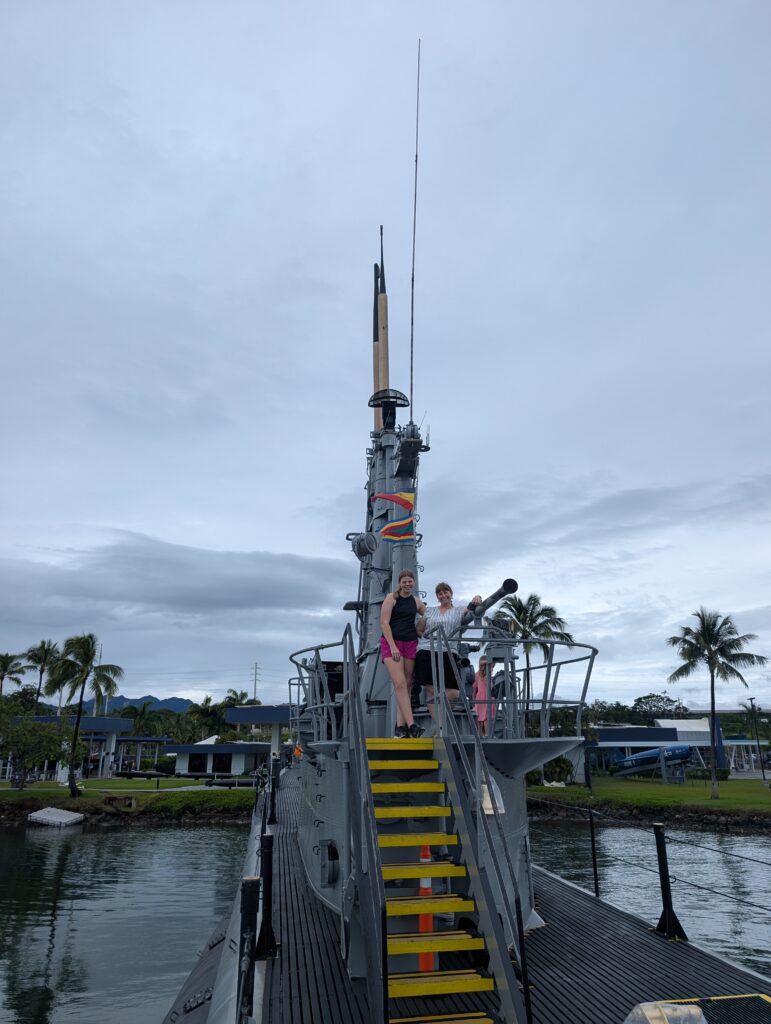
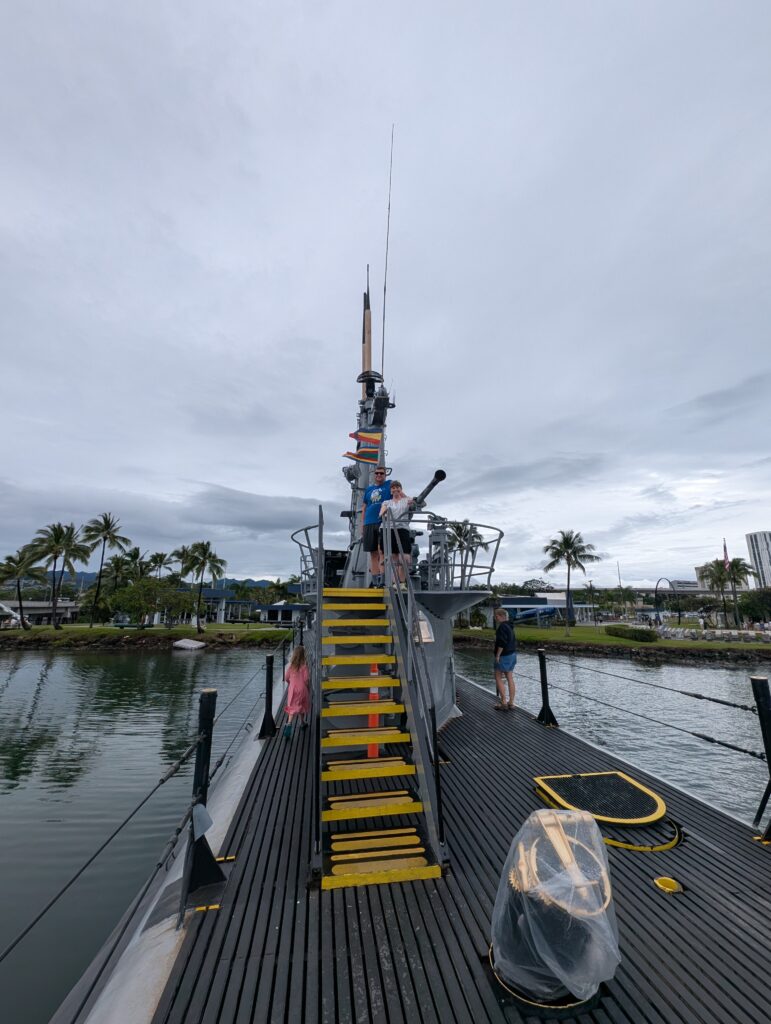
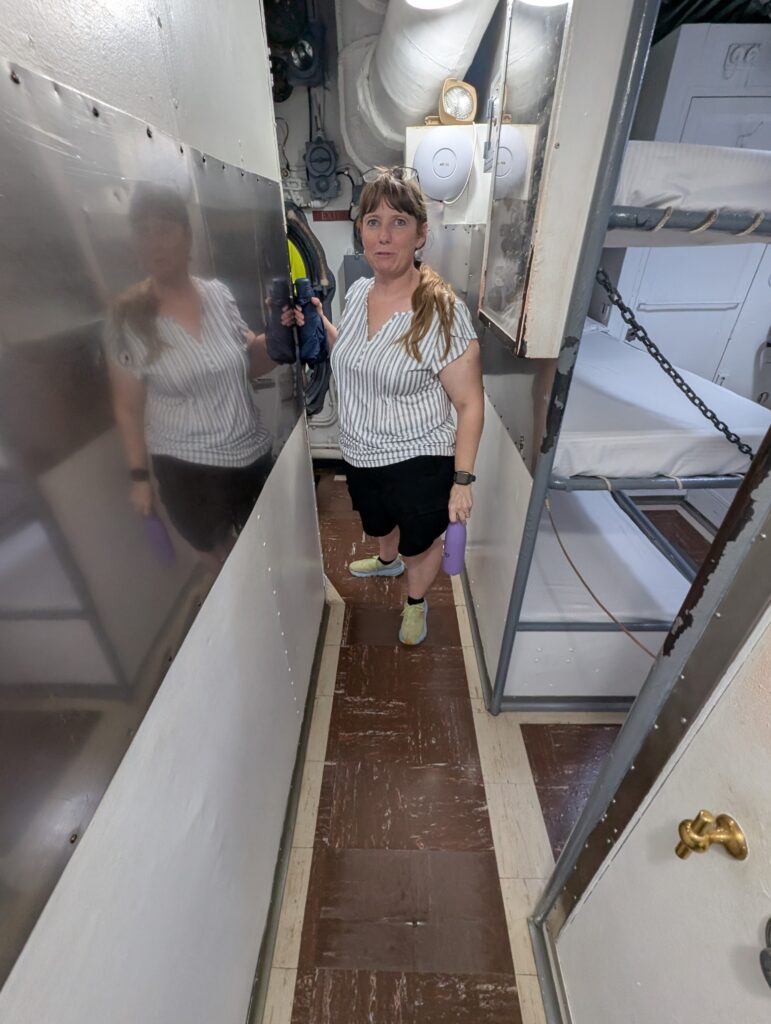
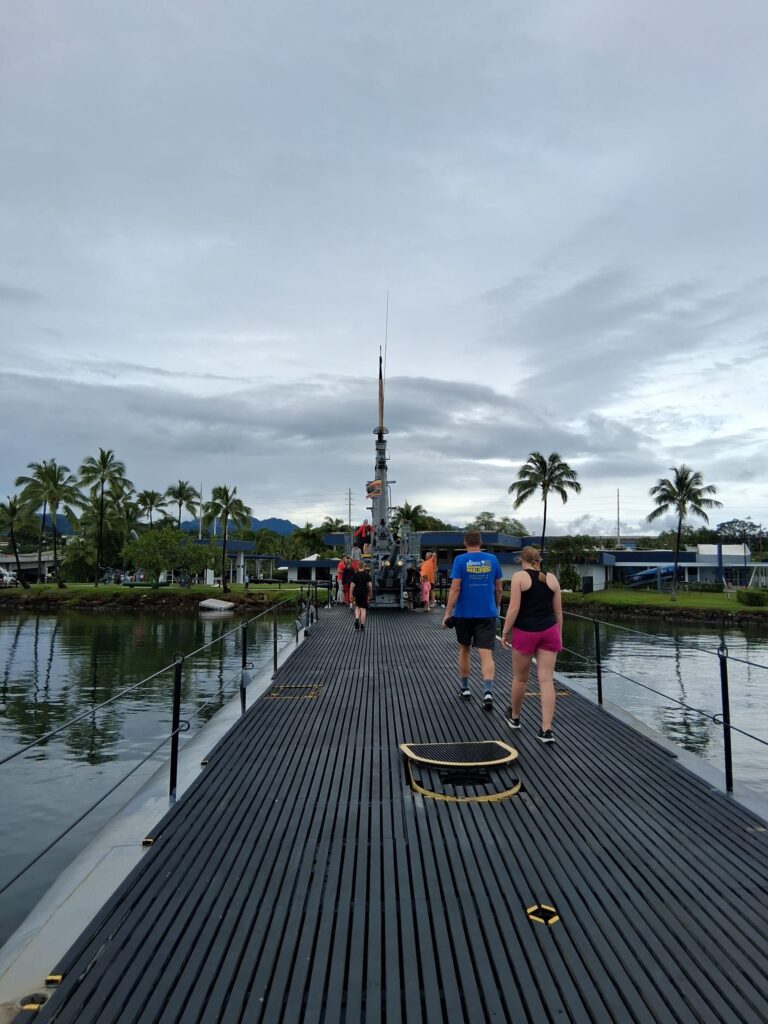
We grabbed a quick lunch after touring the Missouri, and then walked through the submarine museum. The centerpiece of this museum is the U.S.S. Bowfin, a Balao-class submarine. Nicknamed the “Pearl Harbor Avenger,” it was launched on December 7, 1942. Bowfin made nine patrols and sank many “maru” cargo ships, as well as a few others. As with the battleships, Caleb and I had previously visited another Balao-class submarine in San Francisco (U.S.S. Pampanito). Being in San Francisco, Pampanito is much easier to visit. The museum in Pearl Harbor, however, offers a much more comprehensive explanation of the use of submarines in the Pacific theater. There were also more staff members around on the Bowfin, though the ones there when we toured were not the most prepared docents we have seen on military exhibits. The Bowfin is a very useful visit, and a reminder of the amount of complexity packed into the tiny spaces of World War II submarines. There are diesel engines, electric motors, batteries, torpedo tubes, and of course controls and the spaces for the crew.

We took the shuttle back to the aviation museum to close out our Pearl Harbor time. We were a bit tired by then, but thought it best to see what we could of the last museum while already there rather than making another trip. We had almost two hours to see it. The museum occupies a couple of hangars, the old Ford Island control tower, and has some outdoor displays. The items are nicely presented, but a bit spread out, making it easier to cover a lot of ground in a short time.

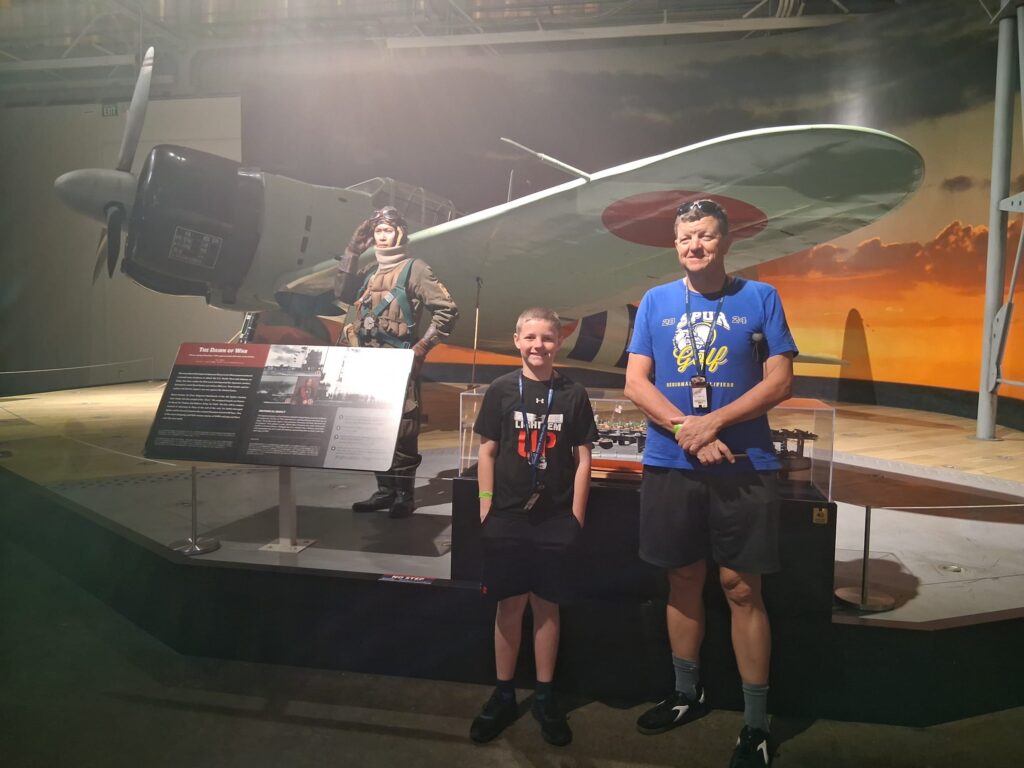
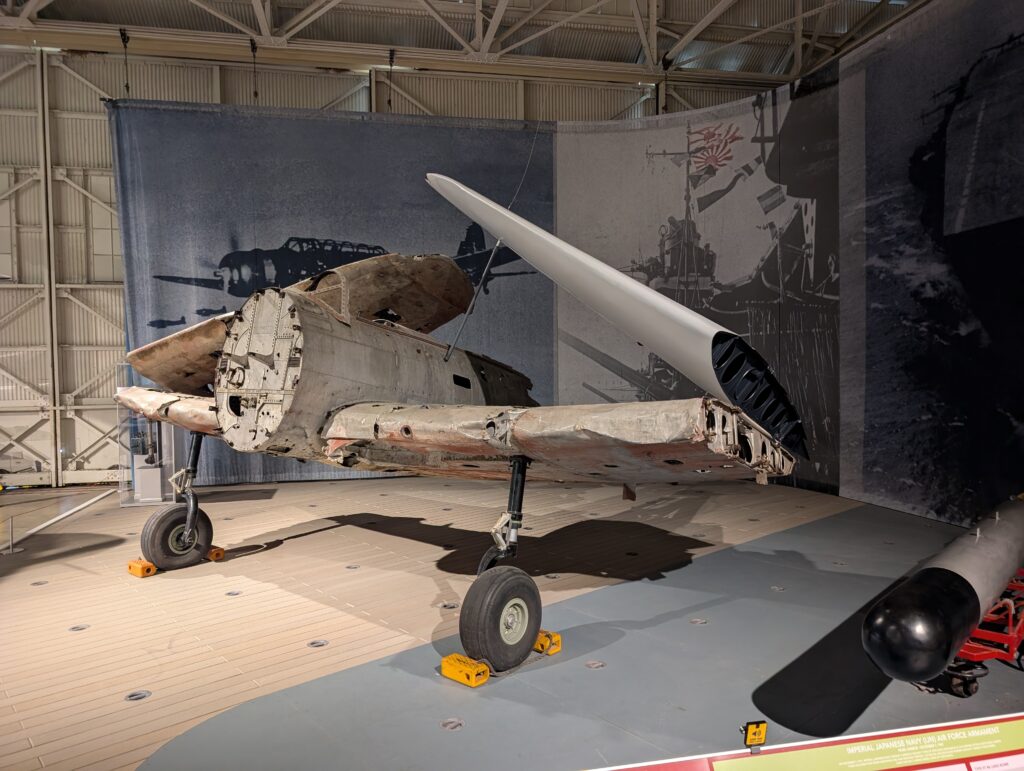
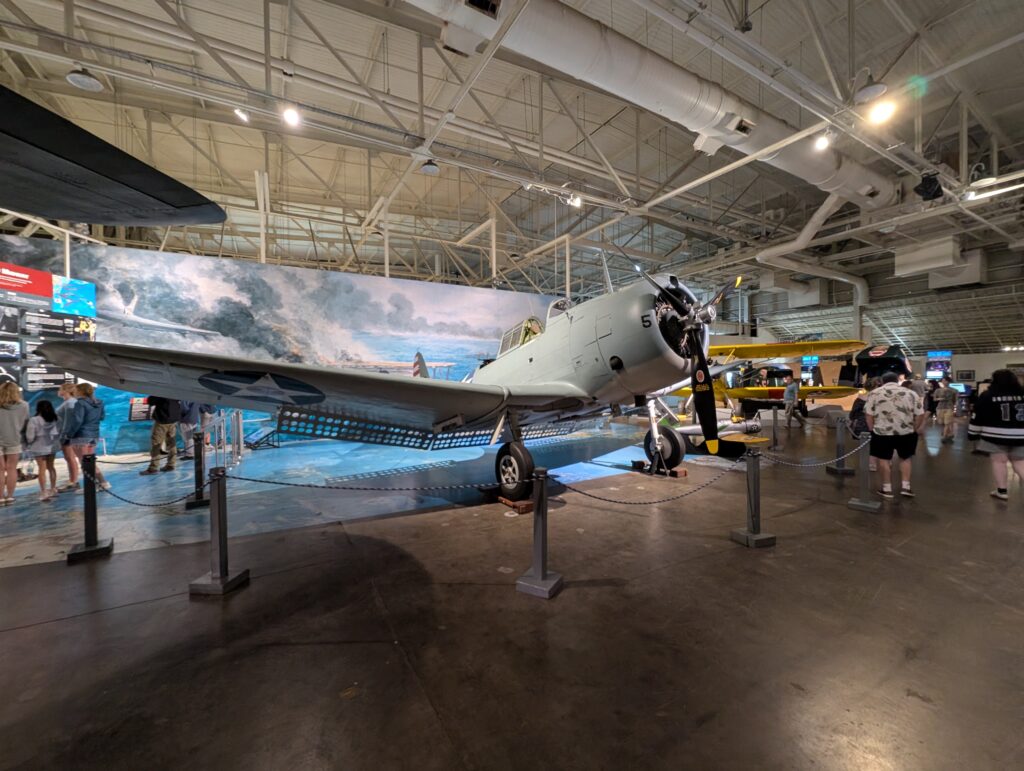
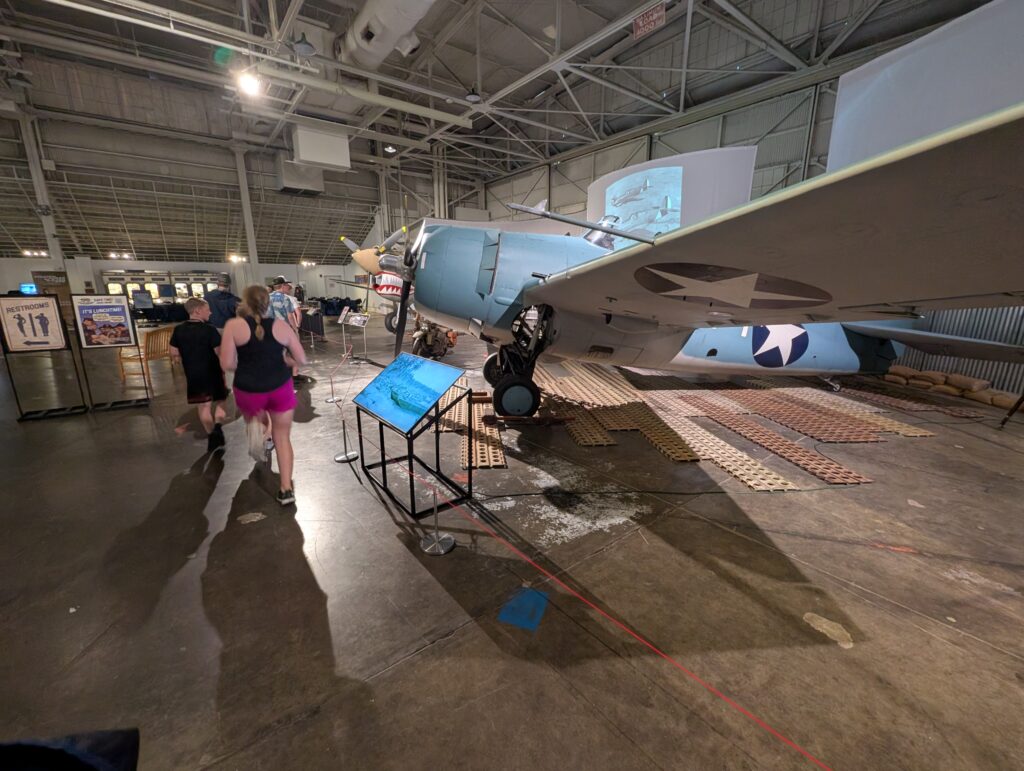
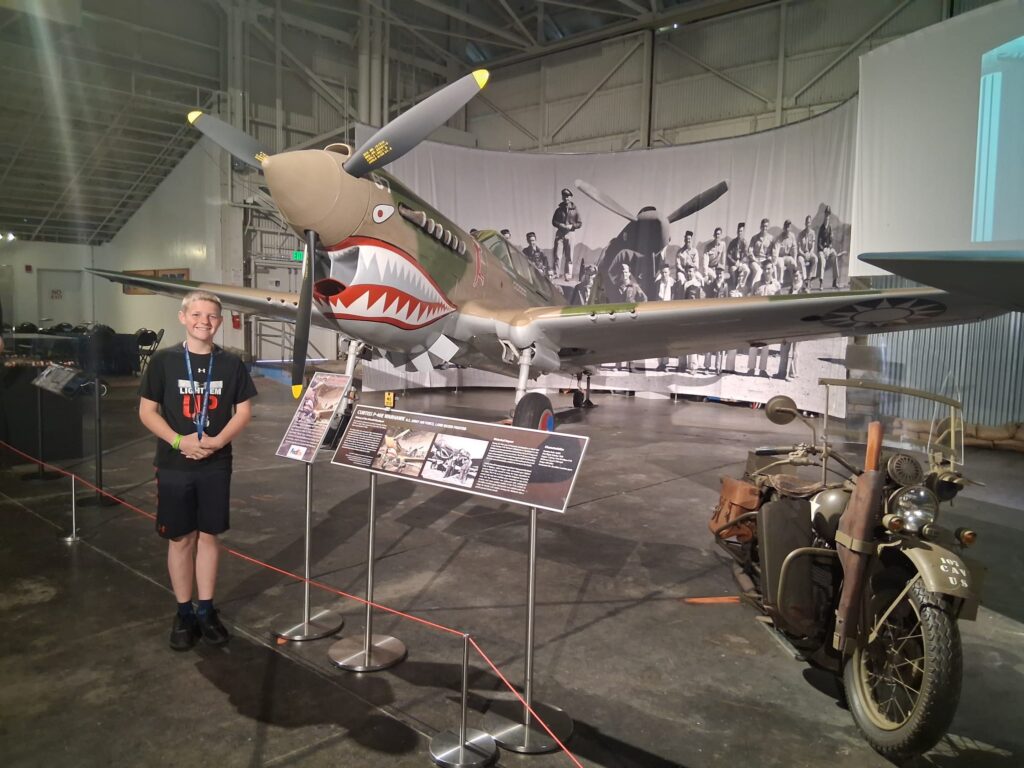
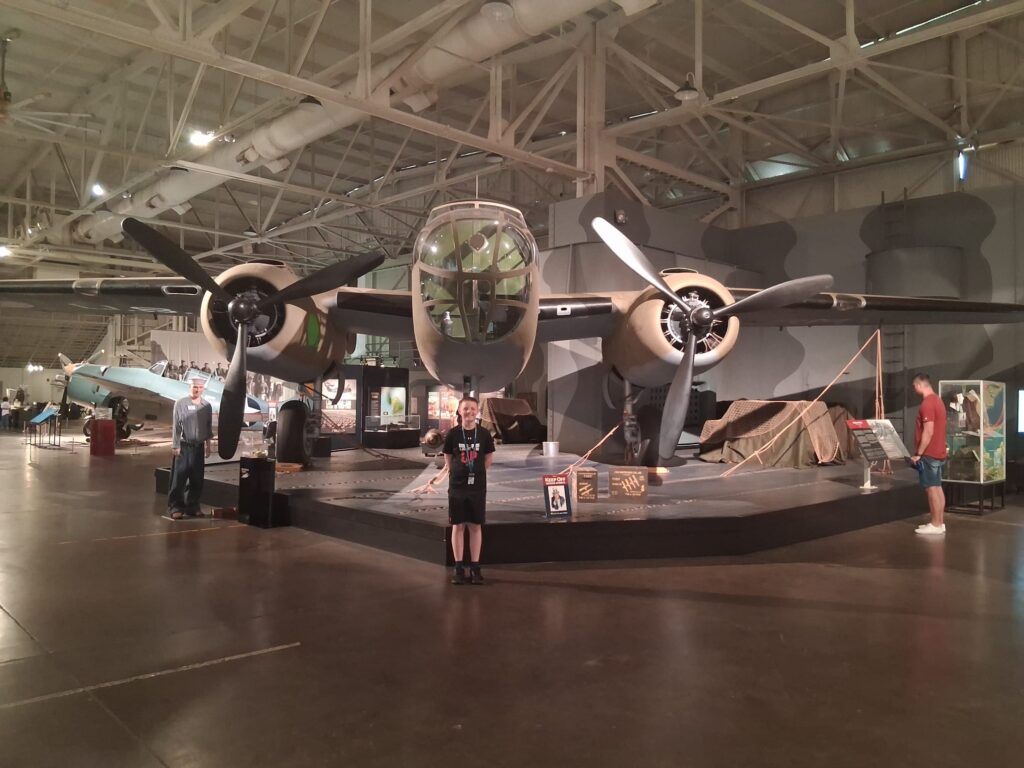
The vast majority of the Pearl Harbor and World War II related planes are in the first and nearest hangar. They have a couple of rare Japanese Zeros, a Dauntless dive bomber, an F4-F Wildcat, a Stearman, and a B-25. They also have a hulk of a B-17 known as the “swamp ghost.” This was a wreck ditched in a swamp in Papua New Guinea where it remained as a sort of landmark until it was retrieved and brought back for restoration in 2013. In addition to the Zeroes, the museum also has the most intact portion of a Kate Japanese torpedo bomber known to exist. They also say they have a Val, a Japanese carrier based dive bomber, though I didn’t see it during our visit. Due to the way the Japanese prosecuted the war, very few of their combat aircraft survived. Most of those we see today are either replicas, like those made for the movie, “Tora, Tora, Tora,” on display in the Commemorative Air Force Museum in Midland, Texas, or are pieced together from wrecks many years later.

The aviation museum had an interesting display on a Japanese pilot who suffered damage to hs Zero during the second wave of the attack on Pearl Harbor. He was forced to land on a lake bed in Ni’ihau. Mistakenly thinking this island uninhabited, the Japanese had instructed their pilots to land on the dry lake bed there in case of trouble. A submarine would then come to collect them later. But the island was inhabited, and the inhabitants had used a tractor to make trenches in the lake bed so it could not be used to land airplanes on. As a result, the Japanese pilot had a pretty rough landing on the lake bed in his damaged plane.

The Hawaiian residents of Ni’ihau were not aware that there had been an attack on Pearl Harbor, and treated the pilot as a guest. They allowed him to stay with the Harada family, one of the only Japanese residents on the island, since they could translate for him. Just to be safe, they did confiscate his weapons. By and by, the locals learned of the attack and placed the pilot on house arrest. He then convinced Mr. Harada to help him escape. He was confronted and recaptured by the locals. The pilot struggled with one man and shot him. The man survived, and his wife bashed the Japanese pilot over the head with a large rock, killing him. Mr. Harada then committed suicide, and so ended the strange encounter. The full story is even more intriguing, if the reader is interested in looking into it.

(Continued)

On and Around Bowfin
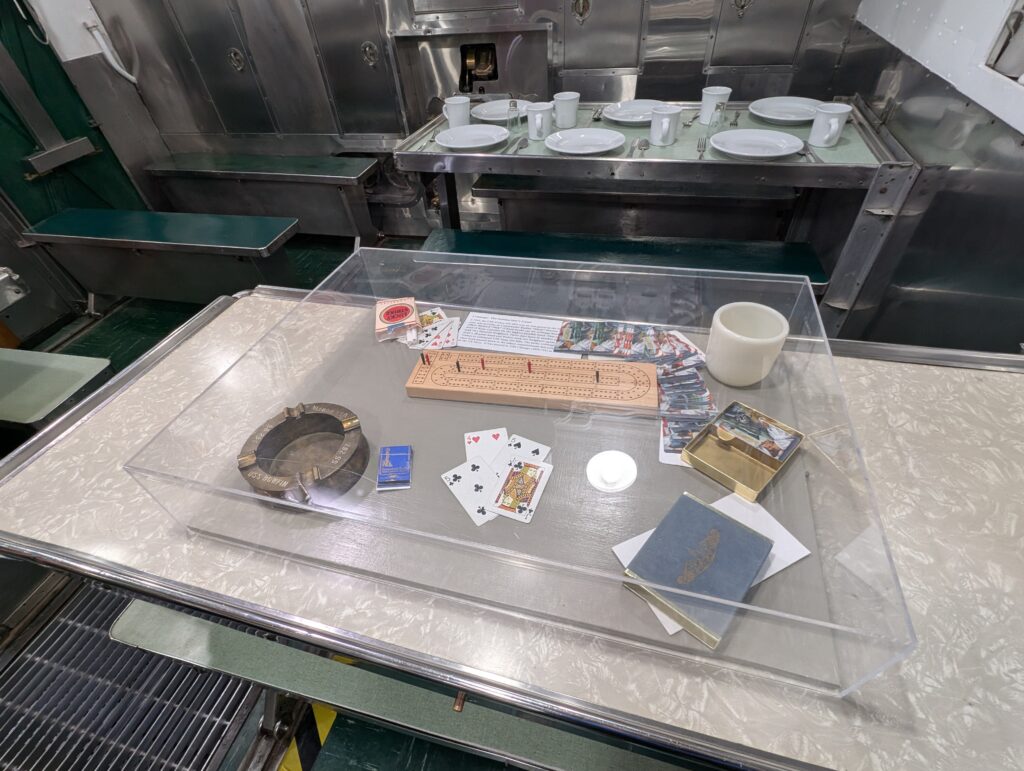
Cribbage Was Popular With Submariners
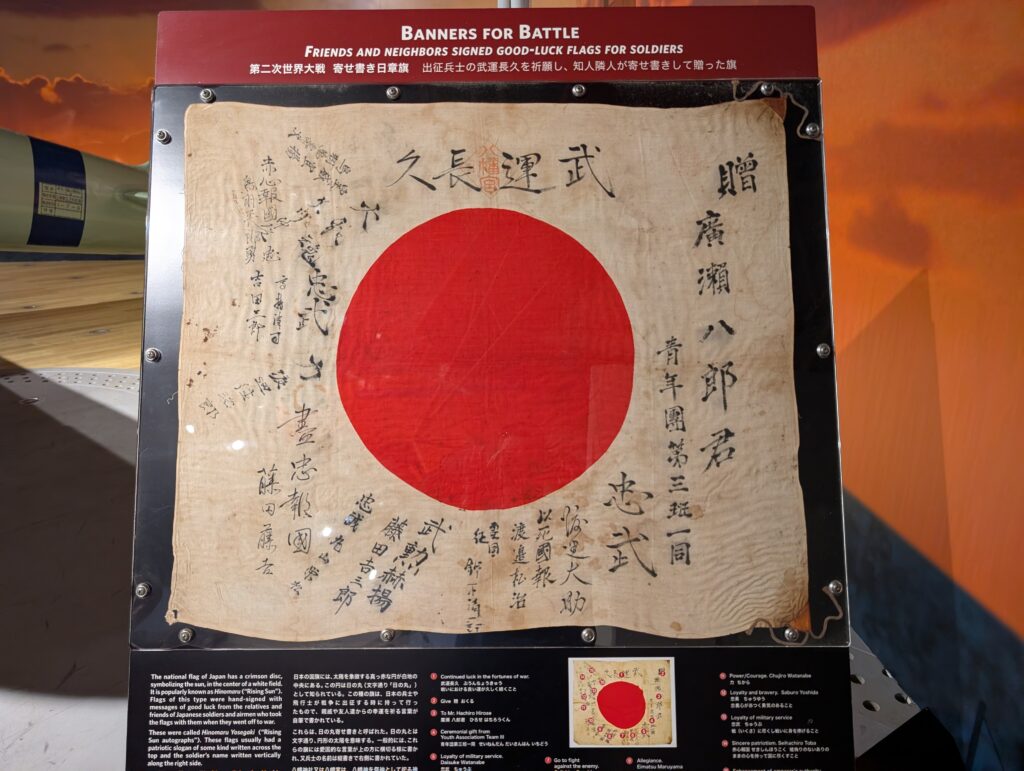
Japanese Good Luck Token in Aviation Museum
Caleb and I With One of the Few Remaining A6M2 Zeroes in the World
What Remains of a "Kate" Torpedo Bomber
SBD-2 Dauntless Dive Bomber Rescued After Spending 65 Years at the Bottom of Lake Michigan
Kimberly Scoots Past the F4F Wildcat
Caleb Poses With the P-40 Warhawk
... and a B-25 Mitchell
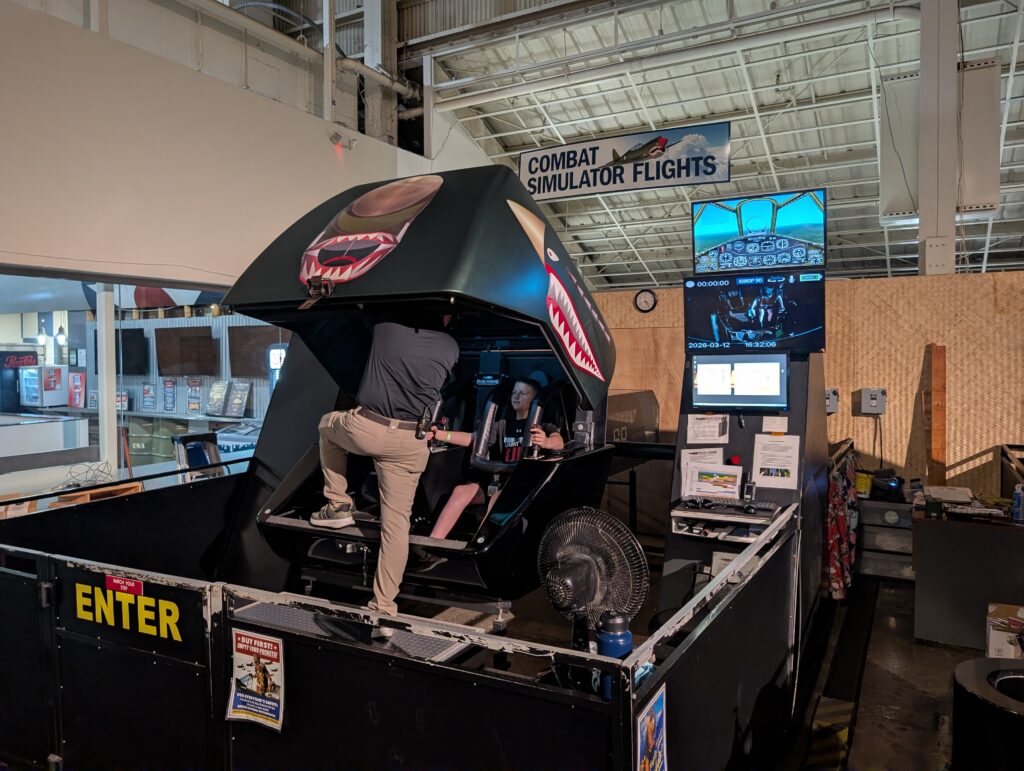
Caleb Takes a Flight in the Sim

After riding the bus system back to our motel, Kimberly and I walked to the grocery store in search of short term and long term sustenance. The rain began to come down as we walked. I had not brought the umbrella, so we scampered from awning to awning along. After about a mile and a half, we ducked into the Safeway and found some oatmeal, fruit, sherbet, and some meals that had been prepared during the day, but not purchased. We all enjoyed eating our boxed meals, but Kimberly did not enjoy the aftermath. She seems to have gotten food poisoning from it. She had a miserable night and next day.

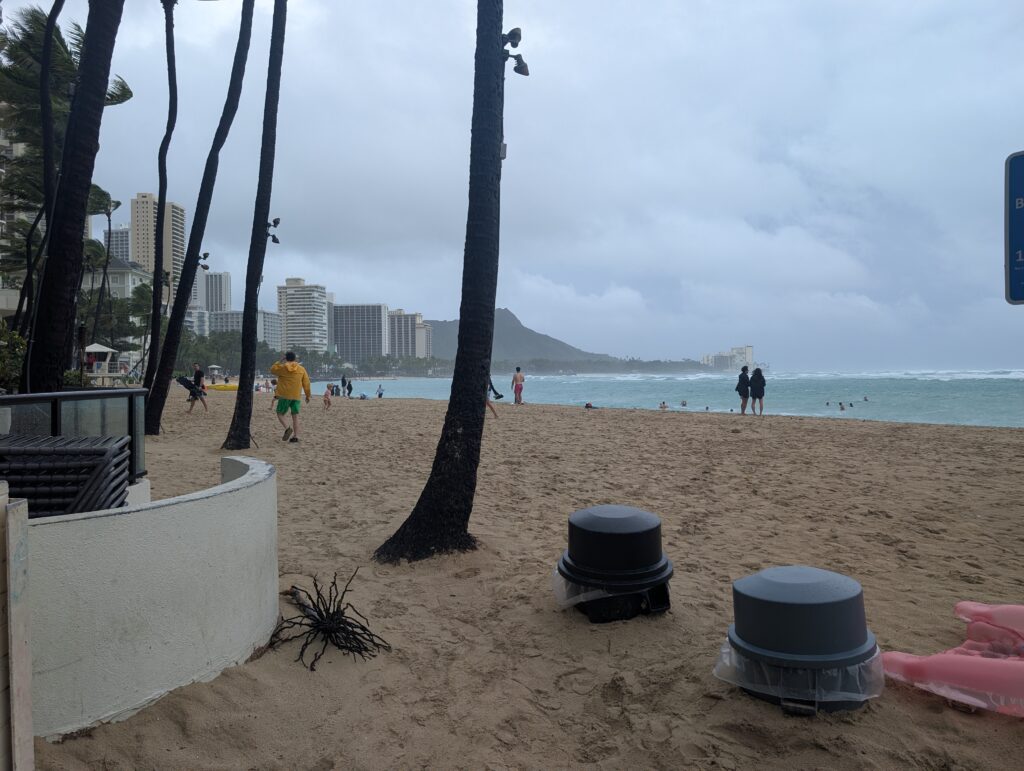
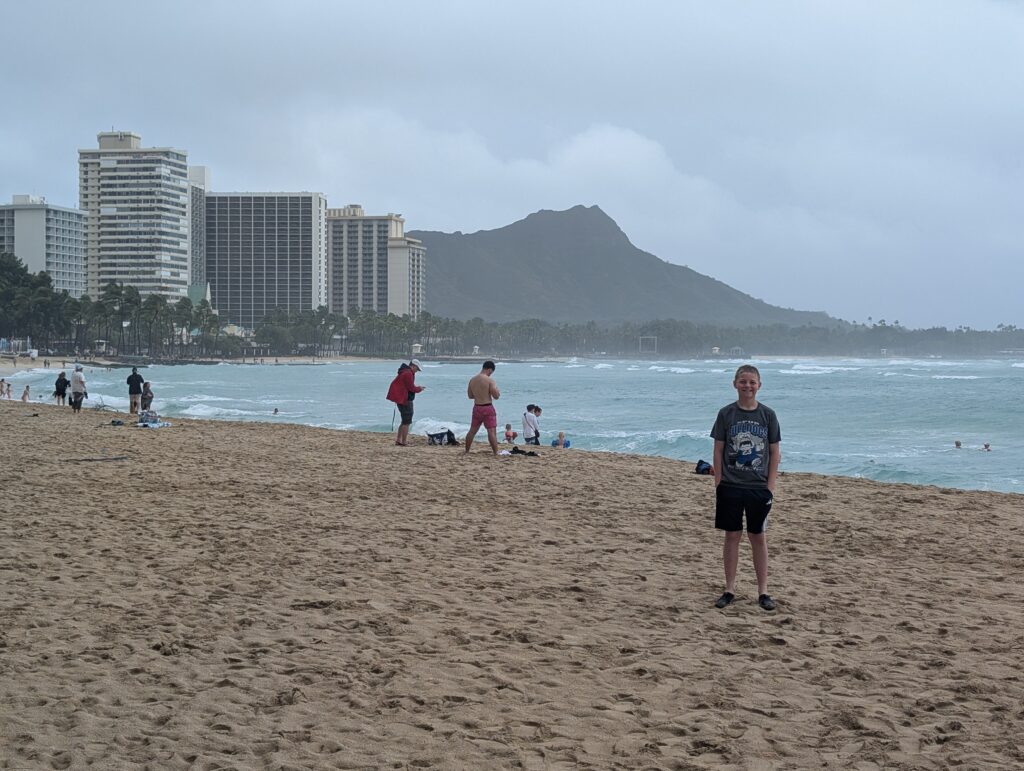
Friday was the worst weather day. I tried to find things to do indoors. Oddly, the main indoor attractions were all closed due to the forecast rain, which was only for 2-3 inches each day. The Bishop Museum and Iolani Palace seemed interesting, but both had were preemptively shuttered both Friday and Saturday, and were closed anyhow Sunday and Monday, so those were out. All of the restaurants and stores remained open. Stephanie took a hula lesson in the motel in the morning. We walked the shops a bit. Stephanie and I walked down to Duke’s for a special seafood dinner in the evening. Stephanie tried the coconut ginger fish trio, and I had surf and turf plate that featured short ribs and sauteed shrimp. We walked down the beach for a bit on the way home, but it was pretty blustery. My food at Duke’s was good, but I got cold from the wind whistling through tarps closing off the normally open dining room.

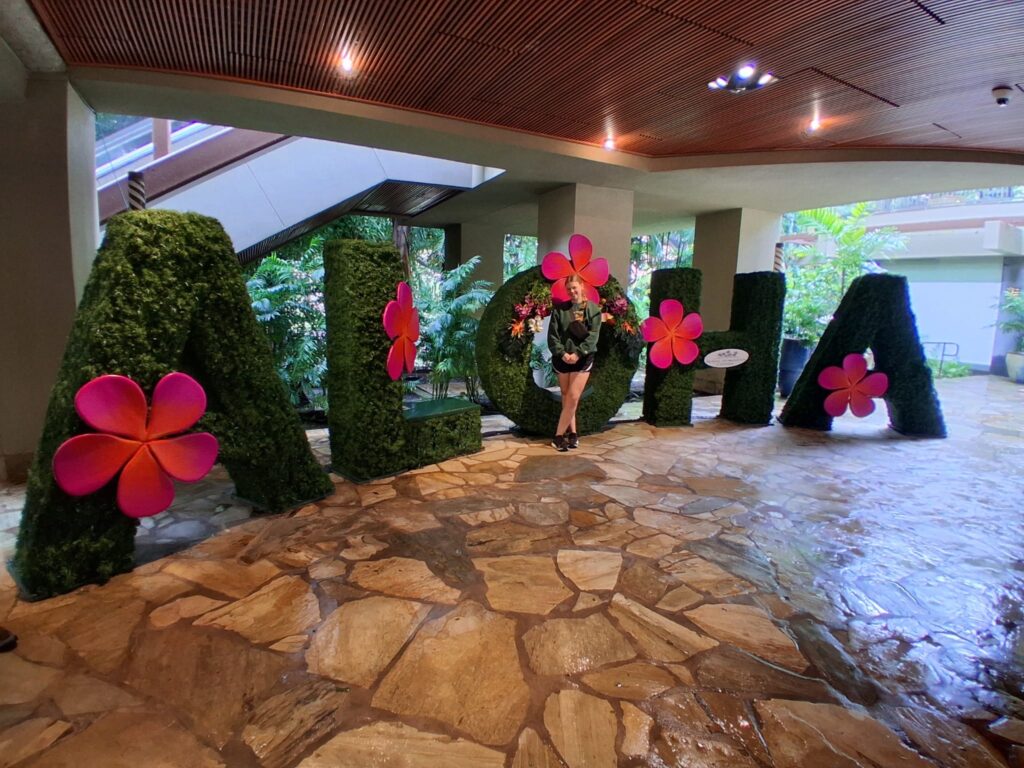
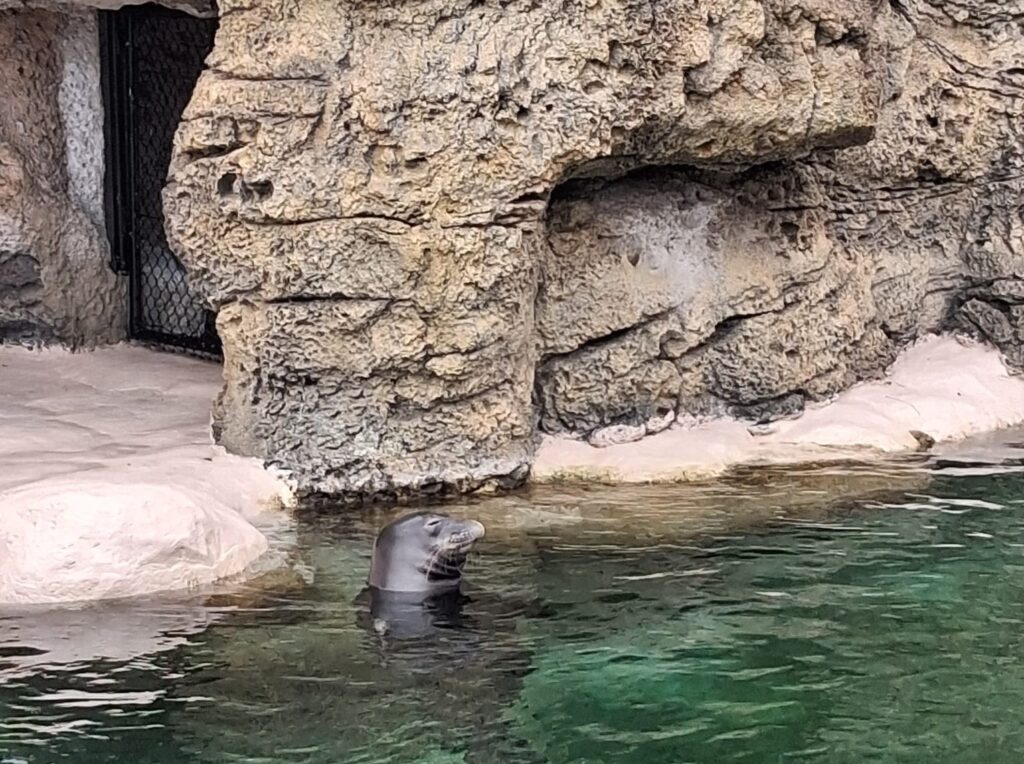
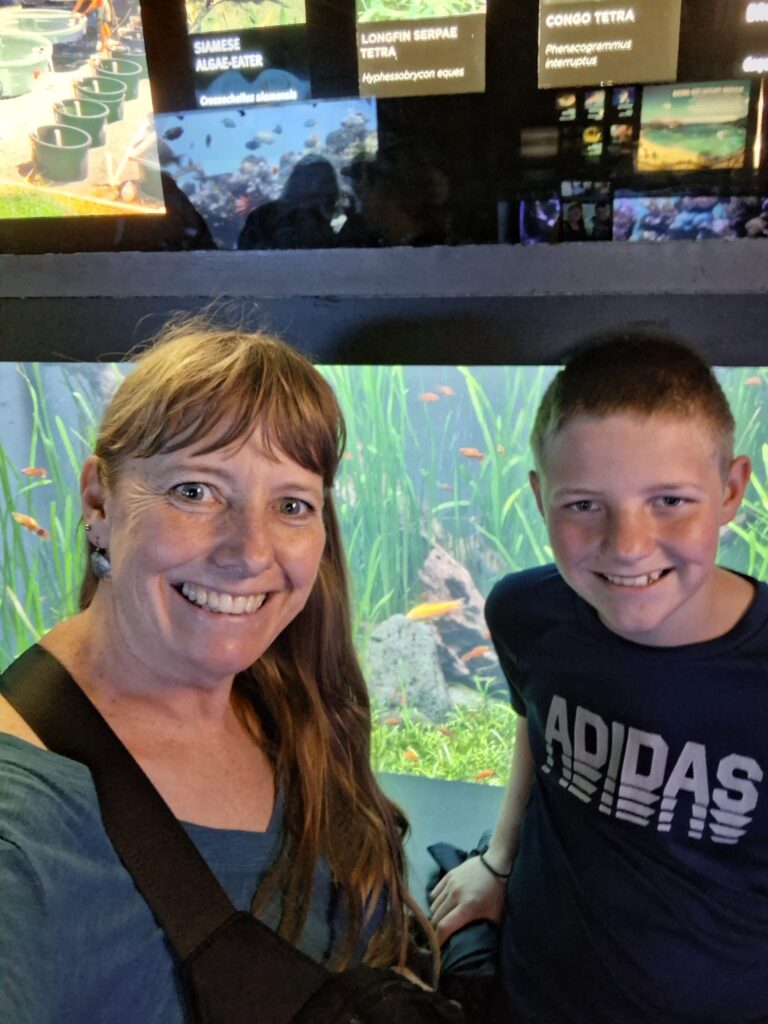
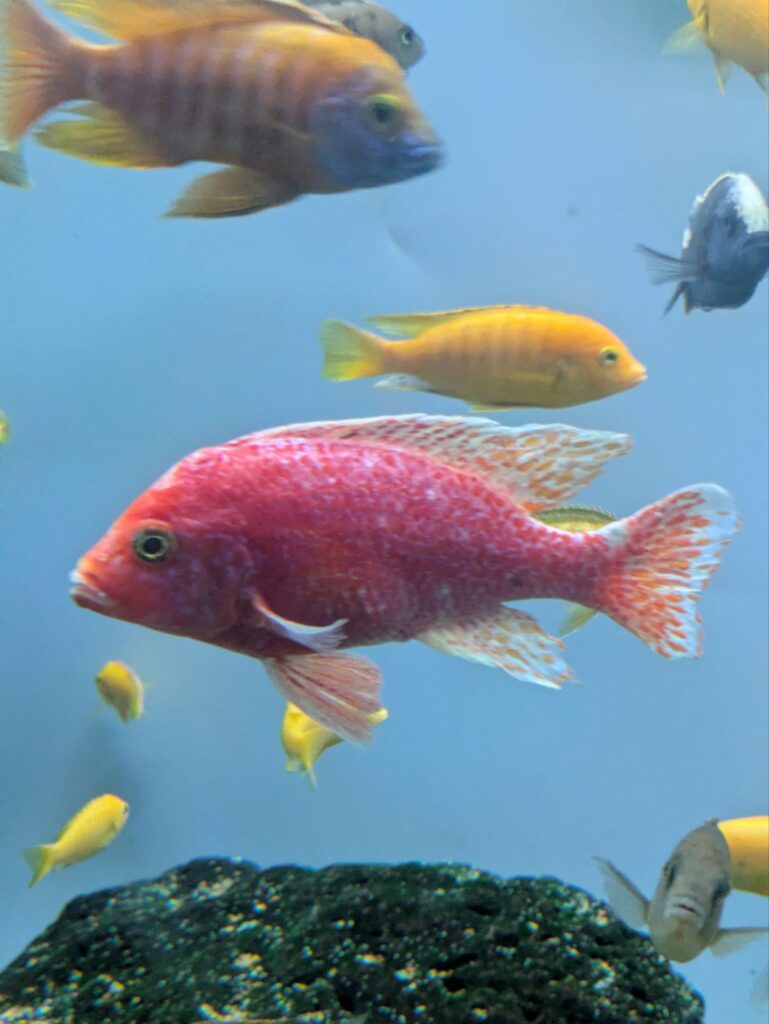
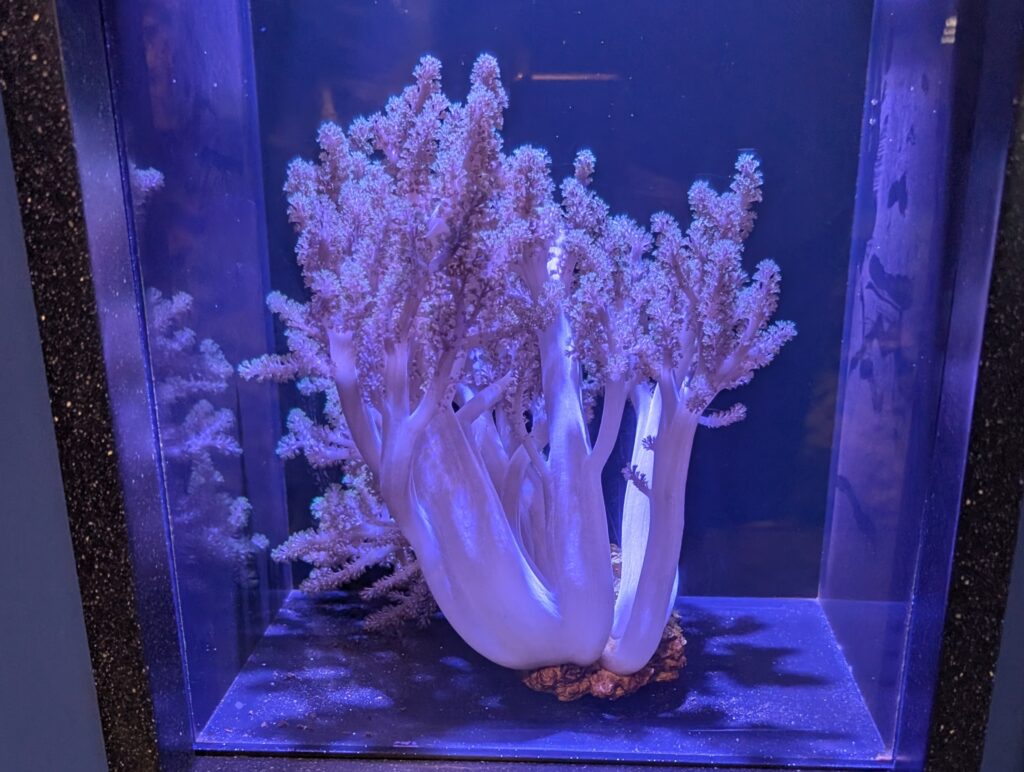
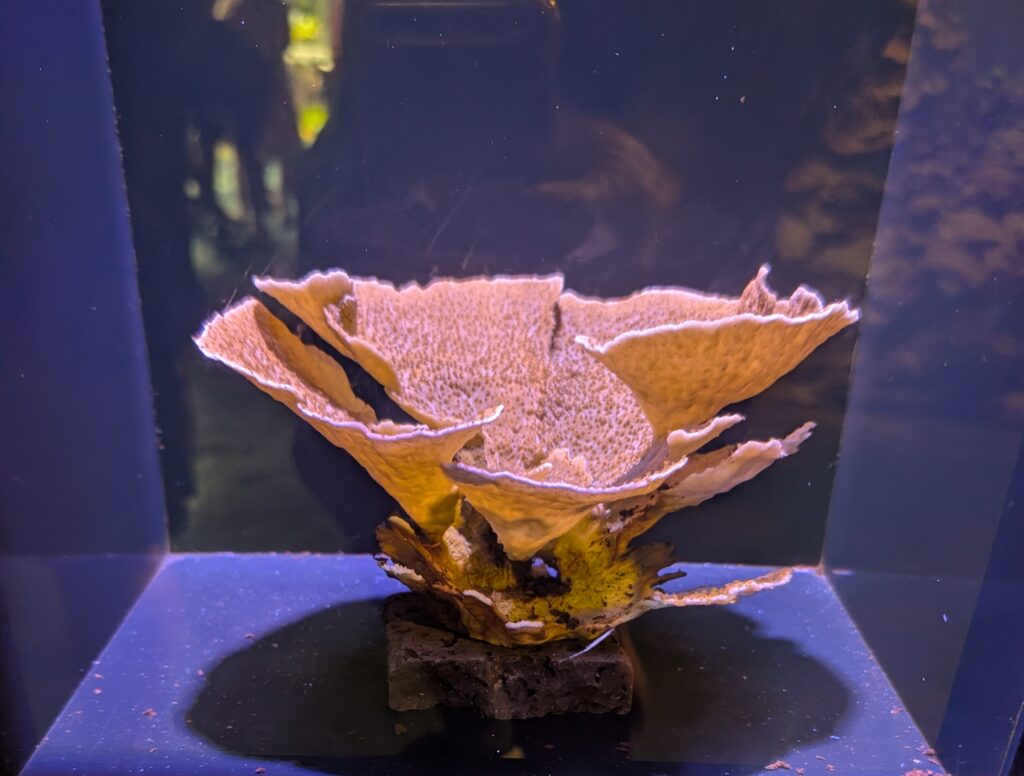
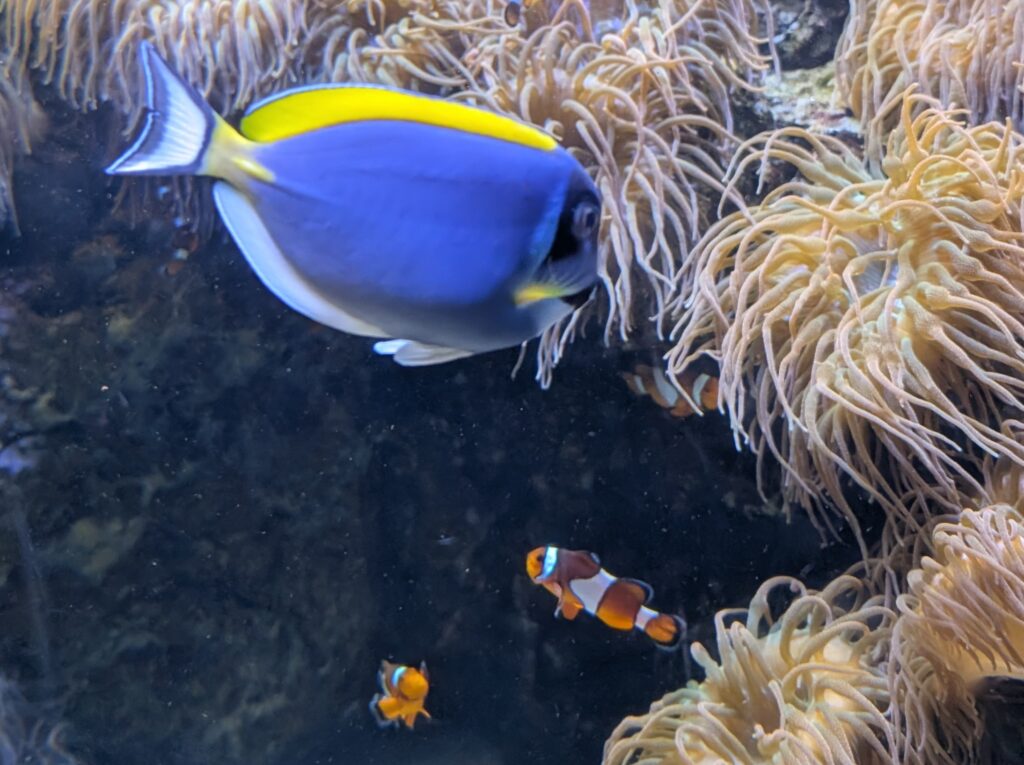
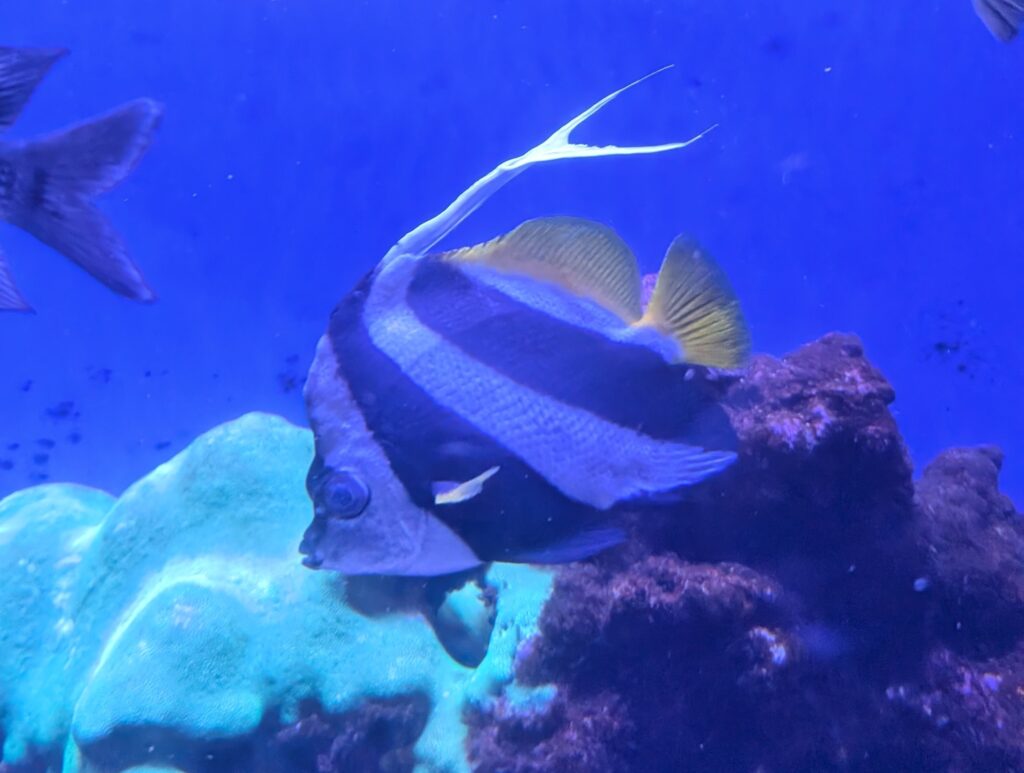
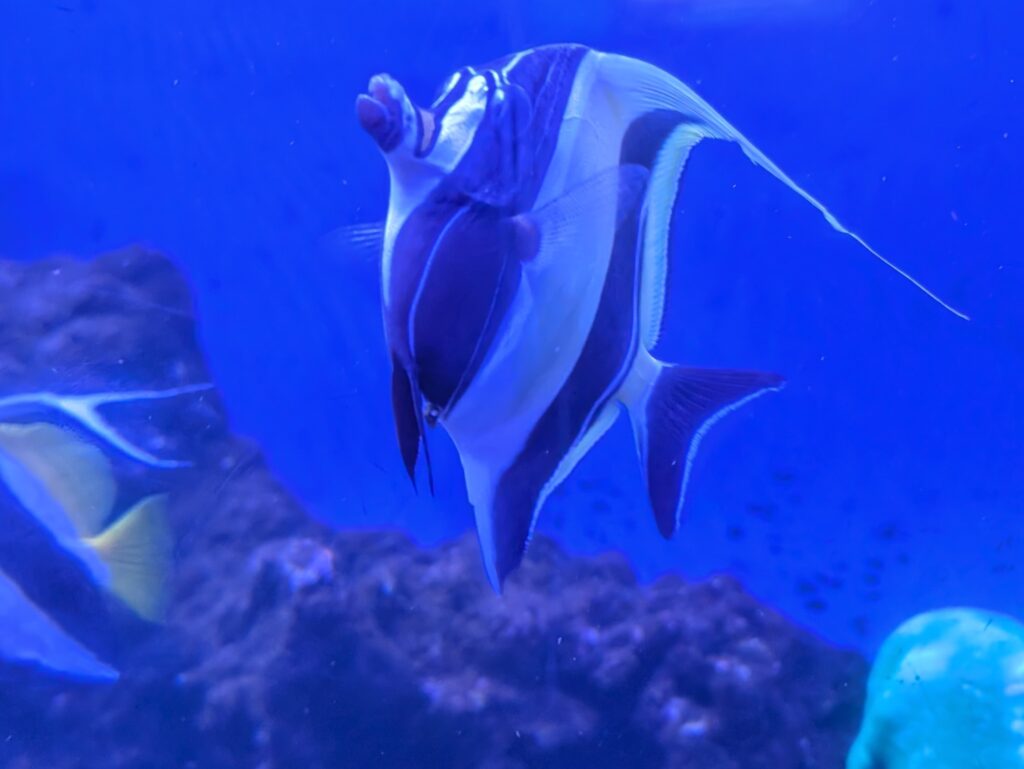
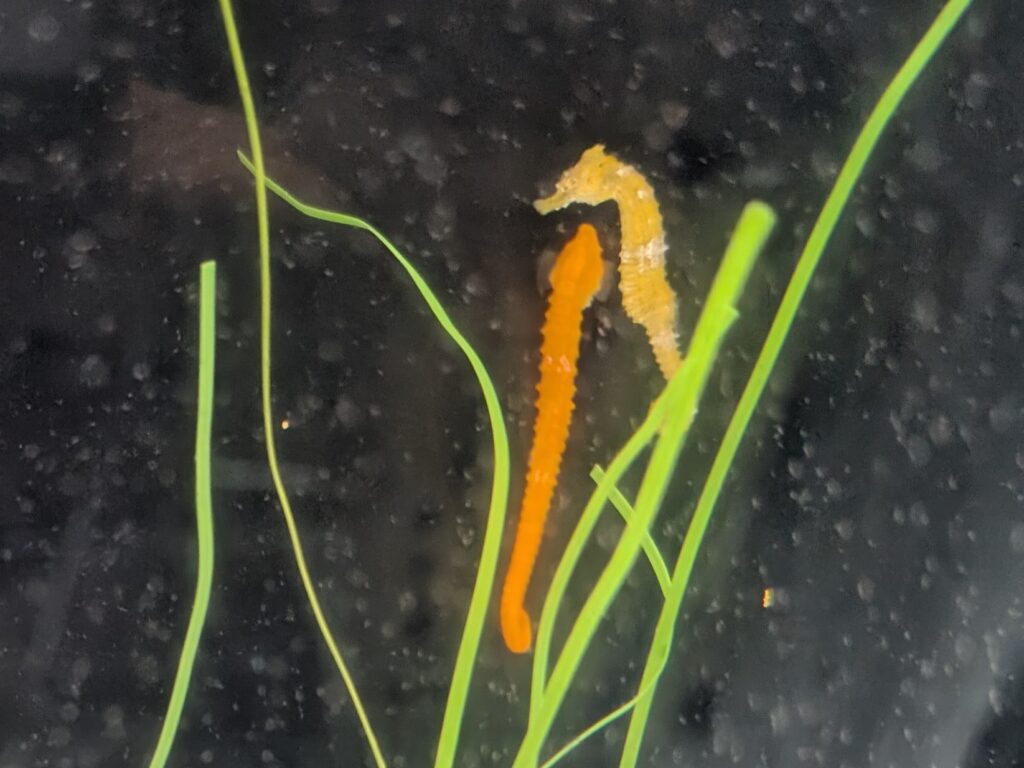
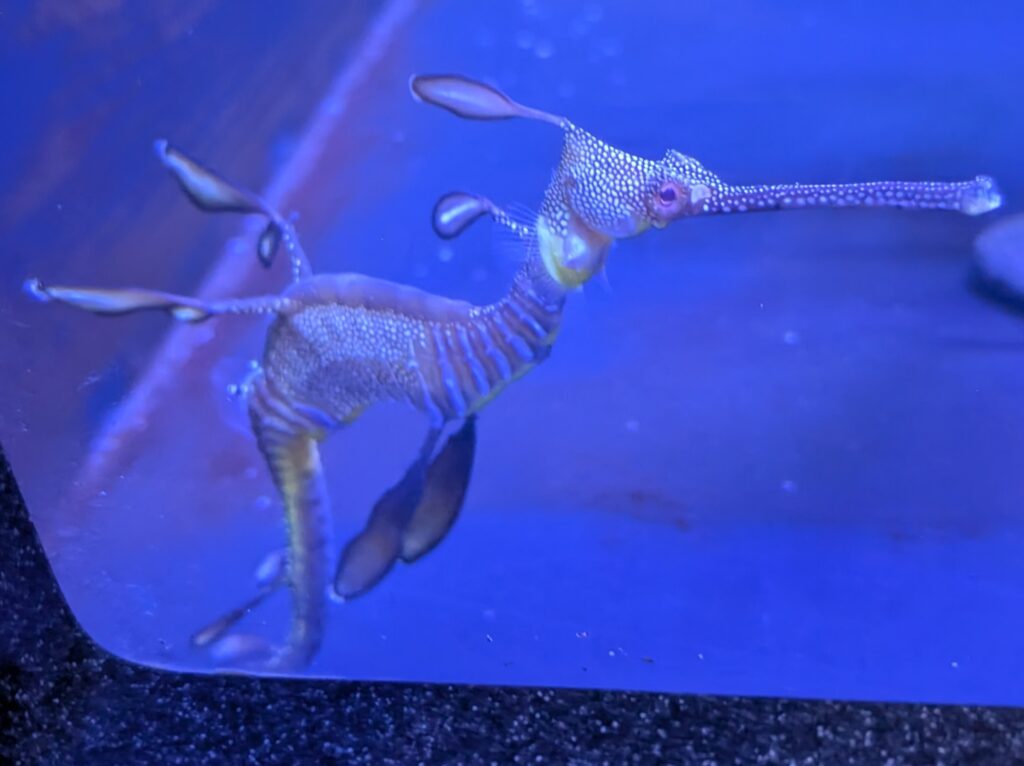
Kimberly felt better by the next morning. I ran both Friday and Saturday. We walked out to the beach again for a bit. We played in the rec room. Due to a late change in our itinerary, we were moving islands a day later than we otherwise would have. As such, we needed to switch motels. We carried our bags from one motel to the other during a break in the rain, but got to our new digs a few hours too early to check in. We stowed our bags and headed down to try the Waikiki Aquarium. It is one of the oldest aquariums in the country. It was nice, and had an interesting audio guide, but the displays were really only adequate to occupy about an hour and a half. After this, we walked the mile and a half back to our motel. Even at check in time, our room wasn’t ready, so we waited for about an hour in the lobby for our new room. We were now at Hotel La Croix. Our first place, the Waikiki Resort hotel was nicer, had more amenities and activities, more helpful staff, and a much bigger common lobby area. Both were dated motels that were now in the economy category, but Waikiki Resort was a couple of steps above in peripherals.

After we got settled in our new room, we walked back down to our old neighborhood to try out Me BBQ, a take-out style Korean restaurant. It was inexpensive, and the food was good. We had plenty of leftovers. Stephanie enjoyed her chicken katsu, and I had fish jun. Fish jun is a slightly sweet, breaded white meat fish plate with dipping sauce. It was tasty and I ate all of it, as well as the generous addition of four sides that came with my meal. The kids brought back some of theirs. We were in early, and once again asleep probably before we should have been.

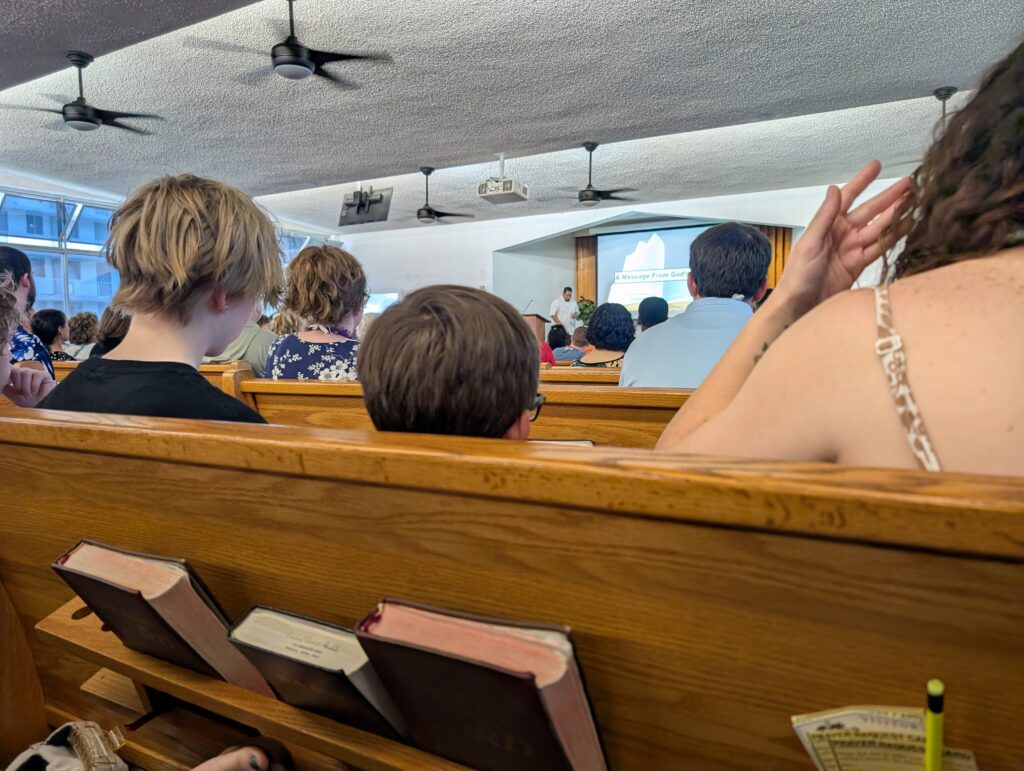
I ran again on Sunday, before eating my oatmeal and hopping on the bus to head for church. We made it to the Honolulu Church of Christ in time for Bible Class. In lieu of Bible Class, the congregation had invited a guest speaker to teach a leadership seminar. We all stayed in the auditorium for this. The same guest speaker preached a sermon on a similar talk about eldership. There were quite a few visitors, but it seemed they were guests traveling like us, rather than folks who had joined just for the seminar. The Honolulu Church of Christ already had two elders, so I am not sure why they invited a guest speaker. Our speaker had been a business professional, rather than having a career in ministry. He was a bit dry, and had a very rigid, traditional, legalistic view of the Bible’s list of “qualifications” of an elder (though the term qualification never occurs in the Biblical text). He talked of a crisis of leadership in the church today, but oddly claimed it was from too many bad or unqualified elders having been installed in churches around the country. It is far more common in Churches of Christ for all of the potential elders to demur from serving because they don’t believe they are qualified, or think someone may question their qualifications, than for a church to have problems because someone somehow violated the so-called qualifications list. His goal was to grow churches through better leadership, but to be honest, his approach seemed more likely to create friction and leaderless churches when what is needed is that we encourage members who best fit the bill to serve.

All of that being said, we met some very nice people at the church. Most of those who spent significant time visiting with us were fellow visitors – older folks traveling and trying to support churches as the went. We got contact info for a house church on Maui we could visit the following week, and reminisced about church at home, and other churches we had been able to visit while on the road. We enjoyed a very nice potluck meal as we visited with the other guests. We headed back up to the auditorium for a 30 minute song period. We in the crowd were encouraged to lead a song if we liked. Seeing that there was a bit of a break between volunteers, I rose and lead “There Is a Habitation.” The participation was great, and we really enjoyed the singing. In order to be sure we caught our plane to Molokai on time that afternoon, we stepped out between the song service, and the final lesson of the afternoon. We traipsed back down to the bus stop, made one switch, then had to walk about three quarters of a mile. Stephanie was not especially comfortable walking this distance, but didn’t make that known. We could have taken an Uber or something. We ended up having plenty of time to recuperate as we waited for our Mokulele flight to Molokai, as you’ll see when you read the next article.

A Blustery Day on Waikiki
Images From the Aquarium
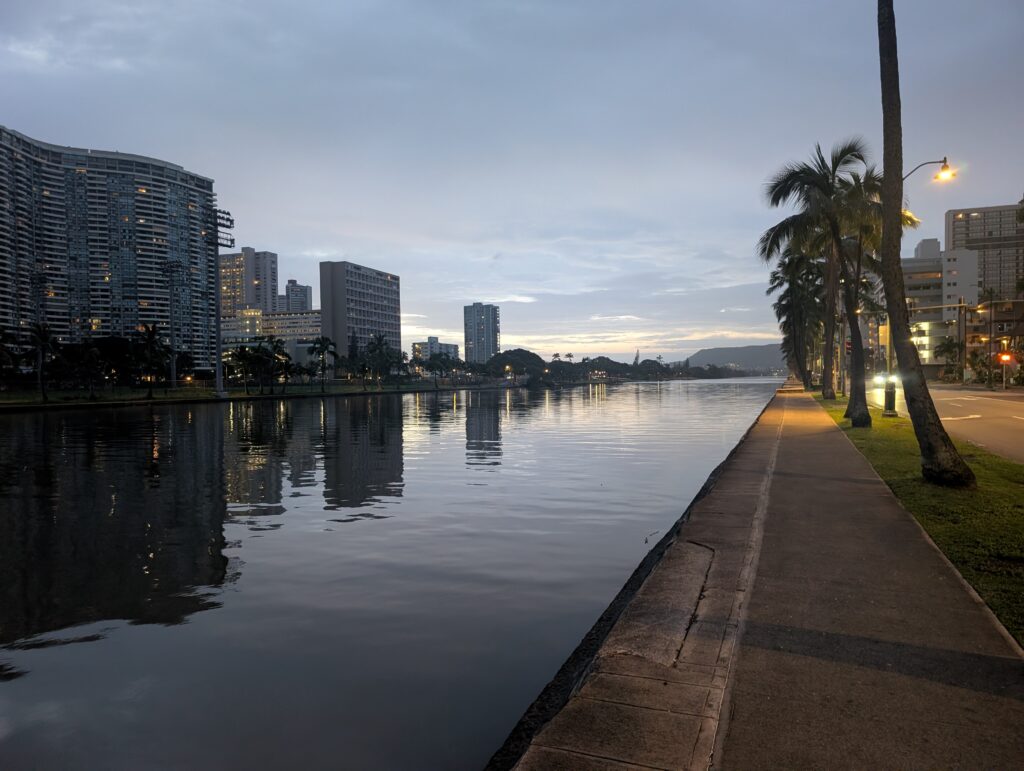
Early Morning Run in Waikiki
Church in Honolulu
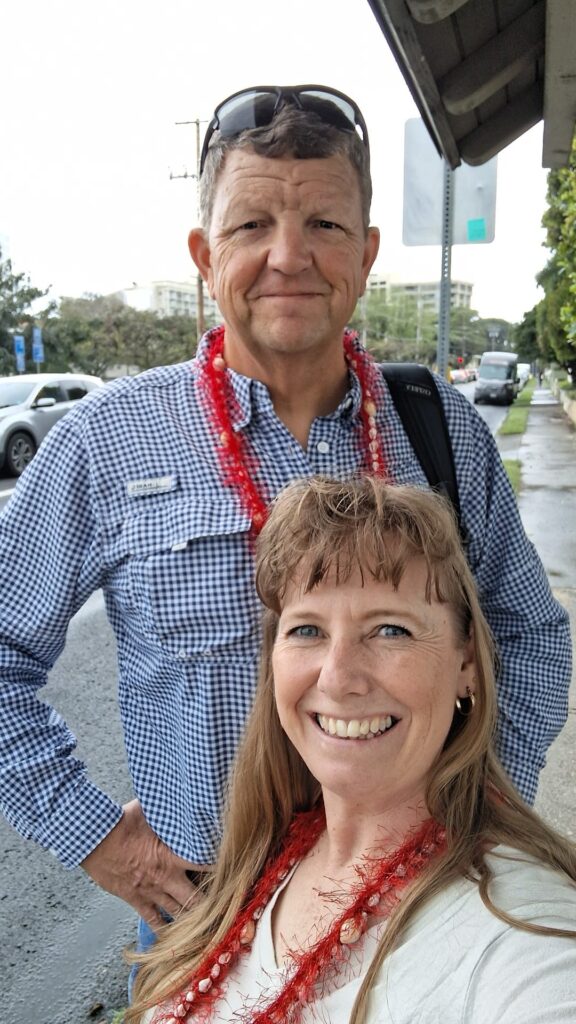
The Church Presented us With Leis
Hawaii '26 Overview
Molokai
Maui