Molokai
Redneck Hawaii
On the Mokulele website, it says that once you’ve purchased a ticket for one of their inter-island flights, you can then check in and hop in a seat in any other earlier flight that day. Based on that information, I reserved seats on one of their later flights Sunday evening, flying from Honolulu to Molokai at 5:55 p.m. I figured that would give us plenty of time if we visited with people at church to get over to the Mokulele terminal. If we were done early, we could just fly standby on an earlier flight. Once we got to Mokulele’s terminal, it became apparent there would be no hopping an earlier flight. The storms had created quite a backup of passengers trying to get to the smaller islands. Mokulele just flies nine passenger Cessna Caravans from one place to the next, so there isn’t a way for them to make up scheduling ground in a hurry. The attendant tried to convince us to cancel our flight and rebook for another day. We had no motel on Oahu, and had already paid for an AirBnB on Molokai, so we were willing to wait out a later flight as long as we needed to.
It turned out we needed to wait for quite a while. We checked in at about 2:45, and were able to squeeze onto the last flight in a pretty heavy rain a bit after 7:00 that night. By 8:00 we were on the ground on Molokai. While we waited, though, we met several interesting people. One construction company owner from Michigan who owned property and a boat on Molokai gave us several leads for water taxis, car rentals, and even sea fishing. For the bulk of our wait, we were joined by the last group of sixth grade boys awaiting their return from a field trip to Pearl Harbor. They and their poor teacher and aide were representing the elementary school in Kaunakakai, the primary city on Molokai.
Molokai is known as the “friendly island,” or the “most Hawaiian island.” It has a reputation for being more laid back with less resorts and a more rural atmosphere. Molokai seemed like it would be right up our alley, and a nice break between busy stops on Oahu and Maui. The storms impacted our itinerary on every island. Our Oahu stay had not been as busy as we thought it would. Many activities like snorkeling and visiting beaches were negatively impacted as well. On the whole, we found Molokai to be a beautiful place. There were some frustrating aspects of its more remote nature, but it was more our speed than Oahu or Maui. We found things to do when it wasn’t raining, and just relaxed in our condo or swam in the pool when it was too wet to do anything else.
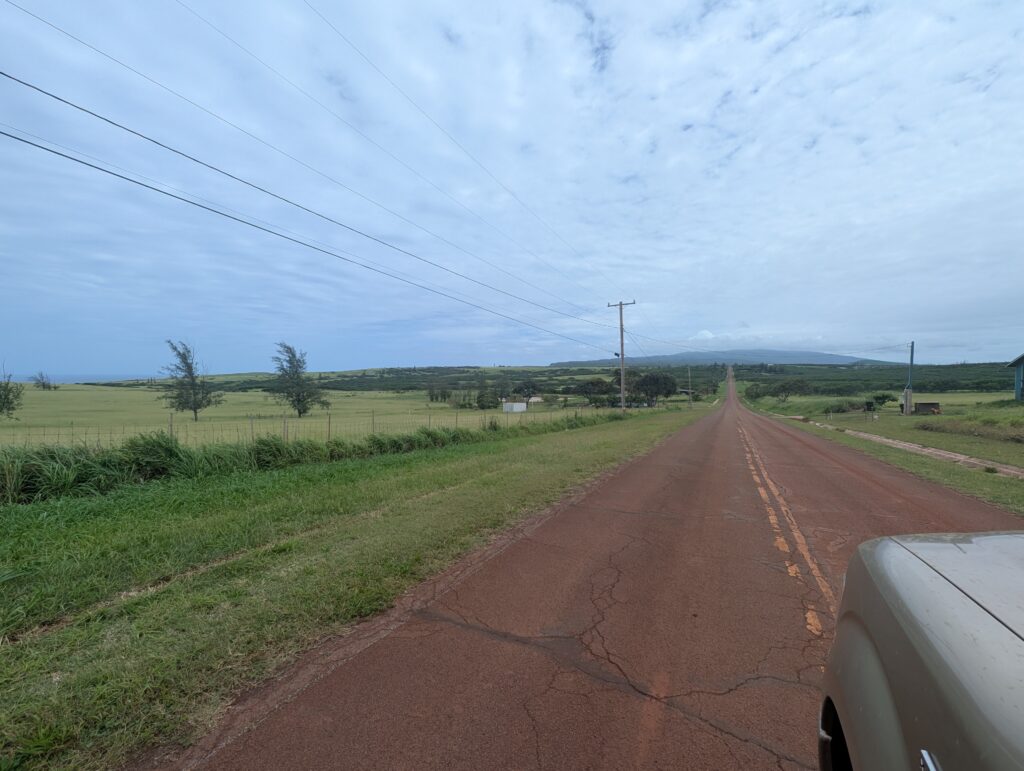
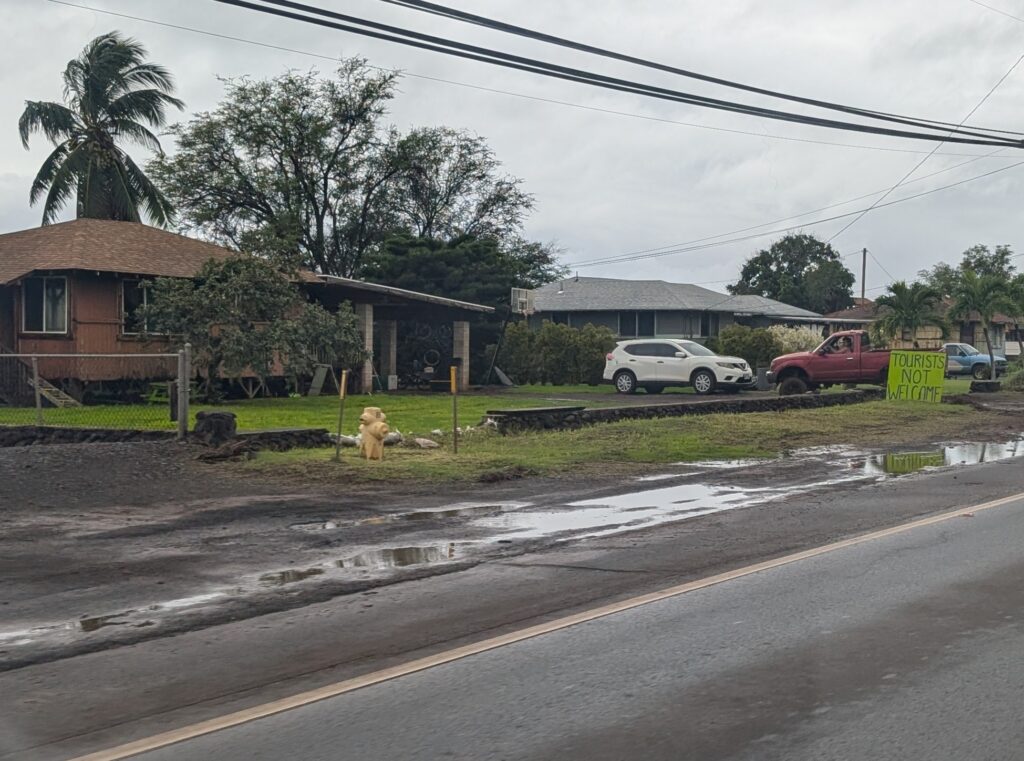
A lot of the commerce on Molokai seems to happen ad hoc, through word of mouth, cash deals or at most Venmo. There are no major resorts, and only a small handful of restaurants or markets. The population of the entire island was less than 7,000 when we visited. Like all the other Hawaiian islands, Molokai is volcanic. There is one volcano at each end. The volcano on the east end is much higher than the western one. Also like the other islands, the north and east sides are windward, and the south and west sides are leeward, with corresponding differences in foliage. Molokai has a lot of mesquite trees, surprisingly, especially on the dryer western side. Some of them are quite a bit larger than the ones we see in Texas. They have the same irritating spines.
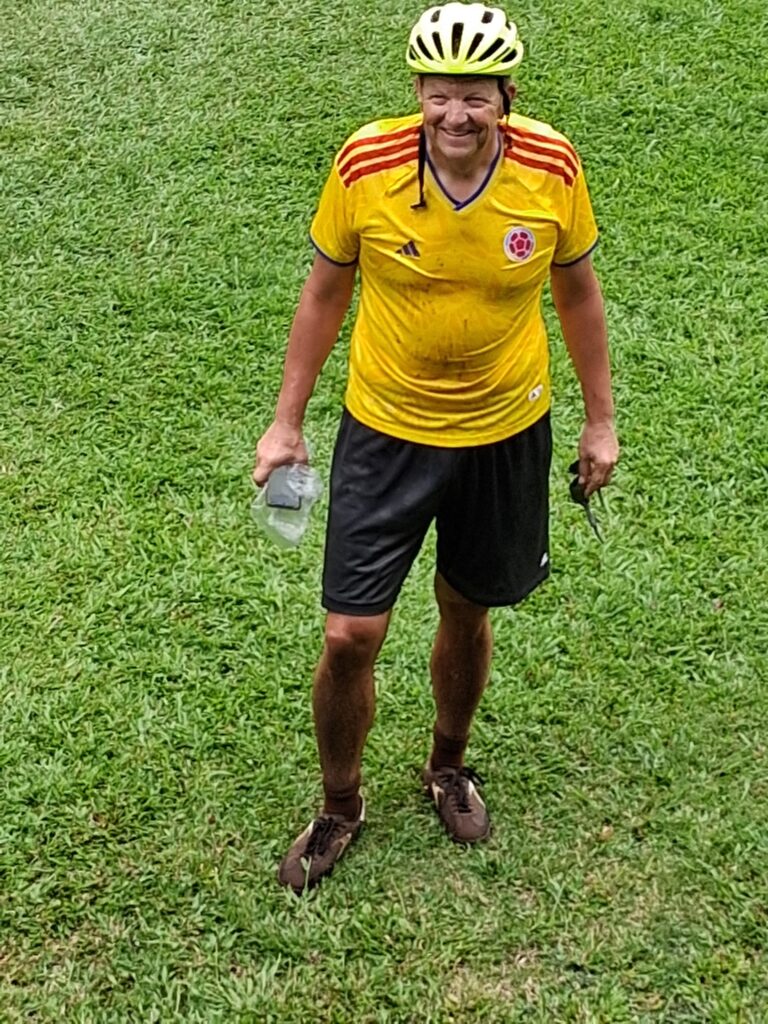
Our arrival was late enough on Sunday that we simply grabbed a couple of snacks from a mini-mart, and headed to our AirBnB condo in Molokai shores, about a mile and a half east of the main town of Kaunakakai. Phillip, the man who rented us a pickup, just had us pick up an older F-150 from the airport. It was a 2012 model, with some rust in the fender wells. It served us well, and was less expensive than the car rental company in the airport, which had closed well before we arrived anyhow. Phillip also rented me an older road bike, which I used for exercise each morning.
We met Phillip Monday morning after we went to the grocery store. We filled out the paperwork for renting the pickup, and he dropped me off a Seven Ilium road bike that I used throughout our stay on the island. For our main activity the first day, we drove to the west end of the island. There was a mostly abandoned Sheraton out there, where someone with big dreams had built a big resort, with a golf course and a pretty big airstrip. This is mostly a place now where people go to take pictures of what went wrong, as perhaps three quarters of the units on the property are decrepit and crumbling. Some of the units have been sold and are being occupied and maintained. I never learned exactly what went wrong, but I didn’t look all that hard, either.
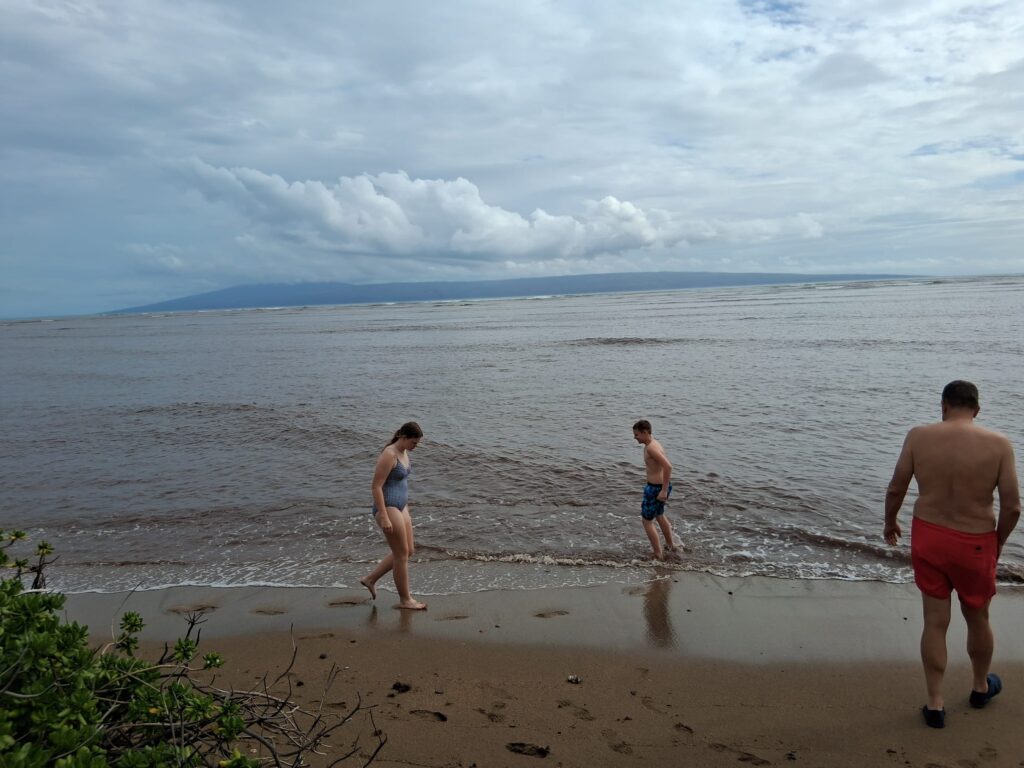
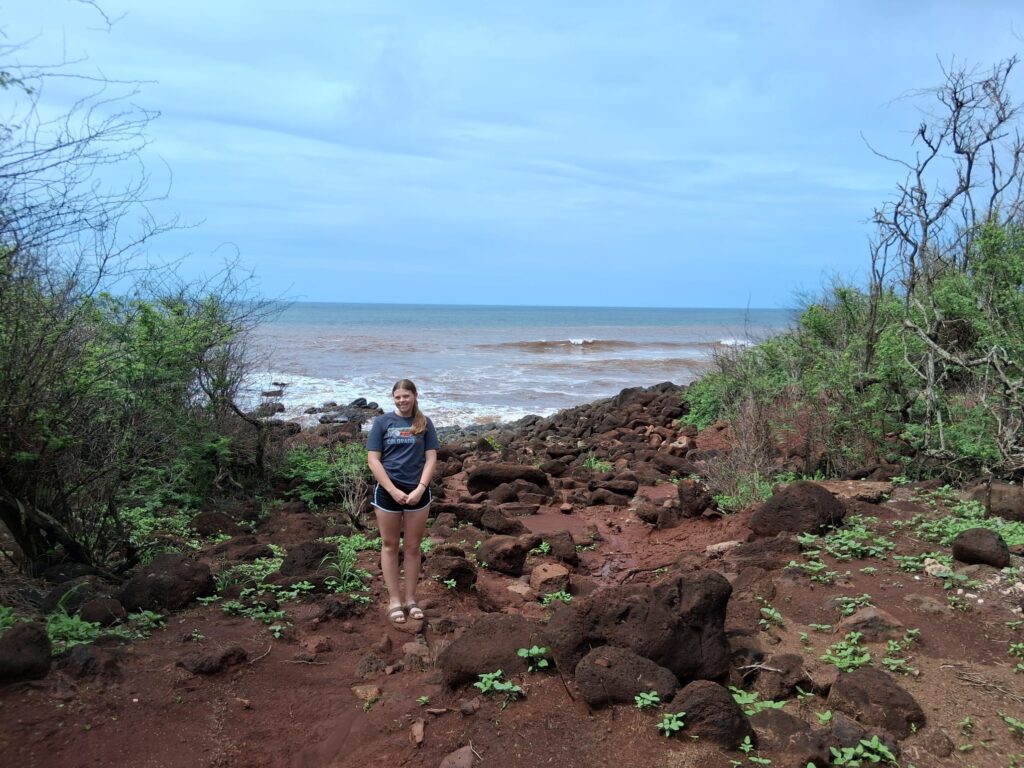
We dropped by Papohaku State Park, home to a three mile white sand beach. Unfortunately, the park was closed, and access to the beach blocked off. The water was brown anyway, and it wouldn’t have been a pleasant time or place to swim. Although pretty isolated, this is supposed to be one of the best beaches in Hawaii. Beaches in Hawaii are mostly very small and narrow. This one is three miles long and 100 yards wide. In this case, a gully washer had carved a muddy channel between the parking lot and the beach itself, which is likely why the state park was closed. We walked out to the edge of the mess, but thought better of trying to make our way through it.
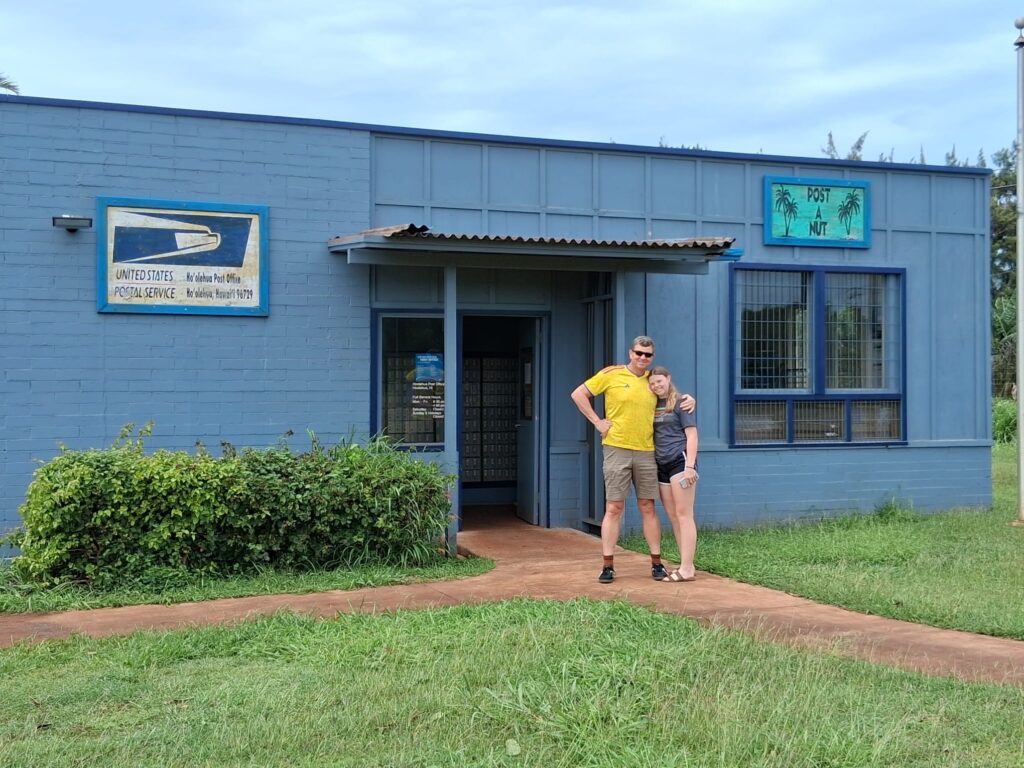
On the way back to Kaunakakai, we stopped off at a post office which advertised that you could, “post a nut.” Volunteers donated coconuts that met certain criteria so that they could be mailed back to the states without any other packaging. There was equipment there for you to decorate your coconut. The post office then was closed for lunch, and we didn’t hang around for them to return. I think it was going to cost about $20 to mail the coconut anyway, which I’m not sure was all that great an idea. It would have been fun, though, and it was an activity that was open and available. It was clear that many activities on this island, too, would be limited.
(Continued)
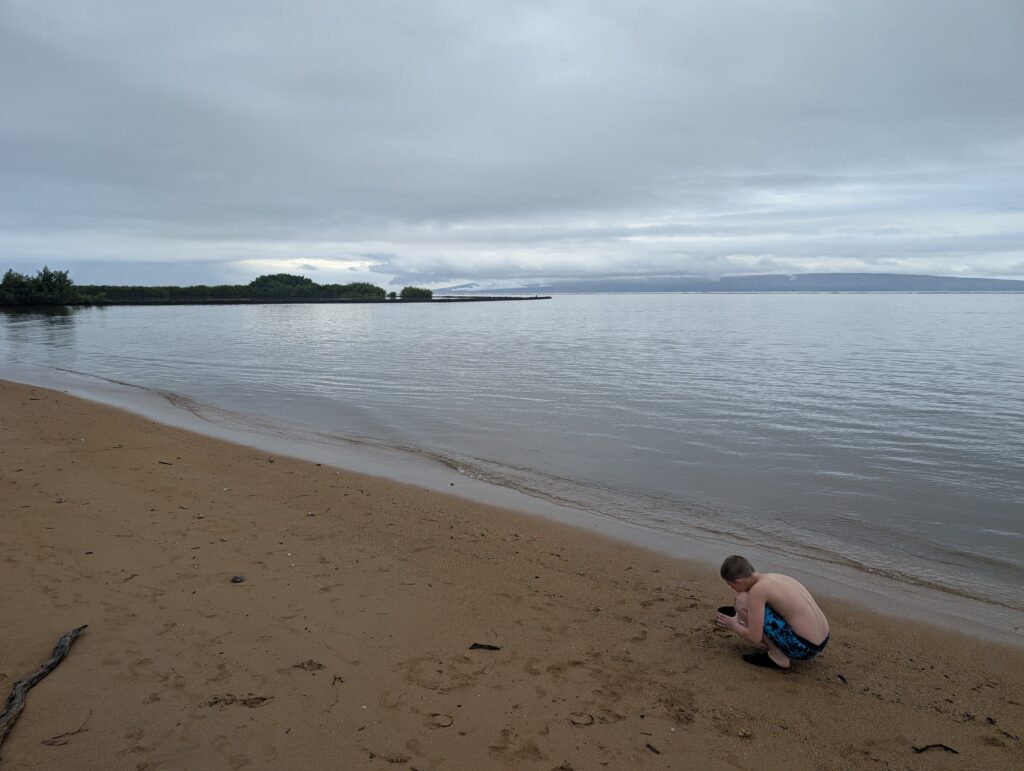
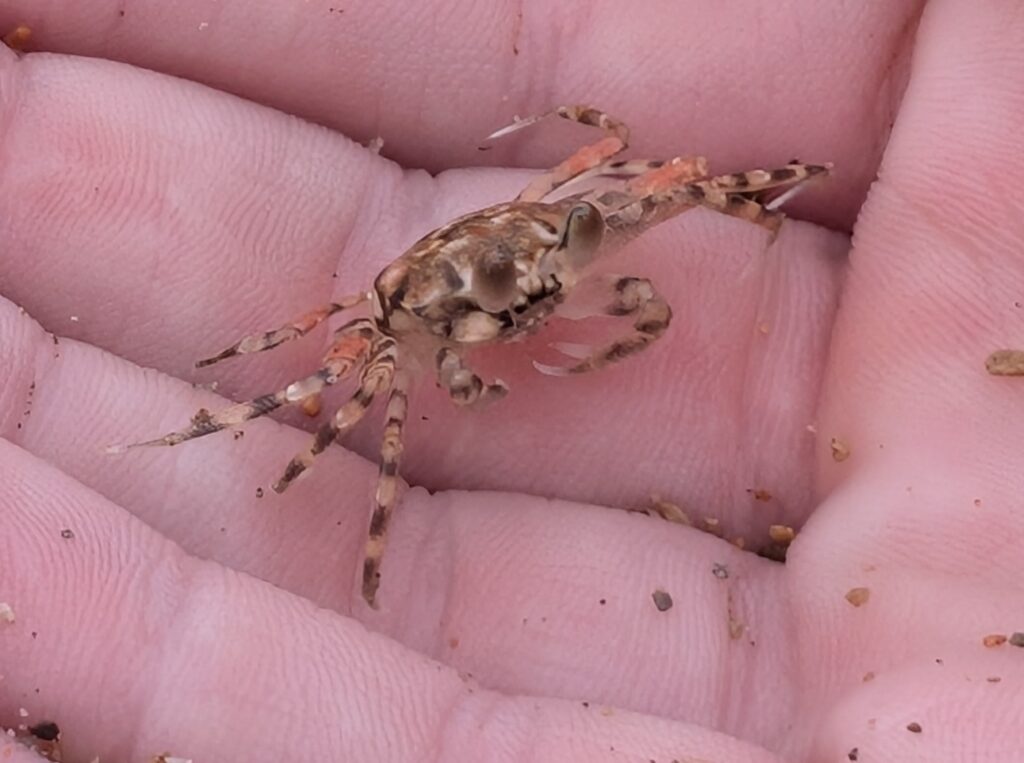
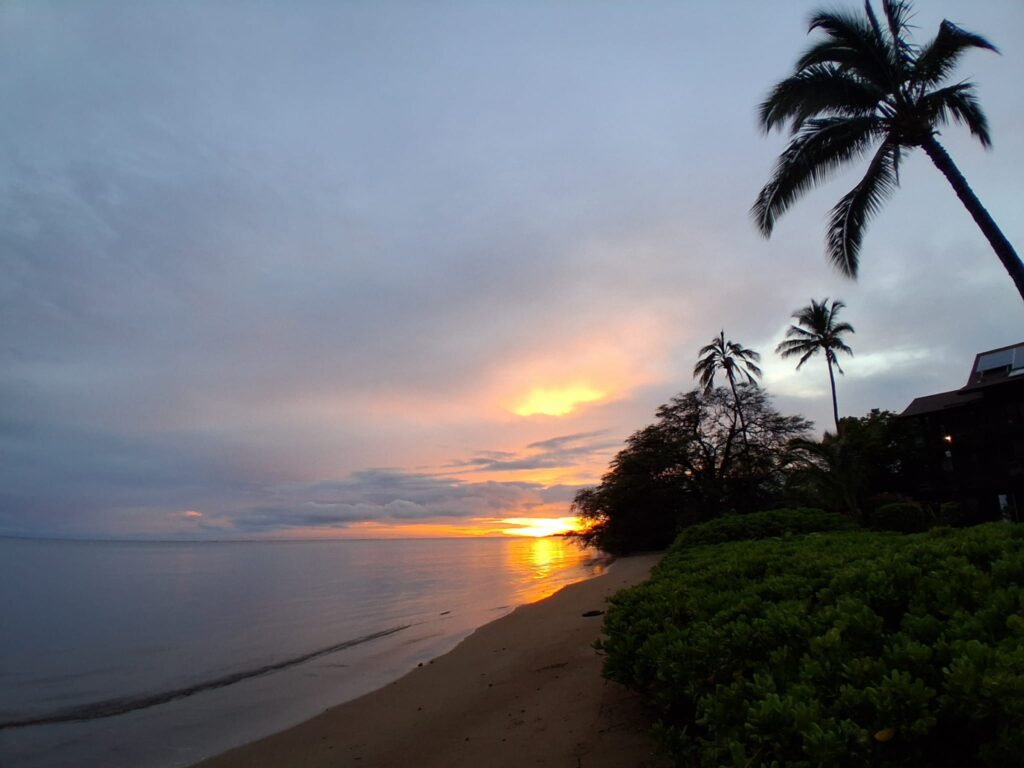
We headed back to our room Monday afternoon and spent some time enjoying the swimming pool. Caleb and I found some large sand crabs and some coral remnants on the small beach area that was part of Molokai Shores. That evening, Stephanie made taco salad to save some money, and had an early night in. Early nights in are pretty common on Molokai. There are not many restaurants in Kaunakakai to begin with, and most of those are not even open for supper. Paddlers is a restaurant and bar, with a pretty noisy atmosphere and a mediocre live band, but they aren’t open every day. We would try them on a subsequent evening.
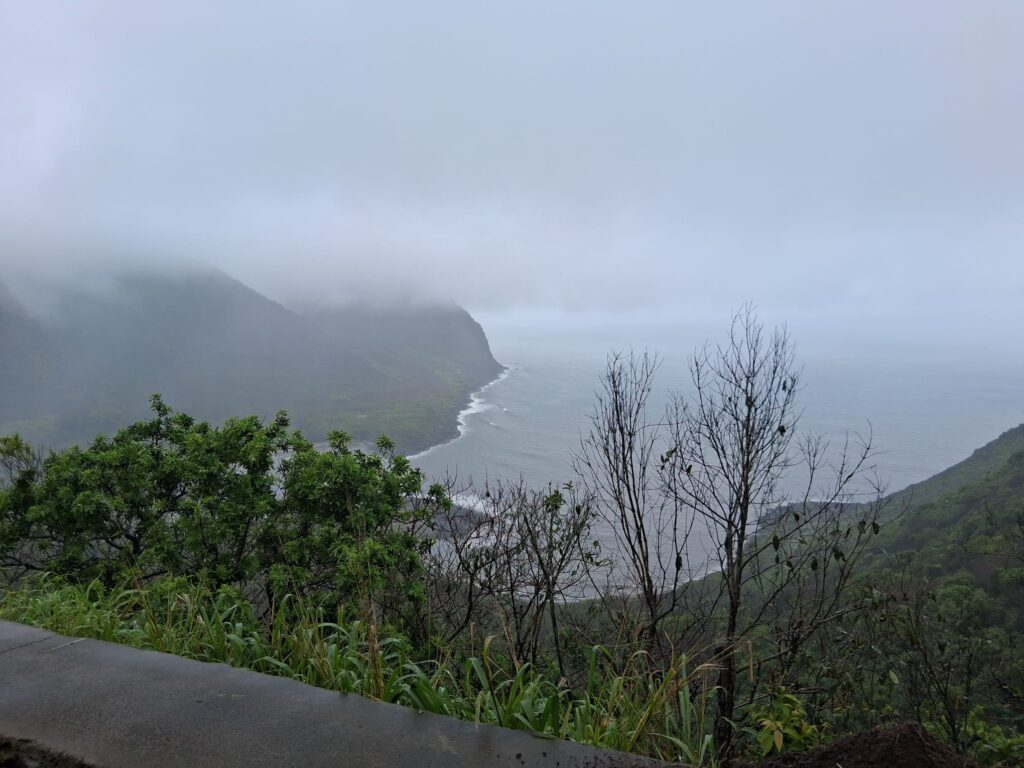
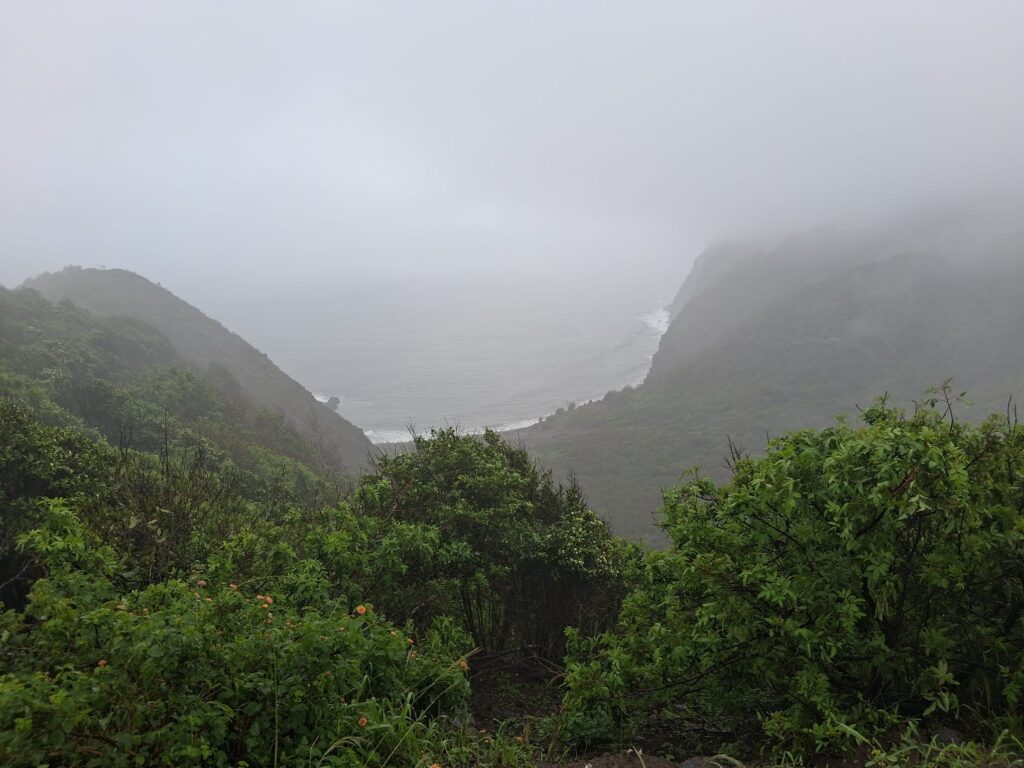
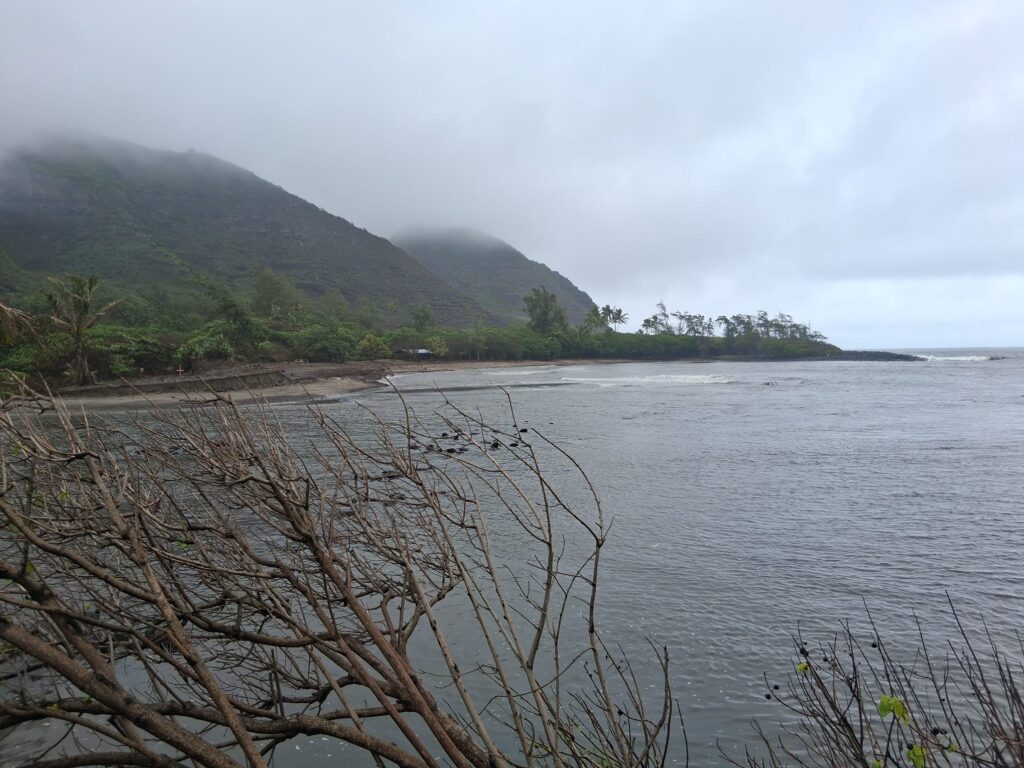
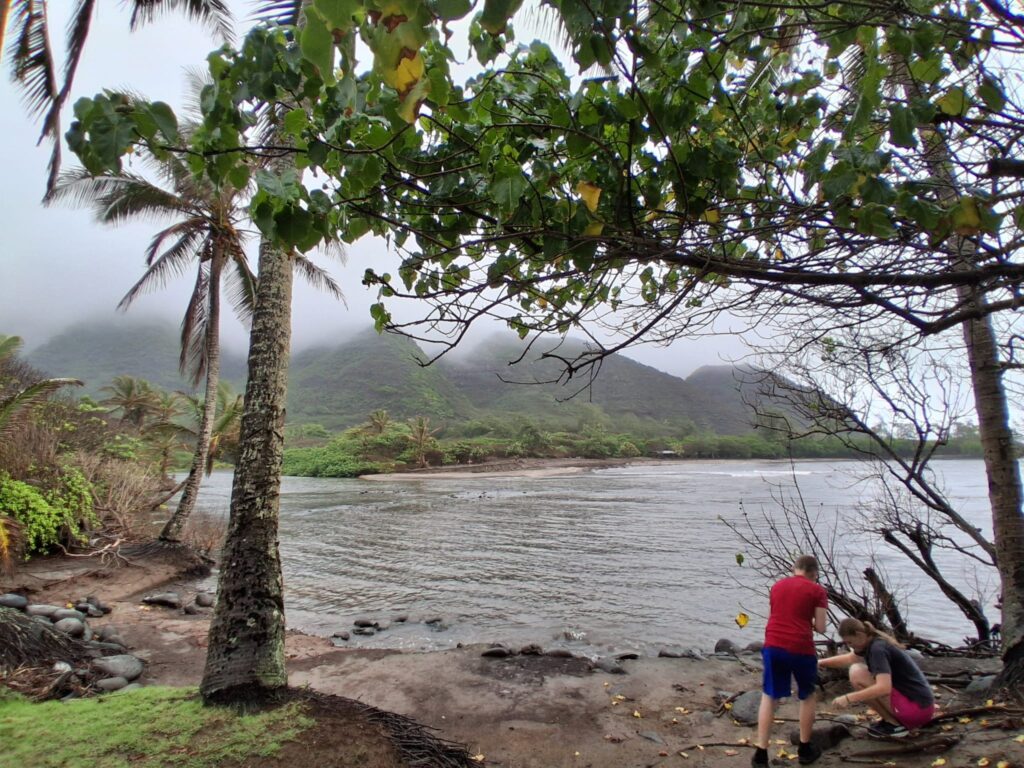
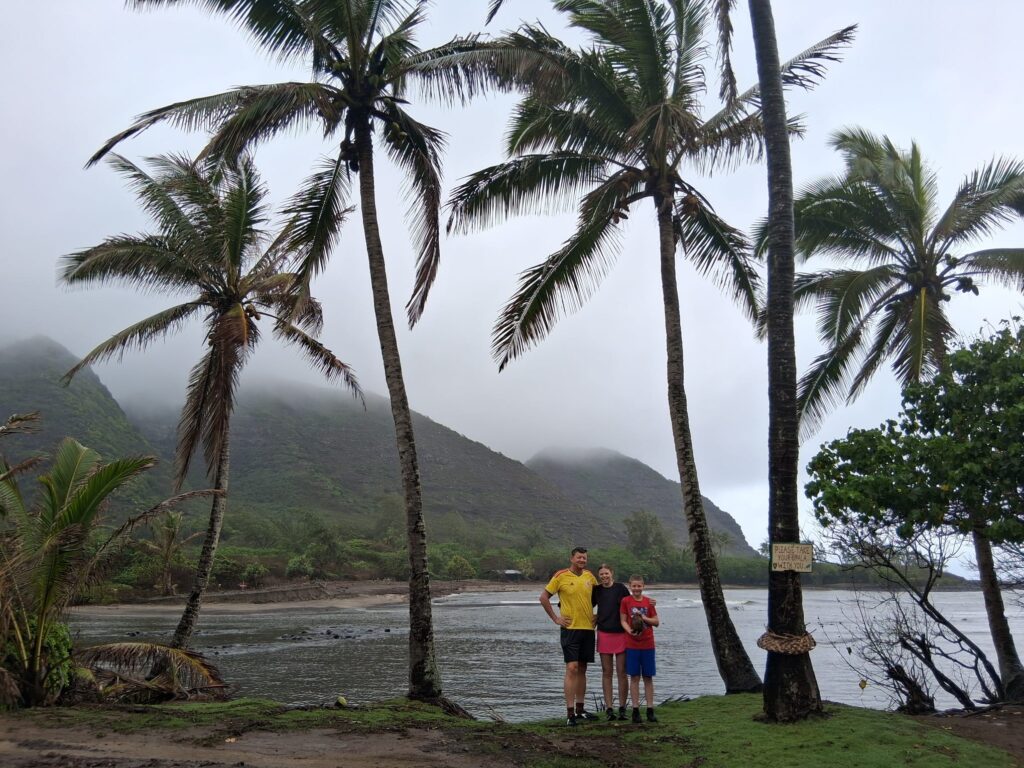
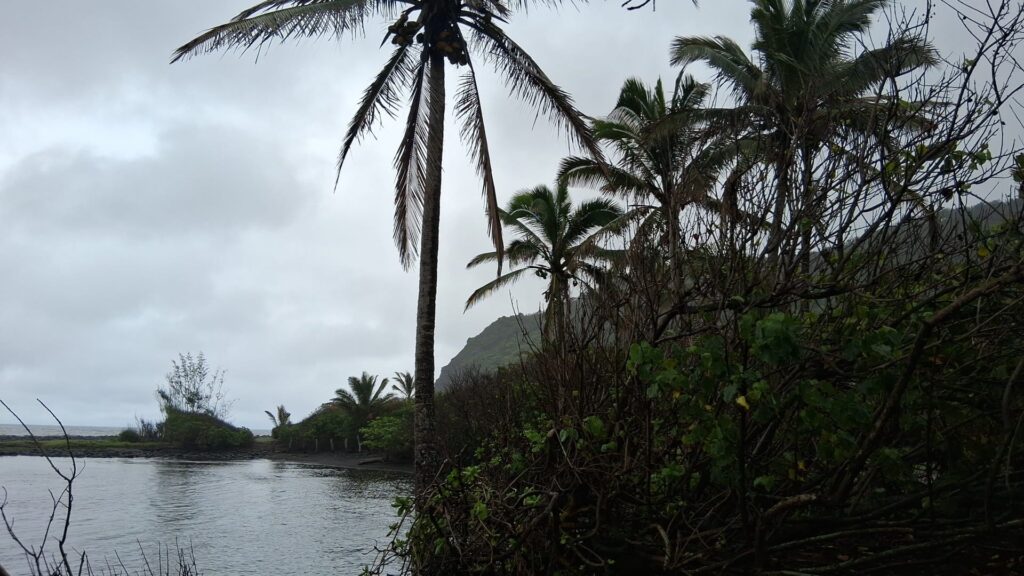
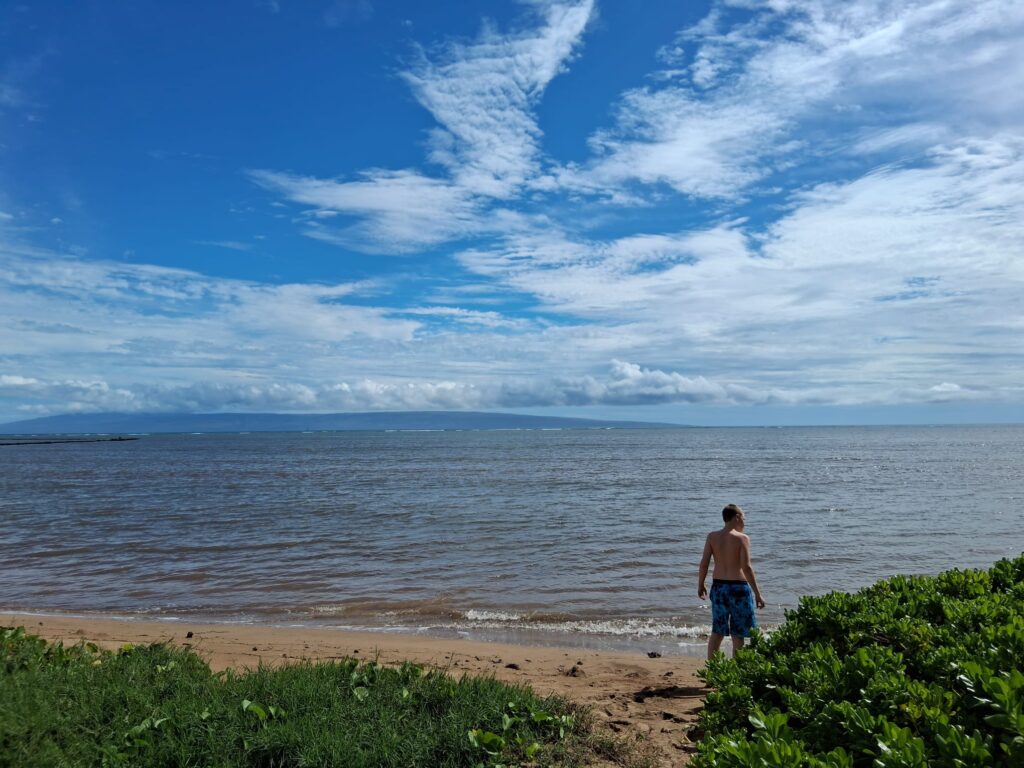
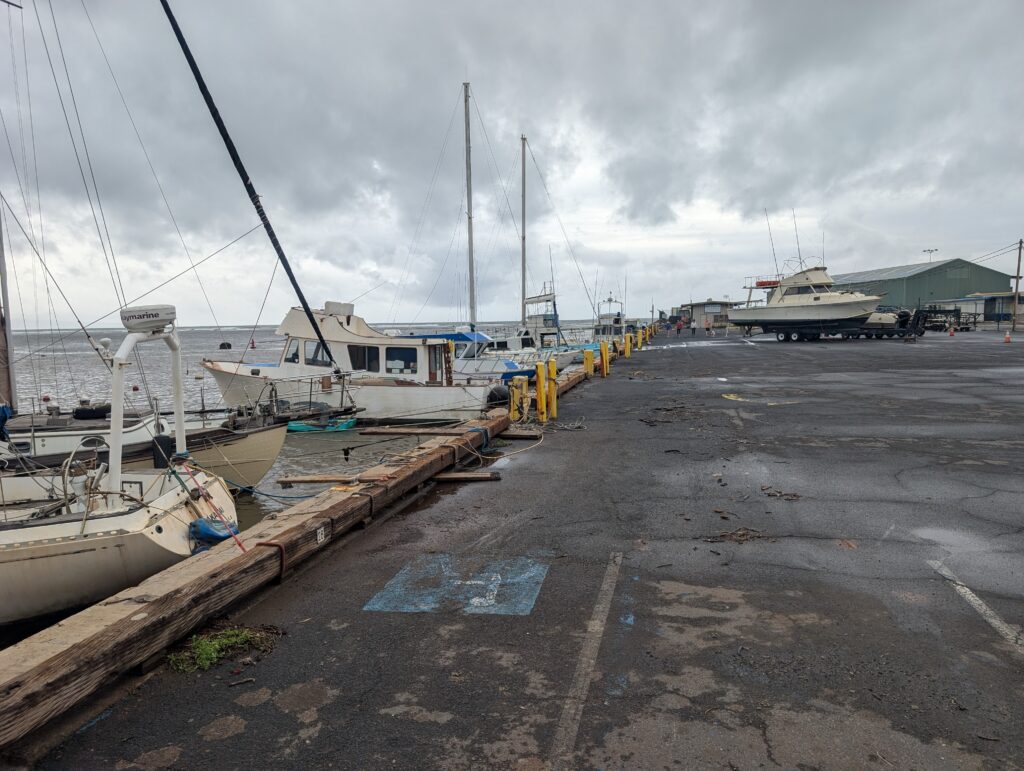
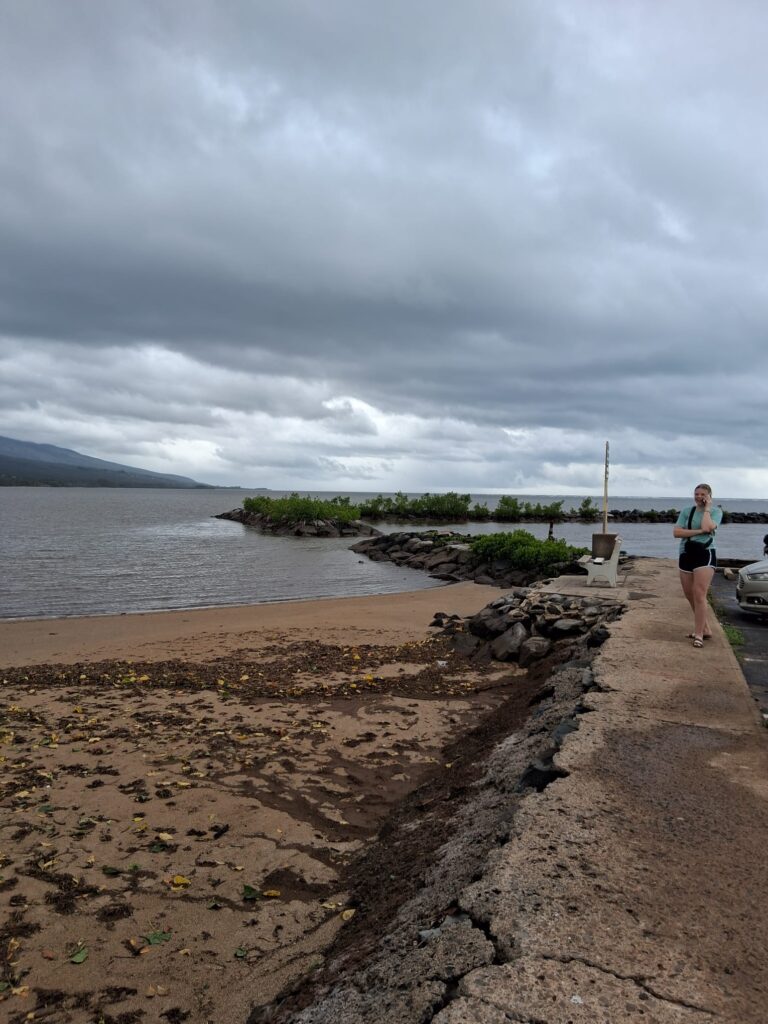
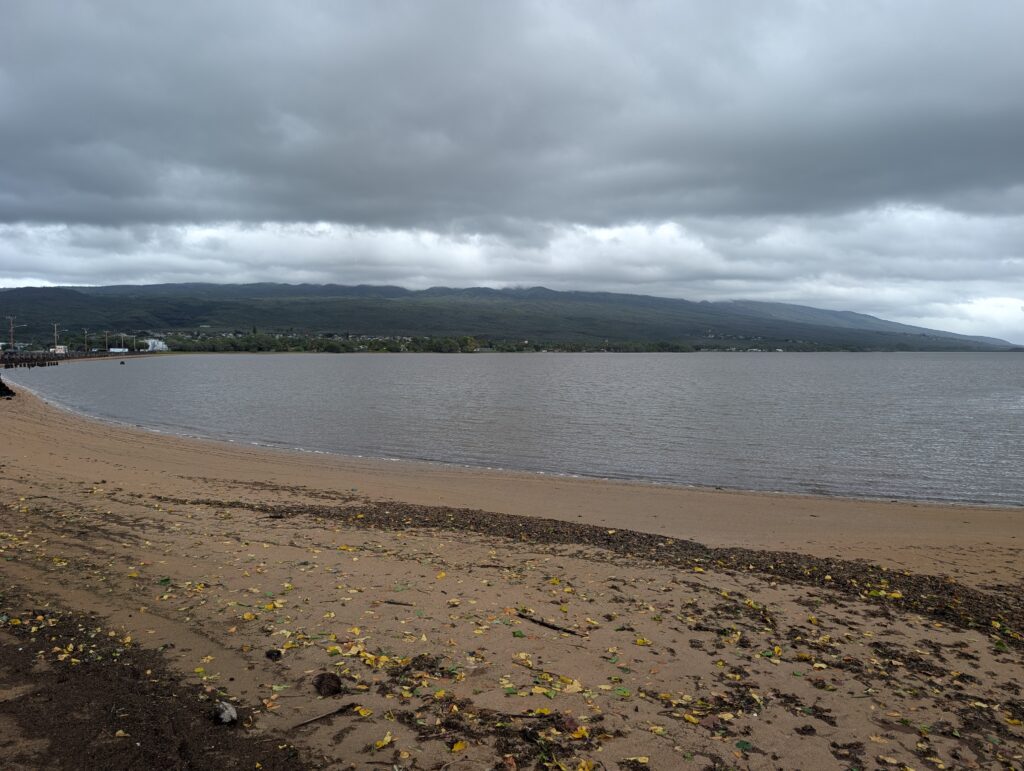
I got a thirty mile bike ride in on Tuesday morning before we set out toward Halawa State Park on the east end of the island. King Kamehameha V Highway runs eastward along the south edge of the island until you get near the end. There are accessible beaches at mile markers 16 and 20. There’s also a small park with beach access just a couple of miles east of our condo complex, but it was coned off and the water was brown. We drove through a small community and then a pretty swanky stay-in ranch location near the east end, with a small expensive store. There was a very nice viewpoint overlooking the Halawa Valley a couple of miles before the state park at the end of the road. From what we could see of it, there were spectacularly steep mountains plunging down to the sea, covered in the green coat of windward side foliage. We walked the coast for a bit at the pretty little state park, while Caleb struggled to crack open a coconut he had found. In better weather, it would have been a great spot to spend a day.
On the drive back toward Molokai Shores, we stopped for lunch in a small community called Ualapue and tried Mana’e Goods and Grindz. We each got a lunch plate that we ate at an outdoor table. There was no indoor seating. I got spicy ahi, which was tasty but not that large. Stephanie and the kids just got burgers, but my food tasted the best. For some reason, the staff would not let us use the restroom even to wash our hands, but they did kindly offer to let us wash off with the garden hose. We spent the rest of the afternoon lounging around Molokai Shores, visiting with other tenants, enjoying the pool, and just relaxing. We ate dinner from foods we had gathered at the two local grocery stores in Kaunakakai.
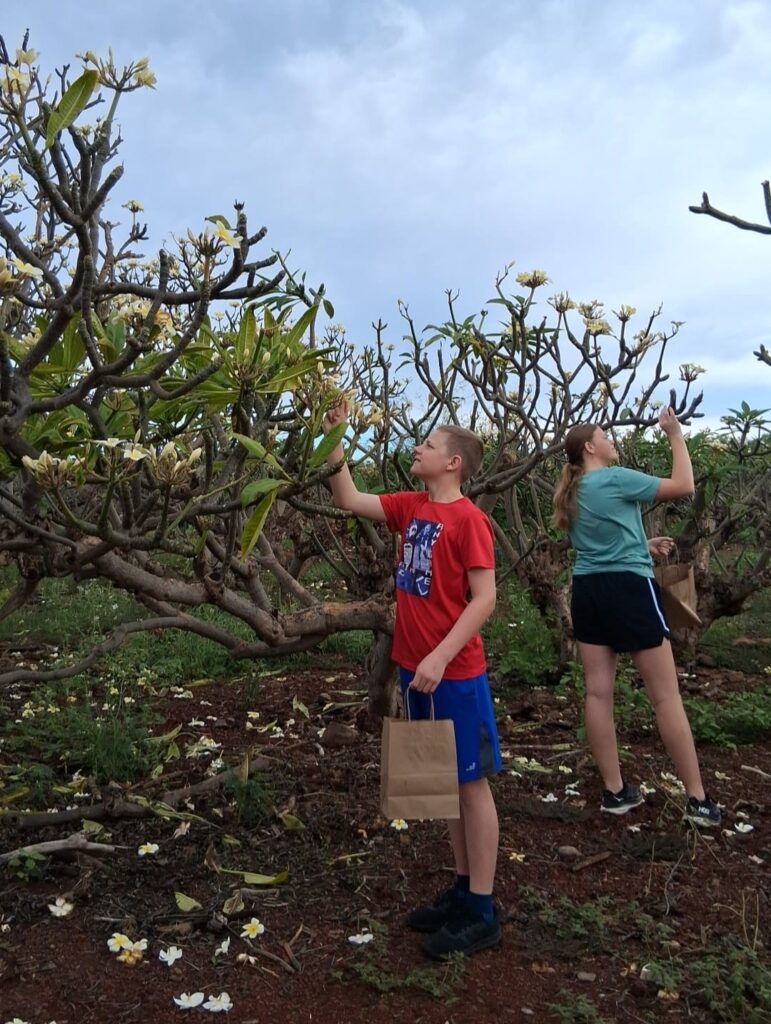
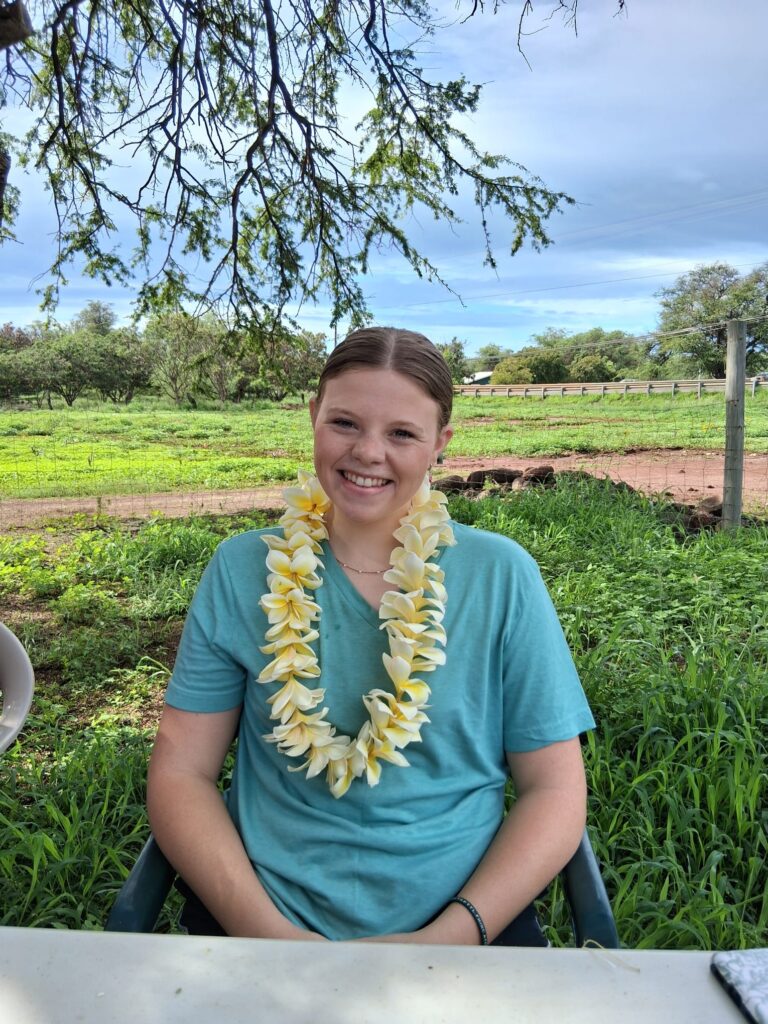
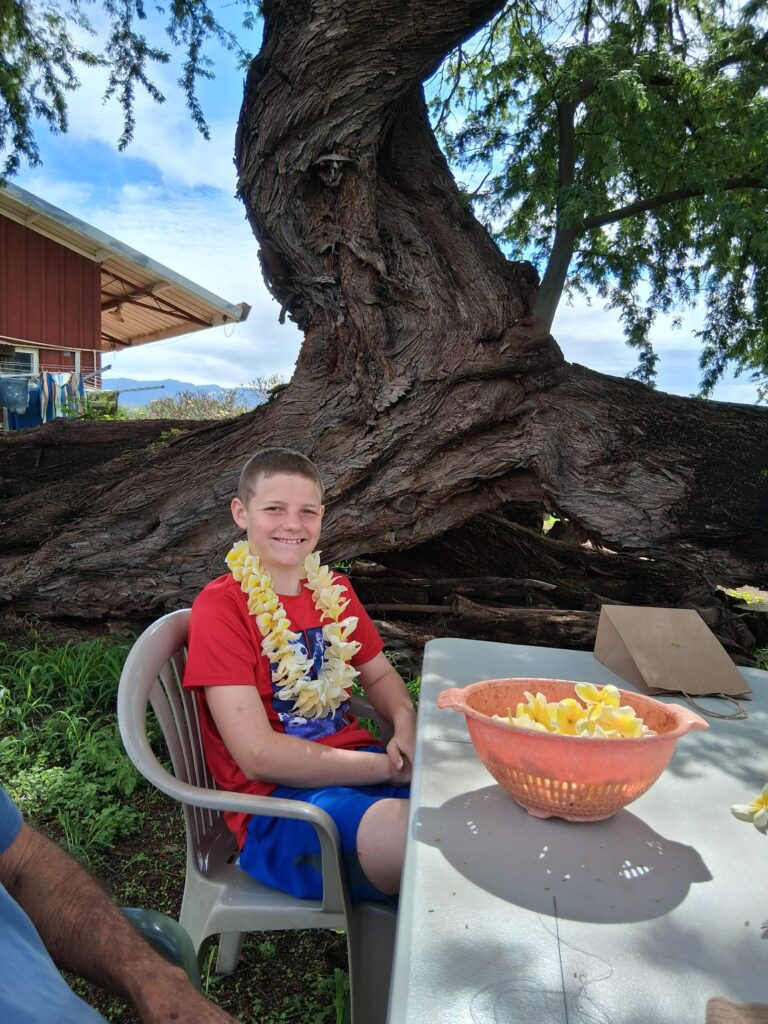
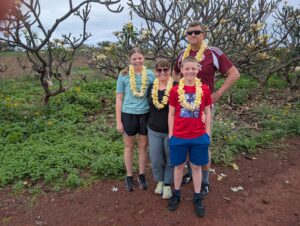
I made another bike ride on Wednesday morning before a scheduled activity. Stephanie had booked us a tour of a plumeria farm that included a lei making class. This took about an hour and a half. It was entertaining, though the plumeria farm did not look like a successful economic enterprise. They had figured out how to ship some flowers back to the mainland using refrigeration, but some sort of inset pest had destroyed the vast majority of their trees. The farmer there was limping along with part time help from a grandson and a couple of Filipinas who did not speak any English. He was kind and we had a pleasant chat. They must have been still selling some flowers, because a Federal Express truck arrived for a pick-up while we were making our leis. The interaction was pleasant and interesting, and we shared information on farming, pollination, and some other related topics as we wove our leis, which consists of using a very long needle to puncture and string the flowers.
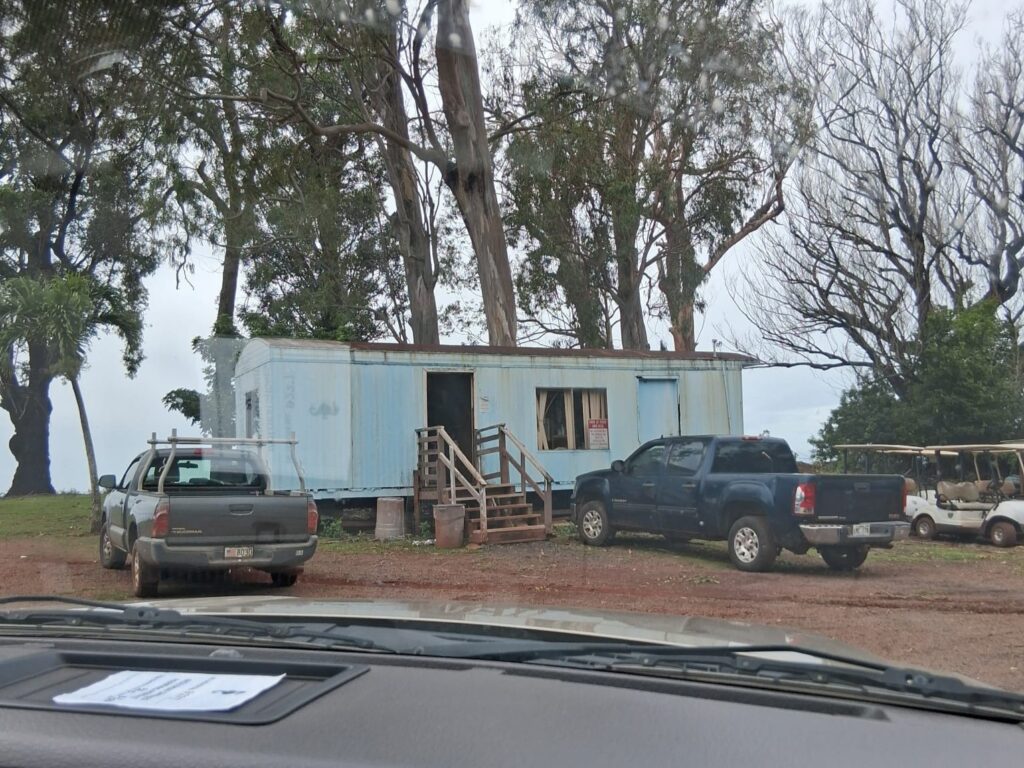
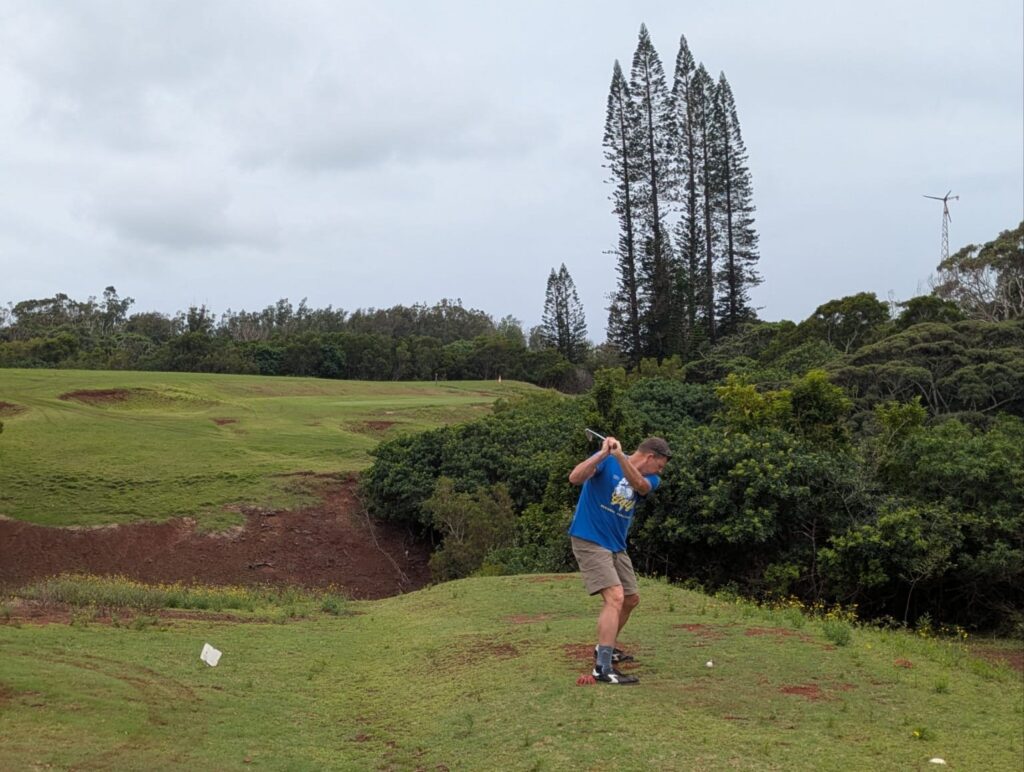
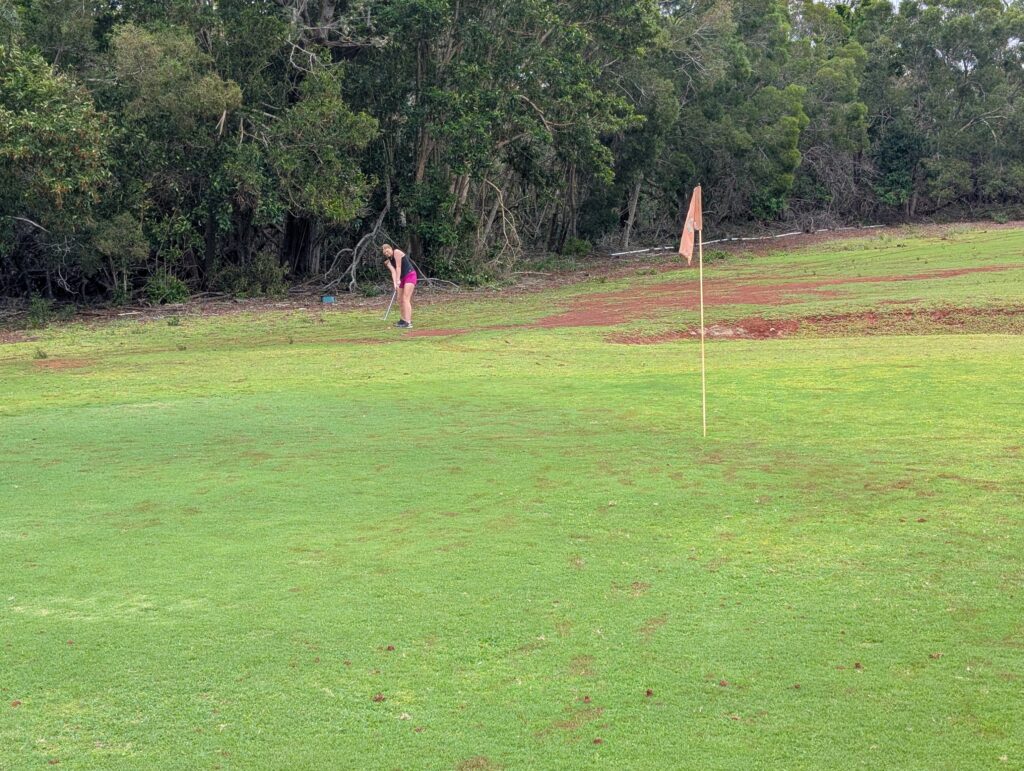
Once done with the plumeria tour, we drove out past the golf course to see if it was open. Kimberly is on the Spur High School golf team, and needed to try to squeeze in a bit of practice while we were traveling. Molokai has just one remaining golf course, and it resembles the one in Spur, in that it is about equivalent to golfing in your granddad’s cow pasture. The green fees are accordingly low, though, and they’ll even let you share a set of rented clubs. The flip side is that it isn’t really professionally maintained, in terms of service, or course care. We were told that you couldn’t start a new round after 4:00, so we told the attendant (once we found him) that we would come back around three, figuring as long as we started before 4:00 we would have plenty of time to finish nine before dark. When we returned at quarter to three, we were told that we had to be off the course by 4:00 or we would be locked in. This would have of course been good to know before we returned this late. We decided we would play what we could, and set out to pay, but were then notified that the course was cash only. That did us in for the day – I didn’t have enough cash on me to pay both green fees, a cart, and even just the one rental set. We eventually tried to play, but it would be Thursday.
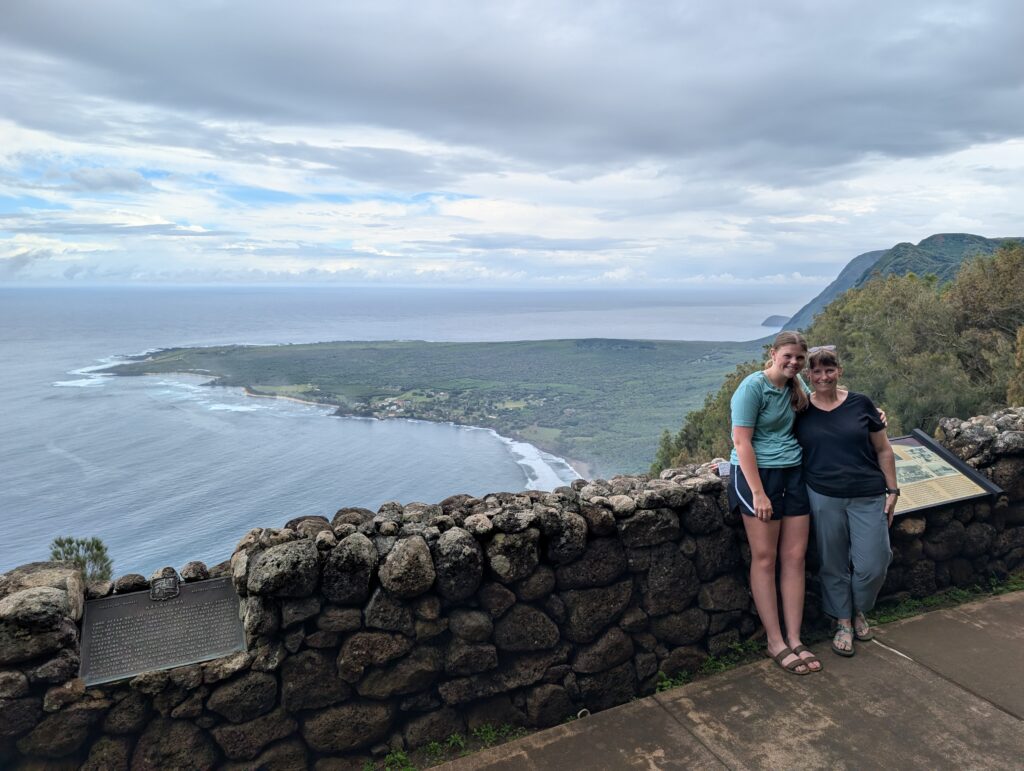
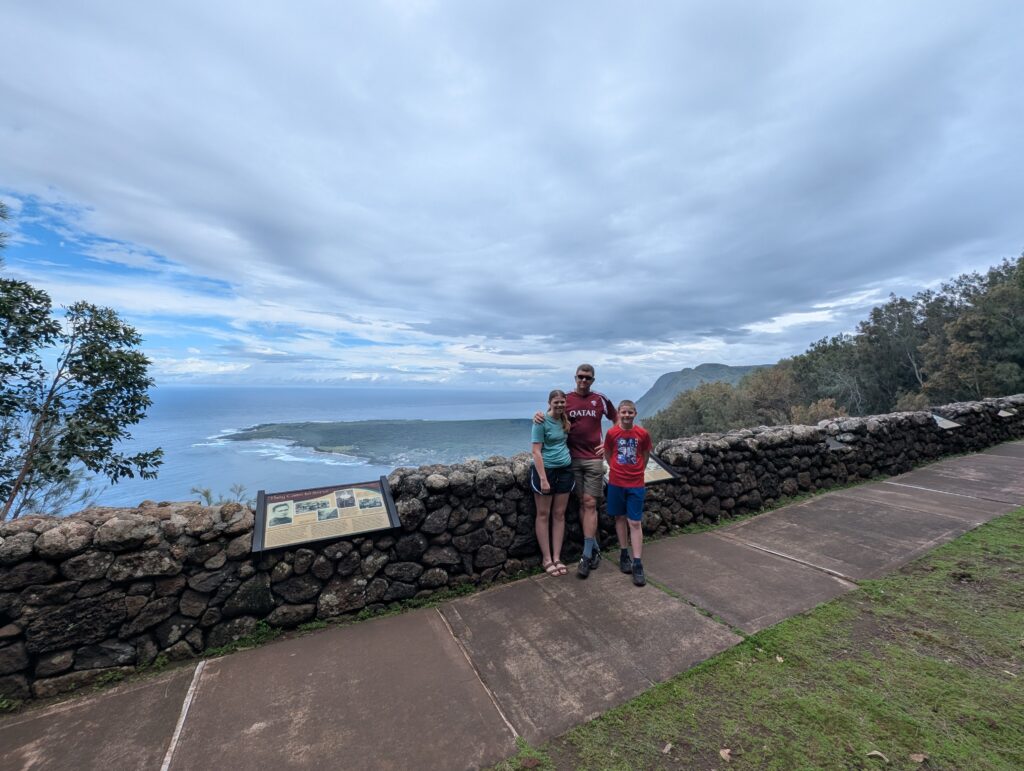
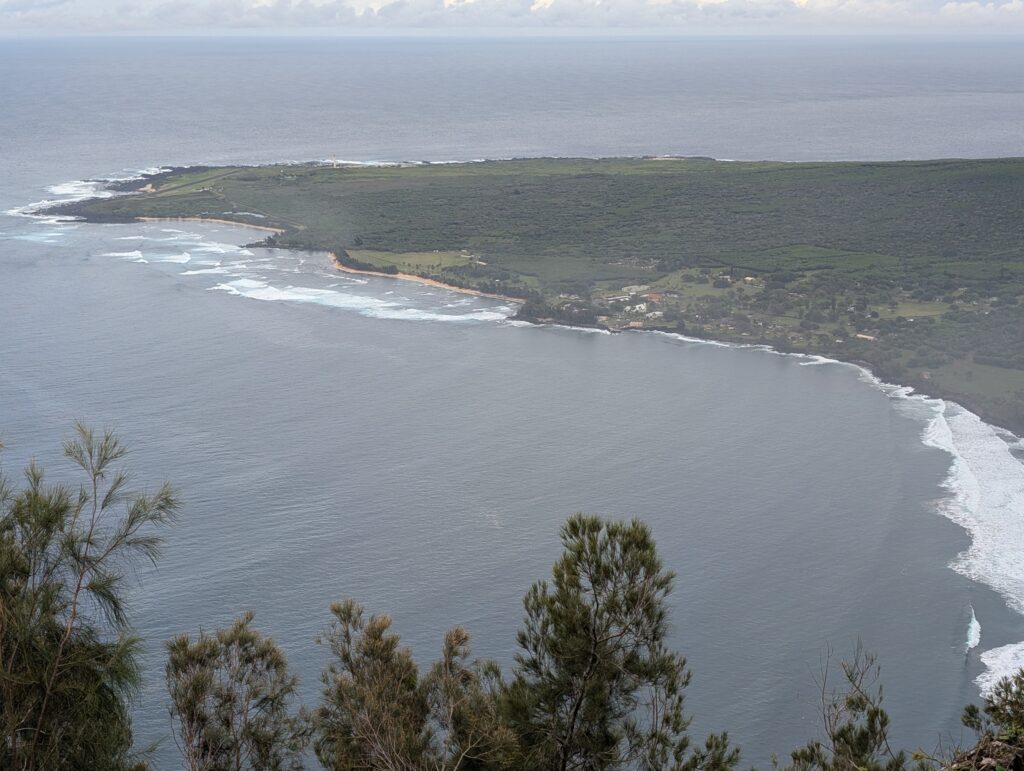
In between failed visits to the golf course on Wednesday, we drove out to the nearby Kala’au State Park, overlooking Kalaupapa and its peninsula. Kalaupapa was home to a leper colony for much of the 19th and 20th centuries. It is a beautiful place, and from the overlook you can see parts of the highest sea cliffs in the world. The Kalaupapa peninsula itself is quite flat. For many years, Catholic clergy and volunteers served those suffering from Hanson’s disease in this and another nearby location. The most famous Christian servant to have served here was Father Damien, who eventually contracted, and succumbed to the disease himself in the 1880s. He was later beatified by the Catholic Church.
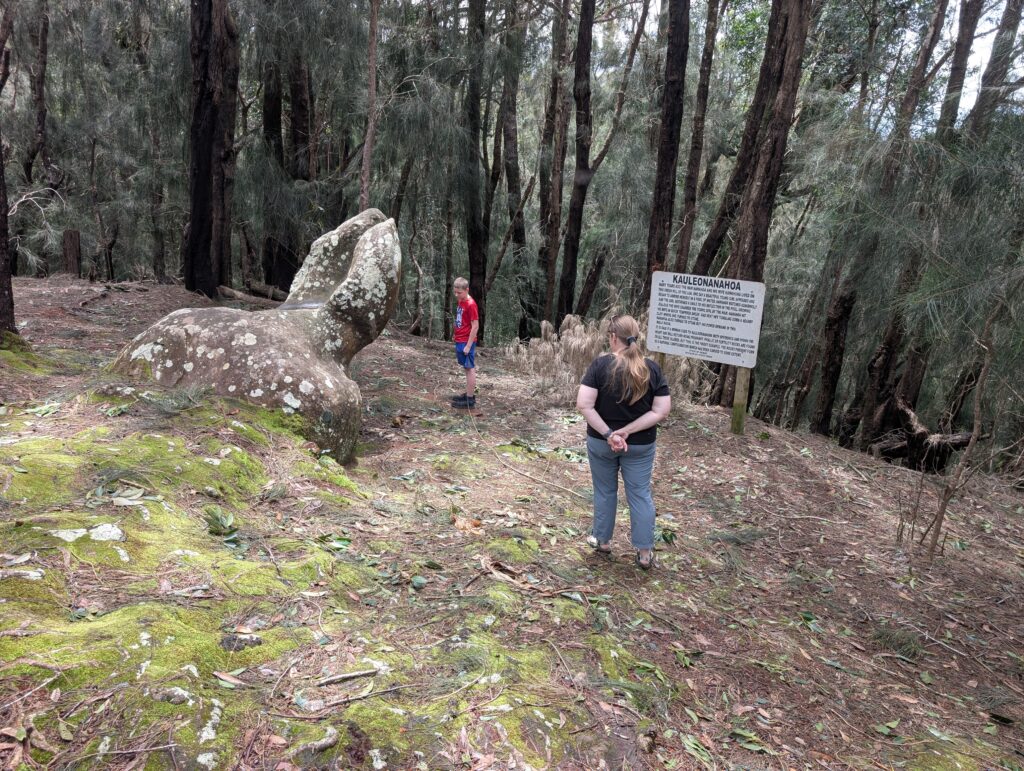
There is also a strangely shaped “phallic rock” in the same area. This and the Kaluapapa Overlook are each just a hundred or two yards from the end of the road at the state park. The hikes are not strenuous at all, though several of us were bitten by some very annoying, small, “no-see-um” like mosquitoes. I ended up with several very itchy bites without even knowing I had been bitten.
On Wednesday evening, we decided to try Paddlers Bar and Grill on a recommendation. It was noisy, the service was painfully slow, and they brought us the wrong food. What food we got wasn’t bad, but on the whole we were not all that impressed. I got Ahi Katsu, and that was pretty good. Stephanie sampled some kind of Korean prepared chicken, which was tasty, but came with the wrong sides. She had been craving a Pina Colada the entire trip, and finally got a not-so-great one from Paddlers for a whopping $16. Kimberly went with the family standby of coconut shrimp. The shrimp were few and her sides were also wrong, but she said what did come was very good.
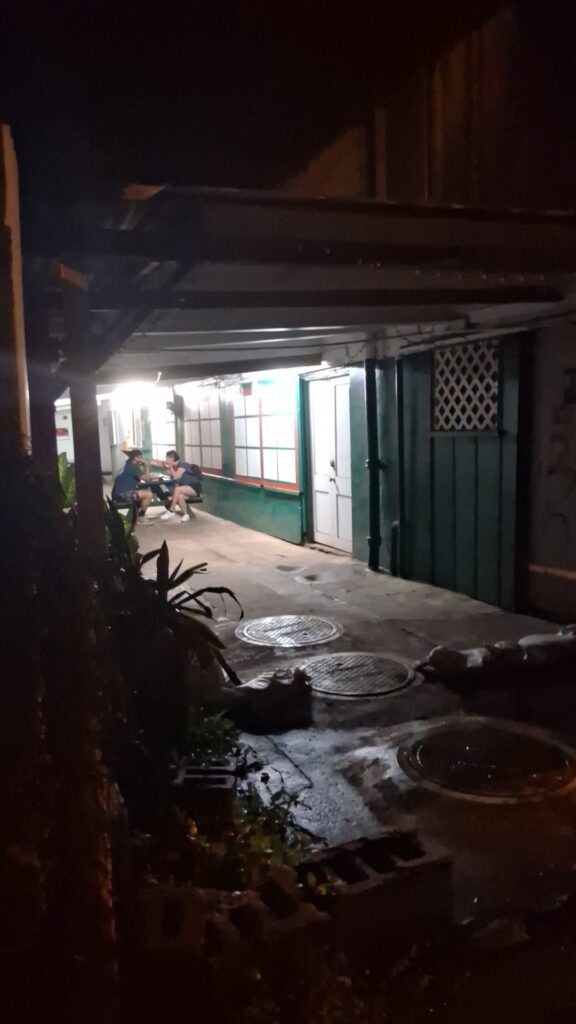
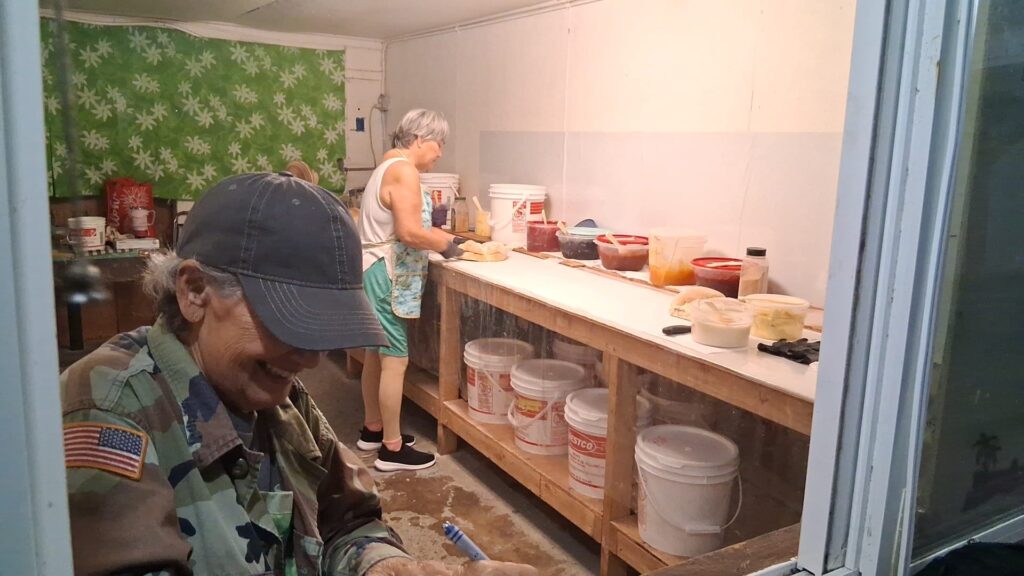
Our better food for the evening came from the Kanemitsu Bakery. The bakery runs as normal during the morning and midday hours. At night, however, it is an open secret that you can walk around to the back and get some fresh, hot bread. This bread comes filled with cream cheese, and coated with cinnamon and sugar or slathered with some other fruit spread. The loaf you get is pretty big. It costs about $12.50, and it’s absolutely delicious. On top of that, the ladies working the night window in the alley intermixed singing and harmonizing to their music with pleasant conversation and good recommendations as to which breads might be best to try. We highly recommend this part of the Molokai experience.
(Continued)

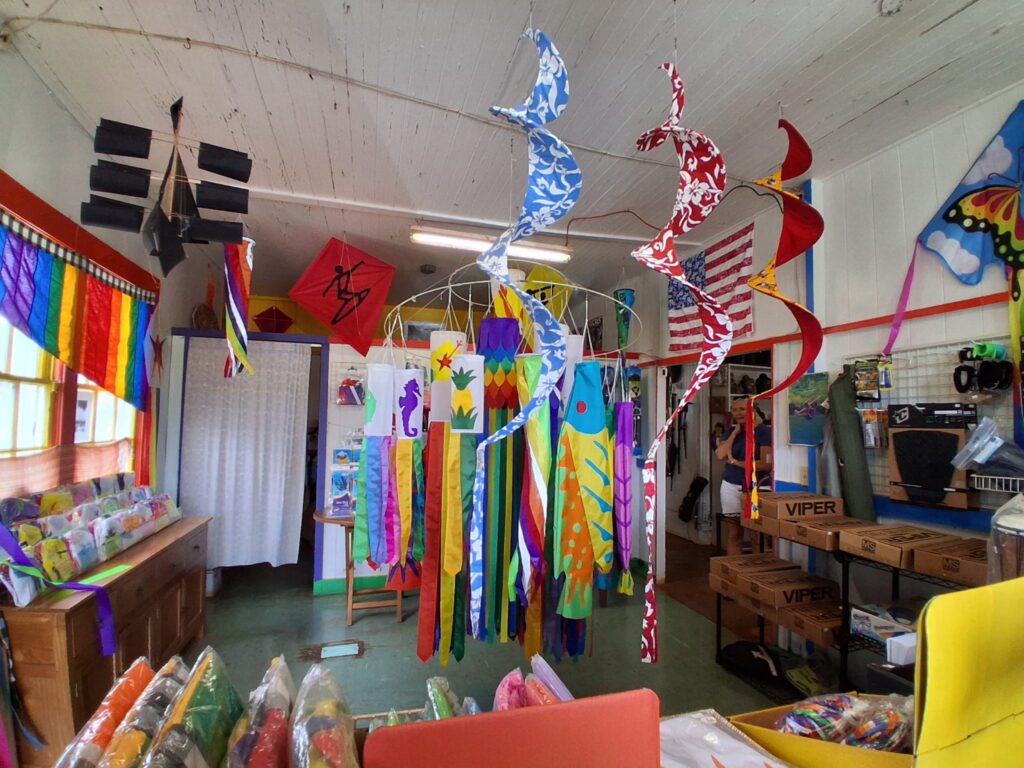
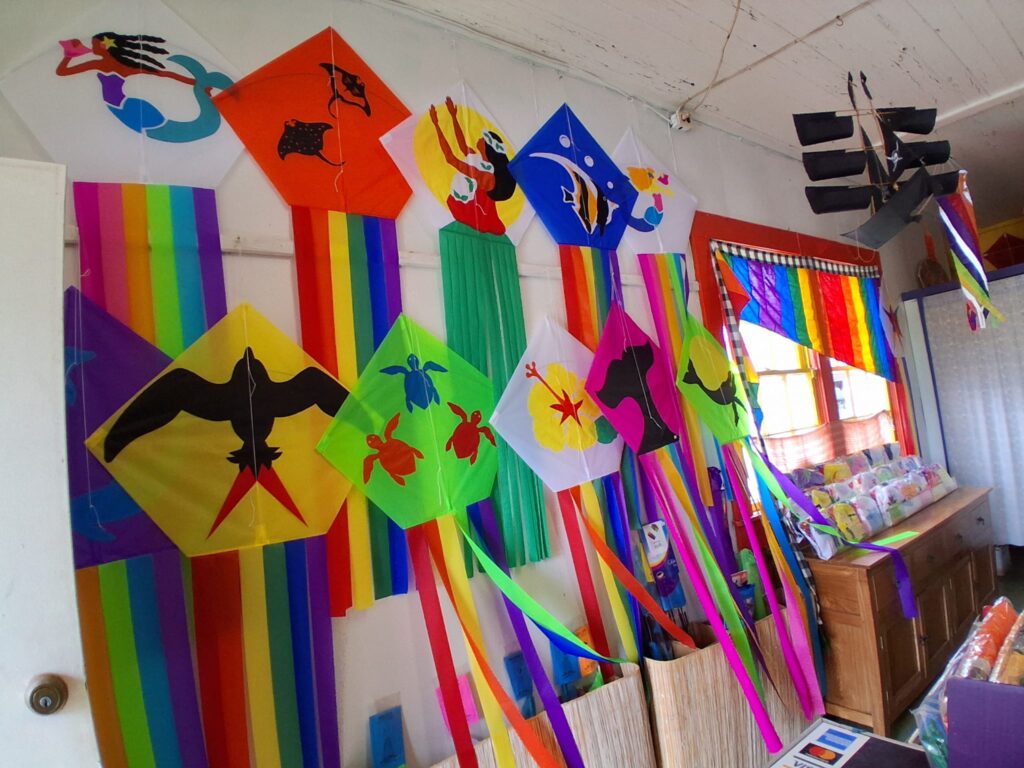
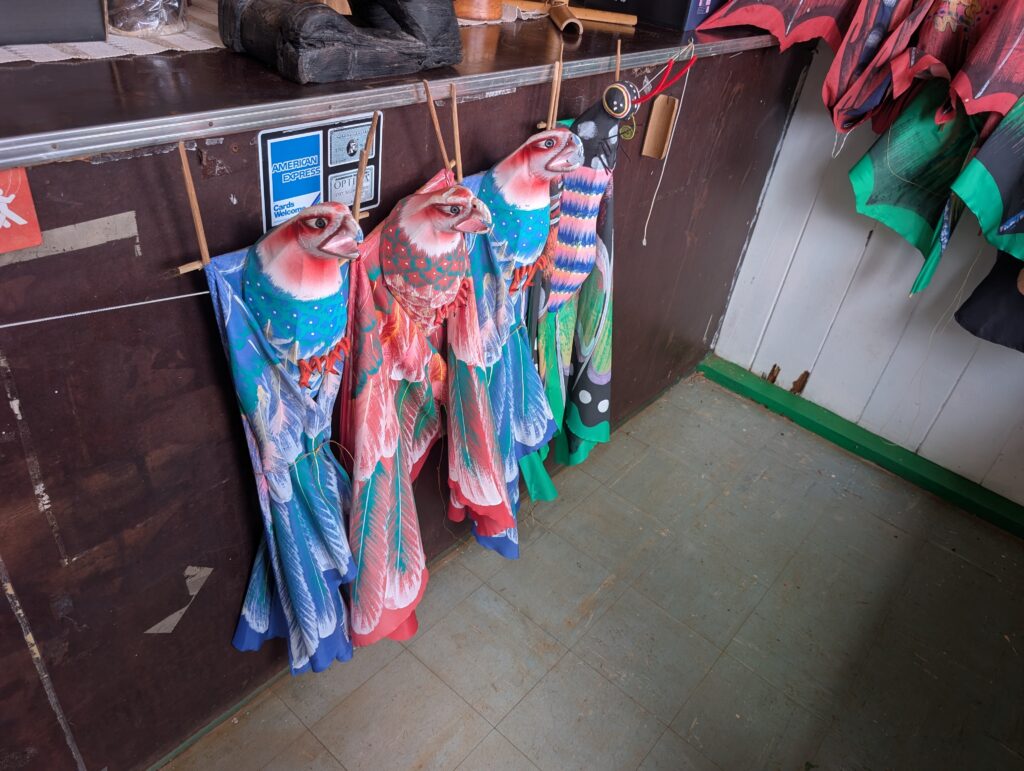
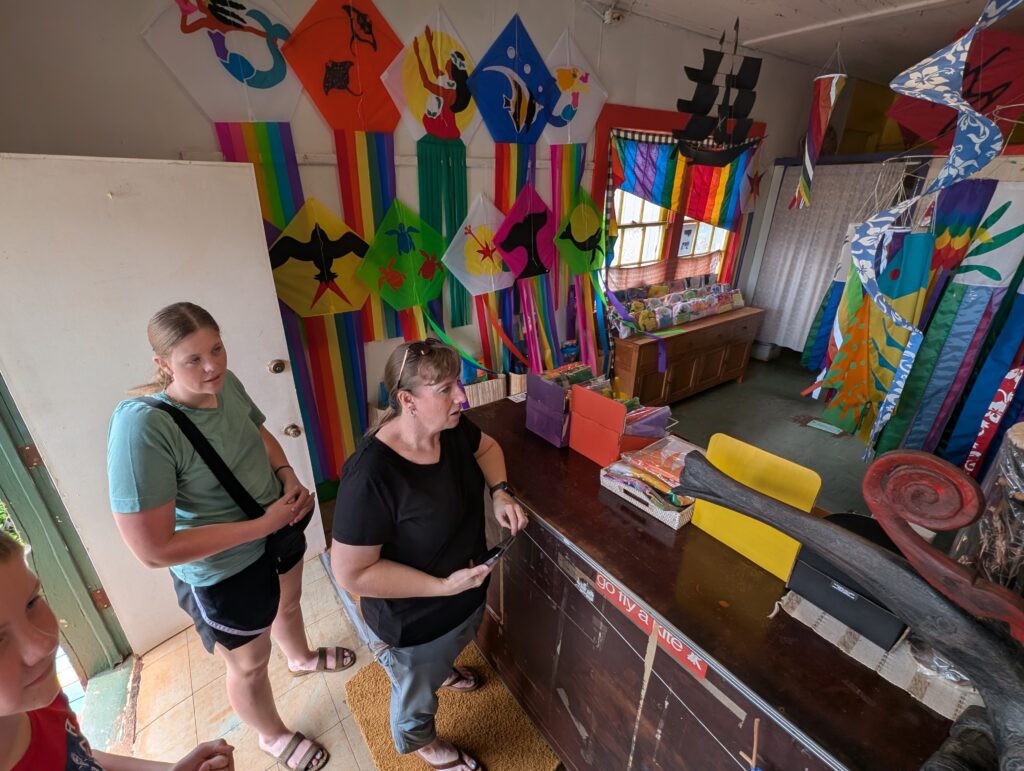
We mulled over another trip out to Halawa Park on Thursday, which turned out to have the best weather we saw on the entire trip. Instead, we drove out to the Big Wind Kite Factory in Maunaloa, a small community on a hill toward the west end of Molokai. We visited with the interesting folks in the kite factory. It was difficult to differentiate between the employees and their friends as the older ladies inside visited so freely and friendly. We didn’t end up buying any of their expensive kites or windsocks, but they were pretty and interesting to look at. They also had a fascinating collection of Tibetan Buddhist artifacts on display in the store.
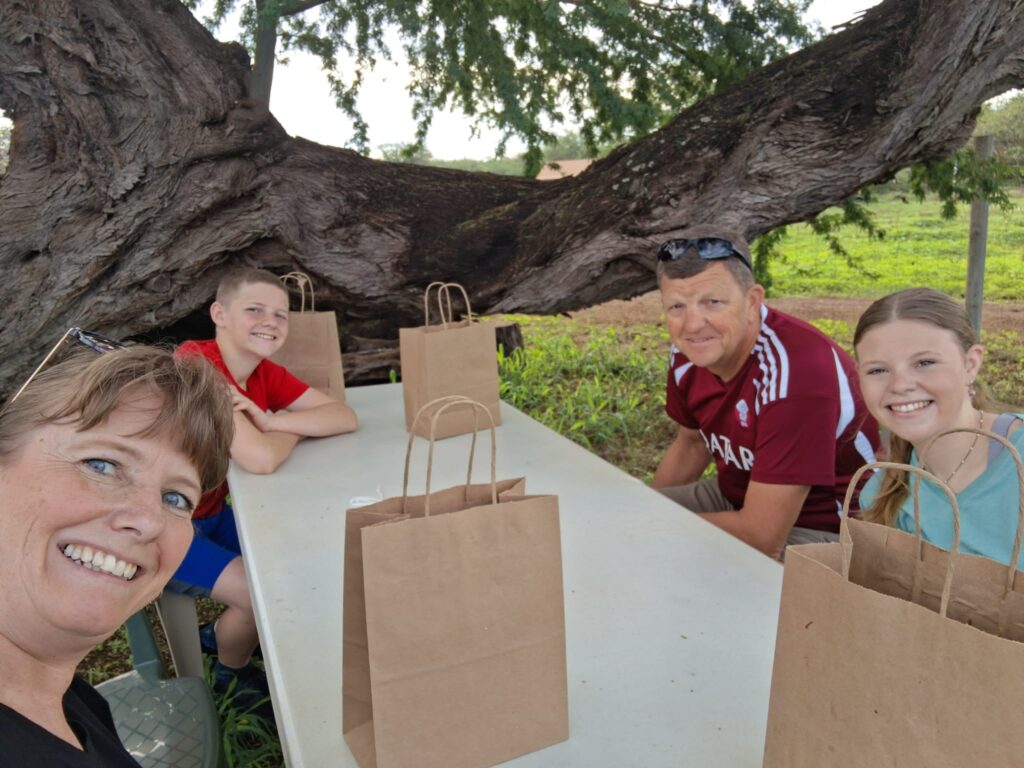
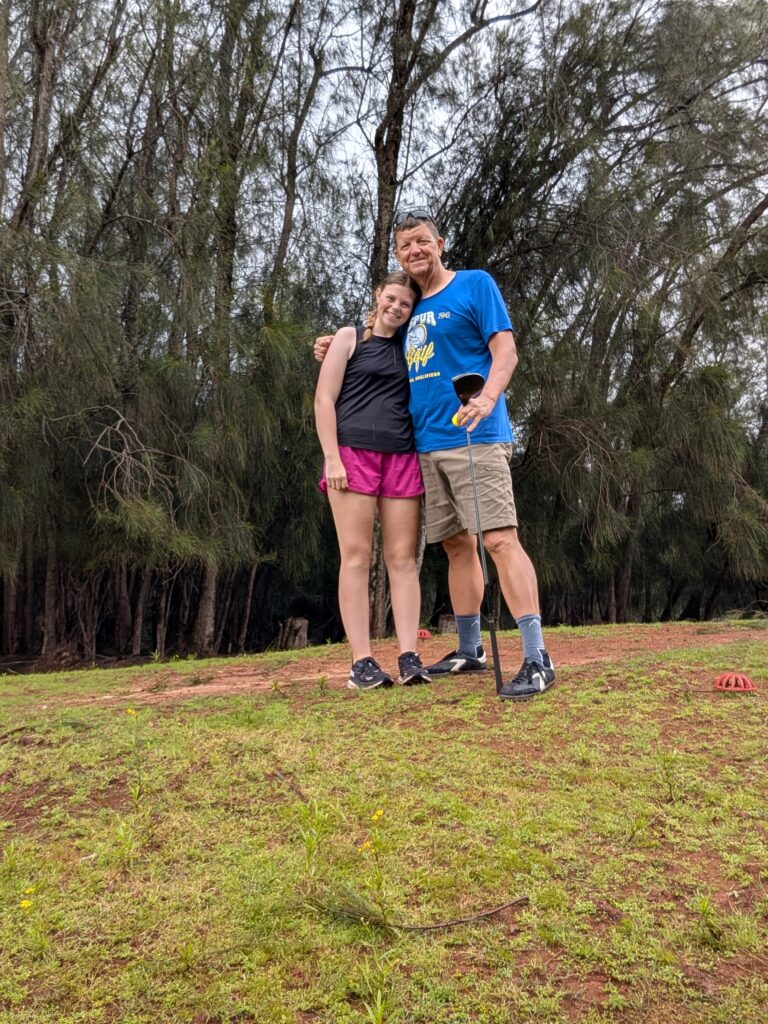
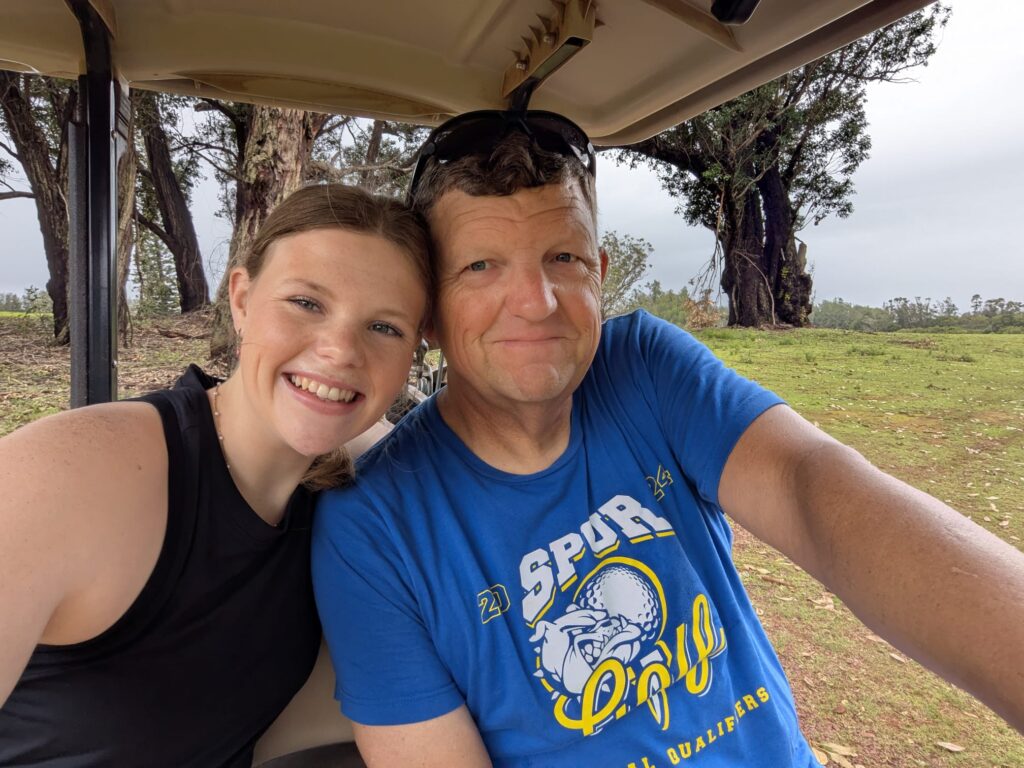
We walked to a little store across the street where the kids bought a couple of drinks, and then sat at a picnic table under a tree in front of the post office and had some sandwiches and apples for lunch. It was a very nice way to enjoy a meal, and definitely fits into the Pafford style of travel. Once we got back to town, Kimberly changed clothes and we set out for yet another attempt at playing golf at the aforementioned Ironwood Hills Golf Course. We were successful this time – sort of. We were able to play, though it began raining during our round. The course was so unmaintained that it would have been difficult to play under the best of circumstances. In the rain, with mixture of men’s and women’s clubs, it was even harder. Kimberly got a bit frustrated. It eventually began raining so hard that we went to wait it out in the pickup for half an hour. The course manager – a Japanese lady this time – tried very hard to get us to call it a day and go home. But there were other golfers still on the course. We waited it out and had a break long enough to complete our final three holes. When we came back to turn on the clubs, the course manager grumbled about them being wet. I’m not sure what we could have done about that. It was one of a few testimonies against Molokai’s moniker of “the friendly island.”
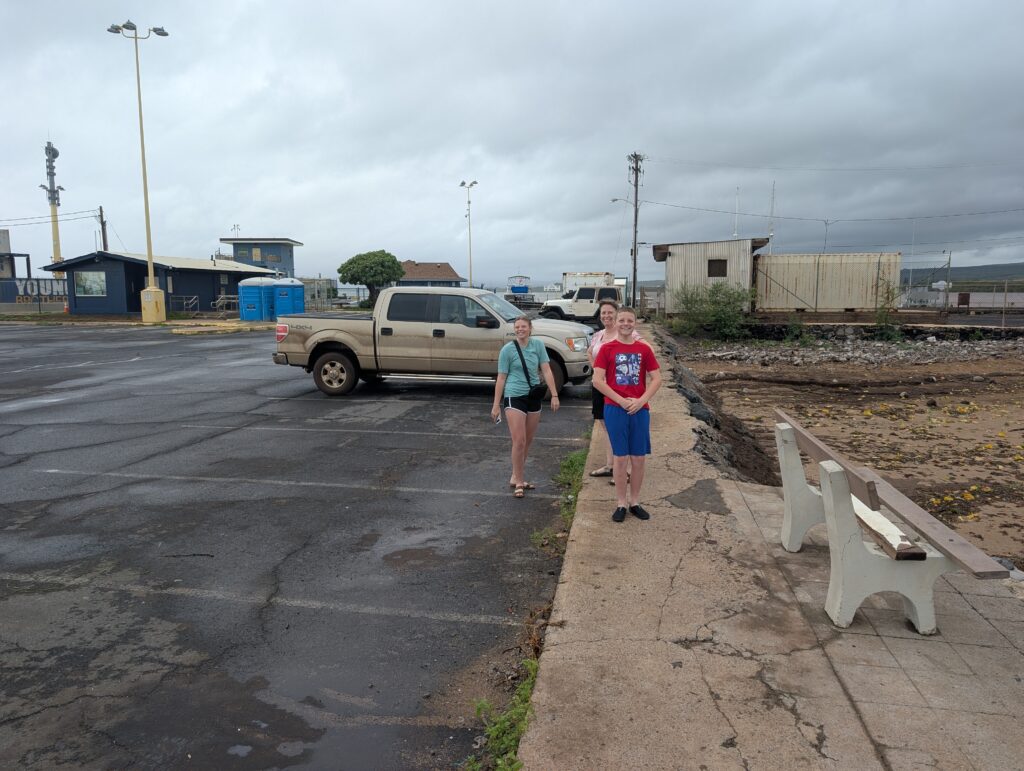
We finished the day by eating up what we could of our remainders and grabbing one last hot bread from Kanemitsu’s. We didn’t do much other than pack up Friday morning, but we ended our Molokai stay with an interesting adventure. For our transit from Molokai to Maui, I had arranged a water taxi with a local. He charged us about what it would have cost to fly to Molokai anyway, but I thought it would be a fun and unique experience to ride a boat across.
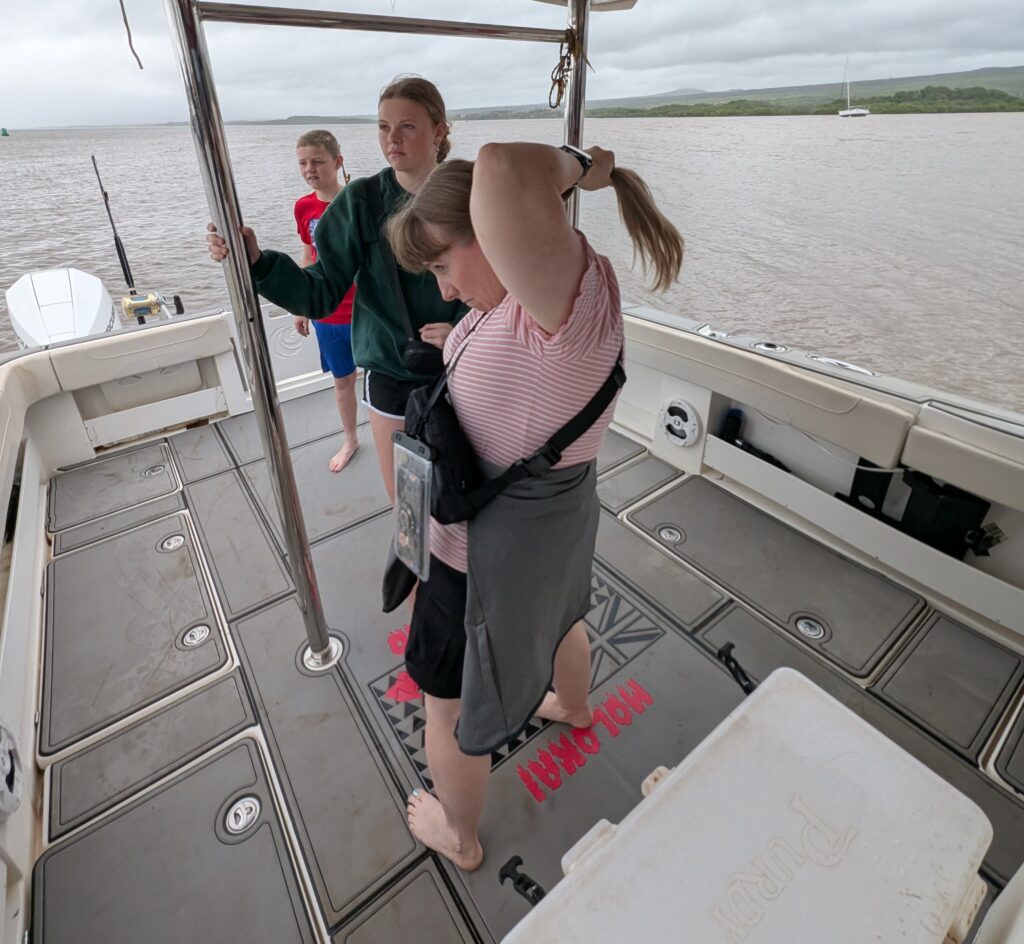
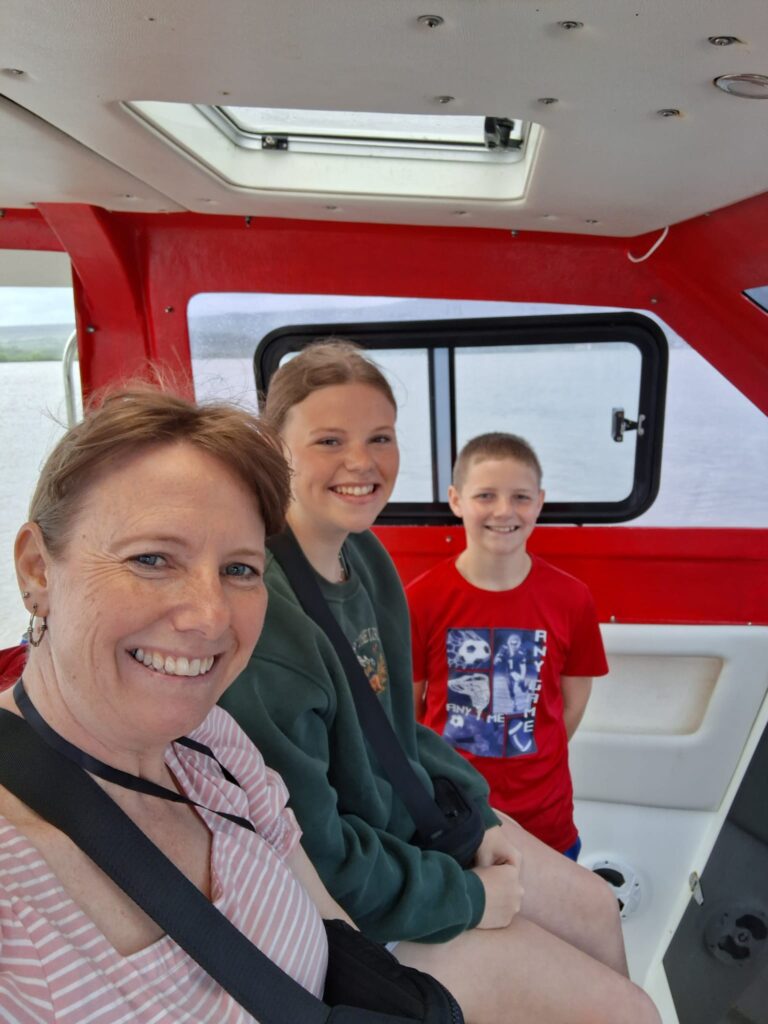
We all had fun on Chris Mengca’s boat, Positive Vibrations, though I think the crossing was a tad more adventurous than most would enjoy. The weather was a little obnoxious, and most whale watching and boat-based snorkeling operations on Maui were canceled that day. Chris thought it was safe to cross though, and we trusted his judgment. We set across in his little motorized craft. Stephanie and Kimberly were awarded the two seats. Chris’s two teenage sons settled into marine bean bags after their chores were through. A few local ladies joined us and likewise battened down their raincoats and settled onto the bean bags. I wanted to see where we were going and to catch any whale sightings opportunities that might arise, so I elected to stand. Chris kindly quipped that he had “Yo’ fault insurance,” as in, if anything bad happened it would be my fault. I was happy to accept this responsibility, and glad that he had left the final decision up to me.
We started out heading eastward along the south side of Molokai. The water hit us with some short, crisp chops. I used my legs like shock absorbers, and handed these with no problems. Chris seemed to also be doing his best to catch the waves “with the grain” in order to lessen the severity of the chops. He did occasionally cut the power a bit, if he saw us approaching something that looked especially rough. There were time, though, when we had to turn into the waves, and nothing could be done to smooth the ride.
Once we entered the channel between the island, we hit a couple of chops so hard that I caught air, and my bare feet slid as I landed, struggling to keep my balance. The local Hawaiian ladies successfully encouraged me to grab a seat on one of the bean bags. I spent the rest of the trip hunkered down like everyone else, my head directly under a small screw-hole in the ceiling of the partially covered cabin where water consistently drizzled down on my face when it wasn’t blowing in.
It took us about an hour and fifteen minutes to cross, and it continued to be fairly choppy. Kimberly and Stephanie caught a couple of glimpses of whales, but all of that happened as I lay on the bean bag, unable to see anything that wasn’t directly behind us. We made it safely, though pretty wet. It was a fun adventure, and I’m glad we tried it out. I would definitely do it again, though I would be cautious to whom I would recommend that mode of island hopping. We later learned that all of the whale watching boats which are much larger than our water taxi was had canceled that day due to the weather.