Belgrade

Friendly Capital of a Trouble-Making Country

Andrew was happy to get away from Romania as soon as we were able. He was going to miss his Ukrainian friends there, but his experience with his mission mentors was negative enough that it soured him on the place. He was adamant about liking Serbia better than Romania, and Bosnia better than Serbia. It may have had as much to do with distance from people he felt treated him poorly than anything.

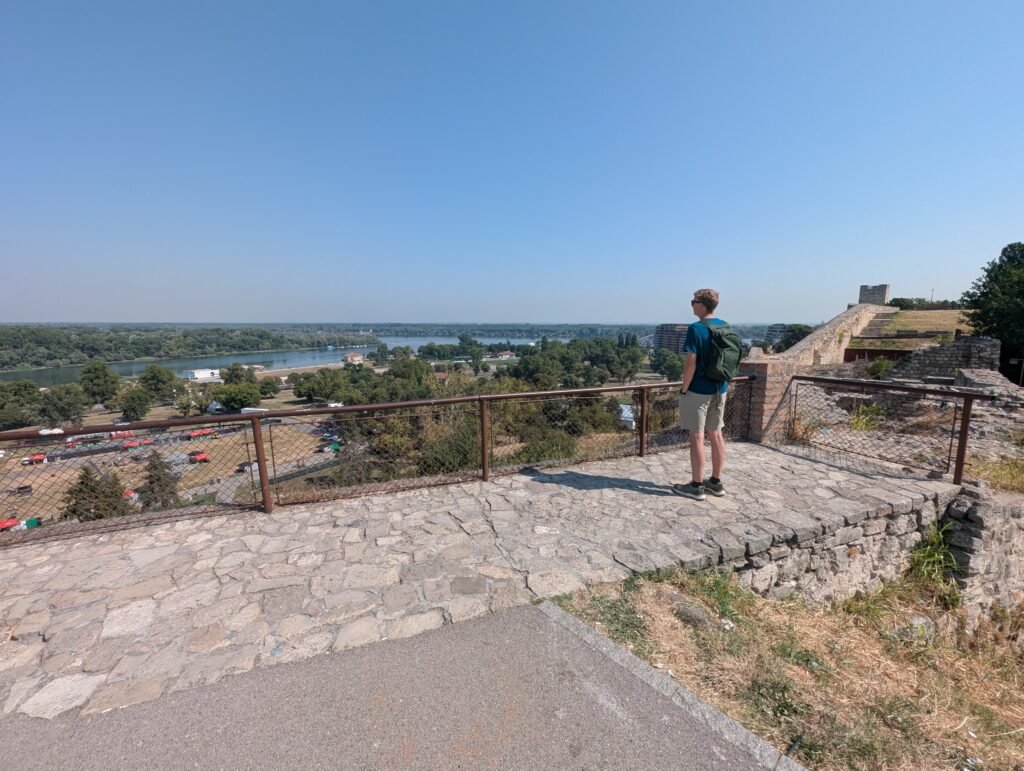
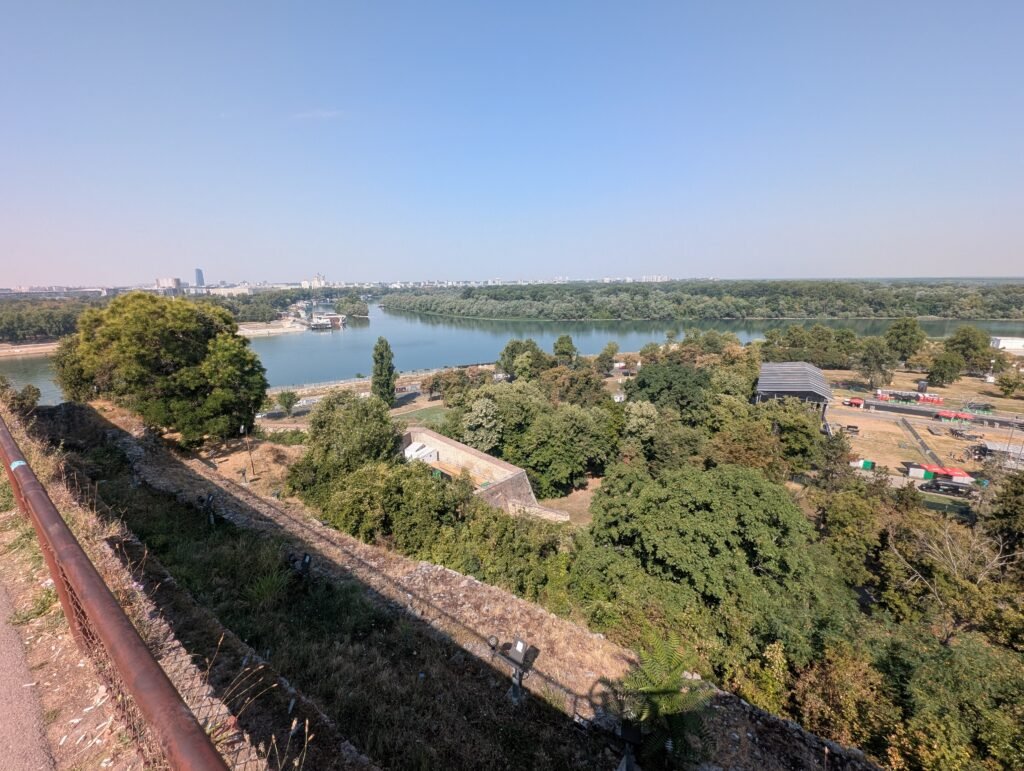
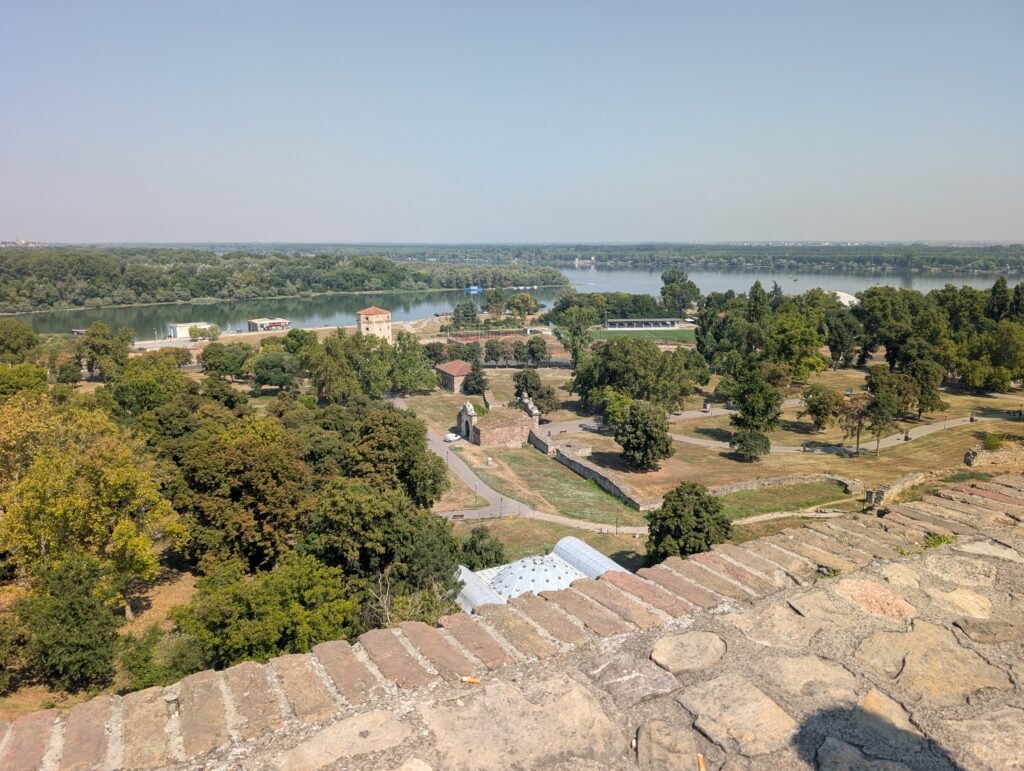
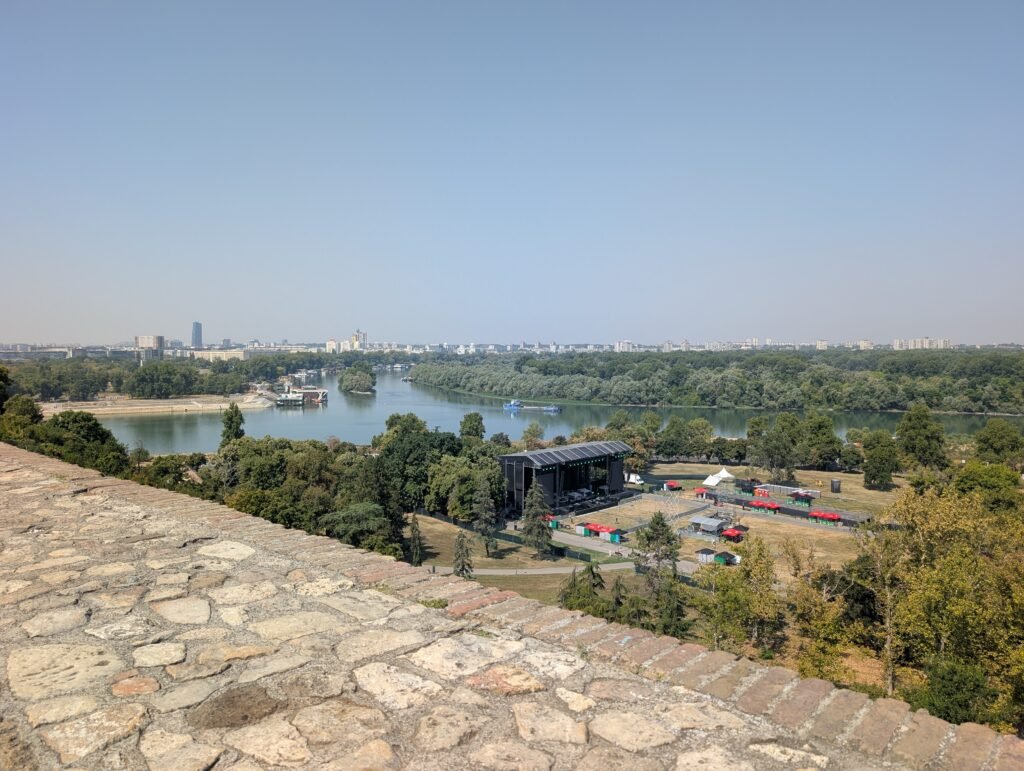
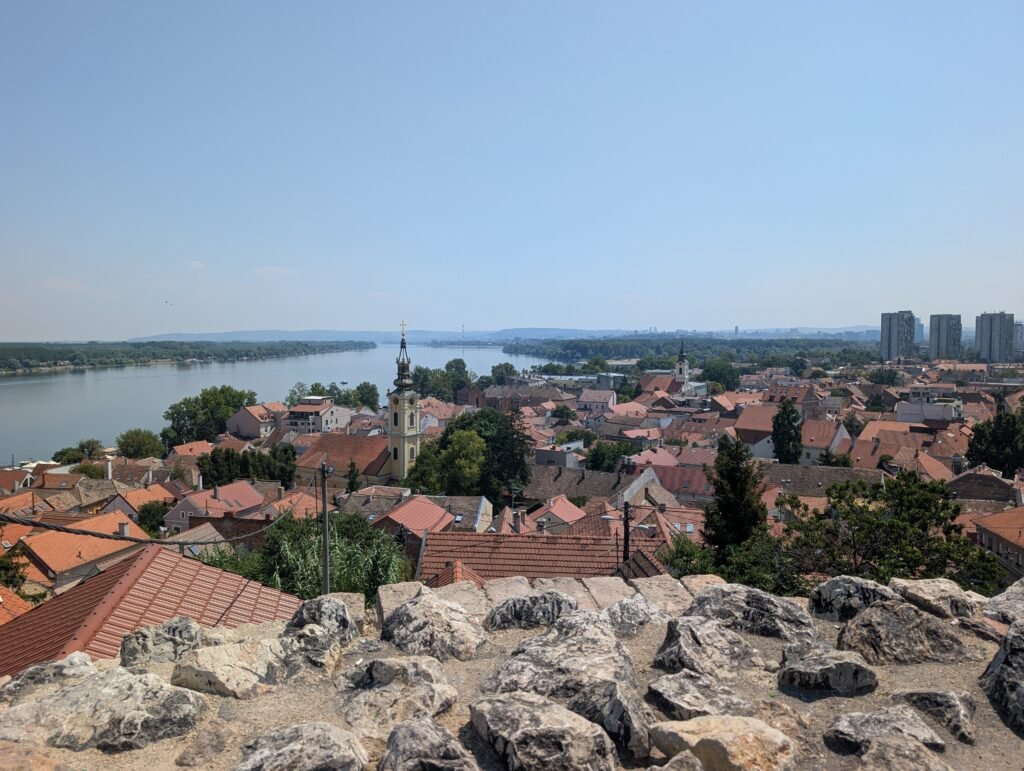
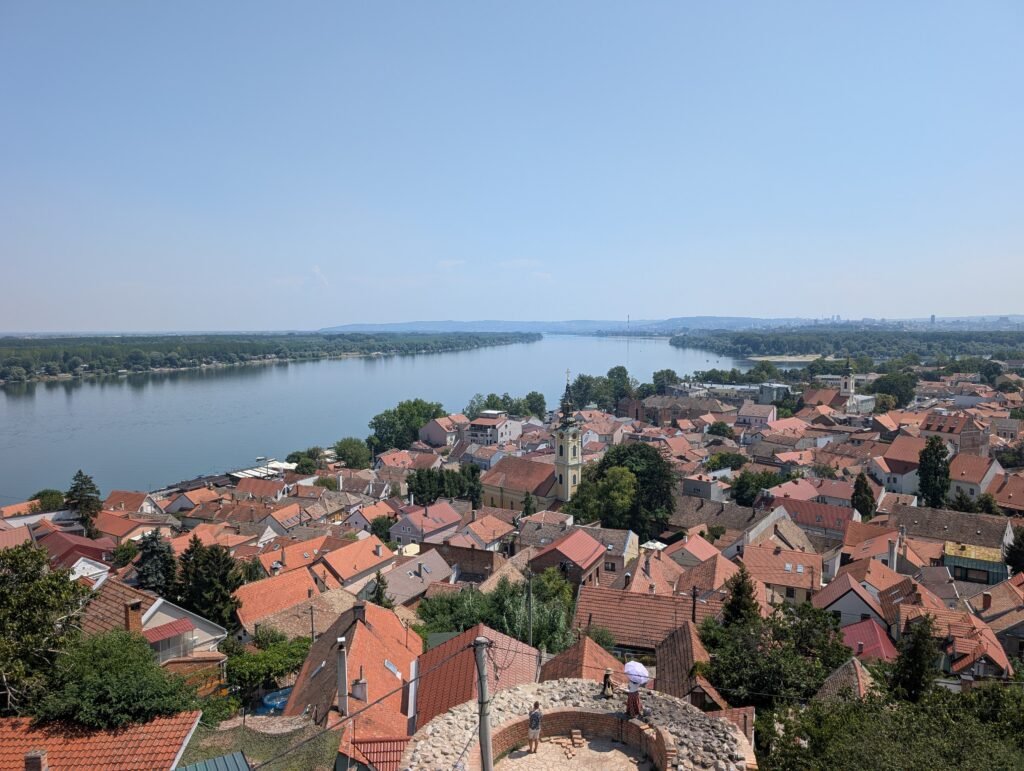
Serbia was an interesting place. On this trip, we only really saw Belgrade, plus what was visible out the bus window on the way to Sarajevo. Serbia seemed a lot like the American Midwest aesthetically. There was a lot of farmland, sometimes slightly rolling. It was pretty, if not beautiful. The area we visited was not mountainous. The most notable physical feature was the confluence of the Sava and Danube Rivers. Belgrade’s most prominent historic site, the Belgrade Fortress, overlooks this important point.

Historically, Serbia has been a kind of “trouble maker” nation. It was Serbian terrorists in an organization called Black Hand who ignited World War I by assassinating Archduke Franz Ferdinand in Sarajevo in 1914. Expansionist Serbs had been angling for more territory and agitating against their neighbors even earlier. Serbia gained independence through a series of revolts against the Ottoman Empire, aided by the gradual weakening of that regime during the 19th century. Serbia fought in two Balkan Wars against their neighbors just before the Great War, expanding their territory in each. It was a push for a “Greater Serbia” in the 1990s that led to the bloodiest parts of the wars in the former Yugoslavia.

Serbia has also been a sort of partner country – a kind of “little cousin” – to the Russians. Like Russians, Serbs are Slavic people. They can mostly understand one another when speaking. They share an Orthodox Christian heritage. They have many other cultural similarities. This alliance with Russia, and a perceived obligation by the Russians to advocate for the rights of their kinsmen played a major role in drawing the rest of the world into the Great War. In the early 20th century, the fragile Russian Czars had on a few occasions left Serbia to deal with its own problems on the international stage. Feeling shame for this, the Russians felt pressured to stand with Serbia when Austria retaliated for the assassination of the Archduke. Russia was allied with France, so if the Russians became involved, that would draw in the French. Germany felt the need to preemptively strike France if they were going to have to fight the Russians alongside their Austrian allies. The Germans crossed Belgium to invade France. Most of Europe had pledged to defend Belgian neutrality. This brought in the British. Before you knew it, most of the Western world was in a war none of them really wanted. It all started with Serbia.

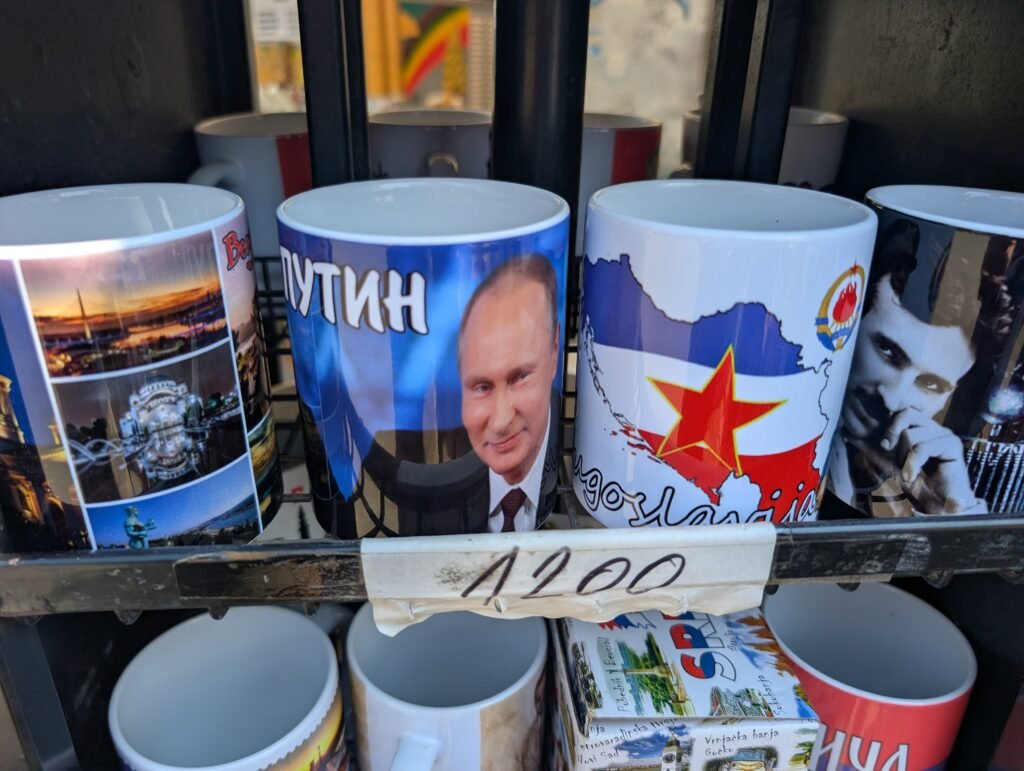
Serbia remains a very proud, nationalistic society today. In the parts of Bosnia called Republika Srpska, you still see Serb banners. There is nostalgia for Yugoslavia. Tito’s mausoleum is in Belgrade. This nostalgia has much to do with the fact that Serbs controlled the Yugoslav government in the country’s waning, post-Tito years. Serbia retains their close affinity with Russia, despite – or maybe because of – Russia’s modern foibles. Serbia’s flag and banners look a lot like Russia’s. On the street, you can purchase coffee mugs with images of Vladimir Putin’s mug right on the mug. Most of the world sees Russia’s aggression in Ukraine as a crime against humanity. The Serbs have no such compunction. They are proudly pro-Russia.

It is unfair, of course, to paint an entire country with the same brush. Certainly not all Serbs are or have been aggressive. Not all Serbs are nationalistic. Not all Serbs joined Black Hand. Not all Serbs wanted to “purify” Bosnian land, or take revenge against the “Turks.” Not all are supporters of Russian aggression in the Ukraine. They don’t all love Putin. There is such a historical record there that a general sense of nationalism cannot be denied. Those Serb banners are all over Serbia and half of Bosnia. The Putin mugs are for sale as souvenirs all over Belgrade. There is no denying that there is a strong sense of national pride in Serbia, and an affinity for things Russian. As friendly as people were to us, there is this odd sense that there is something quite a bit different about Serbia compared to its neighbors.

The few locals we met in Serbia, though, were friendly enough. We arrived via plane on the 6th of August. The airports in Bucharest and Belgrade were both small and easy to navigate. We were able to catch a bus from the Belgrade airport into the middle of town. There is an express bus for just a few Euros that takes you right to the center of town, but all of the rest of the Belgrade city buses were free. We decided to catch a free bus since they, too, departed from right at the airport. It cost us an extra 10-15 minutes and one bus change, but we made it into town on the completely free Belgrade public transportation system. We made our way to the hostel, where we had reserved a private room. It was a run down room, but it was private and we didn’t even have to share a bathroom. The air conditioner worked moderately well, and although the cleaning staff had left a few items from the previous tenants in our room, it was an acceptable accommodation.

(Continued)

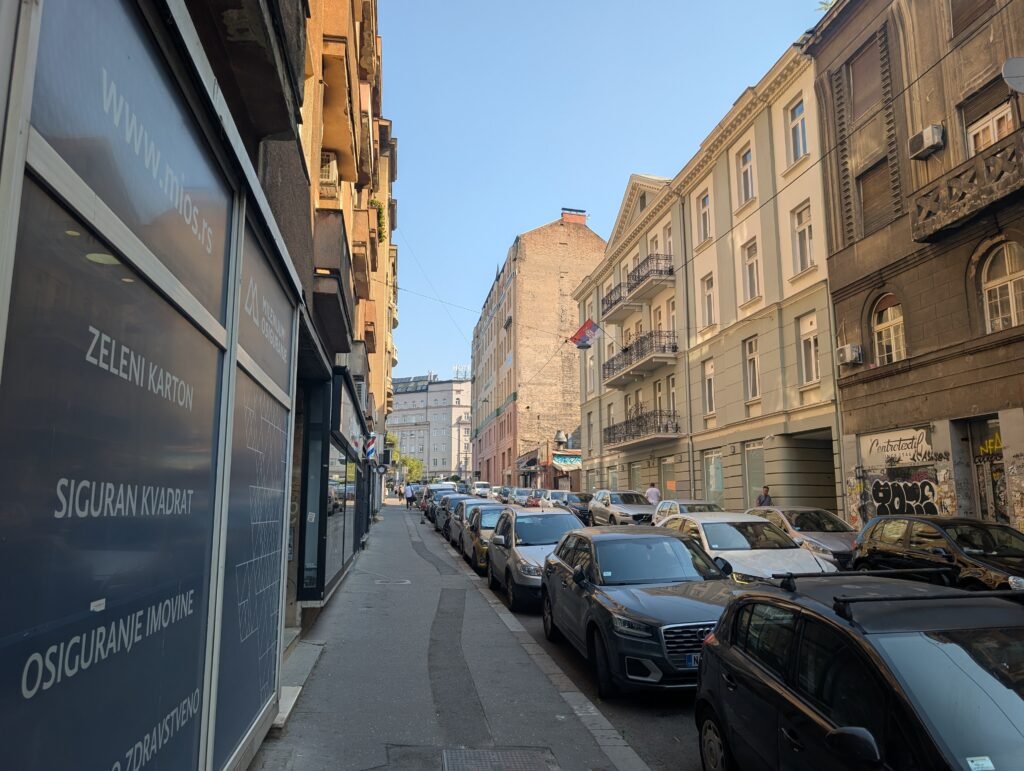
There are Hills in Belgrade
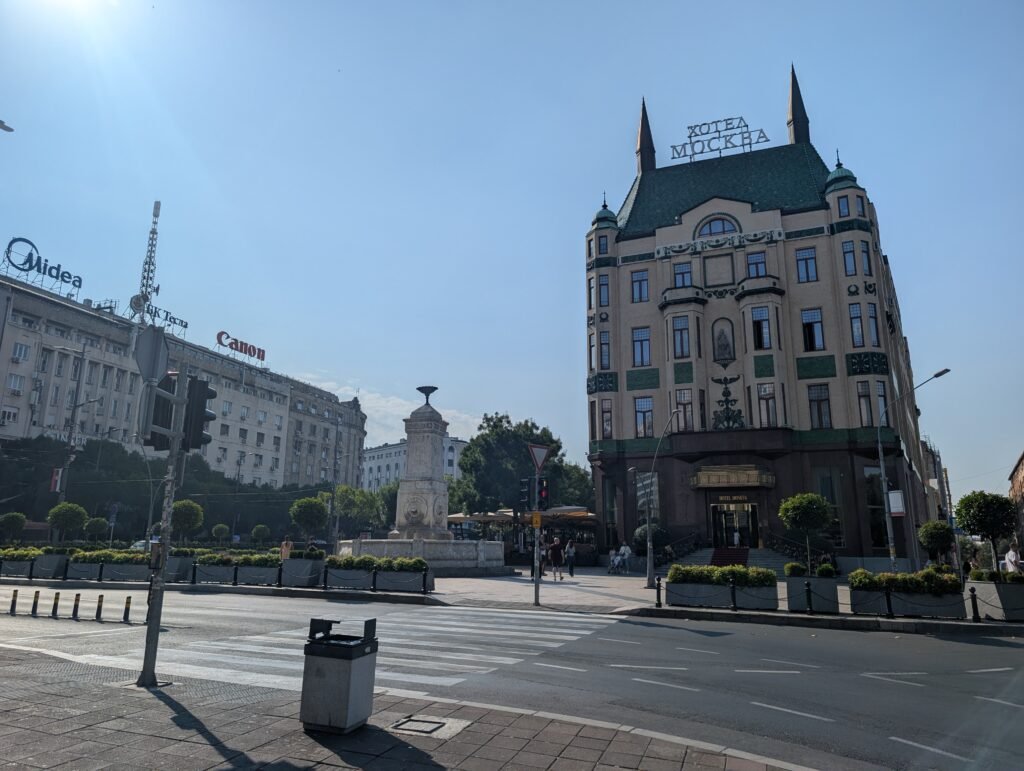
Moskva Hotel
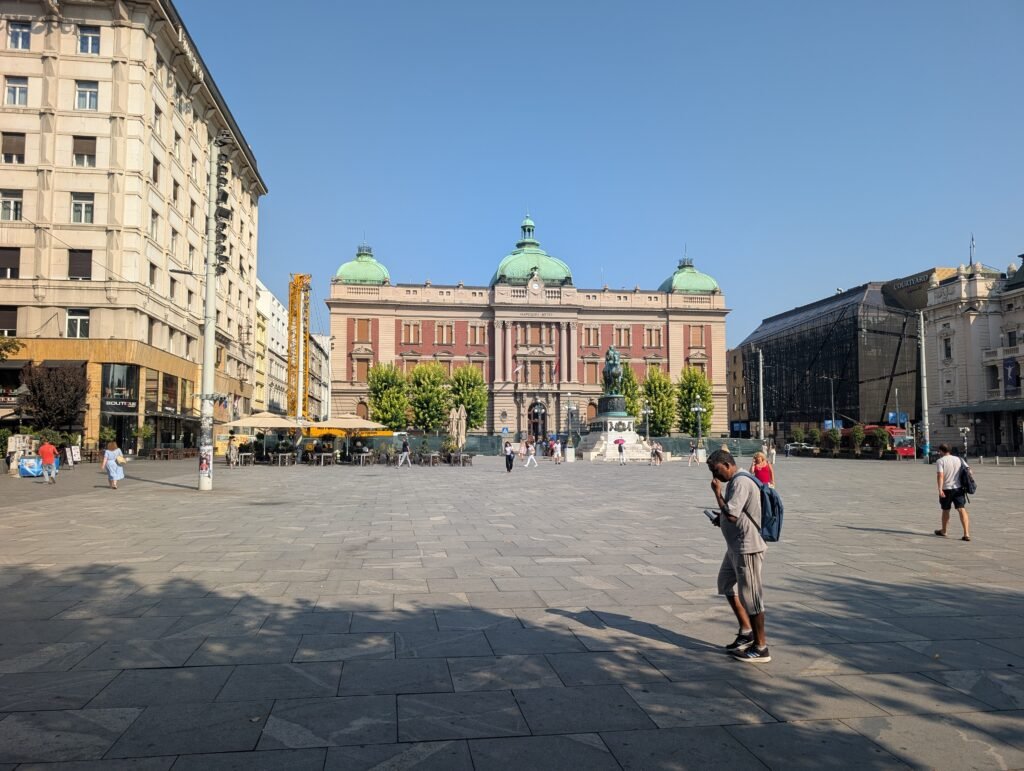
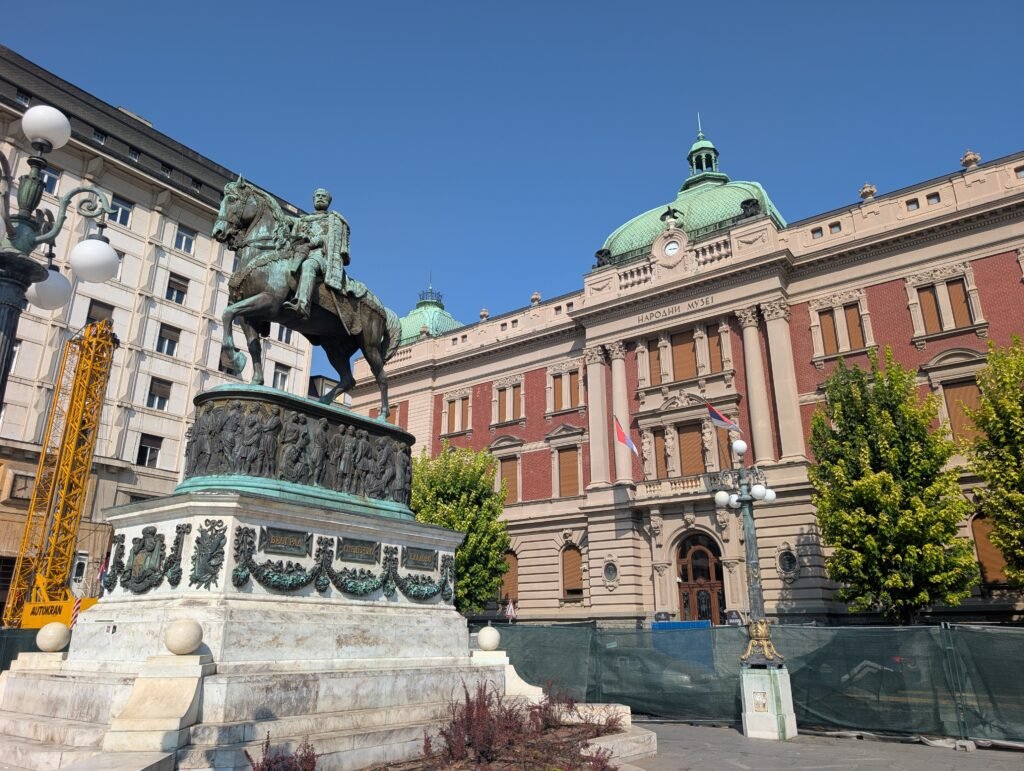
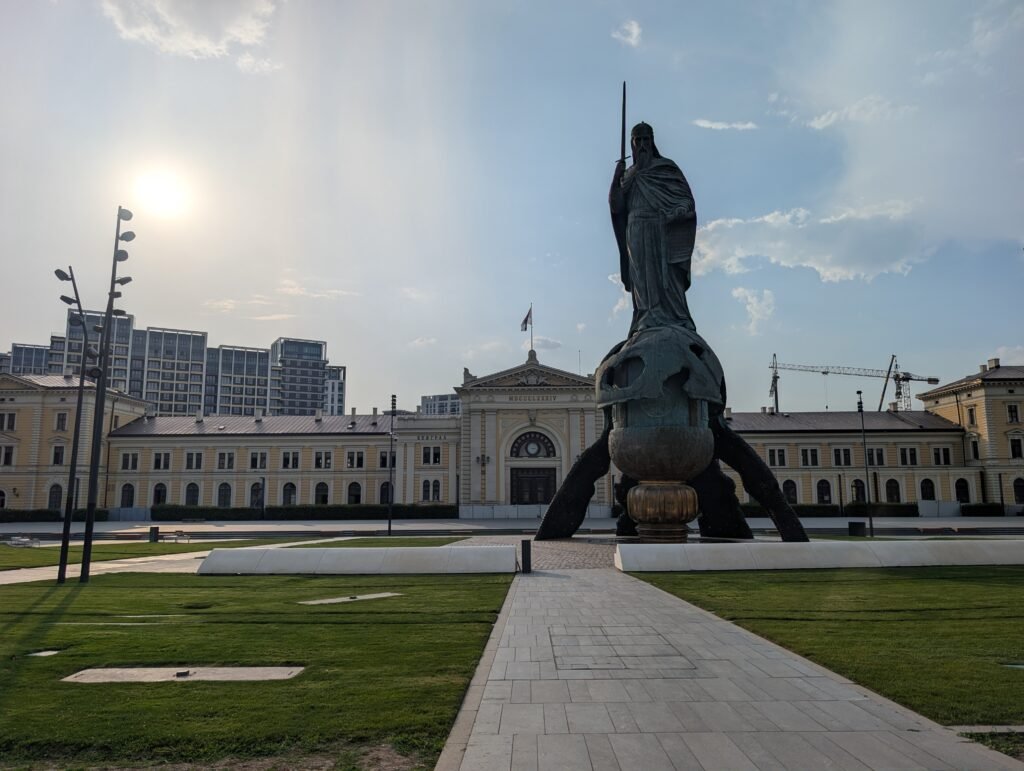
National Museum and Statue in Republic Square
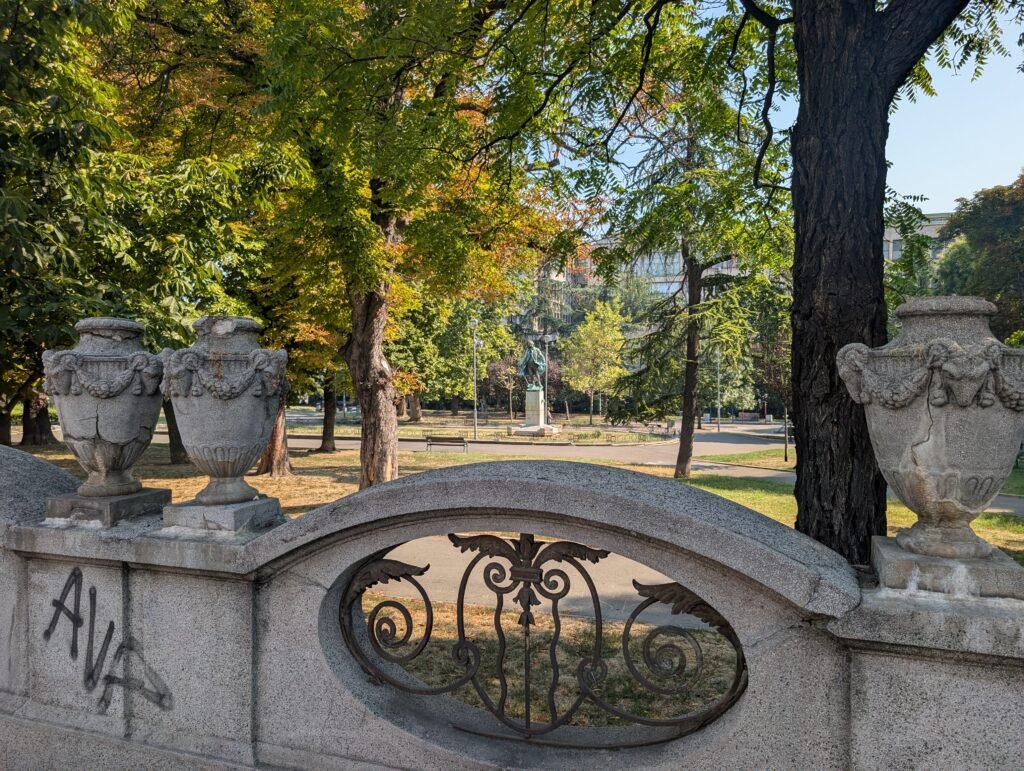
Park in Belgrade
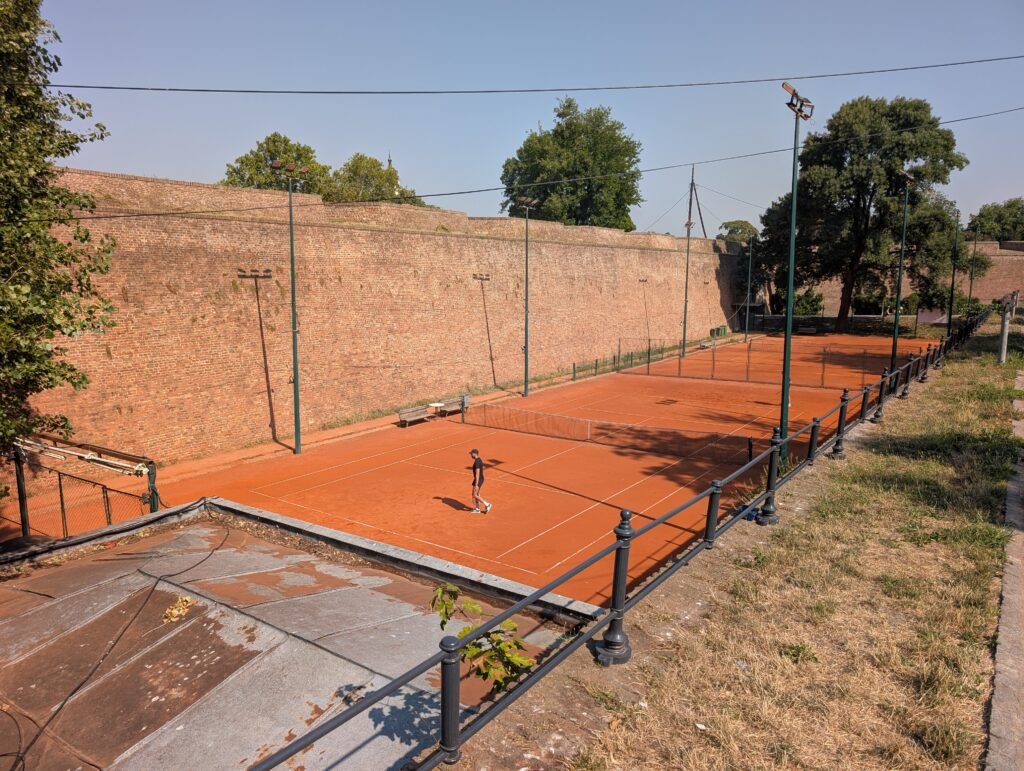
Clay Tennis Courts Placed Oddly on the Walls of Belgrade Fortress
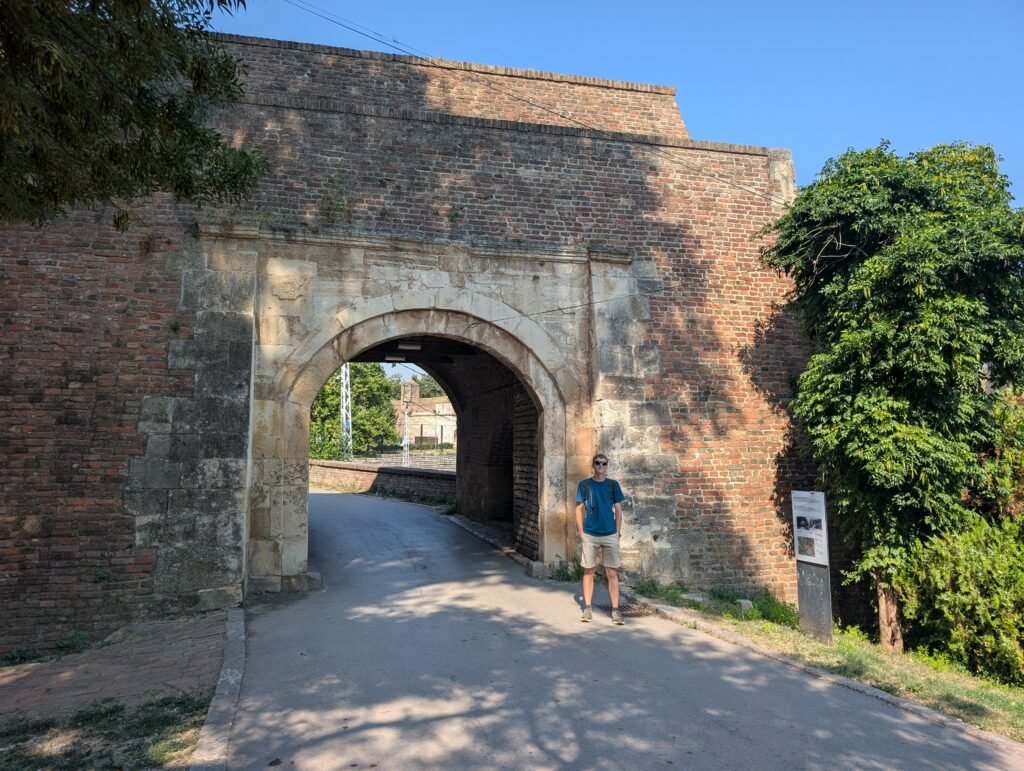
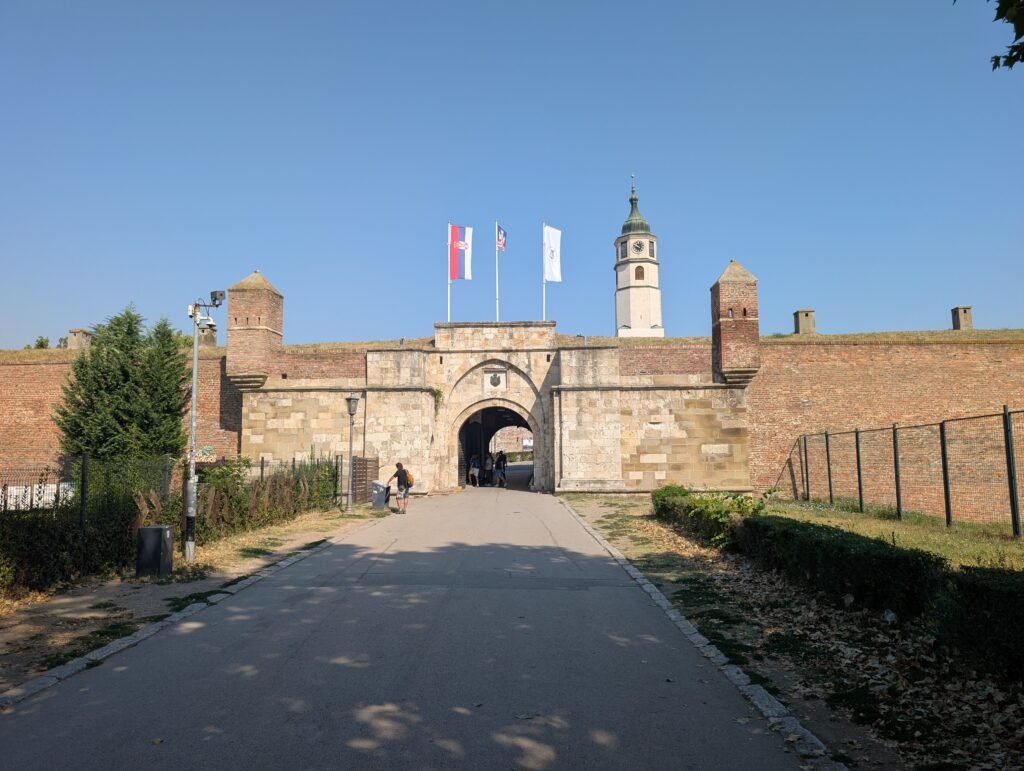
One of the Gates Leading to the Fortress
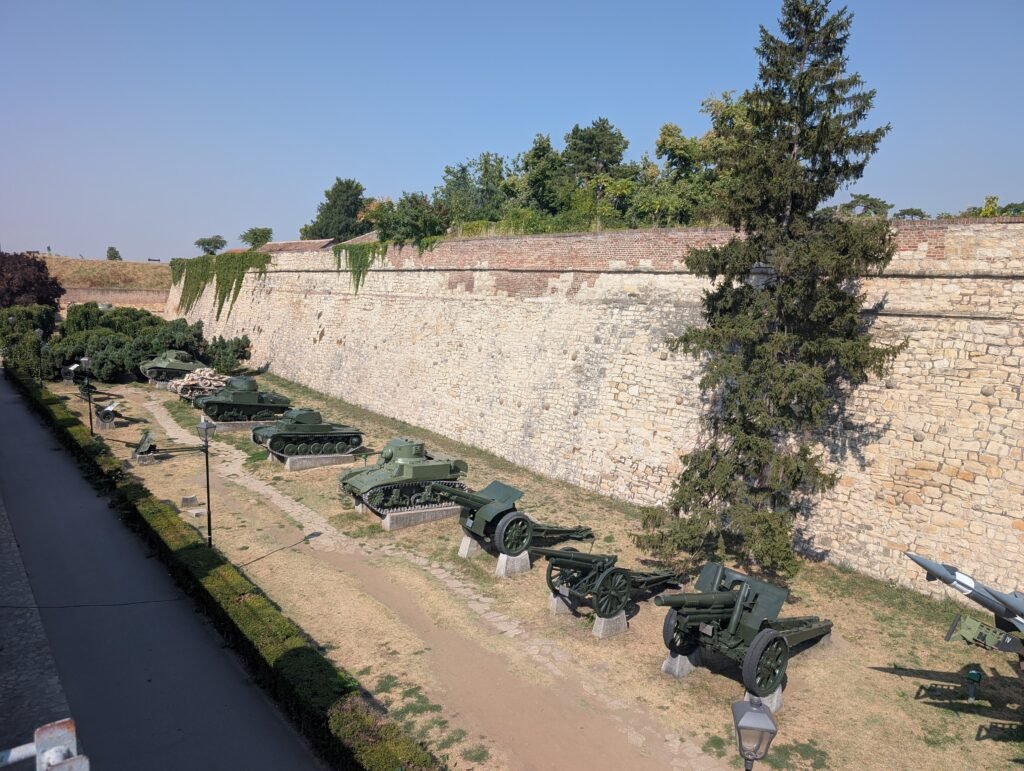
Artillery Pieces, Outdoor Part of the Military Museum
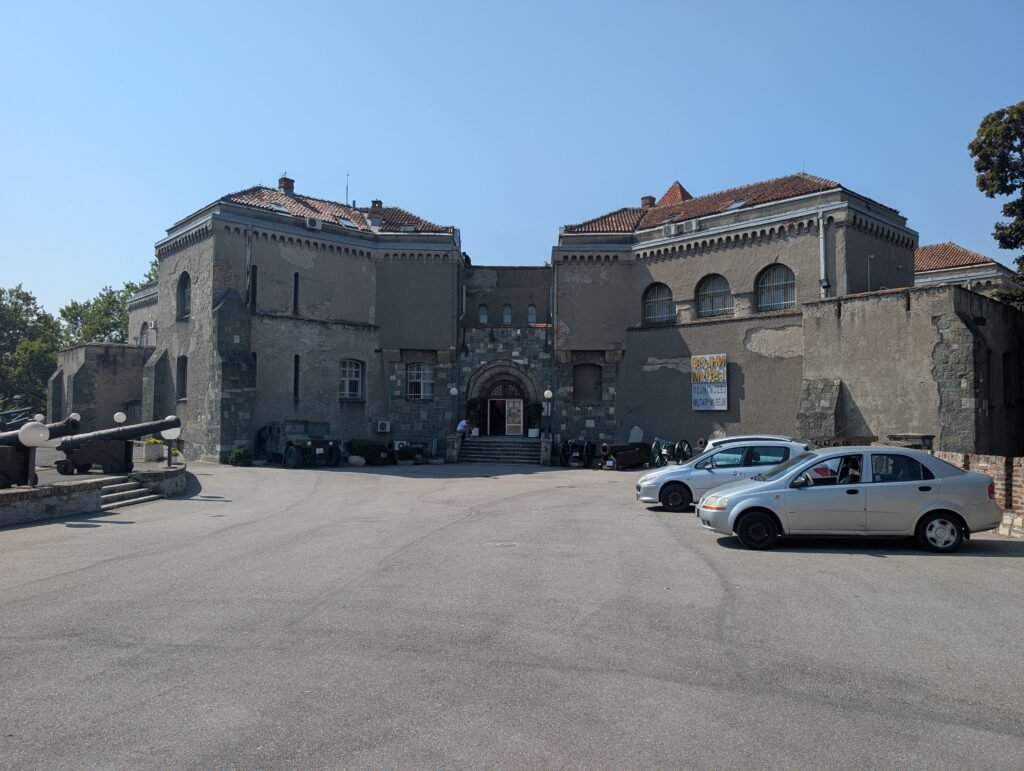
Indoor Part of Military Museum
They Love Putin and Russia Here
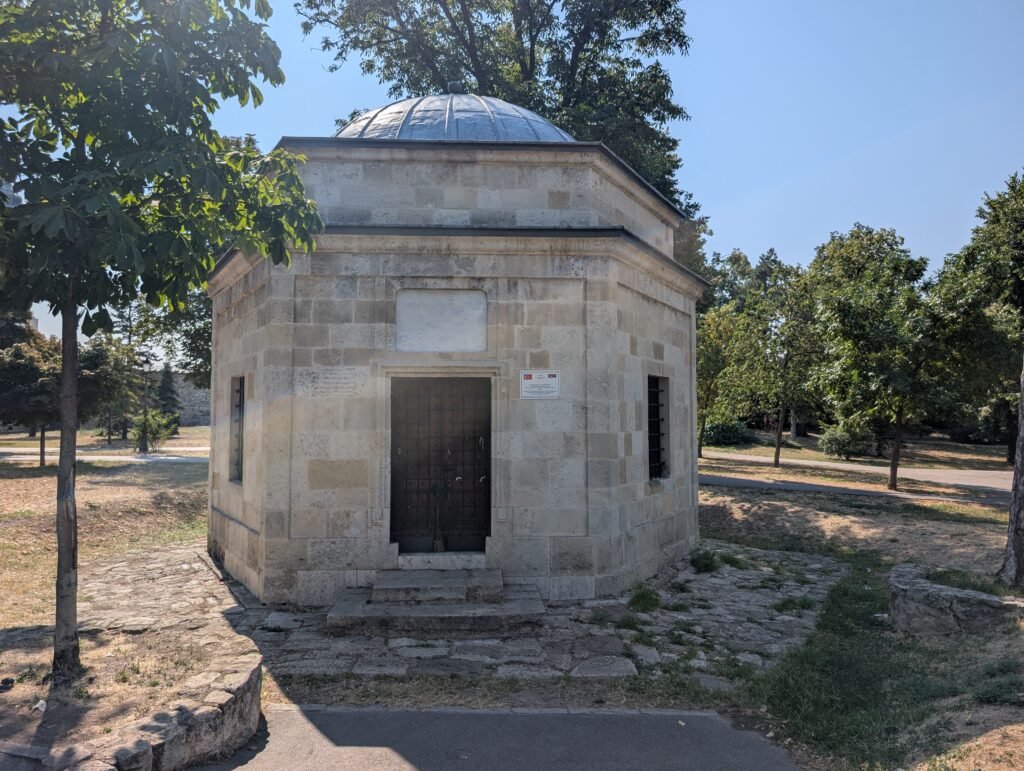
Muslim Mausoleum Damaged in Serb Revolt, Later Restored

Andrew and I headed out to find an inexpensive bite to eat. Even in Serbia, we found foods similar to the rest of the Balkans. Each country seems very proud of the uniqueness of their own traditions, including food and coffee. Outsiders will be hard pressed to find significant differences from one variety of cevapi or thick coffee to the next. It’s all pretty good, though. Just don’t expect to find many vegetables, other than a few very rare cooked ingredients.

I lined out a power touring agenda for the next day. I looked at what a few travel sites and some walking tours had on their agendas, and selected the more interesting sites. I figured out a routing that made sense. I ran it by Andrew who had a suggestion or two, but was mostly just along for the ride. With that plan lined up, off we went.

We first walked by Hotel Moskva, a fancy early 20th century building. As the name implies, it was built with a large investment from Russian authorities. It remains a high caliber four star hotel, a landmark in the city of Belgrade. It is also famous for serving Moskva Snit. Fruitcake doesn’t really describe it, though that’s technically the translation. They serve some kind of apparently very good, and also very expensive almond and fruit cake. I was more interested in the architecture than the cake, so we just walked around the outside and looked for a bit.

Nearby, we found Republic Square. There were several prominent buildings and a national museum there. We people watched for a bit, and again admired the architecture. I checked the hours of the museum, just in case we ran out of things to do. I had been to enough museums and we already had another on the day’s agenda, so I correctly guessed we wouldn’t make it back. The square also features a statue of Prince Mihailo Obrenovic, one of the country’s most prominent heroes. Prince Mihailo served twice as ruler of Serbia, being once deposed and later assassinated. He was a forward thinking reformer who was not above maintaining ties with Constantinople at one time and later organizing a Balkan confederation against Ottoman power. These outdoor monuments were interesting, and worth seeing, while at the same time not very time consuming.

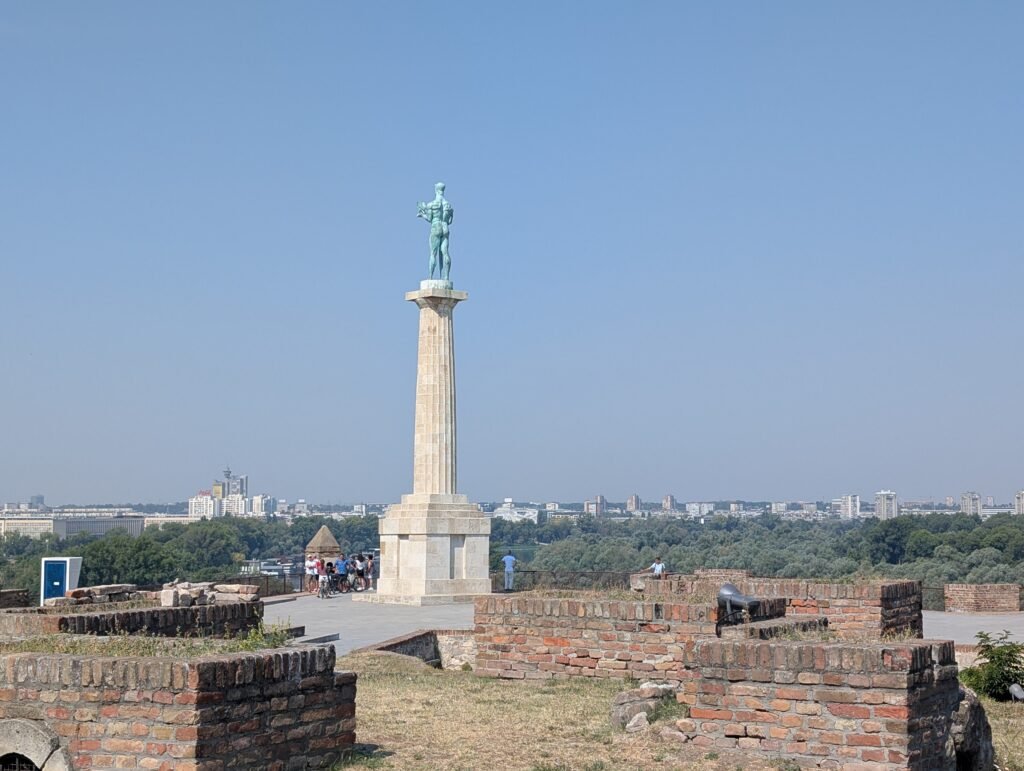
The Belgrade Fortress was on the same side of town, so that’s where we went next. Always a border region, the fortress changed hands many times over the years. It was Roman, Slav (Serb), Byzantine, Turk, Hungarian, and Austrian – being home to some masters more than once. It witnessed sieges of the city and several heroic defenses. The fort stands on a set of 400 foot cliffs overlooking the point where the Sava flows into the Danube River. It is a strategic point, and was understandably both protected and coveted by anyone who held or wanted power in the region. Every time the Austrians controlled it, they seemed to improve it somewhat, but never were able to keep it long term. Some of their buildings were destroyed when they left. There is even one Turkish mausoleum in the fort, built in the 18th century for Izzet Mehmed Pasha. The Serbs damaged it badly during a 19th century uprising. The entire fortress complex overlooks a large park by the river’s edge, and Great War Island.

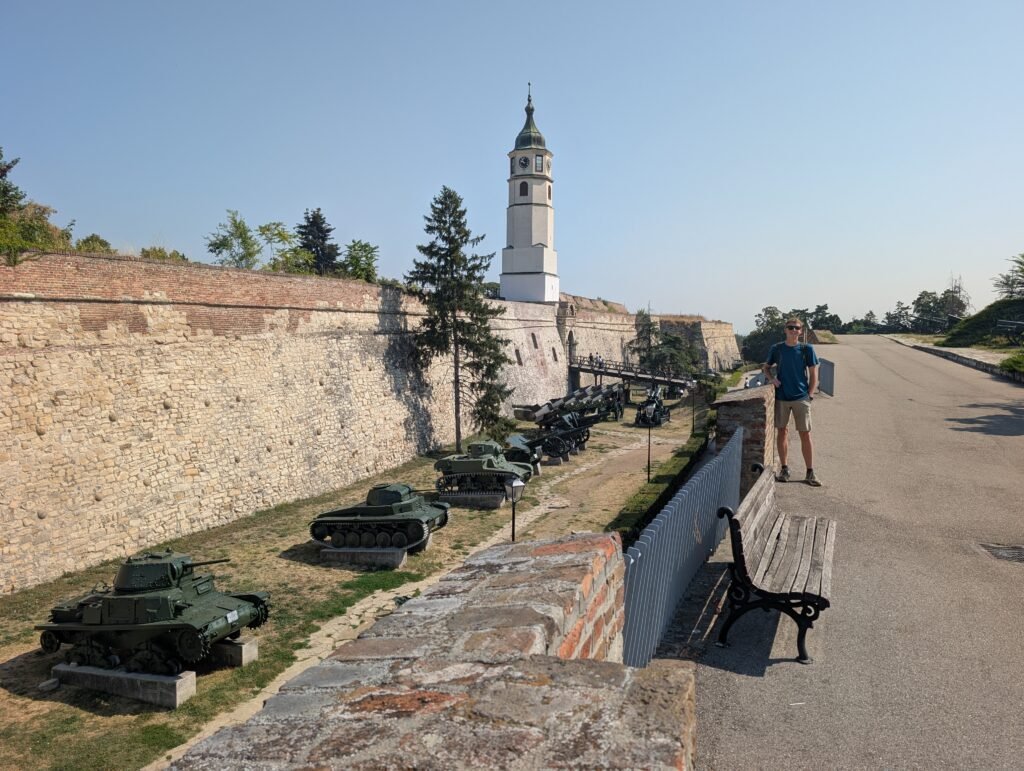
It was very hot when we visited the fortress. We enjoyed the sweeping views of the city and river. We saw the parts of the Serbian military museum on site that were outside – and most parts were outside. There were several derelict artillery pieces and tanks in the areas beneath the cliffs on the walled side of the fortress facing away from the river. We observed the souvenirs as well, and read what placards were posted explaining the fortress’s historical significance, describing some of the major battles, and interpreting the peculiar layers of ownership the fort was subject to over the years. We sipped our water and ate our snacks in the shade as the day heated up.

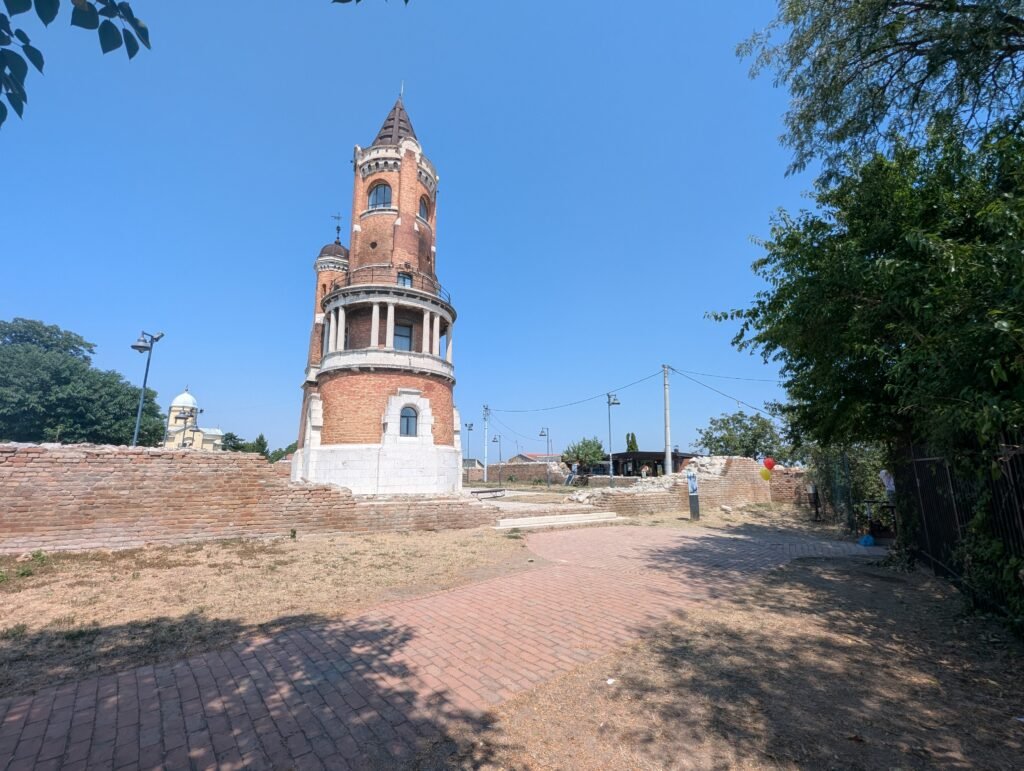
I decided to head over to the neighborhood of Zemun. Even when the Austrians didn’t control the entirety of Belgrade, the city was often a border town. It was the military frontier of the Austro-Hungarian Empire for the two centuries prior to that empire’s dissolution in 1918. The area of present day Belgrade that was consistently part of Austria is called Zemun. Zemun continues to have a more Austrian flavor than other parts of Belgrade. The most notable landmark in Zemun is Gardos Tower. The present Gardos Tower was constructed in the late 19th century to commemorate 1,000 years of Hungarian presence in the area. There were six other towers – all different – built in other parts of traditional Hungarian realms.

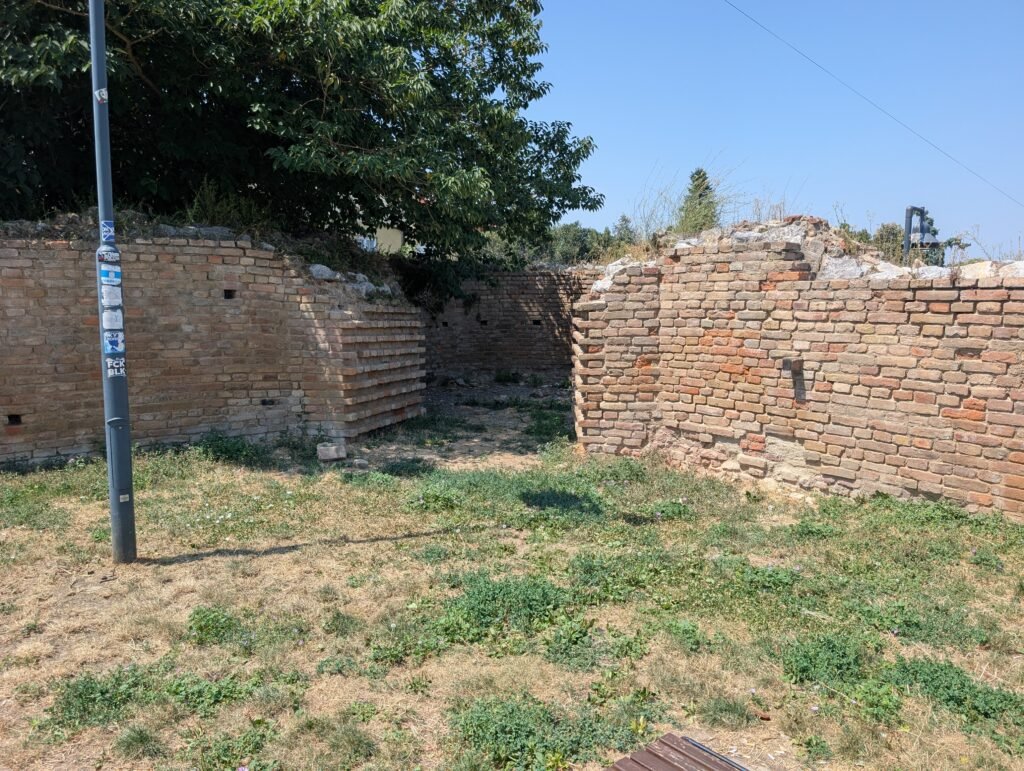
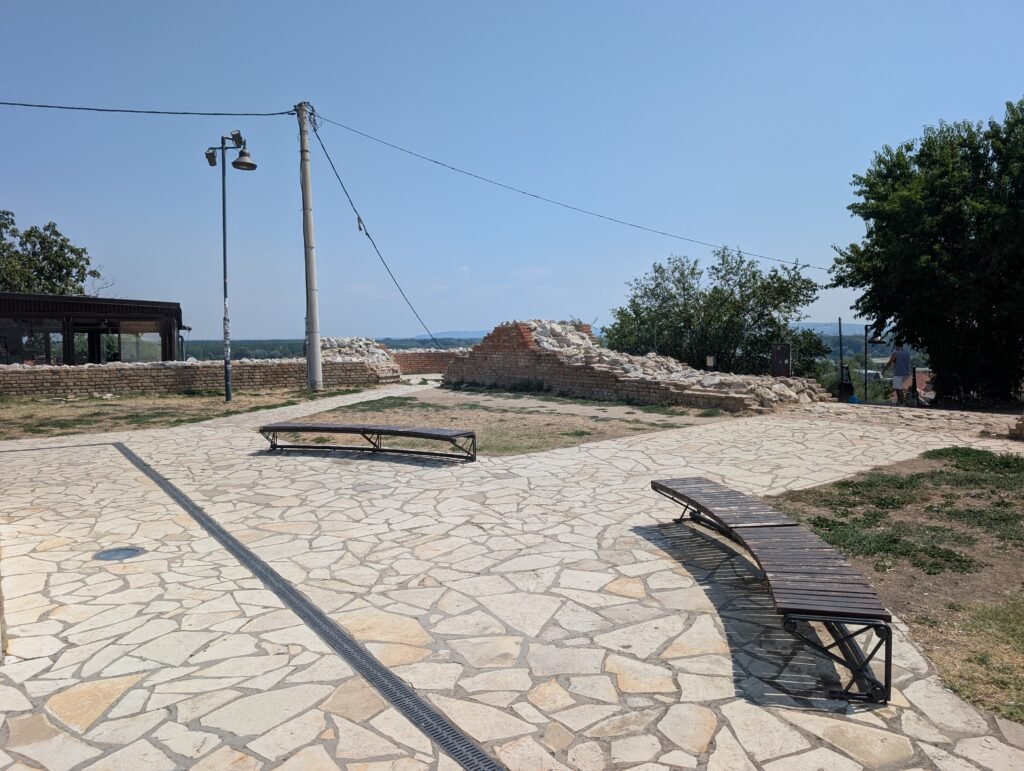
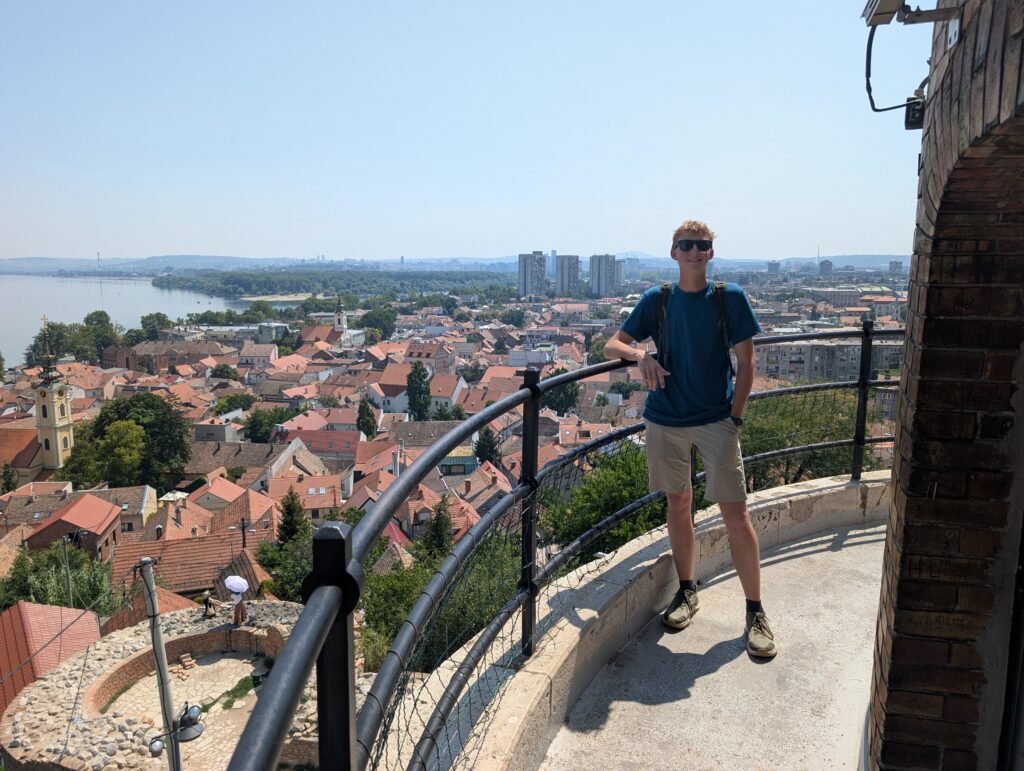
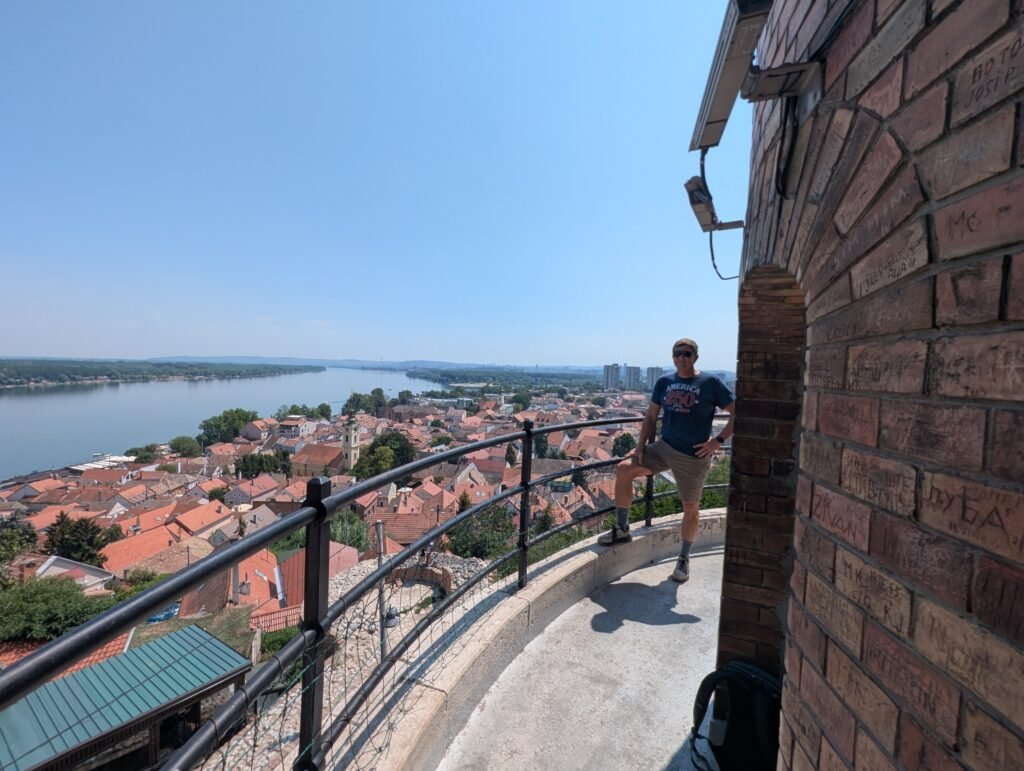
We were able to climb Gardos Tower for a small fee. Form the top, we again had very nice views of the surrounding city and rivers. Several remarkable churches were visible from the pinnacle. The tower itself was built on a much older Gardos Fort, the ruins of which are still visible. A square of stone ruins surrounds the base of the tower, with the bases of circular corner turrets also still intact. This fortification was mentioned back through the medieval period and was apparently itself built on even older Celtic or Roman fortifications.

We spent some time enjoying the views and talking to the few other tourists in the area. We helped a couple of Chinese girls get their glamour shots on the edges of the old fortress ruins below. We also visited with a young family of which the children were wearing San Diego Padres shirts. I asked their mother where they were from. “San Diego,” she replied in a very strong Slavic accent. I joked with her a bit, and she eventually revealed that although the family now lived in San Diego, she was in fact from Belgrade originally. I asked for recommendations on what else to see, eat, and do. She said she had been gone so long that she, like us, was just a tourist sort of discovering the city for herself with her children.

(Continued)

Views From the Fortress
Here, Everybody Smokes!
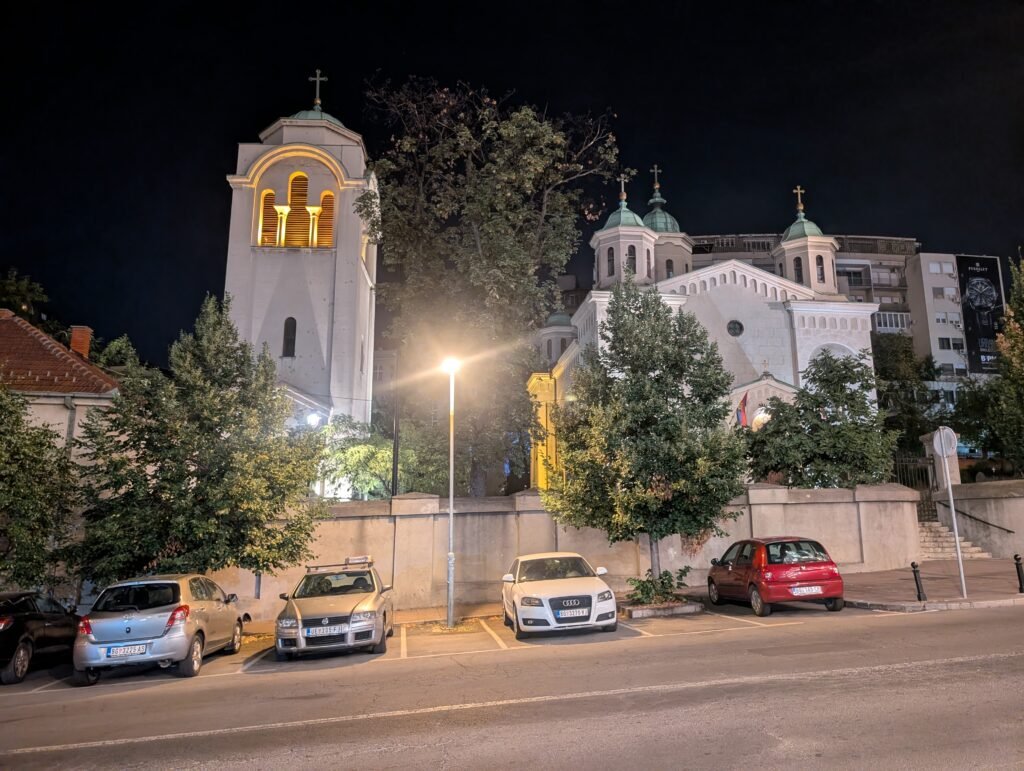
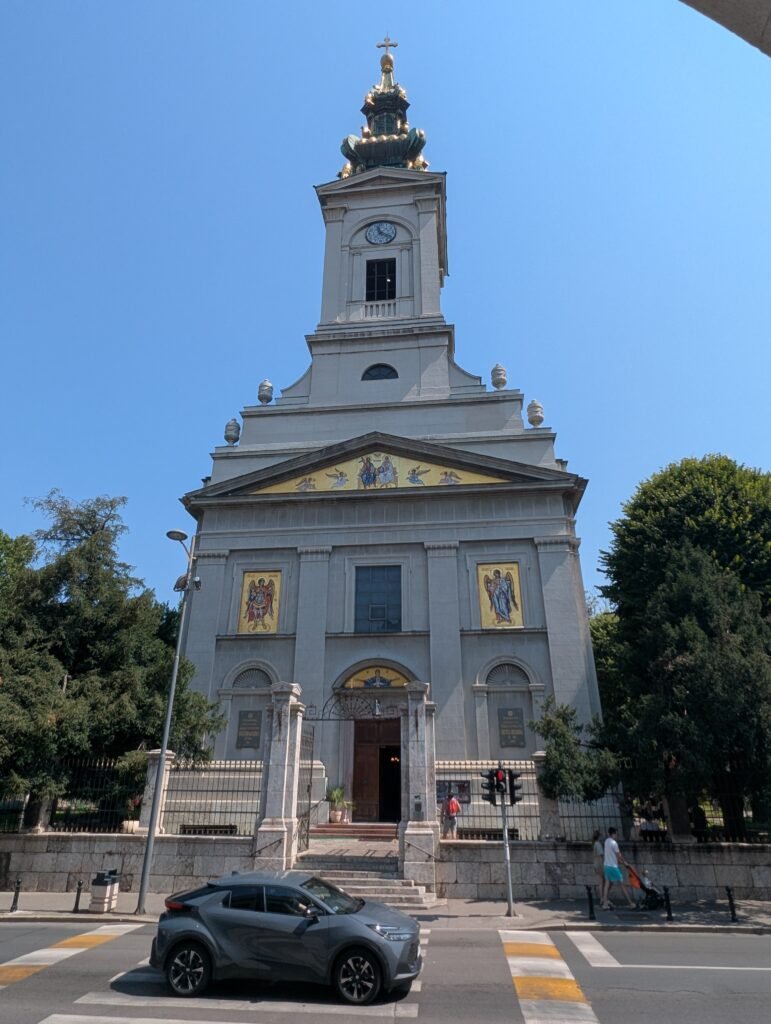
A Pretty Orthodox Church We Just Happened Across
Gardos Tower in Zemun
Ruins of Older Structure Around Modern Gardos Tower
Views From Gardos Tower

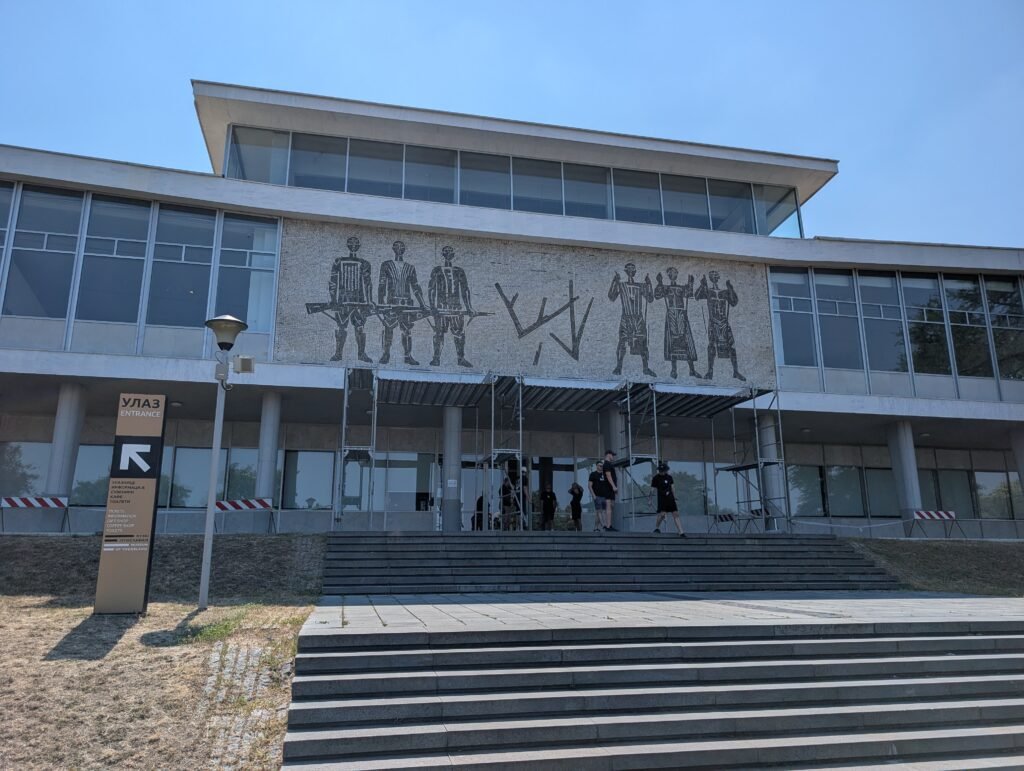
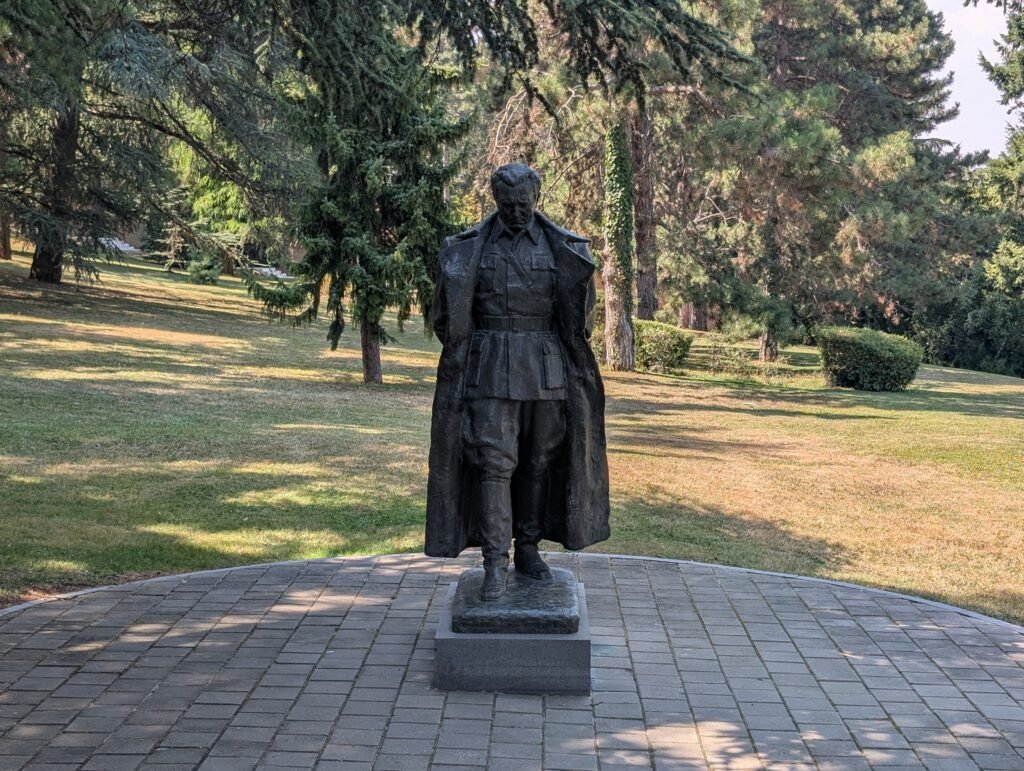
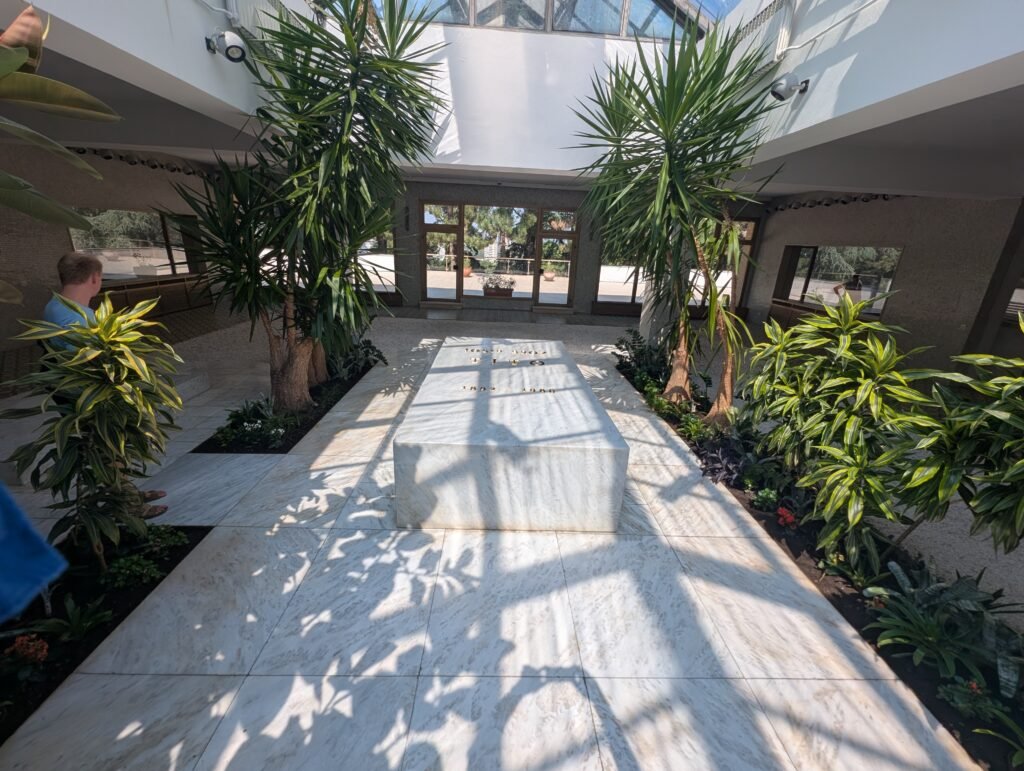
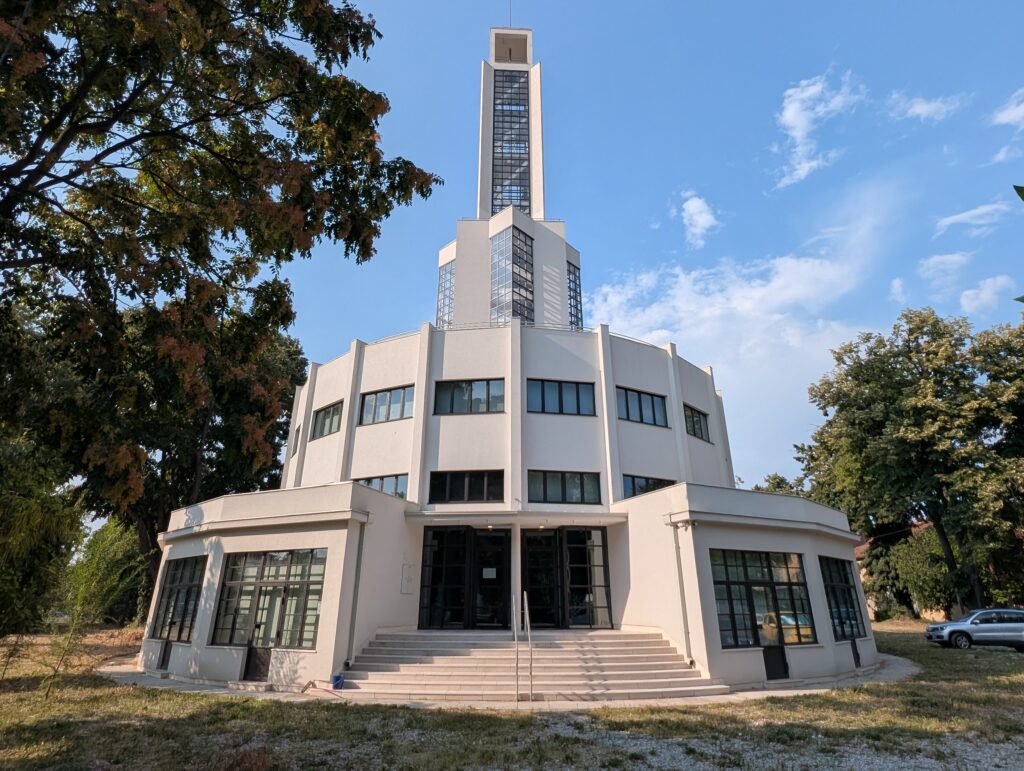
Walking Zemun was an interesting change. It would have been fun to spend a day there, I think. We only had the one day for all of Belgrade, though, and still had some other parts of town to see. We headed next to the House of Flowers, since it had closing hours. The House of Flowers is the final resting place of Josef Broz Tito, former dictator of Yugoslavia. There are three buildings there. The mausoleum building itself has some interpretation and some English placards in the connecting rooms. The “old museum” area is a traditional museum dedicated to Tito and his impact on Yugoslavia. The third is a modern art museum, dedicated to remembering holocaust victims in general, and specifically those who lost their lives in concentration camps in and around Belgrade.

The mausoleum site is a pretty and somber location. It was built on the site of a residence once belonging to Tito, apparently where he wanted his remains to be interred. There are flowers and a glass ceiling, kind of like a big greenhouse. There is an area nearby where one can walk around the site. Two connecting rooms show pictures from throughout Tito’s rule in Yugoslavia, with interpretive placards.

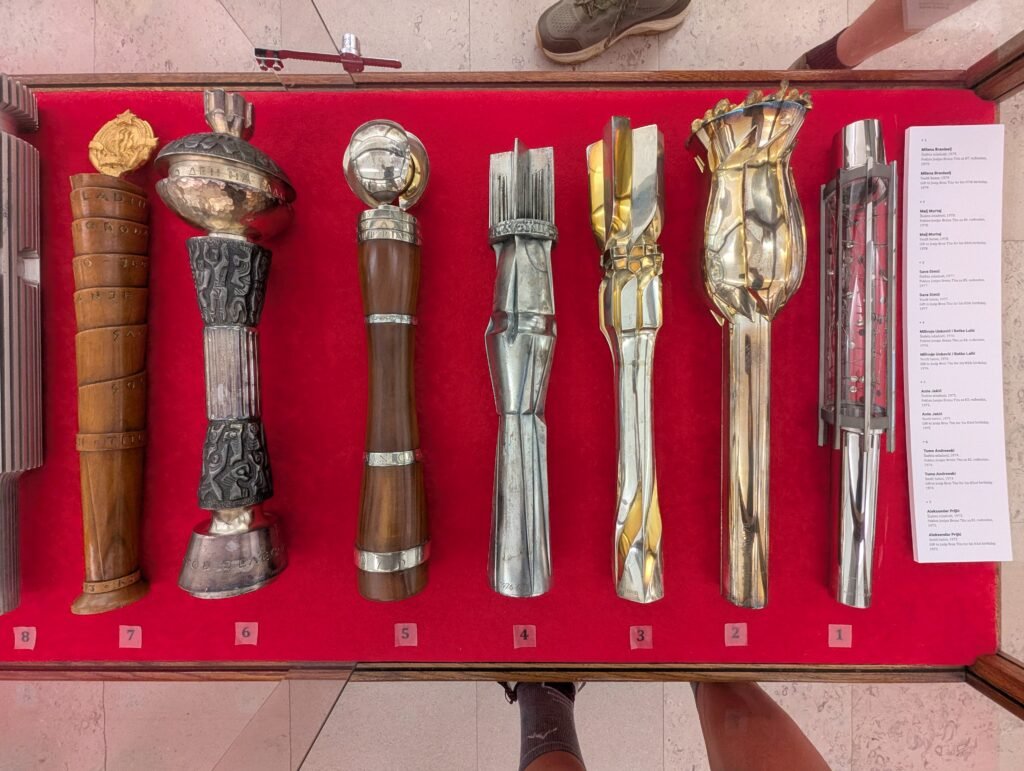
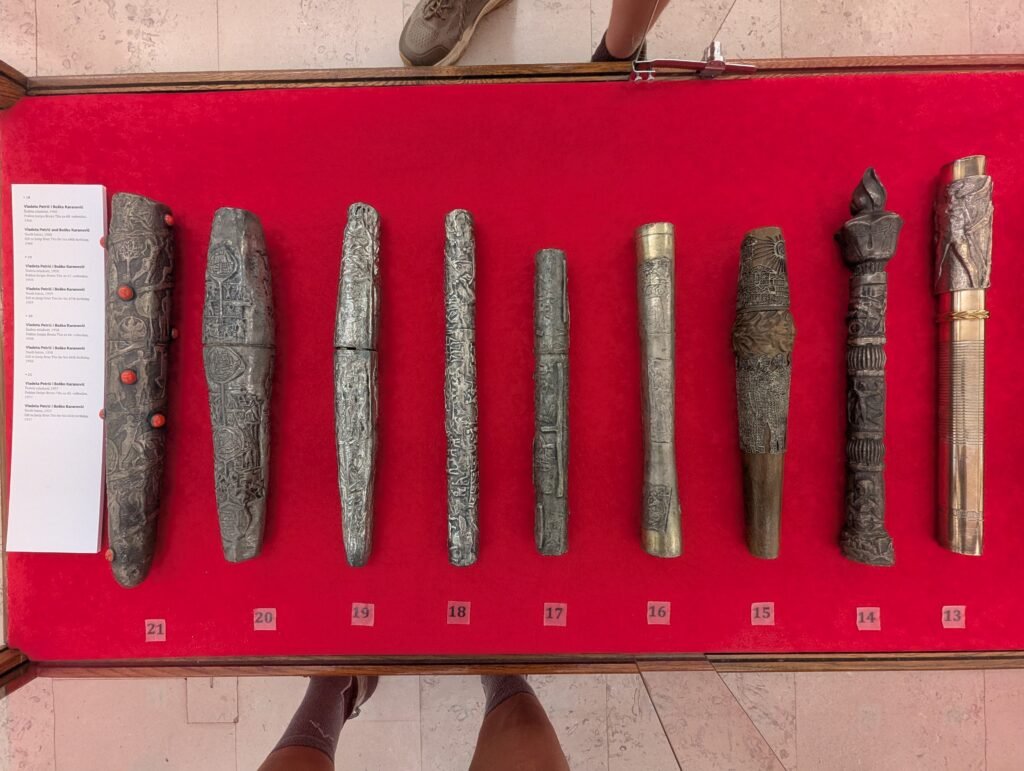
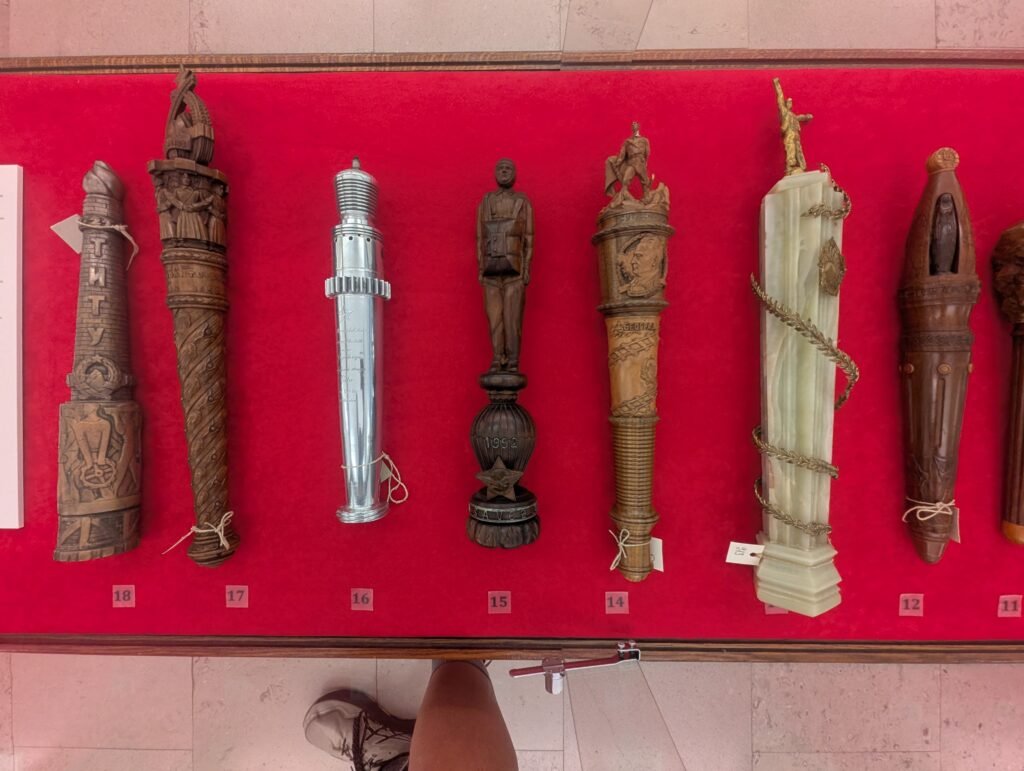
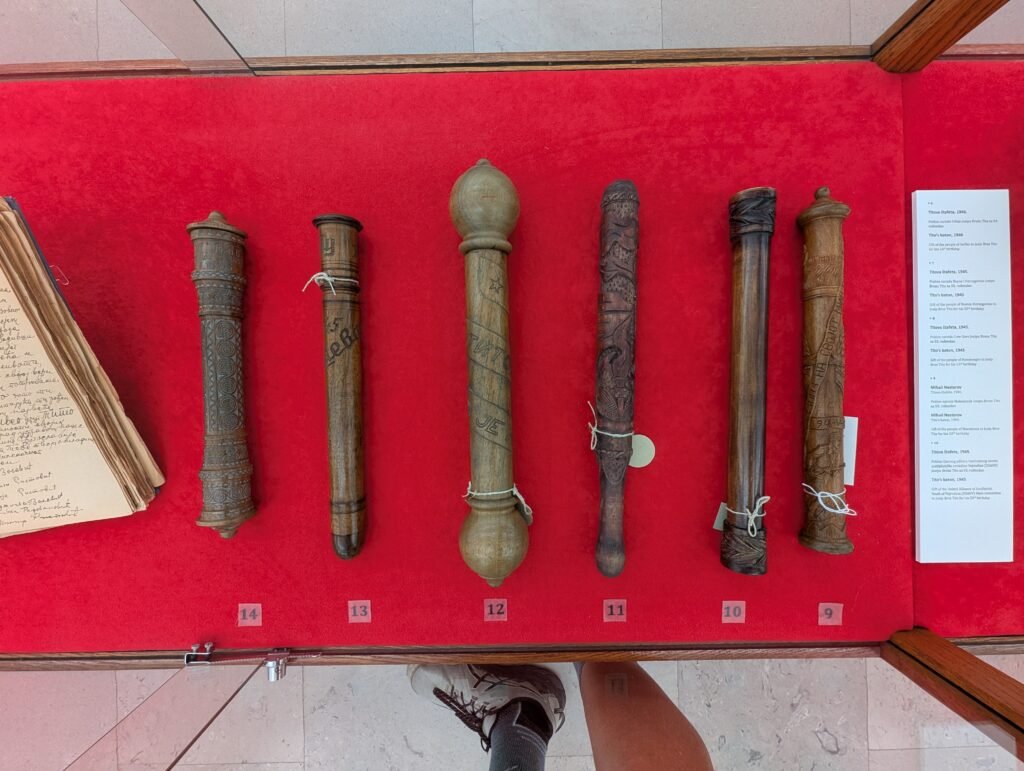
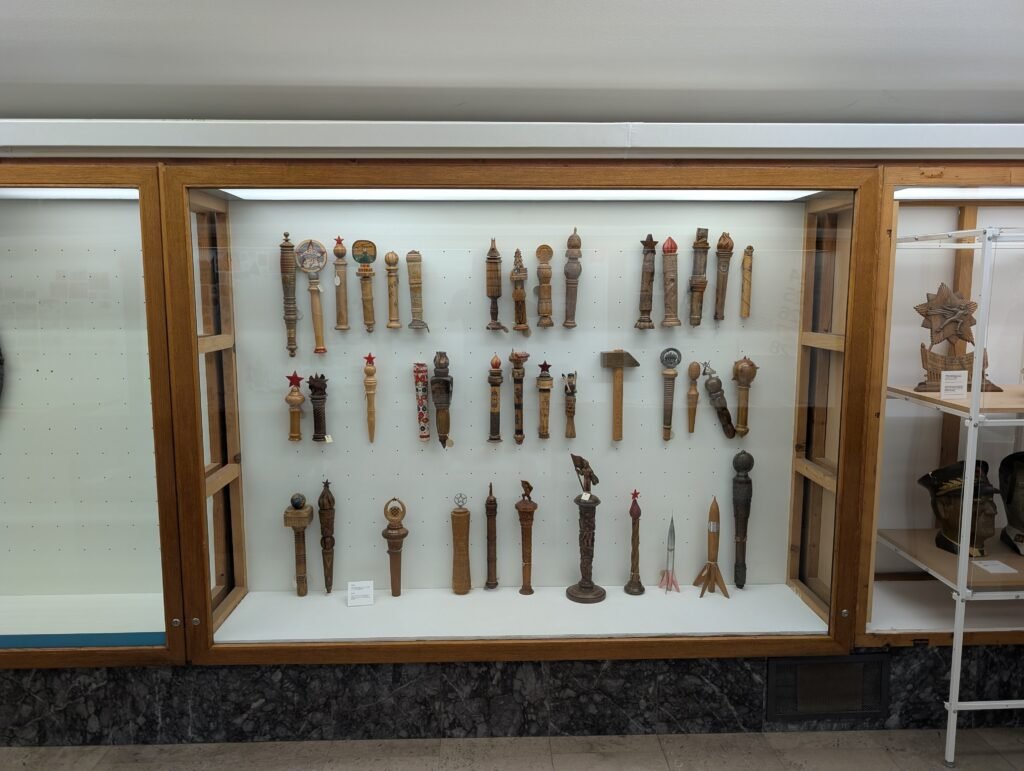
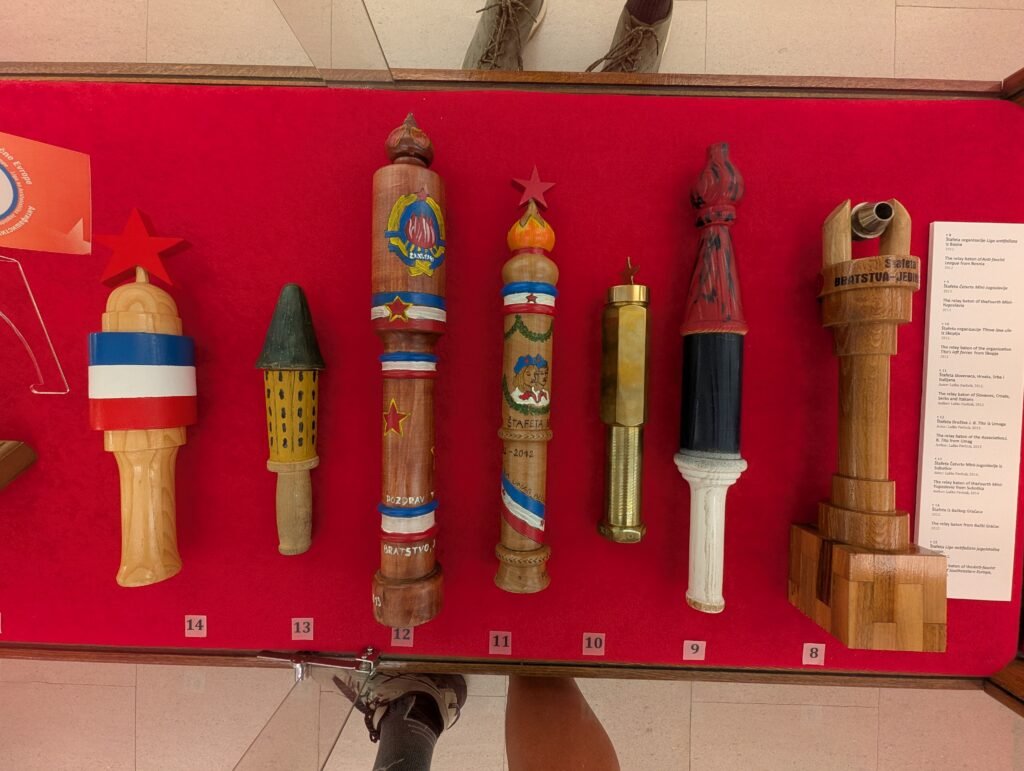
I found the old museum section most interesting. It had numerous relics from Tito’s rule. There were gifts from former dignitaries, such as are on display at the Ceausescu mansion in Bucharest. There are relics from communist Yugoslavia. The most unique component of the museum is the thematic series of batons given to Tito over the years. Apparently, Tito had a special affinity for these decorated batons. They were all roughly the size of a track and field relay baton. Many were carved in special shapes. All were painted in some way to commemorate an event, a group, or just to mark the occasion of their being given to Tito by some group within Yugoslavia – a youth group, a labor guild, or whomever. I had never seen anything like this. There are several dozen or maybe even more than 100 of these batons on display in the old museum. The complex as a whole has possession of about 22,000 such batons.

We spent less time in the larger museum in front, with modern art commemorating holocaust victims. Belgrade had been home to more than one Nazi concentration camp during World War II. I had read that some remains were visible of the largest of them at Staro Stajmiste. This was the old city fairground. All that really remains of the concentration camp is the central tower. It is in a pretty run down area of town and doesn’t seem all that well preserved. There are a couple of other buildings in the area that look like they could have dated from the war era, but the only interpretation is inside the old tower. There was a sign posted on the tower stating that visiting was by appointment only. Apparently there are no opening hours.

The shadows were growing long by this point anyhow. Andrew and I decided to head back to our side of the river. We would get cleaned up and headed out to dinner once more. We knew that the route back would take us by the Serbian Ministry of Defense Building, which we wanted to see again. We had noticed it when coming into our part of town the day before.

As mentioned in the Sarajevo page, U.S. led NATO forces bombed Serbia in 1995 when the Serbs would not back down from their ethnic cleansing practices. Later, in 1999, Albanian Muslims in Kosovo declared their independence from Serbia. The Serbs ran an aggressive military campaign against the Kosovar rebels as well. The U.S. again bombed Belgrade until the Serbs relented and just left the Kosovars alone. To this day, Kosovo claims independence, but Serbia says the territory is theirs.

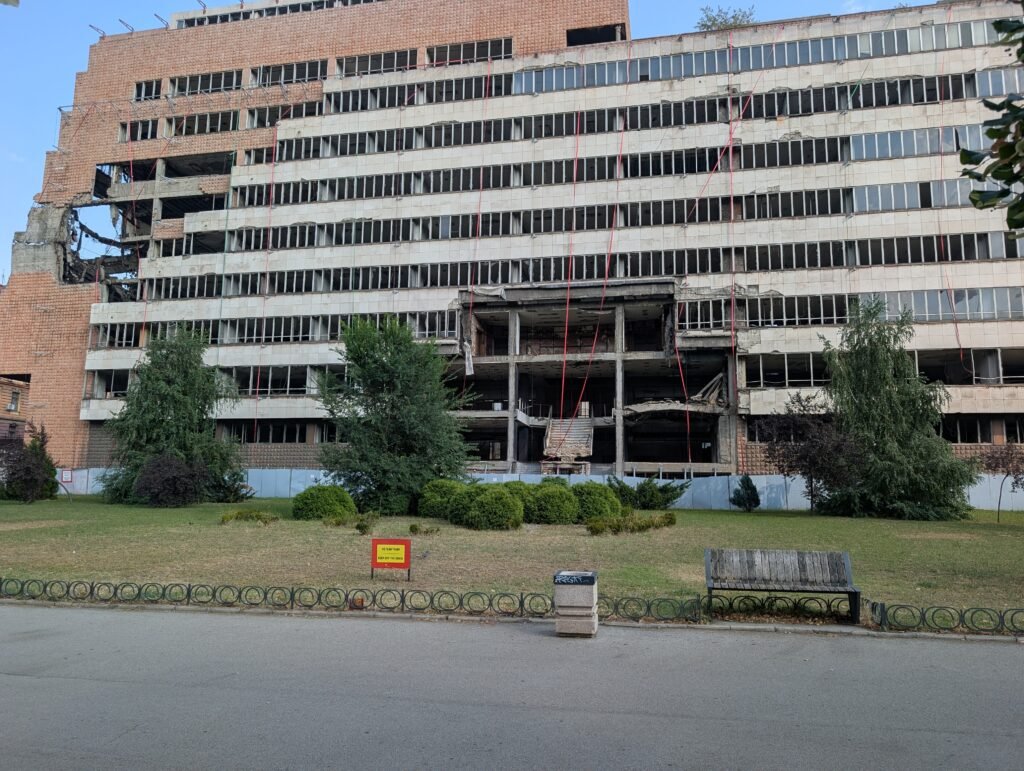
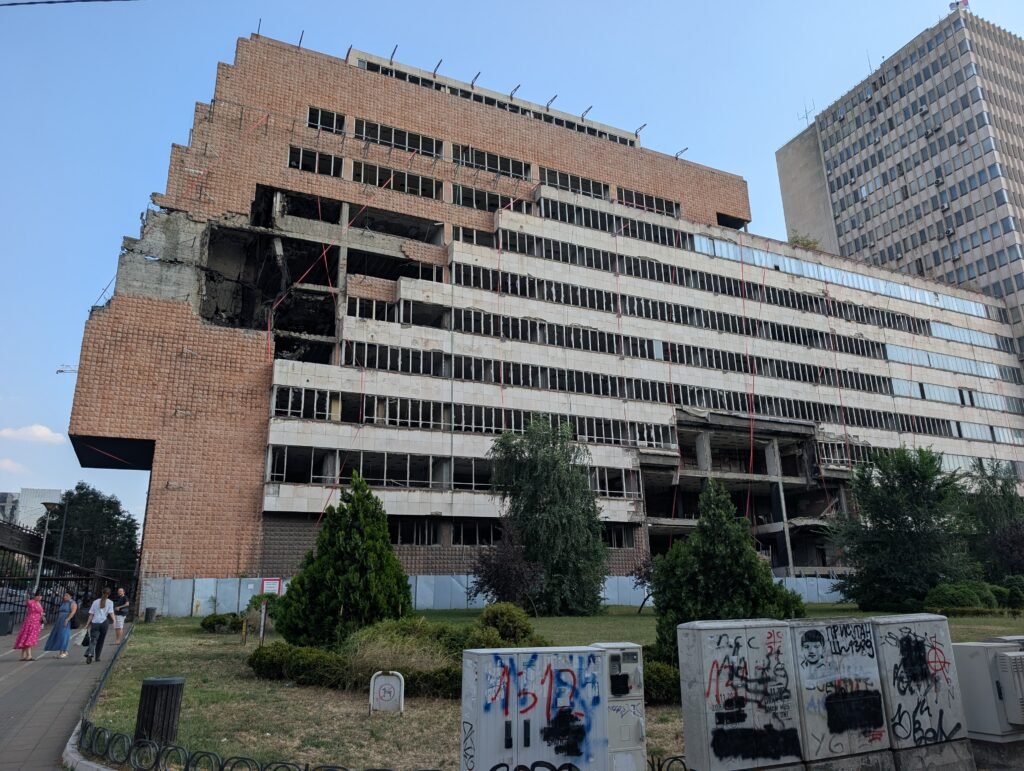
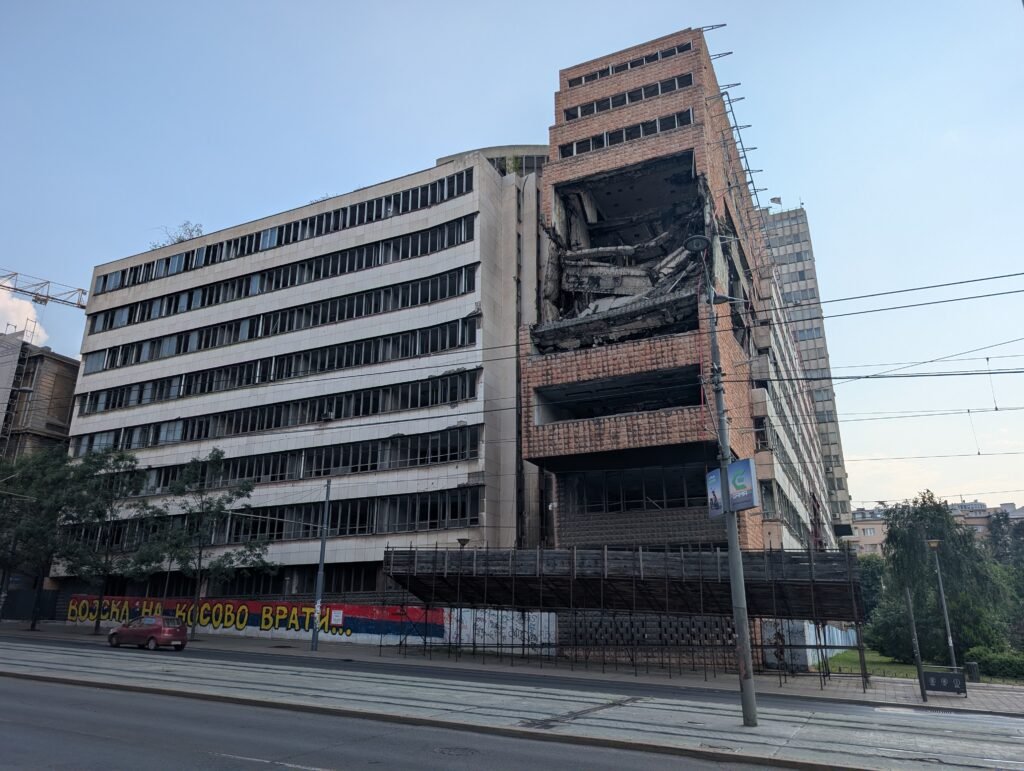
U.S. forces repeatedly bombed the Serbian Ministry of Defense Building. The Serbs had long ceased using the building for any strategic purposes. American military intelligence well knew this. They bombed it for symbolic reasons. In a way, it was a means of showing that the U.S. could exert whatever pressure it wanted on Serbia without risk of actually harming many people. The Serbs opted to leave the ruins of the building up for the last 27 years as a monument to Serb resistance to external forces. So it stands there in ruins, like so many buildings around the former Yugoslavia.

It is interesting to see this testimony to events that happened during my lifetime and memory. It is also peculiar to note how long ago these events were and how long the buildings have been left as ruins to testify to perceived grievances. Every party in the Balkans remembers the crimes committed against their faction and clings to them as a part of their identity and as justification for their own responses when they have the chance. It feels like a recipe for conflict to reemerge at some point when there is not a sheriff in town to prevent mass violence.

We made our way back to the room, cooled off for a few minutes, and headed out for some more Balkan cuisine. We had not seen all of Serbia, or even all of Belgrade. I was content, though, that we had seen as much of Serbia as we could have in a single day. It was a good taste of the country. Had I been blessed with more time, I would have spent a day or two more in Belgrade, and probably a few days in Novi Sad. I needed to head back to Sarajevo, however, and then on to Mostar before it was time to fly off from Dubrovnik in just a few short days.

Newer Yugo Museum at House of Flowers Site
Tito Statue
House of Flowers
First of Many of the Batons
Serbian Ministry of Defense Building, With 1999 NATO Bomb Damage
Concentration Camp Tower
Old Railroad Station
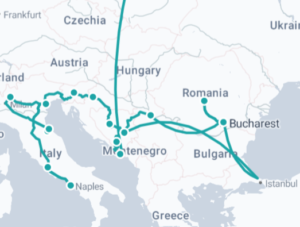
Italy Yugoslavia Overview
Sarajevo
Helsinki