Zagreb
Non-Coastal Croatia
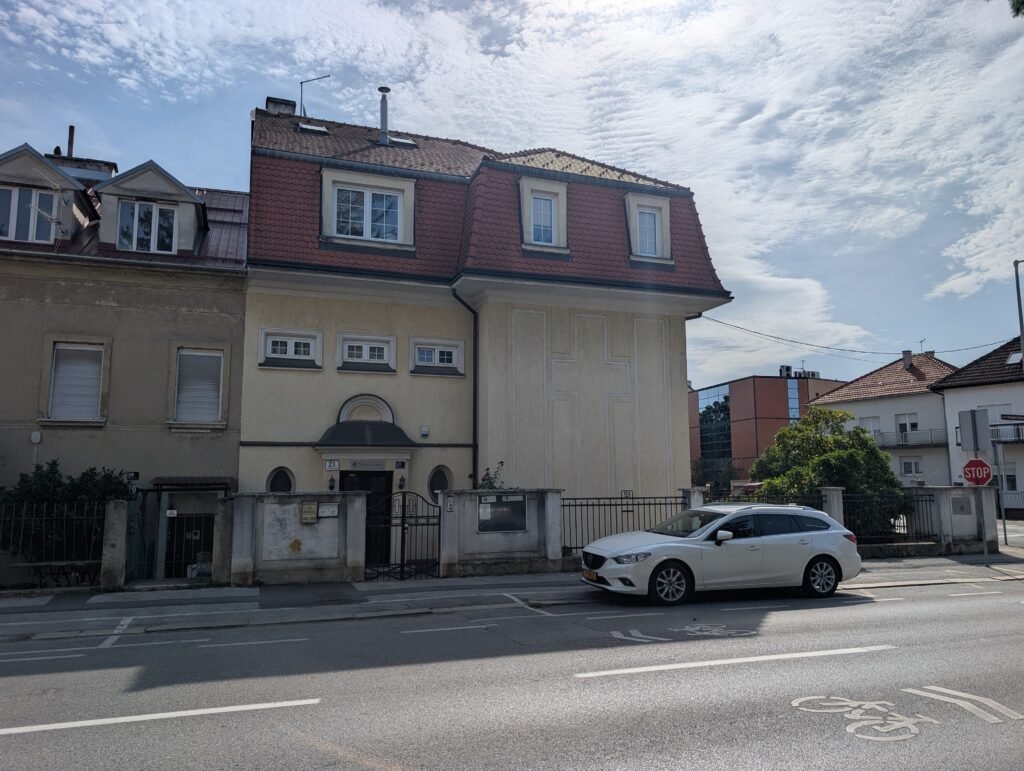
Fortunately for me, the buses all ran on time Sunday morning. Slovenia and Croatia are both Schengen countries, so there are no border controls between them. I made it to Zagreb in time to figure out the trams, buy the local tickets, take the ride, and walk the remaining distance to the church. The folks at church seemed a bit surprised to have visitors. We ended up with a group of about twenty, two of whom spoke some English. I was able to sing along with most of the hymns. I was also able to figure out what scripture they were reading and discussing, so I could at least follow along reading the passage. The service seemed a bit more like a Bible Class than a sermon. Occasionally, I was asked for my thoughts on a question by translation.
There were a few older ladies and other Croatians. One of the men who spoke English also picked up a van of Ukrainian orphans who lived in a facility on the edge of town. They had apparently been displaced to Croatia for years now. Because he had to take the Ukrainian kids back to their domicile, Goran was occupied during the afternoon. He was kind enough to drop me off at my hostel after church before heading to the outskirts of town on his errand.
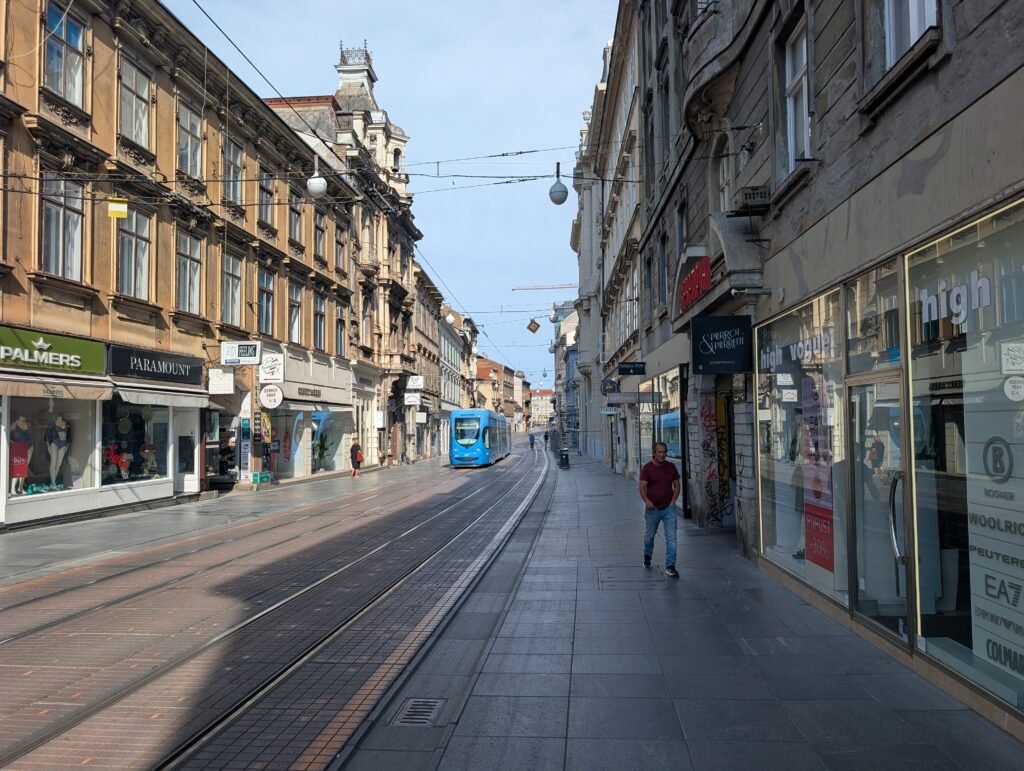
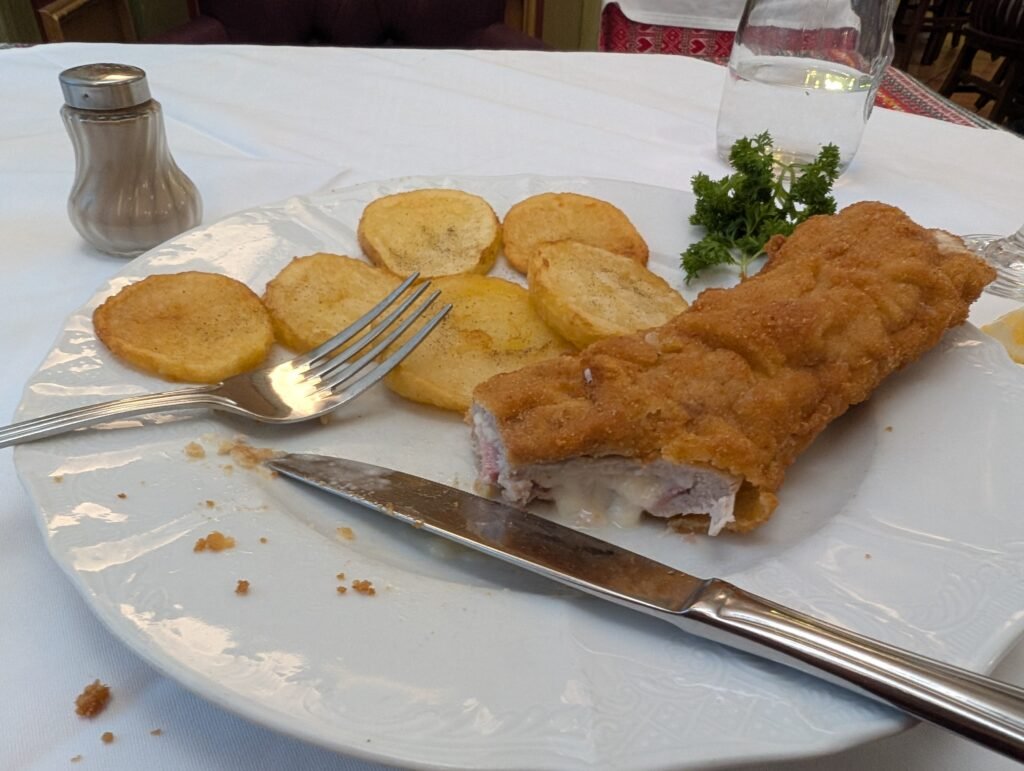
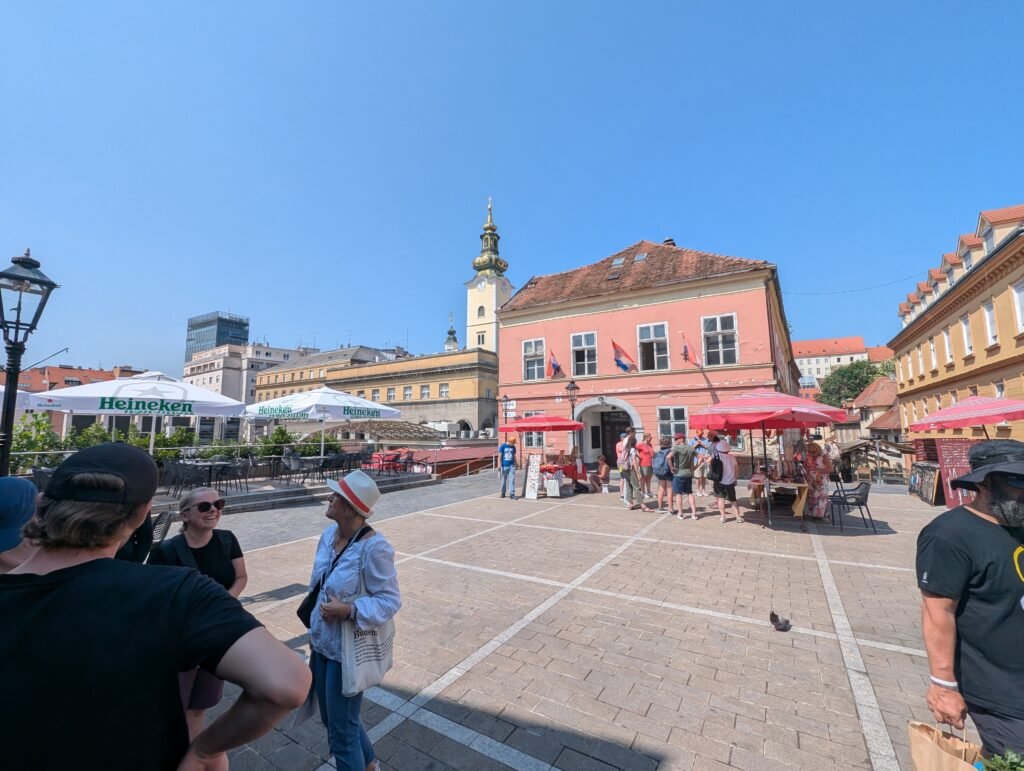
I checked into my hostel, got my bearings, then headed out to see some of the highlights of the old town. I looked into a city walking tour, but it seemed none of these were available until the following day. I borrowed their itinerary and went to look at most of the sights on their agenda. A few were closed, and the market was shut down for the day. Croatia is a Catholic country, so many things are closed on Sunday, including nearly all supermarkets. I was able to peek inside the old Zagreb cathedral, see St. Mark’s, and climb the tower from which a cannon is fired each day. I was also successful in finding some traditional Croatian food that evening. Goran had recommended a spot just across from my hostel. It was reasonably priced. I tried the Zagrebacki Odrezak, a schnitzel or fried piece of veal stuffed with cheese and ham. This was pretty good, but not the best thing I had ever tasted. The fried meat part was a bit dry, but it wasn’t bad.
I had a strange incident that night where a druggie came into my room and wanted to start a fight. The hostel hosts were kind enough to let me move rooms, and I had a peaceful stay the remainder of my time in Zagreb. I rose early and ran around a little park not far from my hostel before meeting my group for the walking tour of Zagreb. We did visit nearly all the same spots I had seen before, but the tour guide was excellent. She had a soft spot for history, and explained many things I hadn’t known about while walking alone on Sunday evening. Mirjana was one of the best guides I have had on one of these walking tours.
Zabreb was originally two neighboring towns, Gradec and Kaptol. One of these was the home of all the churches and monastic orders. The other was home to trade guilds, nobility, and other townspeople. There were apparently wars on and off through the middle ages between the towns. Eventually, they were proclaimed one city after they grew together and tensions eased. The conflicts beforehand, though, were frequent enough that the crossing over the old stream between the two neighboring villages earned the moniker “bloody bridge.”
(Continued)

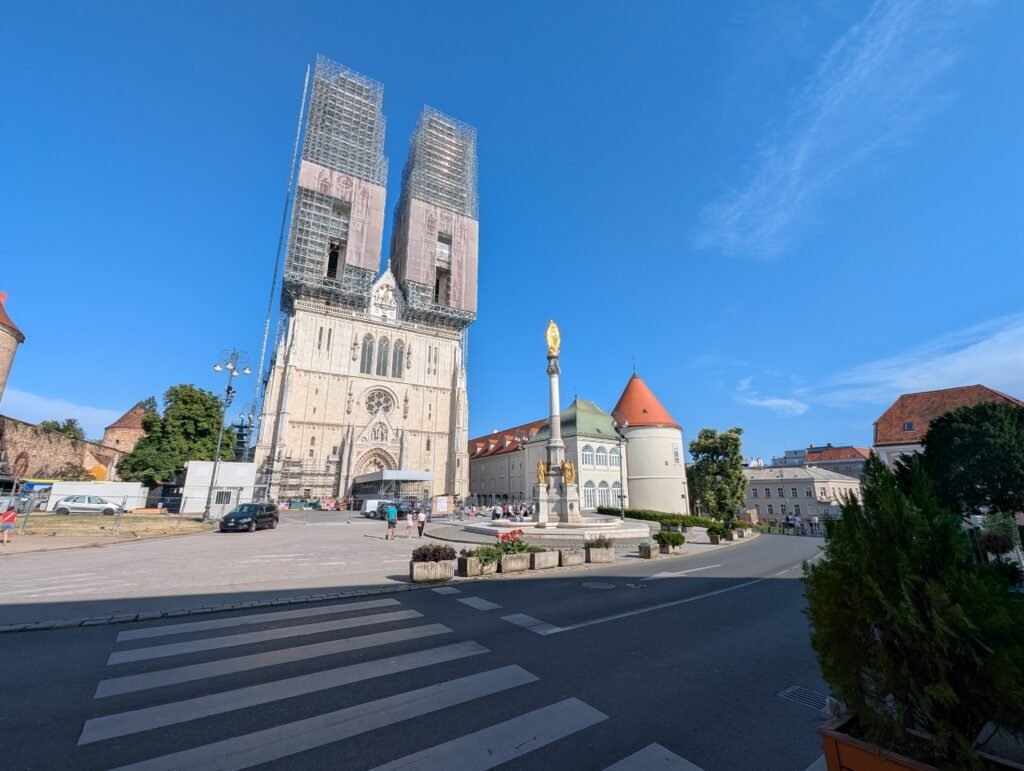
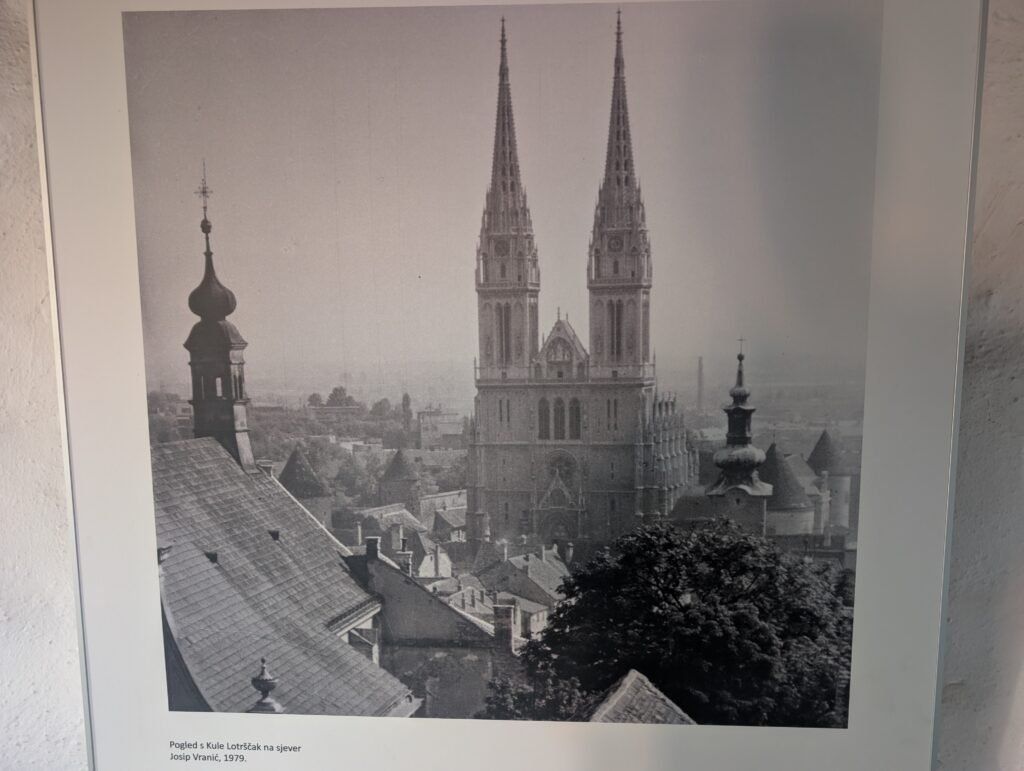
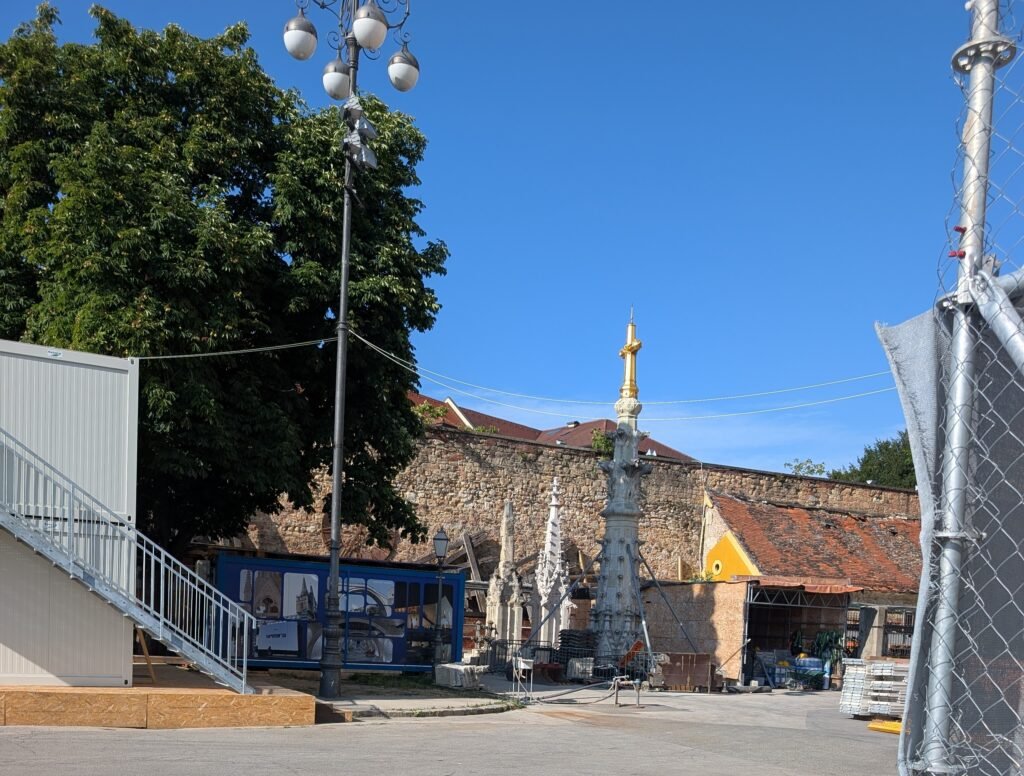
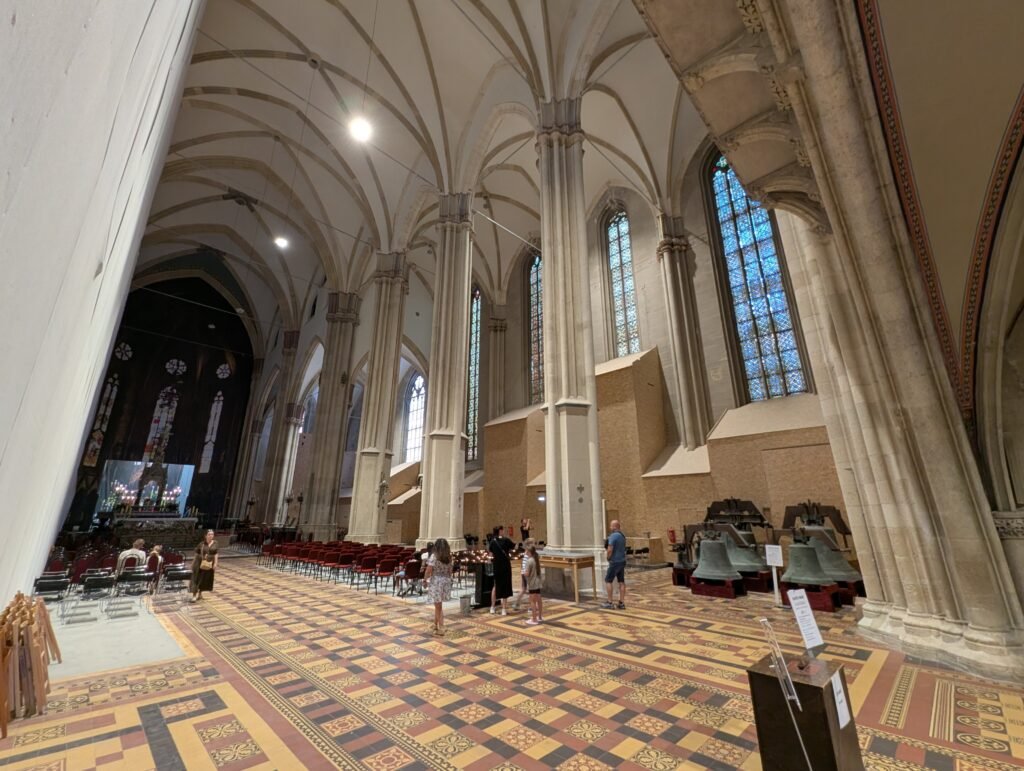
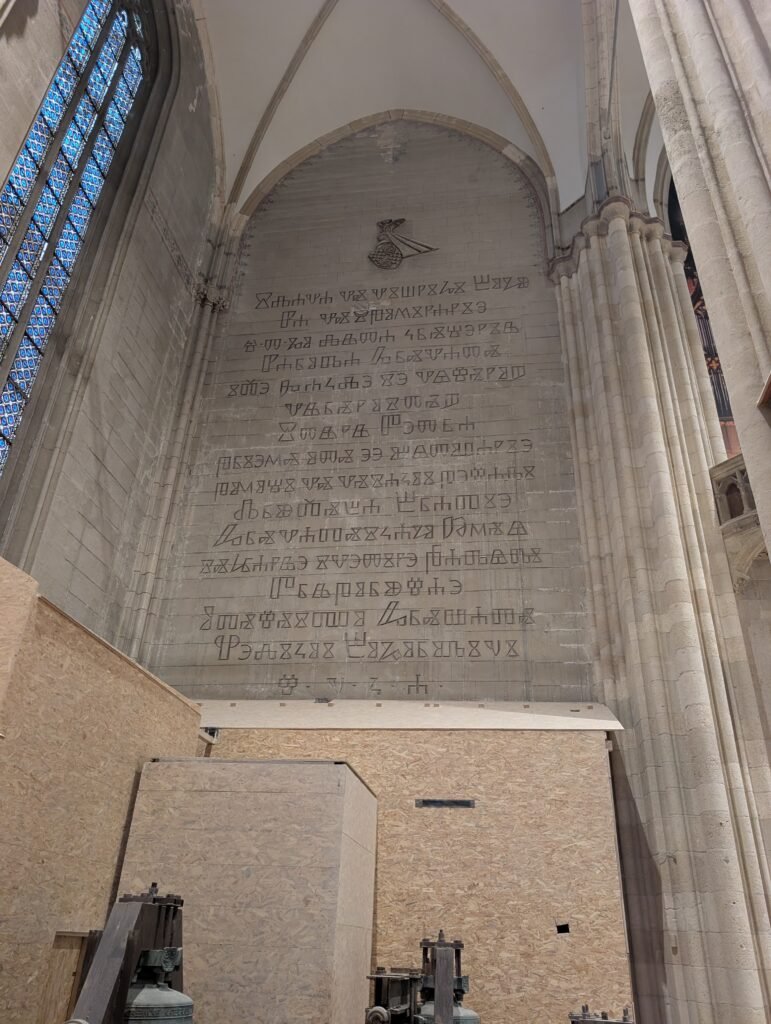
One of our first stops along the walking tour was at the Zagreb Cathedral. There has been a church on this site as long ago as the early 1200s. The first church was damaged in a Tatar invasion during the same century, and again suffered catastrophic damage during a major earthquake in 1880. The current Neo-Gothic building was constructed in the aftermath, though the progress was very slow. The late 19th century building features two towering spires reaching well over 100 meters making it one of the tallest churches in the world, if not all that large in terms of area. This building was again damaged during another big earthquake that struck during March of 2020, just as the Covid 19 pandemic was doing its work. The interior is still barely accessible. Everything is blocked off with partitions. The sarcophagus of the priest who was serving during World War II lies near the altar. There is also a large, interesting inscription on the walls in a Croat alphabet predating their use of Roman or Cyrillic.
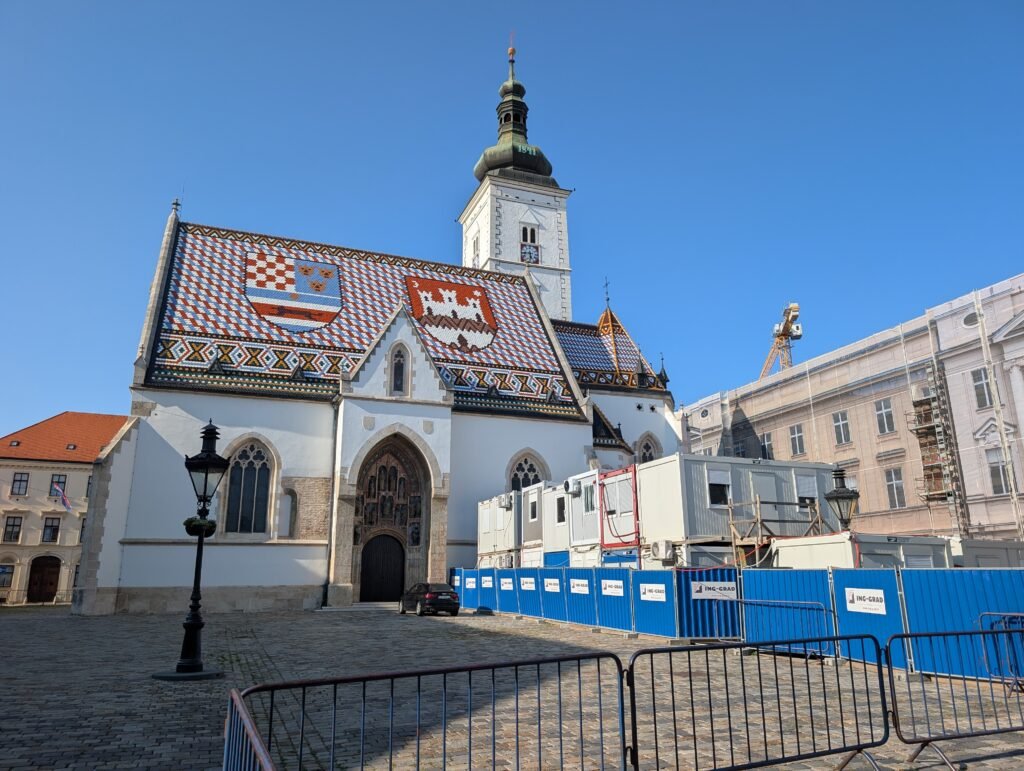
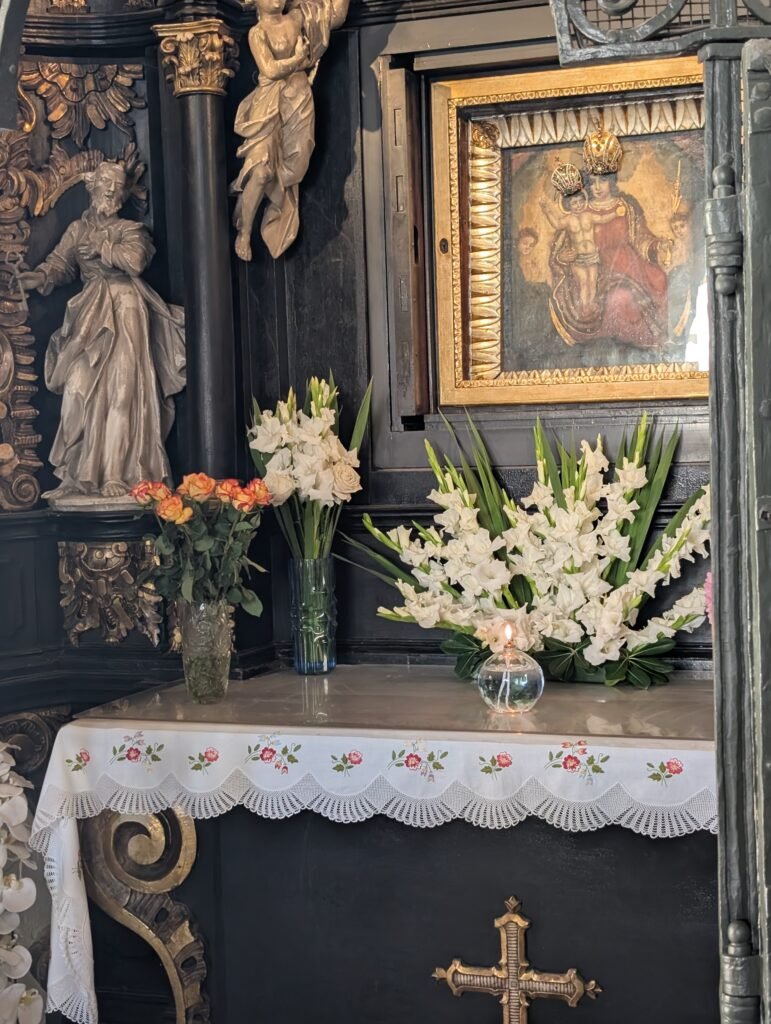
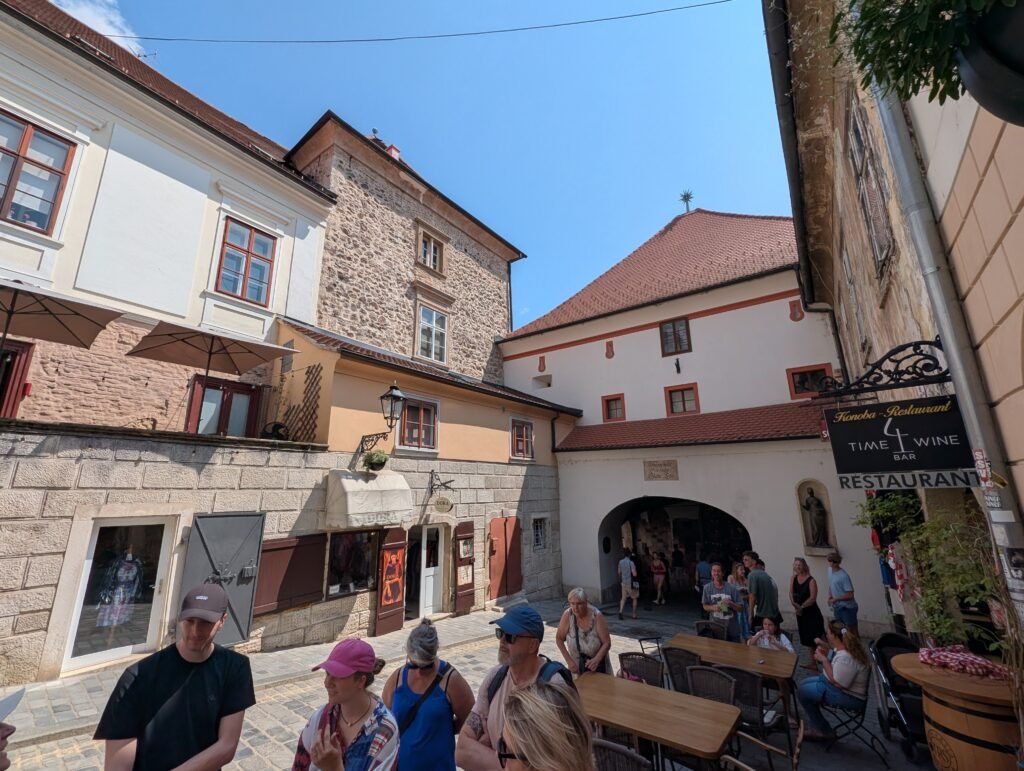
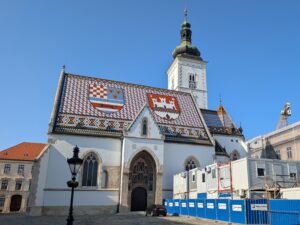
We made our way past the open market, and through the stone gate. Mirjana regaled us with tales of witches and medieval conflicts as we walked. Some of the buildings even had ornaments on top that our guide explained as witch guards. The Stone Gate is home to a religious relic and icon as well. In this gateway hangs a photo of Mary that survived a fire unscathed and is seen as a miraculous appearance. A group of nuns sat praying in a designated space there as we passed on the way to St. Mark’s. St. Mark’s church sits in an area of town near the government buildings. It has been designed to have a Vienna-like Lego-style roof. As with most old European churches, this one has undergone many reconstructions and changes. The original was again there at least from the 13th century. Hermann Bolle, the same guy who designed the 19th century cathedral rebuild, was in the middle of working on this church when the same earthquake restarted that work. The Lego roof features coats of arms of Slovenia, Dalmatia, and Croatia. The entire redesign is pretty heavily influenced by Vienna, as is most of the architecture in the older part of the city. As of this writing, you can’t go inside the church, or even really get a good picture due to the construction going on around it.
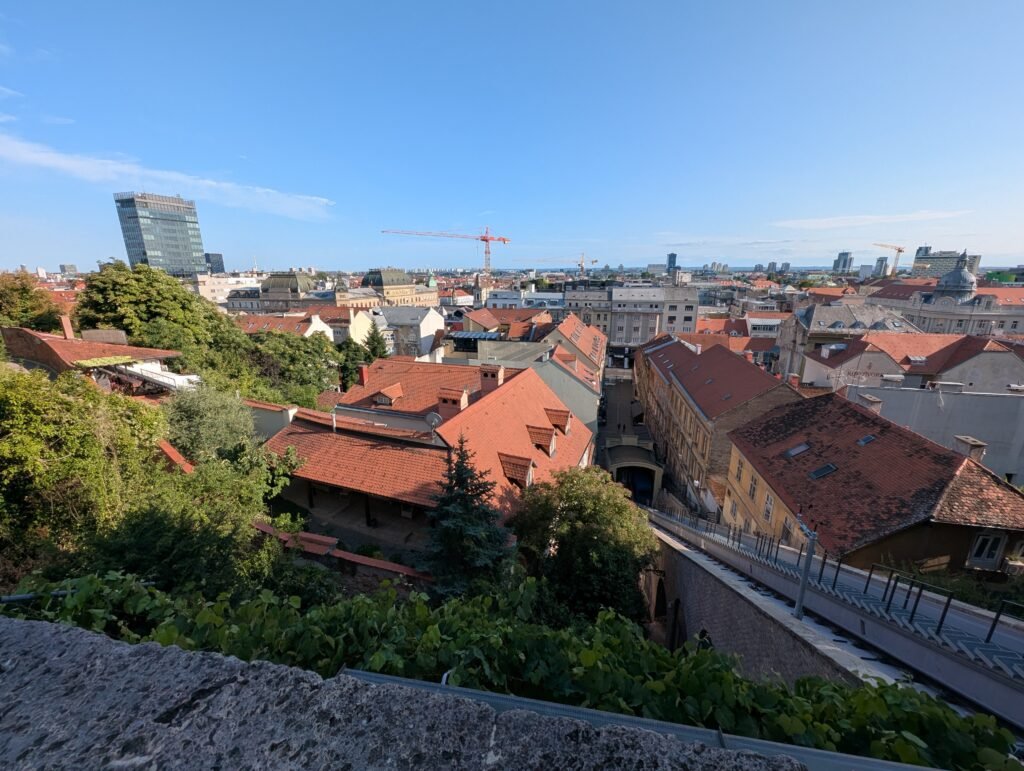
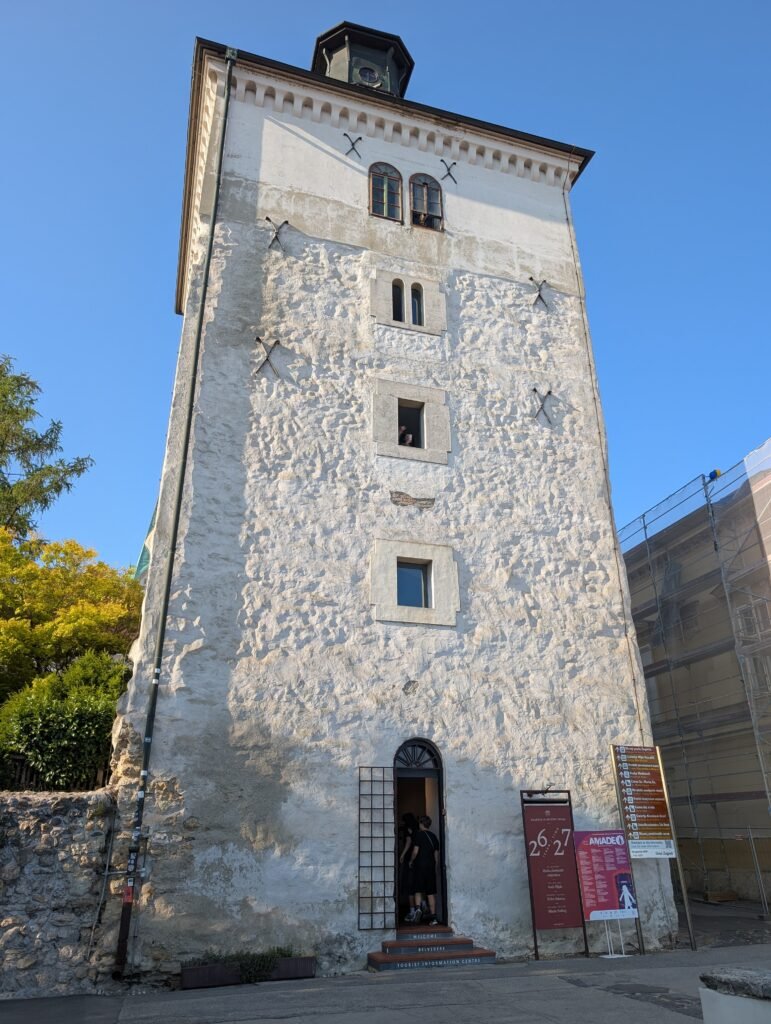
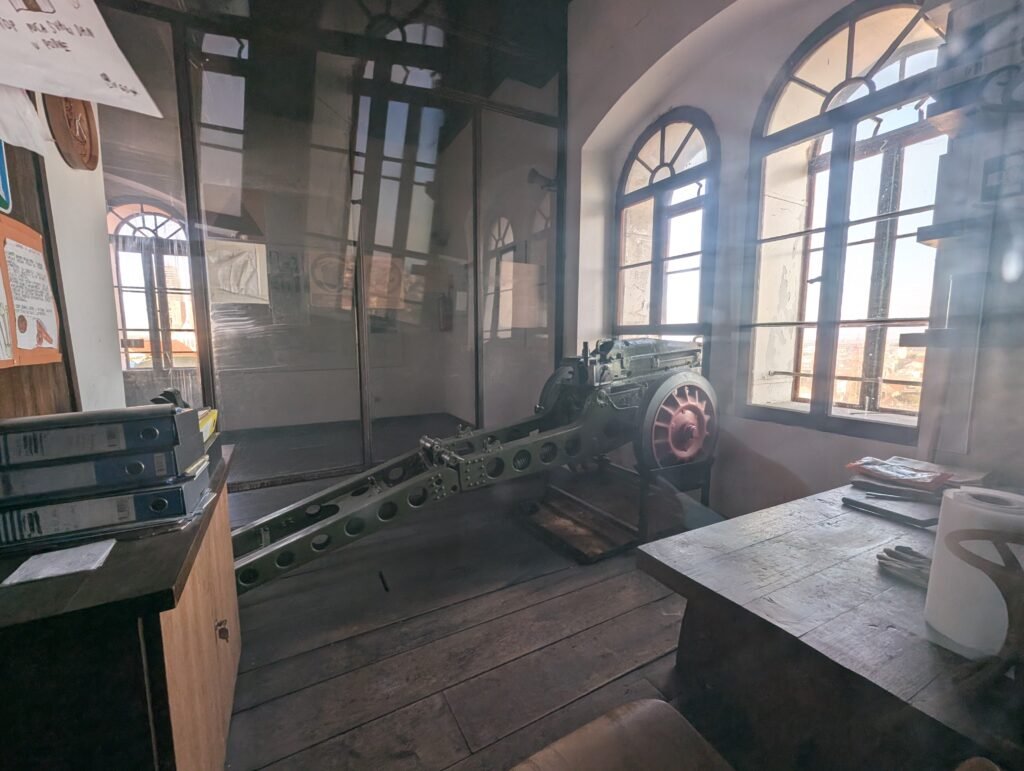
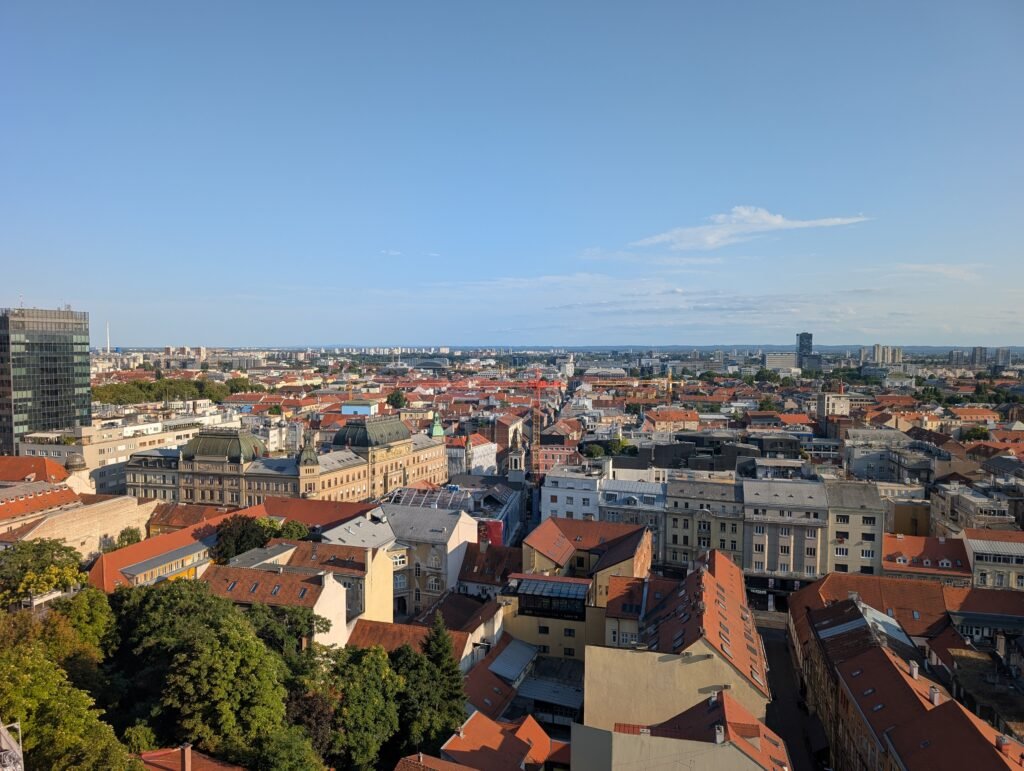
Just down the street is the Lotrscak Tower. I had ascended it the day before, taking in nice views and snapping a few photos. The tower had been constructed around the same era as most of the churches, but it had been much shorter. It was expanded and made taller over time. During the 19th century, it became tradition for a cannon to be fired at noon signaling the precise time. Apparently, bells were often rung at random times around the city, and the Austrians in charge at the time found this disorderly. They decided that a cannon should be fired at precisely noon to queue all of the churches to ring their bells at once. Some time in the early 20th century it was decided this was an archaic method of fixing time, and the tradition ceased but was brought back more recently for nostalgic reasons. The city updated the operation with newer cannons over time. The current cannon is an American relic from the 2nd World War. The cannoneer’s full time job is firing the cannon once daily at noon. A pretty chill job, highly desired by a lot of folks in town apparently. Zagreb has another public servant with a pretty cush job and short hours – the lamp lighter. The old town has gas street lamps. At about sunset each evening, a lamp lighter comes out to turn on the gas. Each lamp has a pilot light, so the job is relatively simple.
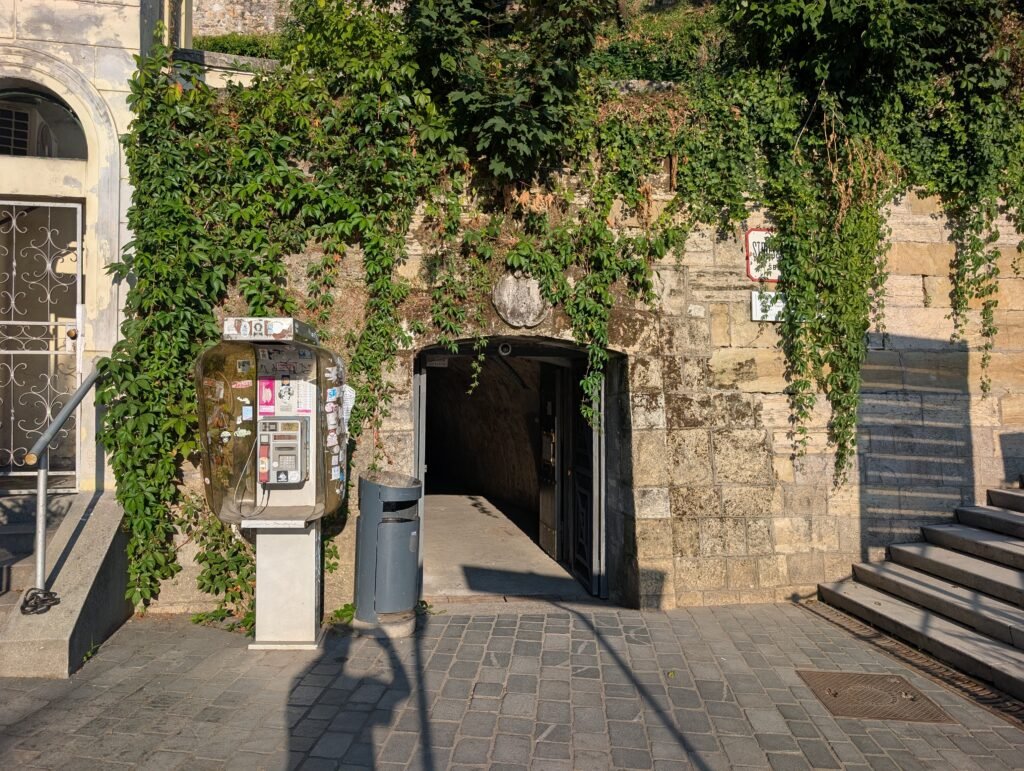
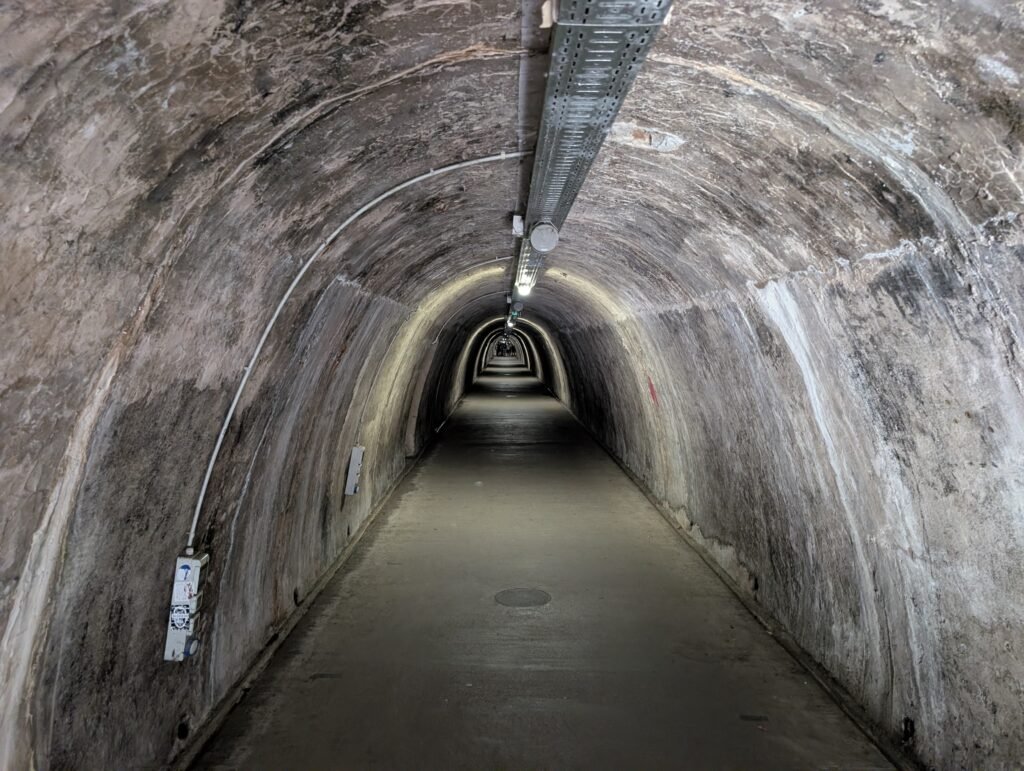
One of the final stops on our tour was a walk through the city’s 600 meter underground tunnel and bomb shelter system, constructed during the second world war. It didn’t do much service then, but has been used for public events many times. It was apparently an almost legendary place during the Yugoslav period. People didn’t even know it existed for sure. But since the breakup of Yugoslavia, it has been used for Christmas Markets, concerts, and all sorts of other events.
(Continued)
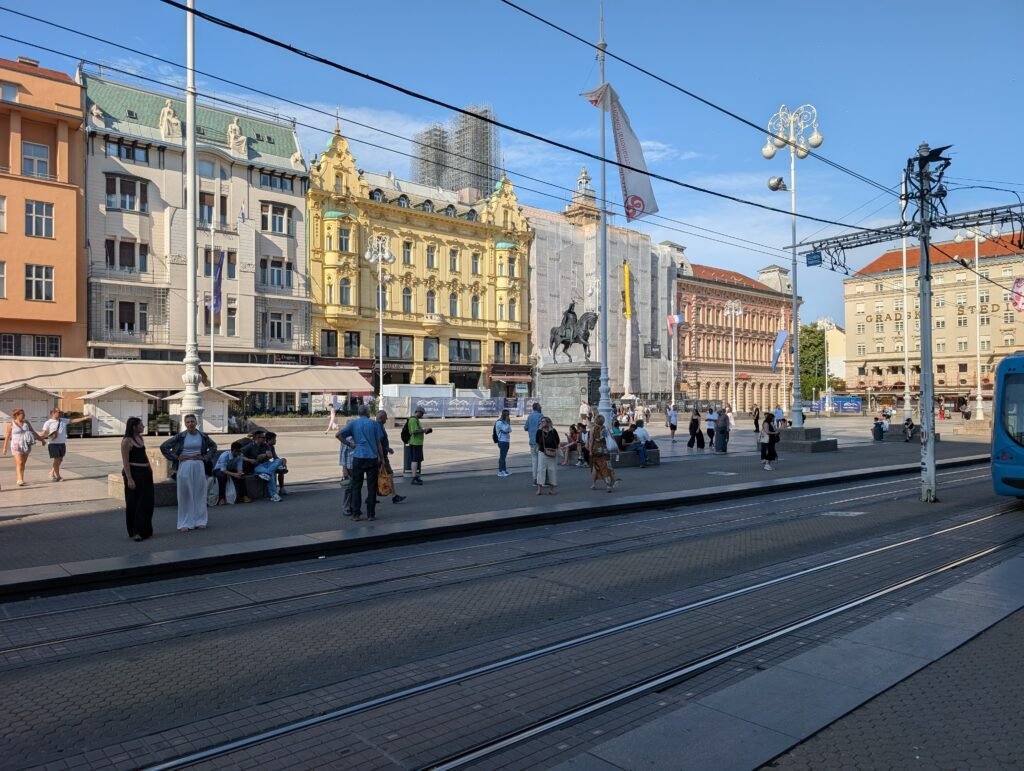
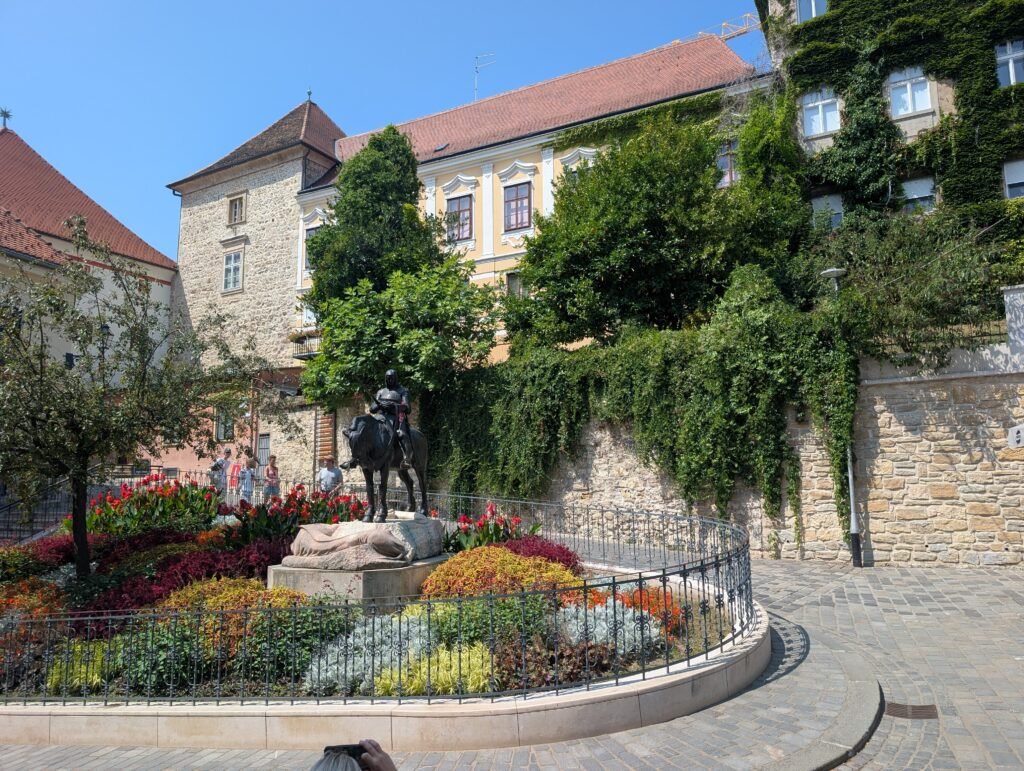
Mirjana was full of all sorts of other interesting insights. She told us how the Ban Jelacic (winner of a victory over the Hungarians) statue came to be removed and reinstalled. She discussed architecture, and housing, and Austrian influence. It was a very informative tour.
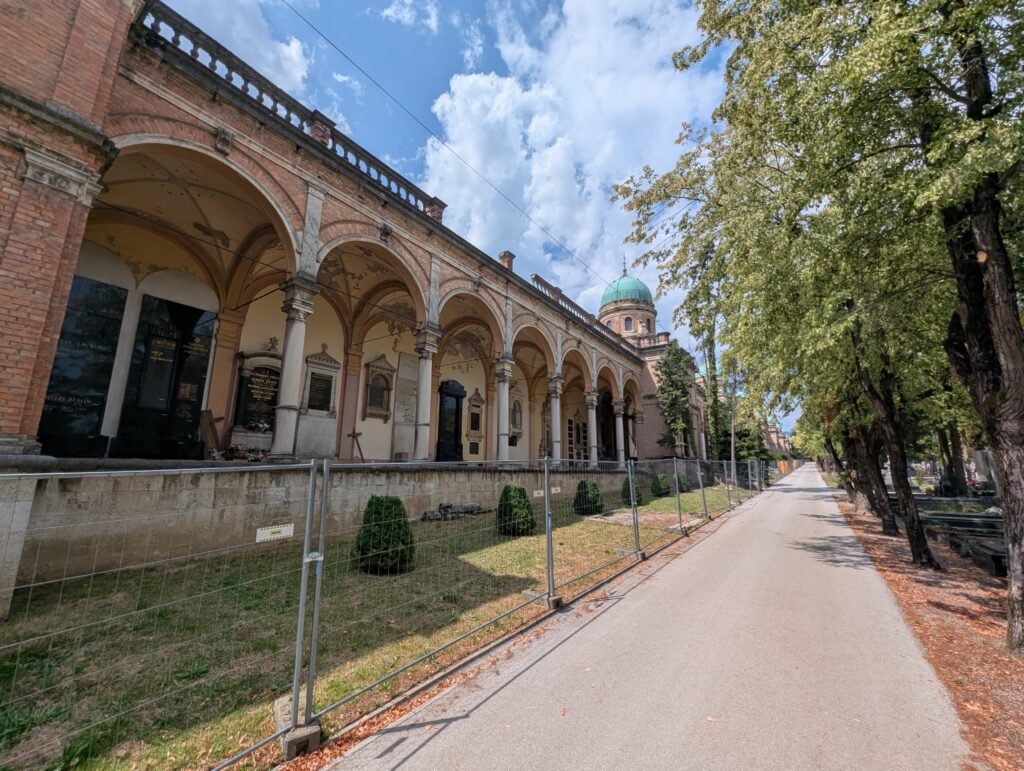
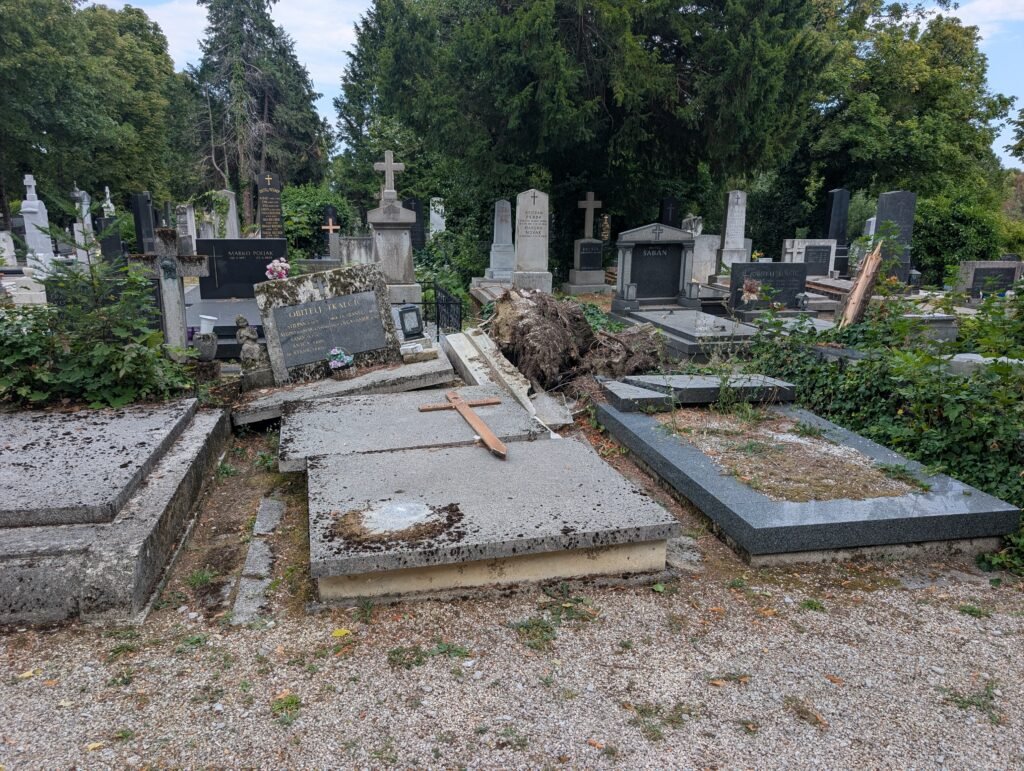
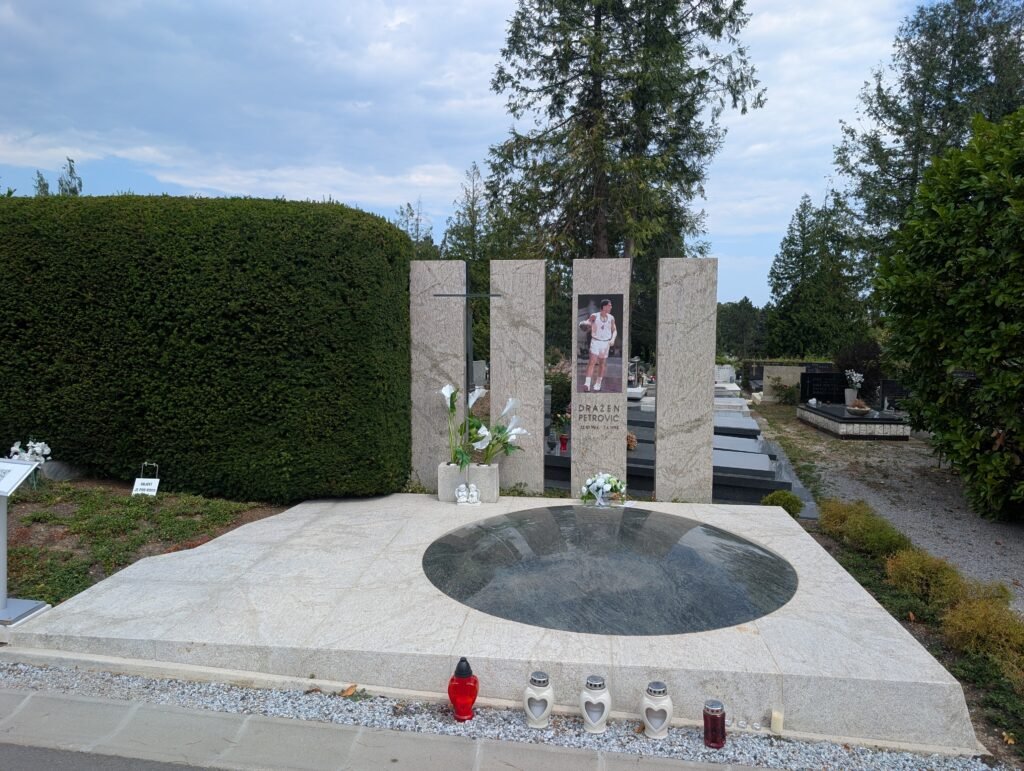
The only thing I hadn’t seen on this tour that had been recommended to me more than once was the city’s cemetery. It was supposed to have unique architecture and to be one of the largest cemeteries in the world. I made it out to the cemetery via public transportation and walked around it for a bit. It had been heavily damaged by storms and fallen limbs sometime a few years back – long enough ago that it would have been cleaned up and repaired in many other parts of the world. In the end, I wasn’t quite sure what the draw was. There were some interesting large markers, and an older wall with some mausoleums built into it, but it wasn’t remarkably different like the extremely colorful burial architecture sometimes seen in Latin America. We saw one such colorful graveyard in Chichicastenango, Guatemala.
I looked at a list of those buried there. Some were important Croats, as far as I could tell, but I didn’t really know any of them, or their significance. The only person buried there who I recognized was former NBA player Drazen Petrovic. Petrovic was a very talented Yugoslavian player who broke into the NBA in his late twenties from European basketball, sort of proving the concept that some of the best Euro players could contribute to NBA rosters. He was tragically killed in an automobile accident when he was about 29 and so did not have a long career. I searched and found his marker. Interestingly, they have placed QR codes at the site of his mausoleum that link to a series of videos and articles explaining his significance to basketball and to Croatia. They just ask that you listen to it with headphones out of respect rather than blaring videos in the cemetery.
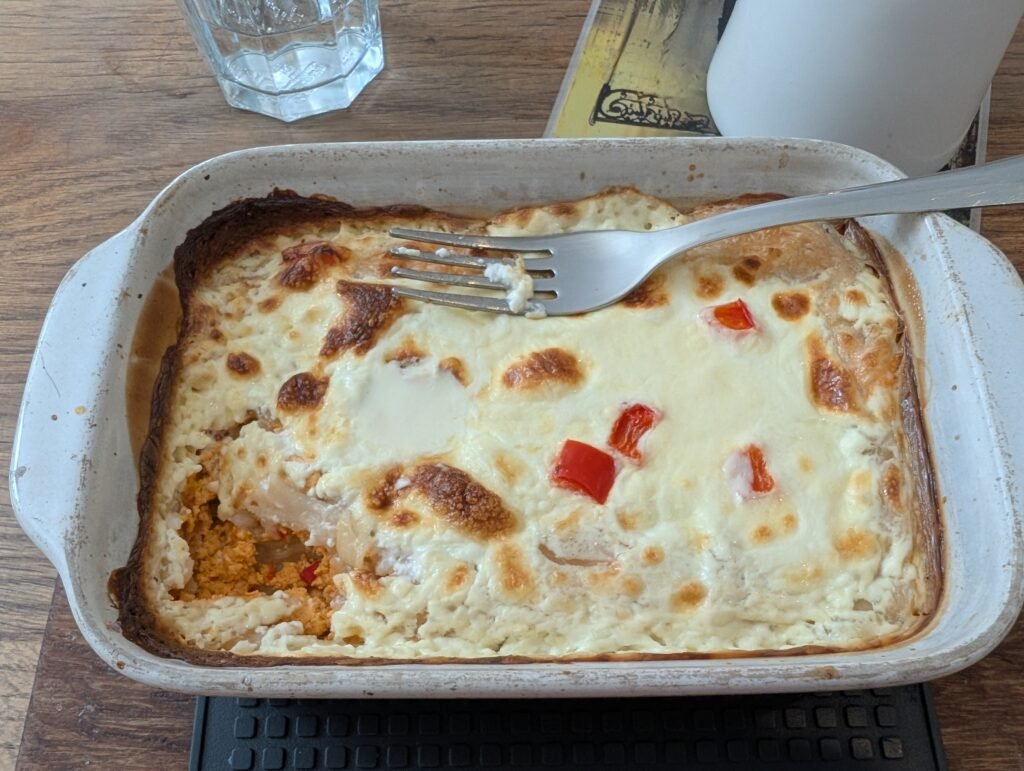
My only other experience in Zagreb was another meal. This time, I tried strukli. This was a very rich dish. It was about the consistency of a quiche. It had some kind of soft dough filled and covered with cheese, cottage cheese, and a few peppers. It wasn’t made for anyone who was lactose intolerant. I thought it tasted good, but that it was unlikely I could eat it very often. Preston would have a major intestinal explosion if he tried it.
I had another run in the morning. I scheduled a bus to Jajce, but it didn’t leave until 12:30. I did my laundry, packed everything, visited with my hostel-mates, and made some oatmeal. I ended up helping a Polish lady living in France get over to the bus station with her equipment, which was a bit heavier than mine. She didn’t seem to have the public transportation scheme down exactly. Her bus left 15 minutes before mine, so this worked just about perfectly. I found our way to the bus station and by early afternoon on Tuesday, I was heading on toward Jajce, Bosnia.
If you’d like to continue along the path of my journey, click the Bosnia tile to go to Jajce. If you’d rather see the rest of the Croatia content, click the Dubrovnik tile.