Naples
Including Pompeii & Herculaneum
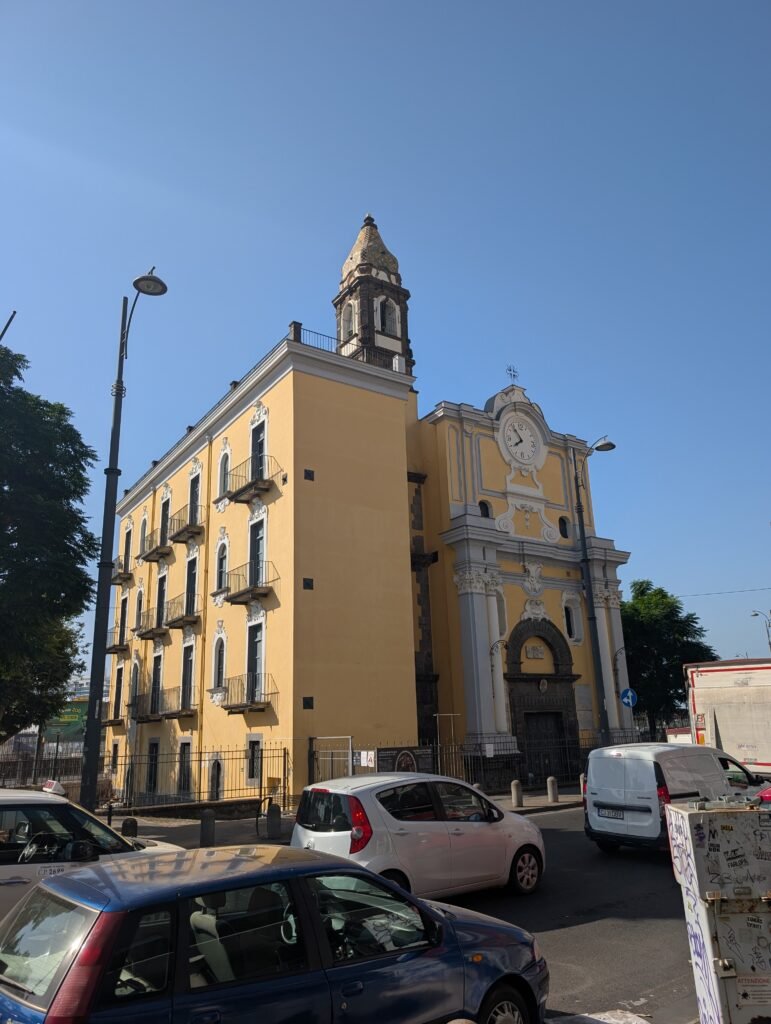
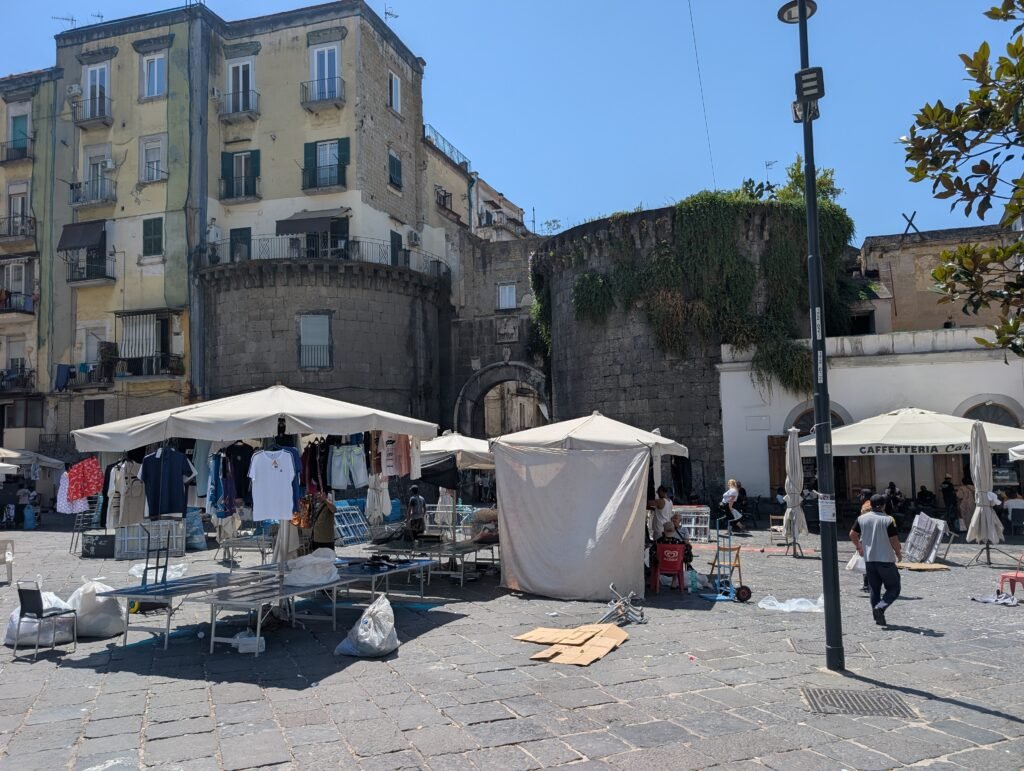
Stephanie and I reached Napoli at about 6:30 p.m. We stayed at the Ramada, a motel I had booked on points several months in advance. It was a short walk from the train station. Our first impression of Naples was that at least near the train station, the place was a real dump. That impression didn’t change much. I suppose when people visit Campania for a romantic get-away, they must be staying in Positano, or the Isle of Capri, or along the Amalfi Coast. Naples is dirty and smelly, with trash piled everywhere. Homeless people and seedy characters of all sorts are roaming the streets to the smell of wafting marijuana smoke. Naples is also known to be the pick pocket capital of the world. I was able to retain all of my valuables despite walking or taking public transportation most places. Stephanie, on the other hand lost an iPhone.
Our room at the Ramada was well worn, but otherwise the accommodation was a huge step up from the Champagne Palace in Rome. We had a lot more space, plumbing that drained the way it was supposed to, and one of the nicest outlays of food I had seen in a long time for a complimentary breakfast. The staff was accommodating, and other than the almost ubiquitous key-for-power scheme that most foreign hotels seem to use now, we had a smooth and comfortable stay.
We ventured back out for supper at about 8:00 p.m. and were surprised to find most places closed. We walked to a Pakistani-run Pizzaria in the main square where I had what was probably the best panini style sandwich I ate the whole time I was in Italy. It was delicious. We made a brief stop at a small market to buy some snacks and replenish Stephanie’s deodorant supply before calling it a night.
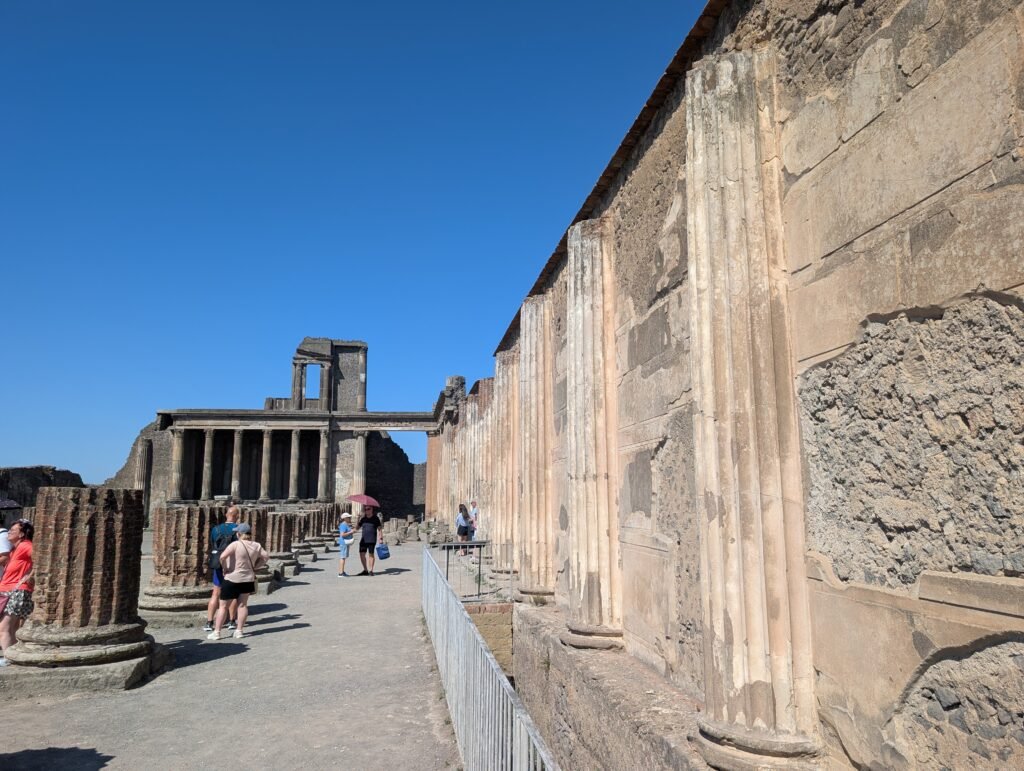
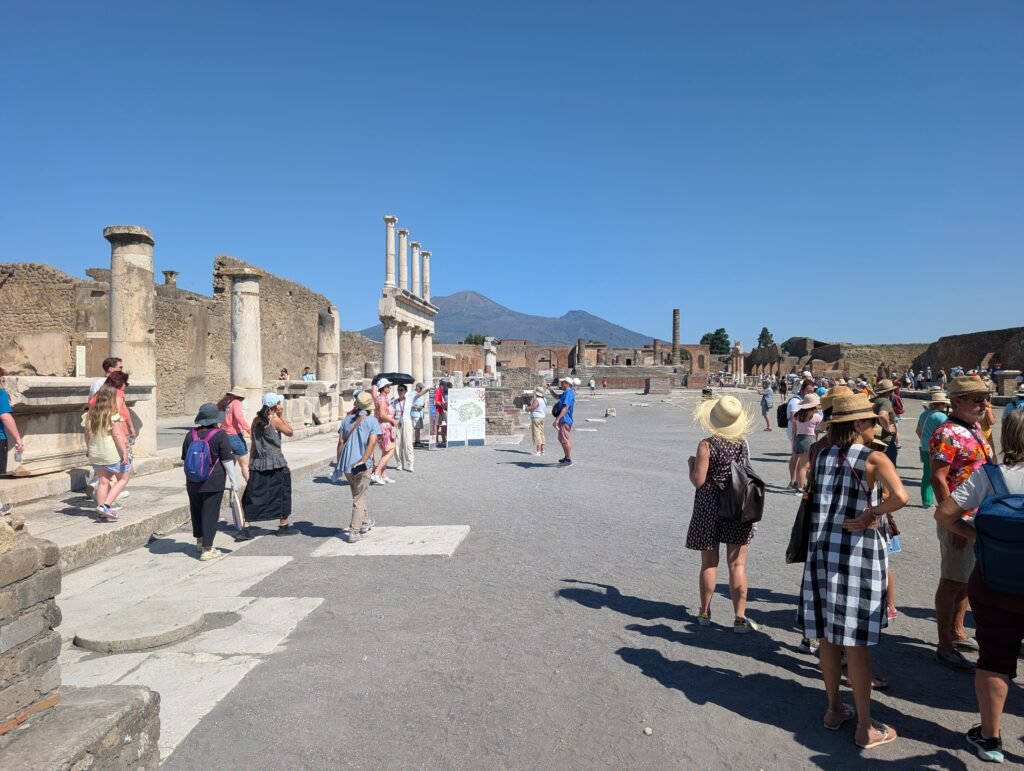
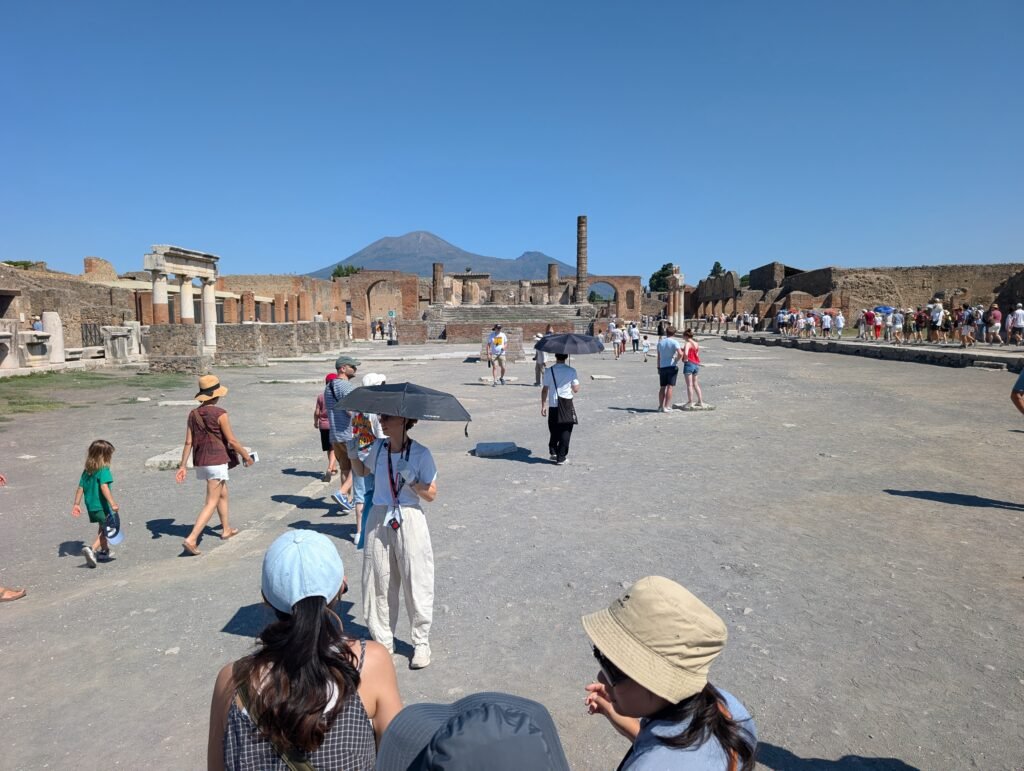
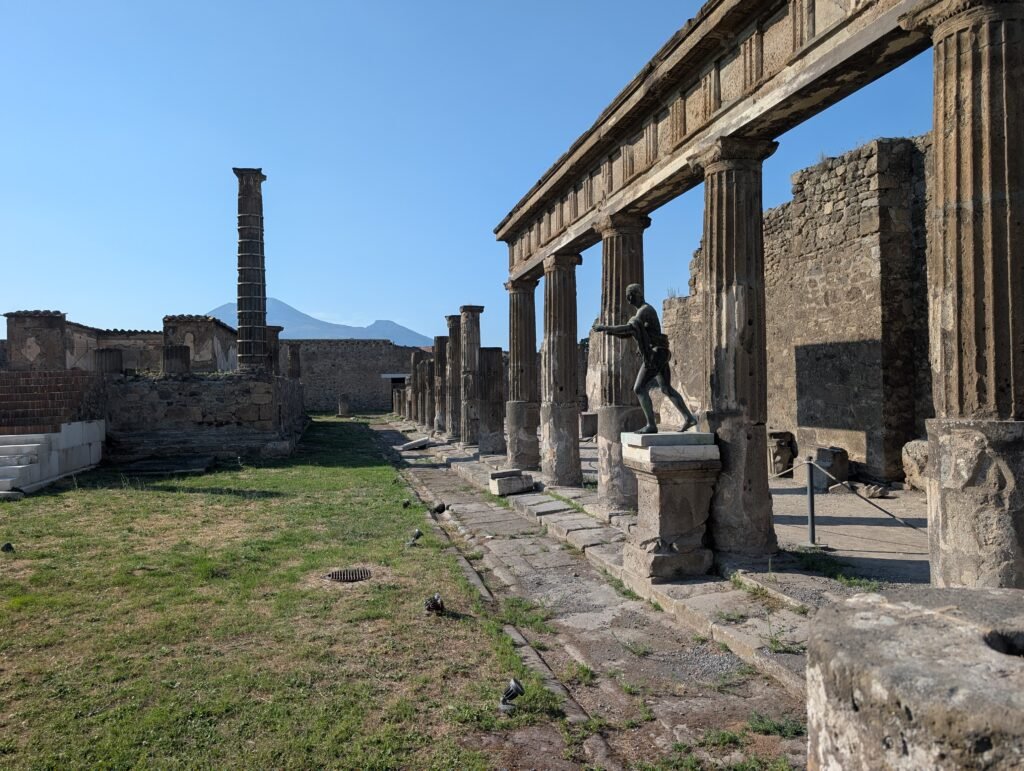
Before we left the United States, I purchased tickets to visit Pompeii on our first full day in Naples. Pompeii is a well known Roman city that was frozen in time in 79 A.D., when Mount Vesuvius erupted suddenly, blanketing the city in ash. For centuries, no one even knew exactly where it was. References to the eruption and the destroyed cities in the area could be found in the writings of Pliny the Younger who says that his uncle, Pliny the Elder, died while attempting to rescue refugees trapped by the erupting volcano.
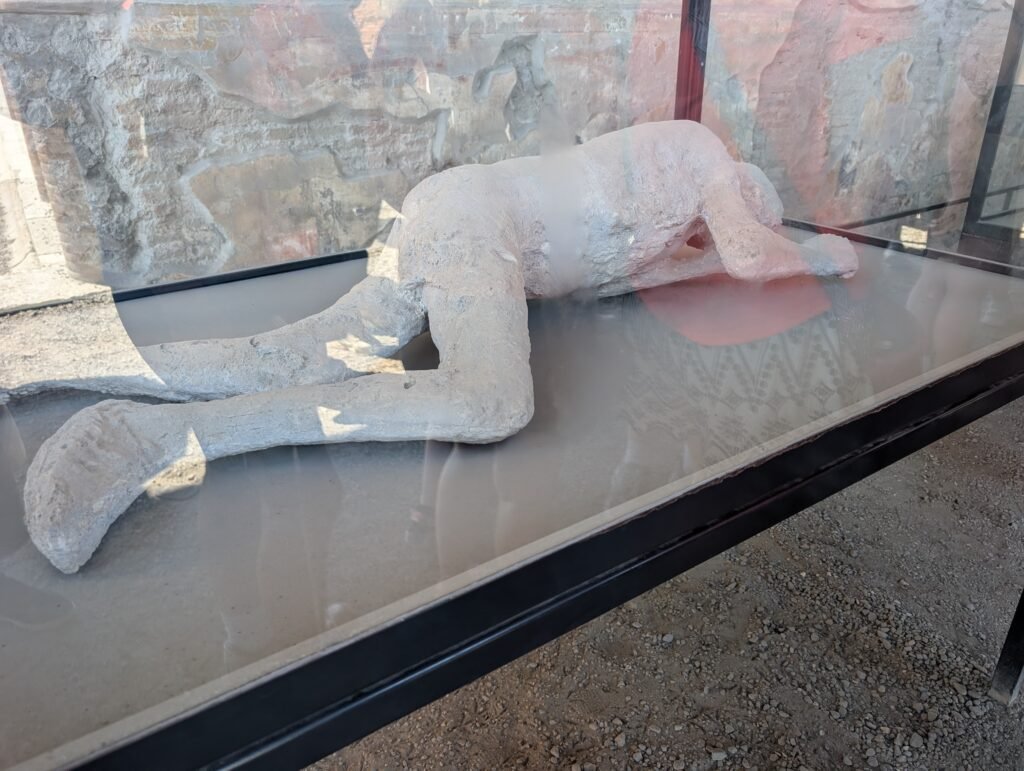
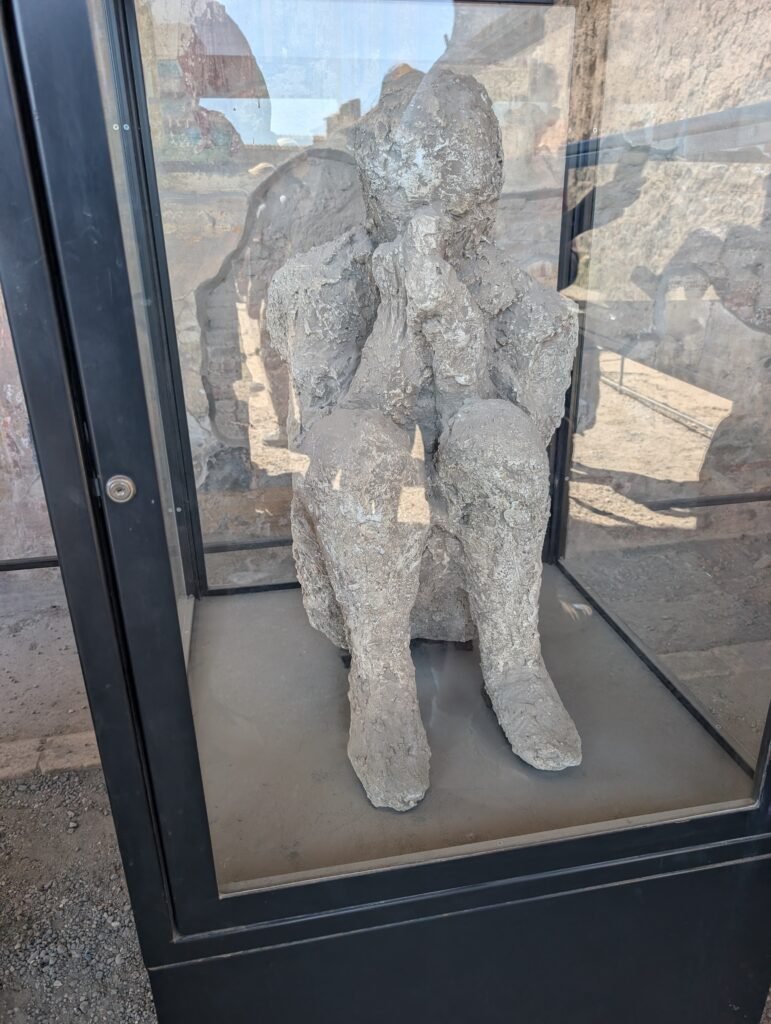
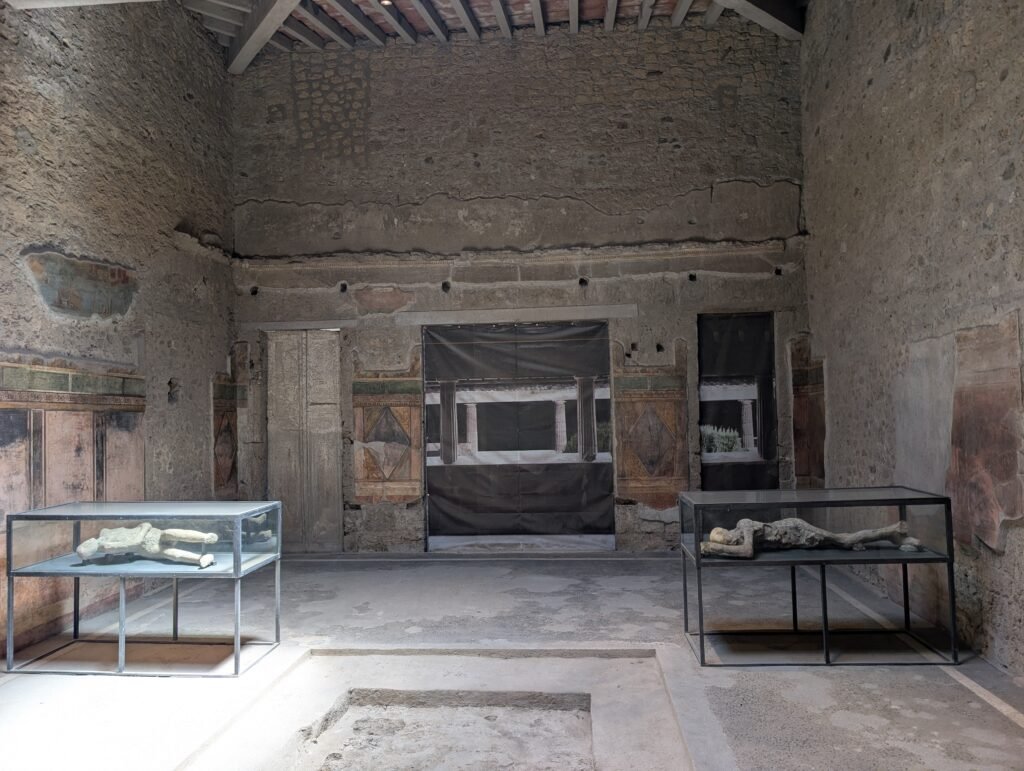
In the late 16th century, an engineer building a diversion channel for a river accidentally struck an artifact with the inscription “Pompeii,” but erroneously thought it was some reference to Pompey the Great. It wasn’t until the 18th century that a connection was finally made to the ancient city, and archaeological work began in earnest. At first, tunnelers were simply looking for precious ancient objects to sell on the antiquities market. Later, the excavations were done with a more scientific mindset. As the unification of Italy neared, archaeologists began to fill subterranean cavities with plaster to recreate objects that had been covered with volcanic material, then rotted away over time. The remains of ancient plants, trees, and wooden objects were recreated this way. Quite a few human and animal victims of the eruption have also been observed in the state the tragedy left them, creating a very somber vibe.
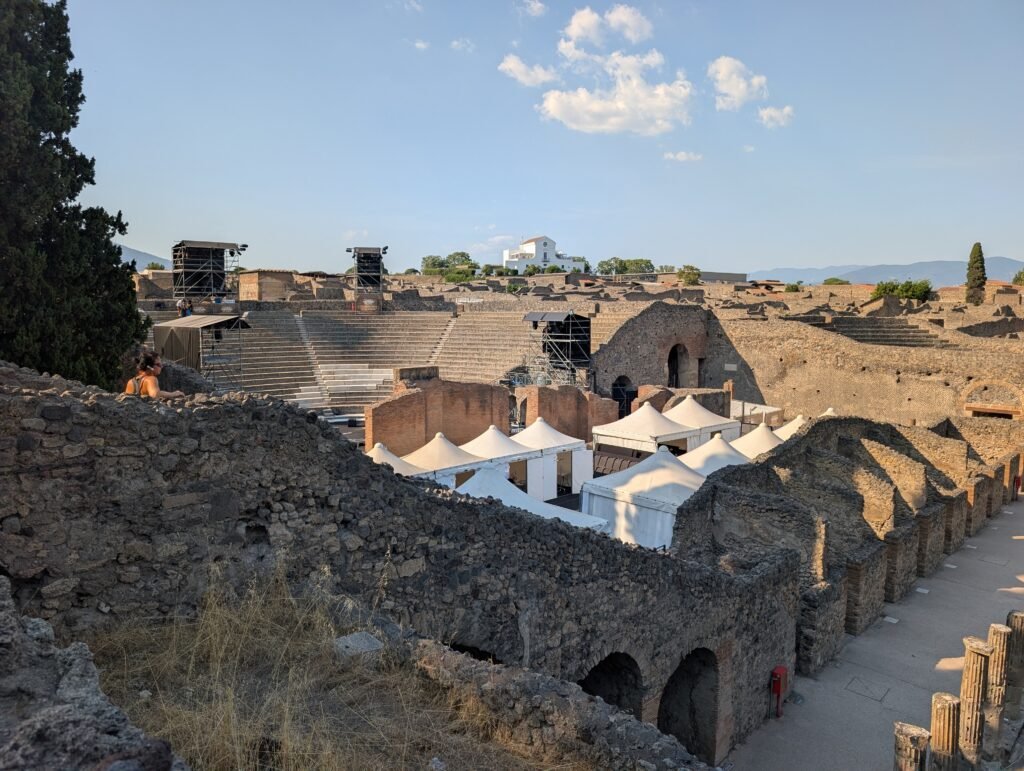
I read before we visited that Pompeii would take a full day to visit, whereas Herculaneum (another nearby town destroyed in the same disaster) could be done in a half day from Naples. It is true that Pompeii is a MUCH larger site. Since archaeological and conservation work is still underway in both cities, there are many homes and villas you cannot see on any given day. Even at that, there really is no way a person could visit every open site in Pompeii in a single day. Pompeii was a city of around 15,000 people in 79 A.D. Think of trying to walk every street and visit every building in a modern city of this size. You can be more or less detailed in a single day’s visit, but you’ll never see it all.
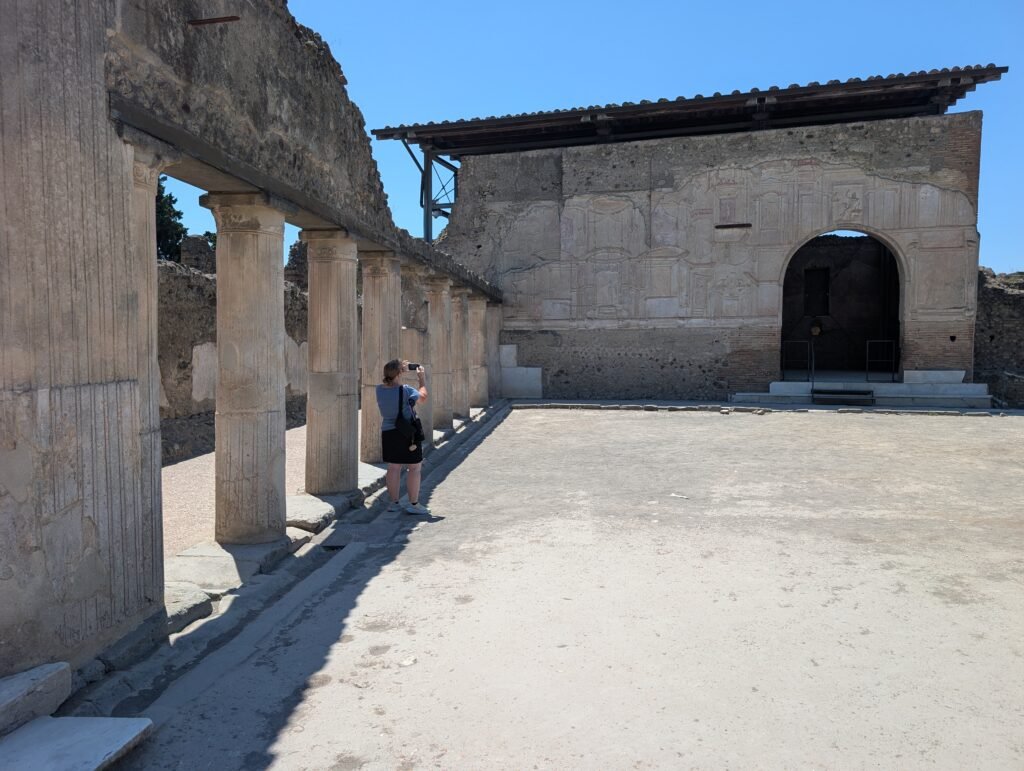
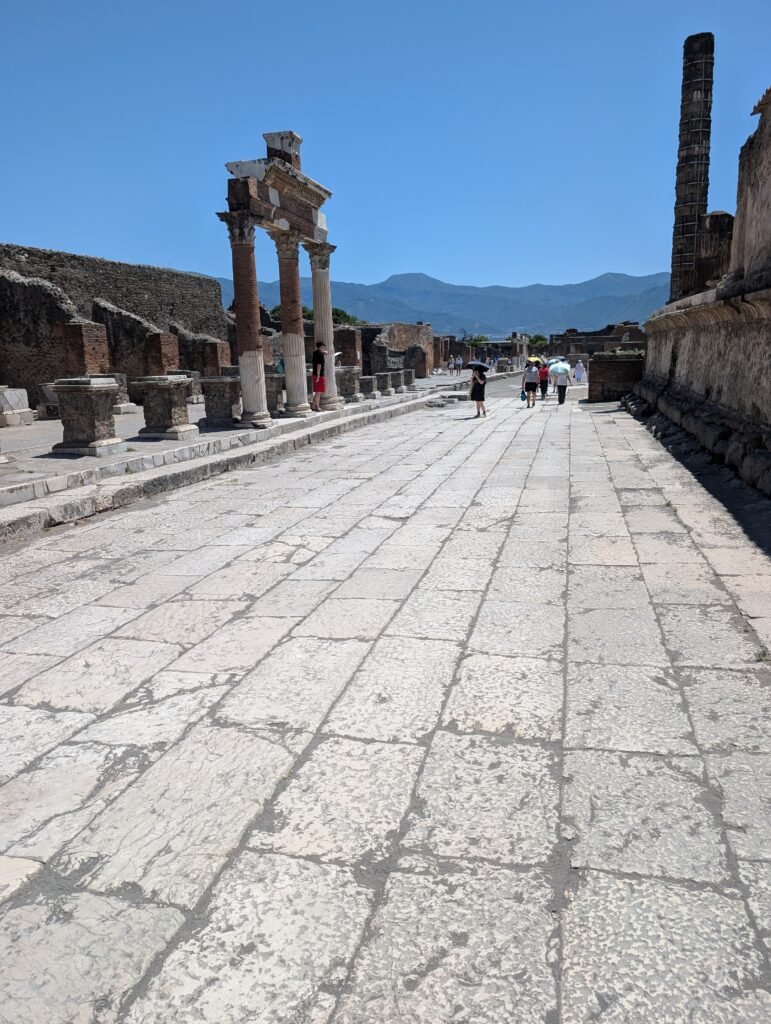
The park opens at 9:00. We missed the correct Circumvesuviana train to arrive right at the opening, and had to wait half an hour to catch the next one. It was closer to 9:30 when we arrived. Stephanie learned that we could either rent audio guides for €9 each, or join a guided tour for €8. We opted for the human-led tour. This took about an hour and a half and covered the highlights, but left a lot of walking and exploring for us to do afterward. We got in a LOT of steps walking Pompeii. The July sun in Campania is scorching, and the site doesn’t have much shade. There are very few places to sit. Here and there, you find the standard Italian water fountains to offer some relief. The Roman streets are covered in giant pavers that are now uneven. On the whole, it is a fairly physically taxing place to visit – at least if you do it in mid-summer as we did.
(Continued)

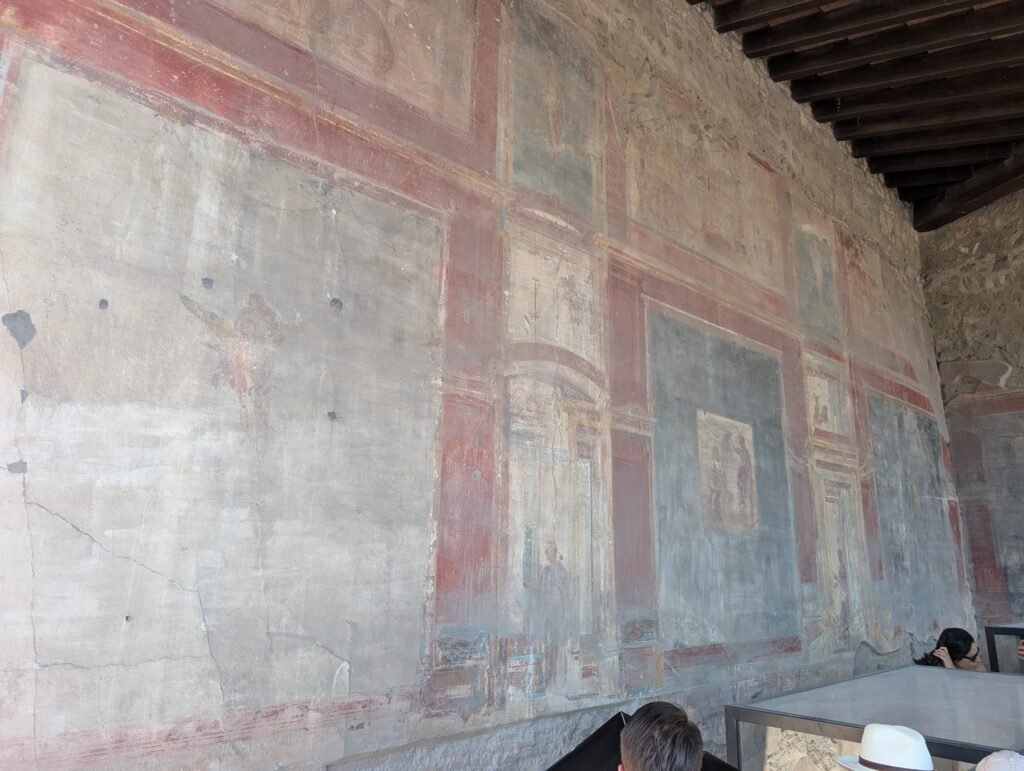
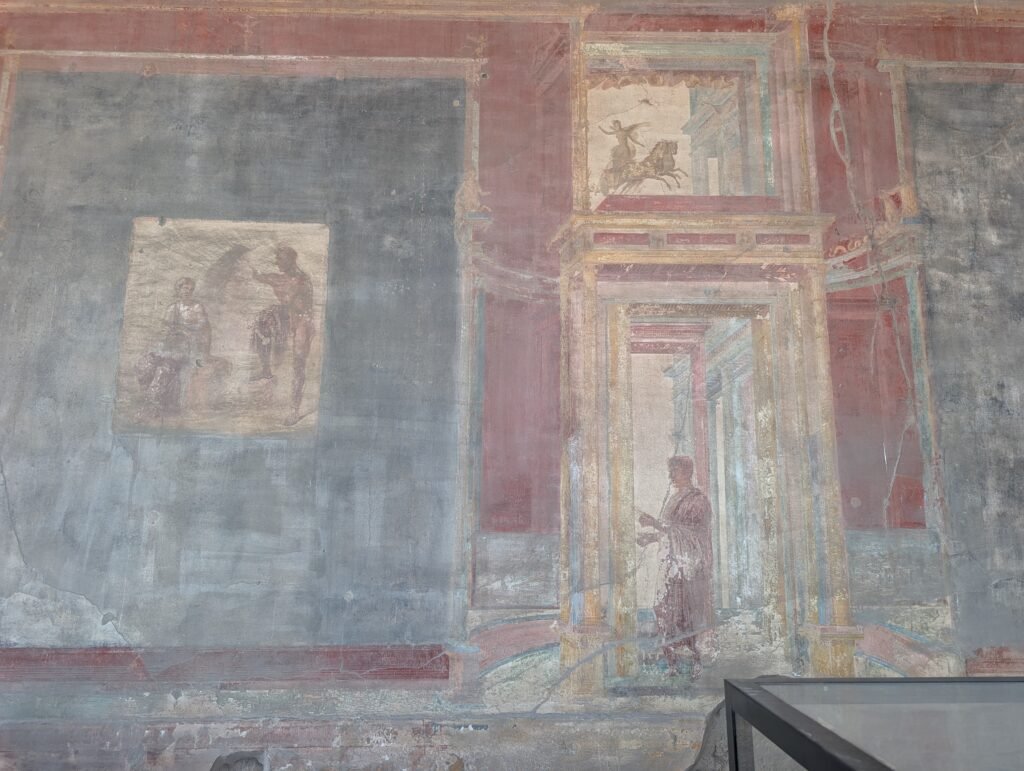
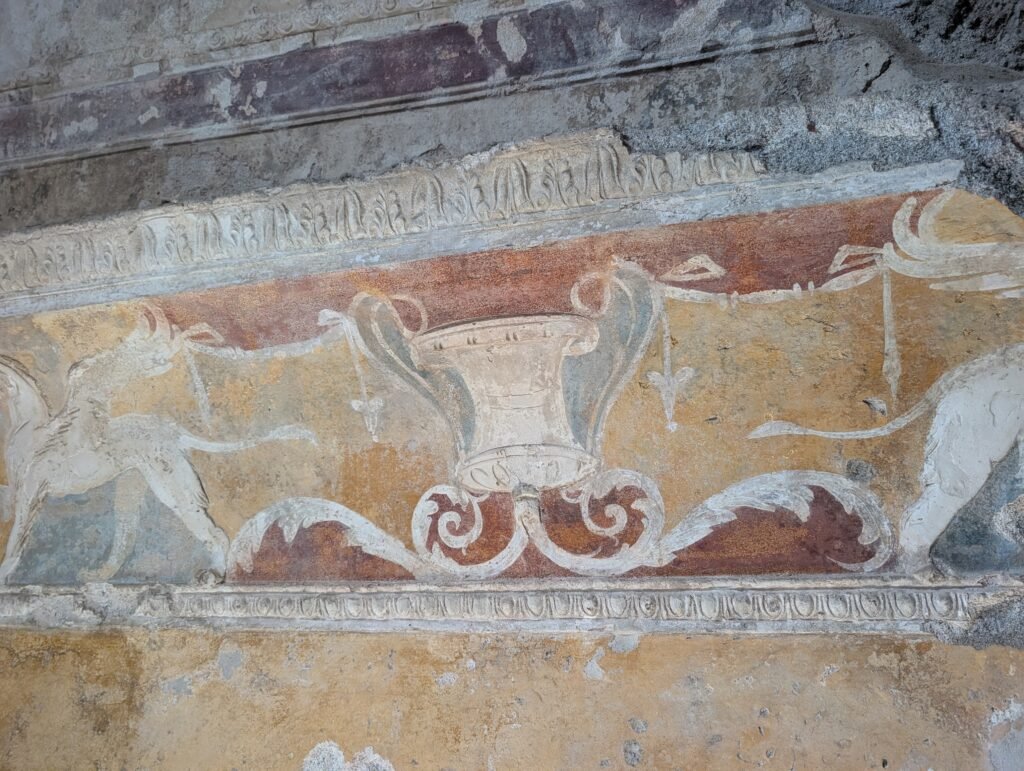
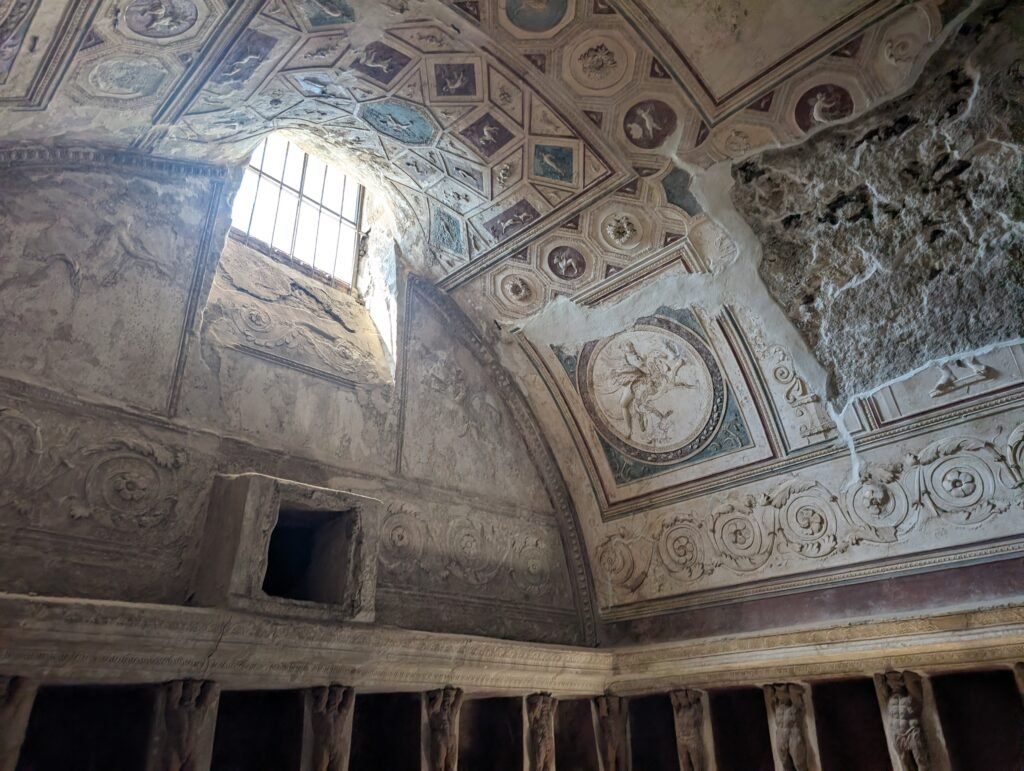
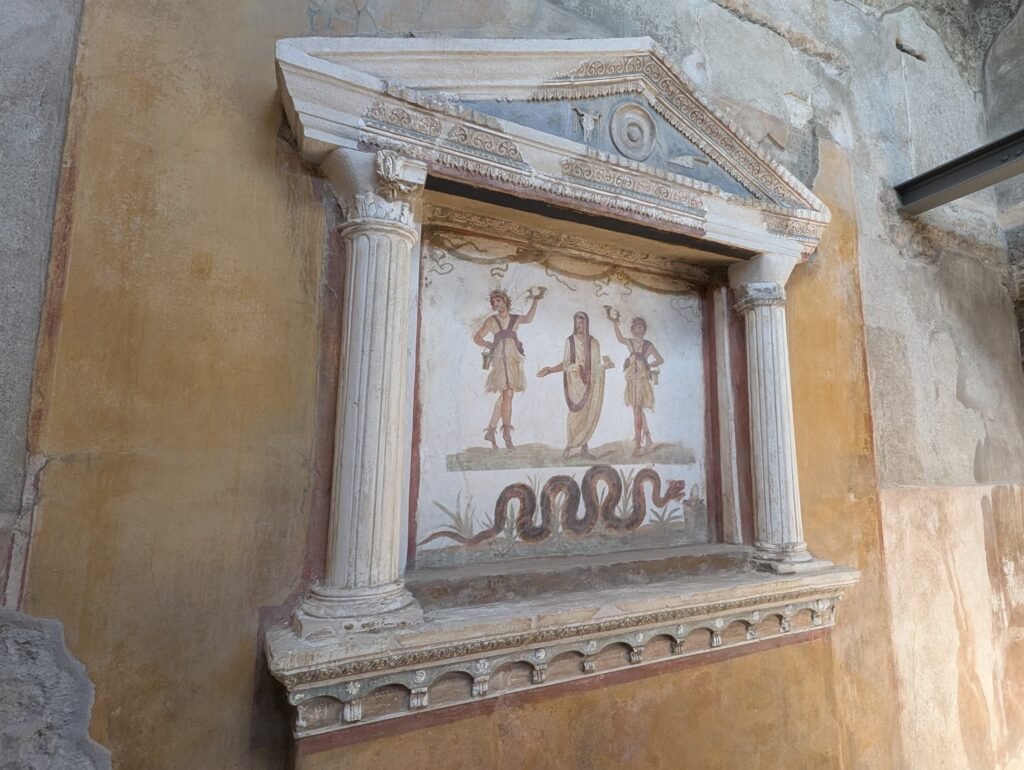
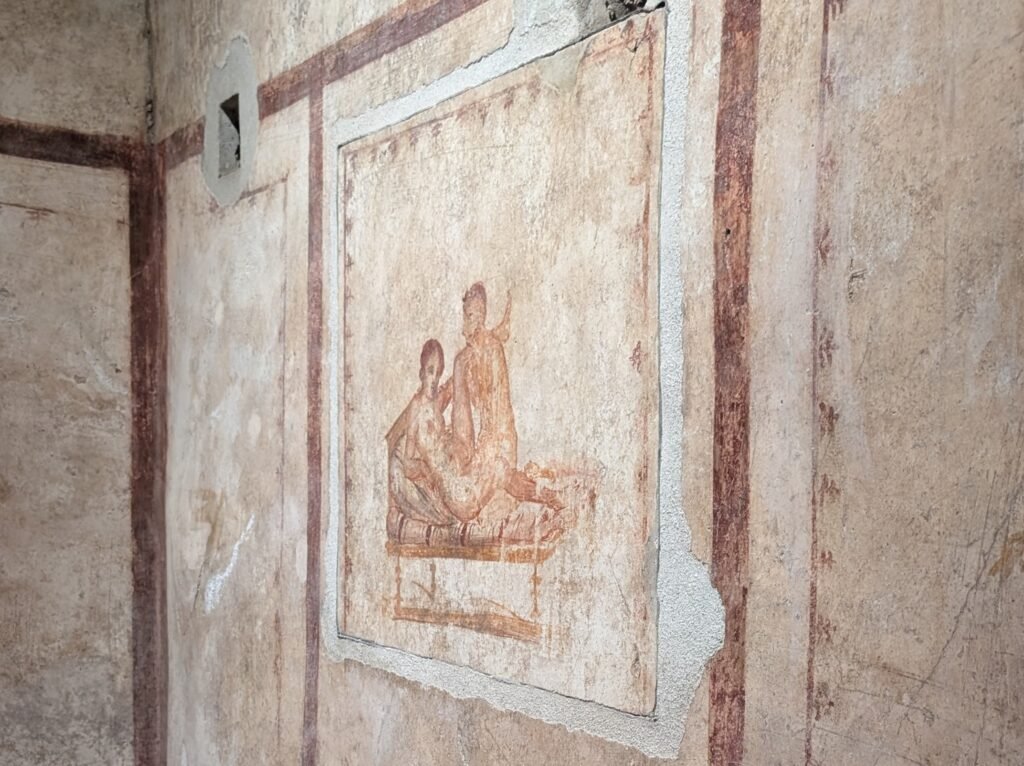
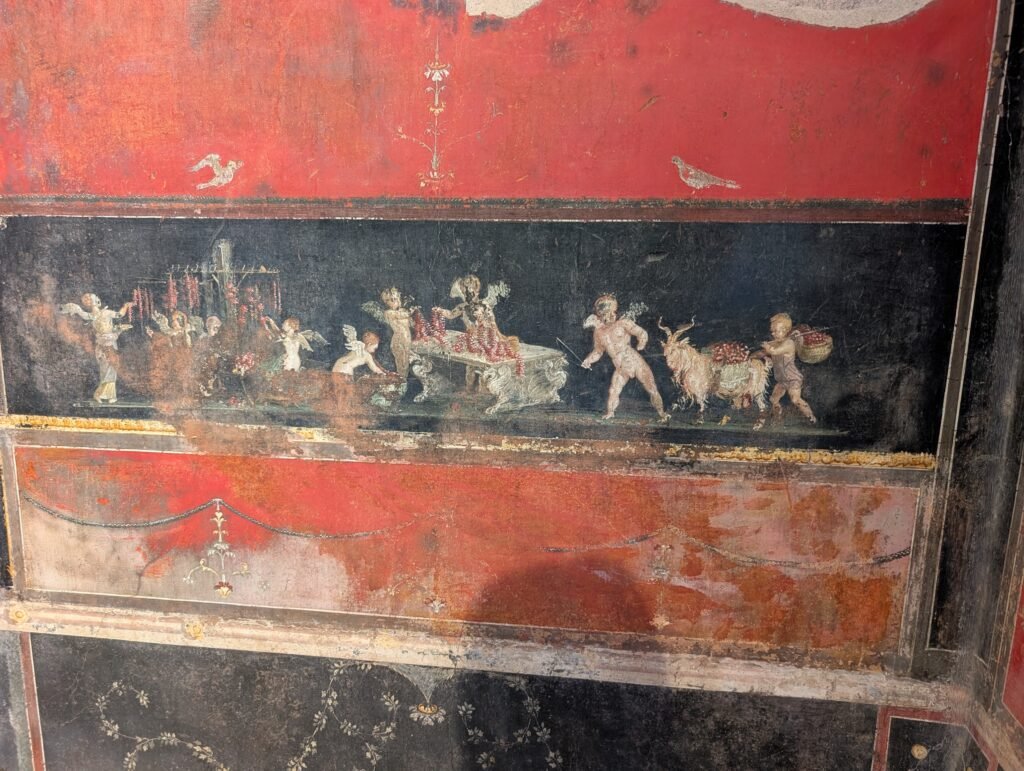
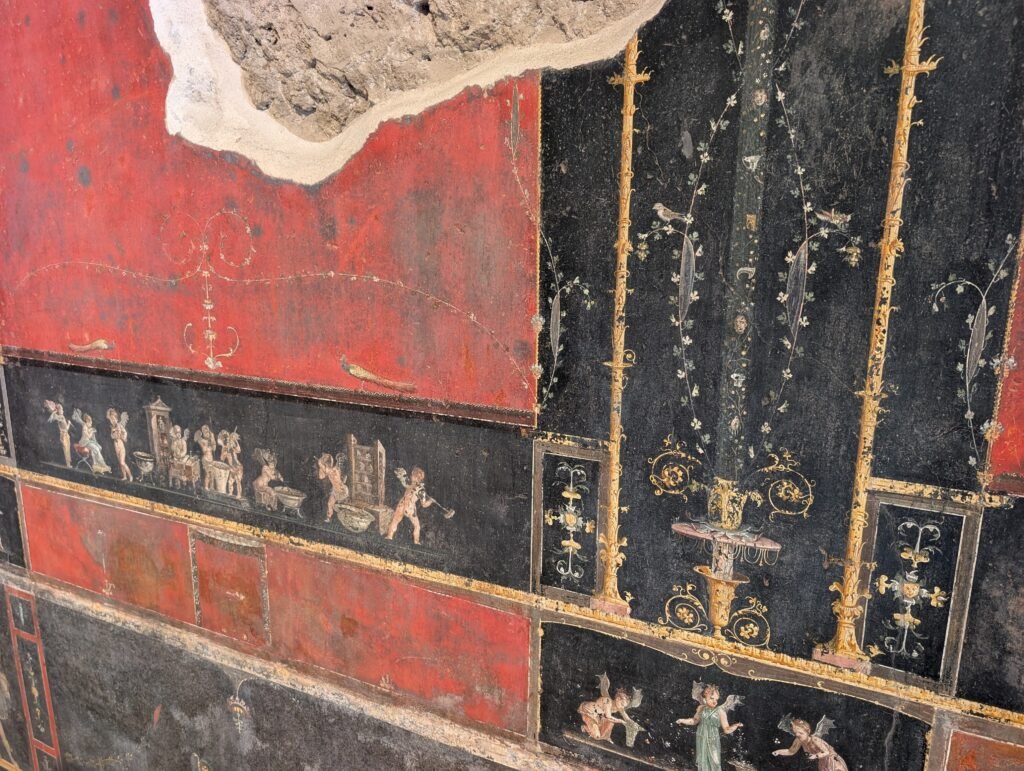
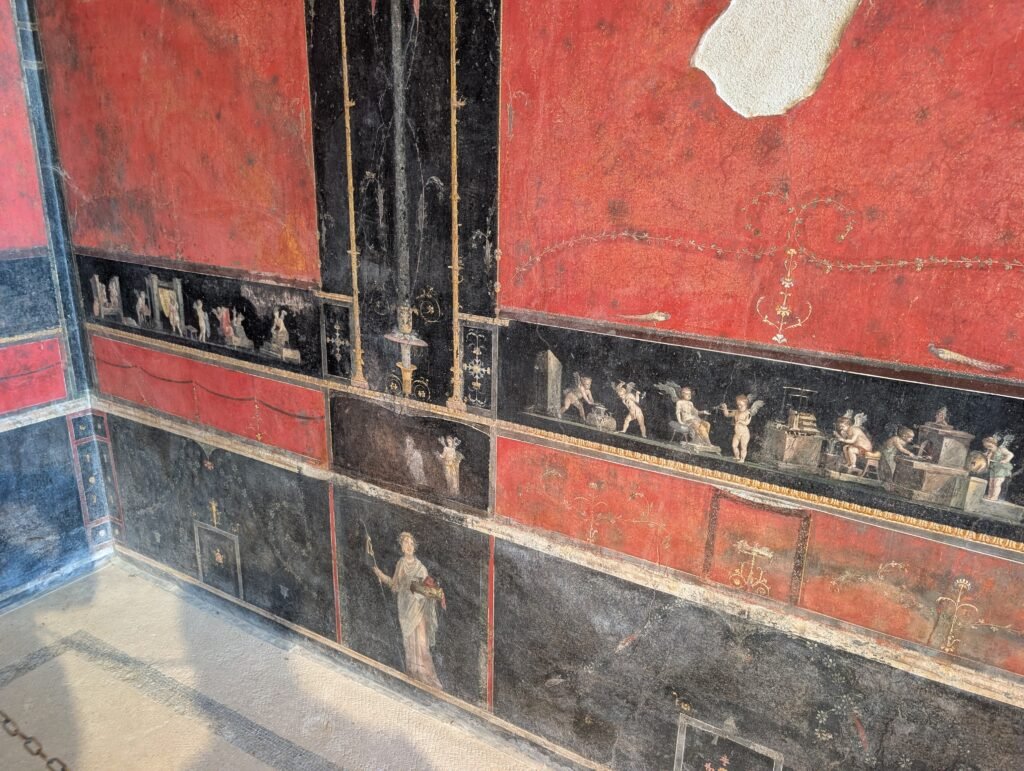
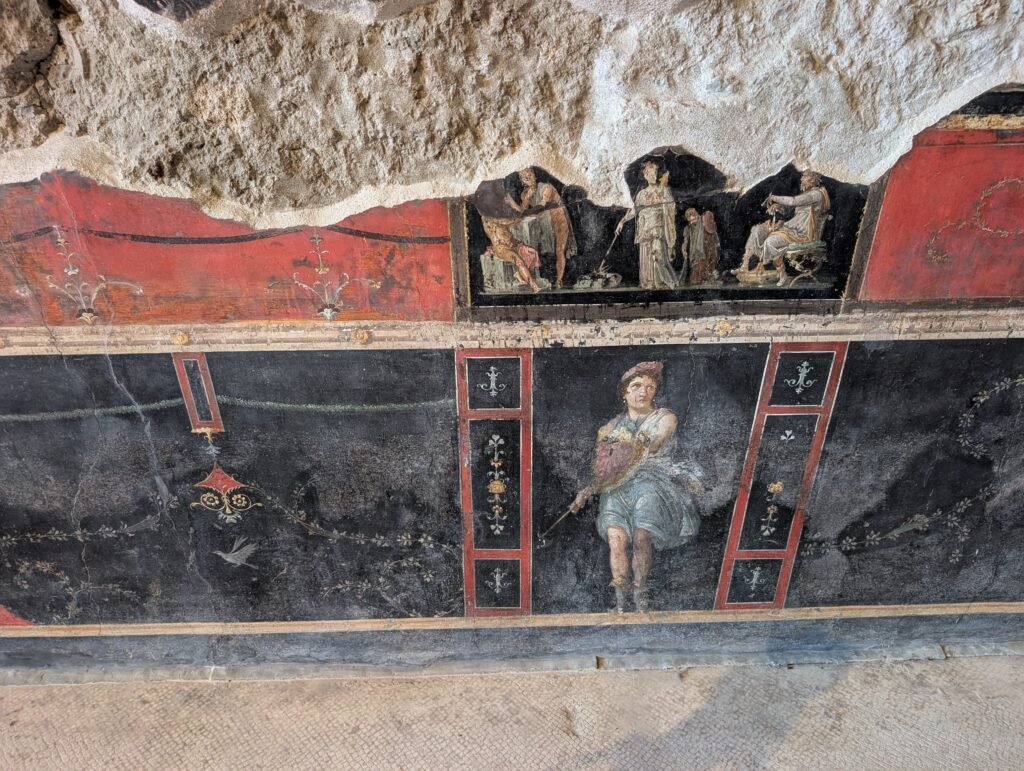
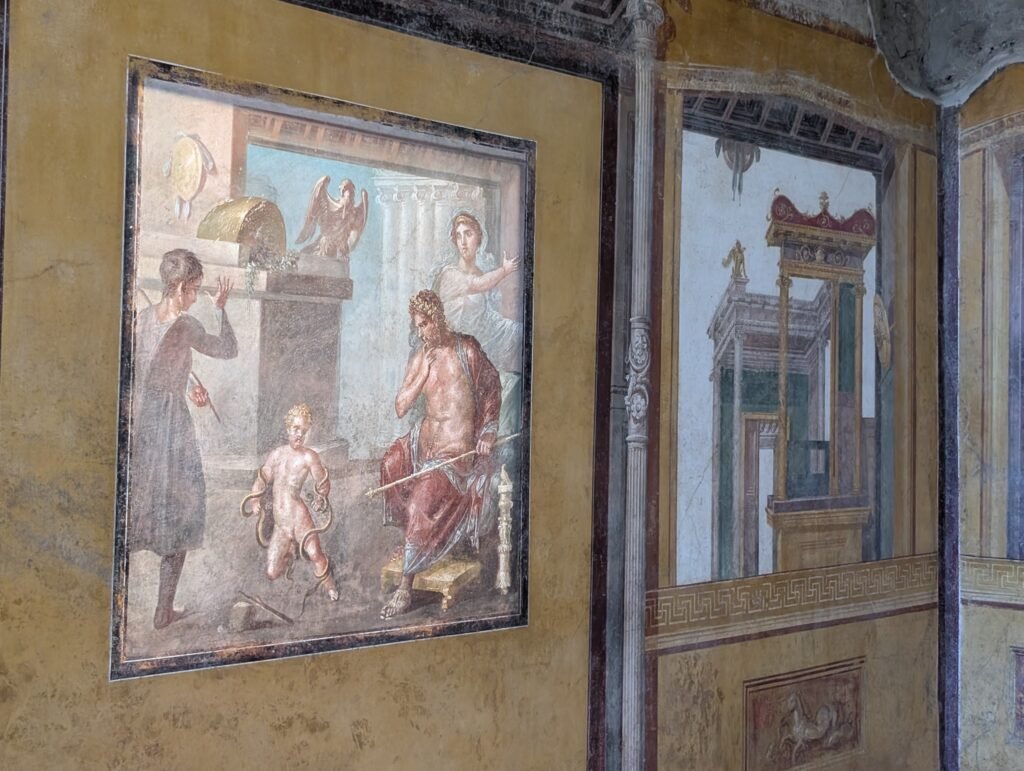
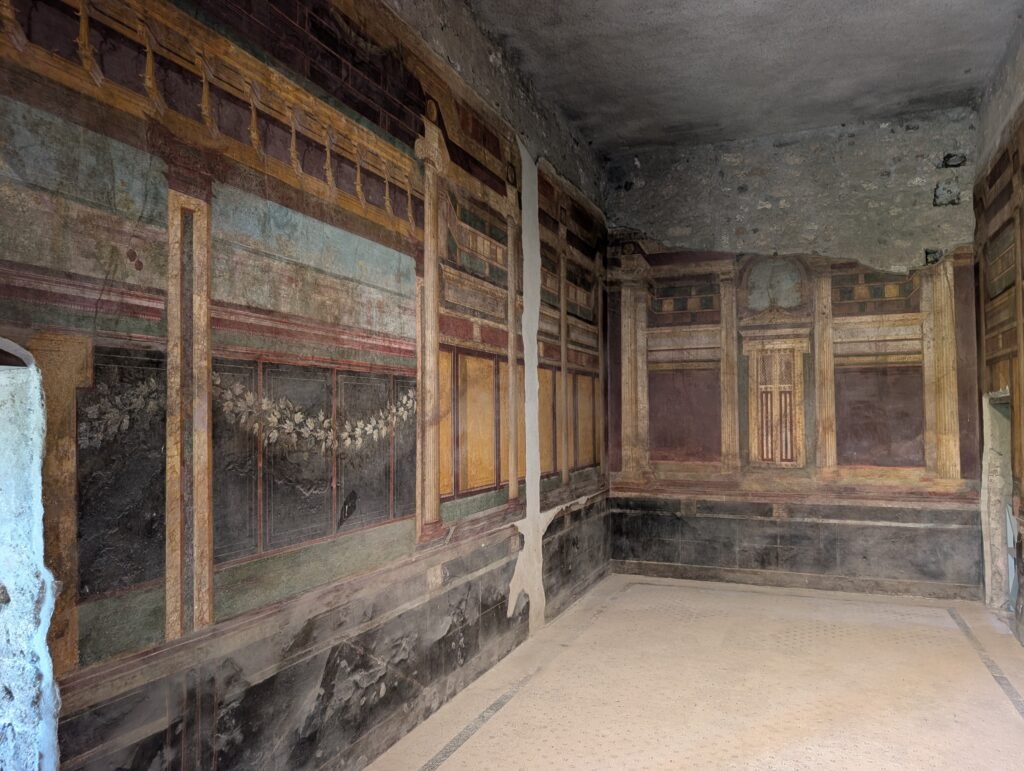
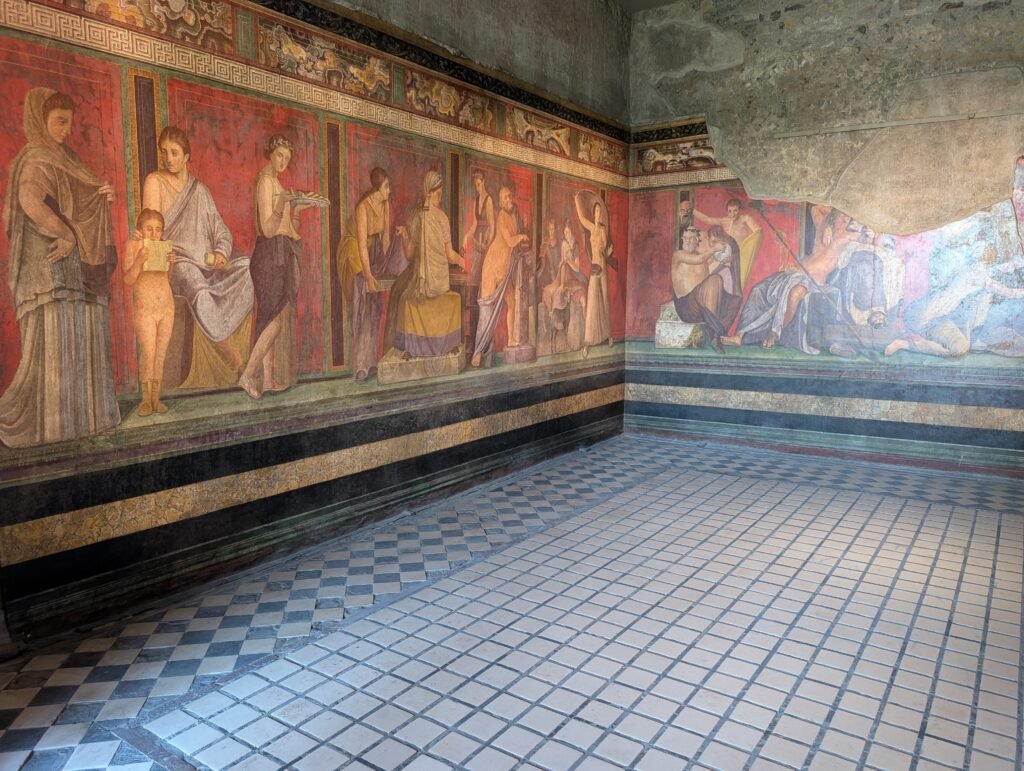
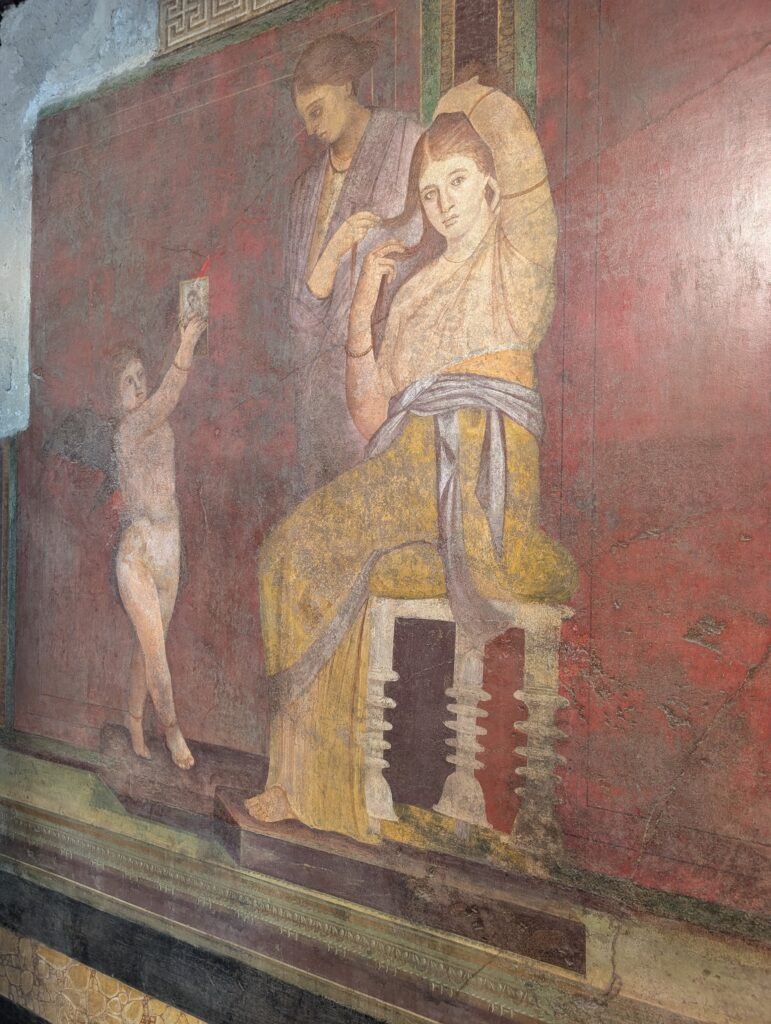
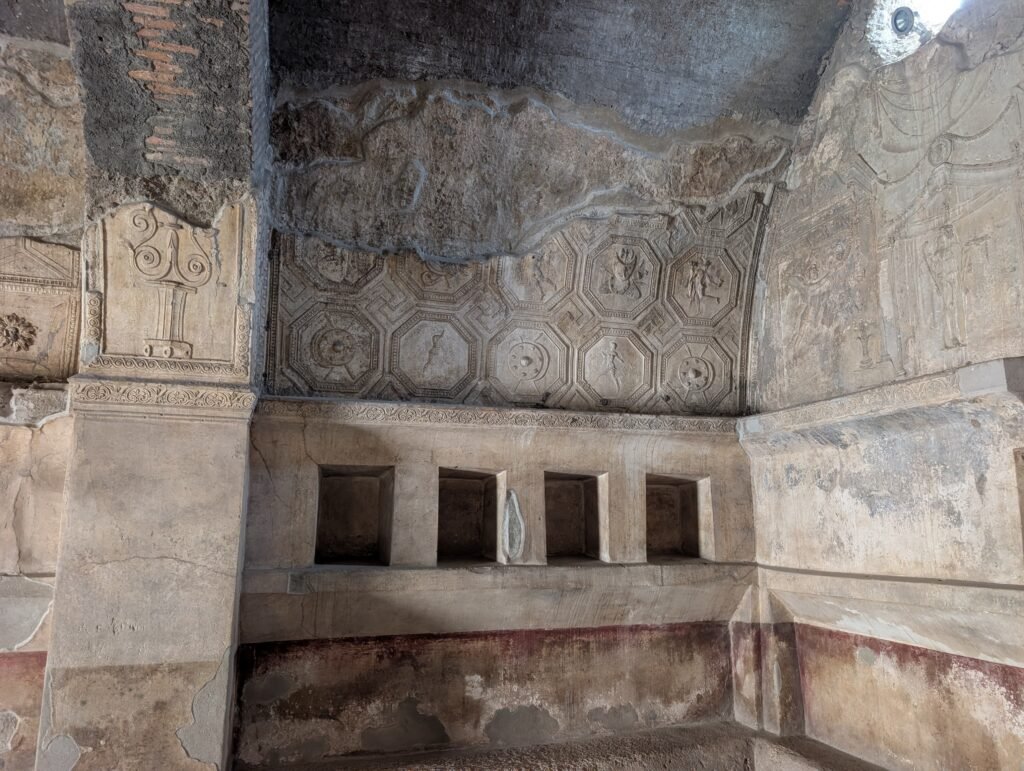
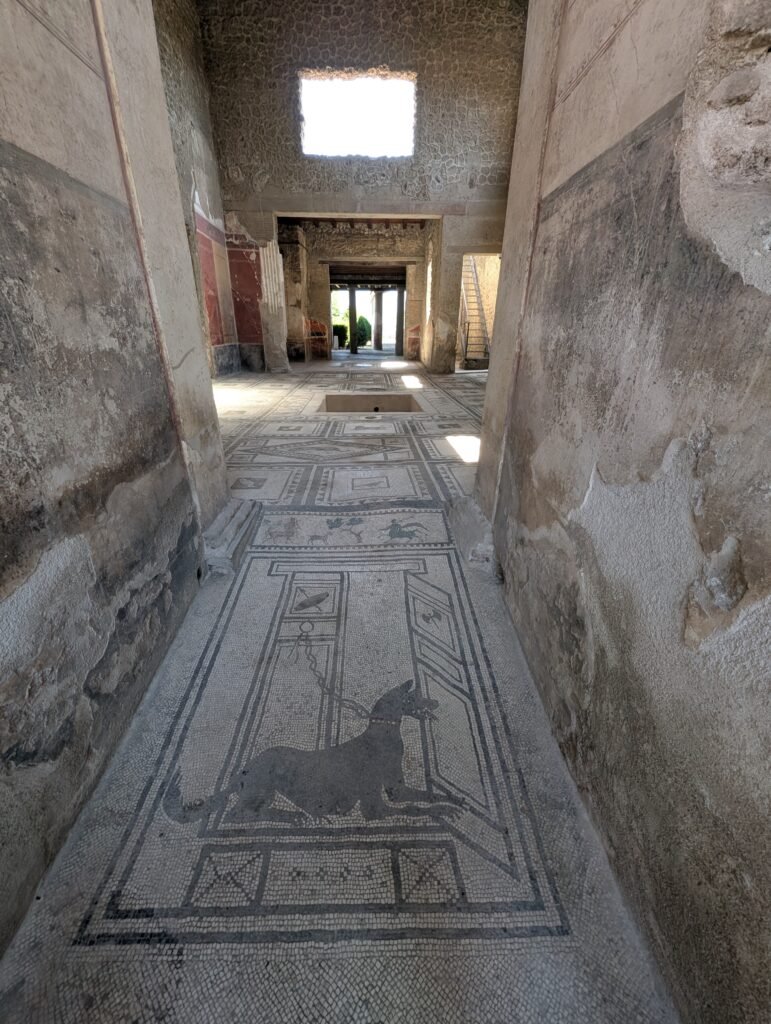
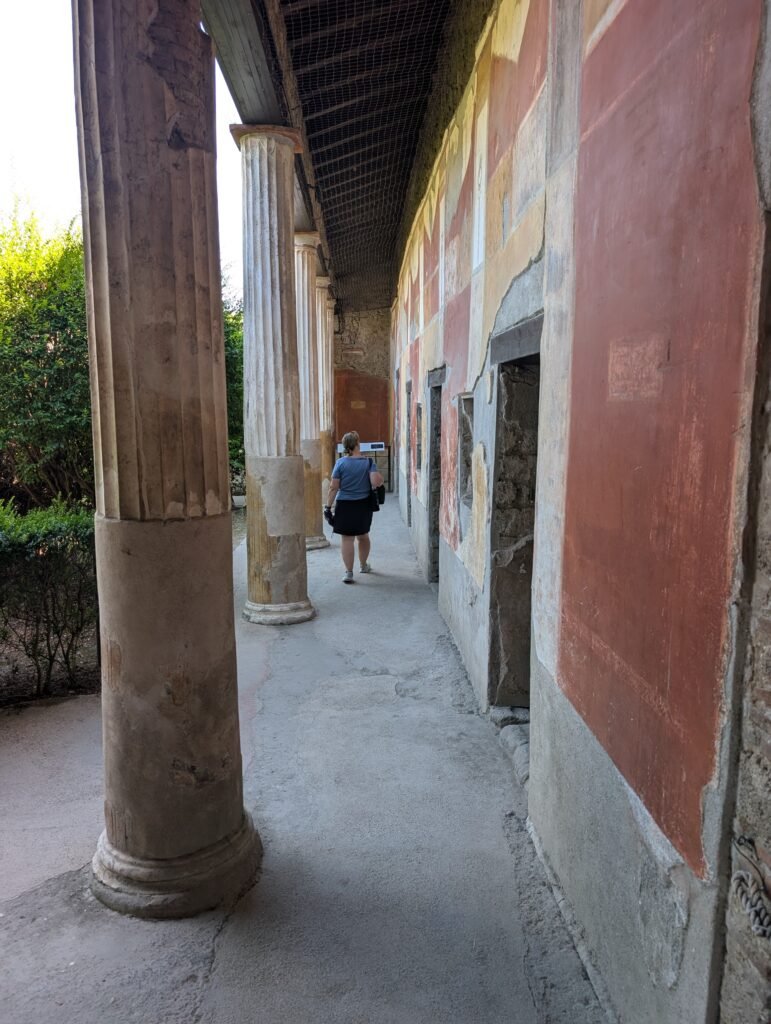
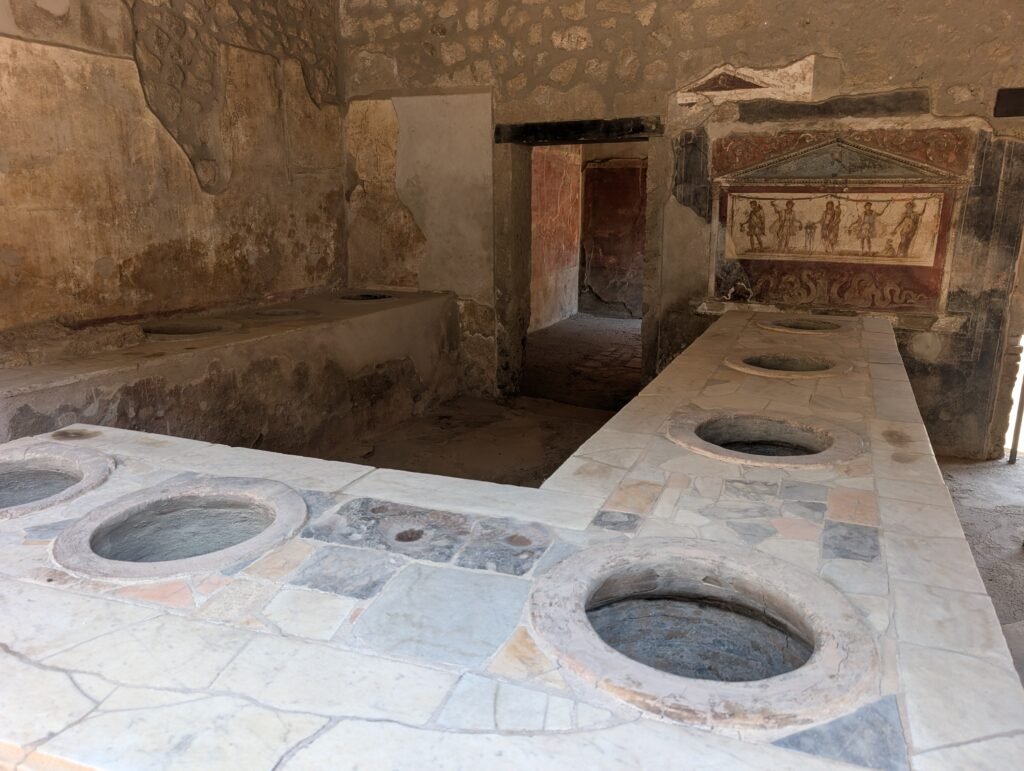
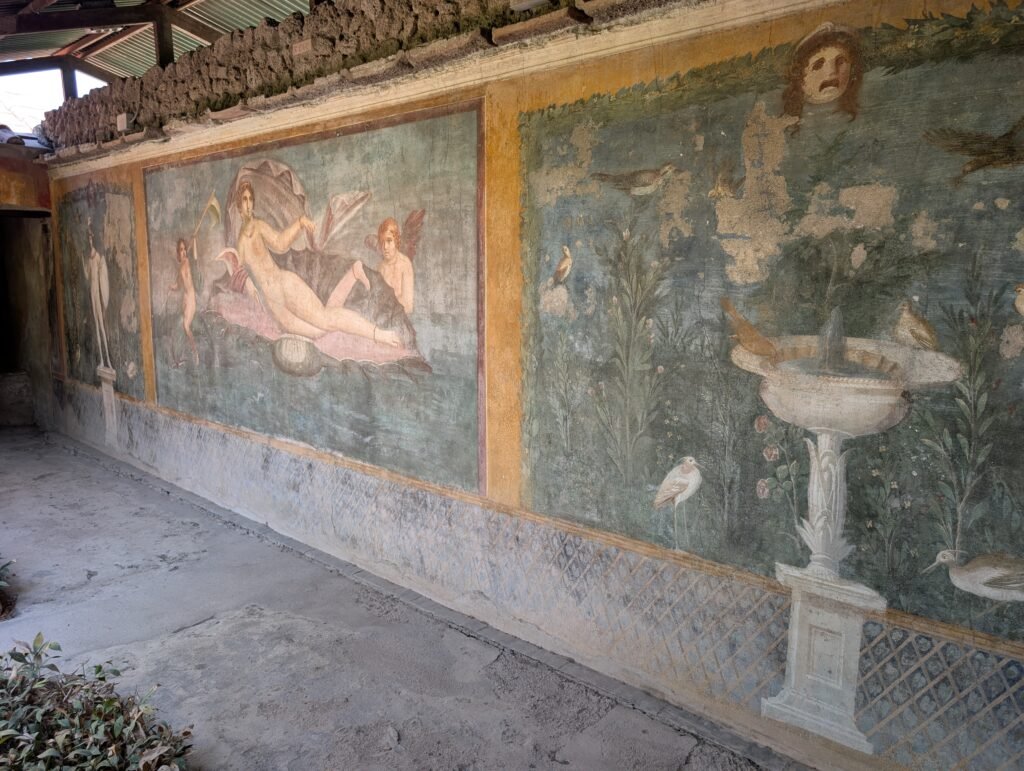
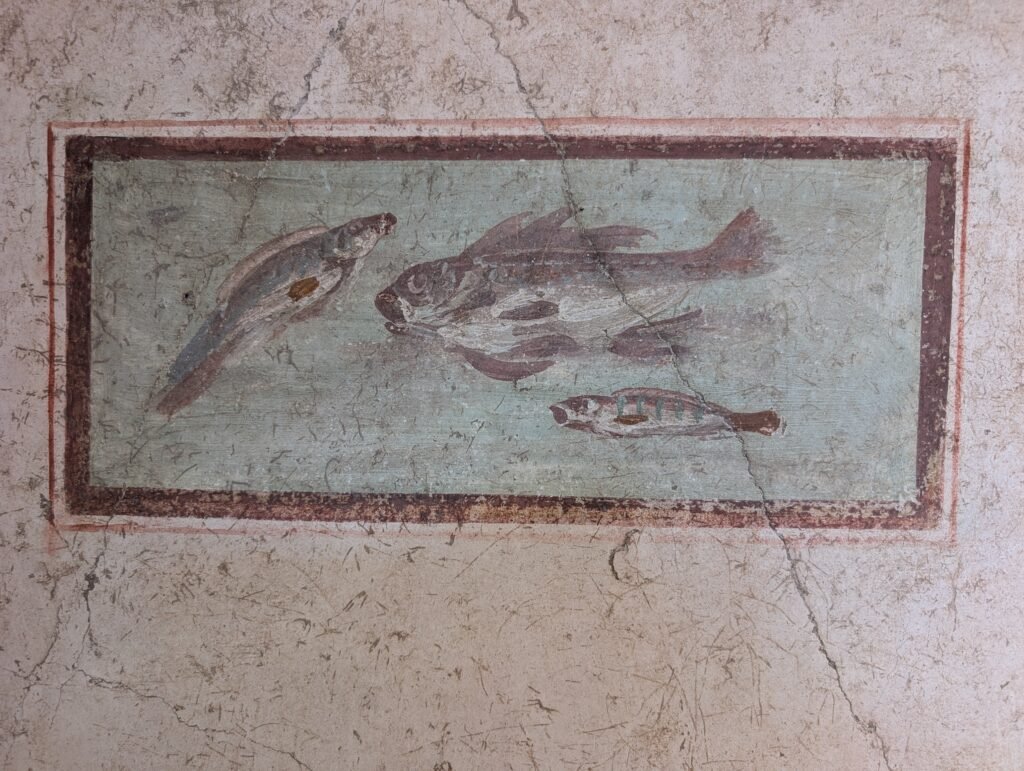
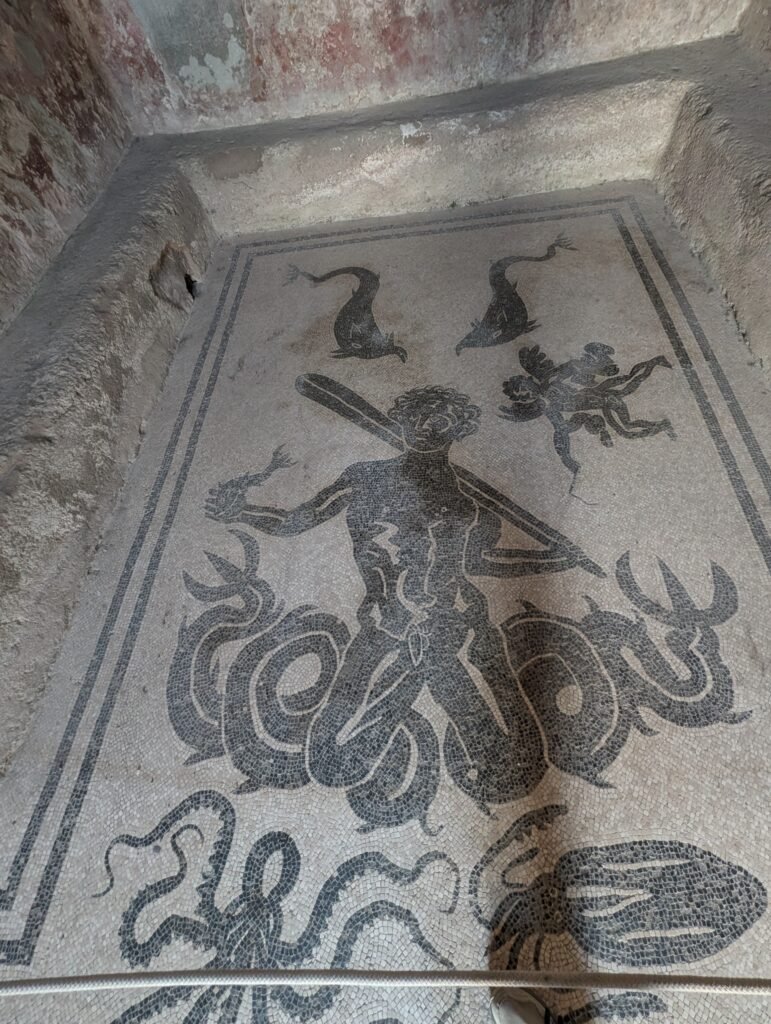
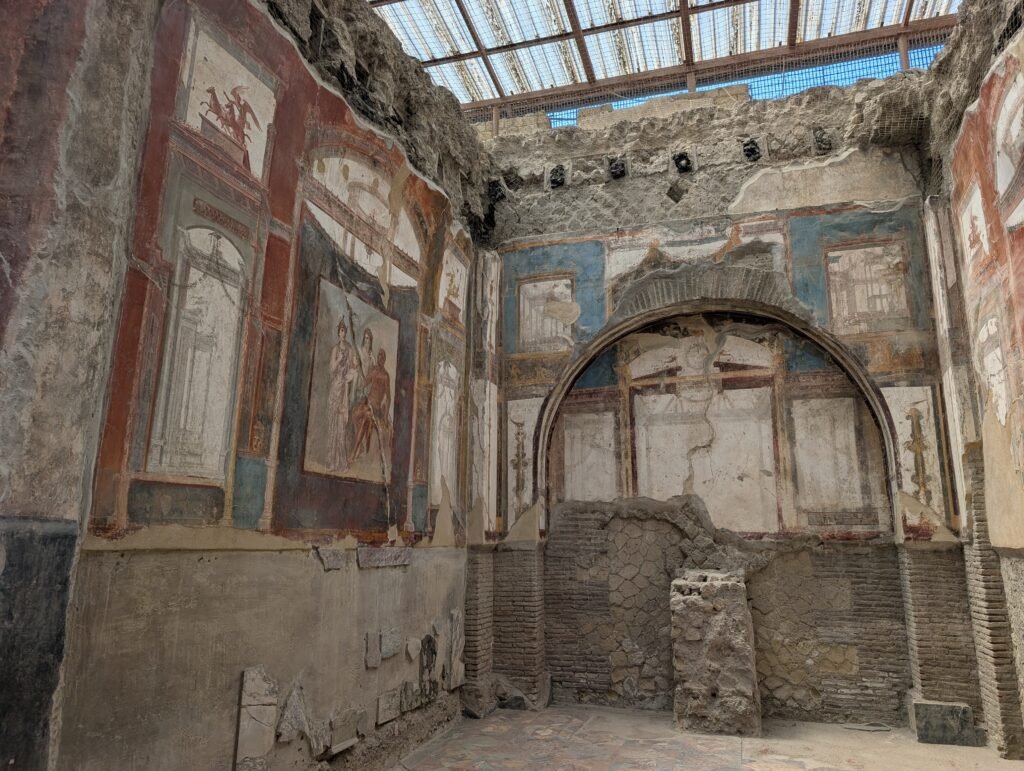
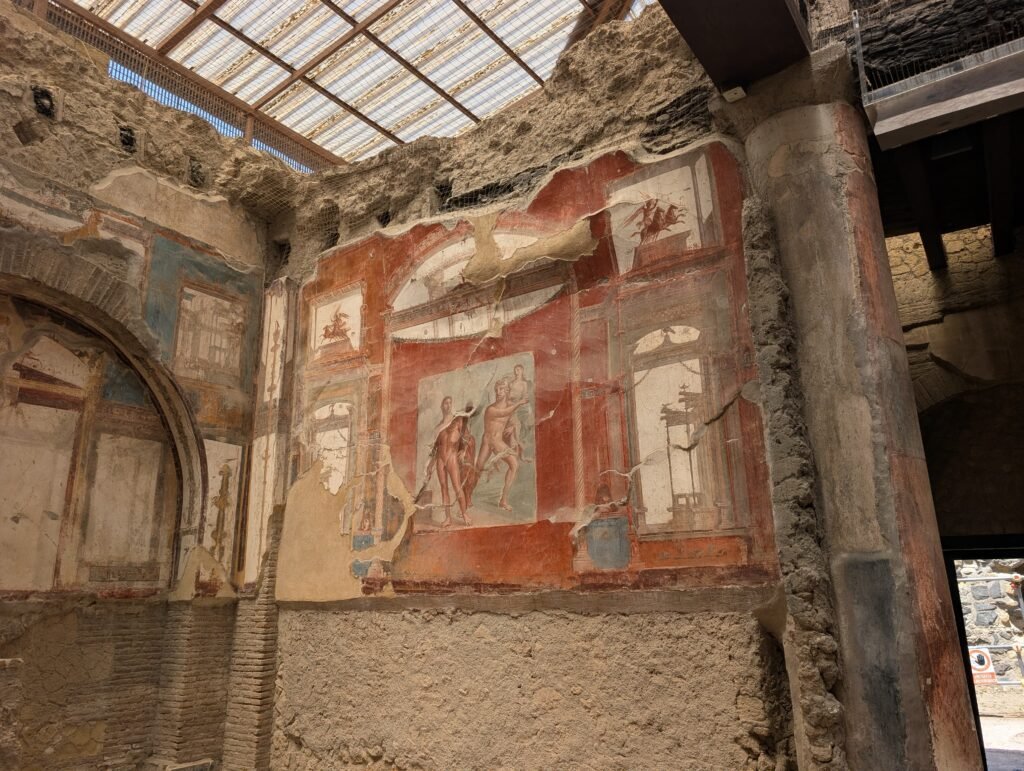
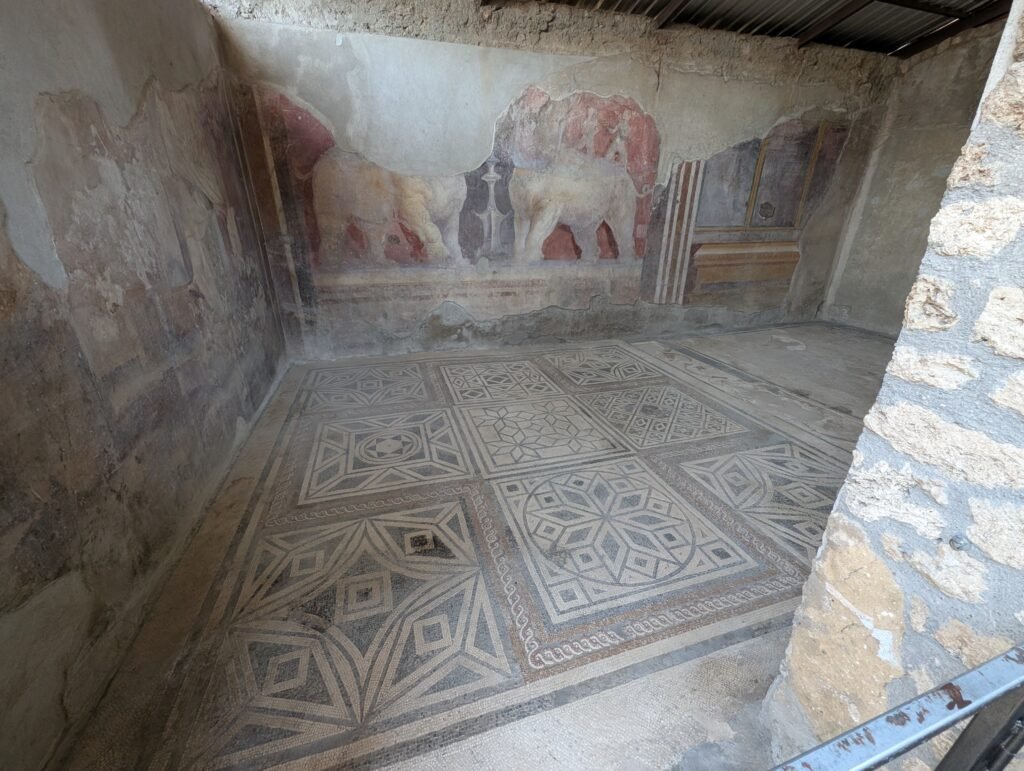
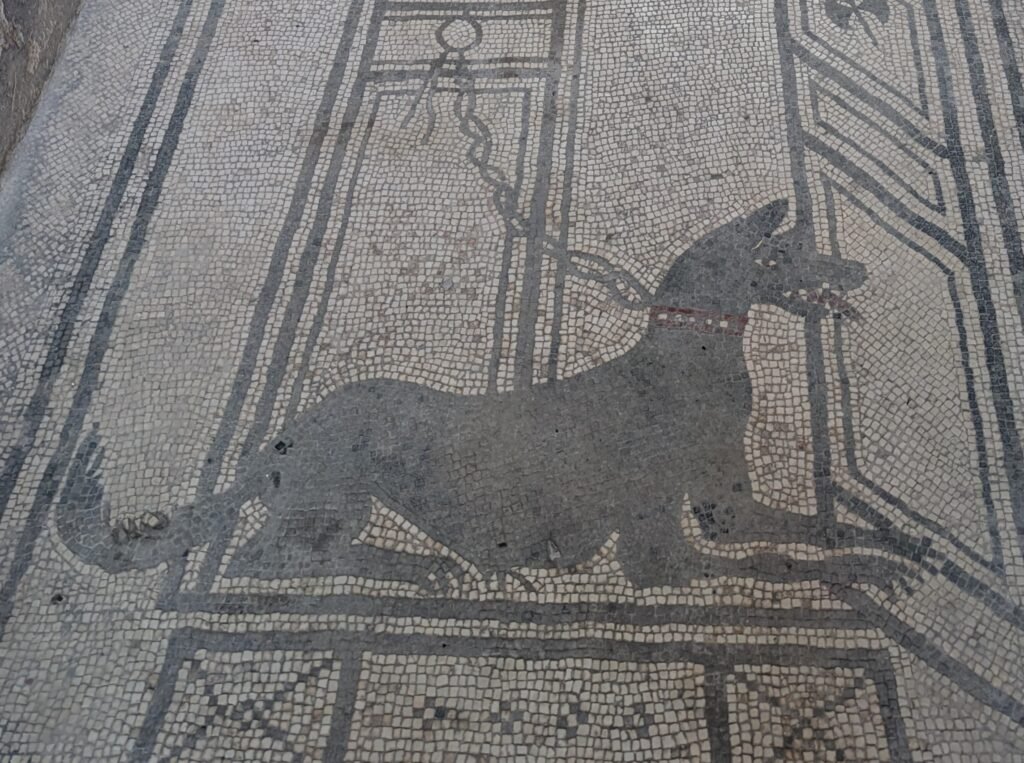
To me, the highlights of Pompeii were the frescoes. There were some nice floor mosaics as well, and many of them were intact. They tended to be mostly geometric patterns rather than images. Frescoes were paintings done on plaster while the plaster was still wet. This allowed the paint to dry with the plaster, ensuring it would last significantly longer than paintings otherwise would. Nearly all of the villas and nicer homes seemed to have frescoes on the walls throughout the living areas. Although I had seen quite a few Roman ruins before my visit to Pompeii, I had seen very little surviving paint, so this was a novel experience for me.
We had visited the Domus Aurea in Rome. There, Renaissance artists had themselves lowered with ropes into Nero’s opulent entertaining palace. The elements and the smoke from these early visitors has significantly damaged this artwork over time, and I could only imagine what the clarity and vividness of the original work would have looked like. Pompeii filled that void for me with so many examples of nicely preserved frescoes that I walked away with a very good idea of what those in the Domus Aurea must have looked like.
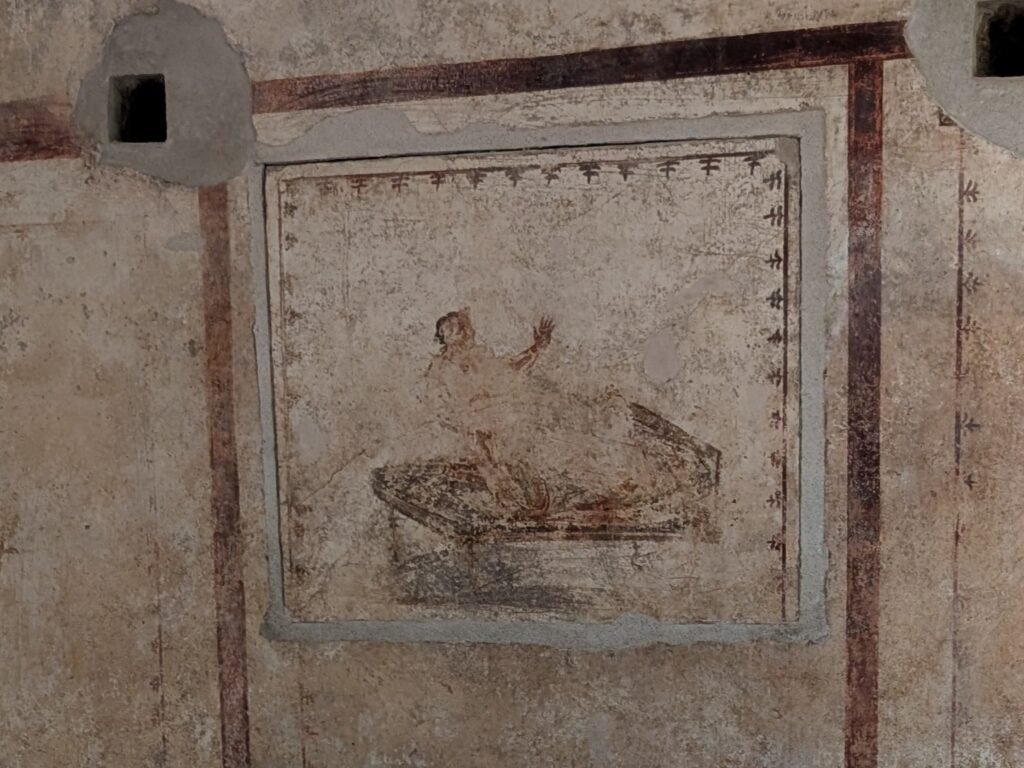
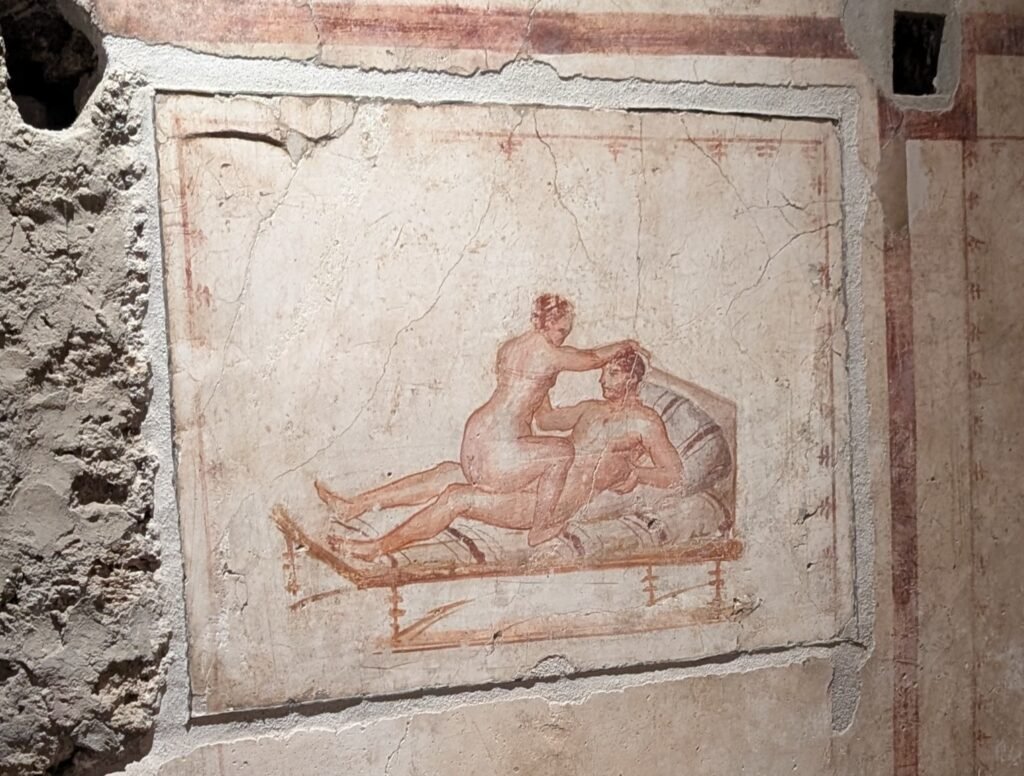
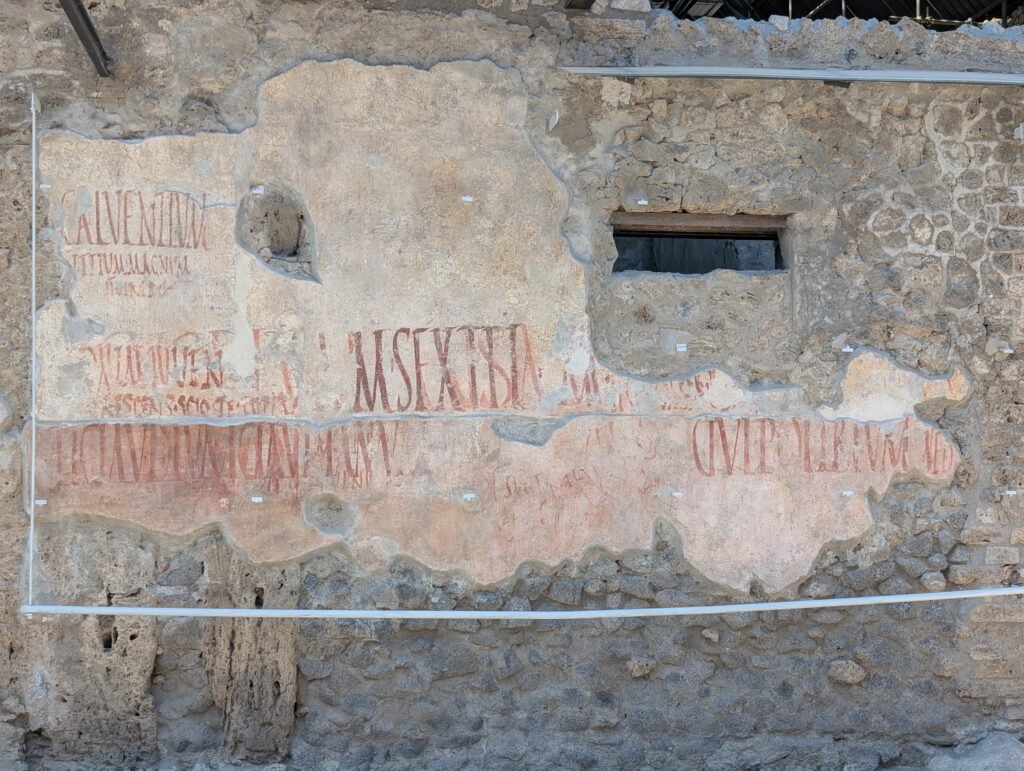
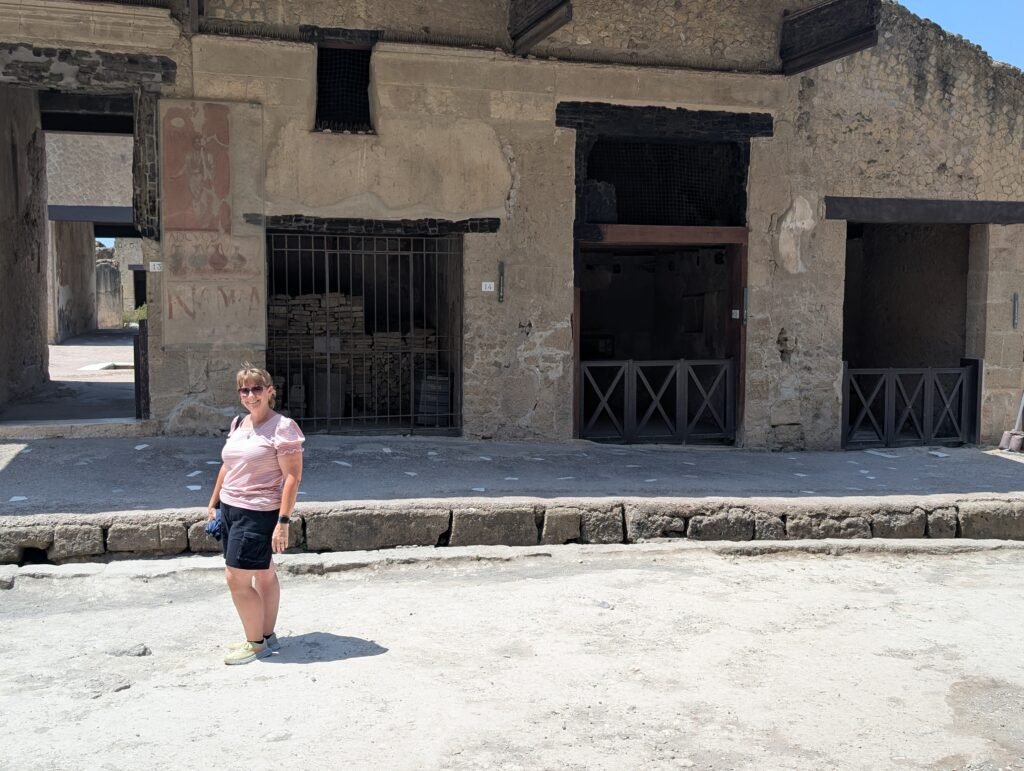
Some of the paint served other purposes. In Pompeii, you can see preserved political slogans and campaign material for local political offices like aedile. An aedile was something like a cross between a city councilman and county commissioner. Occasionally, ancient graffiti can be observed. There were also occasional painted advertisements. One advertisement even described the various types of prostitution services available from one particular member of that most ancient profession.
There was one other major novelty for me at Pompeii. They say that we Americans tend to be far more concerned than Europeans with what aspects of historical sites are actually original. People in most other parts of the world simply accept that ancient and historical buildings continued to be used, updated, remodeled, and renovated over time. As such, the site of an ancient building may, in modern times, just be built on the spot where the original was. Either that, or the original building has been altered significantly over time as expediency required.
Ancient residential buildings, too, were expanded, remodeled, and renovated time and again as they often had lives several centuries long. Most of what was left of the Roman structures we saw in and around Rome were what was left when the buildings were abandoned or ceased being used for their original purposes in late antiquity. Because the history and use of Pompeii ceased suddenly in A.D. 79, all of the architecture and cultural evidence in Pompeii dates no later than the first century. There were some bits and pieces of buildings that predated Roman occupation of the area. Some were from as far back as the sixth century B.C.
Likewise, the baths, public buildings, and infrastructure were all from no later than the first century in Pompeii. This was probably even more rare, as Roman officials tended to be purposeful about implementing building programs that would enhance their reputations through their contributions to the public good. So it was quite different to see a city that was frozen in time in the late first century. It took a real tragedy to preserve so much evidence from precisely this time in history, but if something so terrible had to happen, at least we are able to learn a lot about daily life in the ancient Roman world from it.
Stephanie and I were able to see most of the open buildings and villas around Pompeii. There is another villa a shuttle bus ride away that came with the tickets I bought, but we were not able to get to it due to the time we spent in the rest of the city. We were also not able to visit the antiquarium on the Pompeii site. We had a very full day. We took the Circumvesuviana back to Naples, had a quick bite to eat near our room, and retired for a long, well deserved sleep.
(Continued)
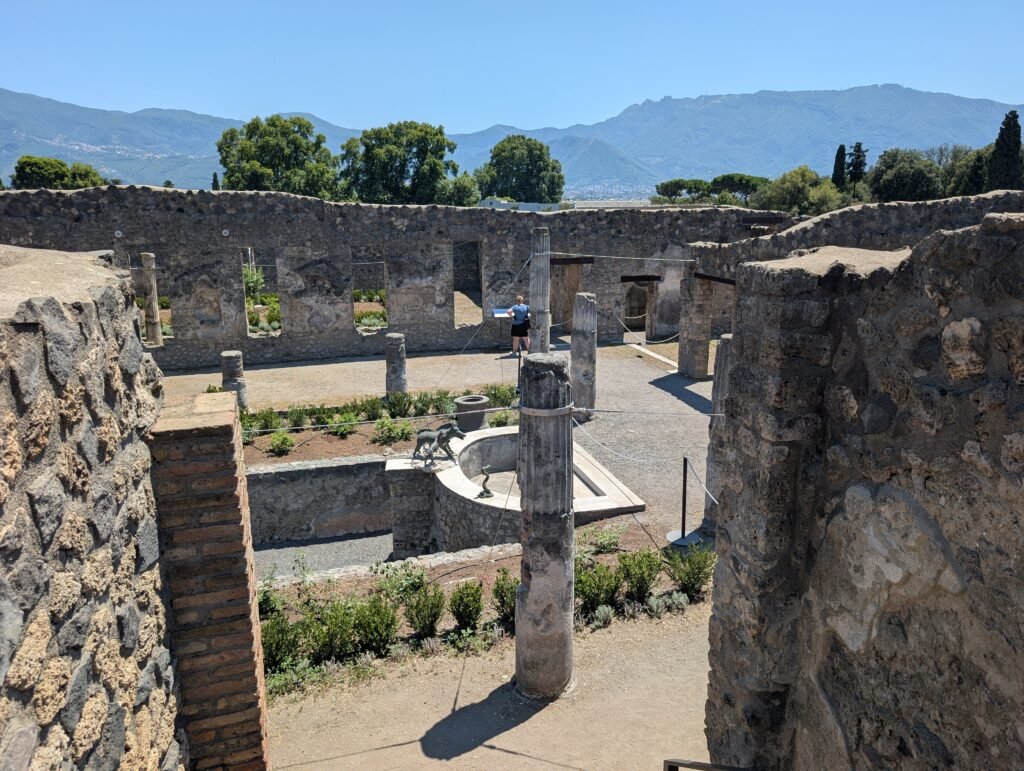
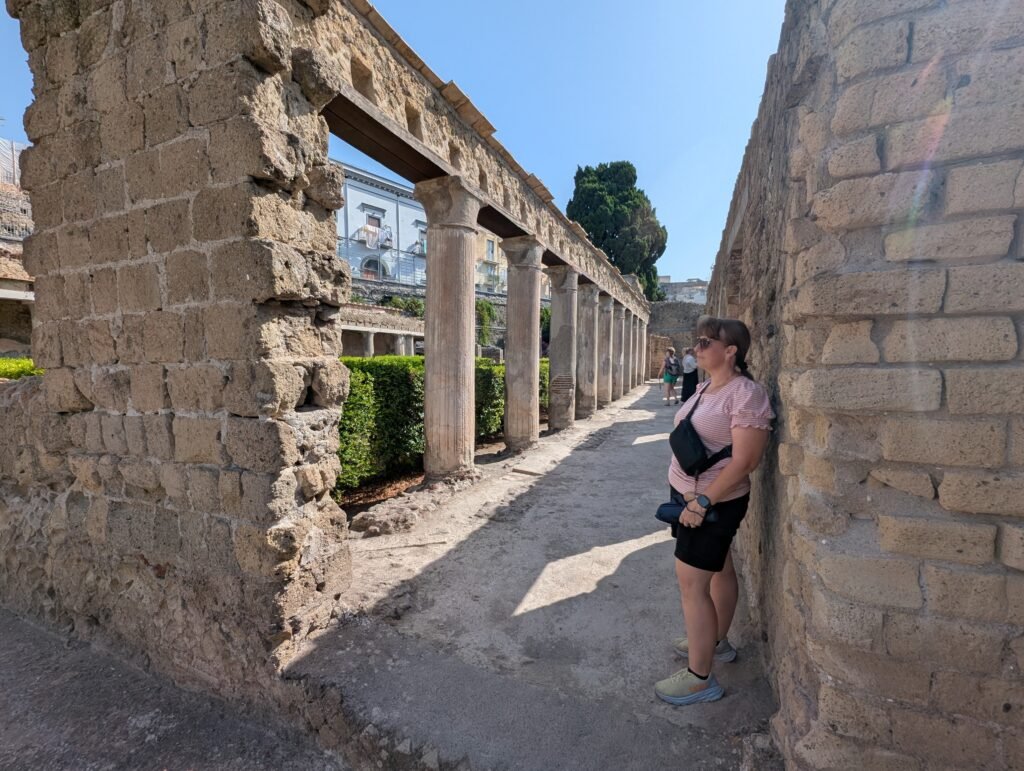
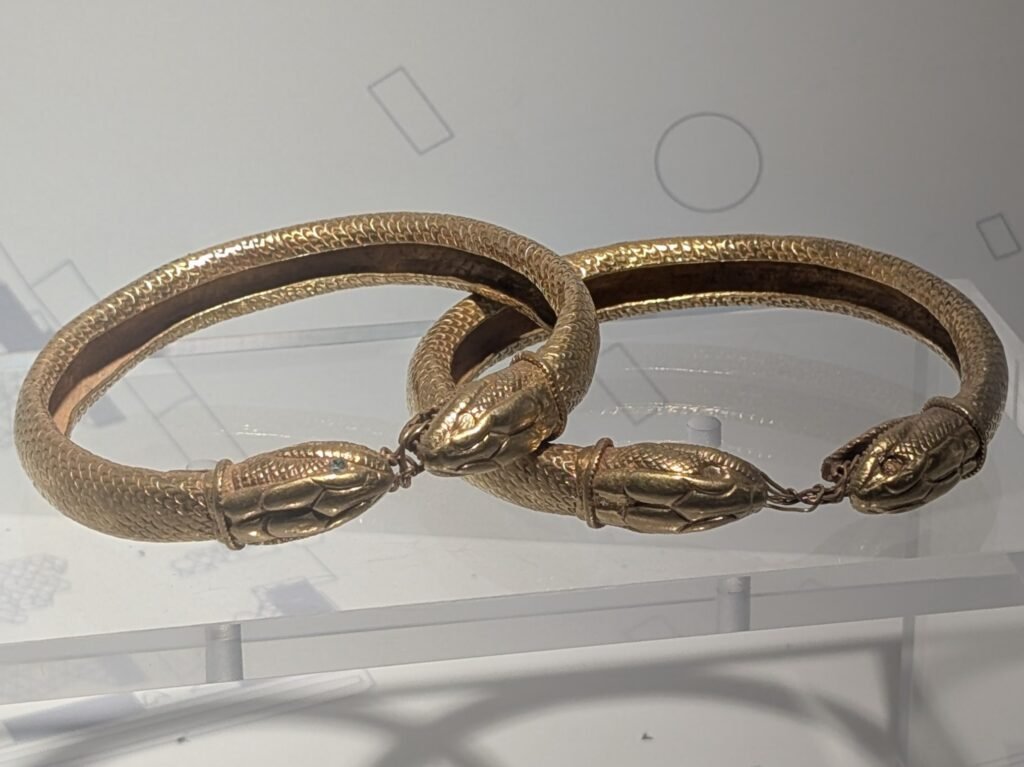
We were up relatively early Tuesday to visit Herculaneum. Herculaneum was a smaller Roman city. It, too, was destroyed in the 79 A.D. eruption. Herculaneum was home to about 4,000 residents, who seem to have been disproportionally wealthy. The town had a lot of villas and nice houses, and was home to many jewelry crafters, and others working in industries serving the wealthy. Like Pompeii, Herculaneum was a coastal town.
When Pompeii was destroyed, about 90% of the population had already fled the town. There had been a series of earthquakes and the volcano had been spewing ash and such for several hours. Many of Herculaneum’s residents had likewise vacated. In both Pompeii and Herculaneum, a very fast moving mass of extremely hot gas finished off the remaining victims. Pompeii was then covered in about 6 meters of ash and volcanic residue. None of the wood or organic material survived the centuries after the fall of the ash.
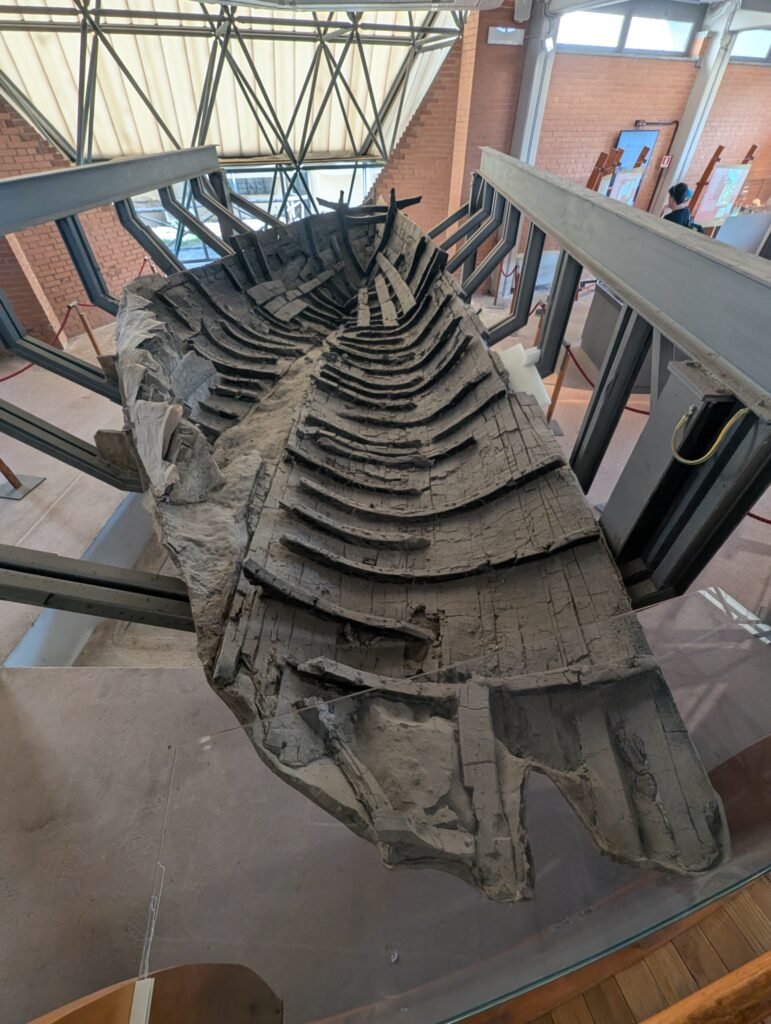
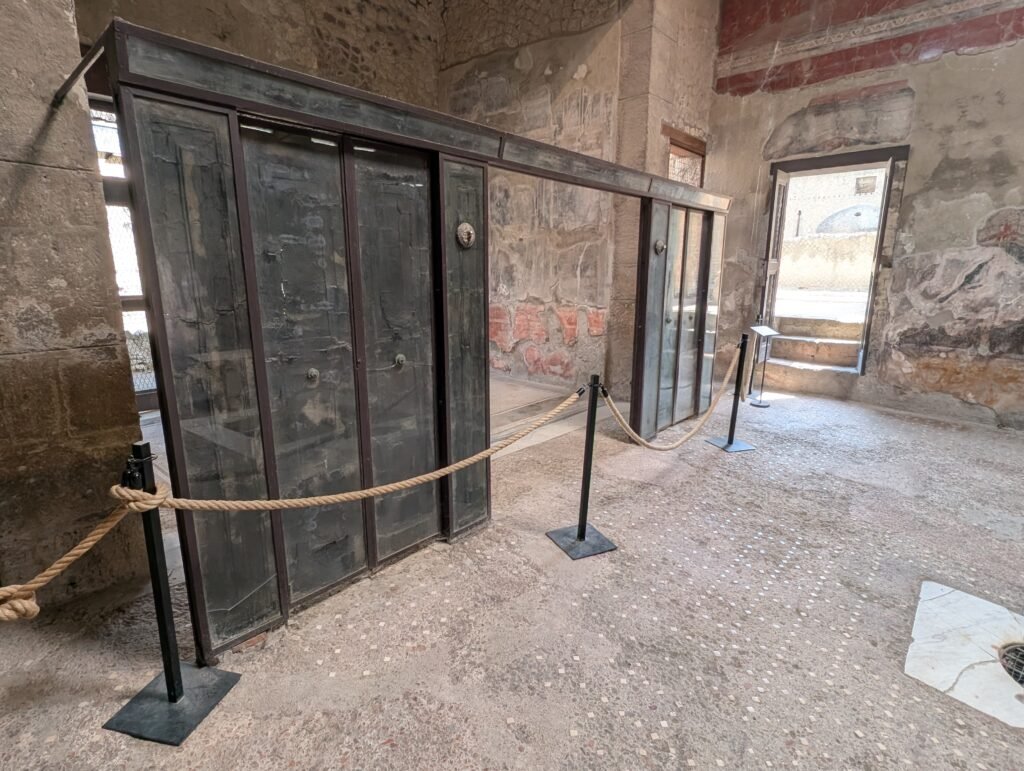
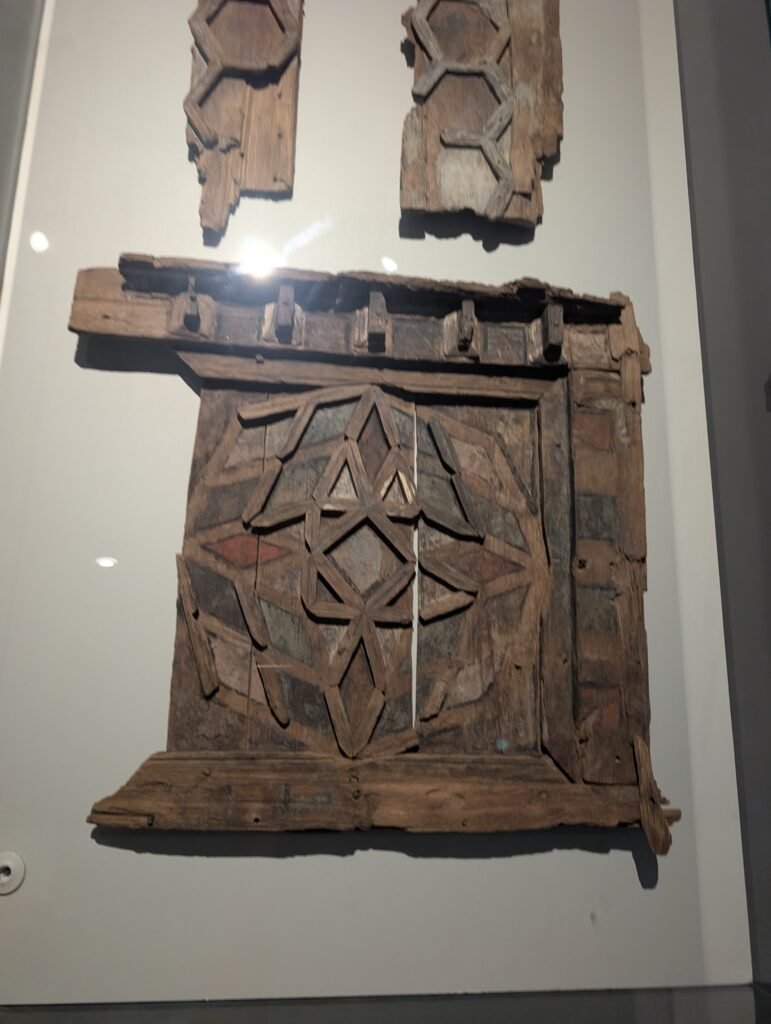
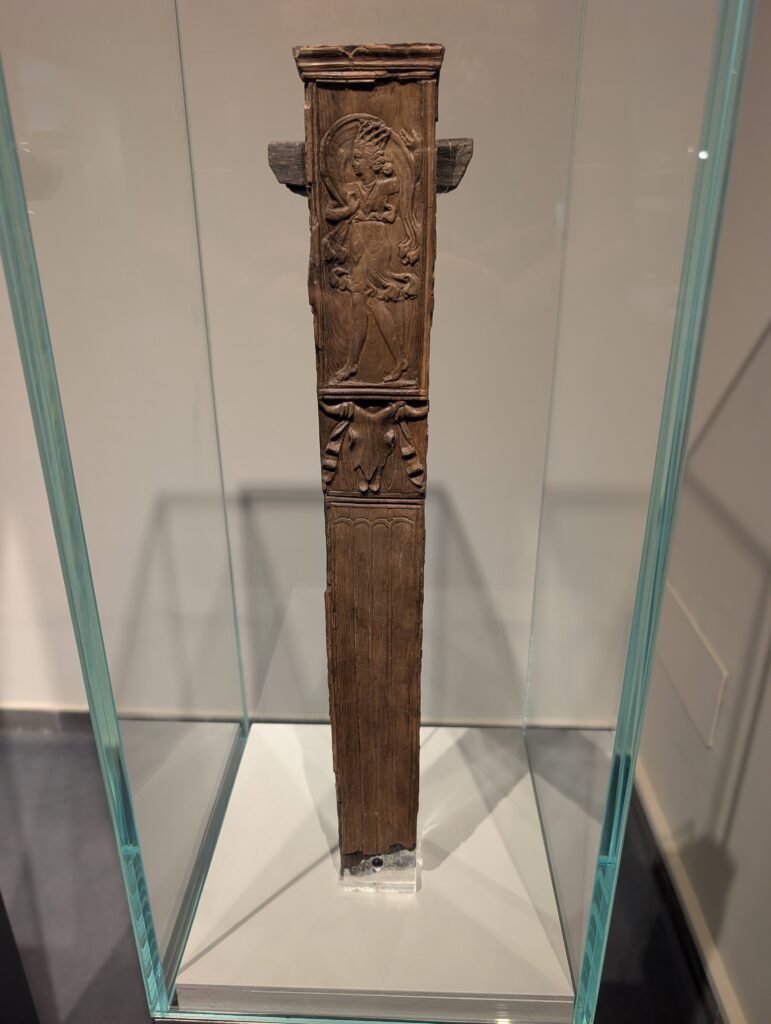
After the hot gases killed the remaining residents of Herculaneum, an 18 meter thick slide of volcanic mud encased the remains of the city. A significant number of wood relics were preserved by this volcanic mud slide. There are doors of buildings, table legs, beds, and even an ancient wooden boat. Some wood tools survived as well. You can see the wooden winches used to work equipment on the docks. These preserved wood items are one of the unique aspects of Herculaneum.
(Continued)
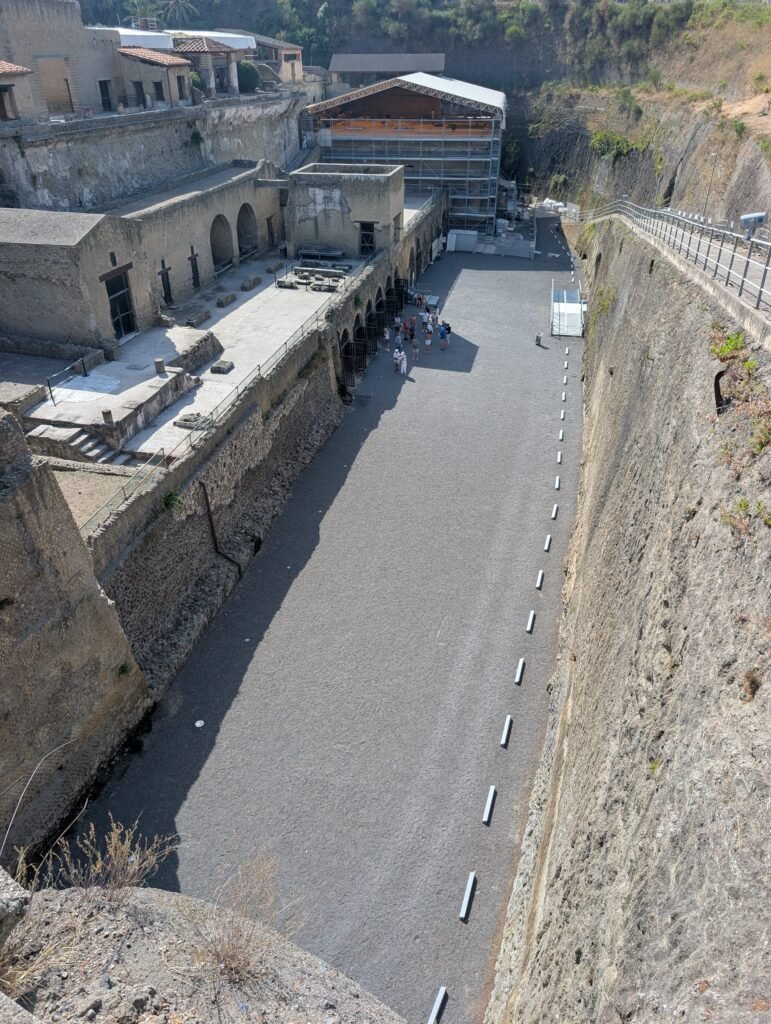
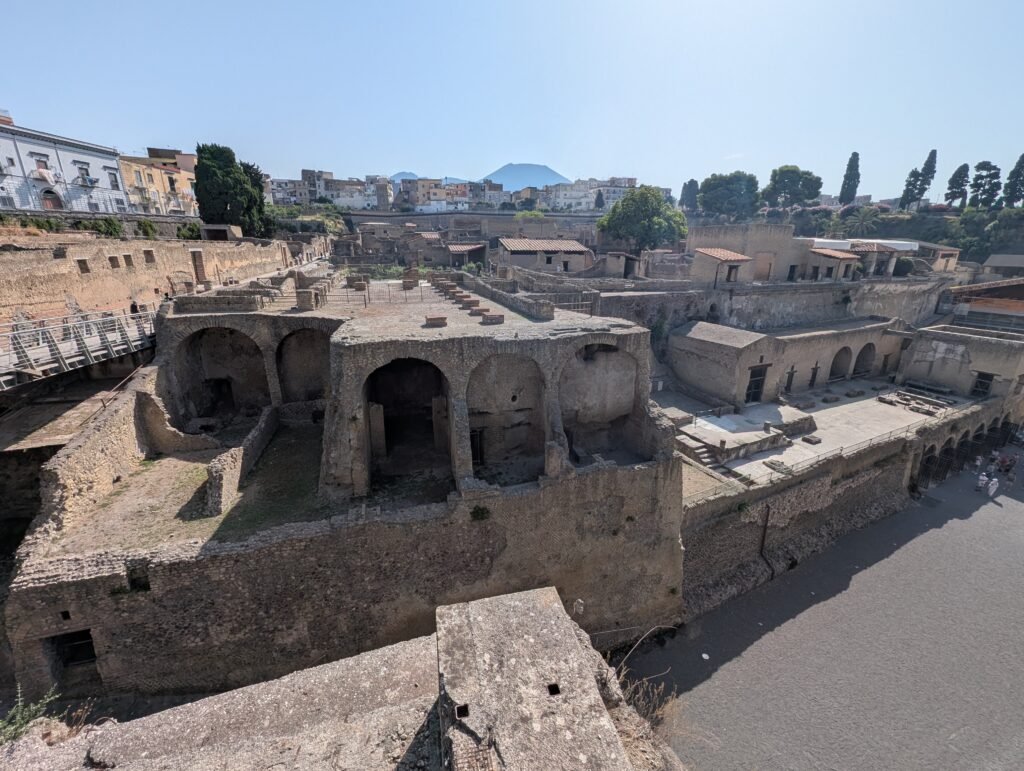
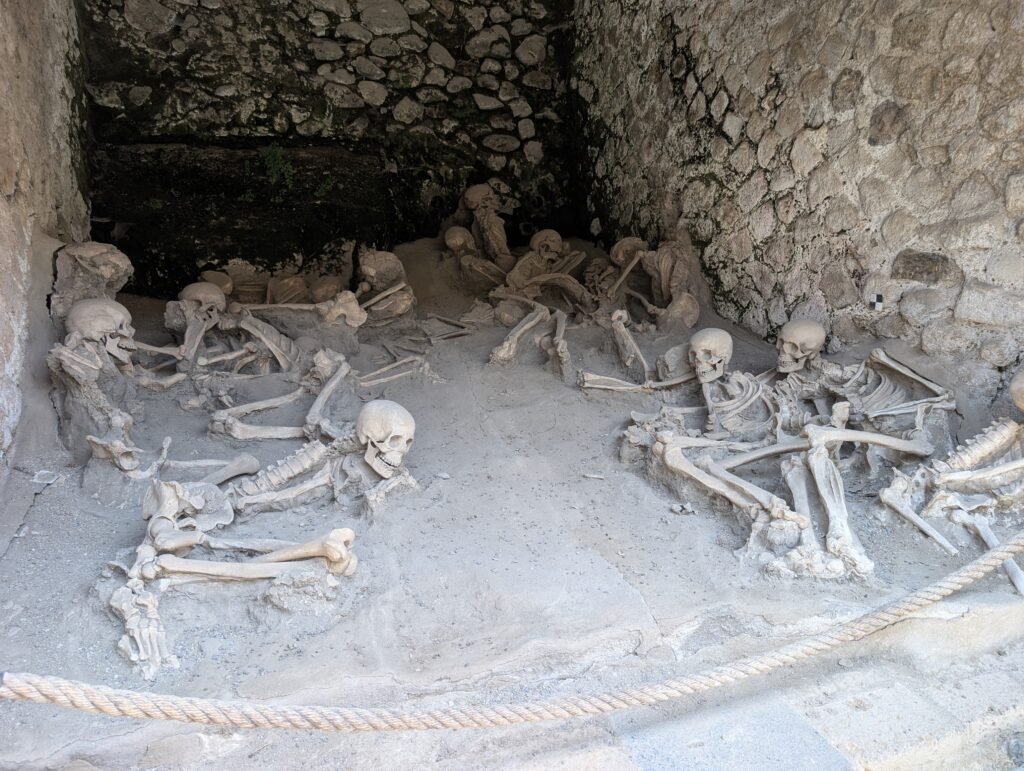
Herculaneum is home to a poignant testimony to the tragedy that occurred in A.D. 79. Apparently, about three hundred refugees made their way to the docks along Herculaneum’s shore to await potential rescue by boat from the sea. Their rescuers never arrived. The skeletons of these victims lie in the buildings along the ancient shore. They had brought with them valuables, like hoards of coins, jewelry, keys, and other portable valuables they thought they might escape with. You can see where these poor people were huddled against the wall, or trying to comfort a loved one. As touching as the plaster casts at Pompeii are, these visible human remains seem even more moving.
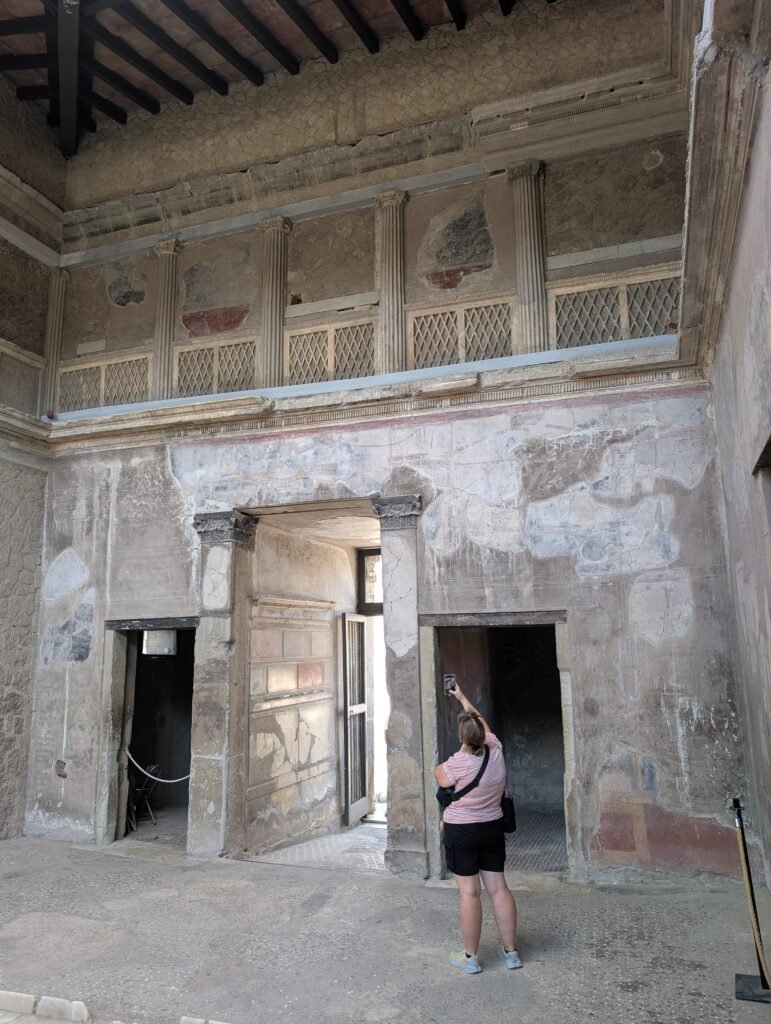
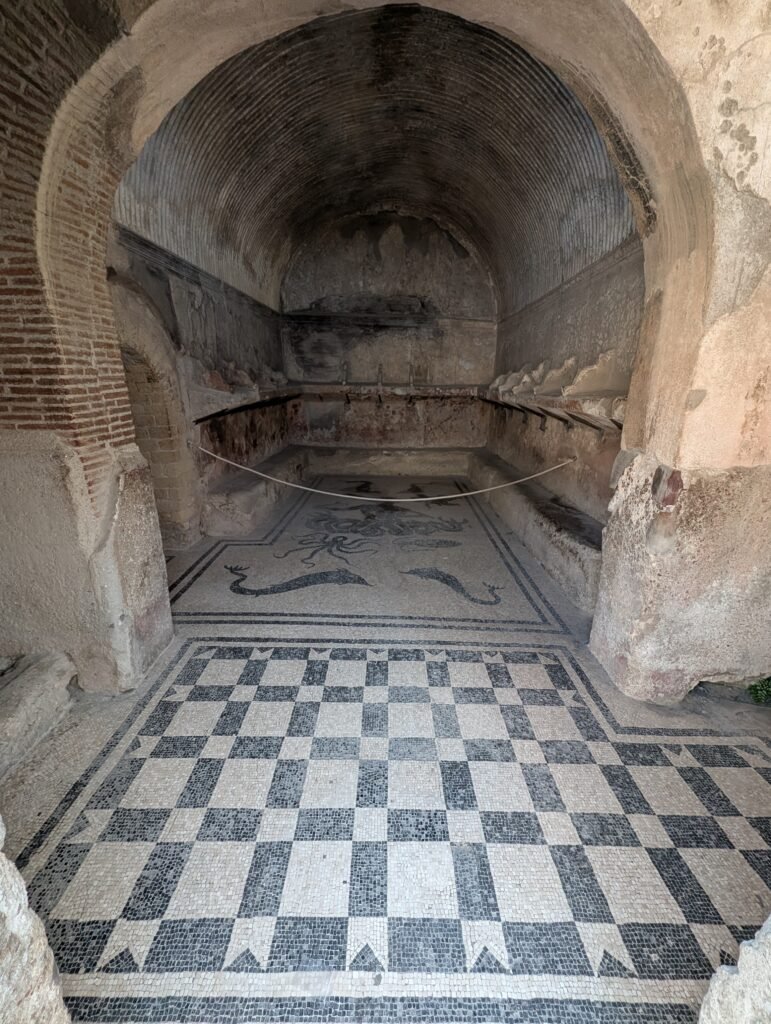
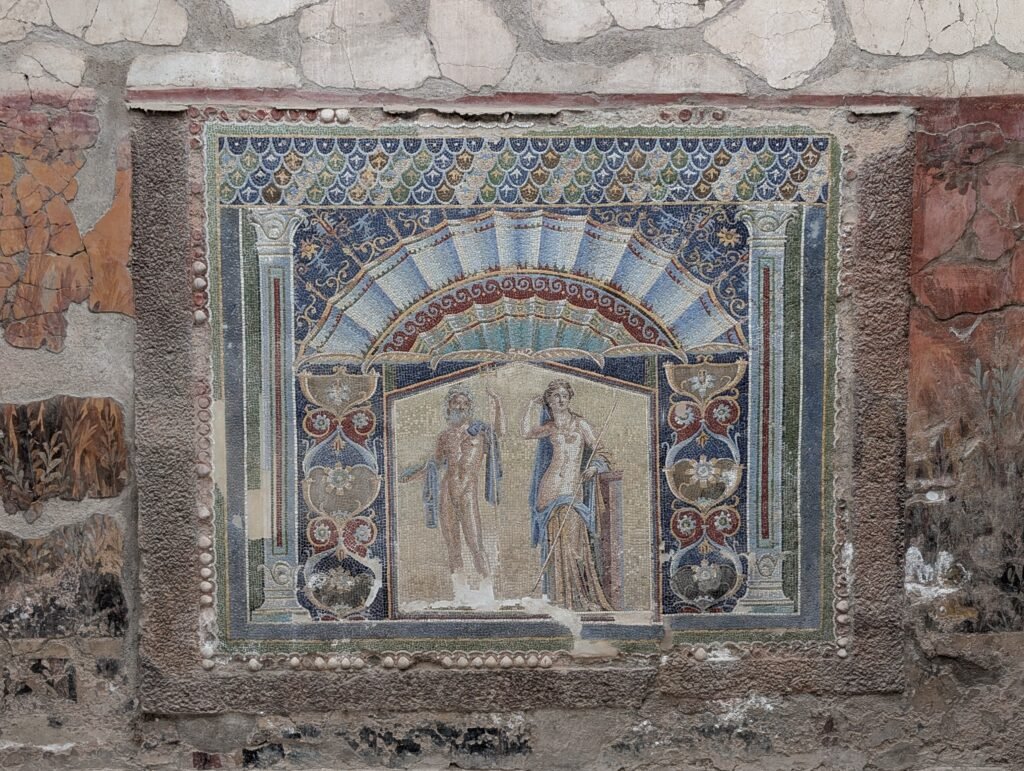
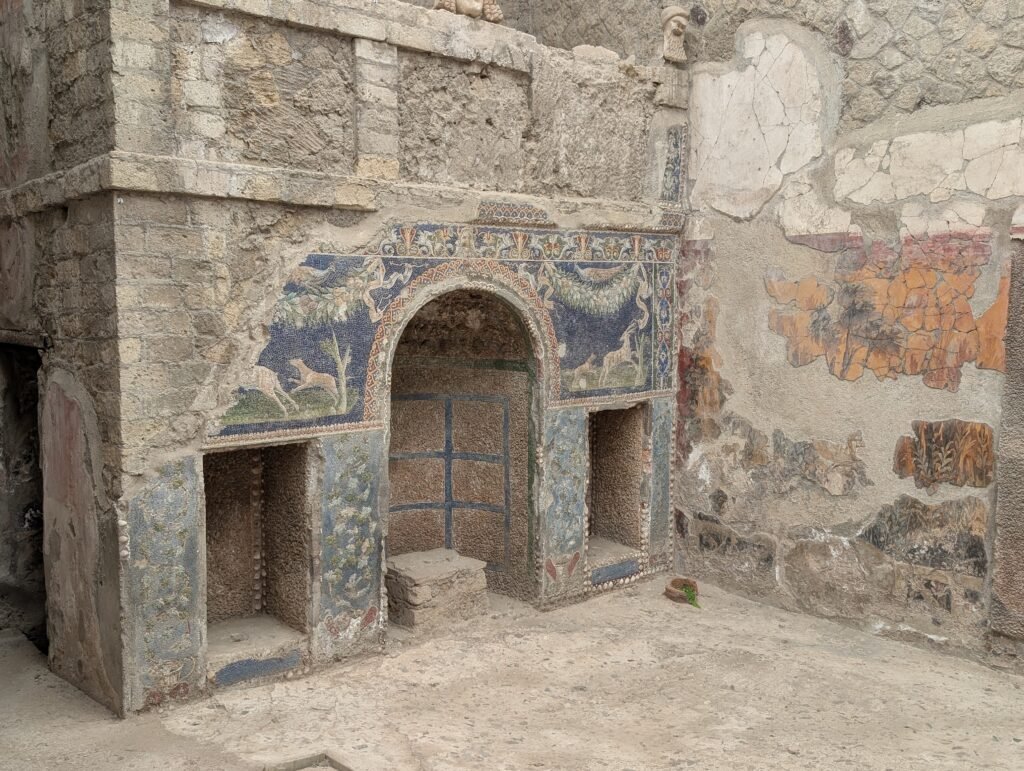
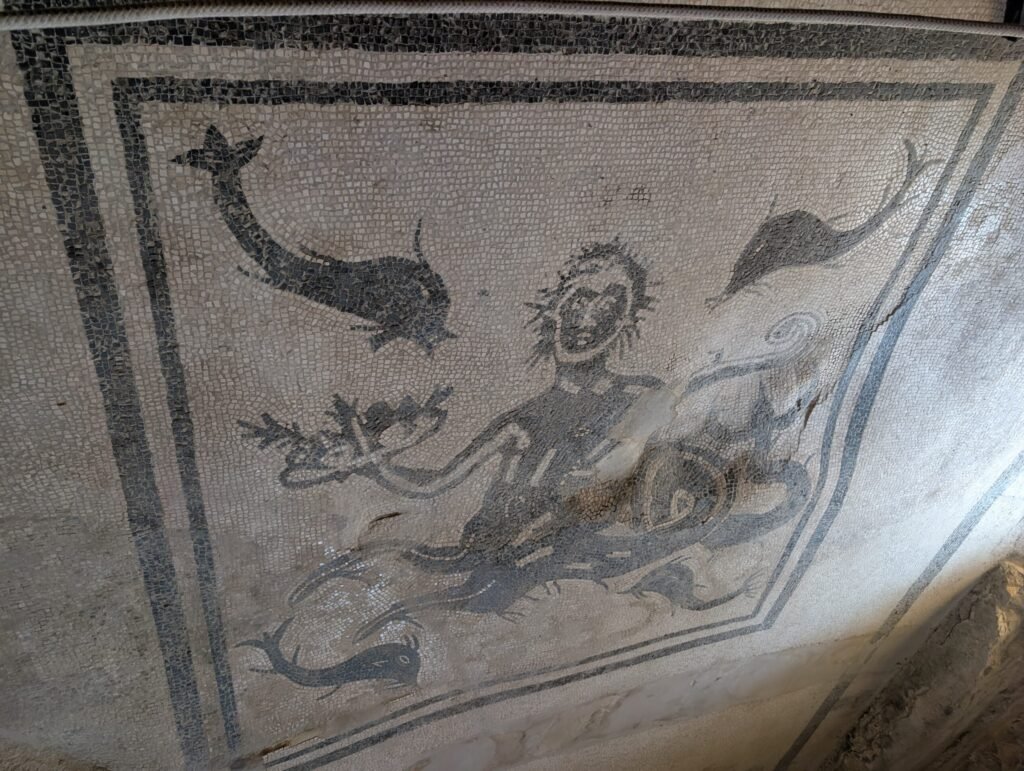
Somehow, the structures of more of the buildings in Herculaneum withstood the flow of mud than bore the weight of the ash in Pompeii. The upper floors of a much higher percentage of buildings remained intact in Herculaneum. There are a lot of pieces of frescoes, but it seems that more of these only survived in fragments. Herculaneum was home to the most spectacular Roman wall mosaic I have seen in any of the sites I have visited in Spain, England, Rome, or North Africa. Check out the stark blues, and the shell borders of the mosaic in the attached picture.
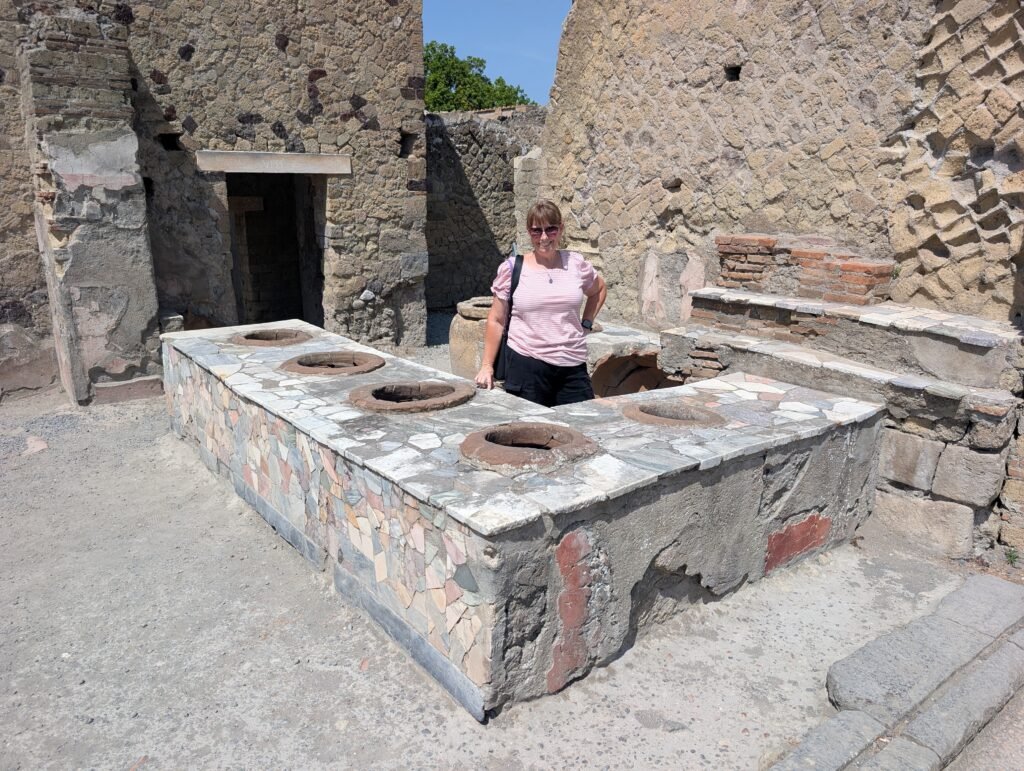
All in all, there are only about three main streets running to and from the ancient shoreline in Herculaneum. There are a total of about forty stops with descriptions you can read, and not all of those are open. Because we were being thorough, it still took us about four hours to walk the entire site. It filled in some more spaces in my understanding of life in a first century Roman town. We saw the houses, the baths, the fast food joints, and the villas. We had time to visit the small antiquarium. On our way back to the train, we grabbed a very late lunch.
We were so happy to rinse off in the shower. We spent most of the afternoon resting. I wrote. Stephanie read. I caught up on some farm work. We were due for a partial rest day. Other than a quick trip to the local market, we were done being outside for the day. We had one more day to spend in the area, but it would not be nearly so taxing as the first.
(Continued)
With only modest assistance, Stephanie chose our stops for the 15th. Like many parts of Italy, Naples was an independent entity for much of the medieval period. The Kingdom of Naples was at various times ruled by members of the Bourbon family. The man who eventually became Charles III of Spain after the War of Spanish Succession had previously sat on the throne of Naples. Before that, Naples had its own King, independent of Europe’s other royal families.
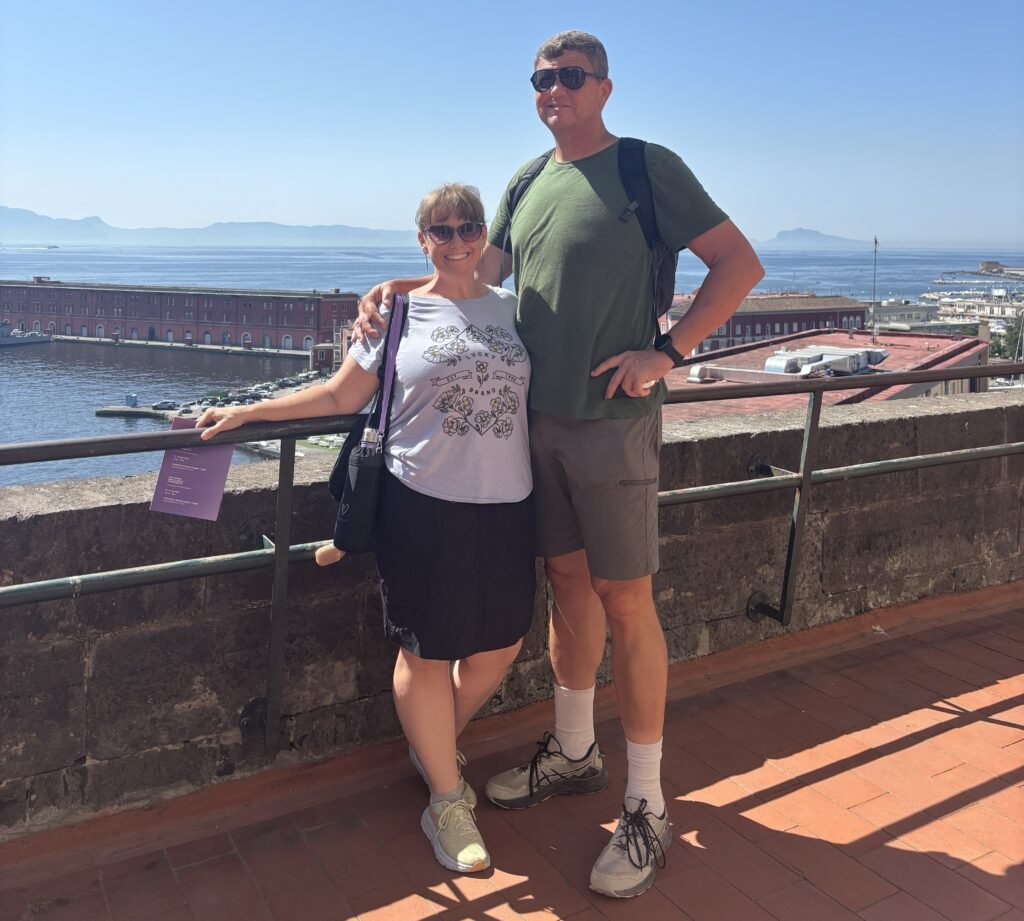
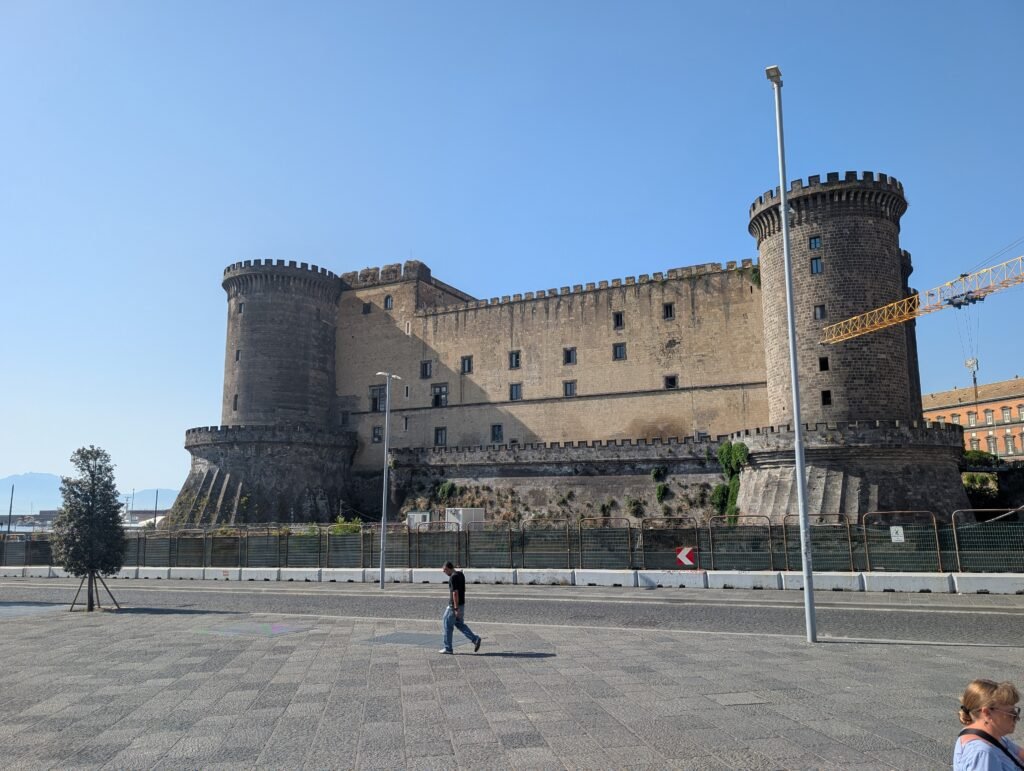
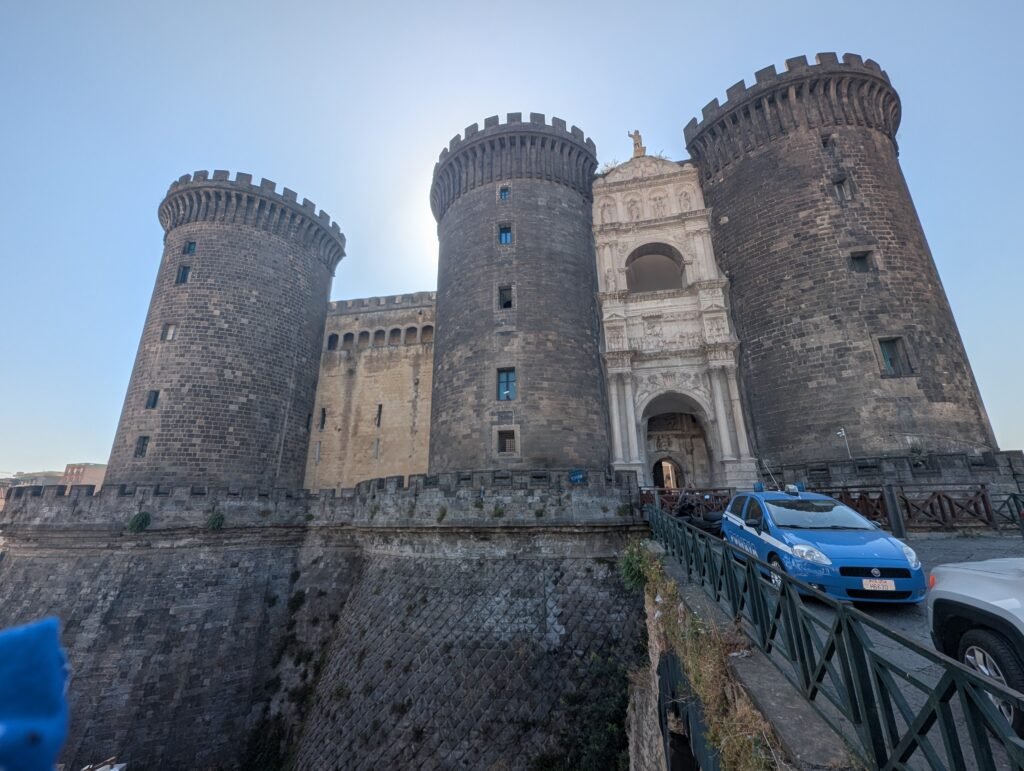
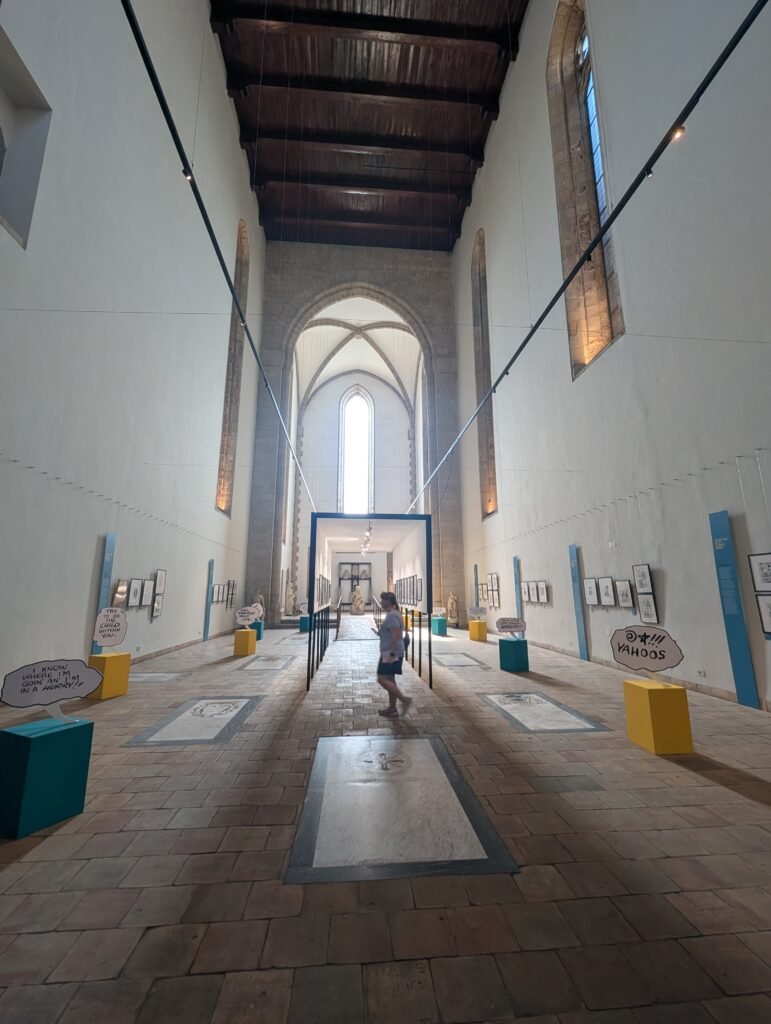
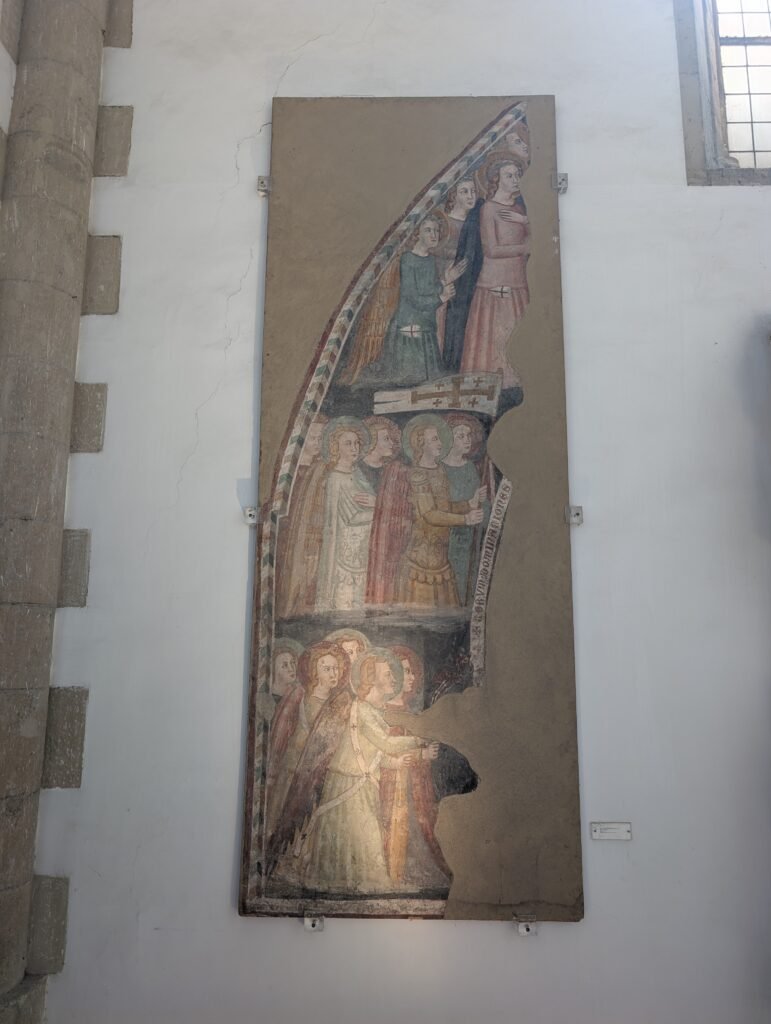
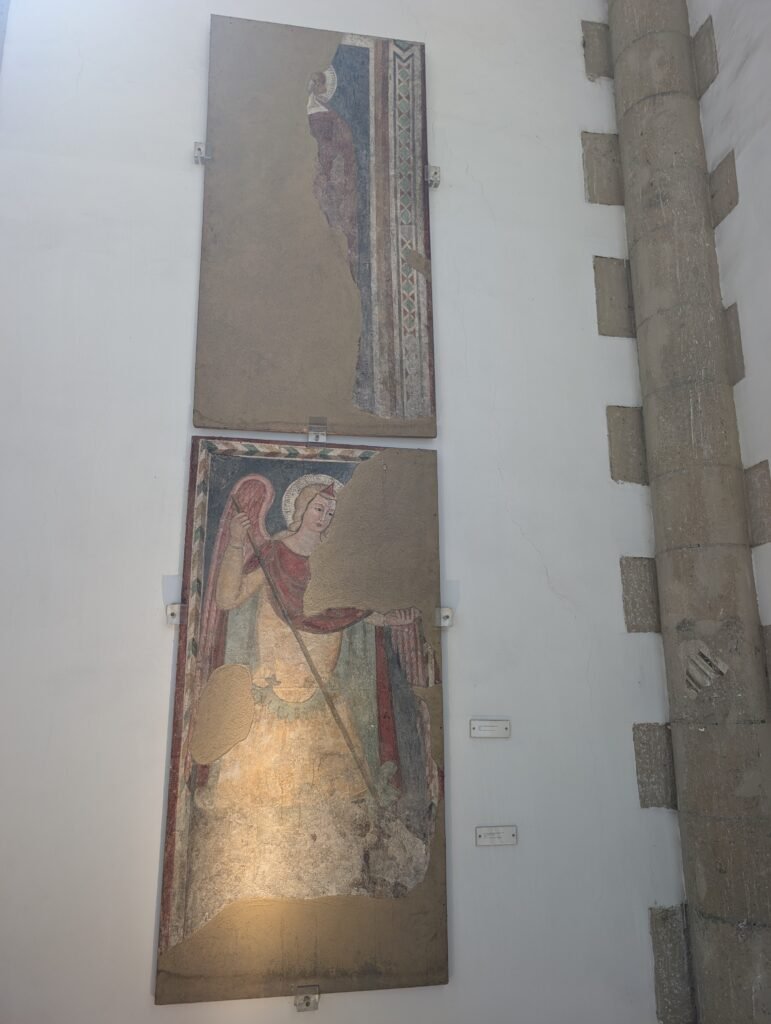
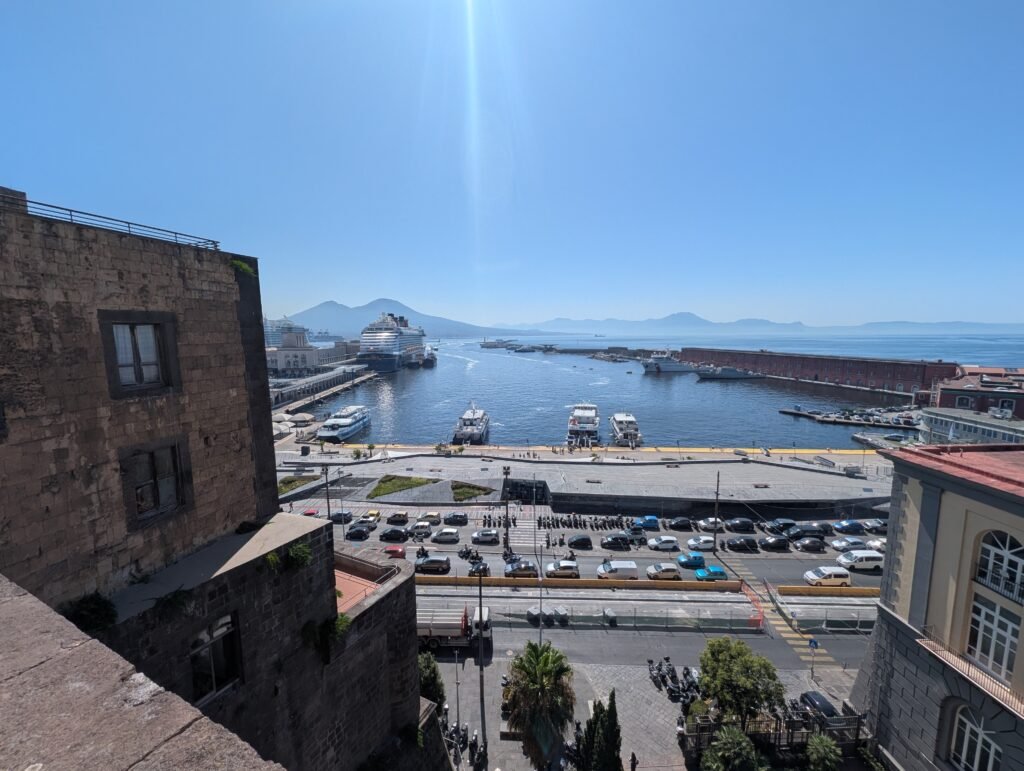
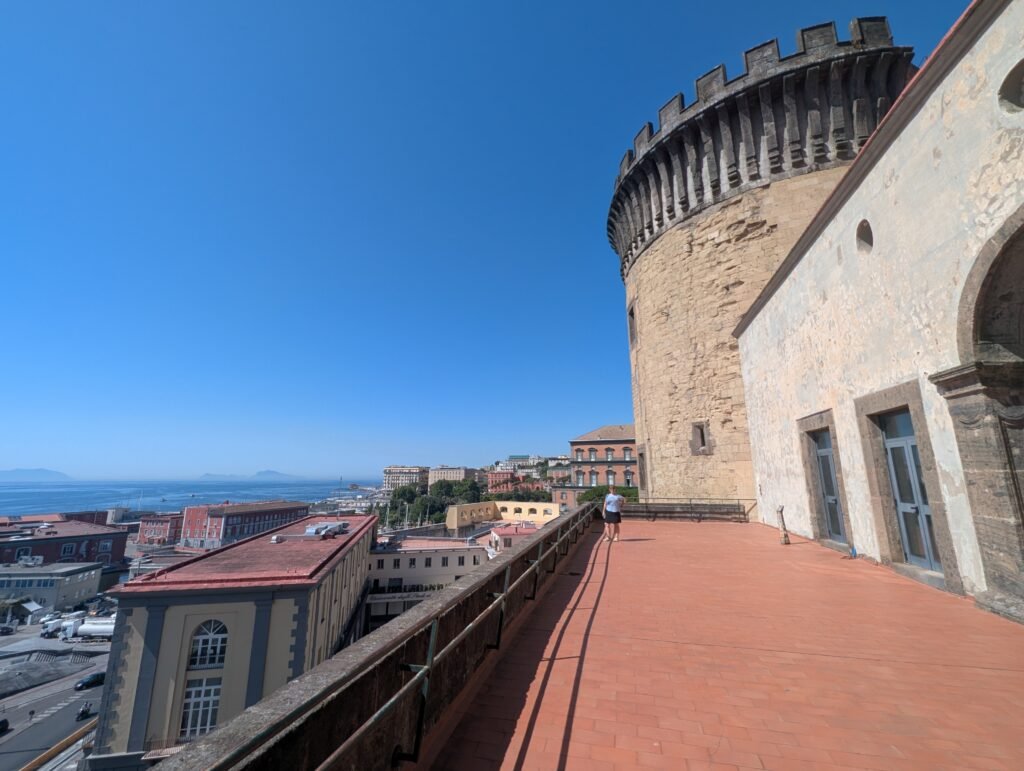
We went first to Castel Nuovo which was the Royal Residence of the King of Naples for some if its existence. The structure of the castle was pretty cool, and it was right near the coast offering some pretty amazing views. The presentation, on the other hand, left much to be desired. After buying a pretty expensive ticket, we weren’t even allowed to climb to the turrets and tops of the walls. The few rooms on the castle interior had been converted to temporary exhibits showing the extremely out of place counter cultural pop art of a guy named Robert Crumb. It was completely dissonant to the castle surroundings, and they had even removed most of the signage explaining the historic parts of the castle to make room for the Crumb displays. We struggled to find a few explanations for the historic pieces of art in the chapel. One room was clearly built over some kind of catacombs which you could see beneath a glass floor, but the entire room had only parts of comic books and corollary displays to the Crumb work. It was very strange.
We dropped off our packs and picked up our swim suits after we had seen this castle. We ate a bit for lunch, and headed to a free public beach via public transportation to try to beat the heat. It was hot getting there, and road construction made our walk a bit longer. We were very happy to get into the water, which we enjoyed for an hour or so. We held each other in the Gulf of Naples. We people watched. Then we got out and headed back to our room using the extremely crowded public transportation system. While navigating this, a pickpocket grabbed Stephanie’s phone. She was distraught about this for much of the rest of the trip. She took the precautions she could to protect our data, and then we went about our business.
We ate our supper, and got ready for our longer train ride toward Venice. We would have to take a train, followed by a bus to get to this rural location. Sometimes it’s nice to have a day where you just sit on the train and watch the country go by.