Hawaii
Surprise Trip to the Big Island
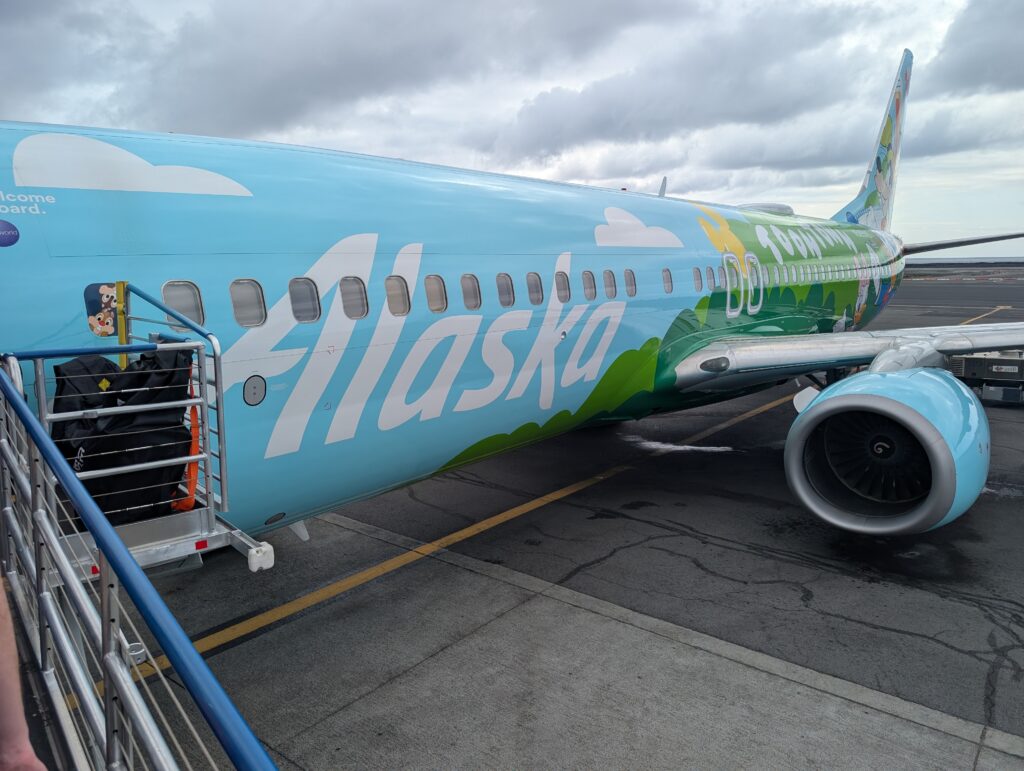
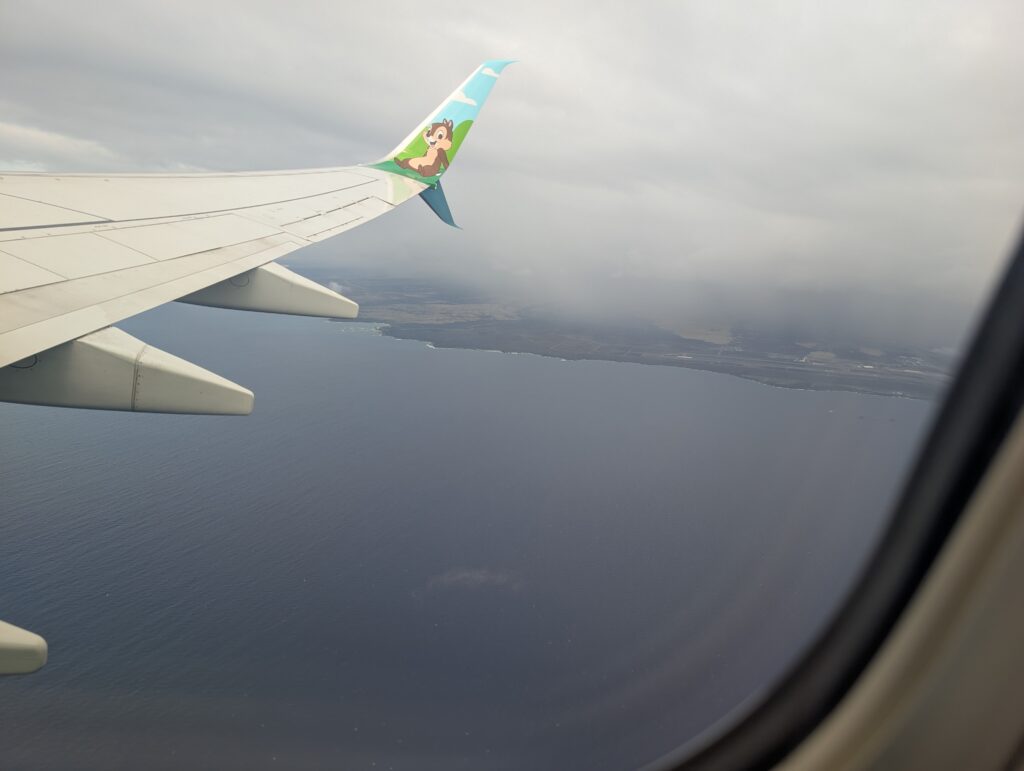
In October of 2025, I had three farms in California planted to cotton. One of them came off quite a bit earlier than the other two. While I was waiting to harvest the remaining fields, we got over an inch of rain. I knew this was likely to delay further harvest by at least a week. I checked with the custom harvesters and didn’t hear anything promptly. I fished around on the internet to see if there were any interesting and inexpensive places I could go. Returning home for a few days wasn’t going to be an effective option. I ended up with an inexpensive flight to a place that wasn’t necessarily inexpensive. I discovered I could transfer American Express Membership Rewards Points to the Avianca Lifemiles program (Avianca is a Colombian airline) in order to book a United flight from San Francisco to Kailua Kona, Hawaii.
I had never been to Hawaii. I have always wanted to go see the U.S.S. Arizona memorial, the U.S.S. Missouri (the ship on which the Japanese signed their surrender at the end of World War II), and all of the sites associated with Pearl Harbor. The Hawaiian island chain is much longer than most people realize, however. If you measure from Hawaii to Midway, the archipelago stretches over 1,500 miles. Kona is on the big island, which is also called Hawaii. Unless I island hopped, I would be confined to the big island.
At first, I thought I might spend a few days on Hawaii, and then hop over to Oahu to see the famous historic sites. I eventually learned that there was plenty to do on the big island, which, as its nickname suggests, is pretty big. Most if not all of the Hawaiian islands have a windward and a leeward side. The windward side catches more rainfall, whereas the leeward side tends to be drier. This is especially true on the island of Hawaii, since it is home to two massive volcanoes towering nearly 14,000 feet above sea level, Mauna Loa and Mauna Kea. Mauna Loa has erupted as recently as 2022, while Mauna Kea has been dormant for a few thousand years. The windward side – the side where Hilo is – is covered by rain forests and waterfalls.
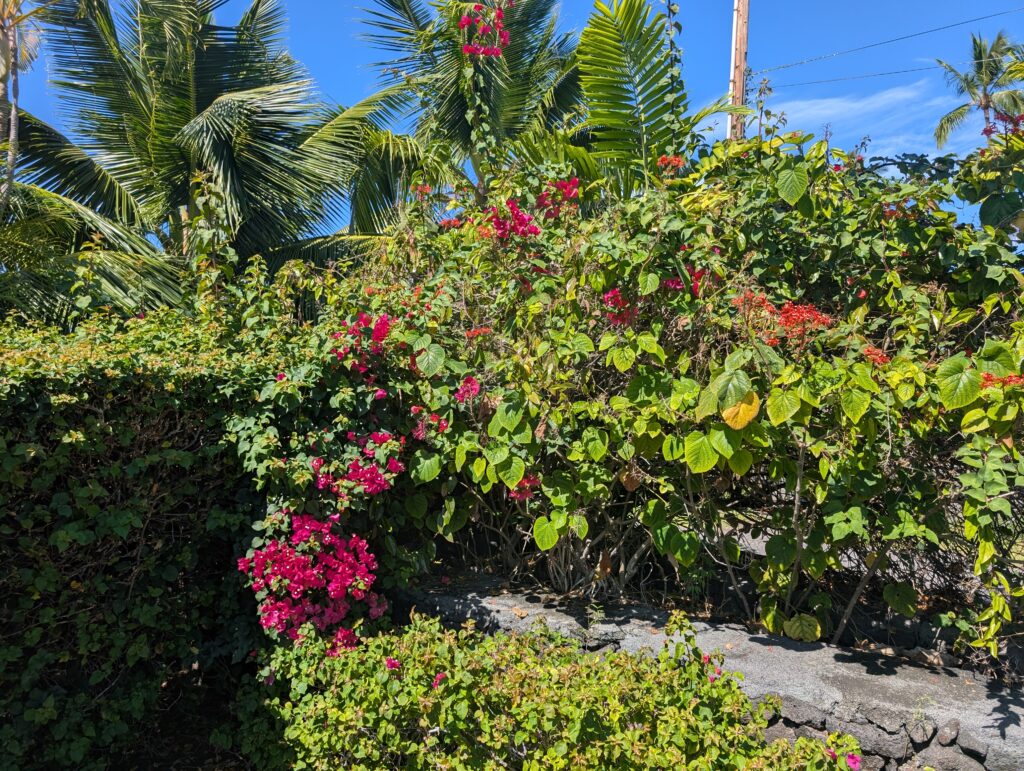
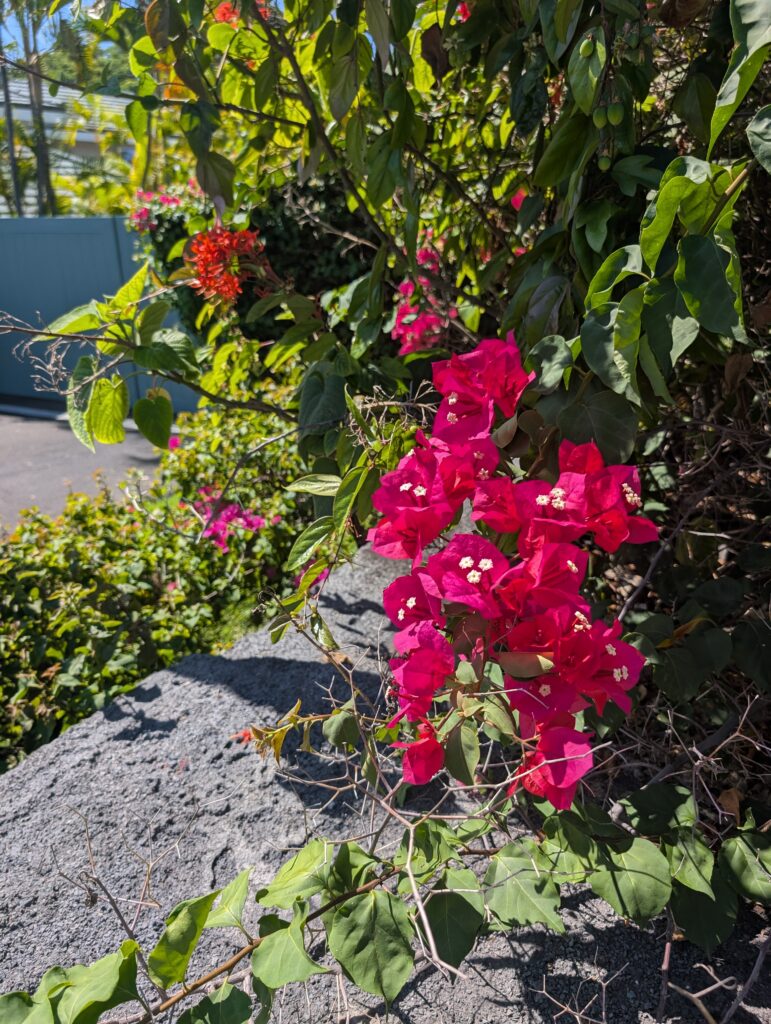
Volcanoes formed the Hawaiian Islands. There is evidence of volcanic activity all over big island. There are black sand beaches. Volcanic rocks line all of the beaches and have even been used in constructing many walls. The leeward side of the island has many large, barren lava fields. The big island itself takes about four to five hours to drive around. Kailua Kona and Hilo both have airports. Hilo has a population close to 50,000, and Kailua Kona less than half that. The island of Hawaii has no metropolis like Honolulu. There are far more nature and adventure type activities to do. There are some nice small beaches, too. The beaches tend to have high surf and because the ocean is so deep so quickly, the beaches tend not to be very wide. Many of them have volcanic rocks on them that even make swimming and ocean play potentially dangerous.
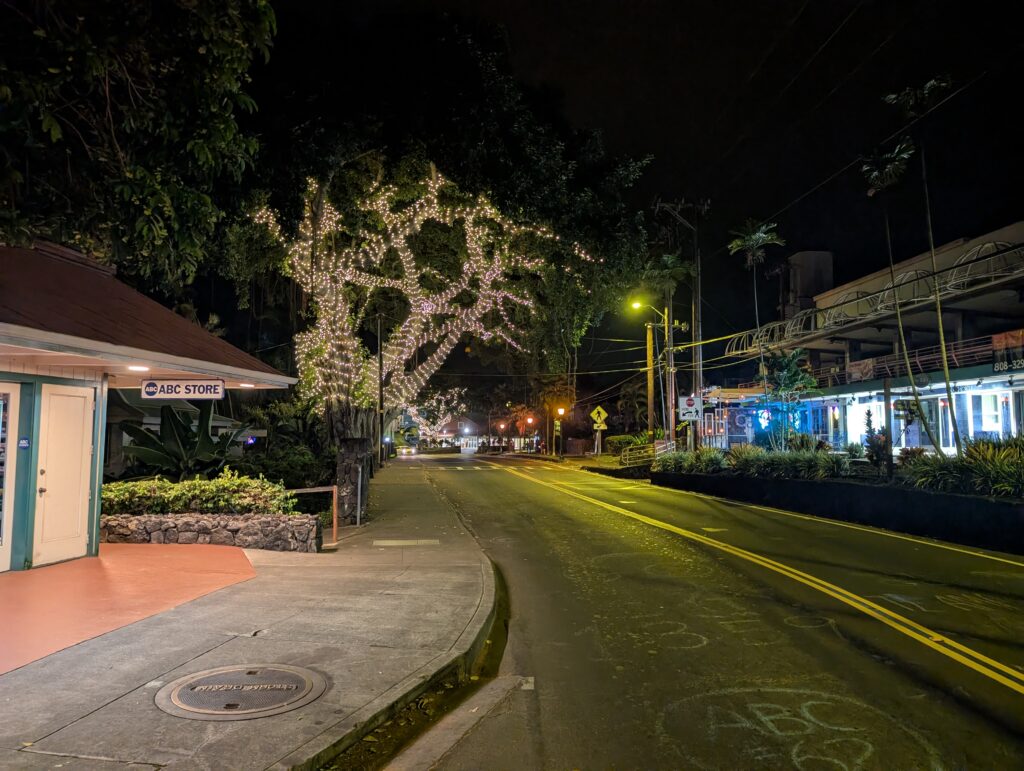
My flight was delayed on the ground before we left San Francisco. I arrived just in time to catch the very last bus from the Kona airport into town, but the connectors running out to my hostel three and a half miles further south had shut down for the evening. A quick glance at Uber notified me that even from this short distance, a ride would cost me about $30. I decided since I hadn’t done exercise yet that day, I would just hoof it. The walk would have been pleasant if I had not been carrying a backpack and my small carry on. I worked up a good sweat briskly walking through the touristy part of town. There were shops along both sides of the street, and large ficus trees wrapped in Christmas lights. I passed a couple of night club-like businesses, but they were almost lifeless even during the 11 o’clock hour. Kailua Kona was a sleepy little town, despite its status as a tourism hub of this island. As soon as I arrived at the hostel, I rinsed off and called it a night, well past midnight Hawaiian time, and after 3:00 a.m. Pacific.
(Continued)
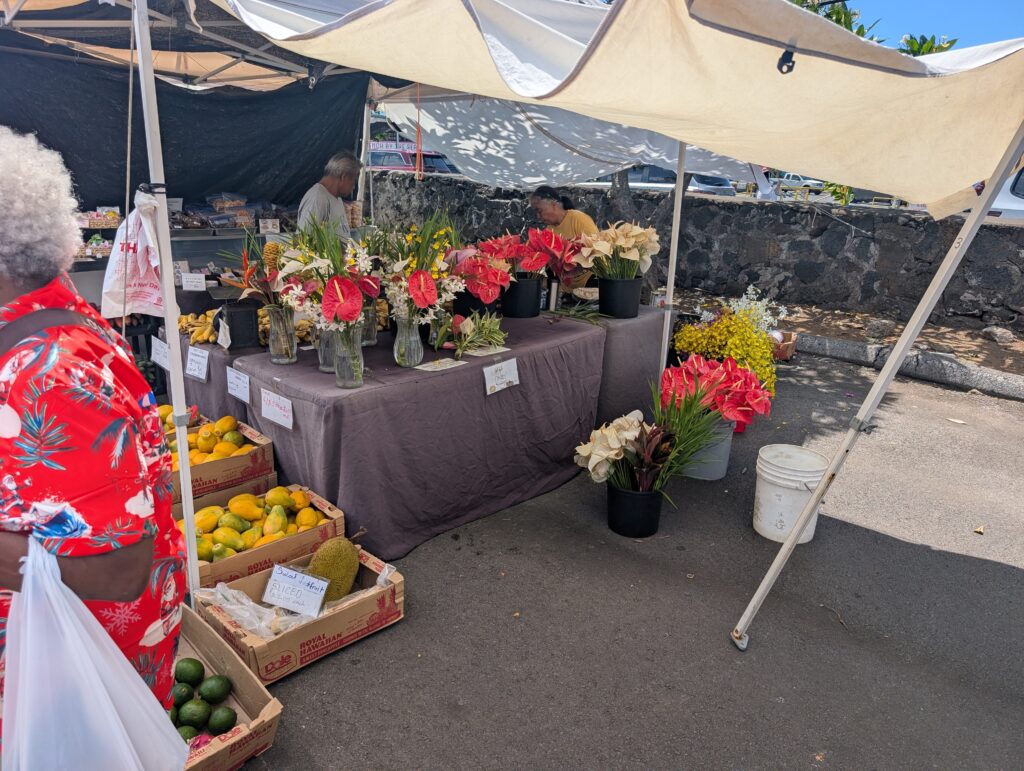
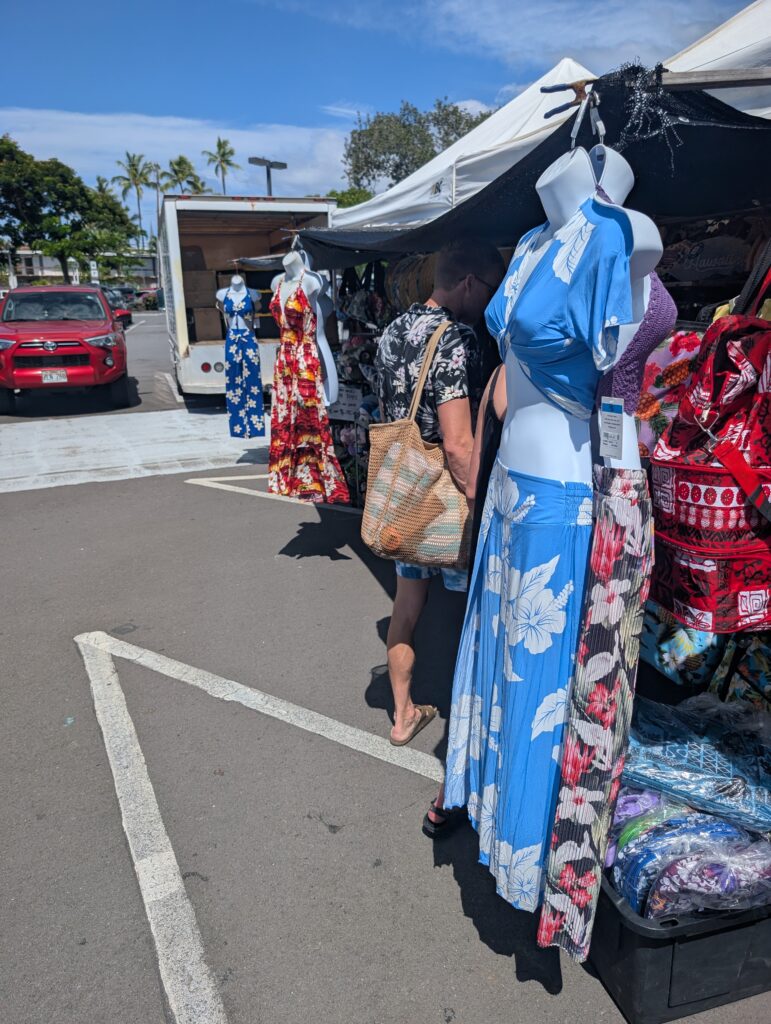
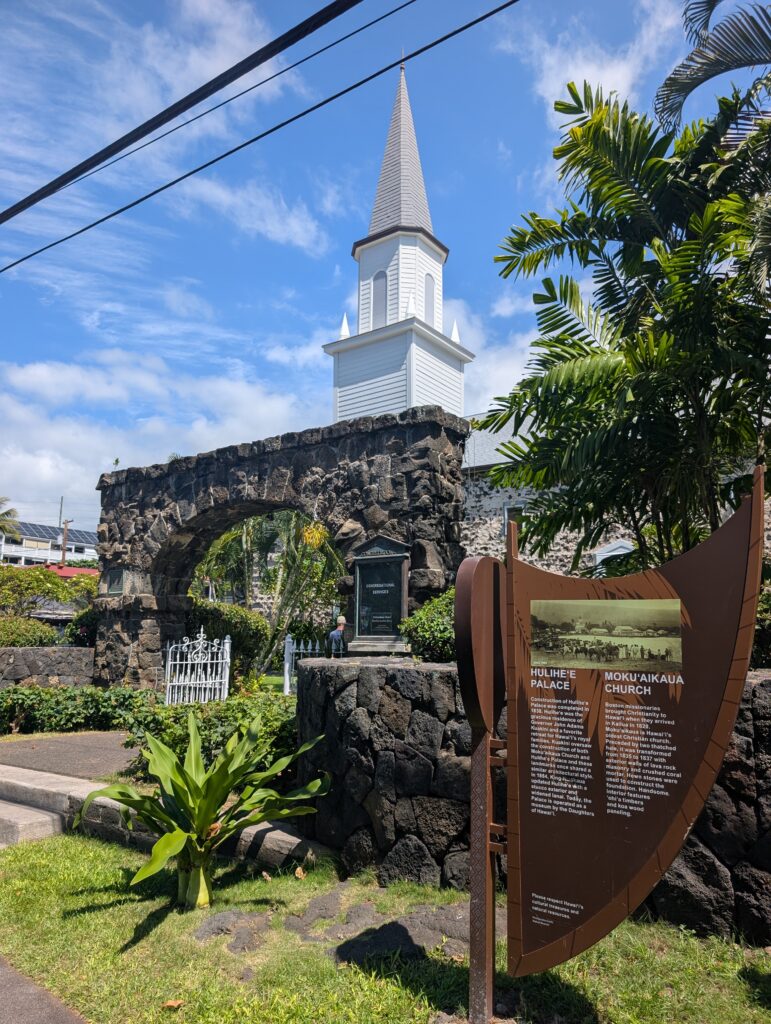
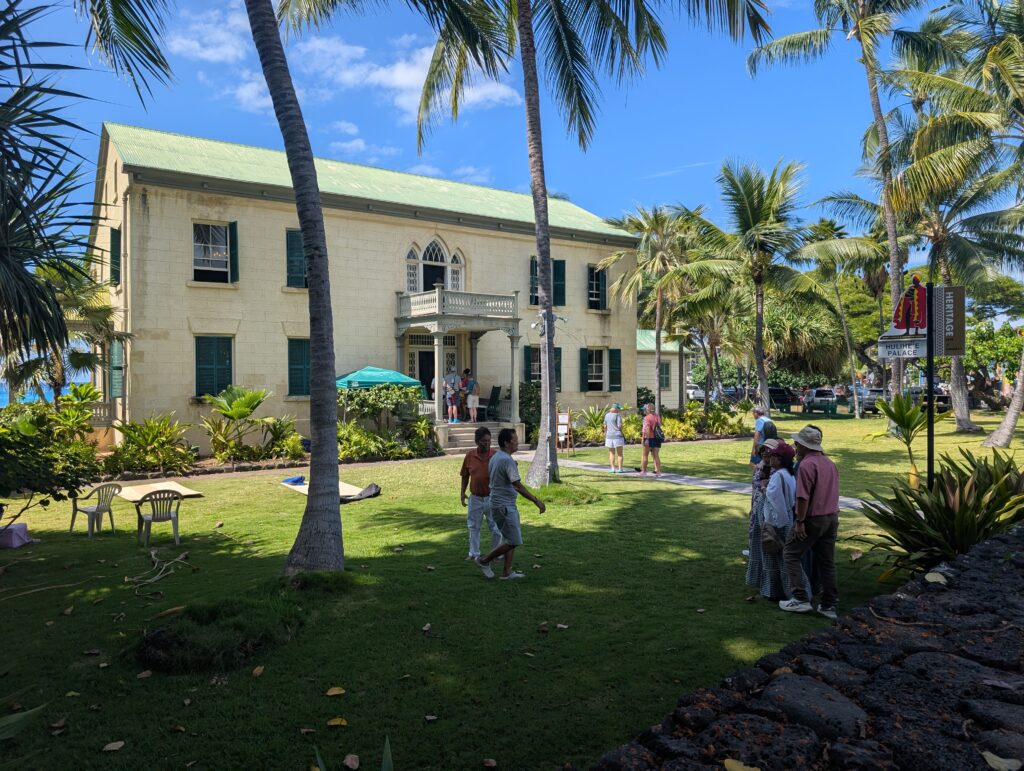
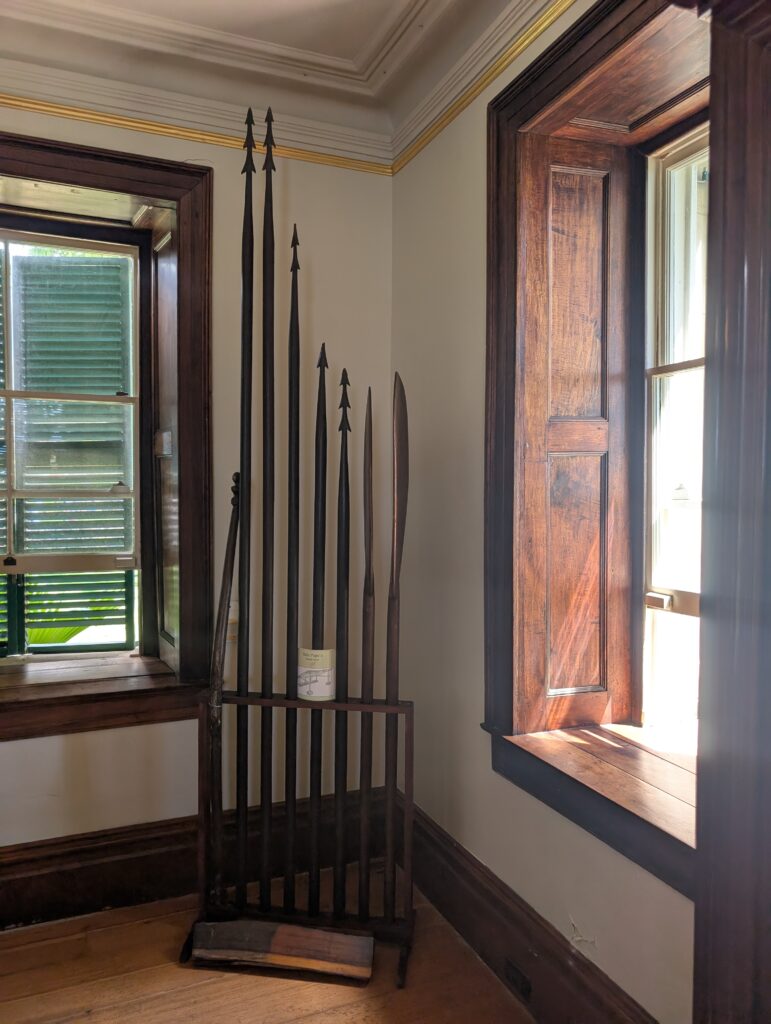
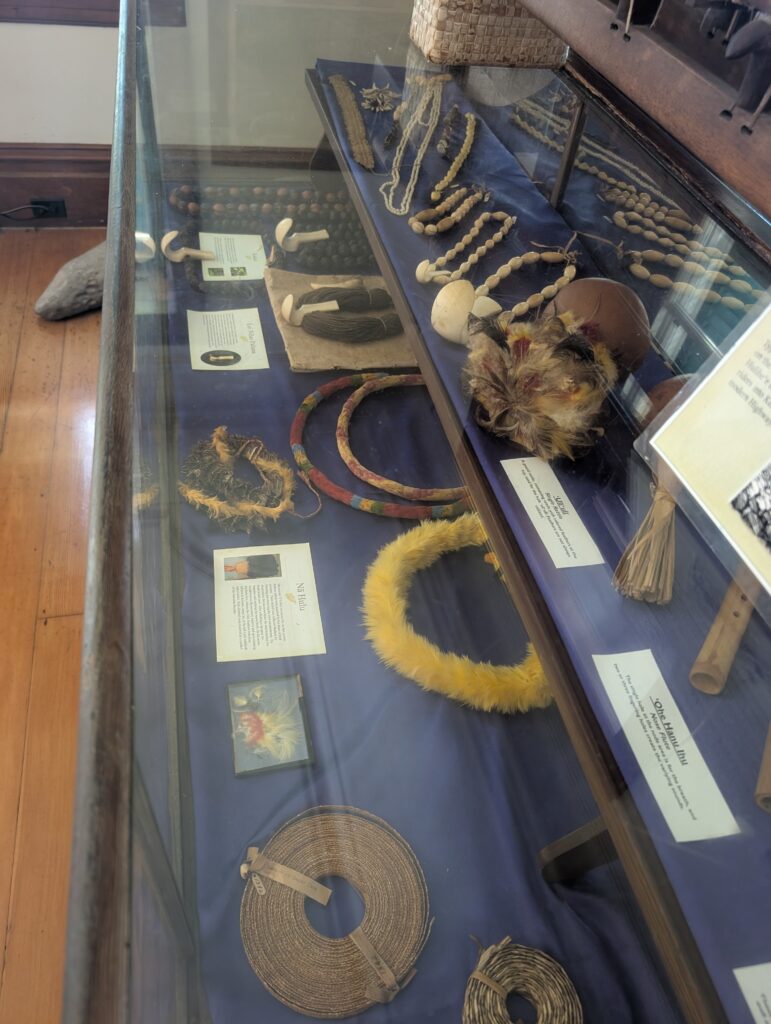
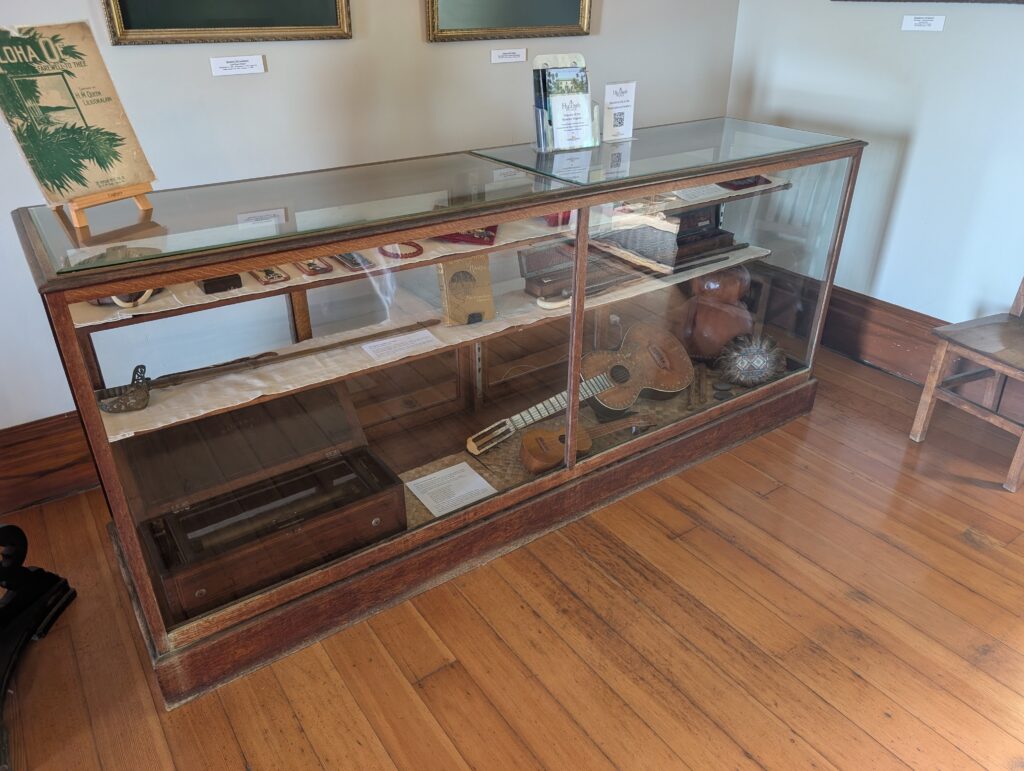
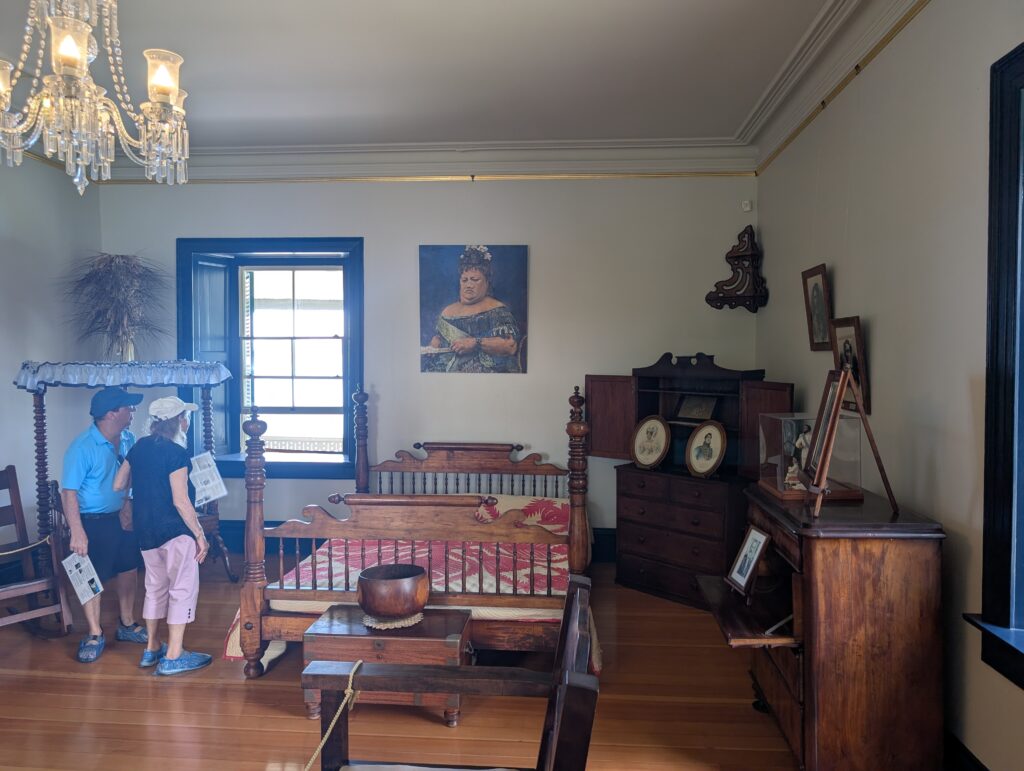
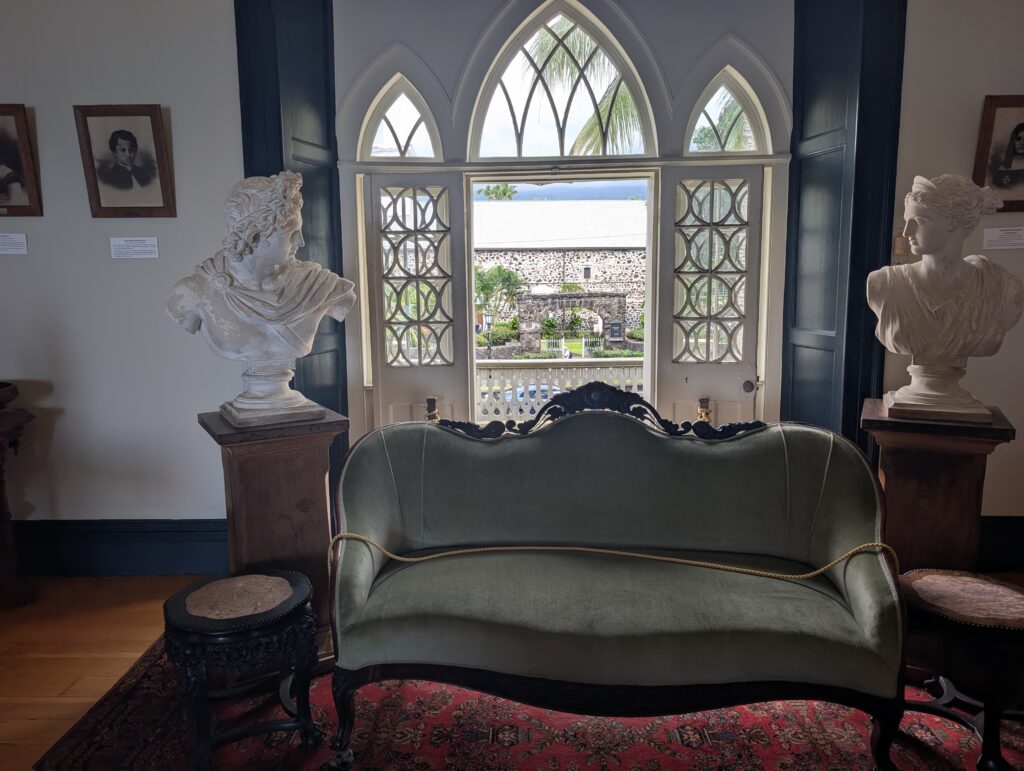
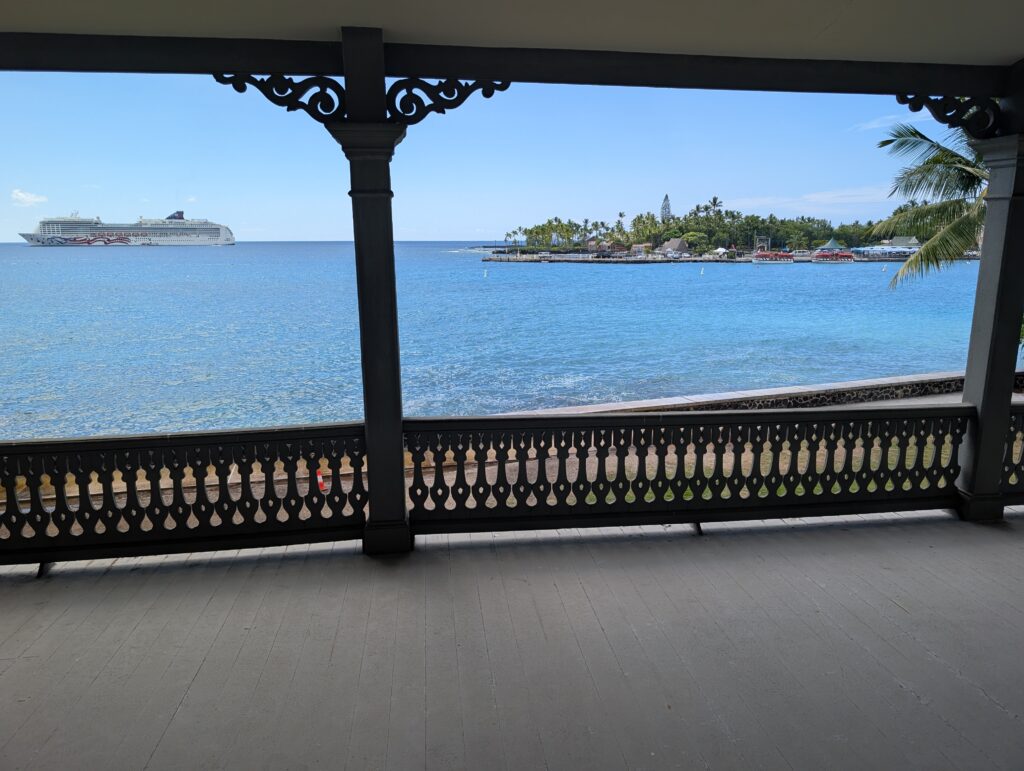
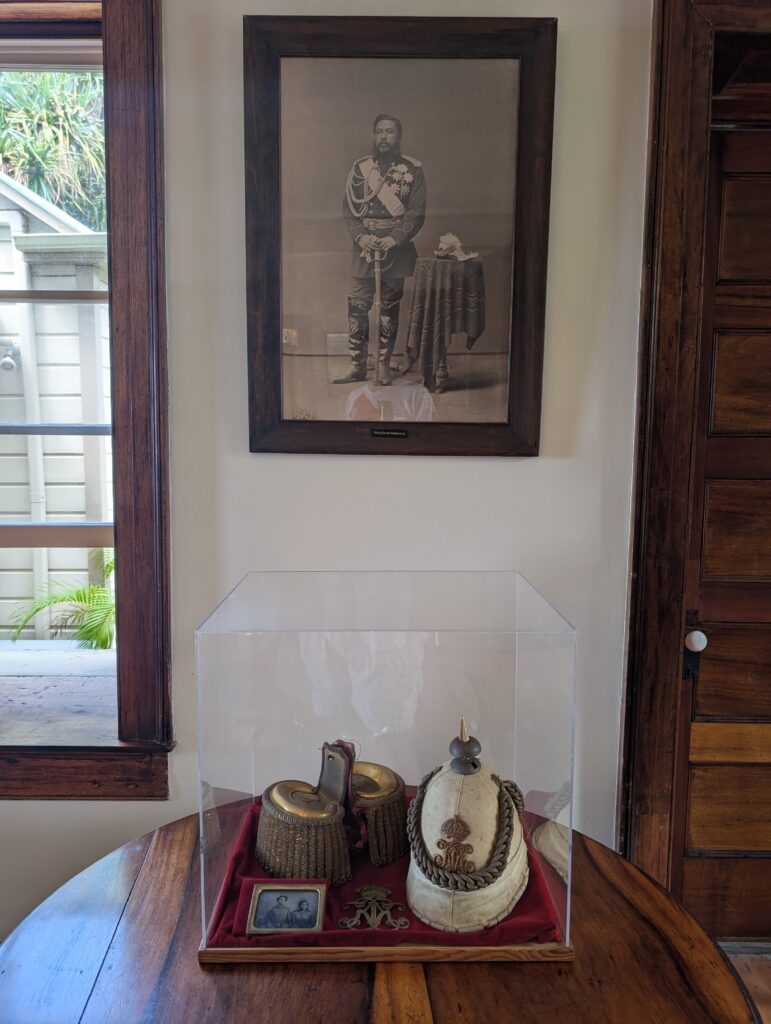
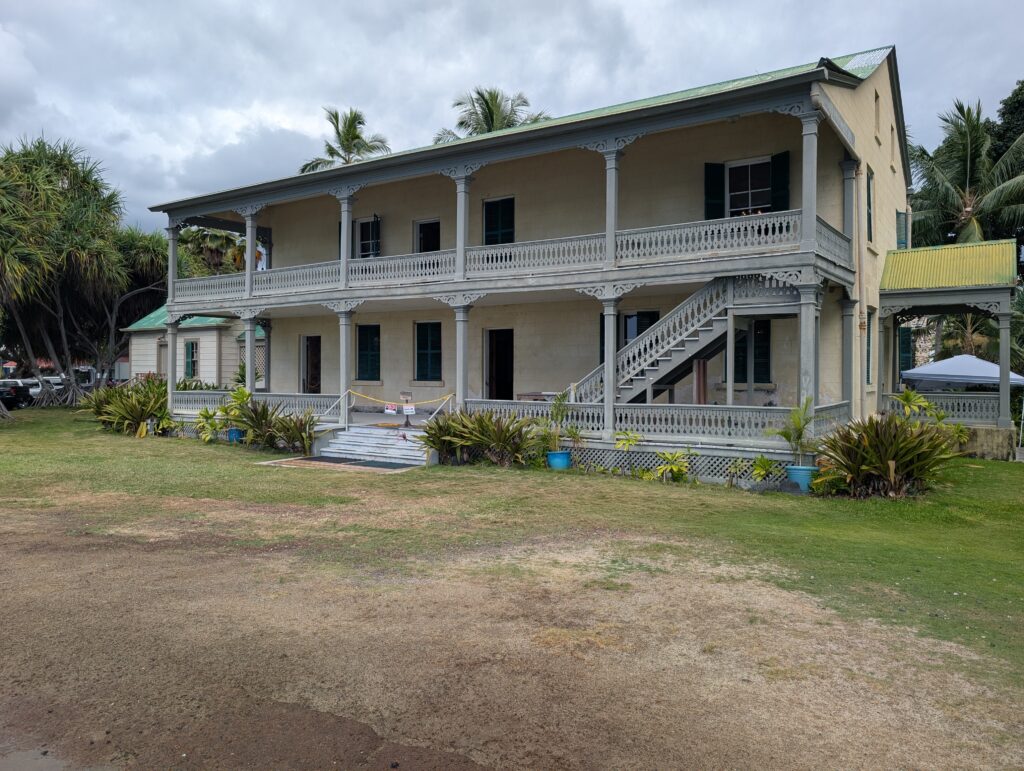
The next morning, I retraced my three mile walk back into town. A free bus runs all along this part of Ali’i Drive hourly, but I must have missed it somewhere. I detoured to see public beach access points. I still worked up a bit of a sweat in spite of being unencumbered. I came across a small farmer’s market that also had some tourist goods to sell. Wednesday was cruise ship day in Kona, so there were a few more tourists than otherwise would have been in town. I people watched as they took their photos at the town sign, and browsed tourist kitsch in the ABC stores. Several of the cruisers joined me as I toured Hulihe’e Palace. This 19th century residence was clearly built in a western style by sailors who had settled in the area. While the royal family did not permanently reside there, many of them used it as a peripheral or seasonal residence. It was not a spectacular or immense palace. Versailles it was not. It was a pleasant, spacious home, however, with a nice lanai facing the Pacific to the west. The palace is maintained and staffed by the Daughters of Hawaii. Each room is dedicated to a different royal family member, and has artifacts from different periods.
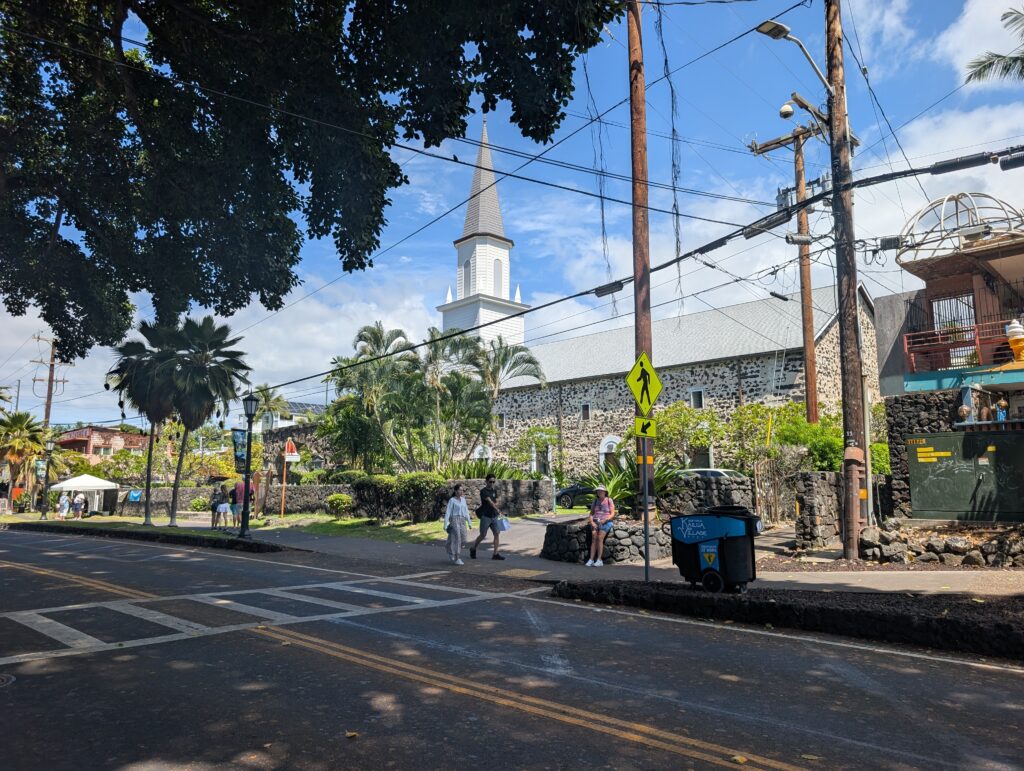
Just across the street stands the oldest Christian church in Hawaii. This is a pretty, but quaint older building. It is open on Sunday, but on weekdays you can only walk the outside and look through the windows, which I did. A few others took advantage of the ability to do this. There is also a nice view of the church from the neighboring palace.
After checking the menus at a couple of restaurants in Kailua Kona, I quickly came to the conclusion that I would need to visit the grocery store. I had to do so just before heading home so I could load my purchases onto the free Hele-On bus and not have to tote them around to various sites. The grocery stores in Kailua Kona all seem to have sushi bars that also make other Japanese dishes and snacks like bento boxes and rice balls. I bought a few of these to go with my oatmeal and tuna. I dragged my haul to the bus stop and headed back to the hostel for the evening.
I did some research once I got back. It was apparent that while the free Hele-On buses were handy for getting to town and back, and could even get me to the other side of the island, they did not run often enough or at the right times to get me everywhere I needed to go in order to hike or explore the national parks. I looked into renting a car, and reserved one to be picked up the next morning. I did some farming, wrote a little, and enjoyed spending the evening visiting with my hostel-mates.
I enjoy staying in hostels. While it is true that most of the folks staying in hostels are not in my age group, some are, and no one hassles me for being old. Quite the contrary, many young people seem eager to visit and share stories, even if their style of travel and the activities they are interested in differ from mine. Staying in hostels as a solo traveler gives me fellow guests to visit with. We share information about other places we have traveled, and there is no better source for learning what local activities are accessible than other tourists who have been in the area for several days.
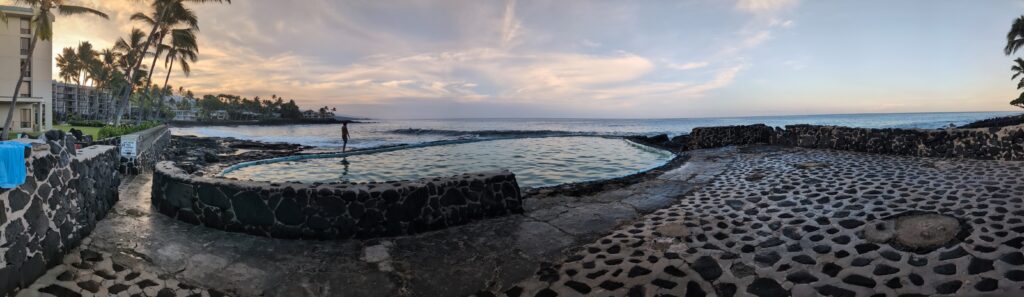
I learned from my fellow guests that Kilauea was erupting, and how to get to it. I learned about what hikes were available on the other volcanoes, and that a car was essential to get to them. I formulated much of my plan for the next several days. Since I was still on mainland time, I got sleepy early, and woke early. I headed out to run. I timed my run so I would end up half a mile or so short of a public saltwater pool I had discovered walking around the day before. Someone had poured a concrete wall that trapped just enough water from tides to create a sheltered swimming pool where you could lounge and enjoy views of the Pacific looking off to the west. I cooled off before heading back to shower off and eat my breakfast.
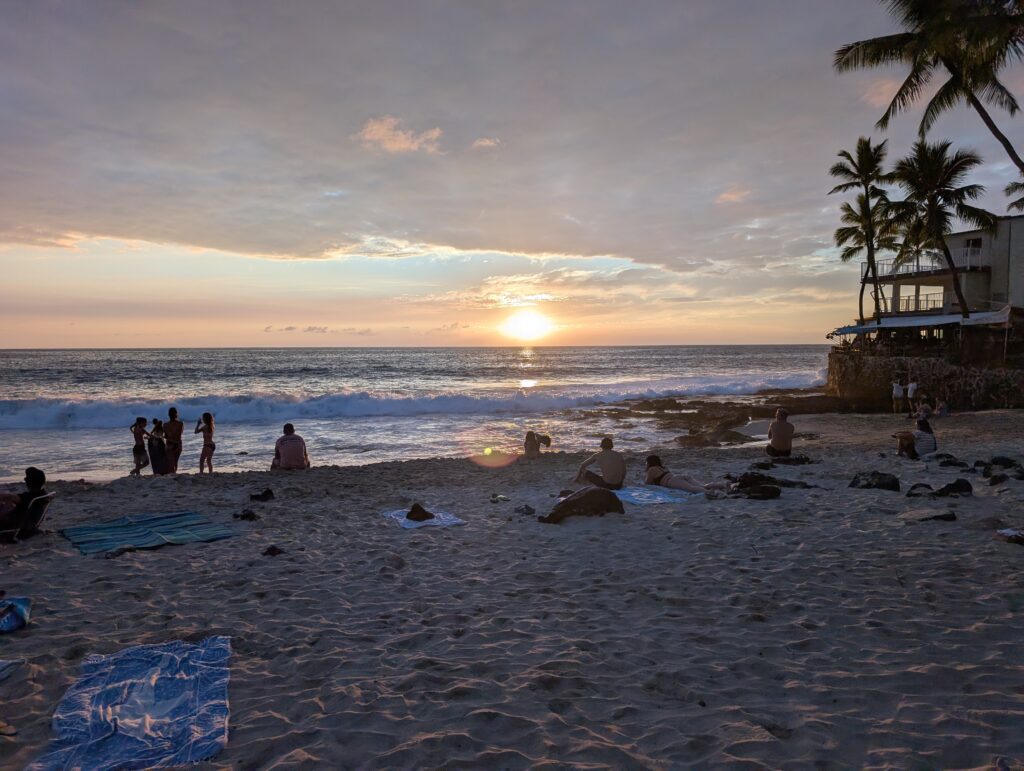
I continued to work and research. I didn’t do a whole lot during the early part of the day. I did head back into town on the Hele-On bus to pick up my rental car from Sixt in the early part of the afternoon. I was set for an early start the following day. I strolled down to Magic Sands Beach and watched the sun go down. I swam some there as well. It was a nice, if somewhat busy beach. The small size of the beach made it feel busier than it was.
One of the obstacles to using public transportation can be reliability. To pick up my rental, I needed to catch a Hele-On bus to town, and then switch to another bus to the area near where the Sixt location was. Unfortunately, the second bus had been canceled due to not enough drivers having shown up to work on Thursday morning. No one bothered to post this to the Hele-On website or update the app used to track the buses. I ended up having to walk a couple of extra miles to await yet another bus arriving some hour and a half or two later. The driver of that second bus was kind, though, and let me off as near as he could to the Sixt location, even though this wasn’t a normal stop. It worked out in the end, and by mid afternoon, I had my little car.
(Continued)
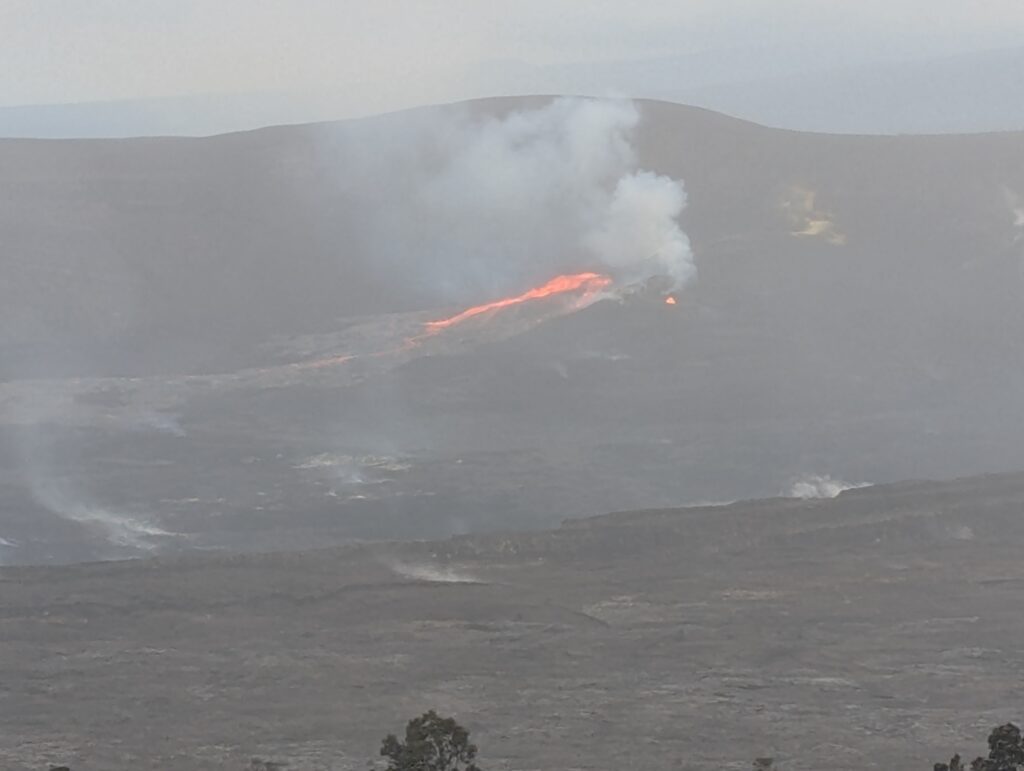
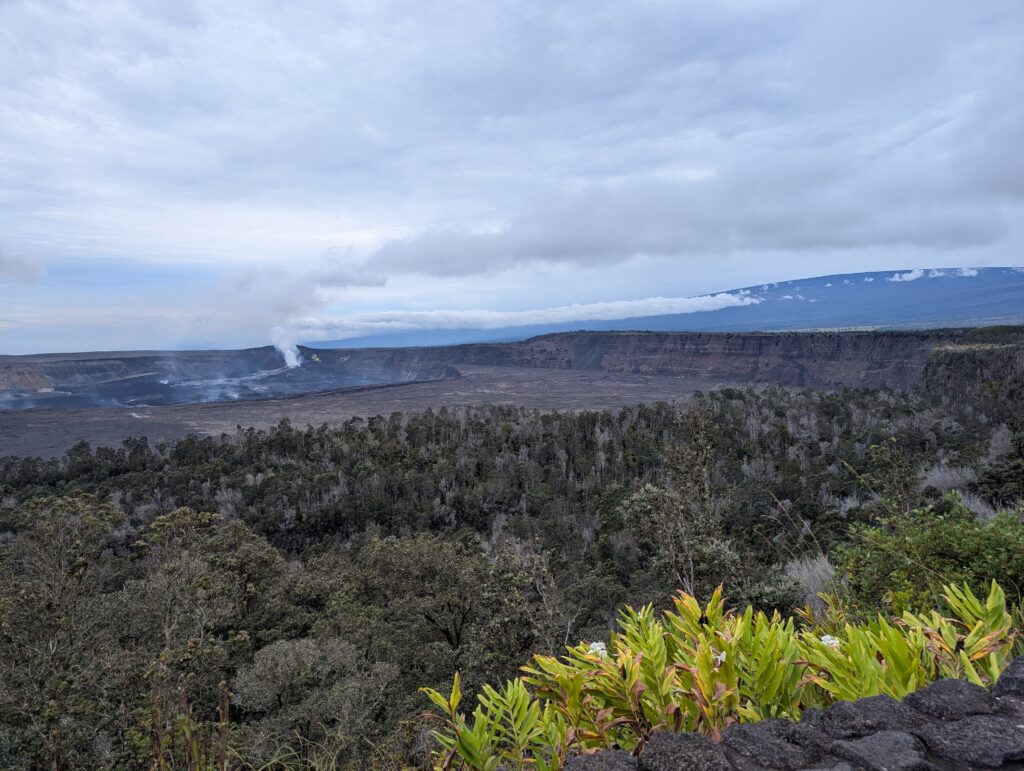
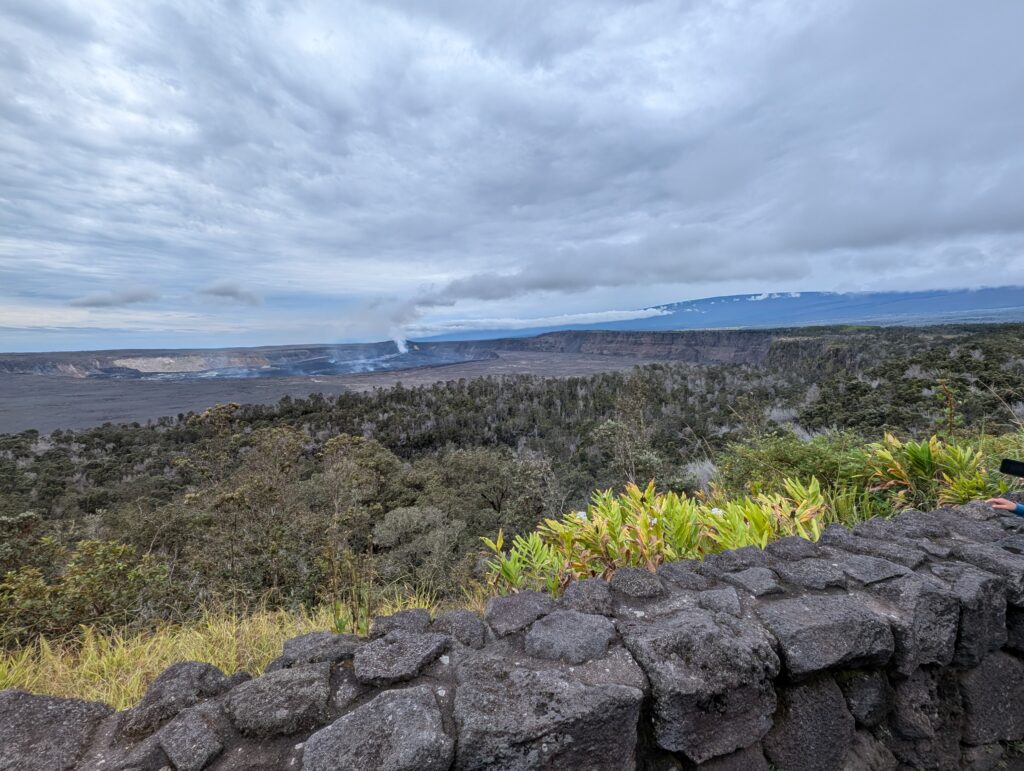
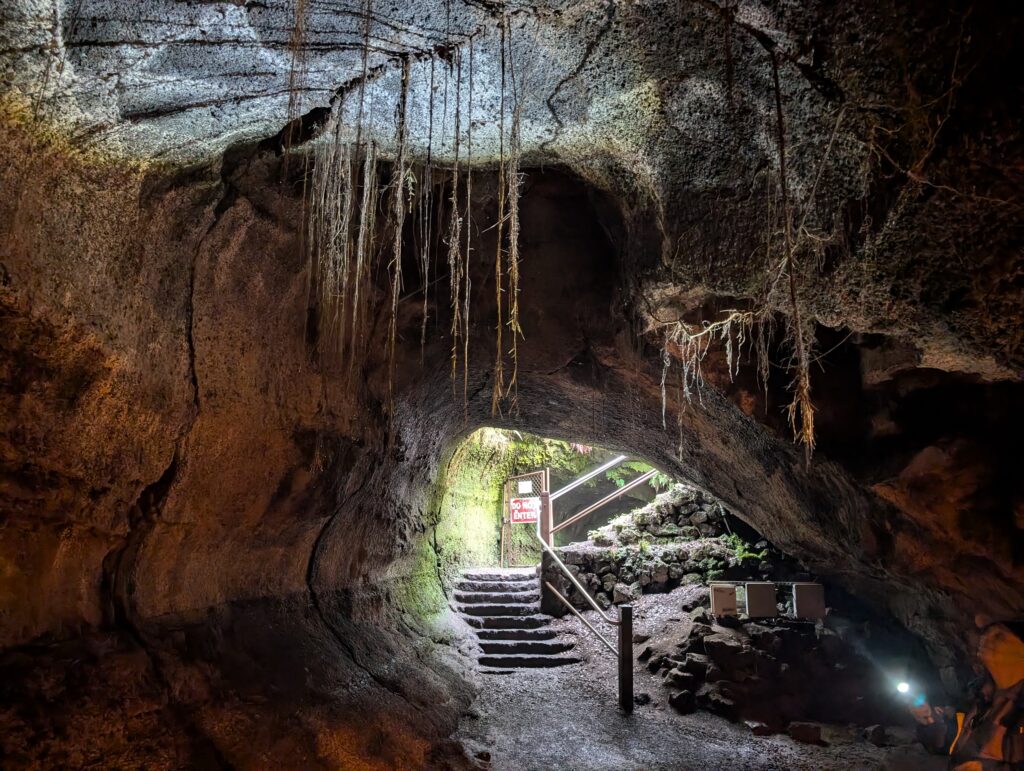
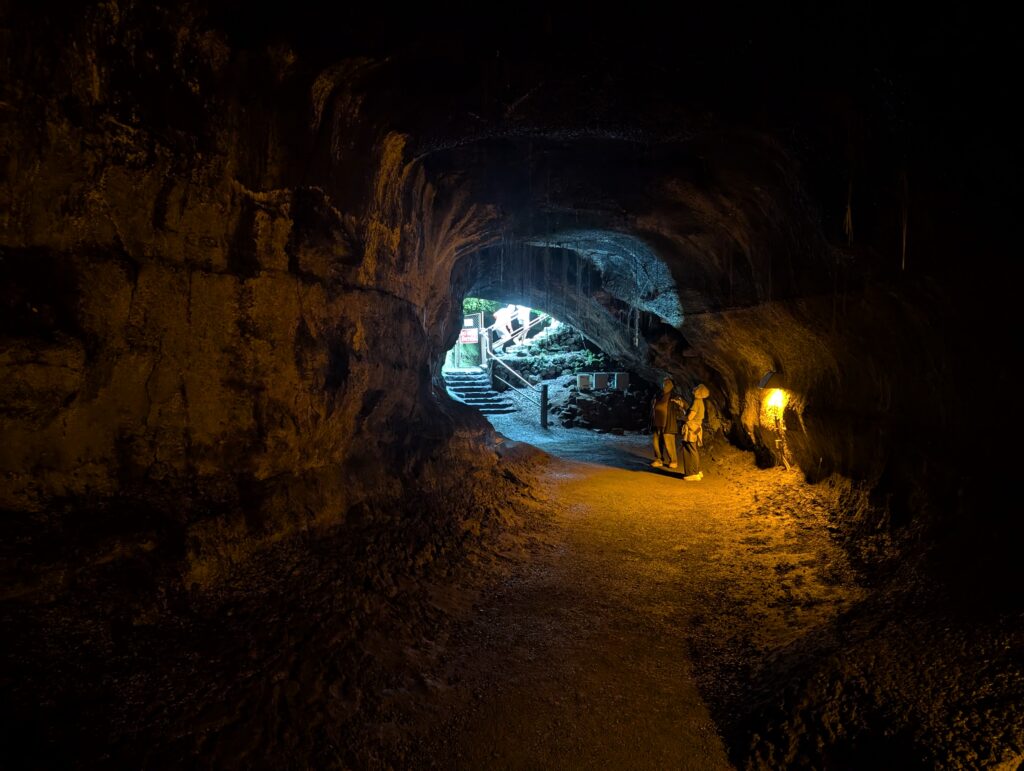
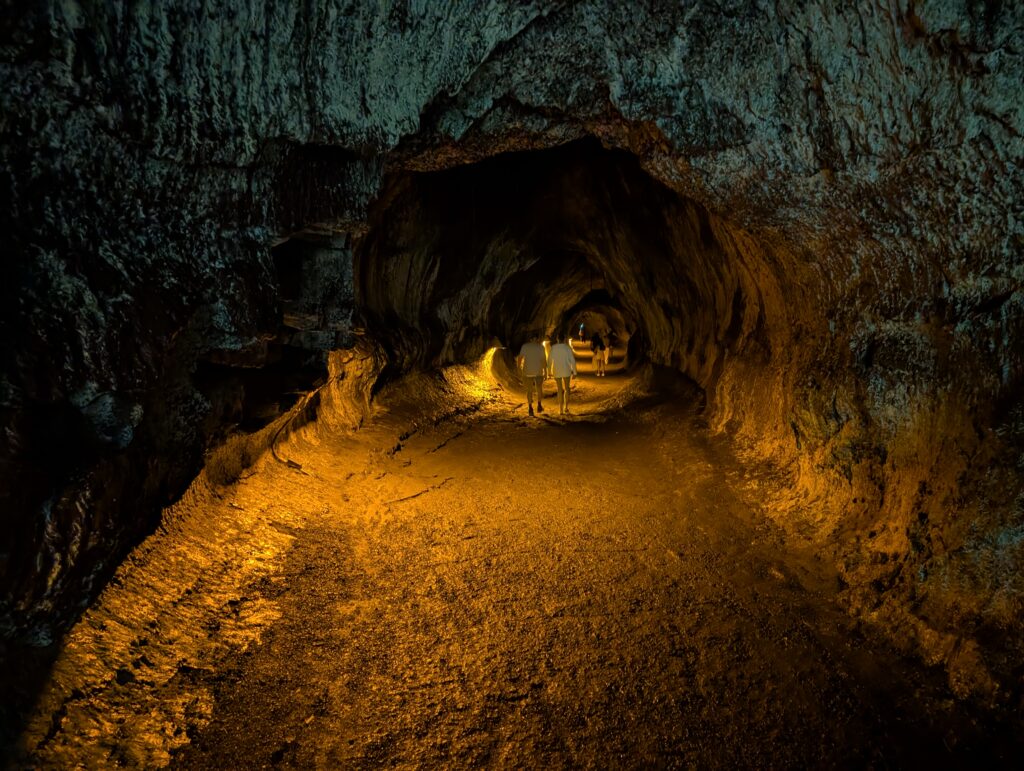
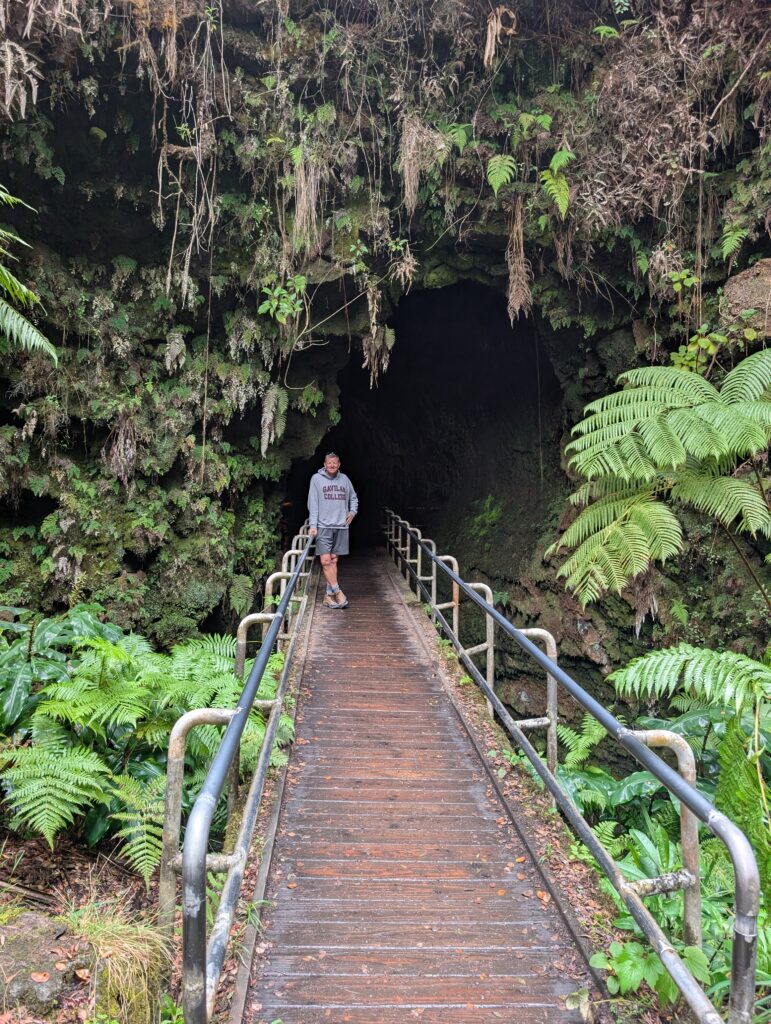
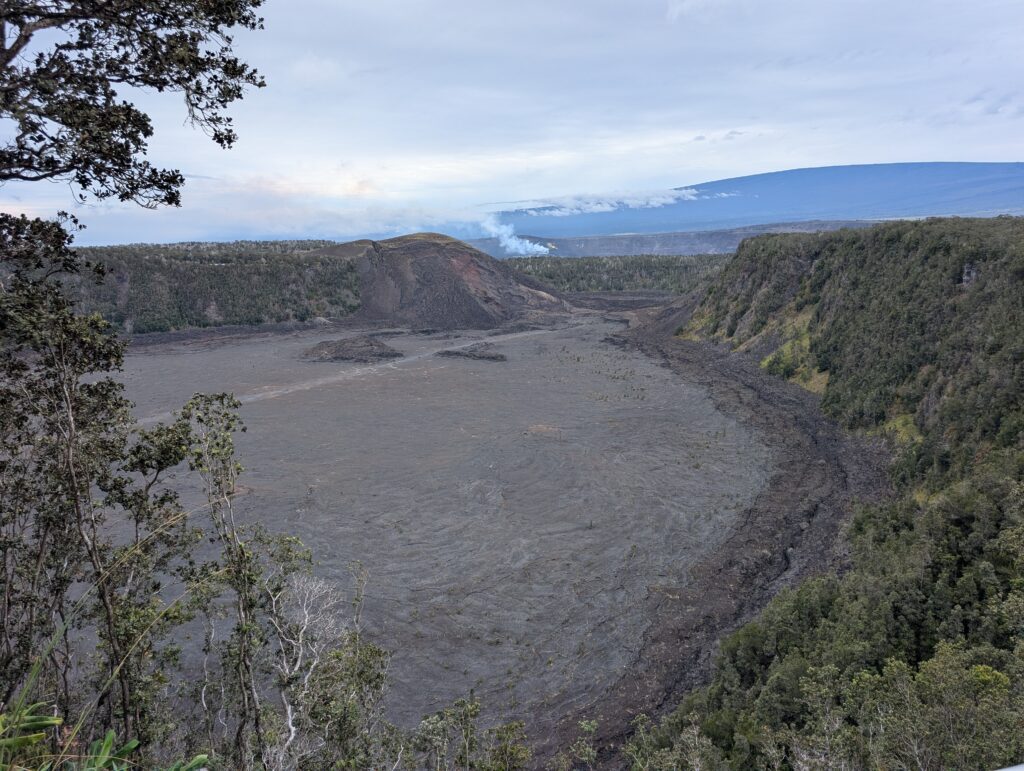
I set out very early on Friday morning toward the erupting volcano. Volcanoes of course are not predictable. Lava oozed and steam bellowed through most of the morning, but I never saw the towering 1,500 foot spouts of shooting lava. I waited all morning, enjoying the view of the gigantic crater, occasionally visiting with other tourists, and walking a short trail along the rim. I decided to see a bit more of the park while I gave the volcano a bit more time to fully erupt. I walked through a nice lava tube, and drove some of the roads to explore other parts of the park. A lava tube is a sort of cave made when the outside edges of a flow of molten lava hardens as the lava runs through it. Then, this shell remains like a straw after the lava has all exited. The lava tube I walked through must have been fifteen to twenty feet high inside, at least in places. The walk was pleasant. As I entered and exited, I passed through ferns and other rain forest like foliage.
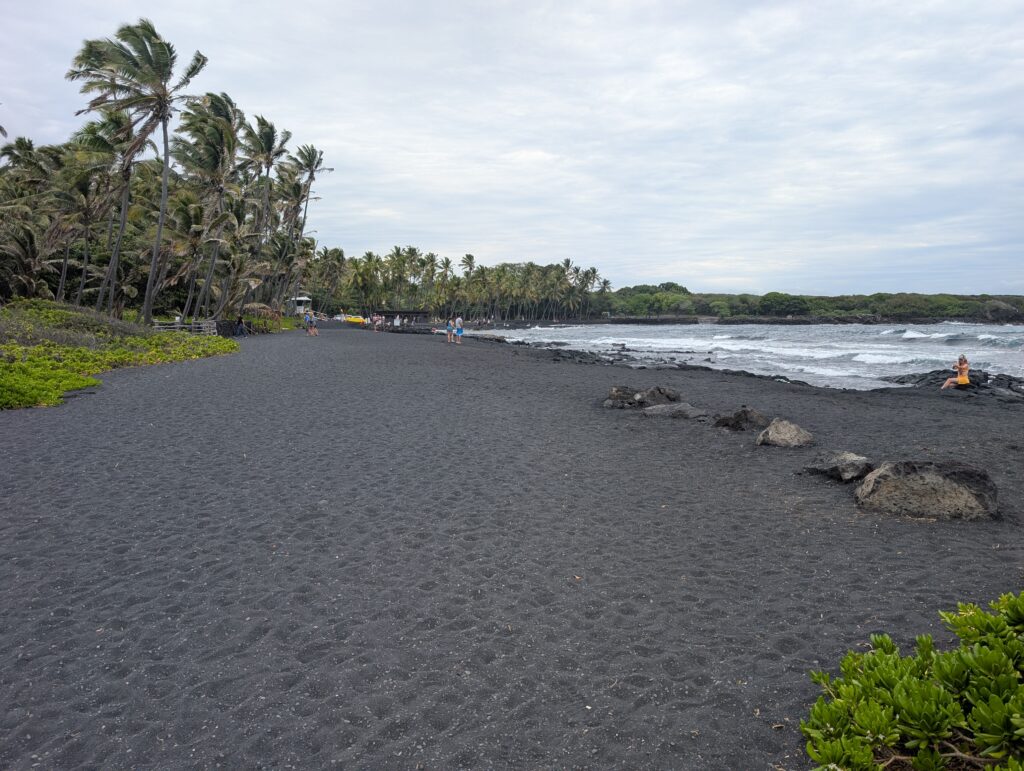
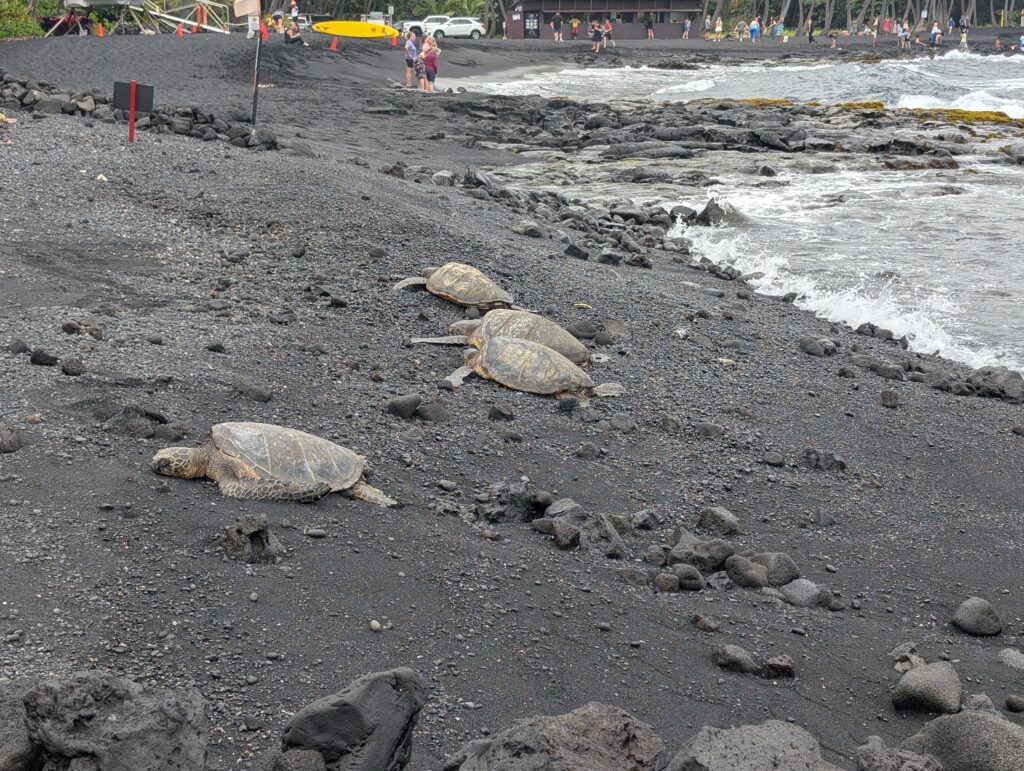
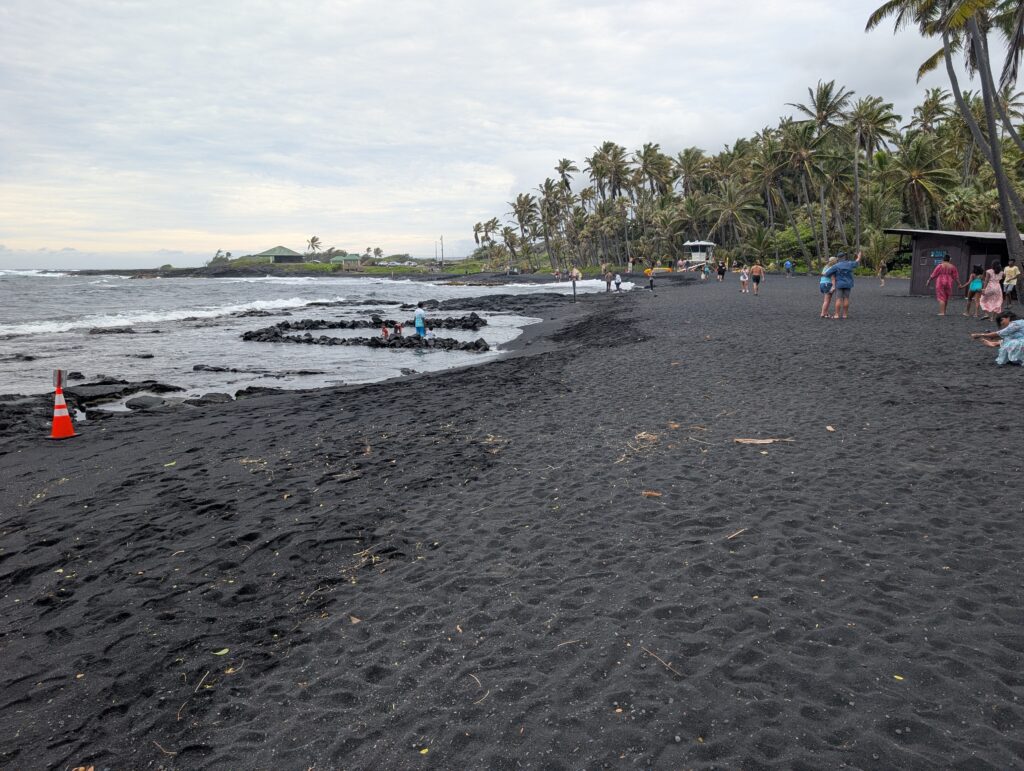
Not wanting to wile away the entire day waiting for an eruption that might or might not come, I decided to be happy with what I had seen of the volcano and explore other parts of the island. I drove to Punalu’u Beach. Punalu’u is a black sand beach often visited by giant turtles. These colored sand beaches form when a lava flow explosively hits sea water and gives its hue to the newly formed sand. I walked around the fairly busy beach. A few turtles were sunbathing that day. Officials had designated an area for them to lounge without being disturbed. I took my pictures from afar, and walked the length of the beach, enjoying the sites, the people, and the turtles.
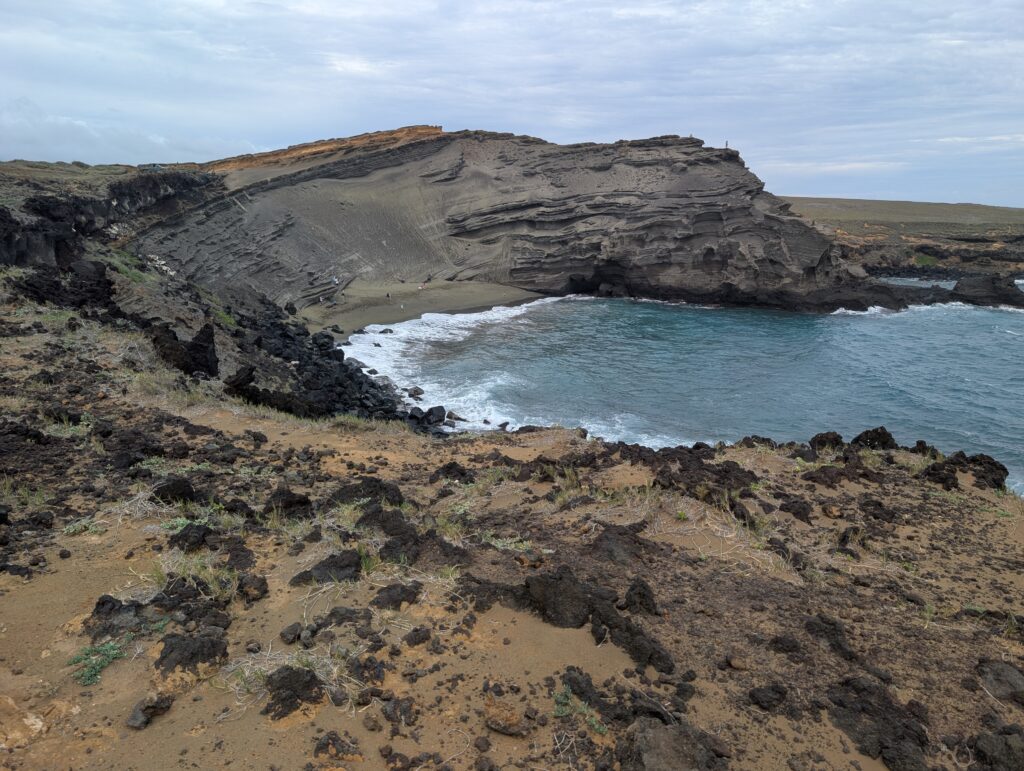
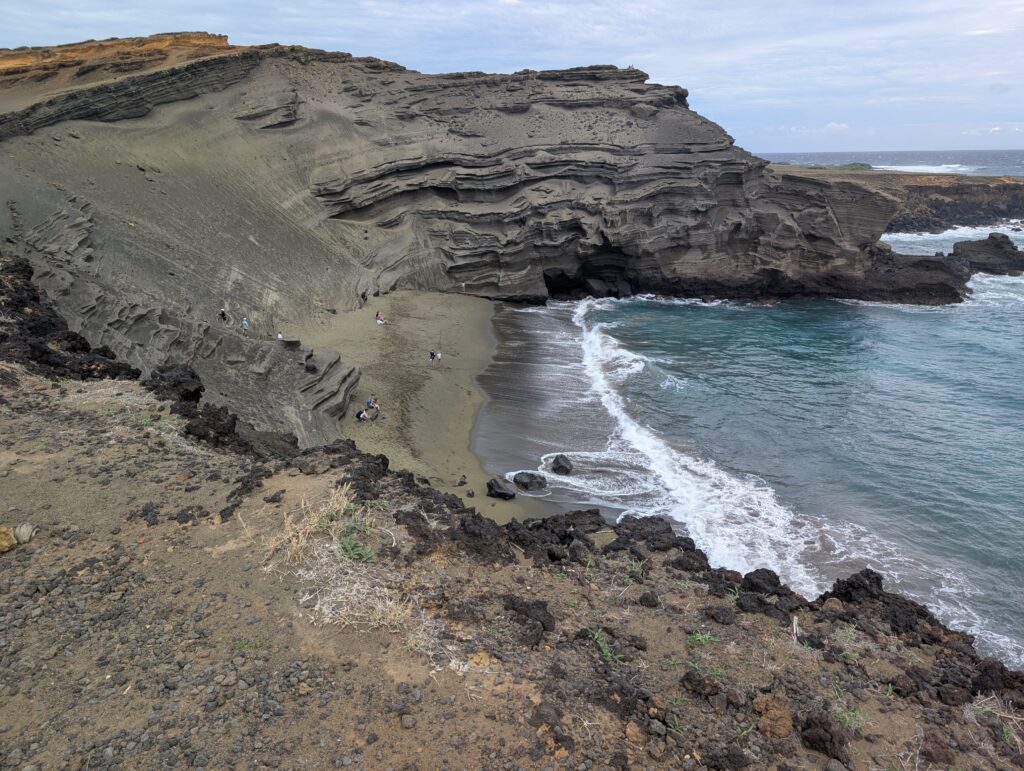
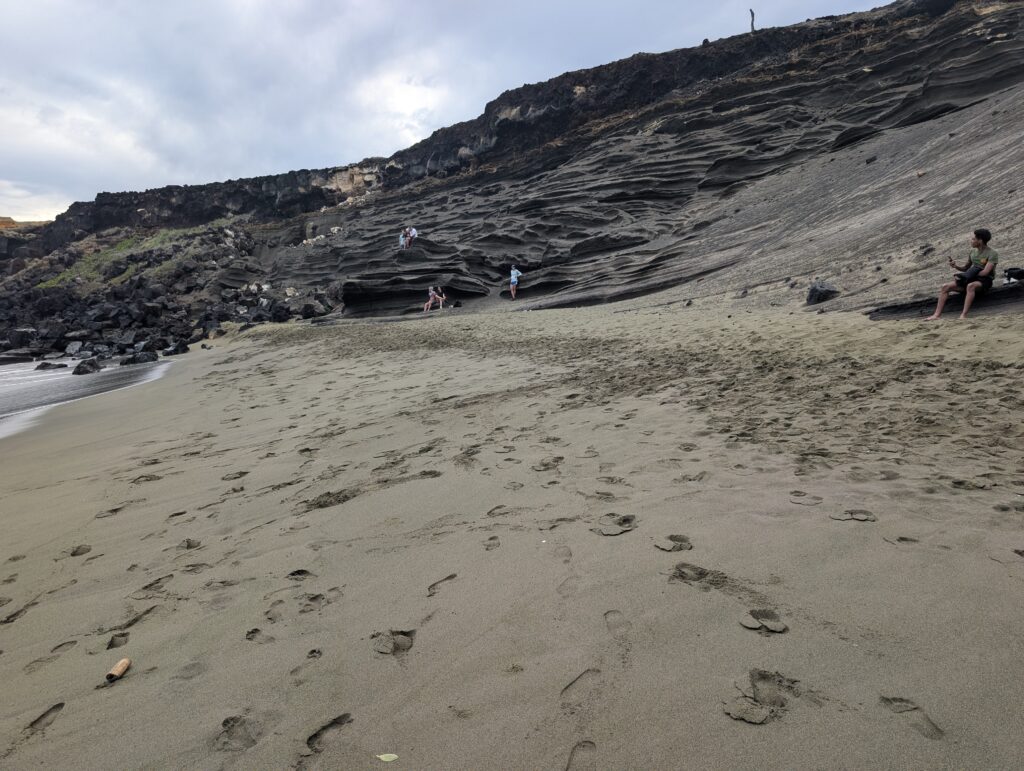
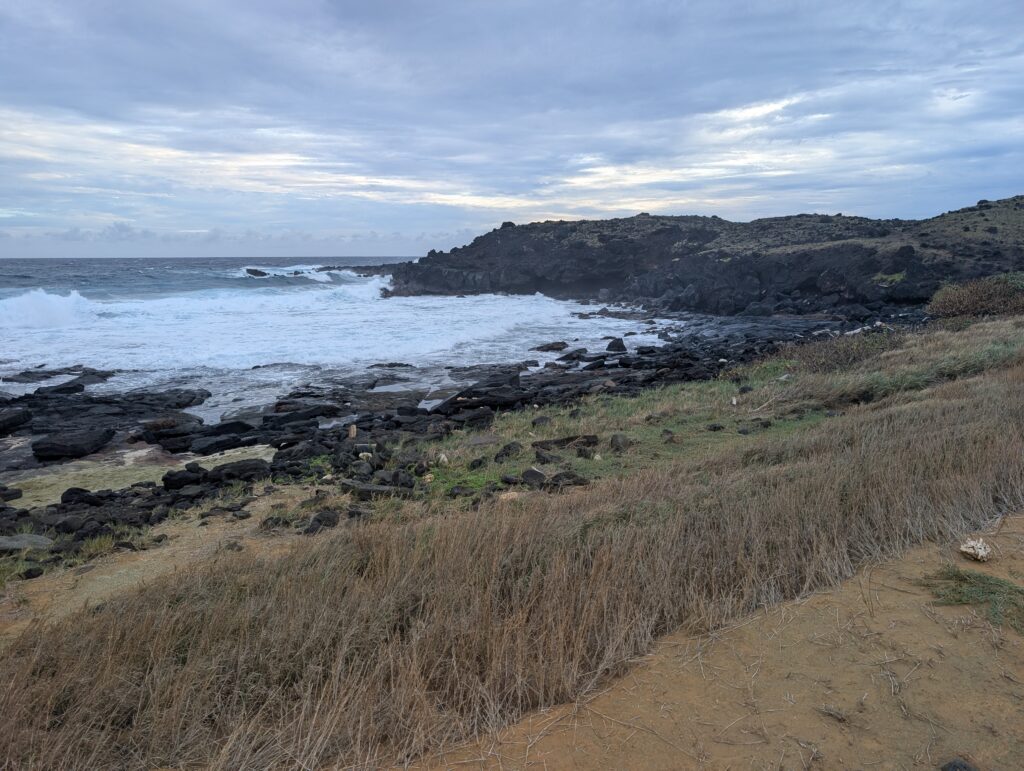
I had read that there was a green sand beach called Papakolea near the island’s southern tip. This is also the southernmost point in the United States. To get to Papakolea, you have to turn off on a tiny two lane road that in some places isn’t completely paved. From a remote parking lot, there is about a three mile hike to the beach. Most people do not hike, but opt for a ride in the back of a rustic pickup truck with some rough looking locals at a cost of $20 each. I figured I could walk the hour each way, and set off on my own. The scenery was rural and pleasant. I walked along rutted four wheel drive paths, the wind occasionally pelting me with bits of sand. Sea grasses reminded me of a links style golf course.
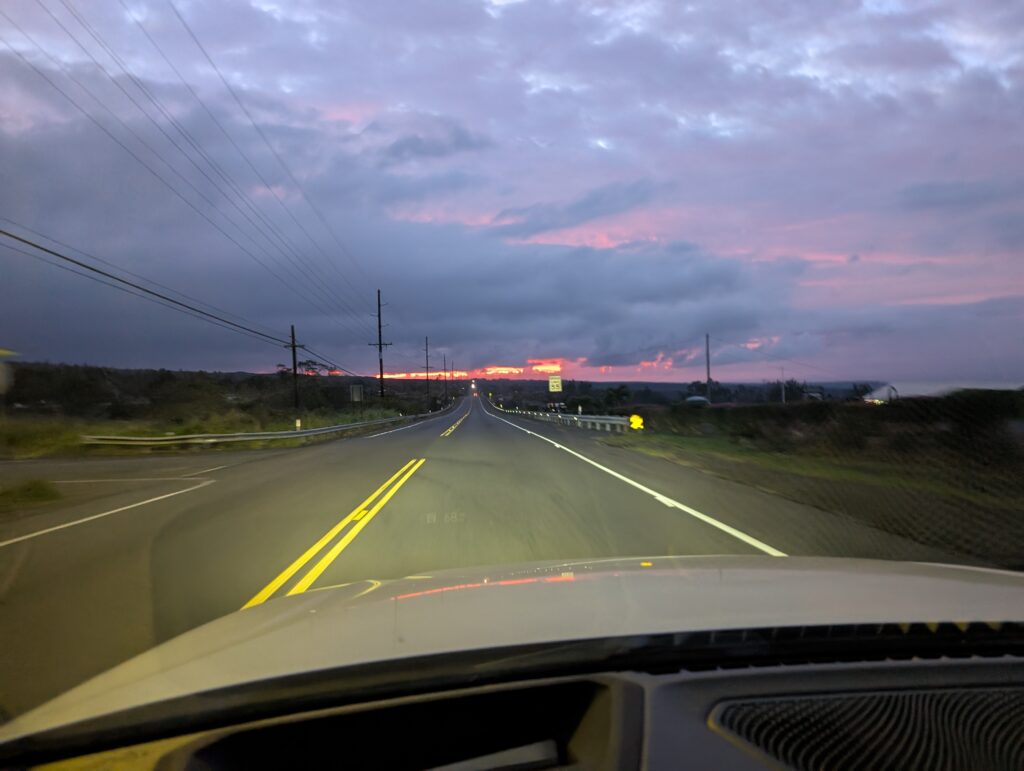
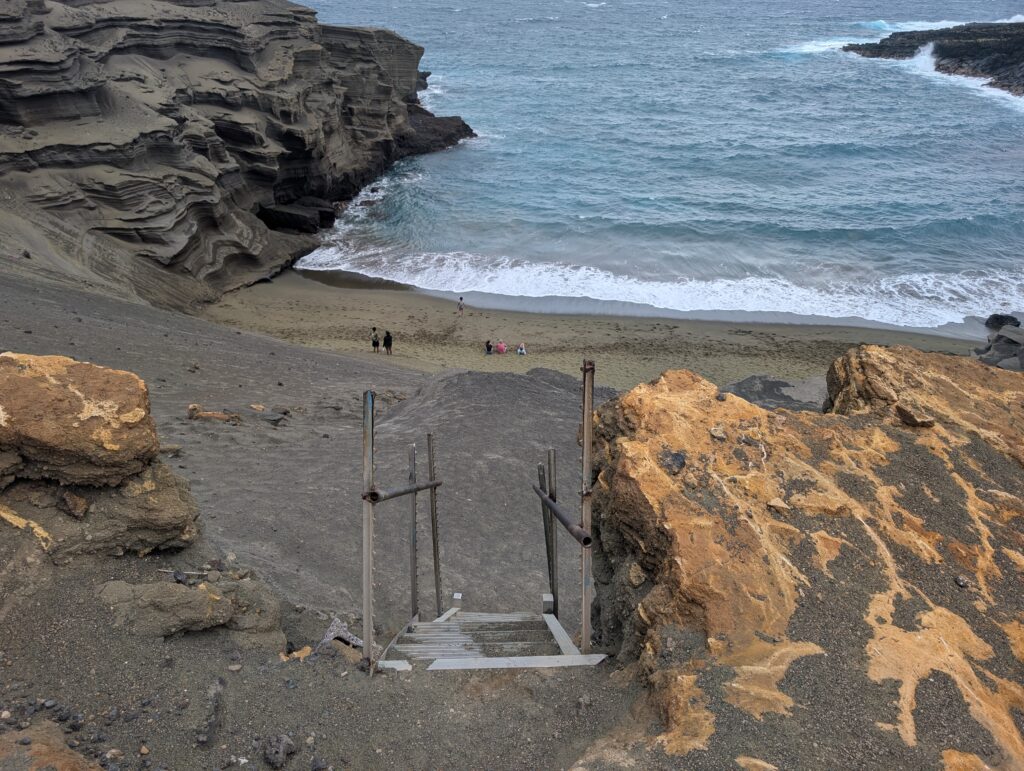
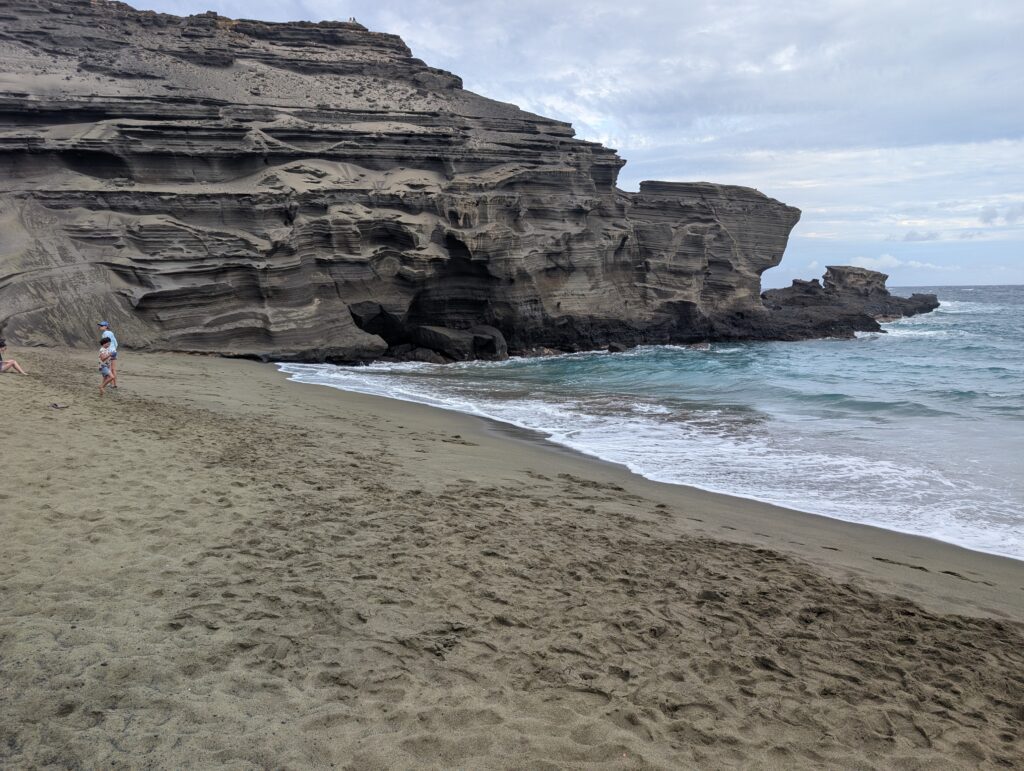
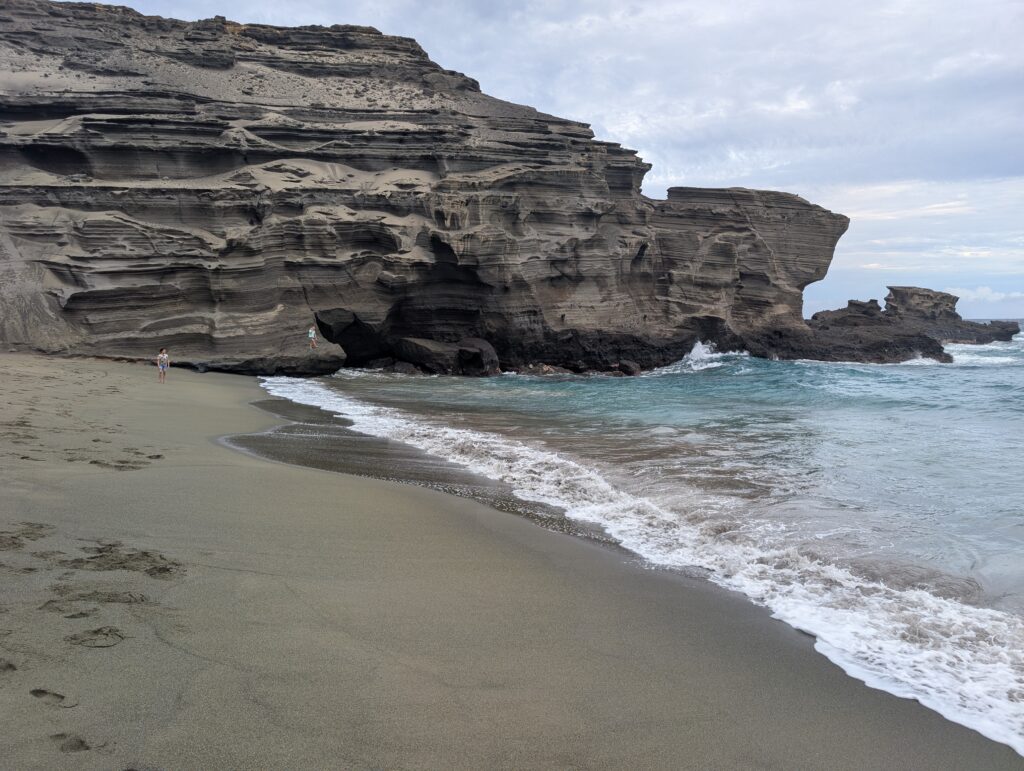
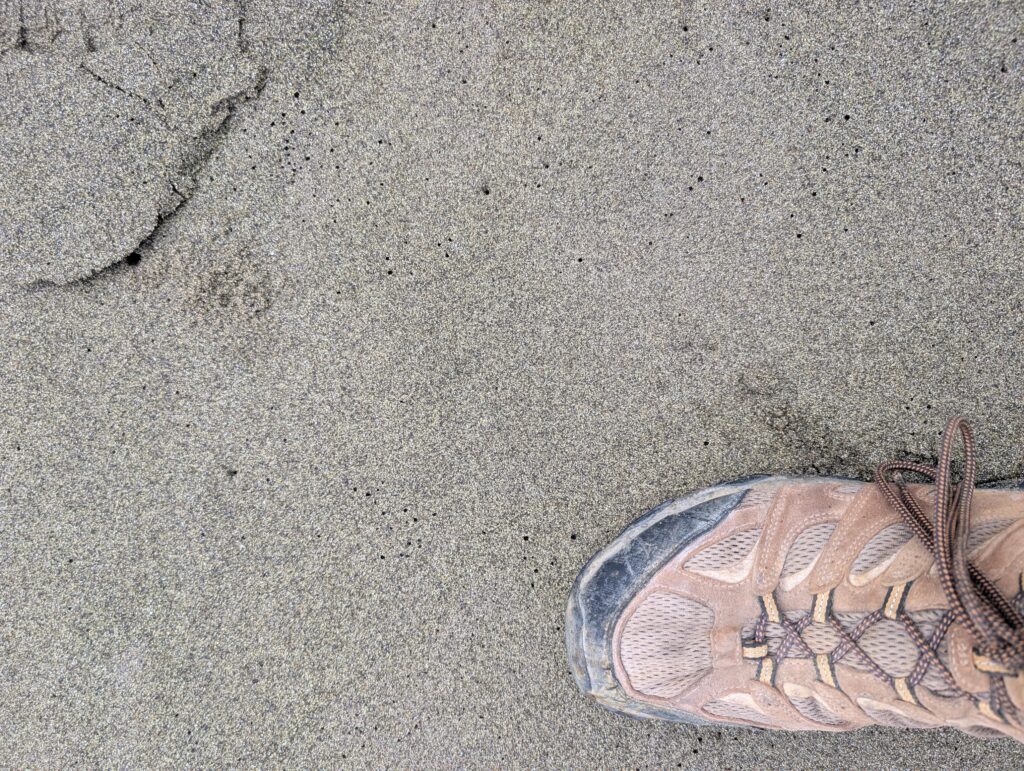
At the end of the three mile hike, a steep, rickety metal staircase leads down to a picturesque, recessed beach. The sand is very slightly green. To catch the green tinge, I had to hold a contrasting color near the sand. It was a unique, remote place, and I enjoyed the hike. By the time I got back to the rented car, it was just about nightfall. I had a flat tire. After some research and a phone call to Sixt, I determined that I had “drive-on” tires. My instructions were to merely drive slowly back to a place where the tire could be repaired. At dusk on a Friday evening, there were no places to even add air to the tire, let alone repair it. So I limped back to the hostel, and returned the car midday on Saturday.
In the meantime, I had a call from my custom cotton harvesters. They sounded anxious to get back into my fields and start harvesting, as they had not headed off to work in a neighboring town as they had said they were going to. In the past, I have had some cotton significantly damaged by having it harvested too soon after a rain. I felt it imperative to arrive back soon enough to deter them from starting back into my cotton if it was too wet. I would need to return as soon as possible.
A quick search determined that a flight could be had back to San Francisco as early as Saturday afternoon. I exercised Saturday morning, and took one more ocean swim in the salt water pool. I bade my farewells to those at the hostel. I ate what I could, and gave away what I couldn’t carry. I drove back over to the Sixt location and returned the car. I notified them of the flat tire. It turned out there were two! I later had to successfully defend a claim that I had somehow damaged the tires, but all worked out well in the end. Sixt shuttled me back over to the airport where I awaited my flight to SFO as I listened to Texas Tech make a miraculous comeback to tie their football game against Arizona State before collapsing and losing the game, anyway, in the final seconds.
The flight to San Francisco arrived very late. I grabbed a burger and drove back to Firebaugh, arriving well after midnight. I smirked to myself as I walked into church in Dos Palos, California Sunday morning. I had been there the previous Sunday. In between, I had gone to Hawaii and back almost free, and most people in Dos Palos didn’t even know I had been anywhere. It was a quick trip, but it was fun, and a great benefit to playing the points and miles game. I still hadn’t seen any of the major attractions I have always wanted to visit in Hawaii, but I would be back, and in the meantime, I had discovered another beautiful, interesting place – Hawai’i – the big island