Tipasa

Seaside Roman Ruins and a Mauretanian Mausoleum

It was fairly late in the day on the 14th when I arrived at the Afric Hotel in Algiers. It is an older hotel, but it was clean, had air conditioning and (sort of) wifi. I bought a couple of tiny souvenirs on the way. I watched people and enjoyed the French colonial architecture. The main road here is populated with relatively high end shops. It’s not the mall in Dubai, but I doubt it is representative of the mainstream Algerian economy. There is a noticeable absence of Western chains. There are a few Western motels in other parts of the city, but I did not notice a McDonald’s, a Starbucks, or the almost ubiquitous KFCs that clutter cities around the world. It seems that Algeria is as difficult to access for foreign business people as it is for tourists.

I rested in my room for a bit, and planned my stops for the next couple of days. I had originally thought about seeing the attractions around Algiers on my first day in town, then heading out to see the Roman ruins as Tipasa and Churchell the following day. It occurred to me that the next morning it would be Friday. If it was anything like Morocco, most things in town would be closed on Friday. I decided it would be best to do the Roman ruins Friday, and then walk the city on Saturday.

I walked down to the Grand Post and tried to mail my postcards, but it had closed early because it was the day before Friday. I then strolled to a restaurant that said it served Algerian food. Most of the plates on the menu were between 1000 and 2000 Algerian. They had a board offering a special, but there weren’t any prices. I decided to try the special, figuring the price would be at least similar to those advertised. It ended up being half again more! Fortunately, half again more was still only about $11.

Friday morning, I got up and walked to the bus stop dedicated to mini buses, and found the one going to Tipasa. For 120 dinars, I was taken to a bus station about 2 kilometers from the archaeological site. I has a seat, but the bus began to fill. The seating was one on one side, and two on the other, with a full row of four across the back. As the seats filled, eventually people began to fold down seats in the aisle so that they were also four across. Finally, even those were filled and a few were standing.

(Continued)

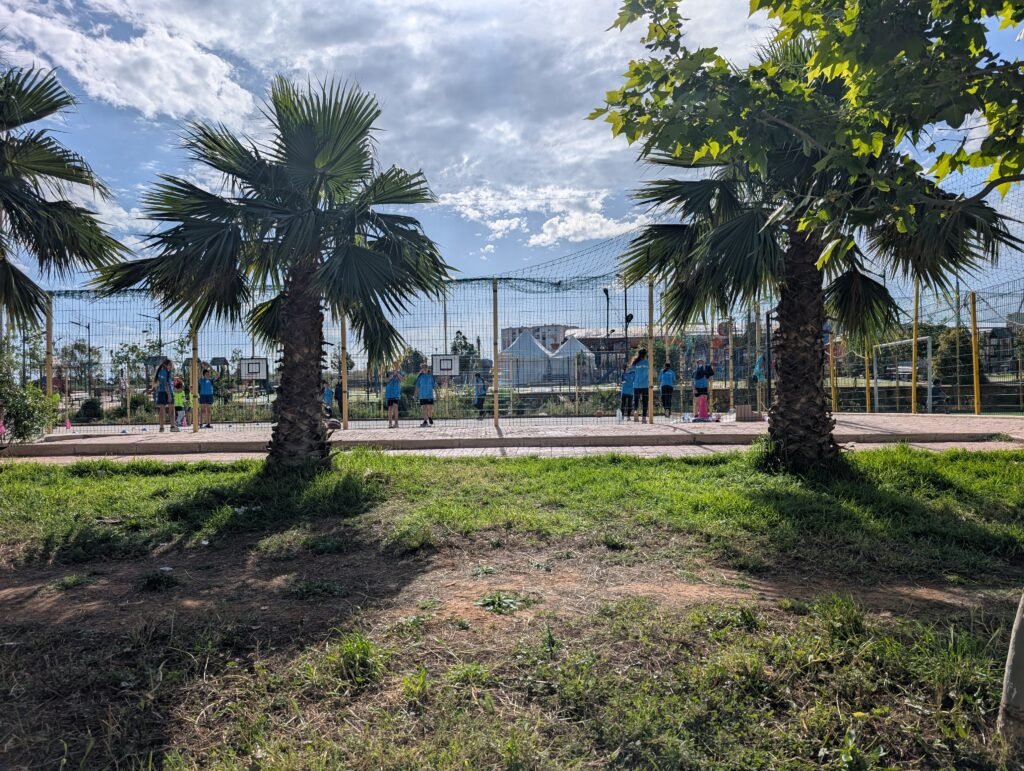
Kids Playing on My Walk to Tipasa Archaeological Site
Petanque Contest en Route to Tipasa
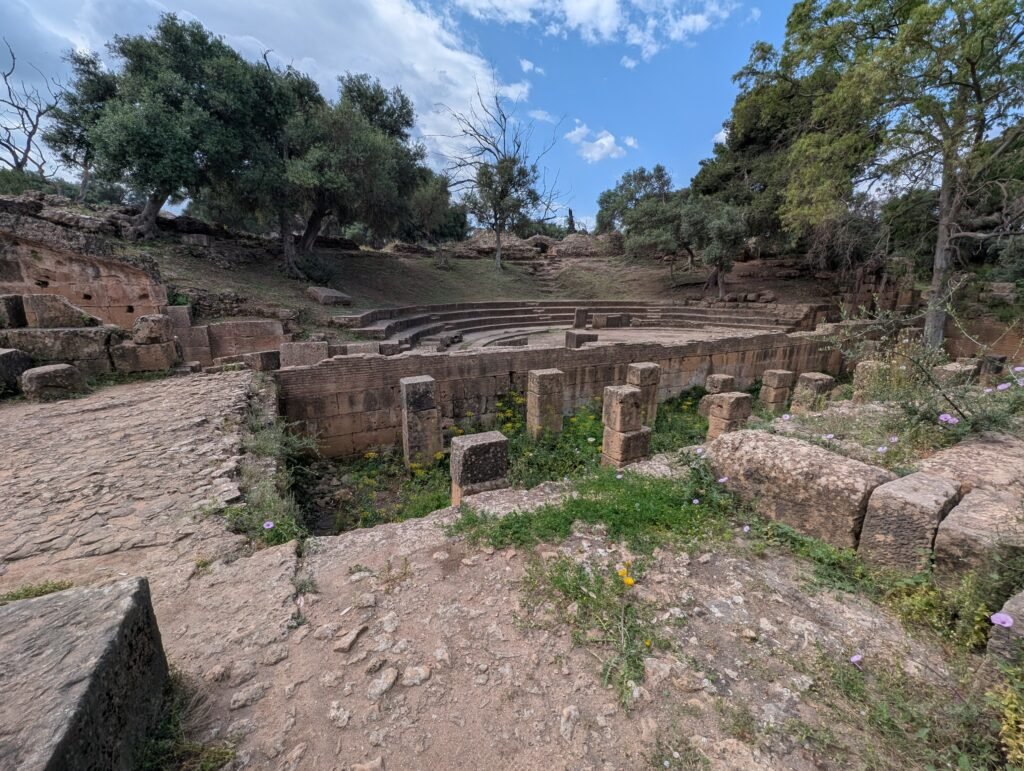
Small Amphitheater Near Tipasa Entrance
Around the Amphitheater
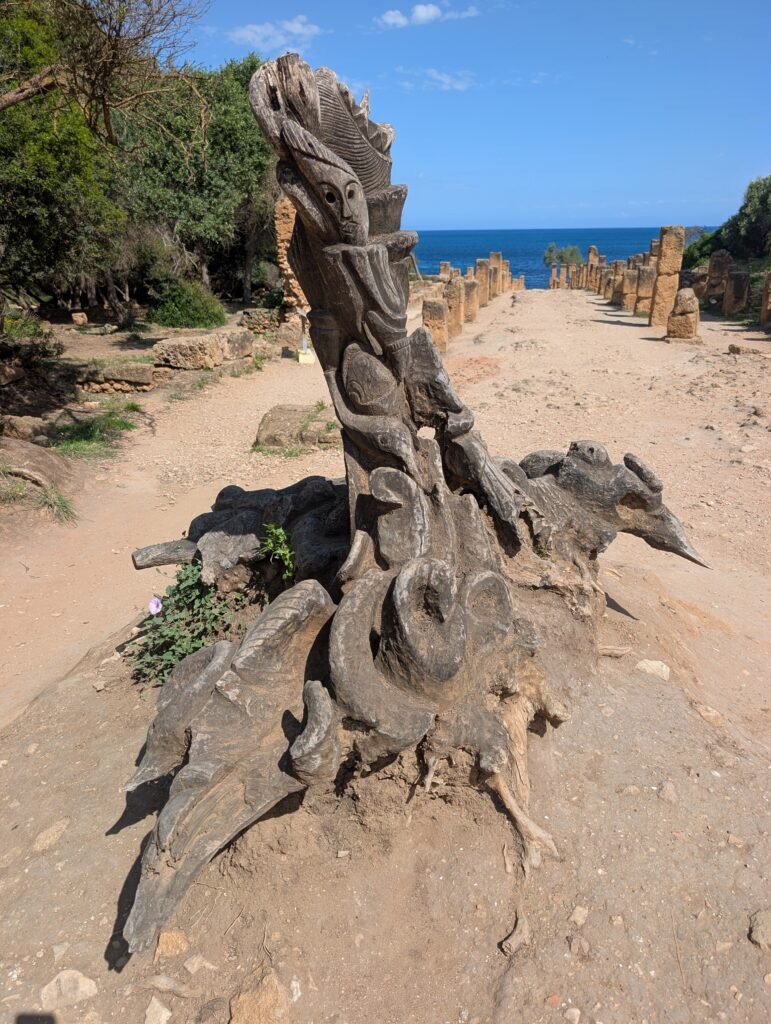
Interesting Stump Carving
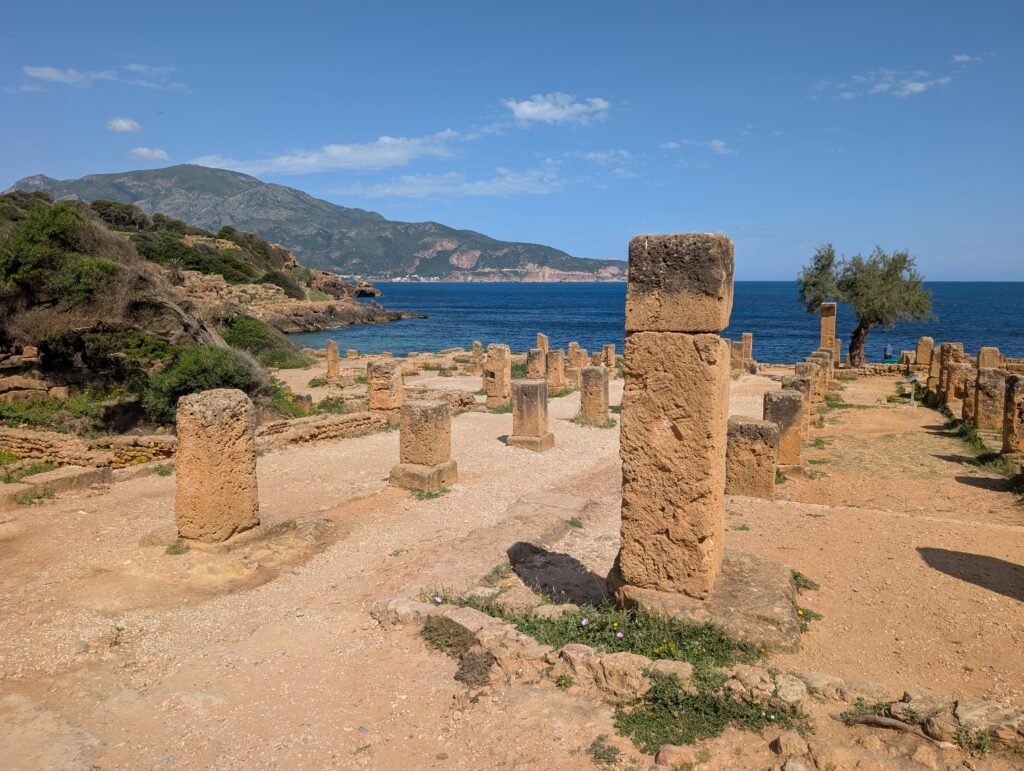
Road to the Sea

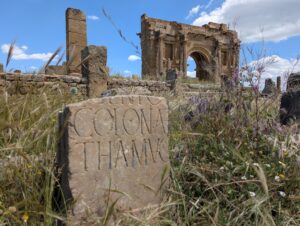
Tipasa was indeed open, and I had beaten the tourists to the site. Tipasa is not nearly as large a site as Volubilis. There is only one place with a floor mosaic, and it was the last building I came across. The basilica on the far side of the park had a large geometric mosaic that wasn’t all that well preserved and was deteriorating. Most of the Tipasa site is deteriorating. There is no huge triumphal arch or impressive city gate or walls. There is a small amphitheater that you can walk through. There are several houses, the remains of a bath and sewage system. It was worth visiting, though small.

After I had been there a couple of hours, the crowds began to grow. I met a few groups of foreign tourists. One man driving a French-Algerian woman and her two children began visiting with me. In an effort to recruit me into his group, he mentioned that they were going to eat some fish afterward, and also go to a nearby Mauretanian Royal mausoleum. I wanted to go to the mausoleum, but also wanted to head to Cherchell where I knew there was another small Roman site and a nice museum. In the end, I let him convince me to go along with him to the mausoleum. He asked that I wait about 30 minutes for his passengers. I figured I could find some way to get out to Cherchell after visiting the mausoleum.

We ended up using most of the day waiting for his passengers, eating lunch, visiting the local museum in Tipasa, and going to the Mauretanian mausoleum. I never made it to Cherchell. To learn more about Arabic hospitality and how that played out on my journey, click HERE. Sadly, we only stayed at the mausoleum for about ten minutes. I ended up waiting around all day, and missing out on one of the sites I had planned to see.

I was happy to stop before lunch at the small museum on site at Tipasa. There is a relocated mosaic there. There are also some Roman and Punic artifacts that have been collected. Tipasa itself also has a few Punic ruins, though they are more difficult to find and see. The museum has various Roman pillars, stelae, and fragments, as well as some smaller items, such as lamps and household items. The Punic examples are all small, household artifacts.

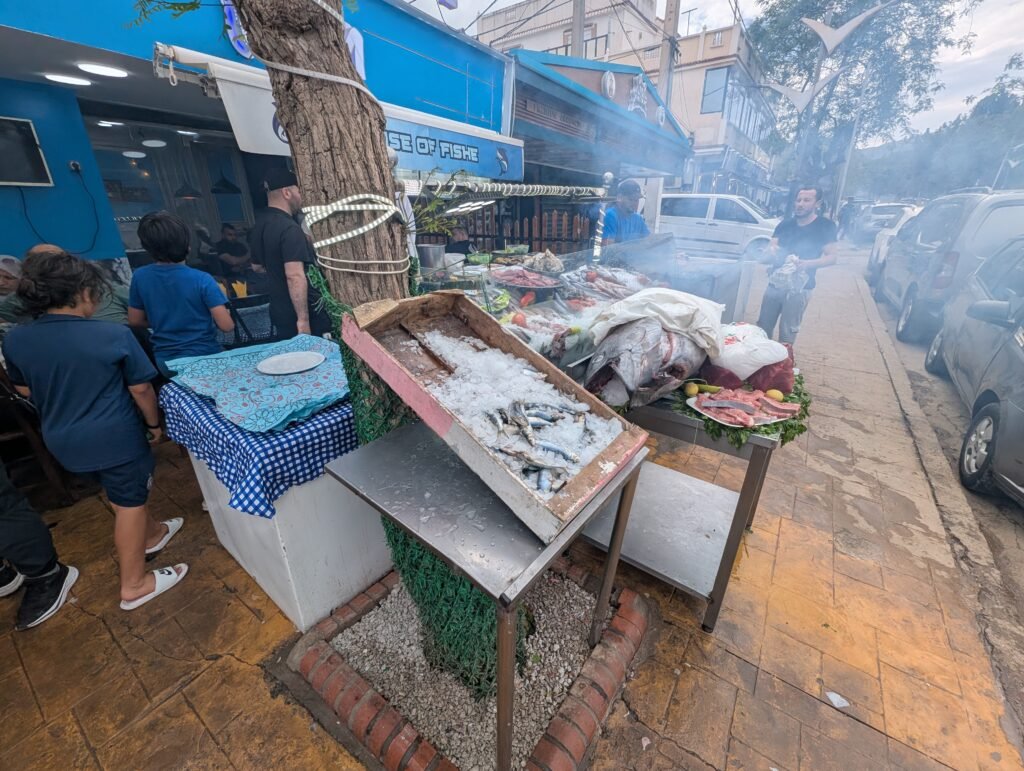
My French-Algerian friend, Fatima, wanted fish for lunch. David, the driver, took us to a busy, relatively expensive restaurant by Algerian standards. We ate outside. Fatima ordered a HUGE variety of different fish, most of which had no prices listed. I think her portion of the meal was something like 14,000 dinars (about 50 Euros). My total came to about $12, but I couldn’t see how. I had ordered two small fish and the side orders that came with it. My meal was fine, but nothing spectacular. For 50 Euros in Algeria, you should probably be able to buy the restaurant. From there, it was on to the Mauretanian mausoleum.

(Continued)

Beautiful Mediterranean Views
Durable Road Pavers
A Nice Theater
Parts of Floor Mosaics, Still in Place
Tipasa Views Are As Nice As the Ruins
Chinese Working Tourists
Some Nice Funerary Art
Fish Restaruant

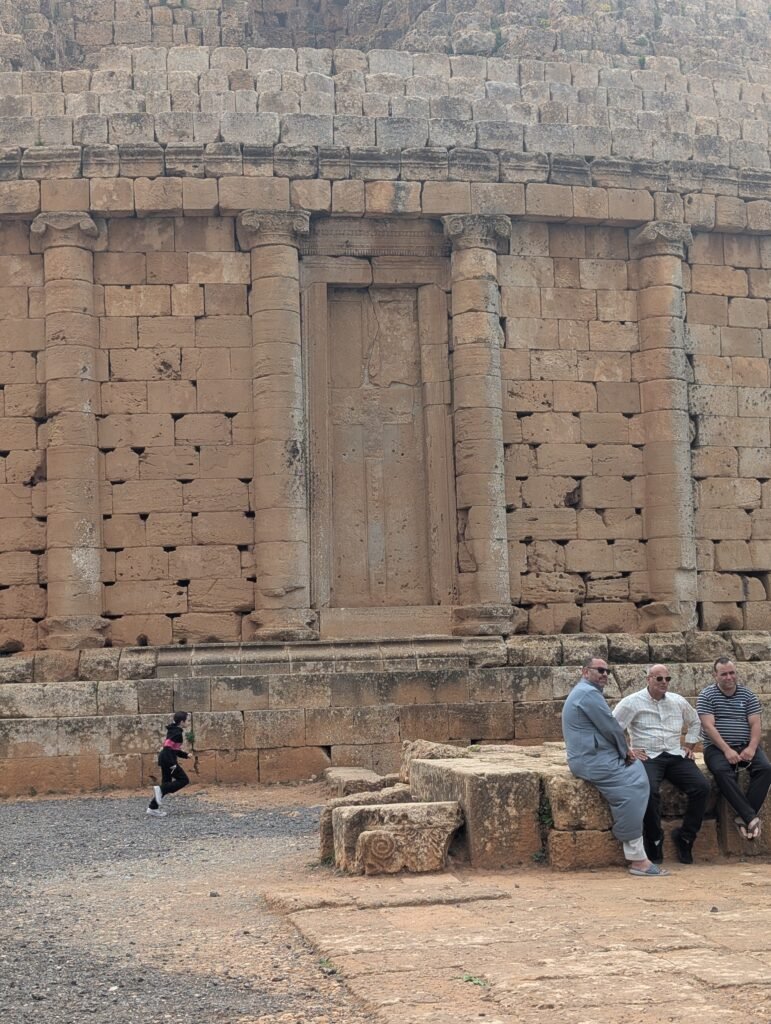
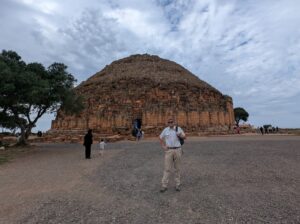
The Mauretanian mausoleum could not be entered or climbed on. All you really could do was to walk around the outside in the first place. So, while I would have stayed a bit longer than ten minutes had it been up to me, I didn’t feel like I had been tragically shortchanged on that part of the trip. There is a country called Mauritania today, but it doesn’t have much to do with the hilltop mausoleum we visited. In antiquity, there was a North African kingdom of Mauretania. It stretched from the central part of modern Algeria west to Morocco. It was ruled buy local kings and was probably populated by tribes we would call Berbers today.

Ancient Mauretanians were called Mauri by the Romans. This nomenclature eventually became the term “Moor” used to describe the North Africans who conquered the Iberian peninsula in the Middle Ages. In the second century B.C., Mauretania was in independent Berber kingdom. As time progressed, they had more and more interaction with Rome. High ranking Mauri were sometimes educated in Rome. King Juba II of Mauretania was educated there, and almost seemed too Roman to be a Mauretanian king. He married the daughter of Marc Antony and Cleopatra. The mausoleum on the hill is thought to have been built for those people, though no remains have been found on site. It may have been something more like a monument.

Mauretania later briefly became a vassal kingdom to Rome. In the first century A.D., Caligula had the Ptolemy king of Mauretania assassinated. Within a few short years, Rome annexed Mauretania and converted it into two Roman provinces. The mausoleum, as you can see from the pictures is very large. When constructed, it was about 130 feet tall. Over time, Ottoman rulers and French occupiers have damaged it, and vandals have pulled down some of the stones. You can still get a very good idea of the size and shape. I found it worth the visit.

I rode home with my French-Algerian tourists and David, their driver. The day had been long, and I had eaten a relatively expensive, late lunch. I grabbed some fast food late that evening, and turned in for the night, to reflect on the conundrum of Arabic hospitality.

Punic Funerary Stele
Nice Mosaic in Tipasa Museum
Approaching Mauretanian Mausoleum
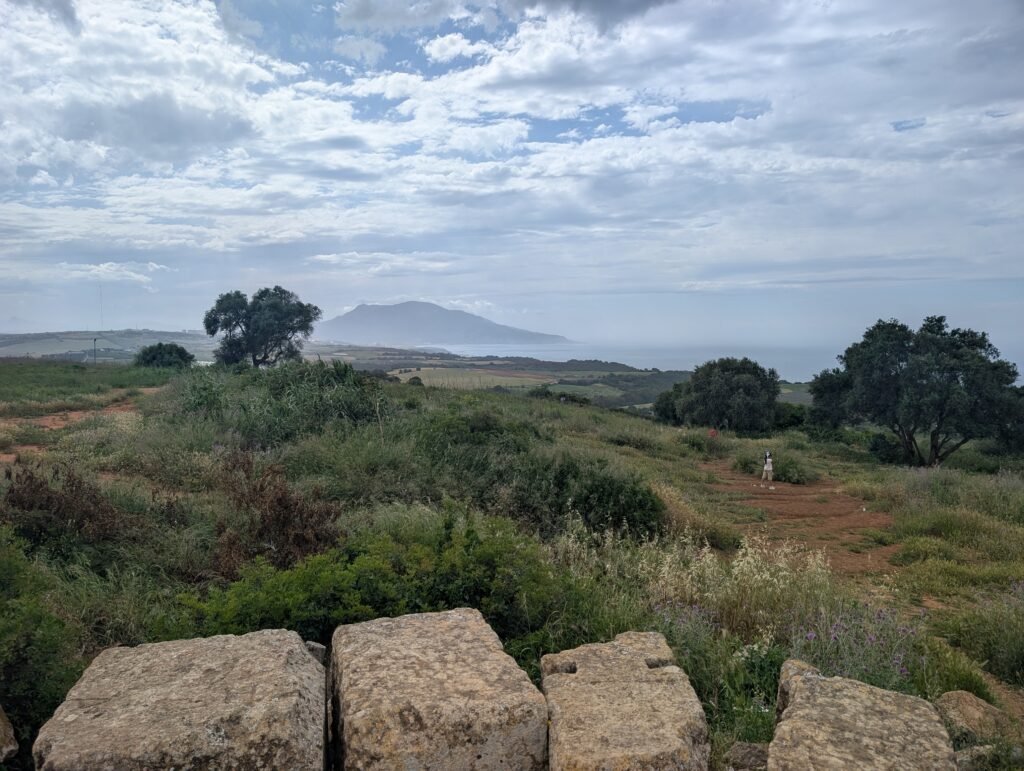
Beautiful Mediterranean Terrain Around the Mausoleum
Some Call This "Mausoleum of the Christian Lady." You Can Understand Why From Images Like This
Trip Overview
Oran
Algiers
Setif & El Eulma
Timgad
Djemila
Constantine
Tunisia
Tipasa