Oran
Algeria's 2nd City
The ferry I took from Melilla to Almeria was basically a converted cruise ship. It was big, and though not quite as well maintained as a ship still operating for Carnival or Royal Caribbean, it had the remains of some pretty nice amenities. I saw that many travelers had flocked on board early to grab long bench seating that they could sleep on. I didn’t need to sleep on the Melilla-Ameria ferry, but I would have to on the Almeria-Oran journey. It was an 11 ½ hour trip, setting off at 10:00 p.m. Sadly, the second boat, while just as big, was not nearly as nice or clean as the first. Being a light traveler, I was able to contend well with the jostling Algerians and get onto the boat quickly enough to claim a nice, long couch-like seat that I could sleep on. There were lights around and it was near a pizza bar, but it was flat, straight, long, and relatively soft.
Getting on the ferry was a bit of a challenge. The Algerians boarding were in no mood to queue like Brits. A Spanish woman ticket taker in the boarding room was constantly bickering with the passengers crowding one another out and blocking the way with massively overloaded hand carts and piles of bags bound with packing tape to the draw bars of their roller bags. I have no idea how people so heavily laden thought they would be light enough on their feet to beat anyone in a race to the best places on the ferry. I had arrived early. With only a small pack strapped to my back, I was nimble enough to defend my position toward the front of the jostling hoard.
After I was on board and had safely staked my claim to a sleeping area, I walked out onto the aft deck. It was buzzing with smokers standing outside, enjoying the cool Mediterranean breeze that evening. We looked down and witnessed the same crazy wrestling match going on below as vehicles attempting to squeeze one another out contended for positions on the garage area of the ship. Getting that mess straightened out took another hour and a half beyond the scheduled departure time, but we were eventually underway.
I looked into booking a cabin for the overnight trip. I scouted the possibility on my daytime trip northward. The cabin cost an extra 60 Euros, and the ship was nowhere near capacity. It seemed there would be plenty of places to sleep on the overnight trip. The cabins were likely not nice enough to improve sleep quality significantly over just spreading out on a couch or cushy seat somewhere. My Algerians shipmates all had the same idea. People were spread about sleeping all over the boat – on the floor, in the dark areas away from the bar, in the halls – everywhere. Many of them had prepared. Nearly everyone had a blanket and pillow. A few even carried blow up mattresses! I took one of my packing cubes stuffed with T-shirts out for a pillow. This worked just fine, and I slept almost as long on the boat as I had in the hostels in Morocco. My sleep was interrupted, though, when a group of rather loud Algerians decided to leave their sleeping area at about 4 or 5 in the morning to have a raucous discussion in the pizza area. They left their quiet space, came right over next to me, and made mine noisy. This kind of thing seemed to happen pretty often in Morocco and Algeria.
Very few Algerians of the socio-economic status to be riding the ferry for transport spoke English. Those who spoke a few words of English or Spanish were very friendly, and were interested to learn where I was from and what I was doing in Algeria. Foreign tourists – particularly those not from France – are quite a curiosity in Algeria. When Algerians learned I spoke English, they were even more surprised when I wasn’t from the United Kingdom. Often, Americans are criticized for referring to our country as “America,” since that term technically refers to all of two continents. So many people with marginal English skills confused the United States for the United Kingdom, that I had to revert to telling them I was from America, rather than the “United States,” or “USA.”
The ferry was late arriving in Oran, Algeria by about the same amount of time we were delayed by the jostling auto users of the ferry. A huge crowd formed by the exit door. I decided not to fight them this time, and waited outside on the deck in the cool morning air, looking at the North African skyline. A few Algerians opted for the same, but not many. The Spanish company running the ferry locked the bathrooms so no one could make a further mess of them, which would have been difficult anyway. This seemed like it could be a problem, since even after we were docked, Algerian customs prevented us from disembarking for a while for some reason. Eventually, we were out, and waiting in the line.
The jostling pattern continued. I eventually just sat down in the back of the immigration line, not wanting to fight people anymore. After a while, a member of the Algerian national police force came and escorted me and the tiny handful of non-Algerian arrivals to a designated customs and immigration line for foreigners. This went MUCH faster, and I was outside on my own in maybe 15 minutes.
(Continued)
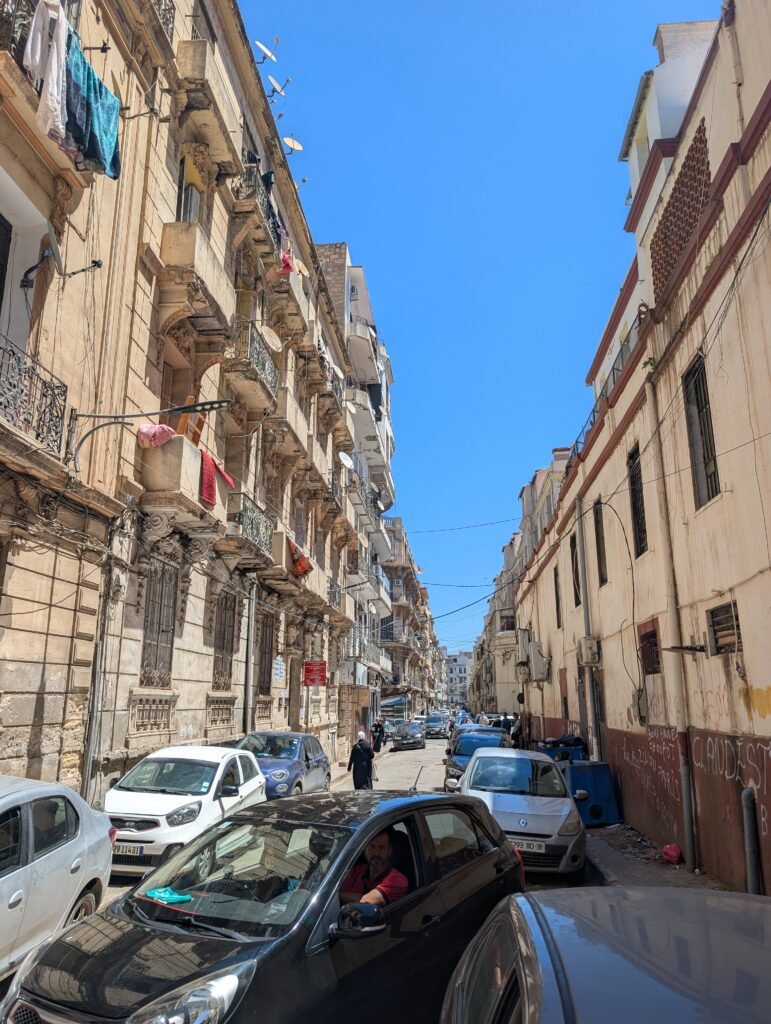
I set off to walk to my hostel, seeking somewhere to change money along the way. Usually, I just use my ATM card to extract money soon after I arrive in a new country. There are always ATMs present in airports, train stations, and other such places. This is not a wise idea in Algeria. Like Morocco, Algeria has a closed currency. Unlike Morocco, the Algerian government tries very hard to force businesses and people to buy Algerian dinars at a price well higher than they actually trade on the open market. They have, in other words, printed too much money and their currency has devalued faster than the government will admit. The result of all of this is that if you use a credit card (which is rarely possible in Algeria anyway), withdraw from an ATM, or gain access to Algerian dinars in any way the state can regulate, you get a state dictated exchange rate. At the time of this writing, the “official” rate is about 130 dinars to the dollar. Numerous businesses and individuals who understand the true weakness of the dinar operate an open but underground trade in the nation’s currency at actual market value. In this “black market,” I could buy 234 Algerian dinars for a dollar. It was worth it to seek out one of these traders.
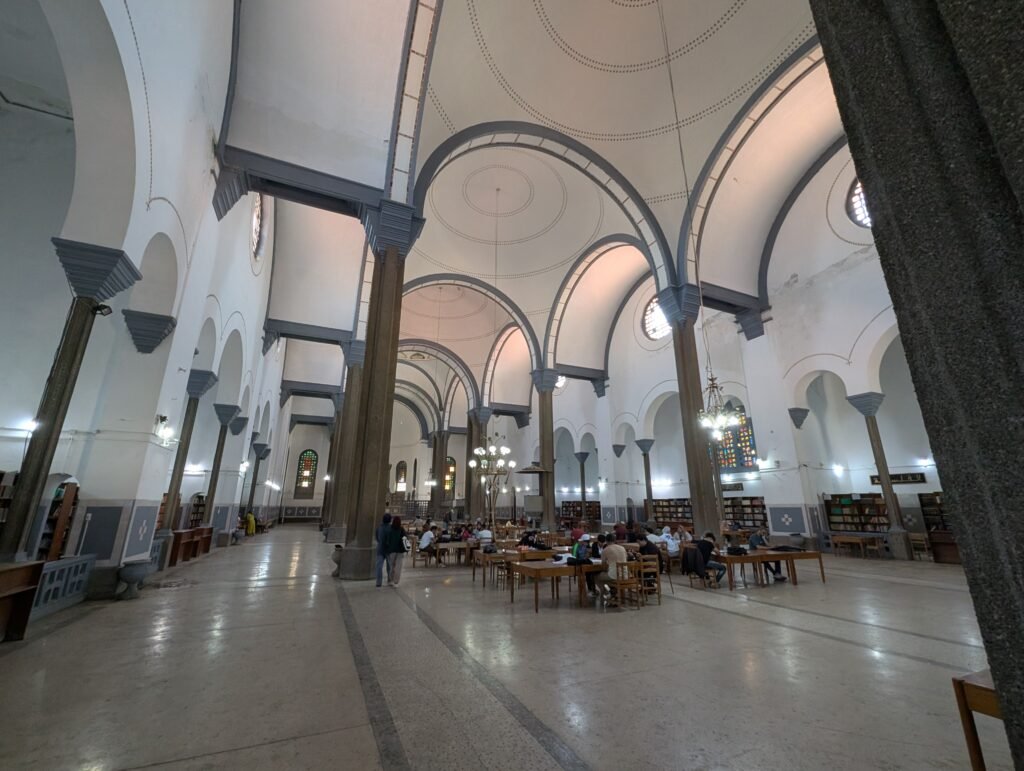
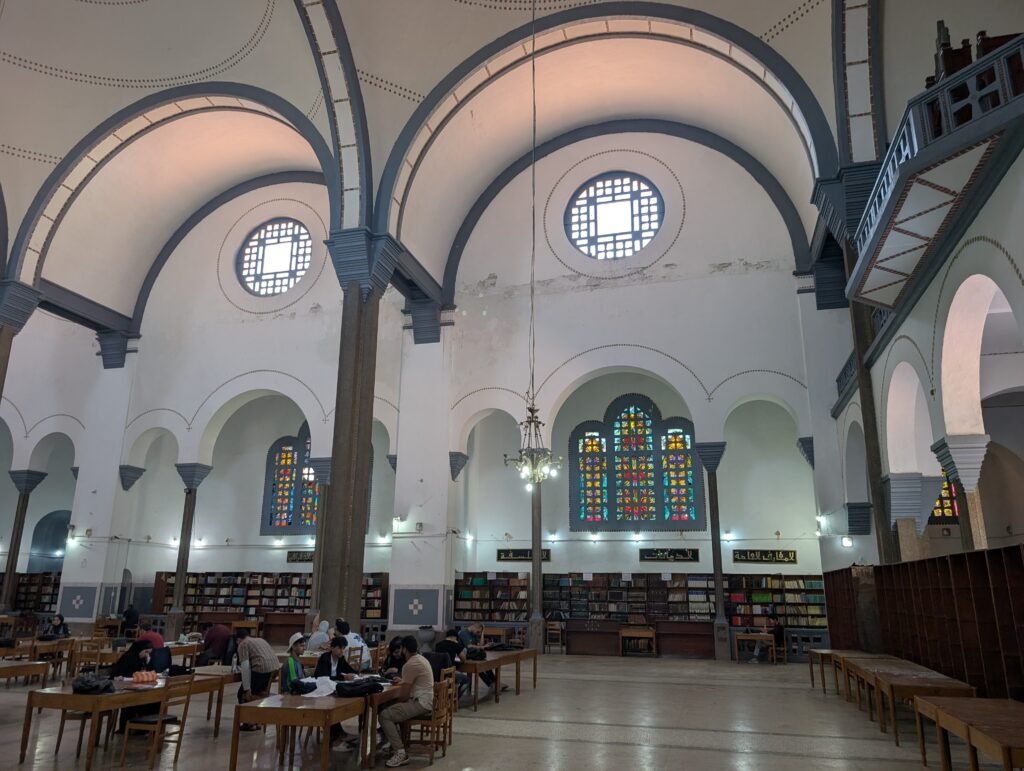
I didn’t find a currency exchange en route to the Les Ambassadeurs Hotel, but I did soon afterward. In the back room of an appliance store, I traded $300 for enough dinars to get the through my entire stay in Algeria, and then some. On the way back from the money changer, I ran across the Sacred Heart Catholic Church building. It is an impressive early 20th century facility. The structure is built around high round arches. The church served in its original function until the French were forced to withdraw in 1956. The impressive worship facility has been converted into a public library.
Morocco, Algeria, and Tunisia all claim to allow freedom of religion. It is written into the constitution of Algeria. However, it is illegal to evangelize or meet in a public church gathering that isn’t authorized by the government. The problem is that the Algerian government authorizes virtually no new churches. If you are caught causing a Muslim to question their faith, that crime comes with a multi-year prison sentence. The Algerian government has actively cracked down on public Christian worship over the last few years, shutting down most of the protestant churches, and almost never allowing a new one. There really is no way to sugar coat it, freedom of religion in the Maghreb is a sham. It is words on a paper. There are a few small variations from one country to the next, but in practice, Christianity is banned.
After looking at the church/library, I came back to rest for a bit, grabbed a small bag of cashews from a store called “the nut house,” and caught a cab for Fort Santa Cruz. I likely would have just walked this, but I was already a bit tired and it was almost three miles away up a steep hill overlooking the city. Twice, I attempted to summon a driver using the app Yassir, which works in these North African countries for everything from rides to food and grocery deliveries. Both times, my Yassir driver insisted on more money than the app stated. At least they did this before the ride began instead of afterward. But this defeats my main reason for using ride share apps. I don’t want to have to renegotiate the rate. I reverted to InDrive, which quoted a slightly higher price, but one that the driver could accept or not beforehand. The rate was honored, and I was a lot more comfortable.
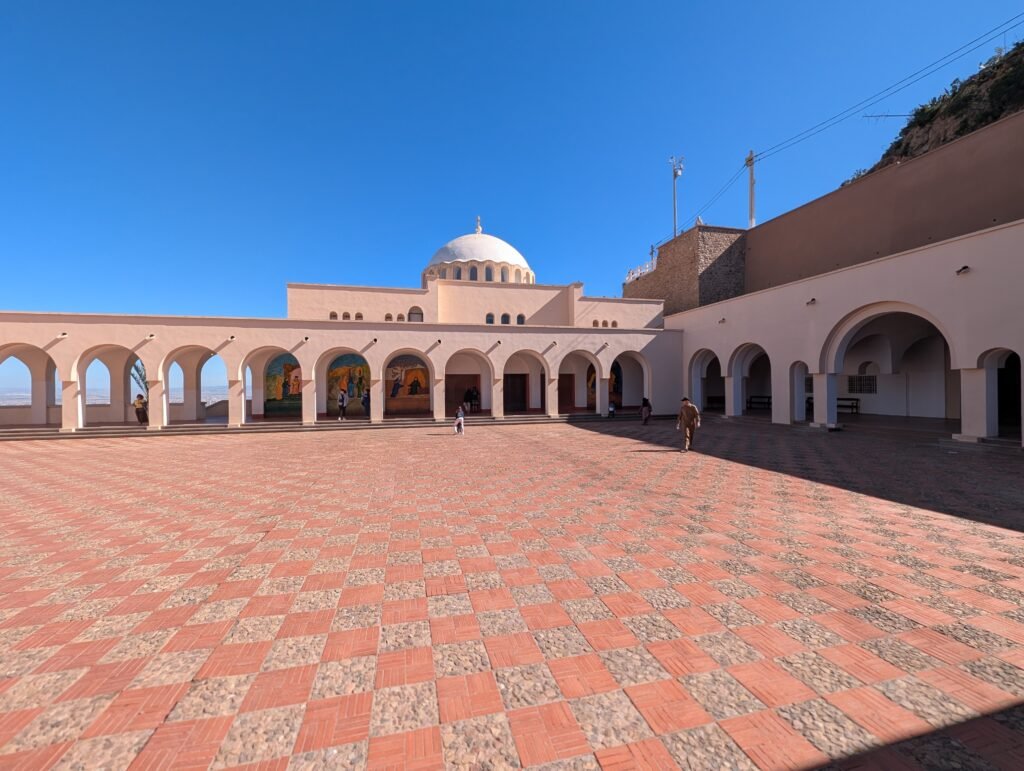
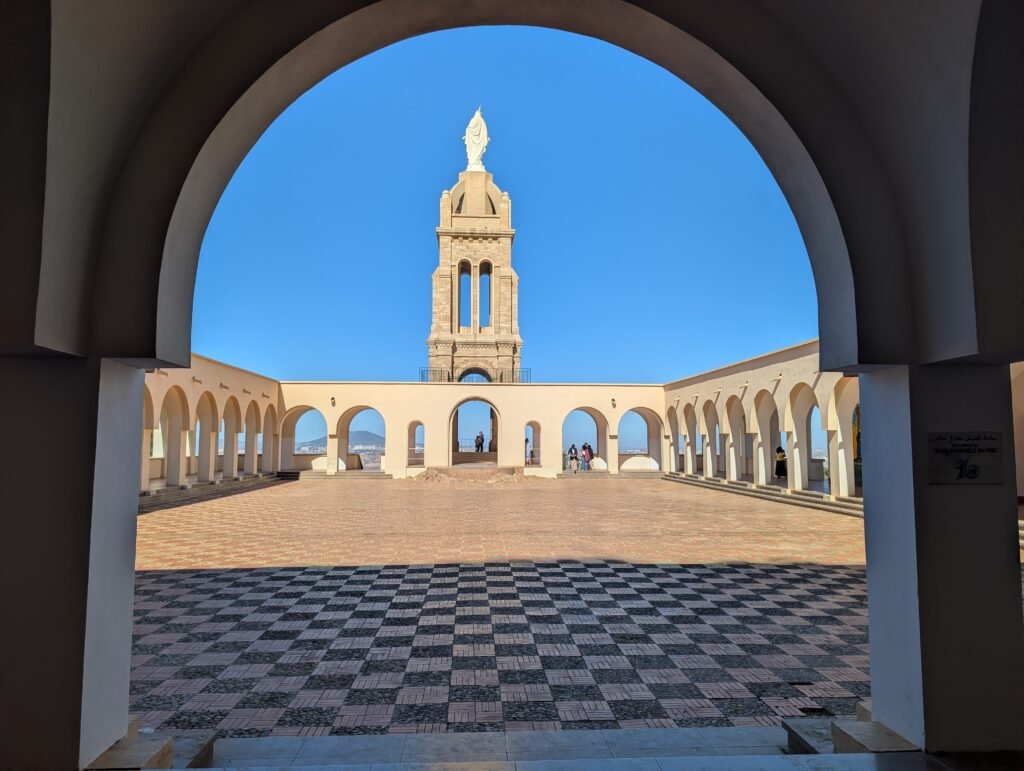
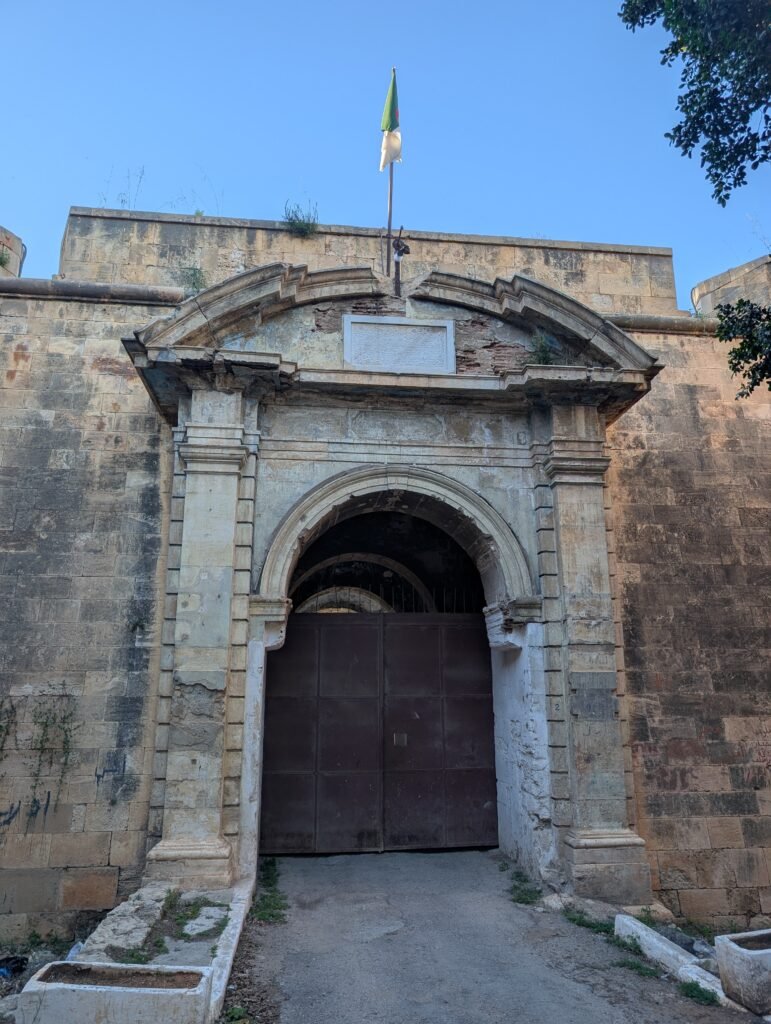
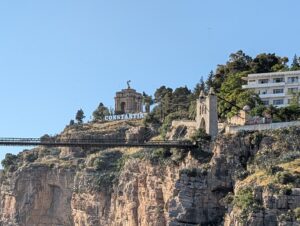
Santa Cruz is a fort and chapel complex perched nearly 1,000 feet above the city of Oran. It was built by the Spanish who held a bastion here from the time of the Catholic monarchs to the end of the 1792, with a two and a half decade hiatus. Around the time of the War of the Spanish Succession, Ottoman Beys briefly took control. A massive earthquake did great damage and hastened Spanish departure from the city and the fort. The French took over soon after, controlling Algeria from the 1830s until 1962. After they relinquished it, the Muslims, not content to have a Christian icon overlooking the city but apparently reluctant or impeded from damaging or destroying it, built a mosque on a nearby higher peak to “show the superiority of the crescent over the cross.”
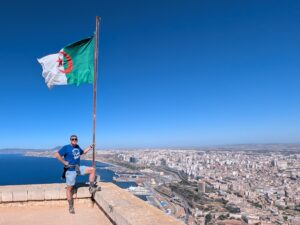
There is a very small 110 dinar entry fee to Fort Santa Cruz. While there is very little interpretive information posted, it is worth a visit just for the views. The fort is interesting to walk on and around, and you can see some areas that were a prison or some kind of storage. But it is the awesome commanding view from the tops of the buildings that brings tourists to this place. The tourists I saw were nearly all Algerian.
There were a few more French tourists at the chapel below, which requires much less climbing to reach. It also has very nice views, so people with accessibility issues might be just as well off visiting it and looking up at the fort from below. The chapel itself wasn’t as interesting to me as the fort, but I walked it since I was there. It was pretty. I also had a few discussions there with such Algerians as could speak a bit of English.
I came across one woman struggling to climb up onto a wide cement ledge for a photo she wanted her female companion to capture. I couldn’t speak to her really, so I just knelt down and indicated that she could step on my knee for a boost. She took me up on this and thanked me, as they grabbed their glamour shots. Her older companion could speak a bit of English. When I told her I was from America, she expressed pretty sharp disgust for President Trump. When I made my first around the world trip during the 2024 election season, nearly every Muslim I encountered favored Trump over the Democrat on social grounds. As Muslims, they couldn’t tolerate the Democratic positions on gender, homosexuality, the trans issues, and other things of that nature. But Trump had recently banned travel to the U.S. from many Muslim majority countries and put a de facto ban on travel from others. Algerians are completely banned from requesting immigration to the U.S., and travelers are subject to a $15,000 bond if they apply for a tourist visa. In practical terms, that economic barrier to tourism amounts to a ban for nearly all Algerians. We Americans would loudly oppose such impediments on our travel.
(Continued)

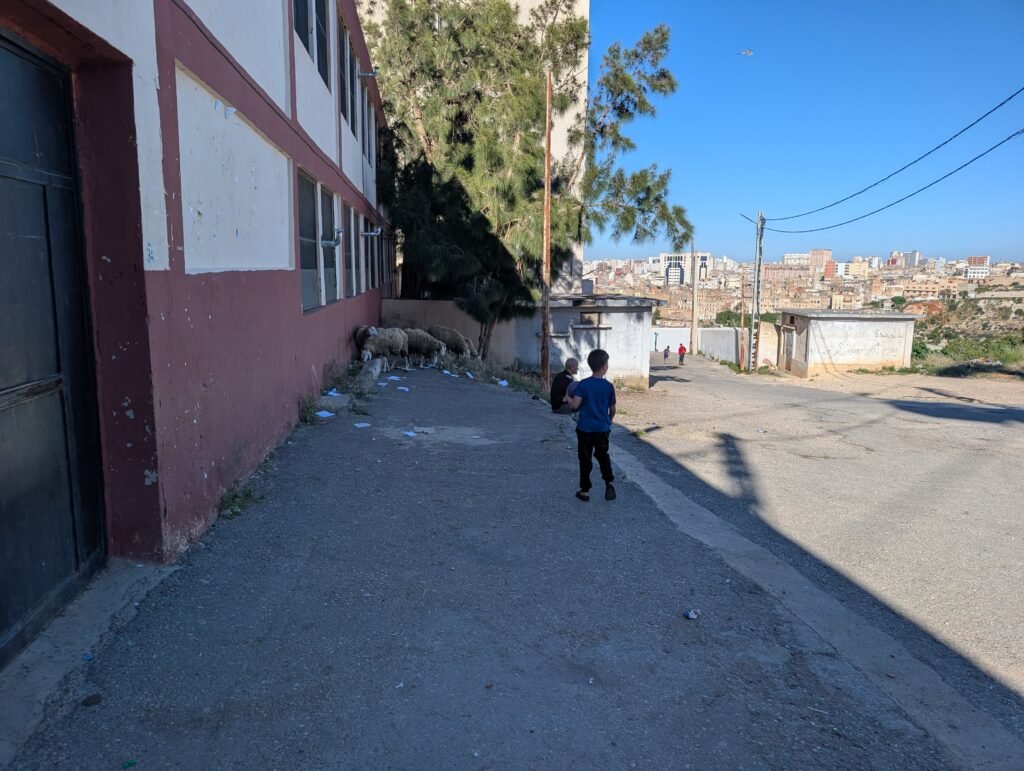
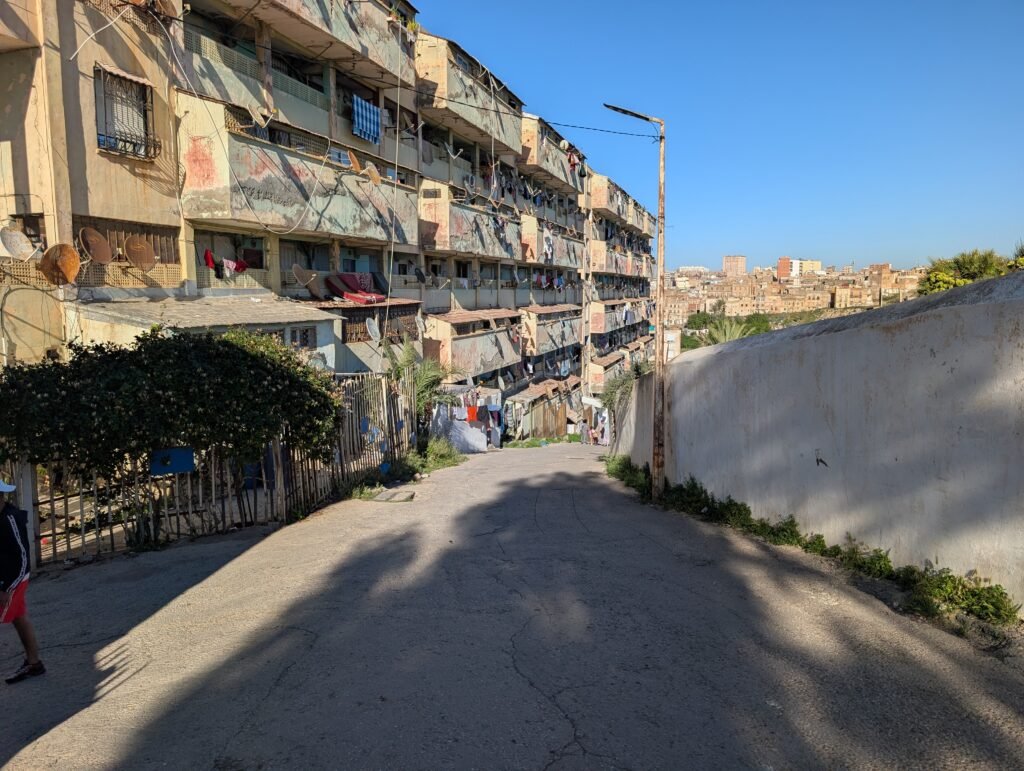
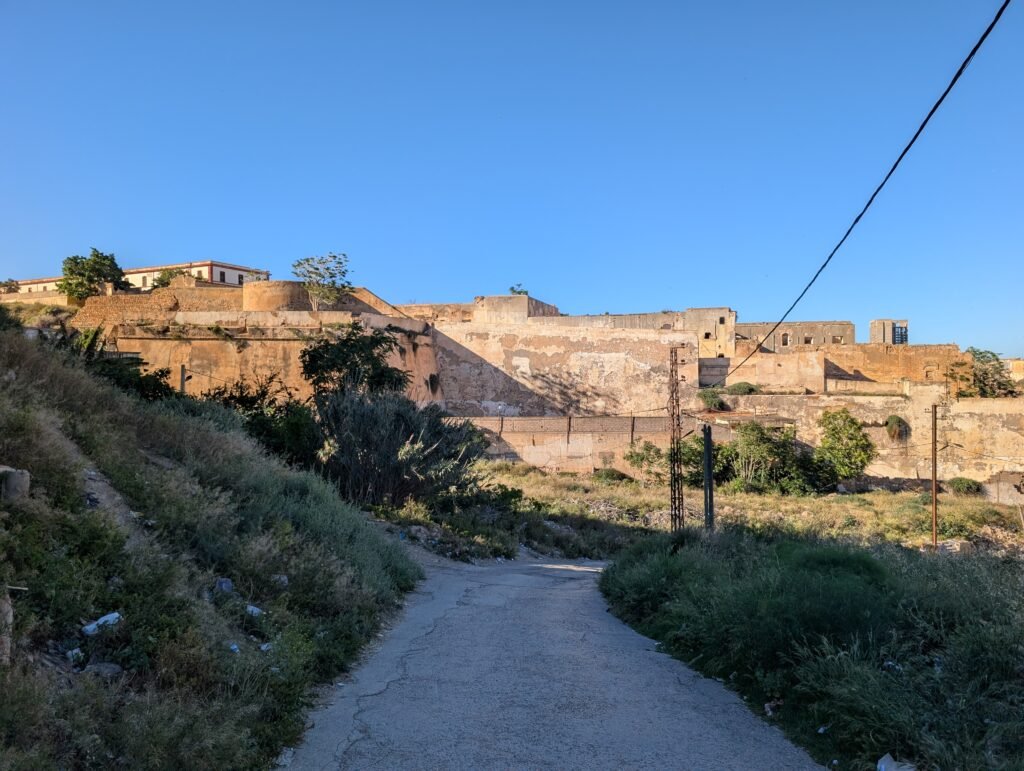
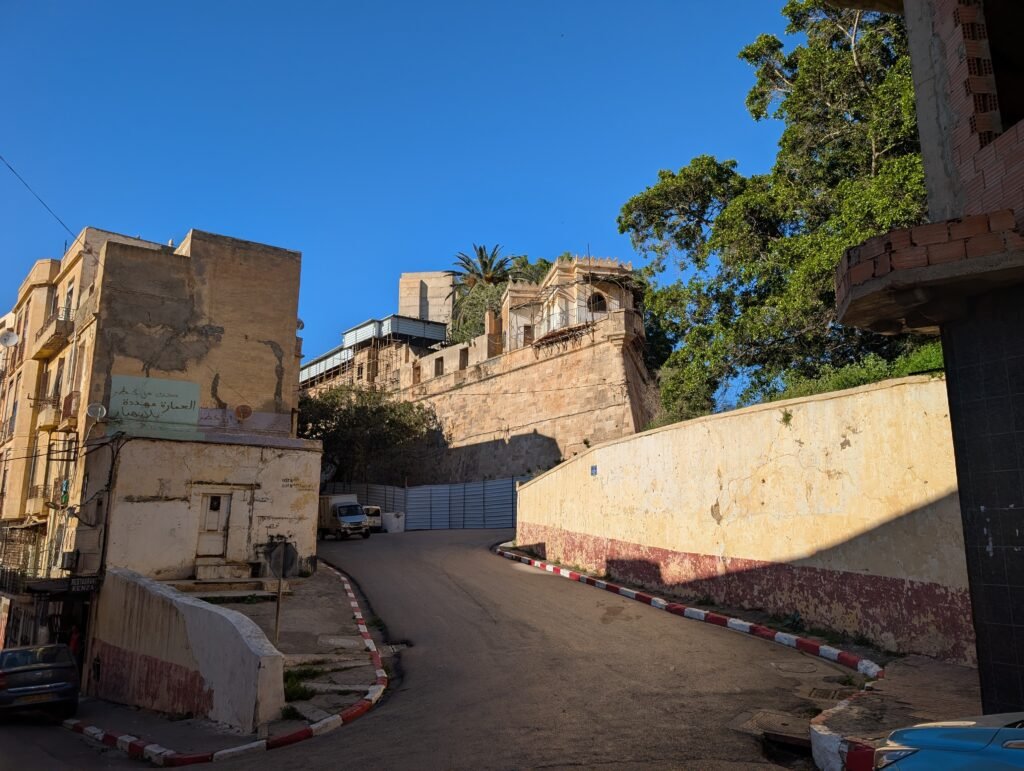
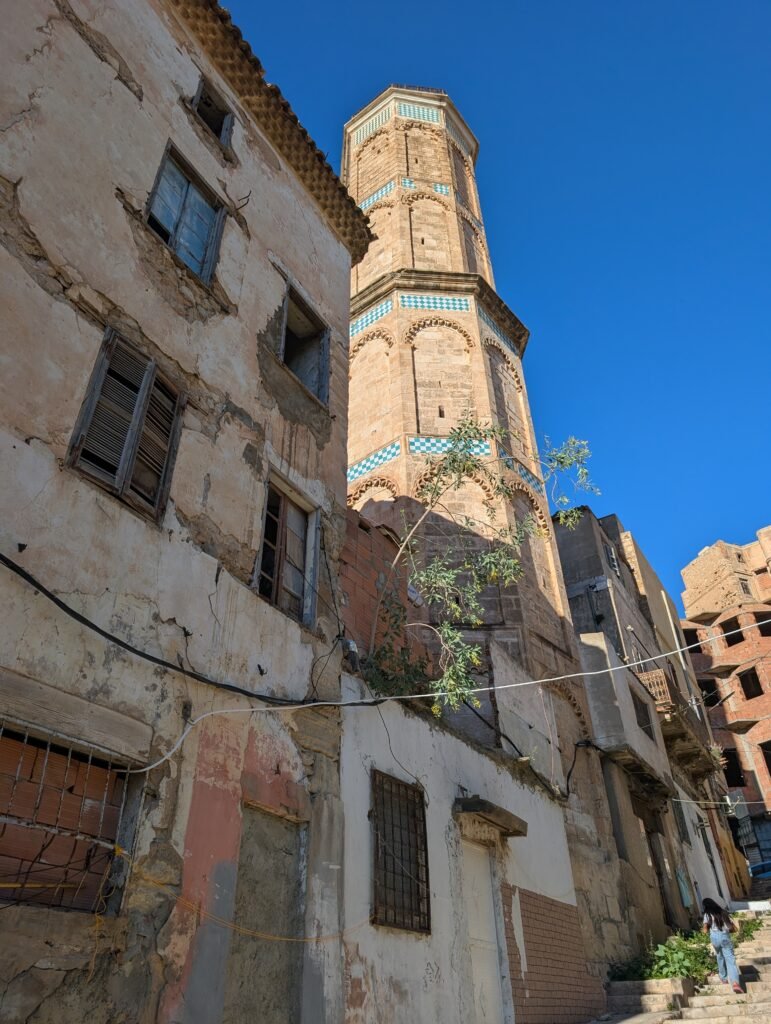
I decided I could walk back down from Santa Cruz Fort and Chapel. There was a cable car, but it went to the mosque, and I didn’t know how much that cost or when it stopped running for the afternoon. It seemed like a surer bet just to walk back down. It was a long walk but it was downhill. On the way back I routed myself past the Bey’s Palace. I knew ahead of time this was closed for renovations – and had been for several years. I could at least walk around the outside. I walked through some very poor neighborhoods and saw a lot of interested children playing soccer and making music with self created Styrofoam instruments. I bought a 1 liter Fanta Pineapple soda for 80 dinars. I did eventually find the Bey’s Palace, and it was in a state of disrepair. It had been quite a complex at one point.
In Turkic, the word “bey” means something like chief, or lord. During the Ottoman period, beys and deys ruled local areas as vassals to the sultan in Constantinople. They exercised a high degree of autonomy, but were ultimately beholden to their Turkish overlord. This was all part of the Islamic caliphate. The idea was that the Ottoman sultan was the political and religious leader of the Muslim world. It has been so for most of Islamic history, though at the current time, no political entity in any Muslim majority country is widely recognized as the caliph, and vassal states aren’t really a thing anymore.
I considered walking over to the Oran waterfront from the Bey’s Palace, but from the pictures it didn’t seem to be a traditional corniche like those I saw in the Gulf States. I decided instead to head back to the room, then regroup for dinner. After a couple of tries, I found a local cafe called Restaurante La Republique. I told the proprietor that I could use my translation app to understand restaurant offerings from the menu. The problem, he explained to me, was that the menu was oral! He was patient enough to speak the offerings in French into my translation app, and I got the French pronunciations of my choices close enough to order Algerian soup, some special preparation of loaded rice, and something like a spicy hamburger steak. These were all pretty good, I had a fun time ordering them, and it cost me only 900 dinars, plus tip.
I called it an early night and feel asleep soon after I got back to the room. That allowed me to get up early enough to shower and pack everything as well as enjoy the included continental breakfast. I then walked about ¾ mile to the train station and found a train to Algiers. This effort also had fits and starts. I walked to where Google Maps said the train station was, and found only a high wall. I walked around until I found a set of stairs mounting the wall. There were no signs in any language. Surely this wasn’t he way to a train station… When I summited the high cement wall, sure enough, there was something that looked like a 19th century train station.
There was not a soul in any of the ticket windows, and there was no sign saying what went where. The friendly security guard pointed me in the direction of a much more modern looking building about a quarter of a mile distant, explaining that that was where the train to Algiers left. The old train station apparently operated shorter distance routes, and the longer express trains ran from the newer station I shuffled over there with plenty of time, got cut in line by an irate old Algerian women who needed to yell at the ticket clerk about something, then bought my ticket.
I could not read anything on the ticket except something that said 2nd class, but attendants kindly looked at my ticket and shepherded me right where I needed to go. Second class tickets do not have seat assignments, but the car was comfortable. I sat down with the sad observation that I had left my Coke Zero on the counter when I bought my ticket. “Ah well,” I told myself. “That’s not worth going back for. There are a lot of other things it would have been worse to have left behind.” About five minutes later, an Algerian clerk hustled onto the train carrying my half bottle of Coke Zero. He searched me out and brought it right to my seat!
It is interesting how kind and friendly strangers can be. It is also interesting how inconsiderate and obnoxious strangers can seem. Both are part of travel. Both have cultural elements. Mostly, people are different. Mostly, people are kind. When I perceive they are doing something obnoxious, I think it’s usually the result of a cultural difference in expectations. When I perceive people doing something kind, I think that is more reflective of the general understanding I have that most people in the world are good. We are all humans, and we all have that imperfect human susceptibility to sin. But in the end, I think most people want peace and harmony. Most people want to be your friend, if you’ll let them.